Butternut squash has steadily become a fall and winter favorite for farmers looking for a resilient, long-storing crop. While it may not have the same seasonal fame as pumpkins, butternut squash offers reliable growth, excellent storage potential, and the ability to provide income well into the winter and even spring months. The challenge, however, is finding enough customers to make expanding your butternut squash production worthwhile. Here are five practical ways to market, price, and sell this versatile winter squash.
1. Know How to Price Butternut Squash
You have two options when it comes to pricing butternut squash: by weight and by the unit. Unfortunately, there is no easy way to tell you which one to use or even how much to price per pound. Generally, the same rules apply to pricing these as anything else—figure out your production costs. How much did the seed cost? How much labor went into it? What were the storage costs? Are you the only farmer offering it all winter? All these factors play a role. Right now, the price can vary between 75 cents and $2 per pound (some in bigger markets might charge more), but if that doesn’t fit your needs, charge what is appropriate.
2. Sell Butternut Squash to Restaurants and Chefs
Restaurants typically order in bulk, and some prefer larger butternut squash with thicker necks. One beautiful thing about working with restaurants is the feedback loop—you learn what they did and did not like about a product, so you can bring something else or grow something that better fits their needs the following year. If a restaurant, for example, prefers the narrower necks for a specific preparation, you can try to gear your seed selection around that. Keep in mind that butternut squash is cheap and abundant for restaurants, so make sure to develop a good relationship with your customers in this sector in order to have the best shot at becoming their butternut person. One last note: Offer an individual price per squash and a buck price per unit to encourage them to purchase more.
3. Farmers Market: Selling Flexibility
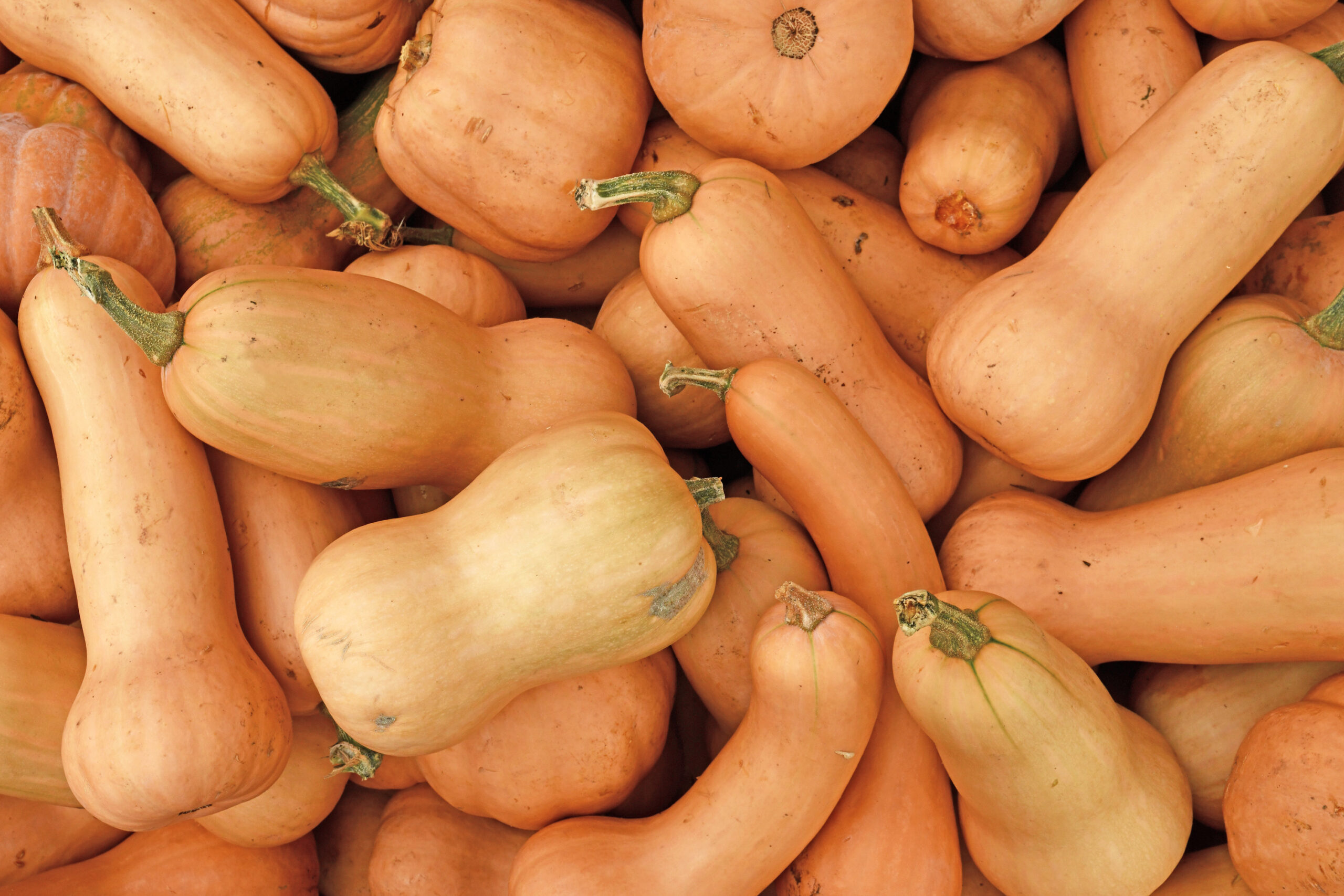
There is a lot of flexibility when it comes to selling squash at the farmers’ market. Here you can sell them by the pound or individually, though I prefer selling them individually because it simplifies the transactions. However, that’s not always possible or necessarily how to get the best price. In terms of display, we often use the overflowing basket look, with butternut squash spilling out. A pile works well, too. Whatever you can do to make the crop look abundant.
4. Offer Butternut Squash in Fall and Winter CSA Shares
One of the best ways to get the most out of butternut squash is to offer it as part of your winter or fall CSA shares. Because they store well (as long as you store them in a relatively cool, dark place that does not freeze) you can reasonably rely on having them as an item in the CSA throughout the colder season. Add a couple of more storage crops and a couple of fresh greens, and you could go all winter.
5. Making Soups, Purees, and Other Products
Soups, purees, baby food and ravioli make some of the best value adds for butternut squash. You could also grow some of the wilder ones with curly necks for decoration around the holidays. Of course, any prepared foods will probably have to be made in a commercial kitchen, so be sure to follow your local legal guidelines.
This article about marketing a butternut squash crop was written for Hobby Farms magazine. Click here to subscribe.