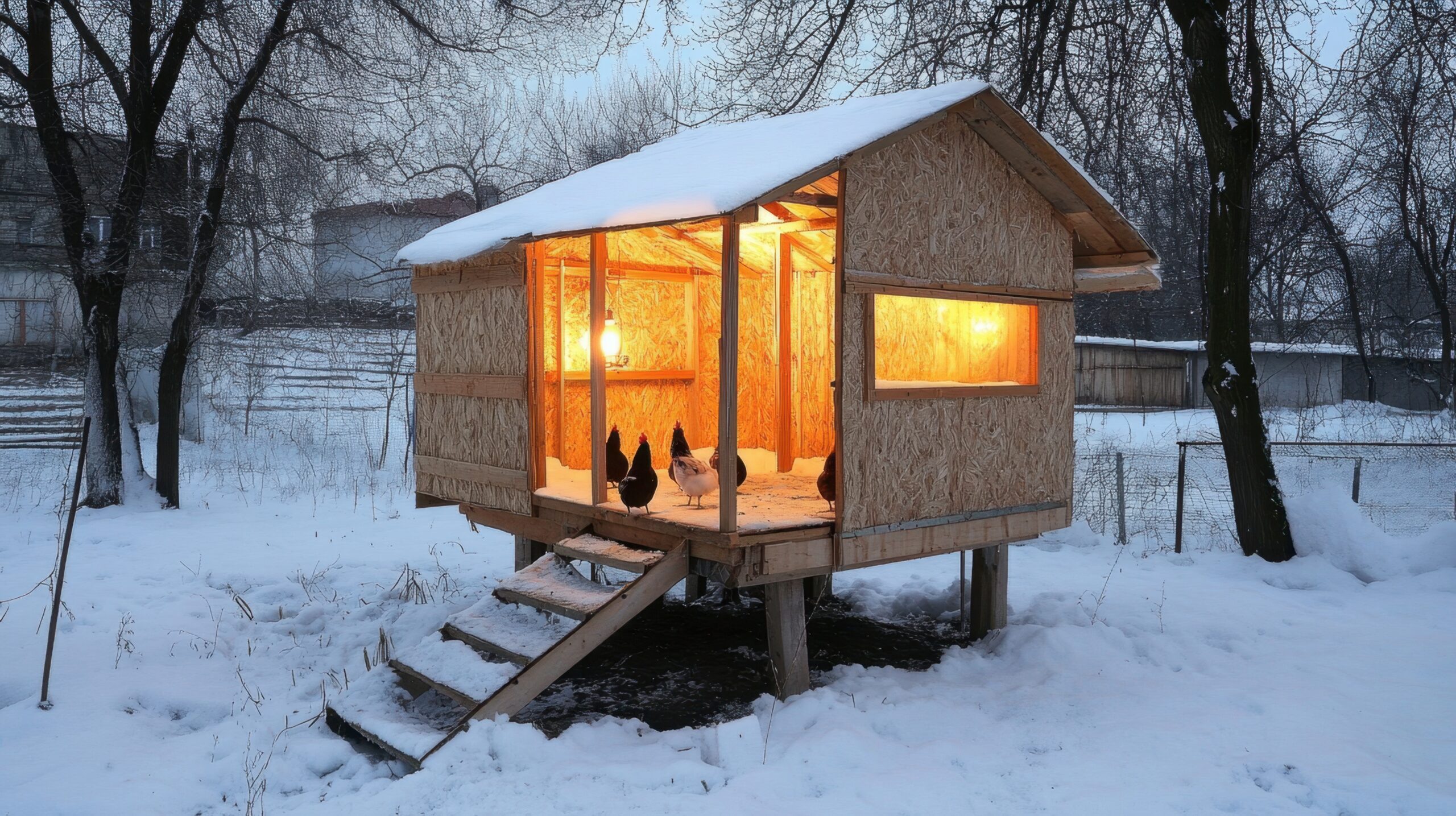
Using a chicken coop light in the winter is always a debated topic among backyard chicken owners. Knowing the pros and cons of using artificial light for chickens will allow you to make the best decision for you and your flock. Here’s what you need to know.
4 Pros for Using a Chicken Coop Light in Winter
Eggs are the reason many flock owners choose to use artificial light for chickens in winter, as the decrease in natural light causes egg production to drop. However, there are several other pros to consider.
1. Chicken Coop Lights Make Chores Easier
The shorter days and longer nights mean tending to chicken chores often in the dark. Winter-time chores are much more enjoyable when the flock owner can see what they are doing. Depending on your routine and schedule, adding artificial light for chickens in winter makes more sense than attempting chores in the dark.
Collecting eggs, refilling feeders and water founts and observing the flock for potential health or behavior problems can be almost impossible without some form of artificial lighting.
2. Lights Can Give Warmth & Stave Frostbite
Another reason to use artificial light for chickens in winter is the added warmth a heat lamp produces. While not necessary in most climates, in the far northern regions where temperatures stay well below freezing (32°F.) all winter long, providing chickens with a heat source may be unavoidable.
Using heat lamps for chickens in winter can also be helpful when raising chickens that are prone to frostbite, heat-hardy breeds, and bantams.
3. Chicken Coop Lights Can Offer Predator Protection
The long nights combined with frigid temperatures, snow and ice can make chicken predators desperate for a free meal. However, many predators do not want to enter a coop that is well-lit, as the light gives it the appearance that a human may be close by.
Adding artificial light for chickens in winter can help cut down on predator attacks on your flock, but the best option is still through the protection of a completely predator-proofed coop and run to keep your flock safe from predators all year round.
4. Increase Winter Egg Production
Despite all the other pros to using artificial light for chickens in winter, the increased egg production still remains the most common reason backyard flock owners turn to artificial lighting.
Chickens need 14 to 16 hours of daylight daily to consistently lay eggs. In winter, when natural daylight decreases to about nine to ten hours per day, egg production slows down and often ceases.
While the slowed egg production will begin to pick up in late winter/early spring, if you sell eggs, the decline in production can be a disadvantage.
4 Cons for a Chicken Coop Light in Winter
While there are several pros for using artificial light for chickens in winter, there are also multiple cons to consider before adding lighting to your coop.
1. Chicken Coop Lighting Increases Stress Levels
Adding artificial light for chickens in winter can mean an increase in eggs, but it also means an increase in stress in the coop.
Just like humans, who become more stressed and a little cranky when deprived of a good night’s sleep, chickens are also more easily stressed and more likely to bully flockmates than chickens allowed to rest overwinter.
2. Poultry Lighting Equals a Fire Hazard
Using a chicken coop light in winter comes with an increased chance of fire hazard. Chickens tend to be dusty, and the increase of dust from dry coop bedding and manure can cause an electrical fire.
When using artificial light for chickens in winter and throughout the rest of the year, be sure to keep the coop clean and dust levels down as much as possible. Pay extra attention to plugs and electrical outlets to make sure these sensitive areas stay clear of dust, dirt and debris.
Another thing to bear in mind is that chickens love to peck, so precautions should be taken to ensure electrical cords are kept away from curious beaks.
The best and safest way to add artificial light for chickens in winter during chore times is to use rechargeable LED work lights. These lights are long-lasting, provide a bright light to go about your morning and evening chores, and often come with a hook for an easy hang-up.
3. A Chicken Light Provides An Unnatural Lifecycle
Like all members of the natural world, chickens enjoy the natural rhythm of life throughout all four seasons. Adding a chicken coop light in winter disrupts this natural cycle, causing stress (see above) and health problems (see below for additional information).
While this is not a negative for every flock owner, if trying to imitate a natural life for your flock, adding artificial lighting to the coop may not be for you.
4. Chicken Coop Lights Can Shorten Lifespan
Rest is essential for a chicken to recover from egg laying and produce healthy eggs. While a hen is laying eggs, her reproductive tract is undergoing a lot of stress. This constant strain and wear and tear of laying causes inflammation in the reproductive tract.
When a hen’s body becomes inflamed, her chances of developing cancer and other reproductive problems increase. This is bad news for those raising hens for companionship as well as eggs, as oftentimes, these reproductive issues lead to shorter lives.
Another health concern to consider when adding artificial light for chickens in winter is that a hen’s body is more likely to become depleted of certain nutrients, including calcium, other minerals and protein, which are essential to stay healthy.
Chicken Coop Light: Final Thoughts
Artificial light for chickens in winter can be helpful for the flock owner, but it can be equally harmful for your flock of layers. When considering adding a chicken coop light, it’s important to know both the pros and cons so you can make the best decision for you and your flock.
This article about using a chicken coop light in winter was written for Hobby Farms and Chickens magazines. Click here to subscribe.