I noticed a few days ago that some of our herb stores were getting dangerously low—especially dried oregano, a critical ingredient for the homemade pizza we often make on pizza/movie nights.
So did I panic and run to the supermarket? No way. I grabbed scissors, stepped out to my lushly leaved oregano plants and snipped off fragrant bunches to dry for future use. I also reserved fresh sprigs for that night’s Greek salad.
How to dry herbs? It’s easy. Collecting and drying your own herbs is rewarding, saves you money and lets you enjoy your garden’s harvest long after the growing season ends. And if you’re drying herbs indoors, the process can fill your home with their fresh, herbal aroma.
Here’s how to do it.
1. Harvest Your Herbs
Choose a dry day to harvest, preferably in mid-morning after the dew has evaporated. Many herbs are best harvested just before they begin flowering, when their leaves have a strong concentration of flavorful oils.
Use clean scissors or pruners to snip off the top 6 to 12 inches of stem, depending on the herb. Leave plenty of the plant behind so it can continue growing.
2. Prepare the Herbs for Drying
Remove the bottom leaves from each stem, saving any good leaves to use fresh. Discard any leaves or stems that are diseased, damaged or heavily infested with pests.
Give the herbs a gentle shake outdoors to remove insects, dust and other debris. If the herbs need washing, rinse them briefly in cool water and gently shake or pat them dry. It’s important to remove excess moisture before hanging them to dry, since moisture can encourage mold.
Gather the stems into small bunches. Avoid making the bunches too large because tightly packed herbs take longer to dry and have less air circulation.
3. Bundle the Herbs
Tie the lower stems together with dental floss, thin twine or a rubber band. A rubber band works particularly well because it tightens around the stems as they shrink during drying.
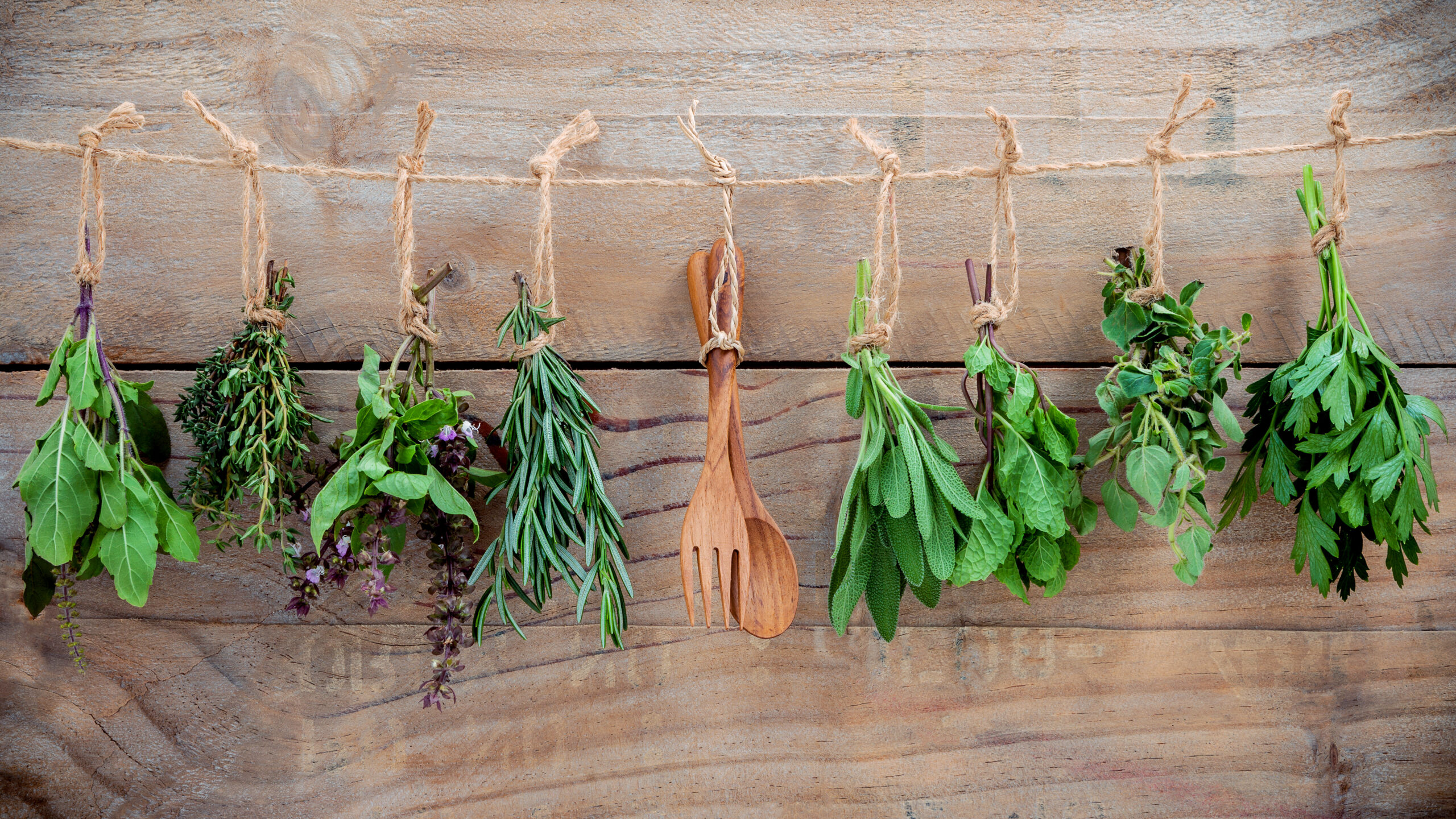
Your bunch should now look like a small, leafy bouquet.
4. Hang the Herbs to Dry
Hang the herb bundles in a dry, warm, well-ventilated area out of direct sunlight. Good air circulation and low humidity are important for successful air-drying.
Don’t let the bundles touch one another. Give each bunch plenty of room for air to move around it, and keep the herbs away from areas with lots of moisture, such as the kitchen sink, stove or dishwasher.
If your drying area is dusty, or if you’re drying an herb that tends to lose leaves, seeds or flowers as it dries, place the bundle inside a paper bag with several holes punched in it. The bag helps protect the herbs from dust while still allowing air to circulate.
5. Check for Dryness
Allow the herbs to dry until the leaves feel crisp and brittle and crumble easily between your fingers. Depending on the herb, humidity and airflow, this may take anywhere from several days to a couple of weeks.
Don’t rush this step. Herbs need to be completely dry before they are stored. Any remaining moisture can lead to mold or spoilage.
Once dry, strip the leaves from the stems. You can leave the leaves whole for storage and crumble them when you’re ready to use them. Keeping herbs whole helps preserve their flavor and aroma longer.
6. Store Your Dried Herbs
Pack the dried herbs into clean, dry, airtight spice bottles or small canning jars. Label each container with the name of the herb and the date.
Store dried herbs in a cool, dry, dark place away from sunlight, heat and moisture. Check them periodically for signs of moisture, mold or insects.
For the best quality, most dried herbs keep well for about a year. If they still smell strongly aromatic, they’re likely still worth using.
Which Herbs Are Best for Drying?
Less-tender herbs such as oregano, sage, thyme and winter savory are especially well suited to air-drying in small bundles. Tender herbs with higher moisture content, including basil, tarragon, lemon balm and mint, can be more challenging to air-dry because they need to lose moisture quickly to avoid mold.
If you have an herb that doesn’t dry well by hanging, you can try another preservation method, such as a dehydrator or freezing.
How Long Do Dried Herbs Last?
Most dried herbs retain good quality for about a year when stored in airtight containers in a cool, dry, dark location. Whole leaves generally retain their flavor longer than crushed or powdered herbs because their aromatic oils are better protected.
Frequently Asked Questions
What is the best way to dry fresh herbs?
For many herbs, air-drying in small bundles is a simple and effective method. Hang the bundles in a dry, well-ventilated area away from direct sunlight and moisture.
Should you wash herbs before drying them?
If herbs are dirty, rinse them briefly in cool water and remove as much surface moisture as possible before drying. Clean, dry herbs are less likely to develop mold during the drying process.
How do you know when herbs are dry enough?
The leaves should feel crisp and brittle and crumble easily between your fingers. If they still feel soft or flexible, allow them more time to dry.
Can you dry herbs in the sun?
Air-drying and sun-drying are different methods. For this method, hang herbs indoors in a dry, well-ventilated area away from direct sunlight. Controlled indoor air-drying helps protect the herbs from excess moisture and allows better control over their drying environment.
How should dried herbs be stored?
Store completely dried herbs in airtight containers in a cool, dry, dark location. Whole leaves generally retain their flavor longer than crushed herbs.
Final Thoughts
Drying herbs is one of the easiest ways to make the most of your garden harvest. With a few bunches, some good airflow and a little patience, you can stock your pantry with homegrown herbs to enjoy for months to come.
And next time you run out of oregano for pizza night, you may already have exactly what you need hanging in the pantry.
Love growing, harvesting and preserving your own food? Subscribe to Hobby Farms for practical tips, seasonal inspiration and fresh ideas delivered to your inbox.