Duck behaviors are fun to watch, but what makes ducks do the things they do? Learn why ducks are active at night, why ducks play in the mud, duck courtship displays, and much more.
Duck Behaviors: Courtship Moves Explained
One of the most common myths involving duck behaviors is that courtship displays are performed only by the males (called drakes), but female ducks also play a part in the duck courtship routine.
Direct descendants from the Mallard, all domestic ducks (excluding Muscovies) breed throughout late winter through summer. While courtship displays are performed throughout the breeding season, in autumn, you may see an increase.
The reason for the uptick in performance is that autumn is when wild ducks choose a new mate. And just like their wild cousins, domestic ducks also begin to perform.
Up-and-Down Head Movements
This courtship display is performed by both the drake and the female. The pair swims in tight circles, pumping their heads up and down in a fast motion. This behavior is usually followed by breeding.
Heads and Tails Up Display
One of the most stunning courtship displays performed by the drake is the head-up and tail-up display. To perform, a drake pulls both his head and tail up toward his body and gives a sharp whistle.
This display shows off the drake’s wing speculums (the small blue wing patch on Mallards and other gray breeds) to impress the females.
Grunt Whistle: Duck Courtship Call
The grunt whistle is another drake courtship display and is only performed on water. The drake pulls his body out of the water before bringing his head back toward his body and letting out a distinctive grunt followed by a whistle.
Frequently performed by domestic drakes, the grunt whistle display is even more stunning when drakes synchronize this courtship to impress the females.
When Ducks Are Awake
Ducks are semi-nocturnal, meaning they spend some time being awake and sleeping during both daytime and nighttime. So, if you think you hear your ducks quacking during the full moon or other times of the night, you aren’t imagining things.
The reason ducks spend time awake both at night and during the day is to protect them from daytime predators, including hawks and mustelids. Ducks can see well at night, so the cover of darkness offers protection from predators.
Note: Even though ducks have natural instincts to protect them from predators, they should still be provided with a completely predator-proofed coop and run to keep them safe.
Duck Behaviors: Understanding Quacks
When spending time with your ducks, you may have noticed that there are many different types of quacks. Each quack means something different, from the “something is wrong” quack to a happy greeting, learn what your ducks are trying to tell you.
Alarm Call: Female ducks give a loud, but evenly spaced series of quacks to alert the rest of the flock of potential danger. These alarms could mean a predator has been spotted or a member of the flock has seen something else out of the ordinary. Drakes also give an alarm call, however, the drake’s is much softer than his usual quack.
Foraging Quack: This call is given by female ducks while feeding. The female will give a series of excited, low quacks while enjoying her favorite treat, or when foraging.
Happy Quacks: The happy call is performed when female ducks feel the need to cut loose, releasing a loud series of happy quacks when they spot their favorite person. However, they can do this call at other times of the day, too, such as when it’s time to head back to the barn for the night.
Duck Chattering: Duck chatter is performed frequently throughout the day by both males and females, with the drakes’ quacks being softer and quieter than the females.
Why Ducks Love Mud
Ducks are notorious for creating a muddy mess in the yard around their water bucket, kiddie pool, and even the pond bank. But why do ducks play in the mud?
Mud Drilling: Ducks drill holes into the mud with their bills to forage for insects, bug larvae, and other goodies hiding just below the earth’s surface.
Worm Preying: What looks like funny duck behaviors is actually a duck attempting to draw earthworms above the ground by creating vibrations with their feet. To do this, a duck will stand in a mud puddle, moving their feet up and down quickly, and splattering mud everywhere.
Duckling Imprinting Explained
Imprinting is one of the most popular of the duck behaviors. Ducklings imprint on the first face they see, believing that to be their mother. Ducklings need to imprint on their mother for survival and protection from predators. Without a mother duck (or human) for protection, little ducklings quickly get picked off by hungry predators, so staying close to their mother is a duckling’s best chance for survival.
Water Acrobatics and Cleaning Habits
Of all the duck behaviors, a duck’s ability to twist and turn in the water is incomparable. Ducks thrive in the water, and not only do they enjoy splashing in a kiddie pool, but it also helps keep them free of external parasites.
In the water, ducks beat their wings, roll over, splash water over their backs, and dunk their heads up and down in the water to clean their nares (a duck’s nose holes on the top of their bills).
After pool time, a duck can spend several hours preening their feathers and spreading a waxy oil (from the oil gland at the base of their tail) all over its body to ensure each feather is kept clean, waterproof, and warm.
Rainy Day Duck Behaviors
During heavy rainfalls, ducks will stand completely still and tall to help the rain drain off the water repellent feathers on their backs. Another plus to this habit is that standing still decreases the chance of a predator attack.
How Ducks Search for Food in Water
Ducks enjoy sifting through their water buckets and kiddie pool with their bills. If you watch carefully, you might see the water flowing back out of the sides of the duck’s bill.
Despite what this behavior looks like, ducks really aren’t just playing in the water. They are sifting through the water looking for food. This sifting is especially vital when ducks are feeding off of ponds.
Bottoms Up: Feeding Techniques
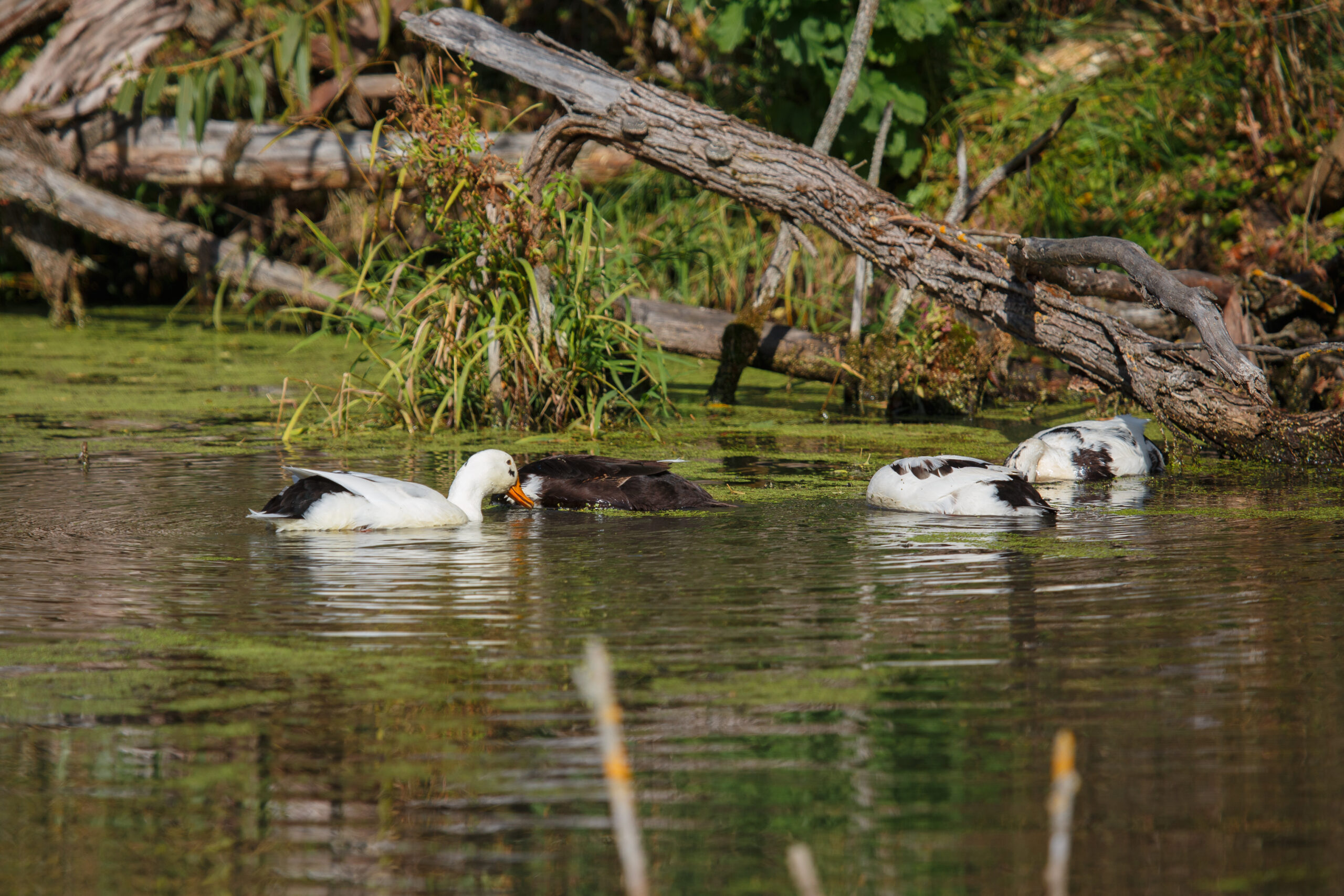
Ducks on ponds or other large bodies of water may find something tasty below the water surface. That’s why ducks are sometimes seen with their heads underwater and tails sticking straight up in the air, as they feed on underwater goodies.
Duck Behaviors: Observing Your Flock
There are many fascinating duck behaviors that our flocks perform every day. Taking the time to observe your flock can go a long way to helping you gain common knowledge about some of the many fascinating duck behaviors.
This article about duck behaviors was written for Hobby Farms and Chickens magazines. Click here to subscribe.