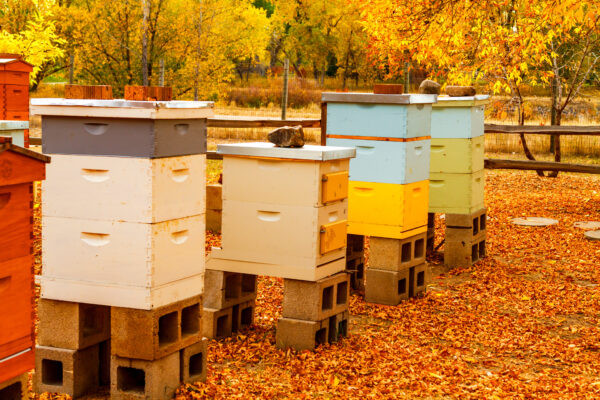
Honey harvest season arrives as fall blooms fade and you begin preparing your autumn chores. Before you close up the hive for winter and wish your bees well, check your frames — you may have enough surplus for one last honey harvest of the year. Congratulations! A fall honey harvest is a beekeeper’s dream, though not every hive or season produces the same bounty. Most colonies in North America will consume 40 to 60 pounds of honey through the winter, so any amount beyond that is yours to collect and enjoy.
Harvesting honey is best done in two ways: the crushing method or the traditional Langstroth spinning method. Let’s look at the pros and cons of each.
Crushing Comb: A Simple Honey Harvest Method
It sounds like the name of a cool new band, but it’s really an ancient form of harvesting honey. Before the Langstroth hive was invented, there weren’t many other choices. This form of honey harvest requires entering the hive, cutting out the honeycomb (leaving brood comb, of course), and crushing it, usually by hand, into jars. Some people then, as today, enjoy bottling fully intact slices of comb into jars of pure honey—it has an aesthetic value, and it’s delicious (and looks beautiful on your stand at the farmer’s market).
The pros to this honey harvest method are good ones: You save a lot of time preparing an extractor and cleaning all of the equipment before and after. It’s also great for someone living in a small space who can’t store (or doesn’t want to rent) all of the honey harvesting equipment.
On the downside, it’s rather messy for a short period of time. But the biggest drawback is the loss of comb. Building a comb is far more energy and resource-intensive than simply storing honey, so you’re setting the colony back significantly by cutting out the comb. The bees will have to rebuild all of that before they can store honey again. If you do choose this honey harvest method, be conservative with how much you cut out. Also consider the time of year: fall is not the best time to cut and crush comb for honey—save this method for your spring harvest.
Spinning Frames: A Cleaner Honey Harvest Option
This might also sound like another great band name. But this honey harvest method refers to using established frames and “pulling” the honey out by spinning them in a cylindrical extractor that uses centrifugal force. For this to work, the frames must be the correct size for the extractor (no brood frames here) and will probably need the wire wax foundation to keep the comb from breaking.

On the positive side, this honey harvest method is a lot of work with various components, but it pays off: The result is a lightly strained, pure honey product that is easy to bottle, use and sell. The frames are eagerly reused by the bees, and you simply place the whole frame, with still-intact honeycomb on it, back in the hive for them to clean up and fill again.

This downside to this method, as mentioned above, is that it requires copious amounts of equipment, including the extractor itself, honey forks, wax knives, strainers and sieves, and food-grade buckets with the proper spouts.
It should be said that any method is quite a task, but the honey harvest is one of the most fun and rewarding parts of being a beekeeper (other than seeing your hives thrive). Harvesting honey is instant gratification: You go from a comb covered in tens of thousands of insects to beautiful, glistening, golden jars of the sweetest stuff on the planet in one afternoon. It’s well worth all the hard work put in throughout the year.
Fall Harvest: Final Thoughts
No matter which method you choose, a fall harvest is one of the most satisfying parts of beekeeping. Whether you prefer the simplicity of crushing comb or the efficiency of spinning frames, both approaches reward your season’s work with golden jars of pure honey. Take time to leave enough for your bees to thrive through winter, and you’ll set the stage for another successful honey harvest in spring.
This article about a fall honey harvest was written for Hobby Farms magazine. Click here to subscribe.