Raising broiler chicks from the brooder to processing is similar to raising laying hens, but these fast-growing meat birds come with unique needs. From day one, broiler chicks require careful attention to temperature, space, feeding, and housing to support rapid, healthy growth. If you’re raising meat chickens for the first time, understanding these essentials will help you move your flock efficiently from hatch to harvest.
Key Takeaways
- Broiler chicks grow rapidly and need more space and careful management than layers.
- Maintain proper brooder temperatures, starting at 95°F and decreasing weekly.
- Use safe, absorbent bedding and avoid slippery surfaces that cause leg issues.
- Provide constant access to clean water and monitor chicks closely for dehydration.
- Feed a high-protein diet and manage intake to prevent growth-related health problems.
- Transition broiler chicks to secure grow-out housing once fully feathered.
- Cornish Cross broilers need special feeding schedules and limited activity to stay healthy.
Give Enough Space to Grow
Meat-breed chicks need a dry, clean, draft-free location large enough to accommodate their fast-growing bodies. The University of Kentucky Extension recommends 1½ square feet per bird, though for the first week or so, you can get by with 1/2 square foot per bird.
Protect Broiler Chicks From Drafts Early On
Until the chicks are pretty well feathered out, drafts can stress them, which can sometimes lead to death, especially in the colder months. Install a draft barrier 12 to 18 inches tall to block the cold air and help keep the brooding temperature constant. This brooder guard, which can be made from cardboard, wood or other durable material, can be removed after the first week or two, depending on the weather and the feathering of your chicks.
Choose the Best Bedding for Broiler Chicks
Bedding or litter is used in the brooder house to absorb droppings and help the chicks stay warm. Cover the floor of the broiler room with litter 3 to 4 inches deep. Daily, remove any clumped litter and stir the remaining litter so it absorbs moisture better and lasts longer. You may need to change the litter out once a week or so, depending on its cleanliness.
Chicks may mistake small sawdust particles as food, so avoid using it until the chicks mature at least a week. Slick bedding, such as newspapers and shredded paper, shouldn’t be used after two days, as the chicks can’t get a proper footing on the slick surface, causing their legs to splay out. This can lead to leg deformities, which fast-growing meat chickens are already at risk for.
Provide Proper Heat for Broiler Chicks
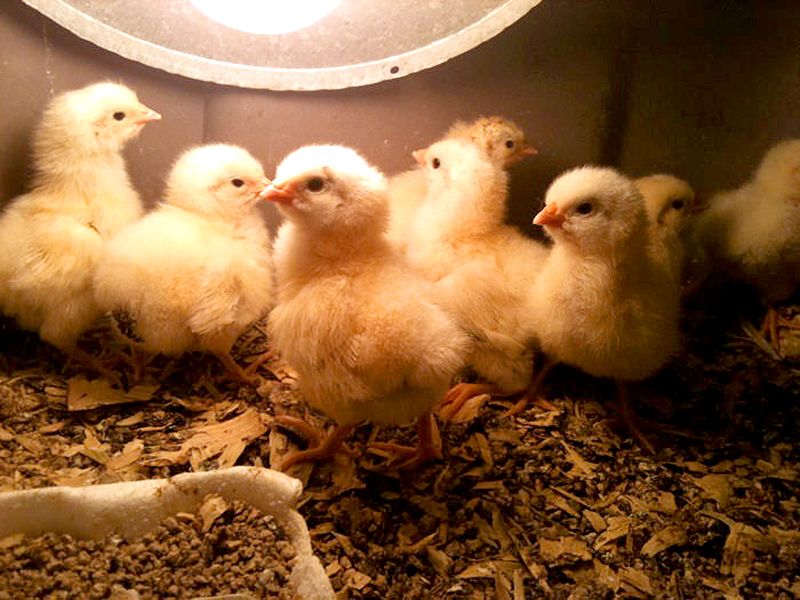
A heat source is a non-negotiable piece of equipment that keeps chicks warm just like a mother hen would. Traditionally, this is a heat light or infrared bulb fitted with a shield that reflects warmth down onto the chicks. Make sure your light fixture has a porcelain fitting to screw the bulb into. Other shielded lights, such as those used by painters, have plastic fittings and are rated for 100-watt bulbs, not the heat of 250 watts common for brooders. Rig up two lights so that if one goes out, the chicks don’t get chilled. Make sure any extension cords are in good shape, not exposed to water or animals, and rated for the proper wattage: No $1 specials here. The lamp should also be well-secured to prevent contact with combustible bedding.
Although 24-hour light increases feeding time and weight gain, and helps broilers feather out faster, it can be a good idea to familiarize them with darkness by giving them 10- to 15-minute periods without light. This can help prevent panic or death by piling up on each other in the event of a power outage.
Manage Brooder Temperatures
Newly hatched chicks need to be kept in a 95-degree-F environment for the first week of their lives, according to the University of Florida ISFA Extension. After that, you can decrease the temperature 5 degrees per week until they’re 4 weeks old.
It is best to set up your brooder box and heat source a day or two before your chicks arrive. Use a thermometer to help figure out the proper temperature. If you’ve adjusted it correctly, chicks will nestle in a ring around the outside reaches of the brooder. If it’s not warm enough, you’ll find them huddling together in the center directly under the heat beam, but if it’s too hot or close to the floor, they’ll scatter out from under the heat. The ideal temperature allows them to move freely about their space, coming back to the edge of the heat to warm up and nap. Raise or lower your brooder light or heater to adjust the temperature: approximately one inch for every five degrees.
Don’t be surprised if Cornish Cross chicks look half-naked at several weeks old. It may take a while for their feathers to grow, which is why you’ll want to maintain a heat source until they are fully feathered or the outside temperature reaches 65 to 70 degrees. Here’s a handy table to help you with temperature control:
- Week 1: 95°F
- Week 2: 90°F
- Week 3: 85°F
- Week 4: 80°F
- Week 5: 75°F
- Week 6: 70°F
Ensure Clean Water
For their first two to three days of life, chicks don’t eat or drink much because they’re using nutrients from their yolk sac. However, if you ordered chicks through the mail, they’ll be ready to start eating and drinking by the time they arrive. As you remove them from their carton one by one, dip each chick’s beak in water to help them take that first drink. Make sure water is always available to the chicks. If the chicks appear lethargic, the U of F Extension recommends adding 1/4 to 1/2 cup of sugar per gallon of water to boost their energy levels.
And a word here on water pans: Chicks drown easily, and they also climb up and into water pans, so use small troughs that will keep them safe. Some farmers add clean marbles or pebbles to the water pan or ring for the first week or two: The chicks can access the water easily, but the danger of drowning is low.
Feed Broiler Chicks for Fast, Healthy Growth
Meat chickens are growing machines—Cornish Cross hybrids can double their weight and size in just days—so you’ll need enough feeder space so that all the chicks can eat at the same time. For the first two weeks, allow 2 inches of space per chick—count both sides of a long, straight feeder. Double that amount to 4 inches per bird after two weeks old. To prevent wastage and soiling, the University of Kentucky Extension recommends filling feeders only halfway full and keeping both feeders and waterers level with the height of the chicks’ backs as they grow.
As incredible as it seems, some meat breeds can put on up to a pound of weight for every two pounds of feed they consume! A pre-mixed commercial chick-starter with a 20- to 24-percent protein gives these birds a good start for the first two weeks. If you’re raising Cornish Crosses, start with 20 percent protein. How you feed this breed is important, as well, because they will quite literally grow too fast for their organs and bones to accommodate, resulting in heart and growth issues. For their first five days, offer food free-choice, then remove their feeders for 12 hours each day, keeping the feed available the other 12 hours. Continue this schedule until butchering time.
At two weeks old, transition the feed from chick starter to chick grower, which contains 20 percent protein. You can mix the starter and grower together for a few days to ease the changeover. For Cornish Cross, feed 18-percent protein after five weeks until butchering.
Move Broiler Chicks to Grow-Out Housing
Once feathered, the broilers can be transferred to a predator-free, sheltered grow pen, coop or chicken tractor. Meat breeds finish out at different ages and weights. Cornish Crosses finish at 8 to 9 weeks old with weights of around 10 pounds for males and 8 pounds for females.
Special Considerations For Meat Birds If you’re raising Cornish Crosses, keep in mind that their heavy body conformation makes it difficult for them to walk far, so keep food and water sources close at hand, and don’t expect them to forage. Even in chicken tractors a la Joel Salatin, these birds are not good foragers, nor do they handle heat well. Eliminate roosts, because, unlike most other breeds, roosting bars will cause bruising and blistering of their heavy breasts.
Frequently Asked Questions
What are broiler chicks?
Broiler chicks are young chickens bred specifically for meat production. Popular types, such as Cornish Cross, are known for their rapid growth and efficient feed conversion.
How long does it take to raise broiler chicks?
Most broiler chicks reach processing size in 8 to 9 weeks, depending on breed and feeding practices.
What temperature do broiler chicks need?
Start at 95°F during the first week, then reduce the temperature by 5°F each week until they are fully feathered or the environment is warm enough.
What do broiler chicks eat?
They require a high-protein commercial feed (20–24% starter, then 18–20% grower) to support rapid muscle development.
How much space do broiler chicks need?
Allow about 1½ square feet per bird, though they need less space during the first week.
Do broiler chicks need light at night?
While continuous light encourages growth, short periods of darkness can help prevent panic and piling if power is lost.
When can broiler chicks go outside?
Once fully feathered and temperatures are mild, broiler chicks can move to a secure outdoor coop or tractor.
Raising broiler chicks successfully comes down to consistency—steady heat, proper nutrition, clean water, and adequate space. With the right setup and daily attention, these fast-growing birds can move from brooder to butcher in just a couple of months, providing a reliable source of homegrown meat.
This article about raising broiler chicks was written for Hobby Farms and Chickens magazines. Click here to subscribe.