Introducing new ducks to a flock can be challenging, but understanding what to expect makes the process smoother and safer for everyone involved. Ducks, like other poultry, have social hierarchies and routines that can be disrupted by new arrivals. With the right approach, you can help your flock accept new members peacefully and form lasting bonds.
Understanding Pecking Order When Introducing New Ducks
How to introduce new ducks to the flock starts with understanding your flock’s pecking order. A duck’s pecking order is similar to that of a chicken, but usually not as violent. Ducks can still inflict injuries on each other, however, so supervision is needed at all times when introducing new flock members.
Lower-ranking members of the pecking order are more likely to pick on newcomers than ducks at the top of the pecking order.
The top ducks in the flock will generally leave the newcomers alone after establishing their spot at the top of the pecking order, and will only reinforce their leadership when confronted by a newcomer or existing flock member.
Tips for Introducing New Ducks to a Flock
Learning some common tips and tricks is one of the best ways to learn how to introduce new ducks to a flock successfully. While each flock is unique, following these suggestions will make the integration smoother and help reduce stress in both the newcomers and existing members. Here are three pieces of advice to help the transition.
1. Start Slow for a Smooth Flock Introduction
While all poultry and livestock like routine, ducks thrive on it. Their love of routine isn’t a big problem on its own, but it can become a problem when introducing new flock members.
Some flock members will accept new ducks within a couple of minutes, while others will take several days, weeks, months, to even a year or two. (Yes, it really can take that long!)
To the flock owner, this process may seem slow, but ducks are notorious for being stubborn, so it’s best to let them learn to like each other in their own time, rather than to try to rush the integration.
2. Using Physical Barriers to Prevent Injuries
Another tip for introducing new ducks to a flock is setting up a physical barrier. Ducks should be able to see each other to help them warm up to each other and start establishing the new pecking order, without the risk of injury.
The physical barrier you use will depend on your setup, but one of the best barriers to use is a small animal playpen. These playpens can be taken apart, or you can add extra panels to fit the size of your enclosure.
Playpens are also nice as the slots are small enough that persistent feuding ducks can not get their bills or heads through and cause injury. (Playpen panels should have no more than three-quarters of an inch spacing between bars.)
Small animal playpens are also tall enough to stop ducks from flying over them (excluding bantam duck breeds and Muscovy ducks).
3. Why Outdoor Introductions Work Best
If you have an outdoor enclosure for your ducks, introduce new members to the existing flock out there, versus the coop. Ducks tend to be more territorial in the coop versus the run, so keep introductions outside for best success.
When Duck Breeds Don’t Mix Well
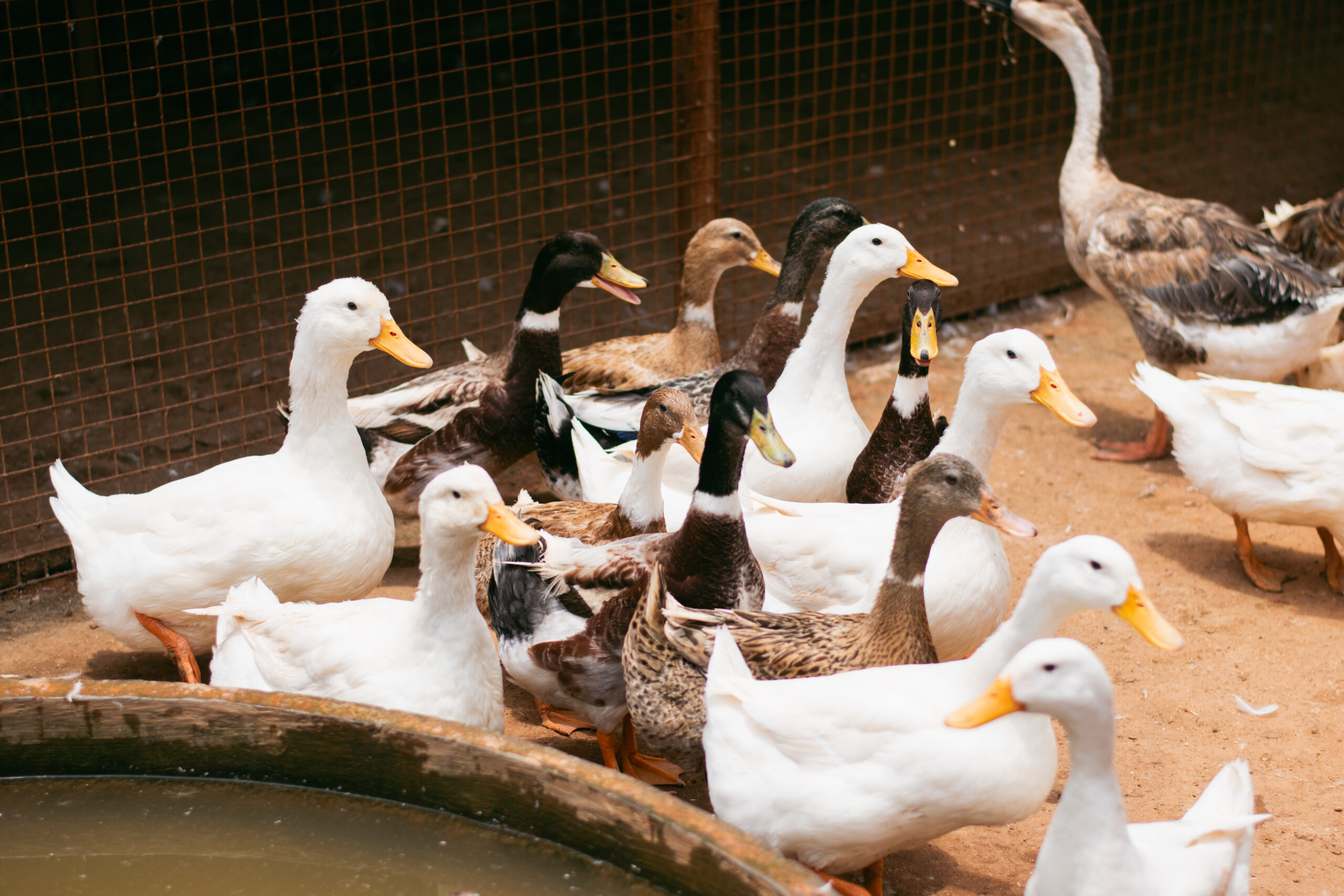
Birds of a feather, flock together, is an important thing to remember when learning how to introduce new ducks to a flock. Ducks like ducks that look like themselves, so if raising a flock of Khaki Campbells, it may not be wise to throw in a single Pekin.
Introducing a New Duck Breed to the Flock
If introducing new duck breeds into your flock is high on your bucket list, you can help make the integration easier by adding two or three ducks of the same breed to the existing flock.
Step-by-Step Duck Flock Integration Guide
Successfully introducing new members to your duck flock can be challenging, but with some time, it isn’t impossible.
Start by allowing ducks to see each other on opposite sides of the fence for several weeks before allowing them to interact face-to-face. Never introduce ducklings to adult ducks until ducklings have reached at least eight weeks of age.
Start the introductions in an outside enclosure where you can intervene if necessary. If fights break out and intervention is needed (see below for common aggression signs), separate the two flocks for several days and try again.
Allow new ducks access to the existing flock’s area of the coop, after all members coexist peacefully together in the run. Not all ducks will welcome newcomers into their coop area (even if they coexist outdoors), so be prepared to set up another pen in the coop if needed.
Introducing Male vs. Female Ducks
How to introduce new ducks to a flock will depend on whether you are introducing males or females.
Even in an all-female flock, female ducks are usually more readily welcomed than drakes (male ducks). While lower-ranking females may readily accept a new drake, the queen of the flock may see him as a threat.
If harmony is not quickly restored, consider giving the drake his own pen inside the coop with several ladies of his own, away from the flock’s queen.
Drakes do not usually coexist peacefully with each other unless kept in a bachelor pad (the name given to flocks with all drakes). If housed with females, your best bet is to provide separate housing and ladies for each drake to avoid injuries in both males and females.
Be aware that female ducks introduced to bachelor pads do not stand a chance and should be kept separate from the flock at all times. To keep your lone female duck company, without risking an injury or accidental death, remove one of the drakes from the bachelor pad to live with her.
Managing Stress During Flock Introductions
Ducks love routine and quickly become stressed when their routines are changed. Adding new flock members will naturally mess up your flock’s daily routine, as there are more flock members to share the feeding area with the swimming pool, etc.
This change of events can create stress in the flock. Stressed signs include flop duck (a disorder where a duck suddenly falls down and refuses to get up.) and wing twitching.
If you see these symptoms, isolate the duck(s) for several hours to help them recover.
Separate ducks when fights become too rough or when older ducks refuse to let new members eat or drink to keep stress levels down.
Recognizing and Stopping Aggressive Behavior
The most critical thing to learn about how to introduce new ducks to a flock is learning the signs of aggression and when to intervene during a squabble. Avoiding an injury is important, so be on the lookout for some common signs of aggression.
- Biting and shaking other ducks’ heads and necks
- Beating each other with wings
- Chasing new members with their heads down
- Chasing new members away from feed and water sources and shady places in the run
- Feather Pulling
- Heads held high with wide-open mouths quacking (This behavior is usually followed by a fight.)
When to Intervene
Ducks will sometimes need an intervention when being introduced to each other. Duck fights are not pretty, but learning when the brawl is getting out of control is necessary to allow ducks to sort out their differences without causing an injury.
The first step in introducing new ducks to a flock without causing injury is to never leave fighting ducks unattended. Always be on standby in case you need to quickly intervene.
Interventions should occur when a duck is refusing to let new members eat or drink, or when fights are getting out of control, i.e., when ducks are biting at each other’s eyes, excessive amounts of pushing during fights, or chasing that may cause a leg injury.
Protecting Older Ducks During Integration
One of the most overlooked considerations when researching how to introduce new ducks to a flock is ensuring the safety and well-being of your golden ducks. Golden ducks are those flock members that have stood the test of time, laid more eggs than you can count, and are now living out their retirement years as family pets.
Older ducks can not move as quickly as younger flock members and are more prone to injuries and being bullied, as young newcomers may take advantage of them to move up in the pecking order.
If elderly ducks are present in your flock, be sure to be extra vigilant to ensure their safety and well-being.
Knowing how to introduce new ducks to a flock can help prevent flock squabbles and injuries, and help your flock to coexist peacefully. With time and patience, ducks will often go on to accept new flock members and form lifelong friendships.
This article about introducing new ducks to a flock was written for Hobby Farms and Chickens magazines. Click here to subscribe.