Native bee habitat protection is an important step toward keeping these helpful pollinators thriving from season to season. When winter approaches, many honey bee farms work to help their hives survive the cold and overwinter safely by providing additional food sources and keeping humidity in control. But while honey bees get much of the attention, there are actual steps you can take in the fall to help native bees make it through the winter as well, so that they’ll be ready to pollinate your garden next spring.
Encouraging the presence of native bees is something beneficial to all gardeners. You can help support the existence of these helpful common pollinators, including:
- Bumblebees
- Mason bees
- Carpenter bees
- Leafcutter bees
- Miner bees
- Sweat bees
Leave the Leaves to Protect Native Bee Habitat
When fall colors fade and the leaves fall to the ground, the first impulse is often to break out the leaf blower and rakes for yard cleanup. While this no doubt makes for a nice-looking lawn—and the leaves can even be used for mulch—it may also be beneficial to “leave the leaves” as is until spring. Native bees will often use leaf litter as shelter, and providing the insulating leaves until after the bees have reawakened in the spring can help avoid disrupting their hibernation.
Plant Stalks Provide Shelter for Native Bees
It’s nice to get your vegetable garden and flower garden beds cleared out before winter. After a hard frost, the amount of brown, faded plant vegetation is considerable, and cleaning this out in the fall gets you a nice head start before next spring. But for the sake of native bees, you might consider leaving some plants intact through the winter as bee shelters:
- Sunflowers — Hollow regions in the dead stalks can be useful winter shelter for cavity-seeking native bees. Plus, the sunflower stalks themselves can make visual interest in the garden during the dormant season. Chickadees and other birds will also appreciate feeding on the spent sunflower heads.
- Goldenrod — You might not purposely grow this attractive plant/weed, but leaving the thick stalks of goldenrod can also be a nice way to provide native bees with a hollow area for burrowing.
- Coneflower — Another excellent option to leave intact; it provides winter visual interest and a hollow area for native bees to shelter in.
Build a Bee House to Expand Native Bee Habitat
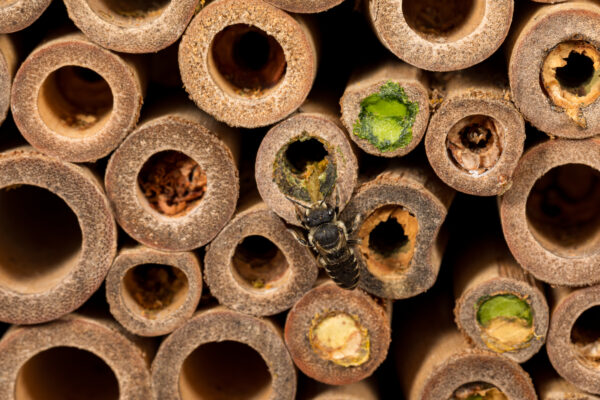
This is a fun project that can be as elaborate and decorative or simple and utilitarian as you like. You can create a bee house that may attract native bees by drilling holes of various sizes into a block of wood—or even a stump—and leaving it in the garden. Alternatively, you could create a bee shelter containing numerous paper “straws” of various diameters and place them in a homemade “house” of your own design. Each bee will choose the diameter hole suitable for them. These can be great craft projects!
Supporting native bee habitat through the fall and winter ensures these essential pollinators return strong in spring. A few small changes in your yard—like leaving leaves, stalks, or building a bee house—can make a big difference for native bee survival.

This article about native bee habitat was written for Hobby Farms magazine. Click here to subscribe.