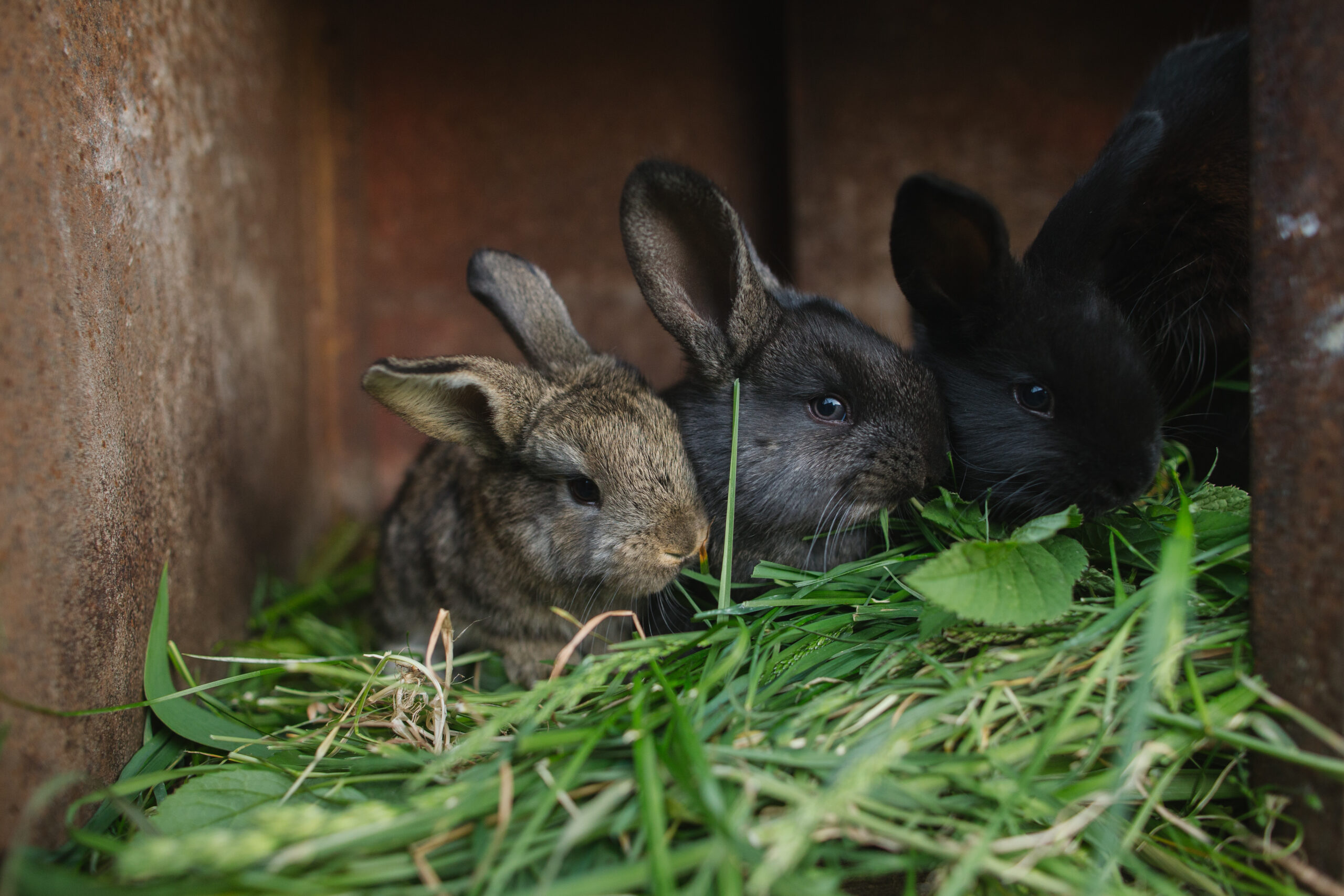
Rabbit facts for hobby farmers can help give farmers more knowledge on what breeds are right for them and how to better care for their rabbits. These twenty rabbit facts for hobby farmers include breed trivia, meat and wool production, and more.
General Facts About Rabbits
#1 The American Rabbit Breeder Association (ARBA) recognizes fifty-two rabbit breeds. With so many breeds to choose from, it’s easy to find a rabbit to fit your specific wants and needs.
#2 A rabbit’s teeth are one of the most important parts of their gastrointestinal tract and continue to grow throughout their entire lives. While commonly believed that only the six front teeth (called incisors) continue to grow, the peg teeth, molars, and premolars also grow throughout the course of a rabbit’s life. Feeding rabbits hay is the best way to keep their teeth at a good length and avoid dental problems.
#3 Rabbits need to have access to food at all times to keep their digestive tract running smoothly. Going without food for twelve hours straight can cause a lot of problems for your rabbit, so provide hay at all times to prevent digestive problems.
Rabbit Facts: Raising Meat Rabbits
While rabbits can be raised for many reasons, their meat offers hobby farmers a practical reason to keep these small livestock.
#4 The New Zealand White is the most popular meat rabbit in the United States. These fast-growing rabbits reach market weight (8 – 11 pounds) within ten to twelve weeks of age. Prolific breeders, calm temperaments, and excellent meat-to-bone ratio make this rabbit a favorite among hobby farmers looking to raise their own meat.
#5 Other popular meat rabbit breeds include Californias, Champagne d’Argents, Creme d’Argents, and Silver Fox.
#6 Raising meat rabbits is a rewarding endeavor for many hobby farmers as they are smaller than other livestock, cost less money to raise, reach market weight sooner, and reproduce efficiently. An interesting rabbit fact for hobby farmers is that raising meat rabbits is a good way to earn some extra money, as well as raising some of your own food.
Pet and Show Breeds
More interesting rabbit facts for hobby farmers are that even if you don’t raise rabbits for meat, there are other reasons to raise them, including showing and raising rabbits to sell.
#7 The smallest breed of rabbit is the Netherland Dwarf. These petite rabbits can weigh as little as one to three pounds and are only bred for pets and the show ring.
#8 The largest breed of rabbit is the Flemish Giant. These big rabbits tip the scale between fifteen and twenty pounds.
#9 Rabbits are the ideal choice for children beginning 4H, as their cute faces and cuddly bodies make them appealing pets. Another plus to a rabbit is that their small body is easier for children to manage than larger livestock.
#10 The only breed of rabbit to have a mane is called the Lionhead.
Raising Wool Rabbits
More interesting rabbit facts for hobby farmers is that raising rabbits for meat is not the only way to turn a profit. Raising rabbits for wool is another way to earn some extra money.
#11 There are seven varieties of wool rabbits available today. American Fuzzy Lops, English Angoras, French Angoras, German Angoras, Giant Angoras, Satin Angoras, and Jersey Woolys.
#12 The German Angora is a popular choice among wool raisers despite the fact that it is the only wool breed not recognized by ARBA. The reason for the breed’s popularity is attributed to its prolific production.
#13 Another name for wool rabbits is fiber rabbits.
#14 Wool rabbits can produce twelve to twenty ounces of wool per rabbit annually. Some rabbits produce as much as four pounds per rabbit. While this might not sound like a lot, high-quality wool can sell for ten dollars or more per ounce.
Rabbit Facts: Foster Moms and Breeding
Looking for a good foster mother to have on hand in emergencies? Check out these rabbits to select a good foster mom for your needs. (Bear in mind that each rabbit is an individual and not all rabbits may be suitable to be a foster mom, even when selecting a breed known for their mothering ability.)
#15 The Silver Fox is not only a decent meat producer, but the females are excellent mothers and excel at fostering kits (baby rabbits). Another plus to this large breed is that the females produce enough milk to feed large litters, reducing the risk of losses.
#16 Dutch, Flemish Giants, Himalayans, and Mini Rex are also good foster moms. While these breeds may not serve as a good source of income for the hobby farmer, having some does on hand is a good way to minimize the loss of motherless kits.
#17 A female rabbit must already be raising a litter to successfully raise foster kits. Without kits of her own, the female will not be able to produce milk to feed the baby rabbits.
Feeding and Care Tips
#18 Growing arugula, endive, herbs, lettuce, radicchio, and other salad greens is a great way to help reduce feed costs, as well as provide your rabbits with a more natural diet alongside their pellets.
#19 Rabbits need hay to keep their digestive tracts running smoothly, but not all hay is good for them to eat. Alfalfa (a legume hay) is not a good choice for adult rabbits due to its high calcium and protein content. Timothy hay, orchard grass, and oat hay are the best hay options for adult rabbits.
#20 While often overlooked, rabbits face many predators and need to be provided with a completely predator-proof rabbitry to keep both adults and baby rabbits safe from harm.
Although small, rabbits still have a lot to offer the hobby farmer. Knowing these rabbit facts for hobby farmers will help you choose the right rabbit for your needs and raise healthy rabbits for meat, wool, and showmanship.
This article about rabbit facts was written for Hobby Farms magazine. Click here to subscribe.