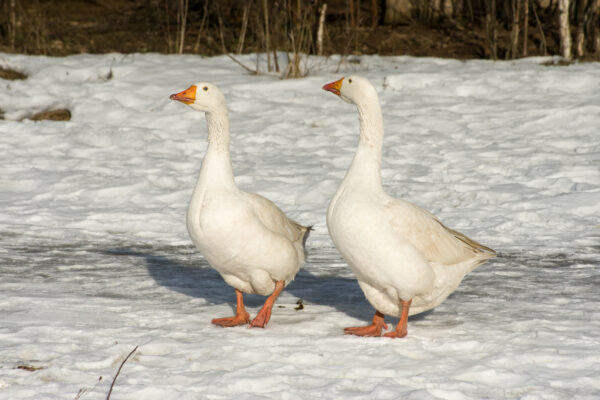
Raising geese successfully in winter is similar to raising other poultry. Although they can survive winter, geese require additional care to keep them comfortable and happy all season long.
Do Geese Tolerate the Cold?
Raising geese in northern climates is achievable, as most domestic goose breeds tolerate the cold and snow with ease. Their warm feathers and fluffy down keep their bodies at a cozy 104.9-107° F., keeping them snug and warm on even the coldest winter nights.
Like other waterfowl species, domestic geese have a countercurrent heat exchange, meaning they can isolate the blood that flows through their legs and feet. This helps a goose’s body temperature remain stable by not allowing body heat to escape through their naked legs and feet.
Did you know? When it’s cold, geese tuck their feet up under their wings to keep them warm and help protect against frostbitten webbing and toes.
Providing Proper Shelter When Raising Geese
When raising geese in winter, an enclosed shelter is important to keep them healthy. Not only should your flock’s coop or barn walls help keep out cold, wind, and precipitation, but the geese body heat also helps raise the temperature inside the building.
When constructing a shelter for your flock, be sure to include plenty of ventilation to avoid condensation from building up.

You can make a well-ventilated shelter without allowing it to be drafty by putting small wired air vents near the ceiling of the coop or barn. These vents help eliminate moisture buildup in the coop and prevent respiratory conditions, without chilling the geese.
Can Geese Go Outside in Winter?
Raising geese in winter can be more challenging, as oftentimes the cold and snowy condition is not an ideal playground for poultry. However, on milder winter days, geese welcome the opportunity to go outside and stretch their legs.
When allowing your flock outdoors all day, it’s a good idea to leave the coop door open so they can escape the cold and wind as needed.
On days when temperatures and wind chills struggle to get above thirty degrees Fahrenheit, allowing geese outdoors only for short periods of time and removing snow from the run are good ideas to prevent frostbite.
Do Geese Need to Swim in Winter?
Geese need access to water at all times to stay hydrated, maintain feather health, and clean their nares (the airholes on the tops of their beaks).
On milder days, being able to bathe in deeper water (such as a stock tub or kiddie pool) is essential to keeping their feathers clean and in tiptop condition.
While watering your geese is a must, keep in mind that any splashing indoors will soak your flock’s bedding, which inturn will make it icy. Therefore, you only want to provide swimming water outdoors in a cleared area to keep the mess more manageable.
When raising geese in winter, the best way to ensure they have access to fresh water at all times is by providing a two-gallon water bucket in the coop and run. These buckets do not freeze over easily, and they are deep enough for geese to submerge their heads to clean their eyes and airways.
Note: Never use heated water dishes for geese, as they are quite destructive and can even chew through electrical cords.
How to Spot Frostbite When Raising Geese
In winter, it’s important to check geese twice daily for frostbite, especially if they spend most of their time outdoors. Some varieties are especially prone to frostbite, such as Chinese and African geese. These breeds have large, fleshy knobs at the tops of their beaks that can easily be damaged by frost.
To prevent frostbite, keep Chinese and African geese inside the coop or barn on cold, windy days. If you suspect your goose is suffering from frostbite, look for orange spots on otherwise black beaks. Applying petroleum jelly to their knobs can help protect against frostbite and can also be used to treat a mild case that has already developed.
Winter Feeding Tips for Raising Geese
A common myth when raising geese is the belief that during the winter months, domestic geese do not require additional feed or grains. While geese do enjoy green pastures and foraging for their own food, their dietary needs are a bit more complex, especially during the winter months.
Geese should be fed a complete duck food or flock raiser throughout the year to help them stay healthy. This is especially needed in winter when food supplies are scarce.
As January rolls into February, adding free-choice oyster shell will also help to prepare female geese’s bodies for the laying season.
Just like chickens and other poultry, geese also enjoy a handful of corn or scratch to help keep them warm overnight, so be sure to offer your geese a little grain after locking them in the coop each evening. Note: Feeding grain in the coop is a good way to entice shy geese into the enclosure each night.
Predator Protection When Raising Geese
If you’re new to raising geese, it may sound strange to think of them needing protection from predators, as they are frequently used to guard smaller poultry. Regardless of their use as guard geese, domestic geese should still be provided with a predator-proofed coop and run.
If raising geese in a pasture, consider moving them to a smaller fenced area for the winter months and providing adequate shelter to protect against predators.
Whether raising geese in confinement or free-ranging, keeping domestic waterfowl off of ponds and streams and locking them in a safe enclosure each night is essential to preventing a predator attack.
Special Considerations for Raising Geese in Winter
Although most geese tolerate the cold, Sebastopol geese are not as cold-hardy as many other breeds. These beautiful geese sport loose, curly feathers that make it challenging for the goose to snuggle into its own fluffy down the same way a straight-feathered breed can.
For these geese, it is especially important to make sure they are kept dry and warm. Provide windbreaks in the run or pasture and allow access to an enclosure at all times.
FAQs About Raising Geese in Winter
Can geese survive winter without heat?
Yes. Most geese are cold-hardy and do not need supplemental heat as long as they have dry bedding, wind protection, and adequate shelter.
Do geese need a heated coop in winter?
No. Heated coops are unnecessary for geese and can increase moisture, which raises the risk of frostbite and respiratory issues.
How cold is too cold for geese?
Healthy adult geese tolerate freezing temperatures well, but prolonged exposure to extreme cold, wind, and wet conditions can lead to frostbite.
What should I feed geese during winter?
When raising geese in winter, provide a complete waterfowl or flock raiser feed, along with grit and free-choice oyster shell as laying season approaches.
Can geese go outside in the snow?
Yes. Geese enjoy going outdoors in winter, especially on calm, mild days, but snow and ice should be cleared to help prevent frostbite.
Do geese need swimming water in winter?
Geese need access to drinking water at all times. Swimming water is optional and best offered outdoors on milder days to avoid wet bedding.
Which goose breeds need extra winter care?
Sebastopol, Chinese, and African geese may require additional protection due to feather type or exposed facial features.
Final Thoughts on Raising Geese in Winter
If provided with the right nutrients and protected from harsh climates, raising geese successfully in winter and keeping them comfortable is possible.
This article on raising geese in winter was written for Hobby Farms and Chickens magazines. Click here to subscribe.