The Rouen duck is a large, beautiful duck breed prized for its calm temperament, striking mallard-like coloring, and usefulness in the backyard flock. Originally developed in France and later refined in England, the Rouen is known for being a friendly dual-purpose breed that can provide flavorful meat, a steady supply of eggs, and excellent garden pest control. While these hefty ducks cannot fly like their wild mallard cousins, their laid-back personalities and attractive appearance make them favorites among backyard poultry keepers. Whether you are looking for a family-friendly pet duck, a reliable forager, or a stunning exhibition bird, the Rouen duck has a lot to offer.
Key Takeaways
- The Rouen duck is a large domestic duck breed that resembles a mallard in color and pattern.
- Rouens are known for their calm, friendly personalities and often bond closely with their owners.
- Production Rouen hens lay about 100–150 large eggs annually.
- Rouens are valued as dual-purpose ducks for both egg production and flavorful meat.
- These heavy ducks cannot fly and require strong predator protection.
- Rouens are excellent garden helpers that eat slugs, beetles, and other pests.
- Healthy Rouen ducks typically live between six and ten years.
Rouen Duck History and Origin
The Rouen duck was first bred in the late eighteenth or early nineteenth centuries by farmers in France. However, it wasn’t until the breed reached England that it received its name.
British enthusiasts redesigned the original breed to what is now today’s Rouen. This new breed was first named “Rhone” for an area in southwest France, then was later changed to “Rohan” in honor of a Catholic priest. However, neither name stuck, so the British tried a third name, “Roan,” for a mix of colors before finally deciding on the name “Rouen” for a town in northern France.
The Rouen duck entered the American Poultry Association (APA) Standard of Perfection in 1874 as a heavyweight breed.
Today the exhibition Rouen is listed as “Watch” by the Livestock Conservancy, meaning there are fewer than 2,500 annual show registrations in the U.S. and fewer than 10,000 worldwide.
Rouen Duck Appearance and Size
The Rouen duck is the only domestic duck breed to have two different standards within the APA (the exhibition Rouen and the production Rouen, also known sometimes as the Rouen Claire).
The exhibition Rouen duck (also known as the “standard”) is a massive bird with a large, blocky body and a horizontal build. The Production Rouen is a much trimmer bird (with both hens and drakes averaging two pounds less than the exhibition Rouen). Production Rouens have a more vertical body style and are often the preferred choice for both egg production and backyard flocks. Both hens and drakes of both strains have a rounded head with a medium-sized bill.
Drakes should sport a dark green head, tail, and upper neck (with a white neckband at the base of the neck); a yellow bill; and bright orange legs and feet. The breast is a beautiful chestnut brown. The upper body should be dark gray, while the lower body is a lighter shade of gray.
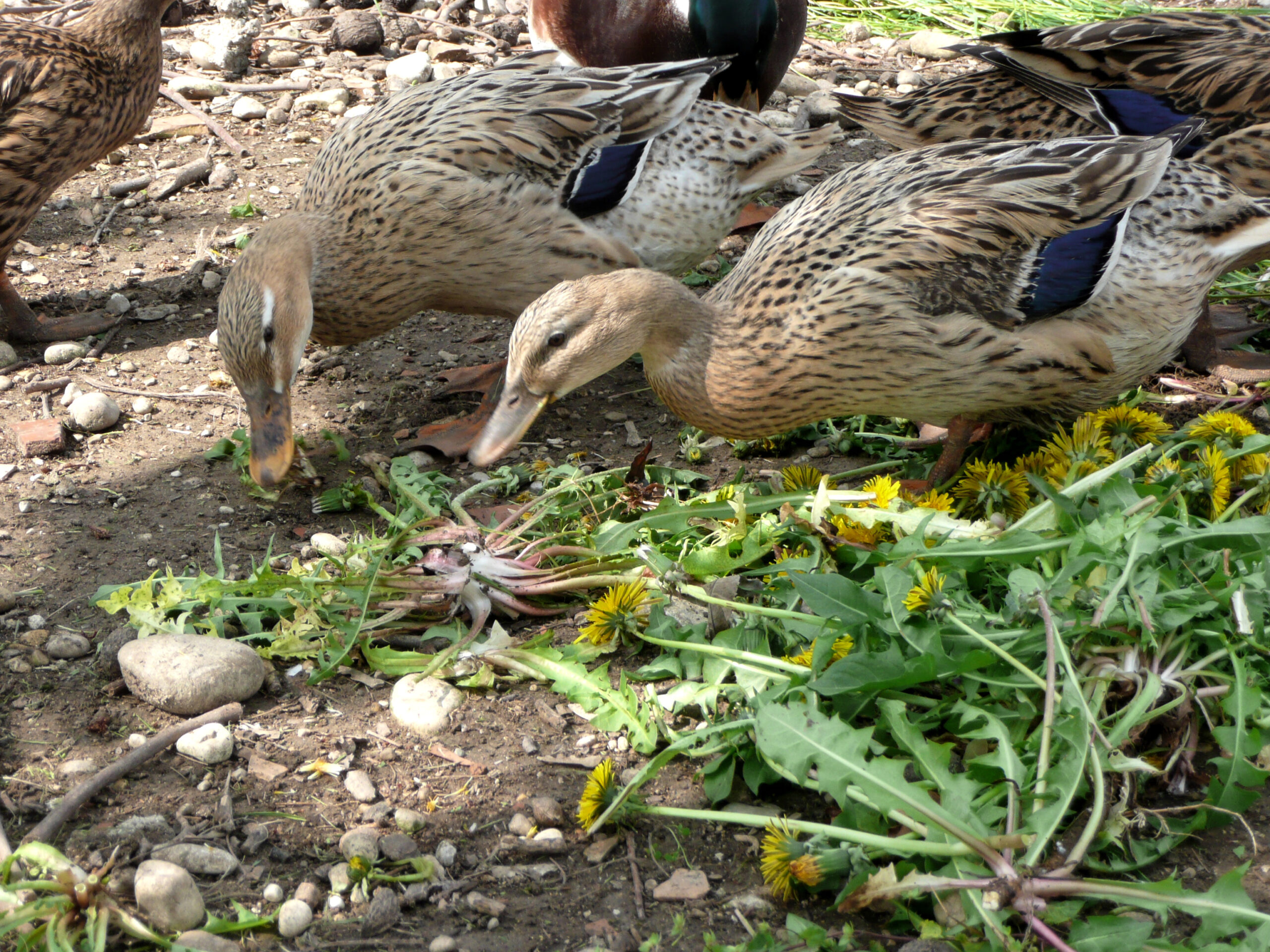
Female Rouen ducks have brown feathers with black penciling and a brown bill. The uniquely colored feathers give females a quiet, eye-catching beauty. Like the drake, female Rouen ducks’ legs and feet are bright orange.
Both drakes and hens have blue wing patches called speculums.
Average Exhibition Weight: Drakes: 10–12 lbs; Hens: 9–10 lbs.
Average Production Weight: Drakes: 8–10 lbs; Hens: 7–8 lbs.
How Many Eggs Do Rouen Ducks Lay?
Production Rouen duck females are good backyard layers, averaging one hundred to one hundred and fifty large, blue, green, or white eggs annually. The exhibition strain averages fewer eggs, with females laying between 35 and 100 eggs.
Female Rouens are known for going broody and can make attentive mothers. However, like many ducks, they may need a few attempts at sitting and raising young to get it right.
Are Rouen Ducks Good Meat Birds?
The Rouen duck is a delicious choice for those looking for a slow-growing, succulent table bird. Their fatty carcasses aid in their juicy, tender meat, making the Rouen a good choice as a meat duck.
Rouen ducks can be butchered between the ages of ten and twelve weeks after the first juvenile molt for easy plucking. However, if desiring a larger carcass, some experts suggest butchering between the ages of five and six months.
Rouen Duck Temperament and Personality
The Rouen duck is a delightful addition to the backyard flock. Their friendly, laid-back dispositions make this duck great with kids and adults alike, especially if handled from an early age. Rouens are reported to become quite attached to their owners, and some will even follow their favorite human around the yard.
Both drakes and hens are reported to be entertaining pets. However, they may not be the best breed if you have close neighbors, as Rouen hens can be quite loud and chatty.
In the coop, Rouens get along well with other ducks and do well in mixed flocks.
Common Rouen Duck Health Concerns
Rouen ducks are generally considered a healthy breed, but they can be prone to bumblefoot and egg-laying disorders if allowed to become overweight.
To prevent obesity, provide a spacious run to allow room for foraging. Adding enrichments such as treat balls, various water sources, etc. is a good idea to keep these busy ducks healthy and happy.
Rouen Duck Lifespan
If kept safe from predators and not allowed to become obese, Rouen ducks live an average lifespan of six to ten years.
Do Rouen Ducks Eat Garden Pests?
The Rouen duck is an excellent choice for backyard flock owners who also enjoy gardening. Like most ducks, Rouens are good at pest control and are usually gentle on mature plants while working to “weed out” harlequin bugs, Japanese beetles, slugs, and other harmful pests.
Note: To prevent plant damage and predator attacks, never leave ducks unattended in the garden. Never allow ducks access to a garden that has been treated with chemicals such as pesticides or herbicides.
Protecting Rouen Ducks From Predators
While they may look a lot like their wild cousins, Rouens lack the same flying ability to escape predators that mallards have. Although larger than their wild cousins, Rouen ducks require extra protection from aerial, ground, and water predators.
Protect ducks from a predator attack by providing a completely predator-proof coop and run. Cover gaps, window openings, and the walls and roof of the run with 16-gauge, half-inch hardware cloth to protect ducks from a predator attack. To deter digging predators, attach 16-gauge, half-inch hardware cloth predator skirts to the perimeter of the coop and run.
Never allow these beautiful ducks access to ponds or other waterways where they can be easily picked off by hungry predators. Due to their inability to avoid predators, the Rouen duck should not be allowed to free-range unless directly supervised by an adult.
Frequently Asked Questions
Do Rouen ducks fly?
No. Because of their heavy bodies and large size, Rouen ducks cannot fly like wild mallards. At most, they may manage a short hop or flutter, but they are considered a nonflying domestic duck breed.
How large do Rouen ducks get?
Production Rouen ducks usually weigh between seven and ten pounds, with females averaging seven to eight pounds and drakes averaging eight to ten pounds. Exhibition Rouens are even larger and can weigh up to twelve pounds.
Are Rouen ducks good pets?
Yes. Rouen ducks are known for their calm, social personalities and often become very attached to their owners. Their gentle temperaments make them a good choice for families, beginners, and backyard flocks.
Do Rouen ducks lay many eggs?
Production Rouen hens typically lay between 100 and 150 large eggs per year. Their eggs may be white, blue, or green tinted. While they are not as productive as some specialized laying breeds, they are reliable backyard layers.
How do I tell male and female Rouens apart?
By around twelve weeks of age, male Rouens (drakes) develop glossy dark green heads, white neck rings, and gray bodies. Female Rouens remain brown with black penciling across their feathers, helping them blend into their surroundings.
Are Rouen ducks noisy?
Female Rouen ducks can be fairly loud and chatty, especially when excited or calling to flockmates. Drakes are usually much quieter and make softer, raspy sounds.
Final Thoughts on the Rouen Duck
The Rouen duck is a beautiful, versatile breed that offers much more than its mallard-like appearance. With their calm personalities, reliable egg production, flavorful meat, and natural pest-control abilities, Rouens are excellent additions to many backyard flocks. Their friendly nature also makes them enjoyable companions for families and poultry keepers who want ducks that are both useful and personable.
Although Rouens require good predator protection and careful weight management, these gentle birds reward attentive owners with years of entertainment and companionship. Whether you are interested in keeping ducks for eggs, gardening help, exhibition, or simply as pets, the Rouen duck is a hardy and eye-catching breed well worth considering.
This article about the Rouen duck breed was written for Hobby Farms and Chickens magazines. Click here to subscribe.