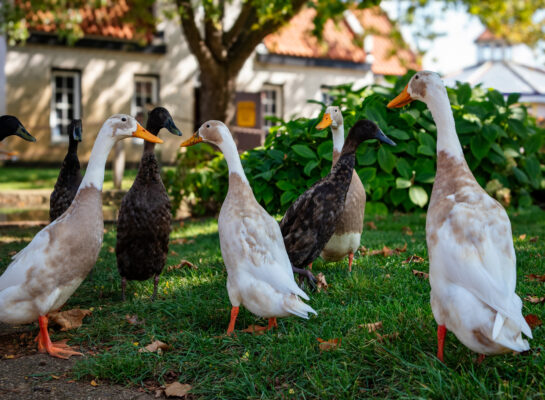
Runner ducks may not look like other domestic waterfowl, but this unique, upright breed has a lot to offer. Popular with backyard flock keepers, hobby farmers, and working farms alike, Runner ducks are valued for their egg-laying ability, pest control skills, and versatility in everything from gardens to training herding dogs.
Runner Duck Breed History
Originally named Indian Runner ducks, the breed was spotted by the English in Malaya in 1851. The British credited Malaya with breeding the first Indian Runners. However, seventeenth-century Dutch paintings were said to feature ducks that resembled today’s Runner ducks, while other sources say they were developed in Indonesia as early as 1000 AD.
Before they were spotted in Asia, the breed appeared in England between the 1830s and 1850s, where they became popular for their egg-laying abilities. However, they were not brought to America until the late nineteenth century. They were admitted into the American Poultry Association (APA) in 1898.
Physical Attributes of Runner Ducks
Nicknamed “penguin ducks,” Runners have a lean, vertical-shaped body. Unlike other ducks, they run instead of waddling and possess strong leg muscles. Due to these attributes, Runner ducks can move more easily on the land than other breeds.
Featuring long necks and small flat heads, the breed stands at forty-five to seventy-five degrees. Their legs are positioned far back on their bodies, giving them their famous stance.
The APA recognizes this breed in a variety of colors, including black, blue, chocolate, Cumberland blue, fawn and white, gray (Mallard color), penciled, and white.

Average Mature Weight:
Drakes: 3.5 – 5.1 lbs.
Ducks (Females): 3 – 4.5 lbs.
Average Lifespan:
6 – 12 years
Are Runner Ducks Friendly?
Runner ducks are energetic and high-strung, but when handled frequently and raised as ducklings, they can make good pets. Drakes often possess a friendlier personality than the females, and if kept in bachelor pads, can be quite friendly.
When raised as pets, consistent handling several times a week is a must to keep this excitable breed calm and friendly. While they do enjoy interacting with their human family, they are not considered lap ducks.
These ducks love to forage and are not usually tolerant of small runs. They can become vocal in small living situations and are not afraid to voice their displeasure. However, they can tolerate confinement well if provided with a large, spacious run with plenty of room to stretch their legs.
The breed gets along well with other ducks and does well in mixed flocks. However, since they are a lightweight breed, they should not be housed with larger breeds to avoid injuries.
Are Runner Ducks Good Egg Layers?
Runner females are excellent egg layers, producing an average of one hundred to one hundred and eighty large white eggs annually. Some strains produce as many as two hundred and fifty eggs annually. They are not known for their broody tendencies, which is good news for those looking for an egg layer versus a broody.
Can Runner Ducks Be Meat Birds?
Due to their thin and small body build, the Indian Runner is not considered a good choice to raise for meat. But what they lack in meat production, they make up for with their other unique purposes.
Bug Patrol
Runners are excellent at pest control and are considered one of the best breeds for gardeners, orchardists, and sheep owners.
These busy duckies comb every inch of the garden, pasture, or orchard searching for and consuming harmful bugs and slugs that can ruin gardens and fruit trees and make livestock sick.
The breed is so proficient at slug control that they are often used in New Zealand to help control liver flukes.
Working Ducks
Another reason for the Runner ducks’ fame is their ability to work in rice fields without causing damage to the grain. In Asia, Runner ducks can be seen walking to the rice fields each morning with their handlers following behind.
The ducks work in the fields until evening, consuming harmful pests and weeds from the fields before they are herded home again before dark.
Because of the Runner ducks, Asian farmers can keep pests and weeds under control without the use of harmful pesticides and herbicides.
As the ducks work, they poop out nutrient-rich manure, which fertilizes the rice.
Dog Training Extradordinaire
Runners are often seen in herding dog trials and are the first livestock many herding dogs learn to move. The ducks mimic sheep as they flock together and tend to move in one unit, making them an easy target for dogs to practice on.
Another upside to training herding dogs first with Runner ducks is that they slow the herding training down, making it easier for the dog to learn the commands.
After they have mastered moving the ducks successfully, the dogs are then ready to start moving cattle and sheep.
The ability to aid in training herding dogs has made this duck popular for dog trainers, farmers, and ranchers.
Are Runner Ducks Healthy?
Yes. While they can be prone to common duck health problems like aspergillosis and botulism, the breed is considered to be healthy.
Runner Ducks FAQ
Do runner ducks need a pond?
Runners do not require a pond, but they do need access to water deep enough to submerge their heads to keep their eyes and nostrils clean. A kiddie pool or deep water pan is sufficient for most flocks.
Are runner ducks noisy?
These ducks can be vocal, especially females. They tend to become louder when bored, confined in small spaces, or excited by food or activity.
Can runner ducks fly?
Runner ducks are generally poor flyers due to their upright body shape, but some individuals may manage short, low flights. Wing clipping may be necessary in unfenced areas.
Are runner ducks good with chickens?
Runners usually do well in mixed flocks with chickens, provided they have separate water sources and are not housed with aggressive or much larger poultry breeds.
How many eggs do runner ducks lay per year?
Most runner duck females lay between 100 and 180 eggs annually, with some strains producing up to 250 eggs per year under ideal conditions.
Final Thoughts
Runner ducks offer many benefits to farmers and backyard enthusiasts who are dedicated to spending extra time handling their flock. With their training abilities, pest control, and egg production, it’s hard to find a more versatile duck breed.
This article was written for Hobby Farms and Chickens magazines. Click here to subscribe.