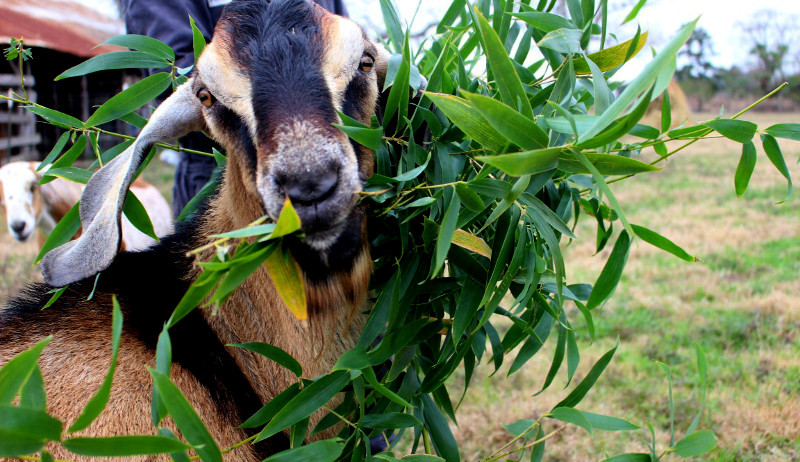
Goat treats can be purchased from a feed store or online, but some of the best options can be found right in your own backyard and garden. From sunflowers and herbs to berries, pumpkins, and garden vegetables, many fresh foods make healthy goat treats when offered in moderation. Learn which fruits, vegetables, and plants are safe to share with your herd and how to avoid common feeding mistakes.
Key Takeaways: Goat Treats
- Many common garden plants, fruits, and vegetables can make healthy goat treats when fed in moderation.
- Goat treats should make up no more than 10% of a goat’s daily diet to prevent digestive problems.
- Safe options include sunflowers, apples, berries, pumpkins, kale, zucchini, and many herbs.
- Always research plants before feeding them to goats, especially wild plants and weeds.
- Avoid toxic foods such as chocolate, onions, garlic, apple seeds, and moldy feed.
- Fresh goat treats can provide enrichment while helping strengthen the bond between goats and their owners.
How to Safely Feed Goat Treats
Goats love treats and will happily consume more than their fair share if given the opportunity. Too many treats, however, can mess with the bacteria found in a goat’s stomach, which can lead to digestive upsets. Even healthy treats can be harmful if fed in large quantities, so be sure to limit treats to ten percent of the daily diet.
Before feeding weeds or other plants, check with your state extension office to make sure the plants you are feeding are labeled as “safe” for goats to consume.
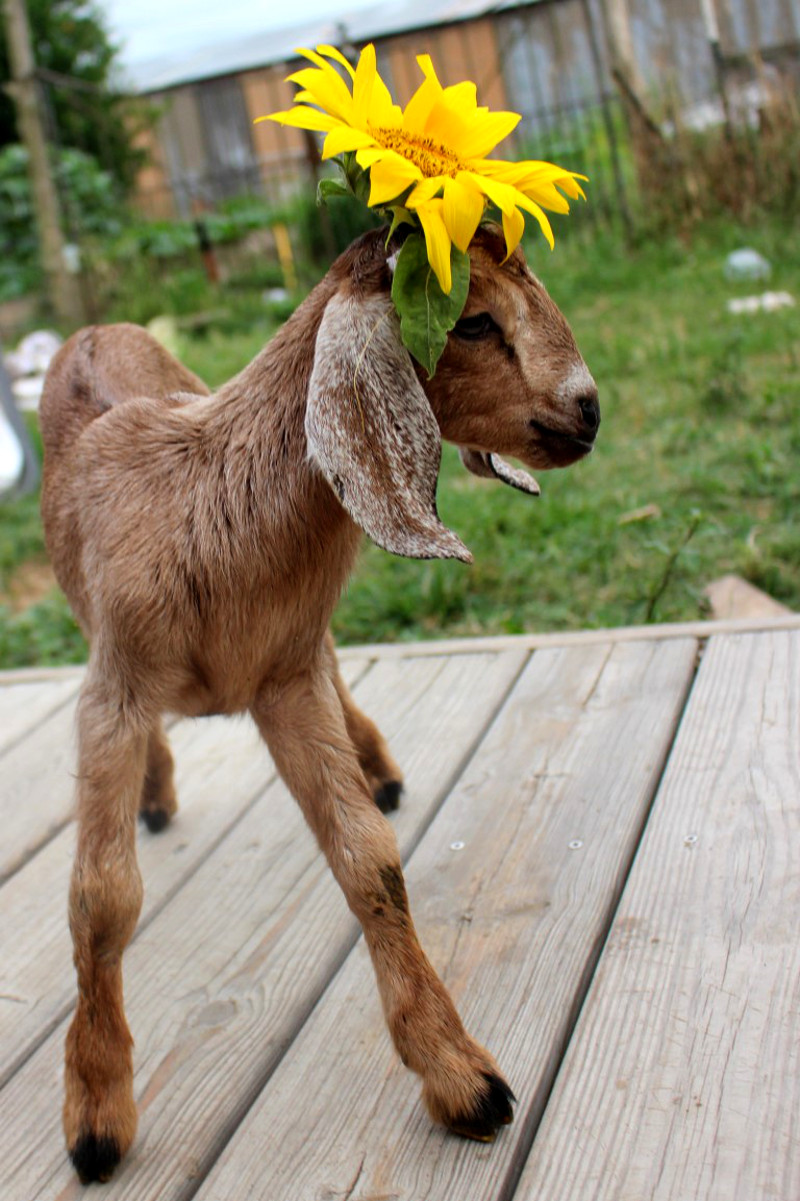
#1 Sunflowers: A Favorite Goat Treat
Sunflowers are great goat treats, as the entire plant (leaves, stem, flower, and seeds) is safe for goats to consume. Sunflower seeds are high in fats, making them a good choice for dairy goats, as eating them can help females (called does) maintain a healthy weight.
Seeds are also believed to improve heart health, support the immune system, reduce inflammation, boost energy, and are a good source of vitamins B1 and B6, selenium, iron, manganese, and potassium.
Lisa Seger
#2 Parsley: A Nutritious Herb Goat Treat
Parsley is another delicious option for home-grown goat treats. Goats love the taste of fresh parsley and will consume it as eagerly as they would a carrot top.
High in vitamins A, B, C, and K, and minerals, calcium and iron, parsley works to support a healthy digestive system and improve kidney health. Never feed parsley to lactating goats, as it has been reported to result in does drying up faster than usual.
#3 Raspberry Leaves: A Garden Goat Treat
Raspberry leaves are known for their ability to promote good reproductive health. This beneficial plant helps to strengthen the uterus and improve circulatory health in pregnant does and helps them recover after giving birth.
A lesser-known health benefit, raspberries also support a healthy urinary tract and can help prevent urinary calculi (kidney stones) in male goats.
Despite their bitter flavor, raspberry leaves are among the top favorite goat treats. Note: Feed only fresh raspberry leaves, as these sensitive leaves can quickly become moldy if not properly dried.
#4 Peppermint: A Refreshing Goat Treat
Peppermint is high on the list of favorite goat treats. Goats enjoy the taste of fresh peppermint, and you might even notice that their breath smells better after your herd has eaten some.
This aromatic herb has many health benefits, including being anticoccidial, antiviral, and a natural insect repellent. Known for its healing properties, peppermint helps to line the stomach against damage.
Peppermint is also full of antioxidants, which help to neutralize free radicals that could build up in a goat’s body over time.
#5 Apples: A Sweet Goat Treat
Apples are a favorite on the list of goat treats. Like peppermint, apples are full of antioxidants, helping to keep your herd healthy.
Delicious and sweet, apples have many other health benefits, including providing fiber, energy, and hydration to your herd. Apples are also a good source of calcium, magnesium, phosphorus, potassium, and zinc.
Note: Apple seeds are toxic to goats, so be sure to remove them before feeding apples to your herd.
#6 Berries: A Sweet and Nutritious Goat Treat
A list about goat treats wouldn’t be complete without strawberries, blueberries, and raspberries. Tasty and nutritious, goats love berries and will happily consume most of your crop if given the opportunity.
Berries offer many nutrients, including vitamins and minerals, and are an excellent source of antioxidants. Like most fruit, however, they are high in sugar content, so be sure not to overfeed these sweet-tasting treats.
Goats will also eat wild berries, including wild strawberries, raspberries, and blackberries.
#7 Red Clover: A Protein-Rich Goat Treat
Red clover is another delicious choice for goat treats. A rich legume, red clover should only be fed in moderation to prevent bloat. The flowers, leaves, and stems are all edible, providing goats with a snack rich in vitamins B1, B3, and C and minerals, calcium, magnesium, phosphorus, and potassium.
Clover is also a good source of protein, making it a good addition to lactating does’ diets.
#8 Pumpkins: An Autumn Goat Treat
Pumpkins are a fun autumn goat treat. The flesh, skin, and seeds are all safe for your herd to consume, but the seeds provide the most nutrients. Full of fiber, antioxidants, and vitamins, pumpkin seeds are even thought to help prevent internal parasites in goats.
Both ornamental pumpkins and neck pumpkins are edible, but care should be taken to avoid feeding moldy or rotting pumpkins to your herd.
#9 Kale: A Healthy Garden Goat Treat
A popular garden green, kale is tasty and nutritious and is a good source of fiber. Bursting with vitamins A, C, and K, and minerals calcium, copper, iron, magnesium, and potassium, kale has many health benefits. Although healthy, kale should only be fed in moderation a few times a week.
Did you know? Kale is one of the few goat treats to be labeled as “safe” for pregnant does and baby kids. Bear in mind that kale should never exceed ten percent of your herd’s daily diet to prevent bloating and other digestive upsets.
#10 Zucchini: A Hydrating Summer Goat Treat
Another popular squash for goats, zucchini offers a delicious, hydrating treat on hot summer days. High in several vitamins and minerals, zucchini is a good source of vitamin C and is chocked full of antioxidants.
Eating zucchinis is also good for a goat’s eye health, as this high-yielding summer squash contains two antioxidants (lutein and zeaxanthin) to support healthy eyes.
To feed, cut zucchinis into bite-sized pieces to avoid choking hazards. Zucchini should be fed in small quantities several times a week to prevent digestive upset.
#11 Dandelions: A Nutritious Wild Goat Treat
Another highly nutritious weed on our goat treats list, the dandelion is a powerhouse of nutrients. The entire plant (leaves, flowers, and stems) is edible, providing your herd with a delicious, nutrient-packed snack.
Dandelions are high in vitamins A, B, C, E, and K and are also an excellent source of calcium, iron, magnesium, phosphorus, potassium, and zinc. A hardy perennial, dandelions are known for their antiparasitic, anti-inflammatory, and anticancer properties.
#12 Celery: A Crunchy Goat Treat
A crunchy, hydrating snack, celery is an excellent choice for goat treats. Celery contains several vitamins and minerals, but the most amazing part about this vegetable is how it naturally supports your herd’s organs.
Celery’s active compounds help to relax the arterial walls to create a healthier heart, while the fiber and phytonutrients work to protect the stomach’s lining. Celery also works as a diuretic to support healthy kidneys and liver.
Bonus Goat TreatsBamboo We started growing bamboo because my husband just loves it. But we experimented by using it as fodder during droughts, and now we offer it as snacks for the goats—or to bribe them when we need to move the entire herd. The goats will follow a nice, leafy stalk anywhere. I will issue a word of advice, though—while bamboo is almost indestructible once settled, it can be tricky to start. You’ll need to fence it off to keep your goats from grazing before it is well established. Willow For us, willow was another experiment. We planted the bamboo during droughts. We planted the willow during times of flooding. The goats have loved both for snacks. Willows are an all-around great addition to any farm. They remediate soil and water pollution, and they are as easy to grow as sticking a twig in the ground. You can buy bare rootstock (a stick, basically) and end up with trees overhead in less than two years. You can propagate your own with cuttings over and over again. The rate at which they renew growth make them a great prune-and-feed treat. 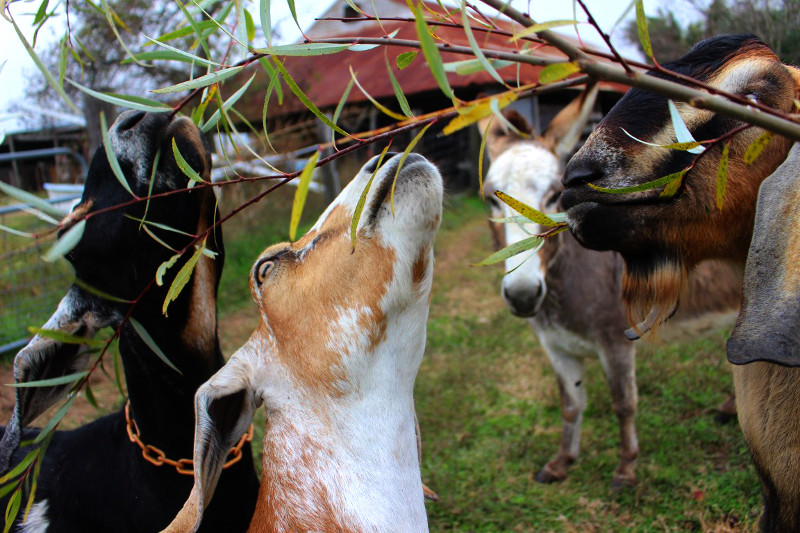 Lisa Seger Cole Crops & Turnips I have yet to grow any cole crop that the goats won’t eat. (Cole crops include broccoli, cabbage, cauliflower, collards and so on.) I don’t ever plant these only for the goats, but I like to plant a lot of them for us and then feed the goats, for example, the tough outer leaves from cabbages as treats. As for turnips, I routinely plant too many and start desperately feeding them to our livestock for snacks when I get tired of them. They are ridiculously easy to grow, and the greens are prolific and make a great treat. Sweet Potatoes We planted three or four little purple, organic sweet potato slips about four years ago. No matter how well I think I have harvested and turned the beds, they reliably come back every year and put on yards and yards of vines. Sometimes we get potatoes, sometimes we don’t. But the leaves have fed us through the summer after all other greens have given up in our heat, and they have provided the goats with plenty of snacks, too. Sweet potato leaves make great goat snacks; they are high in lots of vitamins and provide a small boost in calcium, a welcome nutrient for goats in milk. By Lisa Segar |
Frequently Asked Questions
What can I safely feed my goats?
Goats can eat many fruits and vegetables, including apples, berries, garden greens, herbs, oats, pears, root vegetables, and squashes.
What foods are toxic for goats?
Members of the nightshade family, allium vegetables (garlic, leeks, onions, etc.), apple seeds, pitted fruit and leaves, meat, chocolate, and moldy hay and feed.
For a complete list of toxic foods and plants for goats, contact your state extension office.
How often should I feed my goats treats?
Goats can have treats daily, but it is important not to overfeed them. As a general rule of thumb, treats should not exceed more than ten percent of your herd’s daily diet.
Can male goats eat treats?
Male goats can eat treats, but owners should be careful to only feed treats that are low in calcium to prevent urinary stones. Some experts suggest feeding male goats a complete grass-fed diet, but if you choose to feed treats, keep it limited to five percent of the daily diet.
Can goats eat table scraps?
In general, most table scraps are not safe for goats to eat, so owners should use extreme caution to ensure the table scraps fed to goats are not moldy or spoiled and are safe for goats to eat.
Can baby goats eat treats?
Yes. Baby goats can enjoy treats once they begin eating solid foods, but treats should be introduced slowly and should never replace milk or a balanced diet.
What are the best treats for goats?
The best goat treats are fresh, natural foods offered in moderation, including leafy greens, herbs, berries, fruits, and garden vegetables that are safe for goats.
Final Thoughts
Goat treats do not have to come from a feed store. Many safe and nutritious options can be grown in your own garden or gathered from approved plants around your property. From sunflowers and berries to pumpkins and leafy greens, these fresh snacks provide enrichment while supporting a healthy diet when fed in moderation. Always introduce new treats slowly and remember that a balanced goat diet should remain the foundation of good herd health.
Want more practical advice for raising healthy animals? Subscribe to Hobby Farms magazine for expert tips, seasonal projects, and ideas for your backyard farm delivered straight to your inbox.