Categories
Waterfowl

How to Take Care of Ducks in Winter

How to take care of ducks in winter may not always be obvious. With their warm, downy feathers and insulating layers of fat, you might feel like you don’t need to help keep ducks warm in winter. Ducks may appear to have everything they need to survive winter’s harshest climates. However, if ducks are to thrive through winter, providing them with some extra care is essential.

Access to fresh swimming water, proper shelter and good nutrition are some necessities ducks need during the cold months. Here’s a list of what ducks need to beat winter’s cold.

Keeping Ducks’ Water Clean and Accessible

It may sound strange, but access to fresh swimming water is necessary to help keep ducks’ feathers in tip-top condition. The reason for this unusual trait is an insulating layer of air between each layer of feathers. If a duck can’t bathe frequently, the feathers become dirty and compacted, releasing the insulating air from the feathers. Without the added layers of air in their feathers, ducks are prone to catching a chill.

Ducks have another unique trait that allows them to stay warm and dry while swimming, called the oil gland. Frequent swimming enables ducks to keep their oil glands in working condition. The oil gland (located just above the tail) releases a waxy oil that a duck spreads over its feathers while preening. This oil works as a water repellent, ensuring all feathers stay waterproof.

Ducks also need access to a fresh, unfrozen bucket of water for drinking and cleaning out their eyes and nares to prevent eye infections and keep their airways clean.

how-to-take-care-of-ducks
Erin Synder

Why Kiddie Pools Beat Ponds in Winter

While allowing ducks to swim in a kiddie pool is safe in winter, giving them access to a pond is not. Floating on a pond increases the chances of a predator attack, and ducks can get trapped under shifting ice while feeding or diving underwater.

duck wading pool showing ducks need some sort of water but it doesn't have to be a pond
Erin Synder

Feeding Ducks for Cold Weather

Like all livestock, ducks need proper nutrition to thrive in winter. Providing them with a well-balanced, complete layer feed is the best way to ensure your ducks get the necessary vitamins, minerals, and other nutrients they need to thrive. When acquiring feed for ducks, choose a feed that includes probiotics and prebiotics, is nonmedicated, and is made with grains grown on North American Farms. Avoid feeds with animal by-products, growth hormones, artificial byproducts, and fillers.

ducks enclosure in winter
Erin Synder

Healthy Treats to Boost Immunity

Supplementing a duck’s diet with some healthy treats can help boost their immune system by adding extra nutrients. Feed beneficial treats such as peas, wheat kernels, oatmeal and black soldier fly larvae that contain essential vitamins, minerals and other nutrients. Avoid unhealthy options such as corn, pasta, red meat, poultry, bread and mealworms, as these treats have little nutritional value.

Allowing ducks to forage for treats is an excellent boredom buster. Bored ducks are unhappy ducks, and this fun mental stimulation will help keep your ducks happy, busy and thriving until spring.

Creating a Cozy Winter Shelter

Ducks need fresh air and sunshine to stay healthy, but when the snow starts to fall and temperatures dip below freezing, ducks need a sheltered area in the run to escape winter’s chill. Creating a weather shelter for ducks can be as easy as making a shelter out of pine boughs or constructing a “house” out of plywood. When building a weather-proof shelter, remember that these shelters are for protection from winter weather only and cannot keep out predators.

When housing Muscovy ducks, keep them confined to the coop when the temperature dips below 40 degrees Fahrenheit to prevent the bare skin on their faces from frostbite.

Protecting Ducks from Extreme Cold

Even though ducks love being outdoors, when temperatures or wind chills reach below 15 degrees, it’s time to head to the coop. While ducks are incredibly hardy, extreme temperatures and wind chills can be harmful and could cause sickness or death. Keep your ducks warm, and they’ll be happier.

Before letting your ducks into the run during cold winter mornings, check the local forecast to ensure the temperatures and wind chills are safe for them to be out.

Keeping Ducks Safe from Predators

Protecting ducks from a predator attack is the priority in helping them survive and thrive through winter. While predator attacks happen throughout the year, the cold and snowy conditions make it harder for predators to find a meal and make them more likely to attack backyard ducks.

To keep ducks safe from predators, house them in a predator-proof coop and run. Cover the run’s top and sides with half-inch sixteen-gauge PVC heavy wire, leaving no gaps larger than one-half inch on the sides or roof. Attach predator skirts around the perimeter of the run to deter digging predators.

House ducks in a coop or barn with a wooden or cement floor to prevent digging predators from gaining access to the coop. Cover windows and holes larger than one-half inch with half-inch 16-gauge PVC heavy wire. Secure all door fixtures with padlocks to keep curious raccoons from opening coop doors, pop holes or nesting boxes.

how-to-take-care-of-ducks
Erin Synder

Knowing how to take care of ducks in winter can help backyard ducks survive and thrive through the harshest months. With a little effort, you can keep your ducks warm and soon they’ll be providing you with fresh eggs again in the spring.

FAQ: How to Take Care of Ducks in Winter

Q: Do ducks need special care in winter?
A: Yes. Even with their insulating feathers and fat, ducks benefit from fresh water, proper nutrition, shelter, and protection from extreme cold and predators to stay healthy during winter.

Q: Can ducks swim in frozen water?
A: No. Ducks need access to unfrozen water for drinking and preening. Use a kiddie pool or heated waterer to keep water accessible in cold temperatures.

Q: What should I feed my ducks in winter?
A: Provide a complete layer feed supplemented with healthy treats like peas, wheat, oatmeal, and black soldier fly larvae. Avoid foods with little nutritional value, such as bread or pasta.

Q: How can I keep ducks safe from predators in winter?
A: Use a predator-proof coop and run with secure fencing, covered tops, and buried skirts to deter digging. Lock all doors and cover openings larger than ½ inch.

Q: When should I bring ducks indoors?
A: If temperatures or wind chills drop below 15°F, it’s safest to keep ducks in a sheltered coop until conditions improve.

This article about how to take care of ducks was written for Chickens magazine online. Click here to subscribe. 
Categories
Poultry

Chicken Boredom Busters for Winter

Chicken boredom busters are essential for keeping your flock happy during the winter months. When snow covers the yard and outdoor runs freeze over, chickens lose their usual outlets for pecking, scratching, and exploring. Without stimulation, boredom can lead to feather picking, pecking-order conflicts, and other behavioral problems.

Luckily, there are plenty of simple and fun ways to keep your birds busy. From snowy adventure paths to tasty DIY treats, these activities provide exercise, mental stimulation, and a little extra joy for your flock during the colder season.

Why Winter Can Be Tough on Chickens

Pecking-order wars, feather picking and—in the worst of cases—cannibalism can occur when chickens get stir crazy. This is why, in addition to nurturer, housekeeper, egg collector and matchmaker, we poultry-keepers need to don an additional hat during the colder season: social director.

We might not schedule round-the-clock entertainment. But we can do a few simple things to keep our birds busy in a constructive and healthful way. Here are four of the chicken boredom busters that my family uses to keep our chickens active during the winter.

1. A Snowy Adventure Path

An adventure awaits those chickens courageous enough to venture out of their coops on a snowy day. One of us—usually my husband Jae or I—will have shoveled or snowblown a path that winds around the yard.

The chickens have never been able to resist setting off on this trail of mystery, wondering where it might lead. We change it every time, but it does eventually circle right back to their coops.

Our birds get some fresh air and exercise. We get a few hours of amusement watching the hens stroll around as if enjoying a sunny Sunday in the park.


Read more: When chickens are cooped up, it’s important to keep them entertained. Here’s why.


2. Cheerios for Fun and Exercise

We found out quite by accident that our hens adore original-style Cheerios, much in the same way that we discovered never to carry a sandwich or a slice of pizza in your hand as you walk in our yard.

One of our roosters will stalk you, snatch it and dash off with it before you even know what happened.

In the case of the Cheerios, it was a paper cupful. Or, rather, it used to be until Davey Orpington knocked it out of my son Bryce’s hand and proceeded to call every hen in existence to come share his newfound treat. Now, every couple of weeks when it’s winter, the boys and I will string Cheerios onto strands of 14- to 20-gauge jewelry wire, then wrap the end of each strand around a specially placed nail inside the coops.

The birds have a blast jumping up for the Cheerios and gobbling them down. It’s like reverse bobbing for apples. And winter boredom is a faint memory for chickens while they play.

If you choose to do this, make sure you do not use a string. Those omnivorous chooks will try to chow down on that, too. Wire of a thinner gauge won’t hold up to a horde of jumping chickens and can become a hazard, so select a thick gauge.

You can use any type of circular cereal. But do your best to avoid the sweetened and colored types with artificial additives.

3. Ice Cream Cone Treats

Another fact we learned yet again from firsthand experience is that chickens can quickly demolish an ice cream cake cone. Those darned things are wafer-thin and crush far more easily than the thicker sugar cones.

Utilizing the same nail we use to hold our Cheerios strands, we hang up circular loops made of 14- to 20-gauge wire. Each loop is just the right size to hold a cake-style ice-cream cone.

We fill each cone about 2/3 full of scratch grains (too much scratch causes the cone to fall). Then we let the birds have their fun. They get twice as much exercise with this treat: jumping up to peck at the cones, then scratching in the coop litter to find the tasty grains.

They always seem so surprised when the scratch grains come tumbling out.


Read more: Check out these three recipes for holiday treats your chickens will love!


4. DIY Chicken Treats

These special delights resulted from my attempt to keep my children from going stir crazy several years ago, when we were snowed in for almost a week. We’d played endless games, read several books, watched plenty of television and videos, and had even cleaned the house (I might have been the only one excited about that).

The boys were now bored and grumpy. And like chickens experiencing winter boredom, this, too, can get dangerous!

One afternoon, I got out our individual mini-loaf pans and the following heap of healthy snack items from our pantry:

  • sunflower kernels
  • peanut butter
  • pumpkin seeds
  • raisins
  • dried cranberries
  • dried cherries
  • chopped nuts

My instructions to the boys were to mix whatever they wanted together, using peanut butter as the mortar to hold the ingredients together. They happily made a huge mess. Then we placed our overflowing pans in the fridge to chill and harden.

Well, that didn’t work. (Don’t tell the boys it was almost impossible to get those messy loaves out of the pans intact.)

I’m a firm believer of “if at first you don’t succeed,” however. When the roads were finally clear, I bought some beef suet at the market and rendered it. I then told the boys to make more miniloaves because the “chickens devoured the first ones.”

I explained to the kids that the fat in the suet is a high-energy food that helps our roosters and hens keep warm in the winter, and that we’d keep the peanut butter for another time. My little chefs had even more fun making their “chicken cakes” with the suet and, this time, the cakes turned out quite beautifully.

And the chickens did indeed devour them. They were perfect chicken boredom busters!

Making Treats with Kids Safely

Heed these special notes if you choose to make chicken cakes with your kids:

  • First off, wear disposable gloves if possible. It does get pretty messy!
  • Secondly, make sure you use seeds, nuts and fruits that have no added salt, sugar, sweeteners or preservatives.
  • Next, carefully wrap the cakes in cling-style plastic and store them in your refrigerator. They’ll soften if left out on the counter.
  • Finally, don’t serve all the cakes at once. Slice up one cake and offer a few slices placed strategically around the coop. These are meant as winter boredom busters for our chickens, not replacements for their nutritionally balanced poultry feed.

FAQ: Chicken Boredom Busters

Q: Why do chickens get bored in winter?
A: Chickens are naturally curious and active. In winter, limited space, snow-covered runs, and fewer opportunities to forage can lead to boredom, stress, and even aggressive behavior.

Q: Are homemade treats safe for chickens?
A: Yes, as long as you avoid added salt, sugar, or artificial ingredients. Treats like DIY chicken cakes or grains in cones can be healthy and stimulating when given in moderation.

Q: How often should I provide chicken boredom busters?
A: Daily or every few days is ideal. Even short activities or scattered treats can keep your flock engaged and reduce behavioral problems.

Q: Can children help with these activities?
A: Absolutely! Kids can help mix ingredients for treats or set up simple games—but always supervise to ensure safety for both children and chickens.

This article about chicken boredom busters was written for Chickens magazine. Click here to subscribe.

Categories
Poultry

How to Order Baby Chicks: From Hatchery to Home

How to order baby chicks through the mail can seem a little daunting the first time. But knowing what to expect throughout the process will make the experience less stressful and worry-free and make you more prepared.

Chick Ordering Terms You Should Know

How to order baby chicks is easier if you fully understand everything the hatchery is telling you. Even though chick terminology is easy for veteran chicken owners to understand, for the novice it may seem overwhelming. Here are a few common chick terms you might see.

Pullet: Sexed female chick

Cockerel: Sexed male chick

Straight run: Unsexed chicks (straight-run chicks are a mix of cockerels and pullets, but usually contain more cockerels due to more eggs hatching as males versus females).

Grogel: Pronounced grow-gel, this supplement is critical for feeding chicks stressed from shipping.

Broiler: Meat chickens

Layers: Hens that lay a lot of eggs

Dual-Purpose: Breeds that can be used for meat and eggs.

Marek’s vaccine: The Marek’s vaccine is an optional choice for backyard flock owners. However,  it is critical to ensure that vaccinated and unvaccinated chickens are not mixed or reside on the same property.

Choosing a Hatchery to Order Baby Chicks

How to order baby chicks begins with choosing a reputable hatchery that sells the breeds/varieties you are looking for. Bear in mind that if choosing a rare breed or color variety, there is usually a two or three chick maximum.

Whenever possible, ordering from a hatchery that is in your area (the state you live in or a neighboring state versus cross-country) is the best way to reduce stress from extreme weather conditions and prolonged traveling. Selecting a hatchery that is certified by the National Poultry Improvement Plan (NPIP) is the best way to guarantee healthy chicks. Parent stock and chicks from hatcheries that are NPIP certified are tested for avian influenza, salmonella, and other diseases to ensure healthy birds every time.

Prevention is key to helping day-old chicks grow into production chickens, so err on the side of caution and choose a hatchery supported by the NPIP.

Best Times of Year to Order Baby Chicks

When to order baby chicks is critical depending on your geographical location. Summer heat can be difficult for baby chicks to survive, leaving them dehydrated and stressed. Chicks shipped in the summer months are more prone to heat exhaustion and dehydration and experience a higher mortality rate.

Chicks shipped in winter can experience stress from the cold and even freeze to death.

The best time to purchase chicks is in the spring and fall when temperatures are neither too hot nor too cold. Keep in mind that chicks arriving in the fall will need to be fully feathered and old enough to withstand the chill of winter before the cold sets in. (about eight to twelve weeks of age.) Therefore, raising chicks in the autumn may not be ideal for northern climates, where winter sets in quickly.

How to order baby chicks begins with placing an order at a hatchery, so be sure to place the order several months in advance, as chicks quickly sell out.

What Can Go Wrong When You Order Baby Chicks

Even though no one wants to learn about hatchery mistakes when discovering how to order baby chicks, mistakes can happen.

While many hatcheries guarantee one hundred percent sexing accuracy, it doesn’t mean you won’t get a cockerel in with your pullets. Chicks are difficult to sex accurately, and unfortunately, mistakes do happen. The sexing guarantee is there to ensure if the hatchery does make a mistake, your money is guaranteed to be refunded. Be sure to report any sexing errors within the hatchery’s guidelines so your money can be refunded.

Fun Sexing Fact: Did you know? Almost all chick sexers are Japanese. Vent sexing was first developed in Japan and continues to be most accurate when performed by a trained Japanese sexer.

On occasion, hatcheries may send you the wrong breed. While this can be disappointing, there is no way to return the chicks. The best way to handle the situation is to report the mistake to the hatchery (with photo proof) and move on.

What Happens on Chick Shipping Day

The shipping process is not only stressful for chicks, but it is also stressful for the soon-to-be chicken owners. How to order baby chicks is less stressful when you know what to expect throughout the shipping process.

The shipping label is often created before the chicks finish hatching, as the hatchery must move quickly to package new hatchlings and send them to their new homes. Shipping labels may be created as far in advance as the day before. Before you know it, the chicks will ship and be on their way.

Once arriving at the post office, chick orders are rarely scanned throughout the shipping process as post office employees have less than forty-eight hours for chicks to arrive at their destination. It’s not uncommon for tracking information to only update once or twice a day, but take heart; even though there are records to prove it, your little poultry passengers are working their way through the postal system.

Getting the Brooder Ready Before Chicks Arrive

Now that we have answered how to order baby chicks, it’s time to set up the brooder. Brooder supplies you will need include:

  • A safe brooder
  • Heat lamp or brooder hot plate
  • Chick-sized water fountain
  • Chick-sized feeder
  • Starter Feed
  • Probiotics
  • Electrolytes
  • Aspen wood shavings

Be sure to have the brooder set up before the chicks arrive to ensure the brooder is warm and ready for the new arrivals.

The Call From the Post Office

Once arriving at the local post office, a postal employee will call the telephone number you provided the hatchery with when you placed the order. This call may come through as the local post office branch or an employee’s personal phone number.

This call can come as early as four in the morning or anytime throughout the day. Be prepared, whatever time the post office calls, by having the brooder set up and ready to go to ensure the chicks can move in as soon as you bring them home.

Helpful Tips for Ordering Baby Chicks

#1 When filling out the order form, always give the hatchery the phone number that will be easiest to reach you on. Not only is this important for mailing, but it is also critical in case the hatchery needs to contact you if there is a problem with your order.

#2 When the chicks arrive at the post office, be sure to pick them up immediately to ensure one hundred percent livability. Always open the box(es) inside the post office in case there are any casualties. If deaths have occurred, a post office employee will have you fill out a form to send to the hatchery to replace birds.

 #3 After chicks have arrived, check their vents often throughout the day for the next few days to ensure no chicks have contracted pasty butt. If vents are messy, gently clean them with a damp cloth.

#4 Spending time with your chicks is essential for them to get used to you and being handled. Pick up chicks several times a day, and gently talk to them or pet them while handling them. Be sure to speak your intentions to avoid scaring your new arrivals.

How to order baby chicks through the mail can be slightly stressful for both the chicks and the anxious owners, but knowing what to expect and how to prepare and care for your new arrivals will make the experience easier and more enjoyable for everyone.

Frequently Asked Questions About Ordering Baby Chicks

Is it safe to order baby chicks through the mail?
Yes. Hatcheries have been shipping day-old chicks successfully for decades. Chicks are shipped quickly and rely on nutrients absorbed before hatching to sustain them during transit.

How many chicks do I need to order?
Most hatcheries require a minimum order, often 3–25 chicks, to help maintain body heat during shipping. Some offer small-order programs for an added fee.

What happens if chicks arrive dead?
While uncommon, losses can occur. Always open the box at the post office and report any casualties immediately. Most hatcheries will refund or replace chicks according to their policy.

Can I order baby chicks in extreme weather?
Chicks can be shipped year-round, but spring and fall are safest. Summer heat and winter cold increase stress and mortality, so timing your order carefully is important.

Should I vaccinate chicks when I order them?
Many hatcheries offer Marek’s vaccination. If you choose vaccinated chicks, do not mix them with unvaccinated birds, as this can spread disease.

How soon should I pick up chicks after they arrive?
Immediately. Chicks should be picked up as soon as the post office calls so they can get food, water, and warmth as quickly as possible.

This article about how to order baby chicks was written for Hobby Farms and Chickens magazines. Click here to subscribe.

Categories
Poultry

Best Pet Chickens: Breeds, Care & Affection Tips

Pet chickens may not be as popular as dogs and cats, but with their fluffy feathers and sweet, quirky personalities, chickens make wonderful pets and are a great addition to the family. Learn what breeds make good pets, how chickens show affection, and more with this comprehensive pet chicken guide.

Choosing the Right Breeds for Pet Chickens

Like dogs and cats, chickens all have their own personality, but some breeds make better pets than others. While it is important to note that each chicken is an individual, choosing a breed that is known for having an outgoing personality can go a long way to helping you raise a friendly flock.

There are many friendly breeds to choose from, but these top five picks are the perfect pet chickens for the novice.

#1 Silkie: Sweet & Gentle

Silkie chickens are one of the most affectionate and sweetest chickens available. These cuddly little hens have the appearance of show birds with their soft, hair-like feathers. With a dazzling crest and turquoise ear lobes, Silkies have a distinctive look that makes them easy to recognize.

With their human families, Silkies are sweet, gentle, affectionate and enjoy cuddling. If handled from an early age, Silkies have no problems being picked up and held for a snuggle. These tiny chickens have big personalities and will never cease to entertain you with their antics.

Silkies have such sweet personalities that even the roosters are not prone to being aggressive, and will bond closely to their handler. (However, this can vary as some roosters are more prone to aggression than others.)

#2 Speckled Sussex Personality

With their outgoing personalities, it’s easy to see how the Speckled Sussex makes an excellent choice for pet chickens. These lively hens are affectionate, chatty, enjoy interacting with their handlers, and can even carry on animated conversations.

The Border Collie of the chicken world, the Speckled Sussex is intelligent and energetic, and likes to keep busy. If left with nothing to do, they can easily become bored and cause trouble in the coop. When interacting with their humans, these endearing chickens like nothing more than to help in the garden, clean the coop, or assist you in whatever job you are doing.

Even though Speckled Sussex hens are a good choice for pet chickens, the roosters are often aggressive toward humans.

#3 Buff Orpington Temperament

Often referred to as the Golden Retriever of the chicken world, the Buff Orpington is the perfect addition to a flock of pet chickens.

Sweet, affectionate, soft, and cuddly, Buff Orpingtons have a calm, sweet personality and soft feathers. These delightful chickens are a good choice for families with children, and they can also make good therapy chickens. (more on that later)

Buff Orpingtons enjoy being held, making them an ideal choice for pets. Roosters of this breed are often calm and friendly, but some individuals may be aggressive.

#4 Golden Comet Traits

The Golden Comet may look like a typical factory chicken, but these hens are one of the best choices for pet chickens.

Sweet, docile, affectionate, and food-motivated, these little red hens have a distinctive cat-like attitude and are known for getting their own way. Golden Comets bond closely to their favorite humans, and some individuals even prefer to hang out with their human family instead of the other chickens in the coop.

Not only does the Golden Comet have an exceptional personality for pet chickens, but they are also one of the best brown egg-producing breeds available.

#5 Easter Egger Chickens

The Easter Egger is one of the most popular breeds kept for pet chickens due to their sweet personalities and different colored eggs. Hens of this breed are responsible for laying a variety of blues, greens, and brown eggs that many chicken owners love.

Since these chickens are not purebreds, their personalities can vary depending on the strain. However, most Easter Eggers have friendly and affectionate personalities and enjoy interacting with both humans and other chickens.

Easter Eggers are gentle and respond well to being picked up if handled frequently. These characteristics make them an excellent choice for families with children looking to raise pet chickens.

Tips for Raising Pet Chickens

Raising friendly pet chickens is usually easy, especially if raised and handled frequently as chicks. However, even if you acquired adult chickens, with time and patience, most hens will learn to respond well to being handled. Below are some tips to keep your pet chickens friendly and help shy hens overcome their fear of humans.

  1.  Handle Them Frequently: Handle chicks several times a day and adult chickens one to two times a day to ensure they become accustomed to you picking them up.

  2. Add in Treats: This is especially helpful when working with adult chickens, as most chickens won’t pass up a good treat. Sit in the run and place the treats in your outstretched hand. (If chickens are extremely nervous, scattering treats on the ground near your feet is a good place to start.) As chickens begin to become less nervous, bring your arm closer to your body, and they will eat right in front of you. Building up your adult chickens’ trust can take time, so don’t give up.

  3. Keep in Practice: Once your pet chickens are accustomed to being picked up and handled, be sure to continue handling them at least several times a week to ensure everyone stays in practice.

  4. Spend Time With Your Flock: Sitting in the grass observing and interacting with your flock can help build a stronger bond between you and your flock. Chickens enjoy spending some downtime with their owners as they bond with you on their terms, so be sure to spend some time at least once a week for ultimate results.

Chickens as Therapy Animals

Did you know? Pet chickens can be used as therapy birds. These therapy chickens not only offer emotional support to their own family members, but they can also work in schools, hospitals, and nursing homes.

Petting a chicken’s feathers and listening to their soft vocal sounds is very calming and helps to reduce stress and tension. While chickens used to be overlooked as therapy animals, they are now being studied as possible emotional support companions for individuals suffering from autism.

Like all therapy companions, chickens must undergo training and become certified to be a therapy pet or emotional support companion. To learn more, please visit https://registermyserviceanimal.com/chickens-as-emotional-support-animals/ and https://petpartners.org/donate/delta-giving-society/

How Chickens Show Affection

Pet chickens show affection to their owners in different ways. Common chicken affections include.

Coming to See You: Chickens who come hurrying over to see you, every time you enter the coop, are displaying their happiness to see you, and showing it in the best way they know how.

Vibrating: When being held, pet chickens will often make a vibration, similar to a cat’s purr. This affection is only displayed when a chicken is extremely relaxed, and usually occurs when being held or petted by their favorite person.

Snuggle Time: Another form of affection that pet chickens display is the head snuggle. Just like chicks snuggle their heads against their Mama Hen’s body, happy, relaxed chickens will snuggle their head against your hand as you pet them.

Bonding With Your Pet Chickens

Like all pets, chickens love nothing more than spending time with their owners. Bonding with your flock means so much more than scattering their favorite treat in the run or supervised free-ranging time (although they enjoy those things, too). Here are a few more fun ideas to try with your flock.

Spend time holding your chickens

Let them eat their evening meal on their favorite grassy spot for a chicken picnic. Spend this time interacting with and observing your flock.

Allow your flock (one or two hens at a time) to “help” fill their feeder, and offer them a treat from your hand when you finish. While it may sound very mundane, chickens really enjoy doing this activity.

Pet Chickens FAQ

Do chickens really make good pets?
Yes. Pet chickens can be affectionate, entertaining, and surprisingly social. Many breeds enjoy human interaction, follow their owners around the yard, and bond closely with their families.

What is the best chicken breed for beginners who want pets?
Beginner-friendly pet chickens include Silkies, Buff Orpingtons, Speckled Sussex, Golden Comets, and Easter Eggers. These breeds are known for their calm, friendly, and people-oriented personalities.

Can pet chickens be held and cuddled?
Many pet chickens enjoy being held, especially if they are handled frequently from a young age. Some even snuggle, vibrate softly when relaxed, or rest their heads against your hand as a sign of affection.

Are pet chickens good for families with children?
Yes, certain breeds of pet chickens are gentle and patient, making them a good fit for families. Adult supervision and teaching children proper handling is important to keep both kids and chickens safe and comfortable.

How do you bond with pet chickens?
Bonding with pet chickens takes time and consistency. Frequent handling, offering treats by hand, spending quiet time near the flock, and involving them in simple daily chores all help build trust and strengthen your relationship.

This article about pet chickens was written for Hobby Farms and Chickens magazines. Click here to subscribe.

Categories
Poultry

Chickens That Lay Colored Eggs: 7 Breeds to Consider

Chickens that lay colored eggs are popular as backyard chicken owners add layers that produce colorful eggs to lend a bit of magic to egg-gathering and bring buyers flocking to your market table.

First things first, white is not a color when it comes to chicken eggs. But blue is. So are green, rose and olive—not to mention eggs that are such a rich brown you expect them to be filled with caramel.

Understanding Chickens That Lay Colored Eggs

When choosing chicken breeds to raise, it helps to know that chickens have two basic body types. Type A birds put most of their nutritional intake into egg production. While this makes them prolific egg layers, they tend to be leaner and more nervous than Type B birds. Type B chickens are dual-purpose birds with calm, easygoing temperaments. They lay eggs, but because they convert more of their food into body weight, they produce fewer per week than their Type A counterparts.

If you want to add some wow to your egg selection, here are some breeds that lay colorful eggs to consider.

1. Araucanas: The Original Blue-Egg Layer

Araucana chicken colored eggs
Jeannette Beranger

If a chicken lays blue eggs, it probably has Araucana in its genetics. The breed is reputed to have originated in Chile, though its beginnings are still unclear. Araucanas are rumpless (without a tail head), are often tufted (tufts of feathers hang by fine, elastic skin threads on each side of the head) and lay blue eggs. “A true Araucana is always rumpless,” says Lanae Cash, who breeds, shows and sells Araucanas, at Cash’s Blue Eggs. “They are not always tufted, but rumpless is a must.” These chickens are body Type B. “The Araucana is a very self-assured bird with a mild temperament,” Cash adds.

2. Ameraucanas and Their Reliable Blue Eggs

Hatcheries might advertise Araucanas for sale, but beware: If the birds have tails, they are not Araucanas. However, they might be Ameraucanas. “Ameraucanas are less rare than Araucanas, and hatcheries do sell true Ameraucanas,” says Traci Torres, co-author of My Pet Chicken Handbook (Rodale, 2014) and founder of MyPetChicken.com. Careful breeding of Araucanas with other breeds produces certain feather patterns. “There is a wild variety of colors, and each will have a different parentage,” Torres says. “Ameraucanas are easygoing birds, and they should all lay blue eggs.” With Araucana genetics, they tend toward body and temperament Type B.

3. Easter Eggers: A Rainbow of Egg Colors

easter egger colored eggs
Ana Hotaling

Note the spelling of Ameraucana. If a hatchery sells chicks under the label of Araucana/Americana, Torres says, those birds are what’s known as Easter Eggers. “There’s no breed standard. An Easter Egger is literally just a mutt, but they’re fabulous birds,” Torres says. Friendly, smart, cold- and heat-hardy, they lay well in the winter, with colorful eggs that range from blue, green, rose or brown to sage, olive or cream. Their eggs also tend to be quite large, Torres says. “Much more a Type B, they’re not a huge bird, but they’re just an all-around wonderful pet, and of course, everyone loves the egg colors.”

4. Cream Legbars and Their Sky-Blue Eggs

cream legbar chicken colored eggs
normanack/Flickr

Another blue-egg layer is the Cream Legbar, developed in Great Britain by crossing Barred Plymouth Rocks, Golden Leghorns and Araucanas. Leghorn genetics introduce Type A body and temperament traits. “People are all about the Cream Legbar,” Torres says. “They’re not flighty, but they’re active, and they make fabulous foragers.”

5. Marans: Famous for Dark Chocolate-Brown Eggs

marans chickens chicken breeds
Irene Kightley/Flickr

Common brown eggs pale in comparison to the colorful, deep-brown eggs laid by the French breed, Marans. Marans are calm, easygoing birds of medium size and Type B build. According to Debi Stuhr, who breeds and sells Black Copper Marans at Heaven Sent Ranch, “Marans also come in a blue, blue copper, splash, solid black, wheaten and a couple of other colors still being developed.”

According to Torres, “Black Copper Marans are the friendly chickens with the feathered feet that lay the ­really dark chocolate-brown eggs.” Brown eggs are graded on a scale of zero to nine, zero being white, and nine a deep, dark brown. “You want your Marans egg color to be five to nine,” Stuhr says. “A Marans is not a true Marans unless it lays at least a four or five.”

6. Welsummers and Speckled Brown Eggs

welsummer chicken colored eggs
Josh Larios/Flickr

Lissa Lucas, head writer and ­marketing communications specialist at MyPetChicken.com and co-author of My Pet Chicken Handbook, lists the Welsummer as her pick for best all-around chicken. With a Type B build, Welsummers are great foragers that lay large chocolate-brown eggs with darker speckles and do well in heat and cold. Lucas considers these friendly, intelligent layers among the sweetest-­tempered birds in her flock.

7. Penedesencas and Deep Reddish-Brown Eggs

penedesenca chicken colored eggs
Penedesenca Breeders and Fan Club/Facebook

Penedesencas originated in Spain and are noted for laying some of the darkest brown eggs of any breeds. “Their eggs are beautiful,” Torres says. “A dark, dark, reddish brown.” Being of Type A body build, Penedesencas are alert and wary of their surroundings. “Though they won’t be the first ones to approach you, if you go out every day and give them treats, and you don’t move too quickly, they will become more docile,” Torres says. Penedesencas have what is called a “king’s comb,” also called a cresta en clavell or carnation comb, which begins as a single lobe at the front, parting into several lobes in the back.

Feeding Chickens for Shell Quality

Nutritional requirements for hens, including chickens that lay colored eggs, vary depending on whether they’re laying or molting. A protein level of around 20 percent works well for laying season, with an average portion of 1/4 pound of feed per bird per day—less if they are out foraging in summer and more during cold weather. Because eggshells are predominantly calcium carbonate, hens also should have access to calcium.

“We sometimes get thin eggshells in the summer when birds are foraging a lot and might need a supplement,” Torres says. “Offer free-choice oyster shells. If they need it, they’ll take it. If they don’t, they won’t.”

When hens lack protein, they can start eating their own eggs, Torres says, adding that this can also be just a bad habit. The behavior can be difficult to stop, so she recommends collecting eggs as soon as they’re laid.

Brown, blue, speckled and shades in between: colorful eggs make a splash at market.

Chickens That Lay Colored Eggs: FAQ

Do chickens that lay colored eggs produce fewer eggs?
Not necessarily. Many chickens that lay colored eggs—such as Ameraucanas, Easter Eggers and Cream Legbars—are consistent layers. Egg production depends more on breed type, nutrition and daylight than egg color.

What causes eggs to be blue, green or brown?
Egg color is determined by genetics. Blue eggs are caused by a pigment called oocyanin that penetrates the shell, while brown eggs get their color from pigments added to the shell’s outer layers. Green and olive eggs result when blue-shelled genetics combine with brown egg pigments.

Are colored eggs healthier than white eggs?
No. Eggshell color does not affect flavor or nutritional value. Diet, freshness and the hen’s overall health matter far more than shell color.

Can a hen change egg color as she ages?
Hens won’t change egg color, but the shade may fade slightly over time, especially later in the laying season or during periods of stress or heat.

Do chickens that lay colored eggs need special care?
Care requirements are the same as for any laying hen: balanced feed, access to calcium, clean water and protection from extreme weather and predators.

This article about chickens that lay colored eggs was written for Hobby Farms and Chickens magazines. Click here to subscribe.

Categories
Poultry

Poultry Veterinarian: How to Find Help for Your Flock

A poultry veterinarian is your last thought when all is well in your coop. Your birds are bright-eyed, active and eating everything you give them. You have little reason to think about what you’ll do if one of your birds gets sick — until it happens.

If you keep chickens, the day will come when you go out to check on your flock and find a bird that’s not doing well. Maybe she’s lethargic and not interested in food. Maybe she’s not walking right. Or maybe she has an open wound that came from another hen or even a predator. If you live in an urban or suburban area, small-animal vets are plentiful, but where do you take a sick chicken?

Why Chickens Need a Poultry Veterinarian

Backyard flock owners often opt to try to treat their birds at home and don’t seek out the advice of a poultry veterinarian. This is often not in the best interest of the birds, according to veterinarians who specialize in poultry care.

In a 2014 study in the journal Poultry Science, only 16% to 24% of backyard chicken owners pursued veterinary care for their birds, according to avian veterinarian Nick Kirk of Migratory Avian Services in Nashville, Tennessee. Only 18.8% of owners in the same study sought information from veterinarians, in comparison to 87.4% seeking information on the internet.

poultry-veterinarian-3
Bumblefoot, a painful process within the foot of a chicken, can require surgical intervention that should only be performed by a veterinarian with experience in avian medicine.
CHAD ROBERTSON/STOCK.ADOBE.COM

“In contrast to those numbers, there was a lack of knowledge of common diseases contracted by chickens,” he says. “These include avian influenza, Marek’s disease and exotic Newcastle disease. Avian influenza and exotic Newcastle disease are zoonotic, or can be transmitted to humans. Avian influenza has just recently been in the news, and owners with chickens should be very aware of the potential effects on their flocks as well as their human family members. This is where an avian veterinarian is important to have associated with your flock. We are aware of multiple diseases outside of these common ones and keep up to date with what is going on locally and nationally.”

In addition to these common diseases, chickens are affected by multiple conditions that aren’t suitable for diagnosis or treatment by someone without a veterinary license.

“For example, there are multiple websites that will give you ‘at home’ therapies for bumblefoot,” Kirk says. “Bumblefoot is a painful process within the foot of a chicken, and if severe, needs surgical intervention. Only a veterinarian with experience in avian medicine would be able to properly diagnose and treat this condition in a humane manner.”

For Crystal Matt, an associate veterinarian at the Avian and Exotic Animal Clinic of Indianapolis, Indiana, it’s important for chicken owners to use a veterinarian for several reasons.

“The primary reason is that an owner’s assumption about what might be happening with their bird is often incorrect,” she says. “The majority of egg-binding or sour crop cases presented to me end up being far more complicated than that.” As an example, Matt explains that sour crop develops when the crop isn’t emptying normally. Owners assume this is a crop problem when it’s usually something completely different that is simply causing a backup into the crop.

“I’ve seen delayed crop emptying from tons of different diseases, like metal poisoning, reproductive diseases, heart failure and even one chicken that ate an entire towel!” she says.

Matt has also seen dozens of cases of well-intentioned owners trying to treat medical problems on their own — such as cutting open bumblefoot, giving medications from other pets, even trying to pull out an egg — that end up causing far worse damage to the bird.

poultry-veterinarian-5
A vet not properly trained in avian medicine can misinterpret radiographs and X-rays.
PORTRAITGUY1979/STOCK.ADOBE.COM

“There is a lot of misinformation on the internet that often leads to delayed medical care, worsening of the underlying condition, or additional problems that weren’t present initially,” she says.

Finally, birds are pros at hiding signs of illness, which is why it’s a good idea to have a veterinarian exam your birds, even when they appear healthy.

“As prey animals, they naturally try to act like everything is perfectly fine until they absolutely can’t hide it any longer,” Matt says.

“This means that if an owner is seeing signs of illness, it’s likely far worse than the bird is letting on. Routine health exams are an important part of keeping a healthy flock.”

What Sets a Poultry Veterinarian Apart

If you have a chicken in need of vet care, ideally you’ll take your bird to a poultry veterinarian who is specially trained in avian medicine. Avian specialists are board-certified with the American Board of Veterinary Practitioners as Avian Practice Diplomates, and with good reason. They have studied bird anatomy and know the ins and outs of what can affect the health of poultry.

Board-certified avian and exotics veterinarian Cheryl Greenacre is a professor of Avian and Zoological Medicine at the University of Tennessee College of Veterinary Medicine. She says that it’s important to seek out the services of a boarded veterinarian to treat your companion poultry as birds are very different from dogs, cats and horses, and require knowledge of the avian anatomy, physiology and disease processes that are unique to birds.

Greenacre goes on to say that any licensed veterinarian can legally examine, diagnose and treat a chicken or other poultry, but many veterinary schools don’t teach avian medicine as part of their curriculum.

poultry-veterinarian-1
The average veterinarian in private practice mostly sees cats and dogs and probably has a very limited knowledge of avian medicine.
MERRIMONC/STOCK.ADOBE.COM

“Some veterinarians have additional experience most likely advertised as an interest in treating poultry, or they are a member of the Association of Avian Veterinarians and have obtained continuing education on poultry and other birds beyond what they learned in veterinary school,” she says.

Jessica Grodio is a house-call poultry veterinarian with Avian Home Veterinary Care, serving the Duchess County, New York area. She notes that at most — or at possibly all — veterinary schools in the United States, students receive very little avian-specific training, unless they intentionally search for this experience or take elective courses offered on birds and exotics.

“The average veterinarian in private practice who sees cats and dogs, unless they have specifically sought out numerous continuing education opportunities, may have a very limited knowledge of avian medicine,” she says. “Birds have very different anatomy than mammals and often the dosages of medications we use in birds are different than the dosages we use in mammals. So it is important for vets to have a good understanding of avian anatomy and medicine if they decide to offer services to birds.”

Grodio has seen vets not properly trained in avian medicine misinterpret radiographs, prescribe specific antibiotics to chickens that are prohibited in food animals and give birds medications that avian vets may not regularly use.

“For example, steroids can be severely immunosuppressive in birds, so they should be used with extreme caution and only for very good reasons,” she says.

If You Don’t Have Access to a Poultry Veterinarian

Given these realities, backyard chicken owners should consult a board-certified avian veterinary specialist when their birds get sick. But what if you can’t find a vet like this in your area?

“If there are still no avian vets in your area, try asking local clinics if they are comfortable treating birds,” Matt says. “Ideally, this should be done before problems arise. It is also important to find a vet willing to see birds on an after-hours or emergency basis, as most dog and cat clinics are unwilling. Universities with vet schools may have exotics programs and are often a reliable source for both emergency and routine care. You can also talk to your local pet store for ideas. If they have birds for sale, they should have a vet willing to see the birds if they get sick.”

If a boarded poultry veterinarian is unavailable in your area, at least seek the services of someone who has a demonstrated interest in avian and poultry medicine. “Always establish a relationship with a veterinarian in your area prior to needing one in an emergency, as many emergency practices are not familiar with birds,” Greenacre says.

When you find a vet who expresses an interest in treating your chicken but isn’t board-certified, inquire about what type of training the veterinarian has received in avian medicine.

“Many veterinarians are members of the Association of Avian Veterinarians, which is great, as that organization provides continuing education opportunities, client education handouts, etc., to its veterinary members,” Grodio says. “But keep in mind, a veterinarian only needs to pay annual dues to be a member of that organization. Being a member is certainly not equivalent to going through a two-to-three-year avian residency, sitting for a difficult avian board exam and becoming board-certified. But being a member does show that the veterinarian at least has an interest in birds.”

Kirk agrees that finding a poultry veterinarian can be challenging for many backyard flock owners but recommends reaching out to the veterinarian you use for your other animals for a referral.

“Get recommendations from your primary care veterinarian on vets in your area who will see chickens,” he says. “You should have an established relationship with a veterinarian, preferably an avian veterinarian, prior to any problems occurring within your flock.”

Grodio recommends also reaching out to a specialist outside your area to work with your local vet. “Some avian specialists may be willing to offer consulting services,” she says. “They may be able to consult with your local vet to review X-rays and lab work, and discuss your bird’s case in more detail, to help your vet develop a treatment plan.”

How to Find a Qualified Poultry Veterinarian

Although board-certified avian vets can be difficult to find, it’s worth looking to see if one is located within driving distance of your home. You can locate American Board of Veterinary Practitioners, Avian Practice Diplomates in the United States by using the AVPB “Find an ABVP Specialist” tool at www.abvp.com/find-an-abvp-specialist.

You can also look for vets with an interest in treating poultry in the Association of Avian Veterinarians database located online at www.aav.org/FindAVet.

Poultry Veterinarian FAQs

Do chickens really need a veterinarian?
Yes. Chickens can suffer from infectious diseases, internal disorders, injuries, and reproductive issues that require professional diagnosis and treatment from a poultry veterinarian or avian-trained vet.

Can a regular dog-and-cat vet treat my chicken?
Any licensed veterinarian can legally treat chickens, but many small-animal vets have little or no training in avian medicine. Whenever possible, seek a poultry veterinarian or a vet with documented experience treating birds.

When should I take a chicken to a poultry veterinarian?
If a bird is lethargic, not eating, limping, egg-bound, injured, or showing any sudden behavior changes, it’s time to contact a poultry veterinarian. Birds hide illness well, so visible symptoms often mean the problem is advanced.

Are backyard chickens treated differently from food animals?
Yes. Chickens are considered food animals, even in backyard flocks. A poultry veterinarian must follow strict regulations when prescribing medications to ensure food safety.

What if there’s no poultry veterinarian near me?
Look for a veterinarian with an interest in avian or poultry medicine, contact a university veterinary program, or ask if an avian specialist can consult remotely with your local vet.

This article about finding a poultry veterinarian was written for Hobby Farms and Chickens magazines. Click here to subscribe.

Categories
Poultry

How to Start Raising Chickens: Define Your Flock’s Purpose

How to start raising chickens often begins long before chicks arrive home in a cardboard box. It starts with daydreams during winter—of warm spring afternoons, garden beds turned over by curious beaks, and the soft peeping of newly hatched chicks. As daylight slowly stretches longer, those ideas turn into plans with each trip to the farm-supply store or late-night visit to a hatchery website.

I remember that anticipation well. As a child, I watched my mother carefully plan each new batch of birds for our small hilltop farm. When a box of chicks finally arrived at the post office, we carried it home like a treasure, tiny bits of fluff poking through the air holes and a chorus of peeps filling the car. A wood-shaving-lined stock tank, fresh feed, and water waited, ready to welcome the newest members of our farm.

Over the years, our birds ranged from Rhode Island Reds and Wyandottes to geese, turkeys, and ducks. Later, when I considered how to start raising chickens with my own flock, I discovered that excitement alone wasn’t enough. Whether chicks come from a hatchery or a farm store, the most successful chicken keepers start with a plan. Before you decide on breeds, housing, or how many birds to bring home, the most important step in learning how to start raising chickens is understanding why you want them in the first place.

Defining Your Flock’s Purpose

Once the thoughts of your own little flock of poultry starts dancing through your mind, start studying the websites of different hatcheries. Finding a breed that is well-suited to your homestead and family’s needs is one of the most important decisions you will make in regard to your poultry.

Why do you want to raise chickens?

  • Do you feel a responsibility to know that the food you put in front of your family is raised humanely and safely? 
  • Is it because of the comfort you find at the idea of more control over your food supply and less reliance on a grocery store?
  • Are you hoping to provide a supplemental stream of income from excess eggs and meat?
  • Perhaps the idea of free pest control and garden fertilizer is intriguing to you?
  • Maybe you want to help preserve a heritage breed of poultry? 
  • Or is the idea of breeding and raising show poultry intriguing? 

Once your own needs and desires for your future flock are established, it’s time to break down the characteristics of different poultry breeds. What follows is a basic overview of just a few different factors to consider. 


Read more: What should you do once new chicks arrive? Here’s a checklist to get you started right.


Choosing Layers, Meat Birds or Both

Are you looking to specifically raise chickens for eggs or meat? Layers generally have a leaner body than fryers and are bred specifically to produce a larger amount of eggs. Depending on the breed, layers often produce one egg a day during their laying season (which can vary). Breeds can include White Leghorns, Rhode Island Reds, Plymouth Barred Rocks, Buff Orpingtons and Australorps. (Some of these breeds are also considered dual-purpose—good at providing meat as well as eggs.)

Fryers are bred specifically for meat production and generally grow to a larger size and at a more rapid rate than layers. Their stockier, more muscular bodies are meant to be butchered at a fairly young age and not generally kept for egg production. Breeds can include Red Broilers, Cornish Roasters, Cornish Rocks and Rainbow (or Freedom) Rangers. 

Dual-purpose breeds are a good option for the homesteader wanting a combination between a fryer and a layer. While they might not grow as fast as regular fryers, they’ll provide a more muscular body than a normal layer would and can be butchered.

Dual-purpose breeds will also provide substantial egg production and can be used in place of regular layers if you don’t require a commercial egg quantity. Breeds can include Buff Orpingtons, Rhode Island Reds, Barred Plymouth Rocks, Buff Brahmas and Dominiques. 

Matching Breeds to Your Climate

Life for chickens in a warm, tropical climate (as opposed to a bitter northern climate) can be very different. If you tend to have long, cold winters, consider breeds with plenty of dense feathering—both plumage on their head and feathering on their feet when considering how to start raising chickens. 

A folk is walking in the snow
poultry flock

Frostbite is another danger your poultry might face, as the exposed skin of their combs and wattles can become susceptible if temperatures get too low and adequate shelter isn’t provided. Breeds with small combs (such as rose or pea combs) can also have a better chance at dealing with the cold weather than their large-combed counterparts. 

How to Start Raising Chickens: Planning Your Space and Skills

It can save you a lot of headaches when you go to start your flock if you recognize your limits and can keep a manageable poultry plan in mind. If you’re only looking for a handful of fresh eggs each day, a few happy Wyandottes might be a good fit. If it’s pretty companionship in your backyard you desire, a variety of bantams can also offer that. 

If butchering your own meat is something you look forward to, go straight to the fryers or even some dual-purpose birds, such as the classic Rhode Island Red.

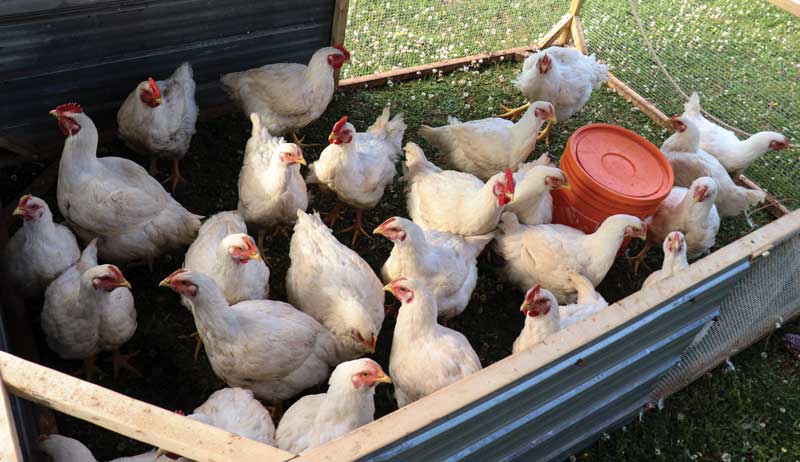
keeping a flock of meat birds in a pen is common for how to start raising chickens

Ask yourself a variety of questions to make sure your poultry flock is something you’ll be able to easily manage:

  • How large of a space do you have to offer your chickens? How many can you comfortably house? 
  • Will they be free-range or confined to a specific area? 
  • What kind of shelter will you have to offer them? A portable tractor that can be moved around the yard/pasture or a more permanent structure such as a brooder house?
  • If you want layers, do you have enough nesting boxes to allow them all a chance to lay throughout the day at some point?
  • If fryers are what you seek, what will be the plan when they reach butchering age? (Those weeks can pass by quickly!) Will you butcher them yourself or do you have a processing facility nearby you will take them to?
  • If you garden, will it be a chicken-friendly garden that they can freely scratch around in or will you have adequate means to contain them during the summer growing months?
  • On the flip side, when winter comes, what kind of shelter (and, if needed, heat) can you supply them with?

How to Start Raising Chickens and Get Your First Chicks

There are several options when looking to start your poultry flock: buying hatching eggs if you want to incubate them yourself, putting eggs under a broody hen, ordering online from a hatchery, buying from an individual, or purchasing live chicks from a farm-supply store. 

Likely one of the easiest ways to get a good start with your young poultry flock is by purchasing live chicks from a hatchery or farm-supply store. Chicks can be chosen by breed and sex, and will be shipped via ventilated cardboard boxes to your local post office. Generally, chicks should have fewer health problems when coming from a hatchery (whether shipped straight to you or a farm store) because ill ones will have already been removed. 

Once your breed is selected, you’ll need to decide if you want pullets (female chicks), cockerels (male chicks) or straight run (a random assortment of both). Keep in mind that there is usually a difference in price between the three options, with pullets generally being the most expensive. While you might be able to pick each individual chick you want at a farm store, their selections are often smaller than what you will find online at a hatchery’s website.

While chicks and older poultry can be purchased from individual breeders as well, it’s a good practice to be very cautious and do your research before any agreements are made. If possible, arrange to see the breeder’s other poultry and the conditions they’re all raised and kept in. 

Be sure to ask about any signs of illness or problems that they have had in the past, as you will want to avoid taking any sickness home to your own flock or poultry facilities. 

For the more experienced or adventurous poultry-keeper, hatching eggs can offer a somewhat more affordable option for starting a flock. While the initial cost of the eggs might not be as large as buying live chicks, they’ll require the use of a reliable incubator (and regular monitoring) or an already broody hen. 

Hatching your own eggs can be an exciting experience as the first peeps begin to ring through the incubator. But it can also carry heavy risks if the environment is not kept consistently warm or moist enough. 


Read more: How to get started hatching chicks with an incubator.


Welcoming Your New Chicks

It’s easy to jump in over your head while staring at a stock tank full of tiny, sweet chicks in the local farm-supply store. I know. I fell prey to their fluffiness last spring.

What started out as a Sunday afternoon stroll through a store ended with us walking out with two boxes of little peepers in hand. While makeshift facilities were set up and the chicks grew up into beautiful, colorful pullets, I wasn’t prepared for them!

a beautiful black colored hen can be a cornerstone bird for how to start raising chickens
Ashleigh Krispense

Once the decision is made on how your chicks are to arrive, the nursery will need to be prepared and set up in advance. Do a run-through of your equipment and supplies that will be needed.

  • stock tank or another way to confine them in an area of limited space at first
  • bedding, whether wood shavings or chopped straw or hay
  • heat lamp, extra bulbs, an extension cord 
  • waterers and feeders 
  • specialty chick-starter (whether medicated or non-medicated feed)
  • plenty of fresh water and electrolytes 
  • a thermometer to keep an accurate idea of how warm the space is
  • blocks to safely hold the waterers and feeders up to avoid filling with bedding and debris as the chicks scratch around

When everything is ready and the chicks have arrived, carefully place them one by one into the stock tank or brooder area. Gently dip their beak slightly into the waterer to show them where water is and then again in the feeder. After they have all been moved into the brooder area, continue to monitor them to see how they settle in. 

Initially, they might be chilled and spend some time under the heat lamp. If they continue to huddle together tightly under the lamp, lower it a little bit closer to increase the temperature. If they move to the outside edge of the tank, away from the lamp and spread their wings off to cool, move the lamp back up some as the temperature is too hot.

Eventually, you want to find a happy medium where they will actively move around, eating and drinking. 

A heat lamp will keep the temperature within the ideal range of 90 to 95 degrees for the first week.

“Measure the temperature 2 1⁄2 inches from the top of the litter directly below the hood,” says “Brooding and Caring for Chicks” from the University of New Hampshire Extension. “Make sure there is enough space for the chicks under the light without crowding or smothering and that there is enough space in the pen so that all of the chicks can escape from the heat. Each week you should decrease the temperature by 5 degrees. This can be easily accomplished by raising the height of the lamp.” 

Remove the supplemental heat when the brooder temperature is the same as ambient temperature. 

Avoiding “Chicken Math” Surprises

Regardless of whether you’re just dipping your toes into the wonderful world of poultry or you’ve kept chickens for years, eventually you might find yourself falling prey to the dangers of “chicken math.”

For example, if Betty buys five chickens, how long will it be before she has accumulated two guineas, five ducks and a couple of colored-egg layers? The answer is, not long! Chicken math is generally just a humorous term used by many poultry-keepers to refer to the unplanned quantities of poultry their small flocks often turn into.

Whether you choose to hatch your eggs at home or pick out individual chicks at a farm store, have some fun and enjoy the process of researching and learning about the different breeds before you purchase. With some preparation beforehand, you can have a smooth transition into your new role as keeper of the poultry! 


Choosing the Right Size for Your Flock

Another factor for consideration is the size of your bird. While this will be somewhat determined already by whether you choose a traditional layer or fryer, some people enjoy the options that the world of bantam chickens has to offer.

Chicken-keepers with small backyards or brooders can enjoy small breeds such as Silkies, Cochins or Brahma bantams. 

No matter your experience level, how to start raising chickens starts with a clear plan. From understanding your purpose—eggs, meat, heritage breeds, or garden helpers—to choosing the right breeds, housing, and number of birds, preparation is key. By thinking through your space, skills, and long-term goals, you’ll set your flock up for success. And while “chicken math” may still sneak in, a little planning ensures your flock grows in a manageable, rewarding way. Enjoy the process, and watch your backyard come alive with curious, happy birds.

How To Start Raising Chickens: FAQ

Q: How many chickens should I start with?
A: For beginners, 3–6 hens are usually manageable. This provides fresh eggs daily without overwhelming your space or time.

Q: Can I mix different types of chickens?
A: Yes, but consider temperament, size and cold-hardiness. Mixing breeds can be fun, but some may dominate others or struggle in your climate.

Q: Do I need a brooder for chicks?
A: Yes. Young chicks need a warm, confined area with proper bedding, heat, and water until they are fully feathered.

Q: How much space do chickens need?
A: Each adult bird generally requires 2–4 sq. ft. indoors and 8–10 sq. ft. in outdoor runs. More space reduces stress and keeps them healthy.

Q: Can I start raising chickens if I’ve never kept birds before?
A: Absolutely! Start small, choose hardy breeds, and follow a step-by-step plan. Preparation is more important than experience.

This article about how to start raising chickens was written for Hobby Farms and Chickens magazines. Click here to subscribe.

Categories
Poultry

Poultry Keeping Goals: Adding Ducks and Breeding Geese

Poultry keeping changes from year to year and the New Year is a great time to reflect on the past seasons and plan for what’s upcoming. Here are a few goals from this author’s farm that can be adapted to a backyard flock.

1. Prioritizing Heritage Goose Breeding

goose standing by eggs in the grass on poultry keeping farm
Kirsten Lie-Nielsen

With more than a dozen geese of various breeds, it is certainly safe to say that I am a goose keeper. But I have always wanted to focus on preserving certain breeds of geese, rare and heritage breeds that need conservation. Up until now, we have kept geese for their abilities as guardians and their large eggs, but we have not done any breeding on our small farm.

Every winter, part of the fun is browsing through hatchery catalogs and websites, picking out what breeds to get for the coming spring. This year as one of my poultry-keeping goals is to expand my holdings of a few specific breeds, purchasing sexed females, and using only the best farms to ensure quality stock. With a good ratio of male to female birds of the same breed, I can start breeding my own line of these birds and hopefully help maintain their breed’s integrity. In particular, I’m interested in more Dewlap Toulouse and Roman Tufted geese.

2. Expanding the Flock With Ducks

Despite our large flock of geese and more than two dozen chickens, we have very few ducks on our farm. It is a shame because ducks are reliable egg layers that produce even in winter. They are also quite hearty and have amazingly friendly and curious personalities.

So, continuing with our poultry keeping, this year we’d like to add various breeds of ducks to the flock, focusing on types that are good for egg laying. Our chickens do a great job of providing us with eggs, but their production slows down in the winter months, and I don’t like doing too much in the way of supplemental lighting. A flock of female Runner ducks ought to help us keep up with the demand for eggs and also take in some good entertainment as they make their way around the barnyard.

3. Creating Better Water Access for Waterfowl

Our biggest barnyard project and another of our poultry-keeping goals is having a pond dug for our property. This pond is partially for irrigation purposes, but it will be just off the back side of the barn in easy walking distance for our birds. The geese will love being able to bathe in a space larger than a livestock trough, and being able to swim during mating season should increase their fertility rates.

4. Poultry Keeping: Making the Most of Farm-Fresh Eggs

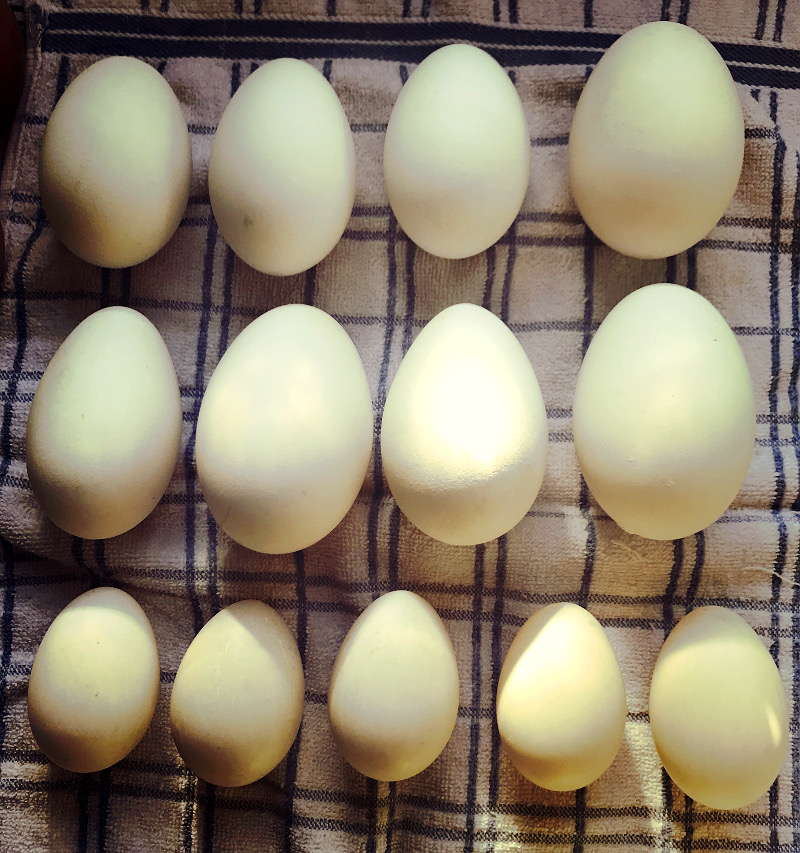
geese and duck eggs from backyard poultry keeping
Kirsten Lie-Nielsen

We use many of the eggs that we collect for breakfast and dinners, making lots of quiches and omelets and custards. But as one of my resolutions, I want to expand my culinary egg horizons and start trying some more unusual egg-based recipes. This will definitely include pasta, and hopefully many more desserts.

The goal of every year is to keep the birds happy and healthy, continue being a productive homestead and enjoy the company of the animals that we keep.

Poultry Keeping FAQs

Are ducks and geese good additions to a backyard flock?
Yes. Ducks and geese can complement chickens by providing winter eggs, natural pest control, and added flock diversity.

Do ducks and geese need a pond to thrive?
A full pond isn’t required, but access to water deep enough for bathing helps with cleanliness, breeding success, and overall bird health.

Can geese be bred on a small farm?
Absolutely. With proper housing, space, and a healthy male-to-female ratio, small farms can successfully breed geese, including heritage varieties.

How do duck eggs compare to chicken eggs for cooking?
Duck eggs are richer and higher in fat, making them excellent for baking, pasta, and custards, while still working well in everyday recipes.

This article about poultry-keeping goals was written for Hobby Farms and Chickens magazines. Click here to subscribe.

Categories
Farm & Garden

Small Farm Income Ideas: Side Hustles to Earn Extra Cash

Small farm income ideas are vital. Let’s face it. We could all use some extra cash. And having one or two reliable side hustles can help—especially when you’re able to leverage resources you already have.

Here are some side hustles (and saving tips) for farmers to consider to make a quick buck or two from the farm.

Small Farm Income Ideas: Earn from Farm Photography

Got honeybees, a rare sheep breed or fields full of sunflowers? Shooting some eye-popping farm photos could pay off on your list of small farm income ideas.

Stock photography websites such as iStock.com pay photographers small royalties for their images. Earnings depend on how many photos you’ve uploaded for potential use and how many times customers download them.

Stock photo outlets’ average pay ranges from a few cents to a few dollars per licensed photo. Provided you meet their minimum payment thresholds, most payouts are made monthly.

Doug Sandquist is a Las Vegas-based dentist with a landscape photography side hustle. Although he’s sold some of his travel photos on stock image websites, he admits it’s not the most lucrative of side hustles. “They’re a hard way to go.”

Instead, he recommends selling through websites such as Society6.com or Redbubble.com. These enable you to upload and feature your photos on T-shirts, mugs, canvas prints and more.

When customers order your photo products, you earn a percentage. Again, most sites pay out monthly, as long as you’ve reached minimum payment thresholds. For instance, Redbubble.com’s threshold is $20.


Read more: And here are a few more side hustles farmers can use to earn extra income!


Rent Garden Plots for Extra Income

Many people wish they could garden, but they lack the land to do so. Some are apartment dwellers who aren’t allowed to dig up the grounds. Others are homeowners with too much shade, too many munching deer or both.

But if you have soil to spare, consider staking off some 10-by-10-foot parcels and renting them to gardeners for the duration of the growing season. Renting just one plot from, say, April through October at $20 per month would bring in an extra $140 in all.

Be prepared to provide car or bicycle parking spaces, access to water and a few essential garden tools as needed. Also, make sure your farm’s insurance policy covers this type of arrangement.

(You don’t want to leave yourself unprotected in the event that one of your guest gardeners is injured while working in his or her rental plot.)

Small Farm Income Ideas: Make Money with Goats

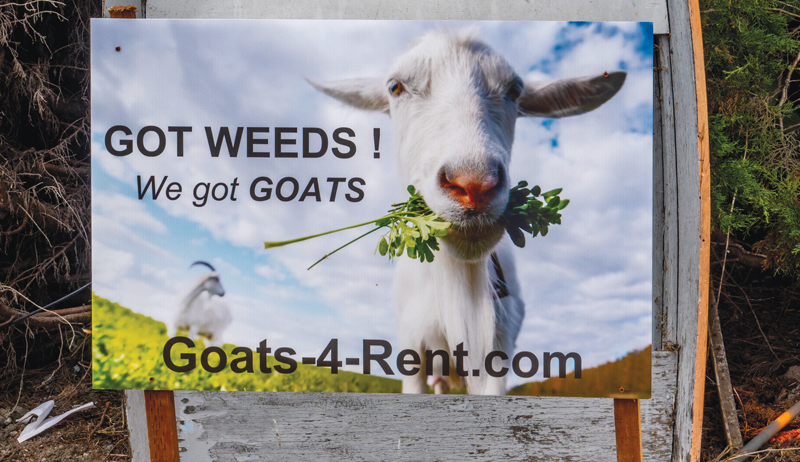
Plenty of homeowners joke about replacing their lawnmowers with goats. But, as it happens, employing goats to clear brush is a viable—and potentially profitable—addition to your small farm income ideas list.

farm side hustles farmer side hustle
David A Litman/Shutterstock

“As far as cost that you can make in this business, it varies from state to state and region to region,” says Tammy Dunakin. Dunakin is the owner, operator and franchiser for Rent-A-Ruminant, LLC, in Seattle, Washington.

Dunakin typically charges clients $820 per day for either 60 or 120 goats. “And I have a 1/4-acre minimum and a three-day minimum,” she adds.

If you already have goats, perhaps you’ve been curious about trying this work.

“There are a lot of moving parts to it,” Dunakin says. “What you really don’t want to have, if you are doing a job for somebody, is something that involves harm to the animals or harm to somebody’s property or goats getting hit by cars or causing an accident.”

Tethering your goats and relying on someone else’s fencing are both nonstarters.

“Don’t imagine that you will just drop your goats off and leave,” she says. Instead, you’ll need to set up portable, clearly marked electric fencing to coral your goats. You also need to be able to identify the plants they’ll encounter in advance. Many plants are actually toxic to goats.

It’s also just as important to check your insurance coverage. Some custom farming plans will cover you on and off of your farm.

Finally, you should also plan to do some of the brush removal yourself. “You have to help clear some of that by hand, so that the goats will be able to reach it,” Dunakin says.

 Turn Wild Foods into a Side Hustle

Do you own or have access to wooded land? Look for seasonal delicacies such as morel and chanterelle mushrooms, pawpaws, persimmons and other natural treats. Once you know where and how to find these, you can either sell them directly yourself or supply local grocers and restaurants.

If you’re not sure where to begin, check out Start Mushrooming: The Reliable Way to Forage by Stan Tekiela and Incredible Wild Edibles by Samuel Thayer.


Read more: Ready to begin foraging? Lobster mushrooms are a great place to start!


Teach Online Courses or Workshops

Say you’ve grown and canned tomatoes for 30 years. Or maybe you know nearly everything about raising poultry. You might consider putting together some online courses to help others succeed with these kinds of skills.

And you can get paid in the process.

Platforms such as Udemy.com host online courses created by experts like you. When students pay to take your course, you get a percentage of student fees.

To develop a Udemy course, you need to be able to create 30 minutes of video and five lectures. You’d then submit your course for quality review.

The percentage you make from student enrollment can be as high as 97 percent, but 25 percent per student is more typical. (You get more for students you refer versus those finding your course through Udemy’s promotional efforts.)

It takes a couple of months for payments to begin. But you can expect to be paid monthly once they do.

Small Farm Income Ideas: Self-Service Farm Stands

If you have extra bedding plants or odd-looking veggies that might not sell at the farmers market, put them in an unattended farm stand.

a fully stocked plant stand with summer fruits and veggies is a small farm income idea
Dee Dalasio/Shutterstock

In part, the need for social distancing during the global pandemic made such old-school, honor-system farm stands more attractive. And, by and large, they work.

Mike Record, co-owner of New Ground Farm in Bloomington, Indiana, operates the Bethel Lane Farm Stop. The self-service shop is housed in the front of one of his barns. And the shop’s cashbox is built into part of the wall itself.

“It’s inside a part of the barn that gets closed up at night,” Record says. “You should try to come up with a place for people to put their money that is pretty much bombproof.”

If you set up your own unattended shop, price items using whole dollars or simple fractions of dollars. That way, people can more easily offer exact change.

“Our policy is if you don’t have the right change, pay what you can and make it up next time,” he adds. “What tends to happen is people overpay rather than underpay.”

If you are able to, you might also want to accept mobile payments via smartphone applications such as Venmo or the CashApp.

Host Rural Vacation Rentals

Have an extra room? Perhaps a converted barn or outbuilding to list as a temporary vacation spot?

Plenty of would-be renters are looking for off-the-grid getaways.

According to Airbnb, hosts in the rural U.S. earned more than $200 million in June alone. Despite the threat of COVID-19, that amount was up by 25 percent over June of 2019.

Certainly, it takes work to prepare, photograph and list your space. But more than 170,000 rural hosts in the U.S. took the plunge and earned roughly $1,000 each in just one month from their rental side hustles.

Grow Fast-Selling Crops for Profit

Looking for produce-based small farm income ideas? In a pinch, kale is one of the easiest, most forgiving crops to grow. It’s a great choice for selling in late fall and even during much of the winter when your other crops are long gone.

Because kale is both drought- and cold-tolerant, it’s well-suited for nearly year-round harvest. (To prolong kale in colder climates, protect it with heavy, clear plastic. Or you can grow it inside a hoop house.)

kale crop in the garden - a small farm income idea
Marcus Holman/Shutterstock

You can pack a lot of this cut-and-come-again vegetable into a relatively small space. So you should be able to grow enough to supply a few of your area grocers or restaurants, too.

Small Farm Income Ideas: Sell and Deliver Manure

As far as small farm income ideas go, selling aged manure isn’t exactly speedy. But if you happen to have a lot of extra manure on hand—particularly manure that’s had the chance to age for about a year or so—gardeners will pay top dollar it.

(Fresh manure isn’t nearly as valuable, because its high nitrogen content can burn plants.)

And if you’re willing and able to deliver that aged manure? That’s even better. Depending on your location and the amount of competition in your area, you may be able to charge upwards of $40 to $50 or more per cubic yard that you deliver.

Market Unique Natural Products Online

Take a spin around Etsy.com and similar online markets and you’ll see the usual handmade art prints and quilted purses. But you’ll also discover sellers with small farm income ideas, too.

A jar filled with cicada shells? Check!

Boxes of real fall leaves? Yep.

And bits of petrified wood, newly shed deer antlers, owl pellets and other “natural curiosities.” Turns out city slickers and macabre crafters alike will snap up these surprisingly high-priced items.

So, whether you want to sell the dried gourds you grew or some interesting fossils you found in your corn field, listing such items on Etsy will cost you .20 each.

Expect to spend some time photographing, describing and categorizing anything you hope to sell. Payments can be set up to arrive daily, weekly or monthly.

Stretch Your Farm Earnings with Smart Savings

What do you do when your small farm income ideas start bringing in the bucks? Stretch them as far as they’ll go, of course.

Save by Sharing Tools with Neighbors

Before buying that new weed wrench or pallet buster, consider how often you’ll actually use them and whether your neighbors could also benefit.

Certified organic inspector Gary Ogle works on variety selection and catalog production for Veseys in Canada’s Atlantic region. “A lot of our growers use plastic mulch when planting vine crops,” Ogle says. “But not everybody can afford the equipment that lays down that plastic mulch—equipment they’re only going to use once a year.

“Having a piece of equipment that a community can share is a great way to save money.”

You can split the cost of seldom-used tools with fellow farmers and store them in an area you can all access. “Join your local growers’ co-op or talk to other farmers in your area,” Ogle says.

“Get to know each other. That way, you can share equipment, find out what other people are growing and not get into their market if it’s already [too] competitive.”

Capture Rainwater to Cut Costs

Install a rain barrel or cistern to save on your water bill. A single 55-gallon drum can collect hundreds of gallons of (free!) water during the summer months.

And some counties offer free or deeply discounted rain barrel systems.

Optimize Farm and Equipment Insurance

Examining the insurance you’re carrying for your farm, vehicles, liability and so on isn’t exciting, but it can pay dividends.

Have you added any new product lines or equipment lately? Make sure you still have all of the coverage you need. And take the time to comparison shop along the way.

Track Hidden Expenses to Save Money

“Free” trials are only free for so long. Check your credit card and bank statements to be sure you’re not paying for services or subscriptions you don’t use.

Turn Spare Change into Extra Cash

Scattering coins in the truck’s cup holder or in random pockets is no way to save.

Instead, put your change in one place and regularly take it to the bank. You’ll soon notice that even small amounts of money can grow.

Reduce Mortgage Costs Where Possible

Have you checked your mortgage statement lately? You might be paying private mortgage insurance unnecessarily.

On a conventional 30-year mortgage, if you’ve reached year 15 or your remaining balance equals 80 percent of your home’s value, you might be able to kiss that PMI goodbye.

Plan for Seasonal and Holiday Expenses

Holidays, anniversaries and birthdays happen like clockwork. But it’s still easy to be caught off guard.

Rather than panic buying expensive last-minute gifts, plan gift-giving in advance. Record a year’s worth of special occasions on a gift-giving calendar and you’ll have time to give more thoughtful, creative—and frugal—gifts.

Use Local Free Resources and Incentives

Take advantage of any free energy audits your local utilities or rural electric cooperatives may offer. You just might have some hidden energy “leaks” to plug.

Save with Bulk Purchases and Co-ops

As with buying in bulk, group-purchasing a pallet of product and divvying it up yourself can save you and your neighbors big. Think of it as creating a hyper-local farm co-op.

Do you all buy similar kinds of chicken feed, canning supplies or potting mix? Pool your money for extra-deep discounts.

This article about small farm income ideas originally appeared in Hobby Farms magazine. Click here to subscribe.

Categories
Homesteading

Felted Dryer Balls: DIY Eco-Friendly Laundry Softener

With so much emphasis placed on knowing where our food comes from, it’s easy to forget that sustainability can apply to the laundry room, as well as the kitchen. Felted wool dryer balls are an easy way to reduce your household’s carbon footprint, keeping harmful chemicals away from your clothes and dryer sheets out of the landfill. Plus, they’re a simple project that can be made in less than an hour. Here’s how.

Step 1: Pick the Right Wool for Your Felted Dryer Balls

Pick up a couple of skeins of 100-percent wool yarn. The colors don’t matter (so have fun with them), but your fiber content does. Yarns with non-wool fibers will not felt well. If possible, source your yarn from a local fiber artist. Each skein yields about two baseball-sized yarn balls, and I typically use four balls.

Step 2: Wrap Yarn to Start Your Felted Dryer Balls

Start off your yarn balls by wrapping the yarn about 10 to 20 times around three fingers.

Felted Wool Dryer Balls - Step 2
Photo by Rachael Brugger

Step 3: Secure the Loop and Shape Your Felted Dryer Balls

Slip the yarn off your fingers, then continue wrapping the yarn several times around the center of the loop.

beginning wrapping yard to be felted into a dryer ball
Photo by Rachael Brugger

Step 4: Form Golf-Ball-Sized Yarn Balls

Continue wrapping the yarn into to form a ball, and stop when it is about the size of a golf ball. Trim the yarn, and carefully insert the string into the ball so that it won’t unravel. This can be done with your fingers, but a needle or crochet hook might be helpful.

yarn wrapped in a ball ready for felting
Photo by Rachael Brugger

Step 5: Felt the Yarn Balls in Hot Water and Dryer Heat

Repeat steps 2 through 4 to make two to four golf-ball-sized yarn balls. Place the balls in a nylon sock or pantyhose (do not use wool), and secure each ball with a piece of string or twine. (Make sure the balls aren’t touching to avoid felting them together.) To felt, wash the balls in hot water, then transfer them to a hot dryer.

DIY dryer balls wrapped in nylon for felting
Photo by Rachael Brugger

Step 6: Expand and Felt Again for Baseball-Sized Dryer Balls

Continue wrapping the felted yarn balls with more yarn until they reach the size of baseballs. Repeat step 5 to felt the larger-sized balls.

finished felted dryer balls
Photo by Rachael Brugger

Step 7 (Optional): Add Essential Oils

If desired, add 25 to 30 drops of your favorite essential oil to each ball to scent your laundry. I like to use bergamot essential oil, but other scents you might find pleasing include lavender, rosemary and eucalyptus. Note: You’ll have to periodically recharge your balls with essential oil when the scent dissipates.

This article about making felted dryer balls was written for Hobby Farms magazine. Click here to subscribe.