Categories
News

National Training Program Teaches Humane Animal Husbandry

The lack of animal-husbandry training programs for animal handlers and managers led American Humane Certified to launch its humane training program.

When raising livestock, hobby farmers who strive to keep up-to-date on best industry practices might be interested in American Human Certified’s new humane training program.

To answer the food industry’s call for better trained animal handlers, the program’s curriculum—the initial development of which was first announced in March 2009—focuses on animal handling best practices and the science-based standards originated by American Humane Certified and its Scientific Advisory Committee. 

The new training is available online and on-site. An important aspect of the program curriculum is the early recognition of behavior or health problems that could be detrimental to an individual animal or the entire flock or herd. It addresses animal-welfare issues and poor animal husbandry that are created by a lack of worker and handler knowledge.

Students enrolled in the program will be tested at the end of the training and will be retrained in any areas in which they exhibit a lack of thorough understanding. The program instructors are animal science professionals who will provide onsite demonstrations and guidance in appropriate handling and treatment, whether in the barn or in the field.

“A significant lack of knowledge of basic, good animal handling and husbandry practices, plus strong requests from the industry, prompted us to develop this very first, hands-on, independent program,” says Tim Amlaw, director of American Humane Certified. “It answers the industry’s need for education of existing and new employees so they can ensure proper and humane animal welfare and avoid potentially negative issues.”

Amlaw notes that while there are other print or video training materials offered by industry trade organizations, there is no curriculum or program that offers basic hands-on humane handling, care or testing for animal handlers and managers by an animal welfare organization.

The program will be beta-tested at egg producer Radlo Farms in Maine, in both Radlo’s certified cage-free operations and in its non-certified caged operations.

 “Our educating of employees, growers and contractors who handle animals will complement and expand American Humane Certified’s existing national program of auditing and certifying the humane handling of animals raised for food,” Amlaw said.  “For both large and small food producers, this training will illustrate a significant, socially responsible undertaking. Other users likely will include universities and government agencies dealing with agriculture.”

Amlaw says that as people have migrated away from rural settings over the years, there have been fewer and fewer well-trained workers to handle and manage farm animals. The need for new employees continues to grow in the food production industry, and the need for training and development of experienced workers is key to the agricultural industry and is paramount for the welfare of farm animals.

Categories
Crops & Gardening

Poke Sallet

The big poke sallet is incredibly bright in color and is a favorite in edible greens 
Courtesy Rich Gush

One of the most colorful plants in the garden these days is the big poke sallet weed growing near the central steps.  It’s about 6 or 7 feet tall and spreads more than that on the top.  The stems are streaked bright red and the branches are covered with hanging fruit clusters that are mostly shocking pink stems with deep purple berries. 

Also called poke weed, Phytolacca americana is a favorite of wild edible greens collectors gather in the early spring. Native to the eastern United States, poke has spread to Europe, Asia and South America, where it now grows as a wild and sometimes invasive weed.  Nobody here in Italy seems to remember when there wasn’t poke growing in the woods.

The really young shoots are quite tasty and cooked like spinach, but once the plant matures a bit the leaves have a bad taste and are even toxic if eaten raw.  The berries aren’t as toxic as the mature leaves, but the crushed seeds are poisonous. We get a lot of mourning doves who fly in to eat the berries and they get away with it because the seeds pass through their system unbroken.  The berries have a dark juice, and this juice has historically been used to make rustic writing inks and dyes. Poke weed is a plant that has been extensively used in local medicines for skin diseases and rheumatism treatment.  The extract of poke weed is sold by some of the homeopathic stores here in Italy, but the FDA prohibits its sale to the general public.

<>

Categories
Animals Crops & Gardening Poultry

She … Is a He!

One of the females Jessica purchased from Craigslist turned out to be a boy!
Jessica Walliser

You might have read about our new chickens in a previous post.  We are really enjoying them, but to our surprise, one of our ladies has grown up to be a gentleman!  He’s a beautiful Rhode Island Red rooster that has taken nicely to his little harem of hens.  The trouble is, he’s starting to get a bit aggressive, and we’ve discovered that roosters and preschoolers don’t mix.

I don’t mind him going into someone’s soup pot, but I’d much prefer he find a nice home somewhere where he can ‘cockadoodledoo’ to his heart’s content and not anger the neighbors. We live too close here. When we informed our neighbors about our new family members, we kindly mentioned that they shouldn’t worry about noise because “there will be no roosters.”  So now we are trying desperately to find another venue for our gent.

I asked two farmer friends to take him in, and both kindly declined. I have since moved on to asking friends of friends with hens, telling them how cute little baby chicks are and how much fun it is to breed your own chickens.  I don’t think I’m very convincing.

I might soon have to move on to asking random people walking the aisles at our farmer’s market. “Psst! Hey buddy, want a rooster?”  Then I’ll proceed to pull him out from under my jacket and try to hand him off.  Or maybe I should just wait for a car with an open window to stop on our corner. (I’m reminded of a certain “Seinfeld” episode… Remember “little Jerry”?)

Anyway, if you know anyone in western Pennsylvania who is in need of a nice, robust Rhode Island Red, please, please send them my way!

On a totally different note, the weather here is really beginning to cool off and I’ve already begun some preparations for the winter.  I covered our small pond and waterfall with a sheet of netting to keep the leaves out, and we’re planning to pack away the patio furniture sometime this weekend.

The tomatoes have been ripped out (they did eventually succumb to the late blight that plagued gardeners up and down the East Coast), the cuke vines have hit the compost bin, and the zucchini have been pulled from the soil, even though they were still producing (much to my chagrin).  I haven’t picked our monster pumpkin yet but it is completely colored up now and will look lovely on our front porch.

Other weekend chores will include reseeding some bare spots in the lawn, pulling out the plethora of spent calendula plants in the front garden, harvesting spinach, digging up and dividing some of my overzealous Nepeta (catmint) plants, and moving my rosemary plant indoors.  It sounds like a busy weekend ahead.  Now if I could just get that rooster to help…

<< More Dirt on Gardening >>

Categories
Equipment

Get Creative with Tufa

With winter coming on here in Minnesota, it’s time to empty out planters. One of my favorites is the tufa trough I made a few years back. It’s about 10 inches high and wide by 34 inches long and looks like an old stone planter. It is actually a mix of Portland cement and organic matter. Lighter and more interesting looking than standard concrete, tufa is also an invitation to creativity.

As with any concrete work, wear rubber gloves. While the amounts will vary depending on how big a project you have in mind, mix one part Portland cement with three parts potting soil (no fertilizer) or with 1 1/2 parts peat moss, 1 1/2 parts perlite and 1/3 cup polypropylene fibers. Add water to a workable consistency.

Forms can be made from plastic, metal or wood. Cardboard will also work as a one-time form. The key is to remove the project from the form after it has set for six to eight hours. Handle it carefully as it hasn’t achieved full hardness and can easily break if stressed too much. At this stage, it is still soft enough to be easily worked.

Using any sharp object, such as an old putty knife, kitchen knife or even a piece of saw blade, you can sculpt your creation. Create a textured effect on flat surfaces with a steel brush or with the edge of a saw. This is also a good time to drill a drain hole or two if you are making a planter.

Once you’ve made your alterations, let is sit for another 10 to 12 hours. Then spray it with water, and cover it in plastic. Let it cure for at least two weeks.  As is the case with any concrete object, the longer it sits, the stronger it gets.

While I made a planter, your imagination is your only limit with tufa. Good starter projects include stepping stones or even ornamental spheres. For more information and ideas for working with tufa, pick up a copy of Making Concrete Garden Ornaments by Sherri Warner Hunter, Lark Books. She does a great job making working with tufa easy and rewarding.

  << More Shop Talk >>

Categories
News

Urban Farm Empowerment


Growing Power founder Will Allen speaks in Lexington, Ky.


UF managing editor Lisa Munniksma and Growing Power founder Will Allen met at the Idea Festival booth for Heine Brothers’ Coffee, a locally owned business that provides coffee grounds for Louisville’s Breaking New Grounds compost project.
Read Growing Urban Farms” about Will Allen’s visit to Lexington, Ky.


What gets me out of bed at 5 a.m. on a Saturday? Nothing that doesn’t have to do with agriculture, horses or urban farming. So when I found out Will Allen, founder of Growing Power and urban farmer extraordinaire, would be speaking on a Saturday morning at Idea Festival in Louisville, Ky., I knew I’d be there, bright and early.

Allen spoke to the crowd about Growing Power’s work to train urban farmers and educate people around the world about sustainable agriculture and nutritious foods.

“It’s not a good food movement anymore. It’s a revolution,” he says. “We all have a responsibility to make sure our neighbors, our friends and especially our young ones are eating nutritious food.”

By 2050, Allen says, 80 percent of the world’s population will live in cities. “We’re losing land as we speak. We’re losing farmers as we speak.”

Learning to grow food in urban environments is more important than ever for feeding people good food. Allen points out that within one week of being taken from the vine, vegetables lose 50 percent of their nutrients. “That’s why local food is so important.”

After his session, Allen took a few minutes to talk to me—making him late for a workshop with Breaking New Grounds (Sorry, folks!), an urban- and sustainable-farming training organization in Louisville—about the urban-farming movement. Here’s a sampling from our conversation:

LM:What are some of the biggest challenges facing people involved with urban farming?

WA: You can go out and get all the land you want, build up all the infrastructure you want, and that really doesn’t mean very much if you haven’t done the first thing, and that’s to engage the community—to get the community on board—and that sometimes takes a long time. I think that is the key piece. Every community is different; some communities are easier to engage than others.

[Start small.]

I hear people say, “The city is offering me 200 vacant lots.”

And I look at them and say, “OK. So, what are you going to do with it?”

And they say, “Oh, we can grow food.”

No, you can’t. “How many people do you have working?”

“It’s just me and somebody else.”

“So how are you going to grow on 200 vacant lots?”

It’s OK to take one vacant lot and put a demonstration there of what [an urban farm] can look like. Bring people there from parts of the community, and show them that this is what you have done, and they can say, “I want one of those on this vacant lot over here.”

To me, that makes sense. It also provides you with a place where you can take politicos, funders and other people to get them on board, because words are just cheap. You can say anything. The reason I show those images [in the presentations] is because that’s the work we do; it’s concrete. People can’t deny it. …

I think that’s really important—the engagement. If you can’t do that piece, you can’t move forward. You can spend all the money in the world. I’ve seen projects where people get $200,000 for a 100- by 100-foot lot, but a year later, it’s all in weeds. What does that mean? You’ve got to have passionate people; you’ve got to have more than one person. See, I was one person starting this group (Growing Power), but I always tell people to get more than one person because I wouldn’t want anybody to do what I did.

Get yourself some passionate partners. … You’ve got to have somebody who’s going to hang in there.

LM:In some cities, ordinances are preventing people from keeping bees, chickens or goats. Do you have any advice for working with government bodies?

WA: That demonstration farm that I was talking about, bring the politicos there. They’re more likely to make policy change when they see something is an asset to the city.
Politicians react to what’s going to give them votes. They don’t react to the right thing, because the right thing might not get them reelected. But if you’re able to garner enough support and you have something that people want to see and you can demonstrate that, they’re going to support it. I move policy further along with our demonstration project than I do with just getting in a line to talk to them like I’m a lobbyist.

LM:How can people who are just getting started in urban farming find the resources they need?

WA: Come to workshops. At Breaking New Grounds [in Louisville, Ky.], we’ll be doing a series of workshops as a regional training center. They can come to Milwaukee for hands-on training from the ground up. That’s how you get started. [Additional Growing Power Regional Outreach Training Centers are listed at www.growingpower.org, and other organizations hold workshops in communities nationwide.]

At those workshops, you meet other people. Many times, people come to a workshop and they meet people in their own region who are doing similar work that they didn’t even know about. That’s another way for them to get engaged, because you need partnerships to do this work. You can’t do it in isolation. … This is communal stuff.


Urban Farm EmpowermentWill Allen, the face of urban farming today, makes his case for local, sustainable foods at Idea Festival.By Lisa Munniksma, Urban Farm managing editor10/06/2009Will Allen, the face of urban farming today, makes his case for local, sustainable foods at Idea Festival.Will Allen, the face of urban farming today, makes his case for local, sustainable foods at Idea Festival.news, ufnewstrain urban farmers, nutritious food, Will Allen

Categories
News

Urban Farm Empowerment


Growing Power founder Will Allen speaks in Lexington, Ky.

UF managing editor Lisa Munniksma and Growing Power founder Will Allen met at the Idea Festival booth for Heine Brothers’ Coffee, a locally owned business that provides coffee grounds for Louisville’s Breaking New Grounds compost project.
 
Read Growing Urban Farms” about Will Allen’s visit to Lexington, Ky.

What gets me out of bed at 5 a.m. on a Saturday? Nothing that doesn’t have to do with agriculture, horses or urban farming. So when I found out Will Allen, founder of Growing Power and urban farmer extraordinaire, would be speaking on a Saturday morning at Idea Festival in Louisville, Ky., I knew I’d be there, bright and early.

Allen spoke to the crowd about Growing Power’s work to train urban farmers and educate people around the world about sustainable agriculture and nutritious foods.

“It’s not a good food movement anymore. It’s a revolution,” he says. “We all have a responsibility to make sure our neighbors, our friends and especially our young ones are eating nutritious food.”

By 2050, Allen says, 80 percent of the world’s population will live in cities. “We’re losing land as we speak. We’re losing farmers as we speak.”

Learning to grow food in urban environments is more important than ever for feeding people good food. Allen points out that within one week of being taken from the vine, vegetables lose 50 percent of their nutrients. “That’s why local food is so important.”

After his session, Allen took a few minutes to talk to me—making him late for a workshop with Breaking New Grounds (Sorry, folks!), an urban- and sustainable-farming training organization in Louisville—about the urban-farming movement. Here’s a sampling from our conversation:

LM:What are some of the biggest challenges facing people involved with urban farming?

WA: You can go out and get all the land you want, build up all the infrastructure you want, and that really doesn’t mean very much if you haven’t done the first thing, and that’s to engage the community—to get the community on board—and that sometimes takes a long time. I think that is the key piece. Every community is different; some communities are easier to engage than others.

[Start small.]

I hear people say, “The city is offering me 200 vacant lots.”

And I look at them and say, “OK. So, what are you going to do with it?”

And they say, “Oh, we can grow food.”

No, you can’t. “How many people do you have working?”

“It’s just me and somebody else.”

“So how are you going to grow on 200 vacant lots?”

It’s OK to take one vacant lot and put a demonstration there of what [an urban farm] can look like. Bring people there from parts of the community, and show them that this is what you have done, and they can say, “I want one of those on this vacant lot over here.”

To me, that makes sense. It also provides you with a place where you can take politicos, funders and other people to get them on board, because words are just cheap. You can say anything. The reason I show those images [in the presentations] is because that’s the work we do; it’s concrete. People can’t deny it. …

I think that’s really important—the engagement. If you can’t do that piece, you can’t move forward. You can spend all the money in the world. I’ve seen projects where people get $200,000 for a 100- by 100-foot lot, but a year later, it’s all in weeds. What does that mean? You’ve got to have passionate people; you’ve got to have more than one person. See, I was one person starting this group (Growing Power), but I always tell people to get more than one person because I wouldn’t want anybody to do what I did.

Get yourself some passionate partners. … You’ve got to have somebody who’s going to hang in there.

LM:In some cities, ordinances are preventing people from keeping bees, chickens or goats. Do you have any advice for working with government bodies?

WA: That demonstration farm that I was talking about, bring the politicos there. They’re more likely to make policy change when they see something is an asset to the city.
Politicians react to what’s going to give them votes. They don’t react to the right thing, because the right thing might not get them reelected. But if you’re able to garner enough support and you have something that people want to see and you can demonstrate that, they’re going to support it. I move policy further along with our demonstration project than I do with just getting in a line to talk to them like I’m a lobbyist.

LM:How can people who are just getting started in urban farming find the resources they need?

WA: Come to workshops. At Breaking New Grounds [in Louisville, Ky.], we’ll be doing a series of workshops as a regional training center. They can come to Milwaukee for hands-on training from the ground up. That’s how you get started. [Additional Growing Power Regional Outreach Training Centers are listed at www.growingpower.org, and other organizations hold workshops in communities nationwide.]

At those workshops, you meet other people. Many times, people come to a workshop and they meet people in their own region who are doing similar work that they didn’t even know about. That’s another way for them to get engaged, because you need partnerships to do this work. You can’t do it in isolation. … This is communal stuff.


Categories
Animals

The Lowdown on Pigs


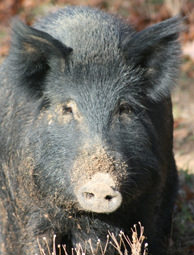
Carlotta loves being on the farm but Wilma wanted to be free
Photo by Sue Weaver
Carlotta

We have a pig on our farm. Her name is Carlotta.

We used to have two pigs, but they broke their fence one night and ran away into the woods. Our other pig was a feral hog named Wilma.

When Wilma was a tiny piglet, she got lost from her mama out in the woods; some nice people found her and bottle raised her on goat milk (goat milk is good stuff—ask me, I know!).

Then Mom bought her and brought her here. She was happy for a while but longed to be free. When Wilma ran away, Mom walked in the woods for days and days, calling her. She never came back. Mom was very sad.

Carlotta is half Wild Boar and half Ossabaw Island hog, so she looks a lot like Wilma did but Carlotta has cute, fringed ears.

Carlotta has never been wild, so when Mom called her she came home. Now she’s an only pig, but she’s happy because the horses let her live with them when she isn’t sleeping in her hut in the pig pen.

Carlotta is smart! Pigs are smarter than most of us think. They can learn to do amazing tricks and play video games even better than chimps (and some people!).

Carlotta doesn’t have any video games, but she does have a ball that she plays with. She also likes to play with Mom. Carlotta waits till Mom opens the gate and then Carlotta races out.

Then she walks around the yard ignoring Mom and chuckling under her breath while Mom shakes a bucket of corn calling, “Carlotta! Pig pig pig!” (that means, “Carlotta, it’s time to eat”). 

Tame pigs have been around a long, long time. Scientists think they joined up with humans about 9,000 years ago in eastern Turkey and again later on in China.

That’s almost as long as us goats, but we were the first species tamed.

Mom says pigs make neat farm pets—except when Carlotta is ignoring Mom’s bucket of corn (I can’t tell you what Mom says then). They’re easy to take care of and they’ll eat your leftovers, so your ‘fridge doesn’t get too full. There’s even an email group called Big Pigs for people who keep full-size or feral pigs as pets. Maybe you need a pet pig too!  

« More Mondays with Martok »

Categories
Crops & Gardening

Italian Rice


One of the many fields passed by on the train to Milan 
Photos by Rick Gush

Field by Milan

I took the train to Milan last week, and was as usual impressed by the enormous agricultural activity in the Po river valley.  The top of Italy is a huge river valley, almost the same size as the central valley in California. 

Agriculture is dominant in this area, and when one sees the number of cultivated fields, it is easy to see why Italy is one of Europe’s agricultural powerhouses.

The olives that dominate the hilly regions of Italy give way to a more mixed cultivation here in the big flat river valley. 

All along the edges of this area, where the flat plain gives way to the foothills that lead to the Alps in the north and the Apennine mountains in the west (The Apennine mountains are the chain that runs more or less north south in a ridge in the middle of the peninsula), fruit orchards are common. 

Yes, Italy does grow a lot of grapes in her foothills, but she also produces a huge amount of tree fruits, and exports a lot of them to the northern European countries.

The flat terrain towards Milan is dominated by rice farmers
Rice fields

But the flat area is dominated by rice growers.  Riding on the train that runs through the middle of this huge valley, one sees a whole lot of rice fields, and in September, the fields are all golden and ready for the imminent harvest. 

Here and there are dotted fields of tomatoes, field corn, onions, squash, wheat, timber poplars and alfalfa, but three quarters of the area seems to be planted to rice. 

After Asia, Italy and California are the biggest rice growing regions in the world.  Like California, Italy exports a lot of rice to Asia, but Germany, France and England are the largest consumers of Italian rice.  Many Italian growers grow specific varieties destined for German customers, and Italy produces more organically grown rice than any other country.

There’s a good mix of agribusiness and small farming here.  Medium-sized farmers face the same difficulties of foreign competition as do American farmers, but they aren’t being bought up or forced out in the same way. 

Some fields are similar looking to those in California
These fields look like the tomato fields in California.

Family run farms are more common than not and there are a whole lot of organic growers.  Most of the small farmers grow for the local markets as well as producing specialty products that can be exported through cooperatives. 

This big valley starts in the northwest at the base of the mountains that separate France from Italy and runs down to the Adriatic Sea.  The Po River is only the largest of the numerous rivers, creeks, canals and watercourses that criss-cross the valley. 

Milan is the huge sprawling city in the northeast corner of the valley, but even Milan is dwarfed by the surrounding rice fields that come right up to the edge of the city.  No surprise that the most famous dishes in Milanese cooking are based on rice.

<>

Categories
Homesteading

Farm Dogs on Holiday

Brett Langlois with his dog, Pippin
Courtesy Cherie Langlois
Brett Langlois and Pippin take a break during play on a sand dune.

Have you given your farm dog (or dogs) some love recently?

How about a break from the farm?

This month has been designated AKC Responsible Dog Ownership Days by the American Kennel Club, and I just finished surfing over to read and sign their AKC Responsible Dog Owner Pet Promise (like to join me? Click here).

As a former zoo keeper and veterinary assistant, I’ve always prided myself on being a pretty responsible pet owner.

Our two dogs, Pippin and Daisy, get a good diet, exercise, veterinary care and loads of love.  They’re fixed, and we don’ t let them roam.

Still, one item on the Pet Promise list gave me a guilty twinge:  “I will socialize my dog via exposure to new people, places and other dogs.”

Of course, this kind of socialization is critical during puppyhood to turn out a well-adjusted family pet, and we tried to make sure Pippin experienced many different people, dogs and places as a pup (Daisy came to live with us as an adult).

But in recent years, it seems like we’ve taken the easy way out and allowed both dogs to become farm-bodies.

Sure, they love it here: sniffing through pastures for rodents, treeing squirrels, stealing bread from chickens, lazing in the sun.  But just like with us, I think it’s good for them to escape from the farm every so often.

Cherie Langlois' dog, Daisy
Courtesy Cherie Langlois
Daisy does the dunes — a happy farm dog on holiday.

Not long ago, for instance, we took the dogs with us on a camping trip to the Oregon Coast.  Don’t ask me how, but we managed to stuff two adults, one teen, a large Coonhound mix, a Terri-Poo, AND our camping gear into our petite Nissan Versa.

Six hours later, we extricated ourselves, thrilled to hear the roar of the ocean again, breathe in the salty sea air, and see the Umpqua River Lighthouse gleaming white against the sky.  The dogs were ecstatic.

We visited Grandpa and Grandma, walked around wooded lakes, and climbed a giant sand dune to find a surreal, lonely desert of undulating dunes stretching to the ocean, a place where the dogs could run, dig and roll to their hearts’ content.

How huge and exciting that world must have seemed to them after so much time spent within the boundaries of our five-acre farm!

So I’ve promised my farm dogs more off-farm excursions in the future.  After all, they’re part of the family.

I’d love to hear about what you do to enrich your faithful friend’s life 🙂

~ Cherie

Categories
News

New Administrator for NOP

Miles McEvoy is the new deputy administrator of the National Organic Program

Agriculture Secretary Tom Vilsack recently announced that Miles McEvoy has been hired to serve as deputy administrator of the National Organic Program (NOP). McEvoy assumes his position on Oct. 1.


Vilsack also announced that the NOP will become an independent program area within the Agricultural Marketing Service because of the increased visibility and emphasis on organic agriculture throughout the farming community, evolving consumer preferences and the enhanced need for governmental oversight of the program.


The NOP will be receiving increased funding and staffing in the new fiscal year.


“Miles McEvoy has worked in the field of organic agriculture for more than two decades and has a solid understanding of the challenges and opportunities facing the organic community,” Vilsack said.


For more than 20 years, McEvoy led the Washington State Department of Agriculture’s Organic Food Program, one of the nation’s first state organic certification programs. In 2001, he helped establish the WSDA Small Farm and Direct Marketing Program.


From 1993 until 1995, McEvoy was the founding director of The Food Alliance, a program that blends sustainable farming practices and social welfare components into an eco-label program.


McEvoy helped establish the National Association of State Organic Programs in 1998 and currently serves as its president. He also assisted the Montana Department of Agriculture to develop the state’s organic certification program and has been helping the Oregon Department of Agriculture in developing its own organic certification program.


The NOP is responsible for regulating the fastest growing segment of U.S. agriculture, the organic industry. U.S. sales of organic foods have grown from $1 billion in 1990, when the Organic Foods Production Act established the NOP, to a projected $23.6 billion in 2009. Congress increased NOP funding to $2.6 million in FY08 and to $3.2 million in FY09.