Categories
Equipment

Tools for Tight Spaces

Small-scale haying equipment eliminates skimping and wasting

While there are countless types of farm machinery on today’s market designed to fill most every need, most are designed for spacious fields, roomy barn lots and similarly wide-open spaces. Fortunately, there are also those for us hobby farmers. Let’s take a closer look at a few small-farm helpers.

Small-scale Haying Equipment

Most of us choose not to buy haying equipment because full-sized machinery is so expensive and unwieldy. It hardly makes sense to grapple with costly, cumbersome standard equipment to hay our smaller, hobby-farm fields. But the alternatives aren’t always satisfactory either: let the crop go to waste or arrange for custom baling.

Farmers offering custom baling aren’t eager to maneuver standard equipment in small spaces, either, and they often charge a premium when they do. Having someone else bale your hay comes with certain risks, too. Will the baler be available when your hay is ready to cut? If rainy weather is in the offing, will he give your job priority or stay home and put up his own hay? If you pay by the bale, will he bale tight, heavy bales or a passel of featherweights? If you hay on shares and part of the hay is rained on, who gets first choice of the bales?

In all, it’s best to have your own equipment so you can do the job when (and how) you want it done. Thanks to the continuing evolution of haying equipment, it’s possible to do it all yourself.

Personal haying equipement trumps any other way of attaining hay bales

You can’t drive to your nearest machinery dealer and buy this equipment. Mini units available in the United States are manufactured by CAEB and Abbriata of Italy and IHI Star of Japan; each is available through a single primary American distributor. The good news is that distributors gladly ship coast-to-coast.

Two unique, mini haying implements are a baler and bale wrapper built by CAEB and available from Earth Tools of Owenton, Ky.

Designed to be powered by 8.5-horsepower or larger, two-wheeled walk-behind tractors like the ones manufactured by BSC of Italy, the CAEB mini-round-baler was engineered for use in Europe’s small and often mountainous hay meadows.

Every 60 seconds or so, it spits out a neat, compact 40- to 60-pound round bale that measures just 21 by 23 inches, bound by UV-resistant nylon mesh, biodegradable mesh or net-wrap. Bales have soft-core centers that allow air to circulate and thus prevent spoilage, while the outside is rolled tightly to shed moisture if the bales are left outside. The unit also produces silage when used in partnership with the CAEB bale wrapper that utilizes 10-inch stretch film to squeeze air out of hay to allow anaerobic fermentation to occur.

Earth Tools also distributes the Molon of Italy side-delivery, walking-tractor-powered hay rake and tedder that both rakes and spreads windrows. These tools are available individually or as complete, ready-to-use haymaking packages.

These evenly distribute and spread windrows

Abbriata manufactures the Abbriata M50 small round baler for 18-horsepower and larger tractors with center drawbars, lateral drawbars or three-point hitches. It picks up a 33.4-inch swath and puts up 19.7- by 27.5-inch bales weighing 40 to 130 pounds. The M50 comes in twine- or net-wrap models. Partnered with the Abbriata M70 fully automatic mini hay wrapper, it makes small-scale, wrapped-silage making a breeze.

IHI Star’s line of mini-haymaking tools includes mini square balers, mini roll balers and the Star Haymaker tedder and rake. Star square balers put up bales 13 by 17 inches in cross section and 12 to 39 inches in length. They come in four models designed for use with 13- to 45-horsepower tractors. Star round balers create 20- by 28-inch bales, work with 18- to 30-horsepower tractors, and come in twine- and net-wrap models. The twine-wrap model MRBO850 puts up an impressive 80 to 120 bales an hour; the net-wrap MRBO860, 100 to 150 bales an hour.

Skid Steers

Another great tool with a place on all farms is the versatile skid steer. Invented in 1957 by Cyril and Louis Keller of Rothsay, Minn., to revmove manure from a turkey barn, they’re now built by most major machinery manufacturers including Bobcat, John Deere, Caterpillar, Case, New Holland, Vermeer and Gehl.

Although some skid steers are equipped with tracks, most are rigid-frame, four-wheel-drive vehicles in which the right-side drive wheels work independently of the left-side drive wheels. They’re capable of zero-radius turns, making them wonderfully maneuverable and ideal for use in small, tight places such as barn aisles and loafing sheds.

Furthermore, they can be fitted with a huge array of attachments, making them the small-farm tool of choice for cleaning barns, feeding livestock, digging holes, and moving snow, hay and feed. Because they move so quickly, it’s important to use these versatile tools with care. (See “Operate with Care”.)

So many companies build skid steers in a mindboggling array of sizes and types that it’s hard to pick out a few to spotlight. Chances are your favorite machinery and implement dealer carries them, so stop by and see what they have on hand.

When many folks think skid steer, they visualize Bobcat, one of the industry’s oldest and largest skid-steer manufacturers. Bobcat has been building skid loaders for 50 years. The company currently offers 12 models with scores of options and 59 attachments ranging from augers, backhoes and bale-fork attachments to unusual items like whisker push-brooms and vibratory rollers. For really small spaces, consider the Bobcat S70 Skid Steer Loaderóonly 6 feet tall and 3 feet wide with a 23.5-horsepower, liquid-cooled, diesel engine.

New Holland’s Model L120 is another outstanding skid steer ideal for today’s small farm. Its 18-horsepower Kohler CH18 engine, compact size and 600-pound operating capacity make it a first choice for hauling feed and cleaning barns.

For more horsepower, try a larger skid steer like Caterpillar’s 216B Series 2 Skid Steer Loader. Features include a Cat C2.2 engine, advanced hydraulic system and world-class operator station with intuitive S-control pattern joysticks and high-efficiency comfort controls.

John Deere builds seven skid-steer models, including the beefy, 62-horsepower diesel, turbocharged Model 320 Skid Steer. Its patented vertical-lift boom provides exceptional load stability and lift-height, while 60/40 weight distribution, low center of gravity, long wheelbase and high ground clearance deliver balance and agility.

Mini Manure Spreaders

One last must-have tool for tight places is a mini manure spreader. These handy items neatly maneuver down barn aisles, and the smallest models can squeeze through standard 4-foot doors.

The Newer Spreader is in a class of its own. Unlike standard manure spreaders, this one resembles a hopper on wheels. Its patented grinding drum crumbles dry manure into tiny particles that decompose quickly once spread. Standard model 100 Newer Spreaders handle 8 cubic feet of material; the new model 200 Newer Spreader, 13 cubic feet.

Newer Spreaders work best for spreading plain or composted manure and manure mixed with sawdust, shavings or pelleted bedding but not straw bedding or bedding mixed with large amounts of hay. Either ground-driven Newer Spreader can be pulled with a small garden tractor, ATV or utility vehicle.

Millcreek and Loyal-Roth build an array of small spreaders, including ground-driven models tailored for the one- to four-horse farm. Millcreek’s Model 27+ Equine Manure Spreader packs a 22.5-bushel load; Loyal-Roth’s Model MS23B Compact Manure Spreader, 23 bushels.

These are scaled-down farm implements fabricated of steel and built to resemble full-sized spreaders. Pull them with garden tractors, utility vehicles and ATVs. And, Millcreek’s beefy Model 57 Equine Manure Spreader comes in ground-driven and enhanced-PTO models for folks with up to 10 horses. It spreads 56 cubic feet of manureóthat’s 9.3 wheelbarrow loadsóand needs only an 18-horsepower tractor or ATV to do it.

If you’re not sure what size to buy, consider whether you’d rather make one trip out to the field or four. If time matters, choose the biggest spreader suitable for your barn, your tractor or ATV, and your budget. Keep in mind that compact spreaders are designed to fling dried manure; even full-sized spreaders clog with wet, goopy material, so expect these mighty mites to do the same.

For a list of where to find the tools mentioned in this article, click here.

This article first appeared in July/August 2009 Hobby Farms.

Categories
Crops & Gardening

What to Plant Now

by Jessica Walliser

Don’t put your trowel back into the shed just yet. Even though it may feel like planting time has come and gone, late summer brings a renaissance of sorts, ushering in another heyday for home-grown vegetables.

Keeping your garden chugging along and producing well beyond the first frost is as easy as 1-2-3.

  1. Choose the right crops
  2. Site them well
  3. Protect them from the impending cold weather

Do all this right and you’ll be filling the fridge with fresh produce for months to come.

Making Smart Choices

Successful late-season planting is tied intimately to the varieties you choose. Crops that thrive in the cooler temperatures of autumn and have shorter growing seasons are the ones you should be planting right now. They’ll germinate, take root and produce before the harsh weather of winter sets in.

These cool-season crops can do this partly because the soil is still retaining a bit of summer’s heat but also because they’re genetically predisposed to thrive in chilly weather. Plus, cooler air and shorter days mean a reduced chance of bolting for many autumn-planted crops.

And, if you play your cards right, some of them will overwinter in the garden, producing an early crop of veggies in the spring and perhaps even allowing for harvests through the winter.

Leaf Vegetables

Take advantage of the late summer weather to grow leaf vegetables
iStock photo

The magenta color of certain kinds of kale, such as the Red Chidori kale,
actually intensifies in cold weather.

Leaf vegetables are prime choices for late-season planting. Lettuce, spinach, kale, mustard greens and collards have maturation rates between 40 and 60 days, making plantings in July, August and September prime for picking when late autumn rolls around. Plus, these veggies are notoriously sweeter after a few light frosts.

Selecting cultivars with a noted preference for fall planting is a good idea since some varieties are bred for bolt resistance (a good quality for spring plantings), while others are bred for frost tolerance (an obvious must for fall sowings). Winterbor, a finely curled, thick kale, is one of the hardiest winter kales, perfect for planting right now, as is Red Chidori, whose magenta color intensifies in cold weather.

Collard varieties you might want to try include Flash, known for its dependable harvest and rapid regrowth, and Top Bunch, with slightly crinkled leaves. Almost all lettuce and spinach varieties do excellent when planted in the autumn, and all of these plants can be started by directly seeding them into the garden.

Lynne Gelston of Dream Thyme Farm in Mercer, Penn., also suggests sowing arugula in the fall. “We love the spicy, peppery taste of arugula. We do all heirloom varieties here, and they’re just terrific.”

Brassicas 

Some vegetables, like broccoli handle cold weather very well
iStock photo

Blue Wind broccoli has excellent frost tolerance and is
ideal for cold-weather gardening.

Other crops that relish growing in cooler temperatures are cauliflower, broccoli and cabbage. Since these veggies have a longer growing season than leaf vegetables (between 60 and 85 days on average), they’re often planted as transplants rather than seeded directly into the garden.

Seeds should be started indoors in mid- to late June and then transplanted into the garden when they have three or four sets of leaves. Since it’s too late in the season to start your own broccoli, cauliflower or cabbage from seed for late-season planting, you may want to shop at a local nursery for ready-to-plant transplants.

Katie Bjorkman, owner of Earth Harvest Farm in Lake Geneva, Wis., says “Brassicas are huge fall crops on our farm because they can tolerate cold nights and frosts. We love Packman broccoli for its side-shoots, but Blue Wind had great frost tolerance last year. I also left red and green storage-type cabbage in the field all the way until Thanksgiving, and while it wasn’t the most beautiful head of cabbage around, it was still delicious after peeling the outer layers off and letting it thaw. For us, Brussels sprouts can also stay in the ground until around Thanksgiving.” 

Alliums

Planting onions in winter will result in an early spring crop
iStock photo

Onions, specifically the Evergreen Hardy White,
are a hardy plant for fall planting.

Several members of the onion (or allium) family are also good bets for fall planting. Scallions, or bunching onions, are sown from seed late in the season for winter harvests. If left in the ground under a layer of light mulch, they’ll produce one of spring’s earliest crops.

Evergreen Hardy White is the most winter-hardy bunching onion with a mild onion taste. Deep Purple is a red bunching onion good for both spring and late-summer sowings. Egyptian walking onions, also called topset onions, are hardy perennial onions that are very fun to grow. They form bunches of edible bulbs underground but also develop little bulblets at the top of each stem. At the end of the season, the stems topple, planting the bulblets and creating the “walking” effect.

Egyptian walking onions can be harvested either by digging up the strong-flavored bulbs or by using the greens much like chives in early spring. Leeks are another winter-tolerant member of the allium family. While they’re planted in the spring, leeks can be harvested all winter long and have a mild flavor that many gardeners enjoy both raw and cooked.

And then, of course, there’s garlic. Planted each autumn, gardeners can enjoy three different garlic harvests. First, cut a few of the young greens emerging in early spring to top salads and soups, then use the curled scapes (or flower buds) to make pesto or in sautés, and finally dig up the newly formed garlic “heads” in July when the tops have browned completely. 

Root Vegetables

Root vegetables, like turnips, take less than 2 months to mature

iStock photo

Radishes, such as the Easter Egg variety,
produce mild, tender roots during cold-
weather growth.

And let’s not forget about those root crops. The humble turnip will be rendered a family favorite with fall harvests. (Yes, I did say “favorite” when referring to a turnip!) Much like a tomato, store-bought turnips don’t hold a candle to homegrown.

Purple Top White Globe, Golden Globe and Petrowski turnips mature in a mere 40 to 50 days. Seeds sown in late August are ready to pick when autumn’s first frost arrives. Radish, another fast-maturing root crop (they take about a month from seed), produce mild, tender roots in cooler weather. Look for bright purple Amethyst and multi-colored Easter Egg radishes to become choice varieties in your garden.

Beets—grown for either their roots or their greens—should be planted in the garden about 6 to 8 weeks before regular heavy frosts are expected. Most beet varieties perform well in the cool of autumn but Chioggia and Touchstone Gold are personal favorites for their unusual color and super-sweet taste.

Carrots, too, will tolerate the cooler temperatures of fall, but since they are slow to germinate, plan on sowing seeds about 10 weeks before your first expected frost date. Napoli carrot is noted by many growers to be the best selection for fall and winter harvests, and Merida is a selection that’s particularly successful at overwintering in the garden. Sow seeds of Merida as late as early September in most climes, cover them with 6 inches of straw, and harvest the following May.

Location, Location, Location …

Where you site your late-season crops matters more than you might think—for several reasons.

First, sowing these plants in soil that has already hosted a crop this season means you’ll have to refuel your soil by adding more nutrients. This type of succession planting is a great use of space, but it does make good soil management a necessity. Before you plant any new crop, work several inches of finished compost or well-aged manure into the planting area.

“At Dream Thyme Farm, we amend our soil with two-year-old manure from our llamas, horses, rabbits and other animals. It’s the only thing we use on our gardens, and because it’s so broken-down, it makes a great mulch for weed control too,” says Gelston.

If you have neither manure nor finished compost, use a balanced, organic granular fertilizer to replenish your soil. Bjorkman suggests adding a cup of worm castings to individual planting holes for transplants to add a little boost. Don’t go overboard, though; nutrients that don’t get used this fall may leach away during the winter months. 

Secondly, location matters because the protection provided by garden microclimates may make the difference between harvesting in six weeks versus eight weeks; when pending winter temperatures and heavy frosts are involved, two weeks is an eternity.

This means that more sheltered garden sites are ideal for fall-planted crops—perhaps against a retaining wall or fence, or under the “skirts” of your tomato plants. These are areas that provide a bit of extra protection from winds and frosts and may lengthen the season by a few weeks. Farm topography can determine the presence of microclimates, too.

Gelston notes that her farm sits in a valley where frost readily settles. “We tend to get earlier frosts than surrounding growers since we sit so low.” 

And finally, location matters for harvesting purposes. Why plan for late-season harvests when you can’t get to them? Since some of these crops may stay in the ground for months to come, access is important. Plant them near a walking path, close to the garden gate or kitchen door, or put some stepping stones nearby to guide your feet away from plant tops.    

For more What to Plant Now, go to page 2   

Categories
Homesteading

The Trouble with Turkeys, Part 1

Cherie's daughter Kelsey with a baby turkey poult
Kelsey holds a cute turkey poult.

After three years of raising our own broiler chickens for the table, we decided to make the big (and I mean big) leap to turkeys this year. 

In truth, Brett, Kelsey and I had discussed raising turkeys – sort of – and then I made the split-second final decision upon seeing some Bourbon Red turkey poults at the feed store. 

Knowing better, I still bought six on the spur of the moment without even setting up the brooder first (Warning: DO NOT do this!).

At least I had done some homework: reading turkey raising articles and talking to experienced raisers.  I knew rearing turkeys would be different from bringing up ducks and chickens.  I just didn’t know that those innocent-looking little poults would be so much trouble…

Here’s why:       
 
1.  Turkey poults are cute and personable.  For me, this is not a good thing when I’m plotting to eat the animal later. 

With our Cornish-cross broilers, we’d lucked out and managed to acquire them after their fluffy down mostly turned to white feathers.  They all looked alike and never flaunted much personality (unlike our layer hens).  Maybe they were too busy gorging themselves and lazing around.  The poults acted totally different:  energetic, inquisitive and responsive. 

Cherie found the little poults too cute to think about eating

When we put our monstrous hands in the box, they gathered around pecking at rings and bracelets, letting us stroke their downy heads, peeping brightly the entire time.  Now how can I eat something so adorable?  (More on this next time.)

2.  Turkey poults are delicate.  The experts warned me that poults are more delicate than chicks, and require extra mothering.  You need to show them how and where to eat/drink, make sure they don’t get chilled or pile in corners, and keep their brooder immaculate so they don’t get sick. 

Even then, they cautioned, plan on losing some.  Sure enough, despite 100 percent survival of past chicks (I know, I’ve been lucky) and diligent mothering, one poult soon died for unknown reasons.

3.  Turkey poults peck.  I had read that turkey poults liked to peck at shiny objects – one way you can get them to eat is to put marbles in their dish. 

Still, I was completely unprepared for the frenzy of pecking they indulged in during their first few weeks with us.  Pecking at my wedding ring and playing tug of war with my hemp bracelet was cute;  pecking at their sibling’s beaks and wing feathers:  not so cute.

I’ll share some more turkey troubles next time.  I’d enjoy hearing about your turkey-raising experiences too!

~  Cherie 

« More Country Discovery »              

Categories
Animals

It’s a Geep!

Mopple the geep has his own blog: The Mopple Chronicles

Two weeks ago, our mom brought a baby animal to our farm.

Uzzi and I thought he was a geep! He baahs like a sheep, but he looks like a goat except he has a sheep-like, hangy-down tail.

Mom showed him to us and said he’s a hair sheep lamb and his name is Mopple. Uzzi and I didn’t know what to think, so we waited till everyone (even Mopple—and he was sleeping in our baby crate in the living room!) was sound asleep, then we crept in the house and booted up the computer.

We found out that geep are pretty rare. That’s because sheep have 54 chromosomes and goats have 60 (we’re obviously the better product), so even if sheep and goats get frisky with each other, conception is unlikely to occur. But there are geep!

There’s a geep in Germany named Lisa and she looks a lot like Mopple. Another famous geep is the Toast of Botswana; he lives in Africa and sounds confused. Next we looked up hair sheep, especially the breeds that Mopple is. Mom said he is ¾ Dorper and ¼ Katahdin.

Uzzi and I shook our heads—he looks like the lambs at those websites but why would anyone want a sheep without wool?

Then we noticed a new shortcut on the desktop. It said: The Mopple Chronicles. Can you believe this? Mom is blogging about that funny little beast! We read the first entries and then looked at one another in amazement. It says Mopple is going to learn tricks and agility and how to pull a cart! That’s why Mom wants a really big sheep without wool; sheep have sensitive skin and pulling their wool hurts them, so wool and harness straps don’t mix.

We told the sheep (they’re little and have wool) about the blog and asked them what they think. They say it sounds okay with them. As Rumbler puts it (he’s our ram), “Better him than me!”

So, Uzzi and I are going to be watching that blog to see how Mopple’s training transpires. Check it out—maybe you’d like to read about it too!

« More Mondays with Martok »

Categories
Crops & Gardening

Trombette and Melanzane

Trombette squash hang vertically in Rick's garden

More of my favorite Italian vegetables are starting to produce nicely in the garden these days. 

The most spectacular vegetables have to be the trombette squash.  I grow these squash on overhead trellises so that the young squash can hang down as they grow.  This produces straighter fruits because if the young squash encounter any resistance while they are growing, they grow in a twisted curve.  My wife and my mother-in-law both prefer straight trombette, so I try to accommodate them.

Trombette are eaten like zucchini, and the most desirable fruits are the young ones. The fruits grow quickly, and it takes only two days to go from the flower opening to the fruit being ready to harvest. 

Trombette also can be used as a winter squash, in which case the fruits are allowed to grow to full size, which is about four feet long.  I always harvest most of the fruits when they are young, and two or three trombette to grow to maturity.  The first photo shows a young fruit ready to harvest on the left and a mature fruit on the right. 
 
Every region of Italy has their own particular squash favorites, so as nifty as trombette squash are, they are still mostly grown in Liguria.  The vegetable markets in Milan or Rome are much less likely to offer trombette but here in Rapallo almost every vendor offers them.

These small eggplants can be cooked and used in multiple ways

Another local Ligurian favorite are the small round eggplants, aka melanzane.  These fruits shown in the second photo are an ancient Genovese variety, and are mentioned in records from six hundred years ago. 

These small eggplants can be steamed or used in soups or gazpacho mixes and can in a pinch be used for eggplant parmesan.  But the classic Genovese recipe is to stuff them with a mildly cheesy filling.  After cooking the little eggplants are about the size of a flattened ping pong ball, but they are delicious. 

They are sort of a bother to prepare, but there are more than a dozen places in Rapallo where pre-cooked Genovese stuffed melanzane are sold alongside several other types of stuffed vegetables.  There’s a pretty active market in these re-heatable stuffed vegetables, and they function sort of like TV dinners do for Americans.

One of the things I like about growing melanzane is that even though they are tomato cousins, they don’t seem to be nearly as susceptible to disease problems here. 

Some years the plants produce less abundantly than others, but so far I’ve not had a single notable pest problem.  Sometimes the fruits don’t become dark purple, but instead remain a sort of violet grey, but even the grey fruits are tasty.  In any case, the small purple eggplant flowers are always attractive.

<>

Categories
Crops & Gardening

Testaieu

Home-cooking at then "La Festa della Agricoltura"

This is the season full of local festivals where the locals gather and all eat together under big tents. 

Usually there are only five or six hundred people at the smaller affairs, but the really big events, like La Sagra delle Pesce (Fish) ten minutes up the coast in Camogli, where they fry fish in a huge frying pan fifteen feet in diameter, can draw many thousands of attendees. 

We, of course, wouldn’t be caught dead at one of these big touristy festivals, and favor instead the little uncrowded festivals in the distant interior valleys where time seems to have stood still for the last few hundred years.

Sometimes the festivals involve carrying crosses or holy sculptures from the local church on a tour of the town, and sometimes the festival is dedicated to a particular food item, in which case it is called a sagra, like La Sagra delle Castagne (Chestnuts). 

We’ll probably attend the Sagra della Trota (Trout) up in the mountains next weekend.  Until their recent collapse, one of the minor Italian political parties threw an annual week-long festival in Rapallo that featured zero politics, but lots of great food, with the menu changing every night.  This particular festival was a favorite with lots of people we know, and some years we’d eat at the same festival three or four nights in a row, with different friends each night.

This cooking method for dough dates back thousands of years

These photos are from La Festa della Agricoltura that was held Saturday evening in one of the interior valleys.  The star food item at this festival was the ancient peasant recipe called testaieu, (test-eye-you-uh) which is a pancake sort of affair with basil pesto spread on top.  

It’s pretty tasty, but the way they make it is spectacular.  First they build a big bonfire and then they throw a bunch of rough clay dishes into the roaring fire.  (Okay, actually the cooks at this festival used a small fire on a grill.) When the dishes are red hot, they use long steel tongs to pull them out of the fire. 

A dough mixture is poured into the first hot dish and then another dish is placed on top of it and filled, and so on until the stack is eight or nine plates tall.  The heat from the dishes cooks the dough in a minute or so, after which the testaieu are scooped onto the serving plates and covered with pesto.

I hear that this recipe was invented by the Ligurian hill people a thousand years ago, apparently before frying pans were available.  Obviously, nobody makes this recipe at home anymore.  Except…they do sell the clay dishes as souvenirs sometimes and I buy a few every once in a while. 

When I’ve collected enough of the dishes, we’ll build a bonfire up at my friends Richard and Juliet’s farm and have our own Sagra delle Testiaeu! 

<>

Categories
Homesteading

Postcard from Italy

The sunset view in Venice, Italy

I’m writing this from Venezia—or Venice as it’s known in English.

It feels like a dream to be here in this mythical land of canals and gondolas and grand but crumbling palaces.  For someone who loves to walk and explore (like me), this city is an urban paradise, full of discoveries at every turn and fantastically free of that noisy, dangerous, carbon-creating, fume-spewing menace—the car.

Last night my husband, daughter and I lost ourselves—literally—in a maze of ravine-like alleys, stone-paved squares, twisty streets, and bridges arching over canals.

The waterways of Venice are a popular form of travel

We delved down dim, eerie passages, so narrow you couldn’t spread your arms wide, then burst into flowered, lamplit streets where tourists sipped wine at tiny tables.  When we finally found our hotel, we were foot-sore but exhilarated.

I love this city already, would return here in a heartbeat, but it’s still a city. Homesick, my thoughts and heart keep returning to where we stayed the entire week before arriving in Venezia:  an old stone house nestled beneath a petite hilltop castle in Toscana, or Tuscany (Castello Di Bibbione).  I want to go back with a vengeance.

Every morning, we woke to birdsong and looked out our windows over a brightening

The feeling Cherie got from Venice was one that felt similar to home

artist’s landscape of Tuscan countryside too beautiful to believe.  Nearly every day, we walked a narrow country road (dodging the occasional wild Italian driver) past silver-green olive groves, vibrant vineyards, golden stubble straw fields, enduring stone villas and churches.

Lavender perfumed the air, enticing a mind-boggling array of butterflies, bumblebees, and honeybees.  Dark green banks of rosemary, pointed cypresses, lizards lounging in the sun:  this piece of Tuscany was very different from our rural home in Washington, and yet not so different.  I felt relaxed and comfortable to a degree that, for me, would be impossible within the confines of a city, no matter how wondrous.

When I’m in the country—Italy, France, Mexico, it doesn’t matter where—I feel closer to home.

Wish you were here,

~ Cherie

« More Country Discovery »

Categories
News

Senate Passes Resolution Honoring the Cowboy

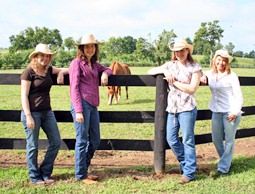
The Hobby Farms team in their western wear for National Day of the Cowboy
photo by Karen Keb Acevedo

In honor of National Day of the Cowboy, the
Hobby Farms team donned their best western
wear outside our office in Lexington, KY.

Left to Right: Associate Editor Stephanie
Staton, Managing Editor Lisa Munniksma,
Editor in Chief Karen Keb Acevedo and
Assistant Editor Krissa Smith

National Day of the Cowboy will be July 25, 2009, according to a resolution passed by the U.S. Senate on June 9.

The bill pays tribute to the enduring legacy of the cowboy in America and the contributions cowboys continue to make to our nation today.

“I am happy the United States Senate is honoring such an enduring cultural icon of the American West that is irrevocably linked with the history of the horse in this country. It is important to remember the cowboy and the horse remain an important part of America still. This resolution recognizes both the history and the continuing contribution of the American cowboy,” said American Horse Council President Jay Hickey.

American Cowboy magazine launched the idea for a national celebration of cowboys after receiving enormous positive feedback as a result of the question, “Why does America need a cowboy?”

U.S. Senator Mike Enzi of Wyoming took the idea a step further, and he introduced a resolution to the Senate. The resolution was first passed in 2005, and President George W. Bush issued a statement of support for the resolution, claiming “we celebrate the cowboy as a symbol of the grand history of the American West.”

The resolution, which has to be reintroduced each year until it is officially designated a national day of observance by the President, has so far been passed yearly since 2005.

As public enthusiasm for the National Day of the American Cowboy continues to grow, American Cowboy is hopeful that the 4th Saturday of July will soon be named a permanent celebration on the national calendar.

Local events are planned throughout the day. Click here to see if one is in your area.

Categories
Homesteading

Leaves of Green

By Kelly Wood

Among the many things I love about the return of Spring is the birds. I love the new growth, the bright green, the fresh buds of so many colors of flowers, but I love to see the songbirds return. Many birds are residents year round, and haven’t been completely absent because our feeders are kept full all winter.

Although I covet the electric birdbath heaters in the catalogues, the reality is that my more fragile bird baths come inside over the winter, while the others just freeze. Even on those days that are above freezing, I don’t see many birds bathing in the frosty air. It’s a fun ritual to bring back out the containers when freezing temperatures are gone for good.

Why not spruce up your bird facilities this year, and give them a lovely new bathing pool? It’s easy to do, and the results are striking.

Sand casting is surprisingly simple. I remember presenting my mother with the shapeless sand candle that I made at summer camp; it was so neat to carve a hollow in the sand that then was represented in 3-D when we pulled out the cooled wax.

These bird baths are exactly the opposite: instead of hollowing out the sand, you build it up into a pile and form the concrete over the top. The resulting shape is that of a bowl that holds the water.

Materials

  • 1 bag of concrete mix (look for varieties that have “reinforcing” fibers mixed in)
  • large leaves (see sidebar)
  • Sand
  • Latex gloves
  • Latex wall paint and brushes
  • Spar Varnish
  • Optional: drywall reinforcing mesh
  • Optional: metal post base with flared bracket or wide flange

Step One

Identify interesting leaves around your yard or neighborhood. The bigger the better. Look especially for dramatic shapes and vein patterns.

Tropical plants perform well in this way. We used sunflower leaves, a hosta, rhubarb and a tropical “dinosaur-leafed plant” that I could never identify. I also made a few smaller casts from some nice nasturtium leaves, but their veining is fairly subtle. Note: Don’t pick the leaves yet!

Step Two

Make a dome-shaped pile of firmly-packed moist sand slightly larger than the leaves you will be using. Make one pile per large leaf. This is best to do on a table at working height, since you will be leaning over it quite a bit. We put our sand into plastic bags for ease of clean up: I dumped the bags of used sand into my soil mix. Shaping the bags into the high cone or hill shape you want was a little more difficult than just loose sand, but it also helped keep the sand moist. If you use a plastic bag, be sure that it is smooth on top, or the wrinkles may show through on the finish.

Step Three

Mix the concrete mix in a wheelbarrow to a soft, clay-like consistency. You don’t want it to be too wet or it will drip and ooze down the sides of your sand pile. Not too dry either: follow the instructions on the bag and use your hands to determine final readiness— modeling clay consistency works well. As added precaution, we wore gloves when touching the concrete, for the mess and also to avoid the chapping and drying that the lime in cement can cause.

If you want to, or have any experience with tinting, now would be the time to add color to your concrete. You could do green, as a basic overall leaf color, or perhaps even a brown. We stuck to the regular grey of the concrete, but it would be fun to see how the paint changes when the concrete itself is tinted. When you add color to the concrete mix itself, it will not wash out when cured, even if it is not sealed.

Step Four

Now pick your leaves, and place them carefully face down on the sand piles. The larger veins are on the back, and give a more dramatic profile when the birdbaths are done. Make sure there are no folds or creases in the leaf surface as you press them out to flatten them and remove air pockets.

Step Five

Start packing the concrete on top of the leaf in sections, starting with a moderately thin layer. You can always build it up thicker later, but make sure it is packed firmly against the leaf as you work your way around it, covering the entire thing. If there is any looseness in the packing, it could show up as an air bubble afterward. Pay special attention to the edges, as they are ugly if done sloppily (like mine were).

If you are doing an enormous leaf, it doesn’t hurt to reinforce it. You can get rolls of drywall reinforcing mesh at the hardware store, or you could try ¼” hardware cloth, but the rigidity may be problematic. We used the drywall mesh, and it was easy to work with. Be sure to cut the strips smaller than the leaf, or you could have little corners and threads sticking out hither and yon.

Step Six

If you are going to stamp the flange shape of your stand into the back of your leaf, now is the time to do it. Otherwise, let the concrete dry and cure slowly, out of direct sun. Lay moist burlap or towels over it gently; newspaper dries too fast. If you cannot shade it, be sure to mist it often throughout the day so that the inside and outside dry at an even pace. Leave it for at least 24 hours; better to let it go for 48.

Step Seven

This is one of the fun parts: when you are certain that the concrete is completely dry, pick it up off the sand pile or bag and turn it over carefully. You will see the leaf stuck to concrete. You can try to peel it off while it is still moist, or you can set it in the sun to begin to dry. Sometimes it’s hard to wait, but the leaf material between the veins comes off more easily—peeling up by itself—as it sun-dries.

The veins are easy to pull up and out of the concrete channels. For any that are difficult, you can use a small screwdriver, toothpick, or bamboo skewer to pry them up. Be careful not to chip off any concrete. An old, dry toothbrush is useful for getting off the extra leaf bits. Pause here to admire the result… Concrete experts say to wait at least 30 days for it to be completely cured. You can set it aside for a week or more to start thinking about colors.

Step Eight

Paint it! We found that regular latex wall paint worked fine for the painting; it helps to have an unsuccessful leaf or piece of finished concrete to test out the paint first. Water the paint down to an impossibly thin consistency—we wanted more of a “wash” result than an actual painted surface.

The first color you paint will be the least visible, since most of it will get absorbed by the porous concrete. But it will also have the biggest impact on the later colors, as it will seal up many of the pores in the birdbath and will affect the absorption of the others.

Let each color layer dry thoroughly before doing the next one. A blow dryer helps to test the results in a hurry, but shouldn’t be relied on for complete drying of the paint layer. We did a very watery gold wash as the last or second to last color wash for some subtle luminescence. Let the finished product dry for at least 24 hours.

Step Nine

Coat all the leaf surfaces with Spar Varnish. This is a heavy duty varnish that has nautical applications. It will seal the paint into the birdbath and won’t impart anything to the water that would be bad for the birds. When dry, it is waterproof and UV resistant, and will supposedly seal the birdbath quite effectively so that it can be left outside year round.

I am not willing to take the chance over the winter, but it’s good to know in case you forget and a freeze sneaks in. There are two choices of finish: glossy and matte. I chose the matte finish, but it dried quite glossy because I applied it thickly. I went back and did a second coat since I wasn’t certain that all the veins and small pores were sealed. I ended up liking the gloss after all.

Step Ten

Glue your post base in, if you’d like, using a good waterproof epoxy. It shouldn’t get wet from the contained water, but environmental moisture from rain, mist and fog could serve to loosen a water-soluble glue. I attached my nasturtium leaves onto their little stands for a fountain with Gorilla Glue; I just rested the larger one on the post for the time being until I am certain where to place it. You can even rest larger leaves directly on the ground, in the midst of greenery as a surprise spot of color tucked into the groundcover.

Now watch as the local wildlife finds your little oasis. The veins and irregularities in the leaf pattern make good footings for bathing birds; squirrels and chipmunks will drink there as well. By providing water for them, you will bring more pollinators and bug-eaters into your garden and onto the farm. Without bugs, we wouldn’t get any fruit at all, and many pest insect populations would explode into unmanageable numbers if it weren’t for the birds that feed on them. Enjoy your beautiful artwork and give the birds and beasts a gift this summer—everyone will benefit.

Go to Birdbath Leaves to see photos of leaves that are ideal for your sand-cast bird bath.

About the Author: Kelly Wood steals large leaves from her parents’ pampered tropical plants in Portland, Oregon.

This article first appeared in the September/October 2009 Hobby Farm Home.
 

Categories
Animals

Staying Cool, Part 2

Take the preventative measures to make sure you keep cool

It’s hot! Uzzi and I lie in the shade and watch our Mom and Dad do the chores; some days she looks pretty frazzled. But there are good ways to stay cool in the summer heat.

Here are easy things to do:

  • Do chores early or late but not through the heat of the day. If you can’t avoid midday heat, pace yourself.
  • Rest often, in the shade if you can, and avoid heavy meals just before chore time.
  • Mom puts big ice cubes in our drinking water so that we drink enough, but she drinks lots of liquid too: 16 to 32 ounces an hour through the heat of the day, especially while doing the chores. Water, real juice and sports drinks are good choices, she says, but not alcoholic beverages or sugary, caffeine-laden stuff like soft drinks and sweet tea. It’s important for humans to stay hydrated, so carrying a bottle of cold along while doing chores is a really good thing.
  • Wear a hat to deflect the sun’s hot rays, and loose-fitting, light-colored, natural fabrics—not dark colors that suck up the sun or synthetics that hold in the heat. A water-soaked, cotton bandana tied around your neck will help you stay cool. Or repeatedly soak the back of your neck and your shirt with the hose while you water your animals; our Mom does that most every afternoon.
  • Get a pool! A wading pool, that is (if you don’t already have a big one). When Mom and Dad are finished outdoors, they soak in the pool they bought for the sheep and my goat friends to drink from while they’re in the yard through the day. It looks funny (you should’ve seen Mom jump out of the pool last week when the UPS truck turned into our driveway), but it works!
  • And learn to recognize heat exhaustion. Remember what happened to Gwydion the sheep! If you get a headache and feel dizzy or sick to your stomach, stop working! Go to a cool place, grab a cool drink and some towels soaked in cold water, lie down, loosen or take off your clothes, sip the drink and place the towels on your body. Don’t overdo it and get sick—your animals need you! 

<< More Mondays with Martok >>