Categories
Recipes

Zucchini Pizza

Zucchini Pizza
Photo by Rachael Brugger

Crust

Ingredients

  • 3 cups bread flour
  • 1/2 tsp. salt
  • 1 package rapid-rising dry yeast
  • 1 T. chopped fresh basil
  • 1 T. olive oil
  • 1 1/4 cups lukewarm water

Preparation
In a large bowl, mix together 2 1/2 cups flour, yeast, salt, basil, oil and water. Mix until smooth.

Dust a kneading surface with remaining flour. Turn dough onto floured surface and knead until smooth and elastic (5 to 8 minutes), adding flour as necessary to eliminate sticking.

Form dough into a ball. Lightly oil a large bowl and invert over dough. Let rise for 20 minutes. While dough is rising, prepare filling and preheat oven to 425 degrees F.

Filling

Ingredients

  • 1 T. olive oil
  • 1/2 cup chopped onions
  • 2 to 3 cloves finely chopped garlic
  • 2 medium zucchini, sliced
  • 1 large, meaty tomato, washed, quartered, rinsed of seeds, and cut into 1/2-inch pieces
  • 1 T. chopped fresh basil
  • 1/4 tsp. salt

Preparation
In a heavy skillet, heat oil. Add garlic, onions and zucchini. Sauté over medium heat until zucchini is tender, about 5 minutes. Place mixture in a bowl and set aside. Add tomatoes to skillet and sauté over medium-high heat until tomatoes are tender and liquid has evaporated. Stir in basil and salt. Combine with zucchini mixture.

Assembly and Topping

Ingredients

  • 2 T. cornmeal
  • 8 ounces mozzarella cheese, cut into 1/4-inch cubes

Preparation
Lightly oil a 14-inch pizza pan and sprinkle with cornmeal. Punch down dough and roll out to fit pan. Place dough on pan, press down and crimp around edges to form a slight ridge. Spread filling onto dough, to within 1 inch of the edge. Top with cheese. Bake on lowest rack of oven 25 to 30 minutes, until crust is golden. Serves 6.

<>

Categories
Recipes

Zucchini Pickles

The whole family will enjoy this treat — all year! (Check out these pickling tips.)

Ingredients

  • 7 cups sliced zucchini (about 2 pounds)
  • 2 cups halved and sliced onions
  • 1/4 cup pickling or kosher salt
  • 2 cups white vinegar
  • 1 1/2 cups sugar
  • 1 tsp. celery seed
  • 1 tsp. turmeric
  • 2 tsp. mustard seed
  • 1/2 cup pickling lime

Preparation
Place vegetables in a large, stainless-steel pot. Add pickling lime, salt and enough water to cover. Let stand 2 hours; drain well. In a 2-quart saucepan, combine remaining ingredients and bring to a boil over medium-high heat.

Pour over vegetables; let stand 2 hours. Then return pot to heat and bring entire mixture to a boil. Boil for 5 minutes; remove from stove and ladle into hot, sterilized jars. Seal jars and process in a hot-water bath: 10 minutes for pints, 15 minutes for quarts.

This recipe makes about 3 quarts of pickles.

<>

<>

Categories
Recipes

Prune-studded Yogurt Tea Bread

You can substitute other dried fruits, such as apples or peaches, for the dried plums, if you’d like.

Ingredients

  • 3/4 cup dried plums
  • boiling water
  • 1 3/4 cup unbleached all-purpose flour
  • 1 tsp. baking powder
  • 1/2 tsp. baking soda
  • 1/4 tsp. salt
  • 1/2 cup plain yogurt
  • 1/2 cup granulated sugar
  • 1/4 cup milk
  • 1/4 cup canola oil
  • 2 eggs
  • 1 tsp. vanilla

Glaze (optional):

  • 1/4 cup powdered sugar
  • 1 1/2 T. plain yogurt

Preparation
Preheat oven to 350 degrees F.  Grease and flour an 8- by 4-inch loaf pan.  Using kitchen shears, cut dried plums into bite-sized pieces.  Pour boiling water over dried plums to cover.  Set aside to soak 10 minutes.

In a medium bowl, combine all-purpose flour, baking powder, baking soda and salt.  Stir with a whisk.

In a large bowl, combine 1/2 cup yogurt, sugar, milk, oil, eggs and vanilla.  Mix well, then stir in flour mixture.  Drain plums and fold into the batter.

Pour batter into prepared pan.  Bake for 40 to 45 minutes or until toothpick inserted into center of bread comes out clean.  Let bread cool 15 minutes, then remove from pan.

To prepare glaze, stir powdered sugar with 1 1/2 T. yogurt until smooth.  Pour glaze over cooled tea bread.

<>

Categories
Crops & Gardening Homesteading

How Do I Build a Rain Barrel?

Remember the children’s rhyme, “Rain, rain, go away. Come again another day?” By catching rainwater runoff from your roof in a rain barrel, you now have a reason to ask the rain to “come again” when you need it. Collecting rainwater will allow you to conserve natural resources or save money on your water bill.

The typical roof on a house can direct as much as 200 gallons of water into its downspouts during a 1/4-inch rain shower. Already-assembled rain barrels are available at many garden centers and online; however, rain barrels aren’t difficult to make. Reuse any water-tight, rust-free barrel or drum for your rain-barrel project, but choose one that hasn’t held hazardous chemicals. Depending on your location, you should be able to find discarded wine or whiskey barrels, metal barrels or plastic food-grade barrels for $10 to $15. Check feed stores, food distributors or even your local Craigslist site.

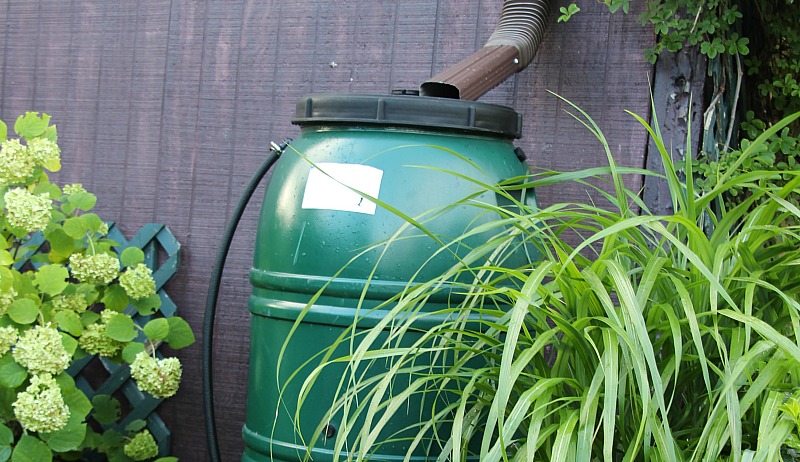
A common 55-gallon, food-grade plastic barrel has two holes in the top with screw-in plastic caps. (Use this type to construct the rain barrel in this article.) These are ideal, as the caps are each threaded, so they can easily be unscrewed to access the contents of the barrel. Typically, the caps also have a ready-made faucet tap, which will allow easy attachment of a pipe and water spigot.

Rain Barrel Materials

  • water-tight, rust-free barrel or drum
  • short length of 3/4-inch PVC pipe
  • 3/4-inch PVC elbow, SLIP x MPT (male thread on one end, smooth or “slip” on the other end)
  • 3/4-inch PVC adapter, SLIP x FPT (female thread on one end, smooth or “slip” on the other end)
  • boiler faucet or another type of faucet that fits your PVC adapter and hose
  • Teflon thread-sealing tape
  • PVC cement and primer

Step 1: Rinse the barrel.
Even though you’ll be using collected rainwater as non-potable water, you should rinse out any residue. Remove the caps and rinse the barrel with a garden hose. Note that the caps you remove from the barrel might not be interchangeable, so don’t try to force them or accidentally cross-thread one.

Step 2: Set up a stand.
The stand for your rain barrel should be tall enough so you can easily put a watering can under the barrel faucet. You can build a stand from wood or even set up a platform of concrete blocks. Be sure you design a space or a gap in the top of the stand so the PVC pipe can run from the bottom of the rain barrel to the edge of the stand without being crushed.

Place the stand on level ground near an existing downspout that is convenient to the area where you want to use the water. Remember that the water will be gravity-fed, so the rain barrel must be higher than any areas where water will be used—water won’t run uphill!

Step 3: Prepare the barrel.
The barrel will be mounted on your stand with the two capped holes on the bottom. One of the holes will be used to connect the PVC pipe. Leave this hole open, but securely replace the cap on the other hole—this is where the faucet will go.

Use Teflon tape on the cap threads to ensure a water-tight fit; wrap the tape in a clockwise direction so the tape doesn’t unwind as the cap is screwed on.

Using a 3/4-inch drill bit, drill out the plastic faucet tap in the center of the cap. With a utility knife, carefully trim away any leftover plastic remnants on the inside of your drilled hole.

Step 4: Attach the PVC pipe.
You might find it easier to attach the elbow to the PVC pipe first, then screw the whole thing into the faucet tap. Put primer on the PVC elbow connecter and one end of the PVC pipe, then apply the PVC cement to the pipe, fit them together, and screw the elbow into the cap.

Now place the barrel on your stand. The PVC pipe should reach just to the edge of the stand; cut off any extra.

Step 5: Attach the faucet.
The final step in constructing the rain barrel is to attach the PVC adapter to the end of the pipe, and then attach your faucet onto the adapter. Put PVC primer on the adapter and the cut end of the PVC pipe, then apply cement to the pipe and fit them together. Wrap the faucet threads in Teflon tape and screw the faucet into the PVC adapter.

Step 6: Direct water to the rain barrel.
Place the rain barrel in the exact location you want it, because once it’s filled with water it will weigh about 450 pounds.

There are many ways to direct water from a downspout into a rain barrel. Depending on your needs, you might want to develop your own solution. One simple option is to use the Garden Watersaver Diverter. This device attaches to your downspout and has a hose that directs water from the downspout into your rain barrel. When the barrel is full, the water is automatically redirected back into the downspout. The diverter comes with downspout attachment instructions.

To attach the hose to your rain barrel, drill a hole in the top of your barrel, and put the Watersaver hose through the hole. To prevent a vacuum effect and to keep water flowing freely from the spigot, drill a 1/8-inch hole in the top of the barrel near where the hose enters.

Step 7: Connect overflow rain barrels (optional).
If you have room, you can connect two or more barrels together so one barrel can overflow into the next.

To do that, drill a hole near the top of each barrel and connect them with a hose or pipe. Be sure that this connection is large enough in diameter so the water flow into the next barrel equals the flow entering the barrel from the downspout. Fit each barrel with a water faucet just as you did the first.

Step 8: Maintain you rain barrel.
However you connect your rain barrels to your downspout, it’s important to be able to easily disconnect them. Keep this in mind when you’re designing your system. Drain the barrels before winter, as water expands when it freezes and can destroy your barrels. If you treat your roof with moss killer, disconnect your rain barrels beforehand. Wait until after two or three heavy rain showers before reconnecting the barrel to the downspout to be sure the roof has been well rinsed.

Now that you see how easy it is to make your own rain barrel, make one (or more) to catch spring rain before the dry summer months set in. Rainwater is better for your plants than treated tap water, so your garden will thank you and so will your checkbook.

This article first appeared in the March/April 2009 issue Hobby Farms.

Categories
Recipes

Quiche with Home-dried Tomatoes and Herbs

Quiche

Ingredients

  • 1 unbaked pastry shell
  • 3/4 cup dried tomatoes (home-dried, not in oil)
  • Boiling water
  • 1 T. olive oil
  • 1/2 cup finely chopped onion
  • 1 1/2 cups chopped spinach
  • 1 garlic clove, minced
  • 1 tsp. dried basil
  • 1/2 tsp. dried thyme
  • 1 1/2 cups grated Gruyere cheese
  • 5 large eggs, at room temperature
  • 1 1/2 cups half-and-half
  • 1/2 tsp. salt
  • 1/4 tsp. pepper

Preparation
Preheat oven to 425 degrees F.  Fit pastry shell into a 9-inch deep-dish pie pan.  Prick the crust all over with a fork and bake the crust for 10 minutes. (Alternatively, you can line the crust with parchment paper and weight it with dry beans.)  Remove the crust, and turn the oven down to 325 degrees F.

Meanwhile, cut dried tomatoes into bite-sized pieces with kitchen shears.  Pour boiling water over the dried tomatoes to cover and let sit for 10 minutes. Drain.

Warm the olive oil in a cast-iron skillet over medium heat.  Add onion and sauté for 3 minutes. Add the drained tomatoes, chopped spinach, garlic, basil and thyme.  Cook an additional 2 minutes, or until spinach wilts.

Place mixture evenly in the bottom of the partially baked pastry shell. Cover filling with cheese.

Whisk together eggs, half-and-half, salt and pepper in a large bowl.  Pour the mixture gently over the filling and cheese.  Place the quiche on a baking sheet. Bake for about 40 minutes or until eggs are set (quiche may jiggle a little in the middle). Serve warm or at room temperature.

<>

Categories
Recipes

Mom’s Blueberry Cake

Bluebery cake

Ingredients

  • 2 cups flour
  • 1 1/2 cups sugar
  • 2 tsp. baking powder
  • 1 tsp. salt
  • 2/3 cup butter or margarine
  • 2 eggs, yolks and whites separated
  • 1 cup milk
  • 1 cup blueberries

Preparation
Preheat oven to 350 degrees F.

Sift together flour and sugar. Cut in butter with pastry blender until mixture is crumbly and butter has been evenly distributed. Reserve 3/4 cup of the mixture for topping.

To the remaining crumb mixture, add baking powder, salt, milk and 2 unbeaten egg yolks. Mix on medium speed for about three minutes.

Beat egg whites until stiff. Fold into batter; gently add berries. Spread batter into greased 13- x 9-inch baking pan. Sprinkle with reserved crumb mixture. Bake 40 to 50 minutes until top is golden. Serves 15.

Categories
Recipes

Baked, Stuffed Zucchini

Stuffed zucchini

Serve this as a main dish with a garden salad on the side.

Ingredients

  • 1 large zucchini (8 to 12 inches long)
  • 2 T. olive oil
  • 2 T. butter
  • 2 medium onions, chopped
  • 2 cloves garlic, minced
  • 1/4 pound Italian sweet sausage
  • 1/4 pound ground beef
  • 1/4 tsp. salt
  • 1/4 tsp. black pepper
  • 1/4 cup freshly chopped curly parsley leaves
  • 1 tsp. crumbled, dried rosemary (or 2 tsp. fresh, chopped)
  • 2 slices bread
  • 1/2 cup milk
  • 1/4 cup plus 2 T. grated Parmesan cheese
  • 3 T. Italian salad dressing

Preparation
Cut zucchini in half lengthwise. Scoop out some of the pulp from the center, leaving about 1/2 inch intact all the way around. Set pulp aside.

Place olive oil and butter in a skillet and heat. Add onions, garlic and parsley, and sauté three minutes. Add meats, rosemary, salt and pepper, and cook 15 minutes. Remove from heat. Preheat oven to 350 degrees F. Soak bread in milk until saturated. Gently squeeze liquid and shred bread into a bowl. Add bread, reserved zucchini pulp and 1/4 cup cheese to skillet and mix well.

Place zucchini halves in greased baking pan. Fill centers with zucchini mixture and sprinkle remaining cheese on top. Bake 15 minutes, then lower oven temperature to 325 degrees F and continue baking for 10 minutes or until zucchini shells are tender and can be easily pierced with a fork. Drizzle salad dressing over each zucchini half while still warm. Serves 3 to 4.

<>

<>

Categories
Recipes

Greek-style Grill Rub

Experiment with adding different herbs and spices to the base of homemade garlic powder and kosher salt.  Try to use as many home-dried products as possible!  This rub is great sprinkled on kabobs.

Ingredients

  • 1/4 cup dried garlic cloves
  • 1/2 T. dried lemon peel
  • 1/4 cup kosher salt
  • 2 T. dried oregano
  • 1 T. dried thyme
  • 1 T. fresh-ground black pepper

Preparation
Grind garlic cloves and lemon peel into a powder in a clean coffee or spice grinder.  Combine with remaining ingredients and store covered in a small glass jar.

<>

Categories
Equipment

Star Light, Star Bright

Harvesting may require the graveyard shift to get everything done

iStock photo

Do you think the phase of the moon
determines the best planting time? Read Amy
Grisak’s article on Mother Nature’s Planting
Guide
 and determine for yourself if there’s
any merit to this centuries-old belief.

My house sits on a ridge overlooking the fields of a nephew. The other evening he was going late into the night working up the corn stubble from last fall’s harvest.

As I set out for my late night walk with my dog under a clear and star filled sky, I thought back to nights as a young man working late in the fields.

Spring work, like harvest, is a time of intense energy. There is so much to get done and seemingly so little time to do it.

When the weather is good, you work…all day and into the night. In that time before tractor cabs, working into the night meant getting a different view of your working world, one covered by a spectacular light show.

It isn’t that I would disk a field with my eyes on the stars. I had to concentrate on the field before me, and the eyestrain was considerable. Tractor lights weren’t that good, and there was no such thing as GPS and satellite assisted steering.

That said, there were times when the fieldwork halted, perhaps to talk to my brother or father, to change fields or simply to head home.

That’s usually when the stars overhead would break through the clutter of the day and the pressure of work yet undone. That’s when something primeval would grab at my soul and remind me that what I was struggling with was only a passing fancy.

I’ll have to ask my nephew in his heated tractor cab equipped with stereo sound systems and high tech guidance if he ever notices the stars above. You can’t see stars through the roof of a cab.

Does he pause as he moves from tractor cab to pickup to look up? If not, he is missing out on the best reason of all to work at night.

I don’t do field work anymore, but I still savor the night sky. Ironically, it is a free show for anyone living in the country, and you pay a terrible price if you don’t enjoy it.

« More Shop Talk »