Categories
News

Growing Urban Farms

By Karri Sandino, Associate Web Editor

Will Allen is the CEO of Growing Power and a leader in urban farming
Will Allen sits in one of the greenhouses at Growing Power’s headquarters in Milwaukee. His recent presentation in Lexington, Ky., was sponsored by the University of Kentucky Gaines Center for the Humanities.

“Will Allen is a big man. And he has a big footprint,” said Jim Embry, leader of the Sustainable Communities Network in Lexington, Ky., as he introduced founder and CEO of Growing Power Will Allen, who spoke to a standing-room-only crowd at the downtown Lexington public library recently.

Even more significant than Will Allen’s size–the 6′ 7″ former basketball player has a commanding presence–is the impact he’s having as he cultivates urban gardens in communities around the world.

Allen doesn’t need physical size to drive home his message of improving nutrition through urban farming–for him, it’s all about inspiration and passion.

Growing Power's urban farm is located in MilwaukeeAnd for about 90 minutes, Allen inspired with a no-nonsense approach to his mission.

“We don’t have a hunger problem in the world,” he said. “We have a nutrition problem. We need to do something about it … you guys have some work to do!”

Allen’s work is headquartered at his 2.5-acre Community Food Center Urban Farm, located in of one Milwaukee’s densely populated, working-class, retail-centric neighborhoods. There he and his team grow food for their neighbors, shoppers and restaurants and teach others how to do the same–and much more.

According to the Growing Power website: “In a space no larger than a small supermarket live some 20,000 plants and vegetables, thousands of fish, and a livestock inventory of chickens, goats, ducks, rabbits and bees.”

Urban FarmComing Soon …

From the publishers of Hobby Farms and Hobby Farm Home magazines. MORE

A healthy pile of compost getting ready to grow healthy food
Photo by Growing Power

Showing off a healthy pile of compost getting ready to grow healthy food.

The organization has several other farm locations in greater Milwaukee, as well as farms in Chicago; it’s in the process of setting up national training centers in Arkansas, Massachusetts and Mississippi.

What Do You Need to Get an Urban Farm Started?
Allen surprised many when he announced the most important thing you need to start a successful urban farm: relationships.

“People aren’t just going to run out of their houses and say, ‘Yes, let’s grow some food,'” he said. “It’s about educating neighbors, enlarging their minds and engaging the community.”

It’s the responsibility of the urban farm organizers to develop relationships with nearby schools, youth, families and businesses–basically any person or organization in the area that could help support the goals of the urban farm.

“They all need to value what you’re doing as much as you do,” he said.

He says not to worry about the scope of your project. Start small and think bigger as things get going. Developing an urban farming skill set is not an insignificant accomplishment.

The Second Most Important Thing
Surely the plants and seeds are the next most important thing to starting an urban farm.

But according to Allen, it’s actually: compost.

LOTS of compost.

“You need to grow new soil because the soil that’s there (in cities) is contaminated,” he said.

Allen showed the crowd photos of enormous piles of composting materials that are being turned into soil over time–most piles about the size of a compact car and some as large as a house.

Much of the business of the farm he runs involves Olympic-sized efforts to grow soil through composting on the urban farm in Milwaukee and a 30-acre rural farm in Merton, Wis.

The secret ingredients in Allen’s compost: coffee grounds, wood chips, leftover produce from supermarkets and brewery waste (from Milwaukee’s nearby breweries).

Because the quantities of materials needed to grow soil are so large, collecting enough compost materials to feed the soil can be difficult–it’s important again to develop relationships with area businesses that can provide these vital materials.

Another key component: vermicompost. Vermicomposting is so essential that Allen refers to their worms as “livestock.” Growing Power harvests and cares for worms the way a chicken farmer cares for his prized, egg-laying flock.

The worms’ job is to grow healthy soil for the plants. Vermicomposting (intensive composting in boxes with worms) allows Growing Power to add a nutrient-rich, organic fertilizer and soil conditioner to its new soil. The vermicompost is so valuable that they also sell it at the Growing Power store and at farmers’ markets.

“To fundamentally change the food system, we need 50 million people growing food in this country alone, in their backyard, side yard, wherever. Will that happen overnight? I don’t think so. Will it happen in my lifetime? I don’t think so. But it will happen because now it’s a movement,” Allen said.

“All we have to do is open our minds. We can grow food almost anywhere. All we have to do is decide we’re going to do it.”

Categories
Homesteading

Desert Discoveries, Part 1: Escaping the Farm

Saguaro cactus greets Cherie on her travels
Farming and Traveling …. A tall saguaro cacti with outstretched arms, welcomes Cherie’s family to the Sonoran desert on a rare trip away from their Washington farm.

Don’t get me wrong – I love our farm. 

But it’s been too long since my family and I escaped the animal feeding, dog walking, manure scooping, garden tending, house cleaning, fence fixing, bill paying, and other duties that go with living in the same place day after day. 

The itch to see someplace different, to bust out of our daily routines and shirk our responsibilities, to feel unfettered and free to roam, is almost unbearable.  Besides, I really want to see my parents, who just happen to live in one of the loveliest spots in the country (in my biased opinion).

This area seems light years removed from our home in green, rainy western Washington, even though it’s only a three hour plane ride away:  the dry, Sonoran desert environs near Tucson, Arizona.

So now we’re in the mad dash to leave, and it hits me again how incompatible these two passions are: hobby farming and traveling. 

Although I’m lucky to have a trusted friend who I exchange farm-sitting duties with, preparing to leave the farm, whether it’s for two days or two weeks, is always an ordeal.

In part because I feel like everything needs to be done before we leave, which is impossible.  Also, at the last minute, escaping always seems like abandonment, but particularly so on this strange spring day, with snow flurrying down as I race through the stall cleaning and kiss the horses goodbye.

Driving away, all those “what-if?” monsters raise their ugly heads.  What if Sophie colics?  What if someone breaks into the house?  What if dogs dig in and kill our sheep?

Part of me thinks: Maybe we should just stay home, as many farmers do, or else ditch the farm so it will be easier for us to travel. 

The other part replies, But we love them both.  And it’s not like we jet set off every other weekend; only a couple of times a year. 

As the plane takes off, the “what-if?” worry monsters retreat to their lairs.  Nothing we can do now, so why worry? 

Later, the plane sinks toward the earth, and the snowscape back home has become a mirage, while the desert below us turns real: sky a brilliant blue, sun gilding palm trees, tall saguaro cacti with outstretched arms, welcoming us back.

I’ll tell you more about our desert trip next week.

                     ~ Cherie

« More Country Discovery »

Categories
Homesteading

Maple Syrup Information

Tap into the maple syrup hobby
Courtesy Oven Fresh

According to the University of Minnesota Extension Service, maple syrup is produced in 14 northern states and four Canadian provinces.

If you’re lucky enough to be living in one of those areas, you have a unique opportunity to try your hand at harvesting the year’s first official crop.

It’s pretty easy to get started; all you need is a bucket or two, a couple of taps, a thermometer, a large pot for boiling and of course, maple trees.

February is when sugarhouses typically set their taps and begin collecting the sweet liquid that starts to flow as the days warm and the nights remain cold.

It takes 40 to 50 gallons of sap to yield 1 gallon of syrup in a very long boiling process not done on a standard kitchen stove.

Serious hobbyists and the pros have special boilers and evaporators to do the job in enclosed buildings over some type of stove. Some of the maple-syrup enthusiasts I know occasionally get together with neighbors for a day-long sap boil over an open fire.

What Do Maple Syrup Farmers Do with Their Product?
After a day of cooking, how do you know when it’s done?

Jim Burns, a small maple producer in Harvard, Mass., says that when the temperature of the sap reaches about 220 degrees F, it should be about the right color and consistency to qualify as maple syrup. (Technically, he says, the target temperature should be 7 degrees above the boiling point of water on the day of the boil, since the boiling point of water is affected by atmospheric conditions and can vary from day to day.)

Because Burns sells his syrup to the public, he has to use a hydrometer to ensure the syrup is at the proper density; but for a hobbyist just starting out, he says, the temperature method is fine.

Burns makes about 50 gallons of the amber ambrosia each year and always sells out since he’s in a niche market with few other sugarhouses in the area.

He says he could easily expand if he wanted to—the demand is definitely there, especially given the increase in interest among consumers for locally produced foods.

Burns sells his syrup to a few stores near his home—Doe Orchards in Harvard and Amy’s Provisions in Ayer; he also sells some out of his home. He doesn’t usually ship the syrup because there’s not enough left, but he will fill orders based on availability. (Burns doesn’t have a website, but takes orders at 978-456-8349.)

Brown Family Farm in Brattleboro, Vt., however, does ship syrup, in addition to other maple-based products.

The farm helps support small, independent maple farmers in New England by purchasing and distributing their syrup, and by using it to create private-label products, such as maple candy, maple sugar and maple butter.

How You Can Use Maple Syrup
Once you’ve got your maple syrup, what do you do with it?

There are only so many pancakes a person can eat, but it makes a creative addition to:

  • Baked beans (start with a tablespoon at a time until you find the blend you like) and
  • Apple pie (replace 1⁄4-cup of the sugar called for in your favorite recipe with maple syrup).

It also makes a fine glaze for:

  • Baked winter squashes, such as butternut or acorn, and
  • Fish like salmon or trout.

It can also be the star attraction at the dessert table. Try this recipe for Apple-maple Indian Pudding.

Grades of Maple Syrup
There are four grades of maple syrup:

  • Grade A-Light: light-amber in color, with a mild flavor. From the earliest sap of the season; also the most expensive.
  • Grade A-Medium: medium amber in color; the most popular grade.
  • Grade A Dark: dark amber with a hearty flavor.
  • Grade B-Very Dark: with a robust flavor; used mostly by commercial manufacturers who add other ingredients to create “maple flavored” syrups; also the least expensive.
Categories
Equipment

A Workbench That Travels Well

Read next week's blog to learn how to make this workbench
Jim’s workbench:
Next week, he’ll tell you how to build it

For me, the heart of a shop is the workbench.

The bench gives shape and form to any shop.

That said, a workbench can be as simple or complex as your talent and skill allow. While I still salivate over the fine cabinetmaker-style workbenches I see in woodworker magazines and catalogs, I know they are not for me.

I need a more rough and tumble bench that I can abuse without regret. If I drill through a work piece into the bench top or I drip paint or other liquids on it, I am not going to get too worked up about it.

What I do demand from my workbench is stability and versatility. For nearly 30 years my simple bench has satisfied those needs and more as I have moved it cross-country four times and across town another three. Each time it has come apart and reassembled easily and quickly.

It is a simple thing, made of redwood with a small vise on one end.

It is daubed with paint and dented, gouged and scarred from three decades of wood projects for my wife, children and myself. Children’s toys and school projects, Christmas gifts and more have been birthed on its surface. With any luck, another 30 years of projects will yet grace its presence.

The original plan or idea on which it is based has long since been lost and forgotten. What I do know is that it has served me well.

If you need one a workbench of your own, I offer up mine as an example here. You could do worse.

Next week, I will share the makings of it in this blog.

« More Shop Talk »

Categories
Recipes

Apple-maple Indian Pudding

Apples and maple syrup add interest to this New England staple.

Ingredients

  • 4 cups milk
  • 1⁄2 cup yellow cornmeal
  • 1⁄4 cup pure maple syrup
  • 1 tsp. salt
  • 1 tsp. cinnamon
  • 1⁄2 tsp. ground ginger
  • 1 egg
  • 1⁄2 cup molasses
  • 2 T. unsalted butter
  • 2 apples, peeled, cored and shredded (Macouns, McIntosh or Cortlands are best)

Preparation
Preheat oven to 300 degrees F.
Combine cornmeal, salt, cinnamon and ginger.

Scald 3 cups of milk in the top of a double boiler. Remove from heat and gradually blend in cornmeal mixture, stirring constantly.

In a small bowl, beat egg well; add molasses and maple syrup. Add  3 tablespoons of the cornmeal-milk mixture, stirring well.

Vigorously stir egg mixture into hot cornmeal. Return double boiler to heat and cook about 10 minutes or until very thick, stirring constantly. Remove from heat and beat in 2 tablespoons of butter.

Place shredded apple in a buttered, 2-quart casserole. Cover with cornmeal mixture. Pour 1 cup milk over the top.

Bake at 300 degrees F for about 2 hours or until top is browned. Serve warm with vanilla ice cream. Serves 6.

Categories
Recipes

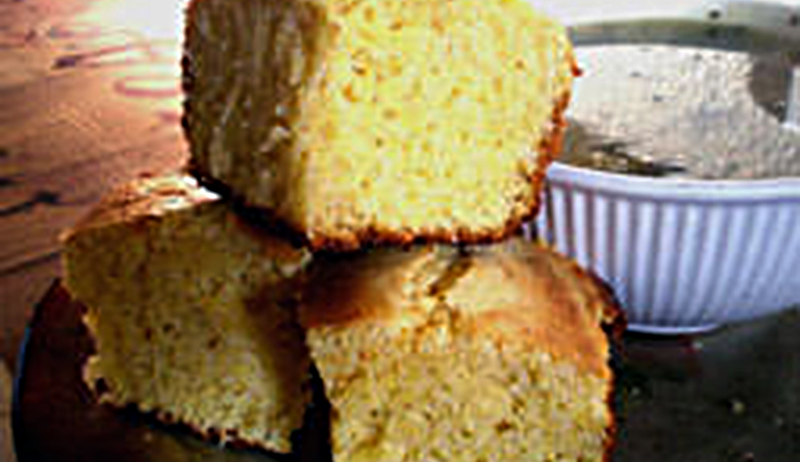
Adgie’s Cornbread

You can’t talk about comfort food without talking about bread. A favorite accompaniment to winter soups and stews is cornbread.

This is a favorite recipe from a collection of recipes called “To Please the Palate,” published in 1972 by the Trinity Lutheran Church in Grand Rapids, Mich. It makes a moist, hearty, slightly sweet bread.

Ingredients

  • 2 cups cornmeal
  • 2 cups all-purpose flour
  • 1 cup sugar
  • 7¼ tsp. baking powder
  • 3/4 tsp. salt
  • 2 cups milk
  • 3 eggs, well-beaten
  • 2 T. melted butter

Preparation

Mix and sift dry ingredients. Add milk, eggs and butter. Stir only to moisten dry ingredients.

Pour into greased 13- by 9-inch pan; bake at 425 degrees F for 20 minutes, or until top springs back when pressed lightly with finger.

To double-check for doneness, insert toothpick in thickest part. Bread is done when toothpick comes out clean.

Categories
Recipes

Shepherd’s Pie with Poultry

Using our “Basic Shepherd’s Pie” recipe, substitute ground turkey or chicken for the beef.

Substitute green beans or peas for the corn.

Because ground poultry is so much leaner than ground beef, this version of shepherd’s pie will need gravy.

Make gravy according to directions below and cover meat with it before adding vegetables. Bake as directed in basic recipe.

Gravy

  • 1 1⁄2 cups chicken broth
  • 1/2 T. poultry seasoning
  • 1 T. cornstarch
  • 2 T. milk

Preparation
Combine cornstarch and milk and whisk until smooth.

Heat broth to boiling, then reduce heat to medium and gradually add cornstarch mixture, stirring constantly.

Add poultry seasoning and mix well.

Continue heating over medium-low heat until mixture thickens. (It won’t be a thick gravy, rather it will be slightly translucent and golden in color.)

Categories
Recipes

Basic Shepherd’s Pie

Something simple and easy for busy spring days.

Consider substituting the beef with another meat–try Shepherd’s Pie with Poultry–possibly even lamb left over from spring celebrations.

Ingredients

  • 4 to 5 large potatoes, prepared as mashed potatoes
  • 3/4 pound ground beef
  • 1 medium onion, chopped
  • 1/2 to 1 T. olive oil
  • 3 large cloves garlic, chopped
  • 1 cup frozen whole-kernel corn
  • Paprika

Preparation

Prepare mashed potatoes according to your favorite recipe.

Warm the olive oil in large frying pan and sauté onions and garlic over medium heat until translucent, about 2 to 4 minutes. Add ground beef. Stir and turn frequently to ensure even cooking, and cook meat until gray in color; remove from heat.

Turn meat into medium-sized casserole dish. Top with frozen corn, uncooked. Spread mashed potatoes over all, to edges of dish to seal. Sprinkle with paprika.

Bake at 350 degrees F for 25 to 30 minutes, until edges start to turn golden.

Serves 4.

Categories
Animals

Smart Sheep

Sheep are farm more intelligent and athletic than most would guess
Courtesy Conway Family Farm

Check out more sheep profiles.

Yesterday a man stopped to look at our water buffalo, Ludo. Our sheep were gathered around the big hay bale in the yard, nibbling hay. He laughed and called them “lamb chops on legs.” We could tell that made Mom mad.

After he left, Rebaa the old black sheep came up to Mom and leaned against her legs. In Rebaa-talk that means “Please scratch my back.”

Mom laughed and said, “He has no idea how smart sheep are.”

Uzzi and I very well know that goats are smarter, but sheep are intelligent too. Sometimes they panic and run away but that’s a smart thing when you’re small and tasty, after all.

Some men at the Babraham University in England did experiments with sheep. They showed their sheep pictures of other sheep and of shepherds that they hadn’t seen for a really long time.

The sheep got food for examining pictures while the men measured activity in their brains. Some of the sheep remembered up to 50 faces. Mom says she can’t do that!

Another time they showed the sheep pictures of sheep that were stressed or calm and of people who were smiling or mad. The sheep preferred calm, smiling faces.

And did you hear about the sheep in Yorkshire who learned to roll across cattle guards commando-style, so they could visit town and eat the villagers’ yummy gardens? Pretty crafty sheep, we think.

Sheep even do agility like dogs. Mom says if a lamb can do it, so can my baby nephew Edmund (I’ll tell you about that another time).

So next time you see a sheep don’t think of lamb chops, think “smart sheep!” ‘Cause sheep are almost as smart as goats like Uzzi and me—and that’s a lot.

« More Mondays with Martok »

Categories
News

Attitudes Toward Ag

The animals we raise for food--like cows--are important
What role do you play in helping shape the public’s views about agriculture?

Small-scale farmers and large-scale corporate agriculture firms may not see eye-to-eye on many issues, but there’s one point that they need to unite on—shaping the public’s view of agriculture.

With every generation, more of the population is farther removed from the farm.

Not only does that mean that people don’t understand where their food comes from, it also means they don’t understand how it’s produced.

Around the world, “animal-rights” groups are taking advantage of this knowledge gap and capitalizing on the general lack of understanding. When they see pigs standing in a muddy lot (created from four straight days of rain) or pass by a farm with cattle that doesn’t smell as pretty as roses (on a humid August day), they can turn that normal farm scene into ammunition for their cause.

Agriculture—big or small—doesn’t need to be a victim of this war, but it’s time for farmers to start taking action of their own.

The Need for Discussion
“The Changing Face of Animal Agriculture” was the theme for the National Institute for Animal Agriculture meeting in Louisville, Ky., March 31 through April 1, 2009, and various aspects of this topic were discussed throughout the sessions.

In one session about food and nutrition policies made in Washington, D.C., food policy consultant Lisa Katic, R.D., named a list of people who are influencing nutrition—and, therefore, agriculture—perceptions.

Among them are Neil Barnard, M.D., a renowned nutritionist and vegan-lifestyle promoter; Kelly Brownell, Ph.D., director of Yale University’s Rudd Center for Food Policy and Obesity and anti-“big-food” author; and Jeffrey Moussaieff Masson, Ph.D., an author who opposes agribusiness and meat eating.

Also on Katic’s list of people who are making an impact on policies that affect the industry are three familiar faces to the small-farm movement: author and “real food” proponent Michael Pollan, restaurant owner and sustainable-agriculture supporter Alice Waters, and Food Democracy Now! co-founder David Murphy.

As visible figures for their cause, the people listed are generally regarded by the public as credible. They’ve created platforms that Americans (not involved in agriculture) can relate to, and they’ve gained their trust.

Animal agriculture, in turn, is largely left in a reactive—rather than proactive—position to defend itself against allegations of poor food safety and animal treatment.

Dan Sutherland of Johnsonville Foods stressed the public’s cry for more transparency in the industry. It’s not enough anymore to have high animal-care and facility-maintenance standards on your own farm. It’s time to prove your commitment to these standards to the public.

“The social issues of today are the issues we have to face for tomorrow,” Sutherland said. One prime example is the video from Hallmark Meat Packing in Chino, Calif., that was released by the Humane Society of the United States in early 2008. The footage of downer cows being sprayed in the face with hoses and pushed around with forklifts made international news headlines and understandably turned Americans’ view of agriculture sour, despite the processor’s and industry’s statements condoning the events.

“What are we going to do as an industry to prevent this?” Sutherland asked. “This is not a competitive issue. We need to band together. Everyone in [the industry] can be a target [of regulators, activists and boycotting consumers]. When are we going to start looking at it as producing food instead of producing pigs?”

The Need for Action: Make Yourself Visible
The common theme throughout the sessions was the need for better communication. It’s not often you meet a farmer who doesn’t hold his animals’ welfare as the highest priority, after all. With high values already in place, it’s just a matter of letting the public know about your commitment.

Chris Sigurdson, assistant vice president of external relations at Purdue University, points out, “We are a nation of meat eaters. … You enjoy a great deal of goodwill toward your product and your industry. Hang on to that goodwill. Start talking to that next generation of consumers.”

The next generation is all over the Internet. Having your own website is no longer enough.

It’s time to interact with the public through sites such as Facebook and Twitter. (Follow the HF editors on Twitter—KarenKAcevedo, Karri_Sandino, sjstatonLisaMunniksma and KrissaSmith—and become a friend of Hobby Farms, Hobby Farm Home, HobbyFarms.com and editor in chief Karen Acevedo on Facebook.)

Also make yourself more visible in your community.

“Your job is to bridge the disconnect,” Sigurdson says. “They don’t really want to know how food is raised. They want to know you have their best interest at heart.”

Liz Doornink, co-leader of American Farmers for the Advancement and Conservation of Technology, said producers should create a value statement to share with their customers and the public: “This is the most important way we can connect with our customers … they need to find out that you do care and have values.”

Farmers can do their part to improve the public’s view of agriculture by starting in their own communities, on their own farms.

By being good rural neighbors, and as these grassroots building blocks are put in place, the industry can better work together to present the truth and improve attitudes about agriculture. The longer it takes for the ag industry to pick up the pace in creating its public image, the farther behind it will be in the battle for the public’s favor.