Categories
Recipes

Victory Garden Vegetable Au Gratin

(Victory Gardens: A Salute to Self-sufficiency by Lisa Kirvirist)

Wartime recipes focused on the creative, tasty use of leftovers. This updated version of a classic vegetable gratin, a French-inspired casserole, uses whatever leftover cooked vegetables are on hand along with bread crumbs.

Ingredients

Casserole

  • 3 cups chopped, steamed vegetables; ideally 1 cup each of three different vegetables, which may include broccoli, peas, peppers, carrots, green beans, corn or cauliflower
  • 1 medium onion, diced
  • 1 T. olive oil
  • 1/2 tsp. thyme
  • 1/2 tsp. marjoram
  • 1/2 tsp. salt, or to taste
  • 1/2 cup cashews, coarsely chopped

Breadcrumb Topping

  • 3 slices slightly stale bread, cut into 1/2-inch cubes
  • 2 T. butter or margarine
  • 1/2 tsp. thyme
  • 1/2 tsp. marjoram

White Sauce

  • 2 T. flour
  • 2 T. butter
  • 1 cup milk
  • 1 cube vegetable bouillon
  • 4 ounces (1/2 package) cream cheese, softened and cut into cubes

Preparation
Sauté onions in olive oil until soft. In a large bowl, combine onions with cooked vegetables. Mix in thyme, marjoram and salt. Stir in cashews. For the breadcrumb topping, melt butter over medium heat in a saucepan. Toss the breadcrumbs in melted butter. Add herbs, and season with salt and pepper to taste.

For the white sauce, melt butter over medium heat in saucepan. Stir in flour. Continue to cook and stir until mixture just begins to bubble. Crumble the vegetable bouillon cube into the milk and slowly add to the butter/flour mixture. Cook and stir mixture until sauce thickens and is starting to bubble a little. Stir in cream cheese until well blended. Remove from heat.

Stir the sauce mixture into the bowl of cooked vegetables. Toss well to blend and coat all vegetables. Spoon the vegetable and sauce mixture into a greased 8- by 8-inch baking dish. Sprinkle the breadcrumb mixture evenly on top of the vegetables. By using a large baking dish, you’ll allow more of the casserole to have the added crispness of the breadcrumbs. Bake for 20 minutes at 250 degrees F or until breadcrumbs appear toasted.

Categories
Equipment

A Place For Everything

By P. Allen Smith

P. Allen Smith's garden shed desk has lots of natural light
Photo Courtesy Hortus Ltd.

Details Make the Difference
Keeping your hats close at hand, like P. Allen Smith did here, near his bright, desk garden shop desk, it’s the details that make the difference.

Click here for a more handy solutions.

When I told some of my friends that I was writing an article about organizing a tool shed, they had a good laugh.

They’ve been in my garage, after all! I’ll admit, I’m more of a “grab and go” gardener, and at the end of the day, I often toss my tools and supplies in a heap inside the door.

But this year, I built a new garden shed, and that was the incentive I needed to reform my ways.

It was a fresh start and an opportunity to think through how I could store my gardening supplies so I’d be more inclined to keep things organized.

It’s been a few months since I moved in, and I’m happy to report that so far, my plan is working. If my new system could change the habits of a pack rat like me, they might be helpful to you, too.

The Master Plan
I situated my new tool shed about mid-point in the garden to save steps, so I don’t have to walk all the way to one end or the other to retrieve supplies.

The building is 10 feet deep and 14 feet wide with double doors in the front so it’s easy to haul things in and out.

Instead of constructing the building on site, I saved some time by ordering a pre-cut, panelized and prefinished kit from Walpole Woodworkers.

The beauty of their system is that the components are delivered in large, flat boxes, so I didn’t have to cut any lumber.

It took just a few days to assemble the shed with nails and screws in pre-marked areas. The shed was constructed with premium-grade pine siding, spruce interior framing and pressure-treated joists. After adding shutters and some wrought-iron hardware, it was ready to go.

Rather than follow my usual habit of immediately filling the building with all of my buckets, gardening tools, bagged soil and equipment, I decided to draw a floor plan.

With the old saying, “A place for everything and everything in its place,” in mind, I thought about how I wanted to use various areas in the shed. I knew I needed workspace for activities like potting up containers and keeping records, but I realized that to do that, I would need plenty of storage space along the walls to keep the floor clear of clutter.

After I sketched a plan on paper, I went to work.

Building Layout
The building has two windows—one on each side wall—so I positioned a long, narrow table under one of the windows to take advantage of the natural light.

Along with a work surface, the table has two shelves, making it useful as both a desk and a storage unit.

When I want to sit down to do some paperwork, I just pull up a stool.

On the wall above the desk, I have a bulletin board that’s convenient to post notes and a calendar. I like to keep records of what’s been planted in the garden and track the plants’ growth through the seasons.

Now I have a place where I can come in from the garden and do just that.

I also hung straw hats on the wall above my desk. If you’re like me, you probably forget to put on a hat until you’re outside. Now my hats are close at hand.

In the middle of the back wall, I placed a simple, homemade cabinet for storing smaller items. The cabinet frame and shelves are made from 1- by 10-inch pine boards, and the back is a 4- by 8-foot sheet of peg board. The hinged doors are a pair of old window shutters that I’ve had for a while. To help hang some of the hand tools inside, I drilled small holes through the tools’ handles and threaded them with twine so I could attach them, heavy-side down, on hooks.

On the wall to the left of the tool cabinet, I hammered a few long nails into the studs and used them as hangers to hold heavy tools like my shovel, rakes and hoe.

Once they were in place, I took a marker and drew the outline of each tool directly on the wall. The outlines not only help me know where to hang the tools, but an empty outline also shows when one is missing.

Since I often leave tools behind in the garden, someone once suggested that I spray a band of bright fluorescent paint on the handles so they’re easier to see in the grass or dirt. That’s next on my to-do list.

To the right of the tool cabinet, I placed a storage unit that looks something like a large step ladder.

It has three shelves:

  • The top one is narrow, about 6 inches deep;
  • The middle shelf is 8 inches;
  • The bottom one is 12 inches.

I like the graduated sizes, because I have a tendency to use top shelves as catch-alls and quickly fill them up with so many things that I can’t access anything in the back. This narrow top shelf limits me from putting too many things on it. On the lower shelves, I store less-frequently used items in boxes and tubs.

On the wall opposite the desk, I made some instant floor-to-ceiling storage from a large shelving unit that I found at a flea market. If you’re into saving money and recycling, buying used furniture is a great way to go.

The shelves are the perfect size for holding spray bottles, containers and lots of clear, plastic tubs. Since the tubs are see-through, it’s easy to locate things I’m looking for.

They’re convenient for storing miscellaneous smaller things that usually clutter up the shelves and also help keep items, like packets of seed, safe from mice.

With the gardening supplies stored along the walls, I had a large space in the center to set up a table for a standing work area.

It’s a convenient place to do jobs like potting plants, starting seeds, working on tools or whatever else needs to be done. I like having access around all sides of the table, and anything I spill on the floor, I can just sweep out the door. That’s my idea of easy housekeeping.

The roofline of the shed is peaked, providing a high, open area to dry bundles of flowers and herbs. To make hanging the bundles easy, I suspended homemade wire hooks from the ceiling. I can adjust the length of the hooks as needed so the bundles always hang above my head.  The plants have the ideal drying conditions, out of direct sunlight and suspended in the warm air that naturally rises to the peak of the roof.

About the Author: P. Allen Smith is a professional garden designer, host of two national TV programs, a regular guest on the Today Show, and author of P. Allen Smith’s Living in the Garden Home (Clarkson Potter, 2007) and other books in the Garden Home series. Learn more at www.pallensmith.com.

This article first appeared in the May-June 2009 Hobby Farm Home. 

Categories
Animals

Ice Storm (Part 3): Drinking Water and Melting Ice

Mom says if our drinking water isn’t clean enough that she would drink it, we don’t have to drink it either.

Well, we all learned a lot about water in the next few weeks. The electricity didn’t come back on for 17 days and it takes electricity to pump water up from our well. There are 53 of us living here including Mom and Dad, and 53 animals drink a lot of water.

Meegosh and Hutch are so close they might as well be related
Foster brothers Meegosh and Hutch

When the stored water was all used up, Mom and Dad began melting ice. They hauled two big horse tanks right outside their front door, filled them with ice, and let the sun melt that. Meanwhile they melted ice on their kitchen stove.

Did you know that when birds poop on the fence it gets embedded in ice? Mom tried to pick it out but it didn’t work. We had to drink what was served. Sometimes it was yucky.

On Sunday the ice had melted somewhat and a neighbor used his big farm tractor to clear our road of fallen debris.

Mom and Dad could go to town! Mom said she was tired of Campbell’s soup and it was about time.

She says before the next major ice storm she’ll stock the larder and she bets they’ll have wood heat in the house by then, too.

Meegosh and Hutch always have a great time playing
Playful Meegosh and Hutch

And guess what? Baby Hutch got to come out and live with his mom! My human mom and dad brought him out many times a day until he was strong enough to nurse.

Latifah was so happy; she says she never had a part-time kid before. And a day after that, Meegosh (whose legs were fixed by then) came out too.

Latifah looked from Hutch to Meegosh and back again. Then she smelled their butts (that’s how mama goats know which kids are theirs).

Mom and Dad had been feeding Latifah’s milk to Meegosh for a week, so he smelled like Hutch. At first Latifah took care of Meegosh but didn’t like to let him nurse.

Now she says he’s her kid too, so Hutch and Meegosh are foster brothers, just like me and my best friend, Uzzi.

« More Mondays with Martok »

Categories
News

Surge in Seed Sales Reported

by Karri Sandino, Associate Web Editor, Hobby Farms

Have you stocked up on seeds this season

The flow of customers at the Fayette Seed in Lexington, Ky., was steady on a crisp but sunny March day recently.

Cool crops–brocolli, kale, cauliflower and even tiny strawberry plants–sat eagerly on wooden shelves outside. Inside, people were hunting down seed potatoes and onion sets.

Selling seeds is working well across the nation. The Associated Press reports that companies that sell vegetable seeds are doing better than usual this year.

“We can’t keep seeds on the shelves,” says Jamie Sizemore, assistant manager at Fayette Seed.

Joe Frederich bags bulk seeds at Fayette Seed in Lexington
Joe Frederich bags bulk seeds at Fayette Seed in Lexington, Ky.

She thinks it’s the economy or last season’s tomato scare (not to mention spinach) that has more people growing their own food.

The National Gardening Association estimates that a well-maintained vegetable garden yields a $500 average return per year. A study by Burpee Seeds claims that $50 spent on gardening supplies can multiply into $1,250 worth of produce annually.

Industry surveys show double-digit growth in the number of home gardeners this year and mail-order companies report such high demand that some have run out of seeds for basic vegetables such as onions, tomatoes and peppers, says the AP.

Fayette Seed caters mainly to people with backyard gardens.

“We stick with the main stays,” says Sizemore. Though a local farmer delivers about 40 different heirloom tomato varieties to the shop, as well.

(The basics must be working: In addition to steady sales, Fayette Seed celebrates 75 years in business in 2009.)

Gardening advocates are calling the gardens "recession gardens"

Gardening advocates are calling the new gardens “recession gardens” and hope the movement continues to gain momentum.

The popularity of growing vegetables isn’t limited to America’s backyards.

  • President Obama and Mrs. Obama have started a kitchen garden at the White House.
  • Companies are planting gardens for themselves and charity (watch for more news on this from Hobby Farms.)
  • And the buzz about community gardens is every where. A stack of flyers sat on the counter at the fayette Seed, for example.

If you want to get in the gardening game you need seeds. Here are some resources for seed-planting season:

Categories
Crops & Gardening

Asparagus: Ten Facts

Compiled by HF Staff

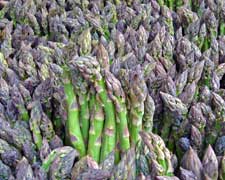
Cultivated--or even wild--asparagus is an elegant, but hardy plant to offers more than meets the eye to eager gardeners everywhere.
Photo by Ryan Freisling

For a successful asparagus crop, consider these facts, tips and bits of history about this hardy perennial:

  1. Wild asparagus spears break through the ground in early spring. They look a lot like the ones you find growing in your garden, but the wild ones are a lot thinner, according to Susan Brackney in “Eat This, Not That,” Hobby Farms, May/June 2009. Wild asparagus, she says, can be “nibbled raw, steamed, roasted or grill, and it also can be pickled or frozen for long-term storage.
  2. A search on Dave’s Garden website indicates there are around 52 types of asparagus to choose from. The open-pollinated Mary and Martha Washington varieties continue to be the predominant ones offered by commercial seed houses. 
  3. Choose the best variety available because–according to the University of Illinois Extension–an asparagus bed should remain productive for at least 15 to 20 years. If you are starting a new bed, you may never get to choose a variety again if your bed produces that long.
  4. Two common problems confronted by asparagus are asparagus beetles, which may be controlled by a suggested insecticide or by handpicking, and asparagus rust (mainly in the Midwest) says the University of Illinois Extension. It advises planting plant rust-resistant varieties. Mary Washington (a rust-resistant variety) is a standard variety for most home gardeners.
  5. Texas Agricultural Extension Service advises, because the plant yields 8 to 10 pounds or more per 100 square feet of bed or 24 to 30 pounds per 100 feet of row, one row is adequate for most home gardeners. It also advises placing crowns 12 to 14 inches apart. Planting too closely can cause small spears. (A few growers direct-seed asparagus. This method requires considerable expertise.)
  6. Do not harvest asparagus the first growing season after planting crowns. It can be harvested (cut) for short time (not to exceed two weeks) the second or third year. Weak plants and small spears result from harvesting too much, too early. After the second year after planting crowns, harvest asparagus from 6 to 8 weeks each year. Weak plants should be harvested for less time, according to North Carolina State University, Department of Horticultural Science.
  7. Asparagus is a good source of vitamin A and C, as well as riboflavin, niacin, and thiamin and the minerals iron, phosphorus, and potassium, report several extension agencies.
  8. The word asparagus comes from the Greek asparagos, meaning shoot or sprout.
  9. Records of human use of asparagus date back to the beginning of records, according to the University of Florida. Early Greek and Roman records detail growing instructions and medicinal uses. Greeks believed the plant could cure everything from toothaches to heart ailments. (California Asparagus Commission, 2005; Trowbridge, 2005; Rangarajan, 2005)  The Roman emperors permanently employed people to collect asparagus from the wild and the upper class brought it with them as they conquered new lands (Boswell 1949; Austparagus, 2005). In the 1600s King Louis XIV of France ordered special greenhouses built for asparagus (Stradley, 2004).
  10. As of 2007, Peru is the world’s leading asparagus exporter, followed by China and Mexico. The top asparagus importers (2004) were the United States (92,405 tons), followed by the European Union (external trade) (18,565 tons), and Japan (17,148 tonnes), according to reports from the USDA and US Census Bureau.
Categories
Crops & Gardening

Botanical Pesticides

Botanical Pesticides

Some of the world’s most potent pesticides come from plants themselves, and these botanical pesticides have been in the gardener’s arsenal for hundreds of years. 

We’ve crushed the flowers of Chrysanthemum cinerarifolium to create the broad-spectrum pesticide known as pyrethrin, and people have turned to Sabadilla dust (derived from the seeds of a plant in the lily family) since the 16th century.

With a few exceptions, botanical pesticides fell out of favor when synthetic chemical controls hit the marketplace in the 1940s. With many gardeners now reaching for options with less environmental impact, newer botanical pesticides are flooding the marketplace. 

Even though Mother Nature herself had a hand in creating these products, don’t be fooled into thinking that all botanical pesticides can be used lightly. 

Though most botanical formulas are considered safer than their synthetic counterparts, much care is needed when selecting and applying them.

Products like Rotenone (derived from plants of the Derris genus) have been linked to Parkinson’s disease, and pyrethrin is a potent nerve poison. Another potential negative: some botanicals, especially when applied incorrectly, are as disruptive to beneficial insects and pollinators as they are to the bad guys.

That being said, there are some terrific, least-toxic botanical pesticides that are incredibly effective.

Botanicals are often more desirable than their chemical counterparts since they breakdown fairly rapidly; many are certified for use in organic production.

Turn to these products when safe, natural remedies are needed:

  • Hot-pepper wax is a botanical product used primarily as an insect repellent. The blend of capsaicin and food-grade paraffin wax is a metabolic stimulant for many soft-bodied insects. Hot-pepper wax acts to repel pests for up to three weeks.
  • Neem (or neem oil) is extracted from the seeds of the tropical Neem tree. It works as both a pesticide and a fungicide when used properly. Neem not only repels insects, but it suppresses feeding and prevents them from molting. It’s effective against a broad range of insects, but, if applied when bees are active, it may be harmful to them. 
  • Garlic oil serves to repel insects and should be applied before pests have arrived for the best results.
  • Citrus oil products must come in direct contact with pests to be effective, but they can be used right up to the day of harvest. The oil coats and suffocates insects, and some brands are even labeled for use against fire ants. 
  • Herbal essential oils are made from various plants, including clove, wintergreen, cinnamon, rosemary and peppermint. Some forms of these pesticides are used as a soil drench to control root pests like wireworms, while others serve as foliar pesticides applied directly to the plant itself. 

When using any botanical pesticides in the garden, be sure to read and follow the label instructions carefully.

Read about one organic pesticide company

Categories
News

White House, Green Garden

Michelle Obama and a group of elementary school students created an 1,100-square-foot garden to plant herbs and vegetables

Since before the presidential elections last year, local-food proponents had been requesting an organic garden be installed on the White House lawn.

On March 20, the Obamas took the first steps to planting a vegetable garden on the South Lawn—the first vegetable garden to grace the White House landscape since Eleanor Roosevelt’s World War II victory garden.

Michelle Obama and a group of elementary school students broke ground on this garden, readying an 1,100-square-foot plot of land to take on herbs and vegetables that will grace the table of dignitaries.

The Obamas, it seems, are becoming hobby farmers in their own right, and they plan to keep the local elementary school children involved in gardening, harvesting and cooking the produce throughout the year.

“This is a big day. We’ve been talking about it since the day we moved in,” said Michelle Obama on the White House’s official blog.

According to the Associated Press, among the edible varieties in the garden will be spinach, broccoli, lettuce, kale, collard greens, herbs and berries.

There will also be a beehive, from which Michelle Obama hopes they can make honey. The produce harvested will be served at White House functions, family dinners and local soup kitchens.

Categories
Crops & Gardening

The First Tomato

Squash plants drawing a little warmth inside plastic hot caps
Photo courtesy Rick Gush

Young Squash Hope for Heat; Tomatoes Await Second Seeding
The “weeds” among the squash plants in the photo are the famous Italian red poppy.  I’ve been trying to get this weed established in my garden for the last two years, so I’m very happy to see poppy seedlings all over in the garden this spring. ~ Rick

Too early!

I regularly push the spring season, and I enjoy the machismo of having the first tomatoes in town.

I transplanted some dinky tomatoes and some Tromba di Albenga squash seedlings into the garden a week ago, and as the photo shows, it was still a bit too cold. 

I made little plastic hotcaps to cover the plants, but instead of staying above 10 degrees (Celsius,  10C =50F) it dipped to almost 7 degrees a few nights. 

The tiny little tomatoes all died and the vigorous squash seedlings were stunted.

I still have hopes that a new heat spell will push the squash seedlings back onto the fast track, but there’s a good chance that won’t happen. Once stunted, plants seldom recover. 

I’ve already started a new batch of seedlings in the fluorescent light growth chamber I use to start seeds in spring.

Last weekend I visited some vegetable gardens along the river in the nearby town of Chiavari, and one farmer there enjoyed showing me his three different seedings of fava beans.

The first seeding suffered from the excessive rains, the second seeding was doing very nicely, and the third seeding was just emerging from the soil. 

The farmer explained to me that he triple seeds every year, because with the vagaries of winter weather, he can never be sure if an early seeding or a late seeding will end up being most productive.

Early beans bring a higher price, late seeded beans are more reliable, but have smaller crops. Mid-season seedings suffer if January is cold, but thrive and produce the best of all if January is nice.  So every year is a gamble, and this farmer hedges his bets by seeding multiple times every year.

Even though I do not sell the vegetables that I grow, I am very anxious about their success.

Last year I had my cherry tomatoes planted in mid-February, the weather was nice and the plants jumped up to six feet tall by the end of April, when the rains came, along with the fungus, and I watched all the plants, full of unripe fruit, turn brown in the space of three days, the victim of a vicious fungal attack.

I replanted immediately, and ended up harvesting a later, but very respectable amount of fruit nonetheless. 

This year I’m not planting so early, because it was icy cold in late February.  At this point, I’m opting for a slightly late but safe tomato crop, and crossing my fingers that it doesn’t pour in May again this year.  But if it does, I’ll just replant.

Categories
Crops & Gardening

Spring Cleaning the Pond

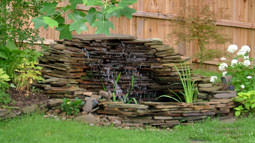
I desperately need to clean out our little pond and waterfall.

It was installed by the previous owners and I’m not quite sure why they even did it.

It’s really puny and just looks like they plunked it in there with no rhyme or reason.

I have tried my best since we moved here three years ago, to blend it in by planting a cut leaf Japanese maple next to it, some mock orange around the back, and a few hydrangea around the edges.

It helps, but it’s still weird looking. Maybe when all the plant material grows in it will look better (cross fingers).

Jessica talks about how to clean out the backyard pond

I put netting over it each fall to keep out the falling leaves, but somehow, they still seem to get in there and gunk up the bottom.

So this week, I plan on donning my Simms fishing waders and cleaning out the muck.

I hate to do it because I’m scared of puncturing the liner and causing a leak, but if I don’t do it, the pump gets clogged and the fish might claim neglect by going belly up.

The process involves:

  • Pulling out the pump and its surrounding filter cage
  • Hosing it off
  • Using my hands to pull out all the slimy leaves and other debris
  • Keeping the dogs from eating the slimy leaves and other debris!
  • Cleaning the old algae from the waterfall rocks, and then …
  • Hosing myself off

It’s a big project for such a small (and weird) water feature, I sometimes wonder why I spend the time.

But my three year old really enjoys feeding the fish every day in the summer and the sound of the waterfall is quite lovely on a warm evening.

I guess we’ve become attached to our little trickling brook…despite its nonconformity.

Categories
Crops & Gardening

Planting Perennials

Planting perennials takes work but its so worth itSt. Patrick’s Day is the traditional time for planting peas in my area, but I’ve only managed to actually plant them on that date once in the past 10 years.

The soil is still very wet around here and I think it’s too early to work in it without big clumps of clay for the primary result. 

Plus, I have yet to get my composted leaves spread in the garden. 

So, I will wait a few more weeks to get in the veggie garden and, for now, I’ll concentrate on the perennial beds.

I have four main perennial areas at our place. 

  • One is in the front yard along both sides of the driveway (this picture is of part of that bed last July)
  • Another surrounds the veggie garden fence
  • The third is a shade garden next to our ridiculously small water feature
  • The fourth is a hummingbird garden outside our dining room window. 

I let everything stand through the winter to provide habitat (and seeds) for birds and beneficial insects and now my main chore is cleaning all that out. 

I need to cut down my ornamental grasses and perennials, cut back my butterfly bushes and clean out all the neighbor’s leaves that managed to find their way in there over the winter. 

It will take me a good day or two to get it all done, but I love how it looks when this Spring Cleaning is complete.

So much promise is waiting just underneath the soil – spring is such fun.