Categories
Recipes

Duck Recipes: Rotisserie Duck, Duck Confit

By Frederic Beranger

How to cook using Duck
In this article …
Duck Confit Recipe
Rotisserie Duck Recipe
About Cayuga Ducks

When you make this recipe for duck confit, you need to know that confit is a method of cooking more than a recipe.

It implies cooking an item slowly in a transient element like oil, fat, sugar, or butter to substitute the water in the food item being cooked. In this case it will be cooking duck in fat.

Fat Makes it Savory
When making this duck recipe, you may be put off to the idea of cooking in fat, those who try the dish will quickly discover this long held traditional French specialty is truly a treat to savor for special occasions.

About the Author

Fred Beranger teaches us how to cook with Duck

Fred Beranger poses with two buckeye chickens he grew. Beranger is a chef and, with his wife Jeannette, cares for heritage and rare breeds of livestock on their Le Nelhouët Farm in North Carolina.

Jeannette Beranger is research and technical program manager with the American Livestock Breeds Conservancy.
Top

The secret to our particular success with this duck recipe is that we try to incorporate ingredients from sources that are known to us personally.

We purchase pasture raised animals or at the very least free range and antibiotic free birds.

Collecting Fat
In anticipation of creating a duck confit, we collect and preserve fat from previous dinners that include duck, goose, or heritage turkey until we have enough (about 2 cups) for a confit.

After the holiday season is typically the time of year we think about the dish.

Normally we collect the cooled drippings in an air tight container or ziplock bag and refrigerate or freeze it until needed for the confit.

We choose duck as our favorite item to be cooked in the confit method. Note that this dish is a three-day process but well worth the wait!

Top

Le Nelhouët Farm Duck Confit

Ingredients

  • 1 duck (4-5 lbs.), whole 
  • 2 cups of fat drippings (from duck, heritage turkey, or goose)
  • 1/2 – 2/3 cup chicken stock (if needed due to lack of fat drippings)

Dry rub

  • ½ tsp. salt
    ½ tsp. cracked black pepper
    ½ tsp. fresh garlic, minced
    ½ tsp. thyme

Preparation
There are primarily three steps in the three-day process of making a duck confit.

Day 1:
Starting with a whole bird, first separate legs and de-bone the breasts being careful to make sure the skin remains on all of the pieces. Combine the dry rub ingredients listed above and coat the inside of the separated legs then take the two pieces and press them together like closing a book with the skin side out. Coat the skinless sides of the breasts with the dry rub and press the two pieces together, skin side out. Put the sandwiched pieces in a covered dish and refrigerate overnight so they can marinate.

*Note- If you are wondering what to do with the leftover duck meat and bones, think about doing a nice duck stock in the event that you don’t have enough fat for step No. 2.

Day 2:
Preheat the oven to 275° F. Take the still sandwiched pieces of duck and place them in a baking dish just small enough for the meat to fill it completely. Cover the meat with the preserved poultry fat drippings. If you do not have enough fat to cover the meat, you can add some poultry stock to compensate so long as it is less than a quarter of the total amount of fat used for the confit.

Cook the duck for 3 – 3 ½ hours or until the meat is fork tender or until the internal temperature reaches 165°F. Remove the dish from the oven and let the confit cool to room temperature. Keeping the duck in the baking dish, refrigerate it once again noting that all of the meat should be submerged in fat at this point.

Day 3:
The refrigerated duck can remain good to eat for up to several days since it is now preserved in fat. When you are ready to serve the duck, heat a skillet on the stove to med-high. Drop 2 Tbs of the fat from the baking dish with the duck into the skillet and spread it across the pan to coat. Remove the duck from the baking dish with your hands and not with a spatula or fork. This is important because it will preserve the integrity of the pieces of duck. Carefully separate the sandwiched pieces from each other and place them skin side down in the hot skillet. Heat until they are ceased and heated throughout. Serve immediately.

It is key to serve the duck immediately after heating it up. It can be served with a wide variety of dishes but it is best to serve it beside something light such as a salad. This dish lends itself wonderfully to parties since you can do all of the prep several days ahead of time. Serves 3-4

Bon Appetite!

Top

Le Nelhouët Farm Rotisserie Duck

My family was fortunate enough to have been given a small electric rotisserie for Christmas and we have stepped up to the challenge of finding the best dishes for the new cooking instrument.

One of our favorites is rotisserie duck and is quite simply the easiest recipe for this delightful meat.

This cooking method makes for a sumptuous bird every time and allows the duck to be cooked with the least amount of retained fat. Although we like a less fatty bird to eat, we don’t waste the fat itself as it is culinary “liquid gold.”

The rotisserie allows us to easily collect the drippings in the catch pan for use in future dishes, such as confits or patés, that call for high quality fat.

Ingredients

  • 1 duck (4-5 lbs), whole
  • 2 T. olive oil
  • ¼ tsp. salt
  • ¼ tsp. cracked black pepper
  • ¼ tsp. rosemary
  • ¼ tsp. thyme
  • ¼ tsp. sage

Preparation
First you skewer the duck onto the rotisserie forks securely and tie the legs and wings with kitchen grade cotton twine so they don’t hit the heating element of the rotisserie. To help drain the duck fat during the cooking process, we will often take a small wooden skewer and poke small holes under the skin of the duck throughout, being careful not to skewer the meat in the process.

Combine the olive oil, salt, pepper, rosemary, thyme, and sage and brush the mixture over the entire duck. Place the prepared duck into the rotisserie cook for roughly 18+ minutes per pound or until the internal temperature reaches 165°F. Most of the latest rotisseries do not have temperature settings but an estimated cooking temperature may be 350-375°+ F. Note that in the rotisserie, the duck may cook more quickly than it would in a standard oven so keep careful watch.

This method allows for a delicious and moist duck every time and is a great alternative to chicken. Serves 3-4.

Top

Categories
Recipes

Strawberry Rhubarb Soup


Prepare your very own Strawberry Rhubarb Soup with Hobby Farms


Tips for Berry Success

1. For recipes calling for fresh whole or sliced strawberries (such as strawberries dipped in chocolate or sliced in a salad), select large, firm, less ripe berries. They’ll hold up better and won’t produce a lot of juice, leading to a better appearance.


2. For recipes that involve cooking, crushing or pureeing strawberries with sugar to bring out the color and flavor (such as for preserves, sauces and soups), opt for smaller, more tender berries that are red all the way through. No amount of cooking or sugar will soften an underripe strawberry or bring out red color from white flesh.

3. Wash strawberries before hulling them or the fruit will soak up extra water.

4. Use glass, plastic or non-reactive metal utensils when working with strawberries. The acid in the fruit can combine with some metals, turning the berries dark and staining the utensil.

If you don’t have rhubarb, use all strawberries.

Ingredients

  • 1-1/2 cups fresh strawberries, coarsely chopped
  • 1-1/2 cups prepared rhubarb (see below)
  • 2 cups water
  • 3 T. quick-cooking tapioca
  • 1/2 cup sugar
  • 1-1/2 T. freshly squeezed lemon juice
  • 1 tsp. finely grated lemon rind
  • 1/2 cup sour cream
  • Cinnamon for garnish

Preparation

To prepare rhubarb, trim and rinse about a half-pound fresh rhubarb and cut into 1-inch pieces, or use 1-1/2 cups frozen, unsweetened rhubarb, thawed and drained. In a heavy-bottomed saucepan, combine fresh or frozen rhubarb, 1/3 cup sugar, 1/4 cup water and 2 tablespoons lemon juice. Bring to a boil over medium-high heat, stirring occasionally. Reduce heat, cover and simmer for 20 minutes for fresh rhubarb, 10 minutes for frozen, stirring a couple of times. Transfer to a glass bowl and let cool to room temperature before adding to tapioca mixture with strawberries.

In a 3-quart saucepan over medium-high heat, mix water, tapioca, sugar, lemon juice and lemon rind. Bring to a boil, stirring constantly. Reduce heat and add fruit. Simmer 5 minutes, stirring constantly. Remove from heat.

Working in batches, puree soup in blender or food processor. Transfer to a glass bowl and let cool. Cover and chill 4 hours or overnight.

To serve, stir soup well and ladle into bowls. Garnish each serving with a dollop of sour cream and a sprinkling of cinnamon. Serves 4 to 6.

Categories
Recipes

Turkey Squash Skillet Supper

Turkey and Squash Skillet SupperIngredients
1-1/2 lbs. fresh turkey breast or thighs, boned, skinned, and cut into bite-size cubes
1 large butternut or acorn squash, peeled, seeded, and cut into 1-inch cubes
1 large onion, chopped (about 1-1/2 Cups)
2 cloves garlic, minced
1 cup green cabbage, coarsely shredded
½ cup carrot, coarsely grated
3 large tomatoes, chopped, or one 16-Ounce can diced tomatoes
1 quart chicken broth or stock, plus up to an additional 2 Cups if needed
1 T. chopped fresh basil or 1 Teaspoon dried basil
½ T. chopped fresh rosemary or ½ Teaspoon dried rosemary
½ tsp. dried oregano
½ tsp. red pepper flakes (or more, to taste)
salt and freshly cracked black pepper to taste
additional chopped fresh basil or parsley for garnish

For thickening:
2 T. butter
2 T. flour

Preparation
In 12-inch cast-iron skillet (halve the recipe to prepare in a 10-inch skillet), combine all ingredients — turkey, vegetables, herbs, seasonings, and broth — except those for thickening.

Heat just to boiling. Cover, reduce heat to medium, and simmer, stirring frequently, for about 20 minutes, or until squash is tender and turkey cubes pull apart easily, with no pink inside. If mixture becomes dry, add up to two additional cups of broth or stock.

In a second small skillet, melt butter over medium heat and stir in flour. Cook and stir over medium-low heat, stirring well. Slowly add one cup of broth from the stew. Cook and stir until the mixture forms a thick paste, about 1 to 2 minutes. Gradually add thickened mixture back into stew, stirring continuously, until stew thickens. Spoon into shallow bowls and garnish with additional fresh basil or parsley.

Categories
Recipes

Gingerbread Pear Pudding

what a warm treat--pear pudding

Get more autumn-themed treats here

Whose mouth wouldn’t water to taste this dish made with pears and honey?

The Main Ingredient
(6 servings)

  • 2 pears (peeled, cored and cubed)
  • 2 tbsp honey

Preparation
Preheat oven to 350. Grease a glass baking dish with butter, set pears into the dish, and drizzle them with honey.

Gingerbread Topping

Ingredients
Mix the following gingerbread topping:

  • ½ cup organic butter
  • ½ cup evaporated cane juice granules or granulated sugar
  • ¼ cup organic molasses
  • 1 organic or local egg
  • ¾ cup unbleached organic flour
  • 1 tsp. each ground ginger, cinnamon
  • ¼ tsp. cloves
  • ½ tsp. baking soda
  • 2/3 cup hot water
  • Pinch of sea salt

Preparation
Beat together butter and sugar until fluffy, then beat in molasses and egg until combined. Separately whisk flour, ginger, cinnamon, cloves, baking soda and salt together. Alternately with hot water, stir this dry mixture into the wet mixture, starting and ending with the dry.

Pour this evenly over the pears and bake until toothpick inserted in center comes out clean, usually about half an hour. Best served warm. Good with whipped cream or vanilla ice cream.

More Desserts

Categories
Recipes

Strawberry Jam

Homemade Strawberry Jam

Strawberry Lore
Native Americans made a tea from dried strawberry leaves, said to soothe the stomach and relieve diarrhea. In Medieval times, the strawberry was thought to symbolize perfection and righteousness. They were often served at important feasts and festivals to help ensure peace and prosperity.

Their versatility makes them a favorite fruit of the season. From chocolate-covered berries to shortcake, pie and strawberry jam, there are sundry ways to spotlight strawberries in your summertime menus.

If you’re fortunate enough to have a berry patch in your yard, you can be selective about the ones you pick—large, firm, red berries when you want to serve them covered in chocolate; riper, softer ones when you’re in the mood to make shortcake and jams.

Firm or soft, all are wonderful in pies—strawberry pie, strawberry-rhubarb pie or strawberry chiffon pie. 

This recipe calls for no pectin; it relies on the natural pectin in the fruit to help with jelling.

Ingredients 

  • 2 pounds fresh strawberries, hulled
  • 4 cups sugar
  • 1/4 cup lemon juice 

Special tools

  • Tips

    Frozen Strawberries
    If jam really isn’t your thing, freezing strawberries is very easy. The simplest way is to choose firm, slightly underripe berries, hull them, wash and dry them well, and freeze in a single layer on a cookie sheet. When frozen, store them in a labeled freezer bag or other freezer-proof container.

    Some people prefer frozen strawberries in a juice. To do this, pack them with sugar as follows:

    Hull, wash and dry berries well. Prick whole berries with a fork or crush berries if preferred. Place in a large bowl and sprinkle with sugar, making sure all berries are coated. Use 1 pound of sugar for every 4 pounds of berries. Let stand 10 to 20 minutes to draw out juice. Pack gently into appropriate freezer-proof containers, then label, seal and freeze.

    Strawberry Helper
    If you’re a big fan of cooking with fresh strawberries, a strawberry huller is an indispensable tool. The tweezer-like gadget, about 2 to 3 inches long, removes the stem and white core, but doesn’t remove the strawberry flesh. You can find them in any kitchen store, ranging in price from $1.25 to $3.

    Strawberry huller or sharp knife

  • Potato masher
  • Candy thermometer
  • Hot, sterilized canning jars (pints or half pints)
  • Hot, sterilized lids and screw tops
  • Tongs or jar lifters

Preparation

  1. To sterilize jars and lids, place them in a large pot, cover with hot water and bring to a boil. Boil for 10 minutes, then turn off heat and leave jars and lids in water until ready for use.
  2.  Place small plate in the freezer to use in testing the berry mixture for jelling.
  3. Wash and hull berries.
  4. In a large bowl, crush berries in batches with a potato masher until you have four cups of mashed berries. In a heavy saucepan, combine berries, sugar and lemon juice. Stir over low heat until sugar is dissolved; then increase heat and bring mixture to a rolling boil. Hook candy thermometer to side of pan so that tip sits well into mixture. Continue boiling the mixture, stirring often, until temperature on thermometer reads 220 degrees F.
  5. To test for jelling, remove plate from freezer and place a teaspoon of the berry mixture onto the plate. Return plate to the freezer for one minute. Remove and run finger through the jam on the plate. If it doesn’t try to run back together, it’s ready to be canned.
  6. Fill hot, sterilized jars with berry mixture to within 1/4- to 1/2-inch of top.
  7. Add lids and screw tops, and seal tightly. Tip jars upside down so that hot berry mixture coats inside of lid to seal.

A word to the wise: If this is your first foray into jam making, don’t be tempted to double the recipe to use up an abundance of berries. If it doesn’t come out quite right, you’ll have a lot of disappointing jam to use up. One of the biggest problems with this kind of jam is undercooking, resulting in jam that’s too runny. 

Categories
Recipes

Baby Potatoes and Yogurt Dip with Spring Herbs

Baby Potatoes & Yogurt DipHeirloom early potato varieties include Bliss Triumph, Irish Cobbler, and Early Ohio.

Enjoy spring herbs in simple recipes that accentuate their zesty flavor, aroma and color. Try mixing chopped, fresh herbs into softened butter and spreading it on homemade bread, or add a generous sprinkling of herbs to a plain egg omelet, steamed vegetables or pasta drizzled with olive oil.

In the recipe below, yogurt and potatoes allow the herbs’ piquant freshness to take center stage.

If you or a local farmer’s market don’t have baby potatoes, you can substitute B-size new red potatoes: Cook until tender, cool and cut in halves or quarters for serving.

Ingredients

  • 2 dozen baby new potatoes, about 1 to 2 inches in diameter
  • 1 cup plain, whole-milk yogurt
  • 2 to 3 T. fresh spring herbs, chopped. Suggested combinations: chives, parsley and thyme; parsley and mint; or chervil and tarragon.
  • Salt and freshly ground pepper to taste

Preparation
Season yogurt with salt and pepper as desired and stir until smooth. Rinse and dry herbs; chop gently with a sharp knife or kitchen shears, being careful not to mash the leaves. Stir herbs into yogurt. Set aside at room temperature (while potatoes are cooking) to meld the flavors.

In a large pot, cover potatoes with water and bring to a boil over high heat. Reduce heat to medium-low, cover and simmer until the largest potatoes are tender, approximately 10 to 15 minutes. Remove from heat and drain. Place dip in the center of a large, warmed platter. Arrange hot, cooked potatoes around dip, spearing each with a cocktail pick for serving.

Categories
Recipes

Cornish Game Hens with Apple-bacon Stuffing

Farm-raised or Wild?
This recipe calls for domestic birds. The flavors and ingredients given will also work well with wild game birds, but keep in mind that wild birds are usually leaner, with darker, dryer meat and a stronger game flavor.

Wild game birds usually benefit from less cooking time and the addition of fats such as butter or bacon to keep them from becoming too dry.

Preparation methods for wild game birds also vary depending on whether birds are skinned (leaving meat vulnerable to overcooking) or plucked (plucking is more work, but it leaves the skin and fat intact).

Contrary to their name, Cornish game hens, also called Rock Cornish game hens, game hens, Poussin or Coquelet, are domestic, not game, birds and they aren’t always hens, but rather can be male or female. These young chickens, bred for extra flavor and tenderness, and slaughtered four to five weeks after hatching (they must weigh no more than two pounds), are sold whole, with each bird considered a single serving.

Baked apples or fried apples and onions make good side dishes for these stuffed birds.

Ingredients

  • 2, 1- to 1 1⁄2-pound Cornish game hens
  • 1 tsp. salt
  • 1 to 2 T. vegetable oil

For Stuffing

  • 3 slices bacon
  • 1⁄4 cup onion, finely chopped
  • 1 1⁄2 cups dry bread cubes
  • 1 cup apple, peeled and grated, tart or sweet according to preference
  • T. fresh parsley, chopped
  • 1⁄4 tsp. dried thyme
  • 1⁄4 tsp. dried marjoram
  • Salt and pepper to taste
  • 2 to 4 T. dry white wine

For Glaze

  • 1⁄4 cup apple juice concentrate, thawed
  • 1 T. lemon juice
  • 1 T. butter, melted

Preparation
Remove giblets from hens and discard or save for another use. Rinse hens under cold water and pat dry. Season cavities with salt. Set aside in refrigerator until ready to stuff.

To prepare the stuffing, fry the bacon slices until crisp.

Remove bacon strips from pan and crumble. Sauté onions in the drippings until soft. Remove onions with a slotted spoon. Reserve 2 tablespoons of drippings. (If bacon does not yield 2 tablespoons of drippings, add melted butter to equal 2 tablespoons). Place bread cubes in bowl and drizzle over reserved bacon drippings. Add apples, bacon, onion, parsley and seasonings; stir to combine. The mixture should just stick together without being soggy; if mixture seems too dry, add 2 to 4 tablespoons of dry white wine.

Lightly stuff birds (do not pack firmly). If they still have their neck skin, pull the skin to the back and twist wing tips under back to hold the skin in place. If hens do not have neck skin, wedge a thick slice of apple or onion in neck cavity to hold stuffing in place. Tie legs to tail. Place hens, breast side up, on rack in shallow roasting pan. Brush with vegetable oil. Cover loosely with foil.

Roast in a preheated, 375-degree F oven for approximately 90 minutes or until you can move the drumsticks easily in their sockets and the meat is no longer pink. Remove foil after first 30 minutes.

Meanwhile, combine glaze ingredients. Brush hens with glaze two or three times during last hour of cooking, eventually using all of glaze.

If desired, use pan drippings to make gravy to serve with the birds: After birds are done, remove them from roasting pan and keep warm on a serving platter in the oven. Strain the pan juices, dilute with 1 to 2 cups chicken broth and heat to boiling. Thicken using your favorite method, either flour and water or cornstarch and water. Serves 2.

Categories
Recipes

Easy French Toast

Easy French ToastFrench toast is one of those indulgences that we never seem to have time to make. This recipe is simple and easy to clean up. There’s no excuse not to indulge with this dish. Try this recipe for French toast next time you want to use some of your chicken’s eggs.

Ingredients

  • 1 loaf of Texas Toast
  • 6 large eggs
  • 1 cup 1% milk
  • ¼ tsp. salt
  • ½ tsp. vanilla extract
  • ¼ tsp. freshly ground nutmeg

Preparation
1. Using a whisk, combine all the ingredients except the bread.

2. Dip each slice of bread into the egg mixture. Stack into a storage container. Pour remaining batter over bread, cover and refrigerate.

3. Preheat oven to 400 degrees and coat 2 baking sheets with nonstick cooking spray. Using flat spatula, take bread from the storage dish and place the slices in a single layer on a baking sheet.

4. Bake for 6 minutes. Turn over and bake another 6 to 8 minutes until the egg is thoroughly set.

5. Top with powdered sugar, maple syrup or your favorite fruit spread.

Categories
Homesteading

How to Make Yogurt at Home

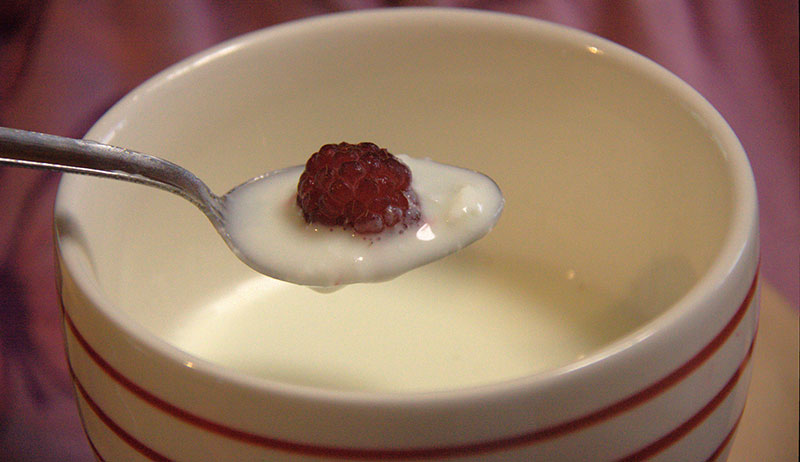
Making homemade yogurt with cow’s milk, goat’s milk or soy milk is a breeze and a great way to save money on this delicious dairy product. The results are as consistent as you want to make them, despite an enormous number of variables in the process. Like all other fermented foods—including beer, sauerkraut and cheese—you’re working with a starter product and bacteria that do the work of fermentation, as well as time, temperature and equipment.

Fresh, raw milk from a single animal can vary tremendously from breed to breed, from season to season, and from pasture to pasture, depending on what the animal is eating, says Ricki Carroll, author of Making Cheese, Butter & Yogurt (Storey Publishing, 2003). To produce consistent fermented dairy products, she teaches her students that it’s critical to use clean, well-rinsed equipment and ingredients from known sources, as well as to be scrupulous about watching the thermometer and the clock.

You can alter the flavor and consistency of your homemade yogurt through your milk selection. Buying one brand of organic milk from the grocery store produces yogurt that is consistent from batch to batch. Fat-free milk works well, too, and raw milk also works as long as the animal is free of antibiotics. To make thicker yogurt, add 1/4 cup of powdered milk to the liquid milk you use.

The magic yogurt production comes during fermentation. You can buy starter bacteria from a cheese supply store or use 3 tablespoons of organic yogurt with live cultures. Widely available Stonyfield Farm organic yogurt contains six species of bacteria; other brands of organic yogurt are also available regionally.

You will only need two pieces of special equipment to make homemade yogurt: a dairy thermometer, which costs about $10, and an incubator or “yogurt maker.” Non-electric yogurt makers, essentially insulated buckets, cost from $35 to $48, and electric yogurt makers start at $15, though some people will incubate the yogurt in a low-temperature oven. The rest of the yogurt-making equipment should be readily available in your kitchen.

Follow the simple step-by-step recipe below so you’re never in short supply of this healthy, fermented dairy product.

Recipe: Homemade Yogurt

Ingredients

  • 1/4 cup powdered milk
  • 4 cups cow’s milk
  • 1 packet powdered starter or 3 T. fresh yogurt containing live cultures

Preparation
Dissolve powdered milk in cow’s milk. In a double-boiler over low heat, heat the liquid to 180 degrees F, using a dairy thermometer to check temperature. Turn of burner and cool milk to 116 degrees F, and add powdered starter or fresh yogurt containing live cultures.

Cover mixture and place in incubator to maintain temperature of 116 degrees F  for six hours, until it sets up to consistency of thick cream.

Refrigerate yogurt for up to two weeks, reserving 3 T to start your next batch.

Yogurt Variations:

  • If you’re using goat’s milk, add 1 drop of rennet (available from a cheese-making supplier) to 4 T. unchlorinated water, then mix the diluted rennet into the milk, and continue with the cow’s milk process.
  • If you’re using soy milk, heat the liquid to 110 degrees F, add the starter, and let it incubate at 100 degrees F until it sets up as yogurt.
  • For flavored yogurt, mix in honey, maple syrup or fruit just before serving.