Categories
Animals Farm & Garden Homesteading

Keep Track Of Your Pack With A Smart Dog Collar

No farm is complete without a working dog or two. They are more than pets—they are protectors of your livestock, yard and family. While farm dogs have more room to roam than most dogs, that won’t stop some breeds from thinking the grass is greener on the other side of the fence.

If you don’t want to spend hours improving your fencing just to keep your dog inside, there is a smarter solution. Smart dog collars can track your dog in real-time from an app on your phone. So if your dog leaves your property, you’ll be able to follow and find him.


Also Read: Best Livestock Guardian Dog Breeds


Smart Dog Collars Track Location, Health & More

Smart dog collars use GPS to track your dog’s location. The collar has a built-in SIM card just like the one you have in your phone. The SIM card connects to your local cell towers and sends data to the smart collar’s app.

While the main reason you would have a GPS dog collar is to track your dog’s location, you can also use one to monitor your dog’s health. Depending on the model you choose, your smart dog collar will monitor your dog’s activity levels, sleep patterns and heart rate.

It can help with training your dog by creating virtual boundaries on your property. And some models have lights and sound you can use to let your dog know they have ventured too far away from home.

Here are two smart dog collars you can use to keep a roaming livestock guardian or the family dog on your property.


Also Read: Check out this video to learn more about smart dog collars and see them in action.


Tractive GPS

Cost: Around $50 plus a monthly subscription

Tractive GPS dog tracker is popular thanks to its low initial cost and real-time GPS tracking. Tractive is a lightweight tag that attaches to your dog’s collar. It’s waterproof so if your dog heads into the pond for a dip, your Tractive will still work.

Tractive uses GPS and can track in real-time, so if your dog does leave the yard all you have to do is tap ‘Live’ in the app and you can connect with your dog’s collar. You can watch as they move from place to place, and the device will let you know how fast they are moving.

Tractive costs around $50 and you’ll need a subscription plan to use real-time tracking. The subscription costs between $4.99 per month up to $9.99 per month depending on the level of tracking you’d like.

One of the best parts of Tractive GPS is the virtual boundaries. You can set one or more boundaries around your property and give the boundary a name. When the dog leaves the boundary, you’ll get a notification on your phone that says. “Duke left the front yard.” You can add several boundaries if you have a dog that’s determined to roam, so you’ll know when they move from one to the other.

If your dog leaves the virtual boundary and you want to let them know they need to head back, Tractive has a built-in alarm and light you can turn on. It’s a great training tool because some dogs respond to the sound of the alarm and will head straight home.

One of the only downsides to Tractive is the battery life. The latest models of Tractive are said to have 2 to 5 days of battery life, but reviews indicate the average battery life ranges in the 24-hour to 36-hour mark. You can save on battery by using battery-saving mode and setting up a zone that connects the collar to your Wi-Fi network when your dog is nearby. You can also turn off your live tracking mode when you know you don’t need it.

Whistle Go Explore

Cost: Around $80 to $200 plus subscription

Whistle Go Explore is a lot like Tractive, but this smart dog collar has a few unique features. Whistle Go Explore is also a tag that attaches to your dog’s collar. You can choose to buy just the tag or a tag that’s already attached to a collar.

There are different tags for dogs of different sizes.

Whistle Go Explore tracks your dog in real-time using GPS. You can set a safe place where your pet is free to roam, and it will let you know if the dog has left that area. The collar connects to the ATT network and you can use Google Maps to track them with 15-second updates.

Whistle Go Explore is waterproof and can track a lot of health issues your dog may have. It will monitor whether the dog is scratching a lot, whether they have a skin infection or allergies, or monitor for signs of joint pain. Whistle Go Explore also has extended battery life.

Depending on usage, the battery can last up to 20 days.

Whistle Go Explore has a longer battery life than Tractive, but users of Whistle Go Explore have reported an actual average battery life of seven to 10 days. One of the reasons for that is you may use more battery if you’re in an area with poor cell reception, as the collar will use more power to connect.

The monthly cost of a Whistle Go Explore dog collar subscription is around $6.95 per month.

Should You Use a GPS Tracker on Your Dog?

Many of us consider our livestock guardian dogs to be beloved members of our farm family. They play a vital role in keeping our livestock and property safe. Ensuring they stay within their designated boundaries is important.

A smart dog collar is a good solution if your dog has the urge to roam. It doesn’t stop them from leaving as effectively as an invisible fence would. But you’ll have peace of mind knowing you can open your phone and find out exactly where they are.

Categories
Crops & Gardening Farm & Garden Food Recipes

Recipe: Delicious Roasted Vegetables, Fresh From The Oven

We roast vegetables year-round but enjoy them most often in the winter. Our favorite veggies to roast are cauliflower, broccoli and cabbage. I mix the veggies with a generous drizzle of EVOO and season with garlic powder and a Montreal steak seasoning blend 

Ingredients 

  • An assortment of vegetables of choice (broccoli, cauliflower, parsnips, carrots, celery root, radishes, beets, etc.), enough to fill a sheet pan in a single layer
  • Olive oil or avocado oil, as needed
  • Salt, garlic powder or granules, ground black pepper, as well as any other seasonings or fresh herbs of choice. (Like I said, I use a seasoning blend of Montreal steak seasoning, which is a blend of black pepper, red pepper flakes, garlic, onion, salt and paprika.) 

Directions

Wash, peel and prep vegetables. Cut into semi-uniform, bite-sized pieces so your veggies roast evenly.  

Line a baking sheet with parchment paper. Coat the veggies with oil and mix well. Liberally season the vegetables with seasonings (or fresh herbs) of choice and mix again. 

Roast at 350 degrees F for 15 to 20 minutes. Remove from the oven after 15 minutes, test tenderness with a fork and cook an additional 5 minutes if needed. Broccoli, cabbage and cauliflower will take less time than root vegetables.

Once the roasted vegetables can be easily pierced with a fork, they are done.  


Read more: Winter sow your spring garden now with these tips!


Notes  

When roasting the cabbage, cut into large “steaks.” Brush the oil on in this case, or use your hand to coat slices so the cabbage doesn’t fall apart.  

Consider adding some shaved parmesan cheese immediately after removing roasted vegetables from the oven. 

Cook root vegetables together so that they are done at the same time. Broccoli, cabbage, cauliflower and vegetables of that family do not take as long to cook. 

Don’t toss the broccoli stalk. The stalk is actually my favorite part to roast. Simply use a vegetable peeler to remove the tough outer layer of the broccoli stalk. Slice the stalk up into 1/2-inch coins and roast along with the florets. 

Categories
Beginning Farmers Equipment Farm & Garden

Farm Storehouse: 8 Products For The Farm & Garden

Burro Buddy Wheelbarrow Caddy

Forgo multiple trips to the garage or shed with this plastic organizer that can hold short- and long-handled tools and a drink—as well as a cell phone or other electronics in a water-resistant compartment, all while letting you use the full capacity of your wheelbarrow. 

a black color pipe for farm and garden
Farm & Garden Product

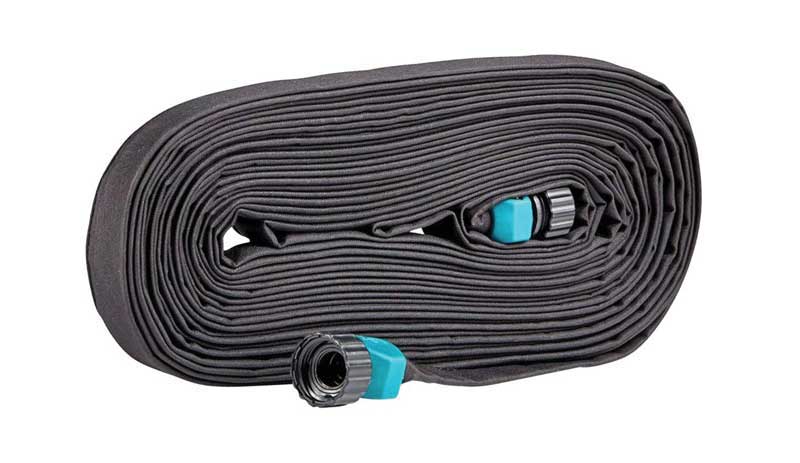
Rocky Mountain Goods Flat Soaker Hose

The double-layered Rocky Mountain Goods Flat Soaker Hose has a lifetime warranty and conserves up to 70 percent of water by delivering it directly to roots and avoiding evaporation. 

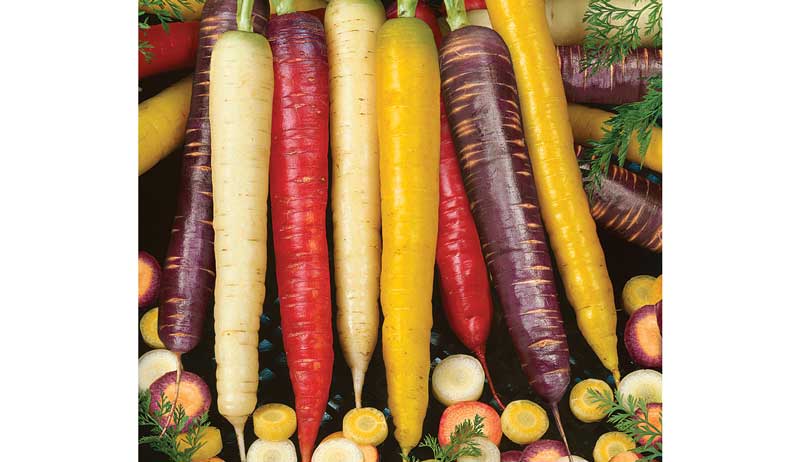
Gourmet Colorful Carrots

This blend of gourmet colorful carrots will be a sight to behold at harvest time. Suitable for baby veggies or full-sized roots, this 15-foot seed tape has correctly-spaced seeds of five different carrot varieties: Atomic Red, Cosmic Purple, Solar Yellow, Lunar White and Bambino. 


Also Read: 13 More Products for the Farm and Garden


Seed Starting Tray

Start seeds successfully year after year with this leakproof, galvanized steel tray. With 24 individual cells, bring the ready-to-transplant seedlings to the garden and leave the others undisturbed.


garden gloves


Also Read: 7 Products for Better Farming


Water-Resistant Work Gloves

The Wells Lamont Style 3207 HydraHyde water-resistant leather palm work gloves combine the hardiness of leather and the flexibility and breathability of spandex. Reinforced fingertips and knuckles offer extra protection and wear. 

garden tool

Bahco Secateurs

Turn heavy pruning of shrubs, small trees and vineyards into light work with the cordless, battery-powered secateurs with steel blades that can cut vegetation up to 32 millimeters in diameter on a 6-hour battery.

Seed Tin

Drawing inspiration from the Seed House at Fordhook Farms in Pennsylvania, the tin fits standard-sized seed packets. A coated-metal interior and bottom ensure an airtight seal. 

garden farm tool

CobraHead Weeder and Cultivator

The CobraHead Long Handle Weeder and Cultivator garden tool allow you to stand up straight while gardening or weeding. Available in three lengths, the blade shape and angle allows it to cut hard soil and work in uneven or tight spaces.

Categories
Beginning Farmers Crops & Gardening Farm & Garden Farm Management Homesteading Permaculture

Keep A Garden Journal To Record Growth & Changes

Basic garden journaling usually has involved noting spring planting dates, first and last frosts, and which varieties we planted. But, to better cope with warming temperatures, frequent and more extreme weather events, and new pathogens and pests, keeping careful records in a season-to-season garden journal is more important than ever.

When it comes to climate change, there isn’t any single measure for your garden’s degree of sustainability or resilience. Instead, we can track multiple data points in a garden journal. Doing so can help us to identify potential new issues and adapt our practices as needed.

Taking in New Cues

Julia Frisbie has relied on her garden journal for the last several years. “Especially in the spring when I get itchy to plant, I’ll go back and remind myself, ‘When did I plant last year and how did it go?’” she says.

Frisbie sells dahlia tubers and duck eggs produced on her microfarm in Anacortes, Washington. She’s also a contributor to the “Fidalgo Grows” blog, published by Transition Fidalgo, a local nonprofit working to help the surrounding community to be more resilient in the face of climate change.

For Frisbie, what originally began as a standard record of goings-on in the garden recently has morphed into something more expansive. “I’m definitely tracking [planting and harvest] dates. I’ve been tracking dates the whole time,” the owner and operator of Frisbie Farm says. But she began to wonder what she and other gardeners should do as traditional planting dates become increasingly irrelevant. 

It’s a fair question, considering that first and last frost dates aren’t necessarily as reliable as they used to be. Neither are the USDA plant hardiness zones printed on countless seed packets. So, a few years ago, Frisbie began tracking phenological cues alongside her own garden activities. (Phenology is the study of naturally occurring cycles, such as the bloom times of certain flowers, the onset of nesting behavior in a specific bird species or, say, the emergence of a particular kind of insect in an area.)

Just what might phenological cues look like in a garden journal? Frisbie offered some of her own examples via a “Fidalgo Grows” blog post.

“‘Big uptick in birdsong, robins everywhere. Transplanted sweet peas.’ Or, ‘Wild blackberry buds with southern exposure [are now] opening. Presoaked and sowed corn.’ Dates are fine to log, too, as long as we’re aware that they’ll be less and less useful as climate chaos intensifies.”

Snapshot of an Ecosystem

By combining notes on multiple phenological cues along with more traditional gardening records, we may be able to develop a more accurate—and more actionable—snapshot of our own local ecosystems. “I get lucky some years and unlucky other years. But since I’ve been paying attention to phenological cues, I feel like I’ve had better luck just getting things off to a good start,” Frisbie says.

For instance, there are a few key species she observes for hints about her best spring planting windows. “In springtime, the big leaf maples make these really incredible chartreuse flower clusters that come out before the leaves do,” Frisbie says. “When I see those, I’m thinking to myself, ‘OK. The maples think it’s not going to freeze hard again. Probably I can assume the same.’”

But the maples aren’t the only local species she clocks. “I’m also watching the blackberry blossoms and I’m watching the size of the dogwood leaves,” she says. “Some [individual plants] might get mixed up. But I think the [plant] community as a whole is less likely to get mixed up than an individual,” she says. She is also paying attention to when the first dandelions bloom and when the willows leaf out and when the Indian plums put their little blossoms out.

“If we look to plant communities around us, we’re going get even richer information,” she says. “So, if people are going to start recording phenological information, try to gather as much as you can so that you’re not relying on a single individual or a single species.”


Also Read: Check out these tips for preparing your farm for climate change.


The Long View

Of course, the more details you can record—and particularly if you record them consistently over a long period of time—the better equipped you’ll be to adapt to the changes occurring in your garden. How much can one glean from this kind of year-after-year focus in the garden?

As it happens, a whole lot.

For example, in a 2021 New York Times article, Zach St. George tells the story of Jeff Lowenfels, a garden writer who has penned a regular gardening column in The Anchorage Daily News since 1976. As St. George explained, “For more than 40 years, Lowenfels has noted Alaskans’ successes with new plants, tracked the lengthening stretch of frost-free days and recorded the arrival of new horticultural pests.”

In the early days of Lowenfels’ column, growing crops that usually perform best in warm weather or those which require a lengthy growing season simply weren’t an option for his Alaskan readers. But, in the ensuing years, growing pumpkins, tomatoes and even okra became possible. 


Also Read: How to Start a Garden Journal?


St. George added: “In observing the small, local experiment in fitting plants to soil and climate, [Lowenfels] has created a long-running account of climate change in the state where it is changing the fastest, providing hints of what awaits as people take part in a similar but much bigger climatic experiment, one now rearranging plants across the planet.”

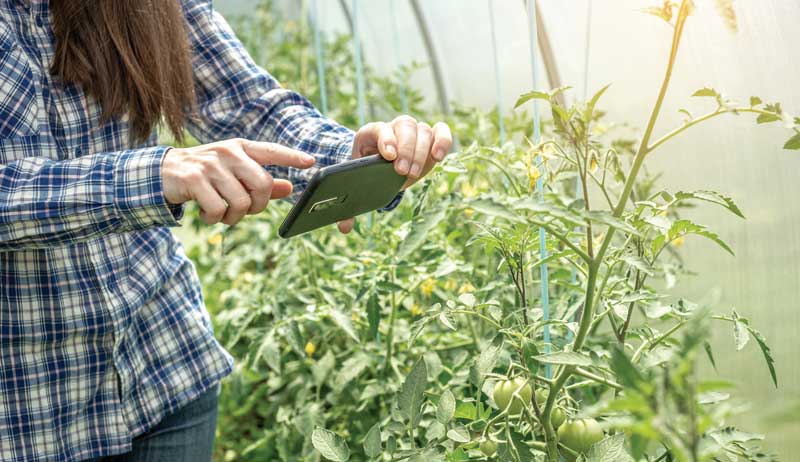
a woman is clicking image of her garden
Keeping Garden Journal

Tracking Frequency

You might not have decades’ worth of data about your garden recorded just yet, and that’s OK. “It’s great to be as disciplined as you can, but even an incomplete data set is better than no data set at all,” Frisbie says. 

Whether you have a new baby, an injury or illness, or some other major event, occasionally life gets in the way. “There are month-long gaps in my journal,” Frisbie says. “Afterwards, I’ll be like, ‘I was pregnant and I had morning sickness and I didn’t write anything. Now it’s four months later, and here I am again!’”

To make up for lost time, she reconstructs notes as best as she can. “I’ll fill out a retrospective page,” she says. “Like I’ll go back and sort through the empty seed packets in the bin and try to fill in the gaps.” 

In addition to creating retrospective garden journal sections when necessary, she also includes a few year-in-review pages. “My year-in-review [for this year] will probably say something along the lines of, ‘This was the coldest, wettest spring I can remember in this spot,’” Frisbie says. “‘Everything was delayed, and I thought I wouldn’t get any tomatoes at all. But I actually had amazing tomatoes.’”

Then, she would go variety by variety and write, “This did well. This did poorly. This would have done great, if I hadn’t planted it next to this really tall neighbor.”

Photos, Maps & More 

Keep your garden records in a simple notebook or take advantage of a smartphone app. However, using a scrapbook or a three-ring binder may be more practical, since you can more easily include empty seed packets, soil test result reports and even pressed leaf and flower specimens if you choose.

Photos are another invaluable resource to include. If you’re able, take a panoramic photo of your garden on the first day of spring, summer, fall and winter annually. Add prints of these images with your annual garden records, so that you can compare your garden’s overall performance from season to season and from year to year.

You’ll also want to make room for hand-sketched garden maps. At minimum, mapping out the locations of various crops from this season will help you to know what not to put in a certain raised bed or garden plot next year. You’ll also have a better idea of the nutrients you may need to supplement and which insect pests may be lingering in the soil. 

For even more detail, add a sheet of tracing paper over the top of your garden map or panoramic photo and shade areas which have lots of standing water or water runoff during heavy rains. This may help you to monitor and mitigate long-term topsoil loss.

However you choose to document your gardening successes, failures and the changes taking place around you, consider sharing your observations with others — especially those who may move onto the land after you’ve left it. “I hope to pass my journals down to my kids, but it’s probably more important for me to pass the essential information on to the future stewards of this place,” Frisbie says. “I would encourage people to treat their journals as valuable and worth passing on.

“I wish I knew what it was like to garden in this space 20 years ago. If I did, I would be able to tell you more about how it has been changing over time. People should make a plan for the information they collect to stay with their space.”  

This article originally appeared in the January/February 2023 issue of Hobby Farms magazine.

Categories
Animals Chicken Coops & Housing Chickens 101 Farm & Garden Health & Nutrition Poultry

Just One Chicken? How To Help With Solitary Survival

There comes a time for some flock keepers when we find ourselves with just one sole chicken. This can be purely unexpected—a predator attack or sudden extreme weather—or due to natural attrition. Whatever the cause may be, the result is a solitary individual in a species well known for its intricate social structure. Keeping your hen or rooster content, secure and comfortable when they’re all alone can be challenging … even more so during the winter months, which bring challenges of their own.  

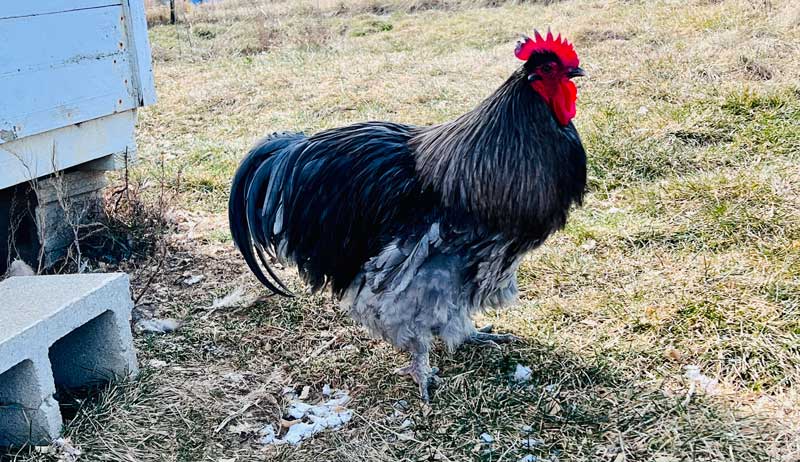
Our Blue Orpington rooster, Tiny, had started his life facing seemingly insurmountable odds. Because of his dwarf physique, Tiny had a coop of his own, which he shared with his mother, Butters Orpington, and his hatching mother, Natalya Silkie. The trio lived together for three years, until Butters passed from old age last summer.

Then, in December, I headed out at dusk to lock the coops up for the night and spotted a dark blob in Tiny’s run. My eyesight being awful, I thought the blob was Tiny and Natalya huddling together in the snow. I called out to them that it was time to get inside and, startled by the noise, the Cooper’s hawk took off, leaving a mortally injured Natalya in a heap. She died in my arms.  

Tiny was totally traumatized by the attack. It took a couple of hours to coax him out from where he’d hidden, and it took a couple of weeks before he’d willingly leave the coop.

I was very worried about the poor little rooster’s emotional state, but I was even more concerned with his survival. We had just entered Michigan winter, and Tiny now had no one with whom to share body heat at night. Putting him into one of the other coops would be his death sentence. Any new hen brought in to keep him company would need to be quarantined before she could join him.

December is not baby-chick season and, even if it were, it would be months before a baby would be mature enough to join adult Tiny. No, Tiny would have to make it through winter on his own. 

Fortunately, he has us to help him get through this very difficult time. While we plan to search for a companion hen for him this spring, these are the steps we are taking to ensure the solitary survival of just one chicken this winter.  

Heating 

It’s not uncommon to see temperatures in the -10 to -20-degree F range here during the winter, and that doesn’t include the wind chill factor. With no other birds in his coop to generate body heat, Tiny was at risk of both freezing and frostbite.

To aid in frostbite prevention, I regularly apply Vick’s Vaporub to his wattles, earlobes and comb. Its mentholated properties stimulate blood circulation in these at-risk areas.

I also add a coating of Vaseline to help protect the points of Tiny’s comb from chapping. As for the coop itself, my husband Jae ran a sturdy outdoor-grade extension cable from one of our outdoor outlets to Tiny’s coop. With electricity available now, I set up a ceramic-panel heater by Tiny’s favorite resting spot as well as a base heater for his waterer.  

Flooring 

Since Tiny does not perch (a habit he picked up from Natalya Silkie), I have made sure to provide plenty—at least 3 inches—of fresh bedding for him every two weeks. The bedding helps retain his body heat, plus it lets him snuggle down and get cozy come nighttime.  

Loving 

Every day since Natalya’s death, I—and occasionally my sons—make it a point to spend time with Tiny. At first it was simple stroking of his feathers and calm reassurance that he was okay and that he was loved. When he finally ventured out of the coop again, I would pick him up, carry him around as I did my morning farm chores, and keep up a continual banter with him to keep him comfortable.

When Tiny finally ventured away from the coop and out into his run, the TLC changed to companionable chatter as I filled feeders and waterers, checked his electric, added fresh litter, and performed other tasks. I truly feel our constant daily presence has helped Tiny settle down and start getting past his trauma.  

Of course, there’s always a hitch. Ours came in late February, when the countrywide snowstorm knocked out our entire area’s power. While my husband worried about keeping the house at at least 50 degrees F and refilled our stockpile of stored water jugs at his parents (out of power meant no water, since we have a well), I focused on our flocks.

Our Orpingtons and Ameraucanas were fine inside their insulated coop with plenty of sunshine streaming through the windows. Our ducks are snowaholics (weirdos!) and were perfectly content to take snow baths, as long as I filled their drinking bowl each day. But Tiny? His waterer kept freezing and his heat panel went off. I found myself spending a great deal of time holding him close to share my body heat while I thawed out his waterer each day.  

 The power outage lasted seven days, testing both my family’s resilience and Tiny’s cold hardiness. I wouldn’t say we came through with flying colors. In all honestly, I think Tiny fared far better than we did! He showed us that Michigan winters wouldn’t challenge him as a solo bird.

We still plan on extended interaction with him on a daily basis until such a time as we procure a companion hen for him. Until then, Tiny himself has become a counselor of sorts for our Butter Duck, who suffered his own trauma in the duck house and is now Tiny’s coop mate until he recovers.

Or perhaps the two will continue as our odd couple. The two were nestled together by the heating panel yesterday, so we’ll see how this pairing turns out! 

Categories
Beginning Farmers Crops & Gardening Farm & Garden

Grow These 10 Specialty Crops To Turn A Tidy Profit

Growing specialty crops is an ideal way to turn your favorite hobby into a rewarding business. Specialty crops aren’t widely grown, are always in great demand and can increase your profits significantly. From lavender and bamboo to bonsai, Japanese maple, and gourmet garlic, there is a niche crop for every grower.

And in fact, gardeners may earn as much as $60,000 per acre with these profitable specialty crops.

All of the 10 specialty crops listed in this article can produce impressive profits from a small plot of land and can be grown by almost anyone who has or can learn basic gardening skills. You can successfully grow any of these profitable crops by spending just a few hours a week and several hundred dollars on seeds, seedlings and supplies. 

Heirloom Tomatoes

Growing heirloom tomatoes is a great way to make profits from your garden. Heirloom tomatoes are easily identified because they have a unique appearance, an unusual form or color, and are wrinkled and blemished.

Heirloom tomatoes can produce large earnings for market growers—up to $100 per plant—and constant business from customers eager to purchase these specialty crops for the flavor they just can’t get from store-bought tomatoes. 

Some heirloom tomatoes on the wooden table
speciality crops

Growers report increased sales year after year as more people discover the taste and flavor of heirlooms. Because of the increased demand, growers may charge higher prices for most types. A greenhouse can increase production even further, as well as lengthen the growing season and reduce pest and disease concerns.

Heirloom tomatoes may be one of the best crops to grow if you’re on a tight budget because they have low start-up costs and yield profits in around three months. For example, if you spend $50 on seeds, you may harvest up to $6,000 worth of tomatoes from a small garden in almost no time.

There are heirloom varieties for every climate, from Florida to Montana, so you can grow the best and most productive heirloom tomatoes for your area.

Lavender 

Lavender can produce a considerable profit for large and small growers alike. It can be sold in a wide variety of ways. Flowers can be sold fresh in bundles, made into lavender oil, or dried for flower arrangements and wreaths. Lavender can also be used to make many value-added goods such as aromatherapy and skin-care products: sachets, herbal pillows and others.

All of these are fairly easy to make, profitable and in great demand among lavender lovers.

Lavender is a perennial herb that can live for 12 to 15 years in the ground. New plants are readily grown from cuttings, so you can easily increase your growing space or produce new plants for sale at no cost. Lavender is also great at attracting beneficial insects, making it even more valuable for your garden. Furthermore, the smell of lavender repels mosquitoes, moths, ticks, fleas, flies and other pests.

As long as you can provide them with well-drained soil and a lot of sunlight, lavender is an easy plant to grow and is quite disease-
resistant. Most types are hardy in zones 5 to 9.

Mushrooms 

Mushrooms are an excellent specialty crop for growers with limited garden space as they can be grown indoors and produce impressive results per square foot. Oyster mushrooms, for example, can produce as much as 25 pounds of mushrooms per square foot of growing space every year. Therefore, a 10-by-10-foot space could produce $17,500 worth of mushrooms at the current price of $7 per pound.

speciality crops profit
ermess/Adobe Stock

Since mushrooms don’t travel well, small local growers will always have a big advantage over distant producers.

The most profitable mushrooms are those destined for the supplement or health field rather than the culinary. Oyster, shiitake, lion’s mane, and maitake are the most profitable types of mushrooms. Two great options for a small-scale grower are shiitake and oyster mushrooms, as they don’t need much space or equipment.


Read more: Grow your own mushrooms for flavor and profit!


Landscaping Trees & Shrubs

Landscaping trees and shrubs can be a very profitable crop for small growers as a large number of pots can fit into a small space. The price of an individual plant in a 5-gallon pot can be as high as $100.

Growing what sells is the key to success. By visiting your local garden center and paying attention to the plants they have in stock and their prices, you can get a general idea of what is selling and what is not. It’s also advisable to obtain a recent issue of a nursery trade magazine to stay informed of the latest trends.

Another good strategy is to grow rare and unique varieties that simply can’t be found at the average nursery. Do your research and you’ll be on the right track to becoming a successful landscaping grower.

Growing native plants is a good example of a profitable niche. Landscapers and homeowners have been transitioning from more exotic plants and acres of lawn to wildflowers, grasses, trees and shrubs local to their region for several decades. As the appeal of native plants grows, the demand for native trees and shrubs in all areas will increase.

Growing native fruit and nut trees, such as shellbark hickory, chinquapin and chokeberry, is another profitable market.

In recent years, tabletop Christmas trees have become increasingly popular among apartment dwellers. Two particularly favored species are Italian stone pine and Elwood cedar.

With patience and a little investment, you may earn profits all year long by selling trees and shrubs, which are always in demand.

Bonsai

Bonsai is the popular Japanese art of growing small trees and shrubs to resemble their bigger counterparts. There are three types of bonsai on the market: starter plants, trained plants and specimen plants. 

Prices vary according to size, bonsai kind and general appearance. Although it’s common for collectors to spend hundreds of dollars for a prime specimen, younger plants costing less than $100 are more easily grown and readily bought by many.

Japanese Maples

Japanese maples have captured the admiration of gardeners for hundreds of years, and their unique attractiveness has earned them the title of “collector’s tree.” With foliage varying from delicate lacy leaves to variegated leaves in a rainbow of colors ranging from red and green to pink and white highlights, these wonderful trees make a lovely addition to any garden. Japanese maples are a favorite among landscapers and homeowners due to their versatility.

speciality crops profit
Michael Feldmann

Given their hardiness and adaptability, Japanese maples are also quite simple to grow, provided your area’s climate falls within zones 5 to 9. Provide them with some partial shade to protect them from the intense summer sun, and you can successfully grow these profitable trees.

Japanese maples are a great choice if you’re looking for a profitable niche in the landscaping industry. The delight of growing these small, beautiful trees is worth more than money, thus the rewards exceed beyond just profits. Japanese maples are great for growers with limited space as their relatively small size allows for a large number of pots in a small area.

With patience and limited maintenance, these lovely maples may bring you thousands of dollars in profit and an enjoyable experience.

Herbs

Growing herbs can be a great way to earn more money on a farm or start a new profitable farming business. Herbs can be sold fresh or dried for culinary, medicinal, cosmetic and ornamental uses. Many popular ways of selling herbs are as live plants and herbal bouquets, or freshly cut for culinary use.

Culinary herbs are increasing in popularity as more people learn the art of using fresh herbs to create delicious and healthy meals. Basil, oregano, chives, cilantro and parsley are among the most common culinary herbs.

Herbs have been used as medicine since the beginning of mankind, and their popularity continues to grow. The most popular and profitable medical herbs include calendula, lavender, marshmallow, catnip, lemon verbena, St. John’s wort and chamomile.

Herbs are highly profitable and in high demand. They are also relatively easy and pleasurable to grow.


Read more: Check out these tips for drying homegrown herbs.


Flowers & Ornamentals

Among the fastest-growing trends in agriculture, ornamental plants are always in high demand—especially unique or new varieties. Because they produce quickly, are easy to grow and bring profits throughout the summer, flowers and ornamental plants are ideal for small-scale gardeners.

speciality crops profit
Michael Feldmann

Best of all, startup costs are relatively low—just seeds and a bit of labor—so as little as $100 can put you in business.

Bamboo 

Given that homeowners and landscapers are willing to spend up to $150 for each potted plant, bamboo is a very profitable crop to grow. It’s highly regarded for its versatility in the landscape. It can be used for screens, hedge or as stand-alone specimen plants.

In addition to selling potted plants, bamboo can also be used to make a variety of value-added products such as fencing, vases, privacy screens and parrot stands. Making and selling bamboo products is an excellent way to increase your profits.

You can grow these profitable plants successfully provided your winter temperatures regularly stay above 0 degrees Fahrenheit and you have an area with a lot of sunlight.

Gourmet Garlic

Gourmet garlic is one of the simplest and most rewarding crops for small-scale growers because it is dependable and not labor-intensive. Due to its hardiness and ability to grow in a wide range of weather and soil conditions, even beginners may be confident in growing their crop. For this reason, garlic has been nicknamed “the mortgage lifter” by growers for decades.

Gourmet garlic can bring in up to $10 in profit per square foot, meaning that even a small patch can produce thousands of dollars. Due to its antibacterial and antifungal qualities, garlic has few pests and diseases, making it ideal for organic gardeners.

Porcelain, Purple Stripe and Rocambole are a few of the most well-known gourmet garlic types. Elephant garlic, so named due to its enormous bulbs, is another well-known gourmet garlic variety. Gourmet garlic types are more expensive (about $12 per pound) thanks to consumers who value the distinctive flavors. The result of this higher pricing is a highly profitable crop.

These are 10 of the most profitable specialty crops because they’re consistent sellers year after year and are quite easy to grow. One or more of them could serve as the foundation for your new gardening business and provide a steady source of income for years to come. 

This article originally appeared in the January/February 2023 issue of Hobby Farms magazine.

Categories
Crops & Gardening Farm & Garden Food Homesteading Permaculture

Grow These Perennial Herbs For Tasty Medicinal Tea

Tending an herb garden is a delicious way to expand your plant vocabulary. And growing perennial herbs specifically for tea also opens new worlds of flavor and self-care. Plus you’ll join a centuries-long tradition of drinking tea to take in the medicinal benefits of certain herbs and plants.  

Perennials are plants that come back year after year. You’ll find that many of the perennial herbs listed here are well known homestead garden plants. These are easy-to-grow multipurpose plants, also used as proven companion plants in the vegetable garden.

They’ll continue to give you larger harvests year after year, both because they spread and because, as you cut back to harvest, they produce more abundantly. 

There’s an almost endless variety of plants that could make this list, but we’ll start with a few of the most common. We’ll go over the basic planting conditions and varieties suited for tea. 

perennial herbs herb tea

Mint

  • Lamiaceae family
  • Spearmint Mentha spicata (common mint)
  • Zones 3 to 8
  • 6 to 18 inches tall
  • sun to part sun
  • best flavor if well-watered 

Let’s tackle the aggressive spreaders in the mint family. I admit that I have both apple mint and a spearmint planted in ground. I think between my chickens eating them and my continual harvesting, we have found a balance. But it is recommended to plant in pots, take in during the winter or start fresh each year. 

Other fun varieties for tea include apple mint, chocolate mint, peppermint and pineapple mint. I enjoy mixing different mints together in the same cup of tea! 

Monarda

  • Monarda fistulosa  
  • Zones 3 to 8
  • 2 to 4’ feet tall
  • sun to part shade 

Since monarda is related to the mint family (you’ll notice the square stalks as you snip), it’s not surprising that these perennials share many characteristics—including vigorous spreading via rhizomes. It is also known as horsemint in England, but more often you’ll see this plant referred to as bee balm or bergamot in the States.  

Cutting earlier in the season is key when harvesting monarda for tea. This leaves later blooms for the pollinators. I like blending monarda with mint and lemon balm. 


Read more: Check out this video to learn more about monarda!


Lemon Balm

  • Melissa officinalis
  • Zones 4 to8
  • 2 feet tall
  • full to part sun

Also in the mint family and a happy spreader (though less vigorous than mint and monarda), lemon balm grows in lower mounds and adds a cheery light green to the border. It will send up spikes of flowers later in summer unless continuously trimmed. You can trim this herb all the way back to soil level.  

In the cup, lemon balm has a sweet lemony flavor that I find overpowering by itself. However, it is perfect when mixed with other lighter flavors like apple mint, hyssop or raspberry leaf.  

Anise Hyssop

  • Agastache foeniculum
  • 3 to 4 feet tall
  • full to part sun
  • drought tolerant once established 

A beautiful addition to the tea garden, anise hyssop can be short lived, so you may have to reseed every few years.

You can smell the sweet licorice scent just brushing by this stunning plant. They are wildly popular with pollinators as well. I tend to leave the blooms for the bees, and snip the leaves for me. 

Thyme, marshmallow and raspberry leaf are also easy-to-grow, multipurpose plants to add as your herbal tea garden grows! 

Preparing Your Tea 

All of these herbs can be hung and air dried out of direct sunlight to use in tea. Once dry, store in airtight containers in a dark space. They will last indefinitely but retain the best flavor and most medicinal properties within the first year after harvest.  

To steep, I add mixed dry herbs to a deep strainer and steep for at least five minutes, often reusing the bunch of leaves twice. 

You can learn more information about growing and preserving herbs on my website. 

-Michelle Bruhn
Forks in the Dirt 

Categories
Crops & Gardening Equipment

Celebrate Johnny Appleseed Day By Planting Apple Trees

It seems no one can exactly agree on the date of “Johnny Appleseed Day.” Some folks favor Sept. 26, the birth date of the fabled nurseryman named John Chapman—best known as Johnny Appleseed. Others prefer March 11, a date better suited (depending on where you live) to planting apple trees.

Whether you prefer the March or September date, Johnny Appleseed Day is worth celebrating. If you want to plant an apple tree (or two or 10) in celebration of the holiday, we’ve got you covered with a roundup of informative articles about planting, growing and harvesting apples:

Planting

How to Plant an Orchard of Fruit or Nut Trees: How do you go about planting an orchard? This in-depth article covers a lot of ground.

You Can Have Fruit and Nut Orchards in Cold Regions: That’s right—cold winters won’t stop you from growing apple trees. You just have to choose suitable varieties and take care where you plant them, as this article outlines.

Tree Planting & Care (From “Apples of North America”): Take a pictorial journey through the process of planting an apple tree with this excerpt from the book “Apples of North America: A Celebration of Exceptional Varieties,” by Tom Burford.

Check Your Soil Drainage Before Planting Fruit Trees: Waterlogged ground isn’t ideal for apple trees. But not every soil is quick to drain, as this article illustrates. Fortunately, there can be creative solutions.

You Should Use Graph Paper When Planning Your Orchard: It can be hard to picture the mature size of apple trees when you’re planting them as seedlings or saplings. Use graph paper to ensure you space your trees properly so they have room to grow.

How to Grow Apples in Tight Spaces: If you don’t have a lot of room for growing full-sized apple trees, take advantage of the space savings offered by columnar apple trees.

Care

How to Prune and Rejuvenate Fruit Trees in an Old Orchard: Maybe you’re planning to rejuvenate an old orchard rather than plant a new one. This article guides you through the process.

6 Tools You Need for Pruning Fruit Trees: Pruning is an important care step for apple trees both young and old. These six tools will help you perform the job properly.

Which Pruning Style Does Your Fruit Tree Need?: There are several different ways to prune apple trees. This article explores three of the most common approaches.

15 Fruit Tree Pruning Tips: This quick list highlights important tips to keep in mind when pruning apple trees.

A Fruit Tree Pruning Primer: For a more in-depth look at the process of pruning apple trees, check out this fruit tree pruning primer.

Fruit Trees Overproducing? These Tips Can Help: It’s tempting to let apple trees grow as many apples as they want, but growing too many apples can break branches. These tips will help protect your trees.

Repair Broken Fruit Tree Branches Yourself: If an apple tree branch does break, you may be able to save it with this supportive technique.

Build a Simple Fence to Protect Fruit Trees From Deer: Are deer munching away on your apple trees? Protect trees by enclosing them inside simple welded wire fences.

Harvesting

How to Pick Apples the Correct Way: Want to pick apples without damaging the spur branches that produce fruit? This article (and accompanying video) explains the best approach.

4 Tools for You Need for Picking Apples: From apple baskets to a refrigerator and/or freezer, these four tools will help you harvest and enjoy your apples.

5 Tools for Harvesting Hard-to-Reach Apples: Someday, your apple trees may grow so tall it’s impossible for you to reach all the fruit by hand. These five tools will help you harvest the full extent of your crop.

Get a Leg Up On Apple Picking With an Orchard Ladder: An orchard ladder is different from other ladders. It’s specifically designed for use in orchards and is perfect for harvesting apples.

Categories
Animals Farm & Garden Large Animals

Livestock Love: Our Picks For Hobby Farms Breeds

All breeds of livestock were developed for specific purposes. This makes it easy to select livestock breeds suited for the needs of you and your farm. We developed this livestock guide to identify some great breeds for various jobs and situations. 

Great Goats

Alpine: A Milk Maven

Some dairy goat breeds produce more milk while others give milk that’s higher in butterfat. The pretty French Alpine, however, is an all-around dairy queen, producing 1 to 1 1/2 or more gallons of 3 1/2 percent butterfat milk per day. Alpines are medium to large goats, smart and agile, and come in a variety of colors and markings. 

The Alpine breed is known for its extra-long lactation. This isn’t a goat that peters out after four or five months in milk. In fact, Alpines are noted for their ability to “milk through,” meaning many Alpines can be milked for years without being rebred, a boon for anyone needing fresh milk year-round.  

Nigerian Dwarf: A Choice for Cheese  

This small but mighty milk producer is no more than 22 1/2 inches tall at the shoulder but produces 1 to 8 pounds of rich, 6 to 10 percent butterfat milk per day, compared with 2 to 6 percent butterfat in the milk of full-size dairy breeds. 

High butterfat content makes sweet, creamy, Nigerian Dwarf milk the perfect medium for crafting goat cheese. And because of their sunny dispositions and compact size, Nigerian Dwarfs are easier to house and handle than bigger goats.   

Boer: Meat Maven

South African Boer goats came to North America in the early 1990s. Since then, they’ve become America’s premier meat goat. Boers are good-natured and docile and come in a variety of colors including traditional (white with a red or black head), black, red, spotted and dappled. 

A Standing Boer goat
Livestock breed

Boers have long, muscular bodies set on proportionally short legs and sturdy horns that sweep back from the head. Does generally give birth to two to four fast-maturing kids that are capable of gaining 1⁄2 pound per day (and more) through weaning at 3 months of age. 

Unlike the other meat goat registries, the organizations that register Boers sanction shows throughout the U.S., making Boers the goat of choice if you like to show.

Colored Angora: Fine for Fiber

This medium-size, friendly, laidback goat grows long, lustrous, wavy locks of mohair fleece as long as 12 inches. It comes in white and colored varieties.

Colored Angoras come in several colors including black (ranging from coal black to silver), fading red and shades of brown. They are generally shorn twice a year when locks are 4 to 6 inches long. Colored Angora fiber is in especially high demand with fiber artists.

Spanish: Good Bet for Brush-Clearing

Christopher Columbus brought Spanish goats to Haiti on his second voyage in 1493. Numerous shipments of Spanish goats soon followed, and some were driven through Florida and onto Mississippi, Alabama and Georgia. Some of those goats escaped to become the feral goats of our American Southwest. 

Spanish goats weigh between 50 to 200 pounds. They come in many colors, with multiple types of horns. They are tough, wary and hardy, making the breed America’s first choice among brush- and land-clearing goats. Critically endangered just a few decades ago, heritage Spanish goats are staging a dramatic comeback. They are listed in the Watch category of The Livestock Conservancy’s Conservation Priority List.


Also Read: Consider raising these unusual livestock breeds on your small farm.


Small-Farm Sheep

East Friesian: Dairy Queens 

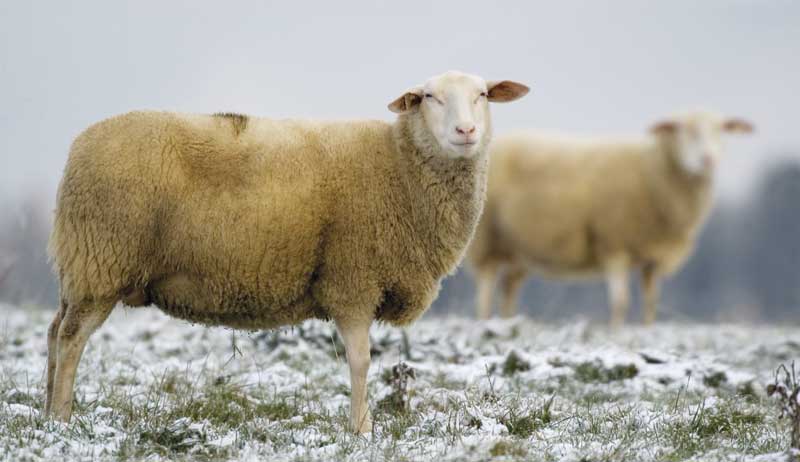
This sheep has more than milk going for it. It is, indeed, a
triple-purpose breed (milk, meat and wool). It hails from East Friesland in northern Germany and the Province of Friesland in the Netherlands, where it emerged as the most productive dairy sheep in the world, producing lactation milk yields of 1,100 to 1,700 pounds for mature ewes.

livestock breeds East Friesian sheep
Bildagentur Zoonar GmbH/Shutterstock

East Frisians also produce an 8 1/2- to 11-pound, 35- to 37-micron white fleece with an average 5-inch staple and two or three lambs each year. Both sexes are polled and have thin, wool-free fluke tails that don’t require docking.   

Icelandic: Marvelous Multipurpose Breed

The Icelandic is another fluke-tailed, triple-purpose sheep. It’s milky enough for home dairying, and it grows a lovely double fleece. An Icelandic fleece is composed of a 4- to 7-pound, 27- to 30-micron, 6- to 8-inch outer layer (called tog) and a 19- to 22-micron, 2- to 4-inch undercoat (thel).

Producers often shear Icelandics twice a year. This breed is grown mostly for meat in Iceland. Here, grass-fed Icelandic lamb commands good prices. 

Icelandics come in a wide array of colors and marking patterns, making soft, cushy pelts a lucrative sideline for meat producers. Long-horned ram skulls fetch high prices, too.

Shetland: Best Bet to Make a Sweater

Like Icelandics, the Shetland is a primitive breed, fluke-tailed and double-coated and somewhat smaller than its northern kin. Shetland sheep are fine-boned and agile. Rams weigh just 90 to 125 pounds, and ewes weigh 75 to 100 pounds.

They come in a wide variety of colors, markings and patterns—11 colors and 30 patterns in all. Its fleeces can vary in micron count from around 20 into the 30s. Double coats vary also. Some are more pronounced, while others appear to be single coat. Shetlands are friendly, hardy and easily managed, making them a fine choice for first-time and long-term shepherds. 


Also Read: These small livestock breeds are great for hobby farms!


Happy for Hogs

Berkshire: Great for Pulled Pork

Berkshires are noted for especially succulent, mouth-watering meat that is darker red in color than conventional pork. They are hardy and do well in indoor and outdoor situations. 

They are fast-maturing, good-natured, easy-to-manage hogs developed in the 1800s for a changing market with a preference for leaner cuts of pork. The American Berkshire Association, established in 1875, gives pedigrees only to pigs directly imported from established English herds or to those tracing directly back to imported animals.

Kunekune: For the Small Farm

Their docile nature makes them the perfect livestock, friendly to people and other farm animals. If raising them for meat, it might take longer as they are slower to mature, but this breed is certainly a first-class porker. It was introduced to New Zealand in the early 1800s, when the Maori people raised this little pig for meat. 

This hardy, good-natured pig (pictured above) is also a peerless forager, ideal for raising on pasture by families that prefer small cuts of tasty meat. 

It’s a compact, short-legged, short-bodied pig with a short, thick, upturned snout, wattles and small, upright ears. Because of their short, upturned snouts, Kunekunes are poor rooters, so they won’t ruin yards and pastures.

Ossabaw Island Hog: Land-Clearing Champ

Small, feral-looking, heavy-coated and bristly, these pigs have long snouts, heavy shoulders and prick ears fringed with long hair. They descend from swine that Spanish explorers left off the coast of Georgia near Savannah on Ossabaw Island almost 400 years ago.

DNA analysis suggests they originated on the Canary Islands, an important stop by the early explorers en route to the west.

These hardy, self-sufficient pigs like their own space. They produce smaller cuts of well-marbled, juicy meat. For anyone wanting land cleared, long-snouted Ossabaw Island hogs are peerless rooters.

Crazy for Cattle

Miniature Hereford: Splendid for Steaks

These scaled-down versions of full-size Herefords measure 38 to 43 inches at the hip and weigh roughly half what standard Herefords weigh. They’re healthy and hardy and eat roughly 1⁄2 to 1⁄3 as much grass and feed as full-size Herefords.

All the meat from a single steer will fit in an average freezer.  Miniature Herefords are just right for most families to feed, butcher and eat within the recommended freezer life of beef.

Highland: Most Unique Appearance

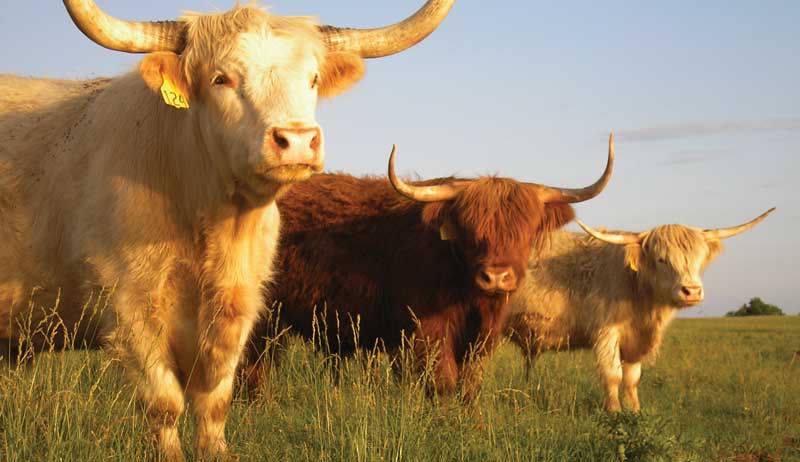
This ancient breed developed via natural selection in the mountainous areas of Scotland. Highlands are short, stocky, long-coated, long-horned with a mop of shaggy hair that covers their eyes. They’re also ideal for producing grass-fed beef.

livestock breeds Highland cattle
Courtesy Heartland Highland Cattle Association

Highlands are small and compact, docile, extremely cold-hardy and adaptable to any climate conditions. Their beef is lean, well-marbled and delicious, with little outside fat. Fiber artists cherish their downy winter undercoat for hand-spinning purposes. 

Whether you want to start raising livestock or add breeds to your small farm, choose a breed that fits your needs. If none of the breeds in this article quite fit what you’re after, check out some other online articles here to learn about additional breeds and how to raise them. 

This article originally appeared in the January/February 2023 issue of Hobby Farms magazine.

Categories
Animals Beginning Farmers Farm & Garden Homesteading Large Animals

Lessons Learned From Bottle-Feeding A Lamb

Dateline: My barn, lambing season, one week before lambing is supposed to begin. I opened the door to the barn; there stood two ewes who had given birth and four healthy lambs. Two sets of twins?  A single lamb to one ewe and a set of triplets to the other?  I couldn’t tell right away. 

I separated the ewes and lambs into a larger stall until I could watch and see who belonged to whom. I checked that there was milk coming from both ewes and stood back to ensure everyone was nursing.   

That was when I noticed there was a problem. 

One set of lambs—a ram and a ewe—began nursing vigorously.  Another ewe lamb began nursing on the other ewe. But the fourth ewe lamb didn’t seem to belong to anyone. Both ewes shoved her away when she tried to nurse. 

Since I didn’t know which one was her mother, I decided she would have to be bottle-fed.


Also Read: How to Bottle Feed a Baby Goat?


Why Bottle-Feed a  Lamb?

Really, if you can, it’s best to avoid bottle-feeding a lamb.  But, sometimes you just have to. So, how do you go about it? 

According to the University of Maryland Extension, newborns need to consume approximately 10 percent of their body weight of colostrum in the first 24 hours, and the sooner the better. Colostrum is nutrient dense and contains antibodies that will protect the babies in the first few weeks of life.  

bottle-feeding lamb
Jana Wilson

You have a couple of options here. First, you can milk some colostrum directly from the mother that has rejected her lamb and feed that to the baby. You also can purchase a powdered colostrum replacer that contains  IgGs.

Follow the instructions very carefully when mixing it up to feed the lamb. 


Also Read: Bottle-Feeding a Goat Kid? Check Out These Tips.


Bottle-Feeding a Lamb

Some lambs will take a bottle right away, while others may not want or be able to suckle on the nipple of the bottle.  In that case, you will have to tube feed your lamb to make sure she gets that vital colostrum. I have not yet had to do that, but I review a video from the Purdue University Extension about tube feeding each year just in case. 

After the first 24 hours of feeding your lamb colostrum (about 8 oz per feeding over two to three feedings), you can switch over to milk. Of course the best milk is the ewe’s milk.  Some far-sighted folks even express ewe’s milk and freeze it for emergencies. 

Otherwise, you can use a powdered lamb milk replacer, which I have used with great success.

a baby lamb is drinking from a bottle
bottle-feeding lamb

One recommendation that I have read in several articles is to have the same person mix up the lamb milk replacer each time, so it is consistent for the lamb.  Each person may interpret  the directions slightly differently, and consistency is very important. 


Watch Video: Bottle Feeding a Goat Kid


How and where to feed your bottle lamb are questions that you will need to consider. The most common way I have seen is to use a Pritchard teat attached to a plastic soda bottle. The nipple is usually a distinctive red with a yellow cap at the bottom. They come closed, and you can open the top as little or as much as you want.   

The University of Nebraska-Lincoln has a really great PDF covering most aspects of lamb bottle feeding. It’s for 4-H kids, but  I personally feel that this is the perfect level for someone like me, who has not raised sheep for 30 years! 

With my unexpected bottle lamb from last year, I was able to leave her with the rest of the flock and simply come out a few times a day to feed her. Of course I kept an eye on her to make sure she was safe with the small group. But she seemed perfectly happy to hang out with the other lambs and occasionally get a push away from one of the ewes when she tried to nurse. 

However, she also was occasionally successful at feeding when a ewe was too preoccupied with her own lamb nursing or eating grain and hay. 

That lamb is now a 1-year-old ewe and is in great health. I am happy with my effort, bottle-feeding my lamb to keep her with the flock. 

I hope everyone has a great lambing season, whether you are done, in the middle of it, or are waiting for that first ewe to lamb!