Categories
News

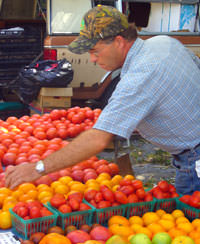
Tracking Food Trends 2008-2009

local food grown by farmers
Thinking food?
Visit the “Food and Kitchen” section for articles on projects for your farm kitchen — and recipes, too.

There are trends all around us—in our clothing, popular recreational activities, and, yes, even our food.

Being directly connected to food production, as farmers, we need to keep an eye on what’s happening among foodies around the world.

You never know where there’s an opportunity to expand our operations or meet the needs of a new food trend.

The American Farm Bureau’s “Foodie News” blogger Cyndie Sirekis recently recapped five food trends from 2008 and what she predicts are five food trends on the horizon for 2009.

2008 Recap

  1. Local foods.
    While interest in using locally grown products grew, the New Oxford American Dictionary even named “locavore” (person who seeks out and consumes locally grown food) its word of the year.
  2. Celebrity chefs.
    You can hardly change a television station or open a magazine without seeing a show or article featuring a celebrity chef.
  3. Higher food prices.
    Because of widely varying energy costs, food prices rose and fell throughout the year.
  4. Food safety and traceability.
    The safety and traceability of our foods were issues brought to the forefront this year amidst recalls and warnings.
  5. Food companies listen to consumers.
    “In an effort to stay ahead of competitors and capture shrinking consumer grocery dollars, Butterball, Wegmans, Starbucks, Whole Foods Market and other companies change product offerings in response to consumer feedback,” Sirekis writes.

Ahead for 2009

  1. Farm-to-table cuisine.
    It’s the local-foods movement at its finest, driven by consumers wanting to know where their food comes from, how it is prepared and who prepares it.
  2. Cutting back and bargains rule.
    Look for more people making budget-conscious decisions regarding their food and dining choices.
  3. Restaurants go high-tech.
    “High-tech entertainment offerings to entice diners will grow at restaurants. At UWink in Los Angeles and Mountain View, Calif., customers place food orders at touch screens that do double-duty as video game consoles,” Sirekis writes.
  4. Buckwheat, the next hot grain.
    Can you grow some? The use of buckwheat is expected to grow in popularity among chefs.
  5. American Pinot Blanc takes off.
    “Known as the ‘poor man’s Chardonnay,’ critics gush over the bright acidity of Pinot Blanc, which pairs well with flavorful pasta dishes. Wineries in Oregon’s Willamette Valley and California’s Napa Valley offer several bottlings for less than $25,” Sirekis writes.

How have 2008 trends impacted your operation—positively or negatively? What can you do to capitalize on what’s expected to be hot in 2009?

Read Sirekis’s whole blog entry at www.fb.org/blog2/blog1.php/2008/12/19/food-trends-a-look-back-at-2008-a-look-a-2009.

Top

Categories
Homesteading

Farm Pantry Checklist

Basic Farm Pantry List
By Lisa Kivirist

Farm pantry list
Need Recipes?
We have over 200–from sultry soups to bountiful baked goods.

A farm pantry serves as more than grocery storage; it’s your own personal country convenience store.

When you keep the following items on hand—with some basics from the refrigerator and garden—you can whip up anything from coffeecakes for impromptu neighborly visits to a jam-making marathon.

About the Author
Lisa Kivirist keeps her pantry stocked on her farm and B&B, Inn Serendipity, in Browntown, Wis. She is the co-author of Rural Renaissance and Edible Earth.

More free downloads>> 

Categories
Animals

Shepherding for Superior Wool

By Cherie Langlois

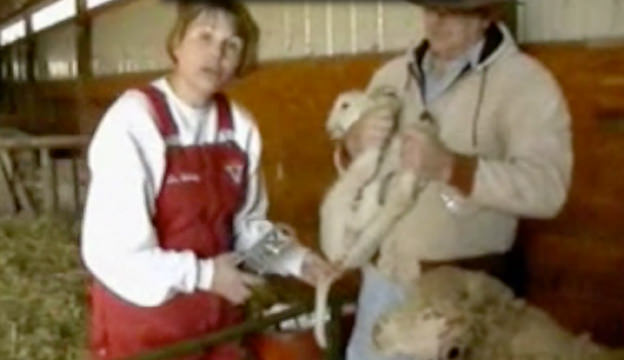
from the pages of Hobby FarmsFor Robin Nistock of Prattsburg, N.Y., growing up around her parents’ commercial flock of sheep coupled with catching the spinning bug in the late 1980s, it was only natural that she would have her own sheep one day. “When I got married, my husband got a package deal—me, a few sheep and my Irish Wolfhound,” she says.

Nistock decided she couldn’t settle on one ovine breed because “so many had fleece attributes I admired.”  Since she began breeding for fleece quality in 1990, her flock has evolved to include ewes with Border Leicester, Romney, Corriedale and Finn influence. 


Drop by Cherie’s Blog to read about some of her own sheep–and other country discoveries


She introduced Moorit coloring and increasing fineness to her sheep’s fleeces with Moorit rams. She also became enamored with purebred Cotswolds and acquired some a few years ago.  Today her flock has 65 ewes and eight rams, giving her a range of fine, medium and long wools in white and natural colors. 

“I market the main part of my fleeces to hand spinners, either as raw fleece or roving,” says Nistock, whose raw fleeces sell for between $7.50 and $12 a pound depending on color, crimp, luster and other factors.  “Being a one-man band, I can’t quite keep up with what the sheep give me and the demand for spinning fiber.”

Feeling envious?  If you’ve already discovered the joy of having a wee flock of sheep adorning your farm, you may have also dreamt about those animals and their fluffy fleeces growing into an actual money-making business.

It’s true:  Hand spinners, those talented folks who turn wool fibers into yarn with a whirl of the wheel, will pay premium prices for fleeces—but only if they’re of high quality.  Here, experienced sheep raisers tell you how to tap this market by taking your wool production to a higher level.   
  
Growing Quality Fleeces
Wool is a wonderful fiber to work with and to wear; it’s natural, it’s breathable and it’s insulating.  Depending on what type of yarn they’re spinning and its ultimate use, hand spinners look for wool in a variety of colors and textures.  Yarn made of finer Merino wool, for instance, may be perfect for a soft scarf or a baby sweater; yarn composed of the rough fleece of a Scottish Blackface is ideal for hooking a tough rug. 

“You need to know what your wool is good for and how to educate your buyers,” says Judy Taylor, a spinner and a rug-hooker who has raised Jacob sheep for 18 years on Edeldal Farm in Auburn, Wash.  “There’s a perfect project for every fleece.”

Although their tastes may vary, spinners want fleeces that are consistent from front to back and that are free of second cuts, wool breaks and vegetation.  Adopt the following strategies and you’ll be well on your way to pleasing the pickiest spinner. Keep it clean. 

Pristine wool doesn’t happen by itself.  Sheep can make a surprising mess of their fleeces by scratching against trees, by cavorting through weeds and by dragging alfalfa across each other’s backs as they eat. Not surprisingly, a fleece tangled with bits of hay or marred by manure tags won’t make your hand spinning clients happy–or earn you repeat customers.

“My number one strategy is to keep the fleeces clean. Cleanliness is the main thing that makes a difference in the price you get for a fleece,” says Dee Heinrich, who raises Romneys and Romney-crosses at Peeper Hollow Farm in Marion, Iowa.

Heinrich coats her sheep to keep their wool from becoming contaminated with debris, a practice she began after her first disastrous shearing that took her hours to pick enough straw, seed heads and dirt out of one fleece to meet her high standards. According to Australian studies, sheep coats or covers lead to higher wool yields and protect fleeces against sun damage and rot.   
 
Nistock also keeps her sheep coated all year—except for her Cotswolds, whose curly fleeces tend to felt (even when their garments fit perfectly). Indeed, it’s a good idea to test a few animals to determine if coats are appropriate for your breed and your situation. 

Keep in mind that covers should consist of breathable material that won’t cause the wool to mildew, and they need to be washed and changed regularly as the wool grows.  Nistock, who uses durable Rocky Mountain Sheep Suits on her flock, changes coat sizes a minimum of three times per sheep in between shearings.

The type of feeder you use will also affect the cleanliness of your flock’s fleeces.  Heinrich went from wall-mounted feeders which rained hay onto her animals as they ate, to a modified bale feeder which sits on the ground and helps prevent this messy problem. Feeding technique counts, too; sheep are notorious for sauntering into the line of fire as you dish out dinner.  “I always put out hay with the barn door closed and let the animals in when all the food is out,” says Taylor. 

It’s important to keep wool sheep in a clean environment and out of brush and mud, adds Paul Walker, a Livestock Extension Agent in North Carolina’s Alamance County. Combat mud around your barns and manage your fields to reduce wool-contaminating weeds.  Watch what you use for barn bedding—wood shavings are notoriously difficult to remove from fleece.  Straw or a layer of straw over shavings is a better option. Strive for healthy sheep and avoid unnecessary stress.

Wool production benefits from healthy animals, says Walker.  Good nutrition, well-managed pastures, and appropriate parasite control and vaccination programs will all translate into better fleeces and more wool per animal.

“My sheep maintain a good, steady plane of nutrition all year,” Nistock explains. “I don’t pour grain down them, but I do make sure they don’t go into a marked weight loss situation that may show up as a wool break later. While it’s true that good sheep shouldn’t need to be fed a lot of concentrates and coddled in a barn, it’s also true that you have to give an animal better than they’d find in the wild if you really expect them to produce a high-quality product.”

Taylor also views diet as an important ingredient for producing fine fleeces.  In September she starts supplementing her flock’s grazing with quality alfalfa.  By October’s end, when the animals are moved off the fields, they’re receiving alfalfa morning and night. The ewes get grain year-round, and Taylor increases their concentrates during pregnancy and lactation to prevent weight loss.

Heavy worm burdens can negatively impact your flock’s fleeces:  you’ll see a break or a tenderness in the wool, explains Heinrich, who advocates pasture rotation as a way of controlling parasites.  Sheep should also be treated for external parasites like keds and lice that can cause itching and rubbing—a definite wool-spoiler.   

Finally, try to avoid stressing your flock unnecessarily:

  • Make captures in a confined area so you won’t have to chase your sheep around the pasture (it’ll be less stressful for you, too) and don’t grab them by their wool.
  • Have hoof trimmers, styptic powder, vaccinations and other supplies organized and ready to make your sheep’s time in the stanchion short and sweet.
  • Keep fences in good repair so dogs and other predators won’t harass your flock or consider acquiring a guardian animal.
  • Take time to tame your sheep by doling out treats and by scratching their favorite spots (Taylor says her sheep like to be stroked where the neck meets the chest); they’ll be more relaxed if they don’t think you’re the big bad wolf.
  • A few more shepherding tips

Page 1 |2

About the Author: Cherie Langlois is a Washington-based writer who keeps Jacob sheep. A Canadian mill transforms her flock’s spotted fleeces into beautiful blankets.

This article first appeared in the March/April 2006 issue of Hobby Farms magazine.

Categories
News

Scientists, Legislators Show Concern for Bee Deaths

By Tom Meade

Researchers from state agricultural departments, the federal government, and several universities have agreed on a plan for dealing with Colony Collapse Disorder (CCD), a mysterious ailment that has devastated honey bee colonies in at least 36 states.

Bees Working Outside a Hive
© Tom Meade

Meanwhile, legislators show concern as well.  The U.S. Senate is considering two bills to fund research on honey bees and other pollinators vital to the nation’s farms.

The CCD steering committee met in Washington on July 16 to announce a research strategy under Kevin Hackett, the U.S. Department of Agriculture’s national program leader for bees and pollination.

Scientists participating in the project will attempt to identify the underlying cause for the new ailment that leaves hives with few or no adult honey bees but few dead bees inside hive boxes.

Main Research Areas
The researchers will concentrate on four possible causes for CCD:

Other Causes?
Cell-phone radiation and other possible causes for the disorder have also been mentioned, but Dennis van Engelsdorp, acting state apiarist with the Pennsylvania Department of Agriculture and a member of the Steering Committee, said initial studies of dying colonies revealed a large number of disease organisms present, with no single cause.

Other entomologists suspect that there may be several culprits – including protozoa, a class of insecticides known as neonicotinoids, and poor nutrition – combining to kill the bees. Beekeepers first noticed the malady going into last winter.

Importance of Bees, Funding Recognized
“This action plan provides a coordinated framework to ensure that all of the research that needs to be done is covered in order to get to the bottom of the CCD problem,” said Gale Buchanan, USDA under secretary for research, education and economics.

“There were enough honey bees to provide pollination for U.S. agriculture this year, but beekeepers could face a serious problem next year and beyond.”

In Congress, Senators John Thune (R-S.D.), Barbara Boxer (D-Calif.) and Bob Casey (D-Pa.) have introduced a measure authorizing  $89 million in federal funding over five years for research and grant programs at the USDA to maintain and protect honey bees and native pollinators.

Sen. Charles Schumer (D-N.Y.) has also introduced legislation in the Farm, Nutrition, and Community Investment Act to allocate $250 million over 10 years to the USDA to study the CCD phenomenon and find ways to restore bee colonies to healthy levels.

It is estimated that honey bees pollinate more than 130 crops in the United States and add $15 billion in crop value annually.

“California’s almond crop alone is worth $2 billion per year and requires nearly one half all the honey bees in the country,” Sen. Boxer said. “The future of that crop and other important crops such as avocados, apples, berries and soybeans is in jeopardy if there aren’t enough bees to pollinate them for harvest.”

About the Author
Tom Meade is a writer, beekeeper and vegetable gardener in Rhode Island.
Categories
Farm Management

Small Farm History

by Rick Gush

  American Small Farm History

  • The American Indians were accomplished farmers and used a sustainable agriculture system that is envied by organic farmers today.
  • The first colonists, both the Leif Erickson groups in Newfoundland and the 1609 groups in Maryland, were small farmers who failed. The non-farming Pilgrims came later, starved for years and then finally celebrated learning how to farm by having a Thanksgiving feast.
  • Small farmers made up the bulk of the revolutionary-era population, but also bore the brunt of the injuries in the wars with the French, the English and the indigenous peoples.
  • Even early commercial agriculture was self-sufficient, as practiced by the gentlemen farmers like George Washington, who farmed 8,000 acres with hundreds of workers in multiple locations.
  • The Grange was formed in 1867 and soon became the center of small-farm social activities across the country, most notably in the Farm Belt that had developed between the coasts. This occurrence marked the beginning of the strong ties between elected politicians and large-farming lobbyists.
  • The Land Grant College Act of 1862 funded agriculturally based institutions of higher learning by giving federal land to the states so that they could sell the land and raise the required money for the college. The Land Grant Colleges eventually led the charge in developing modern scientific agriculture.
  • The Homestead Act, also of 1862, structured the transferring of ownership of vast federal lands into private hands. By 1900, about 600,000 farmers had received clear title under the act to lands covering about 80 million acres. In all, 270 million acres, or 10 percent of the area of the United States, was claimed and settled under this act.
  • The Dust Bowl of the 1930s, when thousands of small farmers abandoned their ruined farms, finally burst the bubble of small-farm enthusiasm that had gripped the United States for 300 years.
  • The Taylor Grazing Act of 1934 authorized the Bureau of Land Management to rent federal lands at very low rates to farmers for the purpose of grazing livestock.
  • By 1930, one average American farmer produced enough food to feed ten people.  By 1960, notably with the use of artificial fertilizers, that same single American farmer was producing enough food to feed 25 people.
  • The Agricultural Act of 1956, otherwise known as the Soil-Bank program, authorized federal payments to farmers if they reduced production of certain crops. The marked the beginning of subsequent agricultural subsidy excesses.

    Top

The history of small farms is more than a list of key historical dates; it is best considered as the winding central theme that appears throughout all human history, responsible for expanding populations and making possible the evolution of civilization.

As such, small farming has been perhaps the single most important activity in the history of human existence.

Through this activity, we humans learned to feed and therefore propagate ourselves in a manner that continues to distinguish us from other creatures on the planet.

Even today, small farms are controversial and one of the hottest topics in world politics because they are so intimately connected with basic issues such as food availability, land reform and government support programs.

Nonetheless, the experience of small farming remains remarkably the same today as it was for our Stone Age ancestors.

Top

Hunter-Gatherers
Small family groups invented agriculture. The first small farmers were hunter-gatherers who played with plants around the campfire, trapped a few goats in the canyon, and made water flow from the creek w into the swampy area. This husbandry activity allowed mankind to set out on the road to civilization.

The concept of domestication, for both plants and animals, was a concept started by the Stone Age version of the small family farm. Extended family-based groups were the key demographic involved in the transition from hunter-gatherers to home builders. It was these family groups who performed the personal farming experiments that led to the greater understanding as to how humans could manipulate the growth of food plants and animals to their benefit. 

The first hunter gatherers to discover that they could encourage the growth of favorite plants and animals were gypsy farmers who interacted with plants and animals in the lands through which they wandered.

These pioneers left little testimony, but today’s scientists are regularlypushing back the dates for the first plant domestications.

For example, it was once assumed that the first permanent settlements in Ecuador were built about 5,000 years ago and that therefore this must also be when agriculture was discovered there. But evidence now shows that squash plants were probably domesticated over 10,000 years ago.

Similar new thoughts are occurring across the globe, and estimated first dates for plant and animal domestication now stretch back 14,000 years in some areas, though the first permanent settlements in these zones appeared around 8,000 years ago.

Top

First Plant Domestication and Cultivation
This means that plant domestication and home building did not develop at the same time. The hunter-gatherers evidently knew how to breed plants long before they learned to build permanent homes. For thousands of years farming was just another of the many survival skills in the successful hunter-gatherer’s repertoire.

The first plants cultivated on a large scale were certainly grains, but it was more likely to have been leafy greens that acted as the first horticultural experiments. While seeds scattered in a patch of damp soil will take months to grow and produce new usable seeds, a small green plant, uprooted during the harvest of edible greens and then tucked back into the soil, might revive within a day and again become a harvestable food item. Bit by bit, the wild, wandering hunter-gatherers discovered that other creatures in the world were controllable and that they could direct a great many fantastic reactions among their food sources, which they could use to produce much larger quantities of food for themselves.

Top

Small Farms Appear
As their agricultural skills increased, hunter-gatherers became proficient in supporting entire families.

After several thousand years, some hunter-gatherers began staying in permanent locations. For families with young, injured or elderly members, the constant movement of the hunter-gatherer lifestyle was difficult and the opportunity to stay in one place must have been very appealing.

The period from 10,000 BC to 3,000 BC was the first period of agricultural explosion.

  • Small farms spread across most of the inhabited planet, and everywhere farming became more sophisticated.
  • Huge numbers of humans began settling permanently in areas where they could farm.
  • The agricultural arts blossomed in these years, and essentially all of the important food and animal crops were domesticated.
  • The first domesticated sheep were in Iraq around 9,000 BC, and goats were domesticated soon thereafter in Iran.
  • Pigs were kept in Thailand around 8,000 BC and horses were domesticated in the Ukraine by 5,000 BC.
  • Flax was used to make cloth around 9,000 BC and by 6,000 BC, every one of today’s major grain crops, such as wheat, beans, peas, barley, rice and corn, was already artificially bred to produce new and better varieties.
  • Sticks evolved into shovels, sickles and hoes during this period
  • Different agricultural techniques such as slash and burn farming, using animal waste as fertilizer, grafting and artificial pollinating were discovered.

All of these refined farming skills were invented on small farms.

A wooden plough connected to a domesticated animal was a particularly important invention, and by 4,000 BC most small farms around the world were using animal-pulled ploughs. This method allowed a small farmer to produce more grain than their family could eat in a year, and it was this accumulation of surplus grain crops among small farmers that permitted real civilization to develop.

Top

Water-Control Devices Appear on Small Farms
The next revolution in agriculture, from 10,000 BC to about 3,000 BC, occurred when large groups of people banded together to construct water-control devices.

These waterworks usually served both a protective and an agricultural purpose; it sought to prevent flood damage from seasonal river flows as well as to direct and save water for irrigating planted fields. The line between personal and communal farming blurred as many small farmers engaged in communal projects such as grain raising as well as working on their own farms.

Along major rivers, irrigation systems were likely to be communally owned; it was along these big rivers that the first large civilizations formed. Improved control of water and the fertilizing benefits of the annual floods allowed humans to raise grain crops in much larger quantities.

The agricultural arts continued to evolve through time. While large-scale, communal irrigated farming focused on grain production, new plants such as grapes and olives began to be cultivated widely, particularly by small farmers.
 
Onions, melons, cucumbers, dates, apples, pomegranates, peaches, cotton and hundreds of other useful vegetable crops were grown by small farmers by 3,000 BC.

Farmers were increasingly sophisticated and knew that seed grown on land other than their own would often produce larger crops. The invention of metal tools and farming equipment added to the explosion in agricultural efficiency during this period, and storage methods for oil and grain also improved.  

Top

Land Ownership and Small Farms
The problem of asserting personal control over a piece of land against the claims or desires of other humans has existed since at least 10,000 BC.

As hunting territories were defended against the incursions of other hunters, so were farming areas jealously sought and defended. The most easily farmed lands–flat locations with good soil close to a water source–were always the most coveted. But whereas hunting territories could allow a certain flexibility in some border territories, the relationship with a specific piece of land being cultivated is considerably more intimate, and the levels of territorial jealousy increased significantly once farming started. 

This jealousy, along with an increasing capacity to accumulate stockpiles of stored food, gave birth to the concept of large landowners.

Early thugs who wandered among the small farmers discovered that instead of killing small farmers and taking their foodstuffs, they could more cleverly extort regular payments in exchange for the right for small farmers to not be attacked.
 
As generations of thugs used the payments from multiple small farmers to accumulate wealth, they also accumulated the power that made the “right” to collect extortive payments hereditary.

As regional identities were born, the extorted payments from small farmers formed the basis of wealth that allowed landowners, nobles, kings and conquerors to rise to power.

This pattern of powerful men deriving their sustenance and their power from the payments of many small farmers is still the basic social phenomenon upon which world societies andpolitics operate.

The ebb and flow of this extortion has measured the passage of time over the history of small farms.

The power that was Rome was originally possible because of the productive farming activities of thousands of small farmers. But by the end of the Roman era, the small farmers were practically non-existent in Italy, and food was produced principally on huge corporate farms that used millions of slaves captured in military combat.

Time and time again, when political chaos subsides and small farms are allowed to determine their own destinies, great success stories are found. Many historians credit the agricultural land reforms in England with having made possible the Industrial Revolution.

When the Enclosure Acts of the late eighteenth century reorganized the small parcels that resulted from the previous century’s redistribution of the old pre-Cromwell hereditary estates, agricultural productivity rose overnight in such a way that abundant wealth was created.

This wealth enabled the intellectual experimentation that pulled us into the modern age. Land reform was not a mass rearrangement, but rather a case by case, year after year trend in which ownership disputes were decided in favor of smaller citizens as opposed to nobility or clergy.

A similar inspirational story played out when the American colonies made land available to small farmers by the millions. The resulting revolution for independence and respect for individual liberties is still the most powerful social concept on the planet, and it was all made possible by the energetic actions of small farmers.

Top

Wars Fail to Deter the Creation of Small Farms
Fortunately for mankind, history shows that the activity of small farming is a spontaneously occurring event. Left to their own devices, humans will naturally begin to create small farms because food production makes it a natural survival choice.

Small farms have reappeared after every war that has destroyed them. The fall of Rome saw a huge increase in the activity of small farming in Italy as the population dispersed from the large cities and hid among mountain valleys to raise what plants and animals they could to feed themselves. 

In the United States, the twentieth century saw a consistent increase in the size of farms until many people were worried that the small farm would disappear altogether.

This worry was unfounded; we now realize that medium-sized farms, those that were trying to compete head to head with the large agribusiness outfits, were the farms that would disappear.

Small farms, usually marketing to a different demographic and with more varied and complex income patterns, were in fact preparing for the current robust revival that today sees many small farmers operating successful businesses with a genuine love of the small-farming life rather than a single-minded desire to support their families.

Notwithstanding the claims of some commercial analysts, the viability of the small farm is anything but dead. According to USDA statistics, nearly 40 percent of the value of farm products in the United States is generated by small farms. Half of the world’s working populations are employed in agriculture and the largest groups of those people are those who work on small, family-based farms.

Top

Hunter-Gatherers Still  
Small farmers started out as hunter-gatherers and have always retained those characteristics. Gathering the wild greens, nuts and berries that grow around their farms is as ancient a practice as any cultivation or husbandry. Many small farmers today augment their diet choices by hunting or fishing as well.

The small farmers of early Rome were proud of the magnificent mushrooms they collected in the hills around them. Mushroom availability dropped during the height of Imperial Rome because there were less small farmers who remembered how to find the succulent wild morsels. Today, the small farmers of Italy once again reign supreme in their green mountain valleys and they harvest enormous quantities of delectable mushrooms from the hills.

Whether it is mushrooms, wild hay for animal feed, or even leaf mulch to sell to the local garden centers, small farmers should always keep an eye open for valuable food or natural products available for the taking in their environment. That is the way small farmers are: always alert, always working and always looking for the extra bits they can wring from the earth.

Today’s small farmers also share another characteristic with their hunter-gatherer forbearers, and that is the fascination with the mechanics and relationships possible with crop plants and farm animals. It is no less wondrous today that a hard seed, shoved into the soil, will swell with water and burst forth in a glorious new living form that continues the cycle of life. Each farmer, as they plant their fields or feed their goats, are re-enacting and re-experiencing the drama of discovery that took place so many thousands of years before.

About the Author: Rick Gush is a small-farming enthusiast and freelance writer based in Italy.

Top


*This article first appeared in the November/December 2005 issue of Hobby Farms magazine. Subscribe to Hobby Farms today!!

Categories
Recipes

Flavored Butters: Ideas to Try

Once you’ve mastered the basics of butter-making, you can try your hand at making flavored butters (including herb butters)—limited only by your imagination.

great ideas for how to flavor your homemade butter

Lemon Butter

A favorite to use in sautéing or garnishing fish, this one is simple to make: 

  • ¼ cup butter
  • 1 T. lemon juice

    Cream the butter and beat in lemon juice, adding only drop by drop. Chill well.

    Herb Butters

    Herb butters can be made with either fresh or dried herbs.

    As a general rule, use 1 T. finely chopped fresh herbs for every ½ cup of butter; use 1 to 1 ½ tsp. dried, crumbled herbs. You may find that your own tastes call for more or less.

    Parsley Butter
    A wonderful topping for potatoes or steamed vegetables.

    • 1/4 cup butter
    • 1/2 tsp. salt
    • 1/8 tsp. pepper
    • 1/2 T. fresh parsley
    • 3/4 T. lemon juice

    Work butter with spatula until creamy. Add salt, pepper and parsley and blend well. Add lemon juice in very small amounts and blend well after each addition.

    Chill for at least 3 hours before using.

    Rosemary-Sage Butter

    • 1/4 cup butter
    • 3 tsp. fresh rosemary
    • 2 tsp. fresh sage
    • 2 tsp. fresh thyme

    Work butter with spatula until creamy. Add herbs and mix well.

    Chill for at least 3 hours before using.

    Herb Blend Butter
    This recipe is for a batch to store and use as needed. It makes just under ½ cup of mix.

    • 1 T. dried parsley
    • 1 T. dried chives
    • 1 T. dried thyme
    • 1 T. dried marjoram
    • 1 T. dried basil
    • 1 T. onion powder

    Mix well and store in airtight jar.

    To use:
    Cream ¼ pound butter until it can be worked with a spatula. Add 2 teaspoons of herb blend and mix well.

    Let stand at room temperature for 1 ½ to 2 hours to let flavors blend.

    Refrigerate until firm before using.

    Top

  • Categories
    Recipes

    Tomato Crouton Casserole

    Tomato Crouton CasseroleAn unusual twist on tomatoes, this side dish pairs nicely with just about anything.  From “How to Plan a Potluck for Your Farm Home” by Lisa Kivirist.

    Ingredients

    • 8 medium tomatoes, cut into wedges
    • 2 to 3 cups prepared croutons
    • 1/2 cup plus 2 T. butter, melted
    • 1 tsp. salt
    • 1 tsp. dried basil
    • 1 tsp. dried thyme
    • 3/4 cup Parmesan cheese, grated

    Preparation
    Arrange tomatoes in a greased 9” x 13” baking dish. Top with bread croutons. Combine butter, salt, basil and thyme. Drizzle over bread and tomatoes.  Sprinkle with cheese. Bake, uncovered, at 350 degrees F for 30 to 35 minutes or until tomatoes are tender.
    Serves 6.

    Categories
    Farm Management

    Starting a Farmers’ Cooperative Group

    By Jamie Henneman

    One of the drawbacks of a small farm can be its comfortable, manageable size.

    While a small, family operation can turn out a high-quality product, it is limited when it comes to marketing the vegetables, meat or other goods to buyers like restaurants and grocery stores that traditionally need to order by volume.

    Working with other producers to form a cooperative is one strategy for getting your foot in the door so you can work with these high-volume buyers.

    Although cooperatives are usually comprised of full-time growers who have the funds to invest in a full-time salesperson (think grain growers or orchardists in a fruit co-op), a twist on the traditional model may be advantageous for small farmers who are willing to work together.

    Farming cooperatives can help small farmers optimize their sales
    © Tami Zigo

    One of the major draws of working with other farmers is the organization of efforts under one product label.

    Instead of a handful of growers trying to sell “Joe’s Produce,” “Sally’s Produce” and “Tom’s Produce” to the same regional markets, those growers could come together and coordinate their efforts.

    This prevents doubling-up at the same markets or multiple pitches to the same restaurant or grocery store. By unifying under a product label, “Joe, Sally and Tom” could work together to provide both volume and efficiency to the restaurants and stores that are unaccustomed to working with small farms.

    Working with a group of farmers with the same target product can also be encouraging as you share production information, divide tasks and share advertising costs. You can also opt to take turns at a farmers’ market or implement other labor- and time-saving activities.

    Set Goals
    However, for this unconventional set-up to work properly, the farmers in the cooperative group all need to have the same vision.

    Use the co-op checklist to determine goals of the co-op
    © Tami Zigo

    Do you just want to sell a small amount on the weekends? Are you working toward full-time production? How much growth does the cooperative want to experience? How many markets/restaurants/stores do you want to service?

    Agreeing on a common production goal is very important because it directly relates to the amount of time members will be willing to invest.
     
    A retiree who is raising poultry as a hobby, for instance, may not have the same interest and drive for growth as a young couple who want to make farming their occupation. If a group of producers is mixed in this way, you’ll have people who want to participate for social reasons and not for business reasons. This, of course, hurts those who are trying to make farming a vocation. If everyone has the same goal, much heartache and conflict can be avoided.

    Co-op Checklist

    • Determine how co-op decisions will be made and have a regular meeting schedule.
    • Choose a co-op label, slogan or other identifier and make sure all producers have the same promotional materials to hand out.
    • Set standards for a consistent product and have producers sign agreements promising to adhere to those standards.
    • Have all producers determine the amount of product they have to sell and when it will be ready, possibly committing to that volume in a vendor/sales agreement.

    It is also important to determine early on how decisions will be made. Will there be a board of directors? Officers? Who gets to vote? Do the number of votes depend on the volume of product raised?

    It’s also very helpful to establish a format for meetings; Robert’s Rules of Order (parliamentary procedure) and similar procedures ensure business matters are attended to.

    Get it in Writing
    Although lots of farmers have good intentions or are spurred on by big dreams, their commitment to supplying the co-op with “X” number of a product really needs to be on paper in some kind of notarized contract or agreement.

    This prevents producers from casually committing up front and then not having the product when orders need to be filled.

    In organizing your cooperative, you will likely decide how much product each producer is willing to sell through the cooperative and when the product will be available. It’s important to get this commitment in writing, signed and notarized.

    Nothing is worse than cooperative members securing orders only to discover that someone has backed out and the volume isn’t there.

    This not only hurts your cooperative, but gives chefs and stores a negative opinion of family farms. In many instances, your interrelations with these establishments will pave the way or close the door for future farmers.

    If you decide to share sales, pay membership dues or share expenses, establishing a checking account dedicated to your cooperative will be important for tax purposes. When opening a checking account, your group will need to decide if it wants to be a business that retains profits for later use or a nonprofit organization that does not retain monies. Both for-profits and nonprofits will need to obtain a business license from their state government.

    Nonprofits may also have to obtain nonprofit status through the federal government, which can be a long and involved process. Be sure to address this issue first to keep the wheels greased and things moving right along.

    Create Uniformity
    In order to market as a group, it’s helpful to agree on a cooperative logo, trademark, business name, slogan or other identifier to be used in advertising.

    Co-op labels can be as fancy as one made by a professional designer or as simple as one put together on a home computer. What’s important is that each member has the same signage, brochures, business cards, labels, etc., to create uniformity in selling the product.
     
    This lends credibility to the cooperative and shows that all producers are on the same page. The buyer, therefore, can invest some certainty in knowing that goods will be delivered on time, they will be consistent and that the company will be reliable.

    Though it may sound like a no-brainer, products sold through the co-op need to be consistent in quality—uniform in appearance, in growing standards and in the manner they are delivered. This is a crucial element to establishing a good relationship with restaurants, stores or institutions that are accustomed to buying everything from napkins and ketchup to meats and vegetables from the same wholesaler.

    Little things like keeping (or removing) the neck on every whole chicken for sale, the color and ripeness of every box of peaches, and the tenderness of every cut of beef is important. Chefs, grocery managers and cooks don’t like surprises. Products that aren’t consistent will eventually turn off these buyers who could make the decision not to order from your co-op again.

    Your Story is an Asset
    One of the small producer’s biggest assets is their personal story. Meeting real producers, hearing their stories and being able to take seasonal tours of cooperative farms invites buyers to obtain a valuable, personal connection to their food.

    Big box stores try to replicate this sense of connection through slick advertising campaigns, but chefs, managers and everyday consumers can ultimately be won over by you—the farmer. By meeting people in person, being on time with deliveries and remaining easily accessible by phone, e-mail or fax, you’re giving big-time (and small-time!) buyers the efficiency of a wholesaler with the personal touch of a family farm.

    One of the most rewarding aspects of agriculture is getting to bond with other farmers. Although we all have different ideas, production tactics and methods, there is the common thread of growing food that runs through every farming operation. When it comes to small farming, it’s extremely beneficial to remember that “a high tide floats all boats.”

    Everyone has to eat; as the interest in family farms continues to grow, there will be plenty of markets for all farmers. Being territorial, divisive or overly competitive hurts everyone in the long run. As a farmer, you are part of a special group of people who gets to put good food on the plate of every American. That’s something to be proud of, as well as to enjoy.

    About the Author
    Jamie Henneman is a diversified small farmer in Washington State who raises chickens, beef, rabbits, cabrito, pigs and produce. In 2006 she was the coordinator for a Western Sustainable Agriculture Research and Education grant that worked to establish a pastured poultry co-op.

    This article first appeared in the May/June 2007 issue of Hobby Farms magazine. Subscribe to Hobby Farms>>