Categories
News

Vermont Slaughter Law Change Proposed

Finding and Working with a Meat Processor

© Linda Doane

Finding and Working with a Meat Processor
For an indepth article–offering step-by-step information on processing your livestock read Hobby Farm’s How to Process Livestock” by Matt John.
Click to Continue

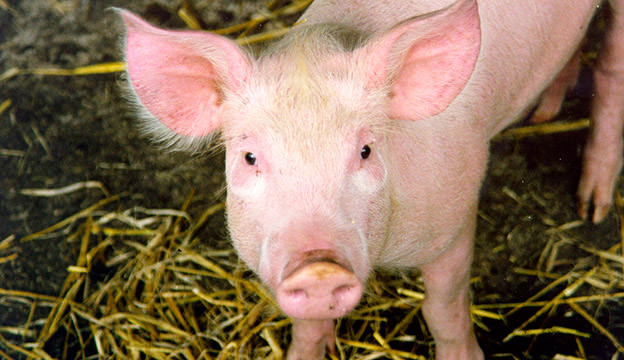
If you find yourself tempted to begin adding edible animals to your rural enclave or farm, you’ll be interested in a Times Argus (Vermont) article about a Vermont pork producer’s efforts to change the state’s slaughter laws and laws related to inspecting meat.

Peter Harvey, who describes himself as a backyard farmer, has raised pigs on his property, using some as meat for his family and selling some locally. The trouble is the Vermont slaughter laws only allow him to process meat for his own family; selling meat to others is illegal, unless it’s slaughtered at a government-sanctioned facility.

Harvey and others find the slaughter laws cumbersome and impractical for people who don’t live on a farm; if a potential customer is interested in eating the locally raised pork, he or she would have to buy the pig to be slaughtered and processed on their own.

Harvey and his supporters say more people want to buy from people they know; in addition to the growing demand, allowing small producers to slaughter and sell the livestock they raise is a way for farmers to get a fair price, they say.

In drawing attention to the issue, they’ve gained the support of a local legislator, who’s working on a bill to permit CSAs to raise and slaughter hoofed animals for the local production of meat. Read the Times Argus article

Categories
Recipes

Chestnut-cranberry Biscotti

Chestnut-Cranberry Biscotti

More Tasty Treats…

Click to find more baked goods and desserts.

All Hobby Farms recipes

Chestnuts–out of the stuffing and into the cookie jar! Try these homemade biscotti!

Ingredients

  • 1 1/2 cups sugar
  • ½ cup butter
  • 3 eggs
  • 1 tsp. vanilla
  • ½ tsp. salt
  • 1 tsp. baking powder
  • 12 oz. fresh chestnuts, shelled (about 1 lb. in the shell)
  • 2 cups flour
  • 2 oz. dried cranberries

Preparation
Preheat oven to 350 degrees F. Place chestnuts in food processor and chop until fine. Set aside.

In a large bowl, mix together sugar, butter, eggs, vanilla and salt until well combined. Add the baking powder, chestnuts and flour, and mix well. Stir in dried cranberries.

Remove dough from bowl and form two balls. Working on a floured cutting board, shape the balls into two rectangles, about 10 inches long, 3 inches wide and ¾ of an inch thick. Use a large, firm spatula and/or food scraper to lift each rectangle onto an ungreased baking sheet.

Bake for 40 minutes. Remove from oven and cool rectangles on a wire rack for 30 minutes. Reduce oven heat to 325 degrees F.

Slice each rectangle into ¾-inch slices. Stand slices on end (one cut end down) on the baking sheet. Bake for another 15 minutes. Turn off the oven and allow biscotti to cool in the oven. Store in an airtight container.

Top

Categories
Animals Poultry

Chickens on the Farm

Want to raise chickens? From chicken breeds to showing chickens, you’ll want to read this first.

When “chicken” comes to mind, most people think of cheap food, readily available at the grocery store or the fast-food restaurant. But it hasn’t always been that way.

Although chicken was common in farm country, to urban residents during the 19th and early 20th centuries, chicken was an expensive commodity. In fact, a campaign slogan used by Herbert Hoover in 1928 to emphasize coming prosperity was “a chicken in every pot.”

Although chicken is no longer considered a delicacy, it’s still important, with each American consuming almost 100 pounds of chicken meat and 250 eggs each year.

Government analysts estimate that there are 10 billion chickens in the world at any given time—more than one for every man, woman and child.

Many of these birds are raised in crowded, industrial systems and are regularly fed growth hormones, antibiotics and high levels of chlorine in their water.

While this production system has resulted in readily available and inexpensive meat, the good, old-fashioned taste of chicken—like Grandpa raised—has been sacrificed.

Since chickens are easy to raise (even in a small backyard), and are just plain fun to have around, they make an ideal candidate for increasing your food self-sufficiency. And, if you have more space and are looking for a small-scale commercial enterprise, chickens may be just the thing. Best of all, you can taste chicken that will remind you of Grandpa’s, and crack open an egg with a beautiful, golden yolk that speaks of sunshine and fresh air.

Domestication of Chickens

Chickens (Gallus gallus) are believed to have been domesticated from the red jungle fowl of India and Southeast Asia. Anthropologists believe they were first domesticated about 4,000 years ago. Because of their small size, chickens were often taken on ships by early explorers, and first came to North America with the Spaniards during the 1500s.

In the 1840s and 1850s, breeding poultry (chickens, ducks, geese and turkeys) for specific traits changed from a haphazard affair to a science. Breed societies began forming, and in 1873, the American Poultry Association (APA) was established to promote the raising, breeding, exhibition and judging of poultry. No one knows just how many breeds there are around the world today, but the APA lists over 100 that are raised in the United States.

Finding the Perfect Chicken Breed

Finding the perfect chicken breed depends on your goal for your flock: meat, eggs or showing.

The myriad breeds that are available today can be split into two categories, based on size-large breeds and bantam breeds. Bantams typically weigh only a pound or two, and can be a small version of a large breed (also known as a miniature), or a bird that has no large counterpart (usually referred to as a “true bantam”). Bantams are fun, but don’t produce much meat, and their eggs are quite small—often weighing about one half that of a large egg from the grocery store.

There are also four production categories: meat birds (raised for quick growth and large breast); egg birds (known for their prolific egg production); dual-purpose birds (good all-around providers of both meat and eggs); and ornamental birds (kept primarily for exhibition). In addition to these categories, you may hear chicken fanciers refer to breeds based on their “class” within the showworld. There are 11 classes in total, such as American, English or Mediterranean for the large breeds, and Game Bantam, Single Comb Clean Legged or Feather Legged for the bantam breeds.

The term “varieties” refers to one breed that exhibits two or more distinct traits, yet maintains all the other characteristics of the breed. Jersey Giants are a good example of a breed that comes in two varieties, a white variety that has all white feathering, and a black variety that has—you got it—all black feathers. The Wyandottes have nine varieties, based on color and pattern. Rhode Island Reds have two varieties, based not on color, but on comb configuration.

Heritage breeds are those that are no longer used in high-intensity, industrial agriculture. Many of these breeds were of major economic importance not too long ago, and still have important characteristics that shouldn’t be eradicated from the gene pool. Characteristics like hardiness, ability to forage, disease resistance and flavor may be especially important for small producers.

Meat Breeds of Chicken

Rapidly growing breeds are known for meat production. They have been bred for a large, meaty breast and light-colored skin and feathers (which make for a carcass that is easier to pluck clean).

Meat birds are classified based on their size upon butchering: Rock/Cornish hens (sometimes called game hens) are butchered between four- to six-weeks old, and weigh between one and two pounds. The most common butcher group, broilers, weigh four to five pounds when butchered, which is generally around 10 to 12 weeks old, and can be of either sex. Roasters, as the name implies, are the first size birds intended for roasting whole. These are larger birds, typically about seven pounds and four to five months old. The capon is a special class of roaster; whereas the general roasters can be either male or female, capons are de-sexed males that are allowed to grow anywhere from five to eight months.

Most commercial-broiler operations breed Rock-Cornish hybrids. These are the prominent crossbreeds in the industry because they grow very quickly and convert commercial feed to meat with high efficiency.

For backyard or small-scale production, some excellent breeds to consider if broiler/roaster production is your main objective include the Brahma, the New Hampshire, the Cornish or the Cochin.

Laying Breeds of Chickens

All hens lay eggs, but “laying breeds” produce eggs earlier, more frequently and longer. Layers average about 250 eggs per year, but top performers can lay more than 300. They tend to have smaller bodies with light breasts, and have high-strung personalities. It seems counterintuitive, but as a rule, the breeds that are known for high egg production aren’t very maternal. Layers won’t go broody (sit on eggs until they hatch), and if by some chance a hen does, she doesn’t seem to have a clue what to do with the chicks after they hatch.

In the industrial agriculture sector, most layers are from a commercial strain of white Leghorns. These birds begin laying eggs at 18 to 22 weeks of age. The eggs at this age are small, and the young hens may lay one egg every three or four days. Within about 10 weeks from when a young hen lays her first eggs, her eggs will reach full size, and she’ll average two eggs every three days. Layers “wear out” after about three years, with production dropping dramatically. They simply reach an age when they don’t have enough energy left to continue their high production.

Regardless of shell color, eggs have the same nutritional value, though many consumers prefer brown eggs. Shell color is a breed-dependent trait, and though it is typically white or brown, some breeds, like the Araucana, lay a bluish-green egg, and some, like the Ancona, lay a pink-tinted egg.

Dual-purpose Chicken Breeds

Dual-purpose birds are perfect for the backyard or homestead flock. Like meat birds, they are large bodied, but they lay a reasonable number of eggs per hen. They are usually hardy, and hens often go broody, raising the next generation for you (if you keep a rooster). Many of the dual-purpose breeds are also heritage breeds; some being on the brink of extinction. But the good news is that many small-scale breeders around the country are working to preserve these breeds.

Nancy Niero, director of the Clear Creek History Park in Golden, Colo., is one such breeder. Nancy and the park staff have made a commitment to breed Dominiques. “The heritage breeds tell a great story about our past,” she explains. “I find it enriching to tell children visiting the park that Dominiques were the first American chicken, and that they played a large part in our country’s history.

“During our summer season (the park is open Wednesday through Sunday, from mid-May through mid-October), we integrate food, animals and history in a powerful message: We have these chickens, we collect and cook their eggs on a wood-burning stove, but if we don’t take care of them they’ll become extinct. Once they’re gone, they’re gone.”

Although they are called dual-purpose breeds, there can be differences: Some may make slightly better meat birds (like the New Hampshire), and some better egg birds (like the Rhode Island Red). The Plymouth Barred Rock is an excellent all-around, general-purpose bird with an easy-going personality.

Ornamental Chicken Breeds

Ornamental breeds are kept primarily for exhibition. These birds have a wide assortment of colors and patterns, ranging from solid colors to multi-colored patterns. The Lakenvelder has striking black and white markings; Silkies have plumage that is soft, and almost hair-like; and Frizzles have a distinctly curly-haired appearance.

Many have strange “feather-dos,” like the Polish and Houdans with feathers puffing out from their heads, or the Brahmas and Cochins with feathers covering their legs.

Those who keep birds for show are called fanciers, and they take showing quite seriously. Show birds are judged on a 100-point scale that assesses shape, color, patterning, comb configuration, number of toes and even the shape of the earlobe. For each breed, the specifics are described in The American Standard of Perfection, a book published by the American Poultry Association. The Standard is the ultimate authority for poultry fanciers and judges.

Starting a Flock

Although you can occasionally find a producer who is willing to part with some mature birds, the most common approach to starting a flock is to purchase day-old chicks from a hatchery. You can either order directly from the hatchery, which will ship the babies (via the mail) right after they are born, or purchase from a feed or farm supply store that works with a hatchery. People are often surprised that chicks can be shipped around the country, but chicks draw the yolk of the egg into their abdomen just before birth as a food source, so most newborn chicks arrive alive.

Brooding chicks at home isn’t difficult, but there are three things that can make a brooding operation fail: chills, drafts or water. Chicks need to be kept warm and dry, and they need to be protected from predators (including cats and dogs).

You should have a chicken area ready before bringing home your chicks. For an instant brooder for a small batch of chicks (up to 100) use a spare stock-watering tank. If you don’t have a spare water tank, create a brooder guard by cutting corrugated cardboard into pieces about 12 inches high and then securely tape them together to form a round “pen” with a radius of about three feet. The round design is superior to simply using a cardboard box, because there are no corners for the chicks to pile up in—and those pile-ups can result in crushed chicks at the bottom.

Until birds are feathered out, they have no way to control their body temperature. When brooded by a hen, chicks hover under her to stay warm, but when artificially brooded, heat needs to be supplied by another source. A hanging heat lamp with a red, infrared bulb is the best way to provide the heat the chicks need. Adjust the height of the lamp so that the initial temperature on the floor under it is 95 degrees. Reduce the temperature by five degrees per week. If the chicks aren’t warm enough, they’ll pile up and peep loudly; chicks that are too warm will pant and move as far away from the lamp as possible; chicks that are comfortable will act contented—eating, sleeping and cheeping happily.

Bed the brooding pen with newspaper—it’s readily available, and easy to change out as it gets soiled and damp. After the chicks are two weeks old, switch to litter. Straw doesn’t work well unless it has been finely chopped, but pinewood chips, peanut shells or crushed corncobs work well.

Use a chick feeder and a chick waterer. These are inexpensive, readily available, help keep the feed and water clean and help keep the chicks dry. They can be purchased from hatcheries or from a farm supply store. Commercial “starter rations” are also readily available and easy to use, providing all the nutrients a chick needs.

As your birds mature, less diligence is required. They need fresh water and feed each day and housing to protect them from severe weather and predators. A corner of a barn or garage can be made into a chicken area, or a small building can be constructed for the purpose. Your county extension agent will be able to supply plans for chicken buildings, and information on mixing your own feeds.

Whatever you desire—meat, eggs, entertainment or preservation—there’s a chicken breed out there to meet it. From small to large, plain to fancy, chickens have it all.

This article first appeared in the Summer 2002 issue of Hobby Farms magazine.

Categories
Animals

How To … Build a Lambing Jug

By Arie McFarlan

Materials List

  • 1” galvanized screws 
  • 14 1” x 4” x 12’ boards
    (dimensional lumber)
  • 24 11⁄2” screw eyes
  • 3 36” rebar rods with the top 2 inches bent at a right angle to form an “L”
  • Electric drill to make pilot holes for screws
  • Saw (power, jig or chop)
  • Screw gun or screwdriver

Lambing season is just around the corner for most shepherds and preparations are being made for the new arrivals.

Lambing jugs, although not absolutely necessary, can ease the process of lambing and simplify the experience for ewes and their owners. 

Lambing jugs are small, usually portable pens that are erected just prior to lambing. Jugs provide a safe and private place for ewes to birth, as well as a comfortable and protected area where the lambs and ewes can bond to each other.

How to Use Them
When a ewe is getting close to birthing, she’s placed in the jug with freh bedding and water. She can be carefully monitored while in the jug and any needed assistance can be easily provided.

Once the lambs are born, the mother and babies are left in the jug for about three days to ensure the bonding process. After three days, the ewe and her offspring can be returned to the rest of the flock.

Lambing jugs can be set up inside an already existing barn, along a fence line or outside barn wall, or free-standing in a protected area (though you’ll need three additional panels for the free-standing type). Each panel or section will be 48 inches wide and 34 inches tall.

Building a set of three jugs is fairly easy with the following plans.

Building Instructions

Step 2 of building a lambing jug

Step 2

Cut 10 of the boards to 4-foot lengths for the horizontal slats of the partitions. From the remaining boards, cut 12 sections at 34 inches each for the vertical end stays. Each panel will be assembled exactly the same.

Step 1. Lay two vertical stays on a flat surface, placing them approximately 4 feet apart. Lay two of the 4-foot sections on top of the vertical stays, lining up the end of the 4-foot sections with the outside edge of the vertical stays at both the top and bottom edges, forming a box shape. Use clamps if necessary to line up the edges. Secure the corners with the screws, forming a frame or box.

Step 4 of building a lambing jug
Step 4

Step 2. Spacing for the three remaining 4-foot sections should be as follows:

The bottom horizontal board should be the one you place along the ground. Place the next horizontal board at 21⁄2 inches above the bottom board (forming a 21⁄2-inch opening). Leave a 31⁄2-inch gap between the second and third boards. Leave a 4-inch gap between the third and fourth boards. A space of approximately 51⁄2 inches will remain between the fourth and top boards. This should give you a 34-inch high panel. Connect each horizontal board securely with the screws, using at least two per end. Additionally, a diagonal support board can be added for heavy or aggressive sheep.

Step 3. Next, install the screw eyes to the end of each panel at the top and bottom. Placement of the screw eyes must be varied with each panel so that they fall slightly above or below the screw eyes on the panel you’ll be attaching them to. A suggestion would be to place the screw eyes at 2 inches from the top and bottom on the left sides of all the panels, and at 21⁄2 inches from the top and bottom on the right sides of the panels. Complete the remaining five panels in the same manner.

Step 5 of building a lambing jug
Step 5

Step 4. When ready to assemble the jugs, secure your first panel to the fence or wall that you have chosen. You can wire through the screw eyes on the end directly to a board or fence panel. Next, place a second panel end to end with the first panel, and one panel perpendicular to the two previous panels, forming a T. Use the rebar rods to drop down through all the screw eyes, connecting the three panels together.

Step 5. Continue until your three jugs are assembled. Secure each open end to the barn or fence as necessary.

When finished with the jugs, they can be quickly disassembled and stored flat or vertically without taking up much storage space.

About the Author: Arie McFarlen is owner of Maveric Heritage Ranch Co., where she raises many heritage livestock breeds, including Jacob sheep.

Top

This article first appeared in the March/April 2008 issue of Hobby Farms magazine. Pick up a copy at your local newsstand or tack and feed store. Click Here to subscribe to HF.

Categories
Animals

Cattle are Social Animals: Learn to Handle Cattle

handle cattle better

Cattle handling can be easy because of the social nature of cattle and their acceptance of a “pecking order” in the herd.

They readily submit to a higher-ranking herd member and can transfer this acceptance and submission to a human.

If cattle know you and respect you, accepting you as “boss cow,” they will submit to your authority—going through a gate when you insist, for instance, rather than running off or knocking you down trying to get away.

The best way to handle cattle is to get them accustomed to you and to trust you, rather than perceiving you as a threat, like a predator.

They should not be pets to the degree that they think they can dominate you.


If you love cattle, read about one of the best-dressed cows in the field>> 


Cattle always think in terms of dominance; every other herd member is either above or below them in the heirarchy, bossing them or being bossed by them. You must be a “boss” in the cow’s mind—not feared, but totally respected.


Never make the mistake of letting a cow lose respect for you. If you have a favorite cow or raise one as a pet, don’t spoil her.

Never make a pet out of a young bull. A pet thinks of you as one of the herd, so you must be the dominant one.

It is bovine nature to become bossy and try to dominate you. Don’t let this happen or the animal will become aggressive. Stockmen have been killed by pet animals.

It’s fine to have a friendly relationship with cattle, but they must know you are the boss.

Pecking order is an important fact of life for herd animals. The boss cow gained her position by being more aggressive, by winning all the fights when other cows tried to challenge her. As top cow, she gets first choice of feed and water; the others defer to her.

Other herd members fight to determine who’s next in line and who bosses whom. 

The top cow rarely needs to defend her title; everyone else has learned to respect them. She has “mind control” over the others.

You can use this same control to your advantage in handling cattle that know and respect you. If they accept you as “top cow,” it makes your job a lot easier.

This article is excerpted from “Think Like a Cow” by Heather Smith Thomas. The entire article can be found in the Popular Farming Series: Cattle, available for purchase in farm stores and online.

Top

Categories
Animals

Pig Facts And Fiction

When managed properly, pigs are hardy, healthy animals. Here are some other things you might not have write about the swine living on your farm.

Myth

Baby pigs are hard to raise.

Fact

If pigs are raised in a stress-free environment with adequate, healthy food and they receive high-quality colostrum from their mothers at birth, they are less susceptible to illness and have stronger immune systems, making them easier to raise.

Myth

All pigs grow at the same rate.

Fact

Pigs with diseased or challenged immune systems will often reach market weight 14 to 30 days later than herd mates. Different pig breeds have different rates of maturity.

Fact

An ounce of prevention is worth a pound of cure in preventing swine diseases.

Fact

Good, clean drinking water is very important for keeping a pig healthy. It keeps body functions operating smoothly and helps rid the pig’s body of waste.

Fact

Pig barns should have proper ventilation to help prevent respiratory disease.

Myth

Pigs are dirty.

Fact

Pigs are actually one of the cleanest farm animals if given adequate space. They will sleep in one area and defecate in another. It’s only when temperatures get too warm that they try to cool off by selecting a wet, muddy spot to lay in.

Myth

Pigs are prone to disease.

Fact

Pigs can catch diseases carried onto the farm by people, feed trucks, dogs, cats, rats, etc. Viruses specifically can be transported onto the farm by outside sources. We typically buy pigs with disease unintentionally and bring them home; they then transmit the disease to other pigs in the herd. Some producers depopulate their herd and start over with clean, healthy breeding stock and establish a herd health plan to stay free of disease.

Fact

Slaughter checks on your pigs (done by your veterinarian) at a packing plant can reveal many things about the health of your pig herd. The purpose of a slaughter check is to look for abnormal tissue so specific disease problems can be identified and addressed. Respiratory diseases, Atrophic Rhinitis, parasites, reproductive problems, abscesses, Tuberculosis, mange and Erysipelas can all be identified during slaughter checks.

The Small Farm-Rare Breed Connection

The modern small-farm swine producer is most apt to be working with a small number of breeding females, typically just three to 10. They are producing niche markets into which they direct market their product, often just one animal at a time. A small, purebred herd gives the greatest number of marketing options from breeding stock to specialty meat animals for markets as diverse as pig roasts to the fast-growing ethnic marketsCurrently, the Duroc, Tamworth, Berkshire and Chester White breeds are sought after for their exceptional taste and other table qualities, such as texture and fat content.

An excellent way to diversify a modern small farm, give it more environmental integrity and to better manage risk would be to build toward a small, tight herd of three to five sows and a boar of a great heritage breed, such as the Hereford or the Black Poland. Such a herd will not bring imbalance to even the smallest of farms, but will make it possible to fit these modest numbers in and around other livestock and cropping ventures, while giving fuller employment to family members—not to mention the personal satisfaction of helping preserve such historically important creatures. At this level, hogs will fit small farms all across the nation! —Kelly Klober

This article contains excerpts from “Safeguard Your Swine” by Dr. Haven Hendricks, PhD, and “Popping Pigs” by Kelly Klober. They appear in Popular Farming Series: Pigs

Categories
Animals

The Tamworth: A Pig Of A Different Color

Traditionally, pigs had a place on every farm—large and small—but today most pigs are raised in industrial operations, with 1,000 or more sows under one roof—confined in crates that prevent them from even turning around.

You won’t find Tamworth hogs in any of these places; they can’t stand up to the conditions in a confinement facility, and they gain weight slower than the commercial breeds.

Yet the small farmers who raise them praise the breed: Tamworths are hardy, with good mothering capabilities, and they perform very well outdoors, especially when grazing on pasture. They are particularly known for great-tasting, lean meat with good texture.

Tamworth Characteristics

Color

Golden red to a dark red—often described as ginger. Black spots in the hair and curly coats are detriments.

Body type

Deep-sided and uniform with a strong arch of back, and muscular top and long rump. The ham is muscular and firm although it lacks the size and bulk found in most other breeds.  Comparatively long of neck and leg, with firm, trim jowl; firm underline and firm fleshing.

Head

Striking, long head with moderately long and straight snout, and medium-size erect ears. Seen from the side, the face usually has a very slight suggestion of a dish, but a short or turned-up nose is unacceptable.

Size

Medium to large, weighing 500 to 600 pounds at maturity.

Bringing Home The Bacon

There are two essential types of pigs—the lard type and the bacon type. As the name suggests, lard pigs produce high concentrations of fat that is rendered for cooking and the production of lubricants.

These pigs are compact and thick, with short legs and deep bodies. They “fatten” quickly, particularly on a diet rich in corn.

Unlike the lard types, long, lean and muscular frames distinguish the bacon pigs. They were traditionally fed legumes, small grains, turnips, garden and dairy byproducts—feeds that are high in protein and roughage, and low in energy. They grew slowly, and yielded high-quality, finely grained meat.

Historically, strong markets for lard (which has been used not only for cooking and as a mechanical lubricant, but also as a key ingredient in products ranging from cosmetics to explosives and pharmaceuticals) limited the call for bacon breeds in the United States.

Only the Yorkshire and the Tamworth breeds of bacon-type pigs ever developed reasonable herd numbers in this country, and their numbers were limited.

Through World War II, the market for lard was strong, but after the war, cheaper, vegetable-based cooking fats found their way into the American diet, and petrochemicals largely replaced lard for commercial and industrial uses.

The declining market for animal fat caused the demand for lard pigs to collapse, so breeders began selecting for leaner hogs, but ones that could produce well in confinement.

Only three breeds of traditional lard-type pigs are still alive, the Choctaw, Guinea Hog and the Mulefoot—all breeds that, like the Tamworth, are considered rare heritage breeds by the American Livestock Breeds Conservancy.

Chuck Hassebrook, executive director of the Center, says, “The problem isn’t that smaller farmers aren’t economically efficient. It’s that industrialization leads to closed markets where prices are fixed not by open, competitive bidding, but by negotiated contracts. Small producers are discriminated against in the commodity system, and many are forced out of business. The long-term effect of that reaches far beyond the farmers themselves; there is a profound impact on rural communities and the environment.” Through the 1970s and into the ‘80s, pigs were still an integral part of most family farms. But as the ‘80s rolled into the ‘90s and on into the new century, pork production moved to a handful of large corporations that are vertically integrated, controlling every step from selection of breeding stock to marketing in the supermarket. According to the Center for Rural Affairs in Walthill, Neb., 200,000 producers got out of hog production in the last decade.

But the situation is not all doom and gloom. “The good news is that there are cost effective, efficient ways to produce hogs outside of total confinement,” says Hassebrook, “whether it be in lower-cost facilities or on pasture, that can compete on cost terms and respond more directly to the social, environmental and health concerns consumers are interested in. What I see among most innovative, small-scale farmers is that they are focusing on developing a product that responds to consumer demands, and selling that product at a premium.”

This good news also means good news for a breed like the Tamworth that fits so well into a non-industrial system.

Farmer’s Marketing Tip

Ed Snavely says the first thing to do if you want to sell at a farmer’s market is to check out the health regulations in your state.

“When I first started going, our state didn’t have any regulations, but three years ago a law was passed. I didn’t know about it until a local health inspector read me the riot act.”

Expect to start slow, until people find out you have a quality product.

“My first year I didn’t sell a lot, but every week it would build, to the point that now we don’t have enough product. So, don’t go buy 10 sows and expect to sell all your meat at the farmer’s market the first year.”

Porker Personality

Pigs are highly intelligent and curious, and generally very friendly. They can become as pet-like as a dog, happily greeting you when you come out of the house, or rolling over to have their bellies scratched. They are social animals, doing best with other pigs, but can be raised successfully alone if they receive lots of attention from people. In spite of their normally good nature, sows and boars get very big (600 pounds-plus is not at all out of the ordinary for fully mature animals), and they can be dangerous when provoked. Occasions to be on your guard include feed time, handling or moving (such as taking sows into a building for farrowing), performing medical treatment or handling young pigs around the sow—the piglets screech when picked up and mama comes to their defense.

Although pigs have a reputation as being dirty animals, they’re not. Pigs will pick one area for their manure, and will keep it separate and unique from sleeping and eating areas. Pigs like to roll in mud during hot weather, but that is simply a method of keeping cool.

Raising Pigs

Raising pigs is fairly easy. Consider the following:

  • Feeding:
    Pigs are omnivores, and will eat anything that people eat. They prefer a mixed diet of vegetable matter and meat, eggs or dairy products, and are great at finishing off table scraps, vegetable garden excess and surplus milk from a dairy operation, and other “leftovers” from on the farm. If raised on pasture, pigs are excellent grazers, obtaining a large portion of their diet directly from pasture plants. Their rooting can be hard on the land however, so either run them on pastures of annuals—like rape and oats—or ring their nose with a humane ring (available from feed and farm-supply stores). During winter, they will eat a fair amount of hay (particularly legume hay, like alfalfa or clover); provide it free choice. Pigs require a higher percentage of protein, minerals and vitamins than other classes of livestock.
  • Housing:
    Pigs can get by with just a small shelter (like Port-A-Shelters), or a stall in an existing barn. Whatever type of shelter you provide, bed it well with straw.
  • Health:
    Baby pigs are very vulnerable to anemia, so for farm-born piglets provide supplemental iron (available as a single injection or as a daily supplement swabbed on the sows udder with molasses). There are vaccines for several swine-related diseases, like hog cholera and swine influenza, but the best approach is to check with your veterinarian before deciding on an appropriate vaccination strategy, as recommendations vary by area. Pigs are susceptible to several types of worms, but for a small herd, good sanitation can reduce their impacts. Again, talk to your vet, and have him check a fecal sample before deciding on a deworming schedule.

Responding To The Consumer

Ozark Mountain Pork is a new, farmer-owned co-op in Missouri. They are one of the innovative groups of farmers that are trying to respond to consumer wants, at the same time as they create an economic niche that will allow them to continue farming. In January of 2002, the Missouri Farmers Union, the Humane Society of the United States, and the nonprofit Humane Farm Animal Care organization, which operates a “Certified Humane” labeling program, helped 34 farm families begin the co-op.

Bob Street, a member of the co-op board, has been a pig farmer for years. With 150 sows, he spent much of his career moving in the direction that the industry was going: more sows in confinement operations. But he was moving on a path that felt wrong spiritually, and seemed to lead to never-ending financial struggles. “I can’t say that the co-op is going to be a success, but I think it’s the only opportunity I have left for my farming operation,” says Street. “The direction the rest of the hog industry is going—well, I’m just not interested in going in that direction anymore. I think even a lot of people who fully bought into some of these trends [industrialized hog production] won’t be around in a few years, even those who have fairly good size to them. The way the system works, the profit is squeezed out of everybody on the ground and concentrated at the top [of the corporations].”

Co-op members began moving into sustainable practices, like pasture production, and began trying to meet consumer demand for leaner meat grown without the routine use of antibiotics. They knew that to succeed, they would have to adjust their breeding.

“The guy who started the slaughter plant we are using raised Tamworths because he felt the meat was higher quality, better tasting … Now, most of our members are cross-breeding Tams for our market animals, and raising purebred Tams for breeding stock.”

Like Street, and the farmers of the Ozark Mountain Pork Co-op, Ed Snavely, of Ohio, ran a commercial hog operation. But with 40 sows in a farrow-to-finish total-confinement system, Snavely still had to work off the farm, and his operation seemed to drain money and hope. In the 1980s, he began converting his farm to organic practices, and became active in the Ohio Ecological Food and Farm Association (OEFFA).

“We were thinking about phasing out of hogs altogether,” he says, “but at an OEFFA meeting I met a fellow who was interested in selling organic, humanely raised pork. That was probably the late 1980s.”

Today, Snavely has a profitable operation, marketing his pork directly to consumers from the farm, through farmers’ markets and to chefs at regional restaurants; Tamworths and Large Blacks—another heritage breed—are an important component of his breeding program. Snavely says he has moved toward these breeds because “they are excellent grazers with great dispositions; they have high quality, tasty meat and they just want you to come up and rub their backs.”

In Snavely’s case, the switch in production methods has proven itself to be profitable. “Today I can clear $200 per hog after processing and feed cost.  That doesn’t include depreciation and my time, but after my actual out-of-pocket expenses, I’m clearing $200 and my meat is not overpriced. I set prices comparable to meat market prices.”

Scale Is Relative

Greg David of Wisconsin would look at Snavely and Street as pretty big operators. Greg and his wife Sandy own just 20 acres, located halfway between Madison and Milwaukee. About half their land is in native prairie and woodland, maintained for wildlife habitat. The other half is split into two 5-acre parcels, one set aside for growing gardens and an orchard, and the other for their animals.

Greg is an elected county supervisor and Sandy is a teacher, but their farm supports a CSA (community supported agriculture) operation with 12 participating families. About nine years ago, they wanted to get into pigs, partly to produce meat from garden waste, but more importantly, to turn compost. Greg and Sandy have three working sows, and he says, “We raise 15 to 20 market pigs per year, and direct market the pork as a side product through our CSA. The meat has a wonderful flavor that our customers love. Our butcher says they are the leanest pigs he handles.”

Temperament is important to Greg. “Our pigs are productive, but they’re also companion animals. They aren’t aggressive. We raise chickens, geese, turkeys and peacocks too, but our pigs have never become predatory, which other pigs will do.”

Taste

The taste difference of Tamworth meat is not simply something that only producers talk about. Chefs from some of America’s finer restaurants have noticed the difference and are featuring Tamworth pork on their menus.

Nora Pouillon, owner of Restaurant Nora (the first certified organic restaurant in the United States) and Asia Nora (also a restaurant), in Washington, D.C., is an example. About 10 years ago, she was looking for a pork supplier. She began asking the farmers who supplied her dairy products, vegetables and beef if they knew of someone producing high-quality pork. They put her in touch with a farmer who brought pictures to show her of Tamworths. She says, “He was talking in such glorious language about how wonderful they are. We traveled to Pennsylvania to see them and they were like dogs, docile and happy.”

She tried some of the meat, and she found it to be just the thing she was seeking. “I thought it was exactly as he said; it was tender, but not as fatty as other pork, and it had nice flavor,” Pouillon says. “Nowadays, to have tender pork you normally have to go into the shoulder—the fatty part of the animal. We could use all the cuts and still have tender meat for our customers.”

Nora’s menu changes every day, but her choice of pork doesn’t. She sticks to Tamworth for the flavor and tenderness, and as a way to support independent family farmers.

This article first appeared in the October/November 2003 issue of Hobby Farms magazine.

Categories
Animals Large Animals

Soay Sheep

Soay are a small sheep worth raising and preserving

© Steve Werblow

In this article …

The history of Soay Sheep is where to begin learning more about the small, primitive sheep.

Thousands of years ago, Neolithic man settled the isolated four-island archipelago we now call St. Kilda, located 41 miles off the west coast of Scotland.

He brought with him semi-wild sheep much like the Mediterranean mouflons from which sheep were first domesticated.

These pioneer shepherds salted the least habitable island with their primitive sheep (when Viking raiders visited in the seventh and eighth centuries A.D., they named the island So-øy, meaning “Sheep Island” after the nimble, diminutive sheep dwelling there) to better utilize the sparse grazing available in St. Kilda’s fierce, storm-swept climate. In this hostile environment, the little sheep thrived.

Prehistoric sheepfolds on the main island of Hirta and dome-shaped, stone-and-turf structures called “cleitean” on all of the islands (including uninhabited Soay) speak of man’s early presence in St. Kilda.

As long as the inhabitants of Hirta could remember, men of the settlement mounted annual wool-gathering forays to Soay.

Since the island is made up of granite cliffs rising 1,000 feet perpendicular to the sea and it lacks a landing beach of any sort, men and dogs were dropped off by boat and picked up again a week or so later.

It’s Important …
to conserve the world’s heritage breeds in America

Most heritage conservators emphasize breeds with American roots and rightfully so. However, endangered breeds from abroad need us, too.

Breeds with a limited genetic pool to draw from are especially vulnerable when core groups are decimated due to disease, environmental disaster or acts of war, so it’s important to maintain satellite groups at a distance.

Consider Britain’s battle against hoof and mouth disease, in which entire flocks and herds of livestock, rare or otherwise, are destroyed to contain the spread of this modern-day plague—and needless to say, war can have devastating effects on entire breeds.

The Orlov-Rostopchin horse of Russia was nearly annihilated during World War I and the following Russian Revolution, but was carefully bred back up in the post-war years. Then during World War II, every horse at the state studfarm was killed; the only known purebred survivors were three horses stabled at the Moscow Agricultural Fairgrounds.

Numerous other European breeds fared just as poorly; for example, at the close of the war only three purebred Friesian stallions were left alive. These are now reconstructed breeds; had satellite herds been in place in North America, the original pre-war breeds would have surely survived.

So endangered international breeds need dedicated conservators, too. Soay sheep, Ancient White Park cattle, Exmoor ponies, Tamworth pigs and Belgian hares—they all need additional steadfast breeders if they’re to survive. Or choose Catalina chickens, Aylesbury ducks or Shetland geese if poultry strikes your fancy.

There are hundreds of interesting, endangered heritage breeds from abroad that are crying for committed conservators. If that’s you, consider establishing a satellite group on your farm as a hedge against catastrophe.

Top

During their time on the island, they lived in primitive cleits, capturing sheep by day and rooing (plucking) their molting wool, then releasing them until the following summer. Since the sheep belonged to the Scottish laird who owned St. Kilda, Soay’s sheep were rarely carried home to be slaughtered for meat.

In historic times, St. Kilda’s only settlement was at Village Bay on Hirta, although ruins on Boreray (an island four miles to the north) and at another site on Hirta suggest earlier settlements there. Life was crushingly difficult for Hirta’s Scottish-Gaelic speaking inhabitants; it was a place where extreme isolation, 40-foot waves and gale-force winds were a way of life.

Finally, on Aug. 29, 1930, the last 36 residents of Hirta, along with their livestock (a few cows and a large number of domestic sheep), were evacuated to Morvern on the Scottish mainland at their own request. The few remaining domestic sheep on Hirta were destroyed.

In 1931, the laird of the islands, Sir Reginald MacLeod, sold all of St. Kilda to Lord Dumfries (later to become the 5th Marquess of Bute), who in turn left it to the National Trust for Scotland upon his death in 1956.

The new laird hired a group of former residents to return to Hirta in 1931 to transfer wild sheep from Soay to the now-uninhabited island to keep vegetation in check.

The present flock on Hirta, now more than 1,000 strong, descends in its entirety from those first 107 sheep.

Around the turn of the century, a few wealthy British landowners imported small numbers of Soays to graze their estates and parklands. Selectively bred for various characteristics, such as dark mouflon coloration and horns, these animals became known as “Park Soay.”

Soon after accepting ownership of the isles, the National Trust for Scotland allowed groups of scientists to visit uninhabited Hirta to study the ancient Soay sheep.

In 1963, Dr. Peter Jewell and his colleagues brought 24 sheep back to the mainland so they could continue their studies year-round. The team selected sheep “comprised of a selection of colors, and ewes with and without horns, and even some animals with white markings, sheep that were representative of the animals as we encountered them on Hirta.” These became known as “Hirta Soay.”

Top

Soay Arrives in North America
Only two groups of Soay sheep were ever exported to North America, one arriving in Canada in 1974 and another in 1990. On Dec. 5, 1974, Assiniboine Park Zoo in Winnipeg received four 6-month-old lambs from Highland Wildlife Park in Kingussie, Scotland.

Online Soay Resources

The Soay Sheep Society (U.K.)
www.soaysheep.org
0161 976 4734

Rare Breeds Survival Trust (U.K.)
www.rbst.org.uk
024 7669 6551

Soays of America
www.soaysofamerica.org

Soay Sheep Breeders Cooperative
www.soaysheepbreeders.com

The Open Flockbook Project
www.openflockbook.com
(541) 899-1672

Free e-mail listservs at YahooGroups:

Soay Sheep Breeders
https://groups.yahoo.com/group/soay

Soay Sheep in North America
https://finance.groups.yahoo.com/group

Southern Oregon Soay Sheep Farms
www.soayfarms.com
Kathie Miller
(541) 955-8171

Saltmarsh Ranch Soay Sheep
www.saltmarshranch.com
Steven and Priscilla Weaver
(541) 899-1672

Top

Over time, 17 lambs were born at the zoo. Some were sold to Canadian wildlife parks and exotic animal dealers, including Eugene Hutka, who bred the little sheep for a spell.

Hutka sold stock to a breeder in South Carolina, who in turn sold sheep to additional American fanciers. Along the way, records were lost and non-Soay hair sheep bloodlines were added to the mix. Today, descendants of these animals are known as “American Soay.”

Meanwhile, in 1989, a Montreal-based research organization purchased six Rare Breeds Survival Trust-registered Soay sheep from a breeder in England. The company eventually bred a closed flock of 30 purebred sheep; Soay whose predecessors trace exclusively to this flock are referred to as “British Soay.”

Enter Kathie Miller of Buffalo Creek Farm in Merlin, Ore., and Val Dambacher of Ewe Pals Farm in Talent, Ore., who were both already enamored with American Soay sheep. As part of a shared effort to piece together the saga of Soay sheep in North America, the two friends heard about a purebred flock in Quebec.
On Oct. 14, 1998, two ram lambs and one 4-year-old ewe arrived at the Portland International Airport, and in the spring of 2000, the first three American-born Soay lambs ever eligible for registration in the British flockbook were born on the friends’ Oregon ranches, which they now call Southern Oregon Soay Farms.

At the same time, Kathie and Val were breeding their American Soay ewes to imported rams to develop a line of sheep (American-British Soay) ideal for handspinners, hobby farmers and organic meat producers seeking stellar Soay qualities, but who weren’t necessarily interested in participating in a global conservation program.

Then, in April 2000, Val and Kathie learned that the Montreal-based company was terminating their Soay project and the remaining purebred sheep would be for sale later that year. Because stringent import laws now prevent further importations from Britain, they realized this would be their only opportunity to help conserve British Soays in North America. On Oct. 17, 2000, 19 sheep left Canada by truck; they arrived in Oregon six days later.

Since the early days when Kathie and Val and two other breeders began selling British Soay, an encouraging number of other conservation-minded Soay keepers have joined the ranks of breeders committed to preserving their ancient bloodlines, among the most active are Priscilla and Steven Weaver of Saltmarsh Ranch in Jacksonville, Ore.

When asked about their first foray into British Soays, the Weavers laugh. “They looked so appealing compared to the hulking Suffolks we already had and through them we stumbled into our retirement life’s work: conservation breeding and genetics.

“The first time we met Kathie Miller,” they say, “she mentioned that she had a thick, three-ring binder of Soay pedigrees. In an instant, Steve’s life changed forever. He had spent his working life as a genetics research and teaching professor at the University of Illinois in Chicago. The notion that he could redirect all that training and experience into documenting the ancestry of the entire cohort of Soay sheep in the United States was the kind of ‘eureka’ moment new retirees hope and pray for.”

Top

Description of Soay Type
And what are these ancient sheep that so excite their breeders’ passions?

Soay are lithe, fine-boned, elfin sheep standing about 22 inches tall at their prominent withers. Mature rams weigh 85 to 90 pounds and ewes run about 30 pounds lighter. Their lean, primitive-type bodies are set on long legs; their tails are naturally short and skinny. As expected from their rugged, rocky island heritage, they’re active, sure-footed and nimble.

Most rams have strong, down-curved, non-spiraling horns, although scurred rams aren’t unheard of; ewes may have spiky, backswept horns, scurs or no horns whatsoever.

Soay colors range from fawn through brown mouflon (mouflon coloration includes white markings on the rump, underbelly, over the eyes and under the jaw) to solid-colored fawns, browns and blacks. Black-faced, white-faced and spotted sheep sometimes occur.

The Soay has no wool on its face or legs. Its body fleece is comprised of guard hair overlaying a short, wooly undercoat so soft that women on Hirta used it to knit their families’ underwear. During summer, this undercoat molts so that Soay wool is gathered by “rooing” (plucking or combing) instead of shearing. A typical Soay yields one or two pounds of cushy fiber every year.

Soays are browsers. They thrive on a varied diet, making them an ideal breed for grass-fed and organic farmers or anyone grazing sheep on marginal land. Soay meat is lean, low in cholesterol and boasts an unusually high ratio of polyunsaturated to saturated fats; its light, delectable flavor makes it a favorite with British chefs—and this is a niche that Soays in America could fill very well.

Surely no one in America knows these wee sheep’s strengths better than Kathie Miller.

“There are lots of great things about these sheep,” she says. “Compared to conventional wool breeds, they’re tremendously hardy and easy to care for. They molt their wool so you don’t have to shear them and their tails are short, so they needn’t be docked. They’re resistant to diseases that trouble other breeds—there has never been a documented case of scrapie in Soays and they aren’t prone to foot rot. They thrive on marginal pasture and browse. Soay ewes lamb easily, they’re excellent mothers and their lambs mature quickly. They’re gentle-natured and curious, and they produce lovely, short wool that’s in high demand along with their delicious, low-fat meat.”

Top

Breeding for Conservation
There are, however, a few caveats, Kathie cautions. “Their small size,” she says, “can be an advantage or disadvantage depending on your market and they aren’t commonly available in all parts of the country. This is especially true of British Soay since there are fewer than 200 conservation ewes in the entire United States.

“Because of these low numbers, conservation breeding is done to preserve the breed’s genetic diversity, so they aren’t a good choice for people who want to play with color, spots, horns, wool and so on.

“The type of person who is drawn to the British Soay is someone who is interested in preserving an ancient treasure, just as they would save an heirloom seed, an ancient artifact or preserve a historic building or site. But American and American-British Soays are perfect for people who raise organic lamb or meat for home consumption, handspinners and breeders interested in developing particular colors or patterns, or those who want to help develop an emerging breed.”

The Weavers, too, are eager to praise their favorite sheep.

“We like that their little feet don’t churn up our pastures,” says Priscilla. “They shine at weed control and eat noxious blackberries and poison ivy, then move on to the pasture grass. Because they’re small, men and women of all ages can easily handle both rams and ewes. And Soay present a unique opportunity to participate in the conservation of this primitive breed of domesticated sheep.”

Steve elaborates, “For example, we’re engaged in a formal breeding conservation program for our flock of 64 fully documented British Soay. It simply feels good in an intangible-but-profound way to be preserving these ancient creatures that figured out how to survive on their own in extremely harsh circumstances, basically on rocks and meager island pastures.”

“At the time Steve started the Open Flockbook Project (OFP), there was no database available, paper or electronic, of the pedigrees and related genetic characteristics of the U.S. Soay population,” says Priscilla. “He literally built the OFP one animal at a time, collecting information from all manner of sources, relying heavily on the willingness of Soay keepers all over the country to submit data on their animals. Now containing the vast majority (1,500 animals) of Soay in this country, the heart of the OFP is a completely free and open online database available 24/7 to anyone who wants to use it.”

And what advice might Kathie and the Weavers offer hobby farmers interested in acquiring Soay sheep?

“Before you decide on Soay—or any other livestock for that matter,” Kathie says, “visit every farm you can, talk to every Soay breeder you can and read every scrap of relevant information. Don’t hesitate to ask questions and talk to lots of people. When you’ve decided this is the breed for you, find a breeder you’re comfortable with, one who will answer your questions and be available to answer future questions after the sale.”

“The easiest way to test your compatibility with Soay, whether you just want a few to grace your pasture or a full-blown conservation, meat or fleece operation,” Steve says, “is to acquire three or four Soay of the same gender before you commit to breeding and the need to keep non-breeding rams and ewes separate.

“If you’re a first-time shepherd, go through a year and see how you react to dealing with fencing, pasture, hay, vaccination, hoof trimming, deworming and protection from predators.

“One Soay-specific caution: Despite their primitive origins and initial shyness, Soay are social creatures and it isn’t a good idea to have a single animal. As for which animals to buy first, wethers and rams can be had for a lot smaller investment than ewes.

“If you’re pretty sure you’ll want to breed, a good starter flock is three to four ewes, plus two rams or one ram and a wether to keep him company. If you’re looking for a productive relic of the past with everything to offer today’s hobby shepherds, look no further—there’s a Soay just right for you.
This article first appeared in the Jan/Feb 2008 issue of Hobby Farms magazine. Pick up a copy at your local newsstand or tack and feed store. Click Here to subscribe to HF.

Categories
Recipes

Tomato and Zucchini Recipes

Zucchini pancakes

Zucchini

On this page …

Try this healthy addition to a breakfast treat!

Ingredients

  • 2 medium zucchinis, grated
  • ½ cup flour (white or wheat)
  • ¼ tsp. salt
  • 1 egg, beaten
  • Opt: 1 tsp. sugar

Preparation
Combine dry ingredients. Add to zucchini. Stir in egg. Cook on a greased griddle until both sides are golden brown. Serve as a side dish, like potatoes. Or, add sugar and serve as a breakfast pancake with butter and syrup.

~ Maggie Oster, Hobby Farms Contributor

Grilled zucchini
A mouth-watering way to grill your zucchini!

Ingredients

  • Four small to medium size zucchinis, sliced in half lengthwise
  • ¼ cup parmesan cheese, grated
  • 1-2 T. olive oil
  • 2 cloves garlic, diced
  • Kosher salt, cracked black pepper to taste

Preparation
Place zucchini on a sheet of aluminum foil. Cover with olive oil. Sprinkle with cheese, garlic, salt, and pepper. Grill until cheese is melted and zucchini is soft.

~ Maggie Oster, Hobby Farms Contributor

Italian Zucchini Crescent Pie
Summer squash grows like gangbusters, so it must be watched daily for harvestable fruit. Keep it well-picked to encourage continuous production. Zucchini tastes best when it is 4 to 8 inches long, but can remain tasty even when quite large.

Ingredients

  • 4 cups thinly sliced heirloom zucchini, such as Cocozelle or Black Zucchini
  • 1 cup chopped onion
  • 2 T. butter or margarine
  • 1/2 cup fresh parsely, chopped or 2 T. parsley flakes
  • 1/2 tsp. salt
  • 1/2 tsp. black pepper
  • 1/2 tsp. garlic powder
  • 2 T. fresh basil, chopped, or 1/4 tsp. dried basil, chopped
  • 2 T. fresh oregano, chopped, or 1/4 tsp. dried oregano, chopped
  • 2 large farmstead eggs, beaten
  • 2 cups shredded mozzarella or Muenster cheese
  • 1 8-oz. can refrigerated quick crescent-shaped dinner rolls
  • 2 tsp. mustard

Preparation
Combine the zucchini, onion and butter in medium skillet over medium-high heat. Cook 10 minutes, stirring constantly. Remove from heat and add parsley, salt, pepper, garlic powder, basil and oregano. Mix well. Combine the eggs and cheese in a small bowl. Stir into the zucchini mixture.

Preheat over to 375 degrees F.

Separate the rolls into eight triangles. Press over the bottom and sides of an ungreased 10-inch pie pan to form a crust. Spread the mustard on the crust. Pour the vegetable mixture into the crust.

Bake about 8 minutes or until the center is set. Cover the crust with foil and bake 10 minutes longer. Place pie on a wire rack and let cool for 10 minutes before serving.

~ from Cooking With Heirlooms (BowTie Press; 2007) by Karen Keb Acevedo with Carol Boker

Tomato Zucchini Crostini & Canadian Bacon

Tomato Zucchini CrostiniIngredients

  • 1 1/2 cups fresh tomatoes, chopped
  • 1/2 cup zucchini, finely chopped
  • 1/2 cup yellow summer squash, finely chopped
  • 3 T. shallots, minced
  • 3 T. fresh basil, chopped
  • salt and freshly ground black pepper to taste
  • 2 T. olive oil
  • 2 tsp. garlic, minced
  • 1/2 cup Canadian bacon, diced
  • One loaf baguette-style French bread, cut into 1/2-inch diagonal slices
  • Olive oil

Preparation
Combine tomatoes, zucchini, summer squash, shallots, basil, and salt and pepper. Set aside.

Preheat oven to broil, adjusting rack so it is 4 to 6 inches from the heat.
Heat the 2 tablespoons of olive oil in a small, heavy-bottomed saucepan over medium-high heat. Add the garlic and Canadian bacon, and sauté until bacon is heated through, about 1 to 2 minutes. Do not let garlic get too brown. Remove from heat and stir into tomato mixture.

Place bread slices on ungreased baking sheet. Using a pastry brush, lightly brush tops with olive oil. Broil for 30 to 45 seconds or until bread is lightly toasted. Top each slice with 1 to 2 tablespoons of the vegetable-Canadian bacon mixture and serve.


TomatoesTomato Skewers
Here’s a super-easy but elegant looking side dish.

Ingredients

  • 10 wooden skewers
  • 40 cherry tomatoes
  • 40 very small mozzarella balls in water (bocconcini)
  • 1 bunch basil
  • Salt and pepper
  • Extra virgin olive oil

Preparation
On skewers, alternate tomatoes, folded basil leaves, and mozzarella balls. You should end up with four tomatoes and four mozzarella balls on each skewer (or for quick appetizers, use 20 skewers with just two tomatoes and two mozzarella balls on each skewer). Drizzle with olive oil and season with salt and pepper.

~ Maggie Oster, Hobby Farms Contributor

Heirloom Tomato Salad
This quintessential summer salad lets the tomatoes do the talking. Avoid making this dish in any other season; the tomatoes just aren’t good enough. For best results, use only tomatoes fresh off the vine from your own yard, from a generous friend’s or from the farmers’ market. For a more substntial offering, you can top with fresh crubled goat cheese and serve with a French baguette.

Ingredients

  • 2 lbs. heirloom red, yellow or striped slicing tomatoes or various sizes and shapes
  • 1 small red onion, finely chopped
  • 1 bunch basil, coarsely chopped (reserve about 10 sprigs for garnish)
  • Extra-virgin olive oil
  • Red wine vinegar
  • Fresh black pepper, coarsely ground, to taste
    Fresh kosher sea salt, coarsely ground, to taste

Preparation
Cut the tomatoes into slices and place in two layers on a large plate. Sprinkle the tomatoes evenly with the red onion and the chopped basil. Generously dribble the olive oil over the tomatoes, followed by the vinegar. (The ratio should be about 1 part vinegar to 4 parts olive oil.) Add salt and pepper to taste. Prepare this salad about one-half hour before serving to allow flavors to meld.

~ from Cooking With Heirlooms (BowTie Press; 2007) by Karen Keb Acevedo with Carol Boker

Zucchini Samosas with Tomato Chutney
This is a tasty way to use up both your zucchini and your tomatoes! Samosas are Indian pastries stuffed with a vegetable or meat filling.

Ingredients

Samosa Filling

  • 1 large potato, cooked and mashed
  • 2 medium zucchini (or summer squash), cooked and cut into small chunks
  • ½ cup cooked peas
  • ¼ cup cilantro, chopped
  • 1 cup onion, minced
  • 2 cloves garlic, minced
  • ½ tsp. mustard seeds
  • 1 tsp. ground coriander
  • 1 tsp. minced ginger
  • 1 tsp. salt
  • juice from 1 small lemon
  • 3 T. butter

Pastry

  • 2 cups white flour
  • 1 tsp. salt
  • 4 T. butter, melted
  • 1/3 cup yogurt (whole milk)
  • water
  • Oil (peanut or canola) for deep frying

Preparation
To prepare filling, heat butter in a skillet. Add garlic, onion, salt, and mustard seeds. Cook until onion is soft and translucent. Turn off heat and add the rest of the ingredients. Mix well.

To prepare the pastry, sift flour and salt. Combine dry ingredients with butter and yogurt. Add enough water to make a stiff dough. Knead until smooth and elastic. Roll dough out on a lightly floured surface until it is about ¼ inch thick. Cut into 4-inch rounds. Place a mounding of tablespoon of filling in the center of each round. Wet the edges of the round with water. Fold over and press closed with a fork.

To cook, heat oil until a drop of water bounces off the oil. Fry samosa in small batches until the outside is golden grown and the inside is heated through. Serve immediately with tomato chutney and yogurt.

Tomato chutney

  • 6 medium tomatoes (ripe from the garden)
  • 1 clove garlic, diced
  • ½ tsp. turmeric
  • ½ tsp. mustard seeds
  • ½ tsp. fennel seeds
  • 2 tsp. cumin powder
  • 2 tsp. red chili powder (for extra spice you can add a dried red chili or two)
  • 2 T. canola or peanut oil

Preparation
Place tomatoes in boiling water for 3 to 5 minutes, or until skins start to crack and peel. Remove water, let them cool and peel off skins. Chop tomatoes. In a large skillet, heat oil until warm. Add all ingredients and cook until tomatoes are broken down. Cool in the refrigerator. Keeps for about a week.

~ Maggie Oster, Hobby Farms Contributor

Categories
Animals

Antibiotic Alternatives for Promoting Animal Growth

By Dr. Aaron Tangeman

Q: We purchased a small beef operation just before hay and  grain prices increased and profit margins are now extremely tight. Are there alternatives to feeding antibiotics that will improve productivity and lower our costs?

A: Antibiotics have been used since the 1940s to promote and enhance animal growth and improve meat-production efficiency.

Anything that can kill bacteria or inhibits their growth or multiplication, such as antibiotics, is classified as an antimicrobial.

Scientists and producers are debating whether drug resistance in humans can develop by consuming the meat and dairy products of animals that were fed antibiotics.

There is also a concern that resistance can be passed to humans by companion animals such as dogs and horses. Resistant bacteria may be excreted through the feces and urine of animals, inhabiting the soil and contaminating water resources.

A ruminant stomach has four compartments:

  • the rumen,
  • the reticulum,
  • the omasum, and
  • the abomasum.

Foraging ruminants lack the enzymes necessary to break down the plant carbohydrates they consume, relying upon fermentation that occurs primarily in the rumen.

The combination of food and water with body heat in the rumen results in an anaerobic chemical reaction that feeds bacteria, which in turn provides by-products that can be utilized by the ruminant.

The presence and growth of microbes can be affected by drugs administered to the animal, environment, or stress.

Resistance concerns are leading producers to seek antibiotic alternatives that benefit digestion, while limiting the growth of undesirable bacteria that can overwhelm normal intestinal microorganisms when an animal is stressed or undergoing a dietary change.

Although the responses are varied, you could consider:

  • Prebiotics – indigestible carbohydrates that stimulate the growth of beneficial bacteria in the gut.
  • Enzymes – dietary enzymes that assist in breaking down complex carbohydrates.
  • Probiotics – live microbial feed supplements, such as Lactobacillus, Bacillus, and some yeasts.
  • Coccidiostats – additives to commercial calf starters, such as decoquinate, marketed as Deccox®, can help prevent the entrenchment of coccidiosis on many farms. You should be aware that some coccidiostats, such as lasalocid, marketed as Bovatec®, and monensin, marketed as Rumensin®, are ionophores, classified by the USDA as antibiotics. Ionophores, toxic to horses, promote propionic acid within the rumen, improving feed efficiency.
  • Growth hormone implants – can increase growth rates, improve feed efficiency, and develop lean meat.

Your first-line defense to improving herd health and meat production is your animal husbandry skills. Consider:

  • Taking advantage of educational seminars will keep you informed of changes in livestock management.
  • Hygienic and sanitary conditions promote herd health.
  • Provide adequate amounts of fresh water.
  • Consider using all-in all-out production.
  • Consult your local nutritionist or extension service to determine which feeds, supplements, and forages are most advantageous for your individual operation.

Keep in mind that if you are planning on marketing your products as natural or organic, you need to be very careful about what goes into your animals.

Partner with your local veterinarian, who can advise and update you about herd health, including vaccinations, and forge a strong veterinary-client-patient relationship (VCPR).

Soaring grain and hay prices are certainly challenging for meat producers, but good farming practices, including a sound business plan, will help maximize your financial return.

Top

Dr. Aaron Tangeman received his Doctorate of Veterinary Medicine from the Ohio State University in 1998 and practices in Northeast Ohio.

See our Livestock Care Videos!