Categories
Beginning Farmers

Rural Living, Tea, and Backyard Farms

The Rural Life
As hobby farmers, we’re all familiar with the comprehensive guides to country life and rural living. With their line illustrations, charts and detailed how-to information, they make great reference tools to tuck away on our bookshelves. The Rural Life is not one of those books. Author Verlyn Klinkenborg’s prose details everyday life on his small farm in upstate New York with pure, unadulterated love for the subject matter. Assuming that readers have a basic understanding of farming, Klinkenborg describes the rural life month by month, by observing the small things—like a hawk preening on a fence post, the many uses of plastic baling twine, or the way cattle like to eat ground-up locust pods (a thought that will haunt the author until he ends up getting cattle).

In one of his many lyrical passages, Klinkenborg explains the thought process he went through when thinking of getting pigs:

“What decided me on pigs was meeting a farmer who still raises pigs on pasture. ‘I have a pasture,’ I remember thinking. What all this means is that I’m giving in to the logic of where I live and the land I live on. A place like this is always asking of me, ‘What can you do for yourself?’ I didn’t even hear the question at first. All I meant to harvest was lettuce and metaphors and peaches in a good year and, of course, bushels of horse manure. But each added layer of complexity—reseeding a pasture or keeping bees—points toward other layers of complexity, like pigs, that lie just a short, logical leap away. I have no illusions of attaining self-sufficiency. The only sufficiency I want is a sufficiency of connectedness, the feeling that horses, pigs, bees, pasture, garden and woods intertwine.”

Lugging two bales of hay into the middle pasture, stacking next winter’s wood before digging this summer’s garden, or hearing the distant bleating of the neighbor’s goats: “This is the common stuff that gives rural life its substance, a token of what divides this way of living from any other, a reminder of what comes next, what comes every day,” writes Klinkenborg.

The Rural Life gives the reader a clear vision of what small farm life is like. Without embellishment, Klinkenborg’s prose relates the joy, the pain and the ordinary beauty of daily life, along with his thought-provoking insights full of wisdom.
—KKA

Herbal Tea Gardens
According to reports in Herbal Tea Gardens by Marietta Marshall Marcin, “In the early ‘70s, today’s industry leader in herbal teas, Celestial Seasonings, Inc., wasn’t even in business,” but by 1981 “gross revenues had risen to more than $23 million.” Both Lipton and Bigelow eventually jumped into the herbal tea market, and today “it’s estimated that the combined gross sales of herbal teas by Celestial, Lipton and Bigelow alone now run around $200 million annually, and are continuing to grow.”

If you’ve thought of gettinginto the business, or maybe just growing herbal teas for your own use, Herbal Tea Gardens is a treasure. Packed with information, the book covers growing, gathering, cleaning, storing and brewing. Herbal Tea Gardens also delves into designing gardens based on health needs, as well as location and landscape. For example, if you need to care for your arthritis and live in the north (Zones 3-5), grow alfalfa, cayenne, clover, labrador tea, meadowsweet and white willow to include in brews that will soothe your aches and pains. The book also provides recipes (over 100) for whatever ails you. Got a headache? Try a cup of “Headache Helper” by brewing one teaspoon of each: dried oregano leaves, dried feverfew leaves or flowers, dried lemon balm leaves and dried catnip leaves. Does your love life need a boost? Brew a cup of “Lovage Energizer”—one teaspoon of each: ground ginseng root, dried lovage leaves and dried damiana leaves.

Like so many gardening books, Herbal Tea Gardens is a reference tool for gardeners. But unlike many books, the author also provides readers with specifics on what to do with the plants they grow. It’s an approach that works well for this weekend gardener and full-time herbal tea drinker.
—TM

Barnyard in Your Backyard
According to the U.S. Department of Agriculture, hobby farms are increasing in numbers—they represent more than 40 percent of the farms in the United States today. Rural living does have its appeal as just about any hobby farmer will tell you. If you’re thinking about making a break for the pastoral life to escape suburban sprawl, are chickens, ducks, geese, rabbits, goats, sheep or cattle in the plan?
For first-time hobby farmers interested in raising farm animals, Storey Books has published a primer that might help get you started: Barnyard in Your Backyard, A Beginner’s Guide to Raising Chickens, Ducks, Geese, Rabbits, Goats, Sheep, and Cattle, edited by noted author and hobby-farming enthusiast, Gail Damerow.

Written for novices, the book is surprisingly comprehensive and devotes a detailed chapter to each farm animal listed in the title. All chapters provide an introduction, along with lots of pointers such as choosing the right animals, housing, handling, feeding, breeding, health care, caring for newborns, weaning, record keeping, and more. For example, the chapter on chickens also gives tips on seasonal care, egg production, collecting and storing eggs, and chickens for meat. The chapter on sheep goes into specifics regarding making sheep-milk cheese, wool and shearing, culling and butchering. The book also provides a glossary of terms, an up-to-date recommended reading list and an extensive resources listing.

Dairy goats, poultry, calves and other livestock can be found on the editor’s small farm in Tennessee, so Barnyard in the Backyard does have an authoritative quality that makes it a good pick, especially if you prefer easy reading combined with in-depth detail. However, if you are a reader who likes lots of photos and illustrations, the book will probably come up short for you. Barnyard in the Backyard contains simplistic drawings that are helpful, but they are not the strong point of the book. Regardless, Barnyard in the Backyard is a valuable resource and for hobby farmers who want to include animals as part of life on the farm (for the first time), this book will not disappoint.
—TM

Categories
Recipes

Cherry Chutney on Sandwiches

Cherry chutney sandwichesTry one of these combinations with the chutney:

  • Smoked turkey, spinach and Swiss cheese on Kaiser rolls
  • Roast pork, leaf lettuce and Edam or Gouda on country rye bread
  • Grilled chicken breast, romaine and Havarti on sourdough bread or roll

To assemble, spread mayonnaise (if desired) on bottom halves of bread or rolls; layer greens, cheese and meat; top with two tablespoons of the chutney. Cover with the top halves of the bread or rolls.

Ingredients
1 lb. dark sweet cherries, pitted and coarsely chopped
1 cup packed brown sugar
1 cup tart apple, such as Granny Smith, finely chopped
1/2 cup finely chopped sweet white onion
1/3 cup cider vinegar
1 tsp. dry mustard
1 tsp. cinnamon
1/2 tsp. powdered ginger
1/4 tsp. cloves
1/4 tsp. allspice
dash cayenne pepper

Preparation
Combine all ingredients in a 3-quart saucepan. Over high heat, bring to a boil, stirring frequently. Reduce heat to medium-low and boil gently until mixture is thick, about 50 to 60 minutes. Stir occasionally, increasing frequency toward the end of the cooking process to avoid burning. Cool before serving. Store in the refrigerator.

Categories
Recipes

Apple Granola Breakfast Casserole

Apple Granola Breakfast Casserole. Photo courtesy iStockphoto/Thinkstock (HobbyFarms.com)
Courtesy iStock/Thinkstock

Start this cooking before you go to bed, and wake up the next morning to a hot breakfast ready and waiting! Perfect for holidays and houseguests.

Ingredients

  • butter for greasing crockpot
  • 8 medium, tart apples, cored, peeled and sliced
  • 2/3 cup dark or golden raisins
  • 1/2 cup packed brown sugar
  • 1/2 cup maple syrup
  • 1 tsp/ cinnamon
  • 1 1/2 cups granola cereal
  • 1/2 cup melted butter

Preparation
Place apples in buttered crockpot. Add raisins, brown sugar, maple syrup and cinnamon; mix well.

Stir together granola and melted butter; add to crockpot and mix well. Cover and cook on low for 6 to 9 hours. Serve with milk, cream or vanilla yogurt.


Categories
News

Online Farming Course for Women

Online farming course for women

To Participate…

  • You must have access to a high-speed Internet connection
  • Register by May 1
  • Registration is $40
  • After registering, participants will receive a password for the Web site and materials to complete the course.

For more information or to register, contact Easterday at keasterday@purdue.edu  or 574-372-2340.

If you consider yourself a farm woman and a farm entrepreneur, this online course offered by Purdue University Extension is for you. (But don’t worry, the course is offer to anyone interested in learning about marketing your farm products.)

The five, two-hour online classes teach participants:

  • to more effectively participate in marketing decisions in their farm operations
  • to help increase long-term sales and profitability to their business enterprise.

Homework assignments are included. After you’re signed up, you can watch the segments at your convenience.

Purdue University’s Extension Service is offering the online video series titled “Unraveling the Mystery of Commodity Marketing for Farm Women,” to help farm women learn more about commodity marketing. 

Purdue’s extension office has offered localized online video presentations in the past; the online approach is being offered because, “We have women in areas of the state where the IP video was not offered as an option,” says Kelly Easterday, Purdue University Extension educator. “Having the program online allows them and others to have access to the course and complete it when it fits into their schedule, offering more flexibility to learn.”

Categories
Farm Management

Farm-sitting Checklist

Farm-sitting Checklist

By Richard Stickann

When you leave your farm in the hands of a farm sitter for a day or a week you’ve got a lot to think about. Click to download your copy>>

Download your farm sitting checklist

Use this checklist to think through how best to prepare. You’ll spend your time away from the farm with peace of mind…

Read Stickann’s entire article on farm sitting in the November/December 2008 issue of Hobby Farms.

More free downloads

Categories
Recipes

Apricot-Berry Tart

Apricot Berry TartSummer fruits let us eat like royalty. The delicious, complex tart of apricot and berries help you relish the sweet plentitude while it lasts.
Ingredients

Crust

  • 1½ cup flour
  • ¼ tsp. salt
  • ½ cup shortening or lard
  • 4 to 5 T. cold water

Filling

  • 8 oz. cream cheese, softened
  • 1/3 cup heavy cream
  • ¼ cup powdered sugar, sifted
  • ½ tsp. vanilla
  • 10 to 12 ripe, medium to large apricots
  • 1 cup fresh, firm raspberries or blackberries
  • 1/3 cup orange marmalade

To prepare crust:
Combine flour and salt. Use a pastry blender to cut in shortening or lard until mixture resembles coarse crumbs. One tablespoon at a time, sprinkle water over flour mixture and use a fork to lightly toss the mixture until it forms a loose dough. Do not overmix.

Lightly shape into a ball, transfer to a floured surface and roll into a 10-inch circle. Lay dough circle in a 10-inch springform pan. Prick bottom with the tines of a fork in several places. Bake in a 450-degree F oven for 12 to 15 minutes or until golden. Cool in pan on a wire rack.

To prepare topping:
Place apricots in large metal or glass bowl. Heat 2 quarts of water to boiling and pour over apricots. After 4 to 5 minutes, remove skins from apricots; they should slip off fairly easily, but use a sharp paring knife to gently lift stubborn spots if necessary. Cut each apricot in half and remove the pit. Place halves on paper towels to drain.

Meanwhile, beat together cream cheese, heavy cream, powdered sugar and vanilla until smooth. Set aside at room temperature.

In a small, heavy-bottomed saucepan, heat orange marmalade on low heat until liquefied.

To assemble tart:
When crust is completely cool, loosen form and transfer to a serving plate. Spread cream cheese mixture evenly over crust. Arrange apricot halves on top. Fill in spaces with raspberries or blackberries. Using a pastry brush, brush liquefied marmalade over top of fruit to glaze. Chill until cool, cut in wedges to serve.

Categories
Animals Large Animals

Edible Gardens for Cats

Your farm kitty loves to snack on plants—even if you don’t want her to! Did you know you can plant an edible cat garden? Here are three stunning examples of what you could plant in your cat-grazing garden.

Try the following planter recipes to treat your cat.

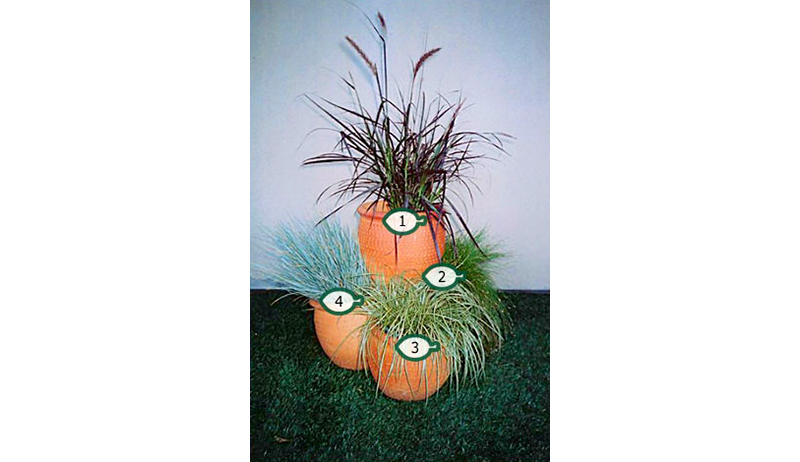
Kitty Salad Bar

edible gardens for cats kitty salad bar

  1. Eaton Canyon (Pennisetum)
  2. Fiber Optic Grass (Scirpus Cernuus)
  3. Evergold (Carex)
  4. Blue Oat Grass (Helictrichon sempervirens)

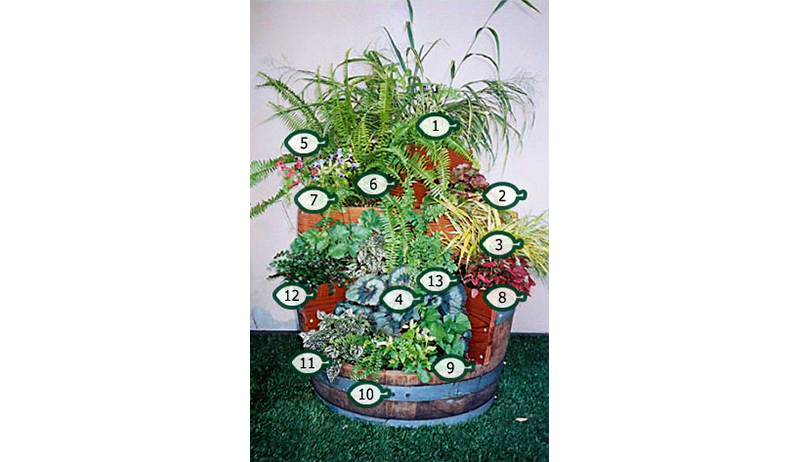
Barrel of Fun Cat Garden

edible gardens for cats barrel of fun

  1. Japanese Forest Grass (Hakonechloa ‘Albovariegata’)
  2. Coral Bells (Heuchera ‘Dolce Brule’)
  3. Japanese Forest Grass (Hakonecloa ‘Aureola’)
  4. Begonia Rex ‘Escargot’
  5. Coral Bells (Heuchera ‘Red Flower’)
  6. Sword Ferm (Nephrolepis)
  7. Torenia fournieri
  8. Hypoestes ‘Red Splash’
  9. Sweet Violet (Viola odorata)
  10. Button ferm (Pellaea viridis)
  11. Hypoestes ‘White Splash’
  12. Button Fern (Pellaea rotundifolia)
  13. Maidenhair Fern
Categories
Beginning Farmers

Feeding Horses and Organic Foods

Storey’s Guide to Feeding Horses
Developing a sound nutrition program for your horses is a task best accomplished with knowledge. A good veterinarian and your own expertise go a long way toward maintaining healthy stock through proper diet. Storey’s Guide to Feeding Horses by Melyni Worth is a good source for horse owners interested in increasing that knowledge—it’s also a very good reference book for seasoned owners who have extensive experience.

All the basics are covered in Feeding Horses: equine digestion, nutrients, pasture management, what to feed and why, developing a balanced feeding program, feed storage tips, et cetera. But Worth goes on to discuss the identification and treatment of nutritional disorders, as well as feed requirements based on age, weight and performance level. She also addresses feeding over a horse’s lifetime, with guidance on maintaining optimum health in foals, broodmares, performance horses and seniors. Seasonal feeding routines are also highlighted.

The author is a Ph.D. and consultant on equine nutrition and exercise physiology with 28 years of training and riding experience, so her advice has merit. Perhaps the only complaint an experienced horse person might have about Storey’s Guide to Feeding Horses is its lack of research references. However, most would probably agree that the book is a valuable tool to stock in the feed barn.
—TM

The Gardener’s A-Z Guide to Growing Organic Food
Written by an expert gardener and professional mediator specializing in environmental policy, taught by her own trials and errors over the course of many years, The Gardener’s A-Z Guide to Growing Organic Food is comprehensive, yet simple. Author Tanya L.K. Denckla describes the fundamental details of growing and maintaining 765 organic vegetables, fruits, nuts and herbs in six user-friendly chapters.

Each chapter conveys vital information such as growing and maintenance, soil and water needs, pest and disease concerns, soil and air temperatures, potential allies and companions, harvesting timetables and storage specifics for each plant. What sets this apart from other gardening books? Its extensive list of organic remedies to such problems as acid soil, fungal diseases and walnut wilt: Keep bugs away with soap and lime spray; fight fungus with garlic; add calcium to plants with wood ashes.

Beautifully laid out with charts and illustrations, The Gardener’s A-Z Guide to Growing Organic Food is inspiring and educational. I am already using it to plan my fall plantings! For those ready to jump in, this book serves as a primary gardening text and should grace the bookshelves of aspiring and practicing home gardeners everywhere.
—KKA

Categories
Animals

Products and Tips for Farm Dog Owners

Owners of farm dogs encounter special issues when it comes to farm dog care.

Hobby Farm Home “Animal Talk” columnist Audrey Pavia offers news, advice and product ideas for animals around the farm.

Here are a few excerpts from a recent column–especially for farm dog owners.

Porcupines quills can be dangerous to dogs
Unfortunately for dogs that like to explore nature, porcupines can be found throughout the United States and flourish in many rural areas. Normally quiet, harmless creatures, porcupines can be dangerous when trapped by an overly inquisitive canine.

Should your dog make contact with one of these nocturnal rodents, he’s likely to end up with a face full of quills. Although porcupines can’t throw their quills as the old wives’ tale states, these tenacious prongs detach easily from the porcupines’ hide as a defense mechanism.

If your dog comes to the back door with just a few porcupine quills sticking out of his face, you can try to remove the prongs yourself. If this fails, or if your dog has a lot of quills and some are in his mouth, throat or eyes, you’ll need to get your dog to a veterinarian right away. Sometimes porcupine quills are so numerous or so deeply embedded that they can be removed only under anesthesia.

To remove just a few quills from your dog, use a pair of pliers and grasp each quill as close to the skin as you can. Pull firmly to detach it. Give your dog a break after every few quills since he won’t find this procedure particularly pleasant.

If your dog fights you or seems to be in a lot pain when you try to remove quills at home, take him to a veterinarian.

Keeping the food area clean
We all have one: the dog who likes to take a big drink and then sprint all over the house, leaving massive puddles in her wake. Or what about the dog who chows down so quickly that half the food is left on the floor? Now there’s a 360-degree splash and spill barrier that can prevent these messy mishaps. Slipped onto an ordinary food or water bowl, the Bowlgaiter creates a watertight seal with the bowl’s edge, preventing spills and splashes. It’s made from 100 percent silicone and can be used indoors or out; it’s dishwasher safe and stretches to fit a variety of bowls; (800) 507-3173; www.caninefunction.com

Ease the Itch
Hot spots can make even the most docile dog cranky, so it’s in everyone’s best interest to take care of the problem as quickly as possible. You can ease the itch and inflammation associated with these sores with SunFeather’s Hot Spot’s Pet Balm. Made with essential oils known for fighting fungal, bacterial and parasitical infections, the Pet Balm also includes shea butter and tea tree oil “to make your Spot’s spots not so hot”; (315) 265-3648; www.sunfeather.com

Don’t Let Your Dog Get Too Cold
Even if your dog loves the colder weather, when the mercury dips to below 20 degrees F, he should be outside for no longer than it takes to relieve himself. Any longer and your pup could risk frostbite—a condition that turns his skin red, white, gray or black and that can potentially cause loss of tissue in the affected area. If you suspect your dog has frostbite, call your vet for instructions on what to do.

To protect your furry friend, be sure to keep him leashed when he goes outside; snow can cause a dog to lose his scent and get lost. Also consider shoveling the way to his favorite spot so he doesn’t have to hoof it through the snow. If he lives outside, make sure his doghouse is off of the ground and well insulated with straw, shavings or old blankets. If it’s below 20 degrees F, bring him inside.

A Coat for Goats … or Dogs!
Looking for a coat to help keep your goats comfy on those chilly fall days? If you’re not especially sewing-savvy, try Orvis’ horse blanket dog coat on for size! Easy to put on with adjustable, quick-release nylon straps, your caprines can cavort even in the worst weather. The water- and wind-resistant, ripstop nylon has a cozy, fleece lining. For sizing, measure from base of neck to base of tail, just as you would for your pooch. Note: This type of coat normally won’t fit Pygmies with large body capacities, unless you want a cape! (888) 235-9763; www.orvis.com

Categories
Animals

The Making of a Model Farm Dog

Glorified by fond memories, our old Doberman-mix, Kai, was the model farm dog.

He enjoyed napping peacefully in a patch of sunlight, never bothered livestock, and—while keen to warn us of intruders with a suitably scary bark—he worshipped all humans.

In reality, of course, Kai was somewhat less than perfect. He relished snacking on manure (ugh!) and, given the opportunity, would have embarked on an exciting but short career as a car-chaser.

Farm Dog Checklist

Help keep your country canine happy, healthy and safe by providing the following:

1. A yearly veterinary exam and needed vaccinations.

2. Protection from and treatment for parasites like tapeworm, heartworm, fleas and ticks.

3. Regular grooming and nail-clipping.

4. A healthy diet and fresh, clean water.

5. Shelter from the elements.

6. An identification tag, license and microchip.

7. Plenty of exercise.

8. Basic obedience training.

9. Supervision and protection from rural dangers.

10. Love and attention!

Kai, however, seems like a saint compared to our current canine.

An active Coonhound mix, Pippin lives for three things: to eat any substance vaguely resembling food; to sniff out and chase innocent, little furred or feathered creatures; and to bark at our horses in as obnoxious a tone as possible.

As a puppy, he was in perpetual motion and constantly in trouble. Need I say he seldom took naps in the sunshine? Fortunately, thanks to dog-proofing and much training on our part, plus several years of mellowing maturity on his, Pippin is no longer the scourge of the farmstead. Still, he’s got a long way to go if he hopes to achieve doggy sainthood.

What about your country dog? Does he terrorize your sheep, wander into the road or demolish your vegetable garden? Whether you’re already dealing with a troublesome canine or currently contemplating a tail-wagging addition to your farm family, check out these tips for helping Spot meld safely and harmoniously into rural life.

Obedience 101 for Farm Dogs
Sadly, too many dogs wind up in shelters due to behavioral problems or a failure to fit into their owner’s lifestyle; country dogs are no exception. While obedience training won’t prevent every problem, it can go a long way toward making any dog-city, suburban or rural—easier to live with.  “Farm dogs need to know the basics, such as ‘come,’ ‘sit,’ ‘stay,’ ‘lie down’ and ‘leave it,’” says Eve Marshark, Ph.D., a certified dog behavior consultant who, along with her helpful Border Collies, tends a small flock of sheep on her farm in Bedminster, Pa. “Understanding these commands will allow you to walk with your dog and keep him under control in many situations. Of course, for training and in truly hazardous situations, you must use a leash or long line for safety.”

Dana Agresta, a Rottweiler rescuer whose menagerie at Hidden Oak Farm in Chuluota, Fla. includes miniature donkeys, horses and sheep, also believes in the power of basic obedience. “Dogs need to be taught right from wrong just like a child,” she says.  “Learning the simple commands such as sit, down and stay makes them an asset as a companion and a farm dog.”

What’s so special about these commands? Imagine somebody left your gate open and you see your dog preparing to dash into the road. If he’s learned “come” or a solid “sit/stay,” it could save his life. Or say an elderly relative drops by; instead of letting your enthusiastic hound jump on her, you can spare her some bruises by commanding him to “down/stay.” “Leave it” is a helpful command to use when your best friend steals your work gloves, gobbles manure or chases chickens. You’ll find these commands come in handy in many other farm situations as well.

Of course, with time and patience you can teach your dog much more than the basics. Agresta’s seven Rottweilers know how to bring her items like the water hose, pitchfork and buckets, and they herd her sheep into the barn. Once, when her elderly horse fell and couldn’t rise, she instructed her dog, Mo, to sit/stay, ran to grab a halter and lead, slipped it on the gelding, and gave Mo the end of the lead rope. Grabbing her horse’s tail, she instructed Mo to “bring it” as she started to pull. The dog backed up, yanking hard, and with their combined efforts the horse gained enough leverage to get up.

To Roam or Not to Roam?

Roaming dogs are a pet peeve of mine, and for good reason.

As a child I was bitten by a neighbor’s Boxer while bicycling and knocked flat when a German Shepherd jumped me from behind en route to school.

During my short stint as a veterinary assistant, I saw dogs suffer and die after being crushed by cars. Once, an unleashed American Pit Bull Terrier attacked my gentle, old dog and had to be pried off his foreleg; on another occasion I found my daughter’s favorite ewe lying dead and torn in our pasture with the two culprits—a Labrador and Shepherd—still at the scene.

Think your dog will lead a happier life cavorting across the countryside?  Maybe, but probably not for long.

Roaming dogs risk deadly encounters with cars and irate farmers as well as injury by wild animals and livestock. They can bite people, cause vehicle and bicycle accidents, and kill stock, wildlife and pets.  Depending on your local animal control laws, your dog could be impounded and you could receive a hefty fine. You might even find yourself facing litigation.

Here’s how four rural dog owners weigh in on the issue:

“I don’t leave my dogs outside unattended, and we’re all fenced in. Many people today still think that a dog needs to be free to run in order to be happy.  That’s simply just not true.”—Eve Marschark, Bedminster, Pa.

“I strongly believe that all my animals—livestock and dogs—need to be kept safe and secure on my property.”—Dana Agresta, Chuluota, Fla.

“I don’t believe in allowing dogs to roam. Dogs are pack animals… even a well-trained herding dog in a pack will revert to its natural instinct to hunt and kill prey.”—Terry Workman, Bennet, Neb.

“The most trouble I’ve had in country living is the neighbor dog that ‘never does anything wrong’ and ‘wouldn’t harm a flea’ who came over and destroyed livestock and chased pregnant ewes until they aborted.”—Diana Dyer, Port Townsend, Wash. 

Whether you decide to attend an organized obedience class with your dog, hire a trainer or try teaching him on your own, consistent positive reinforcement training will produce the best results. “I’m a firm believer in positive reinforcement,” says Terry Workman, a herding dog trainer who owns four Border Collies and one Bearded Collie, as well as keeps hair sheep, Fainting goats and waterfowl on her farm, Way to Me Acres, in Bennet, Neb. “In other words, I use a lot of praise and never strike a dog in training. The only negative reinforcement I use is to change the pitch of my voice.”

Agresta also uses plenty of praise and treats when training her dogs and steering them away from undesirable behavior. If a dog chases a horse through the fence, for example, she’ll give him a command to sit or lie down. Obeying brings praise and a canine cookie; continuing to act crazy earns the offender a “time-out” on the leash or in a portable pen. “If a dog wants the privilege of being loose with the other dogs, he has to learn appropriate behavior,” Agresta says.

To find a local dog trainer knowledgeable in positive reinforcement techniques, Marschark recommends checking the Association of Pet Dog Trainers (APDT) website.

“There are also some good books that can help you select and train a new dog. Anything by Ian Dunbar, Patricia McConnell or Pat Miller can help with training,” she says.

Dog-Proofing Your Farm
With its wide-open spaces and animals to sniff out, the country may seem like an idyllic place for a dog to live, but it’s also fraught with dangers from gun-toting neighbors to pooch-stomping horses.

And dogs—especially if they’re young, untrained, unsupervised or bored—can wreak havoc on your stock, belongings and property.

“The most important thing I can recommend is to be 100 percent proactive with your dog,” says Marschark. “Know what he is doing at all times by supervising his activities indoors and out until he’s at least three years old. Use fences, a crate or kennel when you can’t devote your undivided attention to his safety. This sounds like a burden, but once you get a routine established, it isn’t too difficult.”

Well-maintained fencing, for which you have various options, will help keep your dog from wandering onto the road, harassing your neighbor’s expensive alpacas or chomping on an unwary bicyclist. “The first thing we had installed when we moved to our farm was a chain link fence and in the last year we had a kennel with four dog runs built,” says Workman. “In the time we’ve lived on our farm, we’ve seen numerous dogs and cats killed along the road. I believe good fencing is just as important in the country as in the city; we may have less traffic, but we still have traffic.”

The right fence can also protect your dog from hazardous encounters with livestock and wild animals. Diana Dyer of Whisky Hill Farm in Port Townsend, Wash., uses a combination of ElectroBraid™ electric fencing (five strands) and square-wire fencing around her property to keep her two Welsh Corgis and two mixed breed dogs in, and coyotes out. “The horses and goats are fenced in their own paddocks; the dogs patrol the farm but aren’t invited to run loose with the livestock. This keeps them from playing with the stock and hurting a goat or getting kicked by a horse,” she says.

Agresta has surrounded her entire property with no-climb horse wire and panel mesh gates. She posts signs to inform visitors that dogs and livestock live on the property and to keep the gates closed. As an extra security measure, she always keeps the dogs inside the house when she’s away.

“I’m a big fan of stock fencing and woven wire to keep dogs on the property,” Marschark says.  “I don’t like invisible fences, since dogs are vulnerable to attack from outside dogs that come onto the property and since they can still get run over by a car coming up the driveway. The invisible-fenced-in dog will take the shock when he’s chasing after a squirrel, but not want to come home through the fence for fear of the shock. Also, the equipment can be triggered by things like electric garage-door openers.”

Fences will help keep your dog from trampling or digging in your vegetable and flower gardens, too. Keep in mind, however, that since many dogs excel at digging, jumping and even climbing, it’s difficult to make a fence completely canine-proof. If you want to ensure your bored pet stays home while you’re away at work, keep your dog confined in the house or in a secure kennel.

Other safety basics include storing antifreeze, pesticides and other poisons safely out of your pet’s reach, and confining your dog when operating tractors or other potentially dangerous farm machinery. Although it may be common rural practice, don’t let your dog ride in an open pick-up bed, no matter how happy it makes him; even tied dogs have fallen to their deaths, and in the event of an accident your pet doesn’t stand a chance.

Country Canine Etiquette
Of course, it’s just as important to be a good neighbor in the country as it is in the city, and that means not letting your dog wander over to your neighbor’s property to defecate, dig or bother livestock and people (fencing will help here). Folks who live close by will also appreciate it if you keep the countryside smelling sweet by picking up pet waste on your farm and disposing of it properly. If you’re invited to another farm and want to bring your pet, ask first. “I’ve had many people come over with their dog in tow, thinking it would be great if their dog could practice herding my goats. Not so,” Dyer says. “People need to realize that maybe their dogs aren’t welcome at another’s farm.” Even kept at home, your dog can annoy neighbors with excessive barking and howling, especially if he’s bored or seldom exercised—or worse, chained to a doghouse all day. “I see barking as a lack of interaction between the person and the dog,” explains Marschark. “Remember that dogs co-evolved with people, which means they were meant to be with people, not kept in solitary isolation tied to a doghouse. Dogs are social creatures and they need someone with whom to interact, play ball, walk or do farm chores.”

That would be you and me, so let’s go have some fun with our farm dogs.

*This article first appeared in the May/June 2006 issue of Hobby Farms magazine. Subscribe to Hobby Farms today!