Categories
Homesteading

Get Your Farmhome-based Business Started

Before quitting your day job for a work-from-home career, consider your skills, research legitimate job prospects and start saving money. Photo courtesy John Howard/Photodisc/Thinkstock (HobbyFarms.com)
Courtesy John Howard/Photodisc/Thinkstock
Before quitting your day job for a work-from-home career, consider your skills, research legitimate job prospects and start saving money.

Well, you’ve moved to the country and now, not surprisingly, you want to spend more time there, but your day job is far away from the fresh air and natural sounds of the farm. The ads in the newspapers and online look tempting, all those “work at home” invitations. The question: Can you really make six figures sitting in front of the television—or computer—all day?

The answer is no, but careers are becoming increasingly open to rural dwellers. Corporate cultures have changed, so options such as telecommuting and flextime are now available. And running a small business is still one of the most popular choices for those who want or need to stay close to home. The key is to finding a career that fits your needs and to do it without a loss of money and pride.

Make the Right Choices
Most of us, when we think of farm-based businesses, generally picture colorful fruit and vegetable stands, fresh meat products or beautiful textiles made from animal fibers. Fortunately, for those who don’t have these opportunities (at least not yet), there are ways to build on your unique circumstances.

The first, and perhaps most realistic, option for home employment is to bring your career with you. If you can work out flextime or telecommuting arrangements with a current employer, you’ve already reached your goal.

The skills and education you possess, along with contacts and relationships from your former jobs, can also be great launching pads for contract work. Accountants, lawyers, writers, graphic designers, web developers and programmers might be able to solicit short-term work assignments that can be managed from a farm office. Even beyond past employers, you might have professional skills that are in demand by corporations, small businesses and nonprofits looking for someone to supply them with temporary or short-term assistance.

Before you quit your day job, consider what skills you have that are mobile and think creatively about who would be willing to hire you. The possibilities are broad: tutoring businesses are always looking for teachers, home health care agencies are frequently in need of medical personnel, and most companies require the services of administrative and technical staff.

The most important consideration if you are interested in moving from full-time work to a part-time or contract position, is to maintain strong relationships with co-workers and others in your industry. As you transition, don’t burn bridges, make sure your work quality stays top-notch, and join others for lunch or after-hours social gatherings. Also, don’t be shy about asking for recommendations. If you’ve done good work for them and another job won’t steal you away, your professional colleagues should be happy to pass your name along.

Beware of Job Scams
One of the most tempting options, when you want to work from your farm, is to answer an Internet or newspaper ad for a “work from home” job. They promise to pay thousands for never leaving your house. Unfortunately, those few words don’t tell much about the businesses behind the ads and whether they are reputable. Most websites do not provide reliable sources of income, and to avoid becoming a scam victim it’s imperative to do some investigating before communicating with them.

To educate yourself, one of the first things you can do is talk with sources in your own community. Visit business owners and managers you know and inquire whether they hire work-at-home employees. If they do, ask how they get their workers, and what their requirements might be. This is especially important in career areas like legal and medical transcription, where confidentiality is expected.  Many websites claim to provide medical transcription jobs, for example, but clinic administrators and doctors are much better sources of information if you are looking for that type of work.

Also, when you search the Internet for work-at-home options, take time to read articles that warn about specific scams. Check with the Federal Trade Commission or Better Business Bureau to locate offenders and steer clear of them.

During all phases of your research into work-from-home pitches, use the “common sense” test. Ask yourself a couple of questions: Is the business honestly looking for employees, or is it really just trying to sell a product you probably won’t use? Are they likely to take your money before you can realize a scam? Also, if a company is promising to send you materials to make products for them, think about whether you would send expensive supplies to a stranger. Real businesses protect their own costs and always have some type of employee-screening process in place.

Learn from Other Self-starters
Of course, you could follow the lead of others, like Sherry Schmidt, who used their former careers or particular passions to start a home-based business. Schmidt became intrigued with the idea after her mother brought turquoise jewelry home from a bead show.

“I’m kind of an independent person and decided I wanted to own my own business,” she says.

Right away, she started creating jewelry influenced by her years in rodeo, and began selling the western-style necklaces under the name Whoa, Cowgirl! in March 2005 from her ranch near Flasher, N.D.

Schmidt says she appreciates “the freedom of time” that working from home provides, as well as the opportunity to be near her daughter, husband and their extended families. At first, she promoted her jewelry, made of semi-precious stones such as turquoise and coral, at local craft shows and retail fairs but quickly discovered that North Dakota alone could not provide a large enough customer base to sustain her business.

“The girls in rodeo were buying and the rest weren’t,” she says.

Those observations prompted her to move more strongly into wholesale marketing, and she now sells in stores catering to “the western experience,” no matter where they are located. Her business also became more efficient. Although she now has product in more than 15 states, she benefit from technology that puts her in touch with potential buyers no matter where she is geographically.

Her primary advice for women considering a business in product sales is to spend time investigating sources of materials and their costs. “Find the best places to buy supplies and at the best price,” she says. Her biggest problem was getting reliable information about retail and wholesale pricing structures, but once she did, everything fell into place.

Schmidt also warns women against pricing their items too low and not paying themselves for the time they spend on production.

“If you have a wonderful product that’s well-made and in-style, people are going to pay,” she says. She acknowledges that she is still educating herself about the business and her markets. “I still have a lot to learn, but so far I have some great people to talk to when I have to.”

Seek Out Existing Corporations
If you are interested in a home-based business, but want the security of an established corporation, you might consider another one of the most popular choices for women: becoming a home-based sales representative. Cindy Reel runs her business as a homestyle specialist for home décor maker At Home America from the her acreage just outside Conrad, Iowa.

Reel didn’t grow up on the farm, but recognizes how a country location helps her concentrate on her work without neighborhood interruptions or unnecessary travel. “You’ve got privacy,” she explains. “I can work at my computer in my pajamas and no one will bother me.”

As a young mother in 1993, Reel signed up with At Home America to get out and see other adults, admitting, “I was all about the social and the flexibility.” In retrospect she wishes she would have realized the paycheck potential for her household much earlier. “It could have been immediate,” she says. “I wasted a lot of time not taking it seriously and I missed out.”

She strongly advises women considering home-based sales to go into it without bias. Reel built up to having 150 to 200 homestyle specialists under her in the organization and is impressed with the success of women who join the company with high expectations. “The girls who go into this as a career are really flying.”

Becoming a home-based sales representative is probably the easiest at-home business to establish, but it requires taking an honest look at your own personality and skills. Reel agrees that selling product only becomes a strong income source when combined with a pleasant demeanor, a professional orientation to administrative work, and lots of energy with a desire to succeed. It also helps to like what you represent. Also, women who have difficulty keeping track of important paperwork, or introverts uncomfortable with lots of face-to-face contact probably should choose an alternative career.

There is good news, though, for women who are not social butterflies but might be still interested in sales. According to Sue Rockman, listing products on auction sites can be quite profitable for women who know a particular product niche well. Rockman has been sells collectibles online from her home in Illinois, and she says there are three important things to do before selling turning to an Internet business. The first is to learn the value of the items you want to sell by spending lots of time consulting reference books, so you’re aware of their values before you go hunting.

“Make sure you know the product you’re selling or you can lose a lot of money,” she warns.

Rockman’s second recommendation kicks in during shopping. When searching out potential treasures, she reminds buyers to go beyond guesswork, instead looking for distinguishing marks and making sure the product or manufacturer name is clearly visible. Her final piece of advice is to browse the Internet frequently, visiting various auction sites before you list to see how much competition is out there. “Research and find out what people are buying,” she says.

Rockman has been successful in her own small enterprise, but she’s also learned from others how fruitful educating yourself can be.  One of her close friends once bought a pair of old jeans at a local store, and, knowing how rare they were, sold them on an auction site for $3,000. This same friend also bought an antique bowl for seven dollars online and sold it for $17,000!

Selling via the Internet has become big business for folks across the country and can be done from any location, but one final possibility for rural dwellers with a taste for risk (and deep pockets) is to buy an existing business and relocate it to the farm. Again, because of the Internet, many companies do all their transactions online and have customers around the world. If you have the financial ability and interest, it may be worth pursuing. The possibilities range from selling children’s books to establishing a home office-based foreign language franchise to buying an entire retail store inventory and selling it online from your extra outbuilding.

In It For the Money
One of the most challenging aspects of working from home can be the change in cash flow. Unless you are bringing home full-time contract work from a previous position, you’ll probably have to adjust your expectations.

The best thing you can do before putting in your letter of resignation is to plan ahead. Put more money into savings while you are getting a regular paycheck, and research affordable options for healthcare and other benefits you might lose.

Also, begin paring down your lifestyle. Some costs, such as gasoline, restaurant lunches and work-specific clothing, will automatically decrease when you spend more time at home. If you are accustomed to lots of little treats ($4 mochas, designer clothes, the latest gadgets) you might want to try life without them or find less expensive alternatives.

Remember, most work-at-home jobs build income slowly. It takes time to book parties, find clients, set up websites and find rare collectibles, so be prepared for a long curve up toward higher income. You will make some trade-offs when going home to the farm to work, but if you’re prepared you’ll probably find they are worth it, just for the freedom to stand outside anytime and breathe in the scent of the country.


Categories
News

Help conserve the Marsh Tacky Horse


Learn about the Marsh Tacky horse at the Coastal Discovery MuseumOwners, breeders, and enthusiasts of the Marsh Tacky Horse are invited to attend a workshop set for 11 a.m. to 2 p.m. Saturday, February 10, at the Coastal Discovery Museum, 100 William Hilton Parkway (Highway 278), Hilton Head, S.C.

Participants will learn more about the Marsh Tacky and help plan for the conservation of this critically endangered horse. Workshop topics include:

            • Defining and describing the breed
            • Organizing for long-term conservation
            • Discovering and identifying remaining horses

For registration and other information, contact the American Livestock Breeds Conservancy, PO Box 477, Pittsboro, N.C. 27312, (919) 542-5704 or email jberanger@albc-usa.org.


Categories
News

Pet Food Recall

Feeding Time Pointers
If your pet food is NOT included on the recall lists, it’s not affected by the recall and it’s OK to feed to your animals.If your pet has a sudden on-set of symptoms–loss of appetite, lethargy, vomiting–stop feeding the pet food and contact your veterinarian.

If your pet food is on the recall list, it’s not OK. STOP using it! Feed your animals another pet food not on the list.

Pet food options? Your vet may have information on pet food options and will have the best advice on what you can safely feed your animals.

NOTE: The ASPCA advises that pet owners to fully research homemade diets for pets before heading to the kitchen. Read more

Something simple to try:
Hobby Farms dog snacks

Thinking about the recent pet food recall is scary and can be overwhelming, especially as more is being reported about the potential toxins involved.

And farm owners, as well as pet owners, must stay informed; alongside your livestock that provide milk or meat are your companion animals—that favorite barn kitty and your faithful, loveable dog.

You’re encouraged to take time to review the lists of recalled cat food and recalled dog food to be sure it’s not being served on your farm.

Updates are being provided regularly on various websites, including those dedicated to owners of cats and dogs, such as:

One recent report from the ASPCA confirmed:

  • The U.S. Food and Drug Administration (FDA) identified the presence of melamine in food samples from the recalled lots.
  • Melamine, which is not highly toxic in general, is used to make durable plastic household products; cleaning products; hard, stain-resistant laminates; flame-retardant foam and in soundproofing.
  • ASPCA says that while “melamine at high doses causes a pronounced diuretic affect in dogs and rats, as well as the development of crystals in their urine, melamine itself has a very high safety margin, especially when compared with a toxin such as aminopterin.”
  • Owners of cats should be especially cautious; cats are may be more sensitive to the adverse effects of melamine.
The ASPCA recommends that pet owners:
  • Stay in close contact with your veterinarian and follow their direction if you have any suspicion that your pet is suffering from kidney failure.
  • Notify the FDA immediately if your pet shows signs directly linked to ingestion of the contaminated food.

Important Pet Food Recall Links
Report to the FDA any adverse effects or deaths of pets conclusively linked to eating the contaminated foods.

Review the FDA’s frequently asked questions and answers about the recall.

The American Veterinary Medical Association (AVMA) offers more resources.

Categories
Recipes

Butternut Squash Pie

Butternut Squash makes a delicious fall pie
Susie’s Butternut Squash Pie

More Autumn Recipes!
From Hobby Farm Home, Country Fare’s Lynda King

This simple, wholesome pie is ideal for a holiday meal, and the squash tastes much fresher than pumpkin from a can.

You can purchase the butternut squash, local sorghum, butter and eggs from your local farmers market.
~ Susie Quick (cookbook author and owner/founder of Honest Farm ‘Pure Kentucky’ Market)

Ingredients

  • 1 9-inch flaky pie crust (recipe follows)
  • 1 (2-lb.) butternut squash
  • 1/2 cup packed light brown sugar
  • 1 T. sorghum
  • 1/2 tsp. salt
  • 1/2 tsp. nutmeg, freshly grated
  • 1 tsp. ground ginger
  • 2 large eggs, beaten
  • 1/4 cup heavy cream or whole milk
  • 1 T. unsalted butter, melted
  • Sweetened whipped cream, for garnish

Preparation
Prepare pie crust as directed below, and line the pie plate. Crimp edges and refrigerate.

Preheat oven to 400 degrees. Slice the squash in half lengthwise and remove seeds. Lightly spray or brush a foil-lined baking sheet with cooking oil. Place squash cut side down on sheet.
 
Bake 35 to 40 minutes, until soft. Cool until warm enough to handle. Scoop out flesh, and refrigerate to cool completely. You should have about 3 cups cooked squash.

Preheat oven to 425 degrees. Combine the squash and remaining ingredients (except whipped cream) in a food processor until smooth and creamy. Pour into prepared pie crust.

Bake 45 minutes, until a knife inserted between the crust and the center comes out clean. (Check pie after 20 minutes; if necessary, cover edge of crust with foil to prevent over-browning.) Transfer to a rack to cool. Serve with sweetened whipped cream.

Flaky pie crust for a single, deep-dish pie

Ingredients

  • 1 1/2 cups Weisenberger Mills all-purpose flour
  • 1 T. sugar
  • 1/4 tsp. salt
  • 6 T. cold, unsalted butter, cut into small pieces
  • 2 T. cold vegetable shortening or lard
  • 1 large egg yolk, beaten
  • 2 to 3 T. ice water

Preparation
This recipe provides enough dough for a 10-inch deep-dish pie plate. Save leftover dough for another recipe (wrapped in plastic, it freezes well).

Food processor method: Place all ingredients except the yolk and water into a food processor and pulse at 1-second intervals, until the mixture resembles coarse cornmeal. Add the egg yolk, and sprinkle 2 tablespoons of water over the flour-butter mixture. Pulse until the dough begins to clump together (add a little more water, if necessary).

Hand method: Stir together the flour, sugar and salt in a large bowl. Add butter and shortening, and using your fingertips or a pastry blender, blend the fats into the flour until the mixture looks like coarse crumbs. Add the yolk, and sprinkle water over the flour-butter mixture; stir with a fork to incorporate the water (it will seem rather clumpy but should hold together).

Turn out the dough onto a large piece of plastic wrap. With your hands, gather the dough together to form a ball. Press it with your palms to form a 10-inch disk. Wrap the disk in the plastic and refrigerate at least 30 minutes.

On a lightly floured surface with a floured rolling pin, roll out the dough into a 15-inch circle. Place in a 9-inch (preferably glass) pie plate. Trim away all but 1 inch of the overhanging dough. Turn it under the rim, and flute the edges. Chill pie crust 30 minutes, until firm. Proceed with recipe as directed. Makes one 9-inch pie. Serves 6 to 8.

Recipes courtesy of Susie Quick, Honest Farm ‘Pure Kentucky’ Market, P.O. Box 3937, Midway, KY 40347; (859) 846-4155

More Recipes

What’s REALLY in the Can?
The scoop on squash from Susie Quick

The canned pumpkin we buy is actually made with the cushaw type squash (I was told this by the Libby’s folks) not the orange pumpkin we’re all accustomed to. 

Many fall squashes will do the same trick, but it’s best to puree it after cooking in a food processor or food mill to get a smooth consistency. Sometimes they’re a little fibrous. Also, you want it pretty thick so you can let it stand in a sieve lined with a coffee filter over a bowl to let some of the liquid drain out (basically, you want a Libby’s consistency or that of mashed potatoes).

Some Squashes that Work Best

  • Butternut (my overall preference)
  • Sweet baby pie pumpkins (these are the smaller orange pumpkins you see; they have a lot more flesh than a jack-o-lantern pumpkin) — these you can roast whole; just jab some nicks in it with a knife.
  • Cheese pie pumpkins, which some people call a Cinderella pumpkin

What about Jack-o-Lanterns?
Jack-o-lanterns in my opinion have a shreddy type of flesh and are watery, though I do know of people who make pies from them. It’s just a lot of work for not as much flesh.

How Do You Prepare the Vegetable?
I prefer roasting the squash or pumpkin but you can peel and cut it into pieces. You’ll need a very heavy, sharp knife and if you’re a novice you really need to be careful not to cut yourself!

~ Susie Quick

Categories
Recipes

Angel Food Cake with Raspberry Sauce

Angel Food Cake with Raspberry Sauce (HobbyFarms.com)This angel food cake made with your farm fresh eggs will knock your wings off. It’s not too sweet, but fluffy and delectable. Drizzle raspberry sauce over a slice and enjoy a piece of heaven.

Ingredients

  • 1¼ cups egg whites (8 to 10 eggs depending on the size of your eggs)
  • 1/2 tsp. cream of tartar
  • 1/4 tsp. salt
  • 1 tsp. vanilla extract
  • 1 cup sugar
  • 1 cup sifted cake or pastry flour

Raspberry Sauce:

  • 2 cups frozen raspberries
  • 1/4 cup light brown sugar
  • 2 tsp. raspberry liqueur
  • 1 pint fresh raspberries

Preparation
Put oven rack in the bottom third of the oven and preheat to 325 degrees. Set aside a 10-inch angel food cake pan. In a large, clean, dry bowl, beat the egg whites and cream of tartar until soft peaks form. Add the salt and vanilla extract. This is easiest with a stand mixer, but a hand-held mixer will work. Use the largest bowl you have. With the mixer at full speed, add the sugar in a slow, steady stream. Beat until stiff, shiny peaks form. Dust mixture with 1/4 cup of the sifted flour and gently fold in with a spatula. Repeat until all flour is used. Pour into angel food cake pan.
 
Bake for 35-37 minutes or until the top is golden brown and cracks are dry. Remove cake from oven and turn upside down on a bottle. Let the cake cool completely. Run a spatula between around the side of the cake and pan to release the cake. Invert pan and cake will slip out. Turn cake over and set aside.

To make the raspberry sauce, place frozen berries, sugar and liqueur into sauce pan. Heat until from berries burst and the sauce is a thick liquid. Drizzle over cake and garnish with fresh raspberries. Cut cake with a thin serrated knife. Enjoy!

Categories
Farm Management

Five Tips to Launch Your Farm Blog

By Lisa Kivirist

Farm blog content -- look around the farm

Tips for Generating Content
Once you start your blog, keep the content fresh by posting regularly.

Easy to say, but sometimes it’s difficult to think creatively after a hard day of farm work. 

Here are some thought-starters:

  • Pick a random time of day–like 10:00 a.m.–and write a paragraph describing where you are on the farm and what you’re doing.
  • Share a favorite recipe that has been in your family for generations.  Describe the recipe’s history and your memories of this dish.
  • Write a “top-10” list, adding a good dose of humor such as “Top 10 reasons raising chickens are easier than raising teenagers” or “ Top 10 ways to rouse yourself out of bed for barn chores when the wind chill is 20 degrees F below zero.”
  • Create a how-to photo essay by taking photos at various stages of a kitchen project such as canning tomatoes or baking bread.
  • Give a “tour” of your farm with both photos and words.
  • Write about the person who most influenced your decision to be a hobby farmer.
  • What advice would you give to someone considering starting a farm?
  • Ask a loyal customer to write a guest post on what they like about your farm.
  • What are the top three things hobby farming has taught you?
  • Interview a loyal customer in a question-and-answer format (Q&A interviews work well because you can typically do them via e-mail).
  • Share your favorite inspiring quotes.

Top

Online Resources

  • Yvonne Brunot, Vermont farmer
  • Kriss Marion, Circle M Farm
  • Farm Blogs from Around the World
  • Free blog sites:
    www.blogger.com 
    www.wordpress.com

    Top

  • It’s easy to feel overwhelmed when starting a farm blog when there’s so many other things to do around the farm.  Here are some basic tips to simplify the start-up process (don’t miss all five steps):

    1) Read Other Blogs
    Before you start writing your own blog, take the time to peruse other blogs to determine what you like—and don’t like–and start building a vision for your own venture.


    Why should you blog? Click here to find out>>


    Ian Walthew, an English writer based in rural France and author of “A Place in My Country: In Search of a Rural Dream,” keeps a growing list of farm blogs entitled “Farm Blogs from Around the World,” providing excellent blog research fodder.

    Read other postings with an objective eye.

    • From a design perspective, what colors and layouts do you find appealing?
    • Which blogs do you find easy to navigate and understand versus cluttered and confusing?
    • What writing style engages you?

    In many ways, reading a farm blog should make you feel like you’re transported to that place, warmly welcomed around the kitchen table and listening to friendly farm owners tell their story.

    2) Find a Blog Buddy
    With so many folks blogging today, it’s easy to find a friend to walk you through the first start-up steps on one of the free sites such as Blogger.

    While sites like Blogger and WordPress generally are easy to maneuver, the process seems less intimidating when a seasoned mentor is at your side.

    As this start-up process is the same regardless of blog topic, this friend doesn’t need to have any connection to farm life, just blogging experience.  

    If you don’t have a friend who is a blogger, consider tapping into a local teenager’s expertise.

    Teens today, part of the “millennial generation,” grew up so entrenched in Web technology that they can be your seasoned mentor.

    Top

    3) Set a Writing Routine
    Blogs and gardens have a lot in common: Lots of energy and enthusiasm during the start-up phase (remember your excitement in sowing those first seeds of the season?), but harder to keep motivated to keep up with the weeds, harvest and post-harvest bed preparation.

    Just like you need to keep weeding the garden on an on-going basis, blogs need regular upkeep and new postings to keep them fresh.

    But posting to your blog can be much more fun, and creatively stimulating, than squashing potato bugs in August heat (don’t miss Steps 4 and 5).

    • Think of yourself as an artist documenting life on your farm–sense and capture the beauty of your rural life and livelihood.
    • Get into the habit of posting regularly to your site with a goal of one post a day, week or month–whatever makes the most sense to you. While many seasoned bloggers post multiple times a day, that commitment simply isn’t doable for most hobby farmers.
    • Set your own realistic expectations, but stick to a regular routine to keep both you and your readers engaged.
    • Try to balance frequency of output with quality of content.
      Sure, you’ll only want to post writing efforts that you feel good about, but try not to dwell too long on meticulously and slowly crafting each word.

    The blogosphere and search engines like Google thrive on a continual stream of fresh content. Work on pumping out blogs quickly, realizing that even after you post a blog, you can change or edit it anytime.

    Some tips:

    • Keep postings short and engaging, leaving readers with a nugget of advice or thought to chew on.
    • Pay particular attention to your headline and first paragraph as these are the words search engines will notice.
    • Remember the basic essay-writing advice your high-school English teacher bestowed upon you: catchy introduction, three basic points and close, re-stressing the most important points.

    4) Harvest Ideas Everywhere
    Beware: Once you start blogging, ideas for posts will pop up everywhere.

    You’ll see the first zucchini blossom, cuddle a baby chick or try a new tomato recipe and think, “this would make a great blog post.”

    Write down those ideas immediately and remember that blog posts don’t need to be long or complex essays. A key thought alongside an engaging photo can go a long way.

    A “tip format” for blogs works well and helps readily organize your posts; two examples are “Five ways to savor tomato abundance” or “Three reasons why spring has officially sprung.”

    Look beyond your farm’s property lines for posting ideas. Outside perspectives keep our farm story fresh and engaging.

    • Did you eat at a great restaurant while traveling that featured local food? Write a post and link back to that establishment’s Web page.
    • Is there a new cookbook you recommend?  Write a book review.
    • Attend an inspiring farming conference?  Write about the three key things you learned. 

    Remember humor and transparency go a long way in creating engaging posts.

    Daily farm occurrences, especially those that give a realistic portrayal of rural life, give your readers an authentic, honest perspective of your business.

    Don’t hide the fact that the goat escaped from the pen again and it took all morning to get her chained back up. Create a post that evening narrating your experiences with honesty and candor.

    Photos add another artistic layer of authenticity to your farm blog.

    While many bloggers need to search through free photo sites for visuals to illustrate their entries, all you need is a digital camera and your farm will provide the real-life visuals.

    Make it a habit to regularly snap pictures of routine farm happenings such as planting seeds or a bountiful wheelbarrow full of fresh produce.

    Top

    5) Keep Connected
    Blogs promote interaction and online dialogue. Encourage your readers to post comments and, likewise, take the time to reply.

    Your farm blog presents you with the opportunity to connect your story to the world–literally.

    No longer isolated geographically, hobby farmers that would never have crossed paths physically can now evolve to kindred spirits online, sharing experiences, advice and inspiration.

    Continue to reach out to other rural farm blogs, commenting on their posts, offering your perspective and asking questions. If you have some favorite blogs you read, you can add them to your “blog roll,” a list of favorite links that appears on your blog.

    While you may be starting your farm blog as a solo venture, realize that collectively you’re part of a bigger picture: An online movement promoting the voice and story of hobby farmers nationwide.

    By articulating your passion for rural living online for a potentially wide audience, together we can increase awareness and support for small-farm enterprises and sustainable agriculture and continue to fuel the rural renaissance.

    Why should you blog? Click here to find out>>

    About the Author: Lisa Kivirist is the co-author of ECOpreneuring and Rural Renaissance and is a W. K. Kellogg Food and Society Policy Fellow.  She blogs weekly on food and agriculture issues for Green Options. 

    Top

    Categories
    News

    Farm Tour in Woodford County Kentucky

    Girl getting watermelon at Valley View Farm lunch
    School project sign at Northside Elementary School in Midway, Ky.
    Entry sign at Honest Farm "Pure Kentucky" Market
    Kristine McNeil, owner of Highland Moor Nursery
    Greenhouse at Highland Moor Nursery
    Historic Farm photo presentation

    I felt like a school girl again when we got on the yellow school bus for a tour of Woodford County agricultural activities the other day.

    Northside Elementary
    Students Help Conserve and Restore Stream, Park Area
    After a big Kentucky breakfast, including the requisite biscuits and sausage gravy (good thing–we needed the energy!) we climbed into our bus and headed to Midway’s Northside Elementary School.

    Our lesson from Northside teacher Shelby Ison: It’s possible to reclaim a stream disrupted by years of development and invasive species growth.

    Ison–and recently named 2006 Conservation Teacher of the Year–incorporates the stream restoration project as part of her classes, as well as an after-school club; they remove the invasives and plant native Kentucky species and more. In addition to student-power, the project get help from government grants.

    Honest Farm
    Quick make sure local products get noticed
    “Pure Kentucky”–a market run by Susie Quick, owner of Honest Farm–had us knee-deep in local produce and products from green beans to Broadbent bacon. No product she features travels more than 100 miles to get there.

    Besides raising people’s awareness about the benefits of local food, Quick’s runs a demonstration farm with activities for children, provides stalls for local farmers to sell their produce and makes farmers market space available near her shop in town.

    She regularly reaches out to restaurant owners in Midway, Louisville and elsewhere, enticing them to put local produce on the menu.

    Highland Moor Nursery
    Native plants thrive in McNeil’s greenhouses
    Awestruck is the only way to describe how we felt during the tour of Kristine McNiel’s Highland Moor Nursery.

    This young woman–and mother of a 9-month-old Emily–keeps the hydrangea, native perennials, trees and other cultivars growing in her five huge greenhouses very nearly on her own.

    Her business activities include providing hydrageas, hibiscus, calla lillies and other bright beauties for the cut-flower trade, propagating local trees, shrubs and plants for the nursery industry, as well as offering tours and educational programs.

    She describes receiving her education in part from the University of Kentucky, from her father and from her daily work in the dirt! And from the look of things–she’s headed for more success.

    Valley View Farm
    Historic farm is one of oldest in central Kentucky
    And who knew a farm could be considered an historic place! The Valley View Farm is just that; it’s ruins are one of the oldest standing structural remains in central Kentucky and is listed in the National Register of Historica Places.

    Our lunch under the large shade trees on the farm included Jackson County-Ky. fried chicken, fresh local veggies and homemade icecream, all prepared by Slow Food Bluegrass, a nonprofit, local convivium of Slow Food USA.

    The Woodford County Farm Tour is presented by the Woodford County Cooperative Extension Service.

    Categories
    Animals

    Protect Your Livestock From Predators

    If you live in wolf country, and have livestock, you may have good reason to be afraid for your animals’ safety.

    According to Dr. John Shivik, a Wildlife Biologist at the USDA’s Predation Ecology Field Station in Utah, there are some things you can do to reduce the impact of predators, keeping in mind that these animals are important components of ecosystems.

    There is an ongoing tug-of-war between predators and wild herbivores, like deer and elk, with the balance of power being determined by the availability of forage plants.

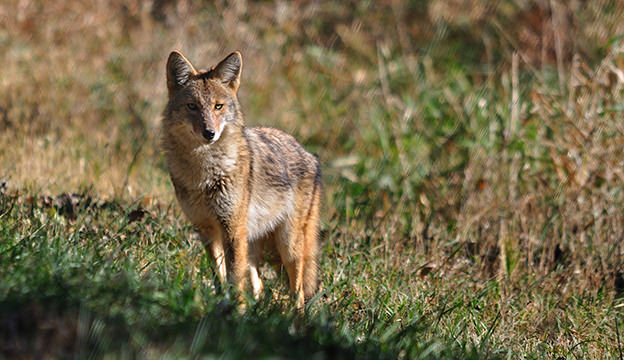
    In nature, predators feed not only on large herbivores, but also on lots of small rodents and rabbits (in fact, several studies show that rodents make up about 90 percent of the coyote’s diet). They’ll also eat insects and carrion.

    When they do kill livestock or pets, predators aren’t trying to ruin your day, cut into your profit, or break your heart; they’re simply struggling to survive.

    “Predators kill things for a living,” says Dr. Shivik. “That is their job.”

    While remote areas are prone to wild predator problems, in small farm towns and rurban areas (suburban/rural interface areas) domestic dogs do most of the damage (though coyotes are moving into the burbs, finding it an easy place to make a living—they’ve even been seen dodging traffic in the Bronx).

    Fido and Spot don’t have to be wild, vicious or even brave to chase sheep or kill chickens: They’re simply following their natural impulse. They are capable of carrying out the hunting sequence of the their forebear, the wolf—from orienting and tracking, to stalking, chasing, herding, attacking and killing—though they usually do so for sport rather than survival.

    Opportunity Knocks

    Not all predators kill livestock, and when they do, they tend to be opportunistic, seeking whatever is easiest to meet their needs. In other words, they usually go for young, old, weak or sick animals first. As they become desperately hungry though (like during a drought), they become much more aggressive and will attempt to take healthy, mature animals. Since healthy animals suffer less predation, good feed and adequate healthcare pays in more ways than one.

    There is no magic answer to all predator situations; each predation event includes unique circumstances, so unique responses are required. Overall, the best approach to protect your livestock (and pets) is to make predators think that eating at your house will be harder than feeding on field mice and cotton-tailed rabbits. You can do this by developing knowledge and understanding of predators, and by learning to apply non-lethal techniques that reduce predation.

    Scientists refer to predation in terms of a conflict between “food-acquisition behavior” of the predators, and food-production or lifestyle behavior of humans. Reducing these conflicts requires changing either our behavior or the predators. “There are a plethora of non-lethal methods out there being advertised by both scientists and charlatans. What ultimately works though is applying common sense to the problem, and understanding that most predator conflicts will require a variety of techniques, used in combination, and tailored to the actual circumstances.

    Identifying Predation And Predators

    The first step is to identify the predator, but remember, sometimes predators get a bum rap. For example, a farmer comes upon the corpse of a dead animal, andbecause there are obvious bite marks, he or she assumes a predator killed it. But animals die from a number of causes, and unless you see the predator in the act of attacking a live animal, the death may have been from natural causes, with predators simply scavenging afterward.

    When you suspect predator damage, assess the scene. Signs of a struggle, like drag marks, torn hair, wool or feathers left on brush or fences, or blood spread around a large area all point to predation. If there are no signs of a struggle, examination of the carcass may help.

    An animal that has been fed on after it died will not bleed under the skin at the bite marks. This type of bleeding, known as subcutaneous hemorrhage, is only present when the heart was beating while the bites were inflicted.

    When signs of struggle or subcutaneous hemorrhage are present, the next step is to try and confirm the kind of predator. Each species leaves its own telltale signs at a kill. For example, canid species (coyotes, dogs, wolves, foxes) tend to attack from the sides and the hindquarters, grabbing their prey under the neck, whereas cats tend to jump up on the back, biting the top of the head or back of the neck. Close examination of paw-print size and shape, tooth spacing and size, feeding habits, and pattern of killing help correctly identify the predator responsible for the kill.

    Non-Lethal Predator Control

    Although Wile E. Coyote may have looked the fool in his encounters with the Road Runner, he’s not a good example of the species, or predators in general. Since it is the “job” of predators to kill, they are intelligent, curious, and most of all, adaptable. Consequently, changing their behavior—though it may be possible—is harder than changing your own.

    Becky Weed is a livestock producer in Montana who has learned how to successfully adjust her behavior, and she has built a very successful marketing strategy around it. As a founding member of “predator-friendly” wool, a co-op that brands and markets an environmentally friendly product, she has seen her business grow steadily.

    Becky and her husband, David, didn’t grow up on farms, but in the 1980s they started raising sheep in Montana and have been farming full time since 1993. Early on they lost 20 percent of their flock to coyotes. They called an Animal Damage Control agent, who shot and trapped a few coyotes, but as Becky says, “We knew we couldn’t kill all the coyotes that came through, and we didn’t want to, even if we could.” They began looking at alternatives and started using guardian animals (first burros, and now llamas). The llamas, in conjunction with other techniques, like moving pastures seasonally to reduce predation, have definitely helped, though Becky acknowledges that there are no guarantees. “We did have some problems with a mountain lion on the pasture we were running one flock on near the base of the mountain. We moved the flock to another pasture closer to home, and that ended the problem.”

    Guardian Animals For Sheep And Goats

    For thousands of years, farmers in Europe and Asia used guardian dogs to protect their sheep and goats. However, during the early 1900s farmers switched from using guardian animals to protect their flocks and herds, to using guns, poison and traps. Now, farmers like Becky and David are showing that the old approach is still practical.

    Killings usually occur at night or in very early morning, when you’re normally asleep. A guardian animal is on duty 24 hours a day, and alert and protective during the hours of greatest danger. Few guardian animals actually kill predators, but their presence and behavior reduces or prevents attacks. They may chase a trespassing dog or coyote, but should not chase them far. Chasing for a prolonged distance (or time) would be considered faulty behavior, as the guardian should stay near the herd, flock or homeplace—between your animals and danger.

    Dogs are probably the most common guardian animals, but donkeys, ponies, mules, and llamas are used for protecting sheep and goats. (Some people even use geese to guard sheep; though they may not be effective against wild predators, they may do the trick with domestic dogs.)

    Guardian dogs are raised very differently than pets; as puppies they are bonded to the animals they are going to protect, not to human family members, though they must be handled enough that you can safely feed them, take them to the vet, isolate them when you will be working with the stock, et cetera. Although certain breeds are characteristically used, not all individuals within those breeds are suitable.

    Where coyotes and domestic dogs are the problem, one or two guardian dogs are sufficient to protect a farm flock, but if wolves or other large predators are of major concern, dogs may or may not work. Although some producers report success with three to five dogs warding off large predators, Dr. Shivik says, “in the Western United States, guardian dogs are often killed by large predators, particularly wolves.”

    Wolves are territorial, with each pack staking out an area, and defending it against other packs. Dr. Shivik speculates that the wolves may consider the guardian dogs as another wolf pack, so they attack as part of a territorial response. Yet he adds, “In Europe they have had success with guard dogs protecting stock from wolves. We need to research what the difference is between the European and U.S. approaches to figure out if there is something we are doing wrong.”

    Donkeys and llamas, which live longer than dogs, and don’t require special feed, really dislike coyotes and dogs, but tend to be scared of, or even vulnerable to, larger predators. In the United States, these likable critters can be picked up for anywhere between $50 and $500; a bargain compared to good guardian dogs, which usually start at $500. Like dogs, these guardians are best purchased early and raised with the flock or herd they will protect. A single female or gelded animal is less likely to harass the animals it is meant to protect than multiple animals or intact males, and it will stay with the flock for companionship. If you use a herding dog for working your animals, the guardian may interfere with its ability to work.

    Whichever type of guardian you’re considering, remember the following: 1) The guardian needs to bond with the animals it’s protecting, and bonding can take time; 2) Guardians should be introduced slowly, across a fence. It’s usually easiest to make the introduction in a small area rather than in a large pasture; and 3) Each animal is an individual, and will react differently in different situations. Some individuals don’t make good guardians!

    Physical Barriers Agains Predators

    Fencing and enclosures are designed to place a physical barrier between the predator and its prey. “Exclusionary devices can be as simple as an easily-strung electric-energized temporary corral, or as complex and expensive as a dingo-proof fence stretching from one side of Australia to the other,” says Dr. Shivik.

    Fences designed to keep predators out are more expensive than those just designed to keep stock in, so they are rarely cost-effective for large areas. Night penning is a cost-effective fencing approach that works well, especially for small and medium-sized operations; it involves bringing animals back into a small, predator-fenced area in the evening. Adding lights to night pens increases the effectiveness of the pens.

    Since young animals are most vulnerable, having babies near the farmstead house reduces predation, particularly if mother animals can be moved into a shed or barn near parturition. Buildings are also crucial for keeping small animals, like poultry and rabbits, which are vulnerable to a wide variety of predators, ranging from raccoons and opossums to large predators.

    Husbandry Approaches

    Predators tend to kill livestock more frequently at certain times of year or in certain places. Coyotes kill more in April, May and June, when they are trying to feed their pups, than they do at other times of the year; adjusting breeding schedules to have babies hitting the ground slightly before, or after, the coyote pups are creating a demand, seems to reduce losses.

    Certain pastures and range areas may be particularly vulnerable to predation due to physical features, like wooded-riparian corridors that provide access and coverage for predators. Becky’s lion story is a prime example: Adjacent to the mountain, it had good tree cover for the cat to stalk from. But big cats tend to track over a fairly large range, so by moving the flock for a while the lion will hopefully move on.

    Multi-species grazing can reduce some problems, and actually uses feed more effectively. For example, sheep and goats are far more vulnerable to predation than cattle, so by mixing them together to form a “flerd” you will get protection and be able to carry more animals per acre while reducing losses.

    Changing Predator Behavior

    Another approach to averting predators is by using repellants that rely on either “disruptive,” or “aversive,” stimuli. When using disruptive stimuli, you are simply trying to scare the animals away. The problem is that the critters usually become used to—or desensitized to—the stimuli, and begin ignoring it, and the simpler the stimuli, the quicker this occurs. For example, placing a light in a field, or playing a radio loud at night, may deter predators for a day or two, but that’s about it. Intermittent and cycling devices (say a light or a radio on a timer that turns on and off frequently) may extend the time it takes, but these too fail to keep predators at bay for long. Many companies are selling chemical and odor repellants, but research indicates that these also have a limited life, and they are usually only effective in a small area. In spite of their limitations, these techniques may be used for short, critical periods and in changing combinations, to afford some protection. The more randomly they can be applied, the better they’ll work.

    Aversive stimuli ideally eliminates unwanted behavior, but it is often logistically difficult to do. An example is the electronic training collars that dog owners use. These give a small shock when the dog crosses a buried perimeter fence, or starts barking. The dog learns not to cross a certain point, or bark, and after a while it doesn’t need the collar for reminder. Training devices, in theory, could work for predators too, but Wile E. isn’t necessarily cooperative when it comes to having a collar put on. Another approach to aversive stimuli that scientists have studied is Conditioned Taste Aversion (CTA). CTA uses a less-than-lethal poison that is fed to a predator after it has consumed a type of food; the poison causes illness and the illness causes an intense aversion to the flavor of the food. It was first studied in the 1970s, and seemed promising, but again, it’s hard to implement in the field.

    Predator Laws

    All wild predators are protected or controlled by federal and state laws and regulations. If you have, or suspect you have, a problem with wild predators, call the Animal Damage Control office of the USDA, or your state’s “Wildlife” office, to learn about specific remedies and laws in your area.

    Local law enforcement or your local animal control agency should be able to tell you the county’s dog laws, or better yet, give you a copy of the county or state laws. You may find that they are strict and well spelled out, but lack enforcement. Most states allow a livestock owner to recoup payment from a dog’s owner for both damage and deaths to livestock. If a dog is chasing and/or killing livestock, promptly contact your local sheriff or animal-control officer. They can assist you in determining the owner of the dog (or dogs), impound them, and press charges on your behalf against the owner.

    There is hope for the future, with the public coming to understand that if we want to have predators in the wild, we need to help producers. That help is coming in the form of higher prices for niche marketed products, compensation from government agencies and environmental groups for actual losses, and more research into non-lethal control methods.

    This article first appeared in the March/April 2004 issue of Hobby Farms magazine.

    Categories
    Animals

    Sheep Breeds by Wool Type

    Different breeds of sheep have different types of wool


    Sheep breeds come from a variety of climates–evaluating each breed by their wool type can help in choosing the one that’s right for your weather, as well as the purpose for which you plan to raise them.

    Here are descriptions of different wool types:

    • Fine Wool
      Breeds that produce large amounts of soft wool used for fine, next-to-the-skin garments.Found mostly in arid and semi-arid regions of Australia, South Africa, South America and the western United States. Most sheep of this type have Merino (Spanish) ancestry. Popular for baby-soft clothing and spinning.
    • Long Wool
      Breeds that produce long, wavy or ringed fleece, used primarily for tweeds and rugs.Found mostly in high, cool, rainy areas such as England, Scotland and New Zealand. These sheep are popular with weavers.
    • Medium Wool
      Breeds that produce medium-soft wool used as outer garments and blankets.Most are considered dual-purpose breeds as they produce both meat and wool. They’re popular with handspinners.
    • Hair Sheep
      Breeds that do not produce wool, but are covered in hair that sheds naturally. Raised primarily for meat.Found mostly in Africa and the Carribbean, as well as in temperate climates in the United States and Canada. These breeds are popular with ethnic markets that rely on sheep for meat.
    • Fat Tailed
      Breeds that store large amounts of fat in the tail and rump area.Found mainly in extreme arid regions such as Africa, Asia and the Middle East, they are raised primarily for milk production and meat. These breeds are popular with rugmakers and with cheesemakers.
    • Rat-tailed or Short-tailed
      Breeds with a thin or short tail that does not need to be docked.Breeds of this type are typically Scandinavian in origin and are known to be prolific (having multiple lambs per pregnancy). Double wooled, these breeds have a thick undercoat covered with an outer layer called “tog.” Tog is a fine, crimped wool similar to mohair. These breeds are popular with handspinners.

    Must-have Lambing Kit
    Interested in breeding sheep on your farm? In addition to reading, researching and asking lots of questions about how to breed and what to expect, here’s a list of some supplies you’ll want to have on hand.

    • Protective, latex sleeves or gloves
    • Obstetric lubricant
    • Nylon rope, snare or lamb puller
    • Gentle iodine or other disinfectant for dipping navels
    • Ewe bearing retainer (spoon) or prolapse harness
    • Heat lamp or warming box
    • Broad spectrum antibiotic
    • Digital thermometer
    • 60-cc syringe and catheter (for tube feeding)
    • Frozen colostrum
    • Lamb milk replacer
    • Nipples
    • Propylene glycol
    • Calcium solution
    • 50 percent dextrose
    • An assortment of syringes and needles
    • Obstetric S-curve needle
    • Ear tags
    • Docking and castrating equipment/supplies
    • Scale and sling
    • Towels and rags
    • Record book

    This article contains excerpts from Popular Farming Series: Sheep, a publication with in-depth information for those who own or would like to own sheep. Buy one online today!