Dr. Dianne Hellwig, DVM, PhD, demonstrates how to tube feed a goat kid.
Categories
Tube Feeding A Goat Kid

Dr. Dianne Hellwig, DVM, PhD, demonstrates how to tube feed a goat kid.
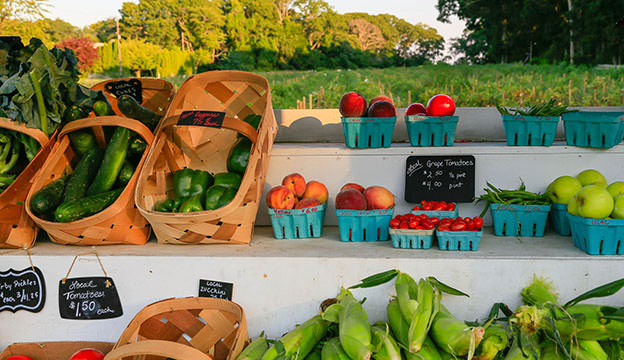
As basic as peddling pumpkins from a pickup truck or as elaborate as hawking produce, crafts and country paraphernalia of all shapes, sorts and sizes from fancy year-round markets, roadside stands are a producer’s best bet for bypassing the middleman and making immediate, cash sales. But getting involved in roadside marketing isn’t as simple as most folks think.
Oh, there’s lots to be said for direct farm marketing. Better prices for your goods, control over pricing and prompt, direct payment head the list. Stands create jobs for family and friends and small-scale ventures suit retired gardeners and craftspersons to a “t.” Producer meets consumer head-on; feedback is instantaneous when solicited. And it costs little to break into roadside retailing when marketers are content to start small and gradually expand.
However, depending on city, state and circumstances, roadside vendors must comply with zoning and licensing restrictions, fire and police ordinances, health and sanitation codes, and weights and measures specifications. Liability insurance is a must-have. And long hours, sometimes spent under a snapping canopy in chilly, high winds or in the open under a blazing sun, draw producers away from other farm chores.
Is there a roadside market in your future? Think hard before you make up your mind.
In 1994, Ohio State University published “Ohio Consumer Opinions of Roadside Markets and Farmer’s Markets” based on a random telephone survey of 500 Ohio households.
Fifty-five percent of those surveyed shopped at a roadside market during the targeted 12 months (August 1992 through August 1993) and of that group, 64 percent shopped at a roadside market at least four times.
However, only 34 percent drove more than 15 minutes to reach those markets; rural and small town dwellers were loathe to drive even that far. While 45 percent of non-shoppers concluded farm markets are too far away; 55 percent said they would patronize a farm market if one was conveniently located near their homes (not their workplaces). The bottom line: you must set up shop close to customers if your business is to thrive.
Studies concur that successful roadside stands are located on well-traveled highways within 10 to 15 miles of an urban center or tourist attraction. They’re situated on the right-hand side of a straight, level stretch of highway. Easy access is a must.
Stands adjacent to garden plots or orchards are considered more “farm-like,” thus better, because customers expect that country touch. Ninety percent of consumers interviewed as part of the Ohio survey believe they receive higher-quality produce directly from a farm, and 88 percent prefer to buy fruit and vegetables from the producer. Locating your stand on or adjacent to a farm can be good for business.
Setting up within easy driving distance of another stand is usually a boon for both. Buyers travel farther when they can shop at several markets in the same locale. It’s wise to scope out the other guy’s offerings before deciding what you’ll grow. If he markets exclusively sweet corn, producing complimentary items such as tomatoes, lettuce and peppers could be an expedient move.
Unless you have previous experience direct-marketing farm-grown edibles, it’s wise to ease into roadside selling. Peddling sweet corn from the back of an SUV or melons from a pickup parked in the shade mark simple, successful beginnings, as do veggies displayed on picnic tables under a colorful canopy or sold from bare bones, homemade stands. Renovated barns, sheds, one-room schoolhouses or grange halls make fine roadside markets for larger-scale entrepreneurs.
More than pumpkins and lettuce change hands via roadside stands. Antiques, crafts, flowers and bedding plants, small pets such as bunnies, fresh eggs, Christmas trees and wreaths, maple syrup, smoked fish, honey, hay and hand-me-downs all make their way to roadside stands.
Whatever you choose, strive to present a rural image. Your stand’s outward appearance and decor should shout “country!” And make it stand out. Park a single impressive (not junky) antique farm implement outside, paint your building an unusual hue, swathe it in colorful murals, or affix a huge inflatable apple, pumpkin, or watermelon to its roof. Traveling at 50 mph, motorists have three scant seconds to size up a roadside attraction, so do what you can to make your market visible.
If you build or renovate an indoor structure, allow for consumer comfort. Customers crammed into cramped, close quarters often flee without buying. Five foot or wider aisles are an absolute must. You’ll need a readily identifiable, accessible checkout station and a cold storage area if your produce requires one.
How you display your goods will depend on what you’re selling and where, but country containers such as half barrels or castoff milk pails for gourds and apples or an old wagon stacked high with melons adds to the country effect.
An important and frequently overlooked element: simple, eye-catching signs. A University of Tennessee survey of roadside market shoppers indicates 74 percent learn of a stand’s location by simply following signs (another 24 percent via word of mouth; only 2 percent responded to media ads).
Primary signs should be placed one-half mile from the stand in both directions and erected following applicable municipal or state regulations. Be creative but spare with your design. Basic, large letters (nothing frilly, nothing complex) approximately one-fifth as wide as they are high work best; black on light backgrounds is easily seen. Fruit or veggie cut-outs capture the motorist’s eye. Your business name and logo along with appropriate mileage are enough. Or simply: “Sweet Corn, 1¼2 miles ahead.”
Post your entrance and exit with large, legible signs. Tuck attractive signs amongst your produce. People buy more plumcots and pawpaws if they know what they are; many folks are too embarrassed to ask.
Don’t settle for a single driveway; for safety’s sake, separate entrances and exits are essential. Plenty of safe, level, convenient parking is also a must. Park customers beside or behind your building, where their vehicles won’t block motorists’ views of the stand and its outdoor displays. Don’t forget to provide special parking (including signage) for handicapped consumers.
In today’s litigious society, substantial liability insurance is a dire necessity. But still, play safe. Dry, debris-free floors should be the norm. Keep produce up off the floors, too. Childproof all displays; toppling watermelons and shattered cider jugs spell “lawsuit.” If your entrance is a step-up, post a warning. And keep your stand meticulously vermin-free. Sending a hitchhiker (or its droppings) home with customers leads to dissension, especially if someone gets sick.
What to sell? That depends. Some producers sell a single major product, others tend to go whole hog. The selling season for a single crop may span just a few short weeks; some sellers encompass the growing season and beyond by incorporating multiple products. Whatever you choose, be fairly certain you can produce enough of a product to make marketing it worthwhile.
According to the Ohio study, 70 percent of roadside shoppers purchased sweet corn. Other favorites were tomatoes (66 percent), melons (30 percent), apples (18 percent), beans (16 percent) and peaches (13 percent).
A Vermont study divides purchases into categories: vegetables, fruits and miscellaneous. Sweet corn still heads the vegetables list (85.9 percent), followed by tomatoes (61.4 percent), peppers (46.3 percent) and cucumbers (44.3 percent). Apples top the fruit class at 90 percent, trailed by peaches (82.3 percent), cantaloupe (66.5 percent) and strawberries (58.2 percent). Cider (72.1 percent), pumpkins (49 percent), honey (48 percent) and gourds (25.6 percent) lead the miscellaneous group. All major studies agree: sweet corn, tomatoes and melons are likely to sell.
While they cite flavor as their prime requisite, customers expect to buy picture-perfect produce, too. Whatever you offer must be sparkling clean and blemish free or plainly marked as “seconds” and sold for considerably less. Produce that isn’t pleasing to the eye but is an unexpected treat to the taste buds—some varieties of antique apples and pears—is best marketed by providing free samples. Displays must be constantly policed and bruised or spoiled items removed and discarded. Chipped ice displays and refrigeration best preserve produce quality, but simply keeping items out of the hot sun helps a lot.
Truck farming and roadside selling requires a world of time and commitment. Are you game? Do you enjoy meeting the public—even after spending early morning hours in the garden before you do? Can you patiently answer what feels like endless, silly questions and field complaints? If you can’t, can you find and hire reliable employees who will?
Roadside stands are frequently crewed by family members. Are yours willing and able to report? The United States Department of Labor regulates how long kids under 16 can work; while the rules are less stringent for your own kids, extended family such as underage nieces, nephews and cousins must hold valid work permits.
The sort of employees who man your stand have a dramatic impact on sales. Customers appreciate friendly, courteous cashiers who are attentive without being overwhelming and who politely field questions about your farm and the produce you sell. Clerks with cell phones attached to their ears, bored teenagers, and anyone conducting business with snarl or snit, chase away business—big time.
While someone selling pumpkins under a shade tree needn’t be as design-conscious as a year-round indoor marketer, presentation always counts. The pumpkin seller could erect a scarecrow and corn-shock display, and showcase his finer fruit at the scarecrow’s feet. Or he might don the scarecrow outfit himself, or dress as a “farm boy” with a picturesque straw hat, overalls and bare feet. “Country” sells!
To please the public and spur more sales, savvy stand marketers employ basic display techniques like these:
While customers demand quality goods, they also expect prices to be somewhat less at a roadside stand. When setting your prices, consider quality (including higher charges for organically grown produce), competitors’ prices (scoped out at other nearby stands and area supermarkets), supply and demand, location, customer income and your own production costs and operating expenses.
Clearly price every item. Consumers are often reluctant to ask. Provide appropriate signage or mark individual items. Shoppers abhor surprises at the checkout counter.
Market researchers claim pricing in fives (45¢, 75¢, $1.25) is considered more farm-like than standard pricing, thus especially appropriate for roadside stands.
If you sell by weight, you must use state inspected, sealed scales and conform to weights and measures regulations. To avoid the hassle, consider unit selling (a dozen ears of corn, a half bushel of apples, one turnip) instead. It’s considered more farm-like too.
Invest in a cash register, or use quality calculators, and make certain your cashiers know how to count change; it’s surprising how many of us don’t. Keep only enough cash in the till to make change. Keep the drawer or cash box closed between transactions and remove it completely when you lock up at night.
And finally, before setting up shop—even if it’s vending watermelons out of your pickup or strawberries from a card table—make certain you’re legal and your insurance covers any activity you’re likely to engage in.
City and county planning commissions can advise regarding zoning and licensing requirements. To prevent unnecessary unpleasantness, mobile marketers should check with local police before they set up to sell.
You’ll need a state retail license to collect sales tax. To find out how to apply for one, visit the Google search engine and type the following in the Search box, using quotation marks as shown (but substitute your state in place of Arkansas): “sales tax” license Arkansas
You must also keep accurate records and pay state and federal income taxes. Ask a bookkeeper or tax accountant to advise you.
In 1980, there were 15,000 roadside stands in the United States. By 1995, that figure almost doubled and it continues to grow. Will yours boost the number in 2005?
This article first appeared in the July/August 2004 issue of Hobby Farms magazine.
 |
April is National Gardening Month, according to the National Gardening Association, and we’re in the mood:
What’s on your to-try list this growing season?
Now’s the time …
…. to learn about some of the new gardening techniques, also suggested by the National Gardening Association, like:
Gardening Month Events
Get inspired: Check out the National Gardening Association calender of events to see what’s happening in your area or visit the Hobby Farms Events Calendar for more activities.
Get Your Gardening On!
Here are some of our favorite gardening articles:
By Stephanie Staton
 © USDA/John Hammond How to Help To participate in the New York survey or to schedule an inspection, homeowners in the Orleans and Niagara areas should contact the USDA field office in Lockport at 433-6482, extension 200 or by e-mail at NY.Plumpox.Survey@aphis.usda.gov USDA-APHIS-PPQ Pennsylvania Department of Agriculture Read More About Orchards To learn more about diseases that affect stone fruits, nuts, and other fruits and berries, check out the Popular Farming Series: Orcharding. |
If you have fruit trees on your property and live in northern New York state, the U.S. Department of Agriculture’s (USDA) Animal and Plant Health Inspection Service (APHIS) needs your help to test trees for the plum pox virus (PPV) in two New York counties: Niagara and Orleans.
The Path of PPV
The virus was first detected in New York in July 2006. Almost one month later, the USDA’s Plant Germplasm and Biotechnology Laboratory also confirmed its presence in southwestern Michigan.
According to USDA’s APHIS, the first detection in the United States was in Pennsylvania in October 1999. One year later, it turned up in Ontario and Nova Scotia, Canada. This last outbreak led researchers to study areas close to the locations of the virus. The 2006 detections resulted from this seven-year survey for the virus, which was handled by state and federal agriculture officials. There were 22 leaf samples collected from a 108-tree orchard in Niagara County, N.Y., which is less than five miles from the PPV-positive site in Canada.
What Is PPV?
PPV is a virus disease of stone fruits (i.e., peaches, plums, nectarines, apricots, almonds and some ornamental Prunus cultivars) that can be carried in live stock, grafts and budwood of infected plants.
The virus is transmitted by aphids that feed on an infected plant before moving on to a healthy one—the virus is carried in their mouths, surviving for about one hour and reaching as far as 120 meters from its origin. The species of aphid, the strain of virus and the affected host species all impact the rate and penetration of the disease.
So far, the disease has only been found in commercial stone-fruit orchards, but researchers at Penn State University are surveying wild Prunus plants and weeds for signs of PPV. The virus strain found in the United States and Canada is the D strain from Europe, which isn’t the most infectious PPV strain and doesn’t appear to infect cherry species.
| Fruit | Plant Part | Symptoms |
| Apricot | Leaves | Ring spots, blotches, netting |
| Fruit | Ring spots on immature fruit, deformity of mature fruit, ring spots on pit | |
| Peach | Leaves | Yellow ring spots, yellow netting, veinal chlorosis, blotches, necrotic or dead areas, speckling pattern |
| Fruit | Yellow or light-red rings, line patterns | |
| Plum | Leaves | Blotches, speckled pattern, ring spots, necrotic areas |
| Fruit | Deformity, ring spots, necrotic spotting, speckled pattern |
How Does PPV Affect Trees
The virus often can be detected at the base of a branch, but not at the tip. Not every tree, leaf or fruit shows symptoms, even though the entire tree is infected.
While it poses no human health risks, PPV does reduce total quantities, lower fruit quality and debilitate the tree. The D strain is not seed borne, so it isn’t necessary to regulate fruit movement to prevent the spread of the disease; the only way to eradicate the disease is to remove and destroy all infected trees. To positively identify the presence of PPV, researchers must use serological laboratory tests.
About the Author: Stephanie Staton is managing editor for the Popular Farming Series and associate editor for Hobby Farms and Hobby Farm Home. |
 photo by Mark Farnham |
Heirloom tomatoes, heirloom melons and heirloom beets: When it comes to saving heirloom seeds, these are some of the fruits and vegetables that first come to mind.
But don’t forget about healthful collard greens!
Plant geneticist, Mark Farnham hasn’t. Farnham, who works with the USDA’s Agricultural Research Service (ARS), teamed up with a group of collectors to look for unique collard varieties in the Carolina coastal plains.
According to ARS, commercial cultivation of the collard expanded dramatically in the 20th century, and is now dominated by a few hybrid varieties.
The team collected 87 distinctive collard seed samples from these small gardens—collard greens heirloom seed varieties that might otherwise have disappeared in the near future.
The collard seeds are now kept in the U.S. Plant Introduction Collection of vegetable Brassicas in Geneva, N.Y., where scientists maintain facilities for the preservation of plant germplasm.
Read more about their research.
More About Heirlooms
If you love heirlooms, read:
Heirloom Quality
Growing and Selling Heirloom Tomatoes
and check out Cooking with Heirlooms
Some organic industry observers believe that the USDA has become too well-acquainted with giant agri-businesses, such as Dean Foods. Many large companies have acquired smaller companies and organic labels in an effort to get a hand in the booming organic industry.
The Cornucopia Institute, an organic industry watchdog, has posted on its website the latest Who Owns Organics graphic. The graphic illustrates all the major organic name-brands and which corporations own and control them.
Phil Howard of Michigan State University, created the chart. Howard also prepared separate charts, one highlighting the major independent companies still operating in our industry and another connecting the dots as to who owns the private-labels in the marketplace.
View the new charts and read more at www.cornucopia.org. Read an article about organic standards.
— HF editors
The San Diego Farm Bureau recently reported the discovery of a possible lead in recent bee losses and colony disappearances.
It reports the Israeli acute paralysis virus, a microbe discovered in Israel three years ago might have acted in with other factors, such as parasitic mites, weather extremes or pesticide poisoning, to kill nearly a quarter of the nation’s commercial colonies over the winter.
Scientists and researchers plan to determine if the virus does in fact cause disease–and then see if they can discover ways to bring back the bees.
Bee Fans and Beekeepers: Take Note! 1) Go to: HF home page, bottom right corner. |
|
By now–the height of summer–we’ve all put in plenty of time in our gardens.
Cherie Langlois, a Hobby Farms and Hobby Farm Home contributing editor starts us off with three of her gardening tips … plus a “Don’t.”
We want to know all about your successes and toils, as well!
Log on today!
 American Humane Rescue Organizations |
The number of homeless pets of Cedar Rapids, Iowa, continues to swell as more animals arrive at emergency shelters.
The emergency Cedar Rapids animal shelter set up at Kirkwood Community College has taken in 1,000 displaced animals. An estimated 85 percent of the animals have owners, according to Kirkwood Animal Health staff.
In addition to the pet dogs and cats, the shelter’s animal tally includes birds, rodents, lizards and ferrets. The Kirkwood rescue effort mobilized after the Cedar Rapids Animal Control headquarters was flooded.
Animal rescue organizations have issued emergency relief grants to assist shelters in the Midwest with the pet overflow. In response to the severe flooding, International Fund for Animal Welfare, American Humane Association and Animal Rescue League of Boston teamed up to help local animal control.
Staging at the Adams County Fairgrounds in Quincy, Ill., the three groups set up a temporary shelter, which also grows each day. The residents include fawns, horses, chickens, dogs and kittens.
As the floodwaters recede, the continued efforts of rescue groups are expected to add to the number of animals that are transported to emergency housing. Shelter volunteers expect more people will start to reclaim their pets as cleanup efforts progress.
 This ZAP truck is described as quiet, yet agile.
Could this bed carry a load around the farm or to town?
The engine is housed behind the cab. The batteries–gray colored–are lined up at right. |
Front and center in the entrance to the Bluegrass GreenExpo hall was this shiny, red pick-up truck–small in size, but big in energy savings.
You’ve probably seen smart cars, but have you seen the ZAP Xebra Truck.
Could this be your next farm pickup?
Here’s what the ZAP World website has to say about its Xebra Truck:
Read more about this truck at the ZAP World website.
ZAP has been developing electric and advanced technology vehicles since 1994. Its delivered more than 100,000 electric vehicles in more than 75 countries.
Expos All Over
Chances are, there’s a “green expo” near you.
These events are a great way to find out what your city or state is doing to get people involved in greening their lives.
Call your chamber of commerce or see what you find on the Internet.
Here are a few we found:
Watch for one in your area …
If gardening is more your style, read another report from the GreenExpo on a fun garden planning activity–for you and the kids.