Categories
Farm Management

10 Charities and Tips to Consider


charitable giving tips -- hiefer international photo
Photo courtesy of Heifer International/Darcy Kiefel

Caitlyn Johnson, 10, of Morgan County, Ky., in the Appalachian Mountains, with her East Valley Youth Goat Project goat.

Before You Give
Click on these links to find tips for smart donors:

If you’ve decided to make charities part of your holiday gift giving, take a look at a few you may wish to consider (Smart donor tips? Click here>>).

These 10 animal, environmental and similar charities have received the “OK” from Charity Navigator, the Better Business Bureau or both (in no particular order):

  1. The Humane Farming Association
  2. American Bird Conservancy
  3. World Wildlife Fund
  4. Earth Share
  5. Feeding America (formerly Second Harvest)
  6. Sanma — Farm India
    (This link takes you to the page to help support water buffalos )
  7. Earthworks
  8. American Veterinary Medical Foundation
  9. Farm Sanctuary
  10. Heifer International

You may also want to consider giving a gift membership to one of our favorite organizations that supports the conservation of rare breeds of livestock:

American Livestock Breeds Conservancy

Before You Donate
Consider the following tips before deciding to support a charity.

Top 10 Best Practices of Savvy Donors from Charity Navigator:

  • Be proactive in your giving. Have targeted outcome goals rather than blanket goals for your giving.
  • Hang up the phone. Eliminate the middleman: Send your contribution directly to the charity rather than contributing over the phone.
  • Be careful of sound-alike names. Take the time to uncover the difference.
  • Confirm 501(c)(3) status. Check it at https://apps.irs.gov/app/pub78.
  • Check the charity’s commitment to donor’s rights. Seek out charities that want partners and not merely donors by checking if the charity has a donor privacy policy whereby the organization promises to never sell or trade the donor’s contact information.
  • Obtain copies of financial records. Most efficient charities spend at least 75% of their budget on their programs and services and less than 25% on fundraising and administrative fees.
  • Review executive compensation. Sufficient and competitive compensation is important.
  • Ask about program results. Talk to charity represenatives about accomplishments, goals and challenges.
  • Concentrate your giving: Spreading your money among multiple organizations not only results in your mail box filling up with more appeals, it also diminishes the possibility of any of those groups bringing about substantive change as each charity is wasting a large percentage of your gift on fundraising and overhead expenses.
  • Share your intentions and make a long-term commitment. See yourself as a partner in the charity’s efforts to bring about change.

Read more about these tips>>

Top

Charitable Giving Guide for the Holiday Season from the Better Business Bureau:

  • When in doubt, check out unfamiliar charities.
  • Take a minute or two to “think” before you give–ask for written information on the charity’s programs and finances.
  • Giving later might be better. Never feel pressured to give on the spot. Legitimate charities will welcome your money tomorrow.
  • Watch out for cases of mistaken identity; some charity names sound alike.
  • Don’t accept vague claims.
  • If a charity sends you greeting cards, address labels or other merchandise with an appeal for donations, you are not obligated to make a donation or pay for the items.
  • Watch out for charity fraud. Legitimate charities do not demand donations.
  • Consider donating food, toys, clothing, other items–and even your time–during the holidays.
  • If you want to take a charitable deduction for federal income tax purposes, make sure to verify the organization’s tax-exempt status first. Check out a charity’s tax-exempt status.

Read more about these tips>>

Top

Categories
News

Keep Your Livestock Safe in Winter

If you experience sub-zero temperatures where you live, it is essential that you take extra care to keep your livestock safe and healthy.


Follow these steps to make sure your livestock stays healthy during the freeze
© Daniel Johnson

Resources


Your winter livestock husbandry routine should include:

  • Providing animals with more food than usual (include extra roughage to get them through the cold nights).
  • Ensuring an adequate and dependable water source. (Guard against frozen pipes!).  Use plastic food and water bowls rather than metal to protect the animal’s tongue.
  • Keep pets and smaller animals indoors when the temperature drops below freezing.
  • Keep de-icing products and other winter chemicals away from animals; clean contaminated paws as needed.
  • Consider a wind- or water- proof blanket for horses who live outdoors full-time; smaller livestock, such as goats, may also benefit from a blanket or coat.
  • Provide a windbreak for animals that stay in a field or pasture.

What’s a windbreak?

windbreak can be a large portion of brush, a heavy board or piece of canvas secured over a fence, or a manmade shelter – something they can get behind to guard themselves from bitter cold blasts of air.

Be sure to talk to a veterinarian, local university extension agent or experienced livestock owner for advice specific to your area and weather conditions.

You may also find additional information by contacting an expert at one of the Livestock Associations listed in our Resources section.

Top

More articles about Livestock and Pets>>

Categories
News

FFA Reports Membership Growth

membership continues to grow in FFA

Coming in October: Hobby Farms e-newsletter article on farm internships. Sign up today (scroll down our home page) to receive your copy!

Agriculture, food, fuel and fiber industries offer “more than 300 diverse and plentiful career opportunities.”

This is one main reason, according to the FFA (formerly the Future Farmers of America), that its membership continues to grow.

The number of FFA members in 2008 is 507,763, which is the highest it’s been since the 1970s, when membership reached 509,000.

This increase is in spite of a drop in the number of people living in rural areas.

Where do FFA members live? Its statistics show: 27% living in rural farm areas, 40% live in rural nonfarm areas and 33% live in urban and suburban areas.

In addition to agricultural career opportunities, the FFA says the increase also has to do with the agricultural issues having a greater impact worldwide. More agricultural professionals, including students of agriculture, are expected to play a role. FFA reports that the agriculture accounts for 17 percent of the American workforce.

The FFA is open to students ages 12 to 21 and enrolled in agricultural education programs in public high schools. About 5 percent of members are high school graduates or members in the Collegiate FFA.

Organized in 1928, FFA received its federal charter under tha National Vocational Education Acts. It receives no federal funding.

FFA website

Categories
News

Get Your Farm Idea Noticed!

Farmer Idea Exchange, sponsored by the American Farm Bureau Federation

Show off your farm innovation skills!
 
Enter the Farmer Idea Exchange Contest and your idea could become one of 15 innovative farm ideas to be showcased as part of the 2008 American Farm Bureau Federation Convention.

All entries must be submitted by September 7, according to the entry rules and information.

Visit the Farm Bureau website find links to:

  • Rules and Information
  • Form of Originality Authorization and Release
  • Entry Form, printable or online
  • State Coordinators Contact Information

The Farm Bureau holds the contest to help discover new and helpful inventions, equipment modifications, innovative crops, marketing techniques, management systems and farming practices developed by farmers and ranchers. It gets Farm Bureau farmer and rancher members together to share their innovative ideas and help other farmers and ranchers find new ways to help their farming ventures from cutting costs to improving efficiency.

The American Farm Bureau Federation sponsors the Farmer Idea Exchange Contest.

Up to 15 ideas from around the country will be selected to display their winning idea as part of the 2008 AFBF Convention in New Orleans, Louisiana, January 13-14, 2008. This is an informal presentation of the innovations and practices that farmers have developed and used. The winners selected will receive up to $1,500 toward expenses incurred to participate in the AFBF showcase.

Categories
News

NAIS Comment Period Ends April 15

You still have time to submit comments on the government’s NAIS draft business plan.

The deadline to submit comments is April 15, 2008.

Here’s link to the draft business plan and the NAIS website.

According to the USDA:
The business plan supports the National Animal Identification System’s (NAIS) longterm goal of 48-hour traceback. It also provides benchmarks to guide the program as it moves toward optimum traceability. The draft plan provides a comprehensive look at the country’s current traceability status, including a breakdown by species. It details seven strategies that will provide the greatest amount of traceability progress in a short amount of time. These strategies involve state and federally regulated and voluntary animal health programs, industry-administered animal management and marketing programs, as well as various animal identification techniques. The draft plan allows these varied components to work in harmony. It provides for standardization of data elements in existing disease programs to ensure compatibility, greatly enhancing disease tracing and emergency response capabilities.

Top

Where to send your comments:

Email your comments on the plan or other aspects of the system to:
animalidcomments@aphis.usda.gov

Write to the NAIS program staff at:

NAIS
USDA, APHIS, VS
4700 River Road, Unit 200,
Riverdale, MD 20737

Related Links on NAIS

Related Articles
FOIA Request
Announcement of Voluntary Aspect
Draft Plan Announcement and more…

Categories
Crops & Gardening

Perennial Growing Tips

By Karri Sandino

Choose your perennials with careYes! The brilliant, blooming perennials and annuals at the local nursery might catch your eye this spring as you begin your gardening.
 
But don’t overlook the ones sporting pretty green foilage–and, more importantly, later blooming times. You’ll be craving their colors come summer and fall.

That’s one tip gardening expert Jamie Dockery offers a group of gardeners–from beginners to experienced–during a class at the Arboretum in Lexington, Ky. 

“Perennials bloom at different times during the season,” he says. “Consider the textures of the plants you choose for when the blooms are gone.”

Things to Keep in Mind, Perennially
To enjoy your perennials more fully, keep these additional tips in mind. Dockery advises:

  • Your plants will only be as good as your soil. Prepare it well and don’t shy away from beneficial mulch and soil amendments …
  • … unless your flowers need to breathe! Some perennials, like German Iris, need good air circulation especially around the roots.
  • Just because you like the look of a plant doesn’t mean you can grow it anywhere. “It’s easier (and more satisfying) to grow plants that already like your soil,” says Dockery. (And your zone.)
  • Don’t over-prune. Pruning can often wait till fall or winter. Birds can eat seeds and the plant can reseed itself. Exception: Remove dead or diseased parts of the plant. 
  • But … pruning can encourage some plants (like Silver Mount Artemisia and Yarrow) to bloom twice in one season … if done properly and at the correct time.
  • Befriend native plants. Native perennials can survive just about any type of weather; they’re more deeply rooted and have adapted to Mother Nature’s whims.
  • Think mums are only for fall? That’s when they tend to bloom, but if you plant them in spring–much earlier than is popular–the hardy mums will come back next season.  
Categories
Farm Management

Using Travel Corridors on the Farm

By John J. Morgan
Certified Wildlife Biologist

Roads make getting from one place to another easier and safer.

Another Wildlife Habitat Idea:

They date back to the mid-1800s as people colonized the West, blazing new trails fraught with hazards from impassable obstacles to dangerous encounters with Native Americans.

The same holds true for wildlife moving from one place to another. Roads or travel corridors connect blocks of wildlife habitat, providing safe thoroughfares for wildlife.

Just as humans use many different types of roads, travel corridors can also support different volumes of wildlife “traffic.”

Let’s begin with large-scale travel corridors and work toward smaller corridors.

Larger Travel Corridors
Interstate roads are expansive slabs of pavement with multiple lanes facilitating high-speed transit. These roads are very safe; drivers are many times more likely to be in an accident on smaller roads.

Likewise, large wildlife corridors function similarly to interstates—though, they may or may not traverse your farm.

Travel Corridors on the FarmWildlife “interstate” corridors connect populations of wildlife to other populations. They are typically expansive, cover long distances and connect large blocks (thousands of acres) of wildlife habitat. Much like the highway, their large size affords safe dispersal of individuals from one population to the other.

These pathways are critical for supporting the flow of genetic material between two or more populations.
 
The only way to identify a corridor of this type is by looking at large-scale, aerial images. If you determine that a portion of your farm serves this function, you should preserve it at much as possible.

Smaller Travel Corridors
Taking an exit off the interstate puts us on a smaller county road. In wildlife transit, it parallels travel ways within your farm and among your immediate neighbors. Many species of wildlife shift core areas seasonally, following food resources or habitat-supporting reproduction.

Critically evaluate your farm and the neighboring properties for cover that affords wildlife easy movement across property lines. Do animals need to cross expansive pasture to get from one block to another? What cover is left after a harvest of crops?

Imagine you were an animal trying to navigate across your farm or onto your farm from another piece of land. The more “county roads” or smaller travel corridors available, the more wildlife your farm will likely support.

Understanding Possible Hazards
Just as we need roads to meet our daily activities, wildlife need to travel between locations to eat, sleep and loaf.

Your property evaluation requires a sound understanding of wildlife; it’s imperative to know where the animals spend their time during daily activities.

You’ll need to minimize hazards along the routes they take. Hazard reduction could be as simple as:

  • Cutting down a tree that hawks use to hunt or
  • Promoting protective cover for screening.

Seeing Results?
A skilled manager can make significant gains in local wildlife by mastering the art of implementing these types of corridors.

Making roads for wildlife on your farm can increase their populations–but don’t always expect to see them. By building good corridors, you’re providing a mechanism for animals to move undetected.
 
Also, keep in mind that a corridor-connecting habitat is species specific. A rabbit would be impeded by a large block of forested land, whereas as a squirrel would be impeded by a large block of grassland.

Take into consideration the habitat requirements of the species you would like to promote. Put on your boots, walk around the farm and become a road engineer for wildlife.

About the Author
John Morgan is a Certified Wildlife Biologist who earned a B.S. in Wildlife and Fisheries Science from Penn State University and a M.S. in Wildlife Management and Ecology from the University of Georgia.

Categories
Crops & Gardening

Crop Profile: Asparagus

Asparagus, known as the food of kings, is one of the first crops to emerge from the spring garden. Photo courtesy iStockphoto/Thinkstock (HobbyFarms.com)
Courtesy iStockphoto/Thinkstock
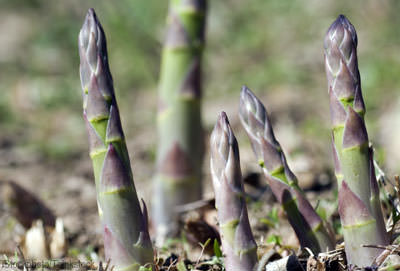
Asparagus, known as the “food of kings,” is one of the first crops to emerge from the spring garden. 

Asparagus is indeed a delicacy, much loved by consumers. Known as “the food of kings,” asparagus was grown by Romans and shipped to nobility in distant lands. Louis XIV of France had asparagus grown in greenhouses. In Russia and Poland, thick green stalks of asparagus grow wild, and horses and cattle graze on them. Asparagus is a wonderful gift from nature, and an excellent addition to the diversified farm.

Growing Asparagus
Asparagus shoots are the first vegetable to pop out of the ground in spring, and for a month or two, the fields need to be harvested frequently to pick the newly emerging shoots as soon as they appear. The annual cultivation cycle includes a busy spring harvest, then a summer and fall foliage-growing period during which the plant shoots grow tall and bushy and store energy in the buried crowns. In the winter, some farmers clear the dead growth, while others let the brush provide winter-cold protection.

Growers must wait a year or two after planting for the asparagus to mature before they begin full-scale harvesting. Once established, an asparagus bed is often described as a “lifetime planting,” lasting 12 to 20-plus years. Asparagus farming requires a lot of room, and growers will need to plant large areas in order to produce a sizable crop. As with all crops, there are female and male plants. Female asparagus plants expend more of energy producing seed, so they produce 20- to 30-percent fewer spears than males, though their spears are larger.

Asparagus generally doesn’t do well in regions with long hot summers and mild winters. For centuries, farmers in all of Europe and the Mediterranean region have grown asparagus, while Michigan, New Jersey and the West Coast states have been the traditional American asparagus-growing regions. Now, new varieties and irrigation techniques are stretching the geographical borders—even Hawaiian farmers grow asparagus for the local market.

A well-tended planting yields a lot of asparagus, approximately 25 pounds per one 100-foot row. If you take your asparagus-growing larger scale, 1 acre can produce between 2 and 8 tons of salable asparagus per year. A best-case scenario includes two harvests per day yielding 1,000 pounds.

Planting New Beds
Asparagus are deep-rooted plants, so selecting a site with good drainage is crucial. A low to medium pH is preferable, and good sun exposure in early spring is a must. Asparagus also doesn’t tolerate salt well, which is something coastal and sodic-land farmers should keep in mind.

New asparagus plants start growing early in the season, so ideally, the beds for new plantings should be prepared the previous fall. Plant seedlings 1 foot apart, and space rows 2 to 4 feet apart. Many gardeners believe thicker spears are obtained by spacing the plantings further apart and that the colder your climate, the deeper you should plant.

The underground bodies of the asparagus plants are called crowns. The crown size increases as the asparagus ages, so the bed will eventually become completely filled with crowns and the width of the bed will start to enlarge.

New growers usually plant 1- or 2-year-old crowns into their fields. Obtaining new plants by planting seed is another popular method, but asparagus is not usually direct seeded, rather grown in nursery beds and moved into the fields the following year. Plants grown from seed are thought to be less likely to have disease problems. Rootstocks for new plantings can be expensive, and installing any sort of field irrigation is not cheap. Growers should expect to spend several thousand dollars per acre to establish new fields

Asparagus Problems

Disease
The most notable problems with asparagus plants are rust and fusarium fungal diseases. There’s no thoroughly effective treatment for infected beds, so it’s no surprise that prevention is the best tool against these problems. Buying disease-free stock and planting in sunny, well-drained areas helps most farmers avoid fungus problems. The old-fashioned technique of salting beds was started to help control fusarium. Rust is best controlled by burning the fields in winter to reduce the overwintering capacity of the disease. Studies also indicate that introducing domesticated fungal mycorrhizae into field soils might help reduce crop plants’ susceptibility to fusarium by out-competing the disease-causing fungus varieties.

Pests
The black-and-white and green-spotted asparagus beetles are asparagus’ most common insect enemies, and most asparagus growers will see some level of these insects during the year. The beetles feed on young shoots in the spring, causing damaged and unsaleable spears, and in the summer, they feed on the foliage, which reduces the vigor of the plants and decreases next season’s crop yields. After the shoots have been harvested, it might not seem like much of a problem to have a few beetles chewing on the abundant leaves, but maintaining fern health is critical to the following years’ production. Like its cousins—daffodils and lilies—asparagus needs to have a long leafy period in the annual cycle to recharge itself and remain healthy.

The best organic way to control beetles is to remove or burn the dried fronds once they turn brown. This will at least eliminate the sites where the beetles overwinter. Historically, chickens, ducks and geese have been allowed to wander in asparagus fields during summer to eat insects and sprouting weeds.

Weeds
Weed control, especially of perennial weeds, is a major concern for asparagus farmers—new plantings should not be installed until the fields are completely weeded. Canada thistle and quackgrass are particularly dangerous perennial weeds that could require extensive cultivation, treatment and asparagus replanting to remove the problem. Annual weeds are abundant in most all asparagus beds, and they are mostly controlled through cultivation that kills the weeds after they sprout.

Mulching Asparagus Beds
Mulching asparagus plantings is a time-consuming and expensive task, but it can be the backbone of an organic cultivation system. Mulching beds during the summer growth period helps to conserve moisture, minimize weed growth and encourage healthy microorganism activity in the soil. Covering the beds with mulches during the winter months helps nourish the spring crop and promote earlier shoot emergence. The preferred material for mulching is a mixed base of assorted organic debris, such as leaf collections and residual crop wastes. Apply the organic mulches generously, up to 1 foot thick. Some growers use black plastic mulch with perforations that allow summer foliage to poke through.

Harvesting Asparagus
The dates for spring harvest vary from one location to another. From the mountains, to the coast, to the hot interiors, the advent of warmer temperatures fluctuates and so does the asparagus harvest. The harvest period for American farms usually lasts 60 to 90 days, somewhere between January and May.

Farmers need to pick all the spears that emerge during the harvest season, otherwise the developing leaf stalks retard the growth of other new shoots. Spring plants often grow so quickly that a spear that sprouts up one day becomes too tall the next. When an asparagus grower speaks of tilling the crop under, he’s not destroying the field but rather knocking the emerged sprouts off. The crowns under the ground are untouched and produce a new batch of shoots within a few days.

One experienced picker can usually harvest almost 1 acre per hour. While tractor-pulled seats for harvesters increase worker comfort, they don’t speed the work significantly. Small farmers can enlist the help of friends and family to make the harvesting process more enjoyable.

Asparagus spears, like fresh-cut flowers, are very perishable and their ends should be plunged in cold water immediately after harvest. Even after harvest, the shoots are still growing, so if you’re packaging in boxes, allow space at the top for the spears to elongate. One post-harvest problem is that asparagus stacked sideways can grow away from the pull of gravity and produce bent spears that are less desirable for market.

Harvested asparagus can be kept for moderately lengthy periods—weeks, even months—at very cool, nearly freezing, temperatures.

Marketing Asparagus
Planting new asparagus fields is expensive, and it can take experienced growers several years just to break even. Still, many mixed-crop farmers report that asparagus is their most profitable crop, so enterprising small growers can certainly find plenty of opportunity in the industry.

While in the U.S., we’re accustomed to green asparagus, white asparagus has been the preferred product of modern Europe and could attract attention to your stand at the farmers’ market. White asparagus is cultivated by heaping extra soil over the beds and then harvesting the shoots in early morning before the exposure to sunlight triggers the production of green chlorophyll. Systems that use black fabric covers have made obtaining white asparagus easier, as well. Purple asparagus varieties, from exotic French violets to the sturdy dark Italian types, are also an exciting farmers’ market find.

Wild asparagus varieties, often called sparrowgrass, get top dollar among gourmet chefs, according to the few farmers who have acquired seed and planted domestic fields of the wild types. Wild asparagus varieties produce stalks that are smaller in diameter and more twisted but have a robust flavor that has been popular on rural tables for centuries.

Small-scale farmers have long found profitability by using their asparagus crops to create a value-added product, such as asparagus soups, sauces and stews. Native Americans had a history of drying asparagus for later use, and in China, asparagus is commonly candied. An enterprising farmer could try employing these preservation methods, too.

For pricing, the old cooperative extension rule for new, small and fresh asparagus growers is to measure the local population within a 25-mile radius, and then figure that the market will support about an acre of asparagus for 10,000 people in the area. Find out who else is growing asparagus near you, and make your market calculations accordingly.

Use your garden-grown asparagus in these recipes:

About the Author: Rick Gush is an American small farmer living in Italy.

This article was excerpted from the February/March 2003 issue of Hobby Farms.