Categories
Crops & Gardening

Keep Your Garden Protected

By Rhoda Peacher

About the Author

Rhoda Peacher is a freelance writer and photographer based in Oregon.

Your city-dwelling friends look with envy at you and your farm. “You have so much space,” they say. “There are so many birds here. And you get to see wild animals right outside your door!”

Deer beside protected garden

© Rhoda Peacher

“Yes,” you think to yourself, “I have deer and rabbits eating just about every desirable plant in my garden, and gophers working from underneath to undermine anything left behind.”

You don’t have to pay the “critter tax” in order to live on your farm and have a garden too. A few preventative measures on your part will keep furry marauders from reaping the benefits of your hard work.

Ideally you should be able to enjoy having nature on your doorstep without having a little voice in the back of your mind wondering:

  • How many tomato plants have deer eaten today?
  • Which row of carrots are gophers going to attack next?
  • How many rabbits can one garden support?

Build Fences and Raise Beds
If you understand how the freeloaders work, you can plan strategies to keep them from feasting on the fruits of your labor. For example, deer are browsers and will sample almost anything growing in your garden. They will do more than sample the items they find most tasty and can devastate your flower bed or vegetable patch in just a few days. The most effective way to keep deer out of your garden is to put a tall wire mesh fence around it. Deer are excellent jumpers, so the fence should be at least 8 feet high and it should be secured to the ground at the bottom so deer can’t push underneath.

Fencing, Fertilizer and Nest Boxes

More information about wireless deer fencing:
https://www.wirelessdeerfence.com

More information about fermented salmon fertilizer:
https://www.coastofmaine.com/fertilizers-salmon.shtml

More information about barn owls and building or buying nest boxes:
https://www.owlpages.com/links.php

Rabbits like to nibble on most of the items you find either tasty or most ornamental. To discourage rabbits, you can put a low fence around your garden. Use wire mesh fencing no larger than one inch because rabbits can squeeze through small openings. The fence should be at least 18 inches high. If you live in jack rabbit country, the fence should be 24 inches high. Bury the bottom of the fence at least four inches underground and bend the buried fence outward to discourage rabbits from digging underneath the fence. If you already have deer fencing installed, attach fine mesh fencing to the lower part of your fence to keep out rabbits.

Gophers dig tunnels underground and only rarely travel on the surface. They eat your root vegetables from the bottom. Air spaces created by gopher tunnels can be detrimental to plants’ root systems.

Building raised beds for your vegetable garden is a good way to protect your plants from both gophers and rabbits. The sides of the beds should be at least 18 inches high to discourage rabbits from jumping into them. Before filling the beds with dirt, securely attach fine-meshed hardware cloth across the bottom. Gophers and other burrowing animals will be blocked from undermining your vegetables.

You can keep deer from eating plants in raised beds by sinking a post at each corner of the raised bed and attaching a length of four-foot-high fencing to each post. Run the fence the length of the bed to the next post.

Attract Owls to Help Patrol Pests

To best attract owls, make sure your owl nesting boxes are weatherproof and well ventilated. Great Horned owls are the main predator of barn owls, so the opening of a nest box should be no larger than five and a half inches. The nesting area should be no smaller than 12” x 12” with a depth of 16”. 

A roomier nesting area may encourage the female to lay more eggs. If you extend the box with a second room that has perches for adult owls, you will make your nest boxes more attractive to owls. To keep droppings from building up inside the box, don’t put a bottom on the perching part of the box.

Barn owls start scouting for nesting areas as early as December and may begin raising their first set of chicks by February. You should clean the boxes in the late fall after the second set of fledglings have left the nest. A hinged opening on the side will provide easy access for cleaning. When cleaning the nest box wear rubber gloves and a dust mask, and seal the nesting materials in a plastic bag. You may find uneaten mice in the nest box, and owl pellets contain undigested bits of prey. Rodents (especially deer mice) are carriers of hantavirus, which is harmful to humans. Spray the interior of the box with a 2 percent solution of household bleach and put a new layer of wood shavings or chips in the nest area of the box.

It is important to inspect your boxes once a year to make sure that honey bees or wasps have not moved in.

Leave one side loose so you can have easy access to the veggies. You can use wire bent into hooks to keep the fence closed. Your vegetables will be safe from all manner of furry raiders.

Rabbits often chew on the soft bark of trees, causing serious damage. Cylinders made of hardware cloth placed around the trunk of the tree will prevent rabbit damage. (If you live in beaver country, this method will keep them from cutting down your trees.) Make the cylinder large enough to go around the trunk with two inches of clearance. Depending on the size of the tree, you should use two to four stakes the same height as the cylinder and drive them firmly in the ground. This will prevent animals from leaning the hardware cloth against the tree and eating through it. Be sure that the cylinder is at least eighteen to twenty inches higher than your normal maximum snow height. 

A Prickly Plant Can Stand Guard
Physical barriers are the most foolproof method for protecting your garden, but they’re not always a viable option. Fences can be unsightly, especially in the more visible areas of your garden such as your perennial beds. So, you may consider other, more discrete options to protect plants from marauders. One of the most low maintenance ways to keep deer and rabbits from eating your perennial garden is to choose plants they don’t like.

Daisies, papaver (poppies), narcissus, rudbeckia, achillea, agastache, aster, lupine, coreopsis, verbascum, centaurea and echinacea are available in many varieties and are not particularly palatable to deer or rabbits.

Plants with tough or prickly foliage such as echinops, eryngium, cardoon, euphorbia, berkheya, and sedum tend to be avoided by furry nibblers. Rabbits and deer don’t seem to be partial to herbs, so your  mint, oregano, rosemary, sage, bay laurel, tarragon, thyme, fennel and lavender will likely survive. However, deer have been known to eat basil to the ground. Digitalis and belladonna both have attractive flowers and are unlikely to get munched, but make sure you can safely keep these plants away from pets and children. Deer will eat almost anything if they are hungry enough, so in a lean year or in winter, you should expect some damage even to so-called “deer resistant” plants.

Build a Hawk Perch

For daytime rodent control, encourage hawks to hunt on your property. 

Erecting several 20’ to 25’ tall perches around the area will encourage hawks to linger and hunt.

If you don’t want to limit your gardening to plants that rabbits find least desirable, you can make the areas outside your garden a less friendly place for rabbits to live. Rabbits are uncomfortable crossing large expanses of open area.

Brush and tall grasses or anything that gives rabbits a place to hide and rest should be removed from areas around your garden. You can try to lure rabbits away from your garden by planting grasses and clovers (that rabbits prefer to eat) in an area far away from your garden. Rabbits like weeds in the plantain family, so allow some weeds to grow and rabbits may eat weeds instead of your garden. However, be careful that you don’t end up attracting even more rabbits to your property than you already have.

Traps, Safe Sprays and Owls
Live traps are another way to control your rabbit population. Bait the traps with leaves of plants that rabbits have been nibbling. Be sure to check the traps two or three times a day. You can release the rabbits several miles from your property so they will be unlikely to return. Check with your local extension office for any regulations regarding suitable release sites.

Spraying your plants with repellants will discourage animals from eating them. Commercial sprays such as Deer Out and Deer Scram are available at nurseries and on-line. They can be applied to the foliage of plants that you don’t expect to eat. These sprays need to be reapplied every week or so to be most effective, and always after rain.

Because of its strong unpleasant smell, you can use fermented salmon fertilizer as deer and rabbit repellant. Spray a dilute solution on your plants, and the odor will discourage deer and rabbits from eating the foliage. Natural oils in the fertilizer will help keep it from washing off quickly in rain, so it doesn’t need to be applied as often as some other sprays. Salmon fertilizer is a natural product and can be applied to vegetables as well as to your ornamental plants. It will also discourage aphids and help prevent fungal diseases such as powdery mildew and black spot. If you apply it in the evening, the smell will have time to dissipate overnight. In the morning you should be able to enjoy your garden, but the deer and rabbits won’t. However, you may not want to use it too close to harvest time! Consider carefully whether you should try the salmon option if you live in bear country.

Another alternative to traditional deer fencing is the new wireless “fence.” It consists of individual posts that have a deer attractant on them. Deer investigate the scent and receive a mild electric shock that trains them to stay away from the area. It takes some time for deer to find the posts and learn to avoid your garden, so you may still get some plant damage when you first install the posts. You can experiment with placement for optimal results.

Encouraging barn owls to live on your property is a natural way to control gophers. Owls are night hunters, so they’re out when gophers are most likely to venture above ground. One adult barn owl can eat a gopher a day. Baby barn owls can eat three or four gophers a day, and barn owls often raise two sets of chicks each year. If you provide nest boxes for barn owls, you’ll encourage them to stay nearby. Place a nest box on a pole in a shaded area at least twelve feet high, or build one inside your barn with an opening to the outside. Barn owls are not territorial, so you can put up as many nest boxes as your rodent population will support. Place several boxes one hundred yards apart from each other so the hunting territories of the nesting pairs will overlap. Owls don’t like to hunt directly around their nesting area, so place the boxes one half mile or more away from the area where you would like for them to hunt. Owl droppings are corrosive to metal, so don’t place the boxes where droppings can fall on vehicles or farm machinery. Install the boxes away from human activity. Owls will tolerate a small amount of disruption, but you don’t want to risk driving them away. Using nature to control rodent pests will cut down on the use of farm chemicals and possibly save you money in the long run.

If you have dogs, they can be great help to you in keeping deer, rabbits, and gophers at bay. Large dogs can discourage deer from coming onto your property altogether, and smaller dogs can be great for gopher control. However, you should be careful about leaving your small dogs unattended if coyotes are in your area. Dachshunds, for example,  are patient and will sit at gopher holes for hours. The dogs can be so intently focused on animals underground that they forget to be observant of their surroundings and can fall prey to coyotes.

Another way to discourage gophers from digging under your garden is to smoke them out. Place a small bit of sulfur at the edge of a gopher hole. Using a propane torch burn the sulfur until it starts smoking well. Cover the hole, forcing smoke down through the tunnels. 

If you found a well-connected set of tunnels, you’ll start to see smoke coming up out of the ground from all of the other holes in the gophers’ tunnel network.

A little time and effort put into garden defenses will allow you to relax and enjoy living with your four-legged neighbors. Next time your friends visit and sigh enviously, you’ll be able to agree with them. Yes, it is possible to have your garden and eat it too.

Want to read more stories like this one?
 Hobby Farms and Hobby Farm Home magazines are your resources for rural living. Pick up a copy at your local bookstore or tack and feed store or buy one online.

Categories
Beginning Farmers

Livin’ La Vida Salsa

By Jennifer Nice

Sisters Belinda Fay and Carla McDowell give a whole new meaning to the old saying, “A woman’s place is in the kitchen.”

They don’t mind the cliché. In fact, they’ll tell you there’s no place they would rather be.

Belinda and Carla grew up in their kitchen, helping their mother, Doris, with her never-ending canning.

Then, when Doris died, the kitchen was the place they gathered to grieve and, eventually, to heal. From that grieving process sprouted a unique opportunity that transformed their kitchen yet again—into the home base of their company, McDowell Farms Salsa.

The sisters produce a line of salsas and jellies, and the popularity of their products has spread like wildfire across Kentucky.

Belinda Faye and Carla McDowell own McDowell Farms Salsa
Belinda Faye and Carla McDowell own McDowell Farms Salsa. The moniker “Salsa Sisters” was coined by a reporter from the Cincinnati Inquirer.

In this article …

  • From Mother’s Help to …
  • Desperately Seeking Salsa
  • Recipes
  • Kentucky Proud Products
  • A Family Venture
  • Spreading Their Roots
  • Salsa Sunset
  • With help from their families, friends and even Uncle Sam, they produce approximately 17,000 jars of their products each year; they’ve earned the Kentucky Entrepreneurs of the Year award (2004), the Innovations in Agriculture Award (2005), and have been featured on numerous local television and radio shows, and in area newspapers.

    Although already very successful in the eyes of many, for Belinda and Carla, the true measure of their success can only come one way.

    “Our goal is to get onto ‘Oprah,’” says Carla. “We want to be one of Oprah’s favorite foods. One of these days, we’ll make it really big and Oprah will want us to come on her show.”

    Top

    From Mother’s Help to Uncle Sam’s Help
    Belinda, of Maysville, Ky., and Carla, of nearby Germantown, thank their mother for just about everything, and Doris continues to get credit for the good things that happen to the sisters even though she died six years ago.

    If it weren’t for her dedication to her family, there would be no McDowell Farms Salsa company. Doris knew how important it was for a family to be self-sufficient and she was determined to make sure her family always had enough food on the table.

    “My mother grew up during the Depression,” says Carla. “She was always canning. We had a garden and she canned everything. Ever since we were little, Belinda and I helped her.”

    They credit their mother for their canning skills.

    “We go over to Dad’s now and he still has jars of jelly she made,” says Carla. “I keep telling him that we need to throw some of it away, but Dad says, ‘Oh, no, it was your mother’s, it’s still good.”

    When their mother died, the sisters were devastated. They took their grief into the kitchen and started making salsa from Doris’s recipe to give to friends. One day, their local extension agent tried the salsa and suggested that they make it for resale. The sisters dismissed the idea.

    “Mentally, we weren’t ready,” says Belinda. “We were still grieving.”

    One year later, the extension agent came back and said, “It’s time.”

    Desperately Seeking Salsa
    Belinda Faye and Carla McDowell started with their mother’s salsa recipe, grew all the ingredients themselves, and then canned them.

    McDowell Farms Salsa comes in four varietiesThe response was tremendous and McDowell Farms Salsa Company was born.

    The sisters currently make four salsas:

    • Mild, “for those who want to taste their salsa, rather than be scared by it”;
    • Medium, which is “full of flavor, with a pleasant kick”;
    • Hot, which comes with a stern warning; and
    • Very hot—the sisters wear gloves and goggles when they make it.

    Belinda and Carla expanded their product line to include a variety of pepper jellies, also made from their mother’s recipes.

    They make the jellies seasonally, depending on when the fresh-fruit ingredients are available.

    • During the Christmas holidays, they offer red- and green-pepper jelly.
    • Around Thanksgiving, you can get orange-pepper jelly.
    • During strawberry, peach and blackberry season, they make peach-jalapeño jelly (fabulous on pork!), strawberry-jalapeño jelly and their latest creation, blackberry-jalapeño jelly.

    Carla and Belinda make the jellies once a year and once they’re gone, they’re gone until next season.

    The sisters celebrated the completion of the commercial kitchen with a ribbon-cutting ceremony in June 2004They also create gift baskets for any occasion, which include a selection of salsas,
    jellies and other goodies, as well as recipe cards for dishes made with their products.

    The salsas can be ordered online or purchased at retailers across Kentucky and at several locations in Ohio.

    Visit the McDowell Farms Salsa website for a list of retailers.

    For more information about the Salsa Sisters and McDowell Farms Salsa, to order their products online or to find a store near you that carries their salsas and jellies, contact:

    Salsa Sisters
    Carla McDowell and Belinda Fay
    2261 Bridgeville Road
    Germantown, KY 41044
    (606) 728-2433
    www.mcdowellfarmssalsa.com

    Top

    What made it “time” was Kentucky House Bill 391.

    “Home-based microprocessing came out of House Bill 391, which was put into effect so that farmers could take
    something they grew on their farm, make a product from it and sell it,” Belinda explains. “So that’s how we got started.”

    The sisters enrolled in a home-processing course that was offered by the University of Kentucky; they became the first agricultural business in Kentucky to be certified and to get their home-based microprocessing business up and running. The McDowell Farms Salsa company was born.

    The company gets its namesake from the McDowell family farm, which is owned by Carla and her husband, David.

    “The farm has been in David’s family for years,” says Belinda. “Carla and David live on the farm.” Belinda lives in Maysville, about 18 minutes from the farm, as does the sisters’ father, Carl. The salsa and jellies are made at the farm.

    Although House Bill 391 gave them their start, they quickly outgrew its parameters.

    “The downside of Kentucky House Bill 391 is that it limits how much you can sell and how much money you can take in each year from sales,” says Belinda. “We quickly realized that we needed to go commercial.”

    Kentucky House Bill 391 capped revenue at $35,000 annually. It also limited where the sisters could sell their salsa. If they wanted to build a wholesale distribution network, they needed to go commercial.

    Their decision to expand could not have come at a better time. For a second time, a government opportunity fell into their laps. They were able to secure a $56,000 grant from Kentucky’s Agricultural Development Board.

    The grant program was one way the government was trying to help tobacco farmers through diversification and buy-outs. McDowell farms’ primary crop is tobacco, but acreage for this crop has been decreasing steadily every year. Since 1996, their farm’s federal tobacco quota has been cut in half.

    With funding secured through bank loans and the grant, the sisters started building a commercial kitchen on the McDowell farm. They also enrolled in Ohio State University’s four-day commercial certification course.

    “When we came home, we had a roof on our kitchen,” recalls Belinda. “I remember pulling into the drive, seeing the roof and thinking, ‘Oh, my God! This is really happening!’”

    The sisters celebrated the completion of the commercial kitchen with a ribbon-cutting ceremony in June 2004.

    Top

    Kentucky Proud Products
    Carla and Belinda’s original line of McDowell Farms Salsa products included mild, medium, hot and very hot tomato-based salsa, all from their mother’s recipes. Next they added a product called chowchow.

    “It’s a very Southern relish that contains green tomatoes, cabbage, onions and carrots,” Belinda explains. “A lot of people eat it on smokies and hot dogs. We make chowchow in regular and spicy, with jalapeños.”

    Then they added a line of jellies, also from their mother’s recipes. They make orange-, green- and red-pepper jelly, and peach-jalapeño, strawberry-jalapeño and blackberry-jalapeño jelly.

     “The new jelly line has just taken off like crazy,” says Belinda. “We make the red- and green-pepper jelly for the holidays. We make the orange for Thanksgiving,” she adds, admitting that she made the orange jelly accidentally.

    “I thought Carla was going to kill me, so I suggested we sell it for Thanksgiving. She said no one would buy it, but we sold out.” The sisters’ latest endeavor is recipe cards for dishes made using their products.

    When McDowell Farms Salsa started under House Bill 391, Carla and Belinda grew all the produce for their salsa.

    Once they converted to a commercial operation, they couldn’t grow enough produce to meet the demand for their salsa.

    Recipes

    Strawberry-jalapeño Appetizer

    Strawberry-jalapeño Appetizer

    Ingredients

    • 1 8-oz. jar McDowell Farms strawberry-jalapeño jelly
    • 1 8-oz. block cream cheese, frozen
    • Mini chocolate chips
    • Chopped pecans
    • Extra creamy Cool Whip
    • Fresh strawberries
    • Club crackers

    Preparation
    Place frozen block of cream cheese on a plate. Melt strawberry-jalapeño jelly in microwave, stirring every 20 seconds until semi-soft. Pour slowly over block of frozen cream cheese. Let cool. Sprinkle with mini chocolate chips and pecans. Garnish rim of plate with fresh strawberries and Cool Whip. Serve with Club crackers.

    McDowell Farms Bean Soup

    McDowell Farms Bean Soup

    Ingredients

    • 48 oz. pre-cooked Great Northern beans
    • 48 oz. pre-cooked Pinto beans
    • 1 jar medium McDowell Farms salsa
    • 1 medium onion, diced
    • 1 package skinless kielbasa, sliced and quartered
    • Salt and pepper to taste

    Preparation
    Put all ingredients in a crockpot. Cook on low for 10 hours. Make some cornbread and enjoy!

    Top

    One of the requirements of the grant, which in essence was a forgivable loan, was that they purchase 90 percent of their produce from Kentucky farmers. The money they spend on that produce is considered a partial payment on the loan.

    “What worked out even better is that the Governor’s Office on Agricultural Policy built a new produce auction just 20 minutes from our farm,” says Belinda. “All of our area farmers know what we want. Many of them are tobacco farmers who have diversified and now grow crops other than tobacco to make money.

    “During the summer season, they take their produce to the auction, usually held twice a week. It’s not unusual for us to leave with two tons of tomatoes—that’s the amount we will need to carry us through a week of making salsa.”

    Folks around Maysville know that if they grow good produce, the sisters will buy it.

    “We’re on a first-name basis with a lot of the farmers,” says Belinda. “It’s a win-win situation.”

    The only drawback to this program is that it dictates when the sisters can make their products. Because they purchase only fresh, locally grown produce, they can only make their products when that produce is in season.

    Therefore, just as there are peach, strawberry, blackberry, tomato and pepper seasons, there are certain times of  the year when the sisters can make their jellies and salsas with these ingredients.

    “Our production season for salsa is from the last week of July to the second week of October,” says Belinda. “During that time we process approximately 14,000 jars of salsa.”

    The upside is that they produce a salsa that tastes wonderfully fresh, even though it’s a canned product.

    Top

    A Family Venture
    Surprisingly, both Carla and Belinda work elsewhere. Carla has been a schoolteacher for 25 years and currently teaches first grade in Mason County. Belinda is a registered nurse.

    Because the sisters work full-time, their evenings and weekends are devoted to making their products. Fortunately, they have a large family willing to help.

    “My daughters, our daughter-in-law and Belinda’s daughter all help,” says Carla. “And when you have that many women in the kitchen, it usually leads to some good male-bashing!”

    The sisters, who are five years apart—Carla is older—but have always been close, enjoy their time together in the kitchen.

    “We help each other get through the frustrations of what happened during the day,” says Carla. “If we weren’t doing this together, we would be doing something else together.”

    Belinda agrees. “The kitchen is very much a venting place,” she says, “but it really gives us an opportunity to look ahead. Because we’re there together and working, we start talking about new ideas.

    The men in the family help out, too, including the sisters’ 82-year-old father, who, with the help of his wife, drives the company van and makes deliveries to local retail stores. Other members of the family, as well as friends, pitch in, too.

    “Our families help out in every way,” says Belinda. “For example, Sunday is labeling day. We go to church, then we go out to eat with our dad and stepmother, Edna, and then everyone goes to the farm to label, including my two granddaughters.”

    “Every jar is hand-poured; every tomato is cut by hand,” says Carla. “We want to make sure our quality stays high so people will come back and buy again.”

    Top

    Spreading Their Roots
    Since starting their business, Kentucky festivals have been their main avenue for sales.

    They hit the road every month to sell their products at such shows as Kentucky Crafted, the Maysville Craft and Antique Expo, the Kentucky Derby Governor’s Breakfast and the Kentucky Bourbon Festival, to name just a few.

    “I love going to the shows, but I’ll admit there are times that I don’t,” says Belinda. “We went to an outdoor show one Mother’s Day weekend. The weather turned cold, no one was there, and we were freezing cold and miserable. It was horrible and so were our sales.

    “We should have been home with our children and grandchildren,” she continues. “After that, we got our
    priorities in order. No more shows on Mother’s Day. I don’t want to lose my family because we gained a weekend.”

    From October through December, the Salsa Sisters (a moniker originally coined by a reporter from the Cincinnati Inquirer) will sometimes attend two shows in a single weekend.

    When the sisters split up to do shows, it usually becomes competitive. One weekend, for example, Belinda went to the Bourbon Festival in Bardstown and Carla and her husband went to the Gaslight Festival in Louisville. The sisters called each other frequently to check their sales.

    At the end of the day, Belinda had sold $100 more.

    “It was only because a guy walked up at the last minute and bought two cases,” says Belinda. “I could’ve kissed him!”

    The sisters have also built a solid wholesale distribution; McDowell Farms Salsa can currently be found in 53 stores in Kentucky and two in Ohio.

    “We started distributing in just a small circle around us and slowly we’ve been pushing out further,” says Belinda. “We’re working on making it a regional, tri-county product. Then we’ll push a little bigger; we just need to make sure we can meet the demand.”

    Top

    Salsa Sunset
    Both Carla and Belinda plan on retiring soon, but not from making salsa.

    “Carla has two more years before she can retire with benefits from school, so we’re going to break her out first,” says Belinda. Hopefully, Belinda will be able to retire soon afterward so they can dedicate themselves full-time to their salsa company.

    “It’s difficult for us to manage the business when we both work full-time,” says Belinda. The biggest challenge they have is contacting their retail customers, as most have left their businesses for the day by the time Carla and Belinda get home from work.

    In the meantime, the Salsa Sisters have taken baby steps to grow their very successful business and will
    continue to do so; they don’t want to outgrow or promise more than they can produce.

    “It amazes me just how much we’ve grown in these few years,” says Belinda. “The opportunities for the salsa company just seem to materialize before our very eyes—we practically trip over them sometimes!”

    “We always remember that our mother is the one who taught us to can,” adds Carla. “We truly believe Mom is looking over us and we think she would be pleased with what we’ve accomplished with her recipes and our hard work.”

    About the Author: Jennifer Nice is a writer and editor in the agriculture and equine industry. Based in San Francisco, she divides her time between the city and Napa Valley, where she enjoys her two favorite
    pastimes: wine and horses.

    Top

    This article first appeared in the Summer 2008 issue of Hobby Farm Home. Subscribe online>

    Categories
    Crops & Gardening

    My Farm Truck

    Rick's 1982 Vespa is as reliable a form of transport as any carI don’t really have a farm, just an obsession with my Italian-style vegetable garden, and as much as I once loved my various cowboy trucks and cool sports cars, I don’t even own a car or truck anymore.
    What I do have now is the favorite vehicle I’ve ever owned:  my 1982 Vespa PX125.

    This little scooter James-Bond-cool, amazingly reliable, and perfect for the incredibly tiny streets here.

    When something on the scooter does break, and it happens once a year or so, I simply push it to the closest mechanic, (seems like there’s one on every other street) and they fix it, usually for some ridiculously low figure.

    I routinely haul sacks of concrete, bags of manure from the local dairy, lumber, pipe and assorted supplies on the scooter, (I balance things on the foot rests) so it was no surprise that my mechanical problem last year occurred one day when I had just purchased two ninety-pound sacks of concrete.

    The clutch cable snapped, leaving me two miles from home with a bunch of concrete and a broken scooter.

    Sound like trouble? No way. I left the sacks of concrete on the scooter, pushed the whole thing a few blocks (it rolls very easily, even heavily loaded) to the scooter repair guy near the river.

    He didn’t even want me to unload the sacks, and proceeded to thread and connect a new clutch cable. 

    He charged me five euros, parts and labor included, and I was soon on my way again. The whole incident made me lose less than a half hour’s time. I love my farm truck.

    « More La Dolce Vita »

    Categories
    Homesteading

    Plan a Potluck: Simple, Social Fun on the Farm

    When someone says to me, “Come to my farm for a potluck,” I feel like I hit the country-living jackpot.

    A collection of cuisine, conversation and community amongst the crops and cows—that’s my idea of a four-star restaurant. For those overwhelmed by the concept of entertaining or, like me, simply too busy to cook for a crowd, potlucks provide a straight-forward opportunity to blend social gatherings with busy, rural lifestyles, quickly creating an anticipated tradition on one’s farm.

    It’s important to be a good potluck guest, too. Get a few tips

    Some date the word “potluck” to 16th century England, where it was originally described as a meal “taking the luck of the day’s pot,” offering guests whatever food happened to be available.

    An even older tradition was the “potlatch”; observed by indigenous people in North America, it encompassed varying ceremonies and feasts involving the community.

    Today, pot-lucks typically are gatherings where each participant brings a dish to be shared among the group. Usually a relaxed, informal get-together, potlucks inspire spontaneous and larger gatherings since the pressure to cook everything is lifted off the host. With a wide variety of dishes, potlucks satisfy the various tastes of a crowd.

    While potlucks are inherently a simple concept, in our decade of hosting a range of such gatherings on our Wisconsin farm, my family realized that a dash of thoughtful planning goes a long way in keeping things easy and stress-free for us, and more fun and memorable for our guests. Here are some ideas and approaches to making potlucks part of your farm tradition:

    Plan Your Potluck Theme

    The key ingredient for a potluck remains constant: the food. While we must confess that the majority of our potluck gatherings skew toward the informal—with a “bring whatever” message to guests and no planned menu—when we do take the time to pre-plan a food theme and décor, the gathering snowballs into a richer affair.

    Recipes to Try

    Here are two recipes to try at your farm home potluck or anytime:
    Tomato Crouton Casserole
    Zucchini Mystery Cobbler

    The seasonal flow of farm life gifts us with a calendar of potluck themes. Celebrating the fall harvest calls for dishes showcasing fresh produce abundance or creating a menu theme around a specific fruit, vegetable or herb. “Ode to the Tomato” or a “Basil Buffet” could hatch culinary creativity among your friends.

    A potluck menu theme can also stem from a main dish that the host family provides. This may involve engaging someone with unique culinary talents.

    When our food-loving friend, Marshall, planned a visit, we cajoled him into bringing along his turkey-frying gear; a memorable potluck ensued with a turkey as the guest of honor.

    Our friends Brenda and Luis throw spontaneous “soup nights” at their place; during these informal gatherings, they provide two different kettles of soup, leaving guests open to bring any kind of dish to share.

    Another approach stems from asking each guest to bring an ingredient that adds up to a main dish. Once we asked guests to bring a vegetable for tempura in addition to a dish to pass. We provided tempura batter, dip sauces and a fryer (a five-gallon sized turkey fryer works best for crowds), and everyone had fun slicing, dipping, frying and sharing. The same idea also works well with a fondue dessert, with the host providing the chocolate and the guests bringing items to be dipped; creativity, naturally, is encouraged.

    Look around your farm for uncomplicated, country-themed decorating ideas. Need extra outdoor seating? Throw some old quilts over straw bales. Votive candles in open canning jars, particularly the older jars made from blue glass, create a pretty glow without the worry of hot wax dripping on the table. And nothing says “country” more than a gingham tablecloth.

    Or take the opposite approach and twist the farm backdrop with the unexpected, transporting guests to a different era or place. The tomato-and-basil theme lends itself to a “Night in Tuscany,” with Italian music, colorful tablecloths and ceramics, and a Tiramisu competition for dessert.

    When friends visited from Scotland, we hosted a potluck where Donald, a retired Scotch whisky maker, gave an informal presentation on the making of single malt whisky. He even brought a slide show, which we “projected” onto a white sheet tacked to the outside barn wall, kind of like our own farm drive-in.

    Once word gets out about your themed events, be open to serendipitous guests, like the local bagpiper who heard about the Scottish night and stopped by in full garb to play a few songs between drams.

    Another memorable event came from a potluck brunch where we transformed an old shed with just the roof remaining into our “Parisian Café,” with small, cabaret-style tables decked with red tablecloths and the soundtrack from “Moulin Rouge” playing in the background. Folks brought a dish to pass, many getting into the French theme with croissants and pastries.

    My husband, John, made crepes on an electric crepe pan. He dressed up for the part with a chef’s hat and pencil “mustache,” compliments of my eyeliner. Throwing a potluck brunch provided a refreshing twist to the typical evening gathering, especially for area seniors who don’t like driving at night.

    Don’t overlook the farm itself as a reason to bring people together. We host an annual summer open house where we offer farm tours throughout the day and provide a potluck lunch and dinner, which works well for those driving a ways to get to our place. This is one of our liveliest potlucks since the mix of guests, many of whom don’t know each other, is so diverse in background, yet arrive with common farm interests.

    Ways to Involve Potluck Guests

    While food brings people together, it’s the conversation and community that cause folks to connect. I remember a summer potluck where we stood in our driveway for hours, talking to lingering guests; folks aimed for their cars to head home, but were enjoying themselves so much they stayed to chat. That’s my sign of a great gathering. With potlucks being an inherently informal affair, it’s an easy means to invite people you don’t know well, but who would add newness; perhaps people you cross paths with all the time, but don’t see socially—your librarian, mailman or child’s teacher.

    As the host family, we like to gather everyone’s attention right after they sit down to eat, more formally welcome everyone and thank them for coming and bringing dishes, and to introduce friends visiting from out of town or new to the group. Depending on season and theme, we’ll do a short reading to toast the mood. A favorite is this traditional Irish blessing: “May you have warm words on a cold evening, a full moon on a dark night and a smooth road all the way to your door.”

    Providing informal activity choices gives guests more opportunities to connect. Easy pick-up games like horseshoes, croquet and Frisbee work well or even a table with a jigsaw puzzle if the potluck is indoors. Remember the kids by providing an activity table stocked with art supplies, cookies with frosting and decorating supplies or a piñata.

    Organize Logistics for a Stress-Free Potluck
    A dash of planning goes a long way in hosting a stress-free potluck.  Showcase the food by elevating the serving dishes on the buffet table with “risers,” which could be as simple as phone books stacked under the tablecloth to give height to the second row, making sure the dishes lay steady.

    Place plates on the front end of the serving table with silverware on the other so guests don’t need to juggle utensils while dishing up.

    Provide blank cards and pens, encouraging guests to write down the name of their dish and its ingredients; this garners appreciation for their culinary efforts and helps anyone who may have food allergies.

    We have a collection of unmatched plates, silverware and mugs that serve as our potluck dishes, acquired from garage sales and friends’ cast-offs over the years. In addition to reducing our environmental impact, we believe a floppy paper plate doesn’t do justice, in our book, to serving friends’ foods. If something breaks, no great loss. The ceramic chips become drainage material for the bottom of a container plant in the greenhouse. Bring an array of serving utensils, knives, cutting boards, bowls and baskets to the buffet table for guests who bring a bag of chips or bread that needs to be cut. As host, a range of condiments at the end of the serving table, such as salt and pepper, butter, jam, mustard and ketchup, is always appreciated.

    Keep an eye on how long the food stays out on the table to ensure food safety; make sure nothing is left out for more than two hours, less if the event is held outdoors in the summer.

    One thing that helps with this is encouraging guests to arrive at a designated serving time. We’ll often start a party at 4 p.m. and then specifically state the potluck buffet is at 5 p.m., which gives folks leeway on arrival. In today’s world of e-mail and text messages, we like to send out homespun, handmade paper invitations when we can. This better ensures people arrive on time to eat, gives folks an opportunity to think about and get creative with their dishes, and creates an anticipated aura for the event. Have extra ice blocks on hand for keeping food cold; have netted covering available, too, to keep bugs away from the dishes if eating outdoors.

    Clean up is a breeze with our “tub method.” We place empty, heavy-duty plastic bins (ours are old recycling containers) near the serving table with signs: “Please place all dishware in here, including food scraps, paper napkins and recyclables.”

    This keeps everything neatly contained and prevents finding used dishware all over the place. We bring the tub to the dishwasher at our leisure and easily separate dishes from compost for recycling. We use this system so frequently that we printed the signs on cardstock and stuck them in plastic sheet covers so we can readily reuse them for multiple gatherings.

    Whether as a host or guest, savor the next potluck opportunity that comes your way. Cooking up community in the country brings out the best that farm life has to offer, one covered casserole at a time.

    This article first appeared in the Fall/winter 2007 issue of Hobby Farm Home magazine.

    Categories
    Animals Homesteading

    Thanksgiving Shortcuts and Other Holiday Tips

    Before the holidays land on our front porches with a thud and beg for attention, let’s see if these few tips (including a few recipes!) can help. Try this food gift idea, too>>

    Planning Ahead
    I inherited a little, but not enough of my mom’s common sense (like knowing when to plan ahead).

    But like Mom says, if you want a smooth-sailing Thanksgiving, “… just plan ahead!”

    • Make foods that can be refrigerated ahead of time (dressing, Jell-O-type, salads, squash, etc.) Check out a recipe for root vegetable kabobs below.
    • Create a schedule–including times for what to do when.

    Soup’s On!
    Check out this other tip from my mom:

    “The other thing I’ve done to make life easier is put the bones from the meat into a large pot and start the soup making the same day.

    “After the meal is over and most of the cleanup done, this will make ALL the cleanup in one day, because you can clean the meat from the bones and discard along with the other cleanup mess…all in one trash bag.

    “Then divide the left-over meat into portions for casseroles, sandwiches and soup makings.

    “It does make for one long day, but the following days are easier because your meals are ready to go (who doesn’t love a leftover turkey sandwich).” — Sharon Rasmussen

    Color Your Thanksgiving Green
    Cherie Langlois and her family would really like to make some eco-friendly changes this year. Here’s the plan:

    • Stay home. We often travel to visit relatives for Thanksgiving, burning lots of fossil fuel in the process, but this year we’re planning to stay home.
    • Buy a local, pasture-reared, organic turkey, if at all possible (and if we can afford it!).  Next year, I’d like to raise a few organic, pasture-reared turkeys myself.
    • Try to use more local foods in preparing dinner, including my own stored harvest from this year (I’ve certainly got lots of potatoes and squash!).
    • Use cloth napkins instead of paper, save the turkey carcass for soup, and in general keep the environmental mantra Reduce, Reuse, Recycle in mind as we prepare dinner and clean up. — Cherie Langlois

    Recipes:

    Cranberry, Walnut and Gorgonzola Salad
    with Honey-Mustard Dressing

     
    From Cherie Langlois:
    Thanksgiving meals always seem so heavy on simple carbohydrates, meat and sauces, I decided one year to create this healthy, simple salad.

    For the salad:

    • 1 head of lettuce (red or green leaf), washed, dried and torn into small pieces
    • 1/2 red onion, peeled and sliced
    • 1 green pepper, washed and chopped (you can also use red pepper, or both)
    • 1 cup of sweetened, dried cranberries
    • 1/2 cup shelled walnuts, broken into pieces (you can substitute pecans, if desired)
    • 1/2 cup Gorgonzola cheese, crumbled

    For the dressing:

    • 5 T. olive oil
    • 2 T. red wine or balsamic vinegar
    • 1 T. Dijon mustard
    • 1/4 cup honey (or to taste)
    • salt and pepper to taste
       

    Whisk dressing ingredients together in a small bowl.  Combine salad ingredients and toss with dressing (or pass dressing with salad).

    Grilled Root Vegetable Kabobs

    From Lisa Kivirist:
    Break out of the traditional root vegetable recipe box and break out the grill one last time this season with some unique kabobs as a Thanksgiving side dish. 

    Kabobs make a particularly easy dish as all the marinating and prep work can be done beforehand. All you need is to quickly roast them on the grill before serving.

    Make a hearty batch as this flavorful approach to root crops adds up to tasty leftovers. Grilled beets, turnips and rutabagas taste surprisingly good cold; they also work great on an open-faced sandwich with grilled cheese on top.

    Ingredients

    • Approximately 8 c. of peeled root vegetables or other vegetables cut into one-inch chunks (make sure the chunk is big enough to skewer onto a kabob stick).  Experiment with different types of root crops, like roots, beet and turnips.  John Ivanko displays the roasted root kabobs
    • Feel free to add in vegetables other than root crops, such as pepper and cherry tomatoes.
    • 1 16 oz. jar Italian salad dressing
    • 1 tsp. garlic salt
    • 1 tsp. marjoram
    • 1 tsp. thyme
    • Wooden skewer sticks

    Directions
    Boil the root crops under tender but not mushy (you need to pre-cook the root crops before grilling as they will not fully cook on the grill)).  It is best to boil the beets separately, otherwise they will color the other vegetables purple.  You do not need to pre-cook vegetables other than root crops.

    Mix together salad dressing, garlic salt, marjoram and thyme.  Feel free to experiment with other seasonings.

    In a large bowl, mix vegetables and marinade.  Let sit for several hours or overnight in the refrigerator.  
    Stir often to help marinade reach all vegetables.

    Soak wooden skewer sticks in water for one hour. Skewer vegetables, aiming for a colorful variety of vegetables on each stick. Grill until hot and cooked through.  Baste with remaining marinade.

    Categories
    Recipes

    Vegetarian Chili with Beans and Corn

    This is a pretty forgiving recipe, so you can use just about any kind of shell bean that suits your fancy.

    It’s based on canned beans, canned tomatoes and frozen corn, but homegrown shell beans, just-picked red tomatoes and fresh-from-the-garden corn make it even better.

    Quantities of everything can be adjusted according to your preference.

    Ingredients

    • 1 16-oz. can black beans, drained and rinsed
    • 1 28-oz. can crushed tomatoes
    • 1 cup frozen or fresh corn kernels
    • 1 medium onion, chopped
    • 4 large cloves garlic, chopped
    • 2 T. mild chili powder
    • ¼ tsp. freshly ground black pepper
    • 1 to 2 T. olive oil

    TIP: If using dried beans, wash them well and pick out any that are less than perfect. Place in a pot with twice as much water as beans, bring to a boil and simmer for one hour. Turn off the heat and let soak for an hour, then drain and rinse. If you ever use chilis in your recipes, click here for a few tips>>

    Preparation
    Warm olive oil in large pot. Add onion and garlic, and sauté over medium heat until onions are translucent. Add remaining ingredients and bring to boil over medium-high heat; then turn down heat and simmer for 1 hour or until tomato sauce starts to thicken. Serves 4.

    Categories
    Crops & Gardening News

    Bees and Colony Collapse: Join Effort to Conserve Pollinators

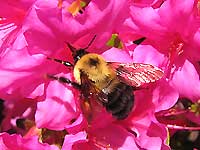
    Bee and FuschiaProtect Pollinators

    The Pollination Home Page
    www.pollinator.com
    Get the buzz on a variety of bees and pollination topics.

    © Tom Meade

    The Xerces Society
    (503) 232-6639
    www.xerces.org
    Xerces has fact sheets on pollinator conservation and sponsors programs to safeguard the diversity of native insects.

    The North American Pollinator Protection Campaign
    www.nappc.org
    More than 90 affiliated organizations, working to implement, promote and support a clear, continent-wide coordinated Action Plan to encourage activities that assure increases in numbers and health of both resident and migratory pollinating animals.

    The Pollinator Partnership
    www.pollinator.org
    This site includes a pollinator curriculum for Grades 3-6, plus more resources.

    Many of the world’s leading researchers are searching for clues about a mysterious ailment killing America’s honey bees, and other scientists are saying it’s time to re-examine, restore and protect the continent’s native pollinators.

    The U.S. Department of Agriculture and the Senate have declared June 22-28 the 2nd Annual National Pollinator Week, celebrating the insects, birds and bats that carry pollen from one plant to another.

    Meanwhile, beekeepers across the country are losing thousands of honey-bee colonies to a phenomenon that is being called Colony Collapse Disorder (CCD).

    Honey bees help produce one out of every three bites of food Americans take. Even dairy cows and goats depend on clover and alfalfa pollinated by honey bees and other bees.

    The value of honey-bee pollination in the United States is $14 billion a year according to Maryann Frazier, senior extension agent and honey bee specialist at Penn State University.

    Honey bees are not native to the Americas; Europeans brought them here in the 1600s for honey.
     
    Like some of the other animals the Europeans brought with them, honey bees soon became feral.

    In the 1980s, however, two kinds of parasitic mites wiped out feral bee colonies and threatened hived bees, too.

    Today, bees also face threats from fungal and bacterial illnesses, invasive hive beetles, and the mysterious new CCD. It has killed thousands of honey-bee colonies in the 27 states where it has been identified.

    A professional beekeeper in Pennsylvania lost 1,000 of his 1,200 colonies. Even though CCD has not been identified in several states, it does not mean the problem is not present there.

    Bees in a Hive

    © Tom Meade

    Become a Beekeeper
    It’s getting more expensive to keep honey bees, but beekeeping is a rewarding pursuit. Even if there were no honey or 30 percent increase in crop productivity from honey bees, beekeeping is at once stimulating and contemplative. There is nothing comparable to spending a summer afternoon in a bee yard, watching and listening to “the girls,” thousands of them, at work.

    To get started with new equipment and two, three-pound packages of bees (about 21,000 bees and two queens), plan to spend $200 to $300.

    Many states have beekeepers’ associations that offer winter bee schools, and some, such as the Backyard Beekeepers Association of Connecticut, also provide mentors.

    County extension agents can provide contact information.

    Do It Yourself
    Read “The Basics of Beekeeping” to learn more about bees, historically an activity for small farmers who want to make their own honey.

    This spring, entomologists and other researchers from around the country met at the federal bee lab in Beltsville, Md., to discuss this deadly new ailment.

    The symptoms are unusual, says Frazier. “One week, the bees can be quite strong and a week later, they have dwindled down to nothing.”

    Beekeepers say it appears that the bees go out to forage for flower nectar and pollen, and then forget how to get back to the hive.

    Frazier says that honey-bee colonies may be collapsing for a variety of reasons, including diseases that mites may be carrying, a new fungal pathogen, pesticides that some beekeepers or farmers may be using, poor nutrition or a combination of several factors.

    Some scientists believe the collapse of honey bees may be a clarion call to pay attention to native pollinators: an estimated 4,500 species of other bees, wasps, flies, butterflies, birds and bats.

    We’ve put “all of our pollination eggs in the honey-bee basket,” Mace Vaughan, conservation director of the Xerces Society for Invertebrate Conservation told the Christian Science Monitor. “We need more baskets.”

    The North American Pollinator Protection Campaign is urging farmers and ranchers to participate in the campaign’s effort to conserve native pollinators and the habitats pollinators need.

    Native insects can provide much of the pollination American crops need, but farm and ranch lands that support pollinators are disappearing at the alarming rate of 3,000 acres a day, according to the campaign.

    The campaign asks landowners to provide pollinator-friendly habitat containing wildflowers that may be considered weeds.

    Some wild pollinators, such as the hard-working Orchard Mason bee, benefit from nesting logs that can be built in any workshop or school classroom. Avoid the use of chemical insecticides and treat pollinators not as pests, but as partners.

    Paying tribute to pollinators, the U.S. Postal Service is releasing a four-stamp set depicting two Morrison’s bumble bees, a Calliope Hummingbird, a Lesser Long-nosed bat and a Southern Dogface butterfly.

    “Farmers see the connection between plants and pollinators every day,” says Deputy Secretary of Agriculture Chick Conner. “Thanks to these beautiful stamps, that same point is illustrated for everyone.”

    Build a Bee House
    Attract beneficial Orchard Mason bees by drilling 5/16-inch holes in a tree stump or other standing deadwood that faces the morning sun. The drill bit replicates holes a woodpecker would make and can be filled with the eggs of nesting Mason bees.

    To make a nesting block: 1) Use a piece of wood at least 4 inches thick; 2) Drill 5/16-inch holes that are at least ¾ of an inch apart; 3) Hang the block on a building or tree, facing the morning sun.

    Large drinking straws, stuffed as a bundle in an old soup can and attached to the sunny side of a structure, also attract Mason bees that lay their eggs in the spring.

    Manufactured Mason bee houses are available from Beediverse, online at www.beediverse.com

    About the Author
    Tom Meade is a writer, beekeeper and vegetable gardener in Rhode Island.


    Categories
    Farm Management

    Guidestone Farm Ventures

    By LaDaryn Backstrum

    About the Author
    LaDaryn Backstrum writes from her home in Colorado.

    The idea of Guidestone Farm sprang from Eden Valley near the Colorado Rocky Mountains and spread throughout the base of the Collegiate Peaks range.

    Since 1992, Guidestone had based its operations in that tranquil valley near Loveland; in January 2007, its operations moved to Buena Vista, Co.

    Child Working in the Field
    © Carolyn Elges

    Guidesone’s camp program, “Farmhands, educates young people about plant and animal life cycles, agriculture and organic farming.

    The Loveland church that owns the 150 acres—and that farmer and owner David Lynch had leased since 1972—had other plans for the land. After providing more than 400 Larimer County families with organic meats, vegetables and dairy products for 15 years, Guidestone Farms closed its doors.

    What seemed to be a sad ending was actually the bright beginning of a new farming venture in Buena Vista—embracing even bigger and broader horizons. The new venture incorporates farming with several new business ventures ranging from sustainable agriculture to education to housing.

    The new farm, a nonprofit organization called simply Guidestone, encompasses 90 acres in the idyllic Upper Arkansas River Valley.

    The property is picture perfect with Cottonwood Creek meandering through its expansive meadows and stout trees.

    Scene at Guidstone
    © LaDaryn Backstrum

    Guidestone, encompasses 90 acres in the idyllic Upper Arkansas River Valley.

    A seven-member board of directors currently oversees Guidestone. Among the board members is Erin Schieren, who began farming as an intern at Guidestone Farms in Loveland.

    With the knowledge she gained there, she opened several booming businesses near Buena Vista.

    Erin’s Organics is her geothermal greenhouse that grows organic herbs, salad greens and tomatoes. She also owns Antero Hot Springs and Chalk Cliff Hot Springs, rental cabins available all year in Nathrop, Co.

    David Lynch, Founder of Guidestone
    © Carolyn Elges

    David Lynch, Guidestone’s founder, has been asked to be a consultant on another low-impact farm and garden community development in Vail.

    David Lynch inspires people like Schieren with his own entrepreneurial sprit; at the new Guideline, Lynch has started Colorado Grown, a business that helps distribute vegetables grown by local farmers, like Erin’s Organics, throughout central Colorado.

    He also distributes specialty, pre-ordered foods such as raw milk, farm fresh eggs, chicken, garden greens, fruit shares, raw honey, lamb, grass fed beef, buffalo and pork.

    Lynch’s leadership qualities have not been overlooked; the Colorado Trust Foundation selected him as one of twelve students with exemplary leadership skills to receive full financial support in meeting their educational goals. In January 2007, Lynch graduated from Regis University with a master’s degree in nonprofit management.

    Buena Vista, Co.
    Guidestone’s new facility is located at the base of the majestic Rocky Mountain Collegiate Peaks on the east slope of Continental Divide. Hikers come from around the world to climb fourteen-thousand foot mountains dubbed: “Fourteeners.” Mounts Yale, Harvard and Princeton serve as the backdrop for the town of Buena Vista, which literally means “beautiful view.”

    Community Supported Agriculture
    A Bridge to Sustainable Agriculture

    Community Supported Agriculture (CSA) gets whole communities involved in agriculture by inviting them, along with other farmers, to buy shares in a farm or the CSA; and by doing so, they can share in the bounty of farm crops throughout the growing season.

    Lynch bolsters the sense of pride in the community-CSA relationship by selling member created goods: farm-fresh vegetables, raw organic honey and other locally grown foods.

    An on-site distribution center at Buena Vista offers space for lease to individuals or groups who wish to display and sell hand made, organic or other healthful products.

    “It’s the kind of consumer/farmer relationship that a lot of people want: to know the place where their food comes from,” says Lynch. “It’s an up-and-coming agricultural system, which we refer to as sustainable agriculture; it’s growing across the country.”

    “That’s what community supported agriculture can do,” he says. “Help people understand their bioregion, limitations of water, and kinds of plant and animal communities we’re part of. It’s a very fragile system.”

    Sustainable agriculture is the idea of farming productively while still having a low impact on the environment by careful soil management.

    In the river valley near Buena Vista, says Lynch, “We have to think about conserving water, so we have to be more conscience of the kinds of soil care. The soils dry out too much. The microorganisms in the top layer die off because it gets too dry. You can’t just leave your soil bare. It’s not healthy.”

    Mobile Chicken House

    © LaDaryn Backstrum

    Another form of permaculture involves a portable chicken house designed by a Guidestone team member. They call it a chicken track because they look like big tractors. After the farm’s lettuce is harvested, the chicken track is placed over the 4-foot wide lettuce beds. The chickens inside the house scratch up the topsoil, cultivating it and fertilizing the empty beds with their manure.

    “The idea is to get your organic matters high because that’s what’s feeding the life and then in turn the micro-life are what unlocks the nutrients in the soil and plants,” he says.

    “Those are the cycles we’re trying to honor. Those are the cycles that have been skipped in our conventional process because farmers have lost their art and farming is an art.”

    Permaculture
    Guidestone takes sustainable farming one step further: it uses farm animals in conjunction with overall farm goals.

    Lynch says, “Different animals have different skills you learn to utilize. That’s permaculture, creating a sustainable setting. If a garden’s overrun by weeds, send a flock of goats in for two weeks and they’ll clean up. Then plant the crop.”

    “We had a nursery of trees completely over run by Canadian Thistle. The more you cut it, the more it grows,” Lynch complains. “We had tried everything from weed whipping to putting carpet and cardboard down.

    “Meanwhile, the pigs were driving us nuts rooting along the fence line until they’d lift the fence and escape. The greatest thing about pigs is their rooting skills. I turned 15 pigs loose in the nursery. In one year, they had uprooted every thistle plant with their powerful noses and loved it!”

    Often called “The Banana Belt” due to its moderate year-round temperatures, the locals claim an average of 360 days of sunshine per year. Because of the exceptional weather, this valley is prime farming land.

    The general atmosphere is small town; the residents of Buena Vista are health-conscious, friendly and helpful, and promote a warm, community spirit.

    This attitude of assisting other members of the community and farmers with their goals mirrors one of the basic premises of Guidestone’s long-standing operations. It’s a time-honored but almost lost community tradition that is still alive and well in many farming communities.

    Because of the open nature of the residents and Lynch’s leadership and business skills, many other businesses are interested in working in conjunction with him.

    Children’s Summertime Camps
    One of Guidestone’s goals is to educate the community, which its team members believe benefit the entire state of Colorado. So, like the first farm, Guidestone offers educational camps for children in kindergarten through 12th grade. Known as “Farmhands,” the camp program educates young people about plant and animal life cycles, agriculture and organic farming.

    Director of Children’s Education Rafe Quinton and his partner, Lindsey Drennan, run the summertime camp programs in June, July and August. In the fall, students from public and private schools and churches stay in cabins and complete farming-style chores.

    The Montessori School in Salida, Co., has collaborated with Guidestone’s Heritage Breed farm program. Guidestone’s plan is to allow the schoolchildren to adopt and to sponsor rare breeds of sheep, goats, horses, cows and pigs. The program’s goal: educate the children and help preserve the diversification of the genetic library of animals.

    Weathervane CSA Farm
    Guidestone also leases plots of land to businesses and individuals interested in CSA and organic farming. Former Guidestone Farm managers, Caitlyn and Seth Roberts, were the first independent farmers to lease from them. With their baby, Juniper May, in tow, the Roberts started a separate business on Guidestone property called Weathervane CSA farm, (719) 395-8356. In 2007, Weathervane CSA’s gardens have radishes, beets, winter squash, flowers, potatoes and pea; in 2008, the CSA plans to offer 30 to 40 vegetable shares.

    Seth and Caitlyn first met when they were both interns at the original Guidestone Farms. This year, Seth is in charge of the internship programs at Guidestone.

    Internship Programs
    Guidestone’s long-standing internship program continues to offer opportunities for college students and others interested in learning about organic and CSA gardening, animal husbandry, milking and sustainable agriculture.

    David Lynch says the internship program is “primarily for graduate students studying agriculture or those enrolled in similar types of programs. It’s a way for people in academia in those fields to receive grounded experience; but it’s not restricted to university students. Volunteers from the private sector come here to explore and get some hands on experience.”

    “We offer a lot of adult education, too. We want to help people become more conscious of their lifestyle and choices, because it’s our choices that impact the environment,” says Lynch.

    “Another goal is to help people understand what will nurture the earth, what will nurture them and their families and how can they connect more deeply where they live and develop a sense of place. Ultimately, what I’d like to promote is called “earth literacy:” Being literate about the ecological cycles that govern the earth and our lives. Our society’s gotten so disconnected from our human relationship with the earth. Those are issues that affect all of us in the long term.”

    One thing that’s different about the internship program at Buena Vista: better housing. Dave admits, “The conditions in the mountain area tend to be windy; that was a problem we had with the solar-powered yurts (used at the previous location).”

    Farm Family Camps
    Another different component at the new facility is the addition of farm camps for the whole family. Three or four families at a time stay in cabins near the scenic mountains beside Cottonwood Creek for a week or two during the summers. They learn how to plant, maintain and grow organic herbs and vegetables; they also learn what it takes to maintain and care for livestock.

    The Dairy at Cottonwood Creek
    Guidestone leases land to a raw milk dairy called The Dairy at Cottonwood Creek.

    The dairy uses stringent levels of sanitation and kind animal care, as have been practiced by Guidestone over the years. The cattle, like most of the animals at Guidestone, are allowed to graze out to pasture and are grain fed.

    Once up and running, The Dairy at Cottonwood Creek will sell shares in their herd of cattle. Like most CSA systems, the dairy members receive milk in exchange for their CSA share payment that helps pay for boarding and care of the herd.

    Lynch takes a special interest in farm dairies; since in 1992, he has lobbied to increase the opportunities for dairy farmers interested in selling raw organic milk, which is illegal in most of the United States; farmers could be prosecuted by jail terms just for selling fresh milk from their cows. That worry is now gone after Lynch and other Colorado farm families rallied for change; working with Colorado legislators and the Colorado Department of Health, they helped to organize a legal method of distribution that didn’t threaten food safety laws or regulations.

    Cottonwood Meadows
    Cottonwood Meadows is a community development that uses Guidestone Farms previous location on the Front Range as inspiration. The 277-acre development project in Buena Vista is prime agricultural land being preserved for farming indefinitely; 50 percent of the land is designated as open space. The villages will be built with the orientation toward foot traffic, with the garages built in the back of the homes; a CSA farm will be at the center of Cottonwood Meadows.

    It’s a complete community with a senior housing center, an assisted-care facility, individual cottages, apartments, single-family homes, a spa, an amphitheater and a field-to-table restaurant, which serves organic foods grown on the community’s CSA farm.

    Lynch has been asked to be a consultant on another low-impact farm and garden community development in Vail where the residents are directly connected to their food source. Guidestone is serving as the inspiration for this new model of farm-centered diversification, with a sustaining food source and low impact on the environment.

    For a guided tour of Guidestone, or to schedule an internship program, summer or family camps, contact David Lynch at farmerlynch@msn.com. You can also call their office at (719) 395-5814.

    Categories
    News

    Women in Agriculture Conference

     Attend Women in Ag conference
    Other Ag-related
    Events of Interest
    From seasonal events to conferences, festivals and workshops, visit the HobbyFarms.com calendar of events for activities from around the country.

    If you’re a woman involved in agriculture–and within driving distance of north central Indiana–mark your calendar for the eighth annual Midwest Women in Agriculture Conference.

    The conference–designed to address personal, family and farm issues that affect women’s lives, families and farm businesses–will be held:

    Feb. 4-5, 2008
    Swan Lake Resort
    5203 Plymouth-LaPorte Trail
    Plymouth, Ind.

    Women working on the family farm or working in the agribusiness industry are encouraged to attend.

    Topics on the Agenda
    The younger generation is another target of this year’s conference. Say conference planners, “the hope is to integrate the younger generation into agriculture and focus on niche markets that an operation may be able to take advantage of.”

    A few other topics to be covered at the conference include:

    Early registration deadline is Jan. 16.

    More information
    Find conference info online: https://www.agriculture.purdue.edu/wia/conference.html
    Or contact Stacy Herr, 765-973-9281; sherr@purdue.edu.

    The Women in Ag Conference is sponsored by Purdue Extension, Indiana Farm Bureau and Farm Credit Services of Mid-America.

    Top

    Categories
    News

    Home and Barn Ready for Winter?

    Snowy Red Barn

    Read This!

    Sue Weaver’s article “Chill Factor: Winterize your home, barn, livestock and equipment” offers the details and insight you need to get ready for winter.

    If you haven’t already taken precautions against the harsh winter weather, here are some winterization tips to add to your annual farm routine.


    More tips for you to stay warm and safe and your animals, too>>


    First and foremost, prepare for possible isolation in your home.

    Have sufficient heating fuel–like a good supply of dry, seasoned wood for your fireplace or wood-burning stove–in case regular fuel sources are cut off.

    Well ahead of the cold weather, shore up your home and barn to keep the warm air in, and the cold out by:

    • Insulating walls and attics
    • Caulking and weather-stripping doors and windows
    • Installing storm windows or replacing old single-paned windows with newer double-paned models.

    Maintain the exterior of your house, barn, shed or any other structure that may provide shelter for your family, neighbors, livestock or equipment by regularly:

    • Clearing rain gutters
    • Repairing roof leaks
    • Cutting away tree branches that could fall on a house or other structure during a storm.

    Top

    Other tips for a successful winter around the farm:

    • Ventilate barns–even in winter, animals need fresh air to reduce the risk of respiratory ailments. Resist the temptation to close every window and door in the barn. It’s better to put an extra blanket on an animal if necessary than to keep livestock in a completely closed barn.


      A snowy landscape

      ©Lesley Ward

      If a water pipe freezes

      • Shut the water off immediately by closing the main valve.
      • Do not attempt to thaw frozen pipes unless the water is shut off. Freezing often causes unseen cracks in pipes or joints.
      • Take measures to thaw pipes immediately, or call a plumber for assistance. Open the cold-water faucet nearest the freeze to relieve pressure and reduce the likelihood of breakage. Keep the faucet open as the frozen area begins to melt. Running water through the pipe will help melt more ice in the pipe. Check all other faucets for additional frozen pipes. If one pipe freezes, others may freeze, too.
      • Apply heat to the frozen pipe by either warming the air around it or by heating it directly. Hot water also can be used in some situations.
      • Do not use an open flame to thaw pipes. It’s a fire hazard and could damage plastic piping.
      • Once pipes have thawed, turn the water back on slowly and check for leaks.
      • If you are unable to locate the frozen area, if the frozen area is not accessible or if you cannot thaw the pipe, call a licensed plumber.

      Top

    • Get someone to check your electrical wiring.

    • Insulate pipes with insulation or newspapers and plastic and allow faucets to drip a little during cold weather to avoid freezing.

    • Keep fire extinguishers on hand, especially if using an alternate heating source.
    • Learn how to shut off water valves in case a pipe freezes or bursts.

    Don’t forget to protect valuable farm equipment from the ravages of freezing temperatures. Remember to:

    • Lube the tractor engine.
    • Check the tractor’s antifreeze.
    • Set aside a supply of fuel additive.
    • Keep your tractor full of fuel.

    • Check your farm truck’s condition, especially the bat tery and ignition. Consider winter tires—you’ll want reliable transportation when roads are icy or snow covered.
    • Don’t forget to properly prepare and store large and small tools and equipment, too.

    Livestock care reminders:

    • Provide more food than usual, an adequate and dependable water source and a windbreak for animals that stay in a field or pasture. Consider keeping smaller animals and pets indoors. More

    • If buckets of water inside the barn freeze overnight, consider placing the bucket down inside an insulated housing. Heating elements that hook over the side of the bucket may be available. Check your local tack shops and feed stores.

    Top