Categories
Beginning Farmers

House Repair, Backyard Market, and Endangered Livestock

Reviving Your House


Doing repair work on our house is not my favorite weekend activity. I prefer to be out with the horses, riding and mucking pastures, rather than inside tending to a leaky toilet. However, after 50 years of sheltering many different families and enduring a few earthquakes, our house needs occasional TLC to fix a window sash or unclog a stopped drain. Most of the time I perform the ubiquitous “honey do” routine when it comes to repair work (he is in the construction business after all).

Sometimes though, I just have to take the tools by their handles and do my part. (I’m actually pretty handy once I get going, thanks to my husband’s tutelage while working in his business and the nearly two years we spent refurbishing our home after moving in.) So when I came across Reviving Your House, 500 Inexpensive & Simple Solutions to Basic Home Maintenance Issues by Alan Dan Orme, I felt the same hesitation reserved for repair work around the house.

Once I got into the book though, I realized the chore was pretty simple. Reviving Your House is only 166 pages long—a very quick read that doesn’t delve into significant detail. Obviously not the best resource for those who have limited knowledge about restoration and repair, but want to tackle a major project. Reviving Your House is brief and the illustrations are not plentiful. If you have grandiose restoration plans and you want to do the job yourself—but you don’t have a lot of building and repair know-how—look for a more complete reference (probably several).

However, if you want a handy, yet quick guide to basic tasks, this book is good to have around. The author does scratch the surface regarding many topics, starting with finding the right house in the first place. For those on a budget (and who isn’t?), he is very “money minded” as the book’s title suggests—many of Orme’s subheadings include the caveats “penny pinching” and “the lazy way.” No doubt about it, Reviving Your House is written for those who want to do the work themselves but have heavy financial constraints.

While this book does lack detail, there is probably a little something in it for everyone—like ornamenting a stock wooden screen door, or the lazy way to make a circular staircase. If brevity and a simplistic approach are your preferred methodologies, then by all means, take the plunge. Reviving Your House might even get you thinking about potential weekend projects that could actually be, well … fun.

Reviving Your House, 500 Inexpensive & Simple Solutions to Basic Home Maintenance Issues, by Alan Dan Orme (Storey Books, 210 MASS MoCA Way, North Adams, MA, 01247), 2001, 166 pages, softcover, $14.95.


Backyard Market Gardening
Growing crops is pure pleasure for hobby farmers and by nature, we find working the soil, nurturing plants and harvesting a preferable lifestyle even when the work gets tough and the weather doesn’t cooperate. Along with growing crops, many hobby farmers also enjoy financial gains by taking their harvest to market. If you’re thinking about getting into the “business” of small farming, you’re certainly not alone. However, before you begin a marketing venture, you will probably want to invest some time researching your options.

One of the many resources available to help get you started is a book by Andrew W. Lee, Backyard Market Gardening, The Entrepreneur’s Guide to Selling What You Grow. In his book, Lee outlines a business plan for profitable small farming beginning with the basics such as soil quality and composting to financing and marketing pointers. Ifyou’re looking for a passionate voice to inspire you, Lee might be it. He believes in what he’s doing and that comes through in Backyard Market Gardening. (Along with writing and more than 30 years of gardening experience, Lee is the executive director of the Intervale Foundation, a nonprofit educational organization that promotes models of community farming.)

In addition to lots of “how to” information, Lee provides an appendix that includes a listing of suppliers, book publishers, periodicals and newsletters, as well as a slew of other useful informational services. He also includes a suggested reading list that is fairly comprehensive.

However, because Backyard Market Gardening was first published in 1993 (as of March 1998, the book was in its fifth printing), the listings are not as complete as they could be. For example, the suggested reading list doesn’t include any books published after 1992 and there are no website resources provided.

While Backyard Market Gardening is not the most current book out there for those interested in making a few bucks selling what they grow, it’s still relevant and does contain useful information. After all, if you’re serious about turning a profit with your crops, you’ll probably want to read a variety of books and publications on the subject—some old, some new.

Backyard Market Gardening, The Entrepreneur’s Guide to Selling What You Grow, by Andrew W. Lee (Good Earth Publications, 1702 Mountain View Rd., Buena Vista, VA 24416), 1998, 351 pages, softcover, $19.95.


The Encyclopedia of Historic and Endangered Livestock and Poultry Breeds
When I first laid eyes on the cover of The Encyclopedia of Historic and Endangered Livestock and Poultry Breeds by Janet Vorwald Dohner, my interest was piqued. A pretty cover always grabs my attention and Endangered Livestock and Poultry was no exception: a Barred Plymouth Rock rooster set against a stark white background—a simple and clean cover with a descriptive title that evokes the “great coffee table book” reaction. But once I started flipping through the pages, I realized that Endangered Livestock and Poultry is more than that. While the book does have some nice pictures and illustrations, it’s far more text heavy than it is image heavy.

There’s a lot of information packed into the 592 pages. For each species covered—goats, sheep, swine, cattle, equines, chickens, turkeys, ducks and geese—one can find out about natural history, domestication, husbandry and of course, breed profiles that include history, characteristics, qualities, traits and the degree of rarity in the United States, United Kingdom and Canada. When I first opened the book, I went straight for the section on equines (being the horse-crazed woman that I am). I happen to be very fond of Cleveland Bays and while I was disappointed to find no drawings or photos of these spectacular and rare equines, I did locate lots of informational facts that I could confirm.

Because Endangered Livestock and Poultry is written by a librarian and researcher, don’t expect to find peripheral resources such as breed associations or consumer publications. The author does, however, provide references for several nonprofit organizations—the likes of the Domestic Fowl Trust and the American Livestock Breeds Conservancy. In addition, she includes some references to journals and a “Where to See Rare and Historical Breeds” listing.

Endangered Livestock and Poultry gets high marks from this reviewer. The detailed, factual and organizational attributes of this book make it an excellent choice for any hobby farmer interested in all manners of livestock.

The Encyclopedia of Historic and Endangered Livestock and Poultry Breeds, by Janet Vorwald Dohner (Yale University Press, P.O. Box 209040, New Haven, CT 06520-9040), March 2002, 592 pages, hardcover, $75.

Categories
News

How Do You Save on Organic Food?

How do you save on organic food?

Learn more about organics and find more online resources. Click to continue …

How do you save on organic food?

According to The Daily Green you can try these six ways to help afford organic food. Read on and then let us know how you save on organics.

  1. Negotiate on price at the farmers market. Haggle a bit on the price with the farmer; maye he’ll sell you some less popular items for less, too.
  2. Choose less-perfect fruits and vegetables and ask for a lower price.
  3. Buy in bulk at the warehouse.
  4. Make a list (and a menu) and stick to it – before you go to the market only to be seduced by the wares.
  5. Consider shopping for organic items online; some even offer incentives, like free shipping.
  6. Look for and collect organic brand coupons.

~ excerpted from an article by The Daily Green Food Editor Karen Berner

Categories
News

Learn Something New

Each year, and each season, I vow to learn something new, advancing my knowledge and skills in the areas of farming, traditional ways of doing things or even more basic tasks like cooking or organizing.

Here are some classes that hold excellent potential for expanding such skills:

Tillers International
Tillers International, whose mission is:

Learn New Farming Skills“… to preserve, study, and exchange low-capital technologies and land use practices that increase the sustainability and productivity of people in rural communities,”

concentrates on draft-animal farming, however, a vast array of classes are offered at the organization’s learning center in Scotts, Mich.

Looking through their 2008 calendar of classes and activities, you’ll find courses on:

  • blacksmithing
  • timber framing
  • cheese making
  • small-scale haymaking
  • knife making
  • caning chairs
  • wheel wrighting
  • coopering
  • building rural roads
  • maple sugaring
  • making soap
  • pasture and fence management
  • In addition to:

    • draft horse basics
    • ox driving
    • ox and horse cart building

Learn New Farming SkillsTillers vision is “ … to create an international learning community in which we seek understanding of local conditions, encourage an attitude of experimentation, and give promise of sustainable productivity for generations to come, for a more peaceful Earth.” 

In addition to classes, Tillers International also holds several festivals and demonstrations throughout the year. Prices range from $25 for a one-day class to around $400 for 4-day, more complex course. For more information, visit www.tillersinternational.org

Top

John C. Campbell Folk School
The John C. Campbell Folk School, located in Brasstown, N.C., is a favorite of mine.

The Folk School, with its style of teaching in a noncompetitive, supportive environment, seeks to bring people toward two kinds of development:

  • Learn New Farming SkillsInner growth as creative, thoughtful individuals, and
  • Social development as tolerant, caring members of a community.

Their classes are based on the traditions of Southern Appalachia, as well as other cultures of the world.
 
Their 2008 course catalog features classes in (but not limited to) basketry, beads, blacksmithing, book arts, broom making, calligraphy, chair seats, clay, cooking, dance, drawing, dyeing, enameling, felt making, Learn New Farming Skillsfolklore, gardening, glass, jewelry, knitting, metalwork, music, nature studies, needlework, painting, photography, printmaking, quilting, rugs, sewing, soap making, spinning, storytelling, weaving,  woodworking and writing.

Set on a beautiful wooded campus, the Folk School will provide you with an unforgettable week of learning and camaraderie. Prices range from $270 for a weekend course to $524 for an advanced 7-day course, not including food and board.

For more information, visit www.folkschool.org or read “Reconnecting Past to Present.”

Top

Culinary Institute of America
The Culinary Institute of America (CIA) isn’t just for professional chefs anymore. With two campuses at opposite ends of the country—Hyde Park, N.Y. and St. Helena, Calif.—each offers courses for “foodies” and those interested in perhaps, a career change.

Learn New Farming SkillsThe CIA at Greystone (Napa Valley) offers their “Career Discovery” courses including: 

  • “Introduction to the Professional Kitchen”
  • “Baking and Pastry”
  • “The Flavors of Napa Valley”
  • “The Professional World of Wine”

Their “Sophisticated Palate” courses include: 

  • “Live-fire Cooking”
  • “A Taste of Northern California”
  • “Cooking for the Next Half of Your Life,” which explores healthy eating.

The Hyde Park campus offers one- and two-day hands on cooking classes for enthusiasts. Prices range from $200 for a one-day “Artisan Breads” course to $1,000 for a 5-day “Baking & Pastry” (Career Discovery) course, up to $4,000 for a 4-day “Sophisticated Palate” course in Napa Valley.
For more information, visit https://www.ciachef.edu/enthusiasts/

Top

Learn New Farming SkillsThis sconce is one of many items students at the John C. Campbell Folk School can learn to make.

About the Author
Karen Keb Acevedo is editor-in-chief of Hobby Farms, Hobby Farm Home and the Popular Farming Series. She can be contacted at
hobbyfarms@bowtieinc.com


Categories
Animals

Super Ducks! Learn About Raising Ducks

A frequent visitor to zoos and farms during his childhood, Dave Holderread loved animals as much as (or more than) the next kid.

But according to his parents, birds captured his attention more than any other creature–especially birds with webbed feet.

“If I disappeared at the zoo, they knew where to find me: At the duck pond,” says Holderread, a waterfowl breeder in Corvallis, Ore., who has raised ducks for over 40 years and is the author of Storey’s Guide to Raising Ducks.

“I remember as a little boy I was just amazed at these birds that could walk and swim and fly. They’ve got the best of all worlds and their versatility still fascinates me.

Just call them Super Ducks.

They float and dive, waddle and fly (well, sort of). They can swallow a slimy slug in a single gulp. Lovely and amusing, farm ducks can provide protein-packed eggs and tasty meat, feathers for comforters and crafts, plus mowing, fertilization and pest control services. What’s not to admire about such talented and useful creatures?

Introducing the Duck

With the exception of an odd South American native called the Muscovy, most domestic duck breeds flocking around farms are descended from the mallard, a familiar wild duck abundant on wetlands throughout North America and commonly raised in captivity.

Mallard males, or drakes, are hard to miss: They flaunt shimmering green heads, chestnut breasts and flashy blue wing bars called speculums. The female duck also brandishes a blue speculum in flight, but her subtle, penciled brown plumage provides superb camouflage while she incubates her eggs.

Mallards and their domestic descendants received the nickname of dabblers because they normally forage at the surface of a shallow water body, often tipping tails-up to snatch freshwater plants and mollusks.

Through years of selective breeding, many mallard-derivative breeds and varieties have emerged in a charming mix of colors, sizes and shapes. They range in size from bantam breeds likethe vocal Call duck, a 1½-pound mini-dabbler once used by hunters as a living decoy, to heavyweights such as the Pekin, a white, 9- to 10-pound duck originating in China that’s popular on farms–and on the menu of Chinese restaurants.

More unusual breeds include the athletic Runner, a lanky, upright duck featured in the movie “Babe,” and the Crested, a dabbler that wears a large, feathered cap on the back of its head. If you long to add a splash of color to your farm, ducks will do the job nicely: While some domestic breeds and varieties resemble the mallard in color and markings, others have been selected for plumage in black, blue, chocolate, lavender, pied, buff and more.

Ducks differ in more than just appearance, however. While most domestic breeds are unable to fly, some–like the bantam Australian Spotted–can. Do you want lots of eggs to sell? Then a super egg-laying bird such as the Campbell, which can produce up to 340 eggs annually, would be a good bet. If you’re looking instead for a pro at sitting and mothering, the Call might be your duck.  Planning to raise meat birds? You might want a hefty, fast-growing fowl like the Pekin or Muscovy.

If you’d like a well-rounded duck, check out some of the threatened heritage breeds. Jenifer Morrissey, who operates Turkey Trot Rare Breeds in Waldon, Colo., wanted ducks that excelled at producing both eggs and meat. After discovering she couldn’t keep up with the Khaki Campbell’s enormous egg production, she began raising two multi-purpose heritage breeds, the Silver Appleyard and the Ancona. “I chose rare breeds because I’m interested in sustainable agriculture, and these breeds often have characteristics, like adaptability and hardiness, that make them work well in such settings,” she says.

Cat Dreiling, of The Ruffled Duck Farm in Deerfield, Kan., also found herself drawn to an uncommon breed, the Welsh Harlequin, while looking for a self-sufficient egg-layer. “My philosophy is that every animal on the farm should provide for itself as much as possible. The Welsh are extremely efficient foragers, and because they’re in the light duck class, their feed requirements are less than that of a heavier breed,” she explains. “They’re also capable of laying a substantial number of eggs and are equally willing to set a nest and hatch their own young. They’re one of the most attractive breeds of duck, in my opinion!”

Dabbling in Ducks

Now, before you bolt to the feed store, where you’ll surely be smitten with the first fuzzy ducklings you encounter, let’s talk more about the duck’s admirable qualities-–and those few characteristics that can drive a farmer to distraction. As kindred farmyard fowl, ducks have much in common with chickens: For instance, both species provide meat and eggs while adding beauty and interest to our farms. But ducks differ in a number of respects from their clucky cousins.

“Ducks are more adaptable and disease-resistant than chickens,” says Holderread, who currently keeps about 45 duck breeds and varieties at the preservation center he operates with his wife, Millie. He became impressed with the duck’s hardiness while participating in a teaching and research program on poultry production in Puerto Rico. “We literally never treated a duck for anything–internal or external parasites or any disease–in the four years I was there.  The chickens were a constant fight.” He’s quick to add that this doesn’t mean ducks never have health troubles; in fact, they’re more prone to leg problems than chickens, so they should never be caught and carried by the legs. Rather, when well-managed and kept in uncrowded conditions, they’re less affected by disease and parasites than other birds.

Both chickens and ducks eat a varied diet that makes them handy for pest control, but ducks crave creepy-crawlies that chickens will ignore. “Ducks are just wonderful as slug and snail exterminators, and dabbling ducks are great on mosquito larvae,” says Holderread. “We’ve also worked with people who raise livestock that have problems with liver flukes [a parasite]; they’ve been able to eliminate them with ducks.”

As far as management, waterfowl generally require less elaborate housing and fencing than other poultry. Anyone experienced with chickens knows these birds can jump fences and they’ll scatter in every direction if you attempt to herd them inside for the night. Ducks, on the other hand, are easy to confine and shepherd around. According to Holderread, one person can easily herd a flock of 500 ducks and keep them in with a barrier only 2 to 2 ½ feet high. Got a flying breed? No problem. Just clip the primary feathers on one wing once a year, he says.

Although some drakes and mother ducks can be cantankerous, these birds usually have gentle dispositions and pleasant personalities. “If managed properly, they’re rarely aggressive,” says Dreiling. “They each have their own personality and are joyous over something as simple as a fresh pool of water.”

It’s true: Ducks are naturally passionate about water, which can make them even messier to keep than chickens. Dabblers drink plenty of it, which in turn produces large amounts of moist, smelly droppings, and they constantly cloud water containers by swishing their beaks in them during and after mealtimes.  Enthusiastic bathers, ducks congregate in and around pools, splashing and muddying the ground.

“Maintaining a clean pen when you combine ducks and a constant source of water is a problem, especially when the weather is cooler and water doesn’t evaporate as rapidly,” says Dreiling. “The Welsh are dabblers, so if even an ounce of water is spilled from the pool, they’re instantly eye-deep in the mud drilling for goodies!”

Duck Care Basics

White Ducks
iStock/Thinkstock

As with any farm animal, ducks demand and deserve care on a daily basis throughout the year, no matter what the weather or how harried one’s schedule happens to be. Fortunately, tending a small duck flock isn’t difficult, terribly time-consuming or very expensive. Here’s what you’ll need to give your quackers:

1.  Ample, relatively-clean water to drink and bathe in.

Contrary to what many people believe, domestic ducks can get along fine without a pond. In fact, an improperly-designed and hard-to-clean pond poses a health hazard to your feathered friends and quickly becomes an odorous eyesore as mud and droppings accumulate. At minimum, ducks need drinking water deep enough for them to dip their heads in so they can keep their eyes and nostrils clean. Of course, they’ll be happier and healthier if they have water to swim and bathe in as well.

Plastic wading pools provide a simple way to give your flock a swimming hole without going to the trouble and expense of building a pond: They’re easy to scrub and move from place to place before a messy mix of mud and duck manure surrounds them. To combat mud problems, Holderread spreads a long-lasting layer of pea gravel in pens, followed by sand and then a skin of sawdust, which he replaces each year.

2.  Forage and balanced feed (including supplemental grit and calcium, if needed).

Ducks relish hunting for slugs, succulent grasses and other fare, and allowing your flock to grub for some of their own food will save money on your feed bills while reducing your pest population. A bonus: They’ll fertilize as they forage, which makes them great for garden patrol if you can protect your young plants from those flat feet and rooting bills.

In confinement situations or to complement forage, you’ll need to provide your ducks with a balanced, nutritious feed. Commercial waterfowl rations are available in some areas, but if your local feed store doesn’t carry one, you may have to mix your own (see Holderread’s book, Storey’s Guide to Raising Ducks for detailed information on duck nutrition) or go with a commercial gamebird or unmedicated chicken ration. Traditionally, chicken feeds have been deficient in niacin, a nutrient that ducks–-especially ducklings-–need in larger amounts, Holderread says. “Today, the manufacturers usually add more so it works out okay for ducks.”

Keep in mind that a duck’s nutritional needs change with age and at certain stages of its life. Growing young birds, for instance, shouldn’t receive a calcium-packed laying ration or, unless you’re raising meat ducks, a high-protein diet that promotes fast growth. Throughout the year, Morrissey gives her flock three custom-mixed feed rations based on Holderread’s formulations: A breeding ration from February to June; a laying ration from June to September; and a holding feed the remainder of the year.

3.  Shelter and protection from predators.

Although they don’t necessarily require the sort of snug quarters many folks construct for chickens, dabblers do need shelter from heavy rains, snow and sun, as well as protection from dogs, coyotes and other predators with a taste for fresh duck. An insulated house will help keep laying birds more productive, while a secure perimeter fence can safeguard ducks from hunting canines. Confining your flock in an enclosed pen at night helps ward off nocturnal attacks from raccoons and owls. Some raisers also use large guardian dogs to provide round-the-clock duck protection.

4. Good health and flock management.

“I’ve found that the best way to raise healthy ducks is to provide them with plenty of space to exercise, access to good nutrition and adequate water,” Dreiling says. “Also, keep a mindful eye of drake-to-duck ratio; no less than three ducks to one drake helps prevent needless stress on the females.”

Many raisers find their hardy birds seldom need vaccinations, deworming medications or routine veterinary care when well-managed on a small scale. Unfortunately, ducks can and do contract diseases like avian influenza and fowl cholera, so it’s important to stay alert for ruffled feathers, changes in food or water intake, lethargy, bloody diarrhea and other signs of sickness. Some common-sense health measures will go a long way toward keeping disease from decimating your flock: Quarantine any avian newcomers; separate and treat ill individuals promptly; try to reduce your ducks’ contact with wild birds; and notify an avian veterinarian if you experience sudden, unexplained deaths in your flock.

Give them the care they need and your dabblers will thank you in their own cheerful, quacking, tail-wagging duck fashion. “Ducks recognize patterns of feeding and care and let you know how excited they are to be let out to their pond each morning or get their evening feed,” says Morrissey. “They are absolutely the happiest animals one could have on a farmyard.”

Categories
Animals

Understanding Vesicular Stomatitis

By Dr. Aaron Tangeman

Q: I recently attended a seminar for operators of small ranches and farms. The guest veterinarian reviewed several contagious diseases, including vesicular stomatitis. I thought only cattle, horses, and pigs were susceptible, not realizing my alpacas could be at risk. What should I know about vesicular stomatitis? How can I protect my herd?

A: In addition to the livestock already mentioned, donkeys, mules, and humans can suffer from the virus that causes vesicular stomatitis (VSV).

Sheep and goats, which rarely display clinical signs, as well as llamas and alpacas, are occasionally infected. The mode of VSV transmission, while not well understood, is believed to be primarily by insects, particularly black flies and sand flies.
 
Consuming coarse feeds causes breaks in mucosal tissue, allowing VSV to spread within the herd which shares food and water resources. Deer, raccoons, bobcats, and monkeys can serve as viral hosts.

Outbreaks have been recorded throughout the United States, but have been primarily limited to the southwestern and western states since the 1980s. The last occurred in 2004 and resulted in quarantines continuing into 2006. Once occurring in eight- to 10-year cycles, outbreaks primarily during warm months are occurring more frequently.

The two strains responsible for the disease, the New Jersey and Indiana serotypes, are structurally similar but produce distinct antibodies.

Signs and Symptoms
You should know and be able to recognize the signs and symptoms of vesicular stomatitis.

  • It is a reportable disease that shares similar symptoms with foot and mouth disease.
  • The incubation period ranges from three to 14 days, although small, fluid-filled blisters (vesicles) may develop in as few as 24 hours.
  • Excessive salivation and drooling may be the first symptoms you notice.
  • The animal may develop a fever.
  • The vesicles may appear in the mouth, on the lips, nostrils, hooves, or teats.
  • Variable in size, some may be quite small while others may be large enough to cover the tongue.
  • The vesicles will swell and break open. The resulting ulcers are painful, making the animal reluctant to eat, drink or nurse.
  • The animal may become lame if the hooves are affected.

While not all herd members will demonstrate clinical signs, nearly 100 percent can test positive for antibodies.

Talk to your veterinarian to learn the specific signs and symptoms of vesicular stomatitis that may affect the livestock breed(s) on your farm. Separate any animals displaying lesions from the others. Your vet will confirm the diagnosis with blood tests or by swabbing the lesions or drainage from the blisters.

State and federal animal health authorities must be notified. Exercise precautionary measures in handling secretions and tissue samples since humans who are exposed can develop flu-like symptoms from the virus.

There is no specific treatment; the disease runs its course in about 21 days. Use antiseptic mouthwashes to comfort the animal and avoid secondary bacterial infections. Offer softened feed, limit grazing time to avoid exposure to blood-feeding insects, consider insect control programs, and provide shelter for your herd.

Currently there is no approved VSV vaccine available in the United States.

Top

Dr. Aaron Tangeman received his Doctorate of Veterinary Medicine from the Ohio State University in 1998 and practices in Northeast Ohio.

Categories
Homesteading

Up Your Sustainability

By Carol Ekarius

"Planning Makes Perfect"Plan Your Sustainable Homestead
Read “Planning Makes Perfect” for an in-depth checklist to help you plan your sustainable homestead.
© John Ivanko

Everywhere you turn, it seems like the buzzwords “sustainability,” “green design” and “reducing your carbon footprint” are being used.

But what do these words mean to farmers?

Sustainability, as it relates to farming, describes practices that can be sustained over a long period of time without depleting or damaging natural resources, while maintaining the farmer’s income and decreasing farm expenses.

In many ways, sustainability is even more important to farmers and homesteaders than to their city cousins because it’s tied not only to environmental concerns, but to very direct economic and social concerns as well: the checking account must balance or the farm—whether commercial or hobby—will not remain a farm for long; and, the family and community must directly benefit from activities undertaken in the name of conservation.

There are three key goals for increasing sustainability:

1) Increase energy and water conservation and efficiency;

2) Reduce or eliminate the use of harmful substances; and

3) Make efficient use of available materials and resources.

Use more efficient forms of energy to increase your sustainability
© John Ivanko

The great thing is, we all have the ability to make some changes (some are expensive or difficult, others are cheap and easy) that increase our personal sustainability; when you start incorporating these concepts into your farming operation, you can improve your checking account balance and your family’s quality of life, as well!

Growing Green: Pastures, Perennials, Ally Cropping
In terms of sustainability, green is the color to shoot for and getting more land into perennials, such as pastures, hay fields, windbreaks and riparian vegetation strips, is one of the first things to do.

In fact, these green swathes are the winners of the ecosystem gold: 

  • They are effective at slowing runoff and reducing erosion, and for providing habitat for wildlife and for native beneficial insects, such as bees, dragonflies and aphid-eating lady beetles.
  • They allow more water to recharge aquifers. Green earth is cooler than brown earth in the summer and if trees are part of the landscape, they reduce the impacts of wind—from erosion to increased heating and cooling costs.

Perennials and Pastures: Some perennial crops also provide food for your family or products for market (think herbs, orchards, vineyards, berries and beehives associated with legumes like clover or birdsfoot trefoil).

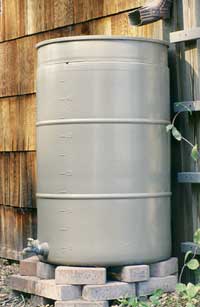
A rainbarrel can offer a way to provide water for around-the-farm purposes.
© David Liebman

To increase your farm’s sustainability, planting native perennials should be at the top of the priority list. These perennials have adapted through time to thrive in your climate and soil, and they provide food for native wildlife and beneficial insects. Avoid monocultures and encourage biodiversity whenever possible.

For pastures, use management intensive grazing to reduce weeds and improve stand health, and interseed a variety of grasses and legumes that do well in your region using frost seeding (surface spreading seed during early spring when you’re having hard frosts) or even snow seeding. Frost seeding is more effective with legumes than most grasses; if you need to add some new grasses, you may need to use a no-till pasture drill.

Next on the list is planting a garden—a truly wonderful addition for sustainability. Even if your farm is still a dream and your reality is a small lot in town, the garden will provide both food and pleasure.

Each year plant some new perennials in your garden: A vast array of herbs—from basil to thyme—are excellent garden perennials, as are fruit bushes and trees.

Mulch, Irrigation and Ally Cropping: Will you need to irrigate your garden? If so, invest in a rain barrel (if they are legal where you live) and if possible set it on ground higher than your garden so that gravity does the work.

For annual garden crops, use generous amounts of mulch to retain moisture. 

Most farms still have some annual cropping areas. At a minimum for these fields, use green vegetative strips and windbreaks along the edges to reduce erosion and provide habitat for wildlife and beneficial organisms.

You should also consider alley cropping—a technique that dramatically increases your sustainability in annual fields without significantly decreasing yields. In alley cropping, you break a large field up by planting rows of trees or shrubs at relatively wide spacing across the field.

Select trees or shrubs that will provide products (nuts, berries) or nutrients (leguminous trees and shrubs); these will reduce erosion and evaporation while providing a long-term monetary benefit. Crops planted in the alleys tend to out-perform those grown in larger fields without the tree or shrub breaks.

Crop Rotation: Another important step to increasing sustainability in the garden or field is to use well-planned crop rotation.

The rule of thumb for crop rotation is: Never grow the same annual crop in the same soil two years in a row.

So corn on corn is bad, but a multi-year rotation where a field is in alfalfa or a similar forage crop for hay, grazing or green manure for two to three years, followed by a year of corn, then a year of soybeans, then another year of corn, and finally a year of small grain as a nurse crop for the forage, is excellent.

Benefits of crop rotation include reductions in disease, insect and weed pressure, and increases in soil fertility, organic matter and water-holding capacity. Rotations require planning and forethought, but they have been shown time and again in university research to improve yields and farm profitability.

As your land’s health improves, pests decrease, but when you have to deal with these problem organisms, opt for non-chemical strategies as your first choice.

Integrated Pest Management
Integrated Pest Management (IPM) is an approach that uses knowledge of the pest and its life cycle to combat it. IPM solutions vary depending on the problem organism you are dealing with, but may include: 

  • using physical barriers, such as covering potato plants with garden fabric like Remay to keep the Colorado potato beetles away from the plants; using beneficial organisms such as lady beetles to fight aphids;
  • using pheromones to disrupt the mating of some insects; or
  • using mechanical treatments such as tillage or flame weeders to control weeds.

Page 1 | 2

About the Author: Carol Ekarius is a contributing editor to Hobby Farms magazine. 

This article first appeared in the September/October issue of Hobby Farms magazine. Subscribe online>>

Categories
Homesteading

Buying the Farm House

Back when there were only 35 states in the Union and European immigrants were arriving in droves, Congress passed a law that sent hopeful pioneers literally scrambling for a piece of land to call their own.

They rushed on foot or horseback across the Great Plains, determined to stake a claim to a new life. With the Homestead Act of 1862, the U.S. government opened the West to settlement, promising property ownership to settlers able to “prove up.”

 
From the Pages of Hobby FarmsIt was a gamble, but takers put everything on the line for a potentially rewarding endeavor. With luck, hard work and common sense, many of them realized their dreams.

More than a century later, hardy souls are once again finding themselves drawn to America’s open spaces.
 
Like their predecessors, contemporary homesteaders typically exhibit can-do optimism and independence. As rewarding as it can be, however, the country life is not an easy one. When contemplating a rural existence, “look before you leap” is more than a cliché—especially if land acquisition includes an older home.

Understanding Economic Realities 
Anyone thinking about “buying the farm” should first identify their needs and rank them in order of importance. These will vary from person to person, depending on factors like health, livelihood, the presence or absence of children, specific skills and aptitudes.

In the article “Buying Rural Land: The Pleasures and Pitfalls,” the editors of the Rural Property Bulletin point out that local economic realities can make or break a homesteading venture. Scenic regions surrounding tourist destinations often reflect inflated prices and offer limited employment opportunities.

Although telecommuting has enabled some country dwellers to work from home, it’s still a good idea to find out which skills are in demand in a given region.

Conversely, prospective buyers ought to think twice about acquiring property in less desirable or depressed locales. If things “go south” and the property is put on the market, will shoppers in close proximity be able to afford it? Jim Huegerich, a truck driver and current resident of Bellvue, Colo., had an Iowa farmhouse and 10 acres on the market for almost a year before selling in January 2002. The 2,800-square-foot home was built in the early 1900s and—like many dwellings that age—had no insulation.

It also had hot-water baseboard heat, fueled by propane. After trying to attract a buyer through conventional means, Huegerich resorted to posting fliers on telephone poles and supermarket bulletin boards in Colorado. Amazingly, someone from Denver was looking for land in Iowa and saw one of his ads.

The experience was especially frustrating for Huegerich because he had lived in the Iowa farmhouse only a year when he decided he couldn’t tolerate the weather. His advice to shoppers looking for acreage? “Make sure it’s exactly what you want,” he says. “Exactly. Because rural property is hard to move, especially in the Midwest. Make sure it’s a good area, economically. There were people there who wanted my home and couldn’t afford $55,000. Out here, people pay that for pickup trucks.”

Practical Matters
Purchasing more acreage than is needed is a common mistake.
 
“Many people buy into the notion that they ‘must have’ 100 acres, or even 20 acres, to achieve self-sufficiency,” say the editors of the Rural Property Bulletin. “Since the idea of total self-sufficiency is largely a myth, they end up paying for land they don’t effectively use.”

It’s important to be realistic about how much land you can actually maintain. Lots of vegetation calls for lots of equipment: riding mowers, tractors, Bush Hogs and the like. Also, in addition to the expenses involved in acquisition and upkeep, property taxes and livestock (business) insurance can be substantial.

T hen too, acreage ownership takes a commitment of time and energy. How much is too much? Joe Alexander has managed a 130-acre family farm near Abingdon, Va., for the past 20 years. Prior to that, he and his wife lived on a 55-acre parcel up against nearby Clinch Mountain. Together they have raised three daughters, kept endangered livestock, grown tobacco and mushrooms, and run a portable sawmill—to name just a few pursuits.

However, having recently experienced a serious illness, Joe is candid about his priorities. “I’m not into maximum production,” he says. “I don’t want to become a complete slave to the farm. My primary crop, really, is kids.”

Some prospective landowners are so smitten with appearances that they fail to notice less obvious features. For example, local climate will greatly impact any livestock operation and determine the kind of vehicles the acreage owner will need.

What about access? How far away is the nearest hospital? school? grocery store? airport? Who, if anyone, maintains the roads? Does the driveway or lane get drifted in when it snows and require that you rent or buy a plow? Will tire chains be the norm in winter, and does the dirt road that produces dust all summer turn to mud in the spring? Are trespassing, robbery or vandalism prevalent in the vicinity?

Kris Robinson, a building inspector for the Washington County (Nebraska) Planning Department, suggests that potential buyers check with the county planning department about zoning regulations and protective covenants. However, he said that covenants don’t hold much water unless they’ve been enforced since inception.

John Bollenbacher, broker/owner of Century 21 in Poplar Bluff, Mo., said that title searches will reveal any restrictions that have been recorded. “You as the buyer have the right to sit and review them and see if you like them or don’t like them,” he says. He too indicated that covenants tend to be hard to enforce.

Boundary Issues
Property lines can be a bone of contention between neighbors, but Bollenbacher says newcomers to his region can expect longstanding fences—not surveys—to determine boundaries. “Where the fence is, is pretty much where the property line is,” he says.

If livestock is part of the picture, containment is going to be a major issue. Just ask Joe Alexander. “I think the single biggest challenge to trying to run a farm is to get decent fencing in,” he says. “I don’t know how many thousands of dollars I’ve spent on fencing, or how many miles of wire I’ve strung. But it has been one continuous, long project.”

At one time, Alexander had goats. He says goats are good in that they love to eat invasive plants such as multiflora rose, wild blackberries and poison ivy. On the other hand, they’re hard on fruit trees and can damage desirable vegetation. Eventually he gave up on goats because they kept wandering over to the neighbors.
 
“Goats are the hardest barnyard animal to keep fenced in,” he says. “Nobody should get them unless they’re really serious about fencing and know what they’re getting into.” Alexander also kept chickens for a while, but predators proved too formidable. Now he has rare breeds of cattle and sheep.

Well Water for Your Farm
Besides coming to terms with their own wants and limitations, folks wishing to move to the country need to determine any requirements they have of the land.

Huegerich, a horse enthusiast with a herd of Arabians, had very specific expectations and made sure his real estate agent in Colorado understood them.
 
“I told her ‘This is how much I want to spend, and this is where I want to be,’” he says. “I had to have water and plenty of grass.” Once his agent found a promising piece of ground, Huegerich walked it to make sure there was a spring, as advertised. He also asked neighbors what they knew about the spring and about their experiences with local water.

The availability and quality of water is always a major concern when looking for property—particularly in the arid West. In general, the deeper the well, the higher the cost of drilling. If a well already exists, what is its recovery rate?

The average family uses 300 to 400 gallons of water per day for bathing, cooking, laundry and other domestic tasks that are not related to crop and livestock maintenance. Yet it’s not uncommon for a well in the Rocky Mountains to produce fewer than five gallons an hour, making it necessary to install cisterns and a coyote valve designed to shut off the pump when the well runs dry.
 
Some homeowners have seen an increase in production with hydraulic fracturing, a technique used to tap into nearby aquifers via fissures in the bedrock. Less fortunate mountaineers must drill a new well or haul water from town.

Existing wells should be tested for minerals and contaminants, and loan companies often require it. Arsenic, copper, lead, and zinc are just some of the trace elements found in groundwater. Although some of these are not necessarily hazardous to health, they can be problematic from an aesthetic standpoint. Water that contains a lot of sulfur, for example, smells like rotten eggs. Iron or manganese can discolor laundry and fixtures and corrode pipes, making it necessary to install a water softener. Contaminants, on the other hand, can pose a health threat. High concentrations of nitrates, which are found in fertilizers, often make their way to wells in farming areas. Before he could sell his house in Iowa, Huegerich had to pay for a new well when a test revealed high levels of nitrates in his water. The test was required by the buyer’s loan company.

Technology exists for removing nitrates and other contaminates, but doing your homework ahead of time can prevent an unpleasant (and costly) surprise later.

Municipal water records are public and a good place to begin researching localwater quality. Every state has a certified laboratory that conducts tests on well water; see the Environmental Protection Agency’s website for a list of these labs.

The EPA, which sets maximum contaminant levels (MCLs) for public water systems, has an Office of Ground Water and Drinking Water and publishes fact sheets about specific contaminants, as well as a “water hardness map” of the United States. Moreover, the U.S. Geological Survey and the National Ground Water Association can answer many questions about groundwater concerns. The NGWA has a website that caters specifically to owners of private water systems and contains information about water quality and well maintenance.

Obtaining Insurance
Assuming the land meets all requisite criteria, any home on it will warrant careful scrutiny. The older the structure, the greater the potential for trouble. For starters, getting a mortgage is a challenge, in part because it can be tough to obtain insurance.

Twelve years ago, Jean Stubelek purchased a stone house on 50 acres because of its spaciousness and proximity to Okeemo Mountain ski resort in Vermont. Built in 1850, it provides comfortable vacation lodging for Jean, her husband, their six children, and occasional guests. Stone House Farm also serves as a short-term rental property when the family isn’t staying there.

However, Stubelek remembers that it took almost a year to find a company that would carry the mortgage, despite a large down payment. “One of the good things I did was to keep the same insurance company the previous owner had,” she says. “That got my foot in the door.”

Kathy Nash, an insurance specialist with USAA Casualty Insurance Company, says that USAA won’t insure a home if any of the major systems in it—roof, wiring, plumbing or heating—are more than 40 years old. Most insurance companies see fire as the greatest threat to any house that age.

Since distance from home to fire hydrant or fire station is factored into the cost of insurance, premiums in remote locations climb accordingly. Moreover, insurance companies usually charge extra for houses in wildfire-prone forested areas and for shake-shingle roofs, which are more combustible than others.

Heating the Farm House
One of the first changes Stubelek made to her 3,500-square-foot farmhouse was to replace the coal-burning furnace with two wood-burning stoves that she and her husband brought up from their primary residence in New York.

“There were wood stoves in the house but they were old and inefficient,” she says. The two new stoves made the downstairs toasty, but the temperatures upstairs were just barely tolerable. “Of course you had to get up in the middle of the night and stoke the fires. A year later, we put in oil-fired hot water heat.”

They bought cast iron radiators at the local junkyard and had them sandblasted and painted, but it took a while to find someone to install them.

“Nobody wanted to lift cast iron radiators,” Stubelek says. “No one wanted to work with all the pipes and getting them through the old walls. So I put it out for bid and everybody would look and walk away. Finally I found a young plumber, a biker who looked like Arnold Schwartznegger. He said ‘Lady, I’ll do anything you want for 25 bucks an hour.’ And that’s how he got hired.”

Stubelek says there was no insulation in the house when they bought the property, and the couple has been adding it little by little, using two-inch solid foam boards in the attic ceiling.

Electrical Systems
As a county building inspector, Robinson has seen many homes with old electrical systems that are dangerously overloaded. Unfortunately, these antiquated configurations can cost up to several thousand dollars to replace.
 
Older houses often have screw-in fuses rather than a circuit-breaker panel. “Knob and two” wiring, with twisted and soldered connections, was not made to handle the amperage demands of computers, hair dryers and other modern appliances.

Typically wrapped in cloth, old wires are a fire hazard and can attract rodents. Today’s wires are encased in vinyl sheaths rather than cloth. Stubelek used BX aluminum-coated wire throughout her Vermont home in hopes of deterring unwelcome pests.

“I thought there would be less chance that the mice would be chewing through the wires,” she says.

Outdated plumbing and septic systems can be problematic as well. According to Robinson, copper or plastic pipes should eventually replace galvanized ones to avoid rusting and subsequent leaks. It’s also wise to inquire about septic tank location, capacity and maintenance. Ask to see receipts. Robinson recommends pumping a tank every two to three years and said that most have an inspection port that allows you to measure the depth of the sludge. Very old houses may not even have closed septic systems and instead may have a leach field only.

The Home’s Foundation
One more thing to look at before making a bid is the home’s foundation. What is its condition? Are there any cracks in it? Is there evidence of water in the basement? Has the home ever been treated for insect infestation? According to Bollenbacher, termite inspections are mandatory in the heavily wooded region of southeast Missouri.

“As the buyer you always want to pay for the inspection,” he says. Doing so will maximize your chances of getting an honest assessment. A word to the wise when it comes to getting professional opinions: Hire reputable experts and pay after the inspection.

Homesteaders possess a peculiar mix of pride and humility. They know their way of life is not for the faint of heart, yet they’ll readily admit mistakes. Though ventures may fail, they are self-satisfied. As often as not, the fruits of their labor are intangible, their riches homespun. Alexander, who left the congestion of Southern California in 1974 and “never looked back,” speaks for many when explaining what motivated him to make such a move.

“We came here because we wanted to live a sustainable lifestyle, close to nature, able to enjoy this beautiful world,” he says. “Of course, we had all these dreams and ideas on how to make a living, and 99 percent of them didn’t work.”

Then, just when you’re not sure he’d do it again if given the chance, he answers the unspoken question with typical aplomb.

“I was pretty much starry-eyed when I went into it, but I had enough gumption and practical skills to pull it off.” Grateful for advice he got along the way, he’s glad to share what he’s learned. Homesteading, after all, is risky. When you’re betting on the future, a little savvy helps ensure a winning hand.

About the Author: Erin McKay is a freelance writer and editor based in Nebraska. 

This article first appeared in the February/March 2003 issue of Hobby Farms magazine. Pick up a copy at your local newsstand or tack and feed store.

Categories
Crops & Gardening Equipment Farm Management

Gravel Pathways

By Rick Gush

Good pathways can serve as enhancements as well as serving as a practical walkway
© Rhoda Peacher
A good gravel pathway does more than keep feet clear of mud; the design of a pathway offers the opportunity to modify the defects of a site. For example, in a narrow yard, a winding path can make the yard appear wider.

Small gravel paths are a classic feature of small-farm landscaping. Functional, aesthetically pleasing and relatively easy to construct, gravel paths can often be installed in one weekend.

Any local sand or gravel quarry can offer several possible path materials, but a bit more adventurous searching can reveal some truly sensuous small gravels that are not as readily available.

Walnut shells are a good example of an often-overlooked gravelling material, and anyone who has had the pleasure of walking on a path of smooth and slightly polished walnut shells knows the delicate sensuality of such a path.

Natural erosions in rocky areas also produce some exquisite gravels as the natural sifting and grading of the alluvial process often produces swaths of gravel of a very uniform, small-pebble size.

What is Gravel?
The term “gravel” is used to describe a group of small stones that may be rounded or sharp-edged.

Angular gravel is usually a by-product of the solid rock quarrying industries, while rounded gravel is usually dug from gravel pits located where rock was deposited by moving water, such as an old riverbed or beach.

There are many different kinds of materials usable for your garden path
© Rhoda Peacher
A garden pathway made from polished walnut shell–or hazelnut pieces, as shown here–feels luxurious. Other agricultural wastes that make good pathway gravels include cotton seeds, apricot pits, olive seeds and graded coconut shell pieces.

A geologist would describe gravel as an accumulation of small stones between 2 and 75 mm in diameter. (A grain of sand is about 1 mm in diameter; 75 mm is about three inches.)

In farm and garden use, gravel may often contain sand and “fines,” which are essentially rock dust. In the marketplace, gravel is generally classified as either graded, self packing, or rough.

The most common gravels are the inexpensive, rough mixes used for roadbeds. Common roadbed gravels are screened quickly to remove big pieces and they often contain many different sizes of particles, including significant amounts of sand and fines.

Rough gravel is also called chat. Some high-quality chat may have been more closely screened to remove sand and fines, and to produce a uniform particle size.

Graded gravel has been sifted through several different screens so that all the sand, fines and overlarge particles have been removed; the remaining stones are all about the same size. The gravel may also be washed to eliminate any dust.

The most famous pathway gravel is a small, rounded, well-graded gravel called “pea gravel” because the particles are about the size of a pea. Real pea gravel can be relatively expensive, leading some suppliers to offer a small, graded, but un-rounded chat gravel that they call pea gravel. Real, rounded, pea gravel is in demand both for garden and for greenhouse use.

When laid, graded gravels will contain many tiny air pockets in between the individual particles. These air pockets are what give gravel such good water drainage characteristics. Gaps between the particles also allow them to slip and move, giving that pleasurably crunchy feeling when they’re walked upon.

Plan ahead to determine whether your path will have heavy use
© Rhoda Peacher
Path construction usually involves digging out a bed for the path and then filling the excavation with pathway gravel. Edging is a good idea if heavy use is expected.

Self-binding gravels, on the other hand, contain a deliberate mixture of particle sizes that all stack tightly against each other. As a result, self-packing gravel pathways do not drain well; care is usually taken to lay self-packing gravel with a slope to facilitate surface drainage.

Common self-packing gravels are often sold by names such as “decomposed granite” and “crushed rock.” Although self-packing gravel is useful from the standpoint that it doesn’t get kicked and scattered around as easily as graded rock, one possible problem with self-packing gravel in garden pathways is that small amounts of the abrasive particles can be easily picked up by shoes and carried inside the home.

Size and Volume
The depth of a gravel pathway directly affects how well a path prevents mud from rising to the top when the path gets wet. Two inches of gravel might look swell the first day it’s laid, but after some heavy use, the parts of the path where people step most frequently will begin to see the gravel sink into the mud below.

Special fabrics that can be spread before the gravel is laid are available, but mud will still come up through thin layers of gravel.

A really good path, like one in a public garden, would probably have a four- or five-inch base of gravel or sand, and then a four- or five-inch cover of surface gravel on top.

It will be almost impossible for foot traffic to cause mud to surface on a 10-inch deep gravel path. A gravel path for light foot traffic use can be much more casual; a single four-inch layer should be sufficient in most situations.

If muddy areas already exist in a dirt pathway that is to be gravelled, doubling the gravel depth in the muddy areas is advised.
 

Calculate Width and Depth
One cubic yard of gravel will cover 9 square feet to a depth of four inches. If you have a path that is 56 feet long and 3 feet wide, you can calculate that you will need 6.22 cubic yards of gravel to create a layer four inches thick.

If you only have 5 cubic yards of gravel available (perhaps that’s the size of one full dump truck of gravel from the local mill), you can adjust the depth of your path in several ways.

If you spread the 5 cubic yards on the path, it will end up being 3.2 inches deep instead of 4 inches deep–that’s not such a big deal if you’re not planning for heavy use. On the other hand, you could reduce the width of the path.
 
If you made the path only 80 percent of three feet, or 29 inches wide, the five cubic yards of gravel would fill the path to a depth of the desired four inches.

Top

Mechanized vehicles and farm animals are much tougher on gravel pathways than foot traffic; if what you really need is a path on which to drive your tractor or oxen, you’re better off thinking in terms of building a multilayered gravel road, perhaps 12 to 18 inches in total, and extremely well packed.

The classic advice is that a primary path should be at least four feet wide so that two people can walk side-by-side. A three-foot wide path is comfortable for one person and a five-foot path is good for moving light equipment. In today’s smaller gardens, much narrower paths are often used with good effect.

Top

Construction
Path construction usually involves digging out a bed for the path and then filling the excavation with pathway gravel.

Edging is a good idea if heavy use is expected because edge pieces significantly reduce the extent to which the gravel will be kicked and scattered out of the pathway. Edging, whether it is simply 2 X 4s or complex, cast concrete pieces, adds considerable labor, but it can also be a key attractive design element.

Weed killers like salt are sometimes spread before the gravel and weed block fabrics are also used. Any slopes should be gentle and, in the case of large elevation changes, step frameworks should be constructed of wood or concrete, with gravel then filled into the empty spaces in the middle of the steps.

Tumbling Gravel
If you want to lose weight and develop your forearm for a future tennis career, a hand crank cement mixer is a great way to tumble your gravel material. Gas-powered units are much easier and faster, and electric-powered units are quite quiet, so one does not mind running them for the 10 hours that some tough gravel material requires to polish.

  • It takes a fairly energetic effort just to bone-quarter full of sharp sand, small, sharp gravel and glass pieces, and tumble for several hours (possibly more than 10 hours) to get really smooth pieces. Re-sift the mixture through a ¼-inch screen to extract the glass pieces.
  • The tougher the material, the longer it takes to tumble smooth. Glass might take more than 10 hours; walnut shells and ceramics might well with 10; pottery shards will be well done in five to six hours. Apricot pits and olive seeds will probably need only three hours.
  • Tumbling sharp rock is also possible and can give some very nice results, but it takes 10 hours of tumbling or more.
  • Very energetic path builders could build a device that rotates a half-filled 55-gallon drum the same way that a hobby rock polisher works, with the drum mounted horizontally on two rolling bars, one of which is connected to a power supply.

Top

If any particular drainage problems exist, perforated pipes can be placed easily before the gravel is applied. This is also the time to install electrical conduit if you think you may want to install electrical path lighting at some later point.

Regardless of gravel type and depth, and whether or not there is to be a base layer, some vigorous compaction is advised after the gravel is laid. Hand or powered tampers can be rented if heavy timbers are not available to make your own tamper to pack down the gravel.

Top

Design
A good gravel pathway does more than keep feet clear of mud; the design of a pathway offers the opportunity to modify the defects of a site.

For example, in a narrow yard, a winding path can make the yard appear wider. A path can also be used to call attention to certain notable features, such as a statue or a favorite flowerbed before it arrives at that point, thereby creating interest. 

A good path also links areas visually, and acts as a unifying element to join house, farm buildings and garden into a unified whole.

Beyond structural unification, a path may also provide aesthetic unity by making use of materials used elsewhere on the site. If the house is made from bricks, using bricks as an edging material further smoothes and unifies the house and garden. If white, painted fences are a part of the farm structures, using some sort of white, painted wood in pathway edging or steps will create a more unified effect.

Top

Fancy Gravel
If you’re feeling energetic and the options available at the local construction supplier don’t inspire you, perhaps you should consider seeking a more-exotic gravel for your pathways. Finding a supplier for fancy gravels can be difficult, but there are a number of interesting gravels you can make or harvest yourself with a bit of initiative and elbow grease.

Colored rocks might be just what your path needs to harmonize it with other garden elements. If you cannot find pre-colored rocks that match your color scheme, you can tint the rocks yourself with concrete colorings. Once the gravel is combined with the coloring powder in small batches, wetted, mixed, and then allowed to dry, the resulting gravel will be colorfast.

Many of the nicest gravels are not rocks, but different types of agricultural waste called organic gravels.

At the top of this exotic list is certainly walnut shells. It is difficult to present a convincing word portrait, but a garden pathway made from polished walnut shell pieces feels definitely luxurious. In fact, there are a few suppliers of polished walnut shells in California, where many walnuts are grown, but it’s certainly easier to find un-polished shells, which are not such a hot path covering because of their sharpness. Polishing walnut shells yourself is possible if you have a cement mixer; just tumble the shells with a sand abrasive for several hours.

Other agricultural wastes that make good pathway gravels include cotton seeds, apricot pits, olive seeds and graded coconut shell pieces.

Organic gravels are excellent surfaces for walking on with bare feet; for that reason, organic gravels are a great choice for paths that surround swimming pools. Organic gravels are cooler than rock gravel in hot sun because they don’t heat up as quickly; they also cool down more quickly when they do become warm.

Glass and ceramics are other unusual pathway materials. Sometimes glass nodules can be obtained from a glassworks, but plain old broken glass bits can become a wonderful path material if they are tumbled to smooth all the sharp edges.

Broken bits of ceramic plates can also be tumbled to make a colorful gravel material. One of the easiest to tumble pathway materials is broken terra cotta garden pots. When smashed to bits with a hammer, then tumbled for an hour with some water and sand, the fragments smooth quickly. Once washed and screened to remove the dust and smallest pieces, tumbled garden pot shards make a truly delightful walking surface. The inherent curves of the pieces makes slippage minimal and the laid shards stay put very well. When wet, they absorb moisture quickly without a hint of puddling; when dry they stay a bit cooler than conventional gravels, probably due to the high air penetration and movement within the path strata.

About the Author: Rick Gush is a freelance writer and small farmer based in Italy.

Top

Want more stories like this one? Subscribe on to Hobby Farms and Hobby Farm Home, your resources for rural living. 

Categories
Farm Management

Sue Weaver Tells of Spring on the Farm

Sue Weaver and Isis

© Sue Weaver

Sue Weaver takes a break from the spring babies, leaning on Isis, a black standard donkey jenny–and a friendly farm pet.

I love spring! Spring is a magical time on the farm. Long hours of pouring over pedigrees and plotting hypothetical matings, effort spent hauling those special mares, cows, does and ewes to their perfect mates pay off—or not—as a new crop of winsome babies hit the ground.

Sometimes the magic works, sometimes it doesn’t.

Weeks of interrupted sleep with one ear awake to the barn cam’s murmurs; groggy nocturnal trips to see that all is well; long nights spent curled in a sleeping bag in the mare’s stall or the aisle by the sheep—they fade to nothing when that long-legged future champion nickers for the first time or the brawny twin lambs you dreamed of stand and nurse their proud but exhausted mom.

And when the magic isn’t there? When the skittery young ewe rejects her lambs or the doe dies of birthing complications or when the long-awaited future Paint Horse champion is plain unsullied brown? You dry your tears, scoop up the rejected lambs or motherless kids and take them to the house to bottle raise; the mare will foal a champion next year.

Who can deny that the exhilarating and terrifying flush of springtime births isn’t what every small farmer lives for?

In the end, the nights of magic invariably cancel out the tears and disappointments. And on the farm, there is always another time.

Categories
Animals

Cool Your (Cow’s) Heels!

As the heat index rises, you might be surprised to learn that people aren’t the only ones affected by the intense temperatures of a smoldering summer’s day: Your cows could be feeling the burn, too!

Certain factors increase your cows’ susceptibility to heat stress: genetics and color, health, production status and previous exposure. These factors in conjunction with extreme weather conditions can throw off a cow’s heat balance, which maintains the body’s temperature, creating a risk to the health and well-being of the animal.

Monitor Heat Online
The USDA’s chief scientific research agency, the Agricultural Research Service, developed an online model for monitoring this potentially hazardous weather. The model uses seven-day forecasts from the National Oceanic and Atmospheric Administration’s National Weather Service. The forecasts include four weather parameters: temperature, humidity, wind speed and cloud cover.

This data is combined with an estimate of cattle heat-stress response to predict an animal’s stress level. All of this information is then translated into a color-coded map that forecasts general stress-level trends for the duration of the forecast as well as anticipated peak heat-stress categories for each day. The variability from one cow to another impedes the model’s ability to calculate individual stress levels, but does allow for a general prognosis.

Cool Before the Heat Arrives
The ARS advises farmers and ranchers to take measures to minimize heat stress in advance: 

  • Monitor the weather
  • Prepare a summer feeding program using a low-heat increment diet to feed cattle during heat waves
  • Ensure there are no restrictions to air movement such as hay storage locations or wind breaks
  • Check stock tanks to ensure adequate water
  • Consider the use of additional water tanks
  • Consider added shade over sick pens and other vulnerable animals
  • Remove manure build up from around water tanks, feed bunks and under shade

When the Heat Hits
The service also offers advice on actions that will help minimize the effects of heat during an event:

  • Do not move animals
  • Observe animals for signs of heat stress
  • Consider wetting the animals or the ground
  • When wetting the animals use large droplets (150 micron diameter sprinklers), not a fine mist. Wet the animals to the hide; the water should run off the animals. Wetting is efficient where there is wind and low relative humidity

Top