Categories
Animals Beginning Farmers Chicken Coops & Housing Farm & Garden Flock Talk Poultry

Coyote Or Fox? Know The Canid Culprit Stalking Your Coop

Coyotes are wiry, savvy and widespread across the American landscape. Once residents of the plains and deserts, these crafty canines have keenly adapted to modern infrastructure and are now found in nearly every state and city in North America. These scrappy omnivores will eat nearly anything—rodents, rabbits, snakes, small livestock, fruit, neighborhood garbage … and, of course, your chickens.

Coyotes are smaller than wolves and can be mistaken for domestic dogs, albeit on the skinny side. They’re very clever, as Native American folklore suggests, and they tend to form packs in the winter for easy hunting. However, it’s rather common to see individuals wandering and hunting solo or in pairs. Coyotes have a sharp sense of smell, great vision and can run up to 40 miles per hour.

Coyote Calling Card

Even if you live in a densely populated suburban neighborhood, don’t rule out a coyote in the event of an attack on your flock. Truth be told, it can be rather difficult to distinguish between a coyote attack, a fox attack or a wolf attack.

Your first clue, of course, will be which animals likely reside in your region of the country. If you notice some of the signs below following an attack, a coyote could be considered the culprit:

  • missing chickens
  • scattered feathers
  • very few clues of an attack
  • early morning attack (although coyotes may strike either day or night)
  • weak, old, sick or slow birds taken first
  • broken necks (Coyotes and other canines prefer to break the neck of the prey first, but they will grab any part of the chicken they can reach and make off with the whole bird.)

chicken predators coyote fox
Chris/Adobe Stock

Your Flock’s Defenses

Coyotes are known for digging under fences as well as scaling over them. The best defense for outdoor runs and enclosures is to erect tall, strong fences and bury heavy-duty wire mesh at least 1 foot into the ground around the run’s perimeter. Hardware cloth, not chicken wire, is recommended for coyote protection.

If you prefer not to dig around the perimeter, you may instead choose to fan out the wire mesh (also about a length of 1 foot) in an apron around the base of the enclosure’s fencing. Electric net fencing (the kind with smaller openings, rather than three continuous strands) also works well to protect pastured birds from coyotes if used intermittently.

If used daily, a coyote may learn ways to get around the fencing, jump over it, or learn the times of day when it’s not “hot.”


Read more: Here are some tips for protecting your flock against common predators.


Fearless Fox

The fox is the quintessential chicken killer. Sly, smart and savvy, foxes will assess an area before striking and will do so only after they know the coast is clear of humans and other guardians (such as guard dogs). Foxes prefer to make their moves in the early morning hours or evening, but they’ve been known to attack during the day as well.

There are four types of foxes found in North America: the red, gray, arctic and kit—with the red fox being most common. The four types vary slightly in appearance, locale and behavior. What they all have in common is their cunning: Foxes are incredibly bright and learn quickly. They pick up on patterns, such as when you’re at home and when you’re not.

This makes them challenging adversaries. 

Luckily for most backyard chicken keepers, foxes rarely visit urban and suburban neighborhoods. Of course, there are always exceptions. If your home is situated near dense forest, sprawling land or if you have a large amount of property, it’s possible that a vixen will make her den nearby and discover your flock for what they are: easy pickings.

Foxes are rather territorial, too. So if you’ve confirmed that there are any residing nearby, they’ll likely be there for a while. 

With red foxes populating every state except Florida, it’s better to be prepared for an attack rather than caught off guard. Foxes can climb but prefer to dig under fences or attack birds while they’re ranging.

They’ll bide their time, stalk the birds and strike when hens are far from safety. Red foxes can also swim, run up to 30 miles per hour and be excellent jumpers, capable of pouncing up to 15 feet in the air. 

Foxes’ Calling Card

Foxes have partially retractable claws that allow them to quietly sneak up to prey and reveal their talons for a quick, efficient capture. Though this predator is part of the canine family, its hunting style is more akin to that of a cat. It stalks prey, makes its move by running quickly or pouncing, and then uses the sharp claws to pin down prey. 

If a fox attacks a flock of chickens while they are free-ranging, it’ll likely grab only one, maybe two, at a time. If it gains access to a henhouse, the fox will kill and carry out as many as it can.

Suspect the fox if you see some of the following clues:

  • one or two missing chickens
  • chickens disappearing while free-ranging
  • little or no blood
  • missing bird(s) with no evidence other than some clumps of feathers
  • missing bird(s) with no evidence at all
  • attack occurs in the early morning or evening hours
  • if the attack occurred in the coop, several birds missing and others injured
  • injured survivors likely to have deep neck or back puncture wounds

Read more: Learn how to build a simple scent station for identifying predators around your coop. (Video)


Your Flock’s Defenses

Mow grass regularly and keep brush cut back to reduce the cover that foxes use while hunting. If your birds pasture some distance from your home or any other regularly occupied human dwelling, make use of tall fencing with a buried perimeter or enlist a guardian, such as a livestock guard dog, to protect your flock.

Electric fencing does little to deter foxes. They’ll either slip between the lines or jump over it. 

If foxes frequent your area or you know there’s a den nearby, pull out all the stops. Bury hardware cloth perimeters around the coop and lock up your birds each night. Let your birds free-range with company only. Leave a chicken-friendly dog outside or be outside to watch them.

Remember, foxes are clever, and they’ll strike when your guard is down. Once they’ve had a taste of chicken, they’ll be back for more, again and again. 

This article originally appeared in the January/February 2023 issue of Chickens magazine.

Categories
Farm & Garden Food Recipes

Recipe: Make Some Homemade Roasted Garlic Salt  

There is a popular national grocery chain that makes a roasted garlic salt I cannot get enough of. I grind that garlicky salt over nearly everything I make. I was spending $3+ per each small grinder of salt for years before I had an epiphany and tried to make my own.

I grow my own garlic, so it made even more sense to make my own roasted garlic salt. Here is my easy method for making a small batch of DIY roasted garlic salt. 

Yield: about 6 ounces 

Ingredients

  • 1 small bulb of garlic 
  • drizzle of olive oil 
  • 1/2 cup coarse kosher salt 

Directions

Preheat oven to 375 degrees F. Slice off the top of one small bulb of garlic (seven to nine cloves). 

Place the garlic on a sheet of foil and drizzle olive oil over the garlic, covering each clove. Wrap the bulb in foil to seal it completely and cook on a glass pan or baking sheet.

Bake 40 minutes. 

Allow the roasted garlic to cool completely and remove the roasted garlic from the skins. Reserve in a small bowl. 

Smash the garlic with a fork and slowly add in the salt. Mix together well. 

Once thoroughly mixed, spread the garlic salt mixture out evenly on a parchment paper-lined baking sheet. Bake at 165 degrees F for 20 to 30 minutes, or until the salt is dry and flaky. Stir after 10 minutes. A food dehydrator can also be used for this step if you prefer. 

Once cooled completely, break up the salt chunks with a fork and store the salt in an airtight container such as a glass jar. Store at room temperature, out of direct sunlight. 


Read more: Go ahead and grow some garlic in this year’s garden!


Notes 

If you want a finer salt, gently blend it to your preferred consistency. You can also use a mortar and pestle to slightly break it down. 

If the garlic cloves are larger than noted, you’ll need to bake the recipe longer until it’s fully dried. 

Once baked, you can stir in dry herbs to alter the flavor of the salt, such as dehydrated onions, dried oregano, basil, ground pepper or chili flakes. 

This recipe has been adapted from Stephanie Thurow’s WECK Home Preserving (2020) with permission from Skyhorse Publishing, Inc. 

Categories
Farm & Garden Food

Flounder Brewing Co. Connects Beer To Agriculture

Back in 2013, Flounder Brewing Co. was based in an industrial park in Hillsborough, New Jersey. As the craft brewery steadily built up its reputation and increased brewing capacity, founder Jeremy Lees began to have thoughts about expanding the venture.

“Around that time we received a call from Ed Clerico, who owned a farm around the corner that started to turn over to a unique mixed-use property,” recalls Lees, who originally started out home brewing. “On this property was a 250-year-old Dutch barn that Ed wanted to see get its new life in some way or another, and he thought brewery.”

“When I visited and toured the run-down barns, I also thought brewery,” explains Lees, who is now the brewery’s president.

Taking a break from brewery duties, we spoke to Lees about the importance of keeping things local and the challenges of maintaining a 250-year-old barn. We also touched on the joys of brewing with porcini mushrooms.

Connecting Beer to Agriculture

Lees pinpoints the brewery’s Hill Street Honey Blonde Ale as a beer that encapsulates the Flounder Brewing ethos. The flagship brew comes from an old home brew recipe that has been tweaked over the years.

Additionally, the brew is imbued with a sense of heritage. “It features honey to pay homage to my grandfather, who was a beekeeper. It also uses Jersey Fresh hops, so it is a registered Made With Jersey Fresh ingredients product to showcase beer’s connection to agriculture.”


Read more: Brew your own beer—no hops required!


Loving Local Hops

Along with crafting beers that utilize local hops and New Jersey grain, Lees says some of the brewery’s other locally sourced ingredients include tapping into the bounty of an on-site mushroom farmer and securing oats and fruits from nearby farms.

Spotlighting Porcini Mushrooms

“Our head brewer, Doug, is always experimenting and pushing boundaries,” says Lees when asked to highlight some of the brewery’s most adventurous offerings. “So I would say Deciduous Transformation, which is a light-flavored and bodied beer with porcini mushrooms.”


Read more: Grow your own mushrooms for flavor and profit!


Respecting the Age

Addressing the challenges of running a brewery out of a 250-year-old barn, Lees says that the main consideration is “just making sure people respect the age, especially hosting private parties. We want to make sure nothing is attached to the old wood, and we continue to showcase the amazing aesthetic.”

Local Beer as the Centerpiece

Reflecting on the Flounder Brewing Co. journey to date, Lees says that it’s a rewarding feeling “seeing all of the visitors every time we are open enjoying the beers, enjoying the vibe this 250-year-old barn creates and seeing friendship and community with awesome locally made beer as the centerpiece.”

Follow Flounder Brewing Co. at Instagram.

Categories
Animals Beginning Farmers Chicken Coops & Housing Farm & Garden Poultry

4 Reasons To Keep Chickens (That Aren’t Egg Prices)

Who would have thought that one of the biggest stories in the early-2023 news cycle would be egg prices? But here we are, mid-February of a new year, and my news feed is filled with stories about, of all things, eggs.

How much are grocery store eggs today? Why are eggs so expensive right now? Is everybody going to start raising their own backyard chickens? But is it worth it to raise your own chickens for eggs?

Then there are all those #eggdealer viral videos.

Of course, we here at Hobby Farms and Chickens can’t help but smile a little when we read these stories. We have, after all, been chatting about chickens since long before eggs turned into a high-end product.

But as I sit here listening to one of our Australorps sing a loud-and-proud egg song from the backyard coop, it’s the question of value that sticks with me—is it worth it to raise your own chickens for eggs? I’m not going to crunch the numbers to fact-check influential news outlets, though, before answering “yes.” I’ve kept chickens for well over a decade, and I know that a flock of chickens, no matter the size, can cost a pretty penny to keep.

Rather, I want to offer four reasons backyard chickens are totally worth it … that have nothing to do with exorbitant egg prices at the grocery.

Food Security

Turns out Joni Mitchel was right—you don’t know what you’ve got ’til it’s gone, and in early 2023, that statement is extra true for eggs.

Eggs are a staple foodstuff, packed with vitamins and nutrients for a healthy, hearty meal. And when it comes to flexibility, you’ll be hard pressed to find a more versatile ingredient. Scrambled, fried, poached, in an omelette, quiche, sandwich or burrito … you can always make a delicious meal out of eggs.

And until recently eggs have been reliably budget-friendly.

But when prices for a grocery-store dozen put some hurt on your wallet (and adjectives like “cage-free” and “pastured” carry threat of bankruptcy) or empty shelves leave your cart sans a single egg, there’s a deep satisfaction in knowing your ladies are hard at work making breakfast out back.

While some people hold pretty extreme opinions about the state of our food supply chain, you don’t need to stay ready for doomsday to feel a little more secure when collecting eggs from the coop. Growing or raising your own food just feels good.

Companionship

Chickens are fun. Sure, they’ll dig treacherous holes all over your yard, devour your best-looking tomato and squawk loudly at the site of every squirrel. But watching a flock of chickens can also bring a lot of joy into an otherwise hum-drum day.

And beyond performing antics suitable for a spell of what my wife and I call “chicken TV,” chickens can make excellent companions. Every bit the attentive pet as a family dog, a regularly engaged chicken will bond with its keeper, and some people even enjoy training their birds to do cool tricks!

Customizable Nutrition

Yes, we already covered how eggs are nutrition powerhouses. But beyond the basic nutrients available in chicken eggs, raising your own birds provides numerous benefits for customizing your egg enjoyment.

Of course, the most obvious benefit is freshness, as grocery-store eggs can endure long transport times before they hit the shelves. A backyard egg, however, can be enjoyed at its peak freshness.

Does freshness matter, though? Anyone who’s ever cracked a just-collected egg and seen that big, round yolk, then enjoyed a meal from the just-laid beauty can tell you that, yes … freshness matters.

There are other ways to customize your eggs, too, based on what food you provide your hens. Organic and/or non-GMO is as easy as buying the right feed. Some feeds include natural additives for a richer-colored yolk, and we’ve even heard of people giving chickens peppers to turn the yolks red! I personally like my eggs as heart-healthy as possible, so I give my hens a product with extra Omega-3.

And of course, when you raise your own chickens, cage-free is almost always a given and pastured is as easy as opening the coop door.

Projects

Finally, keeping chickens requires some upkeep—and that means you can always find a project to do to make your hens’ lives a little better. At the very least, you’ll need to clean the coop regularly to protect your chickens’ health (a nice way to enjoy an audiobook on a sunny day).

But you’ll also have plenty of coop improvements to stave off sedentation. Make a chicken treat dispenser? Rethink your doors and gates? Start an herb garden for your hens to dine on? There’s never a reason to be bored when you keep chickens!

Categories
Animals Farm & Garden Health & Nutrition Projects

Homemade Gummy Worms Make Great Chicken Treats

This recipe came to me while making gummy worms for my kids. Homemade gummy worms are simple to make using regular store-bought juice. I figured any chicken-safe liquid could work for gummy worms for my flock, so I used my extra gelatin and some juice from a can of corn and got to work making some chicken treats!

What You Need

  • 2 cups chicken-safe liquids (corn juice, apple cider vinegar, other juices from canned goods or even herb-infused water)
  • 4 packets of gelatin 
  • whisk
  • silicone mold

chicken treats gummy worms

Preparation

In a medium-size pot, combine the 2 cups of liquid with the 4 packets of gelatin. Place on the stove over medium-high heat. Stir to combine.

Once your mixture comes to a simmer, turn off the heat and pour it into your mold. I prefer a silicone mold because it’s easier to unmold. 


Read more: Here are some more fun and tasty DIY treats for your flock!


Place your mold into the fridge for faster cooling. Once it sets up, you can unmold and feed these “worms” to your flock. My kids were impatient and immediately fed them to our chickens. But you can store them in an airtight container away from heat. 

Overall, the chicken gummy worms were a huge hit with my kids and birds. The kids loved the novelty of feeding these to the chickens, and my chickens will really eat anything! 

This article originally appeared in the January/February 2023 issue of Chickens magazine.

Categories
Farm & Garden Homesteading News

The Homestead Documentary Explores Self-Sufficiency

The term “homesteading” typically conjures up images of prairies, canning jars, tractors, cows, quaint houses on lots of land and off-grid living. However, after watching The Homestead Documentary, you will see a tapestry of people and homesteads, each so unique in their own ways.

Melissa K. Norris and Carrie Wilson created this miniseries to feature fresh faces and ways of living off your land alongside an enormously diverse group of pioneers. The  cast of characters are similar in their desire to be more independent and self-sufficient. But each has found creative methods that individually suit them best.

Documentary Idea

Technically a  “homestead” is defined as “the home and adjoining land occupied by a family.” Most people overcomplicate the definition with notions that a homestead needs to be in the country, on tons of acreage, remote and/or pretty out of touch with modern conveniences. The Homestead Documentary, however, showcases homestead families living on lots as small as .25 acres in the middle of cities. The miniseries also shows some on bigger plots of land the owners have worked hard to engineer.  

“This documentary is not about people who are trying to turn back the clock and live like it’s the 1800s, but rather bringing those old-fashioned methods and principles into their daily routines to enjoy the benefits and rewards that homesteading has to offer,” explains Wilson.

“These people are homesteading using the conveniences of a modern world, using technology, appliances and resources that weren’t available 200 years ago!”

The documentary features beekeepers, animal breeders, farmers, chicken keepers, gardeners, builders, ranchers and many homesteading profiles sharing modern ways they make a profit and sustain their homesteads. 

A Personal Story

When Wilson relocated her family from the U.K. to the U.S. two years ago, she was eager to grow her own food and be more self-sufficient. She began her homestead journey in 2002 in a quest to reclaim health through food following the death of her first husband to terminal illness.

She turned to the internet to learn techniques and skills she could bring to her home. She quickly learned homesteading isn’t a one-size-fits-all scenario.

Carrie wanted to create a more approachable and connected way of learning from others. Thus, The Homestead Documentary was born out of a desire to show different aspects of homesteading in tangible ways from the homesteaders themselves. Today she is a wife, stay-at-home-mom and homesteader in the rural midwest. She is passionate about showing people how to bring a bounty to their own backyard on a budget, and this project propelled her voice in the homesteading community.

Getting Things Going

Finding participants was easy. “I initially announced the project in 2019 and my request for participants by putting a shoutout on Instagram. It was like the moment when you set a toy boat loose in a stream and then hold your breath to see if it will capsize or not,” says Wilson.

“I was blown away by the number of people who were excited about the idea. I quickly had a team of people ready to link arms and make it happen. It was amazing what close friendships we developed as a result of working on the project together.”

Finding a strategy for success was not as simple. After directing and producing Season 1 totally on her own, Wilson soon discovered Season 2 was turning into too big of a project for one person. Knowing she wanted to find a professional producer to partner with, she started a Kickstarter campaign.

Unfortunately the campaign did not meet its goal. Wilson was forced to find a new way to proceed.

This new path happened to include homestead guru Melissa K. Norris. Melissa is a fifth-generation homesteader helping hundreds of thousands of people each month to use simple modern homesteading for a healthier and self-sufficient life through her website, YouTube channel, popular Pioneering Today podcast, the Pioneering Today Academy, quarterly magazines and books.

Norris came across the documentary through an Instagram reel shared by Portage View Farm (featured in season 2). She reached out and invited Wilson on her podcast to talk about the project.

“At that moment in time, I was licking my wounds, following a failed Kickstarter campaign that I had launched to try and raise funds for the production of season 2,” explains Wilson. “After we recorded the podcast episode, I shared with Melissa privately that I was not sure how the project could move forward. I nearly fell off my chair when she asked me if I’d consider bringing her onboard as a business partner.

“She really gave the project wings and we haven’t looked back.”

As for the future, Wilson shares, “We would like to continue telling the story of small farms and homesteads, showcasing all the different ways people approach homesteading. We have seen and heard the impact those stories can have in spurring others on in their own journeys. I would love to tell you we are immediately planning season 3, but the reality of the world of media and film is that it takes large budgets and man hours to get a quality production.

“So, with just having launched season 2, we are going to wait and see how it does at the box office first,”  Carrie laughs.

“But on a serious note, if we do start casting for season 3, we will do so through our mailing list. Anyone is welcome to join at www.homesteaddocumentary.com .”

More Information

If you have spent any time on YouTube or Instagram looking for Homesteaders, you have probably already met some of the families involved. Here is a look at Season 1 & 2 participants:

Categories
Equipment Farm & Garden

Why Your Tractor Or UTV Needs A Cab For Blowing Snow

When it comes to buying equipment, I try to purchase what I need without overspending. I don’t typically opt for the latest and greatest. I lean toward equipment that does the job without introducing unnecessary bells and whistles.

This approach usually pays off. But once in a while I think to myself, “That bell or whistle would have really made a difference.” That’s why I’m here to tell you if you’re using a snow blower attachment on a tractor or UTV, you might want to consider getting an enclosed cab as well.

When I acquired a used garden tractor with a snow blower last fall, it didn’t come with a cab, and I didn’t think one would be necessary. Having used a self-propelled, walk-behind snow blower for years, I wasn’t afraid of a little snow blowing back in my face. Sure, it can be a bit unpleasant but surely not enough to warrant the cost of a cab.


Read more: These 4 tips will help you operate a tractor-mounted snow blower.


Overlooked Differentiators

In the end, I was surprised by a couple of key differences.

  • A 4-foot, tractor-mounted snow blower clears twice as much snow in a single pass as a 2-foot, self-propelled snow blower. This means twice as much snow comes out the discharge chute. Twice as much snow can blow back at you, because it seems like with any wind at all, snow finds a way to blow back at you.
  • Operating a self-propelled snow blower can be strenuous, especially if the snow is deep. So you tend to stay warm from the exercise even if temperatures are chilly. No such exercise warmth is gained when driving around on a tractor or UTV. The experience feels colder even when you’re suitably dressed for the weather. Cold winds (and getting snow blown on you) only make matters worse.
  • On my snow-blowing tractor, the gas gauge is displayed on an LCD panel. As snow blows back across the tractor, the LCD panel gets covered with snow and then fogs up to the point where I can’t read any of the information. I can only hope I put in enough gas to accomplish the job.

Read more: A tractor cab does, in fact, offer valuable benefits.


Why It Matters

None of these obstacles are especially bothersome if you’re clearing only a small amount of snow. But if you’ve purchased a snow blower attachment for a tractor or UTV, then you’re probably dealing with lots of snow. And if you’re reading this column, you’re probably a farmer who needs to clear a variety of farm roads and farm paths, which can easily take an hour or two if you’re thorough.

Such is my situation. Each significant snowstorm leads to hours of snow blowing. Since I’m not interested in frostbite, I have to perform the snow blowing in chunks to avoid growing too cold from a combination of sedentary driving and snow blowing back on me.

Don’t get me wrong, on the whole I’m thrilled with the performance of my tractor-mounted snow blower. And spring is almost here, so I should be able to enjoy warmer temperatures for the few snow-blowing sessions that remain.

But I can’t help but think how a cab would alleviate all of the issues I listed above. It would block the snow and wind from reaching me, leading to a warmer drive (especially if the cab were heated). And by blocking out the snow, the LCD gas gauge would remain viewable no matter how long I’m out and about.

In short, I’m starting to think a cab for my snow-blowing tractor would be worth the investment. Call it a bell or a whistle, but I may have to do some shopping before next winter.

Categories
Animals Beginning Farmers Farm & Garden Homesteading Large Animals

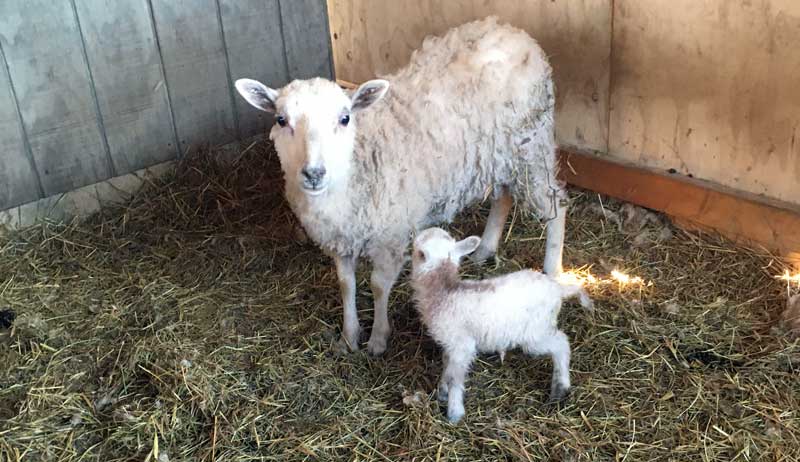
Tips For Managing An Orphaned Or Rejected Lamb

For some, lambing season is done or underway. Others (like me) will get into it later in the spring. If you raise sheep for any length of time, it’s probably inevitable that you will have an orphaned lamb if the mother dies or the lamb is rejected by the ewe after birth. In some cases, a ewe might have triplets or quadruplets and may not have enough milk for all of her lambs.

What I have learned after doing research and talking to some experienced sheep producers is that you don’t necessarily have to go straight to bottle feeding. Be aware, however, that this is where you may end up.

Colostrum: Baby’s First Meal

No matter what the reason, a newborn lamb’s first meal must be colostrum during their first 18 to 24 hours of life. In short, it is the key to the lamb’s survival.

Colostrum is the first form of milk produced by sheep (and many other mammals, including humans) that contains extra energy and nutrition for the lamb to maintain its body heat. According to Sheep 201, a lamb needs 10 percent of its body weight in colostrum during that key period.

In addition, the colostrum contains antibodies that help the newborn lamb resist disease for the first few weeks of its life.

You may be lucky enough to get some colostrum into your lamb from its mother before she leaves the picture. If not, you’ll need to get the colostrum in the lamb yourself. Some folks collect colostrum from another ewe that has given birth recently. I’ve read about using cow colostrum as well, but the research says you must feed more of it, as it does not have as much fat as sheep colostrum.

Another source is powdered colostrum that you can purchase from a local farm store or through several online sources.

To feed colostrum, you can start by trying to feed it from a bottle with an appropriate nipple. Many lambs do just fine that way. But some are so weak they are unable to even suckle on the nipple. 

So in that case, you’ll need to tube feed the little lamb until he is strong enough to stand and suckle on his own. The Purdue University Extension has a really good video on tube-feeding lambs that I try to watch each year. I have not yet had to do this, but I have all the supplies and try to be prepared just in case!


Read more: Lambing in winter? Stay ready to treat hypothermia.


What If Things Go Wrong?

OK, if you are like me (and a whole lot of other people), you are going to be anxious to make sure your lamb and mother bond and nothing gets in the way of the pair (or more!) bonding into a nice family.

If your mother ewe has died, then you obviously will have to take action. If another ewe is lambing in the next six to 12 hours and she has a single, you can try dousing the orphan lamb with the amniotic fluid and placing him next to the new mother to see if she will adopt him. 

But keep a sharp and constant eye on this situation, as some ewes will still reject the orphaned lamb and may even try to kill him! So pull up a camp chair or a bale of straw and settle in to see what happens. If the ewe does reject the orphan lamb, you will definitely have a bottle lamb on your hands.

In some cases, a ewe may seem to reject her lamb in the beginning. Some experts suggest putting a halter on her and tying her up so she cannot get away from the lamb. Another suggestion to “persuade” the ewe to accept an orphaned lamb is to put her in a headstall or stanchion that will keep her standing in place while the little guy tries to nurse. 

First-time mothers or ewes that are in pain or had a difficult birth may be more likely to not be accepting right away.

orphaned rejected lambs lamb

Check the Ewe’s Teat

It’s always a good idea to check the ewe’s teat to ensure colostrum is coming out. Grasp the teat with your thumb and index finger near the top of the teat and pull down gently. If you see a milky substance, you will know the wax plug has come out and the lamb should (in theory) be able to nurse.

In yet other situations, your ewe may have had triplets (or more!) and simply won’t have enough milk for all of the lambs. If she doesn’t reject any of them, you can supplement milk for one or more of the lambs. A good lamb milk replacer mixed exactly as the directions specify is probably going to be just fine and will allow all the lambs to stay with their mother. 

As to which lamb you should feed, I’ve read rationales for feeding the larger ones and letting the small one nurse, or the other way around. In my own personal experience, the larger, healthier lambs are more likely to want to nurse. Therefore I have ended up feeding the smaller one who isn’t getting to nurse as much.

The ins and outs of feeding a true bottle lamb comprise yet another complex issue I’ll talk about in the future. I’ve had to learn by making mistakes, but I always think it’s best to be prepared with information before lambing season starts … because you just don’t know what will happen. 

I’m pretty sure the only thing I can be sure of is that I’ll be challenged with a new situation many times in the future!

Categories
Crops & Gardening Farm & Garden Homesteading

The Case For Organic Seeds: Planting Resilience

There is a lot of engaging discussion about different organic farming and gardening practices, and the field is getting a lot of well-deserved attention. But one area that has been a slower to catch the limelight is organic seeds.  

Many home gardeners and hobby farmers grow with organic practices. However, they will still start the garden off using conventional seed. There is a shift taking place, though. As more of us dig deeper into gardening in a more ecologically friendly way, we’re also taking more time to better understand the seeds we plant.  

As always, consumers do drive our economy, which has led to more seed companies growing and supplying increased varieties of organic seed. But the road to being an organic seed farmer is not an easy one. 

organic seeds

Benefits of Organic Seeds

So what’s the big deal with organic seeds? In a nutshell: resilience. And how do seeds gain resilience? By having to fend for themselves! 

Seeds as a crop category are under much less regulation compared to food crops. Couple this with the fact that seed crops need to stay growing, maturing and ripening for many months longer than their food crop counterparts and you can see why it is a lot harder to produce a truly organic seed.  

As gardeners we all know that growing food organically has its challenges. And setting up a garden for success starts with healthy soil and diverse plantings matched to the location. How organic gardeners look at pests, soil disease or drought takes in more of the ecosystem around us than if we could spray a plant and “make it better.”


Read more: Here’s why you should consider buying local seeds for your garden, too.


Learning Lessons

But each time we give a plant the chance to fend for itself, it learns lessons to carry forward to the next generation. 

The idea is similar to seeds becoming regionally adapted to a specific location. I have seen my own home-saved “Blue Lake 7” pole beans become more adapted to my shorter growing season with hot and humid summers (hello Minnesota) over the decade I’ve saved them.

The same is true for seeds grown in an organic setting. They will likely keep gaining resilience each season they continue to be grown organically. 

Compare this to seeds grown with all the typical conventional chemicals. Those seeds start to rely on the chemicals and lose their innate ability to fend off some of those pests and diseases they have been sprayed for. 

I know which seeds I’d rather plant in my garden! 

Seeds grown organically have the resilience to grow without the help of pesticides or herbicides “covering their backs.” Many scientists see this as one way plants naturally enhance their own defenses. 

organic seeds

Cost Comparison 

You will generally pay $0.50 to $2.50 more for a packet of organic seeds compared to conventionally raised seeds. That is a small price to pay to grow organic. And it’s an even smaller price to pay to support organic growing practices in an industry that has such a large impact on the overall usage of harmful chemicals. 

We have the power as gardeners and farmers to choose where we buy from. My money is on the companies that put in the effort to grow organically! 

Michelle Bruhn
Forks in the Dirt 

Categories
Podcast

Episode 47: Christina Joy Neumann


Pittsburgh apiarist Christina Joy Neumann talks with Hobby Farms Presents: Growing Good host Lisa Munniksma about beekeeping, sustainability in the honey industry and more.

Learn about the evolution of Christina’s Apoidea Apiary and how she sees her career in architecture and her work with bees as intrinsically related. (Think about bees as natural architects!) She shares her fascination with bees as eusocial creatures and with their ability to efficiently make their own food and homes.

Hear about the 70 to 110 hives that Christina manages and the seasonality of beekeeping in urban Pittsburgh, both from the perspective of the bees and the beekeeper. Christina talks about the high-level craft of creating honey and how she encourages consumers to appreciate her Certified Naturally Grown honey as an artisan farm product.

Dive into what takes place behind the scenes of commercial-scale beekeeping, including the industrialized system of migratory beekeeping, commodified honey processing and labeling, and bee welfare. You’ll hear about the study Christina is participating in with a researcher at Chatham University about the question of what truly sustainable honey production would look like.

Get to know Burgh Bees, a beekeeper education group in Pittsburgh, and Co-Nectar, the honey tasting room, cafe, and art space that Christina and family members are opening in 2023. At the end, Christina touches on the terroir and different flavor profiles of honey.