Categories
Recipes

Fruity Banana Loaf

The "bread" cover--Hobby Farm Home Jan-Feb 2009The bread on the front of the Jan/Feb ’09 Hobby Farm Home sure is delicious looking!

So much so that the HFH editors received numerous requests for the recipe. While we don’t have the exact recipe, the name of the bread is “Fruity Banana Loaf.”

And rather than only one recipe, here are a few to try:

Banana Fruit Loaf

Ingredients

  • 1 1/3 cups flour
  • 3 tsp. baking powder
  • 1/2 tsp. salt
  • 1/3 cup butter
  • 1/3 cup sugar
  • 2 eggs
  • 1 cup mashed banana
  • 1/4 cup milk
  • 1/3 cup candied fruit
  • 1/4 cup seedless raisins
  • 1/2 cup chopped walnuts or pecans

Preparation
Sift together flour, baking powder, and salt. Add chopped nuts. Cream together sugar and butter until fluffy. Add eggs, bananas, and milk and combine well. Add dry ingredients to wet ingredients and mix until just moistened. Gently told in the fruit and raisins. Pour into 2 lightly greased loaf pans and bake at 350° for 20 to 30 minutes until golden in colour. Cool on cake rack. These loaves freeze well.

Fruity Banana Bread

Ingredients

  • 4 ounces (1/2 cup, packed) dried apricots
  • 1/3 cup orange juice
  • Nonstick cooking spray or vegetable oil, for greasing pan
  • 1/4 pound (1 stick) unsalted butter
  • 1 1/3 cups all-purpose flour
  • 2 teaspoons baking powder
  • 1/2 teaspoon baking soda
  • 1/2 teaspoon salt
  • 3/4 cup sugar
  • Finely grated zest of 1 orange
  • 2 large eggs
  • 1 cup (about 3 medium) mashed very ripe bananas
  • 1/2 cup mixed nuts, chopped
  • 1 tablespoon turbinado sugar or granulated white sugar

Preparation
Using kitchen shears, cut each apricot in half lengthwise. Holding halves together, cut four or five times crosswise. In a small saucepan, combine apricot pieces and orange juice. Bring to a boil, then remove from heat. Allow to rest until apricots have absorbed most of the liquid, about 1 hour.

Heat oven to 325ºF. Place a baking sheet in oven. Spray or oil a 9-by-5-inch loaf pan, and if desired, line with parchment paper. Melt butter in a microwave oven or small saucepan; reserve.

In a mixing bowl, combine flour, baking powder, baking soda, and salt; set aside. In a large bowl, blend together reserved butter, 3/4 cup sugar, and orange zest. Mix in eggs one at a time, then mashed bananas, apricots, and nuts. Stir in flour mixture one-third at a time, stirring well after each addition.

Scrape dough into pan, and sprinkle with turbinado sugar. Bake until a toothpick inserted into center comes out clean, 1 to 1 1/4 hours. Place pan on a rack to cool. To serve, remove from pan, and slice thinly. Serve at room temperature.

Fruity Banana Loaf

This one is described as vegetarian. Orginal measurements provided in metric. For conversion help try this>

Ingredients

  • 200g self-raising flour (about 3/4 cup)
  • 3 large bananas, very ripe
  • 1 lemon, grated zest
  • 75g golden raisens (about 1/3 cup)
  • 75g dried apricots, chopped (about 1/3 cup)
  • 2 large eggs
  • 125g super-fine sugar (about 1/2 cup)
  • 100g unsalted butter, softened (about 1/3 cup)

Preparation

Preheat the oven to 170°C, gas mark 3. Line the base and sides of a 13cm x 23cm x 7cm (900g) loaf tin with baking parchment. Cream the butter and sugar until they’re well blended. Break in an egg and beat it into the mixture completely, then beat in the other egg. Add the dried fruit and lemon zest.

Mash the bananas and add them to the mixture. Stir well. Sift the flour into the bowl and carefully fold in. Scrape the mixture into the prepared tin and gently level the top with the back of a spoon.

Bake for about 1 hour, but check the cake after 50 minutes. It’s ready when you can insert a knife into the middle and it comes out completely clean. Leave the cake in its tin to cool on a wire rack for 15 minutes, then turn it out of the tin and peel away the paper. Keeps for 5 days.

If you enjoy cooking (and want to learn a little more about heirloom fruits and veggies at the same time), check out Karen Keb Acevedo’s, Cooking with Heirlooms.

Categories
News

Farmers’ Markets

Farmers Market
More Local Food Opportunities
Click to Continue

Join the trend! Purchase fresh food products directly from farmers. 

Find a farmers’ market near you!

Read Related Articles

Categories
Farm Management

It’s Tax Time: How To Navigate The Tricky World Of Farm Taxes

Farms, like other businesses, make money or income (sometimes), and then farmers pay taxes on the income. In 1996, the federal government estimated farm households paid $19 billion in federal income taxes and $10.2 billion in social security and self-employment taxes. While being your own boss has its advantage, it can prove a challenge during tax season. Use this advice to smooth out this year’s accounting adventure.

The Basics

Taxpayers generally use the Internal Revenue Service’s form 1040, 1040a or 1040EZ to report their income. Farmers report their farm income on a form known as Schedule 1040F (or simply Schedule F). As the IRS uses the term, a Schedule refers to a sheet of paper that gets attached to the main piece of paper to explain it. In this case, Schedule F, which may only be used for income that comes from farming, gets attached to the taxpayer’s 1040 form to explain how the farm taxpayer earned his or her farm income.

Schedule C is the IRS form taxpayers use to report profit and losses from businesses that are related to farming but do not qualify for Schedule F, such as landlords who only have income from renting farmland. (If landlords “materially participate” in the running of the farm they may file Schedule F; however, this requires a lengthy tax analysis to determine whether they qualify.) Other farm ventures that would qualify for Schedule C include soil-preparation consultants, veterinarians, farm laborers, horticultural workers, farm managers, and people who breed, raise and care for dogs, cats or other pet animals.

The first part of Schedule F requires farm taxpayers to supply the details of their farm income. These questions involve how much livestock was bought for resale, as well as questions about crops that were raised and sold. Some miscellaneous sources of farm income also get reported, such as co-op distributions and payments from farm programs like Commodity Credit Corporation loans. Money paid for custom machine work and fuel tax refunds should also be included.

Schedule F and Gross Income

The second part of Schedule F asks about gross income (the big pot of money earned all year from all sources) and how that money was distributed for expenses on the farm. Total expenses are then deducted from income to show the net profit or loss of the activity.

Here are some of things the IRS says should be included in your gross income:

  • Compensation received for services rendered
  • Business income/farm income
  • Gains from selling property
  • Interest income you receive
  • Rents
  • Royalties
  • Dividends
  • Alimony
  • Annuities life insurance income
  • Pensions
  • Income from having debts paid off
  • Partnership income
  • Income from deceased
  • Income from estates and trusts

Deductible Expenses for Farmers

Of course, you always have expenses when running a business. Imagine you’ve collected in a pot all the money you made from farming, and now you have to deduct all the expenses you incurred running the farm. After these deductions, you have a net income, which may be positive or negative. (A deduction is an expense that the taxpayer can lawfully subtract from his or her gross income to arrive at his or her net income.)

Income tax is a progressive tax, which means the more taxpayers earn, the more they pay; those earning lower incomes pay less tax to the IRS. Deductible expenses for farm taxpayers include:

  • Advertising
  • Bad debts
  • Car and truck expenses
  • Chemicals
  • Conservation
  • Money paid for machine work
  • Depreciation
  • Employee benefits
  • Feed
  • Fertilizer
  • Freight
  • Fuel
  • Interest
  • Insurance
  • Legal and professional fees
  • Office supplies
  • Rent for land vehicles and animals used in farming
  • Repairs and maintenance
  • Seeds
  • Taxes
  • Travel and entertainment (up to 50 percent)
  • Utilities
  • Vet bills

There are several miscellaneous expenses that can also be deducted from farm income, such as certain amortization deductions. Amortization allows you to spread the cost of certain things over several years for tax purposes. If you think you might qualify based on your farming activities, the IRS has a pamphlet (publication 535) at that can tell you more about what is available.

Hobby Farm Loss Rule

Generally speaking, the tax code provides a lot of benefits to farmers and other people who own their own businesses. Many expenses related to earning a living, such as mileage, are deductible for small-business owners but not for employees.

One of the biggest tax advantages for the self-employed is that they can deduct all their losses from a business that is engaged in trying to make a profit. But if the business does not make a profit or if the IRS determines that the owners are not really trying to make it profitable, they might conclude it is an “activity not engaged in for profit.”

This rule is commonly known as the “hobby loss rule.” Here are three examples of how the rule might apply:

  1. Farmer Sue only farms—she has no other job. She starts growing heirloom greens on her 20-acre farm. The first year she earns $2,000, and has expenses of $3,000; her net loss is $1,000. Because she has no income to tax, her losses should be fully deductible.
  2. Farmer John grows the same crop with same results. But he has a job in town that earned him an additional $1,000. When he adds his $1,000 earnings to his $1,000 loss, he has zero income for the year, so he should get a refund.
  3. Farmer Anne grows the same crop and gets the same result as Farmer Sue. However, the IRS examines her return and concludes she is not really trying to make a profit and the hobby loss rule applies to her. Even though she had expenses of $3,000, the IRS only allows her to deduct $2,000 because this is the amount of her profits. She had a job in town that paid $1,000, as well, but she cannot offset all of that income with her full loss, so she has to pay income taxes on her in-town earnings.

Section 183 of the tax code governs “hobby losses.” This section of the tax code was passed so Congress could close down what it perceived as inappropriate farm and horse shelters. The law sets up a presumption that if an activity shows a profit in three out of five tax years, then the taxpayer is engaged in it to make a profit. In the case of horse operations, the business must show a profit in two out of seven tax years. Here are the factors the IRS uses to determine hobby farm losses:

  1. The manner in which the taxpayer carries on the activity.
  2. The expertise of the taxpayer or his or her advisors.
  3. The time and effort expended by the taxpayer in carrying on the activity.
  4. The expectations that the assets used in the activity may appreciate in value.
  5. The success of the taxpayer in carrying on other similar or dissimilar activities.
  6. The taxpayer’s history of income or losses with respect to the activity.
  7. The amount of occasional profits, if any, which are earned.
  8. The financial status of the taxpayer.
  9. The elements of personal pleasure or recreation.

Audit-proof Your Tax Return

As you structure your farm activities you can take some steps to audit-proof your return. First, ask yourself the following questions, which the IRS uses to evaluate farm and horse operations. By doing some planning you can take practical steps to save yourself some money.

  • Does the taxpayer carry on the activity like a business?
    First and foremost you must be able to show the IRS that you carry on your farm activities in a business-like manner to make money. For example, if you have purchased advertising to promote your business, you should be prepared to show it to the IRS. Further, your accounting should be clear and adequate; expect to supply photocopies. Also, you should maintain separate checking accounts for personal and business expenses. If you belong to a breed association, keep accurate and timely records.The next thing you should do is to have a written, documented business plan that is realistic. (You may only be asked about whether you have a business plan at the first initial interview, but you should be prepared to produce it at any time.) You can expect the IRS to compare your farm’s numbers against other similar farms. The IRS can readily obtain these estimates through extension offices and other sources for industry numbers on farming operations. Next, make sure that if all went well, your business plan would show a profit.Also, be prepared to show that on a day-to-day basis you are running the operation like a business. This means daily activity records, but it’s also a matter of showing that you’re looking for ways to increase your efficiency.
  • How much expertise do the taxpayer and his or her advisors have? Businesses that want to make money seek out expert advice. If you have sought the help of extension personnel or other knowledgeable sources, you need to be able to show that. You also need to document, based on expert advice, that you implemented changes that made your business more profitable. If you didn’t follow through on expert advice, the IRS may want to know why you ignored it.
  • How much time and effort is the taxpayer putting into the activity? In addition to being prepared to answer how much time you’ve put into the operation, you should be able to describe what you did. For example, time spent reading and going to seminars will count, but time actually doing the farming or horse work will count more. You should provide examples of time spent reading journals and magazines, time at seminars and time spent doing work repairs and day-to-day operations.
  • Does the taxpayer expect that the assets used in the activity will go up in value? This factor is your expectation that the assets you used in the endeavor will appreciate in value. The largest asset in most farming operations is usually the land itself, and being able to show that the land is being used for farming; demonstrating that it’s appreciating is a big factor.There’s a danger factor here, which you should know about: If you plan on retiring on the property, then this factor will not go in your favor. A decision to retire on the farm could show that your motivation was to have an enjoyable retirement spot and not a profitable farming venture. If you think the farm is appreciating in value, then you should be prepared to show it with appraisals.
  • What success has the taxpayer had in similar or different activities? This factor looks at how much business success or failure you have had in different ventures, not including your “day job.” For example, a medical doctor who is also a restaurateur would be evaluated against his or her past business success in running restaurants—not the main career of practicing medicine.
  • What history of income or loss has the taxpayer had with respect to the activity? At first glance this would seem to be the essential question. And yet, if the taxpayer has done his or her homework, he or she may be able to prevail and show a profit motive in spite of a history of losses.

As a precautionary note you should keep an eye out for any expense related to your farm that is large, unusual or questionable that you intend to deduct. For example, is there something you spent money on that you have not before? Or were vet bills unusually high for some reason?

If you do supply information about your operation to show how you’re trying to make a profit, make sure it’s accurate. Even if the IRS examiner appears not to know much about farming, he or she will have resources at his/her disposal. It is a very bad idea to make things up. For example, one farmer submitted a video to the IRS showing his beef cattle operation. Unfortunately, all the cattle in the video were Holsteins—dairy cattle. If the IRS wants to tour your operation, get all your ducks in a row.

Surviving IRS Scrutiny

One of the easiest things you can do to be sure you survive this kind of scrutiny is to gather as much extension evidence as possible about your operation. Some IRS personnel will have great expertise and experience in agriculture; others will only know what they have read. If you can show your operation is being run according to the best practices you can find, you should have a leg up on proving that you have the expertise to run a profitable operation. You should also be prepared to speak about general trends in the commodity you’re raising.

One thing you should not do is report other income on the farm Schedule to make it look like you’re making money. Do not give in to the temptation to report income from a non-farm activity under farm income to make it look like you are turning a profit. For example, say you have a farm with an orchard and an office you use for a holistic dental practice. These ventures are too different, so income from each should be reported separately. Penalties for willfully reporting false information to the IRS can be quite severe and could include fraud charges.

  • Have you had occasional profits? If the business has made even an occasional profit this needs to be emphasized. You also need to show you’ve learned from the years that showed profit and that you have integrated those lessons into your operation.
  • What is your financial status ? People without money generally abandon activities that don’t turn a profit because they run out of money and have no choice but to find other ways to support themselves. However, taxpayers with cash reserves can afford the losses until the business starts to make money. Also, you’ll be in a better position to argue for deducting all of your losses if the business is the only activity you’re doing to make a living.
  • How much of your farming activities is for personal pleasure or recreation? Don’t expect the IRS to necessarily buy your contention that running the business is all misery. The IRS will know that livestock operations in particular offer many rewards. You should know that a savvy IRS examiner wouldn’t call your operation a “hobby” to tip you off. Instead, he or she will call it an activity not engaged in for-profit. If possible, you should impart to the examiner that you’re in it to make a dollar, and although there are many things that are pleasurable, it’s also a lot of work.

Election Options: Denying or Allowing Losses

There’s another option taxpayers should be aware of: If it looks like the operation will make money—but not right away—the taxpayer can make a choice to put off determining whether or not the business is a for-profit venture. This means that the issue won’t be determined until the end of the fourth tax year for farm operations and not until the end of the fifth year for horse operations. If you have losses, but think it likely you’ll make money fairly soon, this could be an important option. You can still take deductions before year four and five.

Here’s an example where losses would be denied:

Bill buys a farm in the country with a lovely house that he intends to retire to someday. Many of the surrounding farms are now subdivisions and his farm is only an hour away from the large city Bill lives in. Bill grew up in the city and knows nothing about farming, but he likes llamas so he buys his own herd. The livestock pens at the farm are old and Bill leaves them as they are. He never had a plan for making money and never prepared a business plan. Bill thinks all the money is coming out of the same pot anyway, so he only has one checkbook and writes all of his personal and business expenses out of that checkbook.At an IRS examination, it would be hard for Bill to show that he meant to make a profit. He did not have financial records nor did he have a business plan or separate accounts. And, he never sought out help to make the operation show a profit.

Here is an example where losses would be allowed:

Sarah inherits a 40-acre farm. She grew up on the farm and helped her mother raise vegetables for
market. She, too, moves back to the farm and begins transition into
organic production. She regularly consults with local extension agents and other organic farmers, has a five-year business plan, is pursuing organic certification and has many contacts with local produce markets. She keeps extensive field journals on vegetable varieties and crop rotations so she can immediately tell which vegetables made money for her and which did not.At an audit, it would be easy for Sarah to show her intention to make a profit. She kept separate books, sought expert advice and changed her operation in an effort to make money.

Note: This article does not constitute financial or accounting advice and does not form an attorney-client relationship.

This article first appeared in the March/April 2004 issue of Hobby Farms magazine.

Categories
Beginning Farmers

Daily Living and a Cali King

This Day… A Daily Guide to Living
I discovered this book when the author, J.T. Jones, sent me an autographed copy along with a brief note. He explained how he owned and operated a dairy, hog and crop operation in Michigan for 28 years and how he understood the culture of farm people. His book, This Day … A Daily Guide to Living, is written in a daily devotional format—a brief, one-page story and prayer for every day of the year, organized by date. Jones’ introduction discusses how the busyness of our everyday lives robs our good intentions of becoming realities. This devotional is an aid in keeping your best intentions in good repair.

Not everyone has time each day to sit down and curl up with a good book. This Day does not require that time from you. It asks for only about five minutes to read and reflect on the message for the day—always a pertinent one I believe. Many of its stories are about farm folks, with an earthy and occasionally humorous tone. Though Mr. Jones is an ordained clergyman, his stories are not “preachy” or wrought with religiosity. They just make sense to most readers and particularly appeal to rural folks.

If you’ve got five minutes a day to devote to an inspiring, uplifting tidbit of text, get This Day… A Daily Guide to Living and leave it by the bed to read each morning when you get up. I’ve come to look forward to that time each day.
—KKA

The King of California
I’m a sucker for nostalgia. Historical elements pull me into a book or movie like nothing else. Give me a story set somewhere back in time and I’m there. My favorite era to get lost in is the first half of the 20th century. The King of California: J.G. Boswell and the Making of a Secret American Empire, by Los Angeles Times staffers Mark Arax and Rick Wartzman, turned out to be right up my alley.

The book recounts in accurate detail the Boswell family’s rise to power as owners of a farming empire in California’s agriculturally rich Central Valley. The cotton kingdom the Boswell’s created there—after moving to the state in the 1920s and draining her massive Tulare Lake—still exists today. Set against California’s yesterday, the book transcends you like a Steinbeck novel. The book’s characters are well developed, but not even J.G. Boswell himself—who was reluctantly interviewed by the authors and is the book’s central figure—is as compelling as mid-20th century California.

Today J.G. Boswell is the biggest farmer in America and the largest recipient of subsidies. His family’s mutilation of California land and subsequent rise to riches and power explains why it took the authors two years to get him to tell his story. Persistence paid off in the form of a must-read for thosewho enjoy toiling in California’s illustrious past.
—TM

Categories
Beginning Farmers

Buying the Farm

By John and Sue Weaver

Old Farmhouse vs. New

Question:

I am interested in buying a 12-acre fixer hobby farm here in Indiana. My wife would prefer acreage with a brand-new home. What are the pros and cons of each?

Answer:
According to the latest census, there are 119 million detached, single-family dwellings in the United States; 4.5 million homes built before 1920 have a median value of $98,794; 9.9 million constructed since 1990, $183,502. So you can often move into an older home for roughly half the cost of a newer one-but should you?

Consider this:
Fewer than three in 10 of those vintage homes have two or more full bathrooms, and only two out of 10 have central air. Old homes tend to be poorly insulated, so energy costs are considerably higher. And owners of older homes spend an average of $509 on annual home upkeep; post-1980s homeowners only $338.

But there are advantages:
Older homes are generally landscaped with mature shrubbery and fine old trees. They were constructed when quality counted and were generally built to last. In today’s market older homes cost considerably less per square foot than newer constructions. And because fewer buyers are interested in fixer-uppers, sellers will often haggle on price.

Think carefully, however, before committing to a fixer-upper. Can you do the work

Resources:

Find It, Buy It, Fix It, 2nd edition;
The Insider’s Guide to Fixer Uppers

by Robert Irwin
(Dearborn Trade; 2000)

The Complete Idiot’s Guide to
Investing in Fixer-Uppers

by Stuart Leland Rider
(Alpha Books; 2003)

yourself? Do you want to? Paying to have it done can quickly negate any savings. And until you’ve refinished a battered hardwood floor or re-shingled a roof, don’t assume you know what you’re getting into. Scraping, painting, hammering, hauling off junk-this is hard, sweaty work. And it may gobble up your leisure hours for longer than you think.

If you’re still considering a fixer, choose your project wisely. Cosmetic problems are easily remedied: a neglected yard, peeling paint, musty carpets or kitchen cabinets. Structural problems aren’t. Leaky roofs, dry rot, foundation damage, pervasive mold, a bad furnace or plumbing, outdated electrical wiring-these will cost you dearly, as will oddball floor plans that prevent expansion without making major structural changes. Your best ploy: have any fixer that you’re seriously interested in professionally inspected before you sign. It’s better to spend a few hundred dollars now than thousands down the road.

If you plan to live in your fixer farmhouse for a good, long time, you can probably accept a few quirks: old-style windows, no bathroom on the ground floor, tiny bedrooms. But if you’re buying it to resell, consider that most buyers demand modern conveniences.

And no matter how much you have your heart set on a specific old house, calculate the costs going in-and don’t pay more than it’s worth. Be sure to set aside enough money to complete the repairs you must make to the home’s structure, then invest additional time, cash and “sweat equity” at your leisure.


Closing the Deal

Question:
I’ve been salting back money toward a hobby farm down payment and feel I have enough banked to start shopping. However, I need a better understanding of closing, including costs. Can you provide me with some basic information?

Real Estate Referral

Moving to the country? The Property Owners
Manual
by Randall Bell is a pocketbook-sized
reference guide packed with information on
property buying, selling, building, repairing
and much more. Don’t let its small size fool
you-this book is over 600 pages long. For
more information, contact Owners Manual
Press at (949) 497-7600.

Answer:
Once you’ve selected a property and have a loan approval, your lender will set up a closing (or settlement) date-a meeting between you, the seller, his real estate agent and yours, and possibly an attorney or two. Closing generally occurs 30-60 days after loan approval. It’s the official transfer of ownership between buyer and seller, and the process isn’t cheap: costs generally run between three and six percent of a property’s purchase price and they’re due on the date you close.
Within three days of securing a property loan, your lender will present you with a written truth-in-lending statement and an estimate of your closing costs. Between then and closing, investigate the following:

– Homeowners Insurance
Your lender will require homeowners insurance in at least the amount of your loan, effective the day of closing. You’ll pay the first year’s premium in advance. Your agent will present you with a prepaid insurance declaration statement; you must bring it with you to closing.

– Title Insurance
You’ll probably need title insurance too. This guarantees the title is free of liens, encumbrances and other nasty surprises. Most lenders require it. It’s worth its nominal cost even if a lender doesn’t require it.

– Seek Representation
If you want your attorney to review documents at closing (it’s a good idea), arrange for his presence in advance.

– Final Walk-Through
One or two days before closing you’re allowed a final walk-through of the property you’re buying. Take your time. Make certain everything the seller promised to fix is working to your satisfaction; except in cases of fraud, he’s not responsible for repairs or property conditions after closing.

– Uniform Settlement Statement
The day before closing, review a copy of your Uniform Settlement Statement (it’s a detailed itemization of settlement costs prepared by the title company or whomever is conducting the closing). Buy a certified check in that amount to take to the closing, and make certain you (and anyone else signing as buyers) have photo ID with you as well.

On the day of closing, expect the following:

– Fees
On the big day, expect to reimburse the seller for prepaid property taxes and pay for (among other things) document preparation costs and notary, appraisal, verified credit report, inspection, escrow, courier and state recording fees.

– Legal Documents
Your attorney will examine and you’ll sign and receive copies of legal documents that typicallyinclude a settlement statement, a mortgage note establishing your obligation to repay your loan, your title insurance policy and the deed to your new farm.

– The Hand Over
After signing all paperwork and handing over your certified check, the seller will present you with keys, along with any materials you may have asked for as part of the settlement, such as results of inspections conducted as part of the sales process, well and septic system documentation, and appliance instruction manuals.
The entire transaction should take about an hour and is costly, but at its conclusion you’ll own a farm!

Based in Arkansas, John and Sue Weaver have been hobby farming and home buying for more than 20 years. 

Categories
Recipes

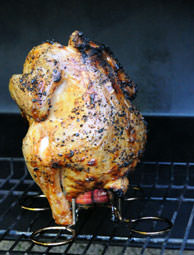
Barbecued Beer-Can Chicken

How to make the perfect Barbecued Beer-Can Chicken from Hobby Farms

Smoky, spicy, crispy but juicy—it may be the best chicken you ever taste. The beer can is placed inside the chicken’s cavity and acts as a stand and steamer. The skin becomes crispy while the beer keeps the meat moist on the inside. The spicy barbecue seasoning will leave the bird looking delectable and tasting even better.

Ingredients

Spice Rub:

  • 2 T. paprika
  • 1 T. salt
  • 1 T. black pepper
  • 1 T. cayenne pepper

Glaze:

  • 2 T. packed light brown sugar
  • 2 T. white vinegar
  • 2 T. beer
  • 1 T. hot sauce

Beer and Chicken:

  • 2 (12-ounce) cans beer
  • 4 bay leaves, crumbled
  • 2 whole chickens, rinsed and dried (3 to 3 ½ pounds each)
  • 4 cups wood chips

Preparation
Mix paprika, salt, black pepper and cayenne pepper in bowl. Loosen the skin on the chickens by sliding your fingers underneath on the breasts and thighs. Massage the spice rub into the skin, under the skin and inside the chicken. Use a skewer to poke the skin to release as much fat as possible. For the glaze, stir brown sugar, vinegar, beer and hot sauce together in a medium bowl. Add a little spice rub. Add 2 tablespoons beer.

Use a can opener to punch holes in the top of the beer cans. This releases the maximum amount of steam from the can. Soak wood chips in water for 15 minutes. Place wood chips in an aluminum tray and place on center burner of a gas grill. Turn all burners to high and close lid; keep closed until wood chips start to smoke, about 15 minutes. Leave center burner on high and turn off all other burners.

Place chickens (on beer cans) on center grate and balance using the drumsticks. Cover and grill until skin is well browned and crisp, about 40 to 60 minutes depending on the grill. Brush with glaze, cover and grill until thigh meat reaches 170 degrees on a meat thermometer, about 20 minutes longer. Wearing oven mitts, transfer chickens (still on cans) from grill to cutting board and let stand for 10 minutes. Pull chicken off the cans by holding the can while inserting tongs into the cavity and lifting the chicken from the can. Carve, serve, enjoy!

Try more Kentucky-style chicken recipes!

Categories
News

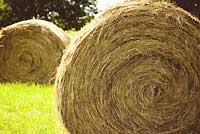
Test Soil for Quality Hay, Crops

Test Your Soil for Quality Hay

Related Articles

More Events

For growers to get the most for their money–and from their fields, a Purdue University expert recommends getting a soil test–and an excellent time to do that is now.

Keith Johnson, Purdue Extension forage specialist, predicts that demand for hay will be high this year. He says the quailty hay will sell quickly, but also expects yields to be lower than producers would hope for.

One good reason to get a soil test is the increase in fertilizer prices; knowing how much fertilizer your soil requires can help ensure you don’t buy more than you need.

Depending on soil test results, Johnson said, potassium and phosphorus might need to be applied. The best time to apply recommended fertilizer as prescribed by a soil test is the day after bales have been removed from the field, he said.

Contact your Cooperative Extension office for information about certified soil-testing laboratories and to learn more about soil testing in your area.

Learn More an Indiana Workshop
Individuals wanting to learn more about forage fertilization and how to get the most out of their crop may with to attend Purdue Forage Day, which will be held June 26 from 8:30 a.m. to 4 p.m. in northeast Indiana.

Other forage day topics to be covered:

  • Indiana sales tax as it relates to the forage enterprise
  • Co-ensiling forage and distillers grains
  • Possible double crop forage crops to follow winter wheat
  • Attributes of a viable lignocellulosic biofuel forage crop
  • The size of equipment growers should buy
  • An equipment demonstration

For directions and more information, visit https://www.agry.purdue.edu/forageday/index.html or call Keith Johnson at (765) 494-4800.

Categories
Recipes

Canned Apple Pie Filling

Canned Apple Pie FillingThis tasty pie filling comes in handy for fast wintertime desserts–use it to make apple pie or apple crisp, or serve warm over ice cream, pancakes or waffles.

Ingredients
Peeled, cored and sliced apples (any kind) to fill 6 one-quart jars
4 ½ cups sugar
1 cup cornstarch
2 tsp. cinnamon
½ tsp. nutmeg
10 cups water
3 T. lemon juice

Preparation
Pack apple slices tightly into the hot, sterilized quart jars. Measure sugar into a heavy-bottomed Dutch oven or stock pot. Sift together cornstarch, cinnamon and nutmeg; stir well to combine with sugar. Gradually add water, whisking vigorously to remove lumps. Cook over medium-high heat, stirring often, until thickened and bubbly.

Remove from heat and stir in lemon juice.

Using a ladle and canning funnel, pour syrup over packed apples in jars, leaving a ¾-inch headspace. Slide a butter knife between mixture and sides of jar to remove any air bubbles; add more syrup if necessary. Wipe rims of jars, seal with prepared lids and rings, and process in a boiling water bath for 20 minutes. Makes 6 quarts.