Categories
Crops & Gardening Farm Management

Planning—Your Garden—Makes Perfect

gardening, managementPlanning–Your Garden–Makes PerfectGet organized early this year by charting your garden plan now before spring. Check out our planning calendars, charts, checklist tips and more.garden, charts and lists, springGet organized early this year by charting your garden plan now. Check out our planning calendars, charts, checklist tips.Get organized early this year by charting your garden plan now. Check out our planning calendars, charts, checklist tips and moreCrops & Gardening

By Kelly Wood

Get organized early this year by charting your garden plan now before spring. Check out our planning calendars, charts, checklist tips and more

Photo by Rhoda Peacher

I am a list-maker—I admit it.

I get a little compulsive, sometimes having to make lists of my lists, just to keep myself straight. I like the look of a list—it stages what you want or need to do in a nice, tidy, easy-to-read way.

I really like to cross things off of lists as I complete them. I’ve been known to write something on my list after it’s completed, just so I can have the satisfaction of crossing it off. (My husband caught me doing it the other day.) I get a nice sense of accomplishment seeing it at the end of a long, tiring day.

I use charts and lists for almost everything on my farm.

It saves my sanity, especially in the spring and early summer, when the timing of planting, hardening off, transplanting and protecting is of utmost importance.

They’re also vital in autumn when I’m so preoccupied with harvest and preserving that it’s easy to forget about planting for the cooler seasons.

If I had employees, I would start them off with a chart of what needs to be done and rely on that to be their manager for much of the time.

Get organized early this year by charting your garden plan now before spring. Check out our planning calendars, charts, checklist tips and more
Photo by Rhoda Peacher

Phenological Signs

  • Plant corn and beans when elm leaves are the size of a squirrel’s ear, when oak leaves are the size of a mouse’s ear, when apple blossoms begin to fall, or when dogwoods are in full bloom.
  • Plant lettuce, spinach, peas, broccoli and cabbage when the lilacs show their first leaves or when daffodils begin to bloom.
  • Plant tomatoes, early corn and peppers when dogwoods are in peak bloom or when daylilies start to bloom.
  • Plant cucumbers and squash when lilac flowers fade.
  • Plant potatoes when the first dandelion blooms.
  • Plant beets and carrots when dandelions are blooming (good succession planting plan, too).
  • Plant peas when the forsythia blooms.

Sources: The Old Farmer’s Almanac, University of Wisconsin Extension

Top

These days, gardeners and farmers can choose from several options to help schedule the work and jobs that must be handled.

Whether you prefer computer programs or actual paper forms fastened to a clipboard, posted on a wall or slipped into your pocket, there are ways to organize your garden planning duties into a format that will work for you and, more importantly, get you into your garden faster.

Top

Phenological Signs
Years ago, before paper was easily obtained and computers were nonexistent, people used the signs of nature to let them know it was time to plant their annual edibles.

This is called phenological planning, and it was a mainstay of the annual Old Farmer’s Almanac.

People sometimes chalk these up as “old wives tales,” such as, “When the white oak leaves are the size of a mouse’s ear, it’s time to plant corn.” (See “Phenological Signs” for more.)

However, I find some of them to be useful harbingers of what the weather is going to do. I remain convinced that the animals and plants can better sense natural timing than humans can, and it behooves us to take our cues from them.

I began to practice phenological planting several years ago—I have dogwood, forsythia, daffodils and lilacs scattered around to act as indicators. The dandelions are there, too, but not by choice.

Nature’s lunar planting method dictates that the moon’s gravitational pull has an effect on certain parts of a plant and can benefit its germination and growth.

I have a friend who religiously uses her “Planting by the Moon Calendar.” It tells what days are best for seeding, direct planting or transplanting. It also reassures her that there are certain days that aren’t optimal, thus assuaging her guilt about not doing any garden work.

Top

Computer Programs
With so many programs for our computers these days, any software store near you should carry garden-planning software.

I have an older program called Sprout, which allows me to make a view of my garden and then “plant” it on screen. When it’s all planted, you can print reports, such as a shopping list of seed quantities to take along to the nursery or a calendar of when to plant and when to expect harvest, all based on your planting plan.

This year, I shared in a computer reminder system.

A friend put all the dates that she had for planting certain crops into a basic computer calendar program. She asked several other gardeners to write her for one year with the dates that they planted their crops, and she recorded those, too. The calendar program pops up a reminder when certain things need to be done—you can even program it to send you an e-mail alert. This is a great method for people who use their computers daily.

Journals and Diaries
I’m adept at keeping records of some things but fall short on details of others.

I operate best with boxes that can be filled in with concrete values. For those of the same mind, A Gardener’s Journal published by Lee Valley is great—a 10-year perpetual diary, it provides areas to record planting details such as temperatures and weather, and there are five or six lines to jot other details.

You’re able to look back easily over the previous years and see what was happening on your farm at that same time.

When you use garden journals, it’s great to record mundane details.

I used it to record when certain trees began to bloom over the last few years, helping me coordinate phenological planning.

By recording things that are otherwise commonplace, you might be giving yourself clues down the road for patterns you didn’t know existed. Some of those details might not be as dull as you think at the time—it’s fun to look back and read about what was going on in our lives back then.

Top

Specialty Charts
I made a special magnetic chart to do my crop rotations—I got a piece of furnace sheet metal at the hardware store and sheet magnet from TAP Plastics.

I spend several days each summer with a pile of books on companion planting, germination techniques, cover cropping and my magnetic board, moving things around, referring to past plans and looking up good companions and things to avoid combining.

I chart it all out on the board, and then, when I’m sure, I write it (in pencil) on a paper sheet that has a schematic of my garden on it.

An elaborate poster I got for Christmas details all the information you’d want to know about growing annual produce in one big picture. It comes laminated, and I put grommets at each corner so I can move it seasonally from my plant-room wall in the winter and spring to the wall of my shed in the summer and fall.

Homemade Charts
The sheer volume of daily details can make work on a farm overwhelming. I often find myself en route to one task getting waylaid by another, completely forgetting what I was doing in the first place, only to come upon the tools, detritus and half-done job hours later. I need specific charts and lists to keep my bearings.

I use Microsoft Excel to make my own charts and put them into a nice, tidy form, including columns for the date and crops. I assign geometric columns and rows for whatever data I think I’ll need.

On my small farm:

  • I keep count of how many eggs I’m getting daily and how many dozens I sell.
  • Costs of feed have gone up dramatically, and this helps me determine if the girls are paying for their room and board.
  • When I milk the goats, I keep track of the quantity from each milking; this can help predict when the goats are in heat or feeling sick.
  • Whenever I pick produce, I mark it on my homemade chart with the date, variety and weight. I’ve often gone back to those records to see when I got my first harvest of certain crops or when customers can expect to see certain things for sale based on historical precedent.

Top

My Seed Planting Charts
I recently composed a chart for seed planting that has spaces for date, type of seed, approximate amount, bed they were planted in, spacing if necessary, and a long line for “germination or emergence details.” I store the chart on the refrigerator door where I keep my seeds.

Every time I put away a seed packet, I see the chart and immediately write down the details before I forget. I like to have clipboard charts in my garden shed to fill in as I go.

I have two different “what-to-plant-when” charts. They’re laminated, and I and keep them near the
garden: 1) by two-week increments and 2) a general guide for each month.

The lamination protects them and can be written on with a wax pencil. Anything that will be changed or replaced, like the paper copy of my magnetic board plan, gets a sheet protector with the open side down. That way I can clip it on my fence for reference, keeping out the rain, but still make changes and amendments as the season progresses.

Keep Paper and Pencil Handy
If I don’t have my individual charts with me, I find it helps to have a piece of paper and pencil.

At my best, I carry a small tablet with me in my overalls or alongside my tools in my wheelbarrow. Sometimes I’ll scribble something on a receipt I find in my pocket. This is a problem when I open the dryer and find shards of a list mixed in the lint trap. I worry for days about what I had written and am now forgetting.

Top

Guidelines for Chart Use

1) Always write in pencil. It doesn’t run in the rain, and it can be erased; not that it would have to be—some facts can’t be changed.

It was indeed tomatoes that I picked, but as soon as I’ve written down that I got 23 pounds of Lemon Boy, I can be assured that it either wasn’t Lemon Boy or that my husband picked four additional pounds and took them to the kitchen for dinner.

It’s no big deal to cross out details, but when it comes to the end of the year and I’m trying to tally up how many pounds were yielded for the amount of seed I planted, I’m happy to have it easily readable.

2) Keep the chart visible in your work area. If you put it in a folder or tuck it into a drawer or shelf, it probably won’t be used. I even attach a pencil on a string to some charts so it’s there when I need to make notes.

3) Check your charts often, or make using them a part of your routine. If a chart tells you when to plant seeds in the spring and you only look at it every three or four weeks, you’ll miss some important dates. If it’s a chart that needs to be filled in for your records, make sure using it is part of the routine. I bring out my weight chart every time I bring out my scale.

4) Make the records interesting—make them appeal to you so you’ll want to use them.

  • Print them on colored paper or use a nice clipboard.
  • Draw on them with garden themes or print graphic clip art.
  • Color them in or write with brightly colored pens.

I made a notebook with tabs for each crop I grow. Instead of writing the name, I drew a tiny picture of the vegetable itself. If you don’t like the appearance of the chart, you’re not going to use it. The important thing is to find the method that works for you.

All of this record keeping serves to help me as a small business owner outside of a typical office environment.

If it were needed, I have an elaborate paper trail for all of what I’ve done for the last seven years. In any business setting, that can be invaluable; although, I sometimes feel a little inundated with charts and clipboards and get tired of carrying a constant list.

I wish I had the brain that my husband has, being able to remember things reliably and readily, but I’m easily distracted, and there are so many details on a farm, I can’t keep them all straight without my reference materials.

I like getting e-mail planting updates; they bring my garden work to the forefront of my mind—until I get away from the computer, go downstairs and see the dishes that still need to be cleaned up—and find my packet of seeds from last week on my desk, and put it by the back door where my garden clogs live.

Maybe I’ll just start a list of what needs to be planted. I’ll go get paper from my desk drawer—oh, there’s that box of stuff that needs to go to the basement. And while I’m down there I’ll check the laundry. I think I heard the washer beeping …

About the Author: Kelly Wood compulsively checks calendars and fills in homemade charts for her hobby farm in Portland, Ore.

Top

This article first appeared in the January/February 2009 Hobby Farms. If you enjoy this article, you’ll get more like this and others especially for those interesting in rural living — from gardening to raising livestock. Subscribe online today>>


Categories
News

62 Groups Request NAIS Not be Part of School Lunch Program

Groups opposed to NAIS and school lunch connection

Keeping the school lunch meals out of range of the National Animal Identification System (NAIS) is the goal of 62 organizations that recently signed a letter to the House Appropriations Committee asking Congress not to connect NAIS to the School Lunch Program.

The proposed 2009 Agriculture Appropriations Bill would require the School Lunch Program to buy only meats derived from farms registered with the NAIS. 

The NAIS is a controversial three-step program that calls for registering, tagging, and tracking every single livestock and poultry animal in the country, whether or not the animal is kept for food.

Promoted by the U.S. Department of Agriculture as an animal health program, NAIS has faced opposition from organic agriculture and consumer groups, family farming organizations, and property rights advocates from across the country who argue that its only true effect will be to harm both farmers and consumers.

The concerned organizations fear that requiring NAIS:

  • Will not improve the safety of school food because most food contamination occurs at the packing plant and handling facilities, after NAIS monitoring ends.
  • Will discourage local and sustainable farmers from being involved in the School Lunch Program, which means reduced access to safe and healthy foods.
  • Will diminish the widespread support for farm-to-school programs that has been created in recent years. Says Ozer, “These programs actively involve local producers and avoid the health risks associated with centralized food processing such as the recent Hallmark/Westland recall.”

Read More

Source: Farm and Ranch Freedom Alliance and National Family Farm Coalition

Categories
News

New Manure Runoff Rules Approach. Are You Ready?

The EPA has put new rules into effect regarding animal waste seeping into running waterYou’ve probably heard that the Environmental Protection Agency has put out tough new rules dealing with how livestock farms must manage animal waste to keep it from running off into streams, rivers or groundwater.

What you may not have heard is that the deadline for complying with those new rules is right around the corner.

By February 27, 2009, several classes of agricultural operations—including concentrated animal feeding operations (CAFOs) and farmers who apply manure to the land as a crop nutrient—must take action.

CAFOs must either have National Pollution Discharge Elimination System (NPDES) permits for any discharges of manure runoff into water bodies or have third-party reviews and records to show that they do not discharge.

Farmers spreading manure need to have a Nutrient Management Plan (NMP) in place and they need to have records to prove that their land application practices meet the terms of their NMP.

Industry leaders say the regulations are serious, and if you aren’t already in compliance, you need to take steps to do so, as farmers and ranchers could be slapped with tens or hundreds of thousands of dollars in fines for discharges that occur without a permit. 

The Next Step
Rick Swenson, director of the Animal Husbandry and Clean Water Division at USDA’s Natural Resources Conservation Service, says the main thing livestock producers should do is get an NMP or comprehensive NMP (comprehensive NMPs are tailored for livestock operations) and know how to use it: “If you do nothing else but that, you’re likely to exempt your fields from being regulated under the Clean Water Act.”

You may think that because your operation isn’t very big, the CAFO rules don’t apply to you. Think again, Swenson says.

“If you confine animals for more than 45 days and there isn’t vegetation in the production area,” you fall under the new rules, he warned.

Parrish said it’s mainly important to determine whether there is the possibility of runoff—a discharge—either because of where and how you store manure or the layout of your operation. Even if your operation is very small, you could be regulated just as heavily as a large CAFO if you discharge manure runoff into any water body that eventually connects to a navigable waterway regulated by the federal government under the Clean Water Act.

If you store manure in a barn or other covered area and you don’t take it out to the land (i.e., expose it to rain) until you’re spreading it as fertilizer or selling it to someone else, you probably don’t need a permit, says Parrish.

You do still need to keep records of what you’re doing, and you should have a third-party auditor review your operation for any red flags.

“Don’t assume you’re in the clear,” Parrish said. “Every producer probably ought to go ahead and have someone come out and look for the things that the producer may not catch on his own.”

NRCS Assistance
Local NRCS (Natural Resources Conservation Service) offices can help with doing on-farm evaluations, developing NMPs and giving producers a list of third-party technical service providers in their area.

Swenson says farmers shouldn’t hesitate to go into their local NRCS office and get some help with their nutrient-management planning.

NRCS is required to protect the confidentiality of farmers’ information. In fact, even if you apply for an NPDES permit, you have to give the NMP information to the regulatory agency because NRCS won’t.

“We work with the environmental agencies, but we work for the farmer,” Swenson emphasizes.

Swenson says his agency worked with EPA in developing the new CAFO rule to ensure farmers and ranchers had some choices in how to respond to it. He offers three options:

  1. Get a comprehensive NMP. “I think everyone ought to strongly consider doing that,” Swenson says.
  2. Get certified by a third party (meaning not the farmer and not the regulator) as having no discharge of pollution.
  3. Get a discharge permit.

“There are some farms that, because of their size, proximity to waters of the U.S., or the kinds of soils and landscapes they have that might increase the potential for a discharge, the only way to get protection from enforcement is to get a permit,” he said.

NRCS is developing a pamphlet to help you understand how the new CAFO rule might affect you, what you need to do to comply and where to get more information. The pamphlet will be available in early 2009.

Categories
News

Sustainable Standards in the Planning Moves Forward

moving forward toward sustainable standard in the United States

Groups for Sustainable Agriculture

Click here to get links to groups involved in sustainable agriculture to learn more.

Photo
courtesy
USDA/Scott Bauer

Could a national standard for sustainable agriculture in the United States be established in the near future?

A meeting of a standards committee working toward a national standard indicates steps forward and a number of agreements are being made.

Sustainable Standard’s Difficult Issues
According to a report from the Leonardo Academy, which is facilitating the discussion, committee members identified difficult issues on the table:

  • the relationship between organic, mainstream and sustainable agriculture;
  • the place of genetically engineered crops in sustainable agriculture;
  • the degree to which sustainable agriculture standards should establish a path for continuous improvement;
  • inclusiveness of small and mid-size farms, as well as mainstream and conventional agriculture;
  • the sequestration of carbon in soils and the role of agriculture in the global fight against climate change;
  • the strength of labor protections;
  • the intersection of product safety and sustainability; and
  • whether the scope of the standard should extend beyond plant agriculture to include livestock and other sectors of agriculture.

Those serving on the Standards Committee, the guiding body for development of the standard, represent U.S. agricultural production, food and clothing manufacturing, retail, government, environmental and labor organizations, academia and certification.

Leonardo Academy, a nonprofit organization that specializes in using market-based incentives to advance sustainability and improve the environment, is facilitating the current process as an ANSI accredited standard developer.

What Else Happened
The Standards Committee agreed to form work groups to:

  • Conduct a needs assessment for the sustainability standard, including potential market and agricultural applications
  • Review and articulate the mission, principles and scope of work ahead
  • Collect reference documents to inform the standard setting process
  • Report on potential methodologies and indicators for measuring various aspects of environmental, social and economic sustainability
  • Identify potential funding sources to support full stakeholder participation in the process
  • Outline outreach opportunities for soliciting involvement from all affected stakeholders

What’s Next
The Committee with continue the formal process of review and standard-setting–and the public can look for chances to weigh in.

A public review process will be held before the draft final standard is submitted for consideration as an American National Standard.

Learn More
You can read more information on the first Standards Committee meeting, including the approved motions and a list of Standards Committee members.

Top

Categories
News

Cheese Making Workshops in Oklahoma

The HLA Country Farm in Talala, Oklahoma is hosting two more hands-on milking and cheesemaking workshops on May 24 and 31. 

Cost is $50 per person.

Each participant will have the opportunity to learn how to milk both cows and goats. 

After milking and cleanup are completed, the cheesemaking portion of the workshop will begin.

Openings are limited to 8 people per workshop, so register early to ensure a place.
Call 918-371-5367 or visit https://oklahomarawmilk.homestead.com

Cheese Making in Oklahoma

More for cheese-making fans!

Cheese Making Basics
Got (Homegrown) Milk?

More Upcoming Events and Classes for Farmers!

Categories
News

Choctaw Horses Need Help, Homes

Can you help the Choctaw or Cherokee horse?

There are fewer than 200 horses and less than a dozen breeders. Committed owners and breeders are needed immediately.

According to the American Livestock Breeds Conservancy (ALBC), the primary breeding herd of Choctaws and Cherokees have suffered losses due to:

  1. The loss of access to over a million acres of timberland
  2. Lack of alternate grazing lands

The foundation herd is held by Bryan and Darlene Rickman in Oklahoma. The Rickmans have been stewards of this important breed for decades.

ALBC is working closely with the Rickmans to develop and implement an effective conservation breeding plan.

What do the Horses Need?
Six to ten breeders are needed to take on specific breeding groups of three to five horses, including a stallion.

  1. Individuals willing to become long-term stewards for these horses.
    Commitment should not be entered into lightly – this is an important genetic treasure that needs to be maintained. Only committed individuals, prepared to breed and promote these horses for decades, should consider acquiring breeding herds.

    People able to commit to this level of support must also be willing to see that these horses are passed to the next generation of stewards when the time comes for dispersal.

  2. Many horses need homes.
    There are a number of extra stallions that can be gelded and trained immediately, and many yearlings whose genetics are well-represented within the herd that will make fine riding horses after a couple years of growth. These horses may go to individuals looking for saddle horses. This is still a significant commitment, as horses are known to live 20-30 years.

    The horses are available at a reasonable cost, though you should also consider transportation costs in your planning.

  3. Other support-related efforts.
    For those unable to take on horses, ALBC welcomes your financial support for this and other rescue efforts.
About the Horses
Choctaw and Cherokee horses represent two unique strains of Colonial Spanish horses.

Choctaw and Cherokee horses are:

  • Known for their mild temperaments
  • Highly intelligent
  • Delightfully people-oriented
  • Have excellent feet and are surefooted and hearty

Who Should I Contact
If you are able and willing to help conserve Choctaws, please contact the ALBC office as soon as possible at:

ALBC
PO Box 477
Pittsboro, NC 27312
919-542-5704

albc@albc-usa.org

For more information about the horses, contact:

Bryant and Darlene Rickman
580-326-6005
Byrant cell: 580-743-1991

Sisty Monroe
sistymonroe@aol.com
580-326-8069

Categories
Animals

Livestock Feeders

By John & Sue Weaver

The type of animal eating should be considered when buying feeders
Premier1 Portatrough

In this article …
Basic Feeders
Timed Feeders
Tubs, Troughs and Bunks
Baled Hay Feeders

If you raise animals on your farm, you know the truth: They waste a lot of feed if you don’t use the right kind of livestock feeder. We can’t address every kind of animal feeder used in every situation, but let’s look at types you’re most likely to have on your farm: hay and grain feeders for horses, cattle, goats, sheep and camelids, many of which you can use to feed your pets and other livestock, too.

Before buying feeders for any species, evaluate the models you’re considering with these points in mind:

1. Are they durable? Horses chew. Rams and bucks batter feeders for the joy of hearing them crunch. Some materials shatter (producing serious safety hazards) in sub-zero weather; others degrade when exposed to prolonged summer sun. If you aren’t sure the product you’re buying will last, consider one that comes with a good warranty.

2. Are they safe? Metal feeders with sharp edges tear skin. Larger feeders must be designed so foals and calves can’t get inside of them. Stability is an important feature; top-heavy feeders are easily pushed over and often injure young stock.

3. Are they designed for the animals that will use them? If your animals have horns, make certain feeders accommodate horned stock. What works for horses may not work for smaller stock and vice versa. Sheep that reach up to nibble hay from a horse-feed bunk are constantly showered with fleece-ruining chaff; horses will easily dump over and ruin a chest-high, sheep hay feeder. Can all animals, even youngsters, reach the feeding stations?

4. Are they practical? Are goat feeders designed so that wasteful goats can’t climb in them and spoil good feed? Are hay feeders designed to catch chaff or does it fall on the ground and get ruined underfoot? Are the units easily cleaned? Repairable? Recyclable?

Basic Feeders
A wide variety of feeders are designed to serve individually portioned concentrates indoors. Horse feeders must be ultra-sturdy. Tough, longwearing, stainless-steel items like Nelson’s 13-quart Models 540se and 560se are hard to beat. Nelson feeders have a built-in, feed-saver lip that prevents feed flinging; they’re also warranted for one year.

 The Noble Corner Feeder is durable and sturdy
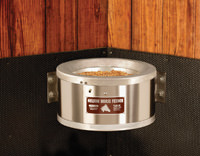
Noble Corner Feeder

Basic, welded-rod hayracks like Country Manufacturing, Inc.’s models CM212 and CM213 wall-mounted units are a simple answer to feeding hay to stalled horses. They’re welded of 716-inch hot-rolled steel and built to last. The CM212 mounts on flat walls, the CM213 in corners and both hold a lot of hay.

Another Country Manufacturing offering, the Model CM2125 combination feeder, is welded out of rugged, 16-gauge steel with heavy, steel hay bars. It’s designed to feed both hay and grain. Priefert’s brawny Model HGFNB hay and grain feeder is built of similar materials and performs the same function. These sturdy, dual-feed feeders are mainstays in many horse operations and they work exceedingly well for other species, too.

A simple, natural way to feed large, stalled animals is the Noble Panels and Gates’ large, sturdy corner feeder manufactured of seamless molded poly- urethane. Designed with a roomy central area to allow animals to eat hay with their heads at ground level in a natural grazing position, and with two built-in side pans for feeding salt, grain or supplements, it can be used in either stall or paddock.

Top

Timed Feeders
Sometimes it’s hard to feed on schedule, yet livestock thrive when fed on time. The answer? Timed setups based on HayDay’s Stable Grazer hay feeder coupled with an automatic grain dispenser.

Timed feeders like the Agpro Pro Feeder can simulate grazing
Agpro Pro Feeder

The galvanized steel, battery-operated Stable Grazer is engineered to deliver individual flakes of hay up to six times per day. This, plus its close-to-the-ground manger, is designed to simulate natural grazing activity. It can be stall- or fence-mounted and used to feed virtually any sort of livestock that eats baled hay.

Quick Feed automatic grain feeders come in manual, electronic and solar-powered models in single- and double-feed units designed to feed horses, small livestock and household pets. The QFS electronic feeder holds 50 pounds of pellets or grain, or 25 pounds of dog or cat food. It can be programmed to dispense one to five cups of feed up to 12 times per 24-hour period. All Quick Feed units are constructed of high-impact, polyurethane plastic and designed to be mounted under cover or indoors.

Agpro’s watertight, rodent-proof, stainless steel Pro Feeder can be used indoors or out, and while it’s built for horses, it can be used to feed livestock and pets as well. Like Quick Feed automatic feeders, it holds 50 pounds of concentrates, feeds up to 12 times per day and comes in electric or solar- powered versions, including a 230-volt version for overseas customers.

Top

Tubs, Troughs and Bunks

 The HayDay Stable Grazer prevents wasteful tipping
HayDay Stable Grazer

Anyone who feeds hay or grain from tubs knows how annoying (and wasteful) it is when animals dump them over or stand in them. Sydell’s neat Model 811 sectional feeder for hornless goats stops those wasteful behaviors cold (and the feeders work for other small livestock, too). This six-sided, 12-opening feeder built of heavy, 12-inch, solid rods encloses a sturdy, easily removable poly tub at a height of 16 inches above the ground. This feeder works admirably well for sheep and small camelids, too.

Premier1’s PortaTrough stackable poly troughs are low-slung, practically tip-proof grain feeders. They come in 36- and 60-inch models, and are easily carried by hand or on an ATV. Designed for sheep, they work well for every sort of small livestock and for feeding multiple pets.

Even the most determined goat can’t stand in or tip over Tarter Gates’ Billy Goat Gruff super-sturdy, low-to-the-ground, V-style trough. Available in 4- and 8-foot length models, they quickly pay for themselves in the grain you save (we know because we use them ourselves).

We also use Billy Goat Gruff low-slung, goat-size bunk feeders and hay racks for our sheep. At 14 inches in height and 64 inches long, these sturdy poly bunk feeders are ram-tough (and the galvanized hayrack’s 4-inch by 4-inch spacing really cuts down on waste). Take note: Tarter Gates’ American Farmland product line features a full lineup of similar units for horses and larger livestock in 5- and 10-foot long models.

Baled Hay Feeders

 The Nelson 500 Series baled hay feeders
Nelson 500 Series

Tarter Gates’ Equestrian World Equine Hay Basket is a unique feeder engineered to feed multiple small, square bales of hay in small group settings. A framework of heavy-duty, 134-inch, round tubing cradles a smooth-sided, easily removable poly basket designed with large vent holes to let moisture out, but keep hay in. It works well for camelids, too.

It’s a fact that hay growers can bale, move and store big bales more economically than small ones, so in many parts of the country (our own included), it’s becoming increasingly difficult to purchase small, square bales of hay. However, research conducted at Purdue University showed wastage of 22.6 to 38 percent occurred when big bales of hay were fed directly on the ground, so when feeding big bales, use a feeder!

Finding Feeders

Agpro
www.profeeders.com
800-527-1030

Country Manufacturing, Inc.
www.countrymfg.com
800-335-1880

Crystalyx (Goat-Lyx)
www.crystalyx.com
800-727-2502

Farnam
www.farnamhorse.com
800-234-2269

HayDay (Stable Grazer)
www.stablegrazer.com
800-732-1654

Nelson Manufacturing
www.nelsonmfg.com
888-844-6606

Noble Panels and Gates
www.noblepanels.com
800-437-3966

Preifert
www.preifert.com
800-527-8616

Premier1
www.premier1supplies.com
800-282-6631

Quick Feed
www.quickfeed.com
800-211-4206

Sweetlix
www.sweetlix.com
800-325-1486

Sydell
www.sydell.com
800-842-1369

Tarter Gate (American Farmland, Billy Goat Gruff, Equestrian World)
www.tartergate.com
800-REDGATE

Hay-Mizer’s 8-foot square, big bale feeder is engineered to be used with a raised, wooden floor, making it a waste-resistant choice for feeding cattle. It’s designed to feed big, round or big, square bales, is bull-proof and feeds up to 20 cows at any one time.

Cattle owners who prefer a classic, round design, but who are tired of replacing standard hay rings every few years, should investigate American Farmland’s Model RBF 3-Piece Extra Heavy-Duty Bull Hay Feeder; American Farmland promotes it as the heaviest and tallest (54 inches) metal hay ring in the industry.

Horses that dine from standard hay rings rub their manes and abrade their necks, and horned cattle catch their heads in classic, closed-top designs. Equestrian World remedies these situations with their models GHF (galvanized) and RHF (red-coated) 3-Piece Horse and Horned Cattle Hay Feeders. These feeders are open-topped, A-frame feeders fabricated of 134-inch round tubing while Priefert’s Model RBFH, 22-gauge, sheet metal round-bale horse feeder does away with top bars altogether to create an uncommonly safe design.

Sydell’s Models 886 and 887 collapsible goat and sheep hay feeders (for round and square bales respectively) are built using horizontal bars welded of 15-gauge, square tubing, making them suitable for feeding both horned and hornless breeds.

Premier1’s six-panel, collapsible WirePanel Big Bale Feeder is designed for hornless sheep and goats. It features small holes for less wastage and adapts to most bale sizes and shapes. The unit provides hay for an average of 40 ewes and conveniently folds flat when not in use. There are four head holes per panel.

About the Authors
John & Sue Weaver are long-time hobby farmers based in Arkansas.

Top

Categories
Homesteading

Repel Mosquitoes and Ticks, Naturally

By Stephanie Staton

Eastern Black Nightshade
Photo courtesy Virginia Tech Weed ID Guide

Agricultural Research Service (ARS) scientists have discovered a naturally occurring compound that is derived from pine oil. The patented compound, isolongifolenone, repels mosquito bites and two types of ticks; compared to DEET, a popular synthetic chemical repellent, it is more effective on mosquito bites and equally efficient against the two ticks species.

Mosquitoes and ticks bear blood-borne diseases that they pass on through their bites as they feed on human and animal blood. Whether your concern is for your animals and/or yourself, a natural repellent that has less impact on the environment as well as fewer dangerous, engineered chemicals is a preferable option for many.

The pine oil-based repellent is not yet in production; investors and manufacturers are being sought to produce it commercially. It can be prepared from pine oil feedstock in ton quantities for commercial applications. Its inexpensive, relatively easy development is an advantage over other natural repellents for mass production and distribution.

About the Author: Stephanie Staton is managing editor for the Popular Farming Series and associate editor for Hobby Farms and Hobby Farm Home.

Top


Categories
Crops & Gardening Urban Farming

Container Gardens for Herbs and Vegetables

By Tom Meade

Learn how you can grow vegetable and herb varieties in containers within easy reach of the kitchenSmall is beautiful. Visit any American city with ethnic neighborhoods and you will find a diversity of vegetables and herbs growing in five-gallon buckets, flower pots, and other containers on fire escapes, balconies and driveways.
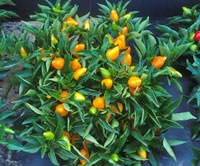
Growing vegetables and herbs in containers gets easier every season as seed companies introduce new varieties to grow in small spaces.

At the same time, more manufacturers are developing more efficient growing containers.

Even for gardeners who have plenty of space to cultivate a full-fledged garden, it’s nice to have a container near the kitchen door with:

  • Chives and tarragon for a classic French omelet
  • Crisp basil leaves for a fresh tomato-and-mozzarella salad, as well as
  • Thyme, parsley, oregano, sage and other savory herbs.

Container Gardening, photo courtesy USDAIn side-by-side flower boxes last summer, all of those herbs grew stronger, taller and longer in plastic boxes.

Herbs grown in wooden boxes required two to three times more water and fish emulsion, and many of them bolted prematurely.

This season, seed companies are offering more varieties specifically for growing in containers or small places.

In its 2008-2009 catalog, for example, Pinetree Garden Seeds in New Gloucester, Maine offers two pages of compact vegetables for container growing including broccoli, cukes, eggplant, peppers, winter squash and more.

Vegetable Varieties for Containers
Here’s a compact list of compact vegetable varieties commonly offered by seed companies:
  • Chin Chang bok choy
  • Munchkin broccoli
  • Pot Luck cucumbers
  • Patio Pickle cukes
  • Mohican eggplant
  • Pintree Kitchen Sink greens
  • Mohawk bell peppers
  • Apache chilo peppers
  • Delicata winter squash
  • Tom Thumb tomatoes
  • Totem tomatoes 

(List courtesy Pinetree Garden Seeds)

Paper or plastic? Poop, please!
Some conservationists believe that starting vegetable seeds in plastic or peat pots is a small, but unnecessary, waste of natural resources.
 
Making seed-starting pots with rolled newspaper is an easy way to recycle paper, and like peat pots, a paper pot can go directly into the soil. It decomposes as the seedling’s root system develops.

Several seed companies, including Underwood’s Gardens, offer a wooden tool for making paper pots.

Now, a dairy farm in Connecticut is using composted manure to make seed starting pots and trays. The so-called CowPots are available from many natural and organic gardening suppliers including Territorial Seed Company.

Perennial Pleasures
For the last four years, a retired whiskey barrel filled with compost has provided a spring, summer and fall’s worth of versatile and perennial herbs, just outside the kitchen door.

Such container gardens require no work, only a regular gulp of water and an occasional meal of fish emulsion.

This one includes chives, French tarragon, Greek thyme and Greek oregano.

The oregano is a bully that tries to crowd out the others, so it needs to be thinned.

Repotted, the thinned oregano plants make great gifts. When thinning makes more space available, it’s filled with a rosemary plant and some flat-leaf parsley.

More Shade Needed with Today’s Decks
Many of today’s synthetic deck materials reflect more of the sun’s heat to the underside of a vegetable plant’s leaves, so patio plants need a little more shade.

A sheet of half-inch hardware cloth between plants and the sun provides both sunlight and shade, especially important for such plants as cilantro and arugula that tend to bolt to seed easily. Several seed companies also offer herb varieties that are slow to bolt.

About the Author: Freelance writer Tom Meade is an avid gardener and loves to work in his kitchen.

Categories
Equipment

Drive-Through Farm Gates

Don’t get out of your toasty-warm truck to open that gate! Get a drive-through gate and make winter a bit more bearable.

In our family, John drives our vehicles and I man the passenger seat. As such, it’s my duty to hop out and open every gate we encounter.

It’s wearing, especially in foul weather, be it torrential rain, swirling snow or steamy, Southern heat. I think we need drive-through gates on our farm. Maybe you do, too.

Cattle Guards

The simplest drive-through gate and the most traditional is the cattle guard, an in- or close-to-the-ground device crafted of parallel rows of sturdy pipe spaced four inches apart and set to the width of an open gateway. Cattle guards are built wide enough to totally span the gateway in question (sometimes with the addition of wings) and are generally 8- to 14-feet long.

Cattle guards are built primarily to contain cattle. Deer often leap across them; horses sometimes try to ford them (injuring themselves in the process); and at least one group of clever British sheep learned to roll across them commando-style (“Crafty Sheep Conquer Cattle Grids”).

There are several types of cattle guards to choose from. Portable cattle guards are supported by springs so they lower to the ground when a vehicle passes over them, then spring back into position six inches above the ground.

Permanent units come in boxed and flat styles. Boxed guards sit directly on the ground; flat guards are placed atop shallow trenches.

Most cattle guards are built locally to order (ask your county extension agent for plans or download them free), but several major manufacturers market ready-made cattle guards as well.

Powder River builds the H-15, a flat-style cattle guard rated at 12 tons per axle, fitted with or without a built-in, three-rail, hinged cleanout section. Powder River also sells end-wing sets and locks for their cattle guards.

BarnWorld, the Farm and Ranch Superstore, markets a neat, portable ATV Cattle Guard crafted of 1 1⁄2-inch, 11-gauge tubing designed to lie directly on the ground, with no special installation needed. The company also offers flat- and box-style standard cattle guards built with or without removable boxes designed for easy cleaning.

Bump Gates

Inexpensive, farmyard bump gates are the essence of simplicity: an electrified polyethylene or fiberglass arm (or two, depending on the width of the opening) extends across an open gateway, bisecting two stretches of electric fencing; to open the gate from the cab of the truck or tractor, the operator gently bumps the arm, it swings open on pivot posts and the operator drives through; the gate closes smoothly behind him.

Ecklund Gates’ bump gates adjust to fit openings from 10- to 16-feet wide. While they’re designed for permanent installation, they can also be mounted on portable posts and moved from location to location. The body of an Ecklund Drive Through Gate is covered with rubber, so it’s soft to bump, and its patented Wind Gust Damper locks the gate shut quickly once the vehicle passes through.

Koehn Marketing’s Drive-Thru Electric Gate ships in adjustable 13- to 19-foot standard models and an ultra-wide 18- to 24-foot gate. Koehn bump gates’ flexible, polyethylene arms are designed to break away should they become snagged on a tractor or truck. Electrical yellow streamers dangling from the arms shock animals that attempt to pass through the closed gate.

Automatic Gate Openers

When most folks think of drive-through gates, they think of massive estate gates swinging wide at the press of a button. While most automatic gate-opener manufacturers build posh models, some design gates for everyday residential applications, too.

There are lots of good reasons for installing automatic security gates on your farm. In addition to saving immeasurable time and effort in opening manual gates, an automatic gate moves your first line of defense away from your home and out to the perimeter of your property. Your possessions will be safer, you’ll entertain fewer uninvited guests and unwelcome salespeople, and a stylish road gate adds flair (and value) to your farm.

Automatic gate openers come in two basic styles: swing gate and sliding gate openers. Swing gate openers are the classic choice. They come in one- and two-wing models; each wing hinges to an outside pivot point and is usually set to swing away, rather than toward the roadway. Single-wing gates are less costly than dual-wing models; they’re less expensive to install than sliding gates and most authorities think they’re safer (and easier to open), but they don’t work well on driveways with an upward incline.

Sliding gates are better when there’s limited room for swing gates to swing in a 90-degree arc. They’re also ideal for installation across driveways built on a sharp incline. Security experts say that locked sliding gates are more secure than swing gates because their weak points are generally less accessible and they hold up better if driven into.

Sliding gates come in track and cantilever models. Track gates slide along a metal rail embedded in the ground, whereas cantilever gates are suspended over the driveway on a post assembly. Whichever style you prefer, keep these points in mind when choosing an automatic gate opener:

  • Shop for a gate with sensors (photobeams) that halt or reverse the gate if an object or person gets in the way.
  • Look for a gate equipped with a backup battery pack or a manual, “fail-safe” system so the gate can be opened during a power failure.
  • For added safety and security, make certain its control panel cabinet is lockable.
  • A plus: A gate with warning lights alerts anyone near the gate of impending movement.
  • Opt for access control features that suit your needs: keypads, card readers, radio receivers and telephone access are a few of the usual options.
  • Choose a model that has been safety-tested by Underwriters Laboratories (UL) and/or Electrical Testing Laboratories (ETL).
  • Keep in mind that the location and climate where the gate is installed and the material and structure of each gate combine to create a unique situation particular to each automatic gate opener application. It’s always best to discuss your needs with a qualified dealer before selecting a make or model.

Electric Gate Openers

There are hundreds of electric gate openers on the market; some of the best are manufactured by GTO/PRO and sold under their GTO/PRO and Mighty Mule labels.

The difference: a licensed electrician or skilled do-it-yourselfer should install some (though not all) GTO/PRO gate openers, while Mighty Mule installations are specifically designed with the typical home handyman in mind. GTO/PRO manufactures a wide range of commercial and residential gate openers in both swing- and sliding-gate styles, most of which are solar-compatible.

GTO/PRO’s PRO-SW1500 and Mighty Mule 350 gate openers, for example, are specifically designed for rural applications; both handle swing-style farm gates weighing up to 350 pounds with ease. These gates work on easy-to-install, one-piece, low-voltage systems and are ideal for solar applications. They provide up to 175 open-close cycles per day and up to 1,500 backup cycles on a fully charged battery.

GTO/PRO’s Mighty Mule 500 Single Gate Opener is America’s No. 1 do-it-yourself gate opener. It neatly manages swing gates weighing up to 850 pounds and up to 18 feet in length. The Mighty Mule 500 incorporates such high-end features as commercial-grade Soft Start/Soft Stop and an extra-large control box pre-wired for an optional second battery. Like all of the Mighty Mules, it comes with a detailed manual and video that makes installation a breeze.

Turnstyle Enterprises, on the other hand, manufactures a new type of automatic gate opener based on the company’s patented Turnstyle Gate Remote Power Actuation System.

This revolutionary system utilizes an integrated mounting post and power activator that delivers rotational movement of the mounting post itself. Due to this arrangement, the force required to open or close the gate is minimal, so the Turnstyle power actuator is smaller and consumes less energy than most conventional gate openers.

The company builds powered and manual units in both pillar-mount and ground-mount configurations.

Hydraulic Gate Openers

While most hydraulic gate openers are engineered for heavy-duty commercial applications, some manufacturers build residential units as well. One of the beauties of easy-maintenance, hydraulic gate openers is that they have no external moving parts; since these openers are self-contained, they require less maintenance than most other types.

FAAC USA manufactures an array of brawny gate openers for both commercial and residential use. The FAAC USA Model 402 Hydraulic Swing Gate Operator is tailored for average single-family use; the Model 422 is designed for more demanding single-family use.

Either model can move a 900-pound gate leaf 90 degrees in a mere 12 seconds, they’re easily lockable in open or closed positions, and they’re fitted with a convenient manual mechanism. Battery backup units are available for both models and they can be packaged to be UL-325 compliant right out of the box, meaning no additional peripherals are needed.

Byan Systems also builds a line of almost totally maintenance-free, hydraulic, residential gate openers designed for easy installation. Its 500 Series Operator is designed for gates up to 12 feet long that weigh no more than 1,500 pounds. Whereas most gate openers must be mounted on the side the gate will swing toward, Byan units are always mounted inside the property, yet the gate itself can be installed to swing inward or outward.

Drive-through gates have a place on every hobby farm. They make farm living just a little bit easier and nicer. Install one (or two or six)—you’ll enjoy the convenience!