Categories
Animals

Christmas Wish Lists for Hobby Farmers

Compiled by Cherie Langlois

The other day I saw these petite, Poinsettia-red tractors sitting in a lot by the freeway, decked out with backhoe and front loader. I don’t even know what kind they were, but they looked adorable and visions of all the backbreaking work one would save us around the farm danced in my head.

If Santa thinks a tractor would be too expensive or mean too much time spent tinkering with it, I’ll settle for a stocking full of chocolate.”

As the season of giving approaches with the relentless speed of Santa’s turbo-sleigh, one’s thoughts naturally turn to unnaturally long lists of the people you have yet to buy or make presents for: kids, spouse, parents, grandparents, friends, teachers, garbage hauler, the veterinarian who handled a midnight lambing emergency and so on.

For those of us who participate in the tradition of holiday gift-giving, this is a time to selflessly show our love and appreciation to the people (and animals) we care about, to the folks who are important in our lives and to those who have little or nothing.

We, of course, expect nothing in return.

OK, that’s a flat-out lie. I don’t know about you, but Santa better have something for me in his sleigh, too, or I’ll be pouting big-time.

It doesn’t have to be anything huge or expensive (although a tractor would be most appreciated and useful, too; see my bio), just a token to show that somebody (and you know who you are) put some thought into what I might like. Because, you know, it’s the thought that counts.

But enough about me. I thought it would be fascinating—and fun—to find out what a handful of farmers like you want most for Christmas. Do farmers, I wondered, wish for the usual holiday gifts squashed into variety stores and malls this time of year: perfume and jewelry, coffee mugs and robes, DVDs and CDs? Not likely, as it turns out.

Santa, please take note.

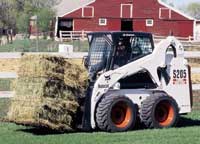
Trisha Tank's Christmas wish: a skid steer

Trisha Tank tends registered black Angus, dairy goats, rare poultry, mini-donkeys and horses with the help of her farm collies (and husband Aaron!) on Bilrite Farms in northwestern Minnesota.

All I want for Christmas this year is a skid steer! Why a skid steer you might ask? Well, why not?

After talking to neighbors and other farmers who have one, it seems that a skid steer is the new ‘hired hand.’ It can clean lots; landscape; and move hay, dirt, rock, fence panels and more. A skid steer can get into tight spaces our large tractor can’t and it’s lighter so, with the spring thaw, it offers longer maneuverability around the farm as the frost comes out of the ground.

Yes indeed, a skid steer would make for a very nice present and if Santa can’t fit it into his sled in December, perhaps he can pass along my request to the Easter Bunny?”


Dee Heinrich and Ashley's Christmas wish: More time to do the things the love to do

Dee Heinrich and her daughter Ashleigh, of Peeper Hollow Farm in Marion, Iowa, spend a large hunk of their 24-hour days producing award-winning, coated fleeces for hand spinners from their flocks of Romney and California Variegated Mutant sheep.

What we want for Christmas is 365 extra hours—an average of about one hour for each day of the coming year.

These would be hours that are totally free to use as we see fit; not ‘free time’ or ‘work time’ or anything-in-particular time. We would no longer be able to say, ‘I’ve just run out of time!’—we could withdraw what we needed for the day to attend to wherever we had fallen short.

Just imagine all that we could do with an extra hour in every twenty-four!”


“Having had trials and tribulations with predators recently, I suppose a Great Pyrenees guardian dog or guard donkey would be at the top of my Christmas list—we’ve had bobcats and skunks reaching under the wire of our mobile pens at night and eating our broiler chickens.

Then I can live more in harmony with the predators and they can learn to get their food elsewhere.”

Paul Hain, of John Hain & Sons, and his wife Leticia raise certified organic broiler chickens and turkeys amidst an 80-acre organic walnut orchard in Tres Pinos, Calif.


Carol Anne Sayle's Christmas wish: a total ban on mandatory NAIS

Carol Ann Sayle, along with her husband Larry Butler, nurtures a colorful variety of USDA-certified organic vegetables and bling-free chickens on Boggy Creek Farm, which actually encompasses two farms in and near Austin, Texas.

What I want for Christmas is: a total ban on a mandatory National Animal Identification System (NAIS), which would require hobby farmers to RFID [radio frequency ID] 100 or so free-range chickens.

Hens, unlike human ladies, do not want to wear any ‘jewelry’ at all! And we don’t want to pay thousands of dollars a year for the ‘privilege’ of keeping chickens. After all, the Constitution gives us the RIGHT to keep chickens and this right should not be infringed upon by anybody, with the exception of the occasional raccoon or opossum.”


What I want for Christmas is … a walk-in cooler/refrigerator for my chicken eggs. Right now I keep the eggs in four or five small refrigerators; I’ve also got eggs in my neighbors’ refrigerators!

It would be so nice to keep them in one spot and to have a big refrigerator with shelves that I could walk into, look at the eggs all at once and stand up in instead of kneeling.  It gets to be a pain!”

Denise Anderson, with her husband Cameron and son Peter Beno, markets certified, naturally grown eggs from 400 chickens of 10 different breeds at 2 Silos Farm in Mount Gilead, Ohio. They also tend a home/market garden and small flock of sheep.


Patty Putnam's Christmas wish: always-healthy, well-cared-for goatsPatty Putnam keeps pet dwarf goats on her farm in Wisconsin and markets her self-published book, Basics and Beyond—Goat Care Management, to new goat keepers worldwide as part of her never-ending quest to encourage proper goat care.

What I want for Christmas is always-healthy, well-cared-for goats coast to coast, whether they be backyard pets, show stock, brood stock, production animals or meat or fleece producers … no matter.

Goats give us back so much more than most of us ever give to them—they are amazing animals!”


What I’d like for Christmas is … a new well. Last summer our well ran dry for a few days and we had no backup. We had to get water from the neighbors and the gas station, hauling it in jugs, about 35 gallons at a time.

With all our livestock, water is a big concern right now.”

Robert Turbyfill, Jr., helps his wife Dawn raise rare-breed cattle, ducks, turkeys, chickens and more on Heirloom Heritage Farms in Spanaway, Wash. They also breed alpacas under Cedar Grove Alpacas, LLC.  


What I want for Christmas is the appropriate amount of rain for our area—spread out over 12 months.

What I don’t want is so much rain that Glory [one of our goats, at left] has to don her life jacket when the creek starts to rise—or the drought we’ve suffered through for the past 18 months or so.
 
For the past several years, we’ve either had flooding or drought; I want moderation!

Ken, on the other hand, would simply like to receive the winning multimillion dollar [$100 million or better] lottery ticket. He envisions attending the production sales like Showstopper knowing he could buy all the goats there if he chose to and building a state-of-the-art, self-cleaning goat barn in order to allow the goats to live in the manner they would like to become accustomed to.”

Pat and Ken Motes raise South African Boer goats for breeding and show. on Clear Creek Farms in Fall River, Tenn.


At the top of my Christmas list would be one more llama, but I don’t think my husband would go for that, so I’m going to have to drop a hint about a new-and-improved microscope for checking our llamas’ fecals.

We’ve been regularly performing our own fecal checks for about a year and have learned a lot about our llamas’ parasites. I have to refocus often with my current [mid-price range] microscope and it would be easier to use one like my veterinarian has.”    

Marilyn Nenni and her husband Jim keep around 45 to 50 llamas for show and breeding at Shagbark Ridge Llamas in Noblesville, Ind. As
4-H leaders, the pair helped their llama club fund construction of a spacious llama barn at their local fairgrounds this year.


This article first appeared in the November/December 2007 issue of Hobby Farms magazine. Pick up a copy at your local newsstand or tack and feed store.

About the Author
Cherie Langlois is an HF contributing editor who tends a 5-acre farm in Graham, Wash.

Categories
Beginning Farmers Homesteading

16 Food Labels and What They Mean

Think of walking down a market aisle. There are labels on almost every product there. From fair trade to free range, those labels help the consumer decipher a wealth of information about the products: what’s in them, how they were made, where they came from. That information can help them make educated buying decisions.

As a producer, you’ll want to learn what these food labels mean, choose which ones you want to include on your label and and decipher how certifying your farm’s products can help you set your product apart from the crowd.

Below are a selection of common food labels and what they mean. Use them to help inform your buying and production decisions.

1. All Natural
USDA recognized claim for products that are minimally processed and contain no artificial ingredients, including but not limited to artificial colors or flavors. The label must explain the use of the term “natural,” such as, “No added colorings or artificial ingredients.” No third-party certifier exists, but producers must be able to show evidence that their product meets the claim.

2. Biodynamic
Products are certified by third party as grown using biodynamic principals. www.demeter-usa.org

3. Cage Free
“Cage Free” is generally applied to egg cartons; chickens are not kept in a cage, but they don’t necessarily have access to the outdoors. No third-party certifier exists, but producers must be able to show evidence that their birds are not caged.

4. Certified Humane
Meat sold under this label must come from animals must be treated in a humane manner. Under the program, growth hormones are prohibited and animals are raised on a diet without antibiotics, but antibiotics can be used in the treatment of sick animals. www.certifiedhumane.org

5. Fair Trade
The Fair Trade label is primarily applied to imported agricultural products that meet strict labor and sustainability standards. Certification ensures that farmers and workers are fairly compensated for their products. www.fairtradeusa.org

6. Forest Stewardship Council
The Forest Stewardship Council is a third-party-certified sustainable-forestry program. Certification ensures forests are being managed to the highest environmental and social standards according to 10 FSC principles. www.fscus.org

7. Free Range
Generally applied to egg cartons and chicken products, the “Free Range” label indicates that birds have some access to the outdoors but it doesn’t necessarily mean that they have access to pasture. No third-party certifier exists, but producers must be able to show evidence that their birds are allowed access to the outdoors.

8. Fresh Poultry
The term “fresh” on the labeling of raw poultry products means that the carcass has never been frozen or reduced to an internal temperature below 26 degrees F. No third-party certifier exists, but producers must be able to show evidence that their birds are sold fresh.

9. Grassfed
Producers using a grassfed label will need to meet third-party certification standards as governed by the USDA. However, the American Grassfed Association’s (www.americangrassfed.org) American Grassfed label applies even stricter requirements, including that animals must have regular access to pasture appropriate to the species. Under the USDA-approved label, animals can be fed silage.

10. Heart Check Symbol
The Heart Check Symbol is a label made and certified by the American Heart Association; producers who meet AHA guidelines and participate in their certification program may use the heart-check symbol on their labels.

11. Kosher
Products may only be labeled as kosher if prepared under Rabbinical supervision. No third-party certifier exists, but producers must be able to show evidence that their products meet the Kosher rule.

12. Leaping Bunny
The Leaping Bunny label is used on cosmetics to indicate that products were not tested on animals. This label is granted by the Coalition for Consumer Information on Cosmetics. www.leapingbunny.org

13. Local or State Identifiers
Many states allow producers to apply for the right to label their products with a local or state-grown label. Contact your state’s department of agriculture to learn about such programs in your area.

14. Predator Friendly
Producers who are certified as Predator Friendly have made a commitment not to allow any lethal control (shooting, trapping, poisoning) to protect their sheep and cattle from native predators. www.predatorfriendly.com

15. Salmon Safe
Certified products from Salmon-Safe, a nonprofit in the Pacific Northwest recognizing fish-friendly farms and products that keep salmon running the rivers, mean the farm or facilities used to process the product use practices that protect water quality and restore habitat. www.salmonsafe.org

16. USDA Organic
All products now labeled as organic must meet USDA requirements and be certified by one of the third-party certifying organizations around the country. www.ams.usda.gov/nop

Categories
Crops & Gardening

Delmarvelous Farms Chestnuts

By Kimberly Button

© Photos by Ron & Diane Salmon

Delmarvelous chestnuts are thought to be some of the best in the country

Delmarvelous chestnuts are thought to be some of the best in the country.

Most of us know that chestnuts can be roasted on an open fire, thanks to the opening lyrics of the classic holiday tune, “The Christmas Song.”

But after the holidays, chestnuts seem to be forgotten along with the fruitcake, eggnog and fuzzy socks from Aunt Ida.

One farm in Townsend, Del., is hoping to change the chestnut’s stigma and teach America that chestnuts are not only a delectable treat, but they can be enjoyed throughout the year. Gary and Nancy Petitt probably thought they would be spending their retirement years moving at a leisurely pace with little stress and a light work load.

Instead of slowing down, though, this innovative couple has taken on an entirely new career path with the hopes of rejuvenating a plant species that has nearly been forgotten in the United States.

From the Pages of Hobby FarmsAs owners of Delmarvelous Chestnuts, the Petitts have made it their mission to change the American consumer’s misconceptions of chestnuts as well as to repopulate the country with this fascinating, nut-bearing tree.

To appreciate the significance of the Petitt’s work in the chestnut industry, one must first understand the monumental ecological event that took place in the early 1900s that altered the way chestnuts were perceived. 

History of the Chestnut Tree
Prior to the 20th century, American chestnut trees were among the tallest and most plentiful trees in the forests of the eastern United States.

Gary and Nancy Petitt have taken an entirely new career path--chestnut farming
Gary and Nancy Petitt have taken an entirely new career path–chestnut farming–in their retirement years with the hopes of rejuvenating this nut tree in the United States.
The mission of Delmarvelous Farms' owners is to change the American consumer's misconception of chestnuts
The mission of Delmarvelous Farms’ owners is to change the American consumer’s misconception of chestnuts as well as to repopulate the country with this tree.

The mission of Delmarvelous Farms' owners is to change the American consumer's misconception of chestnuts
The harvester/sweeper has a special burr-removal mechanism.

When the Europeans first arrived in North America, one-quarter of the trees were American chestnuts.

These massive specimens were commonly over 100 feet tall, with trunks up to seven feet in diameter; they were a necessary food source not only for humans, but also for the wildlife that populated the forests.

Chestnut trees were also used to build houses, furniture and fences. At the turn of the 20th century, a devastating ecological event occurred. Around 1900, a fungus was introduced to America on imported Asian nursery stock that resulted in a chestnut blight.

From 1904 to the 1940s, the blight destroyed 3.5 billion American chestnut trees.

“It was the biggest ecological disaster of that century, at least from a tree point of view,” Nancy Petitt says. “Before the blight, it was said that a squirrel could get on a chestnut tree in Maine and not get down again until Florida.”

According to the American Chestnut Cooperators’ Foundation, “no comparable devastation of a species exists in recorded history.”

With an astounding number of trees suddenly killed in the forests, wildlife diminished because of the lack of food. Farmers and residents of the areas also suffered, with no saleable crops or readily available food source during winter. Chestnuts were quickly forgotten as other food staples were introduced.

The Petitt’s Family Tradition
Not everyone was willing to give up on the hope of chestnuts repopulating the forests, though.

“My husband’s father had a theory that the reason there wasn’t any small game in the woods was because there wasn’t any food for them,” Petitt says.

Since Gary was a child, his father had worked diligently to reintroduce chestnuts to the forest. He worked with the U.S. Forest Service and the Boy Scouts to figure out how to grow the chestnut population. His father’s solution was to introduce Chinese chestnuts, which are resistant to the chestnut blight now found throughout the East, into the woods around his home in northwestern Pennsylvania, creating a viable food source for the wildlife.

Gary’s father’s award-winning work started to repopulate the forests and made an indelible impact on Gary.

When the couple retired from their corporate jobs, Gary’s family background in chestnuts soon started to influence their future plans. Looking for something to do, they thought of buying a small piece of property in Delaware with an eye toward working with chestnuts as Gary’s father had.

In a twist of fate, the Petitts were vacationing in Florida a year later when they read a magazine article about Chestnut Hill Nursery (now named Chestnut Hill Tree Farm) in Alachua, Fla., and its work to blend American and Chinese chestnut trees.

Chestnut Organizations

American Chestnut Foundation
(802) 447-0110

American Chestnut Cooperator’s Foundation

Chestnut Growers of America
(360) 887-3669

Northern Nut Growers Association, Inc.

Pennsylvania Nut Growers Association
(717) 244-1834

The Petitts were close to the farm and stopped by, where they were generously introduced to much of the research that was taking place in Chestnut Hill Nursery’s effort to re-establish the chestnut industry.

The blending of the American chestnut, prized for its sweet taste though no longer easily found in the Eastern United States, and the blight-resistant Chinese chestnut, with its easy-to-peel skin, was just what the Petitts were searching for.

“We were actually looking for a nut that was commercially viable, while Gary’s dad was just looking for trees that would grow in the forest for the wildlife,” says Petitt.

They bought 500 trees from Chestnut Hill Nursery in 1993 and continued to add more than 1,000 trees over the next two years to their 16 acres of land in Delaware.

This unique combination of two distinct types of chestnuts would prove to be the Petitt’s claim to fame. MORE>>

Page 1 | 2


For more information about Delmarvelous Chestnuts, visit www.buychestnuts.com For the full history of the American Chestnut blight, read “Saving the American Chestnut Tree.”

This article first appeared in the September/October issue of Hobby Farms magazine. Pick up a copy at your local bookstore or tack and feed store or buy one online. 


Categories
Homesteading

Sweater Knitting Patterns

Sweater Knitting Patterns
Photo by MaryAnna Clemons

Intimidated By Knitting?
Don’t be! In the Jan/Feb 2009 Hobby Farm Home you’ll find “The Purposeful Knitter” by MaryAnna Clemons, a great article that will inspire you to give knitting a try. Preview the table of contents here>>

Hold onto your needles
Here are some great free patterns for sweaters and more we found out on the Web.

Try a search for “free sweater patterns” to see what else you can find.

Happy knitting!

Top

Categories
Equipment

All-Terrain Farming

When I moved my family to the country, I expected a tractor would be a near-term investment.

With our 3-plus-acre wooded home site and a nearby 120 acres of woods, pasture and cropland, a small tractor seemed a necessity. However, I soon realized my needs as a hobby farmer were considerably different from that of the mixed livestock and crop farm where I had grown up.

I needed something that was dependable and low maintenance yet didn’t require a second mortgage on the house.

I also didn’t need a lot of power, as the fields and pastures were rented to a nephew.

I would be doing tree farming and light maintenance.

What I did want was something that could maneuver well among dense woods and easily pull, push and lift up to several hundred pounds.

With the two properties separated by about 5 miles, I also needed something easy to transport, and in my southeastern corner of Minnesota, also known as “bluff country,” it needed to be able to handle rough, steep terrain.

An all-terrain vehicle (ATV) seemed to be the best answer. For half the cost of a new subcompact tractor, I could get similar horsepower, more maneuverability and much higher speeds.

In my work as a writer covering agriculture, I knew that most of what I wanted to do with my land could be done with a powerful four-wheeler if it had the right features.

After spending hours on the Internet exploring tools and options, I found the final link in my chain of decisions: Concord Equipment offers the Groundhog, a hydraulic loader for ATVs.

Most ATV loaders rely on a winch for limited vertical lift, but the Groundhog is powered by a hydraulic pump for up to 4 feet of vertical lift and a 300-pound lift capacity. Attachments include a bucket, a blade and a posthole auger. The three hydraulic cylinders give it down pressure, vital for digging, and deliver tilt control of the attachments. This was what I needed to do my farm work.

The next decision: What make and model of ATV to buy.

I spent hours scouring user remarks on the Internet before I ever walked into a showroom. While there are many excellent ATVs on the market, I quickly narrowed my choices to the Yamaha Grizzly and the Honda Foreman.

Both had the power I needed and were rated well by users. In the end, I went with the 499cc Honda Foreman, due in large part to Honda’s reputation for dependability and on-farm use. It offers maximum-performance or maximum-torque continuously variable transmission (CVT) settings, each with high and low ranges, and electric shift program (ESP).

CVT transmissions offer the best of hydrostatic and mechanical transmissions, finding the best gear ratio for each situation. The ESP, with its push-button shifting through four speeds, is sort of an automatic on steroids, giving you the feel and control of a gearshift without the hassle of clutching.

This article first appeared in the March/April 2009 Hobby Farms. If you enjoyed this article and want more like it, click here to subscribe online.

Categories
Crops & Gardening

Nature’s Nasties

By Sue Weaver

Regardless of where you dwell in this great land, some of these critters live there too. Biting bugs can be merely annoying or make country life a living hell. Can you deal with nature’s blood-sipping nasties or do they drive you to distraction? If they do, take heart—there are ploys to help you cope.

Ticks
Of roughly 850 named tick species, 82 reside in North America, including the Black-Legged (a.k.a. Deer), Western

 
Black-Legged, Western Rocky Mountain Wood, Lone Star, Brown Dog and American Dog Ticks, all of which are vectors or carriers of serious human illness such as Lyme disease, Rocky Mountain spotted fever, ehrlichiosis, babesiosis, tularemia, relapsing fever, Colorado tick fever and tick paralysis. Ticks spread a host of livestock disorders too.

Ticks are tiny arachnids, relatives of spiders. They dine on the blood of birds, reptiles and mammals, including humans, by sinking their barbed mouthpieces into flesh.

Salivary anticoagulants keep the blood flowing and a cement-like secretion glues them in place. 

 
Firmly attached, they suck until satiated. Only female ticks engorge, swelling hundreds of times their pre- meal weight.

Fly on a Flower

Further Readings
Combat these miniture meanies:

Tick bites are virtually painless. Sensitive individuals sometimes notice when a newly attached tick injects its body fluids but most hosts remain blissfully unaware they’ve been stabbed.

Since ticks neither jump nor fly, to pick up a tick you must brush against one waiting on vegetation to hitch a ride. So don’t venture into tall grass meadows, forests carpeted with leaf litter, brushy terrain or overgrown fields. Stick to wide, cleared pathways and stay in the center of trails. Don’t sit or lie on the ground or on rocky surfaces in tick country.

If you do live in a tick-infested area, or find yourself in one, watch what you wear.

Choose light-colored long-sleeved shirts, long pants and tall socks worn with shoes, not sandals. Tuck your shirttail into your pants and your pant cuffs into your socks.

Find ticks before they attach. Pause frequently to spot check clothing. When they can’t reach skin, ticks migrate north toward your head and neck. As part of spot checks, probe your hairline and behind your ears.

If they evade clothing barriers, they’ll head for tender spots like ankles and behind your knees. You’ll also find them on your tummy where your belt line halts further travel.

Clothing can be treated with Permethrin-based insecticides. Permethrin is highly effective but must never be applied to human skin.

Products containing N, N-Diethyl-3-Methylbenzamide, commonly known as DEET, also repel ticks, although not as effectively as Permethrin. DEET repellents can, however, be applied directly to bare skin.

After tick country outings, carefully inspect yourself, your children and pets, leaving no territory unexplored. Deer-tick nymphs are barely the size of poppy seeds, so you must look close. Ask a friend or spouse to examine your back and neck.

Biting Mosquito

Homemade Skeeter Cheaters

Looking for safe, inexpensive alternatives to DEET-laced mosquito repellents? Give these a try.

  • Beginning at least 15 days before your area’s first anticipated mosquito hatch, take one 100-mg tablet vitamin B-1 and/or 1200 mg of garlic supplement daily in the mornings.
  • When camping, a smudge created by dropping handfuls of lightly dampened dried pine needles on smoldering coals will drive mosquitoes away.
  • Craft an effective, but short-lived skeeter beater by combining equal parts of Avon Skin-So-Soft bath oil and plain rubbing alcohol. Use it as a rub-on.
  • A strong tea brewed of equal parts chamomile and elder leaves used as a wipe will repel mosquitoes for about 20 minutes.
  • Pulpy goo extracted from the stem of the culinary herb lemongrass is a very effective mosquito repellent.
  • Crushed leaves of lemon thyme are said to be 62 percent as effective as DEET. Other crushed herbs that offer some protection are catnip, lavender, garlic, geranium and peppermint.
  • According to the Annals of Internal Medicine (June 1998) plants whose essential oils repel mosquitoes (for up to two hours) include citronella, eucalyptus, lavender, pine, cedar, verbena, geranium, peppermint, cinnamon, thyme, basil, garlic, and allspice. Essential oils should never be applied straight from the bottle, but diluted with a host oil, such as almond, jojoba, olive or mineral, at a 1 to 16 ratio (1 part essential oil to 16 parts host oil).

    Note: Before slathering your skin, even with diluted oils, dab a spot on your wrist and wait one hour to gauge your sensitivity. If you’re pregnant, consult your doctor first.

Top

Clothing worn in tick country should be treated to a two-cycle hot water bath or dry-spun in the dryer for at least 20 minutes; otherwise ticks may be lying in wait when you next put them on.

Woods walkers sometimes blunder through an encampment of “seed ticks” (nymphs) and find thousands crawling up their clothing. To remove them quickly, loop a strip of tape around your hand, sticky side out, blot them up, then dispose of the tick-studded tape.

A tick must be attached for about four hours to transmit Rocky Mountain spotted fever; 12 to 24 hours to spread Lyme disease; 24 hours to transfer babesiosis parasites; and 36 to transmit erlichiosis.

If you find a potentially infected tick attached to you, your child or pet, you can possibly prevent disease if you get it off fast.

Wear latex gloves or use a tissue when handling ticks. Tick pickers can catch Lyme disease or Rocky Mountain spotted fever from exposure to tick body fluids.

Don’t touch a match or cigarette to the tick’s backside and don’t swab it with gasoline, cooking oil, fingernail polish remover or petroleum jelly.

And because a tick’s mouthpiece is barbed, not spiraled, you needn’t “unscrew” it during removal.

Folk remedies often irritate the tick and cause it to spit up additional toxins. Besides, most of them plain don’t work.

To remove a tick, use unrasped needle-nose tweezers, a hemostat, or any of the many inexpensive tick removal tools to grasp its mouthpiece, not its body, and pull it slowly and steadily straight out.

Don’t squeeze the tick!
 
If it leaves part of its mouthpiece imbedded in skin, disinfect the area with rubbing alcohol and use a sterile needle to carefully dig it out. Better still, plan a trip to your physician or vet for professional assistance.

Dispatch the tick by dropping it in a container of alcohol, or wrapping it in tissue and flushing down the toilet. Another solution: seal the tick inside a wide strip of tape before crushing it—don’t squash it with your fingernails.
 
When you’re finished, disinfect your tweezers and the bite site with rubbing alcohol and dab on a spot of antibiotic ointment. And if you aren’t certain what kind it is, drop the tick in a vial of alcohol or zip it inside a sealed plastic bag and take it to your vet or physician for possible identification.

Monitor the bite site, watching for secondary infection, abscess formation, or any sign of rash—and try not to scratch!

If an animal is host to a great many ticks, hand picking may be the only logical solution. Armed with latex gloves and a wide-mouth container of alcohol, gently grasp the tick near its head and gently pull it out.

In impromptu situations, step on the tick or crush it between two rocks. Use a fine-tooth flea or louse comb to remove unattached ticks from most any coated animal. And prevent infestation by treating horses and dogs with one of the new, long lasting spot-on insecticides containing Permethrin.

Eliminate farmstead tick habitat by clipping lawns short and keeping barn and outbuilding areas weed and litter free. Discourage favorite tick hosts such as rodents, raccoons and deer by removing food sources and winter shelter.

Top

Chiggers

Chiggers, also called jiggers, redbugs and harvest mites, are among the tiniest of arachnids. Only the microscopic 1/125-inch larvae feed on blood; chigger nymphs and adults don’t bite.

Fight the Bite
To soothe the swelling, itching and pain associated with tick, chigger and fly bites:

  • Choose commercial products but read their labels carefully, especially any precautions. Many of these items shouldn’t be used on children’s skin.
  • Apply a compress made of:
    – A washcloth dipped in plain or salted (one teaspoon salt in two cups) cool water
    – Ice wrapped in a washcloth
    – Pulped comfrey, plantain, parsley or mullein leaves
    – Raw grated potato
    – Thick oatmeal
    – A wet tea bag
  • Dab bites with:
    – Calamine lotion
    – A moist Alka-Seltzer tablet
    – Witch hazel
    – Heavily salted butter
    – Apple cider vinegar
    – Raw garlic
    – Fresh aloe vera pulp
    – Tea tree, neem or emu oil
    – Bach Rescue Remedy, drops or cream
    – Bug bite oil made by combining 1 teaspoon each of tea tree and lavender oils in one ounce rubbing alcohol or witch hazel
    – Thick paste made of baking soda, cornstarch, or arrowroot moistened with water, lemon juice or vinegar. Or a paste made of one teaspoon meat tenderizer mixed with teaspoon water
    – Peppermint toothpaste from the health food store
  • Soak in a tub of hot water containing one of these soothers:
    – 1/2 cup sea salt
    – one cup apple cider vinegar
    – one cup cornstarch
    – one pound of baking soda

Top

Like ticks, chigger larvae wait on vegetation until a host appears. Once aboard, chiggers head for thin skinned or wrinkled anatomy such as armpits, inside elbows, behind knees, ankles and the human groin.

Chiggers neither burrow beneath skin nor do they suck blood. Instead, when it reaches attractive real estate, a chigger pierces its host’s skin, then injects anticoagulant and an enzyme designed to liquefy skin cells. It sucks liquid and lymph for about four days then drops off, leaving behind a hard red welt with a tiny, hard white center.

The bite itself isn’t painful nor does it itch. However, within a few hours of attachment, the chigger’s saliva causes surrounding tissues to harden, thus forming a hollow, swollen feeding tube called a stylostome. The stylostome itches intensely and the longer the chigger is attached, the deeper the stylostome and the more excruciating the itch.

Chiggers are at their worst around midsummer when daytime temperatures reach 75 to 85 degrees. They’re inactive when the mercury dips below 60 degrees. They prefer damp, shady spots but you can pick up chiggers most anyplace in nature. Besides humans, chigger larvae feed on other mammals, birds, even reptiles and toads.

To avoid chiggers, shun tall grass and similar chigger habitat; don’t sit or lie on the ground, and dress as though you were visiting tick territory.

If exposed to chiggers, take a hot bath or shower, use lots of soap, and scrub yourself dry with a terrycloth towel. Launder contaminated clothing in hot, soapy water for at least 30 minutes.

Because it’s the stylostome that itches, folk cures that call for dabbing chigger bites with nail polish, bleach, alcohol, ammonia or turpentine to kill offending chiggers simply don’t work. Nothing truly salves this itch but time.

Top

Mosquitos
Of the 2,500 or so mosquito species identified worldwide, roughly 200 of them live in North America. Because mosquitoes harbor numerous serious diseases—among them five forms of encephalitis including West Nile virus, dengue, yellow fever, malaria and canine heartworm, they are more than noxious pests.

Like most biting flies, both sexes feed on nectar but only the female drinks blood. She can spot prey up to 110 feet away and is attracted by carbon dioxide and lactic acid emissions, body temperature, dark colors, motion and floral scents. A mosquito requires blood protein to produce eggs, which she lays in marshes, ditches, puddles, slow moving rivers and creeks, lakes and ponds, ornamental pools, stock tanks and horse troughs, buckets, barrels and junk such as cans and old tires. She prefers grass and weed-sheltered stagnant water.

Most North American mosquito species dine an hour or two before, at, and for the same amount of time after dawn and dusk, although a few are strictly day or night feeders.

To avoid being bitten, stay indoors during peak mosquito hours. Wear light-colored, long-sleeved, heavy-duty shirts, pants, socks and hats when venturing outside during mosquito season. Avoid short sleeves, sheer fabrics, sandals and dark colors.
 
Best bets: mosquito-resistant garments like those manufactured by Squito Wear and The Original Bug Shirt Company. Forgo floral-scented personal-care products for the duration of mosquito season, and spray or slather yourself with a favorite insect repellent as often as needed.

Repellents containing DEET work best. The New York State Department of Health suggests adult consumers choose mosquito repellents containing no more than 30 percent DEET. Childrens’ products should contain no more than 10 percent. Higher concentrations don’t work better, they simply last longer.

Less effective alternatives include homemade or commercial products containing oils of citronella or eucalyptus, Avon Skin-So-Soft products, and Bounce dryer sheets wiped on exposed skin or suspended from clothing.

Install mesh screens in your home, keep doors and windows closed, and use mosquito-specific space sprays labeled for household use. But don’t buy a bug zapper; mosquito traps are a better option and don’t fry beneficial light-flying moths.

To best control mosquitoes, eliminate their breeding grounds. If an item holds water and you’re not using it, get rid of it. Dump and refill pet dishes, wading pools, bird baths, livestock watering buckets, horse troughs and stock tanks every two or three days. And drain ornamental pools, puddles, ditches, swamps and other organic water holders or treat them with biological larvicides.

Top

Horse and Deer Flies (Tabanids)
Over 300 species of horse and deer flies, collectively called tabanids, call North America home. Horse flies are the “18 wheelers” of the insect realm, stout bodied and as much as one-and-a-half inches in length. Deer flies are smaller, most the size of common house flies. Only female horse and deer flies feed on blood and they do so by slashing a host’s skin with their sharp mouthpieces.

Most tabanids prefer feeding on horses, cattle and deer. Of the two, deer flies are most likely to bite humans; necks, the backs of hands and ankles are favorite targets. Deer flies’ incessant buzzing and dive bombing canbe every bit as annoying as their painful bites.

Tabanids enjoy warm, sunny days and are attracted by moving objects, warmth, and carbon dioxide emissions. They are day feeders.

Permethrin-based insecticides offer short-term relief to horses and other livestock and can be applied to clothing but not human skin. Other chemical repellents seldom work. Sturdy barrier clothing and Biocontrol Network Consultants’ non-chemical Tred-Not Deer Fly Patches (DETEX 231-832-2323) are best bets for humans afoot in deer-fly country.

Because tabanids are voracious but flighty feeders, often skipping from host to host to complete a meal, they spread many diseases including anthrax, bovine anaplasmosis, hog cholera, Potomac horse fever and equine infectious anemia.

Under sustained tabanid attack, horses and cattle cease grazing and huddle together for protection, resulting in weight loss and reduced milk production. Standard pheromone-baited fly traps won’t attract tabanids but HorsePal Horsefly Traps (Newman Enterprises) are an innovative visual-attractant that will.

Top

Black Flies
Black flies, also called buffalo gnats, are nasty wee cousins of the horse fly. They’re found worldwide, over 1,000 species strong, in boreal to tropical climes.

Like most biting flies, both sexes feed on nectar but the female also drinks blood. Her bite is painfully out of proportion to her size. She slashes and sucks pooled blood like the tabanids, injecting an anticoagulant that triggers mild to severe allergic reactions in most humans. The swelling and itch that follows lasts up to two weeks or more. Hordes of black flies pose a serious threat. Mega-bitten hosts sometimes die from acute toxemia or anaphylactic shock.

Many black flies feed on birds, some on mammals, but a few prefer human blood. The buzzing, dive-bombing, skin-crawling antics of non-biting species coupled with the efforts of those that do, make early spring in forest and lowlands a woods walker’s worst nightmare.

Most black flies are daytime feeders and they rarely venture indoors. Biting varieties target ears, hairline, wrists, ankles and feet. They can’t bite through most fabric but readily burrow under clothing and into hair. DEET repellents are only minimally effective, and nothing works very well. Wear mosquito-barrier clothing and avoid endemic areas if you can.

Top

NO-SEE-UMS
No-see-ums, also called sand flies, sand gnats, punkies and biting midges are among the world’s tiniest biting flies. Most are dark gray or black with spotted wings. Only females suck blood, using the biting flies’ standard slash-and-suck mode to obtain it. Bites are initially painless but within eight to 12 hours, tissues swell and an intense itch sets in.

Most no-see-ums feed at dawn and twilight, from early spring through midsummer. A few species are daytime biters, especially active on damp, cloudy days. Both types frequent salt marshes, sandy barrens, riverbanks and lakes. Chemicals won’t repel them. Because no-see-ums bite through clothing weave, avoid snug shirts and pants. Loose-fitting, light-colored clothing or no-see-um mesh garments work best.

These tiny terrors are highly attracted to dogs and livestock, particularly their ears and lower legs. Gloss painfully chewed areas with a smear of petroleum jelly and keep animals indoors during prime feeding time. Fly masks with ears help protect horses.

Ticks, chiggers and biting flies are among nature’s nastiest creations, yet most can be avoided or controlled with some strategic planning.

About the Author
Sue Weaver is a freelance writer and hobby farmer who’s experienced her share of nature’s nasties down in Arkansas.

Top

This article first appeared in the April/May 2003 issue of Hobby Farms magazine. Pick up a copy at your local newsstand or tack and feed store. Click Here to subscribe to HF.

Categories
News

2007 Ag Census Highlights

The farmers have been counted!

A few highlights from the 2007 Ag Census

Did You Know …


  • The census definition of a farm is any place from which $1,000 or more of agricultural products were produced and sold during the census year.
  • The definition has changed nine times since it was established in 1850.
  • The current definition was first used for the 1974 Census of Agriculture and has been used in each subsequent agriculture census.

The USDA National Agricultural Statistics Service (NASS) recently announced the results of the 2007 Census of Agriculture.

Here are some highlights that may be of interest to hobby farmers:

  • Total farms counted increased 4 percent from 2002 to more than 2.2 million in 2007.
  • More women farmers! The number of women farmers as principal operator grew 30%, adding about 70,000 more to a total of 306,209 in 2007.
  • The numbers of small-sized farms are up. Farms with 1 to 179 acres are all up from 2002. Mid- to large-sized farms of 180 to 1,999 acres are down; very large farms of 2,000 acres or more are up.
  • The average size of a farm is 418 acres, down slightly from 441 in 2002. The smallest farms counted: 1 to 9 acres; the largest farms counted: 2,000 acres or more.
  • Small farms are in the majority: 60% of all farms reported they earned less than $10,000 annually from farm sales.
  • sheep and vegetables raised on farms increased in 2007, while many other production sectors showed a drop or little change.
  • Working off-farm is more common in 2007–the total number of farmers working off-farm increased 10%; in 2007 65% or 1.2 million farms work off-farm.
  • Internet access on farms is up slightly from 50% in 2002 to 57% in 2007; of those, 58% report having a high-speed connection.

Coming up …
A report taking a closer look organic production will be out later this year.

You can read the full report online, as well as view charts, fact sheets, maps and more at the Ag Census website.

The Census of Agriculture every five years, providing the only source of consistent, comparable, and detailed agricultural data for every county in America.

Source: USDA National Agricultural Statistics Service

Categories
News

Beginning Farming Class Set

Get help on starting a farm with the Cornell Cooperative Extension course

New and aspiring farmers in central New York can get help with business planning and getting a farm started by taking a new Cornell Cooperative Extension course this March.

Where: Tully Town Hall, 5833 Meeting House Rd., Tully, N.Y.
When: 9 a.m. to 12:30 p.m., Saturdays, March 1 through March 22
Cost: $25/person for all 4 sessions; $40/couple
Registration: Call Karen Baase, 315-684-3001

What You Can Expect
The course will cover:

  • Assessing and evaluating your physical resources
  • Business planning legalities and logistics
  • How, when and where to market your products and many other essential topics.

Each workshop will include experiences of local farmers, logistical considerations and hands on work to help you focus your interests.

The series will conclude with practical consulting sessions based on your needs and interests.

This training is offered by the NY Beginning Farmer Project, which is made possible by funding from the NY Farm Viability Institute and Cornell Cooperative Extension.

For more information on small farm topics visit www.smallfarms.cornell.edu

Categories
Animals

Pick The Best Herding Dog For Your Farm

Keeping livestock on a small farm can be a very rewarding experience. Raising sheep, cattle, goats or poultry provides a sense of closeness to the earth and a true feeling of accomplishment in your farm.

But on the other hand, raising livestock is hard work. Moving the animals around the property, separating individuals for veterinary care and keeping them in one area of the farm can be challenging. That is, unless you have the help of a farm dog suited for herding livestock.

herding dog can do wonders to lighten your livestock-handling load. With a herding dog at your side, you’ll be amazed at how much easier your job can be. Combine all that with the great companionship you’ll get, and it makes owning one of these amazing canines worth considering.

How Herding Dogs Help

The chores that a good herding dog can help you achieve are many, according to small farmers who are currently using canine helpers to manage their livestock. Small farms throughout the world use herding dogs to get livestock chores done quickly and efficiently, and have done so for thousands of years.

“Ever had to wrestle an unwilling sheep or goat down to deworm, trim feet or shear?” asks Marie Koebke of Alamar Kennels in Van Alstyne, Texas, a breeder of Border Collies and Australian Shepherds. “Ever had your cows get out in the middle of the night, or try to get a steer into a chute that doesn’t want to be doctored or vaccinated? It isn’t easy and can be dangerous. A well-trained dog can make all these jobs go much smoother and easier. When it is time to get the livestock out of the upper pastures or move them to another pasture, a dog can save the work, time and expense of three people. A dog has more livestock sense than most humans and can anticipate the stock’s next move long before you can. The maneuverability of a dog’s four legs to your two saves many steps.”

Koebke notes that daily jobs can also be made a lot easier with the help of a herding dog.

“I use mine to keep the sheep off the feed pans and out of the way while feeding grain,” she says. “I also use the dogs to hold one group while I push others out of the pen, in our case llamas. We also use them to hold sheep in a corner while we catch them to deworm, trim feet, doctor or just generally look them over. Any time we move stock from one place to another, we use a dog. Loading a trailer becomes a simple task with a dog behind the stock. Moving from one pasture to another, sorting, any task now takes just me and a good dog to make it easy.”

Koebke reports that she has a cousin who works on a dairy farm in a milking parlor and uses a dog to help her with her chores.

“She has a Border Collie that lays at the door to keep the other cows from sneaking in for grain,” she says. “When she is done with one group, the dog takes those cows out of the parlor, goes through a couple of fences and brings eight more in and puts them in the stanchion to be milked. It only takes one girl and one dog to accomplish the milking of several hundred cows.”

Herding Dog Breeds

Although herding comes naturally to many dogs, not all breeds have the instinct to work livestock. Dogs bred specifically to herd are the ones with the strongest instinct and the most trainability for this job.

Humans have been using dogs for herding for thousands of years, and consequently, a great many herding breeds have been developed over time.

Some of the most common herding breeds seen working on farms today include:

The American Kennel Club, the largest dog breed registry in the United States, currently recognizes 18 herding breeds, including the Collie, Shetland Sheepdog, Old English Sheepdog and Welsh Corgi breeds, to name just a few. Other non-AKC herding breeds also exist, such as the Australian Kelpie and the English Shepherd.

Styles of Herding

Some of these AKC and non-AKC breeds retain more herding instinct than others, and some were bred to excel at the different styles of herding:

  • Driving
  • Mustering
  • Boundary

Driving is the style most commonly thought of when one thinks about herding dogs. Driving dogs push livestock through gates and pens, and can take animals from one part of the farm to the other without human assistance.

Mustering dogs, on the other hand, retrieve livestock from far away areas of the property and return them to the farmer.

Boundary herding requires that the dog provide an artificial fence line around livestock, keeping the animals from wandering out of a designated area. Boundary dogs can also move livestock to keep them gathered and in the right place.

While certain dogs are bred to specialize in one type of style more than another (German Shepherds excel at boundary herding, while Border Collies are known to be excellent drivers), any herding dog can be trained to perform one or more of these herding styles.

Choosing a Breed

When it comes to choosing a herding breed, it’s important to think about what you need your dog to do, and then study each breed to determine which ones are best suited to your situation. Remember too that while your herding dog will be a working animal, he will also be a companion and family dog.

“It’s a good idea to go to herding trials and talk with people who have the various breeds,” says Cathy Modica, a herding dog trainer in Escondido, Calif. “Ask about the breeds’ strong points and weak points. For example, while Border Collies predominate in the working field, they do require a fair amount of work to keep them happy. Other AKC herding breeds are equally good at doing chores. They may take a little longer to train, but they also know when to settle down and be a family member.”

Many small farmers have a strong interest in Border Collies, since this is the most visible and often used breed in herding. Jimmy Walker, a herding dog trainer in Hillsboro, Texas, notes that Border Collies are popular because of their intelligence and their natural instincts to gather and herd.

“Border Collies are thought by many to be the most intelligent breed of dog,” he says. “Their instincts and intelligence make it easier for one dog to work large numbers of stock. Border Collies are used to work cattle, sheep, goats, pigs, chickens, ducks and geese. Some dogs can do it all with correct training to learn which livestock need a little force and which don’t. Some Border Collies are a little more one-sided, being strong and having a tendency to bite more and therefore only work cattle. Others are softer and only work the smaller species that don’t need that kind of force.”

Walker adds that Border Collies are real time savers.

“Because of their natural instincts to gather, they can be taught to go out and bring stock to you,” he says. “Most small farmers need tasks to be completed as quickly as possible. Border Collies help with this because they save steps that the farmer doesn’t have to take.”

Puppies vs. Adult Dogs

Whether or not to start with a young puppy or purchase an older dog that has already been trained is another question small farmers make when considering adding a herding dog to the family.

“Some people like the idea of training and learning along with the puppy,” says Koebke. “However, the drawback is that you have at least a year before the dog is useful to you. There is also that big question as to whether or not the dog will be able to do what you need. By the time you discover that, you are two years down the road and have wasted a lot of time and money finding out that the dog can’t do what you want. If you are inexperienced, it is also possible to take a really good puppy and ruin it with one mistimed correction on stock or a bad experience at a critical point in the puppy’s development.”

Koebke adds that a puppy can still be a good choice under the right circumstances.

“This is not to say you shouldn’t start with a puppy,” she says. “I personally want a dog to grow up with me, learning me and my nuances and moods. You just need to exercise common sense and seek out help to start things off right.”

Modica notes that whether you start with a puppy or an adult also depends on how much work needs to be done and when.

“Realistically, a pup won’t be ready for real training until six months of age at the absolute earliest, and even more realistically, about 12 months. Once started in training, it will take several months before the dog can do simple chores. One thing to remember is that a pup will probably work, but there’s no guarantee that it will. It’s sort of an unknown, which is why the pup should be bought from someone who is breeding for herding. A dog that is already trained is a known entity, will cost more, but you can start working with it immediately.”

Small farmers who opt for an adult dog that is already trained can expect to pay $1,000 and upward, depending on the level of training the dog has been given. Conversely, a puppy from herding lines can cost anywhere from $600 to $1,200, depending on the breed.

Getting Started with Herding-dog Ownership

Before embarking on herding-dog ownership, it’s a good idea to learn about herding training and how to work a herding dog, according to experts.

“The most difficult part of herding is usually acquiring a basic knowledge of livestock, but most farmers already have this,” says Koebke.

“The most important thing is knowing how a dog affects the livestock, and how the human can help or hinder the dog. I strongly recommend finding someone nearby to help you learn the basics, whether you buy a trained dog or start on your own.

“It is very easy to ruin a good dog, especially a puppy, through sheer ignorance. Then, once you feel comfortable, go back occasionally to keep from developing bad habits.

“A dog is only as good as his handler allows him to be. If something is not working, don’t take it out on the dog, it is usually your fault. Dogs are kind of like computers—if you input the wrong information, they output the wrong answers.”

Modica recommends attending herding trials and talking to people who are breeding dogs for herding.

“Most people at trials and breeders who breed for herding can help direct someone who is looking for a dog to help with chores,” she says. “I would caution that you be wary of someone who is a breeder but doesn’t have much herding experience, yet says ‘I have the perfect dog for herding in this litter.’ Way too many times, herding ability is erroneously linked to hyperactivity, or to dogs that are ‘high.’ It is unfortunate that people link this to herding. A good herding dog to help out with chores on a small farm should be stable and easy to train, not a dog that is bouncing off the walls.”

If you are going to make the investment in a herding dog, it pays to get formal training so you can learn the ropes. “Find someone to help you,” says Modica.

“If you start with a puppy, do not think this pup will learn by just following you or another dog. Pups left on their own develop bad habits. Keep him on a line if you take him to stock, and do not let him get into trouble with stock. If you correct him when he gets into trouble, he may think he is being corrected for working. When you are not able to be with him, kennel him or keep him confined in some way. Many a good dog has been ruined before he ever got started by having too much freedom.”

If you’ll be getting a puppy, Modica recommends communicating with a trainer as soon as you get your pup so you know how to raise it. “When the dog is old enough, send him off to someone for the training. This will run you anywhere from $300 to $500 a month, and will take two to four months. For a busy farmer, this may be the best and most economical option.”

In the meantime, learn as much about herding as you can, and consider taking lessons from a trainer or herding instructor. Before long, you and your herding dog will be an efficient team, and you’ll be wondering how you ever managed without him.

This article first appeared in the August/September 2003 issue of Hobby Farms magazine.