Categories
Poultry

Feather Loss in Chickens: Causes and How to Prevent It

Feather loss in chickens can appear in backyard flocks for several different reasons, besides the annual fall molt. Whether your flock is suffering from this condition due to lice, behavior problems, or another cause, learn how you can prevent and cure feather loss in chickens.

Molting and Natural Feather Loss in Chickens

Molting feather loss in chickens is usually easy to recognize by the large amount of chicken feathers scattered in the coop and run. Most chickens molt annually in the fall, but even when molting other times of the year, a molting chicken is easy to spot.

Another way to tell if a chicken is molting is if they have new feathers growing in. These little feathers may not be visible to the eye at first, but if you lightly brush the back feathers up, you will see new feathers poking through.

Feather loss in chickens is no big deal if the cause is molting, but if caused by a dietary deficiency or behavior problem, it’s time to act.

So, why does non-molting feather loss in chickens appear, and how do you keep it from happening? Here are several suggestions and solutions to fix the feather loss in your flock.

Feather Loss in Chickens from Rooster Breeding

In flocks where a rooster(s) is present, hens will often display feather loss near the comb, where the rooster holds onto the hen’s head feathers to keep from sliding off her back during breeding. Hens that are frequently bred will also have feather loss on their backs, necks, and shoulders. If at any time, the hen’s back is ripped open, be sure to isolate the hen until she heals and her feathers grow back.

To prevent feather loss in chickens due to overbreeding, maintain a good hen-to-rooster ratio (about one rooster for every ten hens). Limit the number of roosters per flock to prevent breeding aggression.

In flocks where there is only one rooster, put a hen saver on the rooster’s favorite hens to prevent significant feather loss. ( found from hatchery websites, farm supply stores, and Etsy.)  Not all hens or roosters respond well to hen savers (some roosters will try to spur the hen saver and cause injuries to the hen wearing the protective clothing), so be sure to observe your flock to make sure everyone responds well to your hens’ new look.

Feather Loss in Chickens from Feather Pulling

Another cause of feather loss in chickens is feather pulling. While feather pulling is a sign of cannibalism, that is not the only reason some chickens pull feathers.

Other reasons feather pulling may occur include boredom, stress, and nutritional deficiency. Chickens that feather-pick are often sly, so you may have to do some detective work to catch the culprit. If feather picking occurs during the day, discovering the problem chicken is usually easier than chickens that feather pick at night.

However, if you suspect one of your chickens has a feather-picking bedtime ritual, here are a few steps you can take to stop the problem.

  1. Separate the feather-picking hen at night to prevent further feather loss.

  2. Say no to artificial light in the coop. A dark coop at night will make it harder for a chicken to see her targets and help reduce stress in the flock.

  3. Relocate the feather pecker. Sometimes, a simple rearranging of the chickens on the perch after the hens fly up to roost for the night can stop a feather picker from pulling feathers.

Feather Loss in Chickens Due to Boredom and Stress

Stressed and bored chickens can be prone to feather picking, for lack of anything better to do. Often in backyard chicken flocks, these two emotions (boredom and stress) are intertwined.

Preventing stress and boredom can be challenging, so if you aren’t sure how to prevent them in your flock, here are a few suggestions.

  • Provide a spacious coop and run
  • Avoid overcrowding the coop and run
  • Avoid free-ranging (supervised free range time instead to cut down on predator attacks)
  • House aggressive breeds separately from docile chickens
  • Remove flock bullies
  • Prevent predator attacks (While most chickens who were attacked by a predator are too traumatized to engage in feather pulling, predators are one of the largest stress factors in backyard flocks.)
  • Provide chicken-safe, mental stimulation, such as treat balls, chicken swings, etc.

Feather Loss in Chickens Caused by Protein Deficiency

Protein deficiencies can be a common reason for feather loss in chickens, especially in high-production breeds. A lack of protein in the diet can cause chickens’ feathers to become brittle and fall out, but it can also contribute to feather pulling.

If not provided with enough protein, some hens will start to pick and eat feathers, including already dropped feathers off the coop floor.

Supplementing your flock’s diet with additional chicken-safe protein is an excellent way to help your flock rebuild its depletion. Add healthy protein sources to your flock’s diet, such as black soldier fly larvae, broccoli, pumpkin seeds, and cooked scrambled eggs.

Feather Loss in Chickens from Lice and Mites

Feather loss in chickens can also be caused by a lice or mite infestation in the coop. Mites and lice can cause chickens to preen excessively, and the bugs can also chew the feathers, resulting in feather loss, especially around the vent and under the wings.

To check your flock for lice, carefully part the feathers around the vent area. If tiny, straw-colored bugs are visible or clusters of white eggs are seen around the base of the feathers, treat your chickens with a natural, poultry-safe lice treatment.

Mites are best detected by running a piece of white paper on the underside of the perch first thing in the morning, just after the chickens exit the roost for the day.

Treat mites by mixing half and half apple cider vinegar with water. Spray chickens with this mixture, making sure to stay clear of their eyes.

Feather loss in chickens can occur for many reasons. Paying close attention to your flock’s behaviors and feeding a healthy diet supplemented with healthy, nutrient-rich treats will help reduce the chances of feather loss in your flock.

This article about feather loss in chickens was written for Hobby Farms and Chickens magazines. Click here to subscribe.

Categories
Farm & Garden

Is Rainwater Better for Your Gardens? Here’s Why It Helps

Is rainwater better for your gardens than tap water? Many gardeners think so—and they’re right. The benefits of rainwater for plants are many. And it’s something many gardeners notice. During a dry period with little or no rain, you can water and water and water with a hose, and achieve acceptable results, keeping the garden going between rains. But when that rain does arrive, the garden plants just seem to thrive and flourish in a way that is different from the hose water. Is this a true perception? And if so, what’s going on?

Is Rainwater Better for Your Gardens Than Tap Water? 3 Reasons Why It Is

You’re not incorrect to observe that rainwater is more beneficial to a garden than well or city water. But water is water, right? Why is rainwater better for plants? It’s not necessarily the H2O itself; it’s the other things dissolved in the water that are so important to your plants, in both a negative and positive way.

1. Rainwater is naturally a tad acidic — with a pH of about 5.6, mostly from carbon molecules dissolved in it. This is desirable for plants, since most tend to want slightly acidic soil.

2. Rainwater contains nitrates — nitrogen from the atmosphere that has been modified into a plant-friendly form by lightning, and then delivered to the garden in the form of rain. Nitrogen is, of course, one of your garden’s major macronutrients. Think of the expense and effort you must sometimes expend to increase soil nitrogen, either by purchasing fertilizer or by making your own compost. But rainwater delivers at least some plant-friendly nitrogen automatically, right from the sky. You get the benefits of water and free nitrogen in one rainstorm!

3.  What rainwater doesn’t contain is any additives — chlorine, fluoride, salts, or treatments that private wells or municipal water sources might include for various housekeeping purposes. Rain from the sky that hasn’t touched any other surfaces is simply fresh and pure!

There’s no question that water from private wells or municipal water sources can hydrate the garden just fine. And in a dry spell, you don’t have much choice! But well water can sometimes contain unnecessary minerals, and the pH might be considerably more alkaline than rainwater.

Is Collected Rainwater Safe for Your Garden?

Many gardeners create a rainwater collection system with a rain barrel, in an effort to extend the benefits of rain for the garden even on hot dry days. But this type of system isn’t recommended for fruit or vegetable gardens, because the water isn’t sanitized—it’s contacted your roof, which can be full of bird and animal bacteria. Also, algae can form in the barrel. Pure rainwater from the sky is still the best for your veggies!

Is Rainwater Better for Your Gardens? – Final Thoughts

When it comes down to the question “is rainwater better for your gardens?” the answer is yes. Rainwater not only hydrates but also enriches plants with nitrogen, supports healthy soil pH, and avoids the additives found in treated water. While tap or well water will always have its place, especially in dry times, fresh rain remains the gold standard for keeping gardens lush and thriving.

This article about is rainwater better for your gardens was written for Hobby Farms magazine. Click here to subscribe.

Categories
Poultry

Fluffy Chicken Breeds: Top Picks for Your Backyard Flock

Fluffy chicken breeds are some of the most charming and eye-catching additions to any backyard flock. Known for their soft, dense plumage, unique crests, and friendly personalities, these chickens are as delightful to watch as they are to care for. From Silkies and Polish to Houdans and Sultans, each breed offers a mix of beauty, temperament, and egg-laying ability, making them perfect companions for families and hobbyists alike.

Fluffy and Crested Chicken Breeds

Silkie

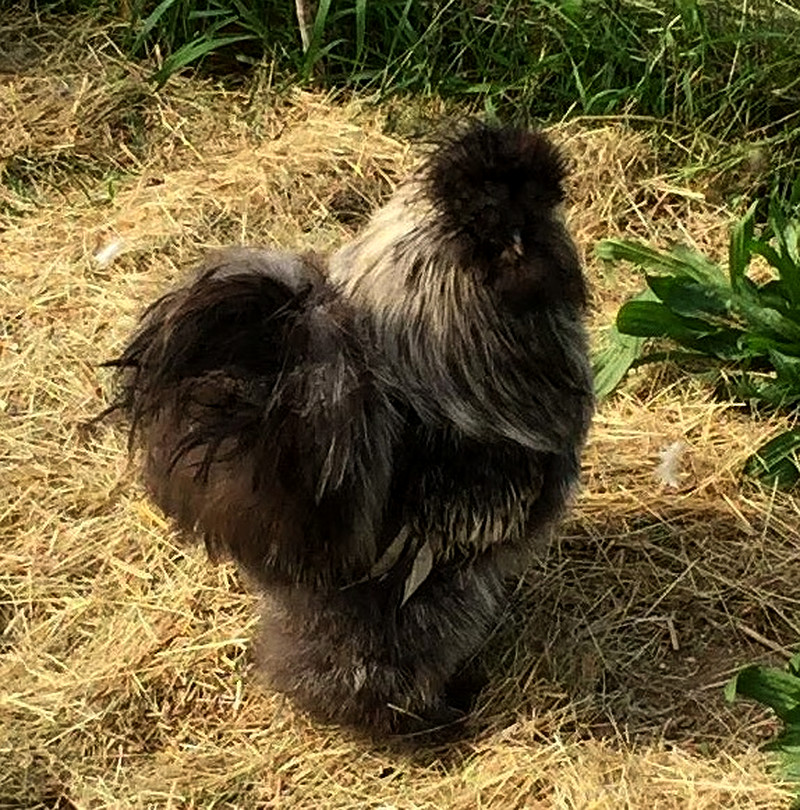
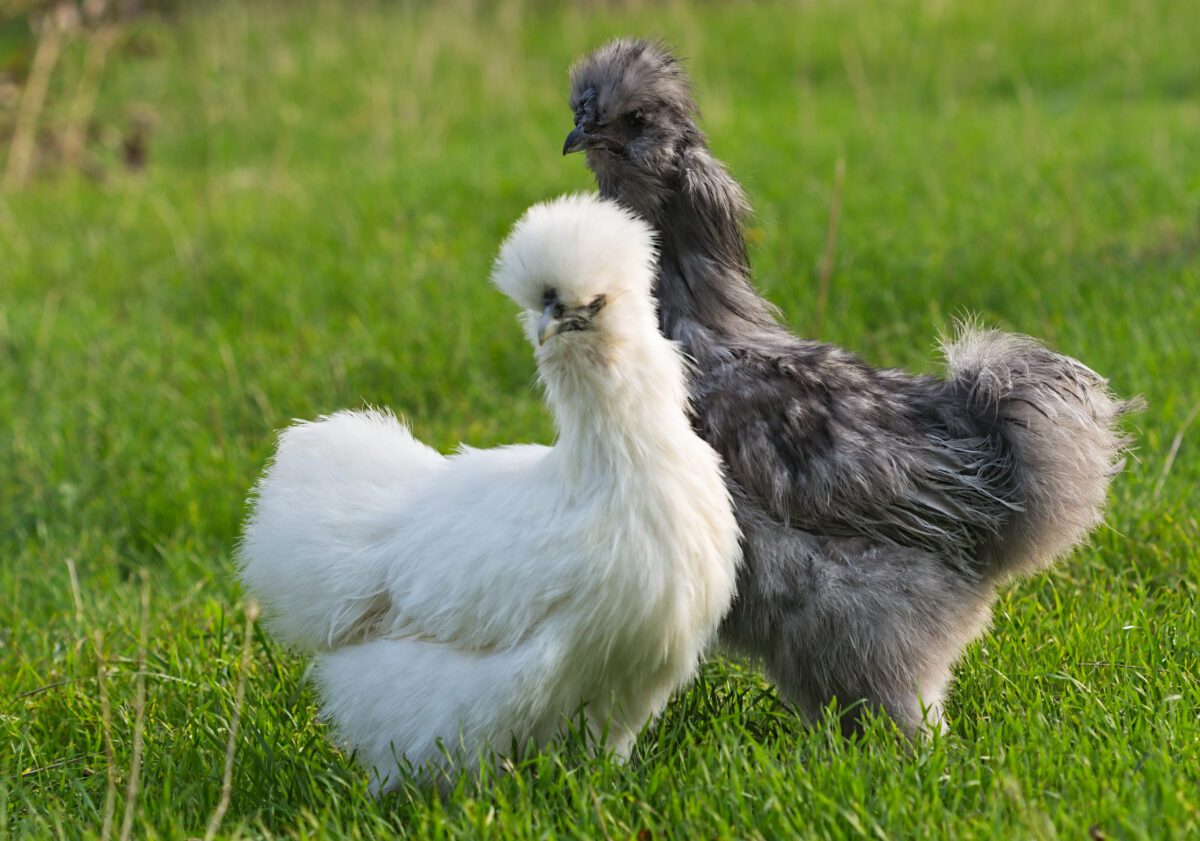
Silkie chickens are one of the most popular fluffy chicken breeds, prized for their soft, fur-like feathers and gentle demeanor. Originating in Asia, these small chickens are excellent pets for children and hobbyists. Silkies lay small, cream-colored eggs and are not as hardy in wet or cold climates, as their feathers aren’t waterproof. They require minimal but consistent grooming and enjoy being handled, making them perfect for pet flocks.

Fun Fact: Silkies have black skin and bones, a unique trait among chickens.

Polish

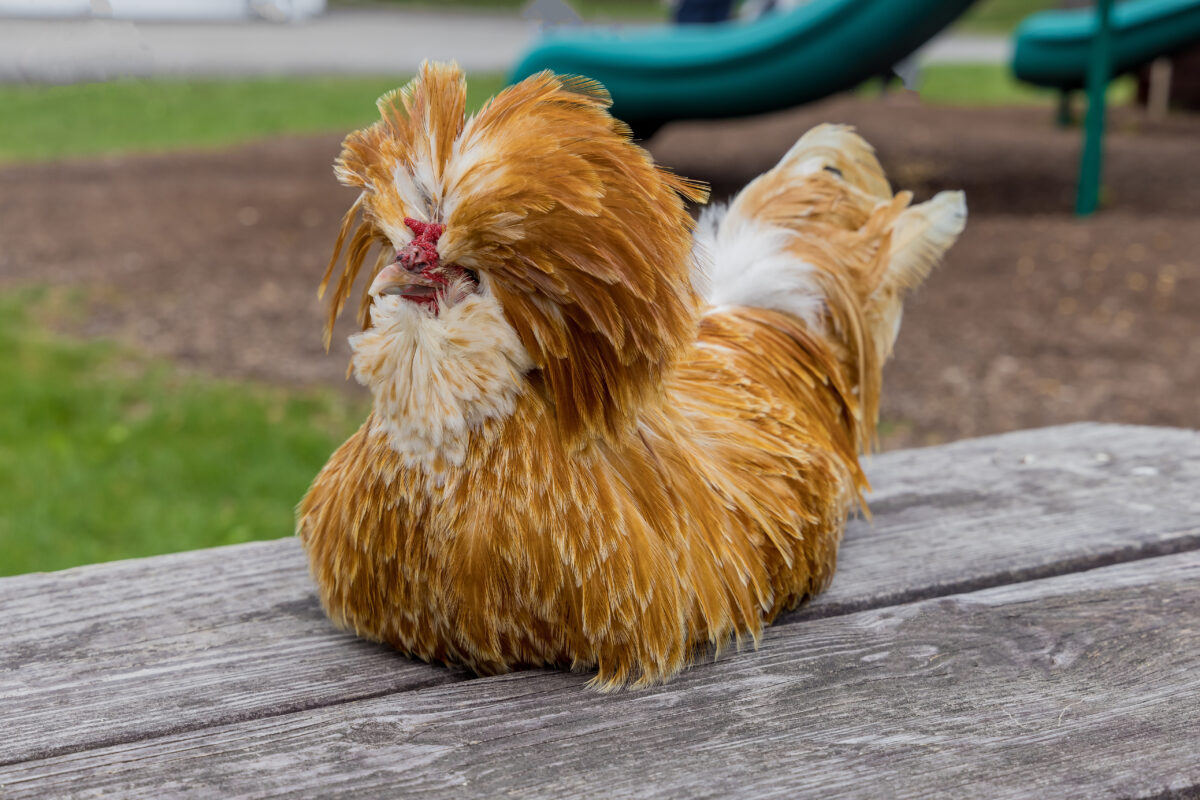
Polish chickens are likely the most recognizable fluffy chicken breed, with a distinctive crest of feathers on their heads. Originally from the Netherlands, they come in a variety of colors and are known for fair to good egg production. Polish chickens are docile but can be flighty due to their limited vision from their feathered crests.

Care Tip: Regularly trim the crest feathers around their eyes to improve vision and prevent accidents.

Houdan

The Houdan is a striking French breed with a feathered crest and five toes on each foot. As a dual-purpose breed, they are suitable for both meat and egg production, though they are not prolific layers. Houdans are docile and enjoy foraging, but do best in free-range environments.

Crevecoeur

Crevecoeurs are elegant, all-black, fluffy chicken breeds with a unique crest that gives them a regal appearance. Hailing from France, they are dual-purpose chickens with moderate egg-laying capabilities. Crevecoeurs are friendly but can be a little shy, so they benefit from gentle handling.

Sultan

Sultans are highly ornamental chickens originally bred in Turkey. They feature a full crest, feathered shanks, and a fifth toe. Sultans have fair egg production and an active temperament. Their extravagant plumage requires some extra grooming to keep clean, but they make a striking showpiece in any flock.

Appenzeller Spitzhauben

Originating from Switzerland, the Spitzhauben is named for its pointed, bonnet-like crest. These chickens are active and flighty, with fair egg-laying abilities. They are hardy birds that enjoy foraging and do well in mixed flocks with enough space.

Caring for Fluffy Chicken Breeds

When raising fluffy chicken breeds, special attention is needed for extreme temperatures. Because of their heavy crests and dense plumage, they can struggle in both very hot and very cold climates.

Heat Tips

  • Provide plenty of shade and cool water.
  • Offer electrolytes during hot spells
  • Trim feathers around the eyes if necessary to improve airflow.

Cold Tips

  • Protect combs and wattles from frostbite with proper coop bedding.
  • Ensure the coop is dry and draft-free.

Daily Care

  • Brush or gently check plumage for mites and debris.
  • Allow free-ranging or secure run space to prevent boredom.

Why Choose Fluffy Chicken Breeds?

Fluffy chicken breeds aren’t just beautiful—they’re friendly, interactive, and entertaining. Many make great pets for families or children, and their unique appearance makes them a conversation starter at shows or in your backyard. By selecting the right breed for your climate and lifestyle, you can enjoy both the charm and practicality these birds offer.

This article about fluffy chicken breeds was written for Hobby Farms and Chickens magazine. Click here to subscribe.

Categories
Farm & Garden

Caterpillar Garden: Plant to Support Every Butterfly Stage

Caterpillar garden design goes beyond planting nectar-rich flowers for adult butterflies. Like honeybees, many moth and butterfly species face habitat loss and pesticide exposure, threatening their survival. And, like bees, these insects are essential pollinators. To help them thrive, more gardeners are turning to the concept of a caterpillar garden—planting specific host plants that sustain every life stage, from egg to caterpillar to winged adult.

These more aptly named “caterpillar gardeners” have broadened their perspective to include the specific host plants required to support every life stage—from egg to caterpillar to glorious, winged adult. And it’s about time. The U.S. Fish and Wildlife Service currently lists more than 30 butterflies, moths and skippers as threatened or endangered. The Xerces Society for Invertebrate Conservation has red-listed many others. Fortunately, if you reintroduce the right native host plants for butterflies in your area, egg-laying females invariably will discover them.

How to Start a Caterpillar Garden

If you have a butterfly garden that’s heavy on nectar plants, you need only intersperse a few new larval host plants such as parsley and rue. Of course, deciding just what to plant depends on your location and growing conditions as well as which species you’d most like to attract. Some suggestions to get you thinking like a true caterpillar gardener follow.

To truly welcome caterpillars, you might also need to welcome some “weeds.” That means avoiding herbicides and pesticides and raising the deck on your lawn mower to allow clover, violets and other volunteer plants to flourish. Do this, and you’ll get loads of interesting caterpillars and, yes, more butterflies, too.

Caterpillar Garden Host Plants You Might Call Weeds

The larval stages of the great spangled fritillary and the regal fritillary happen to feed on wild violets. Caterpillars of the northern metalmark butterfly are supported by some types of ragwort and fleabane. Yellow thistle is the main host plant for the little metalmark. As for the Milbert’s tortoiseshell butterfly? It deposits eggs on stinging nettle. Do you have patches of clover or alfalfa growing? You’re more likely to attract southern dogface butterflies.

butterflies caterpillars gardens eggs
Susan Brackney

Also, by now you’ve probably heard about the need to re-establish native milkweed populations. Because milkweed is the only host plant for the embattled monarch butterfly (a caterpillar of which is pictured at the top of this post), growing several varieties of this valuable plant in your caterpillar garden can make a big difference. Just choose the best milkweed types for your area.

Trees and Shrubs for a Caterpillar Garden

If you have room to include larger trees and shrubs, several attract egg-laying butterflies. For instance, hackberry trees support the unusual-looking American snout butterfly. Mourning cloaks are attracted to birches, cottonwoods, elms and willows, among others. The banded hairstreak lays its eggs on the leaves of ashes, oaks, hickories and walnut trees.

butterflies caterpillars spicebush swallowtail caterpillar
Susan Brackney

Several kinds of swallowtails are also attracted to trees and shrubs. For example, Eastern, tiger and spicebush swallowtail butterflies (shown above) lay their eggs on spicebushes. They’re also drawn to aspen, tulip, sassafras and willow trees.

butterflies caterpillars eastern black swallowtail caterpillar
Susan Brackney

Paw paw trees play host to zebra swallowtail caterpillars. Other fruit trees, including apple, cherry and plum, serve as host plants for viceroy butterfly caterpillars. The dainty spring azure butterfly also uses some of these, along with maple trees as well as viburnum and blueberry bushes. Viburnum, highbush cranberry and snowberry bushes are just a few of the landscaping plants that can support hummingbird clearwing and snowberry clearwing moths.

Herbs and Flowers for Caterpillars

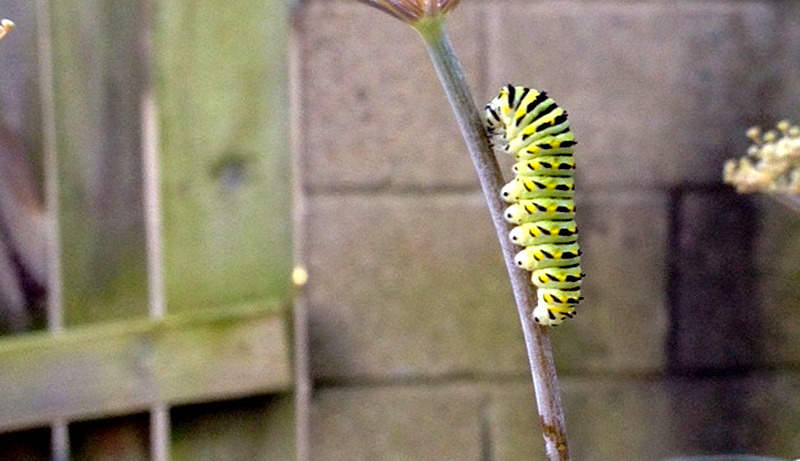
While bronze fennel, dill and parsley are essential hosts for black swallowtail butterfly caterpillars, giant swallowtails use rue as their host plant. To raise its young, the showy pipevine swallowtail butterfly depends on native pipevine species such as Dutchman’s pipe.

Love fall asters? Then you just might attract northern or pearl crescent butterflies. Can you grow passionflower? Its stunning vines support Gulf fritillary caterpillars.

For their part, painted lady butterflies like mallows and hollyhocks. The rarer frosted elfin and Karner blue butterflies lay their eggs on wild lupines.

There are, of course, hundreds of other plant-and-caterpillar combinations to explore. To help you get started, the North American Butterfly Association offers regional garden guides for many parts of the U.S. Each guide lists the top native and non-native “caterpillar food” plants for individual regions as well as the common (and less common) butterflies that these gardeners can expect to attract.

Finally, no matter which food plants you choose to include, plan to add copious amounts of them. You’ll learn the mark of any truly successful caterpillar garden—be prepared to see your stands of dill, fennel and milkweed decimated as voracious caterpillars have their way with them.

This article about cultivating a caterpillar garden was written for Hobby Farms magazine. Click here to subscribe.

Categories
Poultry

Polish Chicken Breed: History, Traits & Care Tips

Polish chicken breed enthusiasts prize these elegant, crested birds for their striking appearance and gentle temperament. Developed in the Netherlands despite their name, Polish chickens have graced art, farmyards, and exhibition halls for centuries. Available in a variety of colors and in both standard and bantam sizes, they are as much a delight to look at as they are to keep. While some strains are fair egg layers, most are valued primarily for exhibition, and their elaborate feather crests require special attention to keep them healthy and looking their best.

Uses of the Polish Chicken Breed for Eggs and Exhibition

The Polish chicken breed is used mainly for exhibition. Some strains lay three to four medium-sized, white eggs per week, while others are mediocre layers.

History of the Polish Chicken Breed

The origin of the Polish chicken breed is obscure. It didn’t originate in Poland; rather, breed historians believe Spanish immigrants who settled the rich lowlands of the southern Netherlands in the late 1500s brought the chicken breed with them from Spain. Dutch fanciers developed the Polish chicken breed, which is widely depicted in Dutch and Italian paintings from the 16th through 18th centuries. Crested Polish chickens were mentioned as purebred in the 16th century, according to the American Poultry Association, and were imported to America between 1830 and 1840. The breed was, for a time, a favorite with American farmers and chicken fanciers. The American Poultry Association accepted three Polish varieties into the American Poultry Association’s Standard of Perfection in 1874; additional varieties were accepted in 1883, 1938 and 1963.

Polish Chicken Conformation and Appearance

Although the APA prefers Polish chickens with a natural absence of a comb, it’s acceptable for the breed to have a small, V-shaped comb and a bountiful crest of feathers sprouting from a cone-shaped protuberance on its head; some varieties are also bearded. The breed’s lavish crests rest like a pouf over its eyes, making it difficult for the chicken to see, though the APA breed standard is for the crest to rise well in front so as not to obstruct sight. The Polish chicken breed comes in both standard and bantam sizes in an array of colors, including Black-crested White, White-crested Blue, Golden, Silver, White and Buff Laced. Standard Polish cocks weigh 6 pounds and hens weigh 4½ pounds. Bantam cocks weigh 30 ounces and hens weigh 26 ounces.

Special Considerations for Raising Polish Chickens

If a Polish chicken’s crest gets wet and dirty, it can hang directly in its eyes, leading to eye infections and the inability to locate food and drink. Some Polish fanciers who don’t show their birds trim the bangs in their crests to eliminate these problems.

This article was written for Hobby Farms and Chickens magazines. Click here to subscribe.
Categories
Farm & Garden

Fuzzy Black Caterpillars: How to Identify Common Species

Have you spotted fuzzy black caterpillars in your yard or crossing a trail? Late summer through fall is peak caterpillar season in much of North America, and several species fit the “black and fuzzy” description. Caterpillar identification is key and helps you decide whether to simply admire it or take action in the garden.

So, what are the black fuzzy caterpillars you’ve been seeing around, especially if you have a dedicated caterpillar garden? Well, that depends on where you live.

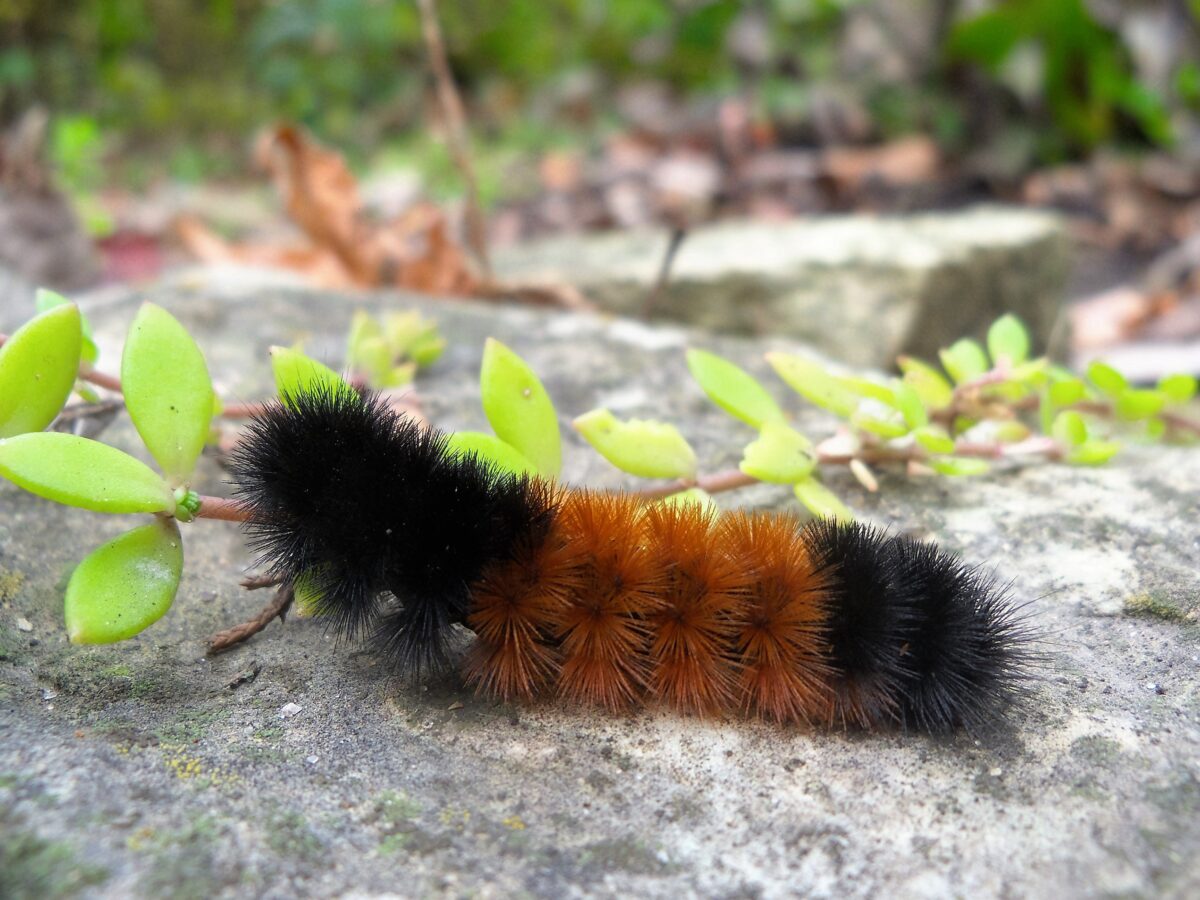
It’s likely that the most common fuzzy black caterpillar you’ve heard of or seen in nature is the Woolly Bear caterpillar. All caterpillars go through a transformation process and turn into either butterflies or moths. Woolly Bear caterpillars are the larval stage of the Isabella Tiger Moth.

Common Fuzzy Black Caterpillars

Woolly Bear Caterpillar (Pyrrharctia isabella)

  • Appearance: Black at both ends with an orange-brown band in the middle (sometimes mostly black or mostly brown).

  • Adult form: Isabella tiger moth.

  • Range: Across most of the U.S. and southern Canada.

  • Fun fact: Folklore says the width of the brown band predicts winter severity — but science says it doesn’t.

wooly bear caterpillar
Woolly Bear Caterpillar
Tanya/Adobe Stock
Isabella Tiger Moth - Pyrrharctia isabella
Isabella Tiger Moth – Pyrrharctia isabella
ondreicka/Adobe Stock

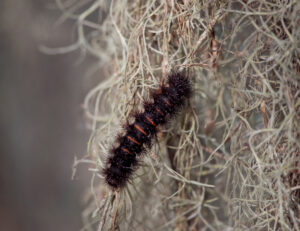
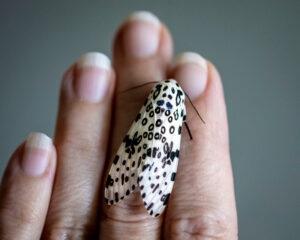
Giant Leopard Moth Caterpillar (Hypercompe scribonia)

  • Appearance: All black with stiff bristles; when rolled into a ball, bright red rings show between segments.

  • Adult form: Striking white moth with black leopard-like spots.

  • Range: Eastern and southern U.S., from New England to Texas and Florida.

  • Notes: Often mistaken for Woolly Bears, but lack the brown middle band.

Giant Leopard Moth Caterpillars are fuzzy black caterpillars that resemble the Woolly Bear but have round rings instead
Giant Leopard Moth Caterpillar
SunnyS/Adobe Stock
A Giant Leopard Moth
Giant Leopard Moth
Heather Burditt/Adobe Stock

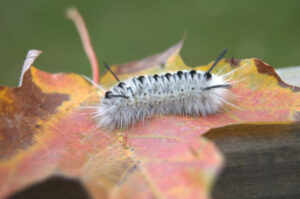
Hickory Tussock Moth Caterpillar (Lophocampa caryae)

  • Appearance: White overall with black tufts or bands; not fully black but sometimes lumped in with “fuzzy” searches.

  • Adult form: Cream-colored moth with black markings.

  • Range: Eastern North America, especially in hickory, walnut, and ash trees.

  • Caution: Hairs can cause stronger skin irritation than other species.

Hickory Tussock Moth Caterpillar
jodi McGee/Adobe Stock
Hickory Tussock Moth (Lophocampa caryae)
ondreicka/Adobe Stock

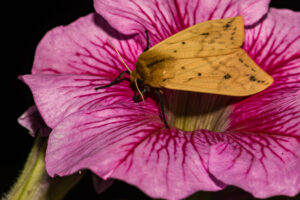
Salt Marsh Caterpillar (Estigmene acrea)

  • Appearance: Can be rusty brown, yellow, or black; dense coat of bristles.

  • Adult form: Salt marsh moth.

  • Range: Found in grasslands, gardens, and agricultural fields across most of the U.S. — not just marshes.

  • Diet: Beans, alfalfa, clover, and many garden vegetables.

Salt marsh moth (Estigmene acrea) caterpillar feeding on grass in tidal marsh
Salt marsh moth (Estigmene acrea) caterpillar.
Ivan Kuzmin/Adobe Stock
the salt marsh moth (Estigmene acrea) caterpillar can vary in color including being a fuzzy black caterpillar
The salt marsh moth (Estigmene acrea) caterpillar. Natalia Kuzmina/Adobe Stock
An Acrea or Salt Marsh moth (Estigmene acrea) on tree bark with wings spread, displaying bright orange under wings against a green background.
An Acrea or Salt Marsh moth (Estigmene acrea) on tree bark with wings spread, displaying bright orange under wings. Brett/Adobe Stock

Fun Facts & Folklore

No fuzzy black caterpillar is more famous in North America than the Woolly Bear, thanks to the weather myth that the size of its orange-brown band predicts winter severity. According to folklore, a wide brown band means a mild winter, while a narrow one warns of a harsh season. Scientists have tested the claim and found no connection — the band width simply reflects the caterpillar’s age and the conditions it experienced while growing.

The Giant Leopard Moth caterpillar also has a quirky defense trick — when disturbed, it rolls into a tight, bristly ball, revealing bright red rings between its segments. Those red flashes are thought to warn predators that it’s not worth the trouble to eat.

Hickory Tussock caterpillars have earned a slightly scary reputation because their hairs can irritate skin, but for most people, it’s no worse than a brush with fiberglass.

In some coastal communities, Salt Marsh caterpillars were once considered “living barometers,” with sudden mass appearances thought to signal changes in weather or seasonal shifts.

Are Fuzzy Black Caterpillars Dangerous?

The short answer is: No. Most are harmless, but some can cause mild to moderate skin irritation if handled. Reactions vary by person and species — Hickory Tussock hairs tend to be the most irritating. If you’re unsure, use gloves or avoid touching them. None of the species mentioned here is poisonous.

Do They Harm Plants?

Some, like the Woolly Bear, rarely cause serious damage. Others — especially Salt Marsh caterpillars — can defoliate vegetable crops if populations are high. Spongy Moth caterpillars (which are not fuzzy black but sometimes mistaken for them) can strip entire trees.

Garden Control Tips

It’s possible that you may find the caterpillars feasting on your crops or landscaped shrubs. However, they prefer the edges of crop fields.

  1. Identify before acting — Many are harmless or even beneficial. Maybe it will become a beautiful butterfly or a nocturnal moth. Think of the Hornworm caterpillar, which turns into the Sphinx Moth.

  2. Hand-pick pests and remove them from the area.

  3. Encourage predators such as birds, parasitic wasps and predatory beetles.

  4. Use targeted treatments like Bacillus thuringiensis (Bt) for confirmed pest outbreaks, following label directions.

Fuzzy Black Caterpillar Quick ID Guide

CaterpillarAppearanceRangeHost PlantsNotable Traits
Woolly Bear (Pyrrharctia isabella)Black at both ends with orange-brown middle band; 1–2 in. longMost of U.S. & S. CanadaGrasses, clover, dandelion, garden greensFolklore winter predictor; harmless
Giant Leopard Moth (Hypercompe scribonia)All black; red rings between segments when curled; 2–3 in. longEastern & Southern U.S.Plantains, violets, dandelionsHarmless; striking white adult moth
Hickory Tussock (Lophocampa caryae)White with black tufts/bands; 1.5–2 in. longEastern North AmericaHickory, walnut, ash, oakHairs can cause skin irritation
Salt Marsh (Estigmene acrea)Black, rusty, or yellow; very hairy; 1.5–2 in. longAcross U.S.Clover, alfalfa, beans, vegetablesCan damage crops if numerous

Fuzzy Black Caterpillars: Final Thoughts

There are more than 150,000 caterpillar species worldwide, and less than 1% are poisonous — most of those outside North America. Next time you see a fuzzy black caterpillar crossing your path, take a closer look. Do a little research to find out what type of moth or butterfly larvae you’re seeing before you dispose of it. You may have found a harmless garden wanderer, a future moth with a striking pattern, or a tiny garden pest in disguise.

This article was written for Hobby Farms magazine. Click here to subscribe.

Categories
Crops & Gardening

Caterpillar Identification Guide: 4 Common Species to Know

Caterpillar identification is essential for every gardener who wants to protect their crops and support pollinators. From hornworms to monarchs, knowing how to identify common caterpillars helps you decide whether to take action or let nature run its course. Some species can destroy your vegetables overnight, while others are vital allies in your garden’s ecosystem.

Let’s investigate four common caterpillars and what they mean to your garden.

1. Hornworm Caterpillar Identification & Control

A Hornworm caterpillar on a plant
Caterpillar identification – Hornworm Caterpillar

There are two varieties of hornworms: tomato hornworms and tobacco hornworms. These plump, light-green caterpillars can grow as thick and long as your finger which makes caterpillar identification pretty easy. Diagonal white lines vary from seven on tobacco hornworms to eight on tomato hornworms, with more of a V shape on the latter. Both have reddish dots along the body and a curved, pointy horn on the rear, which is red on tobacco hornworms and black on tomato hornworms.


Also Read: How to Control Hornworms?


As expected from their names, these caterpillars devour leaves of tomatoes, potatoes, tobacco, peppers, eggplants and others in the Solanaceae (nightshade) family. However, the adult moths pollinate night-blooming flowers. The tobacco hornworm becomes the Carolina sphinx moth (Manduca sexta) and the tomato hornworm becomes the five-spotted hawk moth (Manduca quinquemaculata). Large, strong fliers, with a wingspan up to 5½ inches, their scientific names give clues to how many pairs of yellow-orange spots decorate the body (six on the sphinx moth, five on the hawk moth).

The moths resemble hummingbirds. Each has a long proboscis perfectly suited for reaching inside tubular flowers, such as morning glories, sweet potatoes, moonflowers, petunias, Datura, and four-o’clocks. As they drink deeply of the flower’s nectar, the moths spread pollen and help these plants develop fruits. The moths themselves pose no risk to the nightshade family, other than laying their eggs on them for the larvae to enjoy.

To limit their population in your garden, encourage parasitic braconid wasps. They have an insidious technique for destroying the caterpillars after they’ve used them up. The tiny, stingless wasp injects the caterpillar with its eggs and after hatching, the wasp larvae chow down on the caterpillar’s innards, avoiding major organs to prolong the slow death, until they work their way out to the surface. On the hornworm’s skin, they spin tiny cocoons, pupate and emerge as adult wasps by the time the caterpillar dies.

To support these natural predators, braconid wasps need nectar and pollen, and plants with tiny flowers fit them well. Examples include buckwheat, fennel, angelica, dill, goldenrod, yarrow, lovage, boneset, cilantro and Queen Anne’s lace.

2. Cabbage Looper Caterpillar: Identification & Prevention

A Cabbage Looper
Caterpillar Identification – Cabbage Looper

Turn over a cabbage or broccoli leaf in mid-summer, and you’re likely to find a little worm, perfectly matched in color to the underside of the leaf. Upon closer inspection, a thin white line runs the length of each side. This tiny inchworm-like critter has prolegs and hindlegs and no legs in between, so it moves in a looping motion.

Caterpillar identification is crucial as the Cabbage Looper is commonly confused with other cabbage-eating caterpillars that metamorphose into white butterflies; the looper becomes the ni moth (Trichoplusia ni), also well-camouflaged. The mottled brown moth with about a 1-inch wingspan resembles a knobby dead leaf or tree bark. The ni moth belongs to Noctuidae, the largest moth family that includes other agricultural pests, cutworms and armyworms.


Also Read: 5 Ways to Keep Cabbage Loopers Out of Your Garden


The looper eats most varieties of brassicas (aka cruciferous or cole crops), such as collards, kale, radish, turnip, broccoli and cauliflower. However, their taste isn’t limited to the cabbage family—they’ll eat the leaves of nearly every vegetable available in your garden. In nature, specialists have less chance of survival; as generalists, loopers are annoyingly successful.

To protect your crops, you have to outsmart the looper’s schedule. Row covers provide a physical barrier and extend the growing season by adding a layer of weather protection. Try planting early maturing varieties to beat the munching looper’s lifecycle. Diversify your garden and experiment with multiple varieties of brassicas to see which are more looper-resistant. Understanding the soil ecology at the base of the host plants will also help control pests, as the pupae are formed in the soil and crawl up to the leaves.

As with the hornworm, you can let another insect do the dirty work of extermination. Create habitat for parasitic wasps and tachinids, flies that not only feed on cabbage loopers but also destroy stinkbugs, gypsy moth larvae and Japanese beetles. In short, plant more flowers to support beneficial insects.

3. Monarch Caterpillar Identification & Why They’re Beneficial

Monarch Caterpillar on a leaf
Caterpillar Identification – Monarch Caterpillar (Caterpillar with White, Black and Yellow Lines)

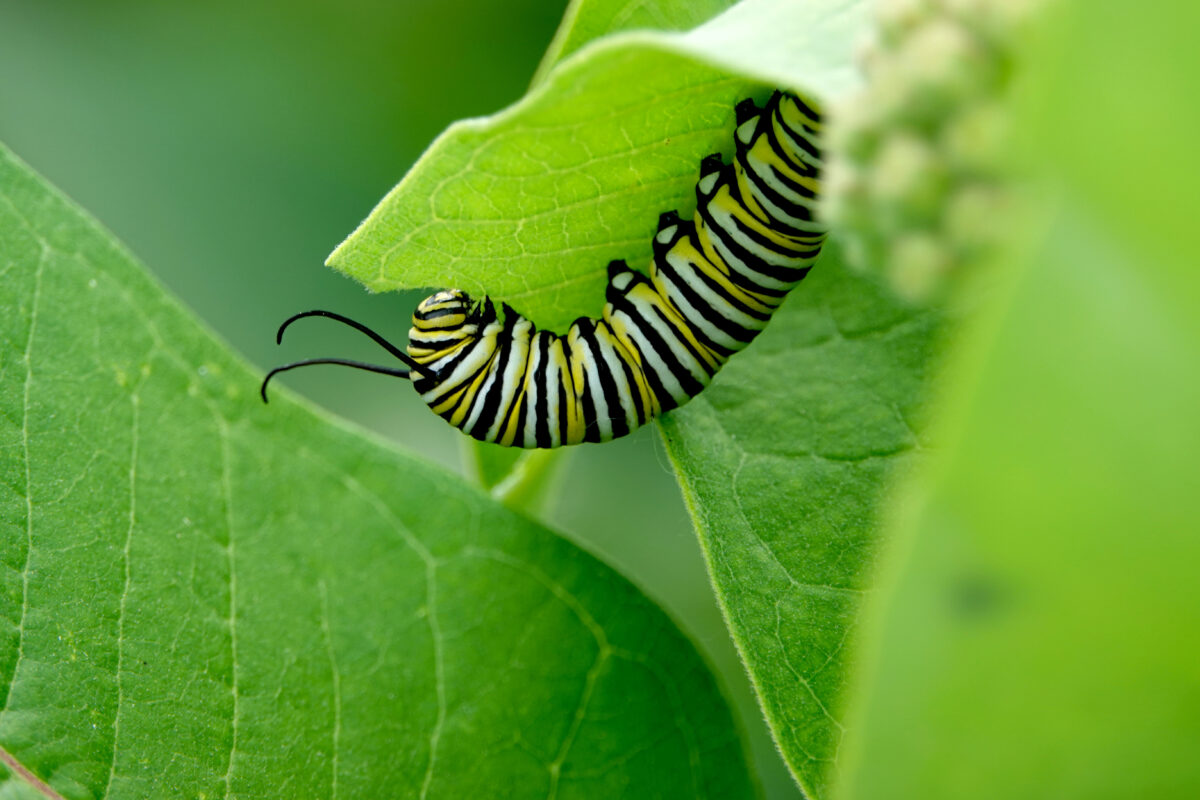
Caterpillar identification is probably easiest and most recognizable for the Monarch: black-, yellow- and white-striped, with black antennae on the head and a body that stretches up to 2 inches long. Monarch caterpillars munch on milkweed—and lots of it!—not only for food but also for future protection. The milky sap from the leaves stays in their system even after metamorphosis and makes the adult butterfly taste offensive to predators. Birds will actually avoid them once they’ve learned their lesson.

The adult monarch butterfly is one of the most recognizable butterflies, especially if you’re growing a butterfly garden, keeping the same color scheme as the larva, with a stained-glass appearance to its pumpkin-orange wings, black veins and margins adorned with white spots.

Monarchs are the only butterflies that truly migrate, moving thousands of miles north to feed, depositing eggs along the way. In some cases, their offspring complete the journey for them. Returning south across the span of the United States, millions of monarchs head to Mexico to spend the winter huddled on massive pines and eucalyptus trees.

In recent years, a dramatic decrease in monarch populations has caused concerned groups to rally for their rescue. In addition to deep cultural ties to the Dia de Muertos traditions in Mexico, the monarch has recently become a symbol of pollinator conservation and appreciation for migration.

Because Monarch caterpillars only eat milkweed, they pose no threat to your garden. In fact, gardeners across the country go to great lengths to attract them. Historically, farms that let milkweed grow up along fences or between rows were a reliable nursery for caterpillars. The practices of using pesticides and fence-to-fence planting of monocrops are among the top reasons for the monarch’s decline.

Attractive flowers of blooming milkweed provide much-needed nectar for the migrating butterflies. Several varieties are available, producing colorful bouquets of rosy pink, lavender and orange. Other edible and medicinal herbs that attract butterflies include bee balm, catmint, Echinacea, comfrey and dandelion. In exchange for the sweetness, the butterflies provide pollination services for the plants.

A great list of butterfly host plants can be found on Monarch Watch, a source of information and supplies for all things monarch. Create a Monarch Waystation by planting the right amount and variety of host plants, which will attract other great pollinators and predatory insects. You can register your waystation and be included in a growing database of butterfly bed-and-breakfasts.

4. Cecropia Caterpillar Identification & Life Cycle

A Cecropia caterpillar on a leaf
Caterpillar Identification – Cecropia Caterpillar

Caterpillar identification is fun with the Cecropia since it looks like a punked-out circus clown. It’s about as long and thick as your finger, neon green with multi-colored spiked knobs. Surprisingly, the spikes aren’t harmful to the touch. Many go through different stages, known as instars, so you may see the same caterpillar at a wide range of lengths as they molt and leave behind their old skin.

You might also be surprised to know that this hearty caterpillar poses no threat to your vegetables. If you have fruit trees, watch for them on apple and cherry leaves. They also go for maple and birch leaves. Despite their tough appearance, they have enough predators that they don’t normally become a pest.

If you find them and want to help them out, you can protect them as they spin their cocoon of leaves and provide a safe place to spend the winter, metamorphosing into an impressively huge moth. The cecropia is North America’s largest moth, with a wingspan up to 6 inches. These moths sport furry, russet bodies and wings that fool predators with four white crescent shapes that resemble eyespots. The adult has no working mouth parts, so its only mission is to mate. Eat, have sex, and die—that’s the life!

Caterpillar Identification: Final Thoughts

Caterpillar identification isn’t just about stopping pests—it’s about understanding the role each species plays in your garden’s health. Whether you’re protecting your brassicas from cabbage loopers or planting milkweed to support monarchs, knowing your caterpillars means you can create a balanced, thriving ecosystem.

All gardens need animals. Besides bringing interest and fun, they create fertilizer, aerate soil, disperse seeds, regulate growth, decompose waste and pollinate flowers. Keep in mind that caterpillars are animals, too, and they do their part, as immature life forms and as adults, to maintain balance in the predator-prey dance that happens while we think we’re the ones gardening.

This article about caterpillar identification was written for Hobby Farms magazine. Click here to subscribe.

Categories
Poultry

Silkie Chicken Breed Profile: History, Traits & Care

The Silkie chicken is one of the most distinctive poultry breeds in the world, admired for its soft, fur-like feathers and gentle disposition. Venetian explorer Marco Polo (circa 1254–1324) returned from Asia with tales of a “furry” chicken, and while the exact origin remains uncertain, both China and Japan claim this extraordinary fowl as their own.

Fun Facts About the Silkie Chicken

Silkies are named for the long, silk-like feathers that cover their bodies. Their small walnut combs and small to medium-sized wattles appear deep mulberry to black.

Silkie plumage looks like fur or down instead of feathers. This is because Silkie plumage lacks barbicels, the hooked projections normally extending from and interlocking the secondary branches of chickens’ feathers. In addition to luxurious, fluffy plumage, the breed has dark-blue legs with abundant feathering, turquoise-blue earlobes, black skin and bones, and grayish-black flesh.

The Silkie has five toes; most chickens have only four.

silkie chicken foot featuring five toes and leg feathering
Anna Hotaling

This breed comes in an assortment of colors, and some varieties are bearded with an extra muff of feathers covering their earlobes. The American Poultry Association recognizes Black, Buff, Gray, Partridge and White, and (bearded only) Splash, Blue and Self Blue varieties.

Mature males weigh only 36 ounces. Hens weigh 32 ounces.

black colored silkie chicken
Ana Hotaling

Silkie Chicken Characteristics and Facts

Silkie chickens are known for their calm and friendly temperament, making them ideal pets and exhibition birds. Their unique feather structure means they require a bit more protection from wet or cold weather compared to other breeds.

Broodiness and Maternal Instincts

One of the most remarkable traits of the Silkie chicken is its extreme broodiness. Silkie hens readily sit on eggs for extended periods and make excellent surrogate mothers, even hatching and raising eggs from other birds such as quail and ducks. This natural instinct makes them invaluable for breeders and backyard poultry enthusiasts who want to hatch a variety of poultry species.

Silkie Chicken History

In 1599, Italian naturalist and author Ulisse Aldrovandi wrote about “wool-bearing chickens;” however, today’s Silkie chicken breed is considerably different than those of the past. It was recognized in the American Poultry Association’s first Standard of Perfection, published in 1874.

silkie chickens
Ana Hotaling

Silkie Chickens in Cuisine and Culture

The Silkie chicken is more than just a unique pet or show bird—it holds a special place in Asian haute cuisine. Known as wu gu jis or “dark-boned chicken” in Chinese, Silkie meat is prized for its distinctive gray-black color and rich flavor. This culinary tradition has even found its way into French cuisine, where the Silkie occasionally appears in gourmet dishes.

Silkie Chickens Make Great Pets

Silkies are sweet, ultra-docile chickens. They are friendly and make good pets.

Silkie Chicken Egg Size

Silkie chickens lay about one small tinted egg per week.

Silkie Chicken: Final Thoughts

The Silkie chicken may be small in size, but it holds an outsized place in the hearts of poultry keepers. With their distinctive plumage, unusual black skin and bones, and sweet, docile nature, Silkies are as charming as they are useful. Whether you raise them for exhibition, as devoted broody hens, or simply as friendly backyard companions, these unique birds are sure to bring beauty, personality, and plenty of conversation to your flock.

This article about the silkie chicken was written for Hobby Farms and Chickens magazines. Click here to subscribe.

Categories
Poultry

When Do Turkeys Start Laying Eggs? Plus Tips on Raising Turkeys

When do turkeys start laying eggs? If you’re considering adding turkeys to your hobby farm, this is a common question.

Heritage Turkeys and Egg Production

For hobby farmers deciding between industrial and heritage turkeys, understanding the differences is key—especially if egg production is part of your plan. Heritage turkeys are prized for their natural breeding abilities, longer lifespans, and steady egg-laying over several years. In contrast, industrial turkeys are bred mainly for meat and have limited or no egg production capabilities. This guide will help you explore when turkeys start laying eggs and why heritage breeds might be the better choice for your farm.

Questions and Answers from an Expert

Frank Reese is a poultry expert and the maintainer of the last American Poultry Association-certified hatchery in the United States. He is one of our country’s (if not the world’s) most knowledgeable experts on raising turkeys for meat and eggs. He has spent his career traveling across America and rescuing rare flocks of turkeys and chickens for which no succession plan existed. He’s kept many breeds from being eliminated.

Frank was so kind to answer some basic questions on the topic of raising turkeys for eggs. If you’re curious about when turkeys start laying eggs and how to manage them for egg production, this guide with expert insights will help you get started.

Questions and Answers from an Expert

What is the difference between a heritage turkey and an industrial turkey?

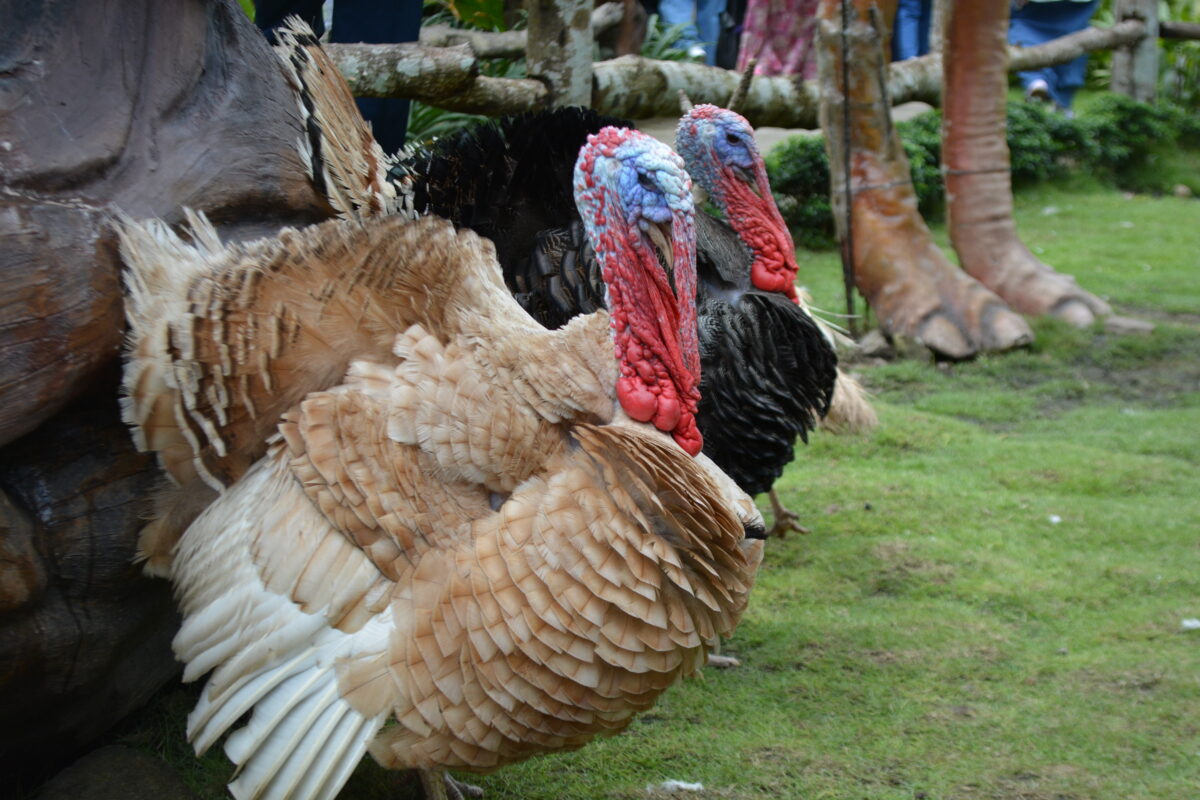
Heritage turkeys can still naturally mate, are capable of nesting, will live 10 to 15 years and grow at a normal rate.  They can run, jump and fly. 

Industrial turkeys can no longer breed on their own; they must be artificially inseminated, and they live less than two years.  Industrial turkeys become obese and can barely walk.  

Do turkeys make a good addition to the homestead?

Heritage turkeys have been part of American farm life for over 250 years. They’re a true American domestic farm species. Native to the Americas.  

When do turkeys start laying eggs? What age and what time of year?

Turkeys start laying between 7 to 10 months of age. It is very dependent upon where you live. Turkeys need longer days of sunlight and days above freezing in order to keep laying. In Kansas, they start laying most years in March and continue until August.

How many eggs do they lay per year?

Most hens will lay 30 to 60 eggs in a season, some up to 80 eggs. You must gather turkey eggs daily to keep them actively laying.

How many years do heritage turkeys lay eggs for?

If you manage your hens well, they should keep laying for up to seven or eight years.

Nutritionally, are turkey eggs better than chicken eggs – how do they compare?

Turkey eggs are just like chicken eggs in taste, texture and nutrition. The only difference is that a turkey egg is almost twice the size of a chicken egg. The flavor is mild and can be used just like chicken eggs.  

In your opinion, are turkeys worth adding to the homestead for egg production?

If you’re going to keep turkeys for egg production, then decide what your market is. It does cost more to produce a turkey egg, and you do get fewer seasonally than chicken eggs. Find your market: poults, fertile eggs and eating eggs, or all the above.

If someone were going to add heritage turkeys to their farm for egg production, which breeds would you recommend?

It is not the breed variety but the breeder behind the variety you choose. No matter which variety you choose, it will be no better than the breeder behind the line. The color of feathers makes no difference in meat or egg production. A lot of people think dark feathers mean heritage and white means modern, but this is not true – white feathered turkeys have been around for 100’s of years. The difference is the old type conformation of the bird. Get to know the breeder or history of the line you choose.  

When Do Turkeys Start Laying Eggs: Final Thoughts

Adding heritage turkeys to your hobby farm can be a rewarding choice, especially if you value natural breeding and sustainable egg production. While they may lay fewer eggs than chickens, their hardiness and longevity make them a unique and valuable addition. By understanding when turkeys start laying eggs and how to care for them properly, you can enjoy fresh turkey eggs for years to come—and help preserve these important breeds for future generations.

This story about when to turkeys start laying eggs was written for Hobby Farms and Chickens magazines. Click here to subscribe.

Categories
Poultry

Types of Poultry Eggs: Quail, Chicken, Duck & Goose Eggs

Types of poultry eggs vary widely in size, flavor, and nutritional value. From the tiny quail egg to the large goose egg, each offers unique qualities that can enhance your cooking and poultry-keeping experience. This guide will help you understand the differences and choose the right egg for your needs.

The funny thing about eggs is that most people say they all taste about the same. If you prepare a dish using duck, goose or even quail eggs, guests may notice subtle differences but usually will say it tastes like a chicken egg.” This is actually a good thing, because it allows you to incorporate the more unusual types of poultry eggs into recipes without worrying about drastic changes in flavor. You will, however, need to adjust the amounts!

Let’s explore some of the accessible types of poultry eggs. (Reprinted with permission from Cooking with Eggs [2015]).

Quail Eggs: Size, Nutrition, and Culinary Uses

quail egg - types of poultry eggs
Shutterstock

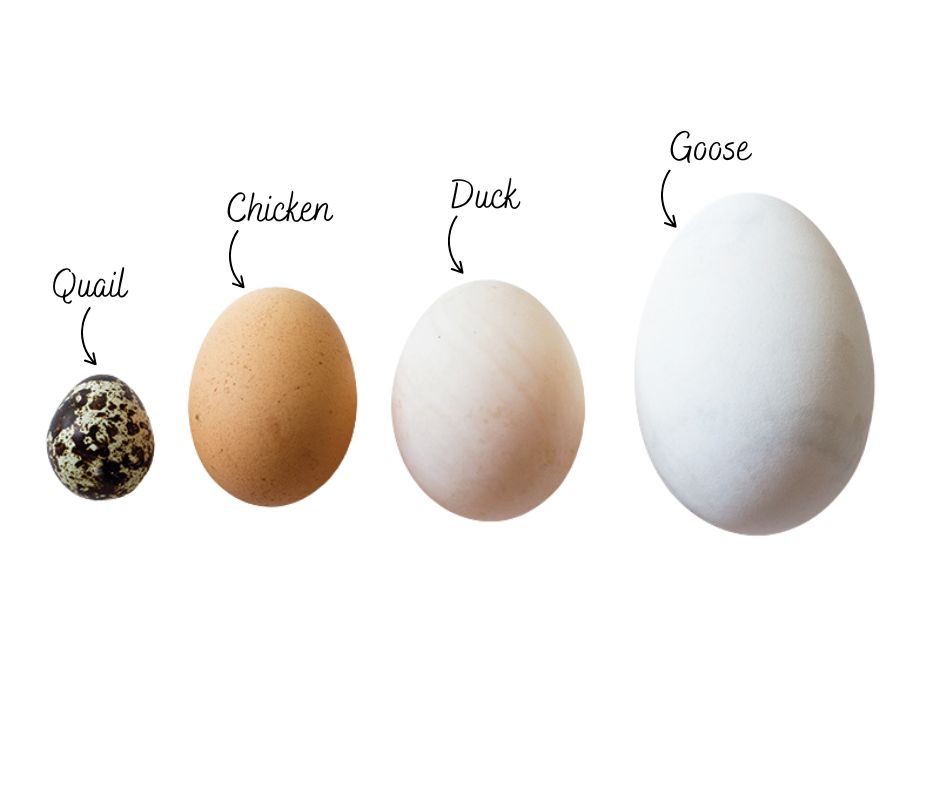
Bigger isn’t always better. The diminutive, spotted egg of the quail is perfect if you’d like to experiment with a fun, unusual type of egg. At about 1 inch in length and 9 grams in weight, quail eggs are popular with chefs looking to make creative treats such as bite-sized deviled eggs.

Quail Egg Nutrition Information

  • Calories: 14
  • Protein: 1.2 grams
  • Cholesterol: 76 milligrams

Chicken Eggs: The Most Common Poultry Egg Explained

chicken egg - types of poultry eggs
Shutterstock

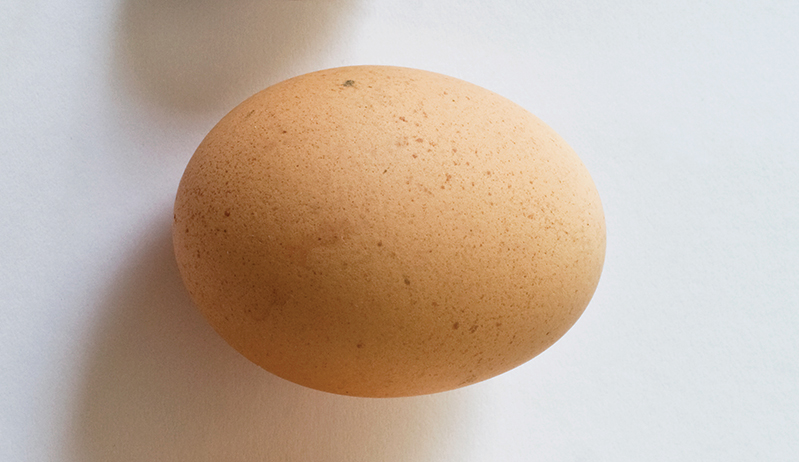
A standard 60-calorie chicken egg is about 21⁄2 inches long, weighs about 60 grams and can vary drastically in color, depending on the breed of chicken that laid it. This is the egg that Americans love most and the only egg that many have ever been exposed to.

Chicken Egg Nutrition Information

  • Calories: 60 to 70
  • Protein: 6 grams
  • Cholesterol: 187 milligrams

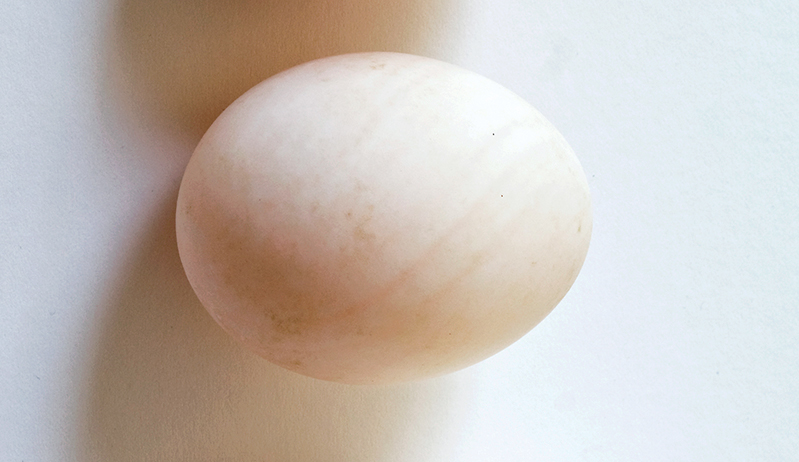
Duck Eggs: Flavor, Benefits, and How to Cook Them

duck egg - types of poultry eggs
Shutterstock

A bit larger than chicken eggs, duck eggs have a creamy, rich consistency, due to their larger yolk-to-white ratio. It also means that they have a higher fat content than chicken eggs. Duck eggs also contain more calories per egg and feature a harder shell than chicken eggs and have a potentially longer refrigerated shelf life.

Duck Eggs Nutrition Information

  • Calories: 130
  • Protein: 9 grams
  • Cholesterol: 620 milligrams

Goose Eggs: Large, Nutritious, and Unique Poultry Eggs

goose egg
Shutterstock

Weighing in at about 5 ounces each, goose eggs are equivalent to two or three large chicken eggs. Once you master the trick of cracking these giants — tapping them against a bowl won’t cut it! — you’ll find them a delight to eat. Geese have a limited laying season of just a few months in the spring, and most birds lay only about 40 eggs per year, give or take

Goose Egg Nutrition Information

  • Calories: 265
  • Protein: 20 grams
  • Cholesterol: 1227 milligrams

Types of Poultry Eggs: Final Thoughts

Understanding the different types of poultry eggs can elevate your cooking and expand your knowledge as a poultry keeper. Each egg type brings its own flavor, texture, and nutritional benefits to the table, making them versatile ingredients and fascinating additions to your kitchen and flock.

This story about comparing types of poultry eggs originally appeared in Chickens magazine. Click here to subscribe.