Categories
Beginning Farmers Crops & Gardening Farm & Garden Homesteading Permaculture

Tips For Protecting Your Garden Against Frost

This time of year, the question for growers in temperate climates is not whether they will get frost—it is when and how strong! When it comes to frost in your garden and farm, you should sort out  several principles and actions before the frost arrives.

Understand Plant Sensitivity

Frost kills tender annual plants, so it is important to know which annuals are sensitive. Families of vegetables like cucurbits are sensitive, but some more so than others. (Pumpkins are a bit tougher than melons and squash.) Tomatoes, peppers are also frost sensitive. 

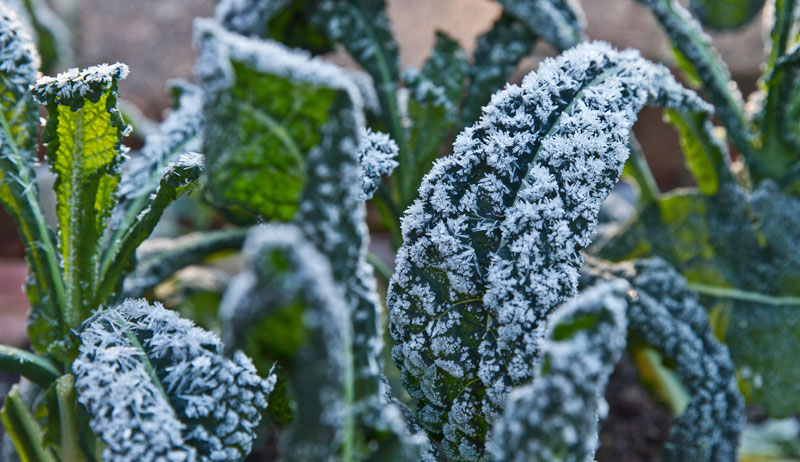
On the other hand, chard can handle light frost, and kale is totally fine!

Know the differences in crop frost sensitivity so you can prioritize plant protection when managing an approaching frost.

Determine Frost Severity

Severity of frost is a question of both conditions in the field and the surrounding environment. For instance, a frost warning comes into effect when temperatures dip to around 35 degrees F (2 degrees C), and certainly for anything around the freezing mark.

When frost occurs has very much to do with how long the ambient temperature stay this low. A severe frost that is very damaging to crops like pumpkin would be caused when the temperatures stays low for many hours at night. It is important to note that if it is cloudy or windy, even if temperatures enter into danger zones the frost won’t be as severe or may not occur.

Moisture also has a part to play. More moisture in the ground will take up the cold before the vegetables freeze.


Read more: Here are 8 crops that can survive (or improve with) a bit of frost.


Watch the Weather

This time of year, I have my phone’s home screen set as a screenshot of the weekly forecast so I am reminded to check the updated online forecast on a daily basis. I can plan days ahead of time and stay ready to act at any moment to take my garden into hand for frost protection! 

I use reliable weather forecasting sites like Environment Canada (because I live in Ontario) instead of generic weather sites (like those preinstalled on your phone). Growers in the U.S. can check out the National Weather Service for forecasts.

What You Can Do

There are several ways to manage a looming frost based on your goals. 

Harvest or Protect

First, harvest long-season crops that are frost sensitive before the frost. This includes bringing in your haul of winter squash or all your tomatoes for processing into sauces. In some cases, you may even want to bring in green tomatoes and have them ripen inside for a further increase in crop yield. 

In other cases, the crop in question cannot store and must be protected for continued harvest. This would apply to (for example) a patch of chard that, if protected through a minor frost, can continue to flourish for weeks, a month or more. 

So, basically, either harvest before the frost or protect against it!

Protect Crops to Gain Growing Time

It is important to note that, if you can protect against the first frost, you often end up with increased growing time. Covering crops like squash or tomatoes can give you more time to finish ripening. 

It is also important to remember not to prioritize harvest and protection of crops that don’t face frost threat (or, in the case of some plants, actually benefit from it). Carrots, for example, grow sweeter in the fall after a touch of frost!

Needs & Haves

For protection, ask yourself how big an area you need to protect, and what do you already have for supplies?

Commercial growers use field row cover, which lays out nicely over entire beds of crops. The homesteader may simply decide to save old blankets and duvets, using them to cover a patch of tomatoes or chard to protect from overnight frost. 

These blankets provide a lot more frost protection than a field row cover. But of course this isn’t practical for a 100- or 300-foot market garden bed!


Read more: Row cover is key for improving growing efficiency.


Use Moisture for Minor Frosts

It is also possible to use a sprinkler system to reduce the frost impact, taking up cold into the humid air rather than freezing crop flesh.

This is a good solution for minor frost. But it won’t be enough for a heavy frost that sits on the ground for a long time.

Design Against Frost

It is also important to note that you can plan your garden layout for a reduction in overall frost. 

Gardens set higher up will allow cold air to sink away in the coolest hours of night. But gardens down in a low spot (and especially if the wind is blocked by a building) will collect cold air, allowing frost to pool for hours in the early morning.

I hope these frost tips will serve you well to get more out of your garden.

Categories
Crops & Gardening Farm & Garden Homesteading

Mum’s The Word! Buying Mums For Your Fall Garden (Video)

Jesse Tischauser’s Red Dirt Plants has been operating in Guthrie, Oklahoma, for over 130 years. The company utilizes over 13 acres of greenhouses and 5 acres of outdoor growing space to supply plants to large and small stores and contractors throughout Oklahoma, Texas, Kansas, Missouri and Arkansas. In all, Red Dirt Plants sells over 60,000 mums each year

In the video above, Tischauser shares with us professional tips for the right time to buy mums, the best ways to care for them and what you need to know to keep them as perennials. 

When to Buy

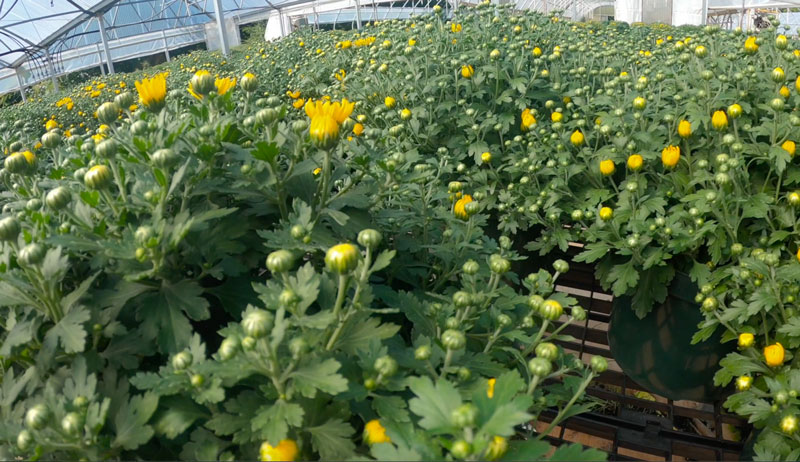
Considering mums have just one flush of flowers, try to buy them for your garden in the bud or cracking stage. Any open flowers you see will only last a few weeks. So if you are trying to stretch the plant throughout the season, buy at the earliest stage possible.

Often the nursery will have a tag with what color the mum is because it is too hard to tell at the bud stage. However, he mentions if you want them for an event around the time of purchase, go ahead and buy them while the buds are displayed.


Read more: Add some new veggies to your fall garden!


How to Care for Mums

Mums thrive in the sun as long as they are watered well. Six hours is the least amount of light they need. Less will leave you with tall, leggy plants without many flower buds.

Make sure you water at the base of the plant, as this reduces the chances of plant diseases. Mums thrive in both the garden landscape and containers.

Perennial Mums

The best chance to have mums come back in the following years is to plant them in the ground, allowing the most amount of time to get rooted in your garden before the winter.

In the spring, pinch the buds for a fuller, bushier plant. Once the flowers have all bloomed and started losing color, deadhead them. You will want to keep your garden mums mulched during the winter.

Tischauser says his best advice for buying any plants for your garden is to buy from a greenhouse in your area. “Plants that are grown in a different climate need longer to acclimate to your environment, running the risk of transplant shock.”

Local also means less time in transport, which can create its own series of issues for plants. You will have the most success if you check out plant company tags in your local garden center and look for companies within your region. 

Categories
Animals Farm & Garden Health & Nutrition Poultry

5 Protein Sources You Can Offer Molting Chickens

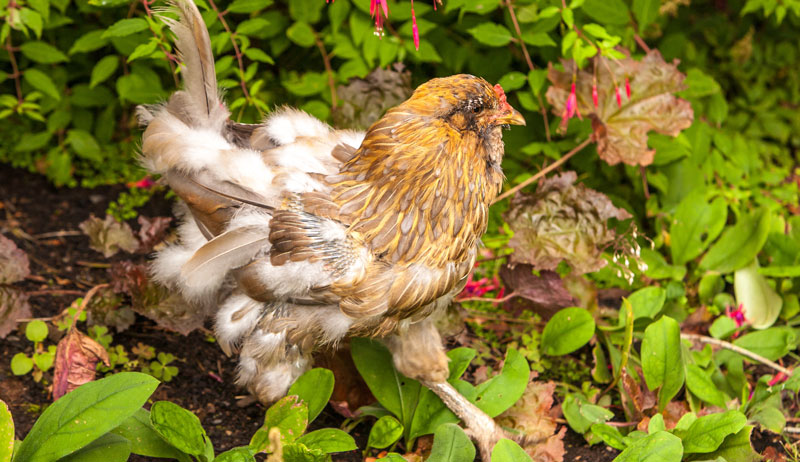
It’s that time of year again, when our coops are full of feathers versus full of eggs. Those of us with birds in molt undoubtedly sympathize with our poor chooks as they go through their annual awkward phase. Chickens discard their old, scruffy feathers and grow in healthy new plumage, but molting involves much more than unappealing appearances.

Chickens in molt put the majority of their body’s energy into producing replacement feathers. As a result, hens do not lay during this period.

Effects of Molting

Since molting usually completes in late fall, daylight will have minimized beyond that required for egg production. In other words, egg production is over for the year. A molting chicken is also at risk of both physical and weather-related injury, since feathers both help protect its skin and regulate its body temperature.

The latter is especially true if a bird molts in late autumn, when temperatures dramatically drop.  

Molting can also profoundly affect the physiology of your chickens. Feathers are comprised mostly of keratin, a type of protein found in hair, hooves and fingernails. A chicken’s feathers account for approximately 25 percent of its body’s total protein. If not fed a protein-rich diet during molting season, a bird’s body will naturally tap into other sources—specifically, its own body—to obtain the protein it needs to replenish its plumage.

Since protein is vital to the creation and revitalization of body tissue, diverting protein to feather development can result in weak, sickly birds.  


Read more: Learn the hard truths behind seasonal chicken molt.


How Keepers Can Help

Fortunately, we flock keepers can quite easily help our minimally feathered friends through this yearly rough patch. No medicines, injectable vitamins or chemical additives are necessary.

All that’s required on our part is offering our flocks the proper feed and supplementing this with healthful, protein-rich foods. Here are five widely available protein options for molting chickens.  

Protein-Fortified Feed 

Layer rations typically contain approximately 16 percent protein. While this protein level is sufficient at other times of the year, it is inadequate during molting season.

According to Dr. Ashley Navarrette, a clinical assistant professor at the Texas A&M College of Veterinary Medicine & Biomedical Sciences, molting birds require feed with at least 20 percent protein to provide the nutrients necessary for feather regrowth. Game-bird feed and broiler rations contain higher protein levels (to fuel these birds’ rapid growth) and can be substituted during molt to boost a flock’s protein intake.  

Eggs 

While it’s true that our stash of eggs will dwindle rapidly due to our molting hens’ lack of lay, eggs remain an excellent source of protein for our flock. Scrambled eggs and hard-boiled eggs can be roughly chopped up and offered a few times per week during molting season.

Make absolutely certain that the eggs you offer completely hard cooked through versus softly cooked and runny. I recommend feeding your flock supplemental eggs out in the run, a good distance from the coop and nest boxes.  

Dried Mealworms 

These chicken favorites have become increasingly popular amongst flock owners and hence much easier to find than they were a decade ago. Many feed shops and farm-supply stores carry dried mealworms alongside other packaged poultry snacks in the feed aisle. They can also be found (usually at a cheaper price) in the wild bird seed section there and at home-improvement stores.

“Cheaper” is relative, however, as a small bag can still cost a pretty penny. If possible, buy dried mealworms in bulk. Believe me, your chickens will go through them! Sprinkle mealworms on chicken feed, scatter them throughout the run, or—if your flock is docile and friendly—offer them in the palm of your hand.  


Read more: Make some tasty (and nutritious) DIY chicken treats for your hens!


Sunflower Hearts 

Full of protein and tasty, too, sunflower hearts—dehusked sunflower seeds—are a simple supplement to offer your birds. They are simple to find (feed shops, farm-supply stores, wild-bird stores, even supermarkets) and simple to feed. Toss them out and your flock will gobble them up!

Offer them the same way you would offer mealworms. If sunflower hearts are unavailable, shelled sunflower seeds work well, too. If you are buying these at a supermarket, make certain they have not been seasoned or flavored for human consumption.  

Chunky Peanut Butter 

An excellent source of protein for humans and molting chickens alike, chunky peanut butter—the kind with coarsely chopped peanuts incorporated into the butter—offers birds flavor, texture and the nutritional boost they need. Offer a sizable scoop on a paper plate or square of thick cardboard set in their midst.

It may seem strange and alien to them at first. But eventually one inquisitive chicken will venture forth to tentatively peck at the gloppy brown intruder.

It may help to lightly sprinkle dried mealworms or sunflower hearts—recognizable treats—over the surface of the peanut butter to encourage the birds. Offer peanut butter occasionally—perhaps once a week—since its pasty nature may result in peanut butter-bound beaks.  

Skip the Beans! 

Dried beans may seem like the perfect solution for boosting your birds’ protein intake. They’re inexpensive, easy to find and store well.

Unfortunately, feeding your flock dry—or raw—beans can be a death sentence for them. Dried and raw beans contain a chemical called phytohaemagglutinin (PHA), which is toxic to chickens in very small amounts.

PHA affects a bird’s immune system and can damage the liver, kidneys, pancreas and reproductive organs. It can even can lead to death.

If prepared correctly—cooked for 6 hours and well rinsed— beans are perfectly safe for chickens to consume. I, however, prefer to give my chickens the other protein supplements I’ve suggested and keep the beans for my family’s dinner table.  

Categories
Beginning Farmers Crops & Gardening Farm & Garden Farm Management News Urban Farming

Rodale Institute 9-Month Farmer Training Internships Are Now Available!

If you’ve been wanting a career in regenerative organic farming, but you’re not sure where to start, you might want to check out the Rodale Institute. The nonprofit organization has worked to further organic agriculture for more than 70 years and is currently accepting applications for the 2023 Rodale Institute Farmer Training (RIFT) program.

According to a 2021 Rodale Institute report, “In the United States, organic sales have topped $55 billion annually, and continue to grow. Yet, only one percent of U.S. cropland is certified organic. We have a need for more organic farmers, as well as beginning farmers. Today, there are six times as many farmers over 65 as under 35.”

That’s a big part of the group’s motivation to equip would-be farmers with the knowledge and hands-on experience needed to start their own regenerative farms. To that end, the RIFT program began about 12 years ago.

Program Basics

The nine-month-long program takes place at the 386-acre Rodale Institute Experimental Farm, located in Kutztown, Pennsylvania. Participants are eligible for on-site housing, are paid hourly wages, and have access to free veggies for the duration of the internship.

Interns work from March to November.

In addition to working on the farm, interns get market experience at local farmers’ markets in downtown Allentown and Redding, Pennsylvania. There are some field trips, too. “[Current interns] were just recently helping to build a new greenhouse at one of our partner farms,” Rodale Institute Director of Marketing and Communications Dave Pryor says.

“This program is not just a how-to-plant type of internship,” notes Dan Kemper, master trainer at the Rodale Institute. “It’s a fully immersive farming internship.”

That includes classroom learning, complete with exams. “We have this really next-level experience of immersion between college education and farming,” Kemper says. “Then, on top that, what we’ve done in the last three or four years is [added] this enormous focus on operating your own business…. We talk to lawyers. We talk to consultants. We talk to loan officers.

“Everything that I need to get these people ready to own their business is something that we acknowledge in this program.”

To successfully complete the program, interns must “attend all classroom sessions and off-site farm visits, complete all classroom assignments, and pass all quarterly exams.”


Read more: There’s a new regenerative farm certification in the works. Click to read more.


‘Solutions-Based People’

Past RIFT interns have ranged in age from 18 to to 60-something and hail from across the U.S. Some of them already had a little farming experience. Other successful candidates had no prior experience.

What many past interns have had in common? “A lot of people really understand the negative impact of conventional agriculture and want to get into working with regenerative, organic agriculture,” Pryor says.

“They’re very positive, solutions-based people. A lot of them are very environmentally focused and shop at farmers’ markets. They see that connection with farmers and they’ve gotten hooked with that sort of lifestyle. They have seen and heard that it’s an actual way of life and a business and a career.”

Applicants need to be able to work at least 40 hours per week, including some evenings and weekends. They also need to be able to work in any kind of weather, lift in excess of 50 pounds, and have a valid, U.S. driver’s license.

There are also some intangible qualities that can help set applicants apart. Ideal RIFT interns willingly accept new information and are ready to learn. And, when the going gets tough, they can stay positive and have energy to spare.

When & How to Apply

The number of internship spots varies from year to year, depending on available funding. “We’re looking at just under 20 students starting this year,” Kemper says.

Competition for those spots can be pretty stiff. “We usually receive close to 100 applications,” Kemper adds. “I’m already receiving lots of applications, and I would strongly recommend that people send in their applications right now.”

Applications for the 2023 season are available here. Aside from the usual details, the RIFT program application includes several essay-type questions. You’ll need to be able to describe your long-term goals, most and least interesting aspects of farming, and more.

You can email or snail-mail your completed application. The Rodale Institute also requests a resume and three work-related references.

Categories
Podcast

Episode 38: Pete Charlerie


Hobby Farms Presents Growing Good Pete Charlerie

In this episode of Hobby Farms Presents: Growing Good, Pete Charlerie dives into financial sustainability for small farms, free equipment and information resources, USDA incentives and more.

Pete tells us about his journey from his family’s citrus grove in Trinidad to the University of Maryland, where he earned a degree in ag economics, setting the stage for his farm consultancy work today. Hear about the value of niche farm products, from cut flowers to sweet potato greens to value-added products. When you need a market for your products, sometimes you need to start your own, and Pete talks about his role in starting the Hollywood Farmers Market in Maryland.

Learn about Pete’s work as a farm consultant, as he tells us how to get better prices on materials, find USDA and NRCS resources and financial incentives, and use shared equipment. FARMS (the Family Agriculture Resource Management Service) is another resource for legal, marketing and production help for small-scale farmers in the US and the Caribbean. Stay tuned for the story about how FARMS helped one farmer save three hours of labor a day!

Pete also talks about his SunSplash Farm and how farming taught him about much more than growing food. At the very end, you’ll get tips for growing taro, a versatile and productive root crop that’s well known in the tropics.

Categories
Animals Chickens 101 Farm & Garden Health & Nutrition Poultry

Some Chicken Behavior Can Be Downright Wacky!

Hens can have extremely goofy chicken behavior and do some of the wackiest things. This is probably part of the appeal of backyard flocks! If you’ve ever wondered if your chicken’s wacky behavior was normal or there’s something wrong with it, you’re probably not alone. 

New chicken-keepers may be especially confused by some of the bizarre behavior of these funny fowl. Some birds act even wackier than others and stump seasoned chicken tenders and experts alike.

Here are some common wacky chicken behavior questions and advice on what, if anything, you should do about it.

I’m Not Dead!

You’ve just found your favorite hen laying over on its side with one wing stretched out, looking nearly catatonic. Don’t worry. It’s probably not dead or even injured. Iit’s actually just sunbathing.

Although it looks strange, this is completely normal behavior and just one of the wacky things that chickens do.

“A normal behavior that scares a lot of people is sunbathing,” says Richard Blatchford, an assistant professor of extension, small to large-scale poultry, for the department of animal science at the University of California, Davis. Blatchford specializes in the husbandry, behavior and welfare of poultry and often talks with poultry producers and backyard flock-keepers about behavioral issues and how to change or address nuisance behaviors.

“The birds will just go down on their sides, spread a wing out and become motionless on the ground,” he says. “If people don’t realize that chickens sunbathe, they kind of look dead.

“Chickens tend to kind of zone out when they’re sunbathing, so you can get really close to them before they get up or move. I think this adds to the concern there’s something wrong with the bird because they never just sit there when you walk up to them.

“However, it’s totally normal. The bird is fine. They’ll finish their sunbath, get up and do their normal stuff.”


Read more: Care is key to comfort when chickens are molting.


Chickens Gone Bald

If you remember when your first chicken went through its first molt, you may have seriously panicked over your bird going bald. Not necessarily a chicken behavior issue, the first molt can be freaky. But molting is completely normal.

However, there are a couple of reasons why birds lose feathers outside of molt that aren’t “normal” but may or may not be concerning. And some of the associated chicken behavior can be bad, even dangerous.

“The most common scenario is aggression,” Blatchford says. “If there’s aggression in a flock, birds show [it] by pecking. If they’re really aggressive, they end up pulling feathers out in particular parts of the body. You may notice a chicken missing feathers on the back of the head and neck, around the vent and sometimes the back. Feather loss due to aggression isn’t necessarily an issue for the birds themselves. They should grow the feathers back in the next molt.

“However, if it’s in the middle of winter and they’ve lost a lot of feathers, it might be an issue because they can’t thermoregulate as well. The biggest issue is it makes them susceptible to skin injury because their skin is really thin. If there’s continued aggression, a bird pecking in the same area may break the skin. Anytime there’s any injury, then start to worry. If there’s blood, you could end up getting some form of cannibalism happening, and you don’t want that.”

Blatchford advises cleaning up any blood quickly and ensuring there isn’t any left. He also recommends getting an ointment to put on the wounds or an antipeck spray or lotion, which helps heal the wound and keep other birds from pecking at it.

Cold weather and open wounds are the only times he says you should worry about a bird not having feathers in an area. Otherwise, they’re OK, and the feathers should grow back.

“Because feather loss is often a sign of aggression, you want to look into it in your flock, especially if it results in injury,” he says. “You must try to figure out who’s the one being aggressive. It could be one or multiple birds. You may have to do something with an aggressive bird, such as remove it from the flock or try to do some intervention to reduce the aggression.”

“The second common reason for feather loss outside of molt could be a health issue,” Blatchford adds. “Usually, you don’t see feather loss associated with a particular disease, but it could be something like mites or lice. They’re going to damage the feathers. Mites less so because they’re actually blood drinkers, while lice are feather chewers.”

A chicken with lice might not lose their feathers, but the feathers may become such poor quality that it looks like it has gaps. You should always check the bird over visually if you notice feather loss. Do this by parting the feathers and looking for little black or brown spots that may be running along the skin. These are bugs and you should treat the bird to get rid of them.

Birds Like to Bathe

If you see your birds writhing and wallowing in the dirt, throwing dust up everywhere, they’re not having a seizure. This particular chicken behavior? They’re just giving themselves a dust bath. The previously mentioned bugs are a big part of the reason chickens do dust baths. Dust helps remove excess oil from feathers and makes them less desirable for parasites such as lice and mites. 

Dust baths are a natural cleaner and insect repellent rolled into one. And chickens seem to have fun doing it.

Don’t be surprised if they stretch out on the ground and spread their wings for an enjoyable round of catatonic sunbathing when they finish their dust bath. It’s this wacky behavior is pretty normal when you’re a chicken.

chicken behavior
Moira McGhee

Hide & Seek 

Some chickens like to play hide and seek. And some are really good at it, especially if they’re hiding a nest of eggs somewhere.

However, a chicken that hides from its flock mates may be ill or hurt and doesn’t want to be picked on. Chickens often peck at injured birds due to the social order of the flock and their natural curiosity. Worse, a bleeding injury could lead to cannibalism, an extremely gross behavior you definitely don’t want to see. You should quickly remove injured or dead birds from the flock to prevent it.

Blatchford says another reason birds might hide is if they’re being picked on a lot by the dominant birds. “They may be hesitant to come out around certain individuals,” he says. “It kind of depends on how big your flock is. If you have a larger flock, oftentimes, the really dominant individuals and really subordinate individuals don’t mix very much. They stay separate from each other.

“So, you may see a group of birds that are always doing stuff together or they’re the first birds to come and eat,” he says. “If you’re giving treats, they’re the ones that come up first. Then, you have other ones that kind of stay away until the dominant birds disappear. The second group of birds knows they’re going to get pecked at, picked on or chased away if they come too close to the more dominant individuals. Staying away is one of the ways they avoid aggression.”

However, if you have a smaller flock, the lower-ranking birds might not always be able to get away from the more dominant ones. Worse, if you happen to have one of those very dominant, somewhat aggressive birds in your flock, some lower-ranking birds may try to hide from them.

“You may also see a lot of pacing or stress behaviors because they’re not really able to escape from them,” Blatchford says. “They’re doing their best to get away from them, but they can’t quite do it.”

There’s also a possibility that a bird is broody, and she wants to sit on eggs. If a hen has a chance to hide a nest, she usually will. You might notice that some of your birds disappear, then pop back up with some chicks in tow.

“That’s actually happened to me before,” Blatchford says. “A hen that I really liked disappeared. My flock was free-ranging and I’d had a hawk take some before. I just figured she must have been a casualty. About three weeks later, out she came with a couple of little chicks.”

chicken behavior
Moira McGhee

Mean Mama Hens

Some hens love being a mom and will actually go around adopting the chicks from other hens. Blatchford says some breeds, such as Orpingtons, are known for being really good moms. Then, you have the opposite.

“Some hens are just bad moms,” he says. “Like most animals, birds that are new moms tend not to be as good at it. They’re learning and figuring out what they’re supposed to do.

“If it’s the bird’s first hatch, maybe even her second hatch, she may be meaner to the chicks because she doesn’t really know exactly what she’s doing. Hopefully, that gets better with time. However, some birds just aren’t good moms ever. I’m not exactly sure why some birds are a bit more aggressive with their chicks than others.”

It’s probably normal to see a hen give her chick a little peck here and there as a signal that whatever the chick is doing isn’t right. However, constant picking goes beyond wacky behavior and into bad behavior.

“Some birds will actually kill chicks,” Blatchford says. “It could also be stress in the flock. Stress makes chickens do really weird things, like us. If she’s under stress, she may be rerouting that stress into aggression toward her chicks.”

If the aggression and pecking look bad, Blatch­ford recommends taking the chicks away. You can rear the chicks the same way you would if you’d gotten them from a hatchery, and they’ll be just fine.

“This sounds horrible,” he says, “but they don’t need their mom. They’re precocial individuals. They can find food. You just have to show them where it is and then provide artificial heat for them. We can take the role of mom over if need be.”


Read more: Some chicken behavior become bad habits, but you can help.


The next time your bird acts strange, do some research and talk to experienced chicken tenders to see if it’s something concerning or if your bird is just being a chicken. As Blatchford likes to say, “We write books about them, but they don’t know how to read, so they never do what they’re supposed to do.” 


More Information

Roosters Crow at Dawn, Right?

It’s not just hens that can show chicken behavior a person might consider wacky. The male of the species may appear more aloof but also do funny things. One of the most frequent questions Richard Blatchford, an extension assistant professor at the University of California, Davis, gets about roosters is why it’s crowing all day long or in the middle of the night.

“We’re conditioned to think roosters crow in the morning because we’ve seen movies and cartoons all our lives where the sun comes up and the rooster crows,” he says. “They do crow a lot in the morning because the air quality helps the acoustics, so their crow travels further at that time of day. However, crowing is actually a territorial behavior. Essentially, what’s happening is the birds crow to tell their neighbor that they’re still there and that they’re still holding their territory, so don’t come in and try to invade me.”

Anytime a rooster feels like their territory is getting threatened, they will typically crow. It’s one of the first low-intensity aggressive behaviors they do in that situation.

“It could be something like you’re in an urban area and a car goes by with a loud radio that they’re not used to,” Blatchford says. “That could trigger (him) to crow because there’s something different in the environment and so he’s alerting, ‘I’m here and this is my territory.’” 

Crowing in the middle of the night can be attributed to several things. A predator could be sniffing around the coop. Exterior lights coming on or car headlights going by could also trigger a rooster to sound off. Anything that disturbs the male can cause a round of raucous crowing your neighbors might not appreciate, hence the typical rule in urban areas banning roosters. 

Usually, something is cuing him or stimulating him to crow at weird hours. If it happens on a regular basis, there’s probably something in the environment disturbing him.

It’s just a matter of figuring out what’s making that disturbance. If you have the ability to stop it, the crowing should go away.

This article originally appeared in the September/October 2022 issue of Chickens magazine.

Categories
Equipment Farm & Garden Farm Management

Collect Rainwater To Fill Your Farm Pond (Video)

Best laid plans, as they say…. When we built our farm pond, we recognized the drainage area wasn’t very large, though we figured it would be sufficient to keep the pond full. One dry summer later, though, I must admit that Mother Nature proved us wrong.

Does this matter in all cases? No, not necessarily. But I stocked this particular pond with fish last year. So I need to ensure there’s enough water to keep all these aquatic creatures healthy.

What to do? Well, one handy solution is to collect and divert rainwater from the buildings on our property—our outbuildings, as well as the roof of our house—to the pond.


Read more: Check out these video tips for stocking a fish pond.


The Plan

I know how much drainage area my pond receives thanks to some quick calculations on Google Maps. In all, the pond gets water from about 1.5 acres, calculated by measuring the perimeter area of the pond.

But, of course, not all of the rainwater gets to the pond, as much of it soaks into the ground first. Not so with a building’s roof, though, which provides instant runoff when collected and diverted to the pond.

Where does this rainwater usually go? Typically, it makes its way into the yard and pastures. But when it rains, these areas receive water, so I consider roof runoff to be excess.

In the video you’ll see I’ve got pipe sitting on the ground to move this runoff water to the pond. In the long run, though, my plan is to bury these irrigation lines underground for a more permanent solution.


Read more: Ready to get started with rainwater collection?


How Much Water Will This Collect?

How much rainwater can I actually collect for my pond by simply attaching piping to my downspouts? The answer might be more than you think. And there’s a formula for an accurate prediction.

First, you need to get the square footage of your roof, either using a land wheel and walking the building’s perimeter or using mapping software.

Once you have the total square footage of all the roofs you’re collecting from, just multiply this number by .625. The resulting number will give you the gallons of water you can expect to collect per inch of water that falls.

With the amount of square footage I have, and given that my area typically gets about 40 inches of rain a year, I can expect to collect 98,000 gallons of rain per year for my pond.

One note: Check your local county or municipality rules for any restrictions on catching rainfall. And check out the video above to see how my system looks and the pond I hope to fill with this cheap and easy catchment system!


Categories
Crops & Gardening Equipment

5 Tools For Harvesting Hard-To-Reach Apples

It’s easy to understand why dwarf apple trees have become popular. They occupy a smaller footprint than standard trees (making them easy to squeeze into compact spaces). And their diminished height makes pruning and harvesting apples a breeze.

But I personally love the charismatic appearance of standard apple trees, growing unrestrained to heights of 25 or 30 feet with a similar spread. An old, twisted apple tree is a sight to behold … and, if we’re honest, not the easiest tree from which to harvest fruit.

If you live on an old farm with decades-old apple trees, or if you’ve planted standard trees growing rapidly to lofty heights, you’re probably wondering about the best way to harvest fruit from upper branches. Perhaps only a few lower branches are within reach for harvesting by hand, with the biggest and best apples growing at the top of the tree, in full sunlight but thoroughly out of reach.

The good news is, this isn’t a new problem. There are many tools to help orchardists harvest the highest apples. Here are a few to consider:

  1. Apple Pickers

Using an apple picker is one of the safest and easier ways to extend your reach. An apple picker is a simple wooden or metal pole (often adjustable in length) with a tool on the end for harvesting apples.

The tool might be a claw controlled by a lever at the opposite end (perfect for harvesting one apple at a time). Or it might be a metal basket with prongs for pulling fruit off branches (ideal for harvesting many apples at once).


Read more: Choose the right type of apple picker for your harvest.


  1. Stool, Step Stool, Ladder, Etc.

Need to gain only a little extra height? A household stool, step stool, or ladder might serve you well.

Just make sure they’re sitting firmly on the ground (without any wiggling or wobbling) before you climb up. And be careful not to lean too far once you’re up. You don’t want to lose your balance, or have your stool or ladder tip over.

  1. Tripod Stepladder

If you wish to invest in a specialty ladder for harvesting apples, a tripod stepladder is the way to go. They’re wider at the base than at the top and feature three legs instead of four. This makes them much more stable (especially over uneven ground).


Read more: You need these 4 tools for picking apples.


  1. Scaffolding

If you’re willing to spend a bit more time harvesting from a big tree with a large crop of apples, constructing scaffolding underneath and around the tree can be a useful option. Building wooden scaffolding can work fine (provided it’s strong enough to safely support you).

But modular scaffolding compromised of metal frames, diagonal bracing rods and wooden planks can be built to a size that suits your needs while staying (relatively) lightweight for moving around. Just be careful not to fall when climbing or walking across scaffolding.

  1. Hay Wagon

One of my favorite ways to gain a little extra apple-picking height is to pull a hay wagon (or any similarly elevated wagon or trailer) alongside or underneath a tall tree. Standing on the deck provides a boost. Apple pickers can be used to gain even more reach.

By using a hay wagon, you can make a fun autumn event out of harvesting apples. Toss on some hay bales, invite family and friends, and drive from tree to tree taste-testing and picking fruit.

By utilizing one or more of these approaches, you’ll have those tasty, hard-to-reach apples harvested in no time.

Categories
Beginning Farmers Crops & Gardening Farm & Garden Food Homesteading News

We Spoke With Joe Lamp’l About “The Vegetable Gardening Book”

Known to many as “joe gardener,” gardening enthusiast Joe Lamp’l has, over the years, become the voice and inspiration for thousands of growers across the globe. Whether through his long-running DIY Network production, “Fresh from the Garden”; his PBS must-see TV show, “Growing a Greener World”; his podcast, “The joe gardener Show” or his myriad media and print appearances, Lamp’l is an unabashed cheerleader for getting yourself out to the garden.

He’s also the author of three books, with his most recent, ““The Vegetable Gardening Book: Your complete guide to growing an edible organic garden from seed to harvest,” hitting shelves just this month. Lamp’l took a few minutes out from his busy schedule to speak with us about his own experiences as a grower, his passion for teaching and inspiring growers, the big ideas behind his most recent book and more.

Hobby Farms: How did you first become interested in growing?

Joe Lamp’l: I grew up in Miami, Florida, where everything grows. As the youngest of four boys, my next-youngest brother was five years older than me. So when I was 8, he was 13 and really had no interest in hanging out with me. So he was off doing his thing, and I was hanging out with my dad, who I called the Weekend Warrior. He had his week job, day-to-day, in insurance, but on the weekends, he’d go out there and mow the grass, edge the driveway, trim the bushes to get everything looking good again. And I would just tag along and help him out. I loved that.

But at the end of the day—or at least when he was through—he went inside to relax and I still had some energy in me at 8 years old. So I was running around the yard and came back, recklessly, across one of the bushes that he had just got through trimming. And I accidentally broke a branch off of it.

I did not want to get discovered for that, so the best thing I knew to do was cover my tracks. I took that broken branch and shoved it into the ground right next to  the base of the parent plant. I pushed dirt around it and went about my business, hoping that I wouldn’t get found out.

Fast forward about eight weeks, maybe, I came back by that bush and had totally forgotten about it. But when I went back by there, it triggered my memory that this was the branch that I had broken, and I looked down to find the broken branch.

But I couldn’t find it … until I started narrowing it down to the one branch, and I realized that, yes, this is the one. Except it wasn’t dead. In fact, it had sprouted new leaves and started to root a little bit.

I was blown away. I could not get over how that happened and was fascinated. That is truly the moment I said I was hooked on horticulture. From that point, I just started planting more branches—though I’d cut them, not break them. I’d stick them in the ground and watch them regrow themselves and become new plants.

And then I started getting my parents to buy seeds, so I started planting seeds into clay pots. Along the outside of my parents’ bedroom window, there was a good place there, so I made a garden. That was the first place that I planted vegetable seeds—bush bean seeds. And they grew!

I didn’t know about right place, sun exposure or anything like that. I just made a trough, stuck seeds in there and watered them, and they grew.

Of course, those beans were the very best I ever had in my life. So it just went from there. Every day I wanted to know more. My love of gardening in all genres—especially food gardening, but I did roses and that stuff, too—really took off from that moment and never, never stopped.

As a home gardener, I had my own vegetable garden. But then I was picked after a national search from DIY Network/HGTV to find a host for a new show they had created. It didn’t have a name yet, but we named it Fresh from the Garden. That was in 2002. It was supposed to be one year and 26 episodes of teaching people how to grow food, with every isolated on one particular crop.

One episode, you would watch me teach you how to grow tomatoes, for example, from seed or seedling to harvest. So each episode took four or five months, the full growing cycle, to help people see how to do the whole process. Then the next episode would be another crop—beans, eggplant, squash, all the way through. The show was going so well, they decided to turn it into 52 episodes over three years.

The only reason it stopped then was because we ran out of things to grow. We’d covered everything!

I was honored to be the person to teach the world (or at least the country) to grow vegetables and food. We had a great, successful three seasons. That just reinforced and enhanced my love and passion for vegetable gardening. That was 20 years ago, and it’s only increased from there.


Read more: Get the most from fall growing with a raised bed garden!


HF: Have you seen an increased interest in growing food in your own interactions?

Lamp’l: I have totally seen that! I had started ahead of COVID—ironically and thankfully—the Online Gardening Academy, where I had created courses to help people go deep on particular subjects. Thank goodness, the first course I ever created, in 2018, was Beginner Gardening Fundamentals, and we’d continued to enhance it.

And here comes 2020, and that course is out there relaunching—we relaunched it each year—right as COVID is hitting.

There was a dramatic difference from prior years. We added a lot of new gardeners. And the more home gardeners we have, the less food miles we’ve got and the more control as people take over their own gardens and utilize that space that they’ve got—however small it may be—to grow some of their own food.

It thrills me that they’re doing that.

HF: How has interacting with passionate growers over the years impacted your approach to gardening?

Lamp’l: It inspires me all the time. It always gives me something new that I can learn. I’ve been gardening since I was 8 years old, and I still learn something new every day. If I don’t, I didn’t try.

Sometimes it just hits me in the face. Other times, I’m looking for something new to learn. Having that unique opportunity to go out there and meet face to face with new gardeners all over the country—people that are heroes of mine that I’ve met online or elsewhere—then I’m able to coordinate with them to meet for a podcast or a television episode … I don’t take that lightly, and I know that I am so fortunate to be able to do that.

And then being able to ask them my questions, as well as the questions other people have as we find the story in that. It’s not hard to find the story, but having the opportunity over about three days with each person, to get to know them and break bread with them and have those conversations, that story that you didn’t even know you had emerges from that.

It only gets better from having that direct, intimate contact with them on an informal, casual, gardener-to-gardener basis. It is a thrill, a joy and an honor to be able to do that, and I’m so thankful.

Can you speak to the emotional impact, beyond all the technical growing stuff, that watching a plant grow has on you?

It wows me. It awes me every day.

I often say, you know, I’ve always loved gardening. But I love gardening more today, and tomorrow I’m going to love it even more than today. That’s because I never stop learning. No two days are the same. I’m going to see something tomorrow I’ve never seen before. I’m going to be in awe of some insect flying around or something.

I’ve seen a lot over the years, but it’s amazing that I can still feel the same way and get goosebumps, day after day, having the opportunity to be in the garden. If you just sit there quietly for a minute or two, you see something new. There’s nothing else that I can think of that comes close to that.

When I talk to gardeners and would-be gardeners, I tell them that, if they haven’t experienced that yet, it’s just one more element that makes gardening so amazingly special. You get to observe nature’s wonders up close and intimate.

Those moments never stop, and I never cease to be amazed and awed by that.

Can you share your inspiration for writing The Vegetable Gardening Book?

My last book prior to this was 15 years ago—The Green Gardener’s Guide. That was my second book, and I didn’t think I’d ever write another book. And Jessica Walliser with Cool Springs Press continued to ask me about her next book idea that she wanted me to write, and I kept saying, “No, no, no.” I just don’t have the time anymore.

Then she told me she wanted the next complete guide to vegetable gardening book written. When she painted that picture for me, to be the author of the next great vegetable gardening book, I wanted to be that person. I felt like I need to be that person, really, because I am so passionate about inspiring new gardeners with a focus on growing food. I recognize it as so important for themselves, our future, for climate change—all of those things. It’s almost a calling and a mission for me beyond whether or not I have time to do it.

I wasn’t going to initiate that project, but when she facilitated that for me and made it as easy as possible, I couldn’t say no. I knew in my heart of hearts that I had to say yes.


Read more: Do you have food security concerns? Well, it’s time to start a garden!


HF: What can people expect to learn from The Vegetable Gardening Book?

Lamp’l: My total catchphrase is that I want to help you take the guesswork out of gardening by teaching you the “why do” behind the “how to” so that you can become a better, smarter, more confident gardener. That’s my credo, so I think about that behind everything that I do related to gardening and teaching people.

When I wrote the book, I wanted readers, as they read those words, to hear my voice in such a way that they felt like they were with me in the garden at that time, talking about that crop or that process. Talking about improving the soil or why compost is so important, why mulch is so important. Why we need to be such good stewards when we deal with our pest and disease challenges.

I wanted them to hear that in my voice and my ethos, how I approach all of those things, because they work. I know they work, and I want people to understand that, if they do these things this way, they can do it, too, and have just as much success.

But gardening can be intimidating. And a lot of times people follow the how-to steps without ever stopping long enough to figure out why they need to do those steps. Why are those steps important? I always say, it’s like a cook following a recipe card. They go down the list of the steps and they make that dish.

Gardening can be like that. But that’s not going to make you a better, smarter, more confident gardener. It’s not going to take the guesswork out of gardening. You gotta understand the why do behind the how to.

In the book, that’s what my objective and hope was from start to finish. If I connect with some people that way, it’s a success.

And specifically what people can learn: They can learn all the best practices for becoming an organic vegetable gardener. Then they can learn how to grow what we call “The Fab 40”: the top 20 warm season and top 20 cool season crops, with a couple popular vegetables mixed in to make up that top 40.

It gives the down and dirty, kind of like baseball card information that they need to know, as well as anecdotes and observations from me  My favorite varieties and tips on storing, harvesting—whatever the challenges are of that particular crop, I call those out.

HF: What would you say to someone interested in growing some food but intimidated or concerned about limitations?

Lamp’l: I would say there are no obstacles to growing food. You can grow lettuce or arugula on an apartment balcony. Or you can even grow indoors these days with [smart gardens]. There are systems in place that take all of the concern, doubt and lack of knowledge out of the way.

But what I tell people is, never wait until you feel like you know enough to start gardening. The only way you’re going to know enough to garden is to start gardening. That may be simply sticking a seed in the ground from a pack that somebody gave you. But if you read the information on the seed pack, you planted according to the directions and then see what happens—and do a little homework along the way if you want to—you’re going to learn from that!

Be ready to make mistakes, and embrace them. Because that’s how you’re really going to learn. Try to understand what happened, what went wrong or why didn’t this work out? That’s the way you advance your knowledge, skill, confidence and desire to move forward.

The other thing? Start slow. People can get very overwhelmed quickly because the plants, in their DNA, want to grow. They want to be successful. Blind luck can give them what they need to do that.

So I would say, just do it. Never be concerned or worry about the space constraints. There is a plant for you to grow, and the only way you’re ever going to learn is to do it. Start, and don’t waste any time.

HF: Finally, why is it important for people to grow their own vegetables?

Lamp’l: The first reason is that it’s fun! It’s rewarding. It’s challenging and never boring. And it’s healthy—you’re taking control over how you grow the food that goes into your body. It’s a lot healthier and safer when you’re growing your food yourself.

Plus, you eliminate food miles—the distance food travels across the country or across the world.

And you’re eating in season, so you’re eating fresh. Fresh is best! There’s nothing that tastes better than growing that food in your own garden. You introduce that psychological advantage that helps you advance, in my mind, the flavor if what you just grew. But it’s literally just better anyway.

When you grow it, it’s the best of all worlds. It’ll blow your socks off. And it’ll give you that inspiration to keep growing in the future. Growing food is just a joy and a challenge.

And a lot of the plants that we grow in our yard attract pollinators and beneficials. We need to do our part for them, too. And when we do it without harmful chemicals, we have the all-important benefit of a healthier ecosystem. That’s going to make our food crops and the rest of our garden healthier, as well as help us be healthier because the food we’re eating is clean and it’s delicious.

Categories
Animals Poultry Poultry Equipment

Successful Incubator Egg Hatching Starts With Your Phone

Hatching eggs is an easy way to boost the numbers in your flock. But hatching your own eggs is never foolproof.

There’s a lot that can go wrong when incubating eggs. If you’ve ever placed a dozen or more eggs in an incubator only to have a small number hatch (or you have issues with your chicks after the hatch), you’re not alone. Most issues with hatching eggs happen because of two factors that must be precisely controlled—temperature and humidity.

A Smarter Way to Monitor the Temperature in Your Incubator

The latest egg incubators offer features like automatic egg turning, LED temperature read-outs and auto humidity checks. That’s a nice step up from egg incubators of the past. But the one feature that’s missing from most inexpensive brooders is a way to monitor the temperature without needing to head to the brooder.

A smart temperature controller, also known as a Wi-Fi temperature controller, can be placed in your incubator to remotely monitor the current temperature of your hatching eggs. This type of temperature controller could use a small probe with a larger display that sits outside of your incubator. Or it could be a small device that’s tiny enough to sit inside.

Whichever type you choose, the temperature monitor will connect to your home’s Wi-Fi network and keep you updated on the internal temperature of the incubator via an app or text alerts.

hatching eggs incubator incubation
Courtesy of Govee

Why You Need a Smart Temperature Monitor

If your egg incubator lets you set the internal temperature and you can see it right on the incubator’s LED screen, why would you need a smart temperature controller? Hours count when you’re hatching eggs. This type of monitor is designed to alert you to temperature drops and increases so you can react quickly to any changes inside the incubator.

Imagine if you’re away for the day and you don’t check the incubator before you leave. If the power fails in your home or something jostles the incubator, the internal temperature could start to drop.

Even if you have an alarm that alerts you when the temperature drops or increases below or above what you’ve set, you aren’t home to hear it. When you return several hours or a day later, you walk in to find your eggs aren’t warm enough or they are several degrees hotter than they should be.

That fluctuation could be enough to lose the entire batch.


Read more: Check out these common incubator issues and solutions.


Monitors for Humidity, Too

With a temperature monitor connected to your home’s Wi-Fi, you could choose to receive updates every 30 minutes or just opt to have a notification sent if the temperature drops below what you’ve set. Some temperature monitors will keep you updated on humidity too.

Humidity is just as important as temperature when hatching eggs. If the humidity is too low at hatch time, your chicks could struggle to hatch out of their eggs.

With a temperature and humidity monitor, you can receive alerts if the humidity in your incubator falls below a certain range. You’ll be able to react quickly, and that may be a lifesaver for your chicks.

An Inexpensive Way to Add Smart Functions to Your Incubator

There are a wide variety of Wi-Fi temperature monitors and temperature with humidity monitors available. Most will cost you less than $50. Because it’s a stand-alone device, it can work with any type of incubator.

The next time you’re about to put a few dozen or more eggs in the incubator, think about what could go wrong beforehand. Then, consider putting a Wi-Fi temperature controller alongside your eggs. It just may save your next hatch.