Growing up, Lauren Slingluff remembers her mom having a floor loom in the house. “She made beautiful work on it,” says Slingluff. “I learned how to sew and later how to knit and weave. Most recently I learned how to spin and process raw fiber.”
Those formative fiber moments inspired Slingluff to start Ruby Wolf Farm when she moved to Connecticut three years ago. Embracing hobby farm life, Slingluff graduated from raising chickens to acquiring a couple of non-fiber goats before securing some cashmere and angora goats. Slingluff’s current setup now specializes in producing handmade sewn goods while raising her animals.
We spoke to Slingluff about building up her fiber farm and the character of her goats. We also spotlighted a farm star named Callie.
“I’d say it’s been a slow build over the last three years as we learn and decide what works best for us,” says Slingluff when she looks back on how Ruby Wolf Farm has developed.
The farm’s initial fiber animals were sourced from Laughing Goat Farms in upstate New York. This allowed Slingluff to start to “learn which breeds we preferred for raising and for finished fiber.” Part of the process has also included “driving back from a fiber festival with goats in the back of my car!”
Slingluff says that one of the joys of fiber farming is that it is not necessarily that intensive on a daily basis. As long as her goats are provided with hay, grain and water, she says they are pretty self-sufficient in the pasture.
“The most helpful thing we have found is to just spend time with your herd when you aren’t trying to catch them for a shot or to trim their hooves,” she explains.
“If every time I go in the field I’m trying to wrangle them for something they don’t want to do, it becomes harder and harder to get them. So I go outside on lunch breaks and in the morning or evening to just sit with them, give treats and give pets. Now they’re much easier to grab when I have to take care of something.”
Goats have a reputation for possessing a mischievous streak—and Slingluff says that her tribe can get “incredibly creative.” She says that after building extra tall fences to prevent the goats from jumping over them, they figured out how to get under the barriers.
“We recently got five more cashmere goats from Hidden Brook Farm in Eastford,” she adds, “and it’s been a lot of fun seeing how playful and bouncy they are as babies.”
One of the standout personalities at Ruby Wolf Farm is Callie. Originally a non-fiber back yard pet, Callie has become the farm’s most affectionate and friendly goat.
“Callie also functions as our herd queen, keeping an eye out for predators,” says Slingluff. “She also keeps an eye out for the best treats or plants to eat and the best spot to sleep and ensures she’s always got the top pick. She’s a diva for sure!”
“Having the farm has really helped me slow down in a way,” says Slingluff when she reflects on her three years running Ruby Wolf Farm. “I’m spending more time outside with the animals and am able to appreciate the changing seasons and just take in a beautiful day.”
“It’s also an incredible feeling to spin and then knit with fiber that you raised and sheared yourself,” she adds. “I always want to take things back out to the field and say, ‘Recognize this? You grew it!’ I love getting to know where my yarn came from and how it was made.”
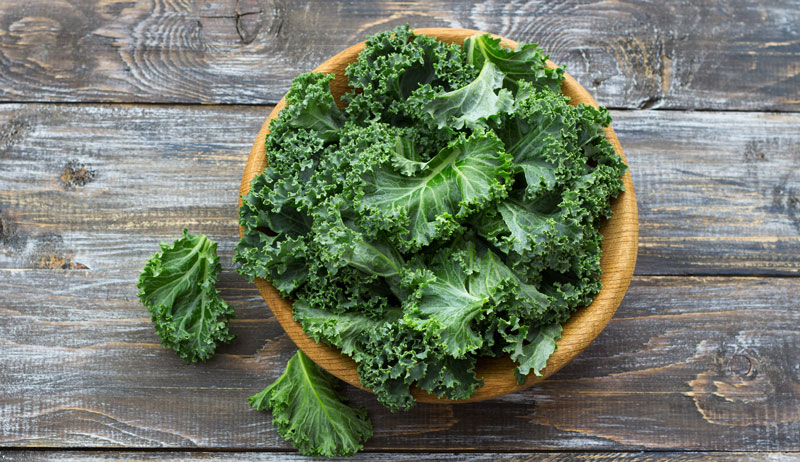
Kale is one of the first garden veggies to produce a crop in early spring. Depending on the variety and your growing conditions, it can keep growing all season long. And, after other crops have petered out, that reliable kale patch can hang on well into late fall. Kale grows so prolifically, in fact, that you might not be able to eat all that you produce, leaving you to wonder how to preserve this produce superfood.
You don’t have to let it go to waste. Aside from giving your extras to friends, neighbors or your local soup kitchen, you can try these long-term storage techniques.
Freezing Kale
Freezing is one of the best ways to keep kale over the long haul, and it works well for all kale types. (This year, for example, I grew Lacinato, Siberian and Jersey kale varieties. Each of these freezes beautifully. However, because their overall leaf sizes and thicknesses vary, I prepared each kind separately before freezing.)
Susan Brackney
For the very best results, you should blanch your kale before you freeze it. “To blanch [kale], you put it in boiling water, then bring it right back out, and immerse it in ice-cold water,” Karen Richey explains. Richey is Health and Human Sciences Extension Educator with Purdue University.
“The philosophy behind blanching is that you have enzymes in your produce, and those enzymes have to be shocked,” Richey says. “You are shocking those enzymes to just kind of [say,] ‘OK. We’ve got to stop right now.’ By shocking the [enzymes] through blanching, you retain the color, you retain the flavor, and you retain the texture. So, it just improves the product.”
Shocking the enzymes that are naturally present in your produce also helps to retain more of its nutrients. It’s best to blanch your kale in small quantities within a boiling water bath rather than via steam. “If you steam blanch greens, the leaves can mat together and they may not blanch properly,” Richey notes.
To blanch kale, first rinse it thoroughly to remove any dirt or debris. You can leave tender, young leaves whole. But you’ll likely want to de-stem and chop larger, thicker leaves. So that every kale leaf is properly blanched, use a four-to-one ratio. That’s four cups of washed, packed kale leaves per one gallon of boiling water.
How to Blanch
Bring water to a boil, add kale leaves, and, once the water returns to a boil, start timing. For very large, thick leaves—think Jersey kale—allow three minutes in the boiling water bath. For thinner, more delicate leaves, blanch for up to two minutes.
Once the time’s up, remove the kale leaves and immediately plunge them into an ice-water bath. Allow the same amount of time for this part of the process as you did for boiling. So, if you boiled your kale for two minutes, you’ll also submerge it in ice water for two minutes.
As time’s up, simply drain and pack your kale into freezer-safe bags or containers. Once frozen, your kale can keep for up to a year.
Rather not mess with blanching? You can also add kale to your favorite soups and stews and then freeze servings of those prepared meals instead.
As with other veggies, you can use a pressure canner to preserve kale. “You don’t need to add lemon juice to kale like you would if you were canning tomatoes,” Richey says. “But you do need a pressure canner, because kale is a low-acid food.”
For food safety’s sake, low-acid foods necessitate pressure canning, rather than preservation with a simple water bath canner.
Dehydrating Kale
Dehydrators vary, but, as a general rule, you should be able to process your kale at 125 degrees F for five or six hours. Periodically check the progress of kale leaves on individual shelves within your dehydrator, and increase dehydration time accordingly. Allow dried kale leaves to cool completely before putting them in an airtight container. Store the container in a cool, dark place.
As with other long-term storage methods, you’ll likely discover some kale varieties preserve better than others. Kale with thick, flat leaves may dry more uniformly than some of the curly-leaf types.
“When you dry kale, it can become very brittle,” Richey says.
Although they don’t keep quite as long as frozen or dehydrated kale, baking kale chips is another tasty way to preserve that bumper crop. Richey has had especially good results with the Lacinto varieties. “They have dark, blue-green leaves and a wrinkled texture,” She says. “That one works the best for chips.”
Put in a little extra effort this fall, and you may be able to keep your kale producing all winter long. I’ve had great results growing Russian and Siberian kale varieties outside under heavy, clear plastic.
You can use old tomato cages or PVC pipe to create tunnel armatures and then cover with plastic sheeting. I’ve secured my plastic sheeting with landscaping staples.
You’ll still need to water your plants as needed. And, during unseasonably warm winter days, you may also want to open up some of the plastic to allow for extra air flow.
What happens when you start with 100 acres of row-cropped, played-out, nutrient-stripped farmland and don’t have a lot of money for projects and improvements? Well, for folks with a deep-rooted love of farming, a never-say-die determination and a mutual commitment to regenerative land practices such as rotational grazing, the answer could look a lot like Clint and Bobbi Jo Finney’s Spring Valley Stock Farms in Mt. Pleasant, Ohio.
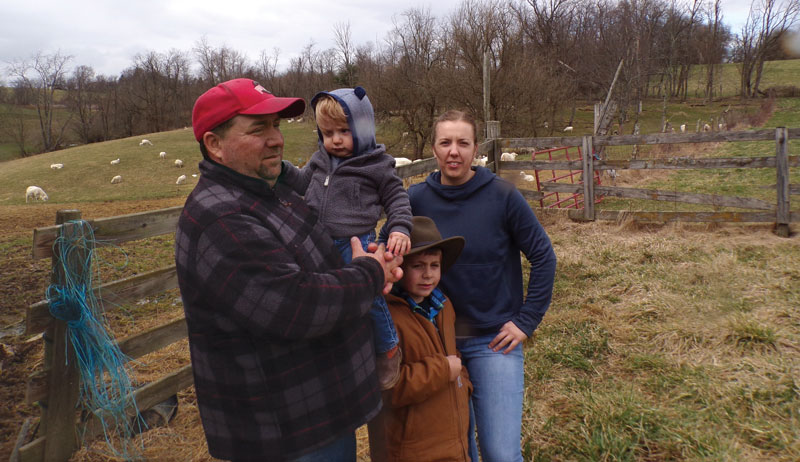
Winter was almost over on the March day at Spring Valley when we visited, and it was unseasonably warm. We sat in the fitful March sunshine with Clint and Bobbi Jo and their two sons—7-year-old Ethan, and Levi, 15 months—watching 30 Katahdin ewes nurse their lambs.
On the hill, a herd of beef cattle grazed stockpiled forage—pasture saved for winter grazing—and behind us in a large, airy barn, breeding sows relaxed in pens bedded deep with hay. Several dairy goats nibbled briars in the sheep pasture.
Misty, a Halflinger mare, poked her head out of the stable door.
Born Farmers
Clint started raising hogs when he was 10 years old. “I’ve always loved hogs,” he said. He came by his love naturally, because his parents and grandparents also raised hogs in this area. But Clint’s own first pig was a prize in an essay contest.
“The Ohio Spot Breeders [Spotted Hog association] give away five gilts every year,” Clint said. That year, his essay won. He raised that pig for 4-H and then began breeding Spotted Hogs. The first pig was the mother of many. Today, there are still sows on the Finney farm descended from Mama, the prize gilt.
Bobbi Jo, growing up on a farm outside nearby Cadiz, Ohio, was also an avid 4-H kid. “I raised dairy goats, dairy heifers and pigs,” she said. When friends set her up on a blind date with Clint, he recognized Bobbi Jo as a girl he had first seen in the show ring. Two years later, the young people were married.
Farming had a lot to do with their compatibility. “I wanted to marry a man who worked like my dad,” Bobbi Jo said.
Today, the Finney farm is exceptionally diverse and productive, and it’s no wonder. They bring a lot of knowledge to their farming.
Clint has decades of experience raising hogs, cattle and sheep and is a soil conservation technician for the Natural Resources Conservation Service. As if that wasn’t enough, he is also the county 4-H key leader for swine and, for the past 11 years, a founder and guiding light for the Eastern Ohio Grazing Council, an organization that has, over the past 11 years, assisted scores of local farmers in shifting to ecologically-sound, rotational-grazing practices.
Bobbi Jo, a licensed practical nurse, is still a farm girl. Misty and the dairy goats are her projects.
It’s a good thing Clint and Bobbi Jo started out with so much going for them, because Spring Valley wasn’t always as blooming with health as it is today. Much of this land had been strip-mined. Some of it was played out with row cropping and poor soil conservation practices.
Pastures were over-your-head high in weeds and brambles. But where some folks would have reached for the easy fix—herbicides, chemical fertilizers and tillage—Clint and Bobbi Jo were already committed to using more natural methods to improve their soil and pasture.
They began a rotational grazing program for their growing herd of beef cows. At first, this just consisted of monthly moves between two pastures. But very soon, the two farmers started to see how these long rest periods allowed forages to recover between grazings. They wanted to see how far they could take this improvement.
So they divided the original pastures into smaller areas, then still smaller. Rests were longer, and forage growth really took off. The Finneys were sold on rotational grazing.
They continue to refine their grass management techniques. For instance, bale grazing—feeding unrolled round bales directly on pasture—has let them put cows on areas where there was too little forage for normal grazing. This adds organic matter (and any seeds that were in the hay) to areas that need it, giving a boost to future forage growth.
Today, they move their cows and sheep at least twice a day. This summer, Clint hopes to increase that number.
Shawn & Beth Dougherty
The Right Side of the Ledger
Like their commitment to ecologically-sound farming practices, the Finneys have always been determined to keep the farm on a sound financial footing. In fact, that determination was part of what pushed them toward rotational grazing.
“When I graduated from college, I wanted to start a commercial hog operation,” Clint said. But when he ran the numbers, the project just didn’t pencil out. Building and stocking such an enterprise could easily take half a million dollars, and he didn’t think the return would justify the investment.
“If I’d started that hog operation back in 2002, today I’d be on the street,” he said.
Grass, however, they already had. And grass is free. So expanding their herd of breeding cows in a rotational grazing program was an obvious step.
The benefits of utilizing this free, captured solar energy were quickly apparent, and soon the couple added a small flock of sheep to their livestock. The two species’ different grazing styles had positive effects on pasture productivity. And the Finneys saw this as a way to move forward with ever-increasing benefits to the farm.
Now, they market custom meat—beef, pork and lamb—and seasonally raise pastured chickens. Their breeding sows produce about 400 piglets per year.
Some are sold to folks who want to raise their own pork. Others go to 4-H kids. Some are fattened here and butchered for retail sale.
Calves from the Finneys’ 25 brood cows are raised out for beef. And Clint sells retail beef, pork and lamb at a local farmers market, using the weekly contacts to build a committed clientele. If it doesn’t make financial sense, the Finneys aren’t likely to do it.
Keeping the farm in the black is important partly because they hope someday to pass this farm on to their children. Ethan already considers himself a farmer, and for good reason.
He’s been doing chores with Clint since he was a toddler. He handles Misty, who towers over him, with calm confidence. If farming is something he wants to do when he grows up, Clint and Bobbi Jo want to help make that happen.
“Finneys settled here in Ohio some time in the late 1700s to early 1800s,” Clint said. He wants that line to continue.
Even though Clint and Bobbi Jo have the advantage of having grown up as farm kids, they aren’t immune to the thousands of accidents that make farming half delight, half nightmare. Telling those stories is one way they help less experienced farmers build confidence.
“If it can happen to them, it can happen to anyone,” is a sentiment that can keep the beginning farmer in the game.
Like the day, way back when Clint was 10 years old, when his dad took him to get that prize pig and the family got in an automobile accident on the way. “We were lucky we could still get the tailgate down to load the pig,” Clint said.
Or the time Clint brought home his bull from visiting a neighboring farm. “I was turning a corner, and I just happened to glance in the wing mirror,” he said—just in time to see one of the bull’s feet come through the floor of the trailer. “By the time I got the truck stopped and ran around to see what had happened, he was standing with all four feet on the road.”
The wooden floor of the stock trailer had looked solid enough, but 2,000 pounds of Hereford bull proved too much for it. What looked like bad luck, though, could have been a lot worse: Just that morning, Clint’s father had used the trailer to haul half-a-dozen cows more than 50 highway miles—without any issues.
And then there was the rocky start Clint and Bobbi Jo had when they started the sheep flock. The pretty animals grazing next to us on this March day were pictures of health, but the enterprise didn’t start out that way!
Of the original 10 ewes bought in 2010, three didn’t make it through the first year. Lambs were orphaned, ewes failed to produce enough milk and there were so many bottle lambs the Finneys just got tired of them.
Undaunted, though, they continued to believe that raising sheep naturally, on grass, with rotational grazing and without medication and biocides, would work. And today, if you ask Clint how many sheep he has, he’s likely to say, “I don’t know. Every time I try to count them, I fall asleep!”
Shawn & Beth Dougherty
Best Practices
While Clint and Bobbi Jo are committed to improving their land with regenerative practices like rotational grazing, they aren’t strictly speaking organic. Clint, as a soil conservation technician, visits farms of all kinds and sees many varieties of farming practice. He forms his own opinions about the best ways to farm.
What’s fashionable is less exciting to him than what is best for the animals, the land and the family.
So while his sows live in a barn with deep organic bedding, they have their piglets in farrowing crates, pens designed to protect young piglets from being laid or stepped on. Some natural farmers don’t like this practice. For Clint, though, it seems that a short time in the farrowing crate is a reasonable price for keeping very young piglets from being overlaid or stepped on.
“And the sows must not mind it much,” Clint said. “If they get out of the barn and the door to the farrowing house is open, they come in the barn and fill up the crates!”
When it comes to toxic chemicals, though, the Finneys are firm. Keeping this farm biocide free isn’t just for the benefit of the animals and plants. Clint and Bobby Jo are concerned that extensive and prolonged use of farm chemicals has contributed to ill health in the farm community as a whole.
They are happier knowing that Ethan and Levi won’t be accidentally exposed to harmful chemicals. And it is safer and more practical. With less heavy equipment and fewer toxins, their children can help with almost any part of the farm work.
Shawn & Beth Dougherty
The Farm of the Future
What are Clint and Bobby Jo’s plans for the future of Spring Valley? Even with all they have already accomplished, the couple still has plenty of dreams.
Grazing all his livestock straight through the winter sounds like a good project to Clint. Right now he finishes some animals on winter grass, but they still go through a lot of hay in the cold months. Keeping livestock numbers in balance with forage production is an eternal challenge, but it’s just the sort of challenge that keeps farming and rotational grazing interesting.
And while Clint loves his NRCS job helping other farmers to develop good stewardship practices, one of his hopes is to improve the financial potential of Spring Valley so that either of his sons, if they so desire, could work the farm full time and make a living at it.
He’s sure the potential is there.
Bobby Jo’s plans include a bigger garden in 2022, and making creative use of the milk from her four dairy goats. Training Misty is on the list, too—maybe as a 4-H project for Ethan? Right now the livestock that keeps her busiest are the two boys. Like Clint, she gives them top priority.
When asked about her future plans, she paused to look around at all the life her family has in their keeping, and said, “I want to keep growing this place as a homestead.”
More Information
Giving Back
Clint and Bobbi Jo Finney believe they owe a lot of their success to the support of their community. Snd they’re not satisfied with just saying, “Thank you!” This family is always paying it forward.
Grateful for his own start raising spotted hogs, most years Clint is able to donate a gilt to the same essay contest that made him a pig breeder. He also provides mentorship and active assistance to new fledgling hog breeders.
As cofounder of the Eastern Ohio Grazing Council, Clint donates lots of time to sharing good farming methods with other farmers. And lately, Clint has also been making his grazing experience available to others via a series of really practical, informative YouTube videos.
This article originally appeared in the July/August 2022 issue of Hobby Farms magazine.
By now, we’ve grown used to varroa mites, hive beetles and other small pests stopping by our honeybee hives uninvited. But what about even larger (and hairier) predators to our bees? Skunks, bears and mice, among others, can really set your apiary back.
But it doesn’t necessarily have to be this way.
Penn State Extension Educator Robyn Underwood has been involved with apiaries and beekeeping for 27 years. “I tell people I’ve been keeping bees since before the turn of the century!” she says.
In that time, Underwood has seen plenty of honeybee predation. And she’s figured out how to mitigate much of it.
Midnight Snackers
“I would say the biggest issue would be skunks,” Underwood says. “They’re definitely the most common.” Night after night, these nocturnal predators amble over to beehives, scratch at the entrances and snarf down any bees that come out to investigate.
If left unchecked, these predators can inflict substantial losses to our bees.
Fortunately, the fixes are relatively simple. If your hives are very low to the ground, elevate them a couple of feet. Putting them up on hive stands or even some concrete blocks will force visiting skunks to stand up on their hind legs to feed. This, in turn, exposes the skunks’ more vulnerable bellies to the hive’s defending workers.
As they fly out of the hive, some of the bees may deliver a few well-placed stings, causing the skunk to retreat.
“My go-to is to put carpet tack strips on the landing board,” Underwood says. “The awesome part about them is that they’re super cheap, and they’re meant to have nails that go down and nails that go up. So, you don’t even have to bring anything but a hammer and the piece of carpet tack strip. The nails are already in the wood, and you just nail it on.”
With the sharp carpet tack strips nailed in place, any skunks attempting to scratch at the landing board end up jabbing their paws.
“The carpet tack strips don’t stand up for more than a year, because weather just ruins them,” Underwood says. “But all you need to do is get [the skunks] to stop and lose that habit and go find other food.”
As an extra deterrent, some beekeepers also put carpet tack strips on the ground in front of their hives.
Sure, skunks cause trouble. But they’ve got nothing on bears.
“Bears are the most damaging,” Underwood says. They’ll destroy beehives to get to the honey stores and larval bees. And once they get a taste for your apiary, they’ll be back for more.
Your best bet against bears? Don’t let these predators get close to your bees to begin with. To that end, Underwood recommends erecting an electrified bear fence. “My bear fence [has] four wires, but really only the top three are generally electrified, because you’re trying to avoid it getting shorted out by vegetation growing,” she says.
Provided you are able to keep up with the weed whacking, you might choose to electrify the extra wire as an additional skunk deterrent. “The fourth wire at the bottom is available to be electrified,” she says. “You just have to hook it to the one above it with something that conducts and then you have a lower wire that’s live.”
Robyn Underwood
Bacon Bait
Her fence design also includes a special kind of bait: cheap bacon. “People think of bears as, you know, you need barbed wire and all this crazy stuff,” Underwood says. “But that’s because you’re actually thinking that the electric shock has to go through their fur coat. Really, what you need to do is get them to put their sensitive parts — like their noses — on the fence.”
That’s what the bacon’s for. “Apparently, bears can actually smell the electricity,” she says. “Once they know what it is and that it hurts, they will take a wide berth around anything like that—and they’ll teach their babies to do that as well.”
For that fence design to work best, though, beekeepers must put it up preemptively.
“Put it up if you think there could be a bear around,” Underwood says. “That gives you the opportunity to teach them to stay away from beehives, rather than having them find them, love them, want them and then [you] trying to keep them out.
“That’s much, much more difficult. In fact, I would just tell people to move their bees [at that point.]”
Messy Mice
As with bears, keeping mice out of your hives is also a matter of prevention. They flock to warm, overwintering hives during the fall and winter months.
“Mice become a problem when the bees start to cluster,” Underwood says. “Because usually when they cluster, there are several inches below the bees that is sort of empty. The mice—as long as they don’t disturb the bees—can go in and build a nest on the bottom board.”
Robyn Underwood
Building those nests means chewing on hive frames and bringing foreign material into the hive. Mice will also urinate inside the hive, smelling up the place to such a degree that your bees may not want to remain there in the future.
To keep mice out, you need a strong, physical barrier.
“Different beekeepers do different things, but I keep my entrance reducer on with the larger opening—the 4-inch opening—year-round,” Underwood says. “I never change it unless there’s robbing. Then I’ll go down to the smaller one.”
She also recommends applying hardware cloth to the front of the hive.
Of course, some predators to bees come dressed in feathers rather than fur. Shrikes, kingbirds, martins, swallows and kites are just some types of birds that routinely swoop by to snatch honeybees right out of the air.
Depending on how many hives you have, these winged hunters can do a surprising amount of damage.
In a 2017 post on the online community BeeSource.com, beekeeper Michael Gillmore had hives set up on a farm located near a large pond. “More than once, I would drive up to the hives to see numerous barn swallows flying in a circular pattern around the pond,” he wrote. “And as they neared the hives, they would all go into a diving flight pattern right in front of the hives, then back up to cruising altitude around the pond again. Not sure how many there were—20 to 30.”
Concerned, Gillmore did the math. “Let’s say I have 30 barn swallows flying around the lake and eating a bee each time they circle in front of the hives,” he wrote. “And maybe they make 100 circuits over the course of a day. That’s 3,000 healthy foraging bees lost every day just from the birds.
“If there’s 10 colonies, [the birds] aren’t a big deal. But, if it’s only two or three [hives,] that has to have an impact.”
Which bees the birds eat matters, too. According to a 2012 study appearing in the International Journal of Scientific & Engineering Research, the presence of bee-eating birds reduced the flight survival rates of virgin honeybee queens.
The authors stated that 80 percent of 30 queens successfully mated when bee-eaters weren’t present in the apiary. When bee-eaters were present, only 46.67 percent of 30 queens successfully mated.
The bee-eating birds also had a chilling effect on the activity of foraging honeybees. “During their presence in the apiary [bee-
eating birds] produce specific sounds that honeybees can recognize, causing them to stay in their hives,” the authors wrote.
Just what did Gillmore do about those ravenous barn swallows? He moved his hives away from that pond. And, when it comes to these insect-predating birds, that may be just about all you can do. Keeping your queen-mating yards well away from lakes and ponds may help mitigate problems with dragonflies as well.
More Information
The Human Threat
With skyrocketing prices for pollination services, beehives—sadly—have also become increasingly tempting targets for human thieves. To combat the problem, keep your hives as far from common lines of sight as possible.
You might also want to monitor the apiary with a wireless, motion-sensitive trail cam. Some beekeepers have also added GPS tags to the inside of their hives. These can act as theft deterrents in and of themselves.
Or, if the tagged hives are stolen, they may be able to be tracked and recovered.
In response to successful and would-be thieves, beekeeping groups, farmers and the lay public are working together to protect hives against human predators and prevent further thefts. In some areas, reward money is being offered.`
And groups such as the California State Beekeepers Association have launched awareness campaigns with clear guidelines we can all follow. Some of their recommendations for farmers using pollination services include “[using] only reputable, registered beekeepers who can show proof of ownership of their beehives, [encouraging] beekeepers to clearly mark their hives and equipment,” and “[knowing] your beekeepers, their equipment and move-in/move out schedule.”
Whether the threat comes from people, birds or bears, prevention of predators is paramount. “The bottom line is to be proactive—not reactive,” says Penn State Extension Educator Robyn Underwood.
This article originally appeared in the July/August 2022 issue of Hobby Farms magazine.
Fashion isn’t usually top of mind for farmers. Who gets dressed up to muck out a barn or till a plot? And anyway remote rural areas aren’t typically populated by lookee-loos checking out today’s outfit. But functional fashion can make hard labor a bit easier, so check out some clothes, from boots to jeans (and more), built to work as hard as you do.
Southwest Best
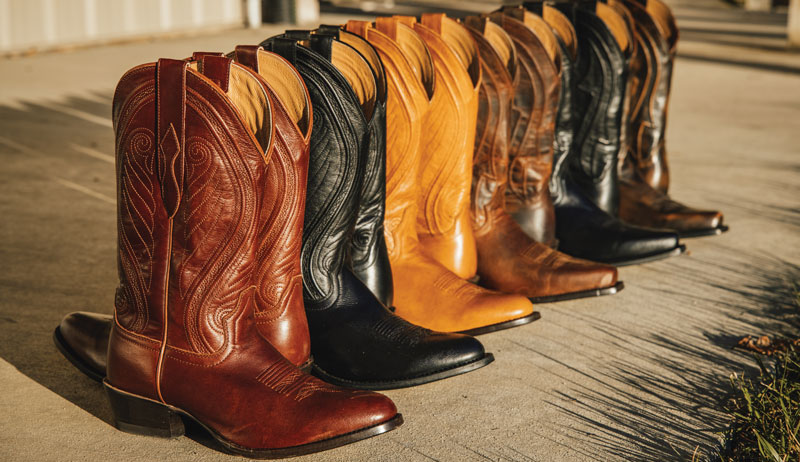
Durango’s new Santa Fe collection (pictured above) offers boot options in Burnt Sienna, Jet Black and Canyon Clay, which feature an R-toe, while styles in Whiskey Barrel Brown, Derby Brown and Jet Black feature a fashion toe. Available in medium and wide half sizes 7 through 12 and 13.
In Jeanious
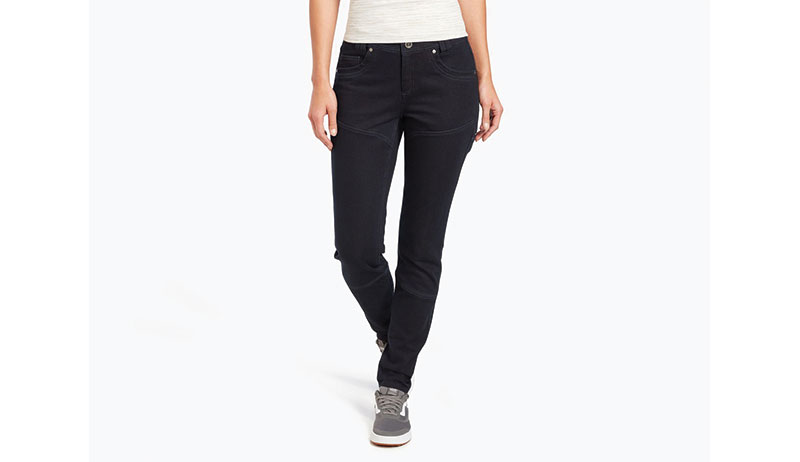
Kuhl’sDanzer Kraftwerk women’s jean offers stretch and form-retaining recovery for freedom of motion whether you’re hiking, gardening or browsing antique stores. High-tech moisture management creates a cooling effect to keep you fresh and comfortable.
Shoes that Work
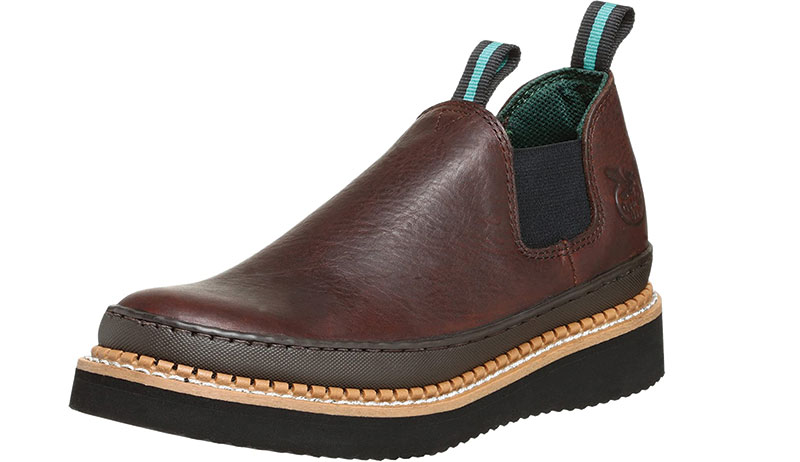
The Georgia Giant Romeo Work Shoe for men is crafted of durable, full-grain leather that can be worn at the worksite or out on the town. High-performance lining wicks moisture away to keep feet dry, and finger pulls make them easy to pull on.
Blissful Boots
Intricate cutouts and a hint of glitter liven up the full-grain leather Round Up Bliss Western Boot by Ariat. For the arena or the dance floor, the foot bed offers support and cushioning.
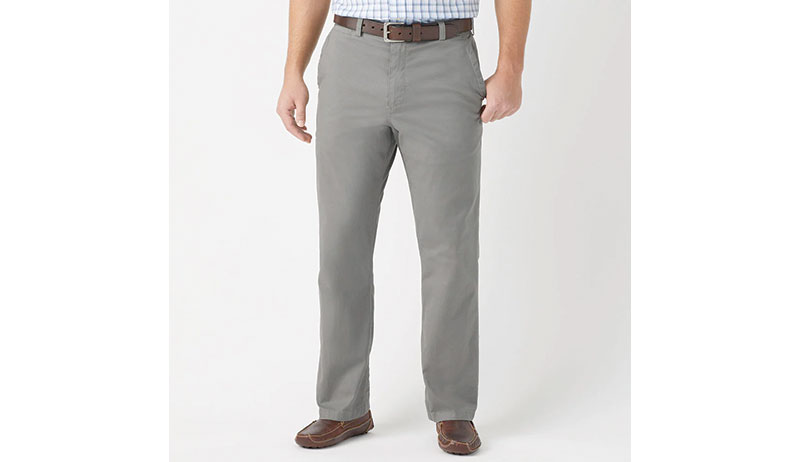
DuluthFlex Ballroom Relaxed Fit Khakis for men are made of soft cotton twill with a touch of spandex that lets you move through your day with ease. A hidden crotch gusset keeps you comfortable when you squat and stoop. A special finish helps these pants shed stains.
Better with Boots
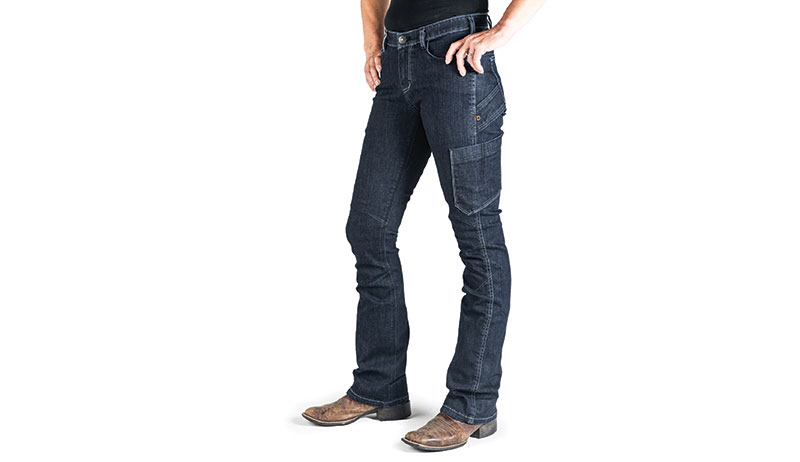
DX Bootcut Pants are part of the new DX Ranch Collection featuring Cordura-brand fabrics by Dovetail Workwear. The pants are sustainably milled and come in Indigo Denim or Dark Kodiak Canvas.
Perfect Pair
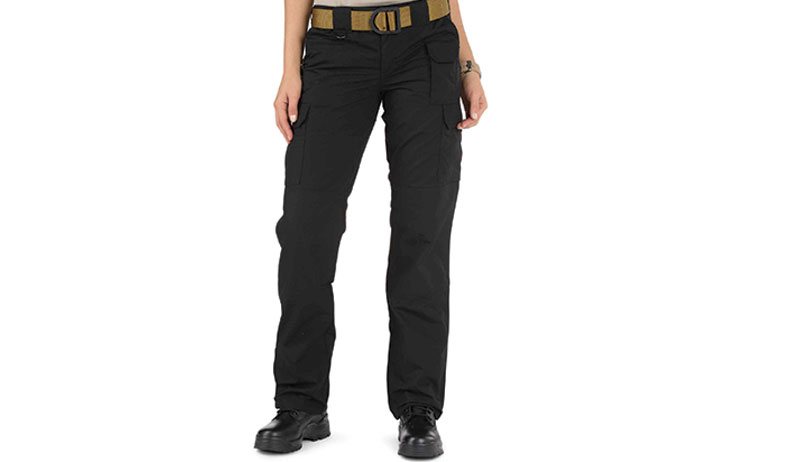
Made with rip-stop fabric and a Teflon finish for stain- and soil-resistance, the Women’s Taclite Pro Ripstop Pant from 511 Tactical is perfect for farm chores where protection is key. Double-reinforced at the seat and knees, these pants are built for work.
Shower Power
These Joules Gold Etched Bee Wellibob Boots make any rainy day better. Fully waterproof, their wipe-clean construction makes keeping them in tip-top condition easy. A removable fur insole lets them go from season to season with ease.
This article originally appeared in the July/August 2022 issue of Hobby Farms magazine.
Once upon a time, a long time ago (well—actually not that long ago), farmers produced hay without the modern miracles of mower/conditioners and hay balers. It might seem hard to imagine nowadays, but there was a time when farmers gathered dried hay by the pitchfork, heaping it onto wagons before storing it loose in haystacks or in barns.
The invention of the automatic hay baler sped up the process and eliminated a lot of manual labor. But you know what? Gathering dried hay by hand and storing it loose is still a viable strategy in the absence of modern equipment.
I learned this during a recent stretch of hay production.
It was supposed to be a routine little mission, capitalizing on a three-day sunny stretch to produce approximately 220 small square bales. Things started off on a fine note. The mower/conditioner did its job. The hay rake gathered the loose hay into windrows. And the square hay baler started churning out bales.
Suddenly, without warning, there was a tremendous crash and clanking. Something (we still haven’t pinpointed what) caused the complicated innards of the hay baler to crumple upon themselves. A service door flung open, spraying broken parts out the back in a cloud of hay dust.
The loss of the hay baler was a blow. But we were prepared with a backup hay baler.
We quickly hooked it up, and the second baler produced exactly 14 bales before getting sidelined with a shear pin issue. Restoring the shear pin (and tightening a nut on the flywheel that somehow worked loose) took far longer than it should have. By late afternoon, though, we were back on track.
Another Baler Breakdown
Unfortunately, our baler issues weren’t over. While the backup baler successfully baled up much of the hay, there was still a meaningful amount on the ground when a spring broke on the knotter. This caused bales to burst forth untied from the back of the machine.
The knotter chewed up a messy tangle of twine.
By this time we were running out of daylight. We called it a night and regrouped the next day. With afternoon rain in the forecast and both balers in varying states of disrepair, we elected to gather the remaining hay the old-fashioned way: by hand.
That’s right. Armed with pitchforks and three empty wagons, four of us ventured forth and began scooping up as much hay as we could. We used the window of dry time between the departure of dew and the arrival of rain. The fact the hay was gathered in fluffy windrows made the pickup quicker and easier than gathering unraked hay would have been.
In the end, a downpour struck before we could rescue all the hay. But we got a great deal under cover before the rain and considered the day a success.
I was impressed with how quickly could gather hay by raking the windrows into piles with pitchforks and hoisting giant armloads onto the wagons. To load as much loose hay as possible, we compressed the hay using a large and heavy piece of plywood.
Later, with the help of a neighbor, we were able to repair and untangle the knotter on our backup baler. We shouldn’t have to gather hay by hand again anytime soon. But it’s good to know pitchforks, wagons and muscles can successfully step in if needed, just as they did with regularity in the not-too-distant past.
Katahdin sheep are hardy, adaptable, low-maintenance ruminants that produce superior lamb crops and lean, meaty carcasses. They’re medium-sized and efficient, bred for utility and production in a variety of management systems.
Ewes have exceptional mothering ability and lamb easily. Lambs are born vigorous and alert. The breed is ideal for pasture lambing and grass/forage-based management systems.
They don’t produce a fleece and therefore don’t require shearing. Katahdins are also significantly more tolerant of internal and external parasites. If managed carefully, they require only minimal parasite treatment.
This breed is great for producers who live in areas where wool is a detriment to adaptation or where wool markets are poor. The breed is also excellent for those who wish to eat or market superior quality lamb with a mild flavor.
Stock dog trainers and land managers looking for a low-maintenance small ruminant should also consider the Katahdin sheep breed.
There’s a quiet revolution happening in American food production. Farmers, from across many different regions and backgrounds, are growing their own food. In backyard homesteads, at small- acreage farms and even on larger sized properties, independently minded people are reimagining the process of food production.
Some only produce food for their families and friends. Others enter a wider market by selling their products to restaurants, specialty shops and professional chefs. Every farmer is different. Each has a unique spin on the farm-to-table food trend.
However, there is something they all have in common. They have experienced the rich flavor and nutritional value of homegrown food. And they want to share it.
If you visit a local farmers market, you’ll see a variety of fruits, vegetables, berries, herbs and nuts these inspired farmers cultivate. You will also see spin-off products: breads, soaps, lotions, bath salts, handcrafts and canned goods.
If you’re lucky, intermingled with the garden and crafted items, you’ll find local beef and dairy products. This is where a very special breed of cattle stands to become a mainstay in this farm-to-table food revolution: Dexter cattle.
A Heritage Breed
Dexter cattle originated in the Kerry region of southwestern Ireland where they were owned by small landholders. These early Dexters roamed the mountainous Irish landscape in sparse living conditions, developing the hardy, thrifty characteristics that we value in the breed today.
The first recorded importation of Dexters to America lists more than 200 arriving between 1905 and 1915. Now, the growing popularity of this special breed has expanded their population into nearly every state. If you’re thinking about raising and preserving one of the best heritage breeds of America’s farming past, stewarding a herd of heritage Dexter cattle should be on your list!
Dexter cattle are a bargain in the agricultural community. As one of the last tri-purpose cattle breeds in existence, Dexters are excellent beef and milk producers. Some ranchers also keep the tradition of Dexter draft animals alive by training them to become valued oxen.
Their versatility is demonstrated in their ability to thrive in many different climates, by grazing on a wide variety of forages. When space and resources are at a premium, having one cattle breed that provides an assortment of food products and that is easy on your land and pocketbook is convenient and wise.
Dexter cattle can help you with that.
American Dexter Cattle Association
Sustainability
One of the most important factors in the success of an agricultural plan is sustainability. It’s important to minimize the challenges and optimize the achievements to keep an endeavor healthy and strong.
Dexter cattle excel in helping ranchers achieve that.
As breeding animals, Dexters have a high fertility rate with a low rate of calving difficulties. Dexter bulls are known for their even temperament and ease of handling. Dexter cows are typically excellent mothers, displaying the type of nurturing instincts that make them highly prized in genetically superior operations.
The Dexter’s smaller size reduces the environmental footprint on valued pastures and waterways. Additionally, its ability to convert a wide variety of native grasses and legumes into rich, healthy beef and milk allows it to fit well in traditional and nontraditional farming techniques.
Very few cattle can offer more sustainability advantages.
Dexter cattle are famous for their thriftiness. They eat less but produce more, pound for pound, than larger breeds. For example, Dexter cows eat less than half of what their commercial dairy counterparts consume, but still produce 1 to 3 gallons milk a day.
Cows can provide their farmer with this rich creamy milk, all while still raising their own healthy calf, in a calf-sharing relationship.
Dexter steers produce well-marbled beef using a variety of healthy feeding plans. They thrive in grass-fed programs but also metabolize grains well for those that like to offer their steers healthy processed feed.
Steers typically mature to processing age by 18 to 24 months, producing beef that is rich and complex in flavor. With high-quality meat and smaller cuts, Dexter beef is perfect for health-conscious families. This also fits well into a healthy-eating marketing plan.
Appearance
Dexters aren’t miniature cattle. This small heritage breed has naturally maintained their small size without employing miniaturization strategies used by some large breeds.
Dexter calves typically weigh 40 to 50 pounds at birth. A mature cows weigh from 600 to 800 pounds.
Their height ranges from 34 to 46 inches (a majority in the range of 36 to 42 inches), measured at the hip. By the time a cow has had her first calf at or after 24 months, she has mostly reached her mature size.
Bulls weigh from 800 to 1,200 pounds. Their height ranges from 36 to 50 inches (a majority in the range of 38 to 44 inches), measured at the hip. Bulls don’t reach their mature size until about 5 years of age.
Dexters can be black, red or dun. Solid colors, with occasional white on udders and/or behind the umbilicus, are the norm. Excessive white, pervasive spotting or brindling aren’t considered typical Dexter colorations.
Dexters are originally a horned breed, with beautiful, sweeping, midsized horns that are white with black tips. Some horned Dexters have their horns intact. Others have been dehorned. Dexters can also be naturally polled (or hornless), oftentimes passing on this hornless characteristic to their offspring.
Horned, dehorned and polled Dexters have all three found their niche in the agricultural community. So whether you are looking for horned or polled genetics in your Dexter herd, you can choose from many options across America. Breeders have chosen to focus their efforts on raising this well-rounded breed of cattle.
If you’re watching trends in agriculture and seeing the upsurge in the farm-to-table food revolution, keep an eye on Dexter cattle. They’re positioned to become a new food producer’s best asset.
The American Dexter Cattle Association is a vibrant community of fellow Dexter owners with an annual expo, a quarterly magazine and access to regional directors with years of experience. If you think that Dexter cattle might benefit your farming venture, start your research at the ADCA website. You can contact ADCA representatives by finding their email addresses on the ADCA “Contact Us” webpage.
Regional directors are a great resource to learn more about Dexter cattle. And the “Member’s Map” will give you a snapshot of where to find breeders in your region.
A good way to assure the true pedigree of a Dexter is to own ADCA-registered Dexters. Since 1957, the ADCA has offered breeders a quality registry for Dexter pedigrees to be recorded and maintained.
With animals reaching back to the earliest recorded purebred Dexters, the ADCA online pedigree serves as an important research tool for breeders to study purebred Dexter cattle bloodlines. The ADCA also requires testing to genetically verify the parentage of calves.
This article originally appeared in the July/August 2022 issue of Hobby Farms magazine.
KuneKunes are a unique breed of grazing-type pig that originated in New Zealand and were imported into the United States beginning in 1995. KuneKune means “fat and round” in the language of the Māori people of New Zealand.
That’s a great description!
KuneKune’s are known as a lard pig, meaning they’re a fatter breed. They have a red, deeply marbled meat considered to be charcuterie-grade. The quality of pork is unsurpassed in flavor and quality.
Some of their best qualities are in their gentle nature. But farmers and homesteaders appreciate the KuneKune as they’re very gentle on the land with minimal rooting, respectful to boundaries and fences and easily contained.
With minimal rooting, they’re an ideal choice for farmers who partake in rotational grazing. They also make a great fit for regenerative farming. Their easy-to-work-with nature make KuneKunes ideal for beginner homesteads and established farms alike.
It is important to harvest watermelons when they are ripe and not before! Because the ripeness of the watermelon is hidden under the outer skin as a bright, rich, watery flesh inside, the only sure way to know the quality of the flesh and its ripeness is to crack it open. But, of course, a cracked melon is unsellable.
The timing and efficiency of harvest are also important. You do not want to harvest unripe melons, of course. You also want to focus your harvest so all melons that need picking are picked at the same time.
There are, thankfully, many tricks and tips used to help growers understand when a watermelon is ripe and ready for picking. But which technique is most accurate? Here we will explore some of the methods discussed and focus on the best means to manage watermelon harvest.
Advice Abounds
People will tell you that a melon is ripe when it sounds hollow when thumped with your knuckles. They will also say to look for the big yellow moon spot on the underside of the melon where it lies on the ground. Some will tell you to wait for the green outer rind to become deep in color and for the lines between the lighter and dark greens to be very distinct.
I have seen lists of as many as 12 ways to tell when a melon is ripe! But the three best methods, which make the most sense, are actually fairly simple.
1. Watch the Calendar
First, choose a melon and make note of the days to maturity (DTM) for the variety.
For a melon, though, this DTM sometimes indicates days from transplanting in the field. So make sure you understand the difference between transplanting and direct seeding.
Second, follow good cultural practices for watermelon production in your region. I grow melons how most do in the northeastern and northern USA and all of Canada, which includes:
growing from transplant
planting into loose, fertile soil
using weed barrier or black mulches to increase heat
often covering with a mini greenhouse or row cover for a few weeks in spring.
Done as such, a DTM will be very accurate.
3. Repeat
Third, grow the same varieties every year. This way you will get good at understanding how the melons mature and seeing their ripeness.
Remember those 12 signs of ripeness! They are all, in fact, real. But these signs can be very confusing if you grow many different melons, never repeating. So make sure to stick to some varieties.
Fourth, commercial growers should choose varieties that tend to ripen together. This way, you can harvest the entire plot at once.
This also means that, if you check a few melons by cutting them open and they are perfect, you can reasonably assume the rest of the patch is also perfectly ripe.
Note, most of the hints above actually just tell you to know your melon variety and grow it properly. These are really the best indicators of ripeness.
If you know the melon is 75 days from transplanting into the field, and you plant it into the field on May 24th—into rich soil with a weed barrier mulch—and water to properly all season, then it is very reasonable to assume the melon will mature around august 10-15th. And then you can reasonably use any means of assessing ripeness to help assure you the melon patch is ready.
But what is the best indicator on the actual melon’s ripeness, other than cutting one open? Well, let me add one more trick to your list.
I used to grow about 1500 to 3000 melons each summer for my CSA program and farmers markets. And over the years, I found that the most reliable way of telling a melon’s ripeness is to look at the point where the stalk comes off the melon itself and connects to the main vine of the plant.
At this junction point of melon stalk and main vine, there is usually a little leaf and a little curly tendril. When this leaf and/or tendril is dry (or drying), the melon is perfect. If 50 percent of the patch shows signs of this, then the whole patch is ready.Harvest away!