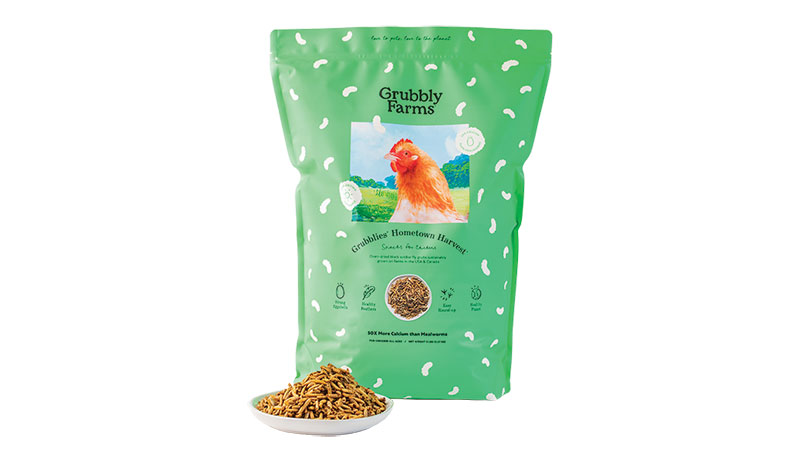
Feed your flock a natural daily snack they’ll love with Grubblies oven-dried black soldier fly grubs (pictured above) farm-grown in the United States and Canada. With 50 times more calcium than mealworms, Grubblies help birds lay eggs with strong, healthy eggshells. Get 25 percent off your first order at GrubblyFarms.com; free shipping.
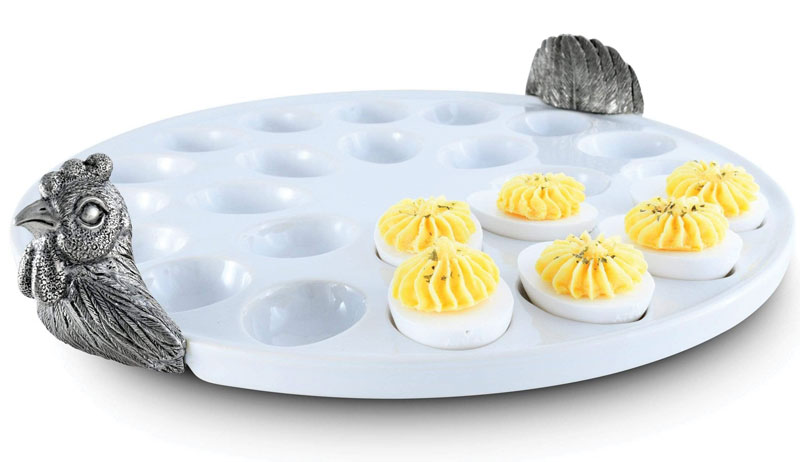
Stoneware Tray
This hand-glazed stoneware tray for deviled eggs is embellished with a pewter French hen head and tail feathers and can hold 24 pieces. $128.
Wait, What?! Chicken Butt?
Wait, What?! Chicken Butt? is a self-published children’s book, written by author Morgan Efaw, an avid chicken enthusiast with a flock of 10. It’s geared toward curious preschoolers and young children who want to know where eggs come from. $9.99 for a paperback or $2.99 for an e-book, available on Amazon.com.
EcoEthic Chicken Coop Cleaner
EcoEthic Chicken Coop Cleaner accelerates the breakdown of litter and waste while increasing the nutrient value of litter and compost. Simply spray on the nontoxic and biodegradable product to improve bird health and reduce maintenance. $21.
Chicken Bottle Stopper
Stop your bottles (wine or otherwise!) with a handblown, etched glass chicken bottle stopper. $14.
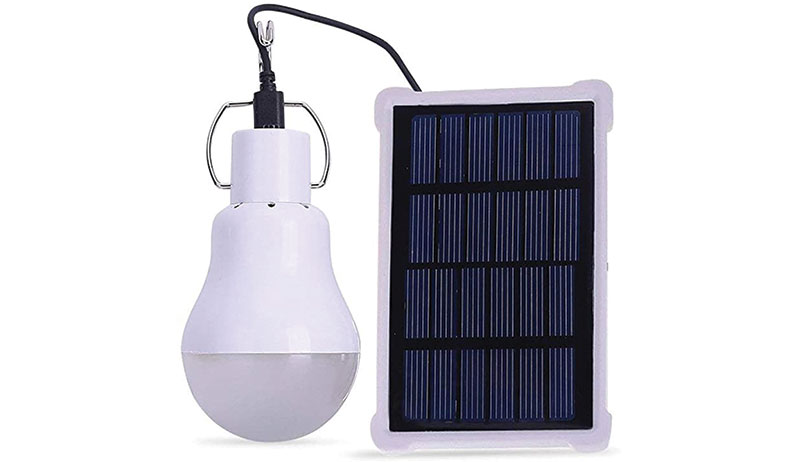
EleLight Portable Solar LED Bulb Light
Light your coop without fear of fire with a 11⁄2-watt EleLight Portable Solar LED Bulb Light that will run for up to 8 hours when fully charged via solar panel or USB cable. $15.99.
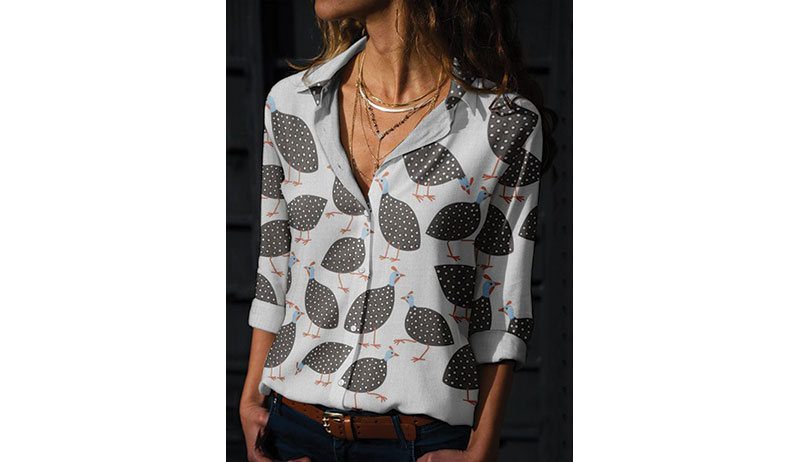
A Guinea Shirt
Covered with guinea hens, this button-down shirt is made of lightweight linen and cotton. $34.99.
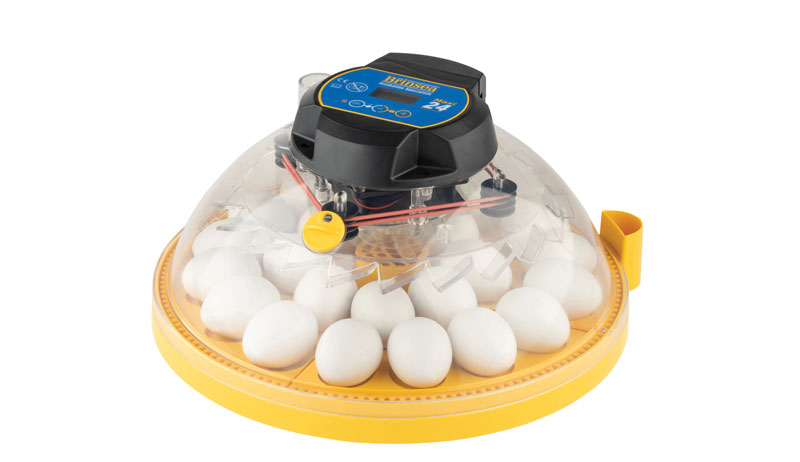
Maxi 24 Egg Incubator
The Maxi 24 egg incubator from Brinsea has been redesigned to hold more eggs and be more flexible. The single ring egg disk has been replaced by a mix-and-match quadrant system available in four variants. $299.99.
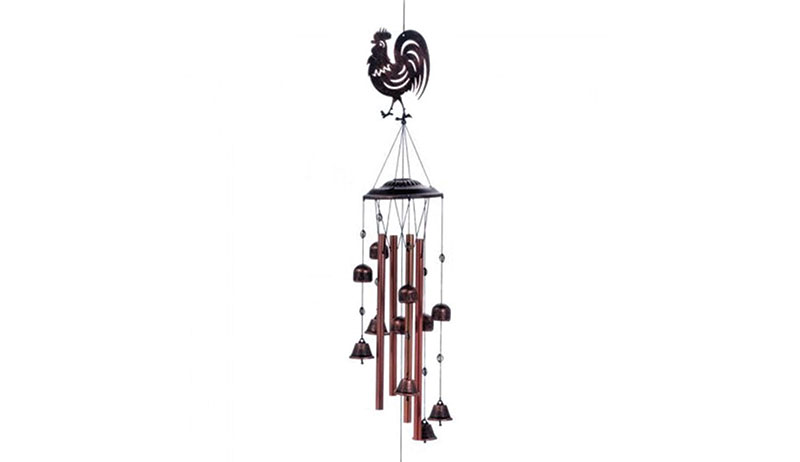
Made of bronze and aluminum, these rooster wind chimes can be used indoors or outside. $24.99.
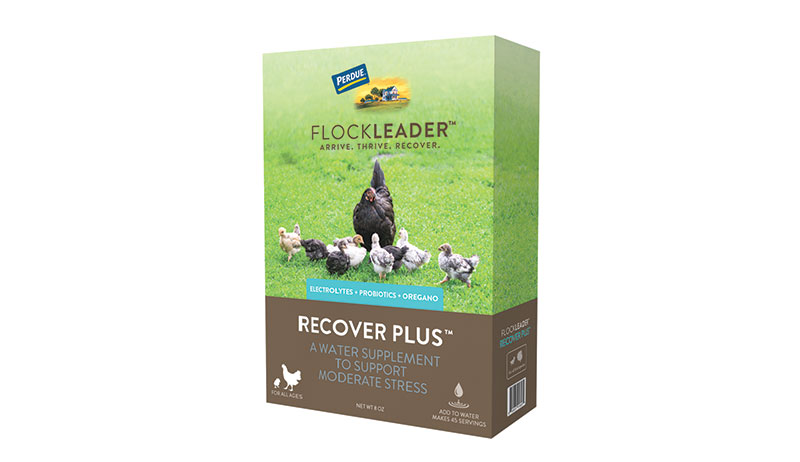
FlockLeader Recover Supplement for Chickens
FlockLeader Recover Supplement for Chickens, made by Perdue, contains probiotics, oregano and electrolytes, which can be added to water to speed recovery, prevent dehydration and support chickens’ immune systems. $15.99.
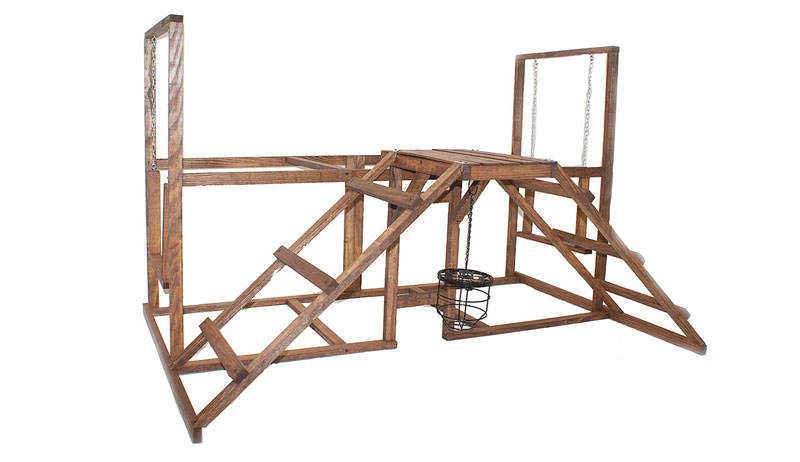
Chicken Activity Center
The Chicken Activity Center allows birds to climb up and down ladders, perch in multiple places, have their choice of swings or simply hang out on the platform. A treat basket is an added perk! $202.99.
This article originally appeared in the July/August 2022 issue of Chickens magazine.
“The biggest reason that we wanted to start farming was to become self sustaining,” says Jessica Lubic, who presides over the family-based Wild Rose Farm in Eatonville, Washington. “We didn’t want to have to rely on anyone or anything but ourselves.”
After long harboring dreams of running a farm since she was a young child, Lubic and her family eventually founded Wild Rose Farm. These days, visitors to the venture encounter a tribe of goats running free across the property, ably supported by chickens, ducks and a resident turkey named Tom.
Taking a break from farm duties, we spoke to Lubic about using goats to help clear the land and the importance of knowing your food’s origins. We also got to know resident star goat Buttercup.
When Lubic first moved into her farm property, she was faced with acres of blackberry bushes and weeds that needed removing.
The solution? Send in the goats.
“They were actually our first purchase when we moved here, as far as animals go,” she recalls. “We had bought a tractor. But, while we were at work or what not, we knew the goats were clearing ample space we would need to create a pasture for livestock.”
Since completing their inaugural task, the goats now help to provide milk, cheese, butter and soap.
“Goats are the dogs of the livestock world!” says Lubic. “They each have their own personality and are stubborn. No matter how big an area you give them or how much forage, they will test your fencing everyday!”
Buttercup is one of the key goats residing at Wild Rose Farm.
“When we got her, she was actually pregnant. Her personality was so different,” says Lubic. “She was sweet, docile and friendly. Now, after being a mother, she is a lot more independent and has a sense of confidence that has come to her.”
Summing up the change in Buttercup’s personality, Lubic adds: “She is still very sweet to me but weary of others. Maybe that’s just the overprotective mother in her!”
Lubic says that the most fulfilling part about running a family-centric farm is “knowing where our food comes from.”
Building on the sentiment, she adds that she also takes joy from knowing “that my kids get to see how our food is made and get the experience many don’t get anymore.”
Across America, August means Ferris wheels, funnel cake and thrill rides. It’s fair season, and fairgrounds from coast to coast are drawing thousands of attendees eager to try their hand at carnival games, feast on funnel cake and French fries, and cheer on the demolition-derby drivers.
Some fair goers enjoy touring the exhibition halls to see the competitive entries in pie making, vegetable growing, and canning. Others flock to the barnyards to see the swine, steers, sheep and other entries in the animal husbandry and showmanship divisions.
If you find yourself hovering by your fairground’s poultry barn year after year, perhaps it’s time to consider making the leap from fair goer to fair chicken exhibitor. It’s not as daunting an undertaking as you may imagine.
Participating as a poultry exhibitor gives you the opportunity to show your beloved birds. It’ll also allow you to meet other chicken keepers in your community. And who knows? Perhaps you may even bring home an award ribbon.
Intrigued? Here are seven things you should know to prepare your chicken (and yourself) for the fair.
1. Contact Your Fair’s Poultry Superintendent
Every fair division—whether it’s poultry, antiques or photography—has a superintendent who runs their part of the show. The poultry superintendent’s responsibilities include leasing the exhibition equipment, hiring blood testers, arranging for the judges and registering exhibitors.
Because they need to know how many show cages to rent, the majority of poultry superintendents make pre-registration mandatory. You’ll want to reach out to your fair’s poultry superintendent to find out when the deadline to register your chicken for the fair is.
The superintendent can also tell you:
what the cost per bird is
when you can check in your birds
whether you or a fair volunteer will be responsible for feeding and watering your chicken, as well as and egg collecting
when you can pick your birds up
Contact your fair office to request your poultry superintendent’s name, phone number and email address.
2. Pick Up a Copy of Your Fair’s Premium
Every fair publishes a premium, or fair book, which lists the entire events schedule, all the competitive classes and subdivisions, words of welcome from the fair director, and photos from previous years. Exhibitioners view the premium as a trusted guidebook.
Ask your fair office if they can mail you a premium. The fair’s web site may have a PDF version available to download and print.
Local feed, farm-supply and gardening stores may also have a limited number of fair books to distribute. My advice is to go through the entire premium carefully—and with a trio of neon-colored highlighters.
Use green (for “Go!”) to highlight the division you will definitely enter.
A yellow highlighter can mark categories you need to give a little more consideration before entering.
Orange can outline exhibits you’d like to see but are not entering (at least not this year).
Believe it or not, color coding your premium will help calm any anxiety you might feel as a first-time exhibitor. Plus, it will aid in organization.
Now that you know which exhibition categories you’d like to enter, it’s time to select what chicken (or chickens) to bring to the fair. This is typically done months before the fair, but it’s okay if there are only weeks until show time.
If you have a backyard flock, you’ll have an easy time selecting your show birds. If you run a small-scale farm, you’ll need to spend some time amongst your flock to determine which birds to enter.
Remember that poultry exhibition is not a beauty pageant. It’s an examination to determine which birds most closely embody the Standards of Perfection (SOP) for their breed. If you are unfamiliar with your breed’s SOP, it’s vital that you learn them as soon as possible, as the SOP will clearly define what the judges will look for.
Familiarizing yourself with the SOP will ensure you don’t enter an Orpington with off-color shanks, a hard-feathered Silkie, or an overweight Cochin. If you can’t get a hold of a copy of the latest SOP—it’s updated yearly—check online at your breed’s national club or association site. With the SOP as your guide, choose your exhibition birds.
4. Pamper Your Poultry
For the weeks leading up to fair check-in, treat your chicken competitors as if they were royalty (which may well be the status quo). If at all possible, separate them from the rest of your flock—and each other. The last thing you want is a pecking-order injury.
Ensure your competition squad has clean shavings, fresh water and nutrient-rich rations. Inspect their talons and trim, file and buff them to remove jagged edges, chips and overgrowth. Check each bird’s beak for overgrowth as well, and carefully trim and file any away.
Carefully remove any broken feathers. A day or two prior to the fair, bathe your chicken in a tub of lukewarm water with a no-more-tears baby shampoo. Use a blow dryer on low to dry and fluff out your chicken’s feathers.
If you have an old silk scarf or silk pajama, use this to “polish” your bird’s feathers. Something about silk brings out the shine in feathers, especially black feathers.
5. Prepare a Care Package
You won’t need to pack a suitcase for your chicken’s time away from home. But you will need a few things for a successful exhibition-barn stay.
First and foremost are show cups. These small, plastic bowls interconnect with show-cage wiring, which hold cups in place, elevated off the cage floor. You’ll use these cups to hold your bird’s food and water.
Next is a place for your bird to sleep on. Show cages are not equipped with perches. Furthermore, they tend to be stacked, so litter and straw is impractical. I’ve had great success with disposable nestbox liners. Your bird can scratch and shape it into a soft bed to use for the duration of their stay. And they can be easily removed and shaken out should they become messy.
Finally, you’ll want to pack a backpack or tote with an airtight container filled with your flock’s chicken feed. Familiar food will lessen your bird’s stress. Plus there are no guarantees that the fair will provide chicken rations.
You may also want to pack a jug of water, since exhibition-hall water sources tend to be mobbed by other animal owners. You’ll keep this backpack or tote in your car, ready to bring to the poultry hall every day.
Quite possibly the worst part of poultry exhibition is transporting your birds. Somehow, you’ll need to put each chicken in a small, enclosed carrier and listen to them freak out as you drive to the fairgrounds. To be honest, I’m not sure who gets more stressed out, the chickens or the humans.
Hard-sided, individual pet carriers make excellent transporters. They are easy to clean and well ventilated, and they allow your bird to see out. I use rabbit carriers, which have individual cubbies with dividers to keep animals isolated yet together.
I’ve seen exhibitors bring their birds in cardboard boxes, in Rubbermaid totes and in soft-sided cat carriers.
Whichever conveyance you choose, make sure to protect your car’s interior by putting down a heavy-duty tarp prior to loading your birds. You may also want to have a friend or relative sit in the back to comfort the chickens as you drive … or to have them drive as you sit with your birds, reassuring them with your voice.
7. Checking In
Even if you are pre-registered, expect a long line at check in. Each individual bird must be blood tested by an NPIP tester or avian veterinarian to ensure it is not infected with pullorum or fowl typhoid.
Occasionally, fairs also test for highly pathogenic avian influenza.
Once your bird’s health status has been approved, the poultry superintendent will assign you a show cage and hand you a show card to place on the cage exterior. Occasionally, the show card may have been filled out for you by the superintendent. More than likely, you’ll need to fill it out for yourself.
Write clearly in print, not cursive. The judges will use the information on the card to identify your bird and will write their score and notes in the designated section. Show cards commonly ask for your bird’s breed, variety and age/gender (pullet or cockerel for birds less than a year old; hen or cock for birds older than one year).
Double check your information. I’ve seen birds disqualified for having the wrong variety (“NOT AN AMERAUCANA”), wrong color (“BLUE, NOT GREY”) and gender (“NOT A PULLET”).
If there’s room on the show card, add your bird’s name (“Hi! I’m Sweetheart!”). This won’t sway the judges to your chicken, but fair goers will love it. Make sure you hang your show card high enough on your cage’s exterior so that your bird doesn’t tear it to shreds. It never hurts to ask the poultry superintendent for a spare card, just in case. Better to ask them now, when they have the show cards in hand, than in four days, when they have to take time away from the exhibition to search for a spare.
Now, Enjoy the Show
Once your bird is settled, you can relax and enjoy the fair! Okay, you’ll probably spend most of your time at the poultry exhibition, looking at all the other chickens, taking note of breeds that interest you and evaluating your direct competition. A lot of poultry exhibitors also chat with each other, trying to determine which bird will win the coveted Best in Show.
Be sure to check in on your chicken in the morning and in the evening to ensure she has plenty of water and to pull any eggs. Arrive extra early on competition day to quickly inspect your bird before the judges arrive. You won’t be allowed in the exhibition hall during judging, so go have a fresh-squeezed lemonade, take a stroll through the funhouse, and try your luck throwing darts at balloons before going back for the results.
At the very least, you and your chicken will have enjoyed the entire fair exhibition experience. And maybe, just maybe, there will be a rosette hanging on your chicken’s show cage.
Filipino-Hawaiian farmer Emily Trabolsi joins Hobby Farms Presents: Growing Good to talk about what farming in the Pacific Northwest looks like from a cooperative perspective. Learn about growing upland rice just outside Seattle. Hear about the Agrarian Trust organization and their concept of land and resource sharing, and then Emily shares examples of successful cooperatives from around the world.
Washington Farmland Trust expanded to have a statewide presence in fall 2021, and that’s where Emily’s work with them comes in. She explains how she helps to connect farmers with land and resources and to facilitate equitable, long-term lease arrangements through the Farm to Farmer program. Emily enthusiastically talks about ideas to bring people together and support new farmers.
Emily brings us into the concept of “putting the culture back in agriculture,” becoming connected to our food system, and why that $6 bag of salad mix is worth every bit of $6.
Finally, she shares her two favorite farm meals—because she couldn’t pick just one. The recipe for a delicious Filipino pork dish is linked below!
It takes one chicken to come into your life and change the way that you’ll forever look at chickens. That one bird for me was Chickadee, a feral little brown hen with eight little chicks in tow. The little chicken started visiting my yard in Kalaheo, Hawaii, in May 2020 during the pandemic. She came into my life during a time of uncertainty. I was recently laid off from my job of 13 years with the tourism industry and didn’t know what the future held for me.
I remember that day clearly. Sitting at the kitchen table, I heard little cheeps coming from outside. I went out onto my porch and saw a little brown hen with eight little balls of fluff trailing behind her. I fed them some food, and to my surprise, they ran toward me and the food instead of away from it like some of the neighborhood chickens do.
Watching the mama hen with her baby chicks instantly took my mind off of my troubles and put a smile on my face. I remember just soaking up the moment, because I thought that would be the first and last time that I’d ever see them.
To my surprise, the mama hen and her clutch of chicks stopped by again the next day, the following day and each day after that. They continued visiting my yard daily, until one day, she decided to move right into my backyard.
By this point, I had named the little brown hen Chickadee. She’d spend all day free-ranging in my backyard and roost in the trees at night. Shortly after she moved in, other feral chickens from the neighborhood joined her.
Chickadee was the first chicken to capture my heart, but she was definitely not the last. Many other amazing chickens followed.
Liv was a feral rooster that lived at the park near my home. I visited him daily for months and formed a special bond with him. He is by far the friendliest rooster I’ve ever encountered. Every time he’d see my car coming through the park entrance, he’d start running toward me and was always the first to greet me.
During my visits to the park, Liv would stay by my side. He’d follow me around or perch on my shoulder. He’d fly up onto my lap so that I’d hold him and pet him. He was so affectionate. I spent so much time at the park that I was able to watch Liv transition from a cute little cockerel into a handsome rooster.
photos by Cindi Fontanilla
Mahalo, Kiko!
In May 2021, I found a lone black chick wandering around my backyard in the late afternoon. I waited for a while to see if any hens would show up, but none ever did. Finally, I ended up catching the little chick and brought her indoors for the night.
I cuddled with her and kept her warm with my body heat. I got attached very quickly and decided to name her Kiko.
My initial goal was to reunite Kiko with her mama hen. Three days later, I saw a black-and-white hen with eight baby chicks around the same size as Kiko. I put Kiko down onto the grass and expected her to run toward them and have a happy little reunion. Instead, Kiko just stayed next to me, not showing any interest in the mama hen or the baby chicks. This is when I realized that Kiko had chosen me as her mama.
When Kiko was 6 weeks old, my neighbor brought over a lost baby chick that was wandering around in her yard. He was a cute little ball of fluff—light brown with a dark brown stripe running down the center of his back. He had the brightest yellow legs. I ended up naming him Gizmo.
I won’t pretend that Kiko and Gizmo got along right away. Kiko would chase Gizmo around, and it seemed like she wanted this newcomer to know that this was her home and I was her mom. Over the first few weeks, Gizmo slowly started to win Kiko over. Eventually, Kiko let him in, and she started to see him as her companion.
Caring for Kiko and Gizmo was a whole new experience for me. I was used to caring for the feral chickens, by providing them with food and water, but it was nothing like caring for baby chicks of my own.
My boyfriend got involved in helping me raise Kiko and Gizmo, and he instantly fell in love with them, too. Our shared love for them strengthened our relationship and brought us closer together. They have been a blessing in our lives and in our relationship. And to think it all started because a little brown hen wandered into my yard one afternoon!
Cindi Fontanilla lives in Kalaheo, Hawaii. Follow her on Instagram @aloha.chickadee. This article originally appeared in the July/August 2022 issue of Chickens magazine.
Chances are, there are wild plants growing near your home that are far more nutritious than greens you can buy. Your chickens will love these herbs, and so will you. You can stretch your chicken feed dollars by supplementing with wild plants that are free for the picking, and pecking at fresh plants gives chickens something fun to do. Best, many wild plants have medicinal qualities. Feed them to prevent illness and use them to put sick or injured chickens on the mend.
Let’s investigate easily-identified herbs that grow most everywhere in North America (and often the world) as nutritious treats for chickens.
natalia_photolife/Shutterstock
Chickweed
Stellaria media
Other names: chickenwort, starwort, stitchwort, tongue grass and adder’s mouth
A hardy annual native to Europe, chickweed flourishes around the globe. It tolerates low temperatures, often blooming year round where temperatures rarely fall below 15 degrees Fahrenheit, and it prefers shady, moist locations and rich, neutral soil. Look for it in woodlands, meadows and waste places. It’s a common garden weed, too.
Chickweed is a mat-forming plant growing up to 12 inches tall, with oval-shaped, light green, 1⁄2– to 1-inch leaves, hairy stems and tiny, star-shaped white flowers. Chickweed has a long history of use as a nutritious edible green by humans and animals.
It’s a rich source of vitamins A, D, B complex, C, rutin (a bioflavinoid), calcium, potassium, phosphorus, zinc, manganese, sodium, copper, iron and silica. It contains six times the amount of vitamin C, 12 times more calcium and 83 times more iron than spinach.
Apply a poultice of chickweed for inflammation, abscesses, wounds and anything itchy. Internally, it’s a gentle laxative and soothing to the digestive tract. Chickweed is also a useful expectorant to loosen mucus.
Fun Fact: Sailors used chickweed vinegar to prevent scurvy when fresh citrus was unavailable.
Dandelion
Taraxacum officinale
Other names: wild endive, white endive, cankerwort and lion’s tooth
Everyone knows dandelion. A hardy perennial, dandelion originated in Eurasia, but European settlers brought dandelion to eastern America during the mid-1600s, where they cultivated it in their gardens for food and medicine. Today, it grows wild in all parts of the Northern Hemisphere, including the U.S. and southern Canada.
Dandelion’s long, deeply toothed, green leaves grow up in a rosette from the plant’s fleshy taproot, which, in the spring, sends up one or more naked flower stems, each terminating in a single yellow flower. The stem contains milky latex sap. Find it in abundance in gardens, lawns, pastures, waysides and waste places.
Every part of the dandelion is edible: leaves, roots, stems and flowers. Dandelions are an excellent source of vitamins A, C and K. They also contain vitamin E, folate and small amounts of other B vitamins as well as substantial amounts of several minerals, including iron, calcium, magnesium and potassium.
Dandelion is a potent anti-inflammatory and a natural pain reliever. It has antioxidant qualities and is used as a general health tonic. Many keepers feed dandelion with other herbs to their chickens as a laying stimulant, and its flowers produce bright-orange egg yolks.
Fun Fact: Seeds dispersed from a dandelion seed-head puffball can be carried up to 5 miles from their place of origin.
Other names: common plantain, broad-leafed plantain and soldier’s herb
Plantain is a common perennial found in lawns, gardens, along roadsides and in waste places around the world. Its thick, hairless, somewhat oval leaves grow up from a long, fibrous taproot, flaring out in a basal rosette along the ground. Six- to 18-inch flower stalks are tipped with spikes of tiny greenish-white flowers. A narrow-leafed variety, Plantago lanceolate, also known as ribwort, shares its nutritional and medicinal qualities.
Chickens love plantain, and humans can eat the young leaves, too, in salads or steamed like spinach. Plantain has been eaten in Europe for at least 4,000 years and was carried to North America by early settlers as a food plant and herb. It contains seven flavonoids, beta-carotene, crude and dietary fiber, fat, protein and carbohydrates as well as vitamins A, B1, B2, B3, C and K and calcium, chromium, iron, magnesium, manganese, phosphorus, potassium, selenium and zinc.
Plantain is antibacterial, antimicrobial, anti-inflammatory and a powerful antioxidant, and it’s especially noted for treating wounds and skin ailments. Make a quick poultice by chewing a few leaves and applying it to your chickens’ (or your own) skin disorders or injuries.
Fun Fact: Plantain is very durable and resists damage when walked upon, so it’s commonly found in high foot-traffic locations.
Purslane
Portulaca oleracea
Other names: little hogweed and pigweed
Natpant Prommanee/Shutterstock
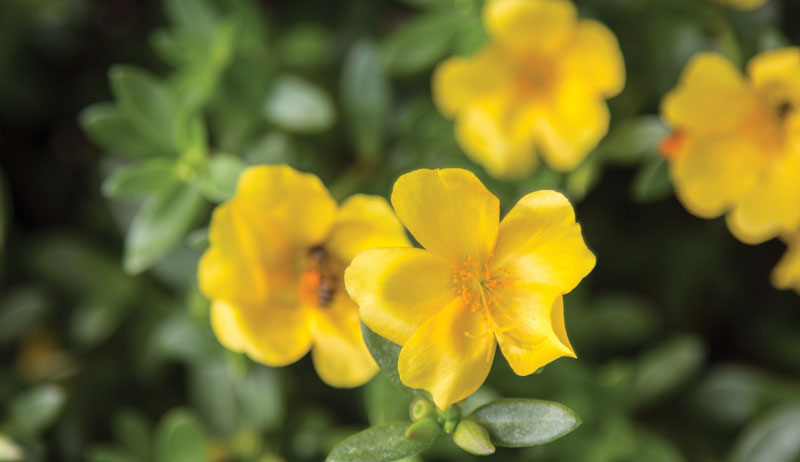
If you garden, you’re probably familiar with purslane. A summer annual, purslane trails across the ground, its succulent leaves spreading out, matlike, from a basal rosette like spokes on a wheel. Puslane’s prostrate stems grow up to 12 inches in length, while its smooth, shiny, mucilaginous leaves are green on top and pale purple underneath, growing 1⁄2 to 2 inches long. Find it growing in just about any location, including the cracks in sidewalks.
Native to East Asia, purslane came to our shores with early settlers as a potherb and herbal plant. It was first recorded in Massachusetts in 1672.
Purslane is an excellent source of vitamin A, one of the highest among leafy green vegetables. It’s also a rich source of vitamin C, and some B complex vitamins such as riboflavin, niacin, pyridoxine and carotenoids, as well as minerals such as iron, magnesium, calcium, potassium and manganese. Purslane leaves also contain more omega-3 fatty acids than any other leafy vegetable plant.
Will your hens benefit from purslane in their diet? You bet! Its drooping nature makes it ideal for hanging along run fences and henhouse walls. Or eat it yourself raw in salads or cooked like greens. The taste is similar to spinach or watercress. Purslane stores well. Its succulent leaves and stems stay fresh without refrigeration for several days after harvest.
Fun Fact: A single plant produces up to 240,000 seeds. Seeds are viable in the soil for up to 40 years.
Stinging Nettle
Urtisca dioica
Other names: common nettle
Slatan/Shutterstock
Perennial stinging nettle grows throughout the world, including all of the U.S. except Hawaii.
Nettles like rich, moist soil, so find them in dense clumps on marshy meadows and along woodlands, fence rows, stream beds and ditches. Nettle’s square, bristly stem grows from 2 to 7 feet tall and bears deeply serrated, pointed leaves that are downy underneath. Bristly hairs on the stem and leaves act like a hypodermic, injecting an irritant under the skin when touched.
Wear long sleeves, long pants and gloves when gathering or handling fresh nettles!
Technically, chickens consume raw nettles without harm, but it’s best to harvest nettles and allow them to wilt before feeding. Air wilting or steaming them, or boiling in plenty of water for a few minutes, neutralizes their sting
Several scientific studies indicate that due to their lutein and zeaxanthin content, feeding nettles to hens makes their eggs’ yolks a richer yellow.
Consider this:
Spinach contains 102 milligrams of calcium per 100 grams (about a cup) while kale contains 206 milligrams. Nettles boast 2,900 milligrams of calcium by the same measure.
Iron: 2.96 in spinach, 1.8 in kale, 41.8 in nettles.
Magnesium: 96.8 for spinach, 37.4 in kale, and 860 in nettles.
Stinging nettle is also a fine source of chromium, cobalt, phosphorus, potassium, zinc, copper and sulfur, along with vitamins A, C, D, K and B complex.
Fun Fact: Nettle fibers have been used for thousands of years to weave nettle cloth. During World War I, German soldiers wore uniforms made of nettle cloth due to a shortage of cotton.
Gathering and processing wild plants is fun and rewarding. Plus, you might just find them very tasty too!
More Information
Feeding Greens
Feeding wild herbs to your chickens is a breeze. Gather them fresh, tie their stems together and hang them on chicken run fences or henhouse walls. You can also place them in feed troughs and let your birds have at ’em.
Another option is to dry them for winter use. Place them on paper towels over newspaper in a well-ventilated area out of the sun, arranged so the leaves or plants don’t touch one another. Hang-drying them is even easier. Bind their stems in small bundles, and hang them upside-down in the same sort of well-ventilated, shady area until dry.
Store dried herbs whole or loosely crumbled. Don’t crush them into powder prior to storing them. If an herbal recipe calls for powdered herbs, process the herbs just before mixing.
Store dried herbs in paper bags, cardboard boxes or glass containers but not plastic or metal. Keep them in a cool, dry place, out of direct sunlight. Mix dried herbs with your chickens’ normal food. Most chickens will also eat dried herbs if they’re served on the side in separate feed cups.
You can also loosely pack a quart canning jar with your favorite plant, cover it with boiling water, cap and let steep overnight, then add the nutritious herbal tea to water receptacles or sprinkle it over feed. With strong-tasting herbs such as dandelion, start with a small amount and add more as your birds become used to the flavor.
Harvest herbs for your chickens in a safe, responsible manner. Buy a good wild-plant identification book with clear illustrations, and make sure you know what you’re picking. If you can’t positively identify a plant, don’t use it.
Pick only in areas that are free of chemicals and automotive exhaust. Avoid sprayed yards, parks and the sides of roadways. Pick in midmorning or later, when dew is off the plants. Dig most roots in late fall. Mark plants during their flowering phase so you can find them later when you need them.
Take only what you need and always leave some plants behind.
This article originally appeared in the July/August 2022 issue of Chickens magazine.
It’s impressive how much power and versatility can be packed into relatively small tractors. Subcompact utility tractors and garden tractors often boast engine horsepower in the 20-25 range. They can be used with a wide range of attachments and implements to expand their capabilities. But there’s an important (and occasionally overlooked) step in maximizing the performance of small tractors. You have to make sure your tractor has enough traction to put that power to use.
Power Needs Traction
Let me give you a couple of examples. On a recent day of baling hay, my small team encountered a setback when one of our haywagons suffered a break in the steering mechanism. Running short of time with evening rain in the forecast, I fired up my garden tractor and used my trusty red wagon to start fetching bales off the field.
The red wagon isn’t huge (with a bed measuring 4 feet by 8 feet), but I was able to pack 19 bales at a time into sturdy loads. Throw in the weight of the wagon, and I was probably asking the garden tractor to tow somewhere around 750 pounds.
That’s a big load for a little tractor. But my garden tractor rose to the challenge practically without straining.
The red wagon has a single axle (it’s really a cart even though I call it a wagon), so all the weight in front of the axle was transferring to the rear hitch of the garden tractor. This pushed down on the drive wheels and increased their traction.
Throw in the handy differential lock (which allows me to force both drive wheels to operate in unison when climbing one short slope), and the garden tractor was able to get the grip it needed to tow the load without issue.
This stands in stark contrast to past experiences with my smaller lawn tractor. It’s primarily designed for mowing grass. While I regularly use it to haul about 300 pounds of water around my orchard, it’s really too small and lightweight for heavy-duty tasks.
For example, when towing an essentially empty red wagon, my lawn tractor is unable to climb one steep slope behind my house. Why? Well, there isn’t enough weight pressing down on the drive wheels to gain suitable traction. Also, the lawn tractor lacks a differential lock, so it winds up with one wheel digging in and the other spinning helplessly.
It’s worth reiterating that the lawn tractor’s inability to pull the empty wagon up a slope has nothing to do with strength. It’s all about lack of traction. This can be further exacerbated by challenging ground conditions such as ice or snow.
Increasing traction is critical if you want to use your small tractor to plow snow or power a snow blower attachment.
So how can you improve the traction (and thus performance) of a small tractor? You have a few options.
Towing a single-axle cart like my red wagon? Putting weight in front of the axle (so weight is transferred to the drive wheels of your tractor) can work great. You could also install wheel weights on the drive wheels of your tractor.
Depending on how you primarily use your small tractor, you might also consider changing the tires. Lawn and garden tractors often come with R3 turf tires that are kind on lawns, but less aggressive in generating traction. R1 agricultural tires or R4 industrial tires can often a performance boost, so long as you’re not too concerned about damaging your lawn.
One final thought. Stay realistic about the tasks you tackle with your small tractor. I wouldn’t ask my garden tractor to pull a hay wagon loaded with 100 bales even under perfect traction conditions. I don’t want to push the engine and transmission beyond their means.
But so long as you keep your expectations realistic and address the question of traction, you might be surprised how easily small tractors can handle the jobs you throw at them.
We use border collies on our sheep farm to manage day-to-day operations. I don’t know how we would do it without them. I never worry about how I will get a group of sheep from one pasture to another.
My sheepdog, Dash, is always up for the job! Soot, my husband’s dog, is no less eager.
The Work of a Working Dog
The goal is to move your sheep as quietly and stress free as possible. In some cases, we will use our dogs to help us hold sheep while we administer medicine or examine a ewe for a foot injury. Sometimes we need to move sheep through a gate to a new pasture or into a pen for various reasons.
Our dogs are the most valuable tools on our farm when it comes to working with the sheep. And we aren’t alone in that belief—not by a long shot.
Some sheep farmers buy a stock dog already trained, which does save a lot of time in getting the dog to be useful on the farm. But a trained sheepdog worth its salt is not cheap, though many certainly seem to think the investment is worth it.
I got Dash as an 8-week-old puppy and have learned right along with him about how to make a great partnership to handle our sheep. It helped that he was from really good herding dog lines. Honestly sometimes I would just watch him figure out what to do without much help from me!
But a few years later, with his skills honed and my interest heightened, we decided to try our hand at a sheep herding trial.
Sheepdog Trials
Sometime back in the late 1800s. Some sheep farmers decided to compare the skill of their herding dogs. Small, local competitions sprang up to see who could do what with his dog the best. There was a lot of pride and probably a lot of bluster when it came to comparing the teamwork needed to manage, move or divide up sheep.
Back then the competitors were all sheep farmers who used their dogs to manage flocks of sheep in various types of terrain.
Fast forward to today, when the competitive drive of humans has turned sheepdog trials into keenly honed competitions. Some who compete in herding trials are also sheep farmers. Some are not.
Still, the desire to see how your dog’s skill on your own farm compares to another farmer’s dog can be strong.
After seeing how well Dash worked at home with our sheep, I decided to enter my first herding trial. I had seen a few trials and felt like entering the Novice class would be the ideal thing for us to get started.
The goal is to stand at a post and send your dog out into the field to gather up a group of sheep and bring them back quietly and calmly to me. But of course, the dog needs to put a bit of pressure to move the sheep … just not too much!
After they get up to the handler, the dog needs to guide the sheep around them. Then the dog drops in behind the sheep to move them back up the field, through an opening in a set of panels.
Jana Wilson
Higher Levels
In higher levels of classes, the dog needs to take the sheep all the way across the field in front of the handler to another opening in a set of panels. All the while, the handler may not move away from the post and must guide the dog only with voice and a whistle!
After all this, the dog must bring the sheep up to a small pen, where the handler holds the gate open while working with the dog to “encourage” the sheep to go in. As any sheep owner knows, it’s pretty hard to make a sheep do anything!
In higher levels of competition, the dog and handler work on separating a specified number of sheep away from the rest of the group. This is called “shedding,” which is also useful when you are separating sheep on your own farm.
In fact, what’s really interesting is that most of the skills needed in a trial are those that you would use on your sheep farm. I’ve asked Dash to move sheep into a barn through a fairly small opening. I’ve also had him bring me sheep from out in the pasture, then take them down a gravel road to another pasture and through another gate!
Worth It
I won’t say our first debut at a sheepdog trial was a blazing success. Being in a new field with new sheep and a handler probably squeaking out commands tends to get a dog (and the sheep) a bit riled.
Dash lived up to his name and dashed around the field as uncontrolled as I have seen him. “Lie down” I yelled. “Lie down!” He did not lie down.
Eventually the judge relieved us of our misery and excused us.
Of course, the next day Dash was perfect as we moved our own sheep on our own pastures. But we’ve had a few more trials since then and we’re getting better!
I also think it made Dash and I better partners on the farm. We learned a lot about each other. I’ve also learned so much more about sheep while watching my dog interact with them.
Yes, it is a lot of work to use a dog on your sheep farm. But I just can’t imagine any other way to do it!
Chickens and other poultry members come in all sizes, shapes, colors and personalities. Nearly 400 recognized breeds and varieties of poultry exist, including large-fowl and bantam chickens, ducks, geese, turkeys and guinea fowl. Using our illustration and a few selected hints, can you guess the mystery chicken breed we have depicted here? Find out the answer below!
Hints
This chicken breed gets its name from its comb, which looks like a cup-shaped crown with a complete circle of medium-sized regular points.
This rare Mediterranean breed was imported from Sicily over a century ago.
Murray McMurray Hatchery says that males and females don’t look alike. “Males are a rich, brilliant orange-red with some black spangles on their bodies and cape feathers at the base of the hackle and a lustrous, greenish-black tail. Females are buff-colored with parallel rows of black elongated spangles across their bodies.”
They aren’t named after margarine, shortening or lard but a close relative.
Mystery Breed Answer
The chicken breed depicted above is the Sicilian Buttercup, a heritage layer that produces medium-sized white eggs. Although its exact origins are unknown, Sicilian farmers reared the breed for centuries before importation to America in 1835. The breed is slender and elegant like other breeds of the Mediterranean.
Adult males weigh 6 1/2 pounds; hens, 5. Sicilian Buttercups are fast-maturing, peerless free-rangers, flighty and good fliers that don’t adapt well to confinement.
The American Poultry Association admitted the breed into the Standard of Perfection in 1918. To learn more about this beautiful breed, click here
This mystery chicken breed was brought to you by Murray McMurray Hatchery, which provides the highest quality poultry and auxiliary products to its customers and has been a trusted, knowledgeable industry resource for more than 100 years. Whether you are an experienced or novice enthusiast, Murray McMurray is sure you will enjoy its wide selection of breeds and supplies to assist you with raising your flock!
This article originally appeared in the July/August 2022 issue of Chickens magazine.
How long can chickens last without water? Not very long at all, it turns out.
One of the most redundant yet most vital daily chores we deal with as chicken keepers is ensuring that our birds have plenty of water to last them through the day. If we’re fortunate, we have a nearby spigot or garden hose we can use to fill up the fonts each morning.
If we’re not so lucky, well, we build up some muscle hauling water out to our coops. The amount our chickens drink varies from day to day. Some days, it seems as though they’ve barely drank at all. Other days, the waterer is so empty we can pick it up with a pinky.
Whether the Weather….
Weather conditions definitely factor into our flocks’ thirst. On hot summer days, birds drink more water to try to keep their bodies cool and hydrated. On brisk autumn days, they’ll drink less.
Regardless of the temperature and time of year, we must ensure our chickens have water to drink.
Sometimes, however, situations occur that are out of our control. Scorching heat on a blistering summer day may have caused the water to be consumed faster than normal. Similarly, frigid Arctic temps may have caused the water to freeze completely solid.
A lively pecking-order squabble may have resulted in a font being knocked over, the water within spilled and soaked up by the ground. A neighbor or friend watching your flocks for you while we’re out of town may have forgotten to refill the waterers regularly … or a child on chicken duty fed the birds but forgot to water them.
Whatever the cause may be, our chickens found themselves without a source of water. Is this catastrophic? The truth is that it can be.
Lack of a regular source of water can drastically reduce egg production in laying hens. A chicken egg consists of approximately 75 percent water. Without a regular water source, hens will begin to dehydrate. To conserve their bodies’ water level, egg production decreases.
If layers go without sufficient water for three or more days, their egg-laying abilities may be permanently affected.
Water deprivation can also trigger molting, causing chickens to prematurely lose their feathers and turn all their energies to creating new plumage. In a dehydrated, molted state, birds become susceptible to illness, and they may take months to regrow their feathers and recover from this weakened state.
But these conditions more commonly occur when there is an insufficient or irregular water source. What if there is no water at all?
“In milder temperatures, a chicken can survive maybe two days,” states Zachary Williams, PhD, a poultry scientist with Michigan State University. “In hotter temperatures, only a few hours.”
A day at the beach or on the water might provide us with relief from sweltering temperatures, but it might also cost us our flocks if they run out of water while we are away. To keep your birds safe from water deprivation, dehydration and death, consider the following precautions:
Provide your flock with more than one waterer on days where temperatures top 85 degrees.
Provide your flock with more than one waterer if you are going on a day trip.
Walk your friend and neighbor through the morning feeding and watering routine before you leave on your trip. Show them how to open, rinse and fill a font. Then have them do it in front of you.
Accompany your child on their chicken chores the first few times to ensure nothing is missed, skipped or forgotten.
If your coops have electricity, use base heaters under metal waterers (never plastic!) to prevent the water from freezing.
Keep extra waterers in your garage. During winter months, swap out the frozen waterers with fresh ones.
Do periodic checks on hot days and sub-freezing days to make sure your flock has plenty of drinking water.