Categories
Animals Beginning Farmers Farm & Garden Flock Talk Poultry

Love For Alpacas & Peacocks Keeps KiTri Farms Running

KiTri Farms is an Everett, Ontario-based family farm run by the mother-and-daughter team of Trish and Trinity. The venture started nine years ago as a way to harness their love of alpacas.

“We were drawn to their cuteness, of course!” the duo explain via email. “But we also learned they had very calm temperaments, which we thought would be fantastic first additions to a farm!”

From those early alpaca roots, KiTri Farms grew to include dwarf pygmy goats, calico sheep and a range of peacocks, ducks and emus, many rescues and re-homed animals.

We spoke to Trish and Trinity about the mischievous nature of their goats and how their animals helped them get through early COVID-19 lockdowns. We also got to touch on the importance of Carl the peacock to the farm.

The Alpaca Effect


View this post on Instagram


A post shared by KiTri Farms (@kitri_farms)

“Our farm started nine years ago with just four female alpacas that needed a new home because they could not be bred due to complications,” recall Trish and Trinity as they look back on the origin of KiTri Farms.

“We brought them to our farm to live out the rest of their lives. And that’s how our hobby farm started!”


Read more: Get to know adorable alpacas!


Taking Stock of the Resident Animals


View this post on Instagram


A post shared by KiTri Farms (@kitri_farms)

Today, KiTri Farms homes a veritable smorgasbord of animals. The list of residents currently includes 40 chickens, 19 goats, seven sheep, and three each apiece of ducks, emus, donkeys and miniature pigs.

“We said we would only stick with our alpacas nine years ago. [But] when an animal needed a home or a friend for companionship, our farm family slowly grew,” they say.

When Goats Get Mischievous


View this post on Instagram


A post shared by KiTri Farms (@kitri_farms)

Trish and Trinity immediately hold up their goats as the most mischievous members of KiTri Farms.

“They have us constantly keeping an eye on them to make sure no one is getting into trouble! They jump over fencing, some will open gates by themselves and they are constantly trying to find weak spots in our fences. The grass is always greener on the other side in goat world!”

They add that one of the farm’s early goats actually came to them with the name Trouble. Trouble subsequently proceeded to teach the other goats how to jump over fences.


Read more: Goats and chickens make a dynamic duo when pastured together.


The Legacy of Carl the Peacock


View this post on Instagram


A post shared by KiTri Farms (@kitri_farms)

One of the stars of KiTri Farms is a peacock named Carl. He came to join the ranks after Trish and Trinity checked out a bird livestock sale and noticed “an adult peacock jammed into a tiny cage.”

Naturally, they scooped Carl up and added him to the farm.

“We had no idea how personable and comical peacocks were until we had them free-roaming around our property,” they say. “Carl’s great-grandkids are now the extremely friendly and curious peacocks that roam around our property today, causing mischief and laughs.

“They are very social birds and love being around people.”

Animals Help to Alleviate Feelings Of Isolation


View this post on Instagram


A post shared by KiTri Farms (@kitri_farms)

“Through COVID, we realized just how fortunate we are to be able to experience the life we are living,” say Trish and Trinity.

“Through the tough times of isolation and lockdowns, we depended so much on our animals’ affection to get us through it. Looking back at that time now solidifies that being able to experience their unconditional love is the most rewarding part of having our family hobby farm.”

They also recently added limited private visits to KiTri Farms in an effort to “help share the healing qualities of animals and nature, just as we experience daily.”

Follow KiTri Frams at Instagram.

Categories
Animals Chicken Coops & Housing Farm & Garden Poultry

This Cool Coop Brings Joy To Chickens & Their Keepers

My husband and I bought our homestead more than 4 years ago and named it “The Outskirts of Heaven.” We truly felt blessed to have a little piece of country land to start our homestead life. We initially dreamed of building our chickens a larger coop, so we purchased a basic farm-supply version.

It didn’t hold up for too long, but it did the job initially on a budget.

My husband looked at several henhouse designs that others had built and came up with plans of his own.


Read more:This family converted an old playhouse into one very cool coop.


This coop has a wonderful feature, which is an area underneath to integrate new hens with existing, as they always need a few days to get acquainted with one another. We use a deep-litter system to keep our hens healthy and pine pellets to keep the floor nice, clean and free from mud when it rains.

It truly is a sanctuary for us to enjoy our flock.

Together, we made our dream a reality for our small flock. We’re truly excited for them, and they’re so much happier. We have since expanded our flock and plan to sell eggs at our local farmers market next year.

Our Dorking rooster, “Handsome Boy,” simply loves all our new girls, and we love sitting with them and giving them treats. — Ken & Penny Varble, Frankfort, Kentucky

This article originally appeared in the May/June 2022 issue of Chickens magazine.

Categories
Podcast

Episode 32: Felicia Bell


In this episode, fourth-generation Mississippi farmer Felicia Bell talks about traditional agriculture, family business, farmers helping farmers and more. 

Find out how you can get free sustainable farming advice and technical assistance from the National Center for Appropriate Technology (NCAT) from a specialist like Felicia. 

Felicia explains what she means by “traditional agriculture” and why she prefers this phrase to describe popular agricultural methods instead of saying “sustainable agriculture” or “regenerative agriculture.” Hear about Felicia’s self-sufficient homestead upbringing on what she now calls RD & S Farm and how the farm has changed since her grandparents were teaching her their farming ways. 

Listen until the end for Felicia’s advice for maintaining healthy pasture for grazing animals and to learn the most inexpensive way to keep deer out of your garden!

Categories
Beginning Farmers Crops & Gardening Farm & Garden Homesteading Permaculture

Repel Nuisance Flies With These 8 Patio Plants

Hobby farms are magnets for nuisance bugs. And nothing spoils eating outdoors more than flies. Several chemical remedies can help with the problem, however, they all come with some risk to yourself, your kids and your animals. We all want to get back to nature, though. And finding plants that naturally repel flies is a great solution.

Flies Are Formidable Foes

Flies are not only obnoxious—they spread many types of germs. So, for starters, make sure to keep your porches and patios clear of food and chicken (or any other type of) feces to cut down on the presence of flies. 

But beyond avoiding flies, you can also repel them. Plants are a great way to do that, too, because they work 24 hours a day.  Sprays, foggers and even essential oils are temporary solutions. Plant power works all day everyday by emitting aromas flies find repugnant.

All of these plants have added benefits beyond repelling flies, too, whether as herbs for your kitchen, use as potpourri or skin-protecting qualities. Let’s look at eight easy-to-find plants that will work hard for your patios and porches.

Rue

Rue is an antiviral, antioxidant, antibacterial and anti-inflammatory herb. Best mixed in with skin products, rue provides benefits for itchy, blemished or infected skin. It has a very pungent scent that pests do not like.

Rue grows in zones 4 and higher. It prefers full sun, but can tolerate partial shade. 

Marigolds

Touted as one of the best companion plants, marigolds grow easily in containers and gardens and actually improve the soil content as they grow. They attract pollinators and repel several pests other than flies.

Marigolds thrive in all USDA plant hardiness zones between summer and frost. And they love full sun.

Mint

Containers are a great way to grow mint on patios and porches. The perennial grows without abandon, so controlling their size with containers is a great way to harness the plants. Peppermint, spearmint, chocolate mint, apple mint, mojito mint—any mint will repel flies, with the benefit of use in teas, cocktails, lemonades and more.

Mint grows well in shade, so for those areas you don’t have full sun, mint is a great choice!


Read more: Mint is seriously cool!


Rosemary

Summer heat is perfect for growing rosemary. This plant is beautiful and edible, and it returns each year. You can buy rosemary as a “trailer” for containers or a “thriller” that stands tall.

Best in full sun, it will also tolerate partial shade. All plant hardiness zones have a variety that grows well in the area. Some varieties will grow year round. 

Basil

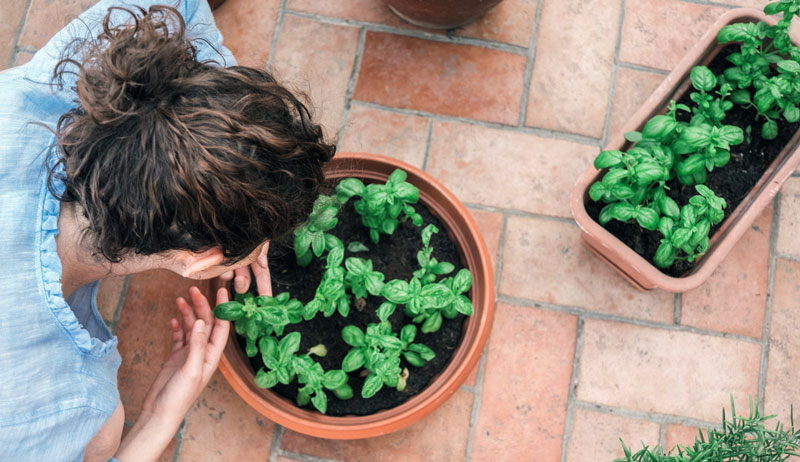
Growing in full sun to part shade, basil is a great, non-fussy plant. Technically it is an annual, but if left to go to seed in a container it will come back for you. Part of the mint family, basil boasts an impressive power.

Basil requires full sun and thrives in zones 4-10.

Catnip

The oil made in catnip has proven 99 percent effective in repelling stable flies. Catnip oil is used with soy and paraffin wax to make pellets to spread in a cattle feedlot. Growing this plant around porches and patios is a powerhouse repellant for flies.

Zones 3-9, hot weather and full sun are the combination for great catnip. 

Lavender

Who doesn’t love this amazing herb? It has culinary benefits with an intoxicating aroma that attracts humans, but repels flies. However, growing lavender is an art. Grow this one around the perimeter of your porches and patios, but not where you will be watering other plants often.

Lavender has a conundrum of being low-maintenance yet extremely picky, and people often go wrong with overwatering. Zones 5-9 can all grow “hardy” lavender with a few varieties that can do well in zones 3 and 4. 


Read more: Lavender is a true joy to grow in the garden.


Citronella

Most people know citronella repels mosquitos. But it is no different for flies. The lemony scent is too strong and overloads their senses so they can’t eat. Citronella is only a perennial in zones 9-11, but it grows well in all other zones in partial shade.

Citronella can be crushed and rubbed on your skin to deter flies and mosquitoes as well

Positioning these plants around your porches and patios is a great defensive step in your fight against flies. Always remember if you intend to eat the herbs, research the safe amounts and ways to ingest. 

Categories
Beginning Farmers Equipment Farm & Garden

3 Unusual Uses For A Three-Point Hitch

You might be accustomed to lifting all types of objects with the front-end loader of your tractor. Maybe you use the bucket to move dirt and compost. Perhaps you switch to a grapple or forks for lifting logs and brush. Maybe you even move large rocks, small machines, etc. by chaining them to the front-end loader. But the front-end loader isn’t the only lifting power a typical workhorse tractor provides. There’s also the three-point hitch at the back of the machine.

You might think of a three-point hitch as merely a means of attaching rear implements, but if you don’t have a front-end loader, a three-point hitch can be called upon in a pinch to provide lifting power in creative ways.

Need examples to get you thinking outside the box? Here are three unusual projects I’ve tackled using a three-point hitch.


Read more: Does your tractor really need a front-end loader?


  1. Removing Old Fence Posts

Have you ever tried to remove an old fence post, only to find it refuses to budge? Maybe it was set in concrete and you’re having trouble digging it out. Maybe it’s just set really deep in sticky clay soil.

When removing a simple fence post becomes an unexpected challenge, a three-point hitch can save the day.

The strategy is simple: back up your tractor to the post, tie or chain the stubborn post to one of the hitch arms, and slowly lift the post from the ground. Talk about a timesaver!

  1. Lifting Heavy Rocks

For a recent garden decorating project, I wished to place a large, flat rock on top of three smaller stones, creating an impressive stone table centerpiece. The rock wasn’t ridiculously large—three or four strong people probably could have lifted it.

But rather than strain backs, I decided to let my tractor’s three-point hitch handle the job.

Using a digging bar, I managed to pry up the rock sufficiently to slip rope underneath. After tying the rock securely to the arms of the three-point hitch (and after removing the tractor’s drawbar for better clearance), I slowly raised the rock, backed the tractor up to the three smaller stones, and lowered the large rock into place.

Easy as could be!


Read more: Got a stubborn fence post? Your three-point hitch can help with that.


  1. Moving (Small) Buildings

Okay, you’re not going to move a barn with your hitch, or even a large shed. But tiny buildings with small footprints aren’t out of the question.

Just recently, I decided to move a small chicken coop measuring about 3-feet wide by 8-feet long. The foundation was simply a frame of 2x4s resting on the ground. By chaining two corners to the arms of the three-point hitch, I was able to elevate one end of the coop and carefully drag the whole building to a new location.

Speaking of “carefully,” safety should be first and foremost when using a three-point hitch in creative ways. Check your tractor’s specifications to see how much weight the three-point hitch is able to lift, and don’t exceed it.

Consider adding ballast at the front of the tractor (such as suitcase weights) to counterbalance the load at the rear. You don’t want to throw your tractor off balance and raise the front wheels off the ground.

But so long as you employ caution and common sense, a three-point hitch can help you out in many unexpected ways. Give it a try!

Categories
Animals Farm & Garden Large Animals

Choosing Cattle For Your Own Homegrown Beef

Nothing quite compares to sitting down for a meal that includes beef raised in your own pasture. Whether you’re just getting started with raising cattle or you’ve done it for years, it’s always enjoyable when you can provide a freezer full of fresh meat for your family to use in the months to come. 

Know What You’re Looking For

Choosing the animal(s) that you want to raise for meat can be challenging when you first get started. You won’t have your own herd to choose from. So you either have to go buy a calf at a sale barn or find somebody locally that you can trust and buy it from them.

Some people prefer to start with a young calf and raise it up. Others might want to get a 300-500 pound steer. 

According to local rancher (and my brother-in-law), Kordell Krispense, buying bucket calves can be risky. They can be very prone to illness, despite whatever preventions you use.


Read more:Check out these 7 reasons to get started with beef or dairy cattle!


Benefits of Bucket Calves

Krispense has raised many bucket calves over the years and, while they can be a challenge, they can also provide a great experience for kids to work with. Although they’ll have to keep up with the daily feedings, there’s a lot of fun that can be had with some calves.

You can sometimes halter-break calm ones (training to walk around while wearing/being led with a halter and rope). These animals will enjoy playing around with kids while they’re small. For some people it is worth the risk of illness, as a calf that has been handled from the beginning will generally be calmer and more gentle.

This can be especially important to keep in mind if you have a family or small kids that it will be around. 

Breed Concerns

When it comes to the breed of cattle you want to raise, be observant to what kinds are already being raised in your area. There might be a reason that people keep a majority of just one or two different breeds. Find a local farmer or rancher and see if they have a minute to visit with you. 

Some people raise Angus cattle for beef, as their meat is well marbled, making it more desirable. Our family tends to find it too greasy for our taste. We generally try to have Holstein cattle ready to butcher around the time our dates at the locker plant come up.

Jersey will produce leaner meat, as well, with a distinctly sweet taste. 

Cattle Auctions

Buying cattle from a sale barn can be challenging, even for an experienced buyer. The action at a sale barn generally moves pretty quickly. Unless you’ve been out walking through the pens beforehand and know which group you’re waiting for, you will need to be able to make fairly quick decisions when the animals are brought into the sale ring. 

Unfortunately, one of the downsides of buying at a cattle auction is that, unless you already know the owner that the cattle are coming from, you have no idea why they’re being sold. You don’t know what the rest of the herd looks like that they’re coming out of, what they’ve been exposed to, and so on.

It can be a bit of a gamble.

If you’re just looking to buy a few steers to put out on grass it can be one thing. But when looking to invest in a quality animal to eventually feed your family, it’s good to be a little more particular. 


Read more: Keep these 9 things in mind when considering cattle for your farm.


Buying From an Individual 

If you live in any sort of a rural community, it shouldn’t be too hard to find someone that is selling beef cattle.

But folks that live in larger cities probably won’t be able to house beef cattle in their backyard. If this is you but you still want some fresh meat, look for online groups such as the Facebook group Shop Kansas Farms. Here, people list a variety of locally-raised products for sale.

You can buy a quarter of beef, some fresh chicken, eggs and so much more in one of these groups. Plus you get to partner with and support the farmer!

As you look for someone to purchase your cattle from, visit with people and listen for any names that pop up over and over again in conversation. Try to find someone that is honest and has a good reputation in business management as well as producing quality cattle.

Picking Out Your Cattle

When you finally go to meet the seller, pay attention to how they portray their animals. Do they appear to be upfront with you about the cattle as a whole or are they trying to push things under the rug?

Look at the rest of the herd if possible and ask yourself:

  • Are any of them sick or injured?
  • Do you see a lot of snotty noses and hear constant coughing?
  • Are there lame ones?

By looking at where your prospective new cattle are coming from, you can get a good idea of what problems you might be dealing with in the future. 

Keep an Eye Out

While you don’t need to buy show-quality animals, look for ones that appear healthy with decent confirmation. If you’re planning to keep them for awhile, you don’t want ones that are lame or already look poorly.

They should have some width between the front shoulders as well as the hindquarters, which will indicate good muscle development. Ideal cattle should have a straight back (no humpbacks!) and hooves that are free of cracks or any abnormalities.

Hooves can be an indicator of other structural problems that the animal might have to face in the future. 

Take your time when picking out your next beef cattle. Don’t rush into it and be sure you have all of your preparations in place before bringing them home. In the end, you’ll have not only the rewarding and educational experience of raising cattle but a freezer full of homegrown beef, too! 

Categories
Animals Farm & Garden Large Animals

Butcher A Pig Carcass For A Bountiful Homestead Harvest

When it’s time to harvest and butcher our homestead-raised pigs, we want to know how to get the most out of a pig carcass.  After all our work raising them, there should be no waste to speak of, right? And pigs are especially versatile meat animals. As the old saying goes, there’s a use for “everything but the squeal.”  

But finding how all those parts are most useful on your farm isn’t just a matter of looking up traditional or especially inventive charcuterie recipes. 

What if your family just isn’t willing to eat blood pudding? Suppose paté doesn’t appeal to you? Or the thought of a roast boar’s head on the dinner table doesn’t make you want to give up your Christmas turkey? 

Not to worry. “There are lots of ways to skin a cat,” as Shawn’s grandfather used to say. And there are many ways to honor and respect a whole pig carcass without making yourself eat grilled kidneys.


Read more: Learn the hows, whys and whens of pastured pigs. 


Breaking It Down

Butchering days are always celebratory on our farm.  There’s a lot of work involved. The sheer volume can be intimidating. But this day means the freezer and smoke house will once again be packed with the necessary materials for many of our favorite meals:

  • pork roasts to grace our sauerkraut
  • thick, juicy chops to grill over a wood fire
  • spicy herbed sausage or savory bacon to go with our morning eggs and potatoes  

Yes, we love to see the fruits of our healthy farm ecosystem harvested and stored for feeding our family.

Most of the carcass break-down is routine—hams and shoulders, bellies and chops, hocks and all the various roasts.  Some organ meats may pose a challenge, though. 

And what about all those bones and the really bony parts, like the head?  This is where we have to start making decisions.

Your first step should probably be research.  There are some excellent guides out there for making responsible and delicious use of every last scrap of whatever you butcher. Our personal favorites are:

When we have a question about any of our own practices, these are the sources we use.  But there is a lot of meat curing information available out there these days. We encourage you to look around.


Read more: You can harvest pigs at any age and stage for maximum herd efficiency.


Keeping It on the Farm 

In the actual world of our farms and homesteads, real appetites, food preferences and chores need to balance with honor for the pig carcass we harvest and butcher.  When it’s time to move on to the next homestead job, here are some good fallbacks for completing a respectful harvest, knowing you have used every last scrap of your pig:

  • All those esoteric organs—pancreas, spleen, lungs and so on–can be ground and added to your poultry ration.  A fist-sized lump of miscellaneous ground meat per five birds will give a good boost of protein in their diet. And this translates into more eggs.
  • Bones stripped of accessible meat (trim meat goes for sausage) are the basis for excellent broth.  Roast the bones, simmer and can up the results.  Don’t forget the heads and feet. Your cooking reaches new heights with plenty of good broth to work with. Burying the cooked bones in the compost pile returns phosphorus to the soil.
  • Learn to clean intestines for sausage casings. It’s not difficult or dangerous, and you’ve never had a really top-notch sausage until you’ve had it in a natural casing. 
  • There is no such thing as too much lard, so don’t waste a single scrap of that good pig fat. Running it through the grinder before rendering means less cracklings, but more lard. So suit yourself.  

Harvesting your own pigs at home is one more way to keep resources on the farm. The price of the butcher, meat itself and all the other bits and scraps (which would be lost to us if we sent our pig to the abbatoir) can all stay at home and bless the family, the plants and animals, and the soil. 

So sharpen up your best knives and get ready to butcher your pig meat. You will find that you do, indeed, use “everything but the squeal.”

Categories
Beginning Farmers Crops & Gardening Farm & Garden Homesteading Permaculture

Food Security Concerns? Start A Garden!

The world is currently in a state of increasing fuel prices, food prices and job insecurity. So perhaps it is time to plant a garden?   

A properly planted garden can yield a bounty of food for you, your family and the community. If you are considering venturing into home gardening or starting a small market garden, now is the time. 

Here are some keys to growing success. 

A Few Good Crops  

Don’t start by growing everything. Pick some crops that you know you will enjoy eating every week. Plan to grow succession plantings of these throughout the summer.

If a selection of popular crops compliment themselves well for you, these are also crops that work well for sale. Barter extras locally or sell some commercially from the farm or home gate. 

Grow 10 bed feet of salad every week. You can compliment this with a small patch of rainbow cherry tomatoes, a sensible start-up garden business for someone with three to six 50-foot garden beds. If you have three 10-foot gardens beds, then plant 1 bed foot of salad each week in one bed. Grow your tomatoes and some peppers in the others. 

By focusing on what you grow, you will succeed. Aim to grow complimentary crops to needs of a sustaining meal. 


Read more: What kind of gardening cart do you need?


Good First Beds & Crops  

If you are building a new garden from scratch this year in order to improve your food security, then you want to stick with bed-building techniques and crops that can grow well in new ground. 

Consider rolling out craft-type paper (4-foot rolls from a building supply) or layering cardboard, then applying 6 to 12 inches of soil mix over top. Use a local clay or loam soil, and mix this with potting soil and compost (1/3 of each). 

This will give you a fairly (though not completely!) weed-free garden. You shouldn’t have any perennial grasses or thistles if you purchase clean soil and mixes. But you may have annual weeds. 

Try Zipper Beds

To be sure you are weed-free in year one—and especially if you are forming new ground and not using a sheet mulching technique—you may consider using zipper beds. Here, two pieces of weed barrier meet at the center of the bed. You can plant along this line. 

Crops like squash or melons will thrive in the extra heat of the weed barrier underneath. This will maximize bed space without needing all that exposed “new and potentially weedy” soil. 

Tomatoes, peppers, eggplant and other larger crops work well with zippers. You can also plant early maturing crops like lettuces and green onions between these to harvest first while the others grow to maturity. 


Read more: Grow cover crops for in-situ garden mulch!


Invest in Irrigation 

Beside making a good garden bed, a simple irrigation system is probably the best investment a beginning grower can make.

A 1” poly line along the front of your garden beds can serve as a “header.” Connect a small shut-off to drip tape along the zipper bed rows of crops, tying their ends in a knot. 

Providing adequate water will help nutrients from moderate fertility additions (fish fertilizers, blood and bone meals, compost teas, etc) absorb better, making a world of difference to your fledgling crop yields. 

A raised bed will prevent too much water by allowing free drainage from over-irrigation. And if it happens to be a drought year, an irrigation system will prevent huge losses of crops or time hand watering. 

So it is time to increase food security by building practical first-year beds. You can use sheet mulching and/or the zipper bed method, and you’ll select a few good crops that complement each other in the ground and on the plate. And you plan to pick up some few labor- and crop-improving tech, namely irrigation, to get started right! 

Grow On! 

 Zach 

Categories
Farm & Garden Food Recipes

Recipe: Scrumptious Strawberry Rhubarb Sauce 

Strawberry and rhubarb has to be one of the best flavor combinations in the history of the world. We turn this combo into jam, pie, ice cream, cakes and even sauces. With rhubarb in its peak right now, we are thinking about all things rhubarb here in the Midwest. Strawberry rhubarb sauce is a great recipe we make annually.

The sauce is delicious spooned over pancakes or waffles, stirred into oatmeal and yogurt or even as an ice cream topping. You can even stir this sauce into lemonade or champagne for a special treat!  

Yield: 1 pint 

Ingredients  

  • 2 cups rhubarb, sliced 
  • 2 cups strawberries, quartered 
  • 1/4 cup orange juice  
  • 1/4 cup white granulated sugar 

Directions 

Wash and prep rhubarb and strawberries.  

In a medium saucepan, mix together the rhubarb, strawberries, orange juice and sugar. Heat to medium-high heat and simmer for 15-20 minutes, or until the rhubarb and strawberries have softened.

Stir often. 

Once the mixture has softened into the ideal consistency, remove it from heat and allow it to cool. Once cooled, transfer the sauce into a clean airtight container and refrigerate.

Eat within one week for best flavor. Freeze for up to a year in a freezer safe container. 


Read more: This refreshing rhubarb shrub is just the beverage for hot summer days.


Side Notes 

You can substitute maple syrup in place of white granulated sugar. To do this, reduce the measurement to 3 tablespoons. 

You can substitute water for orange juice in this recipe. 

Consider adding a tsp of vanilla extract to this recipe. 

The addition of 1/4 tsp of ginger, cinnamon or allspice would transform this recipe and are all tasty additions to this recipe. 

Other uses for this strawberry rhubarb sauce include stirring it into carbonated water for a refreshing spring drink, use it as a filler in crepes, stir into cocktails, use it to spoon over proteins or even use as a cheese topping on a cheese or charcuterie board.  

Categories
Animals Beekeeping Beginning Farmers Farm & Garden Flock Talk Homesteading Poultry

The Kardashihen Flock Frolics At Hawthorn Creek Homestead

Brandie Funk calls herself the “keeper of the Kardashihens.”

Naming her brood after various members of the Kardashian reality TV family, Funk’s chicks have become the stars of her Instagram account. There, she documents the daily activities that take place at her Southern Manitoba-based family hobby farm.

“My husband and I both grew up in the country,” says Funk. “My parents are honey farmers, and his parents often had a small herd of cattle. So we both knew we wanted a country property that we would be able to have animals on one day.”

We spoke to Funk about the origins of her chickens and her family’s beekeeping legacy. We also touched on how chickens and wine make a perfect match.

Embracing the Instagram Homesteading Community

Looking back on the moment that inspired her full-on dive into homesteading, Funk points to the creation of her Instagram account.

“I originally created it to share my chickens with friends and family. But after seeing the huge homesteading Instagram community, I realized the lifestyle very much resonated with me,” she explains.

“We are a family of seven, and raising our own food is appealing. I also love the idea that our children will be able to interact with our animals and learn responsibility as they care for them.”


Read more: These chicken breeds thrive on small farms and homesteads.


Get to Know the Kardashihens

Funk’s flock of Kardashihens currently stands at 23. When it comes to the Kardashihen with both the most distinctive personality and the most high-maintenance needs, Funk holds up Kim, a Silver Wyandotte.

“Kim’s definitely got a lot of personality,” she says. “She’s second in command after my roo’ Brucester, even above my second rooster. She’s the first one to greet me (looking for food) and not afraid to put the other chickens in place if they try to get treats before her.”

Beginner Chicken Tips

If you’ve been considering adding chickens to your own homestead or hobby farm, Funk says it’s important to properly prepare for their arrival.

“Don’t just jump into it one day without any supplies,” she advises. “I’ve made that mistake, and it is stressful! Make sure you have a place to house them, a way of feeding and watering them and, if you live in cold climate, a plan to ensure they’ll be comfortable through the winter months.”


Read more: Technology keeps chickens happy at this homestead!


Summer Nights, Chickens & Wine

When it comes to enjoying living with chickens, Funk says it’s all about taking time to appreciate the moment.

“I love sitting with a glass of wine on summer evenings and watching them interact with each other and with me,” she says. “It’s so fun to watch them and discover their unique personalities.”

Bring on the Bees

Alongside the Kardashihens, you’ll also find bees playing a vital role at Hawthorn Creek Homestead. Funk grew up with parents and grandparents who were honey farmers, but it wasn’t until her husband “became fascinated with the process” of extracting honey that they decided to add bees to their own hobby farm.

“It’s been fun learning alongside him and discovering how amazing bees really are,” says Funk. “I think the most fascinating thing I’ve learned is how instinctive they are. For example, if they lose a queen, they know to feed royal jelly to a young larvae and that larvae will then become a queen bee.

“It’s so interesting to me that all these little behaviors are engrained in each bee and they all work together to create and maintain a healthy hive.”

Follow Hawthorn Creek Homestead at Instagram.