We know honeybees are expert pollinators. It’s why we’ve come to depend on their services to the degree that we have. And why, by now, we’ve all surely heard the message that honeybees are in trouble and need our help. Even so, they’re far from being the only pollinators around.
It’s easy to confuse various native bees with wasps and even certain kinds of flies. As a general rule, bees are usually hairier. Also, although there’s a lot of variation between the thousands of bee species, bees have some method for carrying pollen.
They also have six legs, two pairs of wings and long antennae.
Some of the smallest bees—like certain sweat bees—are only about 0.1 inches long. (Some bumble bees, on the other hand, measure as much as an inch and a quarter long!) There’s a lot of variation in how and where these native bees choose to live, too.
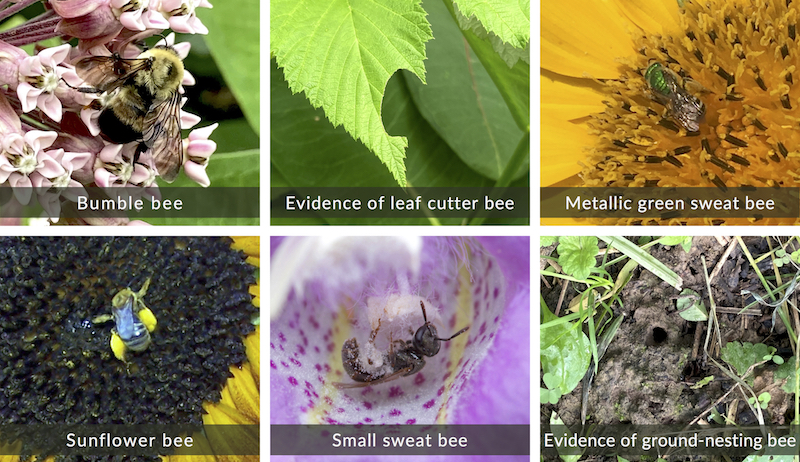
“About 70 percent of our native bees nest in the ground,” Shepherd said. Some of these include specialist bees like sunflower bees and squash bees. Sunflower bees (genus Svastra)—emerge in summer to forage almost entirely on sunflowers.
For their part, squash bees are brightly striped and measure 0.4 to 0.6 inches long. From the Peponapis genus, they’re particularly well-equipped to collect the large pollen grains from squash flowers. As such, they appear in time with the squash blooms. (Leave some bare soil patches near your squash plants, and squash bees will likely move in.)
Mining bees (genus Andrena) are also ground-nesters. There are more than 500 species of these in the U.S. They tunnel into bald patches of earth within grass and emerge in late winter. Compared to other bee types, mining bees are somewhat drab-looking. They range from 0.3 to 0.7 inches long.
From the genus Melissodes, male long-horned bees sport extra-long antennae. These ground-nesters are active in summer and similar in size to mining bees.
Striped sweat bees (genus Halictus), small sweat bees (genus Lasioglossum), and metallic green sweat bees (genus Agapostemon) also nest in-ground. Active in summer, some sweat bee species are so small they’re mistaken for gnats.
Tunneling and Cavity-Nesting Bees
“Most of our other native bees nest in pre-existent tunnels,” Shepherd continued. “That might be in dead tree. . . or it might be in a hollow twig.” Among the tunneling bees? Small carpenter bees (genus Ceratina) are skinny, shiny, and small—just 0.1 to 0.6 inches long.
A couple of tunneling bees—namely the carder bees (genus Anthidium) and the leafcutter bees (genus Megachile) go to great nest-building lengths. Carder bees scrape away plant fibers for use inside their tunnels. And leafcutter bees, equipped with impressive jaws, remove circular leaf sections with which they line their tunnels.
You’re likely already familiar with mason or orchard bees (genus Osmia) which readily accept manmade nest boxes. There are about 130 mason bee species in the U.S.
If you live in the eastern states, you also probably know of the large carpenter bee (genus Xylocopa.) Some of these east-based tunnelers will bore into solid wood—including the walls of our homes! (Fortunately, large carpenter bees don’t seem to have this habit in the West.)
As for the cavity-nesters, there are just under 50 bumble bee species (genus Bombus) in the U.S. These bees are often colorful, velvety, and big—big enough to occupy abandoned mouse holes and similarly sized areas.
Encouraging more plant diversity is one of the simplest ways to attract and support these varied pollinators. That means allowing some “weedy” areas to thrive and planting many varieties of native perennials. This helps provide more pollen and nectar sources for more kinds of bees.
In fact, research recently published in the journal Proceedings of the Royal Society B showed that the overall numbers of important pollinator species grew along with the numbers of different plant species available. The researchers used mathematical modeling to analyze data from 11 “plant–bee visitation networks” in New Jersey. Rather than considering individual plant species, they looked at mixtures of plant types.
These made up the “whole-plant communities” in an area.
Within whole-plant communities, rare native bees made surprisingly important contributions. “They filled distinct functional roles, in this case pollinating different plant species,” the researchers noted.
Offering more diverse habitat for native bees also counts for a lot. That can be as simple as leaving some small bare patches of ground in your garden. Being a little less zealous with your fall garden cleanup also makes a difference. After all, many kinds of bees will tunnel into hollow or soft-centered stems after plants have begun to die back.
Give them an assist by leaving some broken, hollow stems in place. Alternatively, you can incorporate these stems into small brush piles.
Have any dead or dying trees on your property? Certain native bees also will make their homes in these.
I heard a loud rumbling sound like thunder coming from my neighbor’s barn across our backyard. I always tried to act mature and old when he came by to say hello to my dad and talk a little. However, this time he pulled up in our driveway on his ranger,
I sensed that something was wrong.
His steps were quick, coming up the path to our front door. His knock was rapid. My parents came up to the door, and I was right behind them, straining to hear what was wrong.
His speech was short. “I was patrolling the yard when I saw all these feathers,” he said. “I thought that they might be from your chickens. There were so many that I had to come tell you, just in case.”
By now, Mom was very worried. “Where did you find them?” she asked.
“They’re in my yard,” Mike said. “Come on. I’ll show you.”
My heart quickened in my chest as if I was falling towards my death. Then I understood. The realization stung my heart like a thorn. Sleep-Tight, my dear pet chicken, had been stolen in the worst way possible, death, by an animal that haunts the woods.
Consoling the Chicken Survivors
We went out to see the feathers littered carelessly in his yard. I started to cry. There were feathers in his yard, too many to have been from a few stray feathers blown from the coop.
Sleep-Tight was gone. I’d never see her again.
My last encounter with her was that morning when I fed all the chickens. Sleep-Tight was an honorable, reliable and friendly chicken. She had always let us pet her glossy, golden feathers and let us pick her up.
We hurriedly put our other three chickens back in the coop to ensure that they were safe.
As I slowly walked to the chicken coop the next morning, again I felt a pang in my chest as I saw three—not four—chickens in the coop. I opened the door to let them out and found Vanilla, one of the survivors, lying in the back of the coop, not wanting to come out.
The other two came right outside, unwilling to miss a chance to peck around the yard for bugs and sometimes miniature frogs.
Vanilla never stayed inside the old, rundown coop unless she was laying one of her perfectly round and huge eggs. Vanilla wasn’t in the big boxy plastic nesting boxes. She couldn’t be laying one of her perfect eggs.
Something was wrong. Hurriedly, I ran to the house and hollered inside, “Mom, Dad, come quick. Something is wrong with Vanilla!”
In a heartbeat, they were at the door questioning me. “What happened?” Mom asked, eager to find out.
“I don’t know, but she won’t come out of the coop. I think that something’s wrong,” I said.
I ran to the coop with my parents on my heels. “See?” I called to them as we approached the coop.
Vanilla was still in the corner of the coop, and she wouldn’t come out, even after we tried to give her pieces of a hot dog, her absolute favorite treat.
Never before had Vanilla turned down a chance to eat. Vanilla would normally eat until she had stuffed herself to the rim.
Bird BBFs
As we watched her for the next hour and a half, willing her to take a sip of water or eat a bite of food, she wouldn’t do it. It was time for me to take charge.
I filled up a decently large bucket of water and took a spoon to use to dump water in her mouth. Spoonful by spoonful, I trickled the water down her curved beak, while sitting in the grass. Vanilla didn’t even seem to register what was happening. She seemed to be staring off in the distance, oblivious to the fact that I was sitting there, begging her to drink.
Grieving a Friend
As I sat there, spooning water down her throat, it all began to come together. Since Sleep-Tight and Vanilla were the best of friends, Vanilla was grieving for her lost roommate. Sleep-Tight and Vanilla always did things together, so it made sense that Vanilla was sad.
I tried so hard to get Vanilla to eat or drink that I forgot about my lunch, which had been sitting on the kitchen table for more than an hour. It was probably cold by now. “Olivia, come in right now and eat your lunch before it freezes!” my mother yelled out the sliding glass door.
“But Vanilla needs food more than me,” I said.
“You need to come in to eat,” she said and walked back inside.
I gathered my bucket and placed Vanilla inside the coop. I walked as if my feet were concrete back to the house. I ate a few bites, unwilling to eat with my stomach churning with worry. “We’re leaving in five minutes to go to your sister’s soccer game!” my mother hollered down the stairs.
“But Vanilla …” I said.
“I know, but we’ll pick up medicine for her on the way back,” my mother said.
“OK,” I replied with hope rising in my chest at the fact that we’d pick up medicine and then Vanilla might be better again.
Waiting
My feet prickled with anxiety as I watched my sister’s soccer game. I kept wondering if Vanilla was OK. The chicken had been through a lot with me, and I was honestly not ready to let her go.
She’s survived my 5-year-old brother so far, and that is very impressive. He would pester her and the other chickens so much that the chickens had to peck him all over to get him to stop.
It seemed like forever until my sister’s soccer game ended. Finally, we got to the farm-supply store to pick up Vanilla’s medicine. Mom asked the store worker where the chicken medicine was. The store worker showed us where it was.
I chose the big bottle that had a bright red label on the front that read, “A Chicken’s Medicine For Curing Sickness” from the cabinet. It seemed like the best fit for the state that Vanilla was in.
Olivia Monroe
“I Tried to Save My Pet’s Life”
When I got home we carefully picked up Vanilla and then the medicine. In the garage I held her, Mom held her beak open, and Dad squeezed the medicine into her mouth. Drop by drop, Dad squeezed the medicine into her throat.
To try to make sure that the medicine was in, we held her for a little bit and pet her, when she spit up all over me. All the water I worked hard to put in came pooling out of her mouth. All the medicine that we just squeezed into her mouth came out.
All my hard work was thrown away. However, I didn’t feel as if I wasted my time. I tried to save my pet’s life.
A Long Night
Sadly, we put our chicken back in her coop. It was pitch dark by then and the wind blew in my face, making my hair shoot out behind me. The stars twinkled in the sky, as if saying goodbye. We, too, said our goodbyes, in case the next morning she was gone.
The night lasted forever. I tossed and turned, occasionally wondering if Vanilla had gone to join Heaven yet.
I thought about how the four chickens used to come up to the patio when we ate dinner and beg for food. Then we’d give them whatever they wanted and laugh and say they were worse than a dog begging for food giving you puppy eyes. I thought about how much we’d been through, feeding and nursing them when they were little.
I woke up the next morning when the sun was just barely out and went to the coop to find Dad leaning over it. I came to join him. There sat Vanilla, limp and lifeless.
I cried. The rest of my family arrived, crying, too.
Silently, we buried my chicken Vanilla in the woods, in her happy place. The chickens were silent, as if they also held the weight of Vanilla’s passing on their shoulders. I lead a prayer for her. I choked my words out, heavy with sadness. In Heaven, she’d meet Sleep-Tight.
I realized that life is precious and painfully hard when you lose someone you care about. I understood that I had to enjoy the precious moments of joy and happiness when that someone is with me.
Life is truly pure joy.
Olivia Monroe, an 11-year-old 6th grader, wrote this personal narrative (which appeared in the May/June 2022 issue of Chickens magazine) as an assignment for her language arts class about something that has made a big impact on her life. She chose to write about love and loss of her chickens, which she started raising on her own three years ago. We thank her for sharing her story!
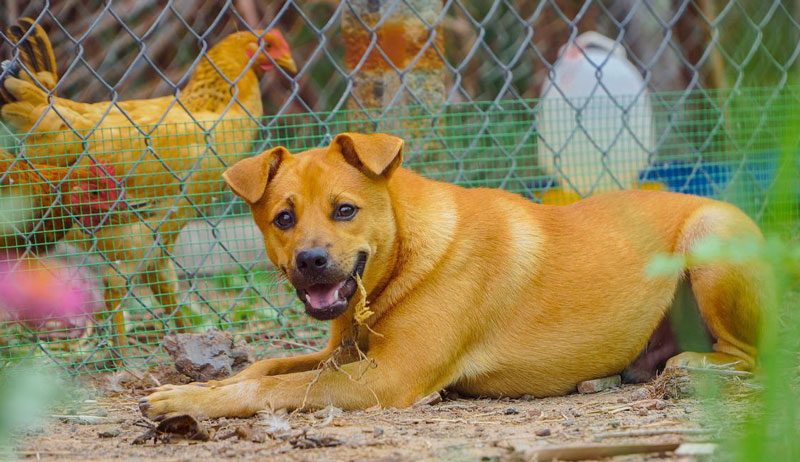
My son Jaeson’s shout brought me running to the kitchen sliding-glass door, our main exit point to our deck and back yard. Sure enough, a brown canine was ambling between our Orpington and Ameraucana coops, tongue lolling out. We have a local coyote pack and it wasn’t unusual for a scout or two to trot across our property. That usually happened at dusk, however, and it was barely past noon. Slipping my shoes on, I stepped outside to get a better look.
The moment it sensed my presence, however, the canine turned tail and dashed for the property line, its silhouette recognizable as it ran. This was no coyote. This was our neighbor Dick’s mutt, who had somehow managed to escape the confines of his own yard, several acres away. His afternoon of adventure was thwarted by yours truly, waving my arms and yelling at him to get back home.
A dog may be man’s best friend, but I know canines aren’t necessarily chums with chickens.
The High-Prey Drive Dog
Dogs are actually one of the most common poultry predators, especially if they possess high prey drives. A high-prey drive is an aggressive tendency to stalk, chase, hunt, attack and kill other animals.
Some dog breeds—such as Siberian Huskies, Samoyeds and Alaskan Malamutes—possess an instinctive, independent tendency to seek out prey. Breeds such as terriers, hounds, spaniels and retrievers were specifically bred to hunt.
Without close supervision, a high-prey dog can be dangerous to animals such as rabbits, squirrels, cats and other dogs. Alone amongst a flock of chickens, a high-prey dog can be disastrous.
Amongst a panicked flock of chickens, the hunting instinct of a high-prey-drive dog can kick into overdrive. With frightened prey fleeing everywhere, the dog will be compelled to grab and kill every bird it can get its jaws on.
Even the gentlest pet dog can cause chaos around a coop. It can perceive your flock to be fluffy moving toys to play with.
When Scout’s “playing” causes the fluffy toy to stop moving (… permanently), though, proceedings typically end. Dogs will rarely eat the birds they kill. If you discover a yard full of dead birds scattered everywhere, a dog is your likely culprit.
Bird Retrieval
Occasionally, you may find that you are missing one chicken and that the rest of your flock is in a high-stress panic. The only signs left of your missing hen are a couple of scattered feathers.
This may also indicate a fox or coyote. Both of these canids can easily carry off an adult bird. But you might also discover that your neighbor’s prized hunting dog was simply retrieving a bird for its master.
While stray dogs can indeed cause problems for flock owners, most predatory incidents involve neighboring dogs. In the best-case scenario, you’ll find a very embarrassed neighbor on your front doorstep, humbly apologizing about their dog’s behavior. They may offer you financial compensation for your demised bird and provide details on what they will do to ensure this kind of thing never happens again.
I like to think that most dog owners are conscientious and want to maintain positive relations with the people who live near them.
Unfortunately, there are also those who aren’t, as my friends Ted and Daniel discovered. At least Ted and Daniel could lay the blame for their dead flock on somebody. Some of us may never know whose dog turned our once-happy hens into discarded, lifeless rag dolls.
In cases where there are nothing but questions, the most we can do is secure our coops and runs to the best of our abilities.
Fortunately for us, Dick was extremely embarrassed that his dog had made it all the way to our property. Apparently one of his teenaged son’s friends had come over and not closed the door behind him, providing the pup with an escape route.
Dick read his son—and his son’s friends—the riot act. We have not seen the pooch since.
Still, I always maintain a vigilant eye. I never know when someone else’s dog or some stray might leap over our run fences and wreak havoc on our flocks. I’ve also taught Jaeson the difference between a coyote and a dog, just in case one of our local pack’s scouts gets similar ideas.
Flies can be a headache any place livestock and poultry abound, but even the smallest urban henhouses attract flies. Sometimes lesser species such as stable flies, blow flies or soldier flies take up residence in poultry yards. But major nuisance bugs found most everywhere chickens reside is the common housefly (Musca domestica).
About Houseflies
Adult houseflies are 1⁄4- to 9⁄32-inch long. They are gray to black, with four narrow stripes on their somewhat hairy bodies and a single pair of transparent wings. They have red eyes, set farther apart in the slightly larger female. Males have longer legs.
They are extremely hardy and thrive all over the world wherever humans are present, including as far north as the Arctic Circle. They don’t bite humans or animals. But they do carry parasite eggs and spread disease the likes of avian influenza, botulism, salmonella, E. coli and Newcastle.
And their buzzing annoys poultry and people alike.
Houseflies are active by day and rest at night, when they tend to congregate on ceilings, beams and overhead wires. Outdoors, they crawl into long grass or rest in shrubs and trees.
Prolific Pests
A major problem is that houseflies reproduce so freely. Each female lays from 75 to200 eggs per cluster at three- to four-day intervals, depositing them in fresh manure (less than 1 day old) or in manure mixed with damp bedding or similar organic materials including wasted chicken feed. In her lifetime, a typical fly produces 350 to 900 eggs.
Larvae, called maggots, hatch in 12 to 24 hours and begin feeding, completing their development in four to seven days, when they move to a drier location at the edge of their breeding habitat and morph into dark reddish-brown pupae. The pupal stage lasts a few days to four weeks, depending on temperature and humidity, then adult flies emerge.
Under ideal conditions, a complete life cycle can occur in seven to 10 days.
Flies Begone!
No one fly-control method works 100 percent. But by combining several, you can keep your coop reasonably fly-free.
The most important thing is to remove droppings regularly, ideally once a day but several times a week for certain. Sanitation is everything in fly control. Move manure away from the chicken house, and spread it out to dry. Or compost it if you prefer.
Use absorbent bedding, but I wouldn’t use straw. Dirty or damp, straw is a favorite breeding ground for houseflies. Sand is a better choice for coop bedding and to use in your chicken run. It coats droppings and dries them out, while helping absorb odors.
Droppings stay on top of the sand. There, they’re easily removed with a section of hardware cloth.
Replace or repair leaky waterers. Remove feed spills and any feed that has gotten wet. Dead birds and broken eggs should be disposed of quickly and as far from the chicken house as possible.
stockpexel/Shutterstock
Traps, Tapes & Screens
Electrocuter light traps (“bug zappers”) are effective against flies. But they’re costly and kill beneficial insects such as moths as well.
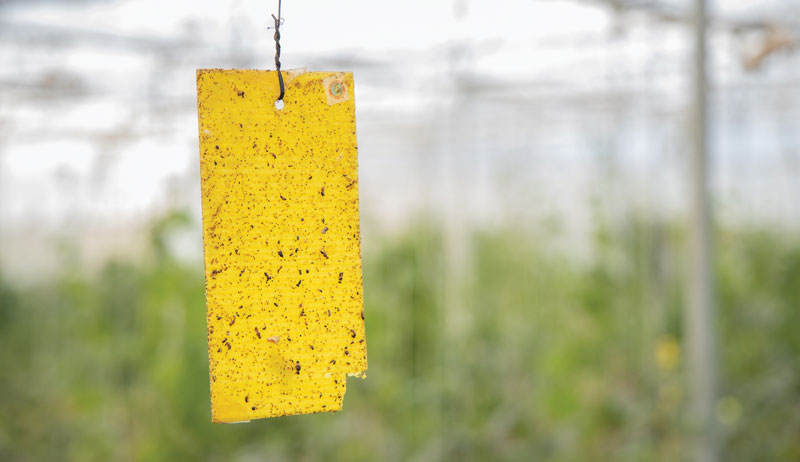
Old-style sticky tapes do a decent job in small coops and flytraps are good most anywhere. Make your own traps or buy commercial traps, and hang them according to the manufacturer’s recommendations. Monitor them on an ongoing basis and replace as needed.
Consider window screens and screen doors for smaller coops where the cost isn’t prohibitive.
Fly predators are gnat-sized, nocturnal, stingerless wasps that lay their eggs in fly pupae. A female wasp searches manure for pupae. When she finds one, she drills a hole in the pupa case and lays several eggs inside.
As the eggs develop, immature wasps feed on the fly larva as a food source, and then emerge from the pupa in a week or two. Each female fly predator kills about 100 pupa-encased fly larva in her lifetime.
Several species of fly predators are available commercially and identifiable by their Latin names in ads and brochures. The best for housefly control is Spalangia nigroaenea, which also helps control biting stable flies.
Companies selling fly predators provide guidelines to calculate the number of wasps to use. They don’t reproduce in sufficient numbers to control aggressive fly populations. So during fly season, parasitic wasps must be replenished about once a month.
Varavin88/Shutterstock
Bugs on Birds
Even more difficult to deal with than flies are those nasty little parasites that live on chickens. Think: mites, lice and sticktight fleas.
Does your chicken have them? Flip her over and ruffle through her feathers to see.
Lice
Poultry lice are tiny, flat-bodied, wingless, six-legged, straw-colored insects with broad, round heads. There are several species, and birds can host more than one type of louse at a time. Poultry lice are host specific.
They can’t infest you, farm animals or the family dog. But the bugs can thrive on chickens and other birds, including wild ones.
A typical louse spends its entire life on a single chicken. But lice can move to another host under crowded conditions.
Poultry lice don’t suck blood like the lice found on other species. They feed on skin scales, feathers and scabs. Fall and winter are prime louse times—summertime, not so much.
Chickens should be checked for lice at least twice a month. Spread each chicken’s feathers in her vent, breast, thighs and under her wings. Look for egg clusters or adults at the base of her feathers.
Eggs, called nits, are white and usually found in bunches on lower feather shafts.
Mites
Two major types of mites infest chickens: the northern fowl mite and the chicken mite (also called red poultry mites). Scaly leg mites can be problematic, too. Mites are barely visible to the naked eye, if then. They are brown or black or sometimes red after ingesting a blood meal.
Mites are wingless and have eight legs.
Indications of mite infestations include:
scabbing of skin near the vent
mite eggs on fluff feathers and along feather shafts
groups of mites congregating the abdomen, tail, vent or throat
Mites aren’t as host specific as lice and may infest nonavian species.
Northern Fowl Mites
Northern Fowl Mites (Ornithonyssus sylviarum) usually remain on a single bird for life, but they can survive off of a host for two or three weeks. They’re most often a problem during the winter months and spread through chicken-to-chicken contact, though they can also spread between flocks by contact with wild birds or infested clothing and equipment.
Protasov AN/Shutterstock
Look for this mite during daytime hours. If you use a bright flashlight, these bugs move around on chickens, making them easier to see.
Chicken Mite
The chicken mite (Dermanyssus gallinae) has a wide range of hosts including several species of wild birds and mammals, including humans. They are night feeders, so it’s important to check for chicken mites after nightfall. After feeding, they hide in cracks and crevices or under clods of dirt or manure, away from light sources, where they mate and lay eggs.
As with the northern fowl mite, eggs hatch in about two days. Larvae molt in one or two days without feeding. So without treatment, chicken mite populations can skyrocket dramatically, causing serious anemia in badly affected flocks.
Young chickens are most susceptible to these nasty little bugs.
Scaly Leg Mites
Scaly leg mites (Knemidokoptes mutans) are responsible for a condition called scaly foot that causes lesions on a chicken’s legs, with dermatitis and thickening of the skin. This mite is microscopic, with an oval body and extremely short legs. It spends its entire life burrowing in the unfeathered, scaled skin of a bird’s shanks and feet.
Older chickens are most commonly affected by these bugs.
The first indication of scaly leg mite infestation is a flaky or powdery look to the bird’s legs, later progressing to lesions or scabs, to lumpy or crusty masses, and finally, deformation of the shank and crippling of the bird.
Unlike other mites, scaly leg mites are easily treated. Simply smear an oil-based preparation such as petroleum jelly to the entire affected area once a day for at least two weeks. This will suffocate the embedded mites. This also softens dead scales that can then be gently scraped or rubbed away.
Treating Lice & Mites
Pesticides for use on poultry are generally available locally at feed-supply stores and from veterinarians. They’re formulated for a specific pest. Something that works for lice may not work for mites and vice versa.
You need to know exactly what you’re treating. If you don’t, consult university publications online or take a sample to your vet. You can discuss treatment protocols with your county extension agent.
If you’d prefer a more natural cure, research at the University of California suggests diatomaceous earth works well to control mites and lice on chickens. Mix it 1 part DE to 4 parts regular sandbox sand in a plastic wading pool as a dust bath, where birds can work the DE into their feathers and onto their skin.
Wear a dust mask. Food-grade DE is safe for birds but can irritate human lungs.
Though their primary host is poultry, sticktight fleas (Echidnophaga gallinacea), also known as hen fleas, infect a wide range of hosts including mammals, even humans. They’re wingless insects with powerful hind legs that can propel them up to 23 times their body length.
They look like but are roughly half the size of the common cat flea.
Sticktight fleas earn their name by embedding their heads in their host’s skin. Find these bugs clustered around the eyes of chickens, or on their combs and wattles. Symptoms can be extreme, with infestation around the eyes leading to swelling and blindness, a decline in egg production, weight loss and death in young birds.
Treatment can be tricky, as the fleas can be difficult to remove. Cotton balls can be used to carefully apply insecticide to areas around the face. This kills the fleas but doesn’t remove them. They must be grasped firmly with tweezers or forceps and pulled out of the skin.
A flea-infested henhouse should be treated with insecticide. But not all insecticides kill sticktight fleas, so consult your veterinarian for viable options.
There are lots of bugs that love to bug chickens, so learn all you can about henhouse pests. Armed with knowledge, you can keep your chickens parasite-free.
More Information
Chemical Fly Control
When using chemical insecticides, read and follow the manufacturer’s instructions for safe handling and personal protection. Use appropriate clothing, goggles, gloves, respiratory protection and any other personal protective equipment indicated on the labeling.
To ensure flies don’t become resistant to the pesticides you use, rotate products at least once a year. If you don’t know which insecticides work best in your situation, ask your county extension agent for advice.
Granular fly baits are an effective supplement to sprays but should be used with caution, placed well out of the reach of chickens, wildlife and household pets.
This article originally appeared in the May/June 2022 issue of Chickens magazine.
Sometimes, it can seem as though producing square hay bales is more of an art than a science. Sure, the advances of modern weather forecasting make it easier to identify sunny stretches suitable for baling. And a hay moisture and temperature tester reduces the guesswork in determining whether hay is dry enough to safely bale.
But other areas of making hay aren’t quite so refined. For example, there’s the art of adjusting the baler so the bales it creates are suitable in terms of size, weight and twine tension. These three aspects are all related, and it can be trickier than you think to adjust one without affecting the others.
There are many settings you can adjust. And many factors influence the end results. But getting them correct is important for making good bales.
Let me give you an example. On my farm, we bale around 2,000 small square hay bales each summer. Since our crew is small, we try to keep each bale relatively lightweight for easy handling as we stack them 12 bales high in the hay barn.
But for whatever reason, we struggled to nail down the right blend of size, weight and twine tension last summer. While the bales were indeed very light (I’ve never been able to toss bales so high!), they were also far too loose.
The amount of slack in the twine was unmanageable. Bales came apart left and right during stacking. And the stack itself was unstable since loose bales make poor building blocks.
As the summer went on, we managed to tweak the baler settings to produce tighter bales while still keeping the weight in a suitable range. But our troubles with loose bales weren’t over. Stacking hay in a barn isn’t the last time you’ll handle it.
Now is the time for a quick side note. Even when hay is baled “dry,” it still contains at least a little moisture.
As the hay continues to dry after baling, the bale will lose weight and—in my experience—physically shrink at least a little. This isn’t really an issue with tightly packed bales. But since many of our bales were already low on tension, the drying/shrinking process only exacerbated the problem.
Indeed, by the time we were feeding those loose bales in January and February, they consistently fell apart as hay slipped and squirmed out of its low-tension twine. Handling the bales became so unwieldy that we ultimately resorted to packing the loose hay into large cardboard boxes for easier handling and transport.
Fortunately, the tighter bales we made later in the summer are holding together better. But a challenging winter of handling exploding hay bales has reiterated a lesson: it’s important to take the time to get baler settings correct and create hay bales with proper twine tension.
Lightweight bales are nice, but not if it means carrying them around in boxes because they fall apart too readily.
As with most growing animals, a flock of laying hens requires different nutrients at different life stages and throughout different seasons of the year. Your flock’s extra dietary and digestive needs will largely be met by the variety of supplements provided in addition to daily chicken feed.
You’ll need to think about stimulation, too. Nothing wins over a flock of chickens like a good treat.
Let’s look at how to provide a balanced daily feed ration first and allow some forage time. Then we can shamelessly enjoy bonding and building trust with your chickens by offering fun treats—in moderation, of course.
That’s the secret every chicken keeper knows. The way to a chicken’s heart is through her crop.
Chicken Feed, For Starters
Eating—that’s what chickens do best. Nature has expertly designed them to convert a variety of edible plants, insects, seeds and other living things into fuel for their daily activities. And chickens are certainly happier when they can realize their true nature.
Foraging is a very basic part of being a chicken. It’s their livelihood.
So why have modern chickens been converted to a diet consisting almost solely of cheap grains? Well, unlike ruminants such as cattle (whose seven stomachs evolved to digest grasses best), chickens are fairly good at converting grains and legumes, such as corn and soy, into the protein of their meat or eggs.
But just because they can doesn’t mean they should.
When lacking a varied diet (and in particular, the greens found on pasture), a chicken’s egg and meat quality plummets. The good omega-3 fatty acids decline, and the omega-6 fatty acids skyrocket. It’s no wonder the chicken egg has developed a reputation for being an unhealthy source of cholesterol and “bad” fats and is often written off as a harmful food.
In reality, the modern chicken has just been producing the best egg it can on the feed it is given.
Upon learning this, my knee-jerk reaction was to set all of my hens free to forage for their food on our property. But after learning more about chicken nutrition, I realized that this extreme wasn’t the best route, either.
Unlike their ancient Asiatic ground fowl ancestors (or the feral Key West chicken, for that matter), domesticated poultry can rarely meet all of their nutritional needs by foraging. Small backyards or suburban lots do not have substantial fare to support a flock for very long, if at all.
Balance
The bottom line is that variety—and balance—is best. In addition to a well-rounded commercial feed, give your gals a chance to stretch their wings and legs by grazing on grass for a few hours each day. Just because they eat commercial feed ration doesn’t mean they need to stay cooped up.
Any time spent foraging will be great for morale, alleviating boredom, providing exercise and supplementing their diet.
They’ll be happier if they can realize their true “chicken nature.” Both you and your flock will find the time fun and entertaining.
And, if your birds must stay confined to a coop, run or enclosure, give them some greens as treats. Or better yet, grow them yourself. Your chickens, their eggs and ultimately your diet will be healthier for it.
Kemeo/Shutterstock
The Main Course
Like other prepackaged animal and pet food, commercial poultry feed is a relatively new commodity. Before the advent of manufactured feed and industrial trucking routes, domestic poultry likely relied on foraging close to home. They “hunted” for bugs, grubs and other small insects, and ate scraps from the kitchen. They foraged for seeds, grains and, of course, grasses.
As omnivores who spend nearly every waking minute focused on finding food, this lifestyle suited chickens well for quite a while. But, over time, domestic chickens were bred toward the most efficient conversion ratios. This means they were able to convert the least amount of food into the largest amount of protein (whether that be eggs or meat).
In the last century or so, intensive breeding has turned the domestic chicken into a veritable egg-making machine. The modern layer needs much more in the way of nutrients than her ancestors in order to stay healthy and keep up with her body’s egg-laying demands.
In combination with healthy greens or pasture time, a good commercial feed is crucial to keeping each hen in her best health.
What’s in Chicken Feed?
Each brand of chicken feed will have a slightly different “recipe.” The best way to know exactly what is in your bird’s food is to take a glance at the label.
Corn and soy are two foods often found at the very top of the ingredients list on a bag of commercial chicken feed. Wheat or wheat meal often runs a close third. Aside from being high-allergen foods, corn and soy are nearly all genetically modified organisms (GMOs) unless purchased organic.
Furthermore, cross-contamination of fields leads to adulterated wheat as well. The good news is that there are more organic choices readily available today. Some brands now make soy-free and even gluten-free chicken feeds for keepers with intolerances or for those who opt to stay away from GMOs.
Other ingredients in commercial chicken feed may include:
oats
field peas
flaxseed
rice bran
fishmeal
oils (such as sunflower)
alfalfa meal
kelp
a variety of yeasts and added vitamins
But because brands vary widely in their ingredients, additives and preservatives (if any), read labels closely and call the manufacturer if you have questions. Chicken feed should be consumed within about three months from time of purchase. Even though it will still be edible, its nutritional value rapidly declines beyond that time.
Chicken feed is available in three types, or textures: crumbles, pellets and mash.
Crumbles
With their texture, crumbles are the most popular form of commercial chicken feed. Crumbles are actually just crushed pellets.
Despite its popularity, crumbled feed may lead to some wasted food because it spills rather easily from the feeder.
Pellets
Compact capsules of feed, pellets are specially designed to contain a balanced ratio of nutrients in each morsel. In fact, this is the major advantage to feeding pellets to your birds. They receive complete nutrition in each pellet.
They don’t pick out the pieces they like and leave the rest.
A major disadvantage is that birds tend to eat pellets rather quickly, become satiated, and then bored without anything to pick and eat. And bored chickens will usually pick on each other instead.
A flock with a lot of pasture time will do well on a diet of pellets.
Aleksandr and Lidia/Shutterstock
Mash
Very simply, mash is all of the individual ingredients of a chicken feed recipe mixed together but easily recognizable to the birds. Chickens fed mash tend to pick out what they like and leave the rest.
This is a major disadvantage to feeding mash. Much of the feed is wasted if the birds refuse to eat certain ingredients. Plus, ignoring some of the less desirable ingredients may lead to nutritional deficiencies.
There are ways around this, however. The easiest is to make a wet mash with the remaining feed by adding water and mixing thoroughly. Birds love it.
The biggest advantage to feeding mash is that, unlike pellets that have been processed into morsels, the ingredients in mash have never been heated or processed and retain many of their nutrients.
Feed Rations
Whatever texture or brand of feed you choose to buy, it’s most important that you purchase the appropriate feed for the age and life stage of your flock. The feed should also meet the hen’s needs based on the season and temperature and her breed’s weight, size and rate of lay.
Generally speaking, chicks and breeder birds require a bit more protein. Layers require a bit more calcium. And almost all birds eat a bit more of everything in winter and a bit less in summer.
When to graduate from chick to adult feed and how to make the transition will largely depend on the brand you choose. Read the label thoroughly and call the company to learn how and when they recommend transitioning your birds from one feed to the next.
The four types of feed are:
starter
grower (or developer)
broiler and finisher
layer
Each is designed to meet the needs of different birds in different life stages. You’ll need to pick the feed that fits your intended use for your birds. Many keepers begin with starter feed for newly hatched chicks, then switch to grower feed past the chick stage and still growing. They switch to layer feed once their chickens reach point of lay.
Broiler feed is generally for meat birds, provides high amounts of protein—around 30 percent—and comes in formulations for different life stages.
It’s important to consider what life stage your birds are in, and feed accordingly. Not all nutritional profiles are acceptable for birds at all ages. You can harm their health if you offer an incorrect diet.
A Side of Grit & Shells
There are two main supplements that every chicken keeper should become intimately familiar with: grit and oyster shells. Both supplements look like tiny rocks or very small gravel. They are easy to source since they are very common supplements for backyard chicken keepers.
Every egg-laying flock will need both of these supplements. Some chicken keepers will argue that layer feed completely covers the digestive and reproductive needs of laying hens (it can). Similarly, others will insist that free-ranging chickens are able to pick up all the “grit” they need from the ground (sometimes they do).
But pet chickens are often fed scraps and treats that require additional digestive effort. And pastured birds will eventually run out of natural grit wherever they roam. However you choose to feed your chickens, they’ll need access to the grit and oyster shells that you provide.
How to Supplement
Grit
If there were a cornerstone in the digestive system of a chicken, it would be grit. Without teeth to chew their food, chickens rely on these little rocks to team up with the strong muscles of the gizzard to mash and grind everything they eat into manageable, digestible bits.
A bird deprived of grit may experience a variety of digestive issues, such as impacted crop, sour crop and other digestive blockages. Repercussions ranging in severity from severe discomfort to death.
Begin offering grit to chicks as young as 1 to 2 weeks old if they eat any food other than their designated starter feed, such as treats, or if they spend any time outside on pasture. Choose chick-sized grit for young birds.
If this product isn’t available at your farm and garden store, check pet stores for parakeet grit or grit for other small pet birds. Once your young flock reaches its adult size, switch to the standard-sized chicken grit.
Oyster Shell
Many of the egg-laying breeds of chickens we hold dear have been developed and refined over time to produce the maximum number of eggs possible. The production of eggs, however, requires a substantial amount of calcium—about 2 grams per egg, in fact.
What happens when a hen doesn’t have all the calcium she needs? She could experience reproductive issues, such as prolapse, and exhibit cannibalistic behaviors, such as egg eating. Her eggs’ shells will lose strength over time and may become deformed or even shell-less.
Eventually, a hen with a true calcium deficiency will develop weakened and brittle bones as her reproductive system pulls the calcium it needs from her body. Fortunately, the remedy is so simple.
Providing a laying flock with oyster shells every day of the year is a quick, easy and inexpensive preventive measure for a host of reproductive problems. It keeps you flush with eggs, too.
Pullets do not need extra calcium until they actively lay. In fact, an overabundance of calcium could be harmful to young chicks. So hold off on offering oyster shells to immature birds.
A good rule of thumb is to begin offering this supplement to a flock upon maturity—at point of lay—or once the first few eggs start showing up.
Herbs, Flowers & Superfoods
Many herbs, plants and foods naturally boast immense healing and health-promoting properties. There are herbs and plants—whether fresh in the garden or dried—that effectively repel nasty bugs; make excellent tonics and tinctures; and have antimicrobial, antiviral and antiparasitic properties. Some are nutrient-dense foods eaten just as they are.
Most of the following herbs and plants are really easy to grow in any size garden or pot, and the so-called superfoods are easy to find at grocery stores and farmers’ markets.
Treat your Birds
A flock regularly offered treats will quickly learn to trust and follow their keepers. This comes in handy when training, breeding, preparing a bird for show, or administering medical care.
Plus, giving treats is just fun; it gives you a chance to watch your birds, study their behavior and get to know their individual personalities while they chirp, peep and squabble over snacks.
Scratching the Surface
Scratch is the quintessential chicken treat. Each manufacturer of scratch will have a slightly different recipe. But the main ingredients are usually whole grains (cracked corn, wheat and barley) with secondary ingredients such as sunflower seeds, dried mealworms, flaxseeds and even dried fruit like cranberries and raisins.
As you can imagine, scratch is like candy for chickens. In fact, a wise chicken keeper knows to consider it as such.
Kitchen Treats
You can give just about any unprocessed food scrap from the kitchen to your chickens. This includes scraps or cuttings from nearly every fruit or vegetable, with a few exceptions. (Read “Do Not Feed” sidebar, below.)
My flock adores fruit such as overripe bananas, peaches, apples, raisins and every berry variety I’ve ever offered to them. Applesauce is always a huge hit.
Most chickens also love leafy greens, summer squash, winter squash, tomatoes and other soft vegetables, too.
Alternative Offerings
Chickens also adore meat. It’s a great source of extra protein for certain times of the year, such as when the flock is molting.
Just make sure bones are large enough to prevent swallowing, and remove them from the coop after a day or so. Dairy products are also fine in moderation. In fact, yogurt is a great source of probiotics. When mixed with the crumbs and powder at the bottom of the feedbag, it makes a great treat while keeping waste to a minimum.
Pasta, stale bread and rice are tried-and-true favorites, too, as long as they are well cooked and offered in moderation. Cooked eggs and crushed eggshells are also well loved by chickens. As long as the eggs are cooked and the shells are crushed, this treat won’t encourage egg-eating behavior.
Whatever the food item, just be sure that the pieces are a manageable size for a chicken to gobble up. Leafy greens, in particular, should be chopped or torn into smaller pieces. Chickens tend to get greedy and excited when they see the scrap bucket — a potentially lethal combination if an individual swallows large, whole chunks of food in a hurry.
More Information
You Are What Your Chickens Eat
Have you ever heard the phrase “You are what you eat”? Well, it’s no different when it comes to raising chickens for eggs.
For instance, many people with gluten or soy intolerances show sensitivities to factory-farmed eggs but are able to eat eggs from pastured hens. This is because the factory-farmed hens may be fed products that contain these and other potential allergens.
Pastured hens, on the other hand, live on a diet that largely consists of natural grasses, seeds and bugs, and will be supplemented with feed (hopefully organic). If you or a family member experience any sensitivities to certain foods—especially top allergens like soy—consider purchasing chicken feed that does not contain these ingredients.
You may also want to consider purchasing organic chicken feed. Organic feed may come with a slightly higher price tag, but it also comes with better overall results and health benefits.
The only way to be sure that you aren’t buying or eating genetically modified organisms (GMOs) is if you purchase certified organic products. If you do purchase feed that contains corn, cornmeal, soy or soybean meal, consider buying organic to reduce your chickens’ intake of GMOs.
After all, you raise chickens to feed yourself and your family the best food possible. This starts with what your chickens eat.
Do NOT Feed
There are many plants that could pose a potential risk to your birds if ingested, but that doesn’t necessarily mean they will. Some chickens will instinctively keep a distance from toxic plants. Some will not.
Plus, not every toxic plant is equally toxic. This isn’t a comprehensive list by any measure. If you’re unsure of a plant’s toxicity, ask the horticulture experts at your local nursery or consult your avian veterinarian.
avocado (the pit contains a toxic fatty acid called persin which is fatal to all birds)
black locust
black nightshade
castor bean
corn cockle
jimsonweed
milkweed
monkshood, wolfbane
morning glory seeds
nightshade plant leaves (eggplants, peppers, potatoes and tomatoes)
oleander
poison hemlock
potatoes, green or sprouted
rattlebox
rhubarb leaves (the oxalic acid contained in them is also poisonous to humans)
soybeans, raw (enzymes in the bean’s raw form can cause digestive upset)
tobacco
yew
This article originally appeared in the May/June 2022 issue of Chickens magazine.
It’s true: you wouldn’t put your sheep in your garden unless you wanted the entire thing to be eaten to the ground. But (after it’s sheared) your sheep’s wool is honestly just the thing to put in the garden!
First things first: My husband and I shear our own flock of 15 North Country Cheviots. We just don’t have a big enough flock to warrant a shearer coming to our place. And so, after attending a super “Shearing School’ at Purdue University, we decided we could do it!
We bought the shears (recommended by our teacher at the school). And three years later, we are—sort of—proficient. At least this year we were able to get off the wool in almost one piece.
A professional shearer might take the wool and sell it for you. But we have had several feed bags full of wool from last year. And this year we really don’t want to throw it out.
Sheep Wool In the Garden
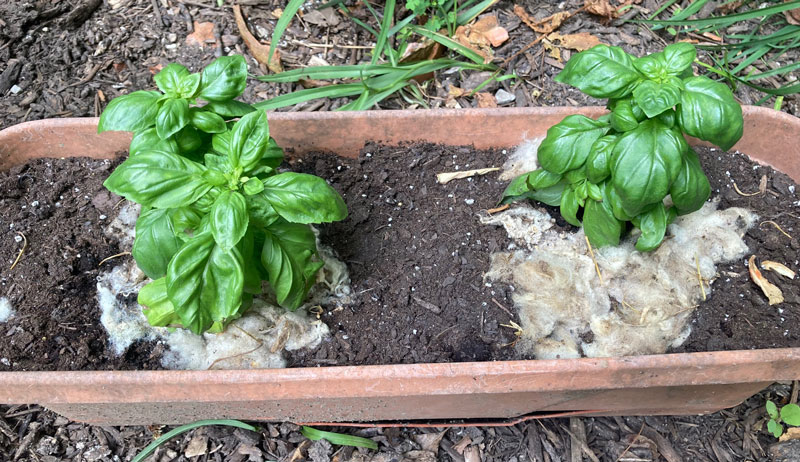
Recently I saw an article from a shepherd in the UK outlining all the benefits of “waste wool” in the garden. Waste wool, by the way, is the wool from the stomach, legs and other places that come off in small, usually dirty, chunks.
The UK farmer posted pictures of his tomato plants with wool wrapped around the base of the plants. He did this mostly to keep weeds at bay and to keep moisture around the plant.
Overall in the sheep shearing industry, about 20 percent of all wool is considered “waste.” This leaves a lot of wool that can’t be used in making sweaters, blankets and other things.
After doing some research, I decided: I’m all in! Like most mulch, wool is great at keeping weeds down and moisture in. Weeds are just not going to get through that wool.
Unlike other mulches, though, wool doesn’t break down nearly as fast. As an organic product, however, it will break down eventually.
But an additional benefit of wool mulch is that it can keep the roots cooler in the summer and warmer as the weather turns cold. This could possibly extend your growing season!
Jana Wilson
Other Benefits
There are some other benefits to using wool as mulch, too:
Fertilizer: In a word, it’s nitrogen. Plants need nitrogen to grow. And according to the American Wool association, wool that has bits of manure in it can provide more nitrogen than poultry manure fertilizer.
Pest Control: Slugs really don’t like to crawl over wool. So placing some around your vulnerable plants can help them tremendously. There’s some research going on right now to find out if wool can protect against aphids, but nothing conclusive.
Drought Protection: If you’ve ever gotten wet in a wool sweater, you’ll know this is true. Wool can hold 20 to 30 times its weight in water! In the case of using wool around your plants, this means the water will slowly be distributed down to the roots.
I have started using wool to line the bottom and sides of my pots in hopes that I won’t have to water my flowers as much this summer. And I’ve gotten so excited about the use of wool in the garden I offered a local grower a bag of wool from my sheep to try out in his organic fields.
I can’t wait to hear what he thinks.
Don’t have wool sheep? You actually can buy commercially produced wool pellets and felted squares to use. I can’t guarantee that wool will have the wonderful manure and bits of hay that mine does, but I think it’s definitely worth a try.
If you want a more in-depth look at why wool in the garden is such a great idea, check out this article from the American Wool Association.
This all-true, real-life, most-epic rooster story began on a sunny Saturday afternoon. A happy chicken lady took advantage of the nice day and went on a beautiful hike. Now this hike ends on a fairly busy thoroughfare called Ramsey Road.
Chicken lady was pretty tired as she started the last stretch on the road. So she almost couldn’t believe her eyes at the sight! What was right before this chicken lady’s eyes on Ramsey Road but a most handsome rooster!
He was very colorful: oranges, tan, black and cream. He had pearly, almost-iridescent tail feathers. He looked quite robust and seemed to also be enjoying the beautiful day just strutting down the street.
Well, this chicken lady had concern for the handsome rooster. You see, there are quickly moving cars on Ramsey Road, as well as coyotes, mountain lions and other local predators. So, she did what any chicken lady would do. She approached the rooster to see how she could be of help.
He was pretty friendly and didn’t seem to mind. He didn’t even run away, and he didn’t try to fight. But he was also still very much enjoying the day so he resisted her first attempt at a catch. Now chicken lady didn’t want to pressure the rambling rooster, so she left it at that and went on her way.
As usual, she also had an ice-cream stop on her mind. So, about 15 minutes later, chicken lady was waiting in the drive-thru for her ice-cream cone. During this time, it just wasn’t possible to get that handsome rooster out of her head. She really had quite a concern for him. What to do? Oh, yes! That’s it! She knew just what to do. Which was the very same thing any other chicken lover would do.
Would you like a hint at what the chicken lady did next? Chickens sure love their treats, don’t they? Yes, they do! So, chicken lady drove back up Ramsey Road with her ice-cream cone in hopes that the handsome rooster was still there.
To her surprise, he was still right where she had bid him farewell!
She safely pulled over and got out of the truck to say hello again. She tossed a piece of the cone to show him that she came back with tasty treats. He was very happy about this, so chicken lady then held out the cone to see if he would like a bite.
He did! Handsome rooster came right up and took one big bite. He couldn’t believe this nice chicken lady brought him an ice-cream cone! Little did he know what would happen next!
Melissa Jones
Catch & Go
The chicken lady knew she would have to make her move. So on his second bite she carefully but quickly grabbed him up. Naturally, the robust rooster wasn’t so happy about this, but he did want to finish his delicious ice-cream cone, so he obliged.
Chicken lady moved swiftly to make her new friend as comfortable as she could. She carefully wrapped him in a towel knowing this would help him to relax. She buckled both of them into the truck and off they went.
But wait? What happens if someone nearby was missing their handsome rooster? Chicken lady wanted to make sure this wasn’t so. She decided she better drive to the nearby homes and check.
Everyone she met agreed he was quite a handsome rooster, but they had never seen him before. So she took him home with a big smile on her face.
You see: Chicken lady had four sweet, lovely hens at home. Surely, this bachelor rooster would be happy and content staying with these chicks. After a few days of the typical transition and introductions, she let the handsome rooster out on a pleasant sunny morning with the four lovely hens.
After a few scuffles and a few struts, the handsome rooster (whom we now call Ramsey) and the four lovely hens became a family.
So why did the rooster cross the road? To go home with the happy chicken lady and be the best rooster ever to her lovely hens Patty, Nugget, Pearly and Fluffy Cheeks, of course.
Melissa Jones lives in Hereford, Arizona, with her five chickens.
Do you know the composition of your soil? This bit of information is actually one of the most important things you, as a farmer, can know about your property. From the pasture to the garden plot, your farm’s productivity is determined by soil quality.
Soil is made up of three basic elements:
sand
silt
clay
Understanding the percentage of each of these elements in your soil composition will determine how you will amend soil. The most common way to get this information? Send a soil test out.
But I’ve got an easy way you can determine your soil composition without the added time and expense of a third-party test.
You only need one supply to conduct this soil composition test: a glass jar.
Pick a place where you can get a jarful of just soil (no top litter) and dig up enough for about 3 inches in the jar. Break up big clods as you do this.
Next, break down the soil in the jar as much as possible using whatever you have on hand. (A screwdriver end works great, in my experience.) Just break up all the clods as well as you can.
Then add as much water as you have soil in the jar. Secure the jar’s lid, then give your container a good shake for about four or five minutes.
Break It Down
So what are we doing when we shake up this muddy mixture? Well, we’re breaking down soil components to their basic particles.
As different plants prefer different percentages of the three basic soil elements—sand, silt and clay—understanding what our soil has versus what it needs more of can help us grow happy, healthy crops.
So how does this jar tell us about our farmland? Check out the video to see just what you can learn about your soil composition.
“I’m from Philadelphia and he’s from Brooklyn so we were just winging it!” says Rosa Vasquez of the 30 Acres And A Goat Instagram account, looking back on her early days raising chicks alongside her boyfriend, Nick. “I started off with ones I thought were pretty, then realized that if I wanted eggs and meat I needed to do my homework.”
Vasquez’s homework paid off—and now she documents her farming adventures in Mckenney, Virginia, to the world via social media. Alongside the homestead’s poultry, you’ll also find horses, hogs and bunnies in the mix.
We spoke to Vasquez about securing a 30-acre plot and the joys of Rhode Island Reds. We also touched on the way pigs love back rubs.
Vasquez’s farming journey begins when she was living in Hampton, Virginia, and looked up the rules for keeping backyard chickens. After learning that they were permitted five chickens—but no roosters—her boyfriend constructed a coop from a repurposed curio cabinet.
“One day I went to get feed and they had ducks and I was like ooh, well, you can’t just get one!” says Vasquez. “So I got two, [and] shortly after there was kind of this a-ha moment. My boyfriend and I realized that we wanted to do more, so we started looking for land.”
After originally searching for around 5 to 10 acres, Vasquez heard about a friend of a friend who was selling a house on a whopping 30 acres. “We never expected to live on 30 acres in the country,” she says, “but here we are.”
“My Easter Eggers and Rhode Island Reds are egg laying machines, even through the winter,” says Vasquez when asked about the most productive members of her farm.
When it comes to utilizing the egg bounty, Vasquez usually favors simply scrambling them—although she’s also become an advocate of salted egg yolks.
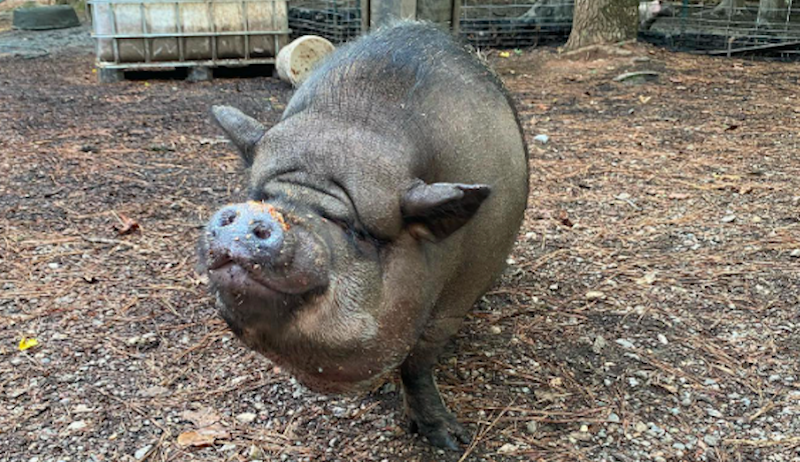
Pigs supplement the poultry at Vasquez’s venture. She characterizes them as “very loving” creatures with even the 500 pounders liking to eat out of her hands. Along with enjoying back rubs, Vasquez says “we make it a point to talk to them and give them individual attention as often as possible.”
Glancing back over her farming journey so far, Vasquez says that one of the most rewarding parts of the process has been “the togetherness and seeing our boys take care of the animals and knowing where our meat and eggs come from.”
Inspiration comes from perseverance too: “Starting from scratch and having to start over, failing then starting over and reaching success—it’s the best feeling in the world to know that you’re living this life that you created and it’s thriving.”