Categories
Crops & Gardening Farm & Garden Projects

How To Build & Use Your Own Plant Press

Plant presses—also known as flower presses—are simple to build. They also happen to make great gifts for gardeners, nature-lovers and crafters. Oh, and they’re essential if you want to save your own botanical specimens.

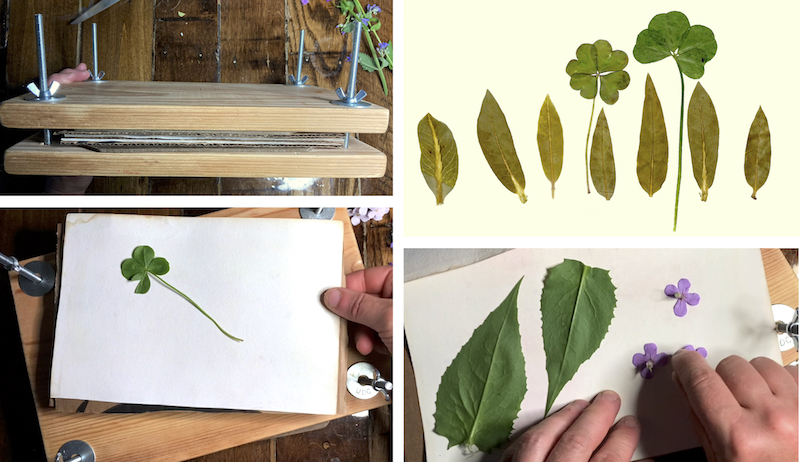
My plant press came in handy recently when I discovered a few four-leaf clovers and another four-leaf oxalis plant. I carefully plucked the lucky stems, arranged them between sheets of blotter paper, and pressed them for posterity.

The Basics

Now, if you’ve ever pressed a leaf or flower between the pages of a heavy book, you already understand the plant press basics. The book’s covers provide stiffness and weight and its pages absorb moisture. Eventually, fresh plants become flat and dried.

But using books to press plants isn’t ideal. Both book and plants can mildew in the process. And it’s all too easy to forget exactly where you put your specimens.

By contrast, dedicated plant presses typically include several sheets of blotter paper and cardboard sandwiched between two thick, wooden boards. Long carriage bolts and nuts hold the contraption together. And by loosening or tightening these, you can control how much flattening pressure you apply.

You can also swap out fresh blotter paper and cardboard in your plant press to help speed the drying process along the way.


Read more: Make your own decorative looms with foraged wildflowers.


Equipment & Materials

Ready to make your own plant press? To start, you’ll need the following tools and materials:

  • Saw
  • Hand drill or drill press
  • Tape measure or ruler
  • Pen or pencil
  • Scissors and/or utility knife
  • Clamp(s)
  • Sandpaper or hand sander (optional)
  • Wood stain, paint, or shellac (optional)
  • Hardwood board
  • Hardboard (Masonite)
  • Four long carriage bolts
  • Four wing nuts
  • Eight washers
  • Scrap cardboard or foam core
  • Blotter paper or smooth, absorbent watercolor paper
flower press
Susan Brackney

Step by Step

I like to use reclaimed wood whenever I can. I had an old piece of 3/4-inch hardwood shelving that I cut into two equally sized pieces. (See image Step 1.) My pieces each measured eight by 12 inches.

My reclaimed wood also had some drips of paint and a few dings. I chose to clean up and smooth the surface of both cut boards with a sander. (See image Step 2.) I also rounded all of the corners and edges slightly, but this is optional.

Once you have your two equal boards, measure and mark each corner. I measured 1 inch from the bottom and 1 inch from the side and marked this spot at each corner. (See image Step 3.) These are the marks you’ll use when it’s time to drill pilot holes for your carriage bolts. (See image Step 4.)

In part, the length and size of the carriage bolts you choose depends on the thickness of your lumber. I chose carriage bolts that were 1/4-inch thick and 5 inches long. Also, the drill bit you use should be just slightly larger than width of your carriage bolt.

In my case, I used a 5/8-inch drill bit.

Finishing Touches

When your finished plant press is assembled, you’ll need to be able to move the boards smoothly up and down along the carriage bolts. So, after you’ve drilled one hole in each corner of your two boards, put them together and insert the hardware as a test. (See image Step 5.)

To assemble at each corner, first place a washer over the drilled hole. Then feed the carriage bolt through the washer and through the hole in the first board. Next, feed the bolt through the corresponding hole in the second board. Fit another washer over the end of the bolt, then screw on a wing nut.

Repeat these steps at the three other corners. If your boards don’t move smoothly along the carriage bolts, remove all hardware and carefully drill through the holes again. If you like, you can stain, paint or shellac your plant press boards once you’ve completed these steps.

Next, cut two equally sized pieces of Masonite. (See image Step 6.) These should fit within the space between the carriage bolts. My two Masonite pieces each measured 5 1/2inches by 9 inches.

You’ll also cut your blotter paper sheets and cardboard pieces to the same size as the Masonite sheets. (See image Steps 7 and 8.)


Read more: Flowers as food? Yes! Try these 5 kinds of edible flowers in your garden.


Specimen Setup

The Masonite sheets you cut will help to provide extra support for the plants you want to preserve. When you’re ready to set up the finished plant press, you’ll sandwich each plant specimen between two pieces of blotter paper. Next, you’ll sandwich this blotter paper-specimen combo between two pieces of cardboard.

Stack each of these sets one on top of the next. Now, sandwich this bundle of specimens between the two Masonite sheets.

This final sandwich goes in between the two wooden boards of your plant press. To flatten and dry your specimens, you’ll push these boards together and tighten them down with the wing nuts. As your plants begin to dry out, you may need to give the wing nuts a few more turns to keep the pressure up.

How long your plants will need to remain in the press depends on their thickness, moisture content and more. But, as you experiment with your plant press, you’ll soon get a feel for this.

Categories
Farm & Garden Poultry

When Chickens Are Afflicted With Cataracts

It happened within a matter of weeks. In April, Butters Orpington was a bright-eyed biddy, sunbathing beneath her run’s daisy patch and chasing butterflies around. By early May, she refused to leave her coop.

I’d try to coax her out. When that didn’t work, I’d pick her up and set her down by her favorite daisy patch. At lock-up, she’d still be beneath the daisies. So I’d pick her up and set her back inside, where she’d ravenously attack the feeder and waterer.

I wasn’t sure why she’d be so hungry at dusk—or why she’d stopped perching on the roost, opting instead for a nest box. I chalked it up to older-hen idiosyncrasies … until my son Jaeson noticed something odd about Butters’ eyes: they seemed clouded over.

Could Butters be suffering from cataracts?

What are Cataracts?

Cataracts (in chickens as well as people and animals) are a clouding of the lens of either one or both eyes. A healthy lens is clear and permits light to pass through the eye to the retina, where images are processed. Cataracts block light from passing through the eye, either partially or totally.

As a result, blindness occurs. Cataracts are one of the leading causes of blindness in older humans. They can also affect animals such as dogs, cats, horses, rabbits and birds.

Cataracts and Chickens

A 1991 research study conducted by the Veterinary Diagnostic Laboratory at Michigan State University noted that large heritage chickens such as Brahmas may be predisposed to developing cataracts. According to Michigan State University’s R.M Fulton, DVM PhD, cataracts can also develop as a result of Marek’s Disease or avian encephalomyelitis.

Exposure to continual lighting or ammonia can also lead to cataracts, as can a nutrient-poor diet. Cataracts can also develop as a sign of old age.


Read more: What’s the best chick bedding? Well … it depends.


Signs of Cataracts

While there are other causes of blindness in chickens, such as injury, infection and parasites, cataracts tend to stand out because of the milky, cloudy appearance of the afflicted eye.

If one of your birds starts being clumsy, continually bumps into things, seems confused about where she is, and becomes increasingly inactive, check her eyes. If her pupils seem enlarged or irregularly shaped or if you notice a discoloration of her eyes, she may suffer from cataracts.

Butters’ Diagnosis

One look at Butters’ eyes immediately brought to mind my grandmother’s sister, whose milky-white eyes are an early-childhood memory I’ll never forget. Both of Butters’ eyes were the same milky-white color as my great aunt’s.

Suddenly Butters’ reduced activity and her refusal to roost at night became crystal clear to me. She couldn’t see where she was going.

That’s also why I kept finding her under the daisies. Poor Butters couldn’t find her way back to the coop entrance.

As Jaeson held her, I slowly moved my fingers by her eyes. Butters did not respond. As a final test, I had Jaeson place Butters back inside the coop as I lifted the feeder off its stand. Butters dipped and pecked at the air, trying to connect with the absent feeder.

That convinced us. Butters was blind.

Since we feed our flocks nutritious layer rations, do not use artificial lighting and regularly clean our coops, we could only think of one cause for Butters’ cataracts: old age. Butters turns 7 on June 30th.


Read more: Check out these 11 grooming essentials to pamper your chickens.


Helping Afflicted Chickens Thrive

A chicken (or chickens) afflicted with cataracts can lead a happy, healthy life with some modifications. First and foremost is to create a smaller run for her directly around her coop. A blind chicken will feel more secure and comfortable in an area that is familiar to her.

Vision loss can result in your bird becoming lost in a larger run or while free ranging. This will cause her stress and leave her open to predator attacks.

Second, avoid rearranging the interior of your coop. Your hen counts on finding food and water in their accustomed places. If you notice that your hen is losing weight, she may not be finding her way to the feeder. You may need to gently dip her beak towards the food.

Third, make reassuring sounds and talk to her while you feed her and whenever you are performing coop maintenance, as this will alert her to your presence and prevent her from becoming startled.

Finally, be sure to keep an eye on the rest of your flock. Lower-ranked birds may take this opportunity to rise in rank by bullying and pecking your vision-impaired girl.

Butters and her flock have adapted beautifully to her new condition and living requirements. TJ, the coop rooster, is especially protective of Butters. Upon release every morning, he stands outside the coop door and clucks encouragingly until she joins him.

He then stays by her side, scratching and alerting her of any tasty treats he uncovers and otherwise shepherding her around the run.

Butters has started going in on her own now, too, instead of sitting out by the daisies, awaiting rescue. She now prefers to sleep in her favorite nest box. This past weekend, we found tangible proof that Butters is indeed content in spite her condition: a large brown egg in her nest box.

As the only brown-egg layer in the coop, Butters couldn’t have given us a clearer sign that cataracts weren’t going to slow her down.

Categories
Podcast

Episode 30: Chereen Leong Schwarz


Chef and farmer Chereen Leong Schwarz is on this podcast episode to talk about “local” food from all perspectives. Hear about why Chereen has never eaten a McDonald’s hamburger and how that ties in to her from-scratch, locally sourced food philosophy and her love of cooking and eating country-style food. Chereen tells us about farming in Steamboat Springs, Colorado, where they have just 59 frost-free days in the growing season. Listen in on the intimate details of what it’s like for Chereen to help raise animals from birth to harvest and then, as a local-foods chef, to carefully prepare the meat and to be sure the people enjoying the meal understand the value of what they are eating.

Use this farm-kitchen hack: Chereen offers her best tips for using all parts of the food you’re growing, including cabbage cores, carrot tops and random vegetable scraps. 

Also hear about her Emerging Leader in Food & Ag Award, the community being built by young farmers, and what’s giving her hope for food access and her local farming scene. And listen in until the end for Chereen’s favorite meal and to learn a bit about her other socially conscious business.


Categories
Animals Farm & Garden Large Animals

Sheep & Goats Need Scrapie Tags—Here’s Why

Sheep and goat owners are required to register and tag their herds with scrapie identification before selling the livestock or moving them off the premises. Scrapie tagging is a federal program designed to eradicate the scrapie disease implemented by the United States Department of Agriculture (USDA).

An exception to this rule: wethers under 18 months old being moved for sale or slaughter. (For exhibition, wethers under 18 months need some identification, though official tagging isn’t required.)

The USDA office assigns every farm a premise ID, and the department also provides tags and applicators for free. Alternate scrapie test identification is also available in some cases, potentially with additional stipulations.

What Is Scrapie?

Scrapie is a neurological, degenerative and eventually fatal disease in sheep and goats. It transmits from an infected dam to her offspring through body fluids.

Moreover, any bedding that comes into contact with fluids from infected sheep or goat will also be affected.

What Are Symptoms of Scrapie?

The USDA cites the following symptoms for scrapie:

  • Behavioral changes: tremor (especially of the head and neck), pruritus and locomotor incoordination, which progresses to recumbency and death. These changes may start out as just subtle changes in behavior or temperament.
  • Locomotor issues: loss of coordination, biting of feet and limbs, lip smacking and gait abnormalities, including high-stepping of the forelegs, hopping like a rabbit and swaying of the back end. 
  • Physical changes: weight loss despite retention of appetite

An infected animal may appear normal if left undisturbed at rest. However, when stimulated by a sudden noise, excessive movement or the stress of handling, the animal may tremble or fall down in a convulsive-like state.

Several other problems can also cause clinical signs similar to scrapie in sheep, including:

  • the diseases ovine progressive pneumonia, listeriosis and rabies
  • presence of external parasites (lice and mites)
  • pregnancy toxemia
  • toxins

The only way to officially diagnose the condition? Through testing with your veterinarian. 

What Should You Do If Your Sheep or Goat (over 18 Months Old) Shows Signs of Scrapie?

Contact your veterinarian, who will report to the USDA’s Veterinary Services. Your vet can obtain tissue samples from living or dead sheep or goats at no cost to you if reported and processed through the USDA.

How Do You Get Scrapie Tags?

To request these official sheep and goat tags, a flock or premises ID or both, call 1-866-USDA-Tag (866-873-2824).

Categories
Equipment Farm & Garden

Is A Narrow Mower Better Than A Wide Mower?

We’ve often voiced the opinion that bigger isn’t always better. When it comes to farm equipment, it can be easy to assume larger machines are more capable and effective than their smaller counterparts. But in many cases, a smaller (and less expensive) option might be the better tool for your needs.

Wider Is Better (Right?)

The width of a lawn mower is a perfect example. Let’s say you’re shopping for a tool to mow your lawn. You’ve analyzed several options. You looked at a garden tractor with a 4-foot mowing deck and a zero-turn mower with a 5-foot deck. You even checked out a 6-foot finish mower that mounts on the three-point hitch of your utility tractor.

Your first assumption might be, “the wider the better!” After all, the wider the mower, the more grass you can cut at once.

All else being equal, a 6-foot finish mower will cut grass 50 percent faster than a 4-foot mowing deck, freeing up time you can spend on other projects. Even the 5-foot deck on the zero-turn mower offers a 20 percent improvement. And there’s a good chance the zero-turn mower will operate at a higher speed than the garden tractor.

This would further increase your time savings.


Read more: Check out these important steps for preparing your garden tractor for winter.


Smaller Mowers Offer Advantages

But hang on—let’s point out some of the advantages offered by smaller mowers. What type of land will you be mowing? Wide mowers are great for mowing open spaces and flat fields. But imagine driving your utility tractor and finish mower through a compact yard dotted with trees, buildings and other obstacles.

A smaller mower is more maneuverable and can squeeze through tighter spaces. That five-foot gap between two stately maple trees? A garden tractor with a four-foot deck will mow between them no problem. But it’s physically impossible to squeeze larger mowers through the small gap.

Think About Weight, Too

Weight is another factor. A smaller machine is likely to weigh less than a larger one, which can be a benefit if you’re concerned about soil compaction or rutting up your lawn. Turf tires can minimize the damage inflicted by machinery.

But there’s only so much you can do to prevent a heavy utility tractor from leaving a trail in its wake if the ground is soft and you need to mow before the grass gets out of hand.

Also, where are you going to park your mower when it’s not in use? Unless you intend to leave it out in the elements, size is a factor when placing a mower under cover.

I know from experience that a garden tractor with a 4-foot deck can squeeze into some tiny places when needed—the corner of a garage, for example, or even between two cars. The wider your mower, the more space you need to store it.


Read more: Do you know the differences between different kinds of turf tires?


Wider May Be the Way

This isn’t to say you should always opt for a smaller mower. To the contrary, if you have acres of fields you would like to tidily mow, a wide mower (the wider the better!) can save you tons of time.

Instead, the goal is to get you thinking about your specific needs. If storage space and maneuvering room are limited, and if your lawn is like an obstacle course constructed over soft ground, a small and lightweight mower might be a sounder investment (at a lower price point) than a larger mower.

Categories
Animals Farm & Garden Large Animals

Love My Breed: Tamworth Pigs Bring Home the Bacon

We asked, and you answered. Here’s what keepers of Tamworth pigs wrote in to tell us about their love for the hog, a smart, striking and fun-loving bacon breed!


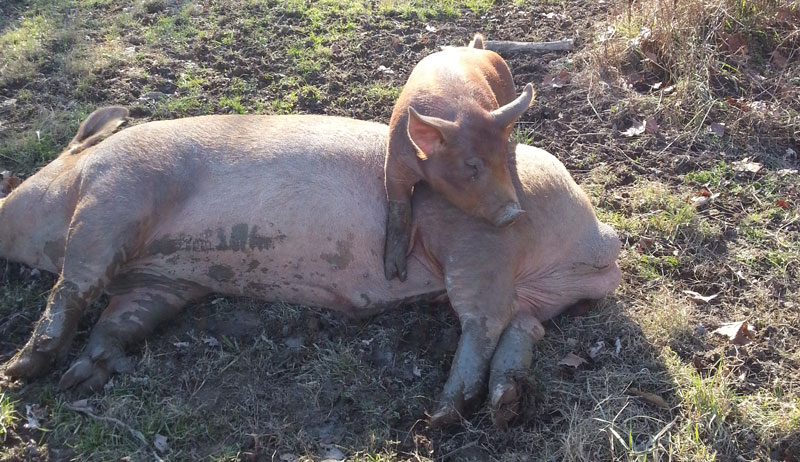
We love Tamworth pigs for their social personality and intelligence, not to mention all the bacon. The meat is outstanding! They also love belly rubs and are active and love to explore.

Shawna Fyffe, Sarah’s Pas­tured Pigs, Chillicothe, Ohio 

tamworth pigs
Shawna Fyffe

Read more: Interested in pasturing some hogs of your own? Here are the when, wheres and hows of pasturing pigs!


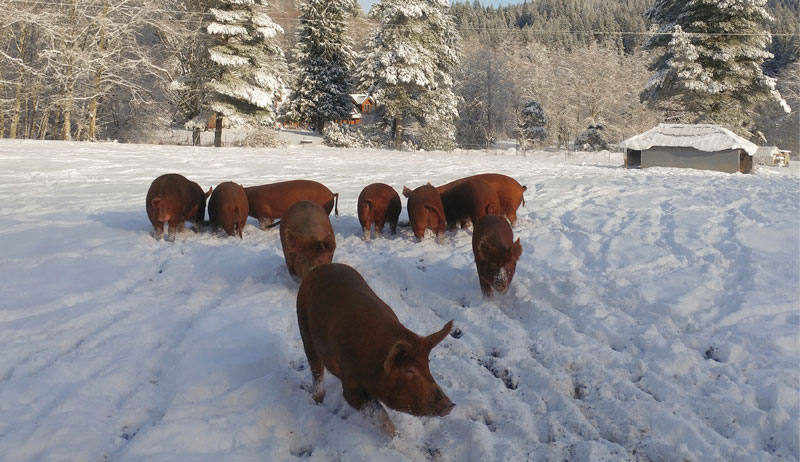
What I love about Tamworth pigs is their intelligence and active nature, good mothering and terrific pork. Traditionally a bacon breed, they are long bodied and have a good distribution of lean with fat. And, of course, with their beautiful red hair, they look amazing grazing on a green pasture or contrast against snow. They are able to withstand four seasons of weather with a hardy constitution. 

Hillary Gallino, Powder Creek Ranch, Beaver, Oregon

This article originally appeared in the March/April 2022 issue of Hobby Farms magazineEmail us your thoughts (~250 words) and a photo of you and your livestock to hobbyfarms@hobbyfarms.com (subject line: I Love My Livestock!). We’ll publish our favorites in upcoming issues. 

Categories
Animals Farm & Garden Large Animals

Slaughter Pigs At Any Age Or Stage To Manage Herd Size & Harvest Meat

Pigs are just naturally suited to good farming.  Really, human landscape management for food and fertility almost requires that pigs be a part of the picture.  Their omnivorous appetite—they’ll eat anything we humans will eat, and they’ll also eat the all parts we won’t eat—is one of the best reasons, of course. 

But pig reproduction and growth habits play a big role in making them invaluable partners in almost any human food system.

Three, Three, Three (at 3 A.M.)

Look at how they reproduce! First, the animals have a short gestation period. Pig farmers like to say ‘Three months, three weeks, three days … and three o’clock in the morning.’

As such, a sow could deliver as many as three litters a year. 

While such a rate of breeding may place too much stress on a sow’s physiology, a healthy mother pig can easily birth two litters every 12 months.  And each litter can number a dozen or more piglets!  At that rate, a farmer can  raise just as much pork as he can hustle feed for. 


Read more: Interested in raising spring piglets? Here’s how you can find some.


All About the Food

Which means that, often, your pig food supply is the most significant limiting factor to how many pigs you can raise on your homestead.  What you feed your pigs (and where it comes from) will determine how many pigs you can raise to adult slaughter size. 

Purchased, grain-based feeds cost money, of course. But—so far, anyway‚they are always there when you need them. With a bought-feed diet, you can raise out as many piglets as you have room for.

But with a farm-raised pig diet, or for folks who are trying to minimize the money they spend on feed, there are limits to how much pig food is available at any given time.  This is when it can be a big help to know that pigs can be slaughtered at almost any size.

Slaughter at Any Stage

Each stage in a pig’s development is the basis of some of the world’s best cuisine.

Sucking Pig

Roast sucking pig, for example, has been a luxury dish for centuries in cultures from Europe to Polynesia.  When a mother pig begins to wean her family (thus placing the burden of continuing to feed them on the farmer or homesteader) it may be time to reduce numbers by having a party and roasting a pig. 

Anywhere from 10 to 50 pounds can be a traditional roast sucking pig. 

Any Size, Really

And actually, you can roast a whole animal of any size – you’re limited only by the volume of your oven.  Or build an oven in the yard, out of cinder blocks, and then the sky’s the limit.  The important thing is that slaughtering one or more piglets now can shift the balance of feed-to-pig towards more abundance – and put meat in the freezer immediately.


Read more: Learn on-farm pig butchering to start processing your own pork!


Porker (Half-Grown)

Then there’s the porker, the half-grown pig of around 80 to 150 pounds, slaughtered for use as fresh (not salted/cured) meat. 

Think of the tenderest, juiciest pork chop you can imagine, or the most luscious pork roast. Who could think it a waste to slaughter a half-grown pig when it tastes this good? And reducing the number of pigs on the farm at this point means going forward with a smaller feed bill while you raise larger pigs.

Meat as Herd Management

And with so many piglets in a litter, maybe you want to consider offering your specialty meats to some select neighbors. You no doubt know folks whose concern for whole, fresh, delicious and local food is like your own. 

Demands from the pig pen can get excessive. Remember that fresh young pork can bring a premium price, turning a potential liability into an asset

So by now we’ve raised our litter of piglets for several months. At each stage of the process we’ve been able to harvest meat for our daily meals and for our celebrations.  Reducing the number of pigs we raise has kept the feed bills (or the demands on the garden, pasture or root cellar) from exceeding what the farm can carry. 

Now just a few hogs populate the pasture or pig pen, fattening out for bacon, lard and holiday hams, pork loin, roasts and sausage.  Truly, the pig is the crown of homestead meats, at whatever age we slaughter.

And we’d better eat up! Because at the rate our sow produces piglets, there are always more coming.

Categories
Crops & Gardening Farm & Garden Homesteading Permaculture

Grow Cover Crops For In-Situ Mulch

Cover crops are used for fertility, soil protection, and to outcompete weeds. They can also be grown in place as mulch. This in-situ mulch replaces imported mulches to help crop growth by suppressing weeds, retaining moisture, regulating soil heating and more.

Techniques can include:

  1. flail mowing to chop and leave mulch on the bed top surface
  2. roller/crimping to create an un-chopped unidirectional mulch

Both approaches, however, must be considered wisely.

Broadcast Seeding into In-situ Mulch

Flail mowing creates an open-mulch, which can allow aggressive weeds to penetrate. However, pre-weeding with tarp culture and then broadcasting can yield high-density well-mulched crops. The open-mulch helps seed germinate and protects crop development.

However, if crop establishment is low and weed pressure is high, this can be disastrous! Proper pre-weeding and broadcasting is important. Mixing seed with sand helps ensure even broadcasting.

Roller Crimper Method

Crimping cover crop breaks the vascular system, killing the plant. And rolling lays it in a unidirectional mat. Proper timing (seed milk-stage) is important to ensure your cover crop (rye, for example) doesn’t keep growing after rolling.

Pre-weeding is still important to remove aggressive weeds. But crimping produces a closed-mulch that is much more weed-proof. This is best for transplanted crops that can easily be planted into mulch.


Read more: Organic no-till growing is good for you and you land.


Cover Crops for Mulch

Rye and vetch are classic cover crops used for in-situ mulch. These are popular for both rolling crimping and the flail mowing method.

Rye actually has a weed-seed-suppressing effect by releasing chemicals into the soil!

Vetch is a legume and adds nitrogen to help your crops grow. Other popular options include oats, annual rye, peas and clovers. Clover are a biannual and need to be killed by tarp culture for best results.

Crops can also be used for in-situ mulch. This is called “crop cover cropping.” In fact, it is really efficient because you have already established a vegetable crop. You just leave it to become a cover crop.

Then you can simply proceed with any of the recommended methods for turning it into an in-situ mulch.


Read more: What exactly is a cover crop? Turns out you have some options.


Combining Methods

Sometimes we want the best of both worlds. You may want to grow a crop cover crop and under sow it to rye, which you allow to become a very dense cover crop for in-situ mulch. You may also want to use different techniques for turning the crop into the mulch.

How about rolling and crimping it? Or flail mowing it, then using the zipper bed technique, pulling two pieces of weed barrier to meet in the middle of the bed and plant a row of melons? In this example, the melons would have great access to nutrients and organic matter from the cover crop.

They would also gain weed protection from the weed barrier. And where the zipper meets, they would have a mulch to keep weeds out too. This way, you are less at risk of mis-managing pre-weeding techniques.

Categories
Farm & Garden Food Homesteading Urban Farming

5 Supplies You’ll Need To Water Bath Can  

After four months of below average temperatures here in Minnesota, it finally feels like spring. It’s the time of year when I start thinking about fresh berries and jam making. The rhubarb in my garden will be ready for harvest in a couple of weeks, and at that point I’ll make my first batch of strawberry rhubarb jam for the season. 

Water bath canning is the method of preservation used to preserve acidic preserves, such as fruit preserves and pickles.  

For those curious about how to water bath can, I’ve created a short list of the basic supplies needed for canning at home.  

Large Pot with Rack & Lid

water bath canning supplies
Rodney Wilson

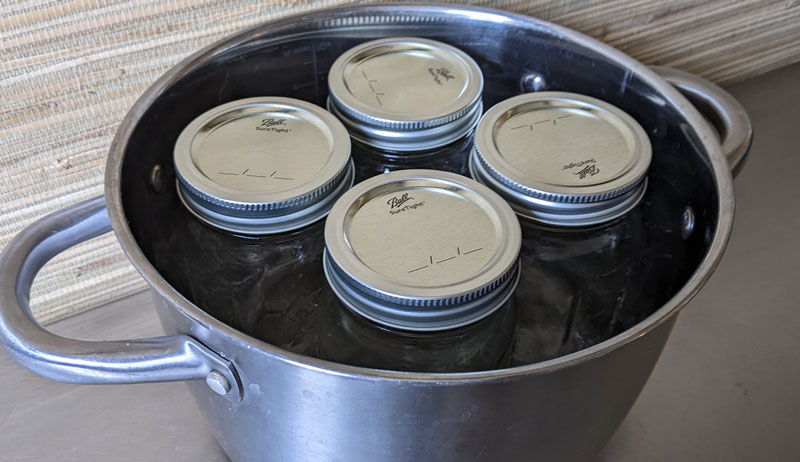
The pot must have sides tall enough to cover the filled jars by at least one inch of water. If canning just one or two jars, you can use this pot. Otherwise, a standard canning pot that is sold at big box stores which typically comes with a rack, looks like this.

A rack is important because it keeps the jars off the bottom of the pot and allows water to circulate around the entire jar. I have this one 


Read more: Some produce products require pressure canning. Here’s what you need to know.


Funnel

A funnel helps when you water bath can to fill the jars without spilling much onto the sealing rim of the jars. 

water bath canning supplies
Rodney Wilson

Ladle

A ladle, preferably one with a pour spout, makes for even less mess when filling jars with sticky fruit preserves or pickling brine when you water bath can. 

Jar Lifter/Tongs

water bath canning supplies
Rodney Wilson

These are tongs made specifically for canning. They have a rubber or silicone coating over part to keep jars from slipping as you maneuver them in and out of the hot pot.

You will use the jar lifter tongs to clasp the jar with when placing jars into the hot canning pot and when lifting them out after the boiling water bath process is complete. 


Read more: Curious about canning meat? Here are some basic rules.


Canning Jars with Lids & Rings

canning jars lids
iStock/Thinkstock

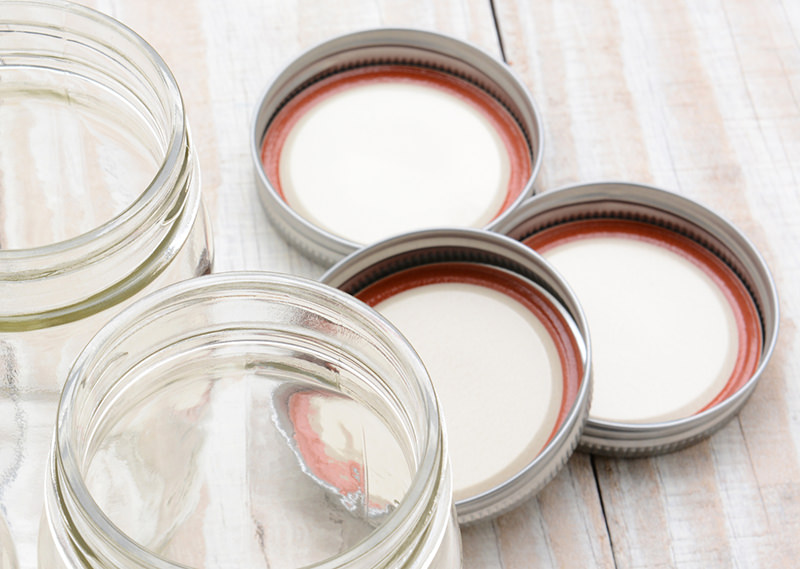
You’ll use standard canning jars made for home canning, such as Ball or Kerr brand jars. The National Center for Home Food Preservation recommends using brand new canning lids each time you water bath can, however the jar rings can be safely reused.  

For more information and recipes on how to water bath can step-by-step, check out Stephanie Thurow’s cookbooks. 

Categories
Animals Farm & Garden Poultry Urban Farm

Cuddly Chicks & Marshy The Duck Populate The Clucking Sisters Farm

“When I was 5, I remember the exact day I picked up a chicken and cuddled with the fluffiest hen at the San Francisco Zoo,” says Dominique Leal of the Clucking Sisters as she recalls how her love of all things chickens began. “For some reason ever since I’ve wanted my own flock!”

Leal’s poultry dreams now manifest themselves as a vibrant backyard farm in California that serves as the home to over 20 chickens, plus a duck named Marshy. It’s a development she shares to the world under the Clucking Sisters Instagram account.

Taking a moment out from chick duties, we spoke to Leal about developing her flock and why some chickens seem to think that they are really dogs in disguise. We also placed the spotlight on her resident duck.

Starting the Flock

It turns out that Leal’s mother used to raise chickens in San Francisco long before she, herself, was born.

“That’s probably why I always wanted to have my own chickens one day,” she says. “When the opportunity arose and some of my family moved out of San Francisco in 2019, we went to Tractor Supply Company and got a starter flock! We’ve been adding on to the flock ever since.”

Are Chickens Dogs in Disguise?

Leal says that since cultivating her flock, she’s learned that chickens tend to have unique personalities and behavioral quirks.

“Some of the original flock is potty-trained as well and are part-time indoor,” she explains. “Some I think actually think they are dogs and try to eat and drink out of our small dog bowls.

“They often come over for hugs and love to cuddle, especially when someone is sad. It’s as if they can sense it and will come over to you.”


Read more: Therapy chickens? Yep—poultry bring a lot of calm to the coop and the home.


Getting to Know the Flock

When it comes to the stars of the flock, Leal mentions Little Oreo has one of the strongest personalities. “She is mean as vinegar and will karate chop the bigger girls, even weighing in at one pound,” Leal says. “She definitely can hold her own.”

Elsewhere in the ranks, Gigi is described as “very delicate when she walks and is a little on the ditzy side,” while a couple of Buff Orpington twins named Biscuit and Bunny are prime mischief instigators.

“Those two get into the most trouble by teaming up to steal food and to break into the garden beds,” Leal says. “Our lead rooster Fritz is usually on the lookout when they are doing something naughty. He will cock-a-doodle if they are about to get busted in order to warn them in time to make a getaway.”

Champion Egg-Laying Streaks

When it comes to egg-laying consistency, Leal says that Fifi and her daughter Princess claim the longest continuous streak for The Clucking Sisters.

“Both of them have almost gone a whole year laying, even laying while being broody,” she says. “The only break they each took was between two-to-three weeks due to a molt!”


Read more: When chickens molt, the feathers start flying!


Enter Marshy the Duck

At Leal’s farm, the charismatic Marshy the duck compliments the chickens.

“He actually shares the flock leadership roles with our head rooster,” she explains. “They take turns throughout the day for naps and being on the lookout for hawks and eagles.”

On a less harmonious note, Leal’s cats are sometimes prone to head-bopping some of the chicks after a session rolling around in the catnip beds. “The girls are extremely dramatic about it and will cackle very loudly.”

Follow The Clucking Sisters at Instagram.