How to save money on farm boots is important when you’ve got multiple tasks to complete, like mucking stalls or digging potatoes, that each require the right types of farm boots. Having what you need can keep you safe, dry and efficient—whatever the day’s tasks throw at you. Mud and wet terrain create unsafe conditions without proper traction, and a pair of rubber-coated, waterproof boots that can be hosed off quickly can mean the difference between getting back to work fast or losing half a day waiting for boots to dry.
A good mud boot shouldn’t be too light to protect against penetration hazards like nails or broken glass, but it also shouldn’t be so bulky that it traps excess mud and weight on the soles. Look for boots that reach high enough on the leg to prevent leaks when walking through deep mud, bedding, or wet fields.
Most farmers own two to three pairs of task-specific shoes in addition to their mud boots. These can include a quality pair of steel-toed boots for working around construction materials, as well as riding boots for those who depend on horses to keep their farms operational. Other types of dedicated footwear include snow shoes, protective gardening clogs and hiking boots. Your foot wardrobe will depend largely on the terrain and climate of your area, as well as your farm’s outputs.
Some jobs even require a second pair of the same style. Angela England, author of BackyardFarming on an Acre (More or Less) (Penguin Group, 2012), keeps an extra pair of mud boots just for working with chemicals or quarantining new livestock. In snowy climates, having a second pair of snow boots stored in the car can be a winter lifesaver.
So, how can today’s small-scale farmer afford so many boots? Start by using these five smart, budget-friendly tips:
1. Look for Boots with Warranties & Guarantees
Choose farm boot brands that offer a money-back guarantee or a generous manufacturer’s warranty. Premium brands tend to offer protection against premature aging, wear and flaws in the materials, and might offer a refund or replacement if they don’t meet expectations.
2. Skip the Fancy Patterns. Go for Performance
While colorful boots may look good in the store, seasoned farmers skip the cost of a pretty-patterned pair in lieu of trusted, plain, high-performance farm boots brands that perform for decades.
3. Buy Off-Season and Ask About Sale Schedules
Want to save 30% or more? Buy farm boots off-season to save on shoes aimed at a particular climate, like those made for winter or rainy weather. Ask your local farm-supply store when they put their boots on sale. Many offer clearance sales at predictable times.
4. Always Try Boots On Before You Buy
Fit matters. Specialty footwear, such as steel-toed or insulated boots, can fit wide or narrow compared to fashion footwear. Try on boots in-store to ensure proper fit. Don’t assume that you’ll wear the same size even in the same brand.
5. Extend the Life of Your Boots With Care
Get more value from your farm boots by maintaining them well. Use waterproofing sprays, swap worn laces for high-quality replacements, and dry boots properly using racks or boot dryers. Just be sure any modifications won’t void the warranty. Don’t, however, do anything that will void your warranty!
How to Save Money on Farm Boots: Final Thoughts
Investing in the right farm boots doesn’t have to drain your wallet. With a little planning, smart shopping, and proper care, you can build a boot collection that keeps you safe, comfortable, and ready for any job the farm throws your way—without overspending.
This article about how to save money on farm boots was written for Hobby Farms and Chickens magazines. Click here to subscribe.
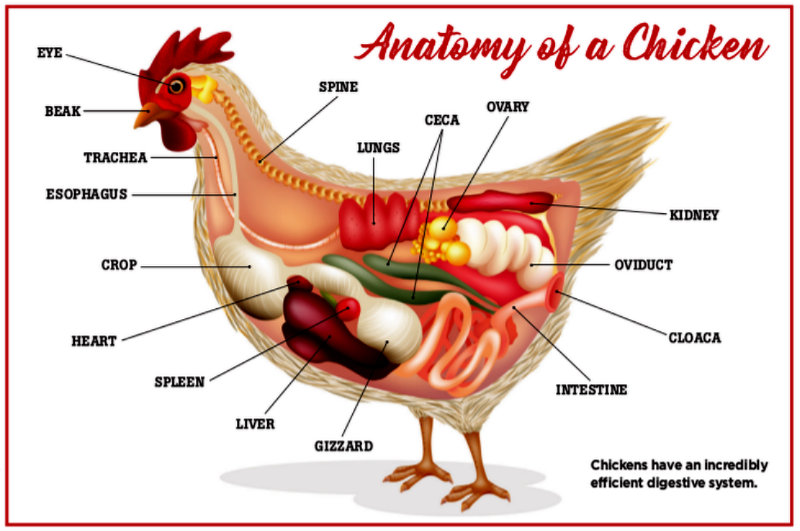
How a chicken’s body works is more than just identifying chicken anatomy on a diagram. It’s about understanding how each system functions—and how chicken owners can support those systems to keep their birds healthy, productive, and thriving. From vision to digestion, circulation to reproduction, learning how a chicken’s body works will help you better care for your flock from the inside out.
Vision: How a Chicken’s Eyes Work to Detect Danger and Food
A chicken’s vision is fascinating. Did you know that the left eye on a chicken functions differently from the right eye? It’s true. While a graph on the anatomy of a chicken doesn’t show this unique trait, the left eye and right eye have different purposes.
Chickens use their left eyes for spotting far-off predators, such as a hawk in the sky, while their right eye allows chickens to see things clearly that are up close.
This is how your flock can be foraging for tasty bugs in the garden, while still keeping an eye on the sky and land for potential predators.
Chicken Care Tip:
Just like humans, chickens need vitamin A to support healthy vision. Supplementing your flock’s diet with broccoli, carrots, cantaloupe, cilantro, dark leafy greens, parsley and sweet potatoes will help to boost vitamin A levels and maintain healthy vision.
Beak: How a Chicken’s Beak Functions Beyond Eating
The beak is often thought of as simply “the mouth” on a chicken. Chickens do use their beaks to feed themselves, but that is not it’s only function.
Chickens also use their beaks to insert their place in the pecking order, investigate the world around them, and preen and oil their feathers from the gland located at the base of the tail.
Chicken Care Tip:
Chicken beaks to be in good working order to survive. Too short or too long can make it challenging for our flocks to go about their daily lives.
To help keep your flock’s beaks in tip-top condition, never debeak your flock. Check your flock’s beaks regularly to ensure they are not becoming overgrown. If beaks are overgrown, take them to a qualified veterinarian for a beak trim.
Circulatory & Immune System: How a Chicken’s Heart and Spleen Keep It Alive and Well
The heart and spleen are part of the circulatory system. The circulatory system moves oxygen and blood throughout the body.
Like mammals, chickens have a four-chambered heart. These chambers receive and send blood through the body and back again to the heart. When compared in size, chickens have a much larger heart than humans, due to their higher metabolism.
The spleen also plays a large role in the immune system as well as the circulatory system. The spleen helps to filter blood and fight off diseases. In a chicken, the spleen also does the work of the lymph nodes.
Chicken Care Tip:
To best protect the circulatory and immune system, feed chickens a healthy diet, complete with supplemented prebiotics and probiotics. Do not allow chickens to become overweight. Avoiding stress factors in the flock is another way to keep both the spleen and heart in optimal conditions.
Shutterstock
Respiratory System: How a Chicken’s Lungs and Trachea Work Together
Just like humans, chicken lungs are what make it possible to breathe air in and out, but what the anatomy of a chicken graph doesn’t show is how complex a chicken’s respiratory system is.
Chicken lungs work differently than human lungs, as chickens’ are attached directly to the rib cage without a diaphragm.
Chickens’ lungs are relatively small and work in conjunction with the bird’s air sacs. These sacs act like bellows to help move air in and out of the lungs.
The trachea may seem like a little part of the respiratory system, but it is an important part of the respiratory system, aiding airflow to the lungs.
The trachea helps to move air and gases in and out of the respiratory system, and even helps to regulate body temperatures by removing excessive heat when a chicken exhales.
This vital part of the respiratory system is what helps with our flock’s vocalization.
Chicken Care Tip:
Chickens have a delicate respiratory system and lungs, so care should be taken to promote good husbandry skills to prevent respiratory problems.
House chickens in a well-ventilated coop or barn to promote good respiratory health, and frequently clean the coop to keep dirt and dust at bay.
Supplementing your flock’s diet with respiratory boosting herbs such as basil, lavender, rosemary, and sage is another good way to keep your flock’s lungs in tiptop condition.
Digestive System: How a Chicken’s Digestive System Processes Food
The digestive system is comprised of seven unique parts, and is one of the most complex systems when studying the anatomy of a chicken. This system is where seventy percent of a chicken’s immune system is located and enables your chickens’ bodies to digest food and ward off disease at the same time.
The Esophagus and How it Works:
The esophagus is the long tube that runs down the neck into the crop and then into the stomach. It is here where the digestion starts to take place. The muscles located in the esophagus walls help to break down the food before it enters the crop.
The Crop and How it Works
The crop is the holding sack at the base of the esophagus, located directly in front of the breast, and is easy to spot on a diagram of the anatomy of a chicken.
The crop has earned its popularity due to its notorious health concerns, such as crop impaction and sour crop. Crop problems are usually caused by a secondary issue, so let’s take a look at how the crop works to learn more.
The crop holds whatever a chicken has consumed, slowly releasing the feed bit by bit into the next area of the digestive tract called the proventriculus.
Feed is never digested in the crop, but if there is a blockage in the crop or further down the digestive tract such as a reproductive tumor, enlarged liver, or a foreign body (material that isn’t safe for chickens to consume, i.e. long grasses, string, twine, screws, ect.), the crop will back up and refuse to empty.
Proventriculus and How it Works
Translated from Latin as “before the cavity,” the proventriculus is known as a chicken’s true stomach. The proventriculus is oblong and connects the crop and the gizzard.
The proventriculus is where digestive enzymes and hydrochloric acids are secreted and mixed with the bird’s food to begin breaking it down. From here, the food travels to the ventriculus, also called the gizzard.
The Gizzard and How It Works
The gizzard is the muscular part of a bird’s stomach, which crushes the food to aid in digestion. Since chickens don’t have teeth to chew their food, they rely on the gizzard to crush feed for their bodies to absorb nutrients.
Offering grit to your flock free choice in the form of commercial grit or coarse dirt is essential to helping the gizzard function properly.
The Ceca and How They Work
The ceca are two blind pouches where the large and small intestines meet. The ceca help to absorb water, break down fibrous material, and produce B vitamins to aid in the fermentation process.
Large and Small Intestines and How They Work
The intestines work to digest food and eliminate waste, and are a critical part of the chicken’s digestive system.
The small intestine is used to digest food, adds enzymes to aid in digestion, and is where most of the nutrients are absorbed into the bloodstream.
The large intestine absorbs remaining water from the feed. This process helps to solidify the waste before excretion. Any waste is then stored in the large intestine until it passes through the cloaca.
Chicken Digestive System Care Tip
Proper nutrition is the best way to keep the digestive system running smoothly and your flock’s immune system strong.
Avoid feeding harmful treats such as baked goods, breads, pasta, and tomatoes, as these treats can cause potential digestive upsets.
Supplementing your flock’s diet with fennel seeds, fresh herbs, probiotics, and prebiotics will help to keep the digestive system in working condition.
Shutterstock
Legs & Bone Health: How a Chicken’s Hocks and Shanks Support Its Whole Body
The hock is the leg joint located at the base of a bird’s thigh. Its placement in the middle of the “leg” and the way it bends when chickens walk readily draws comparisons to our knees. However, the hock is most like an ankle, connecting the bird’s thigh to its shank. What we consider the leg to be is actually the foot.
The anatomy of a chicken contains a lot of cool facts about how our chickens’ bodies work, including how body parts work together. Hocks and shanks are a good example of showcasing how the chicken’s body works, as they have a direct impact on eggshell quality.
When you think of how an egg is formed through the reproductive tract, it would appear like a hen’s feet have nothing to do with the quality of an egg shell. However, a hen draws calcium from her legs, feet, and other bones from her body to provide calcium to form an egg shell.
Chicken Care Tip
Laying hens often suffer from a lack of calcium in their diet. Not only does this deficiency create weak eggshells, but it can also cause broken leg bones.
Supplement your flock’s diet with free-choice oyster shell at all times to be sure your flock is receiving enough calcium to keep both egg shells, hocks, and shanks strong.
Reproductive System: How a Chicken’s Body Forms and Lays Eggs
If you’re raising chickens for eggs, the most important parts of a chicken make up the reproductive system. Chickens have two parts to their reproductive system, called the ovary and the oviduct.
When a hen hatches, the right ovary stops developing, while the left ovary continues to develop until the hen has reached the point of lay.
The oviduct and left ovary work together to form eggs. The eggs start off in the ovary, where the yolk is developed, and then are released into the oviduct.
The oviduct is a long, tube-like organ that the yolk must pass through, and is where the yolk is fertilized and the rest of the egg is formed. Finally, the egg passes through the cloaca as it is laid.
Chicken Care Tip
Since chickens are bred to lay an abundance of eggs, their reproductive tract is constantly working. This constant wear and tear of egg laying can be hard on a hen’s reproductive tract, causing inflammation and reproductive tumors.
Allowing your chickens to rest over winter, by eliminating artificial light and giving your hens’ reproductive tract a break, will help to reduce reproductive diseases in the flock.
Shuttersock
Fluff and Cloaca: How a Chicken’s Fluffy Butt and Cloaca Function Together
Chicken fluff may be one of the best parts of a chicken anatomy lesson, as most flock owners love their hens’ fluffy butts. Fluff is those soft, fleecy feathers on your bird’s bottom. After all, not all scientific terms have to be complicated!
Chicken fluff covers the entire backside of a chicken’s bottom end. These small, fluffy feathers help protect against flystrike and work to regulate body temperature.
The cloaca is located at the end of a chicken’s digestive, urinary, and reproductive tracts, leading to the shared external opening known as the vent.
The cloaca chamber shifts and folds depending on what bodily function needs access to the vent. When a chicken defecates, the cloaca folds back, sealing the oviduct. At egg-laying time, the cloaca covers the excretory exit to keep feces and uric acid from contaminating the egg.
When chickens mate, the rooster’s cloaca comes into contact with that of the hen. This is called a “cloacal kiss.”
Paying attention to your flock’s fluffy butts and cloacae is a good idea if you’re concerned that your flock is suffering from vent gleet (a condition where a chicken’s cloaca becomes inflamed, causing diarrhea, messy feathers, and a foul odor).
Chicken Care Tip
Vent gleet is usually easy to treat and prevent with a few dietary changes. If you notice a flock member frequently has messy feathers, chances are she is suffering from this condition.
To prevent and treat vent gleet, keep treats to a maximum of ten percent of your flock’s diet. Adding probiotics and apple cider vinegar to your flock’s drinking water is an excellent way of preventing and combating this condition.
Knowing the anatomy of a chicken can go a long way in helping our flocks live healthy lives, produce an abundance of eggs, and live longer.
Final Thoughts: How a Chicken’s Body Works to Stay Healthy
Understanding how a chicken’s body works—from the eyes and beak to the lungs, digestive system, and reproductive tract—gives flock owners a powerful advantage. When you know how each system functions and supports the others, you can spot issues early, provide better nutrition, and create a healthier environment. Whether you’re raising chickens for eggs, companionship, or both, learning how a chicken’s body works is one of the best ways to keep your flock thriving for years to come.
This article about how a chicken’s body works was written for Hobby Farms and Chickens magazines. Click here to subscribe.
Types of chicken feathers are an important part of chicken anatomy and include an astonishing range of colors and patterns, which help to make each breed recognizable. Below is an excerpt from The Illustrated Guide to Chickens reviewing the common types of feathers found in a backyard flock.
The Illustrated Guide to Chickens Excerpt…
Plumage plays an important role, protecting the chicken from rain, cold and sun, and a chicken must spend a considerable part of its time maintaining it. This is done by preening. Each feather has an axis or shaft, on to either side of which vanes are fixed. Each vane has barbs on either side, which cling together but need to be “combed” by the chicken, who also applies oil from a gland at the base of its tail.
A cockerel can be distinguished from a hen by the fact that some of its feathers take on a different shape. Its hackle and saddle feathers are thinner and longer than a hen’s, and it also develops sickles, which are the spectacular curved feathers on either side of the tail.
Some breeds have much fluffier feathers than others, and game breeds have very tight feathering that often leaves a strip of bare skin down the breast. There may be feathering on the legs, and some breeds sport beards, muffs and crests.
Every year, hens molt, generally at the beginning of fall, and replace their old feathers with new. As feathers are largely made up of protein, this takes a good deal of the hens’ energy, and it’s important to give them plenty of replacement protein in the form of good-quality layers’ ration at this time.
A hen will stop laying until her molt is complete, which could take anywhere between six and 12 weeks. If the days are growing shorter, she may not start laying again until they start to lengthen after the winter solstice.
Types of Chicken Feathers by Pattern
Barring: Two distinct colors appear in bars across the feather; they may be regular or irregular and the width can vary.
Celia Lewis
Lacing: Appears as a border of a different color right around the edge of the feather; it may be broad or narrow.
Celia Lewis
Double Lacing: Same as lacing, but this has a second loop inside.
Celia Lewis
Frizzled: Each feather is curled, causing the bird to look distinctly unkempt.
Celia Lewis
Mottled: This is being spotted in a different color in a random fashion.
Celia Lewis
Spangling: There is a distinct contrasting color at the end of the feather.
Celia Lewis
Splash: This appears as drop-shaped marks of a contrasting color randomly.
Celia Lewis
Penciling: This is the tricky one, as it goes more or less with the breed. Mostly it can look like a kind of barring, but it can also be fine lacing. Hamburg hens have stripes, and the dark Brahma has concentric lines around the feathers similar to lacing; both are known as penciling.
Celia Lewis
Peppered: Feathers look as if someone has ground pepper onto them, the specks being a darker color.
Celia Lewis
Types of Chicken Feathers: Parts of a Wing
Celia Lewis
Chicken Feather Color Variations
Celia Lewis
Birchen: hackle, back saddle and shoulders white; neck hackles narrow black striping; breast black with silver lacing
Black: male and female uniformly black with green sheen
Black mottled: male and female black ground with white v-shaped tips on random feathers
Black red: red hackles and black body and tail
Blue: male and female uniformly slaty blue; head and neck may be darker; lacing, if present, darker
Buff: male and female uniformly buff
Chamois: male and female uniformly buff with paler lacing
Columbian: male and female body mainly white; neck and tail black with some white lacing
Crele: male hackles, back and saddle barred orange on pale ground; body barred gray and white. Female hackles barred grayish brown on pale ground; breast salmon; body as male
Cuckoo: male and female dark gray to black indistinct barring on white ground. Female can be darker than male.
Exchequer: male and female black and white randomly over body in blobs
Gold barred: golden ground with distinct black barring
Gold spangled: male and female hackle golden red with dark vane; body gold ground with black spangles; tail black
Jubilee: male head, neck, body, legs and tail white; back and wings white with dark red markings. Female head and neck white; rest of body dark red with single or double lacing.
Lavender: male and female uniform slaty gray throughout
Mahogany: male and female rich mahogany brown throughout
Mille fleur: male and female orange ground with black spangles with white highlights
Partridge: male hackle, back and saddle greenish black with red lacing; breast and body black. Female reddish lacing on black ground.
Pile: male head golden, hackle and saddle lighter; back red; front of neck white; wings mainly white. Female hackle white with gold lacing; neck and body white with salmon breast.
Porcelain: similar to Mille fleur but bright beige ground
Quail: complicated coloring giving impression that upper parts are dark and lower light; gold lacing and shafts
Red: male and female bright red throughout
Silver barred: male and female white to pale gray ground with bright black barring
Silver cuckoo: male and female white to pale gray ground with dark gray to black indistinct broad barring.
Silver duckwing: male silver hackles and back; breast and body black; tail black with silver edging. Female silvery gray with salmon breast; tail and wings black with gray edging
Silver spangled: male and female gray ground with black spangles
Speckled: in Speckled Sussex, male and female mahogany ground with white tips and black/green intermediate strip
Splash: male and female white ground with irregular slaty blue blobs, gray in places
Wheaten: male gold hackles, rich brown body and dark green tail; female shades of wheat from golden to chestnut with black tips.
White: male and female uniformly white throughout
Reprinted with permission from The Illustrated Guide to Chickens (Skyhorse Publishing) by Celia Lewis. Copyright 2011 text and illustrations by Celia Lewis.
This story about types of chicken feathers originally appeared in the March/April 2018 issue of Chickens magazine. Click here to subscribe.
How do plants get nitrogen? It’s one of the most important nutrients your plants need whether you’re grow bag gardening, growing from raised beds or in a traditional garden. Plants need nitrogen for their photosynthesis process, to make amino acids, and for the nuts-and-bolts of being alive and growing. While gardeners often add nitrogen-rich fertilizers to boost growth, plants also access this essential element through natural processes and even with a little help from microbes and lightning. Understanding how nitrogen reaches your plants can help you make smarter, more sustainable choices for your garden.
Why Plants Can’t Use Atmospheric Nitrogen
Here’s something interesting. 78% of our atmosphere is nitrogen. Why don’t the plants just put that to use? They already take carbon from the air to build their structures, and carbon dioxide represents just a tiny 0.04% of Earth’s atmosphere. So, when plants need nitrogen, and there is a whopping 78% of the atmosphere in nitrogen right there up for grabs, why don’t they use it? Why do gardeners and farmers sometimes need to supplement nitrogen?
The answer lies in a bit of simple chemistry. Nitrogen, if you recall from the periodic table, is an element, consisting of a single nitrogen atom, signified by the letter N. But the nitrogen in our atmosphere isn’t formed from single, independent nitrogen atoms. It’s a pair of nitrogen atoms joined together—written N2. Nitrogen atoms are highly reactive and snap together in a way reminiscent of two magnets. It takes a good deal of energy to break them apart again. But plants can’t put N2 to use—it’s just not a form they can utilize or have the ability to break apart.
How Synthetic Nitrogen Fertilizers Are Made
To help solve this problem, farmers and gardeners often use human-manufactured forms of nitrogen. In this case, we take N2 from the air—which is abundant—and use hydrogen (usually from natural gas) and pressure to facilitate a series of chemical reactions designed to break apart the bond of N2. The result is typically some sort of ammonia or similar compound, which can be easily applied to crops. In fact, 2% of all the world’s energy goes towards the industrial process of converting N2 into other plant-friendly forms.
Natural Ways Plants Get Nitrogen
But obviously, plants were growing just fine for millennia before the Green Revolution. Where did their nitrogen come from before that? In nature, a surprising alliance of lightning, bacteria, and other microbes performs this work. First, high-energy lightning activity in the atmosphere combines nitrogen with oxygen to form nitrates, which enter the ground with rain. Some microbes in the soil, in a symbiotic relationship with a plant’s roots, convert the nitrates into plant-friendly ammonia compounds, ready for the plant to absorb and utilize.
Nitrogen-Fixing Plants That Enrich Soil
Legumes—beans, peas, peanuts, alfalfa, clover, and others—actually restore nitrogen to the soil thanks to that same symbiotic relationship with soil microbes. Amending soil this way is called nitrogen fixing. Rotating crops is a nice natural way to increase soil nitrogen—you can plant a legume for a year, then something else, then return to the legume.
Final Thoughts: Feeding Plants the Right Way
Understanding how plants get nitrogen helps gardeners make informed decisions about soil health and plant nutrition. Whether you rely on organic methods like planting legumes or supplement with store-bought fertilizers, knowing where nitrogen comes from and how plants use it can lead to healthier, more productive gardens. With a bit of science and strategy, you can keep your soil healthy and your plants thriving.
This story about how plants get nitrogen was written for Hobby Farms magazine. Click here to subscribe.
Chicken anatomy is a fun and informative way to learn about your chicken’s body, how it works and what physical characteristics set roosters and hens apart from each other.
Understanding the Chicken Face: Key Features Explained
One of the first things you notice on a chicken is its face. With their hawk-like eyes and red, fleshy combs, a chicken’s face attracts a lot of attention, and can tell you a lot about each individual.
Chicken Combs: Types, Functions, and Breed Differences
The comb is the fleshy crown on the top of a chicken’s head. No two combs are alike, helping to give each chicken a distinctive look. Combs vary in shape, depending on breed, with the most common varieties being single, rose, and pea.
Comb color also varies depending on the breed; however, most breeds sport a waxy, bright red comb.
The comb features two other body parts on the chicken anatomy chart: the base and point.
The backside of the comb is called the base or blade. The base is not directly attached to the head and will often flop over on breeds with large, single combs. The base is featured on several comb varieties, including single and rose combs.
Points only appear on single comb varieties, giving this comb style the look of a hair comb.
What Are Wattles in Chicken Anatomy?
Wattles are the red, fleshy objects that dangle from a chicken’s chin. They may not be a crucial part of a chicken’s anatomy for humans, but they are quite useful for chickens.
Wattles help to keep chickens cool during the summer months. And large wattles are also helpful for roosters when attracting a mate.
Chicken Ears and Eyes: How They See and Hear the World
An interesting thing about chicken anatomy that you may already know is that the ear and the earlobe on a chicken are not the same thing.
The ear is a small opening covered with tiny feathers directly in front of the earlobe. The ear isn’t usually visible to the human eye, but if you’re lucky, you may be able to catch a glimpse of it.
The fleshy skin located on the side of the chicken’s face directly behind the ear is called the earlobe. While it may look ornamental, the earlobe’s job is to help protect the ear canal and keep temperatures regulated within the inner ear.
A chicken’s eyes are set on either side of its head, allowing them to see in every direction at once and keep a lookout for danger. Looking at a chicken’s eyes is a good gauge to tell if the individual is healthy, as a healthy chicken’s eyes should appear bright and alert.
Chicken Beaks and Nostrils: Function and Structure
Beaks are the chicken’s answer to a mouth and is where food enters the body and begins the digestive process. An interesting fact about beaks is that chickens not only use their beaks for their mouths, but they also use them to investigate the world around them.
The nostrils work as the human nose, allowing chickens to breathe air in and out. Nostrils are located on either side of the face just above the beak.
Hackles and Neck Feathers in Chicken Anatomy
Chicken anatomy not only comprises many different body parts, but it also displays the various feathers chickens have, including capes/hackles.
The chicken’s long neck feathers, usually referred to as hackles, help insulate a chicken from both heat and cold.
In roosters, the hackles are often used as a display to attract hens and show dominance.
Back Feathers, Cushions, and Saddles: Chicken Feather Types
Chicken backs feature several different chicken feather varieties, known as back feathers, cushion and saddle feathers.
The back feathers are the short feathers that cover the chicken’s back. These feathers help insulate a chicken and protect them from the elements.
Cushion and saddle feathers are located at the bottom of the back, directly in front of the tail. The difference between these two feather varieties is that hens sport cushions and roosters’ saddle feathers.
Saddle feathers are long, thin feathers that help attract hens to the rooster and should always be showy.
Chicken Breast vs. Keel: What’s the Difference?
Chicken breasts and keels can be mistaken for the same thing, but chicken anatomy graphs show the difference between these two body parts.
The breast is the fleshy part of the chicken and is where most of the meat is found when butchering.
The keel on a chicken is the large bone running from the chicken’s breast, where the wing muscles attach. Often referred to as the breast bone, the keel is what enables chickens the ability to flap their powerful wings.
Anatomy of Chicken Wings: Feathers and Flight Functions
Chicken wings do not have the same meaning in chicken anatomy as they do at a Super Bowl Party. Take a closer look at your chickens’ wings. You will see that they are comprised of seven different types of feathers.
The shoulder feathers are where a chicken’s wing is connected to the body. The bow coverts are to the right of the shoulder feathers and are followed by the thin alula feathers.
The bar feathers, also called the wing speculums, are located above the secondary flight feathers just below the shoulder and bow coverts. In some varieties and breeds, roosters’ speculums should be showy, similar to a duck’s wing speculum.
Located to the right of the wing speculums are the primary coverts, protecting the shafts of the primary flight feathers.
The primary flight feathers are the first ten feathers at the tips of the wings. These feathers provide thrust for takeoff and are vital for flight. Primary flight feathers are the largest feathers located on the wings.
The fourteen secondary flight feathers (located next to the primaries toward the body) allow lift in flight to help a chicken escape predatory danger and fly onto the perch for the night.
Chicken Legs, Feet, and Spurs: A Closer Look
Chicken legs and feet are an essential part of understanding chicken anatomy. Chicken legs, also referred to as hocks, are the bones that connect the thigh to the shank (ankle).
The toes are located at the base of the foot, with a sharp toenail at the end of each toe.
Roosters sport a spur on the back of each leg, a long toenail-like weapon used to battle other roosters and predators. While hens sport a small bump called a rudimentary spur.
Chicken Tail Anatomy: Sickles, Fluff, and More
There is no such thing as just a tail feather in chicken anatomy. There are main tail feathers, greater sickles, lesser sickles, and fluff. While hens only have main tail feathers and fluff, roosters sport all four feathers.
The main tail feathers are what the hen’s tail is completely comprised of, while a rooster’s main tail is covered with sickles.
The greater sickle is the longest, full feathers that cover the tail. The lesser sickles cover the sides of the main tail feathers, but are neither as long or full as the greater sickles.
The fluff on a chicken is located beneath the tail, covering the chicken’s bottom end, and giving them the signature “fluffy butt” look many chicken keepers love.
Explore Chicken Anatomy Up Close With Your Flock
Chicken anatomy is a fun and informative way to learn more about chickens and how their bodies work. So next time you are visiting your flock, take some time to identify and admire some of their physical characteristics and their many feather varieties.
Backyard chickens may be small, but every element of them is important. Learn all that you can about your roosters and hens, from their combs to their toes and every feather in between, with the help of the included chicken-anatomy diagrams.
This article about chicken anatomy was written for Hobby Farms and Chickens magazines. Click here to subscribe.
Grow bag gardening was originally popular in the 1970s for use in greenhouse gardening and has seen a resurgence of popularity over the past several years. Grow bags are a great option for those with limited space and those with acreage alike.
Grow bags are soft-sided containers that come in various sizes, ranging from wide and shallow to deep and narrow. They allow you to grow plants in spaces that you may not otherwise be able to. Because of their portability and versatility, they’ve become quite trendy for urban and rural gardeners.
Grow Bag Gardening: Pros and Cons Explained
A favorite vegetable to grow in bags is potatoes. Growing in bags makes planting potatoes easy and harvesting them (and root crops in general) since they can be flipped over and dumped out – some potato bags even come with a flap window for partial harvesting. It can be much easier to dump out a grow bag full of potatoes, rather than to dig them out of the ground. However, like everything, grow bag gardening has its pros and cons. Below is a helpful list to see if grow bag gardening is right for you.
1. Grow Bag Portability: Garden Anywhere, Anytime
Pro – Grow bags are not permanent and therefore can be moved around as needed such as finding a new space for fall gardening needs. They allow you to grow on top of a concrete, on driveways or even a balcony for apartment gardening.
Con – They can become heavy once filled with dirt (depending on size), which can be more difficult for some to move if they have lift restrictions. However, this can be remedied by putting the bag on a base with wheels. We put bags on a children’s wagon to more easily move them to different spots around our yard.
2. Better Drainage with Breathable Grow Bags
Pro – Grow bags are breathable so you’re less likely to overwater and experience root rot. They offer excellent drainage. Grow bags are typically made of felt, wool, burlap, other recycled materials or sometimes plastic.
Con – Because the bags are breathable, they dry out a lot faster than plants that are grown in the ground. Therefore, you must water them more often. Also, it’s common that the water spills off to the sides of the soil into the bag, not saturating the center of the grow bag as well. It requires you to be mindful when watering to make sure the center of the bag is getting watered well enough.
3. Compact Storage: Grow Bags Are Space Savers
Pro – When grow bags are empty, they flatten down. They are lightweight and store easily without taking up much space.
Con – Because of their soft sides, they can easily be chewed through by garden pests such as mice.
4. Are Grow Bags Reusable? Long-Term Use Tips
Pro – Gardening grow bags are reusable year after year. On a personal note, we have been using ours for six years already.
Con – It’s recommended to clean the bags with soapy water at the end of each season before storing them away to kill any harmful bacteria or fungus.
5. Air Pruning: Grow Bags for Healthier Roots
Pro – Mike Hogan, an extension educator with Ohio State University, explains that in typical clay and plastic pots, plants roots run into the pot’s sides and turn and begin to circle. With grow bags, when roots reach the side of the bags, they are exposed to air and stop growing. The roots are “air pruned” which forces the plants to grow new roots, which ultimately results in a healthier, more fibrous root system and happier plants.
Con – None, when it comes to root health.
Grow Bag Gardening: A Flexible and Accessible Option
Grow bag gardening offers an incredibly flexible and accessible way to grow food and flowers—especially for gardeners working with limited space or tough ground conditions. While they’re not a perfect solution for every scenario, their portability, breathability, and root-health benefits make them an appealing option for many. With a little planning—such as proper watering and end-of-season cleaning—grow bags can become a lasting part of your gardening setup. Whether you’re gardening on a patio, driveway, or homestead, they’re a tool worth trying at least once.
This article about grow bag gardening was written for Hobby Farms magazine. Click here to subscribe.
Think of calcium like Alice in Wonderland – chickens need just enough calcium, not too much and not too little. Most laying hens don’t get enough calcium from their feed alone–and that’s on purpose because over-feeding calcium is detrimental. But insufficient calcium puts a big demand on a hen’s system, especially if she’s laying regularly, and can lead to soft, small eggs, weak bones, and poor health. The good news is that adding extra calcium (free choice) to your hen’s diet is super easy.
Why Calcium Matters
With eggshells containing around two grams of calcium, laying hens need 4 to 5 grams of dietary calcium per day. Low blood calcium at night means calcium is borrowed from their bones. Slow-release calcium works best. If you’re starting from scratch, growing pullets require almost three grams a day. All told this ranges from 1.5 to four pounds each year. POULTRY NOTE: Broilers and turkeys have similar requirements.
Oyster Shell and Coral Calcium
Offering hens a free-choice calcium supplement is simple and effective. Don’t blend it with feed. If provided calcium through free choice, chickens will only take whatever amount of extra calcium they need. Oyster shells and coral are a popular choice, but hens can be picky, and many will refuse this option. Plus, the depletion of limited marine resources isn’t the best choice. If returned to the ocean, oyster shells restore reefs, breakwaters, and estuaries.
Peppy-Shell™ Travertine Calcium from Utah
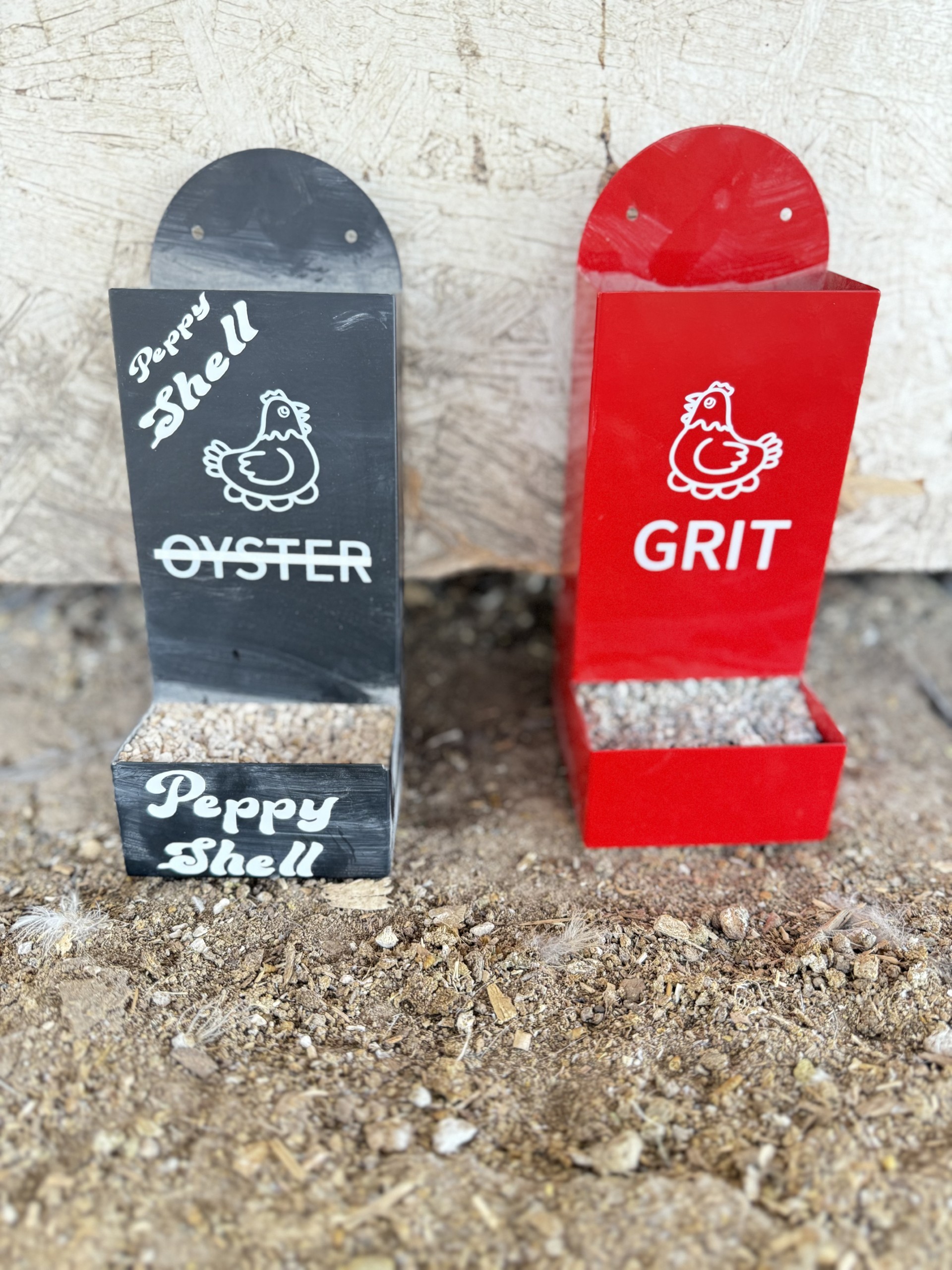
Here’s where the choice gets easy. In central Utah is a large deposit of travertine from ancient hot springs (the very same kind of stone used to make travertine tile, pavers, and dimension stone). Turns out that this travertine is outstanding as a calcium source for chickens – they love it! Like oyster shells, it’s high in aragonite minerals that release slowly during digestion, plus it’s coarse. This ensures that your hens have high blood calcium at night when they need it most. Just offer Peppy-Shell™ free choice in a separate feeder. It’s that simple. You’ll be amazed what a big difference just a few pounds of extra calcium per year will make! And best yet, you won’t be depleting ocean resources.
Chickens Don’t Have Teeth
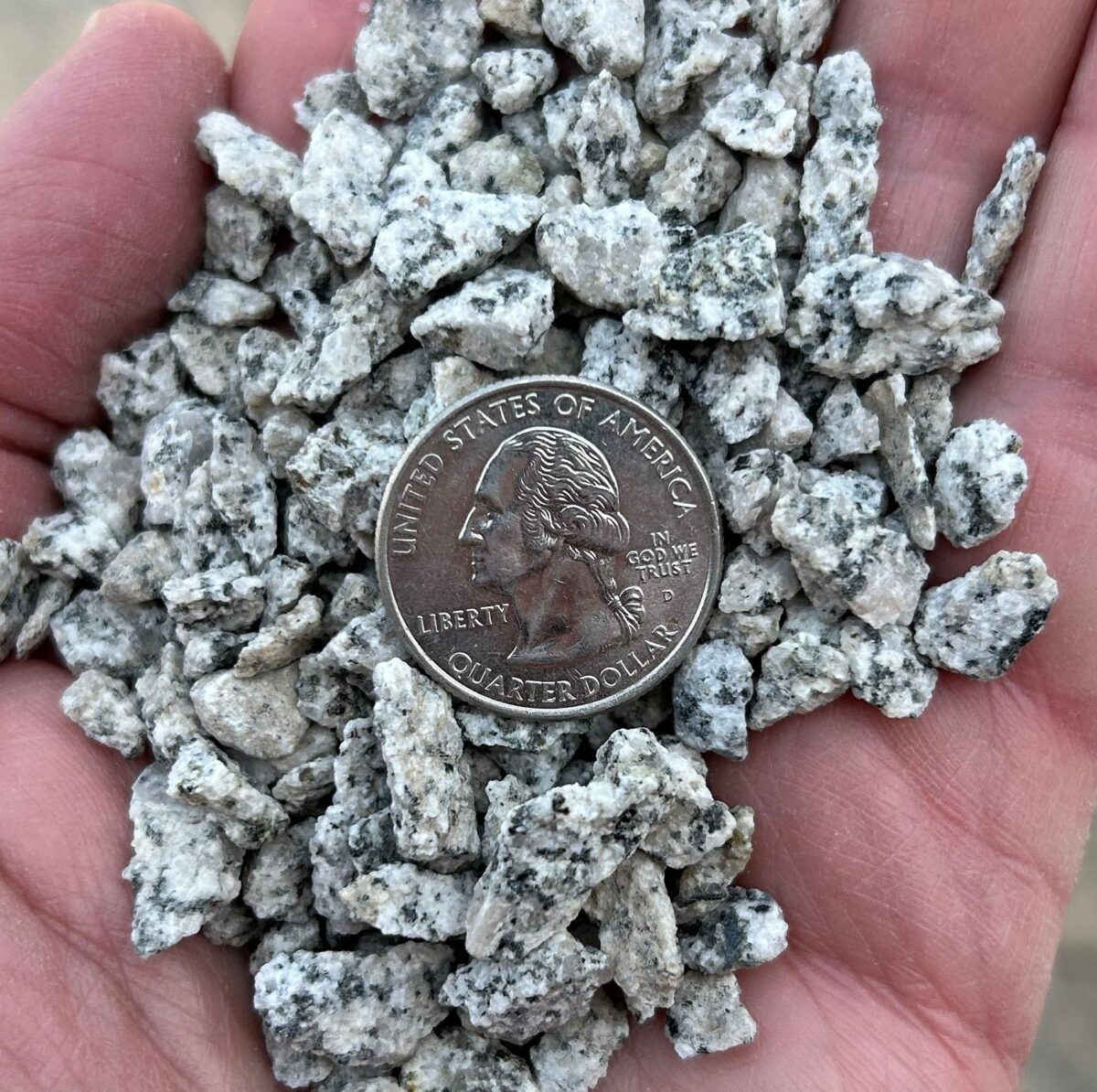
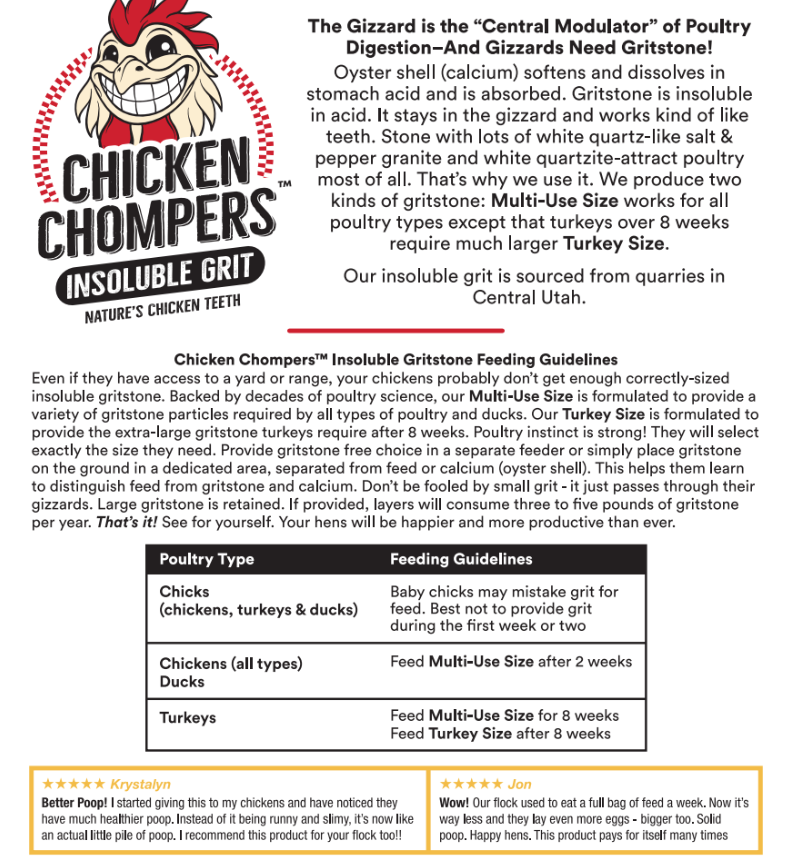
Most chicken owners don’t appreciate the importance of insoluble gritstone and gizzard development (exercise!). Chickens “chew” their feed in their gizzards. Unlike calcium, insoluble grit is not absorbed. If it’s large enough, gritstone gets stuck in the gizzard where it works like teeth. Grit-fed poultry gizzards are as much as 50% larger! Poultry science calls the gizzard the “central modulator” of poultry digestion. Did you know that food only stays in the gizzard for 30 to 60 minutes? Gritstone dramatically slows down the entire digestive process. The longer the better. Proper grit and gizzard development typically results in significant production increases (20% or more on the same feed).
Size Matters
Most gritstone sold in feed stores is too small to do much good. Gritstone has to be larger than the gizzard outlet, otherwise it passes through the body and is wasted. For layers, gritstone needs to be around 5mm in size but the best size can vary over time and breed. Chickens are smart. If provided a variety of sizes free-choice, they’ll take exactly what they need.
Chicken Chompers™ Insoluble Gritstone
A great pairing with Peppy-Shell™ is Chicken Chompers™ Insoluble Gritstone. Chickens love it! It may look large compared to other brands but you can trust the poultry science behind it. Chickens will eat the correct size and amount they need. Just make it available free-choice in a separate feeder (do not mix with feed or calcium).
Stone For Chickens: Final Thoughts
Providing calcium for chickens is a must to raise happy, healthy and efficient layers. The question is, how do you want to provide that calcium? Pairing a slow-release option like Peppy-Shell™ with an insoluble gritstone like Chicken Chompers™ provides laying hens with the tools they need to stay healthy and provide lots of strong-shelled and yummy backyard eggs. Who knew two different kinds of stone could make such a difference in your flock’s health and productivity? Try it and see for yourself.
There are many types of farm boots that can be used to perform different tough outdoor jobs. While you may not need to own all of the boot types on this list, it can be very helpful to have the right boot at the right time. From mud boots to steel-toe and slip-on boots, here are 6 types of farm boots to consider adding to your collection so you’re always prepared.
1. Mud Boots: Best for Wet & Muddy Conditions
Mud boots are your obvious choice for those wildly muddy days of early spring or late fall. Puddles, cow pastures, and muddy pathways stand no chance when your boots are tall and waterproof. With the right lining, these can also be surprisingly comfortable. And with thick lining, some can even double as winter boots down to a certain temperature. But don’t think that mud boots are strictly for adverse conditions—you may very well like a pair for light summer morning use, to stay dry when dew would otherwise soak your other footwear. Mud boots are also good for hunters or fishermen.
2. Steel-Toe Work Boots: Heavy-Duty Protection
Some farm jobs require working around heavy items, where a surprise drop or mistake could spell a painful foot injury. Steel-toe work boots aim to prevent this, providing a dense hollow shield over the toe of the boot to prevent crushing or compression injuries—maybe from a rolling farm machine, a heavy piece of equipment, logging and lumber work, and even livestock feet! For some people, these are among the best boots for farming.
3. Rubber Boots: Affordable All-Weather Choice
For a bit less cost, basic rubber boots—often unlined—can work well for basic muddy walking, a quick run to the barn, or a dewy morning. They’re fast and durable, and are a great way to save money on farm boots since they are inexpensive enough to be disposable if they crack or if a particular job is really messy.
4. Slip-On Boots: Convenience for Quick Tasks
You can even find comfortable and lightweight slip-on boots that, amazingly, don’t require the use of hands to put on—you basically just step into them. This is convenient and fast, but it also has some practical advantages—like if you want to keep your hands clean for a quick run out to the garden or chicken coop for veggie or egg collecting.
5. Paddock Boots or Cowboy Boots: Working and Riding
Boots that are excellent for casual or working riders like paddock or cowboy boots can also pull double duty as solid general work boots for many barn and stable jobs—moving hay, feeding, watering, and many other farm tasks where the durable and robust leather can be useful.
6. Insulated Boots: Winter Work Comfort
If you have substantially cold winters, some of the best farm boots for men and women are insulated winter work boots. Your exact needs will depend on the region. But count on getting something with a waterproof vamp (lower part), and a tall profile—often laced—that either keeps snow away or allows for overalls or snow pants to slide down over the top. This will effectively lock out deep snow. For icy conditions, look for a solid grip on the bottom, and for deep temperatures, check the label for a temperature rating—often something like 0°, -20°F, or even -40°F.
Types of Farm Boots: Final Thoughts
While fashion isn’t a concern on a farm or homestead, usability certainly tops the list. Knowing what types of farm boots are available and matching them with what you need can be the difference between getting a job done right or ending up being a mess or worse, incurring bodily harm. Having a couple of different pairs in the closet means you’re always prepared, since conditions can change on a farm from minute to minute.
This article about the different types of farm boots was written for Hobby Farms and Chickens magazines. Click here to subscribe.
Mammal-resistant plants can be a game changer for those who are tired of building fences to keep garden-munching mammals at bay. While physical barriers work, they’re not your only defense. Some plants naturally repel common garden pests like deer and rabbits thanks to their scent, texture, or toxicity. By choosing these mammal-resistant varieties, you can expand your garden outside the fence line—saving space and effort while still protecting your crops.
Here’s a quick look at five useful plants that critters probably won’t eat. There are plenty of others, too, so explore what grows in your region.
1. Alliums: Onion Family Plants Deer and Rabbits Avoid
You can never say never, but you can be pretty confident that deer and rabbits will leave your alliums alone. That sharp onion-like smell present in the stalks is just too much of a deterrent for mammals. This means that you have a lot of versatility in where you plant your onions, garlic, leeks, and chives. They don’t really need to be behind a garden fence—so have the option to save the fenced-in space for more critical crops and plant your alliums outside of it where the animals will give them a wide berth.
2. Marigolds: Colorful Blooms That Repel Pests
These fall favorites are easy to grow and have a scent that deer in particular dislike. The blooms come in a variety of fun colors, but the marigolds don’t grow very tall, so they make a fine border for walkways and other places in your landscaping that might be outside a fence. But
being outside the fence likely won’t matter, since deer and perhaps other mammals will pass them by. In fact, some gardeners utilize marigolds precisely for this reason—as a deterrent to keep deer away from the rest of the garden crops.
3. Herbs: Aromatic Plants Mammals Tend to Ignore
If you’re a home chef, maybe you enjoy growing your own herbs for a dash of fresh taste. It can be a wonderful and easy way to put your garden to use in the kitchen, plus many herbs are just generally attractive in the garden and good for pollinators. Mints, sage, rosemary, dill—deer will likely leave them all alone. Some rabbits may be a little more likely to munch on an herb or two, but in general, you’re probably safe to grow herbs outside a fence.
4. Potatoes: Nightshades That Critters Steer Clear Of
You generally need plenty of room for potatoes, especially if you’re seeking to grow an appreciable amount. It takes space to dig those rows and store the soil that you’ll gradually backfill with. Maybe you don’t want to use up that much space inside your fenced garden. If
that’s the case, you can probably get away with growing your potatoes outside the fence. It’s not impossible that deer or rabbits will try to munch on the foliage, but it’s unlikely—potatoes are a nightshade after all and the animals are discouraged for that reason.
5. Bee Balm: A Pollinator Favorite That Deer Dislike
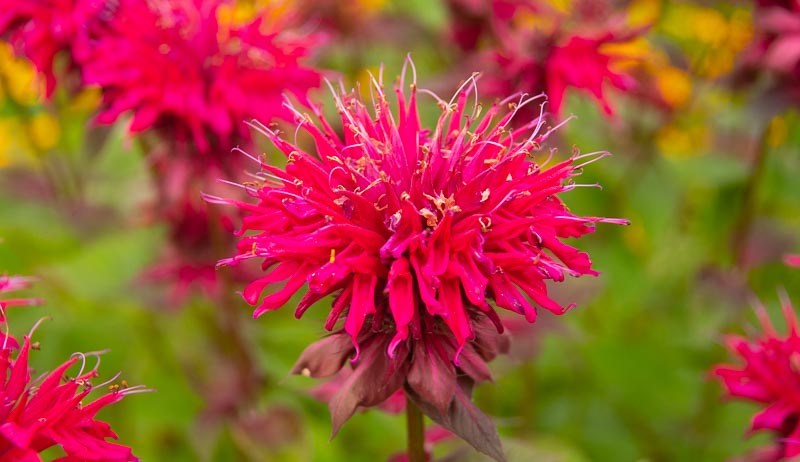
Bee balm is another deer-resistant plant that rabbits probably won’t bother either. It grows nice and tall, so it can be used to add a vertical dimension to your landscaping. The blooms are absolutely brilliant in midsummer, and the pollinators will come in droves (and probably help out the rest of your garden at the same time).
Mammal-Resistant Plants: Final Thoughts
While no plant is truly immune to a hungry animal, the varieties listed here offer a strong chance of surviving outside your garden fence. They not only help protect your more vulnerable crops but also attract pollinators, add beauty, and reduce the need for costly barriers. Experiment with these and other regional favorites to build a low-maintenance, critter-resistant garden you’ll love all season long.
This article about 5 mammal-resistant plants was written for Hobby Farms magazine. Click here to subscribe.
Summertime duck treats are a good way to bond with our webbed-footed friends while providing them with entertainment and a delicious snack. However, treats aren’t just for fun; some duck treats will help your flock stay cool and hydrated during the dog days of summer. Here are 7 healthy and cooling options.
Why Summertime Duck Treats are Needed
Duck treats should be a part of your flock’s summertime diet as they help to keep ducks hydrated and cool, while providing a nutrient-packed snack during times when feed consumption is down.
During summer, when temperatures and humidity rise, ducks do not consume as much feed in attempts to stay cool. While this isn’t bad for short periods of time, a reduction in feed consumption can take a toll on ducks and cause health concerns, including reproductive issues, poor nutrition, and even death.
Feeding treats to your ducks can help keep them hydrated, provide extra nutrients, and help encourage your flock to eat. This is especially important for older flock members as the summer heat can cause even more stress on aging ducks.
While summertime treats are important, be sure to supplement no more than ten percent of your flock’s diet with treats to avoid an improper nutritional balance.
1. Watermelon: The Ultimate Hydrating Duck Treat
A member of the squash family, watermelon is one of the best duck treats to feed your flock during the dog days of summer. Watermelon is one of the most popular fruit choices for ducks, as it’s hard to find a duck that doesn’t enjoy the taste of this sweet fruit.
Consisting of ninety-two percent water, watermelon helps keep ducks hydrated even during extreme heat. The extra hydration in the watermelon helps to cool off the duck’s body temperature and also works to keep the digestive tract from overworking, to prevent their bodies from overheating.
Watermelon also contains vitamins A, B6, and C, as well as potassium. These essential vitamins and minerals help improve digestive health, reduce the risk of eye problems, and help keep a duck’s immune and digestive systems running smoothly.
2. Zucchini: Cool, Crunchy & Packed with Electrolytes
Zucchini is another popular squash for summertime duck treats. This popular vegetable contains 94% water, helping your flock stay cool and hydrated.
This mild-tasting squash is high in essential minerals, including manganese, magnesium, phosphorus and potassium. Zucchini is an excellent choice when choosing summertime duck treats, as it is one of the vegetables ducks can safely consume that contains electrolytes.
Zucchini can be fed by cutting the rinds down the middle lengthwise and allowing ducks to eat out the tender fruit inside the shell, or grated and placed into a fresh, clean bucket of cold water overnight for ducks to snack on. Dump and rinse the bucket thoroughly in the morning, before refilling with fresh water.
3. Peas: A Protein-Packed, Splashy Snack
Peas are an excellent choice for duck treats year-round, but they can be even more beneficial during the warmer months. Ducks love the taste of peas and will happily go bobbing for them in a bucket of water or even a kiddie pool.
Bobbing for peas not only offers ducks a nutrient-packed treat, it also helps to keep ducks cool as they dip their heads and necks into the water, and also encourages them to drink more.
Peas are an excellent source of protein and essential vitamins, including B1, B2, B3, B6, B9, and C, and are considered one of the healthiest treat options for backyard ducks.
4. Garden Greens: Fresh, Leafy, and Loaded with Nutrients
Garden greens are an excellent choice of duck treats during the summer months as they contain large amounts of water and are highly nutritious, too.
Whenever possible, pick greens from your own garden, as they are best if freshly picked and fed promptly to your flock. Ducks love all kinds of garden greens, but they are especially fond of home-grown lettuce.
Lettuce contains high amounts of vitamin A to protect against vision loss and promote healthy vision, as well as vitamin C, iron, and calcium.
Other garden greens to consider include arugula, dandelion greens, and kale. Never feed spinach to laying ducks, as spinach can prevent proper calcium absorption, causing egg binding, oviduct prolapse, or poor egg shell quality.
5. Grapes: Sweet, Juicy, and Full of Antioxidants
When choosing duck treats with high water content, grapes are an excellent choice. Grapes contain just over eighty percent water, and are an excellent choice during the late summer months when they are readily available.
Ducks love grapes and will happily consume a lot if given the opportunity, so moderation is key when feeding this late-summer fruit.
Helping to improve heart health, immune function, and eye health, grapes also contain antioxidants that help keep the body free of radicals.
6. Blueberries: Bite-Sized Superfoods for Ducks
Blueberries are not only a nutritious summertime fruit, but they are also fun duck treats for your flock. Roll some blueberries across the barn or coop floor and watch your ducks run after them for a tasty snack.
Blueberries are high in antioxidants and phytochemicals that aid in gut health and reduce inflammation. These superpower berries are also believed to have cancer-fighting properties.
While blueberries do not contain as high a water content as some of the other duck treats featured, ducks seem to enjoy their refreshing taste on a hot summer day.
For even more summer relief, place blueberries into an ice cube tray, fill the tray with water, and place in freezer overnight to freeze. Serve the next day in a bucket of fresh water and let your ducks enjoy bobbing for blueberries.
7. Bugs & Larvae: High-Protein Treats Ducks Love
Bugs are a nutritious summertime snack. Ducks love all sorts of bugs, but it can be difficult to know which species are safe and which ones should be avoided.
Allowing your flock to have some supervised free-ranging time in the garden will allow them to collect their own duck treats as they work to remove unwanted pests. Ducks naturally know what bugs are safe to consume, so there is no need to worry about them consuming a harmful bug while in the garden.
If supervised free-ranging isn’t possible, handpicking Japanese beetles from vegetation that has not been treated with pesticides, herbicides, or other harmful toxins is a great way to add some extra protein to your flock’s diet and reduce plant damage.
Feed Japanese beetles live or by placing beetles in a freezer-safe bag overnight for a delicious frozen snack in the morning.
Substituting dried black soldier fly larvae for garden bugs is another good high-protein treat option.
Ducks need protein in their diet to beat the heat, so adding some protein-rich duck treats, such as bug,s to their diet is crucial to keep them going strong, especially when feed intake is down.
Summertime Duck Treats: Final Thoughts
Combined with access to fresh water and a shady run, these water-packed and nutrient-rich summertime duck treats will help your flock stay cool and hydrated during the hot summer months.
This article about duck treats was written for Hobby Farms and Chickens magazines. Click here to subscribe.