Categories
Animals Farm & Garden Farm Management Homesteading Large Animals

Suzanne Nelson Karreman On Raising Dairy Cows With Reverence

Suzanne Nelson Karreman appeared on the cover of our November/December 2021 issue as part of The Female Farmer Project—a multi­platform documentary project that chronicles the rise of women working in agriculture around the world.

Nelson Karreman quit her job as a Capitol Hill journalist to start a farming career. Now, she runs Reverence Farms, a diversified, thriving polyculture in Graham, North Carolina, where animals are treated with reverence and grace, earthworms are cherished and all critters eat a species-appropriate diet. 

What Livestock Do You Keep?

We have 40 Jersey cows, all their young stock—this year’s calves and last year’s calves that are still growing, including the bull calves—and about a dozen mature Jersey bulls. We also raise hair sheep, laying hens and Ossabaw Island hogs. 


Read more: These small breeds fit great on hobby farms!

What Is Your Biggest Success? 

Our biggest success is pioneering how to graze multiple species within a dairy context. We are also finding ways to not sell off the bulls and heifers into conventional streams with vastly differently approaches to animal welfare than we have. 

Dairy is significantly more complex than beef because of the dramatically higher nutritional needs of dairy cows, plus the complexity of having mobile infrastructure when you also have to get the animals back to the barn every day. 

We have bred an all A2A2 herd of Jerseys. They can milk on forage only, breed back, keep in good condition, share the milk with their calves and still give us milk for the tank. There is growing awareness among consumers of how dairy cows don’t get to be mamas, but making milk means making babies, so how are we as a culture going to reckon with that biological reality and moral choice? 

We are answering those questions with deliberate breeding, soil and forage improvements, and systems and processes to make it all work together. Cows graze with their calves during the day and are separated after 4 to 6 weeks old at night. Then we milk the moms in the morning, and they return to their babes after that. 

It means that our farm markets meat as well as milk, because dairy cows were originally also the family beef cow producers. There’s a lot of practical and ethical normalcy to that approach. 

What Have Been the Biggest Challenges? 

Our biggest challenge has been recovering what has been lost in two generations of industrial farming: the capital, land access, land degradation, lack of genetic diversity and, most importantly, the loss of generational knowledge when most farmers were eliminated and we all went to the grocery store. Rebuilding a food system from scratch is not for sissies. 


Read more: Learn more about the Female Farmer Project and its mission.


Any Advice for New Farmers? 

Get good at producing/marketing one thing before you get on another learning curve. Yes, all the things work better together. It’s why Grandma had a homestead and survived the Great Depression. 

But you can’t learn all those things at once; you can’t rebuild all that infrastructure at one time. 

Help a neighbor. Learn. Humble yourself to learn from people you don’t agree with. Make friends: You are going to need them! Trust me. 

What’s Your Proudest Achievement? 

What I’m most proud of is the Jersey cow genetics that we’re now able to share with others. These are functional cows that can do the work of a family dairy cow—producing high-fat, high-protein, high-cheese-components milk on a solar-based diet—and be healthy and in good condition, without needing so much grain to produce milk in excess of a family’s needs. 

We are going back to the island cow that took the world by storm for good reason. These are amazing cows. We sell semen. I never thought I would do that, but I felt called to share what we painstakingly created with others. 

Any Final Thoughts? 

Farming as a woman is a lot easier than it used to be when I first started, when I was often the only one in a room. My advice to other female farmers is that you don’t have to give up your heart or nurturing instincts to farm. Be who you are. It makes you a better farmer. You don’t have to farm like a man to be a real farmer. Leave a path.  — Suzanne Nelson Karreman

This article originally appeared in the January/February 2022 issue of Hobby Farms magazine.

Categories
Animals Farm & Garden Flock Talk Homesteading Poultry

Heritage Breed Chicks Bring Life To The Heritage Nest!

The Heritage Nest is all about fusing heritage poultry breeds with a sense of self-sufficiency. “We love the many unique breeds out there and preserving them just seemed to come naturally,” explains Lena Martens, who runs the family-centered Ontario-based venture in Canada.

Counting Speckled Sussex, Swedish Flower and Silverudd Isbar breeds among the farm’s ranks, Martens says that living surrounded by so much poultry quickly becomes “incredibly entertaining” as she learns about each chicken’s “unique personality.”

We spoke to Martens about getting to know super feisty roosters and dual-purpose chickens. We also got up to speed with a new Babydoll sheep addition to the farm.

Developing an Interest in Heritage Breeds

“Growing up I had no idea there were so many varieties of chickens,” says Martens as she looks back on how she came to be so smitten with heritage breeds.

“I knew there were layers and meat birds, that’s all—but when we discovered the many amazing different heritage breeds, one thing led to another until we are where we are today.”


Read more: Check out these unique heritage-breed birds!


Spotlight on the Silverudd Isbar

Silverudd Isbar hens play a key role at The Heritage Nest. Martens admits that sometimes the breed might not be the most striking on first glance, but “the blue and splash are pretty amazing!” The olive-hued eggs they produce are also a treat.

Martens adds that the roosters are particularly handsome and sport an array of “beautiful colors”—although they are also prone to bouts of feistiness.

Appreciating the Speckled Sussex

Martens recently commented on an Instagram post that she’s surprised the Speckled Sussex breed isn’t more popular.

“Many people are looking for a dual-purpose chicken, and I feel like this breed still needs to be discovered,” she says. “I am convinced once that happens they would be greatly appreciated.”

Decked out with deep red feathers that include splashes of white and blue, Martens adds that the hens are “very friendly and actually quite heavy,” along with being good layers.


Read more: Dual-purpose chickens bring flexibility to the coop.


Poultry Care During Cold Times

When the colder weather strikes, Martens says that dealing with frozen water and keeping the bedding clean are her biggest poultry challenges.

“Because our focus is pure heritage breeds, we have all our chickens inside and in separate pens,” she explains. “In order for them to stay healthy, we are constantly needing to add bedding to keep everything clean and dry.”

Small Sheep Make Great Pets

The Heritage Nest recently added Babydoll sheep to the resident animals. “We love the idea of a smaller sheep for a pet,” enthuses Martens. “It was purely their adorable smiling faces that won us over. And the size works so well on a small hobby farm with kids.”

Martens adds that her family have found the sheep to be “very friendly, and the babies are beyond adorable”—and she expects the number of Babydolls on the hobby farm to expand.

Follow The Heritage Nest on Instagram.

Categories
Crops & Gardening Farm & Garden Food Homesteading Urban Farming

Pretty Up Your Plate With A Mix Of Edible Flowers

We may grow ornamental flowers for their fragrance, their beauty or their ability to attract beneficial insects. But as for eating the blossoms we grow? Well, technically we already do consume certain edible flowers.

“Broccoli and cauliflower are just buds of flowers, so what’s the difference between eating buds and [eating flowers] once they open?” Brad Biren asks. Educated at Cornell University’s College of Agriculture and Life Sciences, Biren has worked as a landscape architect and botanist.

Over the years, he’s also become a self-described flower eater. “I grow them and love to eat them, because it makes me feel like I am eating summertime itself,” he says.

Petal Power

Spicy nasturtiums and versatile daylilies aside, roses are one of Biren’s go-to recommendations for the uninitiated. “They’re a great beginner [edible] flower plant, because the petals are not fibrous and they kind of taste like you are eating perfume,” he says.

“It’s like a lettuce that almost dissolves in your mouth.”

When harvesting rose petals, be sure to separate them from the rose hips. “The rose hip—in that little globe at the bottom [of the bud]—can break your teeth,” Biren warns.

Ideally, you should pick roses to eat before their blooms fully open. Also, more fragrant rose species will pack a bigger culinary punch. Add rose petals to salads, candy them for dessert, or use them to make rose water or a simple rose syrup.


Read more: Want to sell nasturtiums but unsure how? Check out these tips for pricing and marketing edible flowers.


Taste Test

While plenty of flowers are edible, some varieties taste better than others. In her work, The Edible Flower Garden, Author Rosalind Creasy recalls, “I collected a number of modern lists of edible flowers and cautiously began my taste testing. Some were absolutely horrible!”

She continues, “For example, some marigolds have a slightly lemony taste, others are tasteless, but the taste of most falls somewhere between skunk and quinine.”

(Her early encounters with edible carnation petals were equally unpleasant.)

Nevertheless, both marigolds and dianthus (carnations) are among Biren’s favorite edibles. “Dianthus and marigold should be consumed [similarly],” he says. “Much like popping the cap off of a mushroom stalk, you break the petals off of the fibrous base of the flower that houses the seeds.” (That fibrous base section is where very bitter or astringent flavors can hide.)

Sunflowers are also edible, but stick to the ray flowers—the colorful petals arranged around the flowers’ central discs. “Sunflowers are not one single flower but rather an entire flower stalk [made up] of thousands of individual flowers spun around themselves,” Biren explains.

“The flowers in the central disc, which make seeds, are not typically pleasant to eat. The petalous flowers on the outside are ray flowers and they can be plucked and consumed.”

Borage flowers are Biren’s go-to for something light and refreshing. “They are the most beautiful azure flowers,” he says. “You put them in water with a couple of slices of cucumber peel, and it is heavenly.”

borage edible flowers
Borage (at left) photo by Susan Brackney , Rose (top right) public domain/Wikimedia Commons image, and Dianthus (bottom right) public domain/Wikimedia Commons image

Best Practices

Whatever edible flowers you choose to grow, you should think carefully about your containers and pest management practices. “If you’re going to use a wooden, raised bed, make sure it doesn’t contain the preservative chromated copper arsenic,” Biren says.

“The other thing is not using galvanized steel for the [raised bed] brackets. Galvanized metal is a heavy metal that can harm people.”

He adds, “Even though plants do an excellent job of fixing—rendering the heavy metals inert—part of that is being taken up into their cells. So, let’s leave that in their cells and not eat those plants.”

Ideally, you should forgo pesticides, too. “The number one thing people do for integrated pest management for edible flowers is grow them in a contained system like a greenhouse,” he says. “And, so, those little packets you might see at the grocery store—those are all grown inside of greenhouses where they can control what animals are not there.”


Read more: Daylilies are common in the garden, as well as edible and sweeet.


Cleanliness Counts

Depending on when you harvest, you could end up with more than just pretty blossoms. Flowers that remain open outside for longer than a day or two could be contaminated by pathogens from birds and other animals. If you’re able, harvest flowers at the bud stage and then bring them indoors.

This may reduce your potential exposure to pathogens.

Picking short-lived flowers is another good option. “Pansies and violets … open up every morning, so, really how much contamination can they get in an hour or two outside?” Biren says.

“So, harvest them [right away.] Put them on a slightly moistened wet paper towel, lock it in a gallon-sized bag, and put it in the refrigerator. They’ll last about two days. Or you can always freeze them.”

Categories
Animals Chickens 101 Farm & Garden Farm Management Health & Nutrition News Poultry

Protect Your Chickens Against H5N1 Avian Influenza

Recently H5N1 has been found in the United States along the East Coast. H5N1 is a concern to anyone who owns anything avian. But when it comes to backyard flock keepers, there are a few ways that we as poultry keepers can combat this to ensure the safety and health of our birds.

Biosecurity is going to be your biggest ally in protecting your chickens against H5N1. If you’re new to the poultry world, this may be a whole new word to you.

Biosecurity should be practiced year-round, but in certain circumstances like this, it is best to tighten up some areas. With viruses and bacteria, it is very easy for it to spread in ways that many people don’t account for. With H5N1, it can spread to your chickens through contact with infected birds and on surfaces of things like shoes or tires.

Avian influenza can also spread through water. So how do we stop the spread or you bringing it in? The answer is biosecurity.

“Flockdown” in the Coop & Run

There are many different ways to practice biosecurity. Your coop and run are going to be your main focus when something like this occurs. If you do free range your birds, you need to have a backup plan when they need to be placed in “flockdown.”

Flockdown is a word that we use to describe locking down your flock in an area that doesn’t allow birds, mice or other pests into it. You need to make sure that it is roofed so that materials (like wild bird droppings) cannot drop into your coop and run.

Wild birds can carry H5N1 and other pathogens that don’t affect them but can be deadly to your chickens. Covering your runs during times like these do not have to be perfect. They only have to keep the bird droppings out of your coop and run area. Tarps work just fine for the short term.

If you use fencing with larger holes, chicken wire or netting are cheap and quick alternatives to make sure that wild birds cannot get into your run. Wild birds can find many resources within your coop (straw, feed, water) and having access to that is not the healthiest option for your flock—especially during times when biosecurity needs to be strict.

After both of these are attended to, we also need to look at other areas.


Read more: Check out this infographic for more on chicken biosecurity.


Designate Some Coop Shoes

You, as the caretaker, can track things in on your clothes, hands and shoes and not even realize it. So establishing a pair of “coop shoes” is good practice.

Coop shoes are a pair of shoes that you specifically use for only your flockdown area. If you have more than one coop that you have to walk across a yard to get to, implementing more than one pair as coop-specific is a good option.

This ensures that you don’t step in a bacteria or virus and track it inside your lockdown area.

Shoe Dip

I also implement a shoe dip to further protect my chickens against H5N1 and other pathogens. You can make these very easily with a container you can fit your foot inside.

Simply pour a 50/50 water/bleach solution in it and dip your shoes before you go into your coop.

If there’s mud on your shoes, you will need to remove that. I help do this by getting a cheap shower scrubber and putting it into the container.

I keep this container right outside my coop area so it’s easily accessible and carry the 50/50 solution out with me. When you empty your container, you will need to do so down a drain.

The 50/50 solution needs to be kept fresh.


Read more: You want to avoid these 5 dangerous chicken diseases.


Clothes

Your clothes can also track things, including the avian influenza virus, on them. Changing your clothes after visiting town or another farm ensures you aren’t tracking things in.

Your feeders and waterers do not need to be set outside. The items you use in the coop need to stay in the coop unless you are cleaning them.

By doing these simple things, you can be proactive when high pathogenic avian influenza or Newcastle is found in the States. It is not a time for panic but definitely a time to be proactive about your flock’s health.

If you would like to track H5N1, the USDA does have a website to do so. You can also find more biosecurity ideas at the Defend the flock program through the USDA.

Categories
Animals Chicken Coops & Housing Farm & Garden Poultry Poultry Equipment

Chicken General Store: Chic(k) Decor For the Coop & Home


1. Wrap yourself up in this green, one-piece, brushed polyester, Hooded Pajama to keep warm this winter. $29.99. www.zulily.com

2. The EZ slide Nesting Box converts a 5-gallon bucket into a nesting box by snapping the wooden piece on the rim, filling with nesting material and letting your hens do the rest. $11.99. www.etsy.com/shop/annaacres


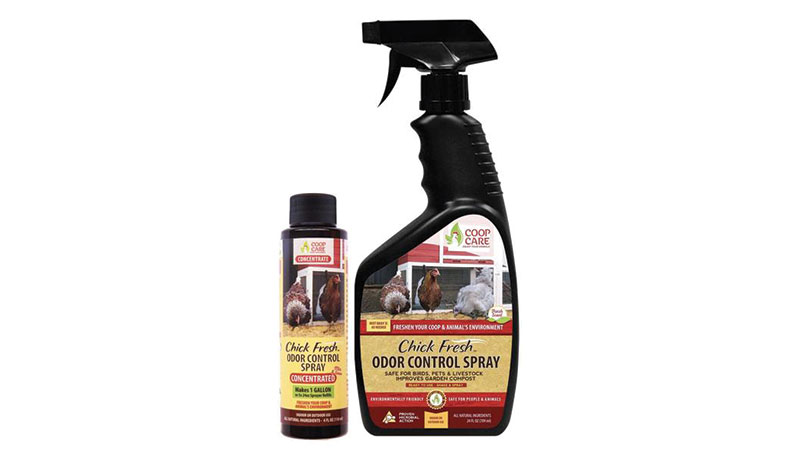
3. Eliminate odors from smelly coops by spraying Chick Fresh Concentrate’s microbial formula on litter, walls, nests and roosting areas, as it is safe to use around birds, pets, livestock and people. $12.99. www.flextraninc.com

4. There aren’t many ways to manage pendulous crop in chickens, but a chicken bra can help crop contents move through the digestive system. Simply put it over the chicken’s head and Velcro it over their back. $22. www.etsy.com/shop/aptosbeach

5. Dustfree and pasture-friendly, Airlite USA Animal Bedding is made of preconsumer, virgin cardboard that can be spread immediately on fields and biodegrades in four to six weeks. Airlite wicks away moisture, drawing urine to the bottom of the coop for easier removal; price varies by retailer. www.airliteusa.com

6. While away the indoor hours this winter with this colorful chicken quote jigsaw puzzle. The 1,000-piece puzzle features a variety of breeds and chicken quotes. $18.21. www.cobblehillpuzzles.com

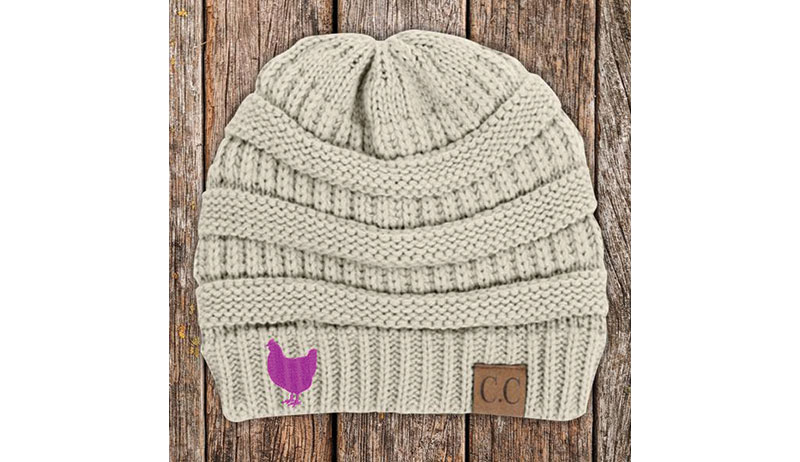
7. Stay warm and show off the love of your feathered friends with a chicken C.C thick knit soft beanie, available in beige, grey and mint. $29.99. www.piperloucollection.com

8. This insulated chicken knowledge tumbler will keep coffee or tea hot no matter how cold it is outside. Triple insu- lated, this dishwasher safe, 20-ounce cup also provides chicken trivia. $29.95. Purchase at Amazon.com at https://amzn.to/3o2GoxM

9. K&H poultry waterer features a spillproof tank cap and the easy-to-remove filter. The heated version uses 60 watts to keep water free of ice, and the tank design keeps chickens from roosting on top. $98.99. www.khpet.com

This article originally appeared in the January/February 2022 issue of Chickens magazine. Want more products? Check out our Farm Storehouse offerings

Categories
Beginning Farmers Crops & Gardening Farm & Garden

Exploring The USDA Hardiness Zones For Gardening

When gardening and planting trees up here in northern Wisconsin, I pay a lot of attention to United States Department of Agriculture (USDA) hardiness zones.

My general region is rated Zone 4, which means it’s too cold for many popular trees and plants to survive the winters. When perusing plants catalogs and websites, I always check to see which zones the plants are rated to handle. If one says “Zones 5-9,” for example, I’m forced to choose a different option.

I know I’m not alone in seeking zone-appropriate plants for my region. You’ve likely done the same. The question is, what do the USDA hardiness zones actually define? And are they the be-all end-all when it comes to determining whether a given plant will grow in a particular region?

Before we dig into our soil for to start gardening, let’s dig into the USDA hardiness zones and learn more.

What are the USDA hardiness zones?

In order to help farmers and gardeners determine which plants are suitable for their region, the USDA has divided the U.S. (and Puerto Rico) into 13 zones based on temperature. The result is a color-coded map with each color representing a different zone.

The zones are further subdivided into “a” and “b” categories. So “Zone 7” technically encompasses “Zone 7a” and “Zone 7b,” with the “a” zone being slightly colder.


Read more: Starting a garden? You need a wheelbarrow.


How are the USDA hardiness zones determined?

The USDA hardiness zones indicate the average minimum winter temperature for a given region, based on data spanning 1976-2005. They measure nothing more and nothing less.

If the coldest annual minimum temperature in your region averages around -17 degrees F, then you live in Zone 5—or, more specifically, Zone 5a, which covers the -20 to -15 degree F range.

Are there shortcomings to the USDA hardiness zones?

Since the USDA hardiness zones only measure one data point—average extreme minimum temperature—there’s actually a lot of variables they overlook. Under the right circumstances, you might be able to grow a Zone 5 plant in Zone 4. Conversely, challenging circumstances can make gardening difficult if you grow plants on the edges of their comfort zones.

A plant might be hardy to Zone 4. But that doesn’t 100 percent guarantee it will survive everywhere in Zone 4.

What are some of the factors the hardiness zones overlook? Well, since the zones are based on average extreme minimum temperature, it’s possible for the minimum temperature in a given year to drop colder than average. This can strain plants on the bubble of tolerability.

Typical snowfall is another consideration. A blanket of snow can protect roots from harsh cold, but only if it’s reliably in place during cold spells. If your region receives cold temperatures, but inconsistent snowfall (with melting in between), you won’t get as much snowfall insulation as in places where snow consistently covers the winter ground.

The list of variables goes on and on.

  • What are the typical earliest and latest frost dates for your region?
  • Will they interfere with spring blooms or fruit ripening?
  • Are summer temperatures hot or mild?
  • Does your region afford enough chill hours to grow plants that require a certain amount of winter cold?

And what about your specific microclimate?

  • Do you live in an open area exposed to harsh winter winds, or are you sheltered by windbreaks?
  • Do you live in a valley (where cold air sinks) or on a hill?

All these factors can affect whether a given plant tolerates the cold or succumbs to freezing weather.


Read more: Keep these things in mind when planting a fruit or nut orchard.


Takeaways from the USDA hardiness zones

Despite their shortcomings, USDA hardiness zones provide solid guidelines for choosing plants based on winter hardiness. And if you’re growing plants rated a zone or two hardier than the zone you occupy (for example, growing Zone 3 and 4 plants in Zone 5), you should be pretty much good to go.

But with a little thought and care, you might be able to stretch the rated hardiness of plants further than you might imagine.

Proper mulching, protection from windbreaks, consistent snow cover, and planting near buildings can all improve the chances of a plant surviving in a hardiness zone on the edge of what it’s rated to handle.

Have fun planting!

Categories
Crops & Gardening Farm & Garden Food Homesteading Recipes

Herbs & Activities For Winter Wellness On The Homestead

There are many different ways that we can utilize the herbs growing on and around our homesteads to boost our immune systems and help us to stay healthy all winter long. Here is my list of seven tried and true techniques to incorporate herbs into our winter wellness routines. 

Herbal Tea

Brewing teas from herbs is my go-to method for supporting wellness in the winter time. There are many wonderful herbs to choose from. We have an opportunity to explore the flavors, as well as the benefits, of a multitude of our local plants.  

Echinacea and elderberry are both anti-viral herbs and excellent choices for boosting our immune system. Stinging nettles, Urtica dioica, is packed full of nourishing minerals that our bodies need to maintain a healthy balance.

And don’t forget about pine needles! These are high in vitamin C and can be brewed into a flavorful and resinous herbal tea. 

Ginger and turmeric are both wonderful herbs that we can use to stay healthy in the winter as well. These two rhizomes are closely related and are powerful anti-inflammatories that add a powerful flavor to our brews. Ginger is particularly useful to help with digestive upset and stomach aches.  

Garlic 

When it comes to health and wellness, garlic is a powerhouse ingredient that can be included in many of our medicinal formulations. One of the many reasons garlic is considered so beneficial is due to its high zinc content.

Zinc is critical to helping our bodies battle the common cold. Garlic is exactly what we need to help our bodies combat this illness.  

Fire Cider

Fire cider is an interesting concoction (great for winter wellness) crafted with many of the herbs that we already covered, including garlic, turmeric and ginger. It is also commonly made with cayenne peppers, thyme, rosemary, black peppercorns and citrus fruits.

Infuse all of the botanicals in apple cider vinegar, creating a potent and strongly-flavored medicine. You can learn how to craft your own fire cider in my YouTube video here.

Herbal Syrups 

The most well-known herbal syrup is crafted with elderberries. But we can certainly use other herbs to create healthy medicinal syrups, such as horehound.

Horehound is an herb that we can use to help ease a dry cough, and the syrup is very easy to make! Simply steep your herbs in water just like you would to make a strong tea. Strain the herbs out,  then add sugar to the water.

Slowly heat the mixture until it starts to thicken and develop a syrupy texture. It’s just that easy! You can substitute the sugar for honey, agave nectar or any sweetener of your choice.  

Topical Salves

It’s easy to make a topical rub very similar to the commercial “vapor rub” product that we all know. Use herbs such as peppermint, thyme or eucalyptus to make a soothing chest rub to ease winter cold and flu symptoms and maintain wellness.  

Learn all about crafting herbal salves in the Hobby Farm video available here. 

Vitamin C & D 

The easiest way to stay healthy around the homestead is to simply increase our intact of Vitamins C and D. This can be as easy as adding more fresh fruits and vegetables to our diet.  

We can also use more herbs known to contain notable amounts of Vitamin C, such as pine needles, rose hips, thyme and orange peels. Add these herbs to your herbal teas or into your culinary creations to reap their benefits. 

Mushrooms are a great source of vitamin D. Try adding shiitake, portabella or any other type of mushroom to your meals for an easy way to add more Vitamin D to your diet.  

And of course, sunshine is the best way to get more vitamin D! Just spending more time outside will help boost our immune systems and keep us healthy!  

Stay Active 

The more exercise and fresh air you can give your body, the healthier you will be. Homesteaders and hobby farmers are already very active people that spend quite a bit of time outdoors. But if you can find a way to add even more exercise to your routine, the better off you’ll be.

Even if that means just a short 20-minute walk around the property, your body will thank you for the extra activity and vitamin D! 

Categories
Animals Beginning Farmers Equipment Farm & Garden Homesteading Large Animals

How To Water Pigs: Equipment Tips, Winter Care & More

Keeping clean water available to your pigs can be a real challenge at times! These clever omnivores, combining strength with an inquisitive nature and a love of mud, can upset a water trough before you can turn around. But in high summer, even a few hours without water can seriously compromise a pig’s well-being; and even in winter, our animals need water to be constantly available. 

Outsmarting our pigs is an ongoing project, so it’s a good thing there are lots of ways to water a pig!

How Much Water Does a Pig Need?

How much water pigs need is the first consideration.  Water consumption for sus scrofa can be highly variable, depending on weather, the size of the animal and what it is eating. (Pigs on dry feed drink more than pigs on a natural diet.) 

While young pigs may consume only a few pints a day, a lactating sow (mama pig nursing babies) can require as much as 6 gallons!  So whatever method you use for delivering water to your pigs should take these requirements into consideration.


Read more: Check out these tips for preparing your pigs for winter.


Let’s Talk Troughs

First, of course, is the basic water trough.  The lowest-tech solution, this may be the obvious choice when you’re just starting out. 

Troughs can work well, too, if we take the time to plan thoroughly.  

A trough for pigs should be heavy enough—even when half-empty—that the animals can’t flip it.  And while the sides have to be low enough so that even the smallest pig can get a drink, you also want them to be high enough to prevent animals climbing (or being pushed!) over the side.  

If you elect to water from a trough, putting one or two cinder blocks in the bottom of the tank can provide footing for any animal that might fall in—at least long enough for you to help it out again. 

An open trough also presents a challenge for animals kept on deep bedding. Tank sides need to be high enough to prevent litter from falling in and fouling the water.  

Other Options (Cup Waterer, Pig Nipples)

Only slightly more complex than a trough are the cup waterer and pig nipple. These simple valves can be fitted to a garden hose and attached directly to the wall of a pig pen. Since there is no trough, there is no danger of drowned animals or fouled water. 

And animal-activated stem valves mean that water is delivered on demand only. This keeps waste to a minimum. 

pig water watering waterer winter
Shawn and Beth Dougherty

Of course, a pig who wants a puddle in which to wallow can—and may!—cause deliberate spillage to make a wet spot. But, generally speaking, these simple valves help keep to a minimum .

Don’t have running water to the pig pen? Not a problem!  Pig nipples and cup waterers can be easily plumbed into the side of a large plastic barrel. This, when filled with water, will be too heavy for your porkers to flip. And you can stabilize it in one corner of the pen for further security. 

Hooked up to a rain barrel outside the barn, your pig barrel will even fill automatically! Or, if your pigs are on pasture, an extra-large livestock tank can be similarly fitted with a pig-operated waterer. The tank’s broad base will prevent overturning.


Read more: Do you have a farm water backup plan?


Watering in Winter Weather

Of course, water in the heat of summer is an hourly necessity, but winter water can be just as much of an issue! If you are keeping a pig during the cold months, you’ll have to find a way to keep his water from freezing. 

First, there’s nothing to prevent you from simply breaking ice in your stock tank, if that’s where the pig gets water.  We do it ourselves and know others that do the same. 

Stock Tank Deicer

Dropping in an electric stock tank deicer may be all that you need to keep water warm enough that it will not freeze. But if you are using a metal pig nipple, this extension may be the first part of your system to ice up. 

In only moderately cold weather, inserting a copper wire or six-penny nail into the back of the stem valve will sometimes conduct enough heat from the main tank to prevent the nipple freezing.  Make sure, though, that there is no possible way for the pigs to reach the heater—or the heater cord! Pigs will chew on anything, so take precautions so that you don’t get a shocked pig or an electrical fire.

Running Water Is Slower to Freeze

Other solutions may be even simpler.  Running water is slow to freeze, which is why in near-freezing weather you may see an outdoor tap left open just a trickle. Why not direct this tiny flow into the pig tank?  Even mere drips of water falling in a tank will disturb the surface enough to prevent freezing if temperatures are not too low. 

Or you could do something as simple as filling the tank daily with a bucket from the house.  

Let Them Eat Snow

Is there snow on the ground?  Pigs are smart!  Let them eat snow for their hydration needs, as long as clean snow is available in their pasture or paddock. Save yourself days or weeks of breaking ice or hauling water.  

And there’s always butchering time to put an end to our pig-watering chores—until we get another pig!

Categories
Beginning Farmers Crops & Gardening Farm & Garden Farm Management Permaculture

Make A Spot Of Tall-Grass Prairie On Your Property

Whether you are a farmer, homesteader or urban green thumb, a spot of prairie is a great way to add diversity benefit to your property. Tall grass prairie once stretched across the United Stated and Canada, especially in the middle where it graduated from tall grass to medium and short grass as one walked west.

Now there is less than 1 percent of prairie left in North America. Why? Because it was the deepest, richest soil, and the land was flat and easy to plow into farmland.

So why not give back to this valuable ecosystem in a number of practical ways?

Large Grassland Farm

Tall grass prairie and rotational grazing makes some of the healthiest meat for cattle or bison.

Large Crop Farms

Include prairie as riparian buffers near streams and certified organic buffer strips between farms.

Medium-Scale Properties

Include prairie as alleyways between your fruit trees in orchards or as perimeter buffer zones for organic certification.

Restoration Projects

Use prairie plant species as the chosen varieties to rehabilitate an old gravel pit or industrial site.

Small Properties

Use prairie plants as an alternative lawn or to fill a back-field.

Urban Sites

Plant a small, 25-square foot spot to take a stand for this endangered ecosystem in your little piece of earth.


Read more: Ready to ditch your lawn for a grass-free yard? Here’s why you might and how to do it.


How to Plant a Prairie

The key ingredients for a tall grass prairie are the same as any ecosystem design. You need to understand your soil type, pH, how wet your site is and how much sun it gets.

(See my book The Edible Ecosystem Solution for a complete step-by-step process for converting any piece of land to a garden spot that is well set up for any ecosystem design.)

Next, choose prairie plants for your ecosystem design. Make sure to stagger them by both form and function. Include some that are nitrogen fixers (like wild indigo), some that make great bird habitat (like big bluestem), and some that serve as ground cover (like wild strawberry or pussy toes).

Include wild edibles like nodding onions and even a wild raspberry, too!

Also make sure you consider light access. Many prairie plants can grow up to 9 feet tall. If you are planting a small spot, these plants can be placed on the north side of the spot. Smaller plants can grow in front, stepping up the sizes to the back.

This also makes a very showy garden spot in your yard.

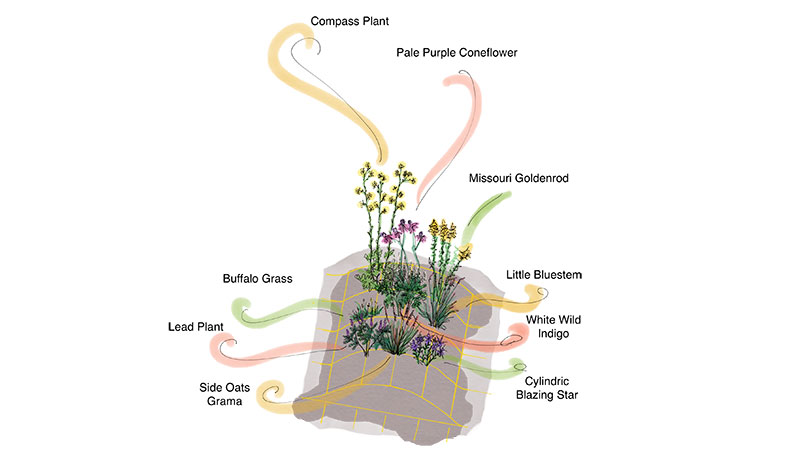
Below you’ll see a guild design intended as a template for how to plant a spot. This can, of course, be extrapolated to a large scale.

prairie
courtesy of Zach Loeks
Buffalo Grass
  • Very fast growing
  • Does not like shade
  • Warm-season grass
Compass Plant
  • Can live for 100 years
  • Can grow to 8 feet
  • Plant on the north side of the site, as it will grow tall and capture light no matter what.
Pale Purple Coneflower
  • Medicinal
  • Beautiful flowers
Missouri Goldenrod
  • Edible
  • Restoration/rehabilitation plant
  • Can grow in all sorts of poor soil conditions
Little Bluestem
  • Ground cover for protecting the soil
  • Great for birds, providing nesting material
  • Warm-season grass
Wild White Indigo
  • Nitrogen-fixing plant
Cylindrical Blazing Star
  • Shallower roots
  • Less competitive
  • Good option over or near a septic field
Side Oats Grama
  • Creeping rhizomes
  • Warm-season grass
  • A great soil protector
Lead Plant
  • Nitrogen fixer
  • Drought tolerant
  • Hosts many species of butterflies
Buffalo Grass
  • Very fast growing
  • Doesn’t like shade (plant on south side of small spot designs)
  • Warm-season grass

Tall grass prairie sequester carbon, build soil, provide habitat for endangered species and can create habitat for beneficial pollinators—all while creating a beautiful space that can also provide food for foraging and other wildcrafting.

For an organic farm, protecting streams and your water for livestock and irrigation, or creating a buffer for organic certification provide enough reason to put this grassland ecosystem into your planting plans.

But when you consider that planting a prairie can reduce your carbon footprint and sustain an endangered ecosystem that gave our society so much of its good soil … it’s a no-brainer to establish some prairie somewhere!

In our next article, we’ll look at how to go about planting an acre of prairie.

Grow On,

Zach

Categories
Crops & Gardening Farm & Garden Food Foraging Recipes

Recipe: Fermented Sunchokes With Turmeric 

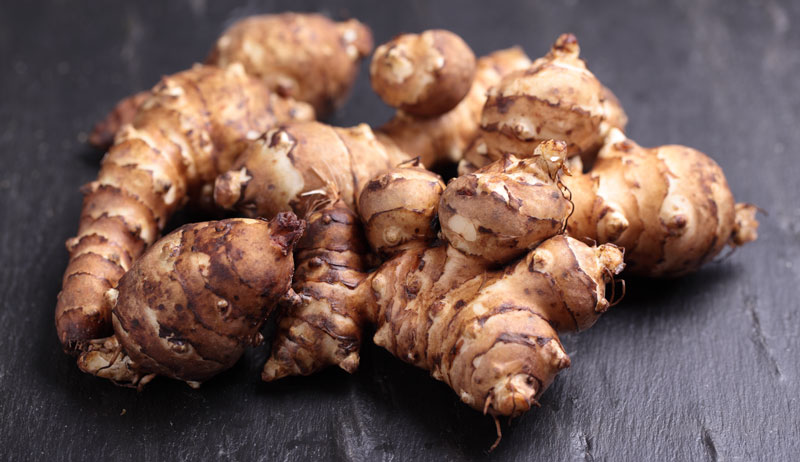
Many people avoid sunchokes, also known as Jerusalem artichokes, because they have a tendency to cause gas. But cooking the tubers helps with this, and fermented sunchokes digest easily, too.

Fermented sunchokes have the texture similar to a water chestnut. This simple fermented recipe creates a crunchy, flavor-packed pickle. The end result is great enjoyed in salads, on the side of a meal or served on a charcuterie platter. 

Yield: 1 pint 

Ingredients

Main
  • 2 cups sunchokes, unpeeled, sliced into coins 
  • 1 garlic clove, crushed 
Brine
  • 2 tsp. coarse kosher salt, dissolved in 1 cup water 
  • 1 tsp. ground turmeric powder 

Scrub the sunchokes clean and trim away knotty ends. Slice into 1/4 to 1/2-inch coins. You can remove the skin if you prefer. However, the natural bacteria present on the skin does aid in the process of fermentation.

They will still ferment properly if you would rather not eat the skin, though. 

Add the garlic and sliced sunchokes into a clean pint canning jar. Leave 1 1/2 inches of headspace (room from the sunchokes to the rim of the jar). 

Mix together the brine and pour it over the sunchokes until they are completely submerged by at least a 1/4 inch. Remove any small pieces of food that float up to the top of the brine. Produce above the brine will increase the risk of the ferment spoiling.

Wipe off the rim of the jar with a clean, dampened towel. Add the canning jar lid, and tightly screw on the ring. 


Read more: You can find sunchokes in the wild by foraging!


Fermentation 

This is an eight-day ferment. Ferment at room temperature, ideally between 60 to 75 degrees F (15 to 23 degrees C), and keep out of direct sunlight.  

Check on the ferment daily to make sure that the brine covers all the produce. If the produce has floated above the brine level, use a clean utensil to push it back below the brine.  

Burp the jar daily. Unscrew the lid briefly and tighten it back on to allow any built-up gas to release (and avoid possible jar breakage or the ferment from overflowing). 

Once the fermented sunchokes have reached an ideal flavor (garlicky and tangy with some effervescence), transfer the jar into the refrigerator, brine and all. 


Read more: Ready to start fermenting? Here are the top 5 supplies you’ll need.


Side Notes 

If you do not have a glass jar weight, you can improvise by using an easily removable small food-grade glass dish that fits inside the jar. Or, if you have a smaller glass canning jar that can fit into the mouth of the jar you are fermenting with, you can use that to keep the produce pushed under the brine. 

If you prefer to use fresh turmeric instead of ground turmeric, you can substitute 1 tbsp. grated fresh turmeric in this recipe. 

If you are unsure if your water is safe for fermentation, you can boil it and allow it to cool to room temperature before stirring in the salt to make your brine. 

This recipe has been adapted from Can It & Ferment It (first edition) with permission from Skyhorse Publishing, Inc.