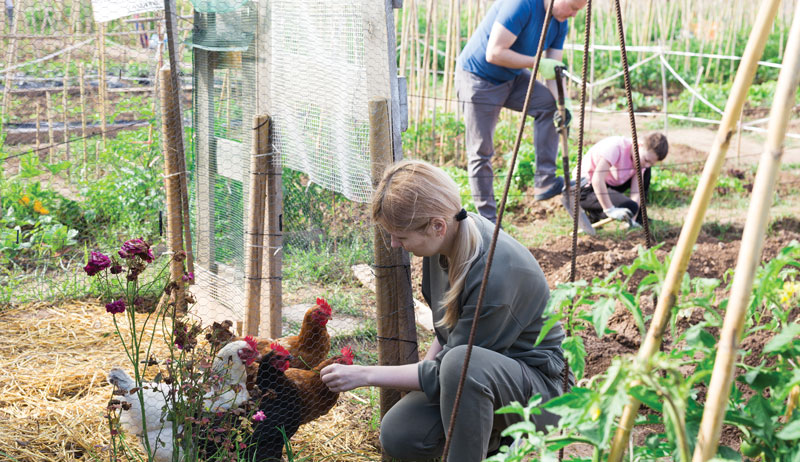
“As a child, my grandmother had a small farm with chickens and various other animals, which definitely sparked an interest in self sustainability,” says Katie Jaun, who runs the poultry-focussed Juan Hobby Farm in Saint Bernard, Louisiana. “I would get so excited to collect the eggs for breakfast and feed the chickens our scraps.”
After being exposed to a life filled with animals at an early age, Juan graduated to volunteering at local shelters. Later, she found a vocation in veterinary medicine, then founded Juan Hobby Farm.
“I have always been an animal lover. And for as long as I can remember I’ve been surrounded by, and cared for, a variety of different animals,” says Juan.
We spoke to Juan about living with poultry and farming through hurricanes. We also put the spotlight on a rooster named Versace.
“The biggest challenge we have overcome with backyard farming would have to be the force of Mother Nature,” says Juan. “Living in southern Louisiana, we have been through two major hurricanes, which brought with them pretty gnarly winds and heavy rains.”
In 2020, Hurricane Zeta passed through. The storm “crumpled the chicken run with her heavy winds and knocked down a large portion of our fence, which was less than ideal because we had just added our pig, Joel, to the farm.”
Zeta was followed by Hurricane Ida the same year. Juan, thankfully, was able to successfully evacuate the farm’s resident birds and avoid losing any animals.
“We had to do some pretty extensive clean up around the enclosures. And we had to fix downed fences, wires, roofing and general damages around the property,” Juan says. “We are still in the process of fixing the damages to our house.”
Each chicken on Juan Hobby Farm is known by name. “There are moments when it gets stressful and even heartbreaking having so many farm animals to care for. But it is just as rewarding,” says Juan.
“I have definitely stood in the middle of our yard surrounded by 40-plus poultry and a potbellied pig thinking to myself, ‘How did it come to this!’ or ‘What have I done?!'”
Balancing out the moments of stress, Juan says the farm has also transformed into “my place of solace on a bad day, companionship on a lonely day and laughs on days when I could barely muster up the courage to smile. I would not have it any other way.”
Versace is one of two roosters on Juan Hobby Farm. “He is so beautiful with some of his feathers like velvet. And he loves to call attention to himself,” says Juan. “He is a wonderful protector of the flock, but still gets chased around the yard by our male duck named Forrest. He has never been aggressive toward any person. It would be a travesty to not have him around.”
Beyond the poultry at Juan Hobby Farm, Juan says that gardening is becoming an increasing focus.
“In garden Zone 9a, we have a variety of options year round. So I started with hardy herbs, cucumbers and peppers that I knew would take off. But this fall I tried my hand at some cruciferous veggies that I had never grown like broccoli, cabbage and cauliflower along with kale and lettuce.”
Juan adds that the lettuce and kale is earmarked to feed the farm’s rabbits and poultry. “Our Pekin duck named Clementine is obsessed with fresh kale out of the garden.”
Last year, Juan Hobby Farm successfully grew cauliflower, even though Juan had doubts about how bountiful the crop would be. When it comes to utilizing the cruciferous globes, Juan recommends roasting them at 400 degrees for around 40 minutes covered with soy sauce and seasonings.
“We then cut it into vertical portions, almost like cuts of steak,” says Juan.
“Besides the enormous amount of eggs the girls gift us with daily, the most rewarding part about running this farm is the love that my wife, Rebecca, and I share by keeping everyone happy and healthy,” says Juan, reflecting on the joys of the farm. “Just being able to sit back and watch the animals and garden continue to grow and be happy is worth all the work and mistakes we’ve learned along the way.”
It tolerates frosts and blistering heat equally well. And, if I’m a little slow with my watering, it doesn’t immediately wither either. As such, kale must surely be one of the most forgiving crops I’ve ever grown.
Turns out, it’s also one of the most varied.
Now, maybe you save your own seed like I do. Or maybe you only purchase from the same couple of seed suppliers year after year. Whatever your practice, it’s easy to get into a rut. For years I’ve stuck with tried-and-true kale varieties like Ragged Jack and Blue Curled Scotch.
But after investigating these lesser-known types I’m ready to branch out. And maybe you will be, too.
Brassica Basics
From tender-and-tasty to impossibly frilly, there are countless kinds of cabbages. And kale, a close cabbage relative, follows suit.
Known as Brassica oleracea acephala, kale is cabbage-like—except it has individual stems and separated leaves rather than compact heads. (In fact, “acephala” means without a head.)
Check out really old seed catalogs or gardening books and you’re likely to see kale referred to as “borecole.” The word comes from the Dutch “boerenkool.” (“Boeren” means farmers and “kool” is cabbage.)
You’re also likely to see a few different categories of borecole—culinary types, ornamentals and “animal fodder.”
But don’t be fooled by that last category. Many of the oldest kale varieties originally grown to feed cattle and sheep are perfectly tasty—and prolific.
Sometimes called tree cabbage, Jersey cabbage or Jersey kale, “Walking Stick kale” is one of the most interesting “animal fodder” types. It can reach anywhere from 5 to 10 feet tall and bears leaves up to 2 feet long.
According to the folks at Baker Creek Heirloom Seeds, “[Walking Stick kale was] grown in Europe for centuries, mostly on the island of Jersey, the largest of the Channel Islands, where its long sturdy stalks were varnished and turned into canes.”
Susan Brackney
If you opt to grow Walking Stick kale (see image above), frequently harvesting the lowermost leaves should help to encourage more robust upright growth. Also, allowing stalks to grow through multiple seasons can result in thicker canes. Once Walking Stick kale stalks are harvested, dried and cured, you can use them as plant stakes, trellises and more.
“Thousandhead kale” is another old, animal fodder variety worth a try. Shorter than Walking Stick, Thousandhead can grow 5 to 6 feet tall. It can produce leaves up to three feet long, and, despite their size, they’re said to remain tender.
What’s more, because the leaves are mostly flat, there are fewer spots for garden pests like cabbage worms to hide.
Decorative varieties are grown more for their looks than taste. Still, types like “Casper kale” can satisfy in the landscape and in the kitchen. Casper has white interior veins surrounded by bright green leaf margins. The plant grows to about 2 1/2 feet high and puts on leaves that are tender and sweet.
As Casper kale ages and the weather cools, its green leaves show still more patches of bright white.
Lacinato or “Dinosaur kale” is one culinary variety which happens to be incredibly showy. Its deeply textured, blue-green spears stretch up to 2 feet tall and spread out about 2 1/2 feet.
Hailing from Italy, it has long been a staple in kitchens there—particularly in Tuscany.
Open Source & Hybrids
While not quite as white as Casper, “White Russian kale” does have striking white stems which contrast prettily against its bluish leaves. As with many varieties, White Russian gets sweeter with cold weather and is cold- and frost-tolerant.
Frank Morton of Wild Garden Seeds originally bred and released White Russian kale through the Open Source Seed Initiative.
Looking for a really compact kale? “Prizm kale” is an F1 hybrid and former All-America Selections winner that thrives in containers and small spaces. Its compact leaves produce only very short stems.
The plant itself grows under 2 feet tall with a roughly 1-foot spread.
If you love deep red kales, “Redbor kale” is one other F1 hybrid to consider. Said to be the “red sister variety of the market standard curly green kale,” Redbor produces frilly, near-purple leaves. It also becomes sweeter in cold temperatures and can withstand varied growing conditions.
Poultry owners involved in 4H or in their county fair or state grassroots group know full well what it means to show a chicken: months of intense training (for showmanship) and/or preparation for a shot at winning the coveted Best of Show title.
But what about the other show business? The one that doesn’t involve exhibition cages but does involve lights, camera and action?
Anyone who saw 2021’s Venom: Let There Be Carnage couldn’t have helped but notice Eddie and Venom’s pet chickens, Sonny and Cher, and wondered, “How can I get my chickens into show business?” Here are six points to consider.
How Sweet It Is
Directors looking to cast live chickens in their commercials, shows and films will want to work with gentle-natured chickens the majority of the time. Yes, a script may occasionally call for a flighty, hyperactive hen.
But for most projects, the more biddable the bird the better.
After all, your chickens will be surrounded by an unfamiliar crew of techs, engineers, handlers and actors in a strange setting with bright lights shining down on them. The chickens they cast have to be able to take this all in stride and still stay sweet.
Temperament isn’t the only trait directors seek when casting. Again, unless it’s for a specific project, they’re going to want chickens that look like typical barnyard chickens.
Silkies may be adorably fluffy. Cochins might be cuddly mama hens. But you’ll have better luck with a more traditional-looking type, such as Buff Orpingtons, Rhode Island Reds, Golden Comets, and ISA Browns.
Whichever breeds you select, make sure they are raised in an ultra-clean environment. The casting call might be for a barnyard bird, but that doesn’t mean your chickens should bring the sights and smells of the barnyard with them.
Schooled for Success
A fair amount of training will be necessary for your chickens to behave … well, like chickens on the set. Your best bet is to raise your future show business stars from baby chickdom by frequently and regularly handling your chickens in a variety of settings.
You may also want to teach your birds such tricks as:
eating from your hand, then from a stranger’s hand
jumping for a treat
coming when called
Ability to perform on cue may increase your chickens’ chances at being cast.
In order to gain a casting or ad director’s notice, you’ll need to present your birds in an eye-catching way. The simplest way to do this is via a “comp card,” a single- or double-sided sheet featuring full, profile and close-up photographs of your chickens (and a group shot if possible).
Ask around to find a professional photographer experienced in animal portraiture. They’ll have the patience and ability to capture the best images of your birds.
Be sure to include the name and breed of each chicken on your comp card as well as your name and contact information. If you choose to create a web site or social-media account featuring your feathered friends—an excellent wayto gain visibility—include the links and account names on your comp card.
Go for a Pro!
Professional representation may be the best option for getting your chickens into show business. Contact a talent or modeling agency in your area and ask for a referral to an agency that represents animal actors/models.
Call this agency to ask how they contract new talent. The agency may ask for your birds’ comp card or for a “call,” or appointment, to meet them. If an agency agrees to represent your chickens, congratulations!
They’ll do the leg work for you, finding gigs for your birds. But they will claim a percentage of your chickens’ earnings as their fee.
DIY Promoting
If you’d rather handle show business opportunities for your chickens yourself, be prepared to blanket the media with your comp cards. Send these out to the art directors of your local newspapers and magazines, to the editorial directors of your local televised news stations and to local advertising agencies.
Expand past local if you’re willing to travel. If you have film-production companies nearby, send your comp cards to them as well. You can even contact poultry feed and supply companies. You never know if they might looking for a fresh feathered face for their products.
From her .25-acre mini farm in New Mexico, Juliann Salinas talks all about beekeeping; the fragility of the local food system exposed by the pandemic; the Women, Food & Ag Network; and more.
You’ll learn a quick history of WFAN’s 25 years, from environmental justice to racial justice, all focused on co-creating a just, equitable and ecological food and agricultural system that includes a place for strong women and nonbinary leadership. See where you fit in to the Growing Community Resilience program for support and connection, Harvesting Our Potential mentorship program, Women Caring for the Land education program, and Plate to Politics program to raise up women’s leadership in food and ag policies.
Jules delves into the impact of the inflexibility and vulnerability of our food system, particularly on the Native communities in her area. Hear about the solutions that the community developed and how far it is that we have to go to achieve truly resilient local food networks.
Learn the challenges of farming in New Mexico and what is possible to grow on .25 acre! And stay tuned to the end for Jules’ tips for the beginning beekeeper—including how to expect the unexpected in a changing climate.
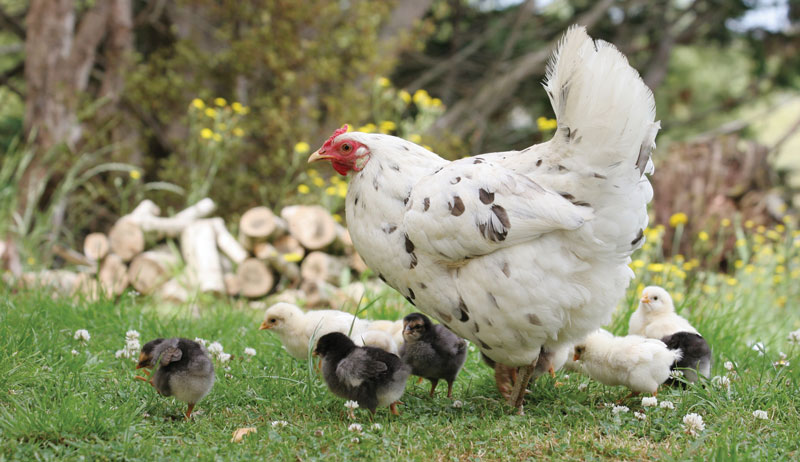
Hatching eggs from your flock is not always top of mind, but if you have ever thought about letting some of those eggs stay in the nest boxes so nature can take its course, here’s your guide to get started.
A few years ago, I decided to do just that and try hatching eggs. My hens were broody, and I was always pulling eggs out from under them. They’d squawk and peck me in protest as I robbed them of their clutches. They would then spend a few more days sitting on the empty nest box, brooding.
It made me sad.
One day, a friend talked me into letting one of my hens keep a few of her eggs. Instead of pushing the hen aside and taking her eggs, I left her alone with her hatching eggs. About three weeks later, I was introduced to the incredible joy of watching a mother hen raise her babies.
It was an experience I’ll never forget, and one I recommend to all chicken lovers.
Here are 10 reasons to let your hen try hatching eggs and all experiences I had with my own brood.
Setting the Hatching Eggs
Broody hens can be a problem if you regularly remove eggs for human consumption. They tend to stay in the nest box for days, seemingly unable to accept the fact that their eggs are gone. But if you want to hatch some chicks, a broody hen is exactly what you need.
Once she lays a clutch of hatching eggs, your hen will spend 21 days sitting on them in the nest box, leaving only for a few minutes a day to get some food and water, and to relieve herself. (If you’ve never seen a broody poop, be prepared. It’s huge!)
Most of the time you check on your expectant mother, she’ll be sitting in the nest box with great purpose, feathers puffed up to ensure she covers all the eggs beneath her. (You can help her out by putting food and water close to the nest box so she doesn’t have to wander too far for sustenance.)
Sue McDonald/Shutterstock
Hatching Eggs: The Hatching
Actually seeing the chicks hatch can be tricky because Momma hen will keep them covered just about all of the time. But if you keep track of when the eggs were laid and are vigilant, you might get lucky.
On days 20 and 21, check the nest box frequently. Keep an eye out for any disturbance under the hen. She may get up and out of the box for a minute while chicks hatch but will go right back to sitting on the eggs as soon as she can.
If you are lucky, you’ll catch a glimpse of a baby pecking its way out, but only briefly before Momma sits back down. The truth is that you probably won’t know the babies have hatched until you hear the sound of peeping coming from underneath Momma.
It’s likely the first time you will see the chicks is when they are poking their heads out from under Momma’s breast feathers. In a day or so, the babies will start venturing out from under her to explore the world. This is your chance to see how many you’ve got!
The chicks will stay close to the hen most of the time, but don’t be surprised if one wanders farther away then you’d think. Momma won’t like it and will do her best to keep all the babies close to her.
She’ll also attempt to annihilate anyone who gets too near them.
The family dog, the rooster or even you are subject to being chased and pecked at if she feels like one of her babies is threatened. (My Corgi made the mistake of innocently walking too close to one of my hen’s babies one day, and she chased the poor dog around the yard for five minutes.)
You’ll soon learn how the expression “mother hen” came to be applied to anyone overprotective and doting. Momma will be vigilant in protecting her young and stop at nothing to make sure they survive to adulthood.
It’s not unusual to see mother hens beating up cats, hawks and even coyotes who dare come close to their chicks.
Feeding Chicks
Unlike songbirds, baby chicks are ready to eat on their own from hatch day. You’ll want to provide a chick feed for them because regular chicken-sized food will be too big for them to swallow. You can put the chick mash out in a separate container when you feed your other chickens.
The fact that scratch and pellets are too big for the babies to swallow won’t stop Momma from offering it to them, however. You’ll see her call her babies to the food, clucking loudly and dipping her beak in the direction of the food.
If your flock free-ranges on your property, you’ll see a lot of this behavior as Momma wanders around the yard looking for snacks for her babies to eat. Bugs are a particular treat. She’ll make quite a fuss if she finds one that she thinks her babies will enjoy.
Sue McDonald/Shutterstock
Proud Papa
Your rooster will be one to watch during all this, too, and will likely take one of two approaches to fatherhood: He will be a doting, watchful dad, or he will ignore the babies.
Momma hen’s attitude toward him will help determine which tact he takes. If the hen tolerates his presence around the chicks, he may develop a protective attitude toward the babies, shielding them from any threats, real or imagined.
If you rooster is already an aggressive type that likes to intimidate people or other animals, he may get even more obnoxious now that he is the father of some young chicks.
The flip side of the doting father is the rooster who wants nothing to do with the babies and completely ignores them. If Momma attacked him the first time he came near them, this is likely the result.
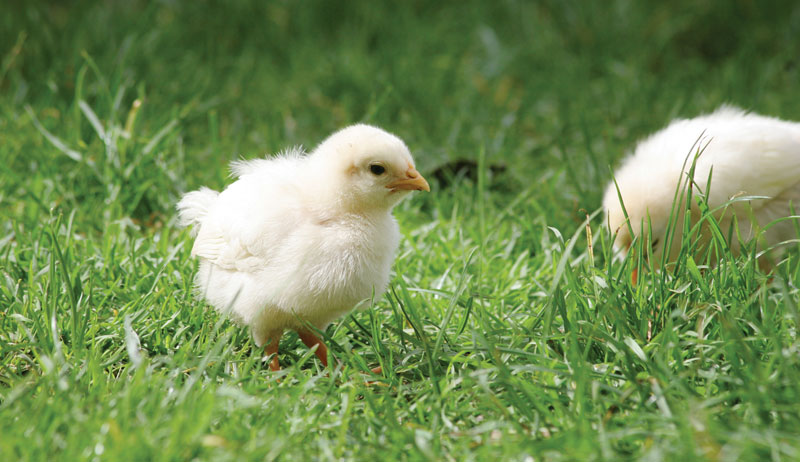
Take a lot of pictures of your little chicks after they hatch because they grow up fast. For the first month of life, they’ll still be cute and fuzzy, but you’ll notice they are a little bit larger every day. By week five, they will have turned into teenagers—also known as pullets.
You still won’t be able to tell which ones are hens and which are roosters. At this stage, they all look alike. You will notice they are becoming more independent of Momma now and will wander farther and farther way from her.
At some point, they’ll be too big to squeeze underneath Momma, although they’ll keep trying. You’ll know they are really growing up when you see them roosting on their own, without Momma as a shield.
Gender Reveals
After a few months, you’ll start to see gender characteristics developing on the male chicks. Their tail feathers will start to lengthen, and their combs will get bigger than those of their sisters. That characteristic rooster posture will slowly develop, too, as their bodies change shape.
Meanwhile, the hens in the group may start laying an egg now and then. This is the time when your head rooster will be aware he has possible rivals in the flock. The young roosters are unlikely to challenge his authority at this age, but once they hit a year or so old and spring comes around, you maybe have a rooster fight on your hands.
This is a good time to rehome most of your roosters, or keep them separate with their own flock of hens, at least during the spring.
Part of the Flock
If you have ever tried to introduce a new hen to your flock, you probably know this can cause problems. Even if you make the introduction slow and easy, the established hens are unlikely to accept the new girl right away and may pick on her for a while—or forever.
If your new hens began with the flock as baby chicks, there is likely to be no harassment from the older hens, even after the young hens are fully grown. The established hens seem to view themselves as “aunts” to the younger ones and treat the newer hens as members of the family.
Your flock’s rooster will also stop seeing these girls as babies and will begin to treat them like bona fide members of his harem.
Allowing one of your hens to hatch and raise her chicks can be an incredibly rewarding experience. One of the joys of chicken-keeping is observing the behavior of these wonderful birds. And no behavior is more fun to watch than that of a mother hen and her brood.
You may find it to be so much fun, in fact, that you’ll want to hatch chicks again and again.
Hatching Eggs: More Information
Sibling Love
As the young birds become more independent of Momma, you’ll see they have formed a close attachment to each other. You’ll notice the siblings hanging around together a lot, whether it’s patrolling the area for food or roosting in the coup at night.
Just like all siblings, they have moments where they don’t seem to care about each other, each wandering off alone to explore. But it doesn’t take long before they all come back together again, making it clear they all share a special bond.
Under Cover
When the sun goes down and the chickens head for the coop or the roost, you’ll see Momma go back to the nest box with her wings outstretched, calling her chicks.
The babies will run to her and scurry underneath her wings as they bury themselves in her feathers. She’ll settle herself down around them, making sure they are completely covered. This keeps them warm during cool nights and helps protect them from any possible nighttime predators.
This article about hatching eggs from your own flock originally appeared in the January/February 2022 issue of Chickens magazine. Click here to subscribe.
These easy egg-and-ham wraps with arugula and sundried tomatoes were initially inspired by a meal that I recently ate on an airplane, of all places. Rolling up chopped hardboiled eggs with ham was a wrap combination I hadn’t considered before. And it ended up being delicious.
So, I took that idea and added some fresh, flavorful ingredients from one of my favorite combinations: arugula and sundried tomatoes.
Whipped cream-cheese and diced sundried tomatoes make a creamy, slightly sweet spread. Then it’s layered with smoky ham, sliced hardboiled eggs, and some sprigs of peppery arugula. Use deli-sliced ham or chop up leftover oven-cooked ham.
This wrap can be made ahead of time and packs well for taking to school or work.
Yield: 2 servings
Ingredients
1⁄3 cup softened or whipped cream cheese
2 tablespoons diced sundried tomatoes, packed in oil
In a small bowl, stir together the cream cheese, sundried tomatoes, salt and pepper.
Lay one tortilla on a flat work surface. Begin at the edge farthest from you, and spread half of the cream cheese over about 3⁄4 of the tortilla. Spread it just to the end of that far edge. This will help seal the wrap when you roll it up.
On the end closest to you, layer two slices (or 1⁄4 cup) of ham. Top with half the egg slices and a 1⁄4 cup of arugula leaves.
Working from the end closest to you, tightly roll the wrap, tucking in the sides as you roll. Place seam-side down, and cut in half (if desired). Repeat with the second wrap.
Serve your egg-and-ham wraps right away, or store in an airtight container in the refrigerator for up to a day.
This article originally appeared in the January/February 2022 issue of Chickens magazine.
A toolshed is pretty much a requirement on any farm. It’s the perfect place to store your tools and small machines where they’ll be protected from the wear and tear of weather. Plus, a toolshed encourages better organization, so you always know where to find the right tool for any job.
Perhaps your farm already has a toolshed (or two, or three) perfect for your needs. But if your farm somehow lacks this practically essential feature, you’ll probably want to add one. The question is, should you build a toolshed yourself or purchase one?
The answer depends on several factors. Let’s explore some of the pros and cons of each approach:
Build a Toolshed
Pros
If you’re a DIY-type, handy with construction projects, building your own toolshed can be the perfect choice. Building a toolshed from scratch offers maximum flexibility. If you’re handy with blueprints, you can design a toolshed of the precise dimensions and style to suit your needs.
It can be as simple or complicated as you desire, and constructed from the precise materials you wish. Best of all, building a toolshed tends to be less expensive than purchasing a toolshed.
Cons
Building a toolshed takes time and effort, and for busy hobby farmers, that can be quite a commitment. Working in short spans of free time can stretch the project across a longer timespan than you might prefer.
And if you’re not very experienced with construction projects, it can be a formidable undertaking.
The main advantage to buying a toolshed is the time and effort you’ll save. If construction isn’t your strong suit, you may be able to purchase a prebuilt toolshed and have professionals deliver it to your site. It doesn’t get much simpler than that!
But even assembling a prefabricated toolshed kit is faster and easier than designing and constructing one from scratch. You might also find you can purchase a more complex and/or decorative toolshed design than you would be capable of building yourself.
Cons
Buying a toolshed may afford you less customization options than building one yourself. This might not be a major issue, but if you have very specific requirements (or if you’re trying to match the design style of other farm buildings), you may run into limitations.
There’s also the price aspect to consider. The tradeoff for saving time and effort might be an increase in the overall cost of the project.
We began our adventures in backyard chicken-keeping last summer like so many people during COVID-19. I didn’t know I would soon think of these feathered friends as members of the family.
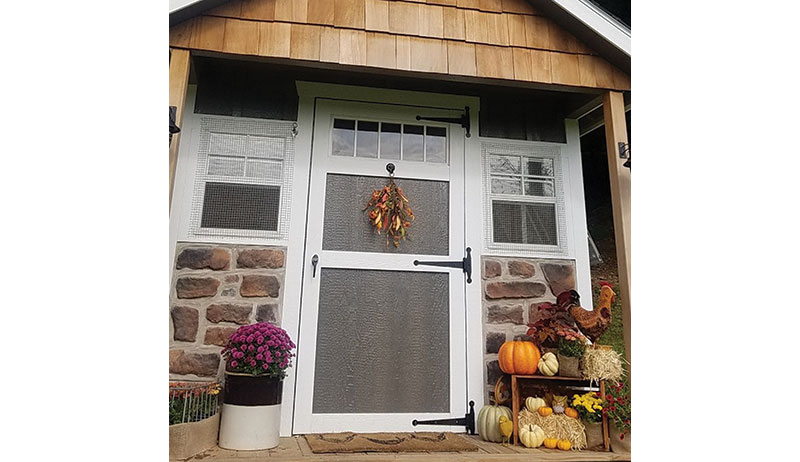
“Crazy chicken lady”—that’s what they whispered when I walked into the design center where we had our shed built several years ago. I arrived with three pages of specs and a desire to look at least half sane when I said these plans were for a chicken coop.
While my design plans were particular, my goals were simple. I hoped to incorporate all the things that maximize efficiency, promote a healthy living environment for our chickens and be visually appealing.
Within a few months, the custom coop arrived. We installed an automatic door, hung solar lanterns and made easy-to-clean dropping boards from corrugated plastic. I sewed chicken fabric panels for the nesting boxes, hanging them with a strip of Velcro for easy removal and washing.
Jennifer Kutchey
Artificial turf squares in the nesting boxes make those areas easy to clean and keep tidy. We installed hardware cloth on the open eaves, over all the windows and around the perimeter to secure the coop from predators.
In the spring, we had our first broody hen. Before her three perfect little chicks hatched, I made a custom brooder to fit securely in the unused space under the nesting boxes.
The transition to the new coop wasn’t the smoothest. For several weeks the hens laid their eggs everywhere but in the nesting boxes. Finally, the girls started to embrace their new living quarters. And we stopped seeing eggs laid on the floor and roosting bars all together.
Jennifer Kutchey
The space in this coop keeps my chicken math in check. We’re at maximum capacity. As tempting as it is to add to the flock, the health of our chickens remains top priority.
We have enjoyed owning chickens more than we could have ever imagined. The experience has truly been a blessing for our entire family. Like so many fellow chicken-keepers, I wear the “crazy chicken lady” badge with honor! —Jennifer Kutchey , Manchester, Maryland.
This article originally appeared in the January/February 2022 issue of Chickens magazine.
“Idle hands are the devil’s plaything” is a saying that most people think only applies to humans. On the contrary, it can apply to all species of animals, especially poultry. Many chicken boredom behaviors can appear if your birds aren’t enriched, and some aren’t the greatest to see.
If your flock is bored, it’s not going to be living the best life. Particularly in winter, you might see these behaviors more often. Keeping your flock cooped up can increase the chances of these chicken boredom behaviors establishing.
Always on the move, chickens are extremely curious little creatures. With warmer weather, many flock owners free-range, and with the multitude of activities that they participate in throughout the day, chickens can get bored very easily when weather turns cold.
Many things happen throughout a bird’s day. Pecking, scratching, chasing after bugs, flying up in trees, playing in weeds, socializing, dustbathing, sunbathing and investigating anything foreign are just a few daily experiences. In a large environment, chickens have many activities to behave in and can keep themselves entertained all day long with no issues.
Once you coop your birds, you can take a lot of these behaviors away without meaning to.
Always, always, always ensure that you have more than enough space for your flock. You can never go wrong with a large run. This will ensure that even if you have bully birds, your bottom bird will have enough space to get away.
Bird Behavior
We’re going to dive into these behaviors one at a time before we get into chicken boredom busters.
Feather Picking
Feather picking and feather loss are going to be a leading sign. Over time, you’ll learn your flock member’s individual traits.
Most flocks have a “bottom bird” that is the bird at the very bottom of the pecking order. This bird will get picked on, and you’ll see this sign first thing on it. When chickens are bored (sometimes feather picking could indicate another issue), you’ll start to notice broken and/or missing feathers. What is happening is that another bird is bored, and they’re picking at the other bird and not at the ground or something else.
If this goes on too long, you risk birds in your flock getting injuries and illness. If a bird is picked on too much, their skin will start to suffer and you’ll have an increased risk of them being cold or getting an infection.
Bored birds can also start eating their eggs. They might do this with a vitamin deficiency, as well, but if they’re cooped up and bored, this behavior will rear its ugly head.
During winter, some breeds lay, while others don’t. You’ll have to rely on how well you know your flock to see when this behavior will make an appearance. If you normally get one to two eggs daily during winter and then you begin to get zeros across the board, suspect that your flock may just be tired of having nothing to do.
Hen Destruction
Another issue you can run into is destruction. When chicken boredom sets in, you flock will start messing with things they normally don’t touch. If you have netting within their reach, they may start flying into it or pecking at it.
Destruction doesn’t only apply to their coop but to each other. Remember: They’re genetically related to dinosaurs! They’ll stir up arguments amongst themselves just to give themselves something to do. This again can lead to injuries and illness.
If you have roosters mixed in, they may repeatedly challenge each other or overbreed your hens if they get bored.
Boredom busters are here to help curb the above chicken behaviors. You want boredom busters that are easy and provide entertainment for long spans of time when you can’t be in the chicken coop with them. You want to bring a complex environment in as much as you can and provide them with some type of stimulation.
Harry Kingston/Shutterstock
Garden Treat
This one is easy enough! If you grow a garden or visit a grocery store, pick up a watermelon, pumpkin or any large fruit or vegetable. This buster can be healthy, as well as add preventative superfoods to your birds’ diet.
Take a watermelon or pumpkin, and cut it in half. I like to put oregano on top of the cut part because oregano boosts birds’ immune systems. However, you can use any topping you know your flock enjoys — blueberries, strawberries, blackberries, herbs, mealworms, etc.
Set it in your coop, and you’re done! This will keep your bird’s attention for most if not all day.
During summer, if I have to put my flock inside the coop for predator reasons, I use watermelon, cucumber, squash, zucchini and balls of lettuce or cabbage. During fall and winter, I’ll use pumpkin, broccoli, cauliflower and different types of squash available then.
Just a Swinging
Give them a chicken swing and boredom begone! You can buy a swing from many retailers, but they’re so easy to make. I start with finding a 2- to 3-inch-thick branch or piece of wood. I’ve also used tobacco sticks when I’ve had them available.
I get one that’s at least 3 feet in length, so birds aren’t knocking each other off to have a turn and everyone gets a turn. Plus, they have the extra stimulation of keeping their balance when another bird tries to jump on.
Next, you’ll need to find some baling twine or rope. Tie a piece of rope on each end, and tie the other ends on a rafter that you have somewhere in the coop. If you don’t have a rafter or sturdy point to tie the other ends of rope, you may need to make a stand. You can do this easily with two 4x4s set into the ground and cut to the desired height.
Lay another 4×4 across the top of those two, and screw or nail together. You can easily attach your rope ends to that.
Time for Toys
Give them toys! Chickens have been found to be very intelligent and emotional animals. Chickens can function on the mental level the same as about a human toddler.
If you are a parent, don’t throw those toys away just yet! Some toddler toys can keep your flock entertained for hours!
Throw in a mirror or two for added fun. Some favorites that I have seen are toy xylophones, toddler pianos, stacking toys and rattles. Always remember to keep the coop clear of toys that have parts that could potentially be pecked off.
You don’t want your flock ingesting decorative pieces.
You can do this buster many different ways. You can buy large, round produce and run a rope through it, or you can grab a hay bag at your nearest feed-supply store and load it up! I originally carved a hole through the middle of a pumpkin, head of cabbage or lettuce, or a small watermelon before hanging them.
I accidentally discovered the hay-bag method when I discovered my free-rangers were in the goat pen and found the hay bag as a source of entertainment. They were jumping up to pick hay out of the bag, and the idea struck to start one in my breeding pens.
I find the hay bag much easier than the rope method, and you can add a variety of treats to it. Get a small netted hay bag and not the solid kind. When I use hay bags, I put apples, leafy greens, bananas, chard, carrots and things that I could find that wouldn’t fall out of the netting.
Jump Around
Give them something to jump on! This chicken boredom buster can be free if you have logs around your property. It also doubles as a treat!
Place a few stumps and logs in the coop. The different heights will keep them busy, and they’ll get treats if any bugs run out from under the bark on the logs. If you have an old wooden ladder, this can give your flock an activity also.
When I first began seriously breeding and had to pen my flocks up, I would rotate saw horses in and out of their pens when I noticed they needed more stimulation. A pallet can also work to hold their attention.
Reduce, Reuse, Recycle
If you have old water bottles laying around, don’t throw them away. Repurpose them!
Punch or burn holes around the outside, and throw some mealworms or grubblies in it! Make more than one, and place them in the coop! Your flock will stay productive and busy pecking and rolling the bottle around to get out the treats.
Pile It On
A big pile of just about anything can hold their attention for a bit. Hay, herbs or even leaves give your flock joy by giving them something new to peck and scratch through.
With chickens being as curious as they are, a new texture of just about anything they can spread around can keep them entertained for hours. Every year I would trim back my lavender and have a big bundle to let them peck and scratch at. Helped with the coop smell as well.
Linas T/Shutterstock
Build a Bath
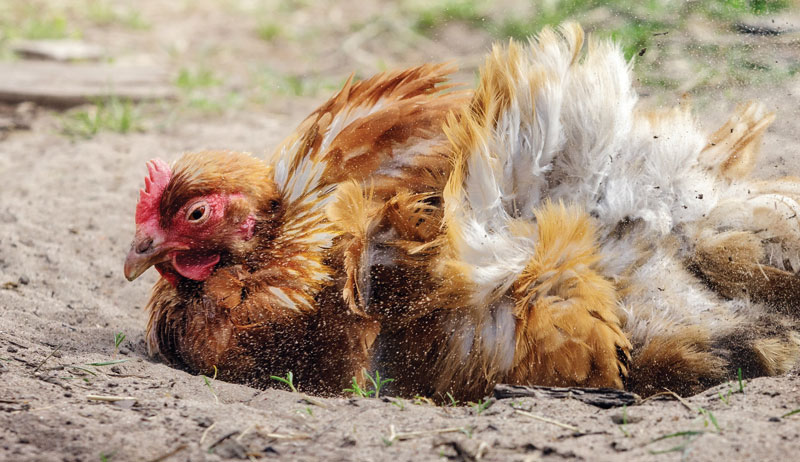
To ensure happy and healthy birds, make sure there is a dust bath somewhere in their run or in their pen area. This helps keep a flock busy for some time and keep parasites off of your birds.
Fine sand and dry dirt are the building blocks of a good dust bath. You can go the extra mile and throw in some herbs to keep your birds smelling fresh. Many chicken-keepers make dust baths in different ways. Some will let their birds make their own holes, others will put their ingredients in a tire set on the ground, and many will use a kiddie pool.
Soil Their Pen
My friend’s family has an in-run compost pile! Any compost they have, they put in an area surrounded by chicken wire with one side opened up.
My friend’s flock gets entertainment for hours, and she gets really enriched soil to plant her tomatoes in! She never has to turn it either because the chickens do it for her and even fertilize it as they scratch away.
Be Yourself
Just spending time with your flock offers them companionship and a change of pace. It’s beneficial as a boredom buster, and it can also be a positive impact on you as the chicken flock owner.
Chickens are social creatures by nature, so they can establish relationships with their caretaker. This also helps you with mental and physical well-being! Chickens can recognize up to 100 faces so they can remember who is who.
BearFotos/Shutterstock
While chicken boredom busters keep birds busy, they also help with the overall health and happiness of you and your flock, alleviate negative behaviors and keep a flock busy for a long time to come.
More Information
Hen Hack
If you grow a garden and have extra leftovers, freeze some as a cool treat during summer and to dethaw and give during winter! Don’t forget berries and leafy greens!
This article originally appeared in the January/February 2022 issue of Chickens magazine.
In my previous article, we looked at how to establish index guilds to plant perennials and learn from the resulting growth. Over the years, though, you should properly maintain your index guilds to showcase proper management.
If you neglect to manage a guild entirely, the resulting trial will showcase rewilding potential of plants, not perennial agriculture. Certainly an interesting topic to study, but not the one at hand today.
Make sure the following happens over the first three years to maximize your index guild’s utility:
Keep it decently watered, weeded and fertilized.
Observe/manage for pests.
Make observations about any stresses that seem to particularly tax a specific a plant—especially pests. If a plant succumbs to pests readily, you may consider it less favorable for perennial agriculture without a thorough pest management strategy.
Keep the mulch topped up and give only moderate fertilizer, so you can see yields under normal conditions. Note that a garden guild near a house can get way more compost and liquid fertilizer than a plant out in a field.
Make notes on when a plant begins to bear fruit or edible parts.
Make notes on how well plants interact as a guild. Are they in a healthy competition/companionship, or is one plant completely dominating another? For instance, you may observe that a fast-growing, sun-loving plant doesn’t share space well with a slow-growing, sun-loving plant.
Observe other signs of disease or successes, and conduct research based on observations.
Ultimately an index guild is a living testimony of success.This is because the plants that do well will ultimately be the ones that survive and thrive.
If some plants die, you can replace them with others.A sun-loving ground cover didn’t work? Try a shade-loving ground cover.
If a plant gets really sick, consider (after a few years) cutting it out and replacing it. Then note that this particular plant is not suitable to your conditions.
At the end of the day, the more research and care you put in, the more suitable a plant might be under the conditions you provide. And if a plant doesn’t thrive under the management care you’re able to provide, you can also evaluate its potential based on that metric.
So what an index guild shows over the years is suitability to its site and conditions: environment, ecology and management.You’ll evaluate a wide range of factors, including climate, soil, chosen companions, weed competition and your role as a steward to your plants.
Beyond Success
If a guild or a variation of a guild (swapping out one ground cover for another type, for example) is successful, then you end up with the following advantages for further perennial agriculture transition:
Knowledge of a selection of site-suitable species/cultivars that are successful
Knowledge of a mix of companionable plants under your management that succeed
Access to propagation material to spread more of these plants in your property’s seeds, suckers and scion wood
A near-to-home and much-more-mature guild helps you forecast management for future, further-out-to-field plantings of a similar guild. This can be very beneficial for understanding future management needs—a plum variety has weak roots and requires trellis support, for example. You’ll make observations for seasonal management, too, such as this plum tree is susceptible to wasp infestation of the fruit, so you will need to harvest early.
In this way the near-to-home guild’s location is a window into needs out in the field as seasonal management progresses. And the much more mature nature of the guild is a window into management needs field planting will require in coming years.
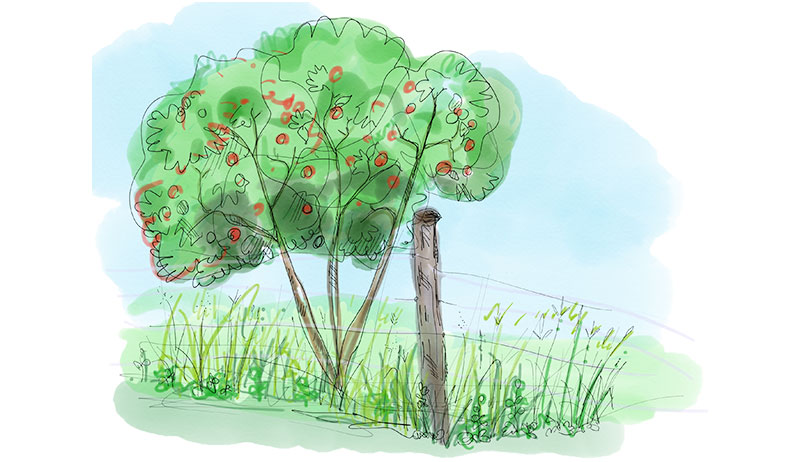
Even an old, wild apple tree on a fence line can be part of an index guild if you choose to see it as such.Observe the traits of this tree. Does it have good-tasting fruit? It obviously likes the climate. Does it have any disease? How much management has it required?
When you observe the traits and growth of a planting, you can use it as an index guild to further design more guilds, propagate successful species and help forecast management.
In essence, index guilds help increase the rate and success of transition of land to perennial agriculture. By using them, you gain:
site-suitable knowledge
plant material and seeds for propagation
actual management forecasting through guild location and maturity