Categories
Crops & Gardening Farm & Garden Food Homesteading

Don’t Forget The Dehydrator For Food & Garden Preservation

Anyone who grows their own food knows the incomparable joy of eating straight from the garden. Nothing beats a savory slice of sun-warmed tomato, sweet handful of fresh-picked blueberries or hearty helping of just-unearthed potatoes.

But gardeners also know that, not matter how healthy a family’s appetite, there comes a point during the summer where yields outweigh meals. And of course this is where preservation comes in—putting up extras for homegrown nourishment during the cold months, when growing options are scarce.

Canning is a perennial favorite, and for good reason. Fresh-picked fruits and vegetables can be batch-processed in a short span of time for a whole winter’s worth of eating. (And vibrant glass jars lined up on a shelf make for some pleasing color when things during monochromatic in winter.)

Fermentation, too, is an effective preservation technique. All one needs is water, salt and time to harness beneficial microorganisms that enhance flavor and preserve food against rot. An ancient process, fermentation is enjoying a resurgence in popularity due to reported health benefits.

And if you’ve got extra freezer space, that’s a great place to keep your bumper crop until a recipe calls for it. You can toss freezer bags of fruits in fresh, blanch greens for long-term storage or place ice cube trays of fresh-made pesto in there to pull back out in February for some garden-grown goodness.

dehydration dehydrator peppers preservation
photos by Rodney Wilson

Dehydration Is an Ancient Technique

But let’s not forget one of the oldest and most effective methods of food preservation: dehydration. A method (or, really, variety of methods) that removes moisture from food to eliminate rot and allow long-term storage, dehydration is an excellent way to put back extras from the garden to enjoy well after harvest season has passed.

While we may wonder how humanity discovered certain food-prep techniques (like, what genius first discovered grain could be preserved in the form of beer?), dehydration seems pretty obvious. Anyone who’s ever left an apple core in the sun knows that solar energy can quickly dry a piece of fruit or vegetable.

In fact, it’s believed that prehistoric people used the sun to dry seeds for long-term storage. Native Americans regularly sliced and sun-dried meats for preservation and ease of travel. Asian cultures have sun-dried food for tens of thousands of years—everything from peppers and rice to eggs. And Norwegians have dried fish going back to the Viking age!


Read more: Dried citrus makes tasty treats for year-round flavor!


Still Important Today

Despite a run of preservation advances that allowed grocery stores and well-stocked pantries to develop, dehydration is still a valid and important preservation technique.

In my home, for example, drying food is a favorite way of putting back food for later use. My family and I live in a small home, where putting up glass jars of canned produce would fill our already-tight pantry. (Also, from past experience, we know that filling our house with steam makes everyone grumpy in July, and we don’t have a canning porch here.)

Our fridge is too full to store lots of fermented goods (though I do have some well-fermented peppers in a basement corner right now). And though we have a chest freezer in the basement, it’s currently full of chickens from last year’s poultry harvest down at the family farm.

Prodded by Peppers

But this summer, when my backyard pepper plants—lemon drop chilis, habaneros and Tabasco chilis—delivered a shocking crop of fruit, I jumped on Amazon and ordered the smallest five-tray dehydrator I could find. When it arrived, I washed and dried my peppers, sliced them in half and set them on the trays.

I flipped on the dehydrator, then, after my kids complained about the habanero fumes, transported the machine down to a basement closet. I flipped on the dehydrator again, and a handful of hours later, transported some of the papery peppers to a gallon bag.

The rest I crushed with a mortar and pestle, dropped into small jars and added to our spice rack to add some kick to a future pot of chili.

A Dehydration Kick

Bolstered by the effortless success of my dehydrated peppers, I then turned my attention to other garden produce that had accumulated around our compact kitchen.

Ripe Tomatoes

Tomatoes are the most popular garden crop, hands down. And those of us who grow tomatoes know that when they come on, those plump, red fruits can pile up quickly.

dehydration dehydrator tomatoes preservation

Luckily, tomatoes dry exceptionally well, leaving sweet and tangy slices of summertime goodness. And while they rehydrate easily enough for use in a variety of recipes, I’m currently enjoying our summer tomatoes cooked into a quiche. Add in a few leaves of baby spinach and hunks of goat cheese, and you have a delightfully decadent homegrown dinner.

Herbs

Yes, you can easily wrap bunches of herbs to hang around the house. They’re attractive and aromatic as they dry, and I encourage you to do this.

But when we trimmed back a bushy batch of oregano from our front yard garden over the summer, I quickly rinsed, de-stemmed and dehydrated the herbs. A few nights later, I dipped into the stash to make a deliciously herby sauce for family pizza night.

Green Tomatoes

I can’t be the only one who rushes out at the first warning of frost to collect all the unripe tomatoes from the garden. It’s common knowledge that this is folly. The last green tomatoes are best regarded as a sacrifice to the winter gods.

But I love tomato season and choose to deny its inevitable end.

Luckily, green tomatoes have their uses, too. I fried a handful of them to make egg sandwiches for dinner. I also pickled a large jar and am still enjoying those tart wedges on salads. The rest I sliced and tossed in the dehydrator.

Dried green tomatoes are great ground up to use as a seasoning or to add a touch of sour to dry rubs.

Beet Chips

I love growing beets, especially when the roots bulge from the ground, signaling they’re ready for harvest. I also love eating beets and have been delighted to discover my kids appreciate a serving of roasted beet root, too.

But I grew too many beets this year and recently discovered a bag of red roots in a refrigerator drawer. I could have roasted them but instead chose to peel, slice and marinate slices in vinegar and olive oil. Then I salted and dried them.

The resulting bag of beet chips made for a healthy snack that my family devoured in less than 24 hours.

Jerky

I’ve raised cows, pigs and chickens for meat, but these days my livestock population is limited to six Australorp egg layers in the backyard. Also, I’m not much of a hunter.

So while I’m not raising or catching my own meat to make jerky, I’m pretty good at buying extra when I find good meat on sale. Which I how I ended up with a few bags of frozen salmon in the freezer.

dehydration dehydrator jerky preservation

I’m sure fresh salmon makes better jerky, but frozen worked fine for me, too. I just dethawed the filets, patted them dry, then cut into them slices. These I marinated in a soy sauce/brown sugar/lemon juice mixture (you can find a simple recipe online) for about half a day, patted lightly, then into the dehydrator the salmon went.


Read more: You can drying foraged oyster mushrooms to enjoy later!


Other Methods

I do love my dehydrator, but of course there are other ways to dehydrate foods. You can set slices out on screens in the sun, of course. I’ve hung peppers (sliced open to prevent mold) from strings in windows.

You can put your items in an oven on a low setting (ideally below 200 degrees F—the “warm” setting works well). You can dry using a wood stove. Or you can even put your items in a smoker on low heat until they’re dry, which will give your dehydrated food an extra layer of smokey flavor.

As of this writing, it’s winter and gardens are limited to greens and other cold-hardy plants. But it’s also citrus season in many parts of the country, and you can always practice your dehydrator skills with purchased produce.

So go ahead—give drying a try!
Categories
Beekeeping Farm & Garden Food Permaculture

Beekeeping & A Permaculture Orchard Direct Beers At Wayward Lane Brewing

The team behind Wayward Lane Brewing in Schoharie, New York originally met as college friends in Denver, Colorado, where they bonded over a shared interest in craft beer and home brewing. But it wasn’t until farm manager Andrew Rowles moved to the upstate New York region in a bid to revive his family’s farm that the momentum to launch their own venture kicked in.

“While I was learning how to be a farmer, my partners Kyle, Adam and Abbie were home brewing and perfecting the craft,” recalls Rowles. “They were searching hard for an affordable location to open their own brewery when I playfully tossed the idea out that they come here. I sent them a list of convincing reasons why upstate New York would be an ideal fit. And they actually went for it!”

Rowles adds, “I like to say, they were looking for a place for their brewery, and I was looking for a brewery for my place.”

Taking time out from running the brewery, we spoke to Rowles about how beekeeping fits into the fabric of the farm. We chatted about how Wayward Lanes plans to integrate pawpaw fruit into 2022’s brewing plans. We also got into the challenges of maintaining an 1800s hop house.

Restoring a Vintage Hop House

The tap room at Wayward Lane Brewing is based out of a hop house originally constructed in the 1800s. “It would have been easier to build a new building, frankly. But we have so much character in this one. I’m glad we went through with it,” says Rowles when talking about the structure.

“The barn was an absolute mess,” he explains. “We didn’t have a foundation, insulation, electricity, water or septic. We couldn’t even begin renovations until we had all of the groundwork in place. For a while it was seven days a week, 12 hours a day. It was trying to say the least—but worth it.”


Read more: At Arrowood Farms, brewing happens from the ground up.


Bringing Bees into the Brewing Mix

Beekeeping has become a crucial part of Wayward Lane’s brewing process. “Where the honey and other farm ingredients are going to shine the most are in our spontaneously fermented coolship ales,” explains Rowles.

“We started our coolship program about a year ago now and have the beers resting in French wine barrels in the upstairs area,” he continues. “After we decide they’re ready for bottling or blending, we will think about conditioning with our own honey and farm ingredients.”

Establishing a Permaculture Orchard

This year, Wayward Lane plans to use pawpaws in some of their beers. (The fruit trees are part of the brewery’s permaculture orchard.)

“My biggest concern is that we are somewhat waterlogged,” says Rowles of the development. “[It’s] a blessing for our spring-fed brewery but a curse for trying to establish fruit trees.”

Right now, the brewery plans to use the fruits of the orchard in a series of spontaneous ales that will spotlight tart cherries, aronia berries, elderberries, brambles and pawpaws.


Read more: Pawpaw is the hot, new crop—that’s been around a long, long time.


Meet Merlin the Brewery Cat

Beyond the bees and the fruit orchard, a crew of resident animals headed up by Merlin the cat also help keep Wayward Lane ticking.

“Merlin is the namesake of our Berliner Weisse Sour Beer, Merlin in Berlin,” says Rowles. “It’s not a kettle sour, but actually a yeast strain that produces lactic acid, which gives it a very pleasant tartness that we combine with more tropical fruits that we will be using in our long term spontaneous beers.”

Rowles adds that while the brewery has not yet honored the dog squad of Link, Eva and Sadie with their own brews, “I’m sure they will happen!”

Follow Wayward Lane Brewing at Instagram.

Categories
Beginning Farmers Crops & Gardening Farm & Garden

Grow Hardshell Gourds For Real Variety In The Garden

Some of Bobbie Lowe’s gourds are warty. Others are smooth. There are gourds as big as basketballs and gourds as small as chicken’s eggs. “I like to say we have 57 different varieties—like the ketchup,” Bobbie Lowe says. Together, she and her husband, Ben Lowe, own Benjamin’s Landing at Lowe Farms in Pylesville, Maryland.

They’ve been growing hundreds of gourds there since 2007.

Long before that, however, Bobbie used to grow and sell floral bouquets. She began growing gourds to use as less-breakable containers for her bouquets. “I got intrigued by how many different [gourd] sizes and shapes there were,” she says. “Eventually, the gourds overtook the flowers!”

Taking Shape

That’s understandable considering just how versatile dried gourds can be. Although there are myriad seed types available, hardshell gourds (from the genus Lagenaria) fall into a few main categories. Generally, there are bottle- or birdhouse-style gourds, dipper gourds, basket gourds and “snake” gourds.

Bottle or birdhouse gourds usually have a wide, bulb-like base, a slender mid-section, and another wide, bulb-like section on top. Some types include Mexican, Indonesian and Chinese bottle gourds, as well as martin, swan and penguin gourds.

As for dipper gourds, these have one main, bulb-like section at the bottom and a long, skinny neck. Some seed types include Marenka or dinosaur gourds and short-, long- and extra-long-handled dippers.

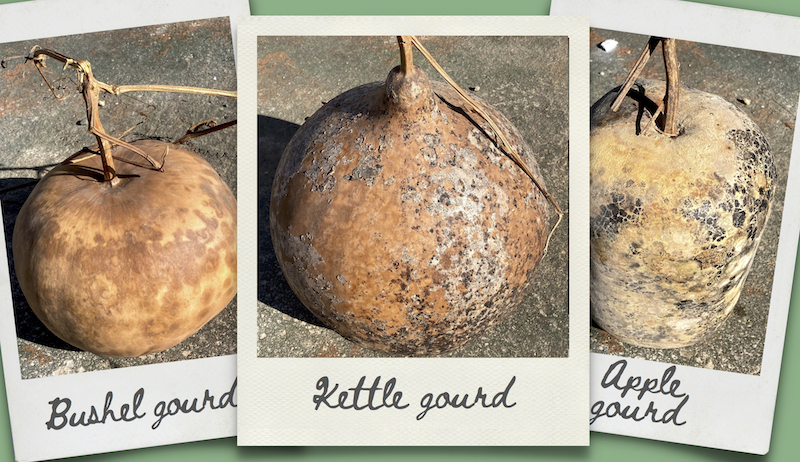
Basket or container gourds are often large and very rounded. Some of these include bushel, kettle, canteen-style, apple and tobacco box varieties.

And, as the name suggests, snake gourds are very long and skinny. As they grow, it’s possible to train these gourds into spirals and other interesting shapes.


Read more: Learn how to (safely!) clean hardshell gourds for fun craft projects.


Best for Beginners?

After they’ve been harvested and dried, hardshell gourds can last indefinitely. Crafters can carve, paint and even burn designs into the gourds’ woody walls. And, depending on their shape, gourds can become functional vases, baskets, keepsake boxes, musical instruments and more.

Not sure just what kind of gourd to try? Whether you want to craft some yourself or sell homegrown gourds to others, Lowe suggests apple, martin and bottle-style gourds. “Those are the three that are the most popular,” she says. “If [crafters] want to cut into them, the shells aren’t as hard.”

She continues, “If they’re good with a drill and a Dremel, then I would add a cannonball to that. The cannonball shell is very hard compared to the other three. Those are the ones that you’ll see mostly at the craft shows.”

hardshell gourds gourd
Susan Brackney

Get Growing

Certain hardshell gourds require a lengthy growing season to reach maturity. As a result, Lowe starts some of her gourd seeds inside her greenhouse as early as April. To aid germination, she soaks her gourd seeds before planting.

And, she cautions, germination for some types can take up to four weeks. “Mini Nigerian bottle gourds take a while to germinate,” she says. “And cannonball [gourds] seem to take forever.”

Lowe plants her gourds on about two acres each year. “The gourds need air and plenty of room,” she says. “I plant mine at least 4 1/2 feet apart with 8-foot rows from center to center.”

Gourd plants are susceptible to powdery mildew and other fungal and bacterial diseases. They’re also attractive to cucumber beetles, squash bugs and squash vine borers. Ensuring plants aren’t too crowded can help keep some pests in check.

Companion planting with marigolds can help, too.

Gourds also require about an inch of water each week. When watering, take care not to splash the leaves. Instead, direct water only to the root zone, as this can help to prevent the spread of soil-borne disease.


Read more: Grow your own luffa gourds to sell or use yourself.


Extra Steps

To boost the number of gourds you produce, you’ll need to trim the end of each plant’s main vine. “If you have 10 feet of vine, you can snip off 8 inches and be safe,” Lowe says. Doing so encourages branch growth—and additional female flowers.

Besides the gourds themselves, Lowe began selling gourd seeds several years ago. To ensure its purity, she hand-pollinates individual blooms. “The female flower opens one evening, and that’s it,” she says. “You go out when the sun sets and hand-pollinate from the male to the female.”

Then she either tapes the just-pollinated blossom shut or places a small nylon bag around it. “The bag is to keep any other insects out,” she explains. “After 24 hours, you can take the bag off.”

Want to save or sell your own gourd seed? If you’re growing multiple varieties, you’ll need to take similar precautions to avoid cross-pollination. Finally, when purchasing gourd seeds, make sure they came from similarly hand-pollinated plants.

And most important of all? Be patient. “If they plant a gourd [seed] in April, it’s going to be the following June—not that first June but the second June—until their gourds are dried and ready to craft,” Lowe says. “It takes a long time.”

Categories
Crops & Gardening Farm & Garden Farm Management Urban Farming

Gardeners Take Note—Fewer Hard Freezes Affects Plants & Insects

As a gardener, you may not exactly live for winter. Even so, you’ve likely come to appreciate that colder weather serves some important purposes. For instance, some seeds require prolonged exposure to freezing temperatures in order to sprout next season. Heavy frosts also help to regulate the numbers of certain pest insects on plants in the garden come spring. 

But winters generally have become much less predictable. According to the 2020 paper “Changing Lengths of the Four Seasons by Global Warming” published in the journal Geophysical Research Letters, “The four seasons of a year no longer have equal months, and their onsets are irregular.”

In fact, from 1952 through 2011, the length of summer in the Northern Hemisphere jumped from 78 to 95 days. Meanwhile, the spring, fall and winter seasons each lost days during that same period.

“Longer and hotter summers, shorter and warmer winters, shorter spring and autumn seasons are the new normal, and this kind of trend may be unavoidably amplified in the future,” the authors note.

“With the average minimum temperature increasing, you’re going to just be less likely to have a crossover into freezing. And, so, you’re going to have fewer of those cold snap events,” says Toni Morelli, a U.S. Geological Survey research ecologist with the Department of the Interior Northeast Climate Adaptation Science Center. She’s also an adjunct assistant professor in the department of environmental conservation at the University of Massachusetts.

Still Cold—but Different

That’s not to say cold snaps are gone for good. Instead? Over the last few years, some areas of the United States experienced extreme cold snaps after early warming periods. 

“This is a huge concern with the stone fruit tree growers but also with other gardeners in that you get your perennials coming out of dormancy and then they get hit with what feels like an unseasonably cold event,” Morelli says. “But, really, it was the warm-up that was unseasonable or atypical, and the cold event is more normal.

“It’s just that it happened after a warming event, which is not how it used to be.”

A loss of winter snow—along with its natural insulating properties—is another aspect of our weirder winter weather. “That can really be a problem for our trees, since their roots are exposed to the freezing temperatures in a way that they weren’t before,” Morelli says. “Because we’re getting either less snow or we just get these occasional melting events, so the snow pack is just not as consistent as it used to be.”

If you have potentially sensitive trees, you may need to add some extra root protection to help get them through. In some cases a temporary layer of mulch, burlap or straw may be able to do the work that a nice blanket of snow once did.


Read more: Here are some tips for preparing your farm for climate change.


Losing Out

Fewer—or shorter—periods of freezing likely will cause some gardeners to lose the ability to grow certain plant varieties altogether.

“The types of species that we’re going to see declining are going to be those that have had distributions that have historically been restricted to a relatively narrow climatic branch—potentially cold-adapted species that are losing the cold that they need to survive,” says Caroline Williams, an associate professor at the University of California, Berkeley’s department of integrative biology.

“If they haven’t had the cold that they required in the winter, plants with a strong vernalization requirement are not necessarily going to be able to accelerate their spring emergence.”

Thanks to changing weather patterns, seeds requiring a period of two or more months of consistently cold temperatures might fail to sprout altogether. You can try to salvage the situation by cold-treating certain seeds yourself.

To manufacture winter, mix seeds to be cold-stratified with sterile, moist growing medium. Refrigerate this in an airtight container.

After the requisite time has passed, remove from the fridge and try sprouting the seeds. (Just remember that some varieties take to this treatment more readily than others. So germination rates will vary.)

Eventually, you might need to switch to a plant variety that’s tolerant of a wider range of temperatures—and temperature fluctuations—instead. “If you’re planting something at the very southern edge of its range, then that’s a good sign that it’s probably not going to do as well in future conditions, “ Williams says.

“Because, typically, organisms prefer conditions from near the center of the range.”

New Climate Opportunists

Some plants that don’t require a distinct winter period in order to break dormancy may thrive within the new climate paradigm. “Many plants are able to advance their phenology and come up earlier in the season,” Williams says.

Unfortunately, many of these happen to be invasive. “Invasive species, almost by definition, are more opportunistic than other species,” Morelli says.

Only a small percentage of non-native plants become invasive, the ones that do are more adaptable to changes in their environment. “They’re actually going to be even better at responding to earlier springs and milder winters and taking advantage of those changes than a lot of the non-invasive, non-natives or than the native species,” Morelli says.

Sometimes described as “thermal generalists,” plants and insects that are less choosy about their living conditions may be in a better position to thrive. “They have very broad distributions and do well in a wide variety of climates,” Williams says. “For that reason, those are often pest species.”

Keeping a step ahead of the invasive plants and pest insects in our gardens may require extra weeding or weed suppression techniques. Placing cardboard between plant rows and along garden paths can help. So can interplanting with beneficial insect-attracting marigolds or low-maintenance greens such as kale. 

Getting to know the different insects in the garden—and particularly their egg-laying preferences and habits—will also be increasingly important. If you want to prevent exponential growth of certain insect pests, hand-picking and disposing of their eggs before they have the chance to hatch can make all the difference.


Read more: Keep an eye out for these spring-emerging beneficial insects!


Pests & Pathogens

Just as cold-adaptive plants may lose out with more warm days and fewer cold snaps, so, too, might some beneficial insects.

“Cold-adaptive insects have a chilling requirement during their winter dormancy. And if that chilling requirement is not fulfilled, then they can experience delays or disruptions to their spring timing as well,” Williams says.

Winter frosts also help to knock back the numbers of insects problematic to plants. But with fewer—and shorter—cold spells on the horizon, some pests will gain a stronger foothold by hatching out earlier and in larger numbers than they once might have.

“Things that have short generation times, large population sizes and a lot of genetic diversity—they’re going to do better than things with long-generation times,” Williams says. “Insects that have multiple generations per year like, say, fruit flies or some kinds of mosquitoes are going to be able to adapt faster than ones that have one-year or multiyear generation times where you only see one emergence of adults every year.”

Many insect pests are themselves vectors for disease. So we may also have to keep a closer eye out for bacterial and fungal diseases.

Besides regularly monitoring the number and types of insects we see on our crops, we can mitigate the spread of plant pathogens by spacing plants farther apart and promoting better air circulation with judicious pruning.

Tropicalization

For better or worse, many tropical plants and insects are on the move—along with our traditional climate zones.

“The presence or absence of freezing forms a hard limit on the distributions of lots of tropical-adapted organisms,” Williams says. “And, so, what we’re seeing is a sort of creeping ‘tropicalization’ of the temperate zones … where there’s a transition between freezing and not-freezing temperatures.”

From mosquitoes and fire ants to the African dung beetle, many organisms are quickly expanding their ranges. “It’s sort of a movement of tropical organisms poleward towards temperate zones that’s allowed by this lack of freezing,” she continues.

Even beneficial monarch butterflies have changed their habits.

“They’re actually overwintering in some temperate regions now like along the northern Gulf of Mexico,” Williams says. “There are lots of shifts both in detrimental and beneficial species. So you can expect to see things that you haven’t been familiar with seeing in your garden.”

Taking photos and jotting down notes in a garden journal can help you to get a better handle on these new arrivals. And once you determine friend from foe? You can actively recruit—or repel—them as needed. 

“By attending to the sort of habitat and environment that you provide, you can encourage the presence of beneficial insects that you might want to encourage to actually shift to your garden,” Williams says.

“You can provide for the things they need for their life cycle, in terms of host plants or nectar sources. And, if you have some idea in your particular area of what the nasty invaders moving poleward might be and what sort of requirements they have for their life cycle, you might be able to find ways to discourage their establishment.”  

Categories
Beginning Farmers Chickens 101 Farm & Garden Flock Talk Homesteading Poultry Poultry Equipment Urban Farming

5 Winter Poultry-Keeping Essentials For Chicken Chores

In years past, I’ve written numerous articles about how to care for your chickens during the frigid winter months, how to prevent frostbite, how to prepare your chicken coop for winter, how to help cold-injured chickens and so on. This morning, as I looked out at the blanket of snow and saw the 1-degree reading on the thermostat, it dawned on me that I’ve never covered essentials for those of us who keep flocks in states that see below-freezing (and below-0) weather.

If you are thinking about keeping chickens in snowy states, or if you already do, consider one—or all—of the following winter must-haves.

Winter Work Gloves with Hand-Warmer Pockets

Proper hand protection is quite possibly the most important essential you will need during the winter as a poultry-keeper. The work gloves we wear during the rest of the year simply don’t protect against the biting cold. They can lead to frostbite if relied upon.

Similarly, standard winter gloves and mittens are too bulky to be of use in the barnyard, chicken coop or run. I discovered this firsthand my first winter keeping chickens.

Wearing my trusty work gloves led to a good half hour of unforgettable pain as the feeling and circulation returned to my thawing fingers. Using my ski gloves kept my fingers warm, yes. But their bulk made it close to impossible to use my hands.

Get your chores done and keep your hands agile by wearing a pair of winter-grade work gloves. You’ll find plenty of options on the farm-store shelf. But be sure to get the kind that are waterproof—because waterers slosh and ice melts—and that have a built-in, battery-operated heater or a pocket in which to tuck a hand warmer.


Read more: It’s cold! Here are 6 tips for getting through winter as a chicken-keeper.


Insulated Winter Work Boots

Toes are just as susceptible to frostbite as fingers are … more so, since they aren’t as easily accessible as fingers. You can wear the boots you use for winter recreation while you do your chicken chores, but it’s not advisable. They will get muddy and soiled with chicken droppings.

It’s always best to have a pair of winter boots designated for the coop and run, especially since disposable boot covers don’t work well with snow. Make certain that the boots you buy cover your calves and are waterproof to protect against muddy splashes and melt puddles.

Personally, I suggest insulated boots with a large toe box. These offer more protection against the chill and have space for thick winter socks or a toe-warmer packet.

I’ve found that winter hunting boots do an excellent job in the winter run. These are usually insulated, accommodate winter socks and can be hosed down easily to clean.

Proper Head Covering

No, the hood on your winter coat does not provide your head with sufficient protection from the elements. I know quite a few chicken farmers who feel this often-forgotten attachment will suffice. It doesn’t.

Hoods are designed to be roomy (not close fitting), and they will fall off or get blown off just when you need their warmth the most. A few poultry keepers I know try to brave the weather by wrapping a scarf around their neck and ears. If you’ve ever tried this, you know that, after a few dozen steps, the scarf tends to fall away from your ears. This leaves you with a toasty neck but frozen lobes.

winter chicken chickens poultry chicken-keeping
Ana Hotling

Earmuffs are an option. But I’ve found these often apply too much pressure to your head, causing headaches.

For me, and hopefully for you, the best solution is what’s called a trapper, or lumberjack, hat. These amazing head coverings are typically thermal and lined with faux fur for extra warmth. In addition, they have ear flaps that completely cover your ears, preventing exposure to the wind and chill.

Often, trapper hats have chin straps attached to the ear flaps. The fuzzy warmth protects not just your ears but also the sides of your face.

On relatively warmer days, the flaps can be buckled across the top of your head so that you don’t overheat. Trapper hats are so warm and cozy you may want to get one for your chicken chores and one to wear when you go out and about during the winter.


Read more: Check out these 16 tips for surviving—and thriving—during winter on the farm.


Polarized Sunglasses

Sunlight reflecting off the snow can be blinding—and it can be painful, especially if you have to spend a lot of time outdoors.

Protect your eyes with a pair of polarized sunglasses that reduce that intense winter glare. Polarized sunglasses will allow you to see what you’re doing. They will also shield your eyes from gusts of wind and blowing snow.

Look for the kind that are shatterproof, since slipping on ice is also a winter hazard. Take note: Sunglasses that block UV light are not necessarily polarized. Be sure to check the labeling should you want a pair of sunglasses that does both. If you wear glasses for vision, check with your optometrist about adding a pair of prescription polarized glasses.

A Sturdy 5-Gallon Bucket

You may already have one or more of these around your garage, garden shed or coop. If you don’t—or if yours has been used to hold any kind of chemicals, including paint—buy at least one and mark it “FOR CHICKENS ONLY.”

Keep this bucket lidded to prevent dust from accumulating within and store it not in your garage, shed or coop, but close to your kitchen or your utility basin.

You’ll need easy access to this bucket on the days that your outdoor water faucet freezes in order to carry fresh water out to your birds. Lugging water out to the coops is almost an everyday occurrence during the northern winter and is more economical than buying a second set of waterers to swap back and forth.

Categories
Podcast

Episode 22: Bevin Cohen

On this episode of “Hobby Farms Presents: Growing Good,” host Lisa Munniksma talks with herbalist, seed enthusiast and Hobby Farms contributor Bevin Cohen. Cohen and his family left city life some years ago to pursue simple living at their 3-acre Small House Farm—only to find his farming whims pulled him right back to the kind of profit-driven lifestyle he was trying to escape.

Hear how Cohen left a marketing career for simpler endeavors in rural central Michigan. Learn about pressing your own cooking oils from nuts and seeds—a fresh, homegrown alternative to grocery-store options. Bevin also tells us about seed libraries—how they work and what they can do for our modern world. And listen in as he recounts some lessons he’s learned while trying to keep things simple (sometimes despite his own homesteading passions). 

Categories
Equipment Farm & Garden

Coming Soon To A Field Near You: An Autonomous Tractor

In the 1960s, my grandfather grew wheat on 160 acres of prairie land. During harvest, the only glimpse we’d have of him is the taillights of his tractor as he went back to the fields. Today I own my own farm; my grandpa has been gone for 20 years. But he’s the first person I thought of when I saw the John Deere autonomous tractor for the first time at CES 2022 (Consumer Electronic Show). 

My grandfather is the type of farmer John Deere designed the autonomous 8R tractor for. But the main purpose of this high-tech tractor is to help feed the planet’s population. John

Deere released a fact sheet showing the world’s population is expected to increase to 10 billion people by 2050. That increase is going to mean global food demand will increase by 50 percent. That’s a tall order for farmers already overwhelmed, getting older and lacking help.  

What is an autonomous tractor?

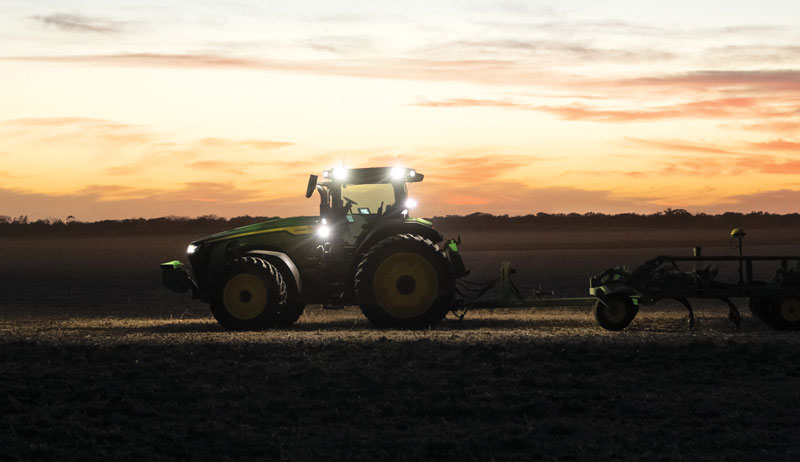
John Deere has considered over a century of knowledge in designing a fully self-driving tractor. While it has the same look and feel of any John Deere tractor and it runs on diesel, this tractor is also a robot. It has can cruise fields of 100 acres to 10,000 acres or more. And it can run completely on its own.

All the farmer has to do is set the tractor in autonomous mode. They can monitor the status of their tractor from the John Deere Operations Center Mobile app.


Read more: Plug in then plow with an electric tractor!


How does the John Deere autonomous 8R tractor work?

John Deere has sold self-guided tractors for quite a while. They allow the farmer to their hands off the wheel, while still spending time in the cab. But with the John Deere autonomous tractor, you don’t have to be in the cab at all.

autonomous tractor self-driving

You could be half way across your property doing some other task or spending time with your family. Your tractor, in turn, will be in the field doing its job. 

The John Deere 8R has six pairs of stereo cameras on board. Those cameras are the tractor’s eyes and give it 360 degrees of obstacle detection, as well as the ability to calculate distance and terrain. It has its own ‘brain’ with artificial intelligence and machine learning.

And before you bring it home it has already been taught to recognize hundreds of thousands of images in real time.

To prepare for every type of scenario, John Deere collected approximately 50 million images over three years of in-field testing. This tractor is ready for anything. 

You’ll set a geofence of your property for the tractor so it knows exactly where to go. When your tractor is running, you’ll receive a steady stream of data to the app. You can watch a live video of the section of land your tractor is working on, see live images, or adjust the speed and depth your tractor is plowing. 

autonomous tractor self-driving

This tractor will be incredibly efficient, and John Deere says it can prepare 324 acres of soil in a 24-hour period. Using John Deere’s proprietary GPS system, a farmer can expect an accuracy rate within 2 1/2 centimeter or less than one inch. 


Read more: Check out this video to learn about common tractor implements.


A tractor that gives time back to the farmer

The John Deere autonomous tractor is going to revolutionize farming by giving the farmer the one thing they need more but can never get—time. My grandpa would spend 18 hours a day in the cab of his tractor during harvest. I can’t imagine how this type of technology would have helped him. 

With a farm of any size, you get pulled in a million different directions. I can’t wait for the trickle down this type of technology will mean to every farmer.

Categories
Equipment Farm & Garden Farm Management Homesteading

Plan Now To Clean Up Fallen Trees From Winter Storms

It was a storm of rare intensity for our area. A mid-December thunderstorm in northern Wisconsin—not something you see every year, or even every decade. Maybe it was triggered by a bizarrely warm 50-degree day that prompted approximately 1 foot of snow to melt in less than 24 hours.

In any case, the storm struck swiftly, with powerful winds sweeping from south to north—unusual in a region where prevailing winds blow from west to east. The sheer force of the wind, coming from such an unexpected direction, did a number on the local conifer population.

We’re thankful our farm escaped with buildings and livestock undamaged. But the tree cleanup is going to take some time and effort!

Looking Ahead

It’s currently mid-January, deep in the heart of winter. Spring thaw is at least two months away, maybe three. There’s a lot of snow on the ground, but not enough to hide the dozens of fallen trees scattered across the farm, their crowns uniformly pointing north as if to scold the storm and say, “It went that way!”

But there’s a silver lining to every cloud. And we intend to put the fallen trees to good use.

Many are Red Pines knocked out of windbreak rows. Their trunks are straight and true, so we’ll haul them to our sawmill and turn them into lumber for raised garden beds and other farm projects.

The key will be tackling the cleanup as soon as possible. Time is of the essence. Many of the trees have fallen in grassy areas where spring vegetation will quickly grow through and around the crowns, making it difficult to clean up.

Even a single tree produces a lot of debris. Cleaning up a couple dozen—while juggling the many other spring farming tasks in need of attention—will require careful planning and time management.

Fortunately, there’s no better time to construct a game plan than the dead of winter. And the two or three months remaining until thaw might be just what I need to get a head start on the project.

Here’s how I’m thinking of approaching the job:

1. Trim branches off the crowns during winter

Before the valuable trunks can be sawed up and hauled to the sawmill (the job of a tractor with a forklift attachment), they need to be stripped of their branches. This is a task that can be largely accomplished during winter.

Even if I’m not hauling away the branches (the snow is too deep for this to be practical), every branch I cut in the winter is one I won’t have to cut in the spring, when I can focus on cleanup instead of cutting.


Read more: Yes, you need a forklift attachment for your tractor. Here’s why.


2. Repair my trusty red wagon

A key ingredient to my cleanup plans is my trusty red wagon, which I use to haul logs, stumps, branches and debris wherever they’re needed.

But one of its wooden sides suffered damage late last year. I’ll need to get it repaired before subjecting it to full loads in the spring. This is another project I can address during the winter. The red wagon will be ready to go as soon as the snow melts!

3. Plan for dealing with the volume of material

A couple dozen fallen trees generate an extraordinary amount of material. The trunks, of course, will head to the sawmill. But what about the branches?

Normally, I would add them to a brush pile in a remote location on the farm. But the sheer volume of material I’ll be dealing with this spring risks making this an impractical solution.

I can’t imagine how many wagonloads that would require. And the size of the resulting brush pile would be staggering.

Instead, I’m thinking of investing in a heavy-duty wood chipper, which I can bring to the site of each fallen tree. Once there, I’ll use the wood chipper to reduce the size of the debris and simultaneously turn it into a useful product—wood chips, perfect for mulching!


Read more: Thinking of buying a wood chipper? Keep these purchasing tips in mind.


4. Head for the high ground in spring

Our farm sits on slow-draining clay soil. The lowlands tend to gather water and turn to mud in the spring.

To avoid rutting up the ground (or sinking a wagon full of trees into the mud—been there, done that), I’ll focus on cleaning up high-ground areas first thing in the spring. As different regions of the farm dry out one by one, I’ll shift my focus accordingly. And I’ll leave the lowest and wettest areas for last.

5. Bring in professionals for the biggest jobs

Even with careful preplanning, I know I’m not equipped to deal with the largest trees. One Norway Spruce measures 90 feet long. It came down on top of several smaller conifers, making quite a mess.

Other trees are only half toppled, hung up dangerously in the crowns of nearby companions. Rather than struggle to handle the most challenging jobs myself, I’m tempted to call in professionals. They could put their experience and specialized equipment to good use while I handle the more manageable messes.

Cleaning up after such a massive storm won’t be easy. But with a few months to prepare my plans and tools, I’ll be ready!

Categories
Animals Farm & Garden Large Animals

Now’s The Time To Upgrade Your Cattle Herd. Here’s How

If your hobby farm includes beef cattle, you’ve likely experienced a big upturn in the beef market the last few years. The “buy local” food trend increased the numbers of people interested in buying locally grown and processed beef.  

Of course there’s more going on than just eat local market pressures. Add COVID-19 and the rush to buy and fill a freezer with good, locally sourced meat and produce, and you have a perfect storm of demand for beef. 

You might be a breeding stock operation, a cow-calf producer or a freezer beef specialist. But whatever type of beef operation you own, in the last three years you’ve had a strong market in which to sell your animals. 

Time to Upgrade!

All this increase in demand for local beef is likely to continue as new beef processing and marketing options develop.

Farmers with enough land and farm help are, in response, increasing the size of their herds. Private butcher operations are increasing their capacity for slaughter. New butcher facilities are being built, and meat inspector positions are being added to support those new facilities. 

If you want to make sure your beef operation stays competitive, now is the time to upgrade your herd and your herd management practices.  

The upgrade process starts with evaluating each animal in your herd. Ask yourself:

  • Have you kept the same bull more than five years?
  • Is he easy to manage?
  • Is his influence positive in your calves?
  • What about your brood cows? (A good brood cow can remain productive for 10 years of more.)
  • Are any of your cows a management problem?
  • Has your breeding season expanded from 60 to 90 days to more than six months or even longer?  

Read more: Here are 7 reasons you should consider raising beef or dairy cattle!


Herd Management Practices

Proper herd management practices are the foundation of any productive herd.  

Good herdsmen check the health and wellbeing of their cattle daily. They provide quality feed and pastures and a regular health management program that includes yearly vaccinations and a regular worming program. 

They keep good records, tracking a list of traits their calves inherit from their parents. In the beef industry we call these EPDs: Expected Progeny Differences.  

What traits are important to your cattle operation? Calving ease (birth weight) and docility are two important traits that help produce profitable calves and make your herd easier to manage. Other important traits include calf weaning weight, yearling weight, maternal milk and carcass traits such as marbling, rib eye area and fat thickness.  

Different breeds track other individual EPDs. But these are the ones everyone tracks for good cattle.  


Read more: Start raising cattle to meet your beef needs!


Bull vs. AI

If your cattle are healthy and well cared for, the easiest and fastest way to upgrade a herd with the traits that are most marketable is to purchase a new bull. You may also choose to move into AI (artificial insemination).

There are pros and cons to both options.

Bulls need separate facilities to be well managed. Purchasing a single herd bull of good quality will come with a hefty price tag. Do your homework, buy from reputable bull sales or through private treaty from well-known breeders.

Your state probably has a cattleman’s association that produces specialty bull sales offering a variety of breeds. Don’t shy away from registered stock with published EPDs.   

Artificial insemination is less costly than buying a quality herd bull. You can figure about $75 per cow or heifer. AI bulls have published EPDs, and you get multiple breed choices.  

On the downside, AI takes more time and requires handling your cows—usually three to four visits into your cattle chute.

One major pro is estrus, or heat synchronization, which brings all your cows in standing heat at the same time. An AI technician can then inseminate your whole herd in one trip. The result is your cows and heifers will calve within a few days of each other, giving you a more marketable calf crop. 

Keep in mind, however, that AI is not 100 percent accurate. Up to 30 percent of your cows may not be bred. Most operations will buy or rent a lesser quality “clean up” bull to catch open cows. 

Categories
Animals Farm & Garden Large Animals

The Ideal Calving For Calving Season Success

Fall calving season for some of the heifers is just getting started. And there’s already one little heifer I’ve had the pleasure of scratching behind the ears. “Snickers”, as she was affectionately dubbed, is a small, black Angus heifer that was adopted onto a first-time heifer that lost her own calf.

It’s not the most pleasant way to start off the calving season. But it’s a very real part of life that ranchers know they might have to deal with each calving season. 

Getting Ready

If you’ve been following along with our articles, last month we covered several things that you should get in order to prepare for a successful calving season such as:

  • a head gate and other facilities (in working order)
  • a calf puller
  • rope and other tools
  • bagged colostrum
  • a drench bag with a tube 

There are many reasons why a cow might lose a calf. But today we’re going to look at what a successful calving would look like.


Read more: Check out these tips to get and stay ready for calving season.


What to Look For

Like humans, the gestational period of a cow is 9 months. As cows get closer to calving, they will start to display physical signs of the changes happening in their body. A couple of changes you might be able to spot include the cow’s udder starting to fill in and (as the time gets closer to calve) the muscles on either side of the tail will begin to relax. 

When the day finally arrives for the cow to give birth, she might start appearing uncomfortable and wander around restlessly. If you feed and count your cows each evening, your count might come up short.

She’ll probably be off in a corner of the pasture or near a windbreak, seeking a peaceful spot to calve. 

At Time of Delivery

As the calf enters the birth canal, the cow will begin straining to push. Around this time, the “water bag” will break and you might see a rush of fluid come out. Between the contractions and pushing from the cow, the calf should soon make its appearance into the world. 

Following along with the calf, a second sac should appear. This will be the amniotic sac that enclosed the calf. Once the calf is on the ground, a good cow should have the placenta or afterbirth licked off its nose (and then the rest of the body) in order to avoid suffocation. She should also get the calf standing upright.

The newborn should start nursing with the first 10-15 minutes of standing up to get nutrients and warmth from the colostrum.

With an experienced cow, the birthing process shouldn’t take much more than an hour. A first-time heifer might doddle around and act like she doesn’t know what to do. While this is understandable (with it being her first calving), heifers should be watched more closely around calving season in case you need to intervene and help them along. 


Read more: It’s getting cold. Here’s how to ensure your cattle are ready for winter weather.


What You Can Do

If you’re approaching your first calving season and feeling a little unsure of how it all might play out, there are a few practical things you can do.

If you know of any farmers or ranchers nearby that also have cow/calf herds, call and see if they would let you come check cows with them a time or two. You might not see an actual birth in process. But they will be able to point out signs of an impending calving and odd little things you might not know of.

Keep your vet’s number handy. Stay connected to a close friend that might be able to run over and help you pull a calf if needed. And say a prayer!

It might get a little hectic, but you’ll come out on the other side of calving season just fine!