At first I had no idea what hit me. Red splotches appeared on the backs of my hands and along my forearms. Then large, painful blisters formed. That week, I’d been harvesting parsley for my boss.
She was an organic farmer with a science background. One look, and she instantly knew what it was. “That’s a phytophoto reaction,” she’d said.
“A phyto-photo-what?” I’d asked in reply.
Initially, I’d assumed poison ivy or maybe some unseen blister beetle had caused my skin woes. Actually, it was something less common, but potentially quite serious—phytophotodermatitis.
And whether you’re doing some fall weeding or you’re harvesting dill, fennel, carrots or some of their relatives, you might want to take some precautions to avoid this skin reaction yourself.
It turns out that some plants develop specific chemical defenses to help guard against herbivores. But these chemical defenses can affect us, too. The chemical defenses in question are called furanocoumarins, and plants such as wild parsnip and giant hogweed really pack a punch.
In the case of both of those weeds, the active ingredient is called psoralen. “Psoralen is a linear furanocoumarin,” explains Joe Boggs, an assistant professor at Ohio State University (OSU) Extension and OSU entomology. “It’s in that chemical group.”
So, as you chop down or hand-pull that wild parsnip or giant hogweed? Let’s say you get some of the sap on your skin. “The psoralen is not an oil,” Boggs notes. “It’s apparently water soluble, so it goes through your skin quickly. And the very first thing that the psoralen does is to actually start wrecking the DNA of epidermal cells in our skin.”
Exposure to furanocoumarins by themselves isn’t enough to trigger phytophotodermatitis. But add UV light to the mix?
“To our eye, we probably wouldn’t notice anything right away, but it’s a cascading effect,” he says. “The first thing is [the psoralen] starts wrecking that DNA which means, obviously, the epidermal cells can’t replace themselves. Then [your skin] needs to be exposed to UV light, and that can take time.”
In the absence of UV light, the healthy epidermal cells in your skin would eventually have the chance to replace the psoralen-damaged ones, and healing would occur. But when these damaged skin cells get a dose of sunlight, the affected skin reddens, and blisters can form.
Eventually, the blisters may be replaced with scabs, discoloration and even scarring.
Varied Outcomes
Which plants contain defensive chemicals—and even how much a particular plant may contain—can vary to a great degree. Some factors that can influence this include plant location, variations in climate, and insect activity.
Consider, for example, wild parsnips versus their cultivated counterparts. Just how is it that we can harvest—and eat—cultivated parsnips without experiencing serious phytophoto reactions?
“It turns out that, if you take wild parsnips and you do not expose them to any type of herbivores, the wild parsnip will slowly start losing its ability to defend itself,” Boggs says. “The psoralen that’s responsible for phytophotodermatitis is a defense chemical that the wild parsnip produces in response to things eating it.
“But if something doesn’t eat it, eventually the plant stops putting energy into producing that chemical. That’s how we end up with cultivated parsnips—they don’t need to have a high level of that chemical.
“And there are probably other genes involved in that, too.”
When combined with UV exposure, the sap from lemons, limes and grapefruit can also result in phytophotodermatitis. “Before Lyme disease became L-Y-M-E disease, we had L-I-M-E disease,” Boggs says. “I’ve also heard some people refer to it as ‘margarita dermatitis.’ If you have bartenders who are squeezing limes and getting the juice on their skin and then they’re exposed to UV light, they can have a [skin] reaction.”
“So, phytophotodermatitis isn’t just relegated to wild parsnip,” he says. Both cultivated and wild chervil, cultivated and wild angelica, rue, lovage, burning bush and Queen Anne’s lace are a few of the other furanocoumarin-containing plants which can cause trouble.
Protecting Yourself
After my own run-in with phytophotodermatitis, I didn’t quit picking the parsley. But I did put some new precautions in place. On parsley-harvesting days, I wore long pants, long sleeves and gloves. I also got to the farm well before sunrise. And I washed up with soap and water as quickly as I could after the harvest was done.
Keeping furanocoumarins off of your skin is job one. To that end, cover up well. (You might even want to wear eye protection.)
Finally, when you work with furanocoumarin-containing plants—particularly wild parsnip and giant hogweed—avoid cutting or weed-whacking. Such methods will simply increase your risk of exposure to their potent sap.
Instead, carefully dig these up by their roots or apply herbicide.
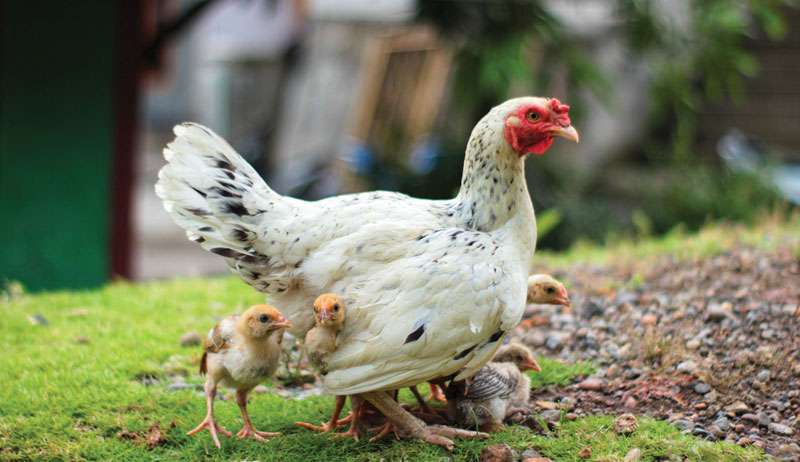
As prey animals, chickens have limited resources for protecting themselves from predators. Running away or hiding are the most likely strategies your hens will use if faced with an intruder. A flock of chickens also might sound a vocal alarm should one or more predators arrive—squawking loudly to one another to let flock-mates know there is reason for alarm and action.
Whether maintaining a rural or urban flock, you have an important role in protecting your hens. Consider the following tips to keep birds safe and secure.
Know Your Wild Neighbors
It may seem as if you already know the wildlife residents in your area. However, once you have an established flock of hens, you may find you have neighbors you weren’t aware of.
Chickens are messy eaters that scatter their food far across any enclosure. Grains, remains of chicken treats, as well as fresh eggs and fecal matter are attractive to rodents and larger predators. Take time to learn who might find your hens and their habits easy pickings.
Once you’ve discovered what might live in your area, learn more about the types of strategies they may use to prey upon your hens.
Coyotes are nocturnal animals but will hunt in the evening and early morning. Fox are opportunistic and sneaky, and will develop a plan before attacking. Opossums are lazy and pursue sick or injured birds.
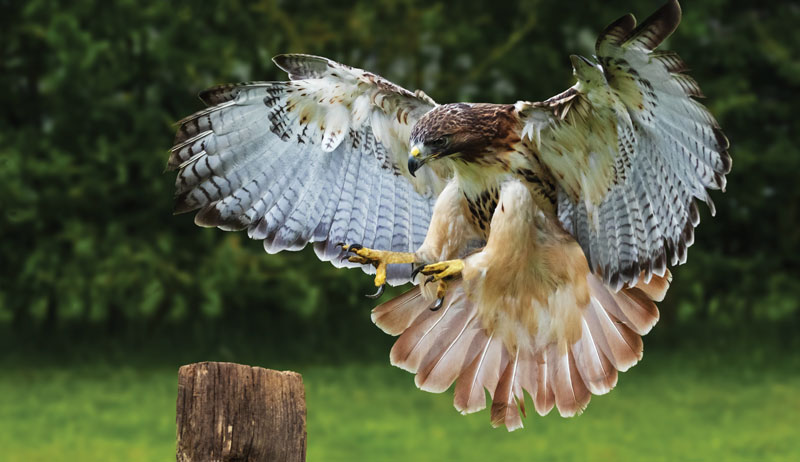
Hawks and owls use high perches to assess their prey and will swoop in and take a small hen or chick away to a safe spot to eat. Skunks and snakes will be looking for eggs. Raccoons are the most dexterous and will work to open simple latches and leave a trail of devastation behind.
Many of these predators will leave the hen’s body or body parts behind but will take the head of a chicken. You can learn more by researching their nesting habitats and learning their footprints.
Maximize Security
Consider strategies such as raising your coop off the ground and placing it in a secure enclosure. The types of predators that could be raiding your coop will in part determine fencing. For instance, coyotes can clear a 4-foot fence. Raccoons can reach through standard chain link and kill whatever hen they can grab.
Some chicken-keepers find that adding a hot-wire system around their perimeter can discourage persistent predators. There are easy kits to use to put a small, battery-powered hot-wire system along the bottom edges of the run to discourage digging or tunneling under. After a few zings from this system, diggers will stop trying to break in.
Iakov Filimonov/Shutterstock
Motion sensitive lights in the barnyard or backyard can offer added nighttime protection. Easily installed, these lights might deter a predator that comes in range and is startled when the lights come on.
Hopefully, the lights will discourage hunters using the cover of darkness with the hope of scoring a fresh meal.
Grounded Protection
You may also find you need a buried barrier of galvanized hardware cloth to prevent digging invaders. These invaders, including mice and rats, chow down on chicken feed or pilfer eggs and chicks while creating openings for other predators to use as entrances and exits.
Rats can be the gift that keeps on giving as they settle in to consume the abundant resources your coop offers. They may make themselves at home in nearby sheds, barns or even home attics.
Using snap traps can be a successful strategy, but urban and suburban chicken farmers discover that this can be an ongoing challenge.
Curb Appeal
Regular coop cleaning can assist you in reducing predation. Remove uneaten food scraps, and keep the mess of grains mixed with fecal matter cleaned out of a coop and run areas. Good sanitation reduces the appeal to predators, and it also keeps your chickens healthier.
In addition to cleaning the coop and run, wash feeders and waterers. Clean popular free-range areas to support your cause. Plan for an annual or biannual major clean out that includes shoveling out layers of packed manure, scraping perches and scrubbing down nest boxes.
Be sure to store foods in secure containers or a secure location such as a garage or nearby storage shed.
After keeping chickens for a time, you may become familiar with the different sounds your hens make throughout the day. From early morning stirrings to impatient chatter when waiting for food or to be released from the run for free-ranging are the easygoing hum of daily activities.
You may discover that your flock also has calls of alarm. Hens distressed by the presence of hawks, for instance, will call out to one another across the area of their regular free-ranging activities. If you are indoors, you’ll be able to hear these alarm calls and come running.
Hawks are patient predators waiting and watching chickens from a nearby tree or even the corner of a tall run. If spotted by your girls, the alarm will go up and hens may try to take cover under nearby shrubs and bushes.
Stepping into the free-range area will be enough to discourage a hawk briefly. And if you see one, it might be a good time to wrangle your hens back into their protected run.
Aerial Attacks
If your hens free-range during the day, create more protected places to hide than hedges or shrubs. A safe shelter or two could be as simple as a wooden pallet perched on cement blocks—something for your girls to run and hide under if they become aware of a hawk.
Ian Duffield/Shutterstock
You could also reuse an old trash can cut in half to create a shelter tall enough for chickens and sturdy enough to block any flying predators.
Go to Bed
As the day draws to a close, encourage your flock to move from their free-ranging yard back into the coop. Popular chicken treats such as mealworms will help you get your girls home for the night.
(My own hens know the sound of a storage bag full of mealworms shaken to draw their attention.) Closing hens in at night, year-round, will increase their safety.
Dusk is a particularly vulnerable time for hens. Hawks and owls use the fading light to their advantage. Once, a hawk worked its way inside my chicken run. The hens safely retreated inside the coop, hiding together in a single nest box.
The hawk was trapped inside the run only to be discovered on late night rounds of the yard. The run door was left open, and the hawk took advantage of the opportunity to flee. But its presence was a warning for just how determined a predator can be.
Pet Precautions
Domestic animals such as dogs and cats can also prey on a flock of chickens. Dogs and cats hunt for sport and will leave behind a complete dead chicken. If the pets are your own, you can decide on different strategies for managing flock and pets in shared backyards.
Limiting access between your pets and the hens is your first line of defense. You may also choose to work with your pets by implementing training strategies.
Sometimes hens will help by chasing a young pup or kitten, making themselves more intimidating by spreading their wings to appear larger. You may want to keep your cats around though, because they’ll help control the rodent population.
Security Guards
A rooster as a protector comes with his own innate desire to protect his flock. Driven to pass along his genetic information, a rooster will fight a predator to the death. Your location—urban, suburban or rural—will be part of your decision to have or not have a noisy rooster.
Your family dog may also play a role as security detail. Dogs who have the run of a larger free-range yard during evening and nighttime hours can be deterrents to opossum and raccoons.
Seasonal Challenges
Being aware of not only who your predators are but when they’re most likely to be hunting is essential to protecting your chickens. This might include peak times of day as well as different seasons.
If you are in a climate with cooling fall or the arrival of a cold winter weather, you may discover increased predation. Mice, rats and birds of prey may become more tenacious as the weather gets colder.
Hunting may increase, and you may need to consider moving chickens into the coop earlier each day ahead of these natural predators.
Increased Security
If you discover that you have had an invasion, determine the who, what, when and where of the predator. You’ll need the tools and materials to repair or block holes, mend damaged fencing or replace parts of the coop.
Once you know what you’re dealing with, remain alert to further attempted break-ins. If the neighborhood raccoon has been successful at the expense of your hens, it’ll likely return. Be ready.
And, if the animal becomes a complete nuisance, contact your local wildlife control agent to learn more about live trapping and removal.
Keeping your flock safe will allow you to get to know individual hens, their qualities and innate nature. You will enjoy observing their behaviors and will find that they can be quite humorous fun to watch.
Take the precautions you need to in order to protect your hens and enjoy the products of your efforts.
More Information
Security & Maintenance
Even the best security measures can still be vulnerable. While you may not directly observe a predator’s presence, you can be alert to activity by evaluating footprints and watching evidence of digging and scratching around the run, as well as changes in your area that might increase the potential of predation.
For instance, an abandoned home being torn down in your neighborhood might mean displaced mice, rats or raccoons. Or the removal of trees for new construction can impact wildlife habitat enough to change animal behavior.
Changes in the living conditions of wildlife in your area can increase the chances that your hens, their eggs or their food become potential sources when they may not have been before.
Egg-stravaganza
Some predators are only in it for the fresh eggs. Collecting your eggs daily will help reduce this attractive smorgasbord item from your coop.
Daily collection of eggs will also discourage any hens themselves from breaking into their eggs and consuming them. Egg collection should be part of the daily care routine you provide your flock, just like offering fresh food and water.
Daytime Safety
Many predators are cautious about hunting in open spaces with minimal cover. Hens will enjoy the open spaces as long as there are borders of hedges and shrubs to hide under.
Predators tend to use stealth to their advantage but are reluctant to be exposed in wide-open areas.
This article originally appeared in the September/October 2021 issue of Chickens magazine.
It’s that time of year, as the blanket of feathers all over your coop and the lack of eggs undoubtedly indicate. It’s molting time for your chickens, that annual biological event that affects all birds, wild and domestic.
Those new to chicken-keeping often become alarmed at the sight of their scraggly hens. They can resemble porcupines more than poultry. Every autumn, I receive messages from anxious owners worried that their birds have somehow contracted some dreadful illness. On several occasions, I’ve sadly had to inform distraught flock keepers that they culled their birds for no reason.
Molting, however, is a perfectly natural event in the life of chickens. It is also necessary for our chickens to maintain their health. Much more than regrowing feathers occurs during this physiological event.
These six key points will teach you more about molting.
The Science Behind Molting
Shedding feathers is a bird’s natural response to the shortening of days every autumn. The decreasing daylight triggers a casting off of the previous year’s bedraggled feathers and regrowth of fresh new ones.
Producing new plumage requires immense stores of both protein for feather building and energy to fuel this construction. So it’s vital to offer your flock a balanced, nutritious feed year round.
This way, your chickens can build up these reserves in preparation for molting.
A molting flock focuses all of its energy on regrowing new feathers. So it’s crucial to ensure that your birds remain stress-free during this time period.
Avoid introducing new birds while your chickens are in molt. Similarly, do not make any modifications to your coop at this time.
Stay on top of such issues as sanitation and predation prevention issues. And minimize any controllable condition that may cause your molting chickens stress. You may also want to consider a supplement such as sunflower kernels and mealworms to provide your hens with additional protein as they molt.
By giving your flock some extra TLC, your hens will be able to better endure this taxing time period.
The Sequence of Molting
Since chickens can lose feathers due to in-fighting, stress and other factors, sometimes we don’t even recognize a molt until our girls suddenly resemble hedgehogs. Keen observation, however, reveals that a sequence to molting actually exists.
First, a chicken sheds the feathers on her head and neck. The feathers on her chest and body slough off next, with wing and tail feathers falling off at the end.
The time period between the loss of head feathers and the loss of tail feathers can be anywhere between hours and weeks. This can make it difficult to discern the molting sequence.
While a pullet’s point of lay can be determined by her breed, her first molt is not so easily predicted. A chicken’s first molt is very individual and cannot be fully determined by breed.
Some birds will not experience their first molt until a year or so after they lay their first egg.
Other hens will begin to molt after only a couple of months in lay. These early molters tend to drop just a few feathers at a time, dragging the molting process out for months. As a result, they look lovely but are poor layers, since their egg-production energy is diverted towards feather regrowth for a half a year or longer.
Late molters, however, hold on to their feathers for a longer time frame, then drop them seemingly simultaneously. Because of this, they look rough and scraggly but also produce more eggs for a longer period of time. Late molters are often called hard molters because of the way they appear to drop their plumage all at once. Early molters are commonly referred to as soft molters.
Again, breed doesn’t always determine whether a hen will molt early or late. Our Orpington and Ameraucana girls undergo hard molts and are our best layers. But my friend Myra’s Orpingtons are soft molters, and her Leghorns molt late.
A Halt to Eggs
Because a chicken fully focuses on feather regrowth, the energy required for egg production gets redirected to this endeavor. And this brings the laying of eggs to a halt.
Since molting occurs during the time of year when daylight decreases, and since it can last anywhere from a few weeks to a few months, molting usually signals the end of egg production for the year.
Occasionally a hen may recover from her molt in time to lay a last few eggs before winter. But it’s far more common for her to completely halt production until she comes into lay next spring.
Recovery Time
Since molting season usually signifies an end to egg production for the year, it also begins a period of rest and rejuvenation for your chickens. Just as regrowing feathers takes a great deal of protein and energy, laying eggs for months on end also takes a toll on laying hens.
Even the best-fed chickens will draw upon their own protein and calcium stores—from their feathers and skeletal structure—to assist in egg production.
When molting begins, egg laying ends. This allows hens to focus on regrowing their feathers and resting their reproductive system. It’s therefore vital to continue providing your flock with a high-quality feed over the winter months. The nutrients in these rations will allow your hens to fully nourish their bodies and regain their health without having to expend energy in either egg laying or feather growing.
In the mid-19th century, tall, majestic sailing ships, nicknamed clippers, facilitated intercontinental trade. These clippers stood central to the economies of the time. In 1866, British newspapers eagerly followed three of these vessels as they simultaneously set sail from Beijing, China, with cargoes of tea bound for London, England.
Through the thrilling 99-day journey, the crews of “The Great Tea Race” (as the newspapers aptly titled it) expertly navigated the Atlantic thoroughfare. Vying to dock fist of all the vessels in London, each captain eagerly coveted a premium price-per-pound on the precious caffeinated cargo.
Routes were varied and the voyages independent. Nonetheless, the Taeping, Ariel and Serica all docked within a mere two hours of each other, despite the more than 14,000-mile journey. This race brilliantly illustrates the high point in the clipper trade.
More reliable steam ships would soon replace the majestic clippers. However, one more piece of precious cargo that the clippers carried across the sea during their ocean reign was a beautiful Asian chicken, the ancestor of the modern-day Brahma.
Brahma Beginnings
What enterprising person decided fowl should travel onboard a clipper for a three-month journey across the sea? I picture a lovely female face with wide-brimmed straw hat tied gently under her chin. She carefully hands a wooden crate of prized birds to a deckhand, who takes it, smiling, and carries it out of sight below deck.
The gentle ocean breeze wafts a stray strand of jet-black hair across her face. She turns back to the waiting rickshaw.
The origins of the Brahma chicken have become obscured by time, as historians lend their anthologies to more pertinent and earth-
shattering themes than those of a practical barnyard fowl.
Piecing together remnants of fact and folklore, the story goes that the Brahma was named after the Brahmaputra River in India.
Per the American Brahma Club’s website, Malays and Cochins were crossed in India. The resultant crossbreed was at some point transported to Shanghai, China.
Either before or after their arrival in China, the breed was further crossed with Gray Chittagongs. Hence marked the establishment of the Brahma’s characteristic furrowed brow and diminutive pea comb.
After our enterprising fictional woman sent her prized fowl overseas to England, Brahmas became well enough known to earn a place in the first European book of poultry printed in 1856. Sometime in that century, a portion of these birds also made it to the Americas.
Then, from the 1850s through the 1890s, Americans continued refining the breed. This American refinement is credited with the standardization of the light and dark Brahma chicken colors. Both were admitted to the American Poultry Association’s Standard of Perfection in 1874. (The buff color pattern wasn’t admitted until 1924.)
A cursory search may reveal additional color variations and patterns. But the light, dark and buff Brahmas are still the only varieties listed in the APA’s Standard of Perfection at the time of this writing.
Perhaps additional patterns will earn the purebred standards’ distinction in the near future.
Jacey Dean
Breed Characteristics
Each of the three current approved color patterns is lovely in its own right, with clear distinctions between cocks and hens amongst the dark and light varieties. (The buff breed follows the same color pattern for cocks and hens.)
They have:
pea combs
smooth-fitting plumage
blocky bodies
broad, wide heads with “beetle brows” jutting out over their eyes
Heavily feathered down to their shanks and toes, Brahmas aren’t as bothered by extremely cold winter days as their slighter, more thinly feathered counterparts. Here in the Northwoods of Wisconsin where I live, it’s common for bitter temps of minus 30 degrees Fahrenheit to hit for a week or two each winter.
Raising animals that can thrive despite frigid temps is a constant goal here at Otterridge Creek. My poor white-crested black Polish rooster shivered and nearly gave up the ghost during one such bitter cold snap. But the Brahmas hardly batted their beetle-browed eyes.
Brahmas are available in two sizes: standard and bantam. The American Poultry Association Standard calls for 12-pound cocks and 9 1/2-pound hens.
I currently have all three of the color patterns as standard-sized varieties in my flock. Because I’m partial to buff chickens, buff Brahmas are my favorite. A close runner-up would be the dark Brahmas with delicately penciled hen feathers and showy dark cock saddles.
But the light Brahma chicken still medals in third place with predominately white feathering accented by black rings around the neck and tail.
Brahmas are a large, gentle bird. They tend to mind their own business and enjoy the good things in life. Despite the Brahma’s large size, in my experience, they integrate well with other fowl.
Characteristics
I’ve not yet experienced any aggression from Brahmas toward humans, chickens or other stock. With our multispecies barn menagerie, any animal that doesn’t coexist well with others must be removed or replaced. Thankfully, the Brahmas have passed with flying colors (no pun intended!).
Brahmas lay a beautiful brown egg, and some of the hens are likely to set. We’ve successfully crossed Brahmas with Wyandottes and Ameraucanas. This results in some lovely setting hens with light leg feathering and a dependable green egg.
The Brahma’s large size makes any extra cockerels an excellent source of meat. So this breed is a good choice for dual-purpose hobby flocks.
The next time you see a tall mast sporting a furled sail at harbor, recall those ships long ago with squawking crates of chickens stowed in the hold. When you next flip through a poultry catalog (or browse a hatchery’s website), appreciate the relative ease with which you may purchase such beautiful birds.
And as you watch your Brahmas blinking underneath their beetle brows in the barnyard, take a minute to acknowledge what past generations have done to propagate and preserve this regal fowl for the enjoyment of posterity.
This article originally appeared in the September/October 2021 issue of Chickens magazine.
Life on a farm is busy, whether you’re making a go of it full time or fitting your farming between other jobs that pay bills. The pace of activities can be hectic as you juggle multiple projects and try to squeeze as much out of every day as you can.
But once in a while it’s good to sit back, rest for a moment, and just appreciate the beautiful nature that your farm offers.
A Beautiful Day
As I type this, it’s a beautiful fall day in late September. It’s sunny and warm, but not too hot—78 degrees F. The sky is cloudless. I’m sitting in an Adirondack chair under the glorious full shade of a sugar maple tree in full autumn color.
I’ve been sitting here for an hour, enjoying the beautiful weather on what might be one of the last summer-ish days of the year on my northern Wisconsin farm. I should really be adding fresh compost to garden beds in preparation for winter. I also need to give the fields one last mowing. But instead, I’m just sitting, enjoying the view and soaking it all in.
Normally when I visit the orchard, I’m on the go—watering trees, tending pumpkins, refreshing mulch, or at the very least taking a walk with family and friends. It’s rare for me to sit stationary up here for more than a few minutes.
But when I do—as I’m doing today—I’m always struck by how quickly nature emerges into view, as though I’ve melted into the environment of my farm. Critters and creatures pay me no mind.
Across the yard, a gray squirrel and a black squirrel hop through the grass, hunting for—what? Maple seeds, perhaps.
Behind me, I can hear a larger animal walking through the woods—probably a whitetail deer (there are so many), though I’m hesitant to turn around and check. I don’t want to scare it away.
Overhead, a bird chirps repeatedly in the maple. A caterpillar descends on a silky thread from one of the branches.
The longer I sit, the more things I see. A couple of small birds fly past, flapping vigorously on this largely windless day. A moth flutters by in the opposite direction, blazing a jittery trail across the sky.
The black squirrel edges closer and closer, his feathery tail upright as he bounces within 6 feet of my chair. I turn for a better look, and he spooks slightly. Did he even know I’m here?
Other than the occasional chirps of birds and squirrels, there’s hardly a sound to be heard. Across the sky, I can see a jet plane leaving a cloudy trail in its wake. But it flies so high I can’t hear the rumble of its passing.
The road along the front of my farm is hidden from view nearly a quarter mile south of where I sit. Traffic—what little there is on a Wednesday in this rural county—can’t be seen or heard.
Make the Effort to Do Nothing
So many days, I’m out and about with tools and machines, making no small amount of noise as I complete my farm projects. I derive a lot of satisfaction from these productive pursuits. But they’re far from ideal for observing wildlife.
It’s funny to think how watching the panoramic beauty of an unending nature scene requires the time and effort of doing no farm tasks … which isn’t exactly a small commitment from hectic farmers with busy slates.
That’s why I’m issuing a challenge to all the hobby farmers who read this: On a day when your schedule is a little lighter than usual, choose a special spot on your farm. Then sit down and do nothing. Nothing, that is, except appreciate everything around you, enjoying the sights, smells and sounds that come your way.
Don’t bring any tools or projects with you … except maybe a laptop computer for writing down your observations (guilty as charged).
Give yourself an hour to enjoy a pleasant afternoon on your farm. You’re bound to come away refreshed, happy and even humbled. I know I did.
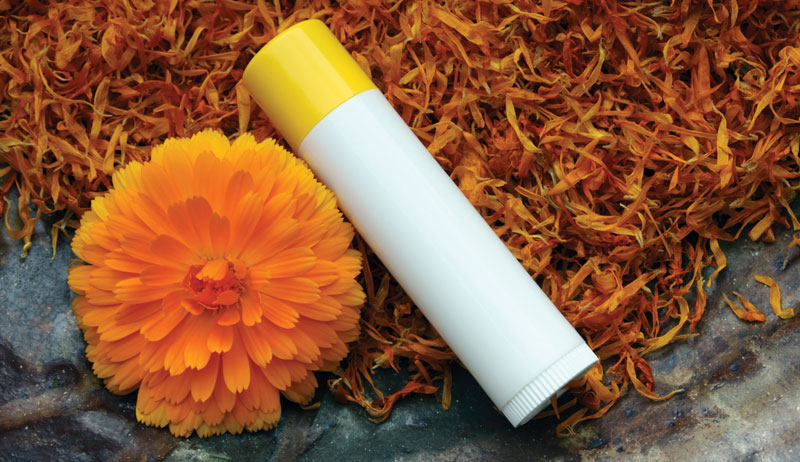
Homemade lip balms are relatively easy to make. And this recipe, featuring calendula-infused oil, is sure to take your product to a whole new level!
In essence, a lip balm is very similar to an herbal salve. You combine a blend of oils combined with beeswax, which solidifies the product. The ratio of oil to beeswax determines the softness or stiffness of the lip balm.
Use the ratio in this recipe to get started. But once you’ve made it a few times and feel comfortable, adjust the blend to fit your personal preference.
What makes this lip balm unique is the use of calendula petals in the oil. Calendula is an emollient herb, meaning that it softens and soothes the skin. Adding these flowers to our recipe will create a balm that will nourish and protect our lips even in the driest and harshest of conditions.
The first step in crafting this balm: making the calendula-infused oil. This can be done by adding the calendula petals to a 4-ounce jar, then filling the jar with the oil of your choice.
Most people use olive oil for a product such as this. But sunflower oil would also work great.
Allow the flowers to infuse in the oil for 4 to 6 weeks before straining them out. This will provide you with enough calendula infused oil to complete this recipe a number of times. Ensure you label the jar before putting it into the cupboard to infuse.
When your oil is ready, combine it, along with the coconut oil, shea butter and beeswax in a double boiler over medium heat until the beeswax has completely melted. Stir the mixture while it warms to ensure the ingredients are well blended.
Once the oils and wax blend well, turn off the heat. At this point, you can add essential oils into the mix to enhance the qualities of the lip balms (optional). Consider using essential oils such as peppermint or vanilla to add flavor and scent to your product.
Carefully pour the mixture into lip balm tubes, tins or similar containers and wait for them to cool. As they cool, they will harden. Once they solidify, you can use your herbal lip balm!
You can find the proper containers for lip balms through online herb product suppliers or sometimes through your local co-op or health food store. But you can also reuse containers form home.
This article appeared in Healing Herbs, a 2021 specialty publication produced by the editors and writers of Hobby Farms magazine. Healing Herbs includes herb profiles, projects such as this one, directions for foraging herbs and more. You can purchase this volume, Hobby Farms back issues as well as special editions such asBest of Hobby Farms and Urban Farm by following this link.
Commercial pork producers stay very aware of the current news about African Swine Fever. But this is important for anyone with hogs of any number on their farm. Here’s the latest.
African Swine Fever (ASF) is an internationally monitored and reportable viral disease in pigs, including feral hogs. Both the USDA and the OIE (the World Organization for Animal Health, essentially the WHO version for veterinary medicine) diagnose and track outbreaks to monitor the spread of this highly contagious and very lethal disease in pigs.
African Swine Fever is caused by a large virus in the Asfarviridae family. It can propagate in specific species of soft ticks. But once swine are infected, ASF spreads via direct pig-to-pig contact, through infected surfaces. It can survive in the environment for lengthy amounts of time.
Clinical signs include fever, depression, anorexia, vomiting, diarrhea and redness of the skin.
The bad news (for pigs): No cure nor vaccine exist. And outbreaks can have mortality rates that reach close to 100 percent.
This is why reporting and monitoring disease outbreaks is vital. Once a country discovers a case, it can be very hard to eradicate due to its longevity in the environment as well as the virus’ ability to survive in wild hog populations, which can be challenging to remove.
Given the extremely high mortality rate, it’s no surprise this disease has enormous negative impacts on a country’s pork industry as well as global supply.
So far, none of this is new news. What is news is that for the first time since 1982, ASF has been confirmed in the Americas. Specifically, African Swine Fever has shown up in the Dominican Republic and its neighboring country Haiti.
It has come as a shock that this virus showed up only about 800 miles from the U.S. Previously, the disease was mostly seen in sub-Saharan African countries, some European countries, and since 2018, in China, Vietnam and other countries across Asia.
ASF, Not CSF
A note of clarity: there is another unrelated virus (a small, RNA virus) that causes Classical Swine Fever (CSF). CSF results in similar clinical signs in pigs but with lower mortality.
CSF is endemic in the U.S. and many other countries. While an outbreak of CSF isn’t great, it’s not as decimating as an outbreak of ASF. Some news stories confuse or conflate CSF with ASF. Referring to either disease as “swine fever” adds to the ambiguity.
Currently, ASF is trying to knock on our door in the U.S., and pork producers are understandably worried. So what’s being done?
The OIE is emphasizing an increase in surveillance efforts across countries and, in conjunction with the Food and Agriculture Organization (FAO), are providing regional support. The USDA’s Animal and Plant Health Inspection Service also implemented extra safeguards to prevent the disease from entering the U.S.
And U.S. Customs and Border Patrol is increasing inspection of travelers coming from the Dominican Republic as well as helping prevent the “importation” of garbage from airplanes coming from these countries into the country.
What, then, can (or should) a smaller hog hobby farmer do? Maintain a strong practice of biosecurity on your farm , for starters. Second, stay aware of the situation globally as well as anything that might occur locally.
The USDA provides updates on the situation, as well as other information, to help farmers remain informed.
Call me biased, but I think farmers get more out of podcasts than many other listening groups. As you probably know, farming can be lonely, isolating work. Maybe your nearest farming neighbor lives dozens of miles away. Or maybe they’re right next door but you’re both too busy to ever see each other.
Either way, almost all the farmers I know love nothing more than talking shop, but never get enough opportunities to do so. Well, listening to podcasts doesn’t entirely solve that problem, but it can come close.
I personally listen to farming podcasts as a way to feel connected to a larger community of growers. And they can teach you things as well. Probably a decent percentage of what I know about farming (however much that actually is) comes from all of the podcasts I listen to.
Here are the podcasts I recommend most frequently. They’ll teach lots of things and help you feel connected to something larger during those solo afternoons on the tractor (or in the field, or in the shop).
Farmer to Farmer Podcast
hosted by Chris Blanchard
If I had to pick just one from all the farming podcasts to listen to forever it would probably be this one. Sadly, Blanchard passed away from cancer in 2018, but the podcast library he left behind is part of his enduring legacy as a farmer and educator.
The podcast is largely what its name suggests: One farmer (Chris Blanchard) talking to another farmer (or two) about the details of their farm. All of the conversations are unique, extremely detailed and guided by Chris’ exceptional interviewing abilities.
The Native Seed Pod celebrates the beauty, importance and history of native seeds using a dynamic and multidisciplinary approach that can be historical, scientific or literary.
Episode topics range from seed rematriation to native Californian ecologies, but as a rule all of them are immensely engaging and educational. One of my favorites is the podcast’s first episode with Rowen White, a Seedkeeper from the Mohawk community of Akwesasne.
No-Till Market-Garden Podcast
hosted by Jesse Frost
As its name would suggest, Frost’s podcast is largely about no-till market garden production. If you’re a no-till farmer (or are just no-till curious), I can think of no better resource. Frost interviews farmers at all stages in their no-till careers, providing valuable information for those just starting out to long-term no-tillers looking to refine their operation.
But the podcast is honestly a great listen even if you’re not a no-till farmer. Frost is a skilled interviewer, and many of the conversations delve deeply into other aspects of small farm management.
In its own words, the Edible Activist podcast is a venue “where dynamic people of color in the food and agriculture space share personal food journeys, stories and perspectives that stem from the land.”
Like all of the hosts on this list, Jones is an immensely talented interviewer who totally rivets her guests and audience. The show certainly belongs in your podcast feed. Plus (as of this writing) there are 118 episodes available, meaning you can binge-listen to your heart’s content.
In each episode host Lisa Munniksma interviews a different hobby farmer or small-scale grower about the details of their operation, as well as tackles topics around food access, agricultural justice initiatives and more. You can (and should) check it out at the link above or wherever you get your podcasts.
Farming is, at its core, about managing and caring for the land. And, unfortunately, most farmers will encounter a weed species that wants to challenge that control. On my farm in Texas, our main weed problem is Johnsongrass. So I’m slowly bu surely fighting the invasive plant to eliminate its hold on Hackberry Farm.
About Johnsongrass
Johnsongrass (or Johnson grass) covers the entire world. It was introduced to the U.S. in the 1830s from Africa as a forage crop. And the thing is, it does make a decent forage and hay crop. But in late summer, when the grass becomes stressed, it can actually turn toxic to animals and harm your livestock.
And Johnsongrass is tenacious. If you have the plant and disturb the ground, it will come back up Moving soil from one place to another on the farm? You’re probably going to move that Johnsongrass, too.
Effective weed control isn’t about just spraying herbicide and walking away. You have to know your enemy. Correctly identifying Johnsongrass as the primary weed challenge on our farm determines how we battle the noxious plant.
We’ll never eliminate the grass completely from our farm. But by fighting it back year after year, its presence won’t challenge the other plant species I want to establish.
Learning to Fight Johnsongrass
Johnsongrass has a dirty secret hidden under the ground that makes it particularly effective at taking over. When you pull up a stalk of the plant, noting the telltale purple at its base, you’ll see Johnsongrass grows rhizomes—long roots that stretch horizontally beneath the soil. You can see what this looks like in the video.
These rhizomes then spring up more plants. And when you plow the ground, you break these rhizomes into segments, each of which can grow another plant. So it’s important to kill Johnsongrass at the root, rather than just take care of the aboveground plant.
Synthetic herbicide is an effective tool, but if you choose to use this, it’s important to read the directions. Because of the particular challenges this weed presents, most herbicides will provide specific mixing directions for treating it.
In addition to spraying, we’re also very attentive to our mowing. Why? Johnsongrass doesn’t like competition, so by selective cutting, we give native grasses a foothold to take over. In time, this will lessen the weed’s presence.
Adrianna Hyde runs Poised Poultry in Florida—and the endeavor houses some of the most eye-catching ornamental chicken breeds that you’ll come across while scrolling through your social media feed.
“My mom learned about a 4-H poultry club starting up in our area and she asked me and my little brother if we would be interested in getting chickens,” recalls Hyde as she looks back on the moment she became smitten by poultry. “Of course we said yes, and one day she brought home a mixed breed hen and a rooster.”
After successfully showing at a youth fair, Hyde’s mom added a pair of Buff Cochin Bantams to the homestead—at which point she admits she became “hooked.”
Taking a minute out from tending to the residents at Poised Poultry, we spoke to Hyde about a concept called Farm TV and the therapeutic nature of chickens. We also got into the high maintenance status of Silkies.
“I consider my chickens to be very therapeutic,” says Hyde when asked about the most rewarding nature of raising poultry. “During the week when I get home from work, I go out to see them and any stress that I have just melts away.”
While hanging out with her chickens, Hyde delights in enjoying each bird’s individual personalities. “Watching them interact with each other is very entertaining,” she says. “I have a friend who calls it Farm TV.”
Poised Poultry is home to a number of ornamental breeds of chicken. Hyde says that while they “aren’t praised for their egg laying abilities,” they definitely produce “enough eggs for me.”
Hyde adds that her ornamental chickens keep her living an active outdoors lifestyle. “In the mornings I’m out feeding, letting everyone out and looking for eggs,” she explains. “In the afternoons, I clean and refill their waterers, rake leaves out of the run, assess the health of everyone and check for eggs again.”
Polish chickens are some of the standout birds as Poised Poultry. “I would sum up their personality as lively and curious,” says Hyde when talking about the breed. “They develop a very large crest, so once they mature they cannot see very well. If not handled often early on, they can be very flighty and will not want to be held—[but] most of my Polish see my feet and hands and know it’s just me.”
Hyde adds that one of her Polish hens has a unique way of greeting her: “She likes to peck my feet the entire time I’m outside with them!”
When asked to nominate the most demanding birds at Poised Poultry, Hyde quickly points to her Silkies.
“Some of them have such a big crest that I have to cut feathers around their eyes so they can see better,” she says. “It rains a lot here in Florida, and, if they walk in the mud, it sometimes dries up in the feathers on their feet. I have wash buckets just for them whenever they need to get cleaned up. They are very tame, so they don’t mind when I handle them.”