Categories
Animals Chicken Coops & Housing Chickens 101 Health & Nutrition Poultry

Can You Take A Vacation From Your Chickens? Yes!

You spend a lot of time and money caring for your birds. They’re a day-to-day and long-term investment. Does keeping chickens mean that you can never go away on vacation?

No! If you have cats and dogs, even fish for that matter, you don’t expect to always stay home with them. It’s the same if you have a flock of chickens. Unlike with domestic animals, though, there’s a bit more involved because chickens aren’t as usual as your average feline or canine friend.

Although this article focuses on vacation, sometimes we have to be away from our chickens for other purposes such as business, medical procedures or even an emergency. While vacationing may be a luxury and a choice, emergencies aren’t.

So even if you’re not a vacationer, it’s still good to plan like you’ll be one. If the time comes that you have to be away, on vacation or otherwise, the stress of making sure your chickens are cared for won’t weigh on you.

Time to Go

If you’re going on vacation by choice, here are some considerations for the time of year that’s best to be away from your chickens. 

Weather is a big factor, and it’s ideal to avoid the extremes if you can because your flock will likely be confined to the coop and enclosed run. Will your coop get too hot? Does it have shade or cool areas? How will you ensure their drinking water stays unfrozen? Will your chickens have a dry place to get out of the snow and explore in their run?

While spring sounds ideal for a quick getaway or a long vacation, baby chicks come top of mind in this scenario. Chicks need round-the-clock care. You can be away for a few hours, but anything more is iffy.

If you have school-age kids, then you know spring breaks are normally at the end of March into mid-April. If you get your chicks in mid-March, you might want to go on spring break a few weeks later.

chickens vacation
PHILIPPE MONTIGNY

It’s a big ask to have someone chick-sit your new flock members. 

Think ahead. If you’re adding to an existing flock, you can’t introduce your new baby chickens until they’re almost adult-size. Using the March scenario, you’re not combining flocks until mid-June. That puts early summer break vacationing on hold.

On a personal note, this was always a consideration for my family when it came time for chicks. We switched plans and now get new chicks in late summer and early fall, when the kids are back in school and after summer break. 

Also, consider peak times of the year for travel. If you need a chicken-sitter, they may be more difficult to come by during this time. 


Read more: Buying spring chicks? Keep these things in mind.


Keep It Basic

Full-grown chickens drink about a pint of water each day and eat about 14 pound of food each day. Average water and food amounts vary depending on the weather and your chickens’ activity levels.

For example, if it’s hot, they’ll go through more water and it’ll evaporate more quickly.

It’s a safe bet to assume that you go out to the coop at least twice a day and fill the water and food containers never really thinking about more precise amounts. If you’re going to be on vacation, though, you’ll need to plan to have enough basics for your chickens around. 

When you’re picking out food and water containers, keep amounts for basics in mind. Small containers are convenient for carrying, but larger containers might allow you more flexibility. Filling them is initially more difficult, but they may give you the ability to keep your birds fully fed and watered for a few days. 

It’s also nice to have extra containers on hand so you can add insurance food and water to make sure your coop is fully stocked. This is nice if you’d like to get away for a quick weekend trip and puts your mind at ease if there is an emergency.

In that case, things might get missed, but you know your chickens are OK for a bit until things settle down.

Practice Makes Perfect 

Before your trip, practice so you can work out the kinks and address them. Start your practice-run with the basics of water and food. This is a must if you’re going to be leaving for a weekend with no sitter, say Friday morning until Sunday night or Monday.

Fill up enough water and food for a couple of days. Leave it alone for that time and see how long it lasts. If that goes well, step it up and leave your chickens alone for a few days while you’re still at home.

Peek in on them from time to time and see how things are holding out. Make adjustments as needed, and practice until things are right.

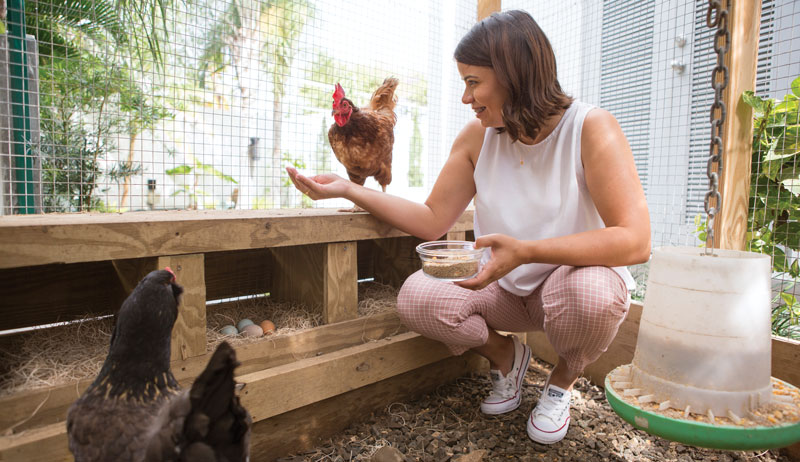
If your chicken sitter is new, near and willing, have him or her come and take care of the chickens with you, before you leave for vacation. Show the sitter your routine, and let your chickens get to know the sitter. If you can, let the sitter handle your chickens exclusively for a day and see how it goes. 
chickens vacation
Juliana M Morales

Technology can be your friend and add to peace of mind. If you can, install a camera that you can check from your smartphone to give you an extra level of protection and reassurance.

Give this a practice run, too. Sometimes Wi-Fi can be tricky in a backyard.

Lessen the Load

You’re fine with big chicken chores, but when you’re away, it’s best not to burden your sitter with large tasks—that just increases the chances something will go wrong. Before you go, fill all your containers with fresh water and food.

Also, give your coop and run a good cleaning and refresh all your bedding. That way your sitter only has to contend with small cleaning jobs if they’re needed. 

If you’re just starting your chicken-keeping journey, think ahead while you’re setting up your coop and its accouterments and consider the people that will care for your chickens while you’re on vacation.

Will your chicken-sitter be a younger or older person? If so, is your coop located in a spot with easy access? What about the pathway to your coop? Will it become difficult to walk in rainy weather? Maybe you should install something permanent to avoid this. 

On a personal note, we located our first coop on a small hillside. My parents are older and fell trying to traverse that hill in the rain while taking care of our chickens. We have since relocated the coop. 

Is your coop far away from a water source? Again, think of the person that might have to carry that water. Is your feed stored in your garage? That may give your sitter access to the rest of your house and add another chore of locking up.

If you make your daily chicken-keeping easier, it’s going to be easier for your chicken-sitter, too. 

Planning for vacations can also be done while you’re picking chicken breeds and quantities. If you live in an area that’s really hot in the summer and you know that’s when you’ll most likely want to vacation, pick heat-hardy breeds such as Leghorns.

Conversely, if you live in an area that gets extremely cold and you like a January ski vacation, pick cold-hardy chickens. 

The number of chickens you keep and their size can also have an impact on your vacation. More chickens equal more work and less flexibility. For example, six adult chickens can easily be moved from your coop and kept in your garage or basement or your chicken-sitter’s home where it’s easy to care for them.

It’s even easier if those six chickens are bantams! 

This may sound extreme, but I’ll give you a real-life example. As I mentioned, my parents are older and got tired of trekking to our coop while we were gone. During one spring break, we wanted to get away for a few days and only had eight chickens.

We set up a temporary coop in our garage using dog-run panels. All my parents had to do was fill up the chickens’ water from the utility sink that was just a few feet away and get food from a garbage can we sat next to the coop. 

It was spring, the garage didn’t get hot, we didn’t have to worry about predators in a secure garage and my parents had almost no work to do. The most difficult part about the whole thing was cleanup afterward, but with some preplanning, even that wasn’t terrible. 


Read more: Here are some pointers for choosing the right chicken run for your flock.


Final Instructions & Medical Care

Even if your sitter is well-known to you and your chickens, leave a note with instructions on their day-to-day care. That way, something doesn’t get missed. Include the number of birds you have and their breeds.

This may sound like overkill, but if you’re keeping more than one of the same breed, it can be difficult for a novice to do a headcount. Keep it simple for your sitter. Here’s an example:

  • 1 “Big Red:” a dark-orange chicken and very friendly
  • 2 Barred Rocks: white-and-black striped; like to peck your hands
  • 1 Australorp: completely black, very loud
  • 3 Javas: black with white spots, protective of their nest boxes
  • Total: 7 chickens

While it’s something you should have on hand already, stock up your chicken first-aid kit before you go and leave it in a place that’s easily accessible for your sitter. Leave contact information for your veterinarian in your instruction note and your medical kit.

If something happens, you don’t want to leave your sitter with no remedy. Don’t forget to leave your contact information so your sitter can reach you. 

It may sound like a lot of work, but you absolutely can take a vacation while keeping chickens. Plan ahead, be flexible and then have fun sipping margaritas on the beach! 

This article originally appeared in the July/August 2021 issue of Chickens magazine.

Categories
Chickens 101 Flock Talk Poultry

Get The Egg Colors You Want With These Chicken Breeds

Occasionally, those new to poultry keeping—and those living near fledgling flock owners—are surprised to discover that some chickens can lay an egg in colors other than white and beige. That’s right! Dark brown eggs are not simply dirty, and green eggs aren’t rotting.

An entire array of eggshell colors exist in the nest box that rarely make it to the market. It’s an eye-popping epiphany for people accustomed to supermarket eggs. Instead of snowy white and sandy tan, eggs can be sky blue, pastel pink, olive green, pale yellow, even chocolate brown!

We can credit the hard-working chickens laying our daily dozens for all these different egg colors. As each egg travels through the oviduct, layers of pigment are deposited on it, changing the shell from white to blue, brown and beyond.

The actual color of an eggshell depends on the breed of the hen laying the egg. There may be slight variation within a breed. Our Orpington chickens lay eggs that vary in colors, from a pale tan to a rosy beige. Our Ameraucana hens, however, lay similar shades of sky blue.

A hen is not a Pez dispenser. She cannot lay a green egg one day and a pink one the next. The pigment produced by her shell gland remains the same throughout her life.

What you see is what you get. The depth of shell color, though, can be influenced by a hen’s age and environmental stressors. A bountiful palette of eggs can be yours, but you’ll have to plan for it.

To ensure your egg collection basket’s contents contain a range of  colors, consider raising the following chickens.


Read more: Check out the purple-speckled eggs at May Blooms Acreage!


Blue

In the United States, blue eggs are laid by three main breeds of chicken: the Araucana, the Ameraucana, and the Cream Legbar.

The Araucana and Ameraucana trace their origins—or at least an ancestor—to a blue-egg-laying South American bird. Both breeds are highly prized for their sky-blue eggs as well as their unusual physical characteristics.

Unfortunately, the Araucana has acute issues with reproduction. And the Ameraucana is not widely bred. As a result, finding true Araucanas and true Ameraucanas to add to your flock may be a bit tricky.

Contact these breeds’ national clubs and ask for referrals for private breeders in your area. Beware that many hatcheries and farm-supply stores mislabel hybrid chicks as “Ameraucana” and “Araucana.” This leads many backyard flock owners to believe they are actually raising these rare birds when they’re in fact rearing the Easter Egger crossbreed.

Cream Legbars have begun to gain popularity due to their lovely baby-blue eggs. A number of national hatcheries now offer Cream Legbar chicks for sale to flock owners. A fun fact about the Cream Legbar: the chicks autosex so you can tell the cockerels (lighter with a yellow head spot) from the pullets (darker with a dark back stripe).

Green

Thanks to Dr. Seuss’ iconic book, many chicken owners are eager for green eggs from their very own hens. The easiest way to accomplish this is to add an Easter Egger to your flock.

An Easter Egger is a hybrid chicken, one with an Ameraucana or Araucana ancestor that was crossed at some point with a brown egg layer. These crossbreeds produce blue eggs overlain with brown pigment. This results in shells in shades of green.

Easter Eggers are readily available for purchase through hatcheries and at farm-supply stores. But be aware that they may be mislabeled “Ameraucana” or “Araucana” (if the chick is priced at only a couple of dollars, it’s an Easter Egger).

An Easter Egger hen may have Araucana in her background. But she most definitely is not one, as she will readily prove by the abundant number of chicks she will hatch if given the chance.

Here’s an interesting fact about Eggers. The darker the egg produced by the brown-egg layer, the more olive the resulting eggs from the hybrid offspring. Years ago, we bred our Copper Marans hens to our Araucana rooster to produce “Olive Egger” crossbreeds.

Green eggs are also produced by the Isbar, a Swedish breed not yet widely available in America. First imported into the U.S. in 2011 by Greenfire Farms, the Isbar (pronounced ICE-bar) is a single-combed, winter-hardy bird that lays stunning moss-green eggs.

If you’ve got your heart set on Isbars, you can find them through private breeders. The price, however, may be somewhat steep (about $30 per chick).


Read more: Produce a rainbow of egg colors by adding these chickens to your flock.


Pink & Yellow

While no chicken breed actually lays a pink egg, some brown egg layers amongst the Orpingtons, Speckled Sussex and Cochins produce rosy-brown eggs that can almost pass for pink.

And then there’s the Easter Egger (again). The name of this hybrid says it all. It can produce many eggshell shades, although green is the most common. Depending on when the blue egg gene was introduced in the Easter Egger’s lineage, the pigments produced by the hen may be light enough to make her eggshells pastel pink or pale yellow.

Our Easter Egger hen, Agatha, laid pale pink eggs. But her mother, Keynoter, produced pale green ones.

Silkie hens also produce tinted eggs, not quite white but not quite a pure pastel. My friend Dan’s Silkies lay eggs that have a light pink tint to them. Our Silkies’ eggs are almost uniformly creamy yellow.

Dark Brown

From terra cotta to rich chocolate, dark-brown eggs are perhaps the most visually striking of all the egg colors produced by chickens. Their deep coloration makes them pop against such backgrounds as nest pads and egg cartons. And, when arranged with eggs of other colors, they immediately draw attention.

Breeds that lay these farm-fresh versions of eye candy include:

  • The Penedesenca, a rare, Spanish heat-hardy bird that lays dark red-brown eggs
  • The Welsummer, a cold-hardy breed known as the Kellogg’s Corn Flakes chicken and whose hens lay russet-brown eggs with speckle
  • The Marans, a French breed whose layers produce a range of dark-brown eggs.

That range, in fact, helps determine the value of a Marans hen. The most coveted Marans hens lay eggs that rate between a 7 and a 9 on the Marans egg-color scale.

Welsummers, Marans and Penedesencas can be found through most major hatcheries. You may wish to check with their national clubs to locate breeders in your area.

Categories
Equipment Farm & Garden

20 Maintenance Tips To Keep Your Tractor In Tip-Top Shape

During the winter, it’s tempting to put off most tractor and implement maintenance tasks until you can take care of them in above-freezing temperatures. Assuming the engine starts, a quick check of the gauges reassures you that the oil pressure is OK. You can see if the alternator is working and (hopefully) that there is enough fuel in the tank to perform the task at hand.

Sure, the hydraulics are a bit sluggish, but they’ll warm up soon enough. 

You might have gotten through the winter all right. But with warmer weather comes haying, fence building, tilling, planting, new livestock to care for, logs to bring in from the back 40, road and trail repair, and maybe getting around to some new building projects.

Whatever horsepower or vintage your tractor is, spring is a good time to perform basic maintenance so it will be up to the task at hand. To celebrate Hobby Farms’ 20th anniversary, we’ve created a checklist of 20 maintenance tips so your tractor will be ready whenever you are. 

Basic Beginnings

Because it’s the start of a new season, let’s start at the very beginning. 

Record Your Tractor Maintenance

Keep a logbook showing the date, engine hours (assuming your tractor has a functioning tachometer) and the maintenance performed. This helps you keep track. And if you sell or trade in your tractor at some point, it’ll assure the potential buyer that the machine has been well maintained.

The logbook should include the following.

  • fluid/filter changes
  • lubrication
  • spark plugs or glow plugs
  • new battery
  • new tires
  • repairs/rebuilds, such as hydraulic cylinders and valves, brakes, injectors, fuel pump, engine and transmission

Keep a Special Toolbox

If you have everything handy, you’ll be more likely to take care of the equipment. Some tractors, for example, require a special tool for checking/adding gear oil to the front gearbox or even use a combination of metric and SAE nuts and bolts.

Don’t forget to throw in tools for your implements, too. Here are a few suggestions.

  • oil filter wrench
  • grease gun
  • spare grease zerks
  • log book & pen
  • white paint pen
  • black Sharpie pen
  • special tools, such as large Allen wrenches
  • whatever you need to remove drain plugs and oil fill caps
  • siphon hose (5 feet each of 3⁄8- and 58-inch)
  • set of spark plugs, if your tractor uses them
  • battery terminal puller
  • battery post/terminal wire brush
tractor maintenance tips
BCS

Safety Advice

You should think safety when performing tractor maintenance.

Wear Mechanic’s Gloves

You are almost certain to get grease, oil and fuel on your hands, all of which are known carcinogens. In addition, wearing gloves helps avoid getting oil on the steering wheels and doorknobs and eliminates the temptation to wipe your hands on whatever item of clothing is handy (as long as you remember to remove the gloves first).

Latex gloves are cheaper, but nitrile gloves are more chemical-resistant. Both allow good feel and dexterity.

Wear Safety Glasses

Even if you normally wear prescription glasses, oil and mud have a way of finding their way onto your eyeballs while you’re working under a machine.

Diesel fuel or hydraulic oil under pressure in your eye will be an excruciating and expensive ticket to the emergency room.


Read more: Check out this video illustrating some basic tractor preventative maintenance tasks.


Remove the Ground Cable to the Battery First

When removing the battery or performing tractor maintenance that involves the fuel or electrical system, remove the negative (ground) battery terminal first.

This will avoid sparks if you accidentally short a positive wire against the frame of the tractor. You’ll also ensure that the fuel pump doesn’t pressurize the lines while you’re working on them or changing a filter.

Secure the Equipment

If pulling a wheel, make sure the tractor is in gear, brakes are set and wheels are chocked. If possible, use a jack stand to support the tractor.

Make sure you have a plan for dealing with the tire when it comes off. This may involve asking a neighbor who has a loader capable of lifting the tire to assist.

If there is any doubt—especially with a fluid-filled tire — call a professional service.

When you get barbed wire snarled under the mower, set the brakes, chock the wheels and put stable, solid blocks under the mower. Then set the mower down on the blocks and the rear lift to the full up position so that the tractor and the blocks are holding it.

Have a Safety Person

At the very least, let someone know where you are, what you’re doing and when you expect to return. A cell phone or ham radio is handy to let that person know you’re OK if you’re delayed. But don’t count on being able to use it if you’re pinned under the brush hog.

Have a person who is capable of operating the tractor and calling for help working with you. 

tractor maintenance tips
David Boyt

Daily Tractor Maintenance Check

It’s almost as though gremlins come into the barn at night. Before putting your tractor to work, give it a good once-over to make sure it’s ready.

Inventory Your Tractor Toolbox

These may well keep you from having to walk in from the back 40. Resist the temptation to borrow tools from it. Otherwise, that pair of pliers won’t be there when you need them.

  • pliers, adjustable wrench and locking pliers
  • screwdrivers: large and small slot and Phillips
  • tire pressure gauge
  • bailing wire
  • a couple of pins of every size your tractor and implements need
  • fuses
  • electrical tape
  • utility knife
  • shear pins and tools to replace them
  • ball-peen hammer
  • first aid kit

Check Your Gauges

This should be done when you start the tractor and periodically when running it. While it sounds like a no-brainer, it’s easy to forget to look at the gauges, especially when your mind is on the task at hand.

The temperature, oil pressure and alternator/battery gauges will alert you to any problems before there is damage to the tractor.


Read more: Compact? Subcompact? Utility? Here’s what different tractor types mean (and which you might need).


Check the Hand Brake

Get in the habit of reaching down to make sure the hand brake is disengaged before moving the tractor. If the tractor doesn’t seem to roll as easily as it should, check the hand brake again!

With the tractor rolling slowly down a slight incline, put the tractor in neutral. Engage the hand brake to make sure it is working.

Check the Foot Brakes

A tractor that won’t run is a nuisance. One that won’t stop, or only stops on one side, can kill you. 

If your tractor is equipped with separate left and right brakes, test them individually to make sure they both work and have about the same braking effect. Then put the metal bar across that locks them together. 

A tractor with a working brake on only one side is at risk for rollover, especially on hills and making a turn at road speeds. If the hydraulic brakes feel mushy, air is probably in the brake lines. Follow the manufacturer’s instructions to bleed the air out. If it means taking it to the dealer for proper repair, so be it. 

Check the Four-wheel Drive & Dif­fer­ential Lock

You might have used one or both controls to bring the tractor into a muddy barnyard. Driving with either one engaged, especially on a hard surface, puts undue stress and wear on the drive train.

Periodic Chores

Keep your eyes on these tractor maintenance tasks. 

Consider the Tractor Dealer for Periodic Maintenance

While most country people tend to be independent in spirit. But the time saved and the peace of mind that comes of knowing that the tractor has been properly serviced is well worth the price of having a dealer mechanic give it a once-over every year.

In addition to having all the proper tools, the mechanic might spot a problem that you would have missed. 

If you take your tractor to the dealer for service, schedule the service for off-season maintenance.

“You’re much better off putting out extra hay for the cows and bringing the tractor in for service in the winter when you aren’t using the tractor so much than waiting until you are ready to bail hay,” says Don Hines, service manager for Tatum Motor Co. of Anderson, Missouri.

Use a Battery Terminal Puller

Similar to a tiny gear puller, this makes removing battery terminals easier and is less likely to damage the battery than prying with a screwdriver.

When reconnecting, replace the positive terminal first. Rotate the terminals back and forth to get good contact as you tighten them down. 


Read more: Check the terminals first if your tractor doesn’t want to start.


Clean Those Terminals

Corrosion and greenish residue on the battery terminals can reduce—or even block—the flow of electricity from the alternator to the battery, as well as from the battery to the starter. 

Farm and automotive stores sell aerosol compounds that dissolve this residue and improve contact between the battery posts and wiring terminals. Or you can just apply a paste of baking soda and water, let it sit for 15 minutes, then clean it off with a wire brush or stream of water.

To prevent corrosion in the future, spray on a corrosion blocker or smear some grease over the top of the terminals. If you suspect a poor battery connection, remove the negative terminal, then the positive terminal.

Use a wire terminal brush to clean the terminals and battery posts. 

Clean Caps

If the battery has removable caps, clean around them, then remove the caps to check the electrolyte level. If the liquid in any cells is below the fill ring (about 14-inch from the top), add enough distilled water to bring it up to the fill ring.

A flashlight can be a real help in seeing into the battery cells.

Clean & Change Fuel Filters Once a Year

Do yourself a favor, and start the job by turning off the fuel valve disconnecting the negative battery terminal. On older gasoline tractors, the filter is a fine mesh screen mounted above the settling bowl that traps sediment and water. 

Remove the bowl and wipe the inside clean. Carefully remove the fine mesh filter, and clean it or blow it out with compressed air. 

Replace the filter and settling bowl, using a new O-ring, if possible. Tighten it just enough so it doesn’t leak when you open the fuel shut-off valve.

When replacing in-line filters, keep in mind that the arrow on the filter indicates the direction the fuel flows through it. So make sure it points toward the engine, or the filter will block the fuel flow.  

Diesel fuel filters are canisters, similar to oil filters. When you remove them, dump the fuel into a used oil container to avoid putting contaminated fuel back into the tank. Diesel fuel lines typically have a primary filter to separate out any water and remove large debris, and a secondary filter for fine particles.

They may have different part numbers, so make sure you get the right ones. 

When installing, tighten the filters down by hand. Open up the fuel valve, then tighten them just enough to stop the fuel from leaking. Fill the filters with fuel by removing the bolt on the top until fuel comes out or by pumping the primer.  

Change the Oil at the Recommended Interval

For example, if the manual says every 300 hours or once a year, change it every year, even if you haven’t put 300 hours on the engine.

“Even if someone only uses a tractor a couple hundred hours a year, that oil will break down,” Hines says. “Being in the engine, it gets contaminated and needs to be changed once a year.” 

Proper tools for removing the drain plug and filter saves frustration, bruised knuckles and a rounded bolt head. Use the white paint pen or black Sharpie to write the date and engine hours on the filter. Record the change in the logbook. 

tractor maintenance tips
David Boyt

Also, use the OEM (factory brand) oil filter recommended in the owner’s manual. Hines emphasizes that name brand filters not designed for the high pressure of modern Diesel engines can fail and cause a blown engine.

When changing hydraulic/transmission oil, lower the front-end loader & rear lift. Check the manual for oil capacity to make sure you have enough empty 5-gallon buckets to hold all the used oil. Set the 5-gallon container of fresh oil on a fender (or a platform higher than the filler hole) and use a siphon hose (58 or 34-inch clear vinyl) to transfer the oil.

It will take 10 minutes or so. But you can do other tasks while you wait.  

The old adage “If it ain’t broke, don’t fix it” may work for the washing machine. But putting off tractor maintenance can be a costly, and even dangerous mistake. Follow the suggestions in this article and use some common sense, and your tractor will serve you reliably for years to come.

As a final note, dispose of waste fluids responsibly. Check with your dealer, who should have resources for recycling fuel and oil. 


Sidebar: Do a Daily Walk-around

A couple of minutes each day can save you hours of frustration and possibly thousands of dollars in repairs. Check these things each day before you get on your tractor. 

  • Fuel: Turn on the ignition, and check the fuel-level gauge.
  • Oil: Check the dipstick to make sure oil is in the operating range. Top off if more than 12-quart low.
  • Coolant: Check coolant level, and top off with recommended coolant, if necessary.
  • Radiator: Remove any debris that could inhibit the flow of air through the radiator. 
  • Tires: Check pressure on all tires. Front tires with low pressure may look OK, but they can be damaged or come off the rim when carrying a heavy load with a front-end loader. 
  • ROPS/Seatbelt: Make sure the roll bar is up and locked in place.
  • Lights: Check, if you anticipate using them.
  • Pins & Connectors: Make sure all pins and connectors are in place and secured.
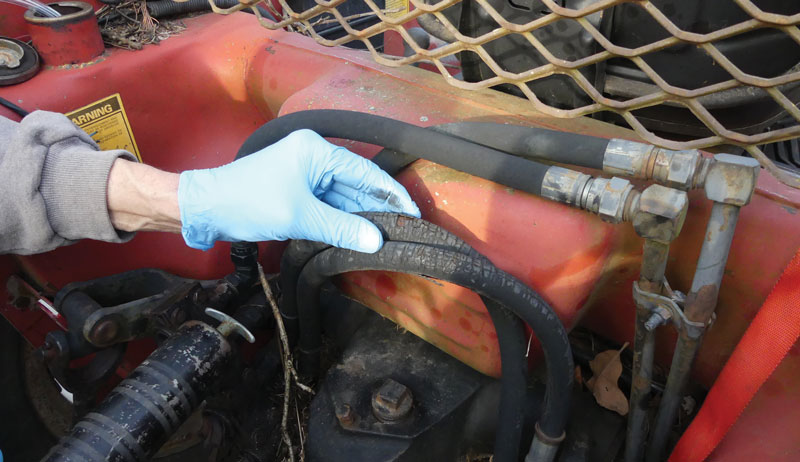
  • Hydraulic Lines: Look for cracks or damage.
  • Oil or Fuel Leaks: Look under the tractor for indication of leaks.
  • Cell Phone/Radio: Make sure your communication equipment is charged up and working.

This article originally appeared in the May/June 2021 issue of Hobby Farms magazine.

Categories
Farm & Garden

Rabbit In The Garden? It’s A Common Frustration

In The Tale of Peter Rabbit by Beatrix Potter, farmer Mr. McGregor is forced to defend his garden from the titular bunny. He gives chase until the anthropomorphic critter—stuffed full of vegetables—makes a narrow escape (minus his jacket and shoes).

Readers might be relieved by Peter Rabbit’s survival. His blatant disobedience in visiting the garden notwithstanding, no one wants to see him wind up as the main ingredient in one of Mrs. McGregor’s rabbit pies.

But hobby farmers might be more inclined to sympathize with the plight of Mr. McGregor. A rabbit in a garden is a discouraging day of destruction waiting to happen.

A Woeful Tale of the Rabbit in My Garden

Recently, I’ve been feeling a lot like Mr. McGregor. There’s been an explosion in the wild rabbit population on my farm, triggered by at least one spring litter.

The baby rabbits have started venturing out. One—we’ll call him Petey—is growing a little too bold in his exploration of the farm.

About one week ago, Petey managed to slip into my farm’s main garden through an open gate. Inside, he found a world of lush plants quite unlike the surrounding yard, complete with a thick patch of raspberry bushes convenient for hiding out of sight and out of reach.

There’s no telling how long Petey would have stayed—and how much he would have eaten—if he hadn’t been noticed immediately. A grand chase involving multiple people ensued. It ended with the little rabbit unleashing a frenzied dash out of the raspberry patch, out of the garden and across the yard to hide under a nearby shed.


Read more: Want to grow more in less space? Try trellising your plants!


Petey’s Persistence

We hoped this would mark the end of Petey’s garden adventures. But unfortunately he hasn’t given up quite so easily.

Over the course of several days, he was spotted repeatedly near the garden fence, perhaps searching for a way inside. Each time, we chased him away—sometimes to the safety of the shed, and sometimes into patches of tall grass.

Of course, we didn’t really think Petey would find his way back into the garden, at least as long as we kept the gate shut. The garden is surrounded by two types of fencing—eight-foot welded wire to keep out deer, and two-foot hardware cloth to keep out smaller animals like rabbits and squirrels.

The hardware cloth is bent outward at the base and buried slightly to discourage critters from digging underneath.

But Petey’s efforts eventually paid off. One afternoon, there he was, sitting in the middle of a walkway even though the garden gate had been shut. Realizing he’d been spotted, Petey retreated back to the raspberry patch, and considerable rattling of the bushes was necessary to flush him out.

He finally reappeared at the back of the garden. Then Petey sprinted to a corner and—poof!—seemingly ran right through the hardware cloth to escape.


Read more: These 10 quick-growing vegetables will give you an early, rewarding harvest!


Check for Holes

It turns out there’s a hole in the hardware cloth where it bends at ground level. It’s not an easy hole to notice, but Petey—in his evidently diligent analysis of the garden’s defenses—managed to uncover this hidden entrance.

The good news is, the young rabbit left the garden undisturbed, so he must not have been inside for long. And suffice to say, the hole has since been blocked. This will hopefully prevent Petey from taking up permanent residence in the raspberry patch (which should probably be moved outside the garden).

Otherwise, I’ll just have to keep pursuing Petey in the same manner as Mr. McGregor, who must surely rank as one of the most relatable “villains” in literature!

Categories
Beginning Farmers Crops & Gardening Farm & Garden Permaculture

Succession Planting Keeps The Garden Full Of Produce

Think back to Memorial Day weekend—spring at last! You spent a busy weekend happily putting all of those seedlings in the ground, direct seeding some veggies and thinking with delight of the garden feasts to come.

Now you dropping off lettuce at the neighbors’ homes before it all bolts. The spinach has come and gone, and no more radishes or scallions remain. 

Weeds sprout where the radishes once grew. Tomatoes still aren’t ready yet. You planted all of those long-season heirloom and beefsteak ones that you love so much.

You start to wonder: “How come the farmers market seems to always have leafy greens and radishes to sell! And they have early tomatoes, too.” 

What are those farmers doing that you’re not? It’s no secret. It’s simply succession planting. 

Succeeding in Succession Planting

In a nutshell, succession planting means planting one crop after another to make more efficient use of space. The benefits of doing this far outweigh just a more efficient use of garden real estate.

Using succession-planting techniques allows a grower to harvest successive crops throughout the garden season. 

This means that you can tailor your planting so that you harvest quantities that are less likely to overwhelm you (24 heads of lettuce ready to pick now!). It means that doing this will provide you with more variety throughout the season.

Using the garden space fully all season even means less chance for weeds to establish themselves. Basically, succession planting has all positives and no negatives. Once you try it, you’ll realize how easy it is.

There’s another technique, which isn’t true succession planting, that will also allow you to spread out your harvest over the season. This is the planting at one time of several varieties of one type of plant (tomatoes for instance) that have different days to maturity.

By planting several varieties with different maturity dates, you can spread out your harvest, with early, mid- and late season crops of the same vegetable. 

The dates for planting will vary depending on your USDA ag zone. The length of your growing season will determine how many plantings of a crop you can do.

As well, for those who live in places with very hot summers, some periods of time aren’t amenable to planting certain crops such as leafy greens. 


Read more: Grow collard greens for year-round nutrition from the garden.


Selections for Succession Planting

Any crop that has a short enough growing season that it doesn’t need to occupy garden space for the entire season is a good candidate. Some obvious ones include:

  • leafy greens
  • scallions
  • radishes
  • green/yellow bush beans
  • beets
  • carrots
  • turnips
  • peas 

Crops that generally aren’t suited to this are those that require a long growing season such as:

  • peppers
  • eggplants
  • tomatoes
  • melons
  • Brussels sprouts
  • onions
  • potatoes
  • winter squash

Then there are crops such as garlic, which only occupy the space for part of the season and allow for a short-season crop to be planted there once the garlic is harvested. 

Start by making a list of the vegetables you wish to grow. Looking though the seed catalog, note all of those that have relatively short dates to maturity. These will be your best candidates for succession planting unless you live in a place with an exceedingly long growing season.

You won’t necessarily want to just plant the same variety of a crop each time. Some varieties are better suited to cool spring plantings. Some crops handle mid-summer heat better. Others will happily produce into fall and shrug off light frosts. 

Carrots, for instance, have varieties that are best suited to fresh eating and those that are known for their storage qualities. In that case, you’d want to plant an early variety for fresh eating (such as Yaya), a mid-summer one (Sugarsnax) and a storage carrot (Bolero).

This is a combination of true succession planting plus the technique of planting several varieties that have varied dates until harvest, as well as characteristics such as best for fresh eating or storage. 

succession planting garden gardening
Sarah Marchant/Shutterstock

Don’t Forget Leafy Greens

Leafy greens are a huge category of crops that are tailor-made for succession planting. Asian greens such as bok choy can be successfully planted in successive plantings every few weeks from early spring into mid-summer. In the South, fall plantings will also work well. 

Lettuce is well suited for succession planting. In early spring, a salad mix/mesclun for harvesting as baby greens can be planted as soon as the ground can be worked. As well, a lettuce variety or two that are quick to mature can be planted at this point for harvest as full heads.

Two to three weeks later, plant a lettuce variety or two that will tolerate more summer heat. Repeat after another two to three weeks.

Working back 60 days from your expected first frost date, plant a crop of lettuce that will handle light frosts. So if you expect your first frost by Oct. 1, you’ll want to plant some lettuce by August 1 for an early fall harvest. 

Spinach really takes to succession planting. It can be seeded in early spring, as soon as the ground can be worked. Plant some every week—10 days until early summer, unless you live in an area with exceptionally cool summers.

Some varieties, such as Space, are better equipped to handle some summer heat. In mid-late summer, a fall crop of spinach can be sown.

In regions with hot summers, tetragonia (aka New Zealand spinach) can be grown, which will provide some leafy greens during the summer season. 

More Options to Consider

Broccoli responds well to succession planting. Select varieties that are best suited to early spring planting, mid-summer maturity and late season use. Coupled with the harvesting of side shoots, this should provide a long broccoli harvest season. 

Bush beans (green or yellow) are also suited to successive crops being sown. Planting every two to three weeks will provide a continuous crop of beans until frost intervenes.

How many plantings will be determined by your last and first frost dates. Count back from the anticipated first frost date to determine the last possible planting for the season. As day length and heat is decreasing then, add in more of a cushion.

For example: If you’re planting Provider, with a 50-day maturity, and your first frost is expected Oct. 1, seed your last planting no later than August 1. 

Some crops such as beets, radishes and scallions lend themselves easily to succession planting. Just keep seeding every week or two to keep well supplied all summer. Peas—shelling and edible podded—can be planted for an early spring crop and in late summer/early fall.

Experiment and see what works for you. 


Read more: Here are 5 reasons every market farmer should grow beets in the garden.


Beyond Succession

Some crop varieties, due to varied maturity dates, can be planted at the same time yet provide a longer harvest period. This is similar to succession and is a valuable technique to extend your harvests.

As the plants or seeds are begun at the same time, it’s quite easy. 

Corn Considerations

Certain crops lend themselves well to this such as corn. An added benefit to planting several varieties of corn with different maturity dates is that this allows you to plant super-sweet and non-super-sweet corn in a small garden without the risk of cross-pollination between varieties. 

For corn, you could do true succession planting by planting the same variety every 10 days or so, to provide a continuous corn harvest. However, you could also plant several varieties at one time that will mature at least 12 days apart.

If the super-sweet and non-super sweet varieties are planted this way, they are unlikely to cross-pollinate. 

succession planting garden gardening
Michael Ebardt/Shutterstock

Tomato Time!

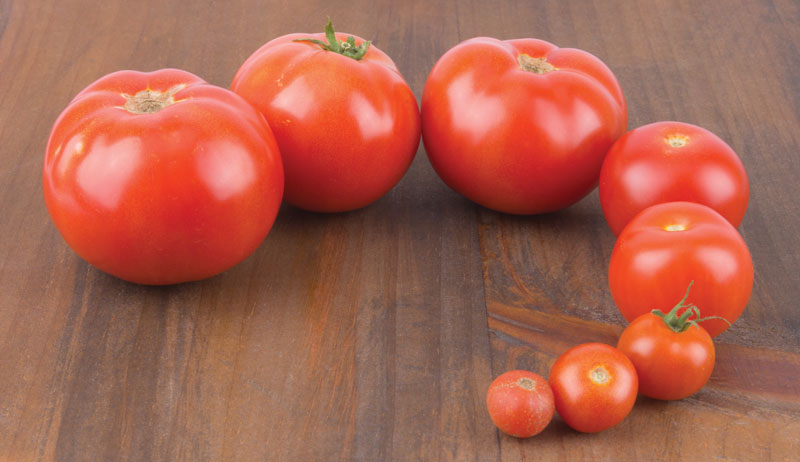
Tomatoes lend themselves to the use of varieties with different maturity dates to spread out the harvest. A cherry tomato and a small salad-type could be planted to provide early season tomatoes.

A determinate tomato variety is useful for this, but some indeterminate varieties will also produce very early season crops. 

A main season variety is planted as well to take over for mid-summer production. A later long-season heirloom or beefsteak type can also be planted provided it will mature in your region. If canning is on your to-do list, a paste tomato works wonders.

All of these tomatoes could be started at the same time, yet will provide a longer tomato harvest period as they have a variety of maturity dates. 

Fertility is Key to Success

When doing succession planting, keep in mind that good soil fertility is needed to provide optimal conditions for each crop. Adding compost or other fertilizers during the season is wise. Row covers or cold frames can extend the season at both ends.

Good seed catalogs provide a wealth of information on dates to maturity and recommendations on varieties best suited to planting at different times in the season.

Happy planting!  


Sidebar: Not a Perfect Science

Crops grow at different rates depending on factors such as soil and air temperatures, moisture, day length and increasing versus decreasing day length. 

Given this, it’s not as if you can just plant six heads of lettuce each and every week and expect to harvest six newly mature heads each week. 

When direct seeding, crops started a few weeks apart might mature at the same time if the soil temp was quite cool for the earlier one and warmed up by the time of the later planting. 

Succession planting crops requires some trial-and-error and fine-tuning. Keep notes of what you planted when, if it was direct seeded or utilized seedlings, and when it was ready to harvest.


Sidebar: Consider This

Once you start thinking about succession planting, you should start to consider the varied uses you wish for your harvest.

Do you plan on doing any preserving such as canning, drying, fermenting, pickling, etc.? Do you have a root cellar to store some crops in?

These considerations will impact which varieties you plant and when.

Obviously, storage carrots should be grown so that they are ready to harvest quite late in the season, when they can go into a root cellar. This would dictate their planting date. 

Planning ahead is key. Before you start to plant, sketch out a garden plan and note where you want to plant what. For instance, in the block devoted to early radishes and spinach, sow a crop of bush beans when the space opens up. After the garlic is harvested, pop in a fall spinach crop.

Consider what your optimal harvest quantities are. How much lettuce would you hope to have available each week? If you’re unlikely to use more than six heads of lettuce/week, planting 24 seedlings at a time isn’t wise.

Instead, spread out the planting so that the quantities available will more closely resemble your usage targets.  

This article originally appeared in the May/June 2021 issue of Hobby Farms magazine.

Categories
Animals Large Animals

All About Using Stock Dogs With Sheep

I honestly don’t know how I would get all my chores done—at least done in a decent amount of time—without the help of my border collie, Dash.

Bringing a stock dog on to work as my farm partner with our sheep was one of the best employment decisions I ever made! I would need at least two other humans to help me get done what Dash and I can do every day.

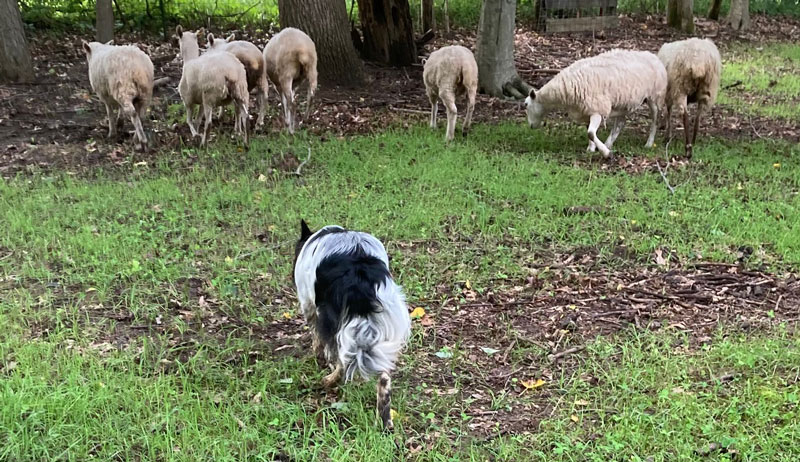
He helps as I set out feed and hay, move sheep to new pastures, and administer vaccines and worm my flock.

A History of Stock Dogs

From the time sheep were domesticated in somewhere between 2900 and 700 BC, dogs presumably have helped shepherds with the necessary daily work.

Livestock guardian dogs (LGDs) lived with and protected the flock. Stock dogs helped move the sheep or separate the clock for various chores.

My breed is the border collie. This breed of dog emerged from the area along the border of Scotland and England.

The breed we know today as the border collie didn’t attain official recognition until the 1800s. “Collie dogs,” however, have helped shepherds far longer than that.


Read more: Check out these different ways to protect sheep from predators.


Stock Dogs Bred to Work with Sheep

I’ve actually kept border collies for several years. But until I got Dash as an 8-week-old puppy, I never owned a stock dog bred for the specific purpose of working with sheep.

In fact, I did some training with another of our other border collies, Ari. It wasn’t easy to train her, as she didn’t really have a lot of herding instinct. And at the time, I didn’t have a lot of experience to know that she didn’t have a lot of herding ability. 

Finally I decided I wanted a canine partner with a serious working background. And so I bought Dash, a working dog with real working ancestors—many from that border area between Scotland and England! 

Dash is very serious about sheep. In the house or in the backyard, he is about as goofy as any two-year-old male dog can be. But once we head out to the pasture to move sheep, his head drops down and his eyes never leave the sheep.

He is ready to work the minute we head outside.

Succeeding with a Stock Dog

Using stock dogs with sheep successfully requires two things:

  1. Getting a dog from a breeder who has bred excellent working dogs
  2. Finding a good trainer to help you get your dog off to a good start

Even a dog with lots of herding instinct needs to be guided and taught to work with you and to respect the livestock.

I am lucky to have found Denice Rackley at Clearfield Stockdogs, who has been my herding mentor and teacher. I work through problems with her, such as how to get Dash to move sheep quietly in a small space. She also taught me how to get him to hold them in a corner while I put out their grain.

When you are starting to train a stock dog, it’s best to start with a few “dog broke” sheep familiar with dogs. We start our dogs in a small round pen. The dog learns what it takes to move the sheep in one direction or the other.

The dogs also learn commands such as “away” (counterclockwise around the sheep). They also learn “come bye” (clockwise around the sheep), “lie down” and “that’ll do.”

That last command tells the dog you are done working and it’s time to come away from the sheep.


Read more: A good dog makes the perfect sidekick for a small-flock shepherd.


Stock Dogs Reduce Stress on Sheep

I do know of some shepherds who will not allow stock dogs near their flock. They fear it will cause stress for the sheep. And I understand not wanting to stress your flock.

However, a well-trained stock dog can actually result in less stress for the sheep if they can move or hold them quietly and efficiently.

I really enjoy having my dog work with me as a partner on the farm. I don’t regret hiring him at all. For payment, he only expects a couple of square meals a day, a pat on the head and a chance to do what his breeding tells him to. 

Categories
Uncategorized

Fertility Management Stage One Gets Soil In Shape

The first detail to address when discussing the first stage of soil fertility management is pH. Why? Because the best time to amend pH would be during this initial stage.

At this point, the land is undergoing land preparation or earthworks (namely plowing and opening new land from sod or field). 

But What Is pH?

pH is a measure of the soil’s acidic or alkaline nature. It plays an important role in determining which plants can grow in a given soil. 

Most garden plants prefer a fairly neutral soil (around 6.5 to 7.5 pH).  On the other hand, some annuals (like potatoes) like their growing environment more acidic. Same with some perennials, such as blueberries.

You can take an acidic soil and make it more alkaline through various amendments. Lime is particularly popular. 

Overall, adding organic matter to soil helps buffer soil pH and will keep it more constant and balanced. If your soil is very acidic (under 5 pH) and you want to garden in it, you may very well need to amend your soil. 

However, my main advice on this for the small plot grower is three-fold.  

1. Do a Soil Test

First, do a soil test before you buy or open new land. Determine what the pH is, as well as the soil texture and fertility availability for macro and micro nutrients.

2. Amend & Adjust

Then, you can easily amend for nutrient availability, and adjust the pH slightly to bring it into an ideal range. 

A great way to do this is with composted manure, cover crops, composts and micro-nutrient blends.

3. Work with Your Soil  

It is best not to fight your pH. If you have very acidic soil, then use that land to grow crops that are suitable to that pH. Otherwise you will amend it forever and never really win the battle. 

Grow what your land wants to grow, not what you decide it should grow.  If you have your heart set on growing certain crops, then find land with suitable soil.

It’s way easier than trying to force random land and soil to be what it is not.


Read more: What is healthy soil? Knowing the answer is key to growing well.


Other Factors in the First Stage of Soil Fertility Management

The first stage of soil fertility management occurs when we open new ground for the first time. This stage offers a few opportunities that I recommend growers take advantage of! 

Use Manure (but Plan Ahead)

First, I advice you apply a less expensive and much more fertile manure. But know that you’ll be working with ground that won’t grow any vegetables for at least 365 days. This meets the wait time needed for regulations between spreading manure and growing food. 

Also, if you bring in weed seeds (which is likely) on fresh manure (or even one- to two-year-old manure), then you will also have ample time to cultivate or cover crop the area.

This will remove weeds before forming garden beds in stage two.  

Manure is rich in nutrients, many of which are soluble and plant-available. Not so with many dry compost mixes that are lower in nitrogen, with more mineral nutrients mixed in. These soluble nutrients can be put to good use in stage one by activating decomposition rates of the new sod or field plants that have been plowed under. 

Now’s the Time to Cover Crop

Adding cover crops will smother the weeds, as well as actively uptake nutrients available in the manure. In turn, this “fixes” the nutrients as cover crop roots, stem and leaves. The process can contribute a lot to the newly forming soil organic matter. 

This conversion is highly beneficial. The organic matter is a great long-term source of nutrients that are stable—they won’t be lost to the atmosphere, leached into ground water, or eroded in heavy rain. Organic matter is also easily converted into soluble nutrients available in the soil water solution. 


Read more: Cover crops help build healthy soil, and they protect it against serious threats.


It’s All About Holding & Releasing Nutrients

The increased micro surface area of well-formed soil aggregates with good amounts of organic matter contributes greatly to the soil Cation exchange capacity. What’s that? Basically, it defines how well soil can hold onto many different nutrients (calcium, potassium, phosphorous, iron, nitrogen, zinc, etc.) and then release them into the soil water for plant to use.

So, essentially, stage one is great opportunity to use manure as a soil fertility amendment because we can maximize its soluble nutrients to build great garden soil from the get go. And we can avoid any pathogenic dangers from animal waste, which wedon’t want on lettuce.

Also, we can deal with weed seeds that we don’t want to proliferate in our finished garden beds. 

Both of these obstacles are managed easily through time, cover cropping and cultivation before and as we enter stages two and three of garden transition and fertility management. (We’ll look at these in my next article.)

A Good Time to Fine Tune Your Soil

You can also address major discrepancies in certain trace nutrients at this stage. For instance, many soils are devoid of Zinc.

You can improve this with amendments that, at this stage, balance nutrient shortages in sync with adding composted manure and cover cropping.

Categories
Farm & Garden Food Recipes

Recipe: Fermented Garlic Dill Carrot Pickles

Fermenting carrots is a wonderful way to preserve them for long term storage. Through the process of fermentation, the flavor transforms, yet the carrots keep their delightful crunch. These fermented dill garlic carrot pickles make a great dill pickle replacement for picnics and barbeques. 

Yield: 1 quart jar

Ingredients

  • 1 lb. fresh carrots
  • 4 cloves garlic, crushed
  • 1-2 sprigs of fresh dill 

Optional for spice: 1 jalapeno (or hotter pepper of choice), sliced into quarters


Read more: Check out these 10 tips for getting started with fermentation.


Brine

  • 1 tbsp coarse kosher salt, dissolved in 2 cups water

Wash and scrub carrots, trim off the ends. No need to peel—the skin on the carrots will aid in the fermentation process.

Lay a clean, quart-size canning jar horizontal next to the carrots. Cut carrots so that they fit in the jar vertically, while leaving 2 inches of headspace (space from top of carrots to the rim of the jar).

It is preferable to use thin to medium-sized carrots, though if your carrots are thick then you can halve or quarter them lengthwise. Try to use carrots uniform in size so they ferment evenly.

To pack the jar, begin by adding the dill and garlic to the bottom. Then proceed to add the carrots, carefully fitting them in as snug as possible, without bruising or breaking them. If you are adding hot peppers to this ferment, add them within the carrots.

Once the jar is completely filled with carrots, pour the brine mixture over the produce until the brine covers the carrots by at least 1/2 inch. Leave at least 1 inch of headspace so the ferment has room to bubble without overflowing. 

If you have a small fermentation jar weight, add it to the jar to hold down the produce under the brine. Remove any small pieces of food that float up to the top of the brine. Anything above the brine will increase the risk of mold and a spoiled ferment.

Wipe off the rim of the jar with a clean, dampened towel. Add the canning jar lid and tightly screw on the ring.

fermented dill garlic carrots
Gabriel Gurrola/Unsplash

Fermentation

This recipe for fermented dill garlic carrot pickles is a seven-to-10-day ferment. Ferment at room temperature, ideally between 60-75 degrees F (15-23 degrees C), and keep out of direct sunlight.

Check on the ferment daily to make sure the brine covers all the produce. If any produce has floated above the brine level, use a clean utensil to push it back below the brine. 

Burp the jar daily. Unscrew the lid briefly and tighten it back on to allow any built-up gas to release. (This avoids possible jar breakage or the ferment from overflowing, too.)

Once fermentation is complete, transfer the jar into the refrigerator, brine and all.

Fermentation does not stop once the ferment is transferred to the refrigerator. However it does slow the process way down. The taste and texture of your fermented dill garlic carrot pickles will continue to change, therefore this ferment is best enjoyed within 12 months.


Read more: These fermented asparagus pickles are a dilly delight!


Side Notes

If you do not have a glass jar weight, you can improvise by using an easily removable small food-grade glass dish that fits inside the jar. Or, if you have a smaller glass canning jar that can fit into the mouth of the jar you are fermenting with, you can use that to keep the produce pushed under the brine.

If you are unsure if your water is safe for fermentation, you can boil it and allow it to cool to room temperature before stirring in the salt to make your brine.

You may substitute fine sea salt instead of coarse kosher salt if you prefer. The measurement will remain the same for this recipe.

Consider adding additional herbs to change the flavor of the pickles. Pack them in the bottom of the jar, under the carrots, to assist in holding them down under the brine.

Through fermentation, the brine will become cloudy. You may also see white sediment appear at the bottom of the jar or on the carrots. These are normal parts of the fermentation process.

Kahm yeast is common with this recipe, so be sure to watch it carefully. This yeast is a completely safe reaction that is common with high sugar ferments, though it’s avoidable if you keep the produce submerged and catch it early.

Kahm yeast is visually different than mold in that it is not fuzzy. Rather, it is powdery and appears more as a film on the top of a ferment. If caught early, it can be removed by scooping it out with a spoon or dabbing it out of the ferment with a paper towel.

If the yeast takes over the ferment, however, it may change the overall flavor of the fermented dill garlic carrot pickles. Though not harmful, it is not pleasing to most.

Check out Stephanie’s books, including Can It & Ferment It, for more fermentation recipes!

Categories
Animals Beginning Farmers Farm & Garden Flock Talk Poultry

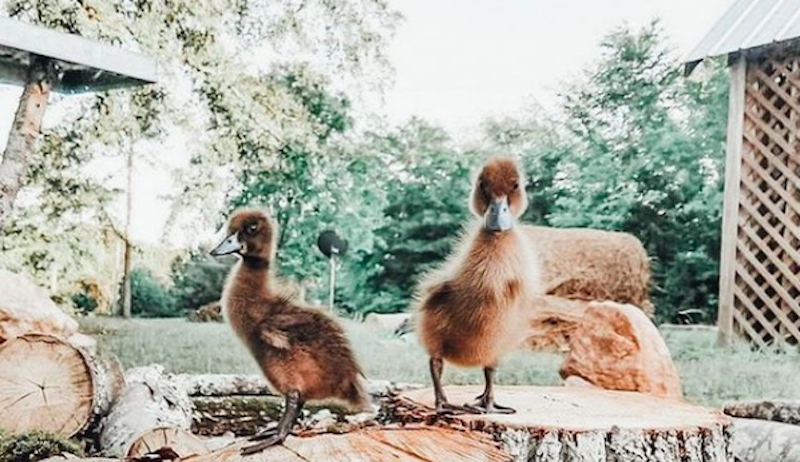
Ducks & Chickens Bring Joy To A Damsel In A Farm Dress

“At first we started with a garden and then a few chickens. But the idea to move to the country kept tugging at our strings,” says Ciara, a Georgia-based gardener and poultry person who’s amassed a growing Instagram following via her Damsel In A Farm Dress account.

After moving from the Midwest to Southern climes, Ciara and her husband set about “building up our property piece by piece.” Now their gardening adventures are supplemented by dough sessions in the homestead’s kitchen and caring for the poultry ranks.

We spoke to Ciara about coming up with your own feed formula and how ducks and chickens can teach you life lessons. We also spotlighted a drake named Pine.

Discovering Sustainable Living

Ciara says that her interest in growing her own produce was kickstarted when she and her husband “started learning more about the green movement, sustainability. [We wanted] to not only become healthier for ourselves, but we also had a little guy on the way.”

A job opportunity took the family from the Midwest to Georgia. There, they were able to find a property that Ciara calls “our slice of paradise.”


Read more: Thinking about getting ducks? Great idea! Here’s why and how to start with waterfowl.


Bringing Poultry into the Picture

Ducks and chickens are a key part of Ciara’s homestead. “It all started because we wanted fresh eggs and natural bug control,” she recalls. “Quickly it blossomed into much more. They have also provided so many lessons on responsibility and life. Not only for our son, but also [for] my husband and me.”

Ciara says that each duck and chicken has their own distinctive personality. She says that they provide “entertainment for hours.”

Ciare adds, “Funny thing is, I used to be so afraid of birds. But now I absolutely adore them! They really are a wonderful gateway into this lifestyle.”

Spotlight on Pine!

Pine is one of Ciara’s resident drakes. “Pine is an absolute sweetheart and very mild mannered,” she says. “If you have been around ducks at all, you may know that most are pretty skittish.

“Pine’s definitely not one to want to be held. But he will will come waddling over for a good snack or to take a dip or splash in the freshly filled water tub.”

From her experience, Ciara maintains that “water and grubs are always the ways to a duck’s heart!”


Read more: Ducks and geese are great livestock for a permaculture operation.


Formulating Your Own Feed

Ciara’s ducks and chickens benefit from being able to forage for food when they want. But she also offers a home-formulated feed to supply supplemental nutrients.

“Chickens and ducks both need a good amount of protein and calcium. That is why we wanted to include the specifics in our supplemental feed,” she says. Her tailored recipe includes kelp, alfalfa and sorghum.

“They love every bit of it. And it shows in the quality of their eggs!”

Appreciating Family & Food

Reflecting on her lifestyle, Ciara says that one of the most fulfilling parts about it is “watching our son get involved” on a daily basis. This includes planting seeds and watching them sprout into food to nourish the family.

“It’s pretty amazing not only to say we made the meal,” she says, “but also to say that we grew it.”

Follow Damsel In A Farm Dress on Instagram.

Categories
Crops & Gardening Farm & Garden Homesteading Urban Farming

How To Start A Mini Nursery For Found Saplings

Maybe it was the result of a forgetful squirrel. Or it could’ve been an especially robust seed. Regardless, I spied the tiny oak sapling growing between a concrete border and a bed of small rocks.

Somehow it was flourishing. But, because it was located in a retailer’s oft-weeded parking lot, it probably wouldn’t last. I carefully coaxed it out of its spot, with its long tap root intact.

It’s worth noting that one can make a much greater impact by direct-sowing tree seeds. Nevertheless, I still save “found” trees—particularly those that are native to my area.

Unfortunately, my collection of potted trees was getting out of hand. I had accumulated cedars, oaks, a nice pine…. Still, I couldn’t plant them on my own small patch of land.

(If I placed them too close to my septic field, their roots might destroy its delicate finger system.)

Whether your circumstances are similar to mine or you lack land entirely, you might consider installing a mini tree nursery for now. That way, you can give found trees a better—albeit temporary—spot to grow until you can find them their forever homes.

I’ve had good luck asking friends and family if they’d like some trees. Invariably, someone has the space and inclination to plant something new.


Read more: The “Trees from Seed” philosophy makes reforestation free and easy.


Getting Started

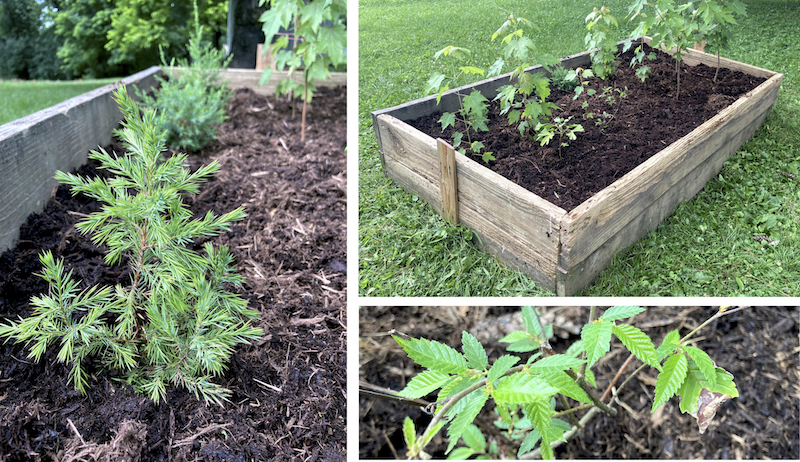
You can easily build your own mini nursery with some scrap lumber and a handful of screws. (Essentially, you’re aiming for an extra-tall raised bed.) The box itself has no bottom. Instead, it sits directly on the ground.

My mini nursery is 6 feet long, 3 feet wide and a little over 1 foot high. In hindsight, that’s shallower than I would’ve liked. As a result? I probably won’t let my found trees linger for more than a year or two before relocating them.

See, saplings with deep or fast-growing roots might have a chance to penetrate ground level. This, in turn, could make successfully salvaging them for transplant more difficult later. A few relatively fast-growers include silver maples, red buds, some pines, black locust, flowering crabapple and chestnut oaks.

Other Details

Ideally, you should fill the box with loose, humus-rich soil. (For my part, I used so-so fill dirt mixed with a lot of finished compost, and I’ve had decent results so far.)

If you like, you could plant orderly rows of the same type of tree. I’ve tried to do that with my cedars and pines, since I have a lot of those. I’ve further organized like types of trees by size and age.

I also have a “hodgepodge” row of different kinds of trees. There is a lone American elm, one (non-native) ginkgo tree, sundry maples and empty space for future finds.

Alternatively, you could plant just one type of tree throughout your mini nursery. Whatever you’re planting, allow 4 to 6 inches between very small trees and slightly more space between older, larger trees.


Read more: Weed or tree? Rethinking how we look at saplings can yield future trees.


Nature and Nurture

For areas with nibbling deer—or, perhaps, some of your own nibbling livestock—you may want to encircle your nursery with a bit of chicken wire or fencing. Prefer to keep things simpler? You could instead protect only your most tempting trees with small, hardware cloth cages.

Besides keeping critters away, you’ll also need to water your found trees consistently. I give mine a good soak with collected rainwater nearly every day. (You may notice, too, that some of your newer arrivals need even more water or more frequent watering sessions.)

Finishing Touches

As you fill your mini nursery, it can be easy to lose track of your tree details. Writing some brief notes on a waterproof tag is a great way to keep things straight. At minimum, a found tree’s tag might include the tree type, its original location and the date you added it to the nursery.

This last detail can help you to decide whether it may be time to find a tree its permanent location. (Just remember, transplanted trees’ odds of survival will improve if you plant them as soon as the ground has thawed in early spring.)

Once you do find a found sapling’s forever home? Water the tree to be moved. Then use a sharp shovel to remove it from the nursery.

Dig as wide a radius around the tree as you can. Take care to minimize disturbance to the surrounding trees. You should also dig as deeply as you can, keeping as much soil with the tree’s roots as possible.

Afterward, replace the void left behind in your mini nursery with fresh soil. You should also water all of the remaining trees well.