Categories
Farm & Garden

First Aid Kit List for Emergency Prepping

A first aid kit list is important to have when prepping these days. Prepping is a common topic, especially with natural disasters in the news. There are so many things to consider when it comes to preparedness that it can be difficult to know where to begin. What if there is an emergency? What do we need to be prepared?

That’s where Low-Cost Emergency Planning by Julie L. Jesseph comes in handy. In her book, she teaches people to live better on less. The book is full of ways to be prepared without breaking the bank. Below are Jesseph’s level one and two emergency first aid kit lists from the book. They can give a head start and organization to emergency planning.

Level One: Portable First Aid Kit

Many of these ingredients can be found at discount stores, however, some are better found online. When making these kits, consider your essential medical needs. All of these medical supplies can fit into a small bag. For trail use, compactness and portability are essential.

Portable First Aid Kit Supplies

This kit will cost about $30-$40 to put together.

· 2 (4-inch square) gauze pads

· 2 (4-inch square) non-stick pads

· 1 large Israeli trauma pad

· 2- 25-gram size QuickClot or Celox

· 4 nitrile gloves

· 4 alcohol pads

· 1 pair of splinter tweezers

· 1 roll of one-inch adhesive tape

· One moleskine pad

· 1 container of tincture of iodine

· 6 half-inch band-aids

· 6 three-quarter-inch band-aids

· 2 two-inch band-aids

· 2 half-inch band-aids

· 2 quarter-inch steri-strips

· 2 half-inch steri-strips

· 4 butterfly closures

· 1 container of instant glue

· 3 maxi-pads to absorb bleeding

· 1 container of Visine

· 1 nail clipper

· 1 small flashlight

· 1 container of hand sanitizer

· 5 Q-tips

· 1 tube of chapstick

· 1 tube of antibiotic ointment

· 16 (200-mg) doses of ibuprofen

· 8 (2-mg) doses of an anti-diarrhetic

· 8 doses of antihistamine (for allergies)

· 8 multi-vitamins

Level Two: Home First Aid Kit Supplies

This is a larger emergency kit, but it’s beneficial to have all the supplies in one spot so you don’t have to hunt around the house for what you need.

This kit will cost between $100-$150 to put together.

Home First Aid Kit Supplies

· CPR mask

· Gloves

· Wet wipes

· Hand sanitizer

Instruments

· A flashlight

· Scissors

· Splinter tweezers

· Sharp tweezers

· Large nail clipper

· Large safety pins

· Single-edge razor

· Knife

For Wounds

· 1 (20-cc) irrigating syringe

· Assorted sizes of bandages

· Steri-strips

· Butterfly tape

· Duct tape (it comes in handy for many things)

· Adhesive tape

· Teragerm (a non-adhesive film by 3M, a breathable band-aid and one of the more expensive parts of the kit)

· Moleskin

· 4-inch square gauze pads

· 2-inch square gauze pads

· QuickClot gauze

· Non-stick gauze pads

· Roll of gauze

· Israeli trauma pad

· Q-tips

· Nylon suture

· Cyanoacrylate glue (yes, folks, “superglue”)

· 1 3-inch ACE wrap

· Triangular bandage

· Roller dressing

· Pills and Other Supplies

· Tylenol

· Ibuprofen

· Aspirin

· Claritin

· 1% hydrocortisone cream

· Anti-diarrhea pills

· Fever thermometer

· Alcohol pads

· Cold pack

· Lip balm

· Triple antibiotic ointment

· Salonpas pain relief patch

· A pen

Remember to customize these lists to your needs. And remember, all the first aid gear in the world is of limited value if you haven’t learned how to use it in an emergency. To that end, it’s recommended to take various Red Cross first aid courses. Also, it’s beneficial to study natural remedies and herbalism.

This has been shared from Low-Cost Emergency Planning – A DIY Guide to Family Disaster Preparedness by Julie L. Jesseph, with permission from Skyhorse Publishing, Inc.

This article with a Level One and Level Two first aid kit list was written for Hobby Farms magazine. Click here to subscribe.
Categories
Poultry

What Is a Broody Hen? 6 Things to Know

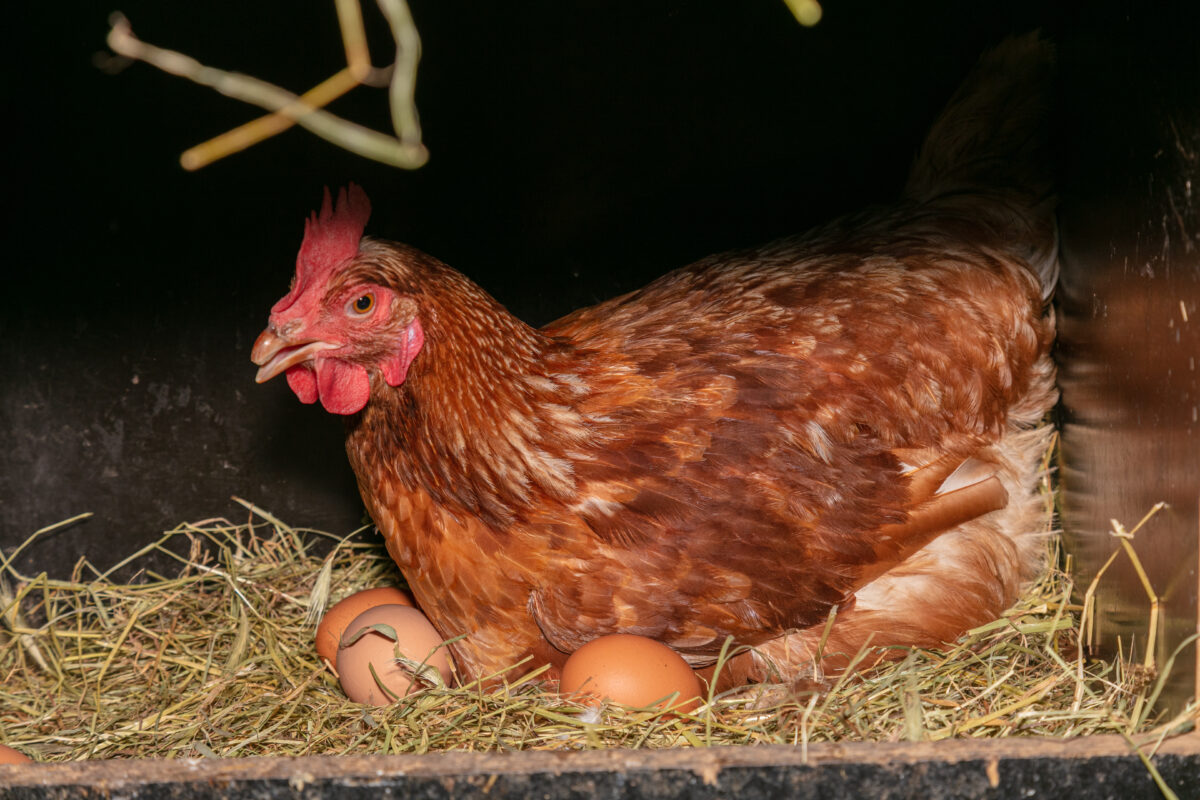
What is a broody hen is a commonly asked question among first-time chicken owners. When a hen goes broody, it is her body’s way of telling her that it is time to stop laying and hatch out chicks.

During this time, a hen’s egg production will slow and may cease entirely. If the hen is allowed to sit on some eggs, she will lay a small number of eggs (called a clutch) before sitting on the eggs for twenty-one days until they hatch.

Once the chicks hatch, a good mother hen will spend the next two to three months raising her chicks. Once the chicks have “flown the nest,” she will resume laying again.

Here are six things you should know before attempting to have a hen brood eggs.

#1 Not All Hens Go Broody

If you have ever researched what is a broody hen, you may have also discovered that some chicken breeds are more prone to broodiness than others. And it’s true, not all hens go broody.

Some chicken breeds like Brahmas, Cochins, Orpingtons, Plymouth Rocks, Silkies, and Sussex are more prone to broodiness than other breeds such as Hamburgs, Leghorns, Sex Links and Welsummers.

However, each hen is different and has a distinct personality. Not all individuals in the broody breeds will have a desire to hatch and raise chicks. On the other hand, some individuals in the non-broody group may make excellent broodies and mothers.

#2 Inexperienced Broody Hens Often Make Mistakes

Discovering what is a broody hen is only the first step in a learning journey toward brooding your own chicks. If the broody hen is a first-time mother, she has just as much as you to learn. Possibly more.

First-time broody hens are more likely to make mistakes than hens who have experience hatching and raising young. Common mistakes to look for include:

Refusing to stay sitting: Younger hens and first-time broodies often grow bored when sitting, so it isn’t uncommon for them to call it quits a week or two in. If this happens, have a backup incubator on standby, or slide the eggs under another broody.

Disinterest in chicks: First-time mama hens may show a disinterest in their newly hatched chicks. This happens when the hen is still geared toward protecting the eggs, not the chicks. The behavior can often be remedied by relocating the hen and chicks to a new location away from the nest site. Keep an eye on the new family to see if the hen resumes her mothering duties. If not, move the hen back to the coop and have a chick brooder on hand in case the plan goes awry.

#3 Broody Hens Are At Risk of Predator Attacks

One of the most critical things to learn when researching what is a broody hen is that broody hens are at an increased risk of being picked off by a predator.

There are several reasons for this since a broody hen’s job is to protect her nest, eggs, and eventually her young, but not herself. Even more predators are attracted to the eggs and chicks than they are to an adult chicken. Broody hens usually nest on the ground or floor of the coop, where it’s easier for predators to get a free meal.

If you want to keep the eggs safe and successfully raise chicks, protecting the broody hen is critical. Provide a safe area entirely enclosed in half-inch 16-gauge hardware cloth for the hen to hatch and raise her young. If possible, the coop or other enclosure should have a concrete floor. Be sure to be extra vigilant when checking both the outdoor perimeter and the coop and run to ensure no gaps larger than one-half inch are found.

Surrounding the perimeter of the coop and run with half-inch 16 gauge hardware cloth will help prevent digging predators from accessing the hen or her young.

#4 Broody Hens Need Proper Nutrition

Broody hens can quickly become dehydrated and malnourished while sitting on the nest. Some hens will refuse to leave the nest entirely during the brooding stages, so the hen may need to be physically removed and blocked out away from her nest for several minutes in the morning and again in the evening.

Keep time away from the eggs limited to about five to ten minutes per session. This is enough time for the hen to eat, get a much-needed drink, and relieve herself, without causing the embryos stress by the eggs becoming too chilly.

#5 Broody Hens Can Become Aggressive

What is a broody hen and why do broody hens show aggression, are two questions that go hand in hand. The change of hormones in a hen’s body is what causes her to go broody in the first place and also to act aggressively.

If your hen is broody, she may try to peck the hand you slip under her to collect eggs, or she may try to attack you using her wings, beak, and feet in attempts to protect her nest and young. If this happens, the best reaction is to stay calm and not react, so she doesn’t continue to view you as a threat. Once the broodiness is broken and she resumes egg laying again, she will return to acting like her old self.

Some broodies may turn aggressive toward their chicks. If a hen acts aggressively toward her chicks, simply remove the chicks from her and raise them in a safe brooder until they are old enough to join the flock.

Keep in mind that hens who act aggressively toward chicks should not be allowed to brood eggs again, as this behavior is not easily corrected.

#6 Hatching Eggs Equals Roosters

If you have researched what is a broody hen, you probably have not seen anything about roosters for sale. But, did you know that when hatching eggs, the chicks are usually fifty percent hens and fifty percent roosters. Some hens will hatch out significantly more roosters than hens.

While this may not seem like a problem immediately, once the cockerels (the name for male chickens under one year of age) begin to mature, you will quickly figure out you need a backup plan for your extra roosters, as it’s challenging to find homes for extra roosters.

Butchering your own roosters or having someone else butcher them for you is the most common option. However, if you can’t bear the thought of someone eating your chickens, setting up a separate coop and run, and starting a bachelor pad is another good way to handle the excess rooster problem.

Raising chicks with a broody hen is fun and well worth the effort.  Knowing what is a broody hen and how to care for a broody hen is critical knowledge will help you know what to expect, what problems could arise and help you enjoy the brooding experience.

This article about what is a broody hen was written for Hobby Farms and Chickens magazines. Click here to subscribe.

Categories
Animals

Five Goat Playground Ideas for Your Herd to Enjoy

Goat playground ideas come in many shapes and sizes and can be constructed out of many different things. If you’re raising goats, here are five fun and safe goat playground ideas for your herd to explore.

Why Build a Goat Playground

Goats are fun-loving, adventurous, and full of life, but when bored, they can get into trouble. Goat playground ideas help to keep your herd out of trouble by providing them with fun, enrichment ideas while helping to instill natural behaviors such as jumping and climbing.

No matter the goat breed, goats who live enriched lives have reduced stress levels, live longer lives, and have fewer health problems. An enriched life also means you have less chance of your favorite caprine becoming bored and leaping the pasture fence to nibble on your neighbor’s garden. Goat playground ideas also work perfectly for getting your animals outdoors during goat barn cleaning time.

Goat Playground Ideas: Safety First

Goats can be destructive and love to chew and butt anything they can get. When browsing for some new and enriching goat playground ideas, always be sure that they are safe for your herd. Even though ideas may look fun, some goat playground materials may be harmful or even fatal if ingested. Before creating a goat playground, be sure to check to see if tree limbs and stumps (more on that later) and any material on man-made playground accessories are safe for goats.

As goats age, they may not be as sure-footed as they were in their younger years. If older goats are in the picture, be sure to remove any playground equipment they may fall off of to prevent injuries and accidental deaths.

Always be sure to allow plenty of space between the playground ideas and the fence to prevent goats from jumping the pasture fence.

1. Stumps and Limbs

If you have access to forests, tree lines, or have a tree planted in your yard that has been damaged by a storm, you can use these limbs and branches for some fun goat playground ideas.

Lay large branches that can hold up to the weight of several goats at a time in the pasture and watch the fun begin. Goats love to climb tree branches and perch in the top branches, surveying their surroundings.

If you have small apple trees that your herd can safely and easily climb, don’t be surprised to see your goats climbing trees. Goats love to climb and will even climb their fence if bored.

Safety Tip: When selecting tree limbs and branches for goats, stay away from red maple, oak, cherry, apricot, peach, and plum trees, almond trees, and yew, as these varieties are toxic to goats.

goats playing in a tree
Adobe Stock/OldskoolPhotography

2. King of the Mountain

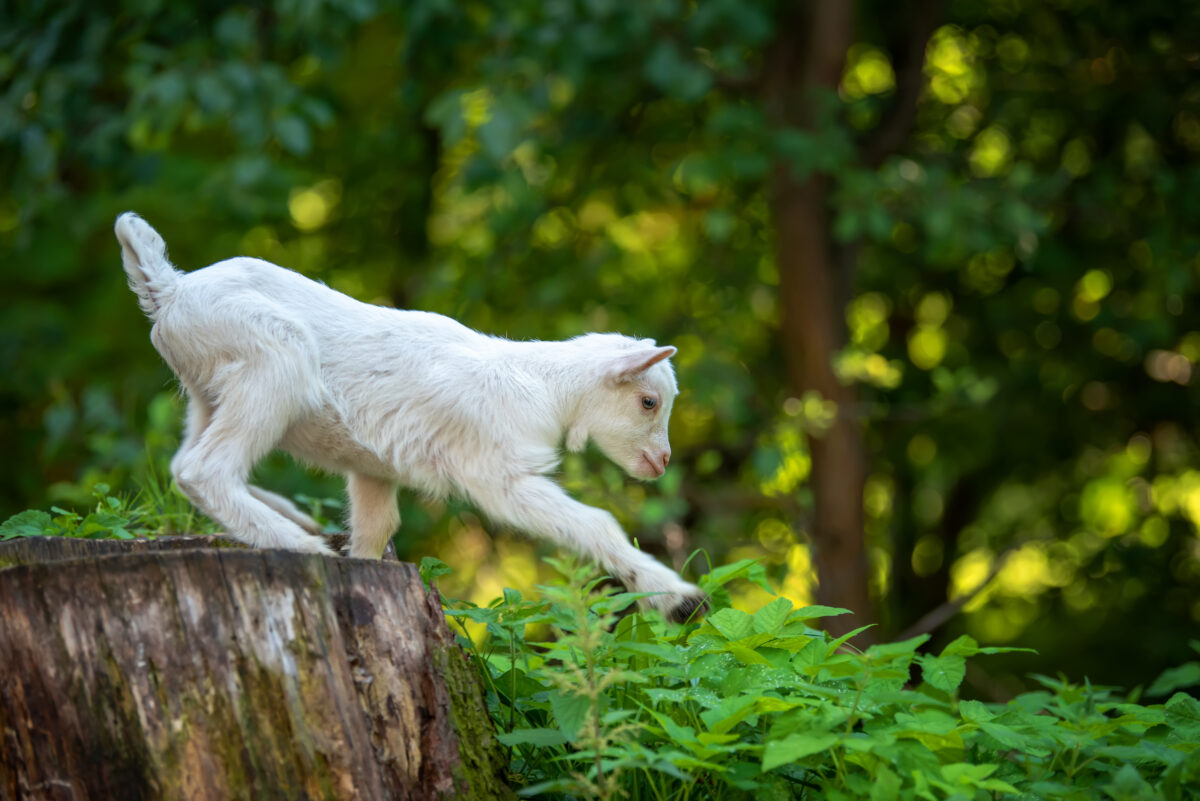
Playing king of the mountain on tree stumps is not only one of the simplest goat playground ideas, but it will probably be one of your herd’s favorite pastimes.

Goats love to jump on tree stumps, push each other off, and some will even lay on a stump to take a nap and chew their cud. For more fun, lay some tree stumps on their sides for a more difficult balancing exercise for your herd to master.

While tree stumps are a hit with goats of any age, they are especially popular with kids and young adults. There is nothing more fun than watching kids kick up their heels and do a little victory dance on top of their favorite stump.

3. Agility Equipment

Dog agility equipment is the most often overlooked of the goat playground ideas discussed in this article. From agility teeters, ramps, and A-frames, goats will enjoy trying out your dog’s agility equipment.

Have a goat who is super intelligent?  You may even be able to teach them to walk through the weave poles or leap over jumps. Just be sure to make the jumps low enough to avoid injuries.

Safety Tip: Most agility equipment is safe for goats, but stay clear of agility tunnels, as goats will chew and eat them. Ingesting even just a small bit of a tunnel may result in your goat requiring expensive and risky surgery. Err on the side of caution and always leave the tunnels to the dogs.

4. Old Tires

Old tires provide several goat playground ideas. Stand the tire on end for goats to climb on, or place them in a pile for young goats to leap on.

Tires are a fun enrichment for goats, so if you have any tires you no longer want, why not repurpose them into a goat playground?

Safety Tip: Tires are hard for goats to nibble on, but if you have an especially curious goat, check the tires every few days and remove them if goats try to chew on them.

5. Build a Goat Tree

If you are looking for some fun DIY goat playground ideas, look no further than a goat tree. Just like cat trees, goat trees can be built with multiple levels, ramps, and even steps. However, unlike cat trees, goat trees should be built without the use of fabric and other materials, as goats will chew and ingest them.

Use your imagination and have fun, but don’t forget, when building a goat tree with multiple levels, make it tall enough to prevent your herd from getting stuck between levels.

Safety First: Never use pressure-treated wood to construct a goat tree, as goats will chew on the wood, ingesting the harmful toxins used to preserve the lumber. Choose a safe wood, such as pine, to construct a goat tree and stay clear of using lumber that is toxic to goats.

These are just a few goat playground ideas you can construct for your herd. With a little imagination and following these safety tips, you can create a fun playground for goats that will enrich their lives for years to come.

This article about goat playground ideas was written for Hobby Farms magazine. Click here to subscribe.

Categories
Equipment

Pneumatic Tires vs. Solid Tires: Pros and Cons

Pneumatic tires vs. solid tires—which is better? There are pros and cons to both types, and while pneumatic tires are widespread, farmers may prefer “flat-free” solid tires in certain situations.

What are pneumatic tires?

Pneumatic tires are the kind you find on automobiles and most farm equipment. Two main types exist: bias tires and radial tires. Both types must be inflated with air (at a certain number of pounds per square inch (PSI) of pressure, which varies depending on the tire) in order to hold their shape and perform their duties. Without air, you have a flat tire.

Pros and cons of pneumatic tires

Pneumatic tires are popular because they offer tons of advantages. The biggest is a smooth ride; the air inside cushions the vehicle (and the operator) from bumpy terrain. They also offer superior traction (especially radial tires) when compared to solid tires, and they’re lightweight for their size.

But there are downsides to these tires. You must keep the air pressure at the correct level to achieve the best performance; in cold weather, pressure can drop, requiring you to add air. Plus, pneumatic tires can be damaged by nails and other sharp objects, or by blows to the sidewall. If a pneumatic tire loses its ability to hold air, you’ll have to repair or replace it.

What are solid tires?

Solid tires don’t need to be inflated with air. They’re solid all the way through and made from materials such as rubber, foam, or plastic. Since they don’t contain air, they can’t go flat (though they’re not completely immune to other types of damage).

Pros and cons of solid tires

The main upsides of solid tires are reduced maintenance and increased durability. You don’t have to check or maintain air pressure, and they can take quite a beating while remaining serviceable. Since they’re incapable of going flat, they’re commonly used to support the heavy loads carried by forklifts. (You may hear the confusing term “solid pneumatic tire” in conjunction with forklifts; this refers to a solid tire that otherwise resembles a pneumatic tire.)

However, solid tires aren’t perfect. Since they’re solid and inflexible, they generate a bumpy ride over uneven terrain. Traction isn’t as good and they’re worse than pneumatic tires at dissipating heat, so they shouldn’t be used at high speeds. Solid tires are also heavier than pneumatic tires of similar size (which can be a pro if you need the weight to counterbalance heavy loads on the front or rear of the vehicle, but a con when it comes to installing or removing the tires). And solid tires can be expensive, though this is offset in many cases by their long lifespans—they can last around three times as long as pneumatic tires.

Which Tires Should Farmers Use?

In most cases, farmers should opt to use pneumatic tires on their farm equipment, capitalizing on the many advantages they offer. The smoother ride alone is a big benefit if you’ll be driving a tractor through bumpy fields.

However, if you have a machine like a skid steer or forklift and plan to lift a lot of heavy loads or navigate through ground that would put pneumatic tires at risk (like a construction or demolition site), solid tires may be the better choice. Or, on a simpler level, you can install solid tires on yard carts or small trailers when a smooth ride isn’t critical and you want to eliminate flat tires and the chore of maintaining air pressure.

This story about tractor tires was written for Hobby Farms magazine. Click here to subscribe. 

Categories
Poultry

Starting a Conservation Flock: Raising Heritage Breeds

Starting a conservation flock is a rewarding way to support rare and endangered poultry breeds while enjoying the benefits of backyard chicken keeping. Whether you’re a seasoned homesteader or new to raising chickens, starting a conservation flock allows you to contribute to biodiversity and sustainable farming practices. By choosing heritage breeds recognized by organizations like The Livestock Conservancy, you help preserve genetic diversity and traditional farming history. In this guide, we’ll walk you through the essentials of starting a conservation flock—from selecting the right breeds to creating a suitable environment for long-term success.

What is an Endangered Breed Classification?

When compiling its annual Conservation Priority List, the Livestock Conservancy evaluates whether the founding stock for a pure breed still exists, whether the breed is being raised in different locations throughout the United States, and whether the global population for that breed is threatened.

The list is divided into five categories that reflect a breed’s level of endangerment:

  1. Critical – Breeds with fewer than 200 annual registrations in the U.S. and estimated global populations of less than 2,000. These are the most vulnerable and at highest risk of extinction.

  2. Threatened – Breeds with fewer than 1,000 annual U.S. registrations and global populations less than 5,000. While slightly more stable than critical breeds, they still require immediate attention.

  3. Watch – Breeds with fewer than 2,500 annual U.S. registrations and a global population under 10,000. These breeds are recovering but still need support to ensure long-term viability.

  4. Recovering – Breeds previously on the list that have shown substantial improvement in population numbers and conservation efforts. These breeds no longer meet the criteria for inclusion on the more urgent parts of the list but are still monitored.

  5. Study – Breeds that are of conservation interest but require more information to determine their status. This may include recently imported breeds or those with unclear genetic backgrounds.

Conservation Priority Successes

Several chicken breeds once listed on The Livestock Conservancy’s Priority List have made remarkable recoveries thanks to dedicated conservation efforts. Breeds like the Plymouth Rock, Orpington, and Wyandotte were once on the brink of disappearing but have gradually regained numbers through small-scale farming, breeder networks, and public awareness. These recovered chickens now serve as shining examples of how strategic breeding, education, and community involvement can reverse decline and ensure genetic diversity for future generations. Their resurgence highlights the impact hobby farmers and backyard keepers can have in preserving America’s agricultural heritage.


Read more: Consider adding these 5 critically endangered chicken breeds to your flock.


Starting a Conservation Flock

While many municipalities prohibit rooster ownership, other towns and cities allow homeowners (and renters) to breed backyard poultry flocks. Should you wish to aid endangered breeds by keeping a flock of your own, check with your local ordinance director to make sure your town’s regulations allow for chicken breeding. Then contact the national breeders association for the chicken breed of your choice to learn how to get chicks or adult birds to start your own conservation breeding flock.

When starting a conservation flock, bear in mind that raising a heritage flock involves a little more work than your basic backyard flock. Egg production, for instance, is a wonderful bonus from your birds, not their main purpose.

Using artificial lighting to extend layers’ production is frowned upon, as the shorter daylight months are crucial to a hen’s natural recovery from the taxing laying season. Know that when starting a conservation flock and keeping it successfully, owners are also encouraged to allow their birds to live their natural lifespan. In other words, hens are not sold off once they reach two or three years of age. Instead, they remain with their flocks, guiding younger birds and helping rule the roost.

Final Thoughts for Starting a Conservation Flock

Starting a conservation flock is more than a hobby—it’s a meaningful way to safeguard rare poultry breeds and contribute to agricultural biodiversity. By choosing heritage chickens, supporting recovery efforts, and practicing mindful breeding, you play a vital role in preserving valuable genetics and farming history. Whether you raise a few birds in your backyard or manage a small homestead flock, your efforts help ensure these unique breeds thrive for generations to come. With the right knowledge and commitment, your conservation flock can be both a personal joy and a powerful legacy.

This article about starting a conservation flock was written for Hobby Farms and Chickens magazines. Click here to subscribe.

Categories
Poultry

Plymouth Rock Chicken: From Endangered to Recovered

Once a staple in American backyards, the Plymouth Rock chicken faced a significant decline in numbers, leading to its inclusion on The Livestock Conservancy’s Conservation Priority List. However, as of 2023, the breed has been officially removed from this list, marking a significant conservation success.

The Conservation Priority List

The Livestock Conservancy’s Conservation Priority List is a vital tool used to monitor and promote awareness about the conservation status of heritage livestock and poultry breeds in the United States. Established to help prevent the extinction of historically significant breeds, the list evaluates population numbers, historical and genetic value, geographic distribution, and active breeding programs. It serves as a call to action for farmers, breeders, and conservationists to support vulnerable animal populations that are often overshadowed by commercial breeds.

Note: The Livestock Conservancy has yet to lose a breed on its Conservation Priority List to extinction.

Other Conservation Priority List Successes

A breed’s inclusion on the Conservation Priority List is a call to action that can galvanize breeders, small flock owners and poultry fanciers to do what is necessary to bring the breed back from the brink. This is what happened with the Orpington chicken and Wyandotte chicken breeds, which, a decade ago.

Both of these breeds recovered in population and graduated from the list in 2016. Today, the Orpington and the Wyandotte are two of the most common backyard chicken breeds in the United States.

Also removed from the priority list in 2023 were the Australorp, Brahma and Rhode Island Red chickens.


Read more: For this keeper, barred Plymouth Rock chickens rule the roost.


The History of the Plymouth Rock Chicken

No clear origin story exists for the Barred Plymouth Rock. Numerous poultry breeders and fanciers claimed to have developed the breed at some point in the mid-1800s. The theory most hold to is that the breed was developed in the 1860s, when Black Javas were crossed with single-comb Dominiques.

The resulting bird was named the Plymouth Rock. It was slightly larger than the Dominique but otherwise indistinguishable from its progenitor.

Both had a barred, or cuckoo, pattern on their plumage, and both had both single- and rose-comb varieties. The two breeds remained interchangeable until an 1870 New York poultry exhibition, at which it was decreed that the single-comb birds would be shown as Plymouth Rocks, while the rose-cushioned birds would be exhibited as Dominiques.

In 1874, the Barred Plymouth Rock, or Barred Rock, was recognized by the American Poultry Association.

Plymouth Rock Chicken Characteristics

In addition to the Barred Rock (aka the original Plymouth Rock), several other color varieties were soon developed. These include

  • White Rock
  • Buff Rock
  • Silver-Penciled Rock
  • Partridge Rock
  • Columbian Rock
  • Blue Rock

All varieties of Plymouth Rock feature a large, bright-red single comb, red wattles and red earlobes. They have yellow, featherless shanks—the chief distinguishing feature between a Buff Rock and a Buff Orpington—and hens lay approximately 200 large brown eggs per year.

Plymouth Rock females are good broodies and mothers. Chicks reach maturity at the early age of eight to 12 weeks.

Because Plymouth Rock chickens feather early, they are considered cold-hardy birds, although the points of the single comb are susceptible to frostbite. Plymouth Rocks are calm, sweet birds that get along with other breeds and are very affectionate with their humans. Barred Plymouth Rocks are often kept as pet chickens and are used as 4-H showmanship birds due to their cuddly, friendly nature.

Rocks like to range and explore, but are tolerant of confinement. They are an excellent choice for a backyard flock.

This article about the success of the Plymouth Rock chicken recovery from the Livestock Conservancy’s Conservation Priority list was written for Hobby Farms and Chickens magazines. Click here to subscribe.

Categories
Farm & Garden

How to Grow Cantaloupes

Knowing how to grow cantaloupes and melons results in the treat of having these delicious fruits available to freshly clip from the vine. They are a great addition to your home garden, but can pose some challenges.

3 Tips for How To Grow Cantaloupes Successfully

1. Cantaloupe seeds can be directly sown into the soil once the soil is at least 65°F during the day and overnight. Use a thermometer to test the temperature of the soil.

2. Cantaloupes require well-drained, fertile soil. Melons do best in loamy soil with a pH between 6.0 and 6.5. If you aren’t sure about your soil, a soil test kit can be purchased for around $15 at your local nursery or online. To improve the soil, you may need to add some compost. If your soil isn’t adequate for drainage, consider growing your melons in a raised garden bed or a garden grow bag.

3. Cantaloupes require warm soil. They thrive on hot, sunny summer days. Be sure to plant them in a full-sun location.

cantaloupe growing in a garden
Adobe Stock/Ayudia

How To Grow Cantaloupes Via Direct Sowing Seeds

If planting cantaloupe from seed, space the seeds according to the back of the seed packet. Generally, this is three seeds planted 18 to 24 inches apart. Space the rows five to six feet apart. Once seedlings emerge, clip away the weaker of the three and allow the strongest of the three sprouts to grow.

How To Grow Cantaloupes Indoors For a Head Start

Starting cantaloupe seeds inside is another option for how to grow cantaloupes. This method allows you to start growing the plants a couple of weeks sooner than outside. However, melons are very sensitive to root disturbance and tend to do better when directly sown. It’s advised to use biodegradable containers to start the seeds in so that you can plant the container and sprout directly into the ground instead of disturbing the root system by pulling the sprout out of a plastic seed starting container. Soil blocking instead of a biodegradable container is another option that helps avoid root disturbance.

Pollination Is Key To Growing Cantaloupes

Pollination is key for cantaloupes. They produce two flower types: male flowers and perfect flowers (having both male and female parts). The pollination window is only one day, so this means that if you don’t see any pollinators in the garden, you may need to intervene with a paintbrush. To do this, apply some pollen from the male flower to the tip of a clean paintbrush and brush it onto the female flower. This is required for fruit development. If the flowers do not become pollinated or if the pollination is poor, fruit will not develop, or it may develop misshapen. Adding pollinator-friendly flowers into the garden within your vegetable and fruit growing spaces helps as well.

Caring for Cantaloupes

Cantaloupes require two to three inches of water per week. They do best with deep watering a couple of times per week versus more frequent shallow watering. A soaker or drip house is recommended. Try to avoid spraying the vines and leaves as they are prone to powdery mildew.

Remove weeds surrounding the vines. It’s helpful to mulch around the base of the vines to help control weeds, and it will also keep the soil warmer and aid in keeping it from drying out as quickly. Since cantaloupe vines grow up to 10 feet (depending on variety), they are a great option for vertical gardening. We’ve had great luck growing ours over our cattle panel trellis. This keeps great airflow, which also helps fight against powdery mildew.

As the melons get close to ripening, taper off the watering as you want to avoid the melons splitting before harvest. Gradually decreasing the water also helps the fruit ripen and improves the overall flavor.

Harvesting Cantaloupes

Once ready for harvest, you’ll notice the once hard melon has a slight give to it when you push your thumb into the skin. It will effortlessly snap off the vine and you should be able to smell the sweetness my giving it a smell. Cantaloupes will ripen at different times on the same vine, so be sure to keep a watchful eye so that you harvest them before the garden pests get to them.

How to Grow Cantaloupes: Basic Facts

Size: Vines grow up to 10 feet long.

Sunlight requirements: Full sun (A minimum of six hours of direct sunlight is ideal.)

Water requirements: About 1 inch per week

Soil requirements: Average, well-drained garden soil high in organic matter.

When to plant: Direct-seed when soil temperatures reach 65°F at a minimum.

When to harvest: 60 to 80 days from seed, depending on the variety. Harvest when fruits easily slip from the vine and the skin areas between the netting have turned from green to tan.

Produce storage: Store ripe on the counter for two to three days or in the refrigerator for up to one week.

This article about how to grow cantaloupes was written for Hobby Farms magazine. Click here to subscribe.

Categories
Poultry

American-Class Chickens: 3 Conservation Priority List Breeds

American-class chickens are perhaps the best-known poultry category in the United States. Consisting of yellow-skinned, dual-purpose birds, American-class chickens tend to be intermediate in temperament, size and foraging skill when compared to small breeds such as the Leghorn and large breeds such as the Brahma. American-class hens lay brown eggs, tend towards broodiness and are good mothers.

The American class includes the Plymouth Rock, Rhode Island Red, Wyandotte and Lamona. These are among the most widely kept breeds in the U.S.

Despite the popularity of American-class chickens, several of its breeds are faring poorly and face extinction. Since the majority of American-class chickens are reared in the U.S., this threat is even more severe, as there are few breeding flocks elsewhere in the world.

The trio of chicken breeds presented here all reside on the Livestock Conservancy’s Conservation Priority List. The Buckeye and Rhode Island White have Watch status and the New Hamphire has threatened status. Raising these birds in a backyard flock can help their conservation status and provide chicken owners with excellent meat and eggs.

Buckeye Chicken

The Buckeye holds a special place in the history of American chickens: it is the first and only North American breed developed by a woman. In the late 19th century, Nettie Metcalf of Warren, Ohio, bred her Barred Plymouth Rock hens to her Buff Cochin rooster, producing chicks that grew into what she considered to be large, lazy birds.

The following year, she bred her Plymouth Rock-Cochin pullets to a Black-Breasted Red Game rooster. This produced offspring with maroon feathers and a black tail. In 1902, Mrs. Metcalf exhibited a pair of her birds at the Cleveland, Ohio, poultry show, calling them “Buckeyes” after the state nickname.

Buckeyes were recognized by the American Poultry Association (APA) in 1905.

In the 1950s, when poultry production began to be commercialized, the Buckeye fell out of favor and went nearly extinct.

Buckeyes are friendly, active birds that do best when they have room to roam. They are excellent mousers, rarely feather-pick each other, and are cold-hardy with their pea combs. Buckeye hens lay up to 240 eggs per year and are excellent mothers.

Buckeye roosters are known for their wide range of vocalizations, including what sounds very much like a dinosaur-esque roar.


Read more: These three chicken breeds are critically endangered.


New Hampshire Chickens

Developed in the early 1900s, the New Hampshire is a relatively new breed of chicken. It is often mistaken for the Rhode Island Red, and rightly so. New Hampshire poultry breeders started selectively breeding Rhode Island Red hens that feathered and matured earlier than other Rhode Island Reds.

Due to the intensity of this selective breeding, a new strain of chicken was developed and was named for the state where the breeding program took place. The APA recognized the New Hampshire in 1935.

The New Hampshire proved to be a pivotal breed for poultry breeders. It was used to create the first commercial broilers, was one of the base breeds utilized for the creation of the Delaware breed of chicken, and is used to create sex-link hybrids. Despite this, the New Hampshire never enjoyed the popularity attained by its parent chicken breed, the Rhode Island Red, and became threatened.

The breed is slowly making a comeback. In 2018, it was proclaimed the official state bird of New Hampshire.

With proper housing, New Hampshires can thrive in both cold and warm weather. New Hampshires tend to compete with and boss around other chicken breeds, so handle your chicks frequently to train them to be gentle and friendly. Roosters can become aggressive during the breeding season and should be kept away from children during this time.

New Hampshire hens tend to have floppy combs. They lay approximately 200 to 220 eggs per year. There are two subtypes of the New Hampshire: the production line and the heritage line. Make certain you confirm what you are adding to your flock!

Rhode Island White Chicken

Developed by John Alonzo Jocoy of Peacedale, Rhode Island, in 1888, the Rhode Island White originated from White Wyandotte, Partridge Cochin, and Rose-Combed White Leghorn stock. Jocoy continued to develop this new breed of bird, developing two separate strains: one with a rose comb and one with a single comb.

In 1922, the rose-comb variety of the Rhode Island White was admitted to the APA. The single-comb variety has yet to be recognized.

The Rhode Island White has never approached the popularity of the Rhode Island Red. The chicken breed’s numbers began to dwindle in the 1960s, leading to its threatened status today. This status can be frankly puzzling, as the Rhode Island White has numerous traits that make it the ideal backyard bird.

They are winter hardy but do well in warm climates. They are friendly, inquisitive birds who enjoy foraging and investigating their surroundings. They also do well in confinement as long as they have plenty of coop space for roosting and nesting. Rhode Island White hens lay between 200 and 250 (or more) jumbo eggs, and their egg production continues throughout the winter months.

As hens don’t go broody, the Rhode Island White pulls its weight as a perfect backyard layer.

American-Class Chickens: Summary

Preserving American-class chickens isn’t just about maintaining beautiful and productive birds—it’s about protecting a vital piece of our agricultural heritage. By choosing to raise breeds like the Buckeye, New Hampshire, and Rhode Island White, you play a direct role in conservation and help ensure these unique chickens continue to thrive for future generations. Whether you’re building a backyard flock or starting a small farm, supporting American-class chickens means standing up for biodiversity, sustainability, and the legacy of U.S. poultry farming.

This article about American-class chickens was written for Hobby Farms and Chickens magazines. Click here to subscribe.

Categories
Beekeeping

Bee Frames: Foundation or Foundationless?

Bee frames are an integral component of any classic Langstroth bee hive, familiar to beekeepers worldwide. And these frames may be on the minds of beekeepers during the spring, which is often the time when people bring new bee colonies onto their farms. Maybe a beginner beekeeper is starting from scratch with their first hives, or maybe an experienced beekeeper is replacing a hive that was lost over the winter, or simply increasing their efforts. Regardless, bringing in new bees involves constructing or purchasing new hives, and that means obtaining plenty of new frames where those bees can construct their combs. You typically need 8 to 10 frames per hive box, and once those boxes are stacked high during a productive summer, you could easily require upwards of 40 frames per hive.

The frames are where your bees will actually build their combs, raise their brood, and, ultimately, store their honey. The goal in a Langstroth hive is to contain these rows of comb on the frames, which can easily be removed from the hive for examination or harvesting. There are two basic types of frames.

Foundation Frames

Frames with a built-in foundation are probably the most common. These frames can be made of wood or plastic, and they hold a rectangular sheet of plastic or wax, called a foundation. The foundation is often imprinted with a hexagon honeycomb shape pattern. Bees use the pattern as a guide for building their comb.

Foundationless Frames

Alternatively, there are frames with no prebuilt foundation. In this case, the frame is nothing more than that—just a simple rectangle that the bees build the comb on all by themselves with no guide. Sometimes, a thin wire is strung across the frame to give a small amount of structure for the comb. If you’re a woodworker, foundationless frames are pretty easy to make and can save some money.

Bee Frames: Pros & Cons

Which type of frame should you use? There’s no fixed answer, and you may find yourself experimenting with both kinds as you progress in your hobby. Here are a few considerations.

3 Benefits of Foundation Frames

1. Foundation frames are simple and easy. Foundation frames with plastic foundations are durable and simple to use. The bees understand the pattern and generally build their comb in the correct places. However, when foundationless frames are used, bees often build their comb in a pattern that is inconsistent with the frames, which causes a lot of extra work for the beekeeper.

2.  Foundation frames are durable. The added stability of the foundation means the comb on these frames is less likely to crumble or fall off when you’re performing inspections.

3. Foundation frames are easy to harvest. They work well in an extractor, whereas the comb on a foundationless frame might fall apart.

4 Benefits of Foundationless Frames

1. Foundationless frames are more natural. With a foundationless frame, the bees make more decisions about the size and placement of their comb and cells. They’re living more closely to the way they would in the wild.

2. Foundationless frames may be cleaner. With no foundation, there are no potential downsides of chemical contamination from plastic, and no recycled wax being put to use the way it might be with a foundation frame. These considerations may be important to you if you’re interested in harvesting wax yourself.

3. Foundationless frames are good for the crush and strain harvesting method. If you’re willing to harvest a little more slowly, foundationless frames work well for collecting wax and honey simultaneously.

4. Foundationless frames are cost-effective. You can save some money this way.

Beginners are often encouraged to start with foundation frames because they’re much easier to use. If you’re interested in the “all-natural” approach of a foundationless frame, you might experiment this way with a hive or two to see how you like it.

Bee Frames Summary

Whether you’re a beginner beekeeper setting up your first hive or a seasoned pro expanding your apiary, selecting the right bee frames is a key decision that affects your bees’ health, productivity, and your own efficiency. Foundation frames offer structure, simplicity, and ease of use—ideal for those just starting out. Meanwhile, foundationless frames provide a more natural environment for your bees and may appeal to those seeking a chemical-free, DIY approach. Whichever route you choose, understanding the pros and cons of each type will help you build strong, productive colonies supported by well-chosen bee frames.

This article about bee frames was written for Hobby Farms magazine. Click here to subscribe.

Categories
Equipment

How to Check Oil Levels in Farm Machinery

How to check oil levels in tractors and farm machines is not quite as simple as pulling out the dipstick and seeing how much is wet with oil.

Accurately checking the oil level of an engine requires a few preliminary steps to ensure you don’t take an incorrect reading. Too much or too little oil can damage an engine.

Accurate Oil Level Readings

Here are the five steps required to know how to check oil in an engine accurately.

1. Park the machine on a level surface

This is important—don’t accept “pretty level” or “kind of level.” The machine should be parked on a level surface, like a garage floor. If the machine isn’t level, oil can pool toward or away from the dipstick, making it appear as though there’s too much or too little oil in the engine, even if that’s not the case.

2. Make sure the engine is cold

If the engine hasn’t been running for a while, great, you’re ready to check the oil level. If the engine has been running (maybe you started it in order to park the machine on a level surface), let it cool for 10-15 minutes before checking the oil. This will allow oil to gather again in the oil pan and give an accurate reading. Plus, it’s safer for you to work on a cold engine than a hot engine (no need to risk burning yourself).

3. Remove and clean the dipstick

Think about it—if oil can pool toward or away from the dipstick when the machine isn’t level, then even when you’ve parked the machine on a level surface, there may be residual oil clinging to the dipstick above the true oil line. When you remove the dipstick, this residual oil can give a false reading and suggest there’s more oil in the engine than there actually is. Therefore, you should remove the dipstick and wipe away any oil before reinserting it to take an accurate measurement.

4. Make sure the dipstick is fully inserted

The dipstick must be fully inserted to secure an accurate reading. Assuming your dipstick screws on and off, you should consult your machine’s instruction manual to determine whether the oil should be checked with the dipstick screwed on tightly or simply inserted into place without screwing. If you aren’t required to screw down the dipstick, it’s helpful to insert the dipstick and then turn it counterclockwise until it settles down with a pop.

5. Check the oil level

If you’ve completed the first four steps, you can now remove the dipstick and check to see where the oil level is positioned. Hopefully, it’s between the “add” and “full” marks, which means you’re good to go. If the oil level is below the “add” mark, you’ll need to add some oil. Be careful not to raise the oil level beyond the “full” mark. If you’re unsure how much to add, proceed slowly and repeatedly check the level with the dipstick. Or, if the oil appears dark or dirty, perhaps it’s time to drain the oil and start fresh with the amount recommended in the machine’s instruction manual.

Congratulations! You have accurately checked the oil level in your engine.

Summary: How to Check Oil

Knowing how to check oil in tractors and farm machinery is essential for engine health and performance. It’s not just about pulling the dipstick—accurate readings require a level surface, a cool engine, a clean dipstick, and proper technique. By following these five simple steps, you can ensure your engine oil is at the right level and avoid costly damage. Whether you’re maintaining a compact tractor or a larger farm machine, understanding how to check oil the right way keeps your equipment running smoothly and efficiently.

This article about how to check oil levels in farm machines was written for Hobby Farms magazine. Click here to subscribe.