Categories
Animals Chicken Coops & Housing Chickens 101 Poultry

Chickens Can Bring Big Benefits To The Garden

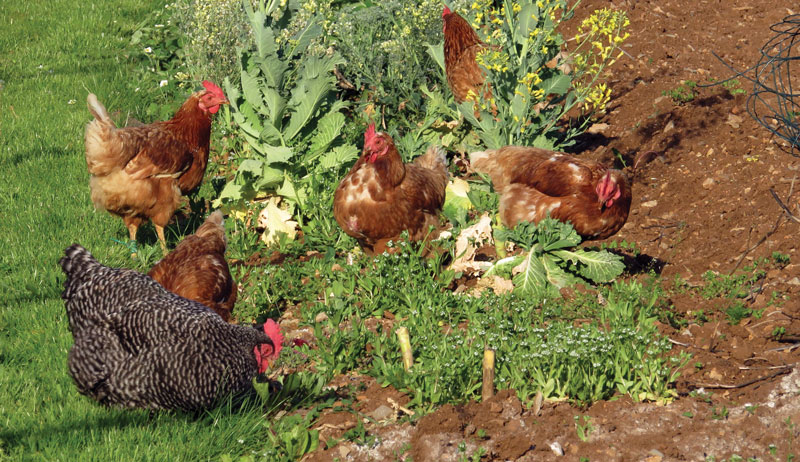
You’ll park the rototiller in the shed forever if you can employ a small flock of chickens to care for your garden soil. Not only do chickens provide a tremendous nitrogen source to the area, they are champions of turning the soil, eliminating weeds and creating compost in place.

“I would keep chickens even if they didn’t lay eggs because of their working power,” says Justin Rhodes. Rhodes shares his homesteading experiences on AbundantPermaculture.com.

“I don’t weed. I don’t use synthetic fertilizer. I don’t till.” Instead, his chickens handle these tasks for him while providing a valuable fertilizer resource.

Fertilizing Power

Joseph Heckman, a soil specialist for Rutgers University, became interested in the soil impact of chickens when he started keeping them in 2005. He uses chickens on his lawn. He also keeps a chicken tractor with 30 birds in his hay fields after the hay is cut for the season.

“One thing to consider when you’re buying chicken feed is you’re buying fertilizer, too,” Heckman says. “You’re actually fertilizing the land when you keep the chickens there.”

Heckman knows this first hand. As the flock of chickens in his hay field moves down the field, their path is obvious. You can see a green streak of fertile forage appear in their wake.

“When I made hay this year, I could tell where the chickens were last year,” he says.


Read more: Here’s what you need to know about composting chicken manure.


 Location, Location

When you think about it, it makes perfect sense to allow the chickens to do what they do best: scratch, dig, peck, eat greens and poop. It’s all a matter of directing this energy.

Chickens are fantastic little nitrogen-producing factories. But if the manure isn’t where you need it, it doesn’t do much good.

Developing a pasture-based system is the best way to build the organic matter content in your soil, Heckman says. This can be done with a few birds in a suburban backyard. Or you can use full-fledged chicken tractors on a small farm.

Pasturing chickens in a garden that’s been put to bed for the season allows the birds to clean up any garden debris, turn over the soil and fertilize the area in the process. This in itself is a terrific way to turn green waste into delicious, and as Heckman points out, far more nutritious eggs.

Safety First

Fresh manure can carry listeria, salmonella or E. coli and potentially contaminate edible crops and cause serious health concerns. So allow four months (120 days) between moving the chickens out of the garden area and harvesting.

This time frame also minimizes the possibility of burning your plants because of too much nitrogen. 

Next Level

Rhodes takes his feathered fertilizer machines to another level by allowing them to till organic matter into the soil. In some areas of his garden, he adds 8 inches of wood chips as mulch and a carbon source.

The chickens turn this into the soil as they’re scratching around.

“It’s decomposing on the bottom, and that’s creating compost in place,” Rhodes explains. “In the spring, you could move the chickens out and plant.”

He uses wood chips because that is what is available to him locally. But, he says, other gardeners use straw or even leaves.

By giving the chickens opportunity to scratch through the soil, they can also ferret out overwintering pests. This reduces the number of insect problems you’ll have next year.

Squash bugs are a particular treat. But they’ll often find other delicacies bedded down just below the soil level, as well.

After harvesting all of the squash he wants from the patch, Rhodes will turn the chickens loose in the area to bring down the vegetation. The chickens also eat any squash that is left in the garden as the fruits soften throughout the season.

Bugs don’t stand a chance.

“That’s my thank you for them,” he says. And in the end, the chickens leave a few seeds that grow into new squash plants the next spring.


Read more: Check out these tips for raising chickens the natural way!


Incorporating Cover Crops

If using chickens to clean up the garden or turn in a deep layer of carbon-rich materials wasn’t genius enough, Rhodes incorporates the chickens in the rotation of cover crops.

Plant a cover crop, such as buckwheat, clover or rye. Then let the chickens into the area to turn the cover crops into the ground instead of firing up the rototiller. The birds follow the cover crop, adding nitrogen to the organic matter.

Once they consume the vegetation and till the area, they can move elsewhere.

Whether you’re using chickens as a large mobile unit to fertilize and improve the soil structure of fields and pasture or keeping them in place for as long as you need to prepare your garden bed, chickens are an invaluable resource in any small homestead. From fertilizing, tilling and especially pest patrol, they are happy to do the work. 

This article originally appeared in the May/June 2021 issue of Hobby Farms magazine.

Categories
Chickens 101 Flock Talk Poultry

Debunking Common Myths About Backyard Chicken Flocks

One of the greatest obstacles to overcome when winning your neighbors over to the pro poultry side is their potential pre-existing notions about chickens. Those not raised on a farm or around poultry tend to rely on often-unsubstantiated rumors as the basis for their beliefs.

Unfortunately, once ingrained, hearsay may be hard to dispel. However, with patience—and the following seven facts—you should be able to bust some of your neighbors’ “myth-conceptions.”

Chickens Smell Bad

Believe it or not, chickens are remarkably clean animals. They spend a large part of their day dust bathing and preening their feathers. If there’s an unpleasant smell wafting around the neighborhood, your backyard flock is not its source.

Your coop, however, may be.

Spilled chicken feed, soiled litter and chicken droppings can all create a nasty smell, especially if left to decompose in situ. The accumulation of ammonia generated by decomposition is extremely unhealthy for your flock—and for you — so be certain to clean your coop and run regularly.

Not only will you protect your hens’ health, but you’ll also ward off complaints about foul fowls from your neighbors.

Chickens Are Noisy

Some neighbors may complain that the serenity of the neighborhood has been shattered by the constant noise issuing from your backyard flock. If you keep roosters, your neighbors may have a point, since roosters do indeed crow around the clock.

Most towns and cities, however, prohibit keeping roosters because of the noise they generate.

With the cock-a-doodle doos out of the way, all that’s left is the gentle clucking of your hens. A hen may squawk when startled—and who wouldn’t?—and may sing a brief “egg song” the three or so times she lays each week. But the vast majority of the time she will be seemingly silent, her clucking almost sub-audible.

Compare this to the noise made by lawn mowers, weed whackers, children playing, dogs barking, power tools, stereos and more. Who exactly is shattering the peace again?

Chickens Attract Vermin

The presence of chickens will draw dangerous wild animals such as raccoons, coyotes and rats into the neighborhood. At least, that’s the misbelief common to many suburban and urban home owners who fear your poultry will attract every rabid carnivore within a five-mile radius.

The truth of the matter is that such backyard staples as wild bird feeders and pet bowls are far more likely to attract vermin than your tidily kept coop. So are garbage bins, backyard compost bins and even barbecue grills.

Indicating this to your songbird-loving, dog-owning neighbors may put them on the defensive, however, so approach this subject with caution.

Chickens Will Lower Property Values

A primary concern for residents in your neighborhood may be one that hits them right in the wallet. They don’t want your keeping chickens to cause their homes to lose value.

They may view your owning chickens as the first step in your inevitable transformation into a Beverly Hillbilly … and they don’t want you taking everyone down with you.

If this is the case with your neighbors, gently remind them that, as a home owner, you’d never do anything that would endanger the value of your house. Furthermore, your town’s ordinances clearly and strictly regulate poultry keeping to prevent this very thing.

It may interest your neighbors to know that no documentation exists indicating that backyard flock keeping lowers property value. In fact, it’s just the opposite: cities across the country, including Phoenix, Madison and Raleigh, have showcased homes with microflocks in annual “Tours de Coop.”

Some developments even include chicken coops as an add-on selling point for new homes.


Read more: Interested in starting a neighborhood coop tour? Here’s how!


You Need Roosters to Produce Eggs

Chances are the folks next door never studied poultry anatomy in school. They mistakenly assume that, since a male and a female are required to create babies or kittens or puppies, a rooster and a hen are required to create eggs.

Technically, they’re not completely incorrect: both a rooster and a hen are necessary to create chicks. Shell eggs, however, happen without the help of a rooster. They are produced naturally by a mature hen’s reproductive system … no boys needed.

Hens Lay Eggs Every Day

If this were the case, we’d be saying farewell to our feathered friends far more frequently, never mind all the surplus eggs. Many storybooks mislead children into believing that hens spend their days sitting on their nests, laying endless eggs. And those children grow up to be your neighbors.

Gently explain that, while a few breeds, including the White Leghorn and the Golden Comet hybrid, produce five or so eggs per week, most chicken breeds average three eggs per week.

Egg laying takes a huge toll on a hen, drawing both protein and calcium from her body. As a result, she needs to rest, recover, and replenish what she has lost, resulting in a handful of eggs per week … and none at all during winter.

Why? Because hens require a minimum of 14 hours of daylight in order to lay, and daylight hours are at a minimum during the colder months.


Read more: Want winter eggs? You can add coop lighting to keep birds in production.


Brown Eggs Are “Dirty” & Blue Eggs Are “Bad”

It’s absolutely understandable why your neighbors may think your hens’ beautiful brown and blue eggs might be filth crusted or simply rotten. The eggs they have known all their lives are pure white and come from a supermarket, not a nest box.

Let your neighbors know that these colors occur naturally rather than through gross negligence on your part. Explain that eggshell color depends on the breed of the bird that lays the egg … and that eggs come in a wide variety of colors including sky blue (Araucana), pastel pink (Easter Egger), and chocolate brown (Copper Marans).

Use this opportunity to introduce the breeds you raise and the color eggs each lays. You may end up with new customers interested in trying out the multicolored eggs from your backyard flock.

Categories
Beginning Farmers Farm & Garden Farm Management

FSA Loans Can Help Small Farmers Find Big Profits

Because you’re reading Hobby Farms, chances are high that you’re either already a farmer or have dreams of becoming a farmer. For many of us, this dream of farming our own land—no matter how small or large that dream is—often seems just a bit out of reach. 

The reasons are myriad. They can range from a shortage of land, a demanding day job or even a simple lack of sufficient knowledge. However, for so many, the road blocks in our path often include insufficient funding, or capital, to put toward pursuing our dreams, no matter what size or type of farm fills our imaginations. 

This perceived lack of capital is often the primary culprit for losing faith in our dream farms. Did you catch that? I wrote “perceived.” Why? This financial obstacle may, in fact, not be a truth but merely a perception. 

Read on to discover an often-overlooked path that may be just what you need to make your dreams come true: the U.S. Department of Agriculture’s Farm Service Agency. I know it was for me.

Who’s Eligible?

First, let’s discuss the elephant in the room. Any time I used to see ads for farmers or farming aid, I assumed those programs were for established farmers or beginning farmers with deep pockets and hundreds or thousands of acres at his or her disposal. I didn’t believe that my little beekeeping operation was big enough to warrant even looking at those programs.

However, nothing could’ve been further from the truth. Farmers are literally anyone with any size farming operation that seeks to make some type of income from his or her efforts. So yes, you can be a “commercial” farmer, too. You  may already be one and just not know it yet.

My Story

My own story and the path I’ve taken is evidence that anyone can farm when armed with the right information.

Just this past year, my beekeeping operation was at a crucial turning point. My bees were so strong and healthy that I had to decide whether I wanted to remain a hobby beekeeper with a small side income or continue growing my apiary into a much larger business and thus increase my side income. 

USDA Farm Service Agency FSA loans
Kristi Cook

I had one significant problem, though. I didn’t have the funds needed to grow any larger. So in dismay, I posted a notice that I would be selling out. I would retain only a few hives to keep my beekeeping urges pacified. 

Fortunately for me, I have an amazing mentor who continues to guide me after all these years. As soon as he saw my post, he knew something was up. He was more than well aware of how much my bees are an integral part of my day-to-day life.

(Translation: I was already a honeybee farmer. I just didn’t realize it.)

My mentor didn’t offer to buy me out or help me find someone who would. Rather, he recommended a sales strategy for the following year to help me pay off nonfarm debt. This would allow my bees to continue growing as I wanted.

(Again, even at my small size the previous year, I was already a farmer.)

This plan, in turn, resulted in the opportunity to speak with a Farm Service agent regarding the potential for funding to help me take that next big step into a much larger operation.

And I’m so grateful it did. Without FSA loans, I would just be a farmer without a farm.


Read more: Check out these 3 funding organizations for your next farm project.


A Little Disclaimer

First, let me just say that I don’t work for the USDA or the FSA. I do not receive any compensation for this article from these agencies.

Instead, I am just a beginning farmer who wants to share this opportunity with you. I know how deep down the farming urge goes. I also know how hard it often is to come up with the extra funding needed to build a dream into reality. 

Sharing information is what my freelance-writing day job is all about. I love helping folks discover ways to make their homesteading and farming dreams come true one step at a time. 

Connect With an Agent

Once you know what type of operation you’d like to pursue (or already have one in place that you want to build upon), you’ll need to locate your local FSA office to set up a meeting with an agent. These folks are there to guide and instruct you as to which programs may be a good fit for you. 

For example, in addition to the beginning farmer classification—which means any farmer with less than 10 years’ experience in most cases—the FSA is committed to serving all farmers and ranchers.

By statute, FSA targets a portion of all guaranteed loan funds, direct operating and direct farm ownership loan funds, microloan funding and youth loans, to historically underserved farmers and ranchers, which include “women, African-Americans, Alaskan Natives, American Indians, Hispanic, Asian, Native Hawaiians and Pacific Islanders.” 

There are even FSA loans for 4-H youth, veterans, low-income individuals and more. So it’s always best to get connected with an agent as soon as possible, even during the planning phase. That way, you can see which direction you should head.

In addition to guiding you down the best classification path for your personal situation, agents are trained to help you understand the importance of writing a business plan. It’s not as scary as it sounds.

They also help you organize your plan’s financial side to make record-keeping easier and see the big picture of your farming dream. Together, you’ll make sure you don’t miss an opportunity that you may not be aware of. 

My own agent was phenomenal in helping me discover which FSA loans best fit my operation. We also worked on keeping better records.

Just like a good farming mentor, a good FSA agent will essentially mentor you during the entire application process. Thus, they help you remove a lot of stress from the process.

Types of FSA Loans

So now that you know that, yes, you can be a farmer no matter how small your operation may be as long as the farming operation is intended to be a source of income, check out the USDA’s FSA programs. These programs help established farmers and, even more importantly, beginning farmers.

Here’s the best part. You don’t even have to have a farming operation already in place to get started. You just need a plan, a mentor and an agent. 

USDA Farm Service Agency FSA loans
Kristi Cook

A word of caution: Don’t let the big numbers discourage you. Remember, these are designed to work for all sizes of farmers.

To use my own operation as an example, one of the FSA loans I acquired to grow my own farm was no more than $10,000. So again, small does not mean too small to be a farmer. 

Here are a few programs as examples.

Land Purchase or Construction Project

  • Direct Farm Ownership Loans provide financing to secure farmland, improve or expand current operations, increase agricultural productivity and assist with land tenure to save farmland for future generations. The maximum amount available to qualified borrowers is $600,000.
  • Direct Farm Ownership Microloans are available for the same needs but limited to $50,000. The application process is simpler and requires less paperwork to complete.

Read more: Consider leasing farmland for a quicker start to your farm dreams.


Equipment, Seed, Livestock & Other Operating Costs

  • Direct Farm Operating Loans offer financing to purchase equipment, seed, livestock, other necessities to maintain a successful farm and refinancing farm related debts. The maximum amount available to qualified borrowers is $400,000.
  • Direct Farm Operating Microloans are available for the same needs but limited to $50,000. The application process is simpler and requires less paperwork to complete.

Youth Loans

Youth Loans offer financing up to $5,000 to aspiring farmers between the ages of 10 and 20, in connection with their participation in 4-H, FFA, Tribal youth group or other similar agricultural youth organization. 

Regardless of the size of your current farming operation or the size of your ideal farm, don’t let the perceived lack of funding kill your dreams. As in much of life, where there’s a will, there is most often a way to accomplish that which we set our minds to accomplish.

Farming is no different. In fact, owning a small or large family farm is one of the oldest American dreams we have. And the USDA’s Farm Service Agency may be just what you need to help get your dreams off the ground.


Sidebar: Poor Credit Problems 

Regarding the specific types of funding available, most funding options do not require stellar credit. To put it in the USDA Farm Service Agency’s own words: 

“Building a successful farm is a significant financial investment and can be especially challenging for beginning farmers who are not financially ready to access credit from commercial lenders… there is a special focus on the credit needs of farmers and ranchers who are in their first 10 years of operation. … Providing loan programs is important as beginning farmers have historically experienced more difficulties obtaining financial assistance.” 

As a vast majority of our nation’s farmers are nearing, and even entering, retirement age, the push to bring in new farmers to fill the resultant void is a primary focus of these programs.

Unfortunately, not all of us have perfect or even near-perfect credit, and we simply need a leg up to help us achieve our dreams of being part of the next generation of farmers. These programs fit that bill. Learn more here or visit the USDA Farm Service Agency website.

This article originally appeared in the May/June 2021 issue of Hobby Farms magazine.

Categories
Equipment

6 Reasons Why You Need An Electric Chainsaw

Gas-powered chainsaws have long been an ideal tool for felling small trees, producing firewood and tackling other related projects. But in many cases, electric chainsaws have become a viable alternative.

Whether you’re using a corded model or one of the increasingly capable battery-powered options, an electric chainsaw can be a great choice for hobby farmers.

A tried-and-true gas chainsaw has long reigned as the king of cutting on my farm. But I recently purchased a small electric model to simplify some of my less formidable pruning and cutting projects.

Electric chainsaws offer a lot of advantages, and I’m excited to give mine a good workout.

At this point, I should mention how electric chainsaws aren’t for everyone. They do have a couple of key drawbacks. Generally speaking, they’re not as powerful as gas chainsaws. They’re better-suited to light work like pruning tree branches than sawing up entire logs, and I’m keeping this in mind when choosing the perfect projects for mine.

Electric chainsaws also have limits in terms of range and/or cutting time. Corded models must be tethered to a power source, while battery-powered models can only operate until their batteries run dry. Unless you keep a few fully-charged spare batteries on hand, running out of power requires waiting for the battery to recharge, an inconvenience compared to topping off the fuel tank of a gas model.

But in many cases, the numerous advantages electric chainsaws offer outweigh these pitfalls. Let’s run through half a dozen of the best reasons to use an electric chainsaw.


Read more: In the market for a gas-powered chainsaw? Here are some buying tips.


Reduced Noise

A gas chainsaw makes noise as long as the engine is running, whether you’re actively cutting or not. An electric chainsaw is like an electric drill. It’s silent when it’s not cutting, and the whir of its electric motor is relatively quiet compared to the roar of a gasoline engine.

In short, using an electric chainsaw is a more peaceful exercise.


Read more: Do have have an electric drill? You need one.


No Exhaust

No gas engine, no exhaust! Electric chainsaws don’t give off exhaust fumes, so they’re safer and not as smelly.

Less Maintenance

While electric chainsaws do require bar and chain oil, overall they’re simpler and require less maintenance than gas models. For example, they don’t have any spark plugs.

Small & Lightweight

While there are exceptions, electric chainsaws tend to be smaller and lighter than gas models. This reduced size comes with a tradeoff (less power). But it does make electric chainsaws easier to handle and maneuver.

Easy Starting

If you dislike pulling repeatedly on the cord of your gas chainsaw’s recoil starter, you’ll be happy to know you can start an electric chainsaw with just the push of a button. That will save some wear and tear on your shoulder!

Less Expensive

If you’re willing to buy one of the smaller models, electric chainsaws can be less expensive than their gas counterparts. This makes them a budget-friendly option for anyone just getting started with chainsaws.

Electric chainsaws might not be perfect in every way, but for many light-duty tasks, they’re an ideal choice.

Categories
Animals Large Animals

Breed Profile: Texas Longhorn Cattle

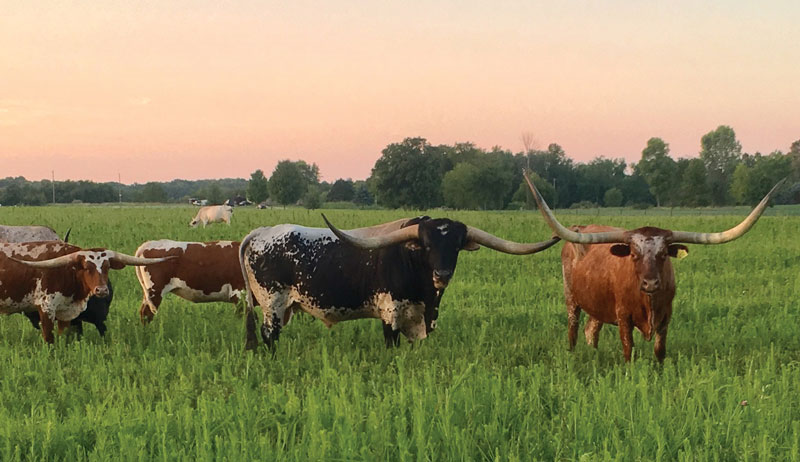
Look at a pasture of Texas Longhorn cattle and you’ll immediately be struck by the beautiful colors and impressive horn sets. These majestic pasture ornaments are also great producers. And they offer much in a wide array of markets.

Strong but Gentle

Today’s Texas Longhorn cattle retain much of what natured instilled. The breed is a hardy protector against predators in the pasture. However, producers also breed for a gentle nature when being handled—a desirable trait.

Most breeders spend enough time with the cattle to have them eating out of their hands and enjoying a scratch. Some do raise just a few Texas Longhorns to pretty up their pastures and keep them grazed. But more cattlemen are discovering a multitude of ways the longhorn can benefit anyone interested in owning livestock.


Read more: Here’s what you need to know about putting cattle on pasture.


A Better Beef

Beef from Longhorn cattle is documented for its natural leanness. As many breeders feed primarily grass, the end product is beef that is also a great source of nutrients. Even Texas Longhorns finished on grain tend to be lower in saturated fat than most commercial cattle breeds.

Producers sell the majority of their beef direct to consumers. The health-conscious, as well as those looking for locally raised beef, know to seek out this breed.

Texas Longhorn beef production provides byproducts that can generate income as well. The horns and hide, as well as skull mounts, are popular and easy to sell.


Read more: Cattle get hot, too. Here’s how you can keep the heat off your cows.


A Productive Cattle Breed

Cows are renowned for their large pelvic openings and lower birth weights, vastly decreasing the number of times calves have to be pulled. Mothering ability, milk production and protectiveness put these females in the spotlight as producers.

Bulls are big contributors to productivity and lower birth weights, too. This makes them successful for breeding for registered seed stock and for calving ease on first-calf heifers. A bull also brings in those positive female traits he passes along for a dose of hybrid vigor with any breed.

Registered Texas Longhorns participate in shows, horn-measuring contests and futurities. The cattle may also be used for ropers and, as proficient browsers, to help clear land overgrown with brush that other cattle may not eat.

These animals can produce continually for many years. And they do so while eating efficiently and providing a beautiful pastoral scene. If that sounds good, then Texas Longhorn cattle might just be for you.  —Myra Basham, Texas Longhorn Breeders Association of America

This article originally appeared in the May/June 2021 issue of Hobby Farms magazine.

Categories
Beginning Farmers Crops & Gardening Farm & Garden Video

Video: Support Your Tomato Plants Using The Florida Weave

Nothing says summer like a ripe, homegrown tomato straight from the garden! Using a Florida weave trellis system to support your tomato plants will ensure strong, healthy plants all season long.

Tomato vines need support to keep them up off of the ground. The Florida weave will extend your growing season and help protect your tomato plants from potential disease.

Some gardeners will use tomato cages to support their plants. But these cages tend to be too small or flimsy to provide proper support throughout the season. This is especially true once plants begin to put on fruit.

Materials List

Constructing a Florida weave requires very few materials:

  • T-posts and a post driver
  • strong twine
  • scissors
  • a tape measure to achieve proper spacing

T-posts should be spaced at 6-foot intervals down the row with tomato plants spaced at 2 feet apart. This will place three plants between each set of posts. 


Read more: Try growing grape tomatoes for the flavorful little fruits!


Get Weaving!

Begin the weave by tying the twine off near the base of the first t-post in the row, approximately 4-6 inches off the ground. Then simply weave the twine between the plants. Crisscrossing as you move down the row.

Be sure to wrap the twine around each post as you go. This will keep the twine taught until you reach the end. Now you can tie off and cut the twine. 

Head back down the row in the opposite direction with a fresh length of string. Weave back and forth between the plants, this time on the opposite side as before.

Repeat this process every 6 to 8 inches up the post, creating a simple, yet effective trellis to support your plants.

Use this process to create another line of string every week or so throughout the growing season to maintain a secure support for the tomato plants.


Read more: If you have extra at the season’s end, pickle green tomatoes for a tasty winter treat.


Don’t Forget to Prune

It’s also important to consider pruning your plants to improve airflow between leaves, which will help prevent disease. Trim off any leaves that show discoloration or signs of disease as well as those that are in contact with the soil.

Prune off any ‘suckers’ on the tomato plants. These are small shoots that sprout out from where the main stem and a branch of the plant meet. Suckers draw energy away from the main stem and impact growth and should be removed as they appear.

Consider using a drip line to water your tomatoes. And be sure to mulch your garden well to conserve soil moisture and repress weed growth.

With a little bit of effort to get started and minimal weekly maintenance, a Florida weave trellis system will help you have healthy and happy tomato plants. You’ll enjoy a bountiful harvest of delicious, homegrown tomatoes all summer long!

Categories
Equipment Farm & Garden Video

Video: A Simple Calibration Method For Your Field Sprayer

One thing that we don’t often talk about? Spraying. But the truth is, whether you’re applying natural products, water, fertilizer or synthetic materials such as pesticides or herbicides, spraying your crops fields is a reality for many farmers.

And when it comes time to spray your fields, it’s really important to calibrate your sprayer for optimal performance.

I’m partial to the 1/128th method for sprayer calibration. Sounds complicated, right? It’s actually really easy!

Why Is Sprayer Calibration Important?

First, why is sprayer calibration so important? The answer is pretty simple: You want to control the amount of product that you apply to the field.

Uneven application can lead to some areas receiving too little sprayed product, with others receiving more than intended amount.


Read more: Should you certify your farm as organic? Here are some pros and cons.


Equipment Materials

To start your sprayer calibration, collect a long tape measure or measuring wheel. You’ll also need a couple of flags, as you need to mark your starting point as well as where you stop.

You’ll also need a standard tape measure to measure spray nozzles and a graduated measuring cup to measure how many ounces of sprayed material are being output. Other items you should have on hand include:

  • Calculator
  • Notebook and pen, or other way to take notes
  • Stopwatch

(Quick tip—your phone can provide all of the last three items.)

The Process

First, you need to measure the distance between your nozzles. Why? Your spray chart uses this information to tell you how far you’ll need to drive. (See the video above for a spray chart you can use, or request one from your local extension.)

Once you’ve got your nozzle distance measured, use your flags to mark the distance prescribed by your spray chart.

Then, just drive that distance, timing yourself to determine exactly how long your tractor needs to get from one flag to the other. (You can do this a few times to get a more accurate average.) Note this time in your notebook or phone to use in the next step of your sprayer calibration.


Read more: Need to brush up on your terminology? Check out this list of 24 pieces of farm equipment.


Back to the Sprayer

Fill your tank with water. Once your sprayer’s pressure is where it’s supposed to be (this is set by the manufacturer), put the measuring cup beneath one of the spray nozzles. Then, let the nozzle spray water (while collecting the liquid in your cup) for the amount of time determined in the earlier step.

Note how much water you collected. Repeat this process for all of your nozzles, then average the numbers. (If any of your nozzles is significantly different than the others, replace it.)

Once you’ve determined your sprayer’s spray rate, you can calculate how many gallons of sprayed product you can expect per acre. With this number, you can mix your product accurately for your equipment capabilities and acreage.

Make sure you watch the video above for more tips, as well as a demonstration of the 1/128th calibration method using my sprayer and tractor.

Categories
Equipment Farm & Garden

Bringing Solar Power To Your Farm

If you’re like many people these days, perhaps you’re interested in transitioning your farm to solar energy.  But how do you even get started, and how off-grid can your property really become?  Here are some options for bringing solar power to your farm.

Why Solar?

If you’re already interested in solar power, chances are you’re familiar with the benefits. 

In addition to reducing your electric bills, transitioning to solar energy can make your farm more resilient to power outages, depending on your setup. And, of course, you’ll also reduce your carbon footprint.

A Range of Options

If you’re serious about bringing solar power to your farm, it’s important to begin by understanding your options. You could, for instance, use solar power to run something as small as a single electric fence charger. 

Or, on the other hand, you could install a solar array to power your entire farm. Let’s look at these options in more detail.


Read more: Take your poultry off grid with a solar-powered coop!


Starting Small

Let’s say that you want to bring a modest amount of solar power to your farm. Where to begin? 

The most intuitive places to power with solar energy are the ones that you would have a tough time running power lines to. In many cases, this might be mobile infrastructure like a chicken coop or electric fence charger. 

On one farm I used to work on, we used solar panels strapped to the top of our chicken trailers to power the heat lamps inside. 

A Middle Ground

Another common setup is to use solar power to bring electricity to a remote building, such as a high tunnel, maple shack or storage shed. Depending on how far away the building is from your electric panel, installing solar panels may be cheaper than trenching hundreds of feet of cable.

Going All In

At the other end of the spectrum, you could set up a solar system to power the entirety of your farm or homestead.  Obviously, this is going to be the most expensive option, though there are various incentives for solar installations.


Read more: At Cedar Ring Greens, solar and sustainability are central for a Kentucky farming couple.


Staying Tied to the Grid

If you are interested in a property-wide solar solution, the biggest question is whether or not to keep your property tied to the grid. 

On the one hand, keeping your farm tied in gives you the option to sell excess power back to the grid. By staying grid tied, you can also reduce the amount of battery storage your system needs.  And, in the event that your panels can’t meet your energy needs in some cloudy weather, you can always draw from the grid to make up for the deficit. 

One of the drawbacks of a grid-tied system, however, is that when the power goes out, your solar system will automatically turn off.  This is because the power lines (which your panels are connected to) must be kept clear of currents for the safety of workers trying to restore power.

Going Off-Grid

Although most people opt for a grid-tied system, there are advantages to an off-grid set-up as well. Perhaps that largest advantage is that in the event of a power outage within the grid, your system will be unaffected.  This means that you’ll be able to worry less about losing power to critical areas on your farm, like ventilation in your propagation house or freezers full of meat for sale.

There are also drawbacks associated with going off-grid, however. First, without any grid connections, you won’t be able to sell any extra energy that your panels produce.

And without the ability to draw electricity from the grid, you’ll need to have enough battery storage to meet all of your farm’s energy needs. Given that batteries are the most expensive element of a solar set-up, this means that going off-grid will almost certainly be more expensive than establishing a grid-tied system.

As solar technology advances, new options come on the market all the time, and (relatively) older technologies become cheaper.  Make sure to follow changes in the industry as you contemplate the right setup for your farm.

Categories
Animals Farm & Garden Flock Talk Poultry Uncategorized

Lavender Eggs & White Peacocks Color The Red Barn Farm

“I was raised on a hobby farm,” says Dennita Miskimen, who owns The Red Barn Farm in Dinwiddie, Virginia along with her husband, Michael Miskimen. “Before it was ever trendy, my dad processed our own meat and fish and chickens and rabbits actually. So I guess it started there as a child, just watching my father and learning from him.”

Miskimen’s early experiences with a farming lifestyle have blossomed into running The Red Barn Farm as part of the county’s agritourism industry. Along with providing educational visits and summer camps, The Red Barn Farm also produces a vivid array of rainbow eggs that constantly catch the eye of visitors.

We spoke to Miskimen about running an agriculture venture and the appeal of lavender eggs. We also got the scoop and a white peacock named Fred.

Teaching as a Blessing

Spotlighting the role that The Red Barn Farm plays in the community, Miskimen says that she embraces the way she gets to teach children who visit the farm.

“It’s such a blessing to be able to share the farm with children who might otherwise never be able to see Fred the peacock or our 11-week-old miniature Zebu cow Buttercup or get to see eggs hatching before their eyes,” she explains. “These are the experiences that children really take with them when they leave.”


Read more: These 5 miniature cattle breeds are great for small farms.


Meeting Fred the Peacock

One of the stars of The Red Barn Farm is Fred the peacock. (He was named after a character from the sitcom I Love Lucy.) “Fred’s a very interesting peacock and he’s very sweet,” says Miskimen.

With Fred turning 2 years old in July, Miskimen says she’s hopeful that he’ll be able to come out of his enclosure soon.

“By then he and Ricky [one of the farm’s other peacocks] can create a beautiful display of their mating dances. Peacocks are absolutely beautiful, the most stunning animals you’ll ever see!”

The Importance of Chickens

“Chickens do so much for our farm,” says Miskimen when asked about the role that poultry play at The Red Barn Farm. “We get eggs from them and they fertilize our farm as well.”

Miskimen adds that after she was diagnosed with a thyroid issue, she decided to “get back to basics and eat a clean lifestyle and also eat eggs like nobody’s business. They’re high in vitamins and anti-oxidants and one of the best proteins for our bodies.”

Miskimen says that she happily consumes around six to eight eggs a day—a dietary regime “that’s changed my life.”


Read more: Want more like this delivered to your inbox? Sign up for our email newletter!


Marvel at Lavender Eggs!

Lavender eggs rank as some of the most popular eggs produced by The Red Barn Farm’s resident brood.

“Those are from the French Black Copper Marans,” says Miskimen. “Everybody who comes to the farm loves to look at rainbow eggs. They’re so spectacular that people often ask me if they taste any different to a normal chicken egg. I’ve had people ask me before if it tastes like chocolate or whether the blue ones have actual blue yolks!”

Providing Open Spaces

Despite the tumult of the pandemic, Miskimen looks back on last year as a banner time for The Red Barn Farm.

“We had over 7,000 visitors come to the farm because people were looking for something to do with their children out in the open,” she explains. “That’s what we provided.”

Follow the Red Barn Farm at Instagram.

Categories
Farm & Garden Farm Management Homesteading Uncategorized Urban Farming

Understanding The ‘Trees from Seed’ Philosophy

I didn’t used to get too excited about acorns. And I positively hated the myriad “helicopters” my maple tree sends down year after year. But that was before I found Ray Major’s “Trees from Seed” Facebook page.

As a direct result, I’m always on the lookout for mature, native trees—particularly when they’re releasing their seeds.

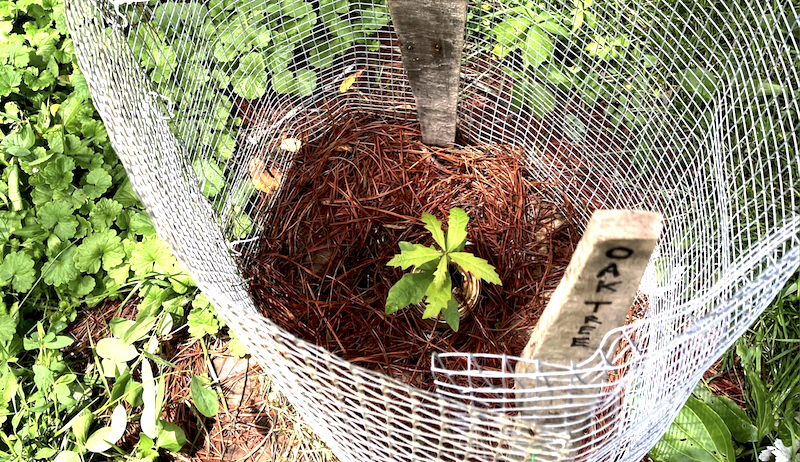
And when I came across a squirrel’s hidden-but-viable acorn in one of my perennial flower beds early in the spring? I popped it in the ground and added a little protection. A respectable-looking oak sapling has since shot right up.

Major hasn’t worked as a professional forester, but he’s sold timber, grown Christmas trees, and provided plenty of tree-related consulting. Now retired, he spends his time helping others learn how to grow trees without money or heavy lifting.

“If one knows where the trees are going to be planted, planting them directly costs almost nothing and involves almost no work,” the Indiana man says. “You never dig holes, you don’t move big, heavy root balls around, and you don’t spend any money. That is the very essence of what I am about—and it’s directly the opposite of how most folks think of growing trees.”


Read more: When you rethink “weeds,” you often find you have some saplings on your hands.


Re-thinking Transplants

More often than not, we think in terms of saplings to be transplanted. We might head to the local nursery or big box store, choose a lone tree from their limited options, and shell out $150 or more. And that’s just the beginning.

There’s lugging it home, digging the perfect hole, staking it as needed, watering it in—and keeping it watered during hot, dry spells.

But, when it comes to planting the sheer number of trees necessary to adequately restock the “urban forest” in our cities, suburbs and backyards, this model falls short. “To stock the urban forest to its ideal conditions, in order to maximize shade, change local microclimates, absorb floodwater, and do all of the different things you read about trees doing—it can’t be done,” Major says. “It’s far too expensive with nursery stock.”

In fact, those who could benefit most from trees may be among the least likely to be able to plant them. The poor, the elderly, children, and the physically challenged often lack the wherewithal to plant a single nursery tree—let alone scores of them.

But, he maintains, “If they knew how to put an acorn in the ground and protect it a little bit, they could grow groves of such trees for almost nothing.”

He continues, “You can start hundreds and hundreds of trees from seed, and you can multiply the number of trees planted by orders of magnitude.”

Seed Savvy

If direct-sowing “hundreds and hundreds” of trees sounds over-the-top, consider this: Wild-collected seeds have lower germination rates than domestic seeds. And those that do germinate may take a long time to do so. Besides, you’re simply following Mother Nature’s example.

“That’s all that nature does,” Major says. “If a tree drops 10,000 acorns, and two or three of them grow to become a substantial tree, that’s a giant success.”

Fortunately, those acorns and other wild-gathered seeds don’t cost a thing. And for those that do germinate?

“The annual growth rates of directly sown trees is always greater than that of transplants for the first 15 to 20 years,” Major says.

Since he began “Trees From Seed” in 2019, Major has posted over 250 how-to videos on locating, gathering, and planting specific tree seed types like Virginia pine, red elm and black oak, among others.


Read more: Here are some tips for planting an orchard full of trees.


Sow Time

Just keep in mind the wild tree seeds you gather won’t store like peas, corn or other domestic crops.

“Our customary thinking is to treat all seeds like seed corn,” he notes. “But so many wild forest plants—and especially trees—exhibit recalcitrance…. They’re not really truly dormant in the sense that grass seed and seed corn are.”

In other words? If you try to dry acorns for long-term storage and later planting, they won’t remain viable. The same goes for most of the other nut trees, persimmons, pawpaws, viburnum and spicebush to name a few.

That’s why it’s important to scope out native trees ahead of time. Then you can keep tabs on their seed production, gather seeds when they’re ready and direct-sow them post-haste.