Categories
Crops & Gardening Food Homesteading Recipes

Got A Bumper Crop Of Mulberries This Year? Make Jam!

Our explosion of 17-year cicadas has led to something quite unexpected—a bumper crop of berries left on my mulberry tree. Usually, the birds get them long before I can. But they seem to be feasting on this year’s cicadas instead. My friends and neighbors have also reported bonus sour cherries and other fruits for the same reason.

Although there is a North American native red mulberry (Morus rubra), I have the much more common—and, in some places, invasive—white mulberry (Morus alba). The white mulberry and its counterpart, the black mulberry (Morus nigra), were introduced to the U.S. from Asia.

They’re all somewhat tricky to tell apart. Fortunately, the mulberries from each are sweet, juicy fruits perfect for use in jelly and jam.

Picking Pointers

Of course, mulberries also happen to make a decent dye. So, when harvesting your own mulberries, you might want to wear old clothes and a pair of latex (or similar) gloves. (Otherwise, expect your hands—and especially your cuticles—to be stained for a few days!)

Unlike other types of berries, mulberries, when ripe, very nearly fall off the tree. Before you start picking, lay out a clean tarp or light-colored sheet so you can still collect the many ripe berries that don’t quite make it into your bowl.

Check berries for insects, insect damage and insect eggs, and discard accordingly. Pinching off the berries’ small green stems as you go also will save you time later.


Read more: Got violets? Try this recipe for a sweet violet jelly.


Prep Work

You’ll need about eight cups of fresh mulberries in order to make nine cups of cooked jam. Rinse and drain them carefully, making sure to pick out any insect hitchhikers, leaf bits or twigs you may have missed.

If you want to preserve your jam long-term, ready your canning jars, lids and rings ahead of time. (You can skip this step if you intend to refrigerate your jam and use it up right away.)

To get cooking, you’ll need:

  • 1 small box of powdered pectin (approximately 1.75 ounces)
  • 5 tightly packed cups of crushed berries
  • 7 cups of sugar (Measure out in a separate bowl and set aside.)

As I’ve mentioned with some of my other jelly and jam posts, if you’re vegan, vegetarian or choose to keep kosher or halal, you might want to substitute raw cane sugar for the refined sugar in this recipe. (Most regular sugar is refined with with bone char.)

Also worth noting? Low-sugar pectin mixes are available, and some of these enable you to use stevia and other alternate sweeteners.


Read more: You can make homemade pectin for more control over your ingredients!


Jam or Jelly?

Mulberries are full of seeds, but if you don’t mind a super-seedy jam, you can simply crush the berries—seeds and all. If you have enough extra berries, you can reduce your overall seed content by crushing and straining out some of the seeds in your batch.

On the other hand, if you want seedless mulberry jelly, you’ll need a proper sieve, cheesecloth and a bit of patience. (Again, you may also need extra fruit in order to end up with five cups of pulped-and-strained berry juice.)

How to Make Jam

To start, place your 5 cups of cleaned, prepared fruit (or fruit juice) in a large saucepan. (The pan should be big enough to accommodate all of that sugar and, eventually, a rolling boil.)

Begin cooking the fruit over medium-high to high heat and stir in the pectin powder. Mix the pectin in completely and keep stirring. Adjust the heat as needed in order to bring the concoction to a rolling boil.

Once it’s boiling, gradually mix in all of the sugar. Keep stirring the pot until it again reaches a rolling boil. Allow this second boil to go for one minute—and don’t stop stirring.

Take care to be precise with your timing at this stage. Jams and jellies that don’t boil for the full minute can end up on the runny side. Some may even fail to set up at all.

When time’s up, turn off the heat and carefully ladle the mixture into your jars. Jams and jellies can take a few hours to fully set, so don’t panic if yours doesn’t seem perfect right away.

Use a canner or hot water bath to process your packed jars for long-term storage. Otherwise, you can refrigerate your jam or jelly, and it will keep for a few weeks.

Categories
Chickens 101 Poultry

Help Your Neighbors Come Around To Backyard Chickens

Many municipalities around the United States require you to obtain written permission to keep chickens from those mostly likely impacted: your next-door neighbors. Even if not mandated where you live, letting your neighbors know you plan on keeping a backyard flock is a gesture of courtesy.

After all, your venture not only affects you but them as well.

Suddenly, a coop will disrupt their view of the neighborhood. Clucking and squawking will disrupt the peace. And, come molting season, feathers will fly all about. You, the poultry-keeper, must address your neighbors’ concerns. You must also skillfully adjust their views about chickens so they align with your own.

Check out these four tips for cultivating chicken-friendly neighbors.

Provide Information

Bear in mind that, for many people, chickens live in out in the country, not in suburban yards. Your neighbors may (rightly) worry about how your chicken-keeping will affect them.

They may be alarmed that your flock will attract rats, raccoons and other wild animals to the neighborhood. Maybe they possess concerns that your flock’s poo will produce an intolerable smell. They may even wonder if their property values will plummet because of your birds.

Take as much time as necessary to calm your neighbors’ fears. Assure them that you will follow a strict schedule to ensure your coop and yard remain clean and odor free and that you will follow your town’s ordinances regarding the disposal of chicken manure.

Relay that you will store your chicken feed in lidded containers inside your garage or garden shed, away from where vermin can ransack it. Clarify that you will keep hens, which make soft clucking sounds, versus roosters that crow all day long. Most importantly, convey to them that, as a home owner, you do not want to live in a stinky, messy, vermin-ridden yard, so you will take as many measures as necessary to keep everything clean and quiet.

A peace offering of fresh eggs once your girls start laying tends to sweeten most sour attitudes.


Read more: Quiet chickens make for good neighbors, so check out these low-noise breeds.


Make Introductions

Once your neighbors start getting accustomed to the idea of living next door to chickens, you should next introduce them to your birds. By no means do you need to host a formal “stop by at 4 PM Thursday” kind of arrangement. Keep this as casual and informal as possible.

When you head out to gather eggs and notice your neighbor working in her flower bed, invite her over to help you collect them. If both your neighbor and you are out mowing and you stop to chat, invite him over to take a look at your setup. He may be quite curious to see what’s inside that shed-like structure in your backyard.

If the kids next door are outside playing, ask if they’d like to help “feed” the girls, then have them toss small handfuls of scratch to your flock. I almost guarantee the kids will run home and tell their parents. And if the children get excited about your chickens, chances are the parents will become intrigued as well.


Read more: Avoid these common mistakes with your flock of backyard chickens.


Communicate Frequently

It’s unnecessary to inform your neighbors about Henrietta’s latest antics every single time you see them outside. If you only ever talk chicken, you may find your those poor souls doing an about face back into their houses every time they see you.

The key to communicating? Balance. Bring up your birds just enough to convey their importance to you without droning on about them endlessly. Refrain from specifics. Avoid sharing anecdotes such as “Buffy gobbled up every single kitchen scrap in my bucket before the other girls could get any and, boy, was her crop swollen from all of that!”

Instead, tell an informative tidbit such as, “I trimmed three pounds of green beans from our vegetable garden for tonight’s dinner. So glad those ends won’t go to waste, since chickens love eating kitchen scraps!” By gently providing your neighbors with poultry facts, you’ll pique their interest in chickens … and in your flock.

Offer Compensation

Most people enjoy free eggs, but they don’t begin to make amends when one of your hens dig up the entire plot of pansies your neighbor spent all of last Sunday planting. Same for when your flock gets into your neighbor’s prized cherry-tomato patch and gobbles up every single ripe tomato.

Prepare to pay your neighbor not only for the damage inflicted by your birds but also for the time and effort they put into whatever your chickens damaged or destroyed.

As a responsible chicken owner. you must accept your ultimate accountability for your birds’ conduct. Not only will this help keep the peace between you and your neighbors but will also alert you to issues in your chicken-keeping that need improvement in order to keep everybody—including you—happy.

Categories
Animals Chickens 101 Poultry

Fun Chicken Facts! Spontaneous Sex Reversal, Wattle Talk & More

In the January/February 2021 issue, we gave you a feature about some fabulously fowl facts. We had so many that we decided to split the feature in half! For part two, we have some more interesting tidbits, from spontaneous sex reversal to complexities of communication, about your favorite livestock pets. 

Gender Roles & Spontaneous Sex Reversal

Did you know that occasionally poultry can be both genders? It’s a phenomenon called gynandromorphism.

In “Chicken’s Split Sex Identity Revealed,” published in the March 2010 issue of the scientific journal Nature, the research team found that about 1 in 10,000 chickens are born as gynandromorphs. Their cells are normal but half of their cells are male and half are female.

Despite this, they usually only have one of the sex organs (testes or ovaries). 

Author Janet Fang wrote that researchers studied three chickens that appeared to be literally half-male and half-female. They  “found that nearly every cell in their bodies—from wattles to toes—has an inherent sex identity. This cell-by-cell sex orientation contrasts sharply with the situation in mammals, in which organism-wide sex identity is established through hormones.” 

Hens can also appear to change gender, in a process known as spontaneous sex reversal. They are still female but take on some male characteristics.

A disease damaging the chicken’s left ovary usually causes spontaneous sex reversal. The right ovary then develops and becomes an ovotestis. The ovotestis can secrete androgens leading to a hen that looks and acts more like a rooster.

In “Sex Reversal in Chickens” (2010), poultry researchers Jacqueline Jacob and F. Ben Mather summarized that “every once in a while, you hear a story about a hen that changed into a cock. Such stories are often meet with skepticism, but sex reversals do, in fact, occur, although not very frequently.

“To date, however, spontaneous sex reversal from male to female has not been reported. In spontaneous sex reversal, only the phenotype is altered. Genetically, the bird remains a female, but externally it appears male.” 


Read more: Interested in chicken-keeping? Here are a few important things to know.


Chickens Dream! 

Science shows chickens dream, too! Just like us, birds experience REM (rapid eye movement) sleep, the sleep stage associated with dreaming. However, their sleep stage schedule is different from humans. 

Humans cycle between SWS (slow wave sleep) and REM sleep every 90 minutes, while birds do it every 10 to 15 minutes, according to research published in 2008 in Proceedings of the National Academy of Sciences, the official journal of the National Academy of Sciences.  

The study (“Mammalian-like Features of Sleep Structure in Zebra Finches”) states that birds share many features of sleep in common with mammals. But this collective suite of characteristics had not been known in any one species outside of mammals. Researchers hypothesize that shared, ancestral characteristics of sleep evolved under selective pressures common to songbirds and mammals. 

Sleep is crucial for chickens but leaves them vulnerable to predators. Nature has a solution.

Chickens can sleep with one eye open and one eye closed! It’s a stage of sleep called “unihemispheric slow-wave sleep” that allows half the brain to get rest while the other half stays alert for predators. 

Bigger & Brighter 

Research shows that hens often prefer roosters with larger and brighter combs. And roosters seem to appreciate large-combed hens as well.

Scientists at Linköping University in Sweden found that hens with the largest combs are likely to get a bigger dose of sperm from roosters, according to a paper presented in the science journal PLoS Genetics. 

Size matters regarding wattles, too. Hens are often drawn to large and bright wattles as well as frequent tidbitting behavior (when roosters pick up food and drop it in front of them).  

The December 2009 issue of Animal Behaviour includes results of a study that used animated roosters. Hens responded most quickly to those with normal or stationary wattles, rather than ones lacking wattles or ones with an extra floppy wattle (that appeared smaller in size from flopping so much).

spontaneous sex reversal
Michael Anfang/Unsplash

Apparently, wattles help a rooster draw attention to himself as he tidbits. It’s similar to a guy in eye-catching clothing showing off his best dance moves! 

“Wattles are thin, elastic structures that hang loosely from a male’s lower mandibles and vary in size over a male’s lifetime,” researchers wrote.

“These structures swing rapidly during tidbitting, potentially increasing the area around the head and increasing image motion. Males also tidbit more vigorously with highly preferred food, increasing wattle displacement and thereby potentially affecting information content.”  

Results revealed that the food-searching response of receivers was robust to changes in wattle size and motion. They suggested that wattles maintenance enhances signal efficacy.


Read more: Need quiet birds for your backyard flock? Here are the breeds you should know.


Complex Communication 

Chicken language is more complex than some realize. Scientists have found chickens have more than 30 recognizable phrases they use to communicate, and their language is very nuanced.

For example, chickens give alarm calls when they see predators. But the study “On the Meaning of Alarm Calls …” in the July 1993 issue of Animal Behaviour, showed that when roosters notice predators, they give a completely different alarm call depending on the type of predator (aerial versus terrestrial). 

Furthermore, they survey the situation first. If hens are nearby, they usually let out the alarm call. But if they are around other males or alone, they often stay quiet. They’re also way more likely to let out the alarm call if there is actually somewhere like a bush nearby to hide. 

Well, that’s all the fabulous fowl facts we have at the moment. We’ll keep you updated on any scientific breakthroughs in the poultry world.

In the meantime, start taking your own notes. Do your chickens have communication quirks? Have you seen spontaneous sex reversal in your flock?

You might discover some interesting biological happenings in your own flock!


Sidebar: Solar-Powered Eggs

Reader Regan Rockhill from Maryland passed along a bit of neat advice: 

“I have a small hobby farm with a small chicken coop with no electricity to it,” he wrote us. “I have a solar-powered, automatic open/close door for my coop which works great, and I also bought a solar light with a remote control (less than $20).  

“At night, I turn the light on and press the button for it to go off in four hours. There are three levels of lights, so I can choose the lower brightness but keep the coop lighted. By pressing one button, I can get four more hours of light for my chickens during the winter months.  

“It works great and is easy to install. Simply place the small solar panel outside, run the wire into the coop and attach it to the bulb. It’s a great way to get laying hens more light at next to no cost.”

This article originally appeared in the May/June 2021 issue of Chickens magazine.

Categories
Animals Flock Talk Poultry

This Family Found Love For Chickens During Pandemic

We welcomed four little fluff balls into our home on June 15, 2020. Nestled in Nevada County, California, we are currently staying at our home close to town on a little less than an acre.

Our county ordinance only allows us four hens. Roosters are not allowed. 

That’s a true gamble when you’re randomly buying birds at the local farm-supply store. In the past, a friend was surprised by four roosters out of five chicks and had obsessively warned us of her not-so-lucky experience.

But we missed out on a connection of guaranteed sexed chicks. So our only available option was our local store, the one we were nervous about due to our friend’s bad luck. 

Here Chicky, Chicky

Our coop was near completion. So the following morning my son and I left early and failed at our first stop. Our local farm-supply was already sold out.

Thanks to the COVID-19 pandemic and all-things lockdown, it appeared the entire county had decided to raise chickens. 

But we had one more option. There was another farm-supply store in the town over—8 miles away. We rushed over, parked, unbuckled and masked up as fast as we could. Both of us jumped out of the truck and ran into the store with fingers crossed.

Luckily, they still had some chicks left! We were now going to be a family of nine (including the dog and cat, of course!).


Read more: Here’s another family who started keeping chickens during the pandemic!


Random Selection

Selecting baby chickens within a compound of 40 others is a very random process! When the store clerk put her hand in the pen, they scattered like cockroaches in the surprise of a kitchen light being turned on.

We could only say, “Give us a yellow one, an orange one and then two of those back ones, please.” 

COVID-19 pandemic chickens
Amee Medeiros

Pandemic Chickens

I honestly hadn’t felt that excited in a long time. We were only into lockdown for three months at this point.

I was still not going into work. My son was no longer going in-person for his already part-time school sessions. And our family was no longer doing our trail volunteer work.

Yes, we were healthy and could still afford our home and food, so I continue to be mindful of what I whine about. However, things were pushing to the point of depression with not seeing family, not hugging family and friends, and not being with my tribe at work. 

We were well aware the entire world was experiencing this pandemic, just in different ways. I explained to my son that even though we may all be on the same sea/ocean—meaning the pandemic—we are all in different flotation devices. Some people have yachts, some have tiny lifeboats and others may only have a pool noodle.

For now, our lifeboat was taking on four tiny fluff balls. Our minds had a happy distraction from pandemic woes, and, with these new chickens, our yard took on laughter again. 

Half of those baby chickens were named before we even left the parking lot. We welcomed:

  • Popcorn the Leghorn, because “she” was bouncing like popcorn in the box
  • Ron Weasley, a Rhode Island Red, because “she” was scared when my son reached into the box
  • Echo and Zulmira, the two Wyandottes (we named them later, at home)

Read more: New chickens in the coop? Here are 6 ways to name your birds!


Red-Flag Warning

If there are rules to tending to chicks, we broke them all! Our summer was hot, and our county was in a red-flag warning many days throughout the summer.

(In California, a red-flag warning is issued for weather events which may result in extreme fire behavior that will occur within 24 hours.) 

We brought our birds into the house, and they nestled in our laps while we read bedtime stories. We laughed as they found comfort in the crook of our necks or at the belly of our old dog.

After story time, we would gently put them in their bin. When nights were too hot, we pitched our tent in our yard and those birds slept with us, in their bin, a tight fit in a little tent. 

We were obsessed with our new family members and couldn’t imagine being any farther than an arm’s reach away. We camped out the remainder of June, all of July and into August until the night of the lightning storm that started the Jones Fire. That lightening strike woke the birds and me.

With the fear of our red-flag warning, I was up the remainder of the night—worried and listening to the police scanner for updates.

COVID-19 pandemic chickens
Amee Medeiros

Flying the Coop

The minute the sun came up, we had our local radio station tuned in, waiting for evacuation warnings. By 4 p.m., seconds after the sheriff drove by requesting us to go, our emergency go-bags were in our vehicles, as well as our son, the dog, the cat and, of course, the chickens, all tightly sitting in my car.

With my partner in his truck, we headed to our evacuation meet-up spot. Whether or not the winds were going to drive that fire to our neighborhood was out of our hands. 

We waited patiently. The cat meowed in protest. The old dog was confused but along for the ride. And the not-so-tiny birds jumpe and, yes, pooped everywhere (except their bin). 

Hours later, we were allowed to return to our home. It was safe and as we had left it. But others were not so lucky. That fire burned more than 700 acres for 12 days, destroying 21 structures and our beloved ADA hiking trail, The Independence Trail. 

I Heart Chickens

Chickens or no, this pandemic has slowed many of us down. It has taken days and hours of our time, filling our minds with great ideas and also many fears.

One thing is for sure, though. We love these birds, and they love us. Or maybe we just look like chicken treats and that is why they come running when we walk out back!

Our chickens have been one of the positive pieces to our pandemic stay-at-home orders. As my son says, “They are the best part of COVID-19.” 

These birds kept us company during summer and even through a dark winter. They continue to bring laughter into our yard. They brighten our at-home school days, inspiring my son to write stories, draw chickens and build chickens with his building bricks.

We’re all-things chickens and can’t imagine our home without our sweet birds — which, by the way, all turned out to be girls! As of January 16, three out of four were laying daily!

I am so grateful we added these chickens in our family during the pandemic. I enjoy watching out my kitchen window as my son digs for worms and the hens stand by waiting. It brings me great joy to watch them run and follow him around the yard while they search together for other bugs.

I even enjoy chasing them back outside after they have come in through the dog door and into the laundry room begging for a treat!

This article, written by Amee Medeiros, originally appeared in the May/June 2021 issue of Chickens magazine. Medeiros is the executive director of the Neighborhood Center of the Arts, a nonprofit art program for adults with special abilities. She’s also a broadcaster for her community radio station, KVMR. She lives in Grass Valley, California, with her human and animal family.

Categories
Equipment

Don’t Forget To Clean Your Lawn Mower Deck!

Think swashbuckling pirates are the only folks who bother with swabbing decks? Think again! If you’re a diligent hobby farmer who takes good care of your farm machinery, you’ll want to swab away at the mowing deck of your lawn or garden tractor on a regular basis.

Hobby farmers are busy folks. It can be tempting to let some machinery maintenance tasks slide during hectic times of year.

During the peak of spring—when grass grows out of control, but countless other tasks demand your attention—just staying on top of mowing can present enough of a challenge. Finding time to clean the mower deck on a regular basis can seem impossible.


Read more: Here are 4 types of tractors you might consider for a small farm.


Clean That Lawn Mower Deck

But regular deck cleanings are an important step in lawn mower maintenance. And we’re not just talking about brushing off the leaves and grass clippings from the top of the deck!

Over time, grass clippings can accumulate under the deck. This creates hard-packed buildups that reduce mower performance. Eventually, they can clog the deck, interfering with proper mowing performance and increasing strain on the engine.

Some mower decks include wash ports, allowing you to connect a hose to the deck and run water to rinse out fresh grass clippings. Use this feature on a regular basis, and you can save a lot of trouble.

Drop the Deck

But if your deck doesn’t have a wash port (or if you don’t use it often enough), removing the lawn mower mower deck may prove necessary to give it the thorough cleaning it needs.

Unsure how to remove the mower deck? Consult the user manual for instructions.

Once the deck is out from under the mower, brush away any debris across the top. Clean out crevices where stuff likes to gather. Then flip the deck upside down and examine the real point of interest—the underside, where the blades operate.

Your first thought might be, “this doesn’t look too bad,” but buildups of grass clippings can wear so smooth you’ll struggle to tell how large they actually are.


Read more: When removing the mower deck, make sure you have the right tools!


Scrape off the Buildup

Grab an appropriate tool—a chisel or large screwdriver—and start scraping away the buildup. Don’t be surprised if the clippings are deeper and more abundant than they first appeared.

Continue scraping away at the buildup, carefully rotating the blades as necessary to access all areas. On a related note, this is a good time to sharpen or change the blades if needed.

And if you’re scraping away a lot of buildup, it’s probably been awhile since the blades last received your attention. Even if you’re on a regular maintenance schedule and the blades are in fine shape, removing them can make cleaning the deck a bit easier.


Read more: Does your lawn mower need new blades?


Spray Away

Once you’ve scraped away as much of the buildup as you can, go ahead and spray the deck with a hose, rinsing everything away. If a few chunks of buildup still remain, tackle them now and rinse the deck again.

Leave the clean deck in the sun until it’s dry, then follow the user manual to reattach the deck to your tractor.

Congratulations! You’re caught up cleaning your lawn mower deck. Now give it a test run—your mower is bound to thank you by running smoothly and cutting cleanly, with reduced strain on the engine. Stay on a regular maintenance schedule, and you can keep it this way!

Categories
Food Recipes Uncategorized

Recipe: Bake A Savory Brunch Pizza

Pizza becomes a mid-morning meal option with this recipe for a savory brunch pizza. You top the crust with a rich basil and garlic sauce, and savory bacon. Then you load it up with fresh spinach.

Eggs set up over the top as it bakes, and it’s then finished with tomatoes. Feel free to add your own additional toppings. Artichoke hearts, mushrooms or a few slices of avocado would only make this already delicious brunch option even better. 

Servings: 4 to 6

Ingredients

Basil & Garlic Sauce

  • 1⁄2 cup loosely packed basil leaves
  • 1/4 cup shaved Parmesan 
  • 1 garlic clove, peeled
  • 1/4 teaspoon fine sea salt
  • 1/4 cup extra virgin olive oil

Pizza

  • dough for 1, 12-inch pizza crust, or 1 premade crust
  • 3 slices bacon, sliced into thin pieces*
  • 2 cups loosely packed spinach leaves
  • 4 ounces whole milk mozzarella, chopped or shredded
  • 1/4 cup shaved Parmesan
  • 3 large eggs
  • 1 medium tomato (seeds removed), chopped
  • fresh basil for garnish, chopped
  • shaved Parmesan for garnish

Recipe: Basil is easy to grow, packed with flavor and brings sensory delights to the garden!


Preparation

Preheat the oven to 425 degrees F.

Add the sauce ingredients to a single-serve blender, and pulse until all ingredients are finely chopped and a slightly creamy sauce results. Alternatively, you can finely chop all ingredients and stir together.

Place the 12-inch pizza dough or premade crust on a baking sheet. Spread the sauce over the pizza, leaving about 1/4-inch around the edge of the pizza.

Top with bacon and then spinach. Add the mozzarella and Parmesan.

Bake the brunch pizza for five minutes. Carefully remove from the oven. Crack an egg into a small bowl. Pour the egg onto the top of the pizza. Repeat with the remaining two eggs.

Return to the oven to bake for 30 to 35 more minutes, until the eggs are set. If the top browns too quickly before the eggs reach your desired doneness, place a piece a foil gently over the top as the pizza bakes. 

Let your brunch pizza sit for five minutes. Top with tomatoes. Garnish with basil and Parmesan before slicing to serve


*Choose the meatiest slices of bacon possible, and discard any large pieces of fat. Slice very thinly into small pieces.

This will ensure the bacon cooks quickly and that excess fat doesn’t pool on the top of the pizza as it bakes.


This article originally appeared in the May/June 2021 issue of Chickens magazine.

Categories
Animals Large Animals

Key Things To Know About Putting Cattle On Pasture

Walking through a pasture in the Kansas Flint Hills during the spring makes you feel like you’ve been dropped in the middle of Ireland. The rolling hills of lush green grass expand as far as the eye can see. Eventually, black dots will begin to dot the landscape as local ranchers start hauling their cattle out for the summer. 

I’ve always wondered what goes through an animal’s mind when that trailer gate is first swung open and it sees the heavenly field of grass laid before it. So much to eat, so little time! They’ll buck a happy little dance as they trot off the trailer and begin to explore.

Why Pasture Cattle?

Local rancher Kordell Krispense (also my brother-in-law) took time to sit down share the ins and outs of putting cattle on grass.

First thing to know, he mentioned, is that ranchers put cattle out on grass for several reasons. For one, it gives them a whole summer break from the daily feeding chores. You still have to check on the the herd’s needs throughout the summer, of course. But the daily commitment of mixing, loading and distributing feed has been taken away for awhile. 

Cattle on grass can be somewhat healthier than those confined to a pen, too, as they have a much larger space to roam, fresh grass and won’t be standing in muck. When taken off of the grass at the end of the season, these healthier grass cattle tend to sell better than cattle from the feedlot. 

Grass Types

So what kind of pasture or grass do you need to have to turn cattle out on? Kordell explains that the pastures we regularly use are made up of primarily bluestem grass. But some areas of country like different kinds of grass, such as fescue grass down in Arkansas.

Up here in Kansas, some folks feel that fescue is too hard, and thus the cattle don’t like it as much or grow as well as they would on softer grasses. On the flip side, though, it makes a decent winter grass because it stays green all winter. 


Read more: Good pasture management in fall is key to springtime success.


Management Matters

One of the most important things you can do for a cattle pasture is to manage it well. This means keeping on top of the weeds (such as musk thistle, bull thistle, buck brush, etc.) and dead grass. 

Typically in the spring, the air is thick with the smokey smell of pasture fires. Burning pastures is a great way to get rid of dead grass and ensure that cattle will graze the land evenly (and not just in clumps around the dead matter).

Dead grass has little to no nutritional value and simply acts as a filler for cattle if they eat it. Burning only removes the top part of the grass. The actual root is far underground allowing it to grow back year after year. 

Burning also helps to prune back small trees (which should be removed if they continue to grow to keep from ruining the grassland). It also kills ticks and parasitic worms that hide in the dead grass. This keeps your grassland clean and cattle-friendly! 

Water Sourcing

When it comes to water supply, there are a few different options. Nature does the best work, and a constantly flowing stream is always a first choice. So long as the stream keeps flowing, you won’t have to worry about having a working windmill or hauling water.

Be careful to watch for contamination though. Your herd can be severely impacted if the water becomes undrinkable. Check the banks routinely for any trash that could hurt the water quality. 

Kordell also explained that when you have streams or creeks running through your pasture fence, you will find a need for something called a “flood gap”. This is a specially built section of the fence over the ravine or creek with solid posts on either side of the ravine. When the area floods, only a certain section of the fence will be taken out by the water and debris.

Some fences are built with a “flood gate” that lifts up to allow the water and debris to pass through. This way the fence stays intact and doesn’t have to be rebuilt each time there is a flood.

To help you remember the difference, a flood gap makes a section of the fence disposable. A flood gate makes the whole fence reusable. 


Read more: Study your pond well before you start repairs.


Ponds

If a stream or river is not an option for you, ponds are a great second option. A good pond that doesn’t leak can be a great way to help cattle stay cool during the summer. But keep in mind, if it is their only source of water, they can end up with manure-filled drinking water.

Ponds also requite a back-up plan. Some can go dry during the heat of summer. A least being aware of where you can find a large stock tank and the means to transport water out to it will be a good way to prepare for the unexpected dry pond. 

Windmills

The other option for a good water supply is an old-fashioned windmill. We keep working windmills in a couple of the pastures we run cattle in during the summer. Some of them are around 100 years old.

Climbing up to work on them can be a bit intimidating, of course. But a dependable windmill can be a wonderful thing for those who live in an area with some breeze. Finding wind usually isn’t an issue here in Kansas! 

Check-in

As the season moves on, you’ll want to routinely check in on the herd. This will consist of different tasks, depending on what their needs are. Tasks can include:

  • filling mineral feeders
  • checking cattle for illness or injuries
  • treating sick animals
  • checking windmills or ponds (if you have them) 

Later on in summer, it will be time to gather the cattle up and take them home or to the sale barn. It’s always a little bittersweet to see them rounded up and the pasture bare again.

But we know that it’s part of the circle. After a few months break, the pasture (and we) will be ready to send more cattle out to the Ireland of Kansas. 

Categories
Beginning Farmers Crops & Gardening Farm & Garden Homesteading

From The Herb Garden: Serviceberry

Serviceberries are delightful native shrubs that offer a seasonal burst of color to the landscape. They also provide a flavorful edible treat to enjoy in the early summer.

With various species native to every state, excluding Hawaii, as well as across Canada, serviceberries are also known by a number of other names, such as juneberry, shadbush and saskatoon.  

The name “Shadbush” originates in the New England states. It refers to the shad runs and how these particular fish begin their mating migration around the same time that the shadbush begins to bloom.

In the Pacific northwest and into Canada, the shrubs earned the name saskatoon, derived from the Cree name for the plant—misâskwatômina. 

And of course, the name juneberry refers to the delicious, blueberry-like berries that can be found on the trees beginning around the month of June. Although, you’ll have to be quick in order to beat the birds to these tasty morsels! 

Serviceberry in the Landscape

Whatever your landscaping needs, there’s sure to be a serviceberry that’s right for you!

Serviceberries are from the genus Amelanchier, composed of more than 20 different species. Some serviceberries grow to be trees as tall as 60 feet or more. Others develop as low-growing shrubs. 

Regardless of the size or growth habit, every Amelanchier blooms early. It will provide your landscape with a splash of white flowers well before most spring blossoms have appeared.

And in the autumn, your yard or garden will be set ablaze with serviceberry’s stunning orange and red foliage.


Read more: Keep these 9 tips in mind when harvesting wild raspberries.


Serviceberry in the Kitchen

While serviceberry trees are certainly visually appealing, it’s the early summer berries that make Amelanchier a landscape VIP.

Similar in appearance and flavor to blueberries, juneberries ripen from red to purple to almost black in some cultivars. The flavor continues to sweeten with each stage of maturity. 

Serviceberries are more than just a tasty treat. They are also quite good for you! They are an excellent source of Vitamins C, A and E as well as manganese, magnesium and iron.

Ounce for ounce, they are considered to be just as nutritious as blueberries. And you can enjoy them in a similar fashion in the kitchen.

Serviceberry in the Apothecary

Although rarely mentioned as a medicinal ingredient in modern herbal literature, serviceberry has a long history of use amongst indigenous populations across North America. They used all parts of the plants, including the bark and roots as well as the leaves, stems and berries.

The plant’s usage included a wide range of ailments, such as stomach upset, toothache and as a general wellness tonic.

Modern herbalists can use a decoction of the bark for its astringent properties. This can be used topically to tighten and tone the skin, as an antibacterial wash or to reduce inflammation. 

Brewing a serviceberry bark decoction is easy:

  • Place 1 tablespoon of serviceberry bark into a small sauce pan.
  • Cover the bark with a cup of cold water.
  • Slowly heat the water to a simmer and cover.
  • Allow to gently simmer for 20 to 45 minutes.
  • Strain into a quart jar and let cool. 

Read more: Grow these culinary herbs for you and your chickens to enjoy!


Growing Serviceberry

Serviceberry is easy to grow and requires very little maintenance once established. The trees are self-pollinating, so you only need one for fruit production.

Be sure to inquire at your local nursery which species of Amelanchier will grow best in your area. Also take the time to learn about the various cultivars available.

Some serviceberry varieties have been bred for fruit production. Others have been developed for longer flowering times or more stunning fall foliage. Be sure to choose the serviceberry that’s right for you! 

While the trees will certainly thrive in partial shade, they prefer a full-sun area for maximum fruit production. Keep your young trees well-watered until they become established. And consider mulching around the base of the tree to improve moisture retention. 

Serviceberries are a wonderful native plant to consider for your gardens or edible landscaping. It will provide you with beautiful flowers, stunning foliage and delicious berries for years to come! 

Categories
Beginning Farmers

What Can The Natural Resources Conservation Service (NRCS) Do For You?

Although many farmers (myself included) have a “go it alone” attitude, passing up the opportunity to work with an NRCS agent is sure to be your loss. The Natural Resources Conservation Service (NRCS) will help you evaluate the natural resources on your property, as well as develop a conservation plan to protect them.  

What Is the NRCS?

If you’ve been farming for a while, you’ve probably heard of the NRCS. But you might not know exactly what they do.

There are, after all, plenty of acronyms in the world of farm politics—USDA, NRCS, CAFO, GMO, etc.  

For starters, it is an agency within the United States Department of Agriculture (USDA). Their main focus is working with landowners to develop conservation practices to protect natural resources. This can take the form of technical or financial assistance. 

The NRCS also administers a handful of programs, and does extensive soil and water surveying. If you’ve looked up a soil survey of your property before, chances are the NRCS compiled that data. 

For those who are interested, the NRCS also has an intriguing past. Originally known as the “Soil Conservation Service,” the agency began in the midst of the dust bowl to help farmers fight erosion. Check out Ken Burns’ “The Dust Bowl,” a documentary that dives into the early days of the agency, for a more in-depth history.


Read more: Soil health is important. Here’s what you should know.


Conservation Plans

So, setting aside the history, what exactly does the NRCS do for landowners today? The agency primarily assists property owners by providing free technical assistance, which usually starts with a conservation plan.  

A conservation plan? It’s essentially an inventory of the natural resources on your property, as well as an explanation of the different ways you could steward those resources going forward.

In case that’s too abstract, let’s look at an example. Say that you have a pond on your property that you want to make sure isn’t being polluted by erosion from your crop fields or runoff from your livestock. An NRCS agent will help you determine if this is in fact happening.

If it is, they’ll be able to help you figure out how to address the issue going forward. On one farm I used to work on, the NRCS helped us figure out how to divert runoff that would frequently flood our forage fields.

The NRCS isn’t just there to help you fix problems, however. They can also help you achieve conservation goals that you have, including things like creating particular kinds of habitat. In case you want even more detail, here’s an example plan from the NRCS.


Read more: Soggy season on the farm is a slog, but these solutions can help you manage the muck.


Getting Started

In most cases, work with the NRCS begins by contacting your local field office. There are around 2,500 nationwide, so you shouldn’t have to look too far. 

Next, you’ll most likely work with an agent to create a conservation plan for your property. The process is free, non-binding, and voluntary. Regardless of what you end up using your conservation plan for, you’ll be sure to learn a ton about your property.

Free assistance from experts is never something to pass up. Reach out to your local NRCS agent to see what they can teach you about your property and how to improve it.

Categories
Animals Chickens 101 Health & Nutrition Poultry

Interested In Biohacking A Better Chicken Breed?

History and science are full of creative minds that seemingly came out of nowhere to solve major problems. In the sciences, vaccines (Edward Jenner), bacterial phage therapy (Félix d’Hérelle) and plate tectonic theory (Alfred Wegener) were all discovered by relative novices or people crossing disciplines to areas of science they weren’t trained in.

In many ways, these unknowns have the advantage of disadvantage. By not knowing what is scientifically possible based on scientific dogma, this makes them freer to ask and propose/discover novel questions and solutions to problems.

The current do-it-yourself and hacking culture in many ways is a continuation of this phenomenon. For example, the biohacking community has created a series of community or collective labs which in many cases allow members of the public to learn how to perform the latest in synthetic biology: DNA sequencing, protein engineering and CRISPR genome editing technique. 

Current successes include open-source instructions for medical devices for diabetics and DIY EpiPens. Other projects in the works include community-lab-produced, FDA-approved insulin to reduce the price of insulin, which is a significant cost in the U.S. 

Poultry Applications

Farmers in many ways are the original pioneers in this field. After all, they were the original biohackers with respect to domestication of crops and animals. Good farmers are an observant, creative and patient bunch. And they are pros at making nature work for them.

So, with respect to poultry, what can be hacked and what are the limits? Biohacking a breed that lays golden eggs is probably not possible. But creating chickens that are productive and adaptable to your climate is, in many ways, the perfect biohack.


Read more:Not up for science experiments? Try one of chicken breeds in the coop!


Limitations

The most common general rule at community/collective labs is “no use of infectious agents.”  Infectious agents are … well, infectious.

Even if they are epi-zoonotic (i.e., don’t infect humans), biological agents can become more infectious and more pathogenic. In a worst-case scenario, they can even jump the species barrier. While the probability of these events is likely low, it’s important to be thoughtful when considering the worst-case scenario of any experiment.

After all, no one wants to be the Typhoid Mary who creates some new superstrain zoonotic Marek’s disease!

Vaccine Example

The “no use of infectious agents” rule would exclude making a new vaccine against Marek’s or any other poultry disease. However, some have asked the question: “What if we just took the vaccine powder (lyophilized pellet) and split it up into smaller doses?” 

For example, to address the issue of having to buy 1,000 doses of MDV (the typical dose that MDV is sold in), split the doses evenly into 100 vials (10 doses in each). 

The first difficulty in doing this is sterility. After all, the contents of the vial are going to be injected into your chicken. If some type of bacterial contamination of the vial existed, you would be injecting those bacteria along with the MDV into your chickens. 

To do this correctly and safely, you would need access to a laminar flow hood with a sterilizing ultraviolet light. Additional equipment would include a digital scale and access to sterile bottles to redistribute the lyophilized vaccine. 

When considering that the cost of the 1,000-dose vaccine is around $30, I don’t see the value and/or risk/reward in it. This isn’t even considering the exacting safety requirements required by the FDA. So, when it comes to vaccines (which are typically inexpensive in the first place), it just doesn’t make sense at multiple levels.


Read more: Hatch chicks from your own eggs with an incubator!


What’s Good Biohacking?

One practical biohacking application would be to develop a new breed of chicken with the goal of having birds that are adapted to a specific climate. Whether you are truly selecting for a new breed or making a chicken “mutt,” the ultimate goal is to develop a chicken that thrives in the condition of your region.

It’s sort of like varieties of grapes that are perfectly developed for a specific soil type.

So, what is a breed? Big picture: A breed is a group of domestic animals that have similar traits (looks, behaviors) that distinguish it from other animals of the same species. With respect to poultry, hundreds of breeds have already been created.

Some are great at meat production (Jersey Giant); some, egg production (White Leghorn). Others produce colored or speckled eggs (deep-chocolate Marans eggs anyone?!). Some are tolerant of extreme heat (Mediterranean types) or even show some resistance to some infectious diseases (Egyptian Fayoumi). 

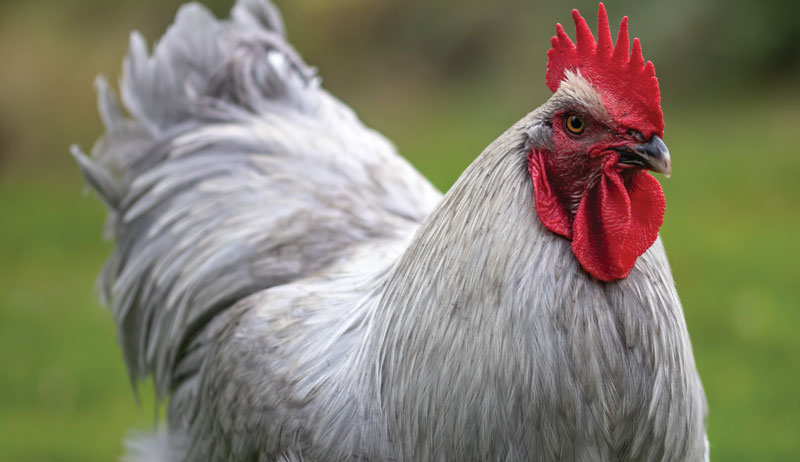
chicken poultry biohacking breed breeds
galitsin/Shutterstock

A New Breed

So how does one make a new breed? The answer is biological, as opposed to following breed requirements as established by humans. As alluded to earlier, the difference between creating a viable breed and a mutt is a fine line. However, when you think about the goal—creating a breed that is adapted to your climate—who cares if you create a mutt?! 

And poultry is a perfect animal to create with. Chickens become sexually mature at around 20 weeks. Fertilized eggs only take 21 days to hatch. So identifying new traits and successes and failures is less time-intensive than other animals.

Just think if you were trying to establish a new breed of elephants, which aren’t sexually mature until they are around 10 years of age and have a two-year gestation!

Before you get started, think about what physical traits you want. For example, if you live in a hot environment, having bigger combs and waddles will help with heat dissipation.

Prefer to have smaller chickens that make a lot of eggs? (Maybe you live in an urban environment and want backyard eggs.) You would breed bantam breeds that are known to be good egg producers. 

You have a lot of discretion because so many different breeds already exist. Do not, however, expect biohacking to create excellent chicks that are good in all areas. If this were the case, we would already have superchickens that produce an egg a day and are resistant to all poultry diseases.

Biohacking Basics

DIY and biohacking, in many ways, are natural extensions of citizen science sans the institution. For many of us, this is a fun and intellectually satisfying exercise and a good way to see how genetics work in the real world.

This affords an interesting opportunity but, as the saying goes, with great power comes great responsibility.

When in doubt, reach out to your peers for advice about methods and ethics. As a scientist, this is the way we work. This approach produces better science, and collaboration ultimately makes the work more satisfying.