Categories
Farm & Garden

LED Lantern: 5 Reasons Every Farm Needs One

An LED lantern is a must-have for any farm. Sometimes chores don’t wait for daylight—whether you’re stacking hay in a dim barn, checking on livestock after sunset, or walking between outbuildings at night, having reliable light is essential.

Flashlights work in a pinch, but if you regularly work in the dark, an LED lantern is a smarter choice.

Here are five reasons every farmer should have an LED lantern on hand.

1. LED Lanterns Provide 360-Degree Farmyard Light

To me, the primary advantage of an LED lantern is the fact it shines light in all directions. Whereas a flashlight is a directional light source that must be pointed at whatever you wish to light, a lantern is designed so the bulb shines 360 degrees.

Thus, a lantern can be placed in the center of a dim space to light up the surrounding area in all directions.

If having 360 degrees of light from a single source sounds useful, look for a lantern with a completely transparent casing around the bulb. If the lantern is decorative in design, there may be non-transparent sections of the casing that block light and cast shadows.

2. Portable LED Lanterns Make Farm Chores Easier

Like a flashlight, an LED lantern is portable and easy to use. Other types of lighting can be brighter, but it’s hard to beat the convenience of a lightweight lantern that can be readily carried wherever you need it.

Plus, lanterns have handles or hooks at the top, so it’s easy to hang them (say, from a rafter) to create a hands-off light source. It’s not as easy to rig up a flashlight to shine where you need it. Believe me, I’ve tried.

3. LED Lanterns Keep You Working During Power Outages

Perhaps you’re having trouble thinking of occasions when you would use a lantern during the course of a regular farm day. Maybe all your outbuildings have electricity, and outdoor lights brighten your barnyard even at night.

But not every day is a regular day. If a power outage strikes, a lantern can serve as a perfect source of emergency lighting. A bright lantern performs admirably in these situations, flooding its surroundings with 360 degrees of light so you can keep working smoothly.


Read more: Here’s what you need to know about power generators.


4. An LED Lantern Can Save Battery Power on the Farm

Modern LED lights use less electricity and generate less heat than incandescent bulbs. LED lanterns can shine for a surprisingly long time before running out of power, especially if you run the lantern on something less than its brightest setting.

Some lanterns are rechargeable, while others use replaceable batteries, but either way you’ll get more mileage out of an LED light than an incandescent bulb.

5. An LED Lantern Can Charge Your Devices

A basic LED lantern is a light source without any extra features. But some lanterns have USB charging ports. This means you can tap into the lantern’s battery to charge devices (like your phone) if needed.

In a pinch, this is a handy feature to have.

If you haven’t already acquired an LED lantern, what are you waiting for? If you commonly work in the dark (or just want to be prepared in case of a power outage), an electric lantern is a great tool to have.

This article about LED lanterns was written for Hobby Farms magazine. Click here to subscribe.

Categories
Farm & Garden

How to Make Homemade Fire Starters

Homemade fire starters are a simple, affordable way to get a bonfire, campfire, or backyard fire pit going quickly. You can certainly buy fire starters, but making them yourself is cost-effective, customizable, and surprisingly fun. With just a few basic supplies and some natural materials you may already have on hand, you can create beautiful, reliable fire starters that also make thoughtful gifts.

There are all kinds of materials you can use when making homemade fire starters—everything from dryer lint and paper towel tubes to dried twigs, pinecones, and other natural finds. The version I’m sharing here is one of our favorites because it’s both practical and pretty, with plenty of ways to customize each fire starter. We love them so much that we make extra batches every fall to package up as gifts for friends and family.

This homemade fire starter project is simple, enjoyable for all ages, and visually appealing. I first discovered a version like this while thrifting years ago and decided to put my own twist on it. Since then, it has become a fall tradition in our family that everyone looks forward to each year.

Supplies You’ll Need for Homemade Fire Starters

Before you get started, gather the following basic supplies. These are easy to find, and most are likely already around your home. You can also customize your fire starters with optional natural embellishments to make them unique and gift-worthy.

Basic Supplies:

  • Paper cupcake liners or silicone muffin liners
  • Cotton or hemp candle wicks/thread (remove any metal tabs if necessary)
  • 1-pound bag of soy or beeswax pellets
  • Muffin pan
  • Scissors
  • ¼ cup measuring cup for scooping and pouring wax

Optional Decorative & Fragrant Add-Ins:

  • Homegrown or chemical-free dried flowers (marigolds, strawflowers, calendula, lavender, rose)
  • Whole cinnamon sticks (cut in half if long) or other dried spices such as cloves, allspice, or star anise
  • Dried citrus slices or other dried fruit
  • Cedar wood chips or pine shavings
  • Coffee beans
  • Small chemical-free pinecones
  • Dried rosemary
  • Pine tree clippings

Tip: Using natural materials not only makes your fire starters prettier but can also add subtle aromas while they burn.

a homemade fire starter
Stephanie Thurow

How to Make Your Homemade Fire Starters

  • Preheat the oven to 300°F (or follow your wax packaging instructions for temperature).
  • Prepare the cupcake liners by placing them in a muffin tray. Decide how many fire starters you want to make and line the tray accordingly.
  • Add the wax pellets by scooping a heaping ¼ cup into each liner. Wipe away any spilled wax to keep the tray clean.
  • Melt the wax in the oven until fully liquefied. Keep an eye on the wax, as different brands may melt at slightly different temperatures. For example, soy wax usually melts around 160°F and takes about 13 minutes in the oven.
  • Cut your wicks to about 4 inches long while the wax is melting, so they’re ready to insert.
  • Place the wicks in the center of each melted wax cup carefully.
  • Decorate your fire starters with the optional natural materials of your choice—dried flowers, spices, citrus slices, pine shavings, or coffee beans. Fit as many as you can without overcrowding the wick.
  • Let the wax harden by leaving the fire starters in the muffin tin at room temperature, out of direct sunlight. This usually takes a few hours, or overnight for best results.
  • Remove and store your fire starters. If using silicone liners, peel them off before lighting. Otherwise, keep the liners intact for easy handling.

Safety Tip: Always keep children and pets away while making or using fire starters, never leave a fire unattended, and only use these outdoors.

a homemade fire starter
Stephanie Thurow

How to Use Your Homemade Fire Starters

  • Place the fire starter under dry wood in your fire pit, campfire, or fireplace.
  • Light the wick carefully—never hold the fire starter in your hand while lighting.
  • Allow the fire starter to burn completely, helping to ignite the surrounding wood.
  • Enjoy your fire safely and responsibly!

Pro Tip: If you used silicone cupcake liners, remove them before lighting, as they are not meant to burn.

Safety Tips and Notes

  • Keep all fire starters out of reach of children and pets.
  • Never leave a fire unattended.
  • These fire starters are for outdoor use only.
  • Consider using compostable, bleach-free, and chlorine-free cupcake liners for an eco-friendly option.
  • Always follow the manufacturer’s instructions when melting wax, as different waxes can have different temperatures and handling requirements.

Frequently Asked Questions

Q1: How long do homemade fire starters burn?
Most homemade fire starters burn for about 5–10 minutes, depending on size and materials. That’s usually enough to ignite your wood for a fire.

Q2: Can I use these fire starters indoors?
No. These fire starters are intended for outdoor use only, such as a fire pit, campfire, or backyard bonfire.

Q3: Can I use paraffin wax instead of soy or beeswax?
Yes, but be aware that paraffin wax may produce more smoke and is less eco-friendly than natural wax options. Always follow proper safety precautions.

Q4: Can I customize the scent or appearance?
Absolutely! Dried flowers, spices, citrus slices, pine shavings, and coffee beans all make great additions that add fragrance and visual appeal.

Making homemade fire starters is a fun, affordable, and creative way to enhance your fires, whether in your backyard or on a camping trip. With just a few simple supplies and some natural embellishments, you can craft fire starters that are functional, beautiful, and even gift-worthy. Once you try this project, it’s easy to see why it has become a seasonal tradition for many families—lighting a fire has never felt more personal or festive.

This article about how to make homemade fire starters was written for Hobby Farms magazine. Click here to subscribe.

Categories
Farm & Garden

Christmas Gifts for Gardeners: Tree Ideas They’ll Love

Christmas gifts for gardeners can be especially meaningful when they involve something living, beautiful, and long-lasting, like a tree. Trees symbolize care, intention, and a belief in the future, making them thoughtful presents for gardening enthusiasts who appreciate growth and nature. From fragrant tabletop evergreens to outdoor trees ready for planting, this guide will help you choose the perfect tree for every gardener on your list.

Christmas Gifts for Gardeners: Tabletop Trees

Giving indoor holiday trees is a great way to keep someone’s holiday spirit up. The aroma of the trees and the look of the spruces and pines are a great mood booster to enjoy all season long. Most of these trees can be purchased online and in box stores. 

Rosemary Tree Topiaries

Many grocery stores and nurseries sell rosemary plants trimmed in a conical Christmas tree form. This is a great choice for the chef in your life to keep in their kitchen and use for culinary purposes.

Lavender Holiday Trees

Lavender is another great tabletop option to be used in the kitchen throughout the season. The plant has culinary, medicinal and fragrance benefits for anyone who loves essential oils and herbs.

Norfolk Island Pine Gifts

The Norfolk Island pine tree has all the beauty of an indoor live Christmas tree in a houseplant size. It is well-suited to decorate around Christmas but can also live as an indoor tree year-round. The tree does not like cold, though, so this is the perfect tree to bring the outdoors inside during the winter. This is a great Christmas gift for gardeners who love traditional Christmas trees all year round. 

Lemon Cypress Tree Gifts

The lemon cypress tree brings energy and freshness to any home. You can easily find it this time of year in a Christmassy cone shape, but with a zesty twist of lemon aroma. It’s perfect for a high-energy acquaintance with an appreciation for tradition. An added benefit: This tree can be repotted outdoors when it is warmer and continues to grow. 

Lemon cypress trees for sales as Christmas gifts for gardeners.

Outdoor Trees to Gift

Any time the soil is workable, you can plant a tree. Christmas is still planting time for several zones, so don’t hesitate to find the right tree for the future in a size ready for the ground. These evergreens are wonderful to give at Christmastime because they maintain a Christmas tree look throughout the year.

Here are a few varieties of trees that make perfect Christmas gifts for gardeners.

Carolina Sapphire Cypress

The Carolina Sapphire Cypress tree is a great choice for gardeners of all levels. It is beautiful and unique looking, with gray, silvery, lacey foliage that maintains an evergreen look—so the recipient can always remember which tree you picked for them. They are low-maintenance and adaptable to many soils, with very few pest issues. The tree can be planted almost any time of the year.  Best for Zones 6 through 9, this tree brings Christmas-looking trees to the landscape in warmer areas.

Colorado Blue Spruce Tree

Easy to find this time of year, the Colorado blue spruce is a beautiful blue blue-green Christmas tree you can enjoy year-round. Best in Zones 2 through 7, this tree thrives in colder climates. The Colorado blue spruce is instantly recognizable and easy to identify, and it’s a safe Christmas gift for gardeners who are traditional people in your life.

Canadian Hemlock Tree Gifts

For the artist and advanced topiary pros, the Canadian hemlock is a great choice. It can be trimmed to any height and shape, and left untouched will reach a height of 40 to 70 feet, with a spread of 25 to 35 feet. It creates a fun Christmas gift for gardeners who like to work with their trees. (Zones 3 through 7)

Always do your research on growing zones and soil requirements before gifting someone with a tree to plant outdoors. 

Gifting Trees Through Conservation Programs

Another thoughtful way to give a tree to someone without strapping them with the responsibility of taking care of the tree is to purchase any number of trees to be planted in National Forests. This is a thoughtful gesture that shows respect for our planet. Several services sell the option to plant trees in someone’s honor, which is a truly special and unique gift to give.

Christmas Gifts for Gardeners: Tree Questions

What makes a tree a good Christmas gift for gardeners?

Trees offer long-lasting beauty and purpose, making them a thoughtful choice. Gardeners particularly appreciate gifts that grow, evolve, and enhance their home or landscape over time.

Are tabletop trees easy to care for?

Yes. Most tabletop trees—such as rosemary, lavender, lemon cypress, and Norfolk Island pine—require basic watering, bright light, and occasional pruning. They’re beginner-friendly and ideal for indoor enjoyment.

Can I give an outdoor tree as a gift in winter?

Absolutely. As long as the soil is workable and the tree is appropriate for the recipient’s growing zone, winter planting is common for many evergreens. Just include care instructions or a planting guide.

What if the recipient doesn’t have room for a tree?

You can still give the gift of a tree by purchasing one to be planted in a National Forest or conservation area in their honor. This option carries symbolic meaning without the need for at-home care.

Which trees make the best long-term gifts?

Evergreens like Colorado blue spruce, Carolina Sapphire Cypress, and Canadian hemlock offer year-round structure, color, and beauty. They’re adaptable and grow into lasting landscape features.

Giving a tree is one of the most meaningful Christmas gifts for gardeners. Whether it’s a cheerful tabletop evergreen to brighten their home or a future landscape centerpiece to plant outdoors, trees offer beauty, longevity, and a sense of connection to the natural world. With a little research into zones and growing needs, you can choose a tree that reflects your thoughtfulness and brings joy long after the holiday season has passed.

This article about giving trees as Christmas gifts for gardeners was written for Hobby Farms magazine. Click here to subscribe.

Categories
Poultry

12 Days of Christmas Birds: Poultry in the Classic Carol

What are the 12 Days of Christmas birds in this carol commemorating the dozen days from Christmas Day to Twelfth Night on January 5, the eve of Epiphany (or Three Kings Day)?

This carol was first published as a poem in the 1780 book Mirth Without Mischief (composer Frederic Austin only penned the music in the early 20th century). Most of us can at least list several of the presents that our true love gave to us. And many of those were gifts of poultry!

Music historians believe that the partridges, turtle doves, French hens, calling birds, geese and swans cumulatively listed in the song were not intended to be ornamental, nor were they presented to a soulmate with a sizable barnyard. Back in Elizabethan times, the 12 Days were the most anticipated and celebrated festival season, with much revelry including wassailing (going from one house to another, caroling and toasting each other’s health with mulled spiced wine, ale, or mead), dancing, and jokes and amusements overseen by the appointed Lord of Misrule.

How did all those birds fit into the merrymaking? They were the highlight of the feasting. In other words, they were dinner.

These days, not many celebrations call for a roasted swan or doves braised in wine. But geese and chickens definitely do make the holiday dinner table in many households. Here’s a look at how the 12 Days of Christmas birds were truly feted back in the days of Christmas past.

Partridge in the Carol

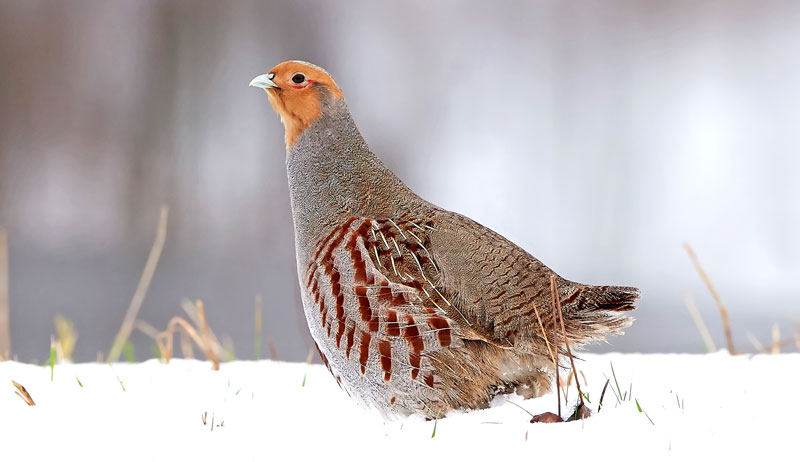
This European game bird was introduced to the United States in the early 1900s. Unlike the drawings of large majestic birds perched atop a pear tree, partridges—both the chukar and gray varieties—are compact, reaching about 1 foot in length and weighing about 1 pound.

Hardly a mouthful individually roasted, the partridge was typically served boiled with nutmeg, clove, bread and either sack (a fortified Spanish wine) or muscadine. Add pears if you wish!

Turtle Doves in the 12 Days of Christmas Birds Tradition

The tiny European turtle dove is a harbinger of spring, its turr-turr-turr song associated with the return of sunshine and warmth. Turtle doves mate for life, which is most likely the reason that our true love presents us with a pair of these pocket-sized birds.

Since two doves weighed in at approximately 10 ounces, Elizabethan cooks made the most of this ingredient by baking them in pastry. Doves are still raised as a food source today. This modern recipe gives some insight into the dove-stuffed pastries from centuries ago.

French Hens in Holiday History

The trio of chickens memorialized in the 12 Days of Christmas birds list were not necessarily French. France’s historic geographical name was Gaul, and the people of France were called Gallic or Gauls (consider France’s beloved 20th-century statesman, Charles de Gaulle).

The scientific name for chicken, Gallus gallus, led people in past centuries to refer to these birds as Gallic roosters and hens and, eventually, French, even if the birds in question did not originate in France. During the Elizabethan period, however, all things French were considered fashionable, so it is quite possible that breeds of French chickens were raised and served up as part of the holiday feast.

Chicken was as versatile then as it is now. Cooks served it roasted, fried, fricassee and baked in pies.


Read more: The yule goat is a caprine-themed holiday tradition!


Calling Birds: The Dark-Colored Stars of the 12 Days of Christmas Birds

When I was little, I thought calling birds were birds that called, like mourning doves or finches. As an adult, I decided that calling birds were actually call ducks, the adorable little loudmouthed duck.

I was wrong on both counts.

“Calling” is actually a distortion of “colly,” meaning as black as coal. Calling birds are in fact blackbirds, which we know from nursery rhymes were baked into pies and presented to royalty. These days, blackbirds are protected migratory birds, but in Elizabethan times, they were simply another game bird to catch and cook for dinner.

Geese in Seasonal Feasts

While not as popular as chickens with today’s poultry keepers, geese were once the poultry of choice amongst wealthy landowners and lords. Cultivated since the days of ancient Egypt, geese were inexpensive to raise as they foraged with skill and fattened quite easily.

In addition to their rich, flavorful meat, geese also produced sizable eggs, and their feathers were used to fletch arrows and to stuff pillows and mattresses.

Geese have a long association with Michaelmas, an autumnal holy day that marked the end of the livestock-raising year. On Michaelmas, typically celebrated on September 29, debts were paid, servants were hired at “Goose Faires,” and landlords collected their rents, which often included one goose per tenant. Feasting on roast goose became the custom on Michaelmas, considered one of the English “quarter days,” marking the passage of a quarter of the year.

It made sense that the delicious bird roasted on autumn’s quarter day would also be roasted on winter’s quarter day, Christmas.

Swans on the Christmas Table

A symbol of luxury and wealth, this beautiful waterfowl graced the Christmas tables of British monarchs from the 1200s all the way through 19th-century Victorian times, when dining on them fell out of style. A 15th-century decree designated that only landowners of a certain elevated income were allowed to keep swans. Owned birds had to be marked with a specific, expensive and difficult-to-obtain beak mark. Anyone caught defacing a swan mark would be sentenced to one year in prison, according to the Order of the Swannes, a 1570 legal document.

British laws also prohibited the sale, hunting and driving off of any swans, with stiff penalties for lawbreakers.

All unmarked swans were designated property of the British monarch, a law that remains in effect today. One of the titles of the British monarch is Seigneur of the Swans. A highly trained team, the King’s Swan Uppers, patrols the River Thames, caring for unmarked swans and ensuring that the cygnets of unmarked females remain unmarked and property of the King.

As the traditional centerpiece of the Christmas feast, swans were served roasted whole, in their skin and feathers. Records show that King Henry III ordered 40 swans for his Christmas celebrations in 1247. Only royalty was allowed to feast on a swan. The eating of a swan by a non-royal was considered an act of treason.

In 1998, a law was passed that removed the penalty of treason, but it is still illegal to keep or kill a swan.

The 12 Days of Christmas birds have long connected music, history and seasonal feasting, reminding us how important poultry once was during winter celebrations. While our holiday tables look very different today, exploring the birds behind the carol offers a charming glimpse into Christmases past and the traditions that still capture our imaginations.

This article about the 12 Days of Christmas birds was written for Chickens and Hobby Farms magazines. Click here to subscribe.

Categories
Poultry

Salmon Faverolles: A Friendly, Hardy Chicken for Backyard Flocks

Salmon Faverolles have worked their way into many backyard chicken lovers’ hearts with their unique feathering and sweet dispositions. Pretty and practical too, the Salmon Faverolles are slowly gaining popularity in backyard flocks.

Nineteenth-Century Origins of Salmon Faverolles

Bred in northern France in 1860 between the villages of Houdan and Faverolles, these birds were originally bred to be a utility breed producing both eggs and meat.

Many breeds played a role in developing this friendly chicken, including the Houdan, Crevecoeur, Dorking, and Brahma.

Due to their need for confinement, legend suggests that the Faverolles became the pioneer of cage layers, until the breed was replaced by higher production hybrid layers. After the introduction of hybrids, the Faverolles nearly went extinct until they were rediscovered by modern chicken keepers.

Today, the breed comes in two distinct breeding lines. Exhibition and utility. The utility Faverolles are from German and French bloodlines, producing both eggs and meat. The exhibition is ornamental and only raised for show and pets.

Show-Stopping Beauty

Salmon Faverolles are gorgeous chickens with their unique salmon color. Roosters have distinctive markings from the hens, sporting straw colored feathers with red and black markings on the back, chest, and tail.

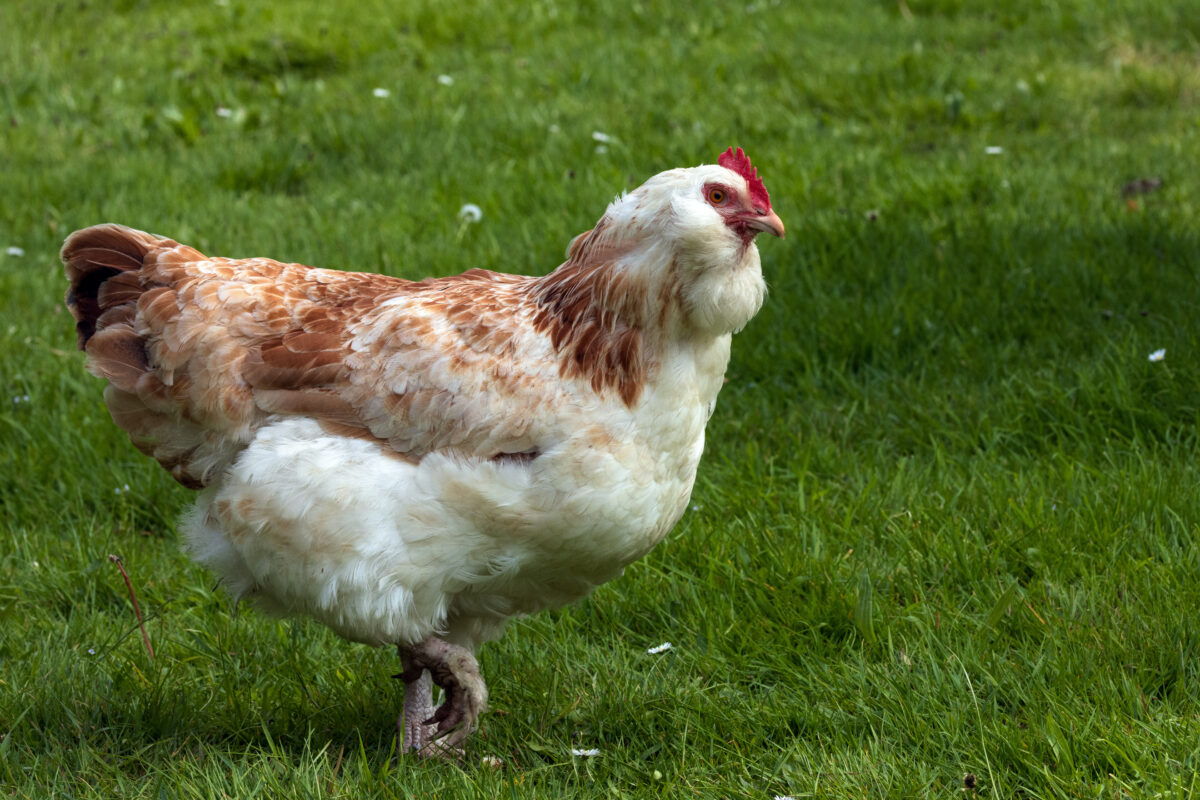
Hens are equally as stunning as the roosters with creamy white feathers marked in the exquisite salmon color (a pale reddish brown) the breed is named after.

Both hens and roosters have feathery legs and feet, five toes, and a beard and muff. The comb is red, small, and single. The red wattles are tiny and almost invisible.

Size and Weight of Salmon Faverolles

Salmon Faverolles are a decent-sized backyard chicken, and their impressive feathering can make them look even bigger. The weight of a mature bird can vary, as they are frequently known to grow larger.

Average Weight:

Roosters  8lbs.

Hens 6.5lbs.

Weather Hardiness and Climate Adaptability

Faverolles are an extremely cold-hardy breed. With their thick feathers, fluffy legs and feet, and small combs and wattles, the breed thrives in regions with colder climates.

During the warmer months, the Faverolles can survive the dog days of summer without a hitch if provided with access to shade and fresh water. While the breed is not prone to having heat-related illnesses, they will cease to lay when temperatures heat up.

Lifespan of Salmon Faverolles

The lifespan of a Salmon Faverolles is shorter than many heritage breeds with an average life expectancy of about five years.

Sweet and Docile Personalities

Both hens and roosters make ideal pet chickens and are reported to be one of the most affectionate breeds available. Sweet, gentle, docile, and entertaining, they are a good option for children as their easy-going personality makes them great for young handlers.

Salmon Faverolles have a talkative nature and enjoy carrying on animated conversations with their owners. Their friendly and bold nature has contributed to the breed’s popularity as pet chickens.

While the breed enjoys interacting with humans, if not handled frequently as chicks, they can be prone to being shy.

Salmon Faverolles in Mixed Flocks

Salmon Faverolles do well in mixed flocks if housed with other docile breeds, such as Orpingtons, Cochins, and Dorkings. However, due to the breed’s gentle nature, they can be easily bullied and should not be housed with more aggressive breeds such as Plymouth Rocks or Rhode Island Reds.

Acquiring and Raising Salmon Faverolles Chicks

Salmon Faverolles chicks are less hardy than other breeds. Unlike other chicks, they can not survive for several days after hatching without food or water.

Therefore, it is critical to purchase chicks from a breeder or hatchery in close proximity to increase the survival rate. Chicks should be given access to feed and water as quickly as possible to reduce the risk of casualties.

While adding probiotics to a chick’s water is advised for all breeds, these chicks need the extra boost of nutrition to increase their chance of survival.

Sexing Salmon Faverolles Chicks

Unlike other breeds, Salmon Faverolles are nearly impossible to sex via the traditional vent sexing. However, they do feather out quickly, and once feathered, the males are easy to spot among the females.

Health and Care Considerations

These are healthy chickens and are not prone to many of the egg-laying problems that plague many heritage and hybrid egg layers.

Due to their thick feathering, they are prone to external parasites and may require frequent treatment to avoid an infestation.

Salmon Faverolles are also prone to scaly leg mites and bumble foot, so be sure to check feet and legs regularly to keep them feeling and looking their best.

Egg Production of Salmon Faverolles

These are good layers, averaging four to five medium-sized, light brown or creamy colored eggs per week. Production peaks in the colder months, making them an ideal breed for those looking for some winter eggs without the use of artificial heating or lighting.

While they are good winter layers, the breed does not lay during the summer months.

Meat Production and Table Birds

The Salmon Faverolles is a good table bird for those looking to raise their own meat. They grow slowly, reaching market weight at about the age of six to eight months.

While this may seem like a long time, the taste is reported to outshine other breeds and is considered to be worth the wait.

Frequently Asked Questions About Salmon Faverolles

Q: Can they free-range safely?
A: No, they need protection from predators and should be kept in a secure, covered area. Their gentle nature makes them vulnerable if allowed to roam freely.

Q: Do Salmon Faverolles require special housing?
A: Yes, because of their feathered feet and legs, they need a dry, covered run at all times to prevent mud and moisture-related issues.

Q: How do I care for their unique toes?
A: Salmon Faverolles have a fifth toenail that requires routine trimming to prevent injury or discomfort.

Q: Are there any special considerations for their eyesight?
A: Yes, their beards and muffs can limit their vision. Provide low perches and nesting boxes to ensure they can move safely.

Q: How can I make my birds friendly?
A: Regular handling of chicks and adults is essential. Daily interaction helps them become affectionate, docile companions.

Q: How many eggs do Salmon Faverolles lay?
A: They typically lay four to five medium-sized eggs per week, with production peaking in the colder months. They may stop laying in the summer if temperatures are high.

Q: Can Salmon Faverolles be raised for meat?
A: Yes, they are a good dual-purpose breed. They grow slowly, reaching market weight around six to eight months, and are known for flavorful meat.

Q: How long do Salmon Faverolles live?
A: The average lifespan is about five years, shorter than some other heritage breeds, though proper care can help them live comfortably throughout their life.

Q: Do Salmon Faverolles get along in mixed flocks?
A: Yes, but they do best with other docile breeds like Orpingtons, Cochins, and Dorkings. Avoid housing them with aggressive birds, as they can be easily bullied.

Final Word on Salmon Faverolles

Salmon Faverolles are the ideal addition to any backyard flock. Their sweet, docile personalities make them excellent pets for families, while their hardiness and winter egg-laying abilities add practical value. With proper care, protection, and handling, these beautiful, friendly birds can provide both entertainment and sustenance, making them a beloved breed for hobby farmers and backyard chicken enthusiasts alike.

This article about Faverolles chickens was written for Chickens and Hobby Farms magazines. Click here to subscribe.

Categories
Farm & Garden

Gifts for Foodies: Locavore-Friendly Holiday Ideas

Gifts for foodies can feel tricky when the special person in your life is devoted to the local-food movement. Whether it’s a dedicated locavore, a passionate home cook, or that coworker who never misses the farmers’ market, finding the right present can take some thought. Luckily, we’ve rounded up a list of meaningful, locally inspired ideas perfect for placing under the tree. All that’s left is to visit your favorite market and get shopping.

1. Farmers’ Market Finds

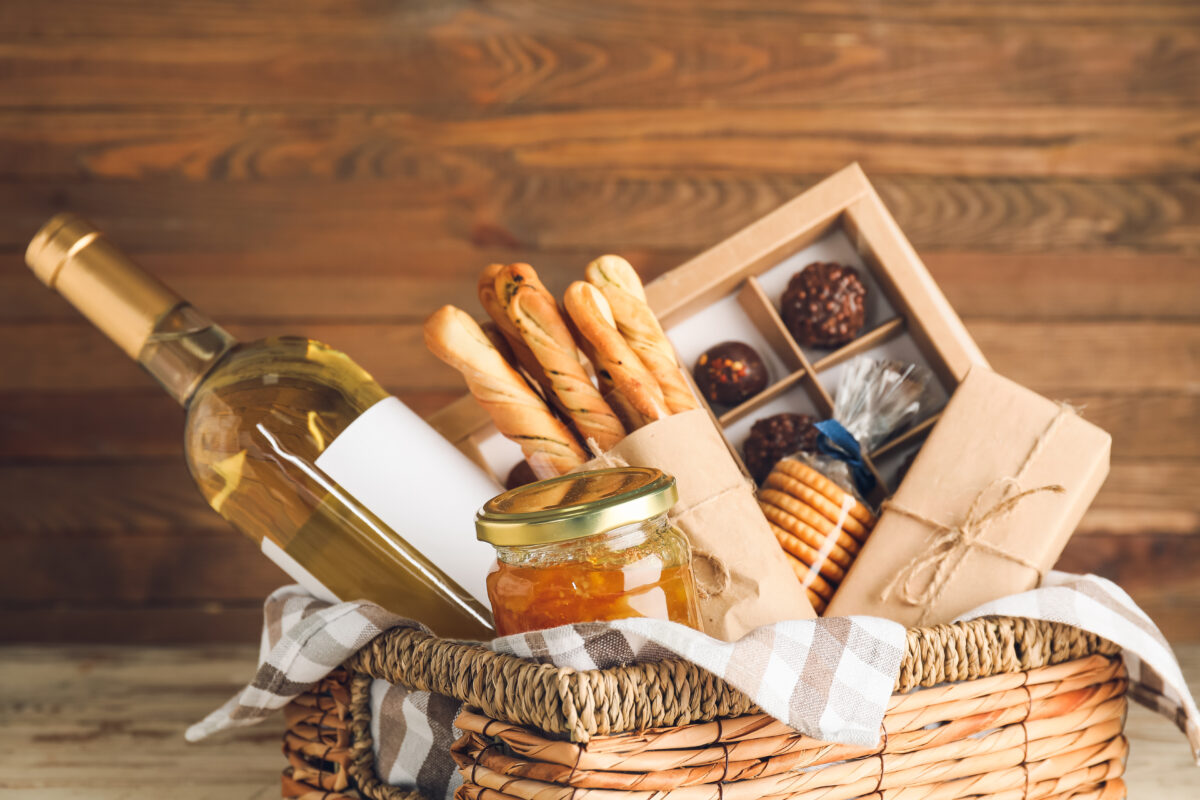
Although it may seem like cheating, let’s be honest, everyone loves a gift card. While you might not find gift cards at every farmers’ market, market gift cards are starting to become more common. If your local farmers’ market doesn’t yet offer these tokens of good will, consider buying an item or two from several different vendors to make your own local market sampler of gifts for foodies full of cheese, jams, breads, soaps and other products offered by local farmers.

2. Seasonal CSA Shares

If you’re unfamiliar with the term, community supported agriculture (CSA) refers to a subscription to a farm where the customer buys the produce, eggs or meat upfront and picks it up periodically throughout the year, usually every week or every month. It’s possible that the locavore in your life has already joined a vegetable CSA, but buying them a year’s subscription to it could be a great gifts for foodies idea. Or there might be other CSAs in your town, such as a cheese, meat, wine, beer or local-flower CSA, that could be a nice complement to their vegetable subscription. Look online and at the markets to see what’s available nearby.

3. Cookbooks for Local-Food Lovers

Local bookstores are lined with so many excellent books that will reach right to the heart of your foodie’s world. Check out titles by famed chefs, such as Heritage by Charleston’s Sean Brock or Prune by New York’s Gabrielle Hamilton. To stick with the gifts for foodies theme, check with nearby restaurants and bookstores to see if anyone local has produced a cookbook, you’ll probably be surprised at what you find.

4. Hands-On Cooking Classes

Cooking classes are somewhat underrated gifts for foodies because, as much as people may love to take one, they aren’t likely to buy one for themselves. Keep an eye out in newspapers and ask local restaurants, chefs and even butcheries if they have any classes coming up. With just a little research, you should discover quite a few around the holidays. And they’re more fun with a partner, so don’t feel guilty when you buy yourself a spot in the class, too.

5. Local Food and Drink Tastings

Beer, wine, coffee or cheese tastings allow enthusiasts of a particular type of food learn how it’s made, meet the producers and develop skills involved in tasting it. Search online and keep an eye out for flyers on community boards. No matter where you live, there’s likely to be a local winery, brewery, cheese maker, or even coffee shop offering tastings nearby.

6. Behind-the-Scenes Farm Tours

Several farms these days offer farm tours where a customer can spend a few hours walking around a farm and listening to the farmer talk about their operation. Some farms offer tours around lambing, goat kidding or calving season so families can come out and see the baby animals. Others offer opportunities for people to come work, learn to butcher an animal, build a barn or cabin, or harvest a field. If a farm doesn’t offer public tours, it will likely make an exception with a little persuasion. Contact your favorite local farm and offer to buy a farm tour.

7. Handmade Local Kitchen Goods as Gifts for Foodies

The word “local” for the locavore can extend well beyond just food and restaurants. If you are trying to think of gifts for foodies to help at home or in the kitchen, consider seeking out local potters and artisans for wooden spoons, bowls, candles made with local beeswax, hand-forged knives, anything you think they might be able to use with pride, knowing it came from a local vendor.

8. Gifts for Foodies: Pickling & Canning Essentials

All that’s typically required to pickle or can food are some jars, a large pot of boiling water and some tongs, but there are plenty of fun accessories available to make the experience easier, tastier or more fun. Shop around and see what kinds of different jars, pressure canners, specially designed pickling spices and pickling books you can find.

9. Home Fermentation Gifts for Foodies

Fermentation is a hot topic these days, and though it doesn’t require a lot of gear to ferment something, there are a few helpful items that your foodie friend might enjoy receiving—or receiving more of. For example, air-locking lids and jars that let gas out but not in are very convenient in the fermentation world. Also, plain old mason jars make a great gift for the fermentor in your life, as does a nice antique crock.

10. DIY Brewing and Winemaking Kits

If you’re lucky enough to live near a beer or winemaking supply store––and you’d be surprised by how common there are––go in and ask about beer and winemaking kits as gifts for foodies depending on the expertise level of the person for whom you’re buying. Also, see if there are any local ingredients available––local hops for beer, honey for mead, fruit for wine, et cetera––to throw in.

Gifts for Foodies: Frequently Asked Questions

What are the best gifts for foodies who love local food?

Great options include CSA shares, farmers’ market baskets, local tastings, handmade kitchen goods, and tours of nearby farms and producers.

Are CSA subscriptions good holiday gifts?

Yes—CSA subscriptions offer fresh, seasonal food throughout the year and make an especially meaningful gift for anyone who values local agriculture.

Where can I find local-food gifts near me?

Check farmers’ markets, community boards, small boutiques, local breweries, wineries, and artisan shops. Many producers also list gift options on their websites and social media pages.

What should I give a foodie who already has everything?

Experiences are often the most memorable—try a cooking class, fermentation workshop, farm tour, or tasting event they’ve never tried before.

Are homemade or DIY food gifts a good option?

Absolutely. Homemade preserves, infused salts, baked goods, or pickled items can make thoughtful, personal gifts—especially when made with local ingredients.

Finding thoughtful gifts for the foodies in your life doesn’t have to be complicated—especially when you focus on items that celebrate local flavors and the people who produce them. Whether you choose a CSA share, a handmade kitchen tool, or a behind-the-scenes farm tour, each option supports your community while delighting the recipient. By leaning into locavore values, you’ll give a gift that tastes good, feels good, and does good.

This article about gifts for foodies was written for Hobby Farms magazine. Click here to subscribe.

Categories
Farm & Garden

Homemade Gifts: 3 Easy & Affordable DIY Ideas

Homemade gifts are made with love, straight from the heart. They are a cost-effective way to share your crafts with others around the holiday season.

3 Easy, Inexpensive Homemade Gifts

Here are three popular and easy homemade gifts, complete with instructions for creating and gifting them this season.

1. Homemade Simmer Pot Potpourri

Dehydrated fruits and seasonings, jarred and tied with a bow, make a thoughtful homemade gift. Simply add the contents to a simmering pot of water to enjoy a warm, festive scent throughout your home. Choose ingredients based on color and fragrance—during the holidays, cinnamon, clove, nutmeg, and citrus are especially popular.

Directions:

  • Dry the citrus: Slice oranges, lemons, limes, or grapefruit into ¼-inch slices. Dry in a food dehydrator at 135°F for 7+ hours or in your oven at the lowest temperature (ideally under 200°F) for 2+ hours, until fully dry. Allow the fruit to cool to room temperature.
  • Choose a jar: Pint-sized canning jars work well. Fill jars completely to avoid empty spaces.
  • Add ingredients: Include dried fruits, cinnamon sticks, whole cloves, dried cranberries, dried rosemary, bay leaves, thyme, or other dried herbs. Add spices such as whole allspice, dried ginger, star anise, nutmeg, clove, or cardamom pods.
  • Finish the jar: Secure the lid, tie a ribbon or bow, and your simmer pot gift is ready.

Tip: When simmering, always set a timer and check the water level regularly to prevent burning.

2. Homemade Ranch Seasoning Gift in a Jar

Ranch seasoning in a homemade jar is a simple, thoughtful gift for friends who love cooking. Making your own allows you to skip unnecessary ingredients found in store-bought packets.

Yield: One 4-ounce canning jar

Ingredients:

  • 1/3 cup dry buttermilk powder
  • 1 tbsp garlic powder
  • 1 tbsp onion powder
  • 2 tsp dried parsley
  • 1.5 tsp dried dill weed
  • 1 tsp dried chives
  • 1 tsp fine sea salt
  • ½ tsp white granulated sugar
  • ½ tsp dried tarragon (optional)
  • ¼ tsp fresh cracked black pepper (to taste)
  • ¼ tsp ground yellow mustard powder

Directions:

  • Mix all ingredients and pour into a small canning jar.
  • Secure the lid and tie on a bow or ribbon.
  • Label your jar.

Serving suggestion: Mix 2 tablespoons of the seasoning with ¾ cup sour cream, ¾ cup buttermilk, 1 tbsp lemon juice, and 2 tbsp mayonnaise. Chill for at least 2 hours before serving as a dip or salad dressing.

Bonus: This seasoning also makes a flavorful rub for chicken or roasted vegetables.

homemade ranch dip
Adobe Stock/5ph

3. Homemade Sugar Scrub Gift

Sugar scrubs are easy, practical gifts perfect for winter when skin tends to get dry. Customize with essential oils or additional oils for a luxurious touch.

Yield: One 8-ounce jelly jar

Ingredients:

  • ½ cup coconut oil
  • ¼ cup granulated sugar (white or brown)
  • Optional: 1 tsp jojoba oil, 1 tsp vitamin E oil, 1 tsp olive oil
  • Optional: Organic essential oils (sweet orange is a favorite)

Directions:

  • In a bowl, combine coconut oil and sugar. Mash and stir until fully blended.
  • Add optional oils and essential oils, stirring well.
  • Transfer to an 8-ounce jelly jar. Wipe the rim clean, secure the lid, and tie on a ribbon or bow.

Tip: This scrub also works well as a lip or foot exfoliant during the dry winter months.

homemade gifts of sugar scrub
Adobe Stock/Africa Studio

Creating these homemade gifts is a simple and thoughtful way to show you care. Whether it’s the warm scents of a simmer pot potpourri, the savory flavor of a homemade ranch seasoning jar, or the pampering touch of a sugar scrub, each gift is unique and personal. These easy-to-make ideas are perfect for sharing with friends, family, or neighbors, adding a handmade touch to the holiday season.

This article about homemade gifts was written for Hobby Farms magazine. Click here to subscribe.

Categories
Poultry

Three French Hens to Add to Your Backyard Flock

French hens have long captured imaginations, from the pages of classic Christmas carols to the backyard coops of today’s hobby farmers. While three French hens might once have symbolized a lover’s extravagant devotion, modern poultry enthusiasts know them for something far more practical: their beauty, hardiness, and friendly temperaments. Adding these distinctive French breeds—Bresse, Crevecoeur, and Faverolles—to your flock isn’t just a nod to tradition; it’s a way to diversify your flock with birds that are as productive as they are charming.


Bresse: The Queen of French Chickens

No other breed (French hens or otherwise) quite compares with the Gauloise Blanche de Bresse. This breed is fiercely beloved as a national treasure by the people of France, who use the image of the Bresse rooster on currency, military and athletic uniforms, and as a symbol of France itself. It is the only breed of chicken that bears the coveted Appelation d’Origine Contrôlée status, awarded by the French National Assembly in 1957, and the Appelation d’Origine Protégée, awarded by the European Union. 

As such, the Bresse can only be raised in a specified geographic area, its breeding overseen by a single entity, the Comité Interprofesionnel de la Volaille de Bresse (CIVB). The CIVB’s hatcheries produce approximately one million chicks each year, which are distributed to several hundred approved poultry farms to be raised according to very strict standards.

These include access to spacious meadowlands (a minimum of 10.2 meters per bird) and a prescribed diet of non-GMO cereal grains and dairy products. The Bresse metabolizes its feed in a unique way and develops certain types of muscles in a unique rate that makes the breed genetically unique. The resulting meat is luscious, marbled and so flavorful that renowned epicurean Brillat-Savarín called the Bresse “the queen of poultry, the poultry of kings” in his 1825 book La Physiologie du Goût. 

The Gauloise Blanche de Bresse was first documented in 1591, appearing in the registers of Bourg-en-Bresse. The bird reflects the colors of the French flag in its appearance, with a bright red single comb, white plumage and smooth blue legs. At maturity, males weigh approximately 7 pounds and hens weigh approximately 5 pounds. 

Bresse birds are efficient foragers, grazing for one third of their diet on their own. Bresse hens produce an average of 4 or 5 medium-sized, cream-colored eggs per week (about 250 per year). They are friendly, cold-hardy birds and a great addition to any flock. Bresse can be purchased in the United States through McMurray Hatchery and Greenfire Farms, both of which designate their birds as American Bresse to reflect their breeding and resting outside of the French controlée laws.  

Crevecoeur: A Rare and Gentle Breed

Originating from the town of Creve-Coeur in Normandy, this distinctive dual-purpose bird is one of the oldest chicken breeds in France, its existence documented as far back as the 12th century. The Crevecoeur was raised primarily for its high-quality meat, with fine white breast meat and dark, rich leg meat.

Its succulence led to its downfall. During World War II, the German army reached Normandy and, within two years, all the Crevecoeurs (minus the few that had been hidden away) had been eaten. Because of this, the Crevecoeur is critically endangered at an international level.

Efforts are now underway in France, Australia and the U.S. to recover this breed.  

Crevecoeurs are quiet, friendly birds with sweet dispositions. They make excellent pets, especially when handled frequently as chicks. Males reach a mature weight of 8 pounds while females reach 6.5 pounds. The females produce approximately three medium to large eggs per week (about 150 per year).

Crevecoeurs are black in color, with blue-black legs, black beaks that shade down to a gray-horn color at the beak, and red-brown eyes. They sports full beards and crests, both of which have a tendency to frost over in winter, although they contentedly adapt to most climates. Like Polish chickens, Crevecoeurs’ crests tend to obscure their eyesight, so covered runs should be a serious consideration.

It’s the Crevecoeur’s most unique feature, however, that captures attention: its V-shaped comb. Because of it and its crest, the Crevecoeur tends to be bullied and should only be raised with chickens with similarly gentle temperaments. Crevecoeur chicks can be purchased at both McMurray Hatchery and Greenfire Farms.                                                                                             

Faverolles: Friendly and Winter-Hardy Hens

Considered one of the best breeds of chicken produced in France, the Faverolles originated near the village of Faverolles southwest of Paris. While several color varieties exist, only the Salmon Faverolles is recognized by the American Poultry Association. 

With its compact, stocky body; abundance of fluffy feathers; and ability to lay eggs during the colder, minimally daylit months, the Faverolles is the ideal bird for flock owners in northern climates. 

Female Faverolles lay three to four tinted eggs per week (about 150 to 200 per year). They are excellent broodies, setting eggs from other breeds as well. They make caring, responsible mothers.

Both male and female Faverolles are friendly and docile, yet energetic, alert and curious. The Faverolles will loudly call out if it sees an unknown animal approaching, making it a welcome addition to any flock.  

At maturity, the male Faverolles weighs about 8 pounds and the female approximately 6.5 pounds. The Faverolles is feather legged, with five toes per foot and a full beard to match its fluffy body.

One striking and convenient trait with the Salmon Faverolles: The chicks auto-sex by four weeks of age, with the cockerels’ wings being black and white while the pullets’ wings turn a multicolor mix of salmon, black and white.

As adults, the males feature a black beard, white hackles and color blocks of white, black and dark coppery brown on the rest of its body, similar in pattern and coloration to a Golden Duckwing. The females become a beautiful cream color topped with a layer of salmon feathers.

Not only are these French hens beautiful to behold but, with their temperament, winter hardiness and flock-friendly behaviors, Salmon Faverolles (both singular and plural end in an ‘s’) are the perfect breed for the beginning chicken owner. They are available for purchase through many major hatcheries.  

French Hens at a Glance

BreedEgg ProductionTemperamentUnique TraitsNotes on Care
Bresse4–5 eggs/weekFriendly, hardyBlue legs, Appellation d’Origine ContrôléeNeeds space to forage, non-GMO feed
Crevecoeur3 eggs/weekGentle, quietV-shaped comb, full crestKeep with other gentle breeds, good pets
Faverolles (Salmon)3–4 eggs/weekDocile, alertFeathered legs, auto-sexing chicksExcellent winter layers, broody hens


Adding French hens to your backyard flock is more than a nod to a famous carol—it’s an opportunity to raise birds that are as charming as they are productive. Whether you choose the regal Bresse, the rare and gentle Crevecoeur, or the friendly, winter-hardy Faverolles, each breed brings personality, hardiness, and beautiful eggs to your coop. With proper care, these French hens can become a beloved part of your hobby farm for years to come, delighting both you and your flock alike.

This article about french hens was written for Hobby Farms and Chickens magazines. Click here to subscribe.

Categories
Poultry

Chicken Coop Decorating Ideas: Safe & Festive for Christmas

Need some chicken coop decorating ideas? Giving backyard coops some Christmas flair has become increasingly popular among flock owners in recent years. Search for variations of the hashtag #christmascoop on your favorite social media platform. You’ll find images from around the country of chicken coops bearing evergreen boughs, beautiful wreathes, and, of course, twinkling Christmas lights.

Now’s the time to get in on this new tradition. But before you deck your hens’ halls, review these four tips to keep your coop and chickens safe.

Creative Chicken Coop Safe Lighting Tips for Your Chicken Coop

Even if your coop is equipped with interior electricity, your decorative lights should stay strictly outdoors.

Chicken coops are notorious for dust, from shed skin and feathers, feed, droppings and litter. Dust can quickly coat light fixtures. With dozens of individual lights on each string, the potential for clogging and burning out bulbs—or worse, sparking and igniting the dust and bedding—is high.

Beyond the fire hazard, light strands also provide your chickens with yet another place to perch … and unstable ones at that. If you plan to hang lights, hang them securely on your henhouse’s exterior at a height where curious chooks can’t reach them.

Avoid Hazardous Decorations in Your Coop

One thing many of us have learned the hard way is that even “shatterproof” ornaments can shatter. Whether they are traditional balls, whimsical figurines or modern icicles, these decorations can pose a health risk to your flock should they shatter.

The jagged edges of broken ornaments can slice poultry toes. Worse, with their inquisitive attraction to all things shiny, chickens might find smaller shards irresistible and ingest them. This could severely damage a bird’s digestive tract.

Reserve these holiday adornments for your tree and your home’s interior.

Using Natural Elements for Chicken Coop Decorating

Beautifully draped boughs and wreaths of holly, pine and other evergreens are a hallmark of the winter holidays, evocative of Old World forests and symbolic of the season’s many beliefs and traditions.

While the leaves and berries of these and other ornamental plants have varying levels of toxicity for humans and household pets, they are not dangerous to chickens … unless the needles and leaves have been chemically treated.

Fake snow and preservatives can adversely—or lethally—affect your birds if ingested. And their chemicals can irritate delicate eye tissues and respiratory tracts. If using decorative greenery on your coop’s exterior, make certain that these are natural and untreated to keep your birds safe.


Read more: Are holiday plants toxic to chickens? Turns out, not so much.


Winter and Snow-Inspired Chicken Coop Decorating Ideas

Sometimes the best winter decorations are the ones right in front of us. If you live in a snowy region, consider adding a festive touch to your coop with snow.

The roofs of chicken coops dusted with a fine blanket of snow and windows frosted with a touch of ice already look like they belong in a Currier and Ives Christmas village. Enhance this winter wonderland by adding a few festive snowmen and snow sculptures around your flock’s run.

For an additional holiday treat, roll parts of your snowman in birdseed before assembling it. As the snowman dissipates, your chickens will enjoy its departing gift.

FAQ: Chicken Coop Decorating Ideas

Q: Can I hang lights inside the chicken coop?
A: No. Keep all decorative lights outdoors to prevent fire hazards and protect your chickens from curious pecking.

Q: Are shatterproof ornaments safe for chickens?
A: Not always. Even shatterproof ornaments can break and cause injury or ingestion hazards. Stick to non-breakable or outdoor-only decorations.

Q: Can I use real plants on my coop?
A: Yes, but make sure greenery is natural, untreated, and free from harmful chemicals or preservatives.

Q: How can I decorate a snowy coop safely?
A: Use snow or snow sculptures, and consider rolling parts in birdseed so your chickens can enjoy them as they melt.

Q: What’s the safest way to add holiday flair?
A: Focus on outdoor-safe lights, natural untreated greenery, and decorations that chickens cannot reach or ingest.

This article about chicken coop decorating ideas was written for Chickens magazine. Click here to subscribe.

Categories
Farm Management

Selling Wool: How to Market Fiber From Your Farm

Selling wool fleece and fiber from your farm is a great marketing opportunity for any diversified farm business. As with food, people want to know where their fiber comes from and will pay more for domestically made products. Online tools for establishing a business are more affordable and easier to use than ever. Here are key considerations to think about while getting your fiber business started.

Deciding What Type of Wool to Sell

When deciding what form your fleece and fiber will take, start with what you know best. Work with your own material to intimately understand its pros and cons. If you’re a hand spinner, for example, you probably know more about creating top-notch roving than someone who knits exclusively.

Almost all fleece and fiber can be sold in raw or processed form. Raw fiber is sold by weight, primarily to hand spinners and felters, in either washed or unwashed form, but never unprepared. Matter, like burrs, straw and manure, must be removed, as should soiled, felted and other low-quality fiber pieces.

Processed fibers can take many forms:

  • combed top
  • roving
  • batts
  • yarn
  • felt
  • fabric
  • finished goods and garments

Determine if processed fiber can sell at a price high enough to recoup shearing, shipping and mill-processing costs. Most aspects of fiber processing require practice and skill to do well. Mills expertly take fleece and fiber from raw to processed form. If you opt to process fiber yourself, allow time for learning and mistakes.

Store fleece and fiber indoors, in containers that allow air to circulate, and off the ground to stay free of moisture and pests. Cardboard boxes with loose-fitting tops are a great choice.

How Animal Care Influences Wool Quality

Animal health, breed, shelter and cleanliness set the foundation of high-quality fiber. Animals cannot produce long, strong fibers when their immune systems are taxed. Deworm, vaccinate and never sell raw fiber from an animal that might have a contagious disease. Some fiber producers use jackets to cover their animals, keeping the elements and vegetable matter out. Shear animals at the frequency and season appropriate for their breed—wait too long, and hair and wool can mat and felt on the animal’s body.

Choosing the Right Mill for Your Wool

Anyone with a sink and a drum carder might call themselves a mill. Use established, time-tested mills, ideally those whose products you’ve used firsthand. If there’s a particular roving or yarn you like, contact the seller and ask where it was milled. Be sure to ask how long processing will take. Many mills have deep backlogs and long wait times because there is a shortage of mills in the U.S.

Evaluating Wool Quality Before You Sell

Before selling anything, engage a tester or two to give your product(s) a whirl. You most need to hear what’s not good. Ask a hand spinner to use different techniques and spin fiber into various thicknesses, for example, and sit or debrief with them.

Marketing Options for Selling Wool

Creative sales models abound, including fiber clubs, online sales, in-person and wholesale methods.

Selling Wool Through Wholesale Channels

Many yarn shops are increasingly interested in selling local products, but the wholesale price they’re able to pay will be considerably less than the retail price. Calculate whether you can afford to sell wholesale to yarn shops, and don’t be surprised if the answer is no, as is the case for many small-scale wool and fiber producers.

Selling Wool Through Clubs and Subscriptions

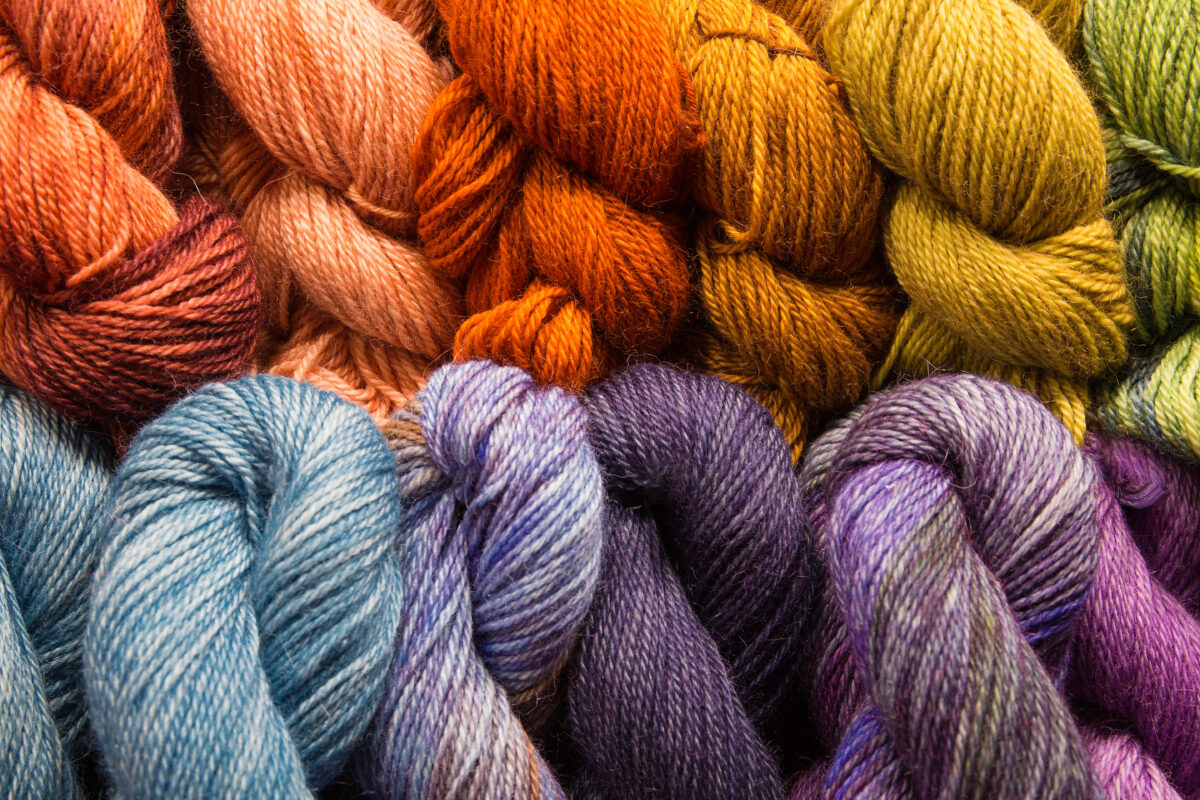
The CSA subscription model—in which people pay upfront to receive scheduled food deliveries from local farms—is also popular with fiber hobbyists and will provide you with more predictable income. The contents and styles of fiber club boxes run the gamut: some are sock yarn only, while others consist of thematically dyed rovings (think Harry Potter colorways). Some ship monthly and others quarterly. There’s plenty of room to be creative with your products. Thoughtful packaging, a personal note and contact information are nice additions.

Create a community for fiber club members. If you’re not a pattern designer yourself, partner with one to design a members-only pattern. Hold a knit-along, in which members knit the same pattern at the same time, using fiber from a particular shipment. Release the pattern to the public later to build interest in your products. Organize a Spinzilla team. Ravelry.com forums are a terrific way to organize knit-alongs and spin-athons, and offer successful examples to follow. Invite local fiber club members to your shearing day or to meet your animals.

Selling Wool Online

Establish an online presence and to ramp up sales when you’re ready.

Although your business should feel personal, keep the literal personal version of yourself in separate accounts. Register a website domain name (i.e. www.NameofYourFiberBiz.com) with the name of your business, and set it to renew automatically. (“Domain squatters” hold expired domains hostage to get people to pay for their return.) At minimum, create Facebook, Twitter, Ravelry and Instagram accounts for your business. This controls your brand and makes it harder for someone else to impersonate your business.

The quantity of online tools is overwhelming, so look into tools that minimize effort. Some social media tools cross post, for instance, posting a single photo to Twitter, Instagram and Facebook in one click, so you don’t have to do the same thing three times. In your Ravelry profile, link Ravelry projects to blog posts to drive traffic to your website. Video tutorials on YouTube let people know you exist and drive people to buy.

Create a storefront on an established, plug-and-play platform like Etsy to learn the ropes of online selling. Carefully read the terms of service for any and every online marketplace, which takes a percentage of every sale and has other fees and restrictions. Create your own website with a simple, type-and-click content management system like WordPress, a word-processor-like interface that publishes text and images to the web with the click of a button. Build your own online store with a platform like Shopify, which makes inventory management and online payment straightforward.

Attractive product photos are critical to generating online sales. High-quality cameras are cheap and available on smartphones, but there is a lot to learn. Product photography classes are offered on Craftsy.com and at some fiber festivals and retreats.

Selling Wool at Markets and Festivals

Fleece and fiber can also be sold in person at farmers’ markets or fiber festival booths. Incredibly, not all farmers’ markets consider fiber an agricultural product that can be sold, so understand market rules before paying for a spot. Many farmers market customers won’t know what to do with raw fiber, making finished products more useful to more people: think fingerless mitts, hats, and felted slippers and shoe inserts.

In-person booths are particularly valuable when your fiber business is new, as they alert people to your existence. Creating an attractive booth is a lot of work, however. Account for the cost of portable tables, screens and walls; marketing materials; and time spent driving to and from, setting up and so on. When your business is more established, you may be able to ramp down to one or two shows per year at venues that give the best bang for your buck.

Using Your Farm Story to Sell Wool

Your story is part of what people pay for, which is an item they feel good about buying. Use the labels people most want but don’t get from big companies.

Describe the breed(s) of your animals, and let people know if they’re a rare or heritage breed. Describe your “fibershed,” the “terroir” of your fiber and why certain fiber animals fare well in your region. Include the source animal’s face and name on product labels, so people can see where their fiber comes from. It’s important to state if your fiber comes from a smoke-free, pet-free, or cat-friendly studio. Many fiber hobbyists want to purchase cruelty-free, humanely sourced fiber, but be specific about your practices and what these words mean.

Introduce yourself at local guild meetings and knitting circles, and give workshops or lectures at your local yarn shop, Montessori and other schools, and the like. Everyone wears clothes, and many people want to know more about where they start: on farms like yours.

People Also Ask: Selling Wool

How do I sell wool from my farm?

You can sell wool by offering raw fleece, processed fiber like roving or yarn, or finished products. Use online marketplaces, fiber clubs, farmers markets, or wholesale to yarn shops to reach customers. Highlight your farm story and fiber quality to attract buyers.

Where is the best place to sell sheep wool?

Popular options include Etsy, Ravelry, local fiber guilds, farmers’ markets, and specialty yarn shops. Consider fiber clubs or subscription boxes for recurring sales. Direct-to-consumer sales often earn higher prices than wholesale.

How much is sheep wool worth per pound?

Wool prices depend on breed, fiber quality, and preparation. Specialty or high-grade wool can sell for much more than common fleece. Check local markets, online listings, or fiber guilds for current pricing trends.

Should I sell raw wool or processed wool online?

Raw wool appeals to hand spinners and felters, while processed wool—roving, yarn, or batts—can bring higher profits. Selling online works for both; high-quality photos and detailed descriptions help buyers make decisions.

How do I prepare wool for sale?

Remove burrs, straw, and debris from fleece. Wash and card wool if you’re selling processed fiber. Store it in breathable containers, off the ground, and away from moisture and pests to maintain quality.

Can I make money with a wool subscription box or fiber club?

Yes! Fiber clubs provide regular income and help build a loyal customer base. Boxes can include themed roving, hand-dyed yarn, or members-only patterns to create added value.

How do I market my wool effectively?

Tell your farm’s story, highlight your animal care practices, and show the origin of your wool. Use social media, email newsletters, and craft communities like Ravelry to reach fiber enthusiasts. Appealing photography and clear product descriptions are essential.

This article about selling wool was written for Hobby Farms magazine. Click here to subscribe.